Georgia State University
ScholarWorks @ Georgia State University
Business Administration Dissertations Programs in Business Administration
Spring 5-3-2015
Achieving Contextual Ambidexterity Through the
Implementation of High Performance Work
Systems (HPWS)
Alexandro F. Armour Georgia State University
Follow this and additional works at:https://scholarworks.gsu.edu/bus_admin_diss
This Dissertation is brought to you for free and open access by the Programs in Business Administration at ScholarWorks @ Georgia State University. It has been accepted for inclusion in Business Administration Dissertations by an authorized administrator of ScholarWorks @ Georgia State University. For more information, please [email protected].
Recommended Citation
Armour, Alexandro F., "Achieving Contextual Ambidexterity Through the Implementation of High Performance Work Systems (HPWS)." Dissertation, Georgia State University, 2015.
PERMISSION TO BORROW
In presenting this dissertation as a partial fulfillment of the requirements for an advanced degree from Georgia State University, I agree that the Library of the University shall make it available for inspection and circulation in accordance with its regulations governing materials of this type. I agree that permission to quote from, to copy from, or publish this dissertation may be granted by the author or, in his/her absence, the professor under whose direction it was written or, in his absence, by the Dean of the Robinson College of Business. Such quoting, copying, or publishing must be solely for the scholarly purposes and does not involve potential financial gain. It is understood that any copying from or publication of this dissertation which involves potential gain will not be allowed without written permission of the author.
NOTICE TO BORROWERS
All dissertations deposited in the Georgia State University Library must be used only in accordance with the stipulations prescribed by the author in the preceding statement.
The author of this dissertation is:
Alexandro Armour 8970 Birch Bay Circle Lorton, VA 22079
The director of this dissertation is: Daniel Robey
Robinson College of Business Georgia State University
35 Broad Street, NW, Suite 427 Atlanta, VA 30303
Achieving Contextual Ambidexterity Through the Implementation of High Performance Work Systems (HPWS)
BY
Alexandro Frontone Armour
A Dissertation Submitted in Partial Fulfillment of the Requirements for the Degree Of
Executive Doctorate in Business In the Robinson College of Business
Of
Georgia State University
GEORGIA STATE UNIVERSITY ROBINSON COLLEGE OF BUSINESS
2015
Copyright by
Alexandro Frontone Armour 2015
ACCEPTANCE
This dissertation was prepared under the direction of the Alexandro Frontone Armour
Dissertation Committee. It has been approved and accepted by all members of that committee, and it has been accepted in partial fulfillment of the requirements for the degree of Executive Doctorate in Business Administration in the J. Mack Robinson College of Business of Georgia State University.
Richard D. Phillips, Dean
DISSERTATION COMMITTEE
Dan Robey
Richard Baskerville Balasubraman Ramesh
TABLE OF CONTENTS
LIST OF TABLES ... VIII LIST OF ... IX FIGURES ... IX LIST OF ABBREVIATIONS ... X
I INTRODUCTION ... 1
II CONTEXT ... 3
III THEORETICAL FRAMEWORK ... 4
III.1 Ambidexterity ... 4
III.2 Antecedents to Ambidexterity ... 8
III.3 Contextual Ambidexterity and Small Business ... 12
III.3.1 Applications of contextual ambidexterity theory ... 13
III.3.2 Resource Constraints for Small Businesses ... 15
III.3.3 Human Resource Management and High Performance Work Systems ... 15
III.3.4 Performance management, social support, and the A-M-O model of HRM ... 18
III.3.5 Contextual Ambidexterity and the A-M-O model of HRM ... 19
III.4 Summary ... 21
IV METHOD ... 22
IV.1 Research Design ... 22
IV.1.1 Research site ... 24
IV.2 Data Collection ... 25
IV.3 Semi-structured interviews ... 26
IV.4 Data Analysis ... 28
IV.4.1 Special considerations ... 31
V RESULTS ... 33
V.1 Capacity for Contextual Ambidexterity and HPWS in Context ... 33
V.1.1 Ability-Enhancing Activities ... 34
V.1.2 Motivation-Enhancing Activities ... 36
V.1.3 Opportunity-Enhancing Activities ... 38
V.2 Contextual Ambidexterity as Tension ... 40
V.2.1 Tension between adaptability and alignment ... 40
V.3 Evolution of Tension ... 46
V.3.1 Critical Events ... 48
V.4 Summary ... 53
VI DISCUSSION ... 55
VI.1 Critical Themes ... 55
VI.1.1 Critical theme #1 – CA development is a matter of tension ... 55
VI.1.2 Critical Theme #2 – CA development is non-linear ... 57
VI.1.3 Critical theme #3 – CA benefits from intentional strategic planning ... 58
VI.2 Implications for Practice ... 61
VI.3 Limitations ... 62
VI.4 Future Research ... 64
VII CONCLUSION ... 66
REFERENCES ... 67
APPENDIX ... 78
VITA... 83
LIST OF TABLES
Table 1 - Differences Between Contextual and Structural Ambidexterity ... 7
Table 2 - Participant Titles and Organizational Roles ... 28
Table 3 - Initial Coding Matrix... 29
Table 4 - Second Round Coding Matrix ... 30
Table 5 - Final Coding Matrix ... 31
Table 6 - Coding Matrix ... 33
Table 7 - Critical Events of Lifespan of CloudCo ... 47
LIST OF FIGURES
Figure 1 – Performance Consequences of Contextual Ambidexterity ... 11 Figure 2 - CloudCo Interviewees ... 27 Figure 3 - Model of Ambidextrous Tension ... 61
LIST OF ABBREVIATIONS
(In Alphabetical Order)
CA – Contextual Ambidexterity HRM – Human Resource Management HPWS – High Performance Work Systems IT – Information Technology
MC – Management Consulting
SME – Small and Medium-Sized Enterprises SOW – Statement of Work
ABSTRACT
Achieving Contextual Ambidexterity Through the Implementation of High Performance Work Systems (HPWS)
BY
Alexandro Frontone Armour May 2nd, 2015
Committee Chair: Dan Robey
Major Academic Unit: Robinson College of Business
Small information technology and management consulting businesses face increasingly contradictory strategic choices as they develop products and services for the marketplace. Building contextual ambidexterity is essential to the survival of small businesses as they seek to attain a desired balance of alignment and adaptability. Human Resource Management practices facilitate the development of ambidexterity within individuals thereby facilitating ambidexterity of the organization as a whole. Studies suggest that in order for an organization to be ambidextrous, its human resource management function also needs to ambidextrous. High-performance work systems are human resource practices designed to enhance the ability, motivation, and opportunity of employees with the overarching goal of attracting, retaining, and motivating human resources toward the completion of organizational goals. Based on Gibson and Birkinshaw’s concept of organizational ambidexterity, a qualitative case study of a small technology solution provider was conducted to explore the process by which CloudCo attempted to build contextual ambidexterity by implementing a high-performance work system. Findings show that executive management of small technology solution providers can build contextual ambidexterity and sustain a competitive advantage through the implementation of high-performance work systems but must overcome a series of important tensions to do so.
I INTRODUCTION
Technology coordination in consulting organizations involves choices between contradictory options such as efficiency vs flexibility (Adler et al., 1999), exploitation vs
exploration (March, 1991), and evolutionary vs revolutionary change (Tushman & O’Reilly, 1996). Entrepreneurs often strive to optimize the efficiency of existing development processes while simultaneously adapting them to individual customer needs. Therefore, they seek to emphasize “repeatability” of development processes on the one hand and “response-ability” to dynamic market conditions on the other (Boehm, 2002; Napier et al., 2006). Managers may try to exploit the organization’s current capabilities in relation to existing customers while at the same time exploring new technology and market opportunities. As a result, they must ensure that their product and project portfolios satisfy existing customers while also allowing for market expansion (Markowitz, 1952; McFarlan, 1981; De Reyck et al., 2005). Moreover, executive management needs to engage in both evolutionary and revolutionary change (Tushman & O’Reilly, 1996). Organizations have for many years implemented incremental innovations like software process improvements (Humphrey, 1989; CMMI Product Team, 2006) and new project management techniques (Fonstad & Robertson, 2006; Woolridge et al., 2007) but less attention has been paid to radical innovations like cloud computing and big data (Lyytinen & Rose, 2003, 2006). Instead of choosing between these options, technology consultancies could become ambidextrous. Ambidextrous organizations compete by optimizing efficiency, cost, and incremental innovation while simultaneously exhibiting flexibility, speed, and radical innovation (Tushman & O’Reilly, 1996; Raisch et al., 2009).
One way to implement ambidexterity is by developing opposing capabilities in different organizational units (i.e. structural ambidexterity); another is to build ambidexterity by developing capabilities for both alignment and adaptability within existing organizational units (i.e., contextual ambidexterity) (Gibson & Birkinshaw, 2004). The literature on High Performance Work Systems (HPWS) has consistently argued that although HPWS practices in themselves do not produce competitive advantages, performance gains can be achieved by developing human resources through an HPWS (Patel et al., 2013). Meanwhile, the human resource literature on organizations of all sizes has focused on structural ambidexterity (Boehm & Turner, 2004; Vinekar
et al., 2006), but little attention has been paid to investigating how small technology management consultancies can achieve contextual ambidexterity (CA) through the implementation of a HPWS.
As a result, this study seeks to answer the following research question: How can small technology solution providers build contextual ambidexterity through the implementation of a HPWS?This paper examines the process by which a small technology solution provider attempted to build CA via high performance work system implementation over time. This question is explored through a qualitative case study about CloudCo (pseudonym), a small technology solution consultancy. Not only does this study focus on understanding CA in small businesses, it also seeks to understand how human resource practices can facilitate this objective.
II CONTEXT
Building CA may be instrumental to the survival of small businesses as they seek to attain the desired balance of alignment and adaptability. Small information technology (IT) and management consulting (MC) businesses face contradictory strategic choices as they develop products and services for the marketplace. Past studies suggest that in order for an organization to be ambidextrous, its human resource management (HRM) function also needs to be ambidextrous ((Kang et al. (2007), Kang and Snell (2009)). HPWS are systems of human resource practices designed to enhance both the ability and motivation of employees in order to attract, retain, and motivate them toward the completion of organizational goals. Based on Gibson and Birkinshaw’s (2004) concept of organizational ambidexterity, the following will explore the process by which a small technology solution provider attempts to build and maintain CA through the implementation of elements of HPWS. As a result, principles will be established for how executive management of small technology solution providers can build CA and sustain a competitive advantage through the implementation of a HPWS.
III THEORETICAL FRAMEWORK
Past studies have drawn upon a variety of sources to establish a theoretical background for exploring questions related to the factors affecting the establishment of successful ambidextrous environments. This body of research will be reviewed in order to construct a theoretical foundation that will inform a case study on the process of developing CA within a small technology solution company. This research seeks to make three valuable contributions: 1) examine and expound the processes through which HPWS shapes CA at a small business; 2) provide insights into the complex and dynamic process of allocating resources within organizations and; 3) demonstrate how CA, coupled with an intense focus on HPWSs, can be used as a framework for studying, managing, and developing the innovation process in small business.
III.1 Ambidexterity
Organizations constantly face challenges in pursuing both sustainability and innovativeness over time. Managers and organizations must strive to implement both incremental and revolutionary change within the organization without excluding one or the other (Tushman & O’Reilly, 1996). The capacity of an organization to leverage existing assets while also being able to search for and seize new opportunities is referred to as ‘exploitation’ and ‘exploration’ respectively (March, 1991). Tushman and O’Reilly (1996) suggest that the ability to exploit and explore simultaneously contributes significantly to firm performance, an ability they refer to as
ambidexterity. Ambidexterity is defined colloquially as the ability to be skillful and agile at using both hands, or in a business context, as the ability to focus on and balance the differingstrategies of alignment and adaptability with equal success rates.
Alignment focuses on maintaining consistency in the activities where the organization has gained competence while allowing for incremental innovation. Alignment refers to coherence among all the patterns of activities in the business unit; they are working together toward the same goals. The opposite of alignment is adaptability (De Clerq et al., 2013), which refers to the capacity to quickly reconfigure activities in the business unit to meet changing demands in the task environment, allowing for radical innovation (Gibson & Birkinshaw, 2004).
These two strategies are associated with the previously-mentioned qualities of exploitation and exploration: alignment is achieved through exploitation, while adaptability is achieved through exploration (March, 1991). Exploitation is characterized by terms such as “refinement, choice,
production, efficiency, selection, implementation, and execution”, while exploration includes such things as “search, variation, risk taking, experimentation, play, flexibility, discovery, innovation,” (March, 1991). Exploitation represents efficiency, productivity, control, certainty, and taking action based on tried-and-true absolutes. Further, exploitation is associated with mechanistic structures, tightly coupled systems, path dependence, routinization, control and bureaucracy, and stable markets and technologies (He & Wong, 2004; Ancona et al., 2001; Brown & Eisenhardt, 1998; Lewin et al., 1999). Conversely, exploration is linked with organic structures, loosely coupled systems, path-breaking, improvisation, autonomy and chaos, and emerging markets and technologies (He & Wong, 2004). Exploration portrays concepts that contribute to adaptation, such as search and discovery, autonomy, innovation, and embracing the unknown (O’Reilly & Tushman, 2007).
The research literature suggests that an organization’s ability to exploit existing assets in a profit-producing way, as well as its capability to explore new technologies and markets and capture new opportunities, are both essential to organizational success. The concept of an ambidextrous organization is “a firm’s ability to simultaneously explore and exploit, enabling a firm to succeed at adaption over time” (O’Reilly & Tushman, 2007), rather than pursuing one of the two activities exclusively. Organizational ambidexterity is often discussed through two models: structural ambidexterity and contextual ambidexterity.
Structural ambidexterity. The concept of structural ambidexterity promotes the idea that organizational design should separate exploitative and explorative activities into distinct
organizational units, each with distinct competencies, systems, incentives, processes, and cultures, while at the same time establishing a planned level of integration between exploration and exploitation (Schulze, Heinemann & Abedin, 2008; Benner & Tushman, 2003). Essentially, the literature indicates that the structural route to ambidexterity is to implement two trajectories that allow business units—or groups within business units—to focus on alignment, while others focus on adaptation (Birkinshaw & Gibson, 2004). To illustrate this division, research and development (R&D) efforts can be split into long-term R&D projects that focus on breakthrough innovations, and short-term projects that pursue incremental developments. The argument supporting such an approach is that exploration and exploitation are completely different activities that require unique organizational structures, metrics, incentives, and management philosophies in order for each to be successful. If they are left in a single organizational
structure, the needs and priorities of one may take precedence over the other, resulting in a lack of balance between the two.
Structural approaches have been popular solutions for achieving ambidexterity in the past. High-tech firms such as IBM and HP split off their R&D organizations (IBM Labs and HP Labs, respectively) from their main operating business units many decades ago, and have achieved a great deal of success with several breakthrough innovations. HP’s founders, Bill Hewlett and David Packard, decided to establish a central research lab in 1966, with hopes to prove that “researchers freed from day-to-day problems could more clearly focus on ideas that would help shape the company's future.” (Hewlett Packard, 2011).
Despite these successes, structural ambidexterity is not a perfect solution for every situation, and does not assure competitive growth and innovation across the entire organization (Duncan, 1976; Gibson & Birkinshaw, 2004; McDonough & Leifer, 1983; Tushman & O’Reilly, 1996). Further, it can be argued that in recent years structural ambidexterity has not shown as much promise as it has in the past. Birkinshaw and Gibson (2004) cite two potential causes that inhibit the success of structural approaches: organizational isolation, and the development of a “country club culture”.
Organizational isolation is the tendency for separate exploration units to lose touch with the needs of the core business and produce breakthrough innovations for which there is no viable route to market. Innovations cannot effectively be translated into profitable future businesses without a clearly defined technology transfer function that bridges the gap between the exploration and exploitation units of an organization. Additionally, the development of a
“country club culture,” in which there is a high degree of social support for the ultimate goals of the organization but a low degree of expectations with regard to results, is detrimental to success (Birkinshaw & Gibson, 2004).
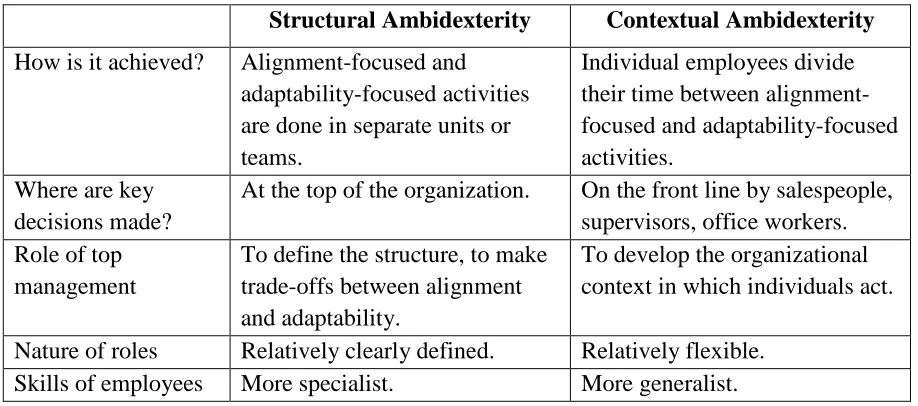
Contextual ambidexterity. Unlike structural ambidexterity, contextual ambidexterity is a solution that enables organizations to balance exploitative and explorative tasks without separating them (Schulze, Heinemann & Abedin, 2008). Gibson and Birkinshaw (2004) define CA as an interplay of system capacities for alignment and adaptability that simultaneously permeate an entire business unit and rely on the behavioral capacity of the organization to accomplish this task successfully (see Table 1 for overview). Within the business framework, context refers to the processes, systems, and beliefs that individual behaviors design and shape to enable and encourage
every individual to make a choice between exploitation and exploration in their work (Ghoshal & Bartlett, 1994). Ambidextrous organizations build a high-performing organizational context that allows and encourages the flexibility of employees to use their own judgment in how they will balance the pursuit of alignment and adaptability, and how best to divide their time between the conflicting demands of exploitation and exploration across the entire business unit (Gibson & Birkinshaw, 2004). In this way, CA helps firms to overcome the problematic structural inertia that results from overemphasizing continuity, and to avoid accelerating in a direction of change without regard to its bottom line (Levinthal & March, 1993). This type of environment supports the argument of Tushman and O’Reilly (1996) that a firm that is capable of exploring and exploiting simultaneously is likely to achieve superior performance compared to firms that favor one over the other.
Table 1 - Differences Between Contextual and Structural Ambidexterity
Structural Ambidexterity Contextual Ambidexterity
How is it achieved? Alignment-focused and adaptability-focused activities are done in separate units or teams.
Individual employees divide their time between alignment-focused and adaptability-alignment-focused activities.
Where are key decisions made?
At the top of the organization. On the front line by salespeople, supervisors, office workers. Role of top
management
To define the structure, to make trade-offs between alignment and adaptability.
To develop the organizational context in which individuals act.
Nature of roles Relatively clearly defined. Relatively flexible. Skills of employees More specialist. More generalist.
Source: Birkinshaw, J. & Gibson, C. (2004). Building ambidexterity into an organization, MIT Sloan Management Review, 45, p. 50.
Challenges to the achievement of both contextual and structural ambidexterity are noted in the literature (March, 1991; Tushman and O’Reilly, 1996; Ghoshal & Bartlett, 1994). One challenge to the task of exploitation is allowing the efficiencies gained by the proven competencies of the current business to dictate the entire business path. O’Reilly and Tushman (2007) refer to this as the “competency trap”, in which repetitious success of exploitative strategies drives out exploration. Focusing solely on the strategy of leveraging current capabilities may enable
immediate profits, but eventually fosters an environment of stagnation, leaving firms unable to respond to market and technological changes (Atuahene-Gima, 2005). The uncertainty of exploration can make it harder for organizations to invest or engage in activities that merely have potential future benefit (O’Reilly & Tushman, 2007). Further, engaging in exploration to the exclusion of exploitation could cause organizations to suffer the costs of experimentation while relinquishing many of its benefits. This can result in exhibiting too many undeveloped new ideas and too little distinctive competence (March, 1991).
The premise of CA, achieved by enabling and encouraging individuals to determine how to allocate their attention between exploitative and explorative activities, challenges the more traditional concept of structural ambidexterity. It has been argued that CA is potentially a more sustainable model than structural ambidexterity because it facilitates adaptation across an entire business unit, not separate subunits (Gibson & Birkinshaw, 2004).
Having considered that ambidexterity is a desirable quality for almost any organization, it is important to discover the necessary prerequisites for developing this quality. Since not all organizations are ambidextrous, and not all attempts at ambidexterity are successful, there must be certain factors influencing the development and maintenance of an ambidextrous environment.
III.2 Antecedents to Ambidexterity
Antecedents to contextual ambidexterity. Gibson and Birkinshaw (2004) offered four characteristics of organizational context (Ghoshal & Bartlett, 1994) as precursors for CA: discipline, stretch, support, and trust. Each of these are described in more detail below. Of note, there is some ambiguity whether discipline, stretch, support, and trust are indicators or
antecedents of ambidexterity. While Gibson and Birkinshaw (2004) appear to allude to these elements as antecedents, Ghoshal and Bartlett frame them as behaviors resulting from a context. Gibson and Birkinshaw note:
Ghoshal and Bartlett (1994) did not argue explicitly that these contextual features will develop the capacity for contextual ambidexterity. Rather, they described discipline, stretch, support, and trust as engendering individual-level behaviors that result in initiative, cooperation, and learning. But according to Ghoshal and Bartlett, individuals take these actions of their own volition. A context does not dictate specific types of action; rather, it
creates a supportive environment that inspires an individual to do “whatever it takes” to deliver results. (p. 213).
As contributors to context, Gibson and Birkinshaw argue that these behaviors represent a type of inspiration to engage in exploitation and exploration which results in CA. As a result, CA could be characterized as an environment in support of and influenced by the presence of
discipline, stretch, support, and trust which act as antecedents for CA-based activity. Thus, we extend their framework by arguing that when a supportive organization context is created, individuals engage in both exploitation-oriented actions (geared toward alignment) and exploration oriented actions (geared toward adaptability), and this results in contextual ambidexterity, which subsequently enhances performance.
Discipline. Discipline, from the perspective of ambidexterity, refers to organizational and cultural standards that encourage individuals to meet or exceed the expectations of the business, as established by the “implicit or explicit commitments” made by individuals to the organization (Gibson & Birkinshaw, 2004). Specific organizational expressions of discipline include a)
unambiguous standards for both performance and conduct, b) systems that provides for rapid and candid feedback, and c) consistent application of standards, performance measures, and sanctions (Gibson & Birkinshaw, 2004; Ghoshal & Bartlett, 1994). The establishment of clear standards of performance and behavior, a system of open, candid, and rapid feedback, and consistency in the application of sanctions contribute to the establishment of discipline (Ghoshal & Bartlett, 1994).
Stretch. Stretch refers to the organizational attributes that help individuals “voluntarily strive for more, rather than less, ambitious objectives” (Ghoshal & Bartlett, 1994). This involves the development of “shared ambition”, a “collective identity”, and “personal meaning”. These characteristics ostensibly enable individuals to contribute to achieving the goals of the overall organization (Gibson & Birkinshaw, 2004; Ghoshal & Bartlett, 1994). Employees not only have focused targets, but also develop a clearer understanding of how their individual tasks contribute to the overall performance of the company, thus creating a sense of personal involvement
(Ghoshal & Bartlett, 1994).
Support. Support refers to the organizational attributes that allow individuals access to resources controlled by others, and the individual freedom to utilize those resources to achieve organizational goals. This includes the organization providing the support and guidance of senior
management without doing so in an overly controlling or authoritarian fashion (Gibson & Birkinshaw, 2004; Ghoshal & Bartlett, 1994). A supportive environment is one in which
members are induced to lend assistance and countenance to others. Increased access to company resources, and help-oriented vs control-focused management—that is, supportive leaders and flexible managers—are elements that enable support in the organizational context (Ghoshal & Bartlett, 1994; Tushman & O’Reilly, 1997). Support may also manifest itself in the use of IT systems to increase shared knowledge of other parts of the business, as well as sharing best practices (Birkinshaw & Gibson, 2004).
Trust. The concept of trust involves perceptions of equity and fairness in the decisions of senior management, and involving individuals in the decisions that affect them (Gibson & Birkinshaw, 2004; Ghoshal & Bartlett, 1994). Trust produces an environment wheremembers are able to rely on commitments. Fairness and equity in a business unit’s decision processes, involvement of individuals in decisions and activities affecting them, and staffing positions with people who possess and are seen to possess required capabilities contribute to the establishment of trust (Ghoshal & Bartlett, 1994). The three key elements of a high-trust organization have been identified as consistency, competency, and congruence of the organization (Adler et al., 1999).
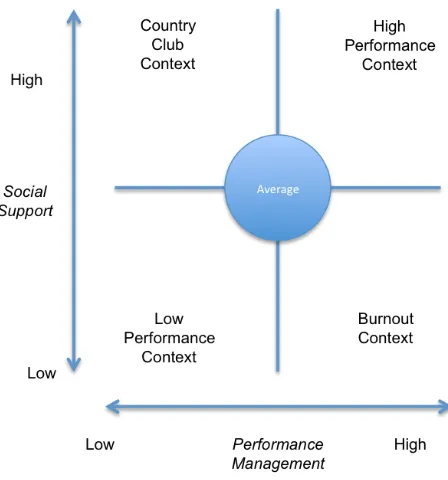
Gibson and Birkinshaw (2004) plotted the attributes of CA along the dimensions of alignment and adaptability to establish two dimensions of organizational context: performance management, a combination of discipline and stretch, and social support, a combination of support and trust. These relationships are shown in Figure 1.
Figure 1 – Performance Consequences of Contextual Ambidexterity
In order to fully integrate a CA strategy, a culture of activation and engagement must exist throughout the organization. Together, discipline, stretch, support, and trust shape the individual and collective behaviors, and an organization’s distinctive values, culture, and leadership, which in turn shape business-unit capacity for CA and superior performance (Birkinshaw & Gibson, 2004; Adler et al., 1999). Moreover, examining CA with regard to these antecedents suggests a strong link between employees’ qualities and attitudes, and the success of creating and maintaining an ambidextrous environment. Using this framework, CA can be viewed as a shared responsibility of individual employees within the firm (Napier, 2011).
Ghoshal and Bartlett (1994) emphasized the primacy of an organization's work ethic as a strong influence on the behaviors and actions of its members. Birkinshaw and Gibson (2004) supported this sentiment by arguing that discipline, stretch, support, and trust are interdependent and complementary features of context that are non-substitutable. That is, all four must be present in order for a business unit to become ambidextrous, and subsequently, to perform well. However, as of yet, no study has conclusively tested whether all four antecedents need to be fully present for
ambidexterity to be achieved, or whether certain circumstances may allow one or more element to be absent with affecting performance.
III.3 Contextual Ambidexterity and Small Business
Thus far, ambidexterity has been presented in general terms relating to businesses of any size. Next, applying contextual ambidexterity principles in a small business environment is considered. Although a major premise of ambidexterity research posits that ambidextrous organizations exhibit better performance, the ambidexterity–performance relationship remains unclear. Some researchers extol the benefits of ambidexterity (Gibson & Birkinshaw, 2004; He & Wong, 2004; Lubatkin et al., 2006); others argue that firms should choose either alignment or adaptability in order to avoid being mediocre at both (Ghemawat, 1993). Some even question whether there are any performance benefits of ambidexterity at all (Van Looy et al., 2005). Regardless, the path from ambidexterity to organizational performance is strewn with implementation challenges, particularly related to the need to devote sufficient resources to different functional areas (Bierly & Chakrabarti, 1996; Kyriakopoulos & Moorman, 2004; O’Reilly & Tushman, 2004) and achieve flexibility in the allocation of company resources across alignment and adaptability activities (O’Reilly & Tushman, 2004; Van Looy et al., 2005). Ambidexterity researchers typically assume that resources are abundantly available and that managers across the organization have equal access to them (O’Reilly and Tushman, 2004; Simsek et al., 2009), yet this assumption is not universally tenable (Kyriakopoulos & Moorman, 2004). The amount of capital required clearly favors larger businesses’ efforts to increase ambidexterity. The paucity of research into internal contextual factors that might underlie the performance consequences of ambidexterity (Raisch & Birkinshaw, 2008) leaves an unanswered question: what contingencies define a firm’s ability to translate its simultaneous pursuit of alignment and adaptability into enhanced performance?
Since the CA literature focuses so directly on human resources, the HR function in businesses of all sizes that have employees would appear to play an important role in achieving organizational ambidexterity. Small businesses with limited funds may even find their staff to be a more valuable investment than equipment or other resources. Although the HR literature has focused on structural ambidexterity (Boehm & Turner, 2004; Vinekar et al, 2006), there has been
no research investigating how small technology management consultancies can achieve CA through the implementation of HPWS. In addition, larger businesses typically have more capital to invest in a wider variety of ambidexterity-increasing efforts, and larger companies have most often been the subject of previous research. It remains unclear, therefore, how small businesses may develop ambidexterity.
III.3.1 Applications of contextual ambidexterity theory
The concept of CA is versatile. Ambidexterity essentially means the ability to balance two different and often opposing things at once. This notion can easily frame any number of topics that focus on the tensions between dualities. March (1991) discusses the tensions between exploration and exploitation as they apply to organizational learning. Learning, analysis, imitation, regeneration, and technological change are major components of any effort to improve organizational performance and strengthen competitive advantage. Ghoshal and Bartlett (1995) delve into the concept of organizational context by exploring the elements of discipline, stretch, support, and trust and their impact on the organizational structures and processes of companies— specifically, on the roles and relationships of individuals within their organizations. In continuing March’s analysis of these tensions, Tushman and O’Reilly (1996) argued that, in order to sustain long-term success and sustain organizational evolution, managers and organizations must be ambidextrous and simultaneously balance the evolutionary and revolutionary changes associated with alignment and adaptability. This ambidexterity, combined with a senior team that continually reinforces the core values of autonomy, teamwork, initiative, accountability, and innovation, allows companies to successfully avoid decline(Tushman & O’Reilly, 1996).
One successful case study on ambidexterity (Adler, Goldoftas, and Levine, 1999) focused on an automobile manufacturing plant, examining the contextual factors that contribute to ambidexterity between firm flexibility and efficiency. They conclude that reconciling the contextual factors of support—in the form of training—and trust increased the organization's capacity for flexibility at a given level of efficiency, and created capabilities that served to improve efficiency (Adler, Goldoftas, & Levine, 1999). In later research, He and Wong (2004) explored the positive effect of ambidexterity on technological innovation. Their study focuses on how firms commercialize new technological knowledge and ideas into new products or processes. He and
Wong conclude that the continuous management of the struggle between exploration and exploitation alongside the prioritization of resources for innovation support the value inherent in an ambidextrous organization.
In other research, Tiwana (2008) applies CA to understand the tensions between bridging and strong ties among innovation-seeking alliances. Bridged ties span structural gaps to provide the potential for innovation, but can lack the capacity to be fully integrated. Strong ties provide integration capacity but are deficient in innovation possibilities. By pursuing dual strategies (‘ambidexterity’ as defined by Gibson and Birkinshaw (2004)) and applying them to the context of alliances at the project level, alliance performance can theoretically be enhanced. Alignment with alliance objectives combined with the capacity to change in the environment is conceptualized as alliance ambidexterity (Tiwana, 2008).
Similarly, Rothaermel and Alexandre (2009) apply a contextually ambidextrous approach to firm technology-sourcing strategies. In general, an organization’s technology-sourcing strategy consists of pursuing exploration and exploitation through combining internal and external sources of knowledge. Rothaermel and Alexandre (2009) conclude that simultaneously balancing these two endeavors contributes to a reduction in risk, an increase in competitive advantage, and gains in the return on investment for innovation activities. Successfully developing CA allows software firms to broaden the scope of combinations between internal and external sources of existing and new knowledge, which would, ideally, have a positive effect on performance (2009).
In addition, Napier et al. (2011) integrate existing theories on CA with research on software improvement processes in order to develop a framework to analyze how software organizations manage the tensions between exploitation and exploration. They propose principles for how software managers can build ambidextrous capabilities to improve firm-level coordination of products, projects, and innovation efforts (Napier et al., 2011). Their results show that the role of ambidexterity in the support of a software organization’s firm-level coordination is developed through a process of first diagnosing the context of a firm’s alignment, adaptability, performance management, and social support already in place (Napier et al., 2011). The next stage establishes an approach to build up CA and then acts to transform practices. The last principle to improve firm-level coordination suggested by Napier et al. (2011) is to take those new practices and processes, disseminate them throughout the organization, and ensure that they are learned and fully implemented.
A more recent investigation on CA was performed by Ramesh, Mohan, & Cao (2012). They learned that distributed development is linked to increased globalization, where project team members are often separated along geographical, temporal, or organizational boundaries, and is characterized by infrequent face-to-face contact, or short, sporadic, selective, and formal meetings (Ramesh et al., 2012). Conversely, agile software development utilizes methods that respond to change resulting from turbulent business environments, such as a strong emphasis on constant communication among team members and customers, particularly through face-to-face interaction and interpersonal coordination (Ramesh et al., 2012). There are conflicting challenges when these two methods of development are both required on a single project. However, by introducing the concept of CA, the issue can be addressed with more strategic approaches that guide the development of processes which foster both agile and distributed development.
III.3.2 Resource Constraints for Small Businesses
This is the first qualitative case study that examines the process of how CA can be fostered through introducing the components of HPWS. In turn, this study is a response to a call for multi-faceted research into organizational ambidexterity by Raisch and Birkinshaw (2008). To date, the realization of discipline, stretch, support, and trust in a corporate environment has not been integrated in a HPWS. As a result, this research is one of the rare examinations of ambidexterity in SMEs using HPWSs as a framework.
The study also responds to Lubatkin et al. (2006)’s call to extend research into the antecedents and consequences of CA in SMEs. SMEs make up a significant element of the world economy and play a key role in both job and wealth creation. As such, they are considered a significant driver of future economic growth in most economies (e.g., Wolff & Pett, 2006).
III.3.3 Human Resource Management and High Performance Work Systems
How to fulfill the strategic potential and contribution of human resource management (HRM) to enhance an organization’s competitiveness has been an ongoing debate in the HR community (Huang & Kimb, 2013). Huang and Kimb posit that in order for an organization to be ambidextrous, its HRM function also needs to ambidextrous. Kang and Snell (2009) explain that CA assumes that the ambidexterity of an organization as a whole derives from specific actions of individuals so that it is inextricably tied to a firm’s efforts to manage human resources. Gibson and Birkinshaw (2004) explore where the decisions are made about the split between alignment
and adaptability. They identify that the important decisions are made on the front line, by individual employees. Further, in order to ensure that an organization is populated appropriately with employees capable of making those decisions, a strategic HRM system must be developed and implemented. A review of the HRM literature supports the idea that strategic HR practices support the human capital factors that enable an organization to become contextually
ambidextrous.
Two key themes characterize the strategic HRM literature. First, coherent systems of mutually-reinforcing HR practices are more likely to support sustainable performance outcomes than any individual practices. Second, not all HR systems are equally effective (Kehoe & Wright, 2013). In response, strategic human resource management (SHRM) scholars have suggested that organizations can use performance- and commitment-oriented human resource practices to drive organizational effectiveness (Kehoe & Wright, 2013). Certain sets of human resource practices have been found to improve employee effectiveness and to predict higher levels of organizational performance. These sets of practices, or “bundles”, are referred to as HPWS or high involvement work systems (Gittell et al., 2009).
This term has generally been used to describe systems of horizontally- and vertically-aligned employment practices designed to affect both the ability and the motivation of employees (Huselid, 1995). The consensus is that these practices include selection (or hiring), training, mentoring, incentives, and knowledge-sharing mechanisms, and that these practices are most effective when they are implemented in bundles because of their combined effects on performance (Gittell et al., 2009). High-involvement HR systems generally include coherent sets of HR practices that enhance employees’ abilities, motivations, and opportunities to put forth discretionary effort (Prieto & Santana, 2012). High-performance HR systems rely on the creation of a mutual investment-based employment relationship, wherein an organization invests in workforce skills and opportunities and, in turn, expects employees to be qualified and motivated to make valuable work-related investments in the organization (Kehoe & Wright, 2013).
A commonality across practices in any high-performance HR approach is the focus on promoting workforce ability, motivation, and opportunities to perform behaviors consistent with organizational goals (Kehoe & Wright, 2013). Furthermore, Prieto and Santana (2012) suggest that practices based on commitment and involvement influence employees’ collective attitudes and behaviors, since these practices impact employees’ perceptions of the organizational social
climate as being conducive to superior performance outcomes. This social climate determines what employee behavior is appropriate at work, serves as a guideline for molding employees’ behavior toward the goals of the organization, and improves employees’ abilities, motivation, and opportunities to access and mobilize one another’s knowledge. Activities related to hiring, training, placement, socialization, and compensation are particularly relevant in this regard. Thus, a strategic HR function serves as an important enabler by designing policies and practices by which the firm encourages, supports, and sustains innovation, knowledge creation, and values creation to support effective strategy formulation and implementation (Buller & McEvoy, 2012). Employees’ behavioral integration through HR practices serves as a way to achieve a balance between the alternative processes of exploration and exploitation (Raisch, Birkinshaw, Probst & Tushman, 2009).
Gibson and Birkinshaw (2004) explain that ambidexterity is developed by building a business unit context that encourages individuals to make their own judgments as to how best to divide their time between the conflicting demands for alignment and adaptability. Organizations using high-involvement HR practices make a significant investment in their pool of human resources so that employees are well-trained, skilled, motivated, and empowered to conduct their jobs, all factors which contribute greatly to the goals of an ambidextrous organization (Prieto & Santana, 2012). Adler et al. (2009) note that much of a firm’s success can be attributed to its investments in the human resource practices that boost employee motivation, skill, and adaptability. The causal mechanisms through which HPWS influence performance outcomes constitute two main groups: human capital and skill on the one hand, and motivation and commitment on the other (Gittell et al., 2009).
Despite the theoretical support which posits that certain employee attributes lead to improved performance, there remains a lack of research that directly connects HRM approaches with the process of developing ambidexterity. For instance, it is unknown whether offering HPWS ability-enhancing activities, like training, will entice existing employees to exhibit the qualities necessary to enable antecedents like trust. In addition, it is also unknown whether HPWS motivation-enhancing activities, like compensation, are enough to enable antecedents like stretch. Overall, little is known about how HPWSs can help resolve the tensions resulting from an organization’s attempt to become more contextually ambidextrous.
III.3.4 Performance management, social support, and the A-M-O model of HRM
Ghoshal and Bartlett (1997) identify four behavioral antecedents of discipline, stretch, support, and trust, as being the main enabling factors to achieve CA in an organization. Patel et al. (2013) suggest that integrating these antecedents into organizational practice offers a straightforward theoretical link between HR practices and performance management.
As previously reviewed, discipline exists within an organization when employees understand what is expected of them, are provided with the proper skills to meet those expectations, and are held accountable for their actions. Stretch occurs when employees are given goals that “raise the bar” compared to previous performance targets. Support refers to the ability of the company to provide resources, care, and autonomy to employees. Finally, trust is influenced by perceptions of equity within the organization, the competence of organizational leaders, and the level of involvement offered to employees. These antecedents combine to form the organizational contexts of performance management and social support as depicted in Figure 1.
An HR system can be useful in building a context with both performance management and social support by helping to form an organizational system that encourages the attainment of more and more ambitious goals, supporting performance management (Patel et al., 2013). Social support, or the employee relations system, includes attachment, socialization, advancement, and inducement while the performance management system includes job design, workflow, performance appraisal, supervision, and empowerment mechanisms (Kang & Snell, 2009). Researchers taking a behavioral perspective suggest that the value of employees' human capital cannot be realized unless they are willing to use their capabilities to their full extent (Jackson & Schüler, 1995). To encourage employees to do so, organizations must utilize HR practices to enhance employees’ intrinsic and extrinsic motivation at work in order to evoke desired work behaviors and discretionary efforts contributing to operational outcomes. Bundling HR practices into a high-performance work system provides organizations the freedom to tailor practices to specific organizational needs. While individual HR practices may be geared toward building discipline, stretch, trust, or support alone, it is likely that combining these different sets of practices into an HPWS promotes a context that helps to create an ambidextrous workforce.
There is no consensus in the literature on the best approach to implementing a strong HRM system. Some researchers have suggested that HR practices affect organizational outcomes by
influencing employee role behaviors. Meanwhile, others have adopted more of a human capital and resource-based perspective, focusing on the potential contributions of employees' competencies—that is, their knowledge, skills, and abilities (Jiang et al., 2012). Jiang et al. note that although employees contribute through both their competencies and their actions, researchers have typically focused on only one perspective to understand how HR systems impact organizational outcomes. As a result, Jiang et al. strongly recommend considering multiple perspectives simultaneously which will provide a broader and more complete picture of the relationship between HRM and organizational outcomes.
III.3.5 Contextual Ambidexterity and the A-M-O model of HRM
A theoretical link between CA and human resource management can be strengthened by drawing upon the ability-motivation-opportunity (AMO) model of HRM (Appelbaum, Bailey, & Berg, 2000). The theory states that HR practices contribute to developing employees' by focusing on three domains: abilities (A), motivation (M) and opportunities (O) (Lepak et al., 2006). The fundamental tenet of the AMO model is that people perform best when they have the motivation and when their work environment provides the necessary support and avenues for expression. A major corporate trend today is for firms to innovate in order to achieve a sustainable competitive advantage. However, the focus of corporate innovation should be based on the understanding that organizations themselves do not "perform". Rather, it is individuals who perform in ways that allow the organization to achieve desirable effectiveness and performance outcomes (Lepak, Liao, Chung, & Harden, 2006). As attitudes and behaviors are shared between team members, these individual characteristics will emerge at the organizational level as collective human capital, and only then will constitute a source of competitive advantage and performance (Nyberg, Moliterno, Hale, & Lepak, 2014).
Extending this logic, HR systems designed to deliberately maximize performance management and social support in order to achieve ambidexterity can be viewed as a combination of those practices intended to enhance employee ability, motivation, and opportunity to contribute (Jiang et al., 2012). The AMO framework purports that employees who have the opportunity to participate in HPWS (e.g., decision-making, self-directed teams) and who have the requisite skills and incentives to do so will perform better than those that do not have these attributes (Buller & McEvoy, 2012). Widely-used as a micro-level theoretical framework for examining the HRM–
performance relationship, the AMO model also implies that organizations need to use HR practices in order to recruit and retain talented employees and realize operational and financial objectives (Jiang et al., 2012). Motivation and discretionary effort underlie the association between human resource practices and performance, and are triggered by a strong human resource system (Gittell et al., 2009).
It is therefore useful to conceptualize HR practices as falling into one of three primary dimensions: skill (or ability)-enhancing, motivation-enhancing, and opportunity-enhancing. Skill-enhancing HR practices are designed to ensure appropriately skilled employees and these activities such as comprehensive recruitment, rigorous selection, and extensive training. Ability-enhancing practices include formal selection tests, structured interviews, hiring selectivity, high pay, and training opportunities (Kehoe & Wright, 2013). Jiang et al. (2012) conclude that organizations can increase the benefits of investing in HRM by sharpening their focus on practices that enhance employee skills, such as recruitment, selection, and training. Motivation-enhancing HR practices typically include efforts such as developmental performance management and formal performance evaluation mechanisms, competitive compensation, incentives and rewards based on individual and group performance outcomes, extensive benefits, merit-based promotion and career development, and job security (Jiang et al., 2012; Kehoe & Wright, 2013). Lastly, opportunity-enhancing HR practices are designed to empower employees to use their skills and motivation to achieve organizational objectives. Flexible job design, work teams, formal employee involvement and participation in processes, autonomy in work-related decision-making, and regular communication and information-sharing efforts are generally used to offer these opportunities.
A consistent theme in the literature is the argument that successful human resource management must have the overarching goal of attracting, retaining, and motivating human resources toward the completion of organizational goals by creating a fit between the knowledge, skills, and abilities of a person and the tasks, duties, and responsibilities required by a job (Patel et al., 2013). HR research identifies that high performing human capital is the primary determinant of an organization’s productivity and a source of competitive advantage. Human capital is also difficult to replace without significant costs, and not easily imitated by rivals. Consequently, well-staffed organizations are more likely to achieve operational goals such as high productivity and quality, great service, and innovation (Jiang et al., 2012).
III.4 Summary
Ambidexterity is desirable for many organizations in order to simultaneously discover new directions for innovation while maintaining the development of established successful trajectories. The traditional approach of structural ambidexterity has largely given way to CA, which is considered to be a superior method. Research focused on promoting ambidexterity from a human resource management perspective supports the 4-factor “discipline, stretch, support, trust” foundation for successful ambidextrous environments. In turn, this suggests the value of Ability – Motivation – Opportunity theory for its potential explanatory power to understand the influences of these factors at a deeper level.
Most theories regarding ambidexterity assume that organizations are large enough to allocate sufficient resources to creating and maintaining an ambidextrous environment. However, the ideal route for small businesses with fewer resources to pursue ambidexterity requires more attention. How can small technology solution providers build CA through the implementation of HPWS? This study evaluates a small solution provider’s attempts to build CA through implementing a high-performance work system implementation over time. Furthermore, this study focuses on understanding both how to achieve CA in small businesses, and how human resource practices might facilitate this achievement. We turn now to a description of the methodology used in this case study.
IV METHOD IV.1 Research Design
Myers (2009) explains that understanding context is a key benefit of using a qualitative case study as adopted in this study. The scope of this case study is the process undertaken by the subject of the study, CloudCo, in pursuing the development of an ambidextrous environment. The events related to this endeavor took place from January 2004 through January 2015 within all levels of CloudCo, including executive management, site managers, and line employees so our data collection will focus on this context.
A combination of CA and HPWS (Gibson & Birkinshaw, 2004; Patel et al., 2013) are used as a framework to examine the process of building CA in a small technology consultancy. Based on Gibson and Birkinshaw’s description of organizational ambidexterity, we integrate existing theories of CA with practices of HPWS. Previous research has established a theoretical framework of four key antecedents of ambidexterity which affect employee behavior to produce ambidexterity. This study explores the temporal building of CA in a small business setting and the creation of such antecedents through a variety of actions taken by executive management, onsite project managers, and line staff of the organization.
As a case study, this research examines contemporary events for which the researcher may or may not be able to manipulate relevant behaviors. Yin (2003), described the case study as a viable option for engaged scholars who can exercise control. As Yin (1981, 2003) points out, in situations when "how or "why" questions are being posed, when the investigator has little control over events, and when the focus is on a contemporary phenomenon within some real-life context, a case study approach may be the preferred research method. As a case study of
organizational processes, this research has the advantages of face validity (a real, contemporary situation which other researchers or organizations can identify with or may be facing),
“retain[ing] the holistic and meaningful characteristics of real-life events” (Yin, 2003), and allowing the researcher to investigate complex human interactions. It necessarily also has the usual disadvantages of case studies, including problems of access, control, relevant focus, and time required (Myers, 2009: 80-82). However, these are mitigated through engaged scholarship, since the researcher has access, control, and a focus on producing results (both scholarly and practical) in a timely manner.
In studying this “how” question, this research is designed as a process study, considering process as a developmental event sequence (Van de Ven, 2007, pp. 196-197). As such, its central focus is on the progressions (nature, sequence, and order) of activities or events that an
organization undergoes rather than on a category of concepts primarily concerned with variables. Traditional approaches to researching ambidexterity have situated it as the consequence of certain prerequisite factors, rather than the result of an ongoing process. Given the timeline of this case study, it will become evident through the data analysis whether a discrete ambidextrous state was reached immediately upon completion of its antecedents, or whether it developed more slowly over time -- suggesting a more nuanced and continuous process at work. The previous literature on CA has implied a discrete cause-effect series of stages, but has yet to make clear whether the real-world implementation of such a strategy would in fact allow for a more gradual or even haphazard transition.
As a retrospective study, this analysis provides the advantage of already being aware of the “big picture;” how events ultimately developed and the outcomes that resulted. This post hoc knowledge is helpful in interpreting events and constructing a narrative, since unlike real-time observations a retrospective study incorporates afterthought concerning critical events that the researcher may see more easily than if trying to identify such events as the process unfolds. Unfortunately, retrospective approaches may create certain biases, events may be filtered out that do not fit, or minority views may be censored (Van de Ven, 2007, p. 208). Where possible, we triangulate interviewee responses against each other, and against other data sources to lessen bias and improve reliability.
Lastly, to increase its relevance to real-world practice, the pluralistic methodology of engaged scholarship is employed (Van de Ven, 2007; Van de Ven & Poole, 1995). This is a participative approach which requires obtaining the perspectives of various stakeholders in order to understand complex problems (Van de Ven, 2007, p. 9). More specifically, this particular engaged scholarship study uses an informed basic research approach, in which advice and feedback is solicited from various key stakeholders and informants such as board members, employees, managers, lab participants, prospective employees and other researchers in each step of the research process: design, theory-building, problem solving, and problem formulation.
As engaged scholarship, this research adopts a realist philosophy of science, described by Van de Ven (2007) as a philosophical movement contending that there is a real world existing
independently of our attempts to know it; that we humans can have knowledge of that world; and that the validity of our knowledge is, at least in part, determined by the way the world is.
Realism as a philosophical position is partly metaphysical and partly empirical. Reality transcends observed experience, but is approachable through research methods. Since the key researcher is the company owner and a key stakeholder, he will be included as an engaged participant observer.
IV.1.1 Research site
The subject of this research is a small privately-held technology consulting company in the northeastern United States. Interview data is used to establish antecedents to various elements of ambidexterity, as well as changes that have occurred over time. This study is analyzed at the organizational level. In contrast to structural ambidexterity, CA can be studied at multiple levels of analysis. CA generally plays out in real-world organizations at an individual level (Birkinshaw & Gibson, 2004). However, CA can also be viewed primarily as an organizational phenomenon; that is, the supporting processes, norms, and support structures are what ultimately cause
individuals to act in an ambidextrous way. Thus, one can argue that CA is best studied at the organizational level.
Although the researcher is in control and directs all research activities, advice and feedback is solicited from various key stakeholders and informants such as board members, managers, and other researchers in each step of the research process including research design, theory building, problem solving, and problem formulation (Van de Ven, 2007). The research follows data analysis procedures and display methods suggested by Miles and Huberman (1994) for qualitative case studies, using three concurrent flows of activity: data reduction, data display, and conclusion drawing and verification.
Through a variety of data collection methods, the researcher closely examines the creation of exploratory processes over time in a single technology management consulting firm, CloudCo, whose executive management desires to significantly increase its competitive
advantage. This business is chosen because its profile is similar in nature to many small businesses throughout the United States. To deepen understanding and to help achieve
satisfactory validity, the researcher draws on data from several sources gathered using different methods, including formal interviews with stakeholders, analysis of email correspondence, observations of advisory board and management meetings, and review of archival documents. A
retrospective approach is used in order to gain an in-depth understanding of how levels of ambidexterity have changed since CloudCo’s founding in August 2003.
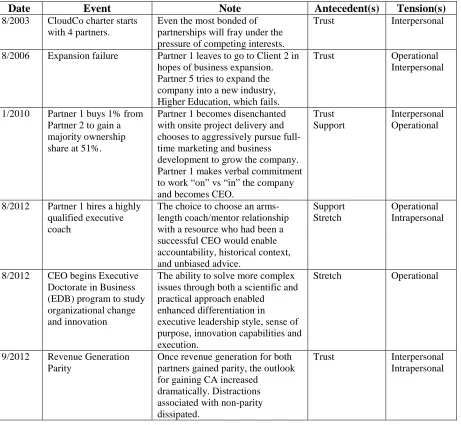
Initially, the company involved four partners who possessed a common technical and functional background in Enterprise Resource Planning (ERP) systems. Within 18 months of startup, two partners left the firm to pursue other interests, and the remaining two immediately brought in another partner who focused on the Higher Education marketplace. Upon recognizing their desire to focus on the Washington D.C. target market, the Higher Education partner left the company to pursue other interests. These rapid changes make it clear that within 3 years of startup, CloudCo had experienced tremendous uncertainty, lack of a shared vision, and professional turmoil.
The two remaining partners agreed to maintain a strict business relationship at an equal 50% ownership stake under the existing corporate entity. This relationship was characterized by a sole focus on individual partner financial accomplishments with little consideration of the company as a whole. Each partner retained 100% of their customer billable hours and no investment dollars were retained in the company. By the end of 2009, one partner aspired to create a more robust company instead of a loosely-coupled partnership. That partner bought out 1% of the ownership stake and became the CEO in March of 2010. Growth ensued over the next 30 months and the company doubled in size and added a higher level of complexity. In late 2012, the CEO began focusing on the management of that complexity in an effort to prepare for another period of firm growth. The simultaneous activity associated with both exploitation and exploration became the subject of corporate analysis, leading to the creation of the Solutions Optimization and Innovation Lab (SOILTM) in late 2013 to institutionalize practices necessary to
ensure the continuing balance of exploitation and exploration in CloudCo.
IV.2
Data CollectionThe data for this research consists of three primary sources: 1) existing employee and management interview data from an earlier study on the analysis of CloudCo’s efforts to improve performance through strategic planning, while sustaining current business performance; 2) semi-structured interviews with key personnel, senior project managers, corporate executives, and other key employees; and 3) historical content of participant-observer focused on understanding CloudCo’s organizational context. Since the primary researcher is the owner of the company, all
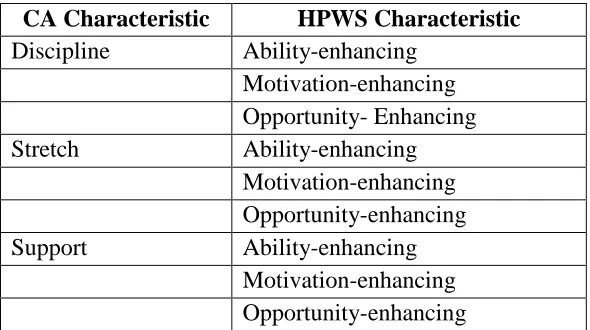
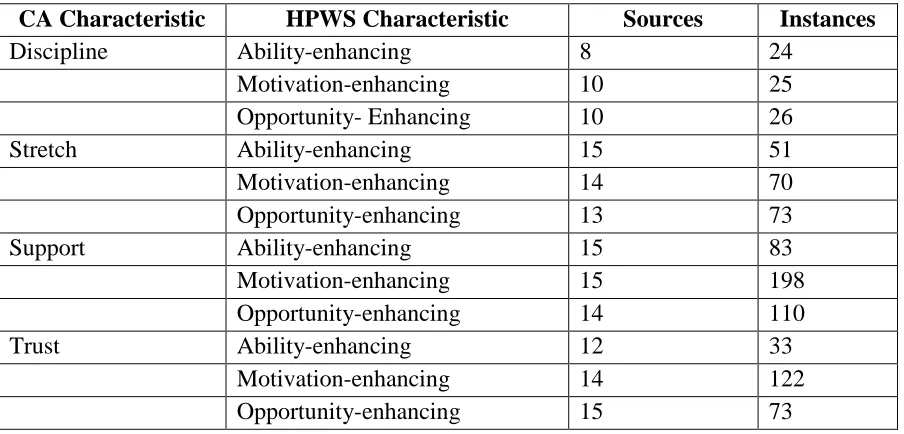
interviews were conducted by an independent, third-party interviewer, working with formal, semi-structured interview scripts in interviews with executive management, staff employees, onsite project managers, and line staff. Having a third party involved in data collection ensured that employees did not feel pressured to cooperate through the employer/employee relationship. The interview data was sanitized of all identifying data for confidentiality of the data source. Archival documents such as website information, emails, presentations, budgets, and meeting minutes were reviewed as part of the database. To organize and document data and increase the reliability of the information by maintaining a chain of evidence, the researcher used NVivo 9.1 software (NVivo qualitative data analysis software; QSR International Pty Ltd. Version 10, 2014) with the collected data coded as detailed in Table 3-6 below.
IV.3 Semi-structured interviews
The interview was conducted in a manner conducive to recall over a period of as little as 6 months to a period of 12 years, given the tenure of the interviewee. The semi-structured
interviews were centered on the primary antecedents of ambidexterity to determine the degree to which ambidexterity was achieved at CloudCo and the specific forms and characteristics of ambidexterity that were present. During the course of the semi-structured interviews their format changed slightly to allow for a deeper understanding of emerging trends and themes (Eisenhardt, 1989).
The main targets for the semi-structured interviews were members of CloudCo’s executive team and employees. A total of fifteen interviews were conducted with each lasting approximately 30 minutes. The interviews were primarily conducted face to face, with one conducted over the phone. Each interview was recorded in audio format and transcribed. Eight of the interviewees were longer-term (2+ years) CloudCo employees and thus able to give both a medium-term historical perspective as well as a current perspective. Three of the interviewees were long-term employees/consultants (4+ years) and able to give a long-term historical perspective along with a current perspective. The absence of an interviewee from the human resource department might seem peculiar. At the time of the interviews, the company was conducting a search for a new human resource professional.
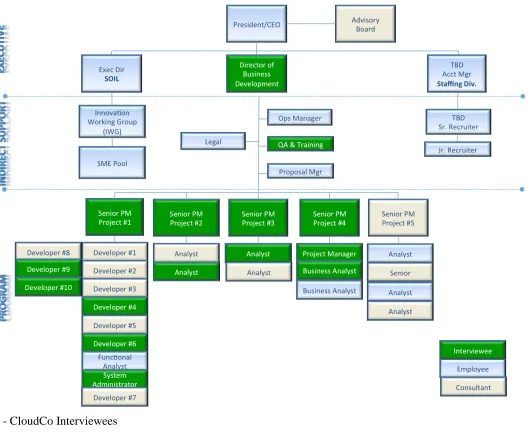
Figure 2 indicates the specific individuals who were selected for interviews, highlighted in green.
Figure 2 - CloudCo Interviewees
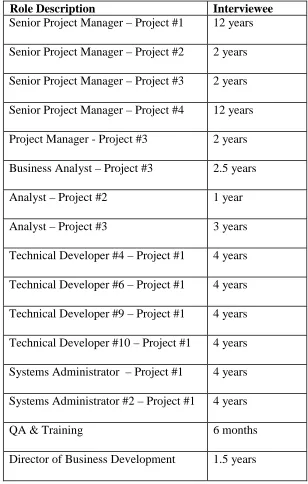
Finally, Table 3 provides a list of each role and interviewee tenure with CloudCo. Table 2 - Participant Titles and Organizational Roles
Role Description Interviewee
Senior Project Manager – Project #1 12 years Senior Project Manager – Project #2 2 years Senior Project Manager – Project #3 2 years Senior Project Manager – Project #4 12 years Project Manager - Project #3 2 years Business Analyst – Project #3 2.5 years Analyst – Project #2 1 year Analyst – Project #3 3 years Technical Developer #4 – Project #1 4 years Technical Developer #6 – Project #1 4 years Technical Developer #9 – Project #1 4 years Technical Developer #10 – Project #1 4 years Systems Administrator – Project #1 4 years Systems Administrator #2 – Project #1 4 years QA & Training 6 months Director of Business Development 1.5 years
IV.4 Data Analysis
The role of the researcher in this process of data analysis is to understand the possibilities that the data can reveal. Thematic analysis with constant comparison is used to interpret the transcribed text, and the human actions and situations that were observed during data collection.