Georgia State University Georgia State University
ScholarWorks @ Georgia State University
ScholarWorks @ Georgia State University
Public Health Theses School of Public Health
Spring 5-15-2010
Health Care Disparities and Chronic Disease Burden: Policy
Health Care Disparities and Chronic Disease Burden: Policy
Implications for NGOs
Implications for NGOs
Stella S. Obot
Georgia State University
Follow this and additional works at: https://scholarworks.gsu.edu/iph_theses
Part of the Public Health Commons
Recommended Citation Recommended Citation
Obot, Stella S., "Health Care Disparities and Chronic Disease Burden: Policy Implications for NGOs." Thesis, Georgia State University, 2010.
https://scholarworks.gsu.edu/iph_theses/88
Health Care Disparities and Chronic Disease Burden: Policy Implications for NGOs
By
Stella S. Obot
Bachelors of Science in Chemistry, 2006
Xavier University of Louisiana
A Capstone Submitted to the Graduate Faculty of
Georgia State University in Partial Fulfillment of the Requirements for the Degree
Master of Public Health
Atlanta, GA
30303
Ike S. Okosun, MS, MPH, PhD, FRIPH, FRSH
Committee Chair
Russ Toal, MPH
APPROVAL PAGE
Health Disparities and Chronic Disease Burden: Policy Implications for NGOs
By
Stella Obot
Approved:
Ike S. Okosun, MS, MPH, PhD, FRIPH, FRSH
Committee Chair
Russ Toal, MPH
Committee Member
March 12, 2010
AUTHORS STATEMENT
In presenting this thesis as a partial fulfillment of the requirements for an advanced degree from Georgia State University, I agree that the Library of the University shall make it available for inspection and circulation in accordance with its regulations governing materials of this type. I agree that permission to quote from, to copy from, or to publish this thesis may be granted by the author or, in her absence, by the professor under whose direction it was written, or in his absence, by the Associate Dean, College of Health and Human Sciences. Such quoting, copying, or publishing must be solely for scholarly purposes and will not involve potential financial gain. It is understood that any copying from or publication of this dissertation which involves potential financial gain will not be allowed without written permission of the author.
Stella S. Obot__________________
NOTICE TO BORROWERS
All theses deposited in the Georgia State University Library must be used in accordance with the stipulations prescribed by the author in the preceding statement.
The author of this capstone is
Stella S. Obot
651 Woodstone Road Lithonia, GA 30058
The Chair of the committee for this thesis is
Ike S. Okosun, MS, MPH, PhD, FRIPH, FRSH Department of Health and Human Sciences Georgia State University
P.O. Box 4018
Atlanta, GA30302-4018
Users of this thesis who not regularly enrolled as students at Georgia State University are required to attest acceptance of the preceding stipulation by signing below. Libraries borrowing this thesis for the use of their patrons are required to see that each user records here the
information requested.
Name of User Address Date Type of Use
S
TELLA
S.
O
BOT
651 Woodstone Road Lithonia, GA 30058
Phone (404) 368-2436 Email [email protected]
EDUCATION______________________________________________________________ MD Windsor University School of Medicine 8/2007-Present
Chicago, Illinois
MPH Health Policy and Management 8/2006-5/2010 Georgia State Institute of Public Health
Atlanta, GA
BS Chemistry/Biology 8/2002-8/2006
Xavier University of Louisiana New Orleans, LA
EXPERIENCE_____________________________________________________________ Bright from the Start: Georgia Department of Early 11/2009- Present Care and Learning
Nutrition Policy Contractor
Policy Contractor and Operations Analyst
Served as policy contractor, operations analyst, and provided evaluation assistance for the Caregivers Promoting Healthy Habits: Implementing Wellness Policies in Child Care Centers grant made possible by a USDA Team Nutrition Grant.
Delta International Health Foundation 8/2006-Present Chief Executive Officer
Atlanta, GA
Coordinated research, conducted evaluation, and implemented projects that
addressed health literacy, childhood obesity, and manpower development in the greater metropolitan Atlanta area as well as in Nigeria
Georgia State University/ 8/2009-12/2009
Center for Health and Wellness Graduate Research Assistant
Assisted in gathering primary data for interventions with the Safe Care Parenting Program. Became a certified trainer with the Home Accident Prevention Inventory
Centers for Disease Control and Prevention 6/2009-10/2009 Qualitative Research and Evaluation Project Assistant
Division of Oral Health Atlanta, GA
American Red Cross 5/2007-8/2007 Community Disaster Education and Mitigation Intern
Atlanta Metropolitan Headquarters
Presented information on Pandemic Flu preparedness and disaster safety. Passed FEMA Incident Command System course.
HONORS AND AWARDS_____________________________________________________ Who’s Who among Students in American Colleges and Universities
Georgia Institute of Public Health 03/2010
National Deans List
Georgia Institute of Public Health 12/2006
Dean’s List
Xavier University of Louisiana 12/2002-8/2006
PUBLICATIONS___________________________________________________________ The Triangle Diet: Weight Loss Plan for Christians 4/21/2009 Breaking the Cycle of Diabetes, High Blood Pressure, and Heart Disease
E. Goodman Obot, MD and Stella S. Obot; Tate Publishing Enterprises, LLC
CONFERENCES ATTENDED__________________________________________________
Moderator Policy Link 2009 06/2009
Recovering Stronger: Building an Agenda for Shared Prosperity in the Atlanta Region
Emory University Office of Community Partnerships and Policy Link
Participant Pandemic Influenza & Mental Health Summit 07/2007 American Red Cross
Atlanta, GA
PROFESSIONAL ORGANIZATIONS________________________________________________ American Public Health Association
American Diabetes Association
SKILLS__________________________________________________________________ Proficient in MS Word, Excel, PowerPoint, SPSS, SAS, EpiInfo, Atlas Ti
ABSTRACT
Health Disparities and Chronic Disease Burden: Policy Implications for NGOs
Stella Obot
Under the direction of Ike Okosun, PhD, MPH
ABSTRACT
The purpose of this capstone is to develop a program to address health literacy among
African American adults. The social cognitive theory and the health belief model was used to
create a model of an age appropriate, culturally sensitive program with a pre and post test to
improve the health literacy in this population. The Community Health Literacy Improvement
Program (CHIP) is a pilot program that will consist of a four week didactic intervention focused
on combating prose, document, and quantitative health illiteracy. This program will be
implemented through a community based nonprofit organization. Participants who complete the
CHIP program will be able to identify risk factors for chronic diseases, assess their ability to
avoid chronic diseases, and be able to locate community health resources. This proposed
intervention will show that community based nonprofit organizations have an important role to
play in building community buy in and establishing the agency necessary for community based,
culturally sensitive programs such as CHIP to succeed.
TABLE OF CONTENTS
PAGE
ACKNOWLEDGEMENTS ……….. ix
LIST OF FIGURES ……… X CHAPTER 1 INTRODUCTION ….……….. 1
Background ……….. 1
Statement of the Problem ………. 3
Purpose ……….… 5
2 REVIEW OF LITERATURE ……….. 6
Health Literacy ………. 6
Health Belief Model and Social Cognitive Theory ……….. 14
Health Literacy Programs ………. 19
3 INTERVENTION ….………... 22
Community Health Literacy Improvement Program ……… 22
Methodology ………. 31
4 DISCUSSION ……….……… 32
Limitations ………... 35
Recommendations ……… 35
Conclusion ……… 36
REFERENCES ………... 37
APPENDIX A Article of Incorporation Delta International Health Foundation, Inc………... 43
B CHIP Timeline………... 53
ACKNOWLEDGEMENTS
I would like to thank Dr. Okosun and Professor Toal for their guidance from the beginning of my public health career at Georgia State Institute of Public Health until now.
I would like to thank E. Goodman Obot, MD for giving me full access to his mind.
I would like to thank the officers of Delta International Health Foundation for their determination and dedication to the service of people all over the world.
And to David Obot Goodman…the torch has officially been passed. As Pop would say, you got next.
LIST OF FIGURES
Page
Figure 1 National Assessment of Adult Literacy 7
Figure 2 National Assessment of Adult Literacy Performance Levels 10
Figure 3 Racial Stratification of the National Assessment of Adult Literacy 12
Figure 4 Health Belief Model 16
Figure 5 Social Cognitive Theory 17
Figure 6 Locus of Control 18
Figure 7 CHIP Program 25
Figure 8 CHIP Pre/Post Test 27
1
CHAPTER I
INTRODUCTION
BACKGROUND
Currently, 1 in 3 Americans self identify as African American, Hispanic,
American Indian/ Alaska native, Native Hawaiian or Pacific Islander and by 2050, half of
the population will be a person of color (Census, 2004). Minorities, regardless of their
socioeconomic status, are less likely to be insured than their white counterparts and the
rate of un-insurance is the highest among low income Hispanics (Kaiser, 2005; Wherry,
2004). This demographic shift and change in insurance coverage status presents a
challenge to policy makers concerned with the delivery of quality health care to all.
Health care disparities between whites and non whites are widely acknowledged to exist
in the areas of access, quality of care, general health status, and medical outcomes
(Satcher, 2005; Smedley, 2003; Levine, 2001). As well, there is a consensus that both
medical and nonmedical factors contribute to these health care disparities (Gansler, 2005;
Mayberry, 2000)
Nonmedical determinants are essential in identifying the landscape of influences
on health disparities (Jerant, 2008; Lurie, 2007). These nonmedical determinants include
poor education and its attendant consequences of low wage jobs, poor quality housing
and low health literacy (Lurie, 2008). Individual, interpersonal, organizational,
environmental, and societal factors all contribute to creating these nonmedical
2
alleviate and eventually eliminate health care disparities among African American
communities. Nonmedical determinants of health disparities are complex and while the
provision of health insurance will alleviate these disparities, more is needed.
Interventions that employ a step- wise, comprehensive approach may be necessary when
designing and implementing health policy to combat these health disparities.
The chronic disease burden in the United States has increased greatly over the
past two decades and research has shown that sizable proportions of chronically ill
patients are not receiving effective therapy, have poor disease control, and are otherwise
unhappy with their care (Wagner, 1997). The most successful chronic disease
interventions occur when the clinical system, lead by a provider, reconfigures itself to
specifically address the health care and global needs and concerns of chronically ill
patients (Wagner, 1996). The needs and concerns of minority patients with chronic
illnesses continue to elude many physicians, and results in poorer disease management
and outcomes for these patients (Coleman, 2005; Wagner, 1996).
Culturally competent education programs are being explored to improve the
health literacy of disparate populations (IOM, 2002). These initiatives focus on
improving personal health management, access to community resources, and examination
of community and personal health beliefs and norms. These initiatives have recently
been expanded to address the association between individual health behaviors and
chronic diseases by community based nonprofit organizations. Educating patients about
3
where to access resources, and providing these minority populations with a consistent
connection to health resources such as a primary care provider, has been shown to
alleviate individual socioeconomic barriers to accessing medical care (Coleman, 2005;
McGinnis, 2002).
STATEMENT OF THE PROBLEM
There are medical and nonmedical determinants of health disparities between
African Americans, other minorities, and their Caucasian counterparts. Research and
existing policies have focused more on addressing the medical determinants, largely
neglecting those that are non medical in origin. Health literacy, especially, is necessary
to successfully navigate the dynamic and complex medical system in the United States
and efforts to combat this confusion are sporadic at best. Communication is critical
achieve successful health outcomes and health literacy remains “a neglected, final
pathway to high quality health care” (IOM, 2008).
It is important that the patient-provider interactions to proceed as smoothly as
possible. There are situations when a provider gives instructions that are misunderstood
by the patient, leading to negative health outcomes. Such an example is as follows.
A two year old is diagnosed with an inner ear infection and prescribed an
antibiotic. Her mother understands that her daughter should take the prescribed
4
doesn’t tell how to take the medicine, she fills a teaspoon and pours the antibiotic
into her daughter’s painful ear. (Parker et al, 2003)
This example clearly shows the dangerous consequences that occur when the
patient does not clearly understand instructions provided and cannot decipher information
provided on prescription medication. This level of health literacy is very common and
over 300 studies have shown that health information cannot be understood by most
people for whom it was intended (IOM, 2004). Low levels of health literacy are
associated with poorer health outcomes, including mortality, self reported physical health
status, and emergency department use (Baker et al., 1998; Wolf, et al., 2006).
This example also highlights the need to improve the healthcare system to ensure
that such misunderstandings are minimized. Dr. Rima Rudd, Senior Lecturer on Society,
Human Development, and Health at Harvard School of Public Health found that a two
sided approach is needed to improve health literacy. This approach consisted of the
demand side, which is what the health care system requires, as well as the skill side,
which refers to individual capacities to respond to system demands (Rudd, Kirsch &
Yamamoto, 2004).
Nongovernmental organizations have a key role to play in improving the skill
side, and improving the health literacy of minority populations and their ability to
navigate the health care system. Improving the health literacy of African American
women between 21-45 will serve to improve their health status, as well as that of their
5
Purpose
In an interview with the American Speech and Language and Hearing
Association, acting United States Surgeon General Rear Admiral Kenneth P. Moritsugu,
MD, MPH remarked that "Low health literacy is a threat to the health and well being of
Americans. And low health literacy crosses all sectors of our society. All ages, races,
incomes, and education levels are challenged by low health literacy." (Moore, 2007).
Approximately one-half of the adult population may lack the needed literacy skills to use
the U.S. healthcare system (USDOE, 2003). Low literacy has been linked to poor health
outcomes such as higher rates of hospitalization and less frequent use of preventive
services and minorities are more likely to have low health literacy than their majority
counterparts (Berkman, 2004).
The purpose of this capstone is to design a community based, culturally sensitive
intervention program that increases the health literacy of African American women
6
CHAPTER II
REVIEW OF LITERATURE
HEALTH LITERACY
Literacy is the ability to use printed and written information to function in society,
achieve one’s goals, and to develop one’s knowledge and potential (United States
Department of Education, 2003). Within this definition of literacy exists further
subdivisions of prose, document, and quantitative literacy. Prose literacy refers to the
knowledge and skills needed to search, comprehend, and use information from
contiguous texts (United States Department of Education, 2003). Document literacy is
the knowledge and skills needed to use noncontiguous texts in different formats including
lists, rows, columns, matrices, and graphs (United States Department of Education,
2003).
Healthcare related document literacy incorporates the ability to locate a healthcare
facility, complete insurance forms, or read a drug label. Quantitative literacy is the
knowledge and skills required to perform tasks that require computations using
information and numbers embedded in printed materials (United States Department of
Education, 2003). These types of tasks are preformed when comparing health insurance
costs, perform quick calculations to understand food labels, or determine the timing of
7
Health literacy also can be defined as the degree to which individuals have the
capacity to obtain, process, and understand basic health information and services needed
to make appropriate health decisions (Ratzan and Parker, 2000). An individual’s health
literacy is mediated by their education, culture, and language as well as the compliance
by those in the medical marketplace and media to provide information that is culturally
sensitive (Ratzan and Parker, 2000). In the absence of a health system that is conducive
and that provides support to those with low health literacy, it is imperative that
individuals work to improve their health literacy in an effort to improve their health
status. Figure 1 below demonstrates that educational systems, health systems, cultural
and societal factors are all areas of potential influence on health literacy and may
[image:18.612.226.422.435.604.2]contribute to health outcomes.
Figure 1: National Assessment of Adult Literacy
8
How well a person comprehends written material varies with his or her conceptual
knowledge of common health related vocabulary, familiarity with the structure of the
written health material, the nature of the task itself, and familiarity with how the health
care system works (Weiss et al, 1992). This task-based definition of health literacy is
closely related to that of general literacy. Most health screening recommendations are
not very explicit. Participants are called upon to read and comprehend long sentences
and draw inferences, which are a demonstration of prose literacy (United States
Department of Education, 2003). For this reason, health related literacy cannot be
independent of general literacy.
In 2003, the National Center for Education Statistics and the US Department of
education began collecting data for the National Assessment of Adult Literacy (NAAL).
For this study, prose, document, and quantitative literacy were measured. A
representative sample of more than 19,000 adults, including 1200 adults in prison, was
used to perform this study (United States Department of Education, 2003). The NAAL
was administered in person in the participant’s home and most participants required
ninety minutes to complete the interview, but were allowed to ask for more time.
Interviews lasted about fifteen minutes for the least literate, who took an alternative
assessment rather than the main NAAL.
The health literacy component of the NAAL was used to describe the status of
health literacy among the nation’s adults, aged 16 and older, who lived in households or
9
preventive measures, and the navigation of the health care system were assessed. It is
important to note that knowledge of particular health issues, understanding of medical
jargon, skills associated with listening, speaking, and nonverbal communication and
materials relevant to a particular group were not included in this assessment (United
States Department of Education, 2003).
The NAAL was more heavily weighted toward awareness of preventive
guidelines and navigation skills of the healthcare delivery system. One of the tasks
consisted of adults being shown an immunization schedule and then being asked
questions such as “How many polio vaccinations should children receive by the time they
are 7 years old?” (United States Department of Education, 2003). To perform this task,
the participant had to use various pieces of information represented in the columns and
rows and is a component of document literacy (United States Department of Education ,
2003).
Results of the NAAL were based on the three health literacy skills (prose,
document, and quantitative) and four literacy levels (below basic, basic, intermediate, and
proficient). The Below Basic level indicated a grasp of the simplest, most concrete
literacy skills and corresponds to a health literacy range of 0-184 (Baker, 2006; USDOE,
2003). The Basic level corresponds to skills that are needed to perform simple everyday
literacy activities and corresponds to a health literacy range of 185-225 (Baker, 2006;
USDOE, 2003). The Intermediate level indicates that the participant is able to perform
10
2006; USDOE, 2003). The Proficient and highest level indicates that the participant
possesses the skills necessary to perform more complex and challenging health literacy
activities and corresponds to a range of 310-500 (Baker, 2006; USDOE, 2003). Figure 2
shows an overview of NAAL performance levels.
General Literacy Level
Health Literacy Range
Simple health literacy task typical of this level
Below Basic- indicates a grasp of no more than the simplest, most concrete literacy skills
0-184 Sign a health form
Searching a short, simple text to find out what a patient is allowed to drink before a medical test
Basic- indicates skills needed to perform
everyday literacy activities
185-225 Entering names and birthdates in a health insurance application Calculate what time to take a
medication by combining two pieces of information
Intermediate- indicates skills necessary to perform moderately challenging literacy activities
226-329 Determine which foods contain a particular vitamin
Determining a healthy weight for a person of specified height based on BMI graph
Proficient- indicated skills necessary to perform more complex and challenging literacy acticities
310-500 Computing the price per year of an insurance policy
[image:21.612.102.549.237.543.2]Interpreting a table about blood pressure, age, and physical activity
Figure 2: National Adult Assessment of Literacy Performance Levels
Source: Adapted from US Department of Education, Institute of Education Sciences, National Center for Education Statistics (NCES).(2003). National Assessment of Adult Literacy (NAAL). Washington, DC: NCES; 2003.
The results showed that 2% of adults were not literate in English and were unable
to participate in the assessment (United States Department of Education, 2003). Another
11
literacy and were also not represented in the results. 14% of the population assessed were
characterized as being at the below basic level, equivalent to about 31 million adults in
the general population (United States Department of Education, 2003). 50% of those in
the below basic level had low oral reading fluency as compared with 12% in the total
population (United States Department of Education, 2003). Adults who did not graduate
from high school made up 15% of the study participants and were 3.3 times more likely
to be at the below basic health literacy level than those who graduated from high school
(United States Department of Education, 2003). The results of NAAL showed that more
is needed to improve the health literacy of adults in the United States.
Adults who reported good, very good, or excellent health conditions had higher
health literacy scores (234, 254, and 262 respectively) (United States Department of
Education, 2003). Those who reported poor or fair health reported lower health literacy
scores, 196 and 207 respectively. 42% of adults reporting poor health and one third of
adults reporting fair health scored Below Basic in health literacy (United States
Department of Education, 2003). Hispanics had lower average health literacy scores
(197) than any other racial or ethnic group (USDOE, 2003; Kutner et al, 2007). White
and Asian/Pacific Islanders had higher average health literacy than did adults in other
ethnic groups (United States Department of Education, 2003; Kutner et al, 2007). The
12
Figure 3: Racial Stratification of the National Assessment of Adult Literacy
Source: US Department of Education, Institute of Education Sciences, National Center for Education Statistics (NCES).(2003). National Assessment of Adult Literacy (NAAL). Washington, DC: NCES; 2003.
Adults living below the poverty level also had lower health literacy scores.
Adults aged 65 and older had less post secondary education and a lower average health
literacy score than adults in younger age groups. Adults who did not have any type of
medical insurance or were not enrolled in any kind of program that helped pay for their
health care had lower health literacy score (average of 220) than those who did (250).
53% of adults without health insurance scored in the Below Basic or Basic level of health
literacy (United States Department of Education, 2003).
While the National Assessment of Adult Literacy (NAAL) provided baseline data
13
much to be desired. Access to NAAL data files is often difficult and very proficient
researchers had trouble access this data (IOM, 2009). Another disadvantage of the NAAL
is the exclusion of those who are unable to read at all. Without properly including this
population in the assessment, data to calculate the prevalence of this problem is
approximated at best.
Currently, the individual questions for the health portion of the NAAL are not
available to the public. One researcher commented that
“I found it particularly troublesome to not be able to find out the exact wording of
the questions. It seemed like NAAL was operating with so many secrets and no
interest in making the data available to advance our knowledge of health literacy”
(IOM, 2009).
This is extremely problematic as data is needed to advance our knowledge of
health literacy so as to develop targeted programs. Many researchers also suggest that
stratifying the four NAAL general literacy categories into grade levels would allow the
data to be more manageable and easily presented (IOM, 2009). Grade levels represent a
concept that is understood by most people and will cause communication to more clear.
There are currently different tools to address health literacy and they include the HALS
(Health Activities Literacy Scale), REALM (Rapid Estimate of Adult Literacy in
Medicine), TOFHLA (Test of Functional Health Literacy in Adults), and the NVS
14
more research is needed to produce a validated, universal, reliable instrument that is
conducive to the study and analysis of the dynamic field of health literacy.
HEALTH BELIEF MODEL AND SOCIAL COGNITIVE THEORY
Theories and models of change specify the relationships among causal process
operating within and across levels of analysis (McLeroy, 1992). They help explain how
and why certain phenomena take place. The health belief model (HBM) and social
cognitive theory (SCT) are two complimentary models of health behavior theory that
provide a basis upon which to structure interventions to combat health literacy in African
Americans (Middleton, 2009).
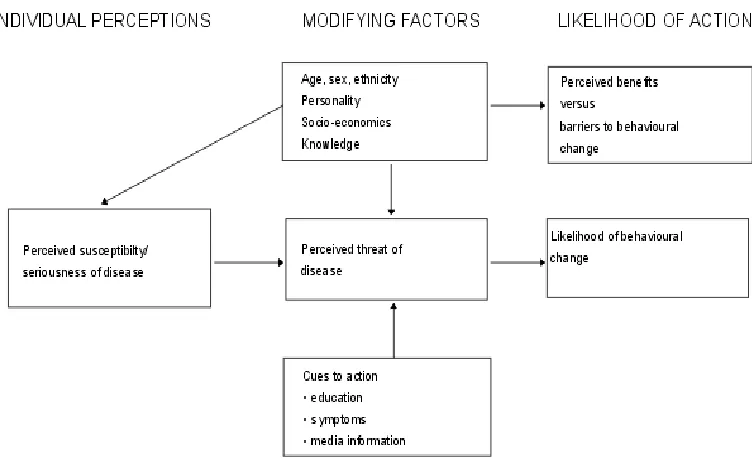
The Health Belief Model (HMB) attempts to explain and predict human
behaviors. There are three assumptions at its core. First, people will take a health related
action if they perceive or believe a negative health condition can be avoided. Second is
the assumption that one will adopt a health related action if they feel the recommended
action will help avoid a negative condition. Third is that one will take health related
action only if they feel they will be able to successfully complete this action (Cottrell et
al, 2005). This model states that people will prevent, screen for, or control disease
conditions if they consider themselves susceptible to the condition, if they believe the
15
of taking health related action are greater than the imagined barriers to taking action
(Janz, 2002).
Several constructs in the health belief model can be studied to further understand
behavioral differences in the African American community that should be targeted to
improve disease outcomes. Perceived susceptibility is the belief that one will actually
acquire the condition. Perceived severity is the belief of how serious a condition is and
what sequlae are likely to follow (Cottrell, 2005). Studies of African American focus
groups have shown that non-adherent members did not feel any symptoms of high blood
pressure at the time of their diagnosis, causing them to doubt the diagnosis (Lukoschek,
2003). It is also likely that these nonadherent patients do not know that hypertension,
without any symptoms, can lead to heart disease and stroke, further leading to their
cavalier self management of their condition. The constructs of perceived susceptibility
and severity are important to combat hypertension, obesity, and diabetes because these
conditions can cause irreparable damage to the body without overt symptoms. If a
patient does not feel “sick” and does not understand which lifestyle behaviors directly
lead to different chronic diseases, they are less likely to take actions to prevent these
illnesses (Lukoschek, 2003).
Another construct in the Health Belief Model is perceived barriers. These are
defined as the cost associated with an advised action (Cottrell, 2005). These barriers can
include time, cost, transportation, lack of convenient places to buy healthy food, and the
16
2004). Barriers to medication adherence include side effects and the cost of the
medication. It is important to correctly identify the perceived barriers to combating
diabetes, hypertension, and obesity in African American communities. Figure 4 below
depicts the health belief model.
[image:27.612.133.509.274.503.2]
Figure 4: Health Belief Model
Source: Glanz, K., Rimer, B.K. & Lewis, F.M. (2002). Health Behavior and
17
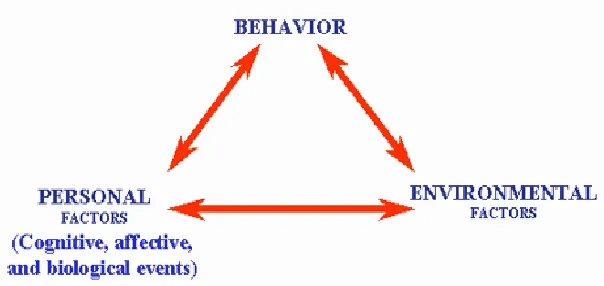
The Social Cognitive Theory (SCT) explains how people acquire and maintain
certain behavior patterns (Cottrell, 2005). Behavior change is dependent on the
interaction between environment, behavior, and personal factors and is depicted in figure
[image:28.612.173.475.243.386.2]5 below.
Figure 5: Social Cognitive Theory
Source: Pajares (2002). Overview of social cognitive theory and of self-efficacy.
Retrieved November 20, 2009 from http://www.emory.edu/EDUCATION/mfp/eff.html.
Three constructs at the center of the social cognitive theory are behavioral
capability, locus of control, and self efficacy (Cottrell, 2005). Behavioral capability is
the belief that one possesses the knowledge and skills necessary to perform a task or
adopt a behavior. An example of behavioral capability is when people are instructed to
exercise aerobically, they would need to know what exactly aerobic exercise is and how
18
Locus of control is internal to those who have control over reinforcement and external for
those who believe an external force have control over reinforcement (Laffrey, 2003).
Those with an internal locus of control are more likely to take direct responsibility for
their actions than those who have an external locus of control. A figure describing
internal versus external locus of control is below.
Figure 6: Locus of Control
Source: Locus of Control: Finding Out Who’s In Charge of Your Destiny. Retrieved on November 15, 2009 from
https://www.mindtools.com/media/Diagrams/LocusofControl.jpg.
Self efficacy is an individual’s confidence in their ability to perform a health
related task or function (Bandura, 1997). Added to the construct of self efficacy is
outcome efficacy, which is the belief that their actions will successfully combat their
disease or prevent it entirely (McLeroy, 1992). If one is to engage in a regular exercise
19
be positive. The intervention to be developed envisions that health literacy impacts the
constructs of behavior capability, locus of control, and self efficacy.
Health Literacy Programs
Health literacy is beginning to garner attention on both the local and national
level. The Institute of Medicine report entitled Health Literacy: A Prescription to End
Confusion showed that 90 million Americans have trouble understanding complex texts
which are used often in medicine (IOM, 2004). This study goes on to highlight the fact
that even those with strong general literacy skills may have trouble obtaining,
understanding, and using complex health information and concludes with a call to
improve health literacy.
While there are still many more populations to reach, several organizations have
launched successful programs to combat health literacy. Many drug companies and
organizations that produce educational materials for different health conditions have
become more cognizant of the readability of their materials. There is a new drive to
produce plain language literature that effectively communicates with the audience
addressed and ensures the audience can both find and understand the information
provided (Harvard, 2000). Production of plain language literature significantly decreases
20
health literacy of the patient receiving the materials. The Joint Commission on the
Accreditation of Healthcare Organization currently requires that all patient materials be
written in plain language (NIH, 2003).
Currently, there are very few programs that specifically address health literacy in
minority communities in the United States. Many federally funded programs that address
health disparities have a health education component that many organizations are
expanding to highlight health literacy. These programs were used to provide a skeletal
foundation for the health literacy initiative to be implemented through Delta International
Health Foundation, Inc.
One such program is the Access Community Health Network in Chicago, Illinois.
This is a collaborative program with the University of Illinois Chicago that uses local
faith leaders to help low income women of color obtain the preventive services of
cervical and breast cancer screenings (CDC,2007). Lay health workers are recruited from
local area churches and are instrumental in ensuring health information is added into
church service on Sunday, focus groups on cervical and breast cancer screenings, health
fairs, and support groups are held. Workshops are held in local area churches. Primary
care services are also offered through this initiative and any participant who expresses
interest is referred to local area physicians. Since the implementation of this program in
2004, more than nine thousand women have attended educational sessions on breast and
cervical cancer and more than five thousand have been referred for a papanicolaou smear
21
Another successful program is the Black Women’s Health Imperative, located in
New Orleans Louisiana. This program is a community based participatory research
project that works with local area churches to reduce the risk factors for heart disease
among African American women (CDC, 2007). This program serves as a good model for
building community partnerships as 40 churches across 10 denominations participated in
this city wide initiative. This program embraced the role of women being agents of
change for their own health as well as the health of their families and communities. A
participant is quoted as saying “REACH helped us to understand that if we don’t take
care of ourselves, we can’t take care of our husbands, our children, or our people” (CDC,
2007). This quote signifies the positive change in the way that women who took part in
22
CHAPTER III
Intervention
To combat low health literacy among African Americans, Delta International
Health Foundation, Incorporated will develop and implement the Community Health
Literacy Improvement Program (CHIP). This program will be designed to increase the
health literacy in African American women between the ages of 21 and 45. Currently,
women consist of more than half of all deaths due to cardiovascular disease and stroke.
Each year 400,000 more women than men have a stroke (CDC, 2004). 49% of African
American women currently have cardiovascular disease and in 2004, cardiovascular
disease caused approximately a death per minute among this population (CDC, 2001).
Women in this age group will be targeted because they are more likely caregivers and
have responsibility for the health and well being of the entire family (Chadila, 2004;
KFF, 2002).
The Community Health Literacy Improvement Program will be an age
appropriate, culturally sensitive four week didactic intervention to combat prose,
document, and quantitative health literacy while familiarizing participants with common
risk factors and prevention mechanisms for chronic diseases. The impact of the
intervention will be assessed using the three constructs of the health belief model
(perceived susceptibility, perceived severity, and perceived barriers) and the three
constructs of the social cognitive theory (behavioral capability, locus of control, and self
23
Delta International Health Foundation, Incorporated (DIHF), is a non-profit
organization dedicated to educating those living in Delta regions of the world, evaluating
programs and initiatives designed to alleviate health problems germane to minority
populations, and researching innovative ways to effect a positive change on minority
populations. The first objective in the Articles of Incorporation for Delta International
Health Foundation, Inc. states that a focus should be placed on the research and
implementation of programs to reduce the incidence and prevalence of diabetes, obesity,
and hypertension among African Americans and recent immigrants to the United States
of America (Appendix A). The proposed Community Health Literacy Improvement
Program is directly concordant with the mission and objectives of DIHF.
The Community Health Literacy Improvement Program will be a pilot program
consisting of a four week intervention of didactic learning. Twenty five to thirty
participants will be recruited from local area churches, barber shops, beauty salons, and
community grocery stores. The community will be approached through community
partners to ensure cultural competency as well as foster community buy-in (Curtis, 2007).
An incentive of a gift card to a local store, such as Wal Mart, will be provided to
participants who have completed all four weeks of the intervention. Token financial
incentives of either money or a gift card improve response rates and have a positive
impact in recruiting study participants (Lesser et al, 2007). The education classes will be
held locally in a community recreation center accessible by public transportation. After
24
the literature distributed during the intervention will be made available to partner
25
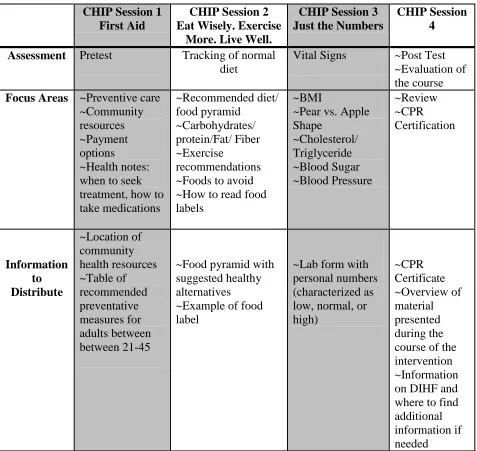
Figure 7
Community Health Literacy Improvement Program (CHIP) CHIP Session 1
First Aid
CHIP Session 2 Eat Wisely. Exercise
More. Live Well.
CHIP Session 3 Just the Numbers
CHIP Session 4
Assessment Pretest Tracking of normal diet
Vital Signs ~Post Test ~Evaluation of the course Focus Areas ~Preventive care
~Community resources ~Payment options
~Health notes: when to seek treatment, how to take medications ~Recommended diet/ food pyramid ~Carbohydrates/ protein/Fat/ Fiber ~Exercise recommendations ~Foods to avoid ~How to read food labels
~BMI
~Pear vs. Apple Shape ~Cholesterol/ Triglyceride ~Blood Sugar ~Blood Pressure ~Review ~CPR Certification Information to Distribute ~Location of community health resources ~Table of recommended preventative measures for adults between between 21-45
~Food pyramid with suggested healthy alternatives ~Example of food label
26
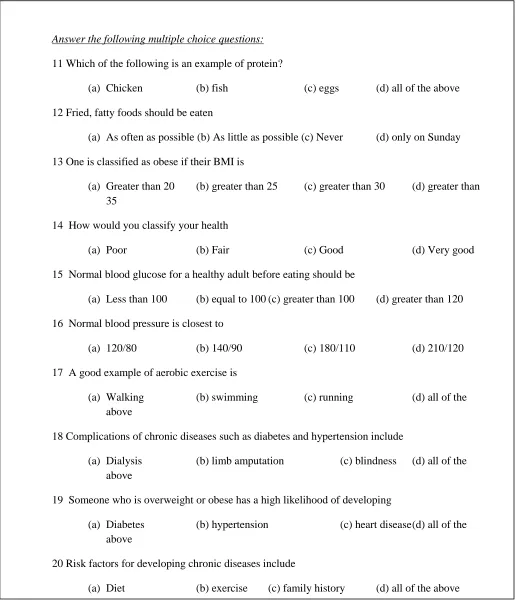
The first session will begin with a pretest, establishing the baseline for
assessment. The pretest will consist of core questions addressing the participant’s
knowledge of prevention strategies, nutrition, and navigation of the health care system.
The pretest in its entirety is as follows in Figure 8 below.
Del ta In tern ation al Health Foundation , Inc.
COMMUNITY HEALTH LITERACY IMPROVEMENT PROGRAM (CHIP)
PRE/POST TEST
HIGHEST EDUCATION LEVEL COMPLETED_________ AGE _______
NUMBER IN HOUSEHOLD ___________ ZIPCODE _________
Please answer the following questions as either true or false
1 A correct example of preventive care is a flu shot. TRUE FALSE
2 Medical resources include free clinics and health centers. TRUE FALSE
3 Drug companies are available to help patients pay for drugs. TRUE FALSE
4 You should go to the doctor when you are first feeling sick. TRUE FALSE
5 Exercise should be performed 3 to 4 times per week. TRUE FALSE
6 All adults should receive an annual physical exam. TRUE FALSE
7 Lack of exercise can lead to the development of chronic diseases. TRUE FALSE
8 White bread is better to eat than wheat bread. TRUE FALSE
9 Fats are included in recommended dietary allowances. TRUE FALSE
27 Answer the following multiple choice questions:
11 Which of the following is an example of protein?
(a) Chicken (b) fish (c) eggs (d) all of the above
12 Fried, fatty foods should be eaten
(a) As often as possible (b) As little as possible (c) Never (d) only on Sunday
13 One is classified as obese if their BMI is
(a) Greater than 20 (b) greater than 25 (c) greater than 30 (d) greater than 35
14 How would you classify your health
(a) Poor (b) Fair (c) Good (d) Very good
15 Normal blood glucose for a healthy adult before eating should be
(a) Less than 100 (b) equal to 100 (c) greater than 100 (d) greater than 120
16 Normal blood pressure is closest to
(a) 120/80 (b) 140/90 (c) 180/110 (d) 210/120
17 A good example of aerobic exercise is
(a) Walking (b) swimming (c) running (d) all of the above
18 Complications of chronic diseases such as diabetes and hypertension include
(a) Dialysis (b) limb amputation (c) blindness (d) all of the above
19 Someone who is overweight or obese has a high likelihood of developing
(a) Diabetes (b) hypertension (c) heart disease (d) all of the above
20 Risk factors for developing chronic diseases include
[image:38.612.56.583.90.700.2](a) Diet (b) exercise (c) family history (d) all of the above
28
After administration of the pretest, four primary focus areas will be discussed
which include preventive care, community resources, payment options, and general
health notes. Preventive care will discuss the importance of primary and secondary
interventions such as flu shots, annual physical examinations, pap smears, and tetanus
shots. The health related parts of the National Assessment of Adult Literacy (NAAL)
were heavily weighted toward preventive medicine and after completing this
intervention, participants should score high on this type of assessment.
African Americans living in low income neighborhoods often are unaware of the
resources within their community which include free clinics, community health centers,
medical student clinics, and upcoming free health fairs (Ford, 2009). These resources will
be extensively discussed and a map of their respective locations will be distributed.
The NAAL also identified that many tested participants who received scores that
were in the Basic or Below Basic level of health literacy did not accurately answer
questions regarding the navigation of the health system correctly (USDOE, 2008).
Navigation of the health care system includes knowledge of payment options and
facilities. To combat this, information about navigation of the health care system
including Medicaid, Medicare, sample medications, and drug company indigent support
will be discussed. Participants also will be directed to a physician partner for a
consultation at the onset of one symptom and to take all medications as directed.
Participants will also be reassured to ask questions of directions given to them that they
29
stressed and participants will be reassured that they deserve to be well and that there are
steps they can take to gain complete control of their health.
The first session will also highlight methods to enhance communication between
providers and patients. Ineffective communication seriously impairs medical outcomes
and health status, especially of patients with low literacy (Sudore et al., 2006). The
Partnership for Clear Health Communication at the National Patient Safety Foundation
has begun to implement the “Ask Me 3” campaign. This campaign encourages patients to
ask three questions before during their medical consultation.
1.) What is my main problem?
2.) What do I need to do?
3.) Why is it important for me to do this?
(NPSF, 2008)
The second session will focus primarily on diet and nutrition. Studies have shown
that people with low income do not eat what they want or what they know they should
eat, but what they can afford (Aguirre, 2000). Emphasis will be placed on inexpensive
healthy alternatives that are locally available. The recommended diet will be explained
through the use of the USDA food pyramid and examples of healthy choices from each
group will be given. For example, the Food and Drug Administration recommends that
adults consume 50 grams of protein per day, which is equivalent to 200 calories (FDA,
2005). Acceptable examples of protein are grilled or baked chicken, grilled or baked
30
methods other than frying to decrease negative health consequences associated with
ingesting excess oil. Fried foods are generally heated to temperatures above 248 degrees
Fahrenheit, making them more likely to form the carcinogen acrylamide (Tareke et al,
2002).
Participants also will be given the necessary tools to quickly assess and
understand a food label, with specific emphasis placed on total calories and percent
sodium. In addition to healthier eating habits, participants will be informed of the
different ways to become physically active. Swimming, walking, running, and bicycle
riding will be among the exercises suggested and local area gyms and recreation centers
will be identified.
The third week of CHIP will focus on the quantitative aspects of health literacy.
Important numbers in the context of health will be explained including, body mass index
(BMI), cholesterol, blood sugar, and blood pressure. Individual measures of participants
will be taken. Participants will be able to use their own BMI, cholesterol, blood sugar,
and blood pressure to understand what the normal should be and where their
measurements fall in comparison.
The fourth week of CHIP will consist of a review, post test, and evaluation. The
evaluations of this pilot program will be used to refine the CHIP initiative to improve
efficacy upon its next implementation. Delta International Health Foundation, Inc. will
also conduct process evaluations to improve how the program is delivered. Partnership
31
take-home educational materials, recommendations about exercise, and Cardiopulmonary
Resuscitation (CPR) Certification at the completion of the program. Upon completion of
the four week CHIP Program, participants will be able to identify preventive health
measures, locate community resources, and identify payment options to receive health
services. They will know what BMI is, the difference between proteins, carbohydrate, fat,
understand dietary recommendations, and identify foods to avoid.
Methodology
Successful participants shall complete all four sessions of didactic and interactive
discussions and demonstrations. During the fourth session, participants will complete a
post test. This test will consist of a paper and pencil questionnaire, individually
completed and monitored. The goal is for participants to achieve a higher post test score
compared to their pretest score. Successful participants will be able to indentify chronic
diseases, risk factors, correctly assess their personal risk, and understand how to
successfully prevent certain illnesses. Community resources will be identified and
located, and participants will be advised on which foods to avoid and the importance of
exercise. Participants will also be able to understand a food pyramid and incorporate
32
CHAPTER IV
DISCUSSION
In 2008, The Agency for Healthcare Research and Quality implemented a mass
media campaign asserting that Questions are the Answer (Agency for Healthcare
Research and Quality, 2008). This campaign was implemented to serve as a catalyst to
get patients more involved in their healthcare. According to the Agency for Healthcare
Research and Quality,
The single most important way you can stay healthy is to be an active member of
your own health care team. One way to get high-quality health care is to find and
use information and take an active role in all of the decisions made about your
care." (Agency for Healthcare Research and Quality, 2008)
Health literacy is the single most important factor affecting the quality of
patient-physician communication (IOM, 2004). Addressing health literacy in the most affected
populations will improve their health status and lessen their chronic disease burden
(Parker, 2003). It is important that policies, such as the Community Health Literacy
Improvement Program, be implemented to improve health literacy. The successful
implementation of the CHIP program will show that theory based, culturally sensitive
community interventions can be implemented to enhance health literacy.
The cornerstone of federal efforts to eliminate racial and ethnic disparities in
33
Across the United States) funded by the Centers for Disease Control and Prevention
(CDC, 2009). Community based organizations are given grants to plan, implement, and
evaluate programs that eliminate health disparities. In Georgia, the Fulton County
Department of Health and Wellness coordinates the REACH program that works to
improve nutrition, increase physical activity, and create a smoke free community (CDC,
2007). This program was able to increase the percentage of adults who have had their
cholesterol checked from 69.1% in 2002 to 79.7% in 2004 and increase medication
adherence from 79.1% in 2002 to 80.5% in 2005 (CDC, 2007). The success of this
program is hinged on community relationships and the trust local nonprofit organizations
have gained from their community. Delta International Health Foundation, Inc. will
work to gain similar trust and create community buy-in and achieve comparable post
intervention results.
People can be empowered on an individual and community level to take
responsibility for their immediate and long term health care (Hussey, 1989). At the core
of the Social Cognitive Theory are the constructs of self efficacy, locus of control, and
behavioral capability. Locus of control and behavioral capability are both combated
through educating participants about the actions they can take within their homes to be
healthier as well as educating them on the resources at their disposal in their community.
The health belief model states that people will prevent, screen for, or control
disease conditions if they consider themselves susceptible to the condition, if they believe
34
benefits of taking health related action are greater than the imagined barriers to taking
action (Janz, 2002). The CHIP intervention will teach participants about their personal
susceptibility to different chronic conditions and describe the possible sequale that may
result if these actions are not taken. Increasing their education about their susceptibility
to these chronic diseases will result in more preventative measures taken to curtail the
onset of these chronic conditions.
While the CHIP program is centered on African Americans, other minority groups
can be assisted by a similar initiative. Studies suggest that while many individuals have
limited health literacy, the problem is often greater among older adults, people with
limited education, and those with limited English proficiency (Gazmararial et al, 1999).
Medicare enrollees with inadequate health literacy, as measured by reading fluency, had a
higher all-cause mortality and cardiovascular death rate than their counterparts (Baker et
al, 2007). Elderly immigrants, especially, have difficulty navigating the health system.
There are currently 38.1 million foreign-born individuals in the United States of America
and 22% are over 55 years of age (United States Census, 2005). 75% of immigrants are
from Asia and Latin America, which compounds limited English proficiency as another
barrier to physician communication and navigation of the health care system (Agency for
Healthcare Research and Quality, 2009).
There is an association between health literacy, health care utilization, and health
care costs. Public hospital patients with low health literacy had higher rates of
35
additional healthcare expenditure attributable to inadequate reading skills in 1996 was
$29 billion (Friedland, 1998). Patients with reading levels at or below third grade had
mean Medicaid charges $7,500 higher than those who read above the third grade level
(Weiss, 2002). Although more data and research is needed to determine the exact cost of
low health literacy on health expenditures, the expenses in these studies underscore the
importance of combating health literacy from a fiscal perspective.
Limitations
The primary limitation to the Community Health Literacy Improvement Program
it that it is not tested. The Pre/Post was developed for this intervention and is not
standardized or validated. The use of a standardized and validated instrument would
allow for more reliability when assessing the impact of this community intervention.
Recommendations
More research is needed to fully determine the effects of low health literacy both
on the patient themselves as well as well as projected costs to the medical care delivery
system. More robust policies also should be developed to combat health literacy through
state or federal policies. Funding should be allocated to comprehensively evaluate
existing health literacy programs. Health care systems should develop and support
programs to establish effective approached to reducing the effects of low health literacy.
The IOM recommends that these programs engage consumers in the development of
36
establish methods and media that is appropriate, and include cultural and linguistic
competency (IOM, 2004). Research shows that restructuring the health care system can
decrease health care disparities by ensuring more have access to a medical home,
improving quality, and promoting safety (Davis et al., 2006; Kripalani et al., 2006; Weiss
et al., 2006). More research, funding, and the implementation of more interconnected
programs for health communication would positively affect health literacy in the United
States while contributing to the elimination of health care disparities.
Conclusion
Age appropriate, culturally sensitive programs are necessary to combat health
literacy in minority populations. Prose, document, and quantitative literacy skills should
be taught by community based non-governmental organizations though the development
of community based programs. The Community Health Literacy Improvement Program
is an example of such a program. CHIP will improve the health literacy of African
American women aged 21-45, which will improve their health status, decrease their
chronic disease burden, and allow them to live healthier lives. This also should decrease
the medical expenditures attributed to low health literacy. Teaching skills that improve
health literacy, improve self efficacy, create an internal locus of control, and a better
understanding of personal and environmental factors that contribute to the development
37
References
Agency for Healthcare Research and Quality. (2008). Annual Meeting Agenda. Retrieved November 26, 2009 from
http://www.ahrq.gov/about/annualmtg08/090908slides/Seubert.htm.
Aguirre, Patricia.(2000). Socioanthropological Aspects of Obesity in Poverty. Obesity and Poverty: A New Public Health Challenge. Manuel Pena and Jorge Bacallo Editors. Pan American Health Organization. Regional Office of the World Health Organization, 2000.
Baker, David MD MPH, et al. (1998). Health Literacy and the Risk of Hospital
Admission. Journal of General Internal Medicine. 1998 December;13(12):791-8.
Baker DW, Gazmararian JA, Williams MV, Scott T, Parker RM, Green D, Ren J, Peel J. (2002). Functional Health Literacy and the risk of hospital admission among Medicare managed care enrollees. American Journal of Public Health. 92 (8): 1278-1283.
Baker, DW, Wolf, MS, Feinglass J, Fazmararian JA, Huang J.(2007). Health Literacy and Mortality Among Elderly Persons. Arch Intern Med. 2007;167(14):1503-1509.
Bandura, Albert. (1997). Self Efficacy: The Exercise of Control. W.H. Freeman and Company. Pages 10-15.
Berkman L, Kawachi I. (eds) (2000). Social epidemiology, Oxford University Press, New York.
Centers for Disease Control and Prevention. (2001). Disparities in Premature Deaths from Heart Disease- 50 States and the District of Columbia, 2001. Accessed November 25, 2009 from http://
www.cdc.gov/mmwr/preview/mmwrhtml/mm5306a2.htm.
Centers for Disease Control and Prevention. (2004). The Burden Of Chronic Diseases and Their Risk Factors: National and State Perspectives 2004. Accessed
November 25, 2009 from
http://www.cdc.gov/nccdphp/burdenbook2004/pdf/burden_book2004.pdf
Centers for Disease Control and Prevention. (2007). The Power to Reduce Health
38
Centers for Disease Control and Prevention. (2009) Diabetes: Successes and Opportunities for Population Based Prevention and Control. Retrieved on November 26, 2009 from http://www.cdc.gov/nccdphp/publications/aag/ddt.htm
Chadila, Letha, Portia Adams, David Biegel, Wendy Auslander, and Lorraine Gutierrez. (2004). Empowering African American Women. Informal Caregivers: A
Literature Synthesis and Practice Strategies. Journal of Social Work, Volume 49.
Coleman MT, Newton KS. (2005). Supporting Self Management in Patients with chronic illness. American Family Physician. 2005 October 15; 72(8): 1503-1510.
Cottrell R, Randall R. (2005). Health Promotion and Education Research Methods: Using the Five Chapter Thesis/Dissertation Model.
Curtis, Kathy. Working with Community: The importance of relationships. Trauma Healing Services Department. EMPACT Report. October 2007. Retrieved October 30, 2009 from
http://azrapeprevention.org/sites/azrapeprevention.org/files/2007_10_EMPACT.pdf.
FDA Dietary Guidelines. Retrieved October 26, 2009 from
http://www.health.gov/DietaryGuidelines/dga2005/document/default.htm
Ford LA, Crabtree RD, Hubbell A. (2009). Crossing borders in health communication research: toward an ecological understanding of context, complexity, and consequences in community-based health education in the U.S. Mexico Borderlands. Journal of Health Communication. 2009 October ;24(7):608-18.
Gansler, Ted, Jane Henley, Kevin Stein, Eric Nehl, Carol Smigal and Edwin Slaughter (2005). Sociodemographic Determinants of Cancer Treatment Literacy. Cancer Cytopathology. 104:3 Pages 653-660.
Glanz, K., et al. (2002). Health Behavior and Education. Theory, Research and Practice. San Francisco: Wiley & Sons.
Gazmararian JA, Baker DW, Williams MV, Parker RM. (1999). Health literacy among Medicare enrollees in a managed care organization. Journal of the American Medical Association. 281 (6): 545-551.
Harvard School of Public Health. (2000). Health Literacy Studies: Department of Society, Human Development, and Health. Clear and to the Point. Guidelines for using Plain Language at NIH. Accessed on March 2, 2010 from
39
Horowitz CR, Tuzzio L, Rojas M, et al.(2004). How do Urban African Americans and Latinos View the Influence of Diet on Hypertension? Journal of Healthcare for the Poor Underserved.15:631-644.
Hussey LC, Gilliand K. (1989). Compliance, low literacy, and locus of control. Nursing Clinical Journal. North America. 1989 Sep:26 (3):605-11.
Institute of Medicine. (2004). Health Literacy: A prescription to end confusion. Lynn Nielson-Bohlman et al ed. Washington DC: The National Academies Press.
Institute of Medicine. (2009). Measures of Health Literacy: Workshop Summary. Washington, DC: The National Academies Press.
Janz NK, Champion VL, Stretcher VJ. (2002). The Health Belief Model. Health Behavior and Education. San Francisco. Jossey-Bass; 2002:45-66.
Kaiser Family Foundation (2002). The Wide Circle of Caregiving: Key Findings from a National Survey: Long Term Care from the Caregivers Perspective. Menlo Park, KFF. 2002.
Kripalani S, Weiss BD. Teaching about Health Literacy and Clear Communication. Journal of General Internal Medicine. 2006 August;21(8):888-90.
Kutner, JS. Ensuring safe, quality care for hospitalized people with advanced illness, a core obligation for hospitalists. Journal of Hospital Medicine. 2007 November; 2(6):355-6.
Lesser V, Dillman D, Carlson J, Lorenz F, Mason R, Willits F. (2007). Quantifying the use of incentives on response rates and non response bias. University of Oregon. Retrieved November 26, 2009 from
http://survey.sesrc.wsu.edu/dillman/papers/QuantifyingTheInfluence.pdf
Lukoschek P. (2003). African Americans’ Beliefs and Attitudes Regarding Hypertension and its Treatment: A Qualitative Study. Journal of Healthcare for the Poor
Underserved. 14 (4): 566-587.
Jerant, Anthony F., Joshua Fenton, Peter Franks. (2008). Determinants of Racial/Ethnic Colorectal Cancer Screening Disparities.Arch Intern Med. 2008;168(12):1317-1324.
40
Laffrey, SC, Isenberg M. (2003). The relationship of internal locus of control, value placed on health, perceived importance of exercise, and participation in physical activity during leisure. International Journal of Nursing Studies. 2003
Jul;40(5):453-9.
Levine RS, Foster JE, Fullilove RE, Fullilove MT, Briggs NC, Hull PC, Husaini BA, Hennekens CH. (2001). Black-white inequalities in mortality and life expectancy, 1933-1999: implications for healthy people 2010.Public Health Report. 20011 Sep-Oct;116(5):474-83.
Locus of Control: Finding Out Who’s In Charge of Your Destiny. Retrieved on November 15, 2009 from
https://www.mindtools.com/media/Diagrams/LocusofControl.jpg.
Lurie N, Dubowitz T. (2007). Health Disparities and Access to Health. Journal of the American Medical Association. 2007 March 14; 297 (10): 1118-1121.
Lurie N, Freemont A et al. (2008). The National Health Plan Collaborative to Reduce Disparities and Improve Quality. Joint Commission Journal on Quality and Patient Safety. 2008 May; 34(5): 256-265.
Mayberry, Robert M., Fatima Mili, and Elizabeth Ofili. (2000). Racial and Ethnic Differences in Access to Medical Care. Medical Care Research and Review. 57 (Supplement 1) 108-45.
McGinnis SK. (2002). Coordination among health care stakeholders: effects on state health policy choices. Journal of the Health and Human Services Administration. 2002. Fall; 25(2): 137-165.
McLeroy, KR, Steckler A, Goodman R, &Burdine JN. (1992). Health Education research, theory, and practice: Future directions. Health Education Research Theory and Practice, 7(1), 1-8.
Middleton, Jennifer. (2009). A Proposed New Model of Hypertensive Treatment
Behavior in African Americans. Journal of the National Medical Association. Vol 101.1.January 2009.
Moore. M. (2007). Newsmakers: Ken Moritsugu, Acting US Surgeon general. The AHSA Leader,12(8), 16-17.
National Institutes of Health. (2003). The Plain Language Initiative. Executive