Sentiment Based Comments Rating Approach
K. Saranya1 , R. Leema Roslin 2, L. Hari Hara Priyan 3
Assistant Professor, Dept. of Computer Science and Engineering, Sri Ramakrishna Institute of Technology,
Coimbatore, India1
UG Student, Dept. of Computer Science and Engineering, Sri Ramakrishna Institute of Technology,
Coimbatore, India2,3
ABSTRACT: Sentiment Analysis is the way of classifying the text based on the sentimental polarities of the opinion to find whether it is favorable, unfavorable, positive, negative or neutral .Nowadays user rating is one of the major factors which influences the customer decision in selecting the product. Food recipe actually lacks the data labeling and the mechanism to rate and acquires the sentiment labels. Hence we proposed a system which uses a web application that classifies the comments given to the food recipes based on the polarities.
KEYWORDS: Sentiment Analysis, Data Collection, Preprocessing, Feature Classification, Sentiment Level Opinion
I. INTRODUCTION
Sentiment analysis is process of analyzing the expressions, likes and dislikes of customers towards entities like various products, services, organizations, individuals etc. Sentimental analysis is the area of learning where the analyzers users evaluations, attitudes, opinions, emotions, sentiment, appraisals .Sentiment analysis represents a huge problem space. There are many dissimilar tasks such as such as opinion extraction, feeling analysis, evaluation mining, opinion mining, subject analysis and influence analysis. Even though everything is under the context of sentiment analysis or opinion mining, in industry sentiment analysis is commonly used but in academics both sentiment analysis and opinion mining are frequently used.
The meaning of sentiment is itself is very wide. Opinion mining and sentiment analysis mostly focuses on opinions which communicate or involve positive or negative sentiments. Opinion mining is a Natural Language Processing (NLP) and Information Extraction (IE) task that aim to get feelings of writer expressed in positive or negative comments. The main job of sentiment analysis is to categorize the documents and to decide its polarity. Polarity is expressed as positive, negative and neutral. In natural language processing system discovers about the user opinions and sentiments.
There are three stages of sentiment analysis. Document level: It will categorize the entire document whether it is positive, negative or neutral and it is also called as document level classification. Sentence level: It will categorize the entire sentences as positive, negative or neutral .It is also called as sentence level classification. Aspect and Feature level: It will classify both sentences and documents as positive, negative and neutral based on the aspects of sentences and documents which is called as aspect level sentiment classification. The aspect level sentiment classification provides a correct and it profile on various aspects of interest. For the classification of the text different techniques were used like naïve bayes, support vector machine and unsupervised learning methods used for the classification of the text and reviews.
Main drawback of the naïve bayes is, it works with the small set of data set but the precision and recall will be very low.
In already existing techniques for classification of the texts, cross domain classification is one of the challenging tasks. Cross domain classification is the paradigm where data for testing is different but it is related to the domain of the training data. Many proposed many solutions to the cross domain classification problems.
sentiment lexicon extraction is used for sentiment classification. Probabilistic topic model is used for each pair of domains which is in the semantic level. All these focus only on the review data set.
The limitations of existing system:
One of the major problems of the existing system is the size involved in the data label.
Active learning is also called as the in domain classification which contains generally a very small amount of data which is contained in the source domain. Active learning which is used in the cross-domain classification usually contains plenty of labeled data in the source domain.
The huge amount of labeled data tries to bring out the difficulties in both the sample selection strategy and also the techniques used for the classification for active learning used in the cross-domain.
The labeled data which is present in the source domain is generally in large volume, the newly added labeled data which is from the target domain might become very weak to affect the tendency to select in huge domain. It is also not considered as an effective active learning approach because the newly added labeled data is
usually from the same domain like the test data, which is the target domain, and It must also be more valuable to supervise the strategy for selection.
CART analysis is having multiple advantages when comparing to the other techniques while including the multivariate logistic regressions. It is also called as inherently non parametric .No assumptions are actually made while considering the distribution of values of the predictor values. Thus CART mechanism is usually can handle huge numerical data that could be highly skewed or multi modal while considering the categorical predictors which could be either ordinal or non ordinal structures. It is also considered as an important feature because it eliminates analyst time because he will be spending time to determine if the variables are normally distributed or not. It is also to identify the splitting variables which based on the search of all the possibilities. Since CART uses the efficient algorithms it is able to search the all the possible variables as splitters, even if there is a problem in various possible predictors. There are many problems such as over fitting and the data degrading. It is also having then advanced methods for dealing with the missing variables. Even if the important predictor variables are not known CART trees can be generated.
II. LITERATUREREVIEW
A COMPREHENSVE STUDY OF CLASSIFICATION TECHNIQUES FOR SARCASM DETECTION ON TEXTUAL DATA
AnandKumar et el made a study that at the early times majority of the research was carried out in the field of sentiment analysis of the textual data that was available in the web. One of the difficult tasks is the classification of the sarcastic sentences. It was because of the various representations of the textual form sentences. This affected many Natural Language Processing applications. Sarcasm is one of the representations to convey the various sentiments presented .They have tried to identify the various supervised classification techniques which is mainly used for sarcasm detection and their features .They have also analyzed the results of the various techniques used on the textual data that is available in various languages on the review related sites, social media sites and also in the micro blogging sites. Their work presents the analysis of data generation and feature selection process used. They also have carried out preliminary experiment to detect sarcastic sentences in “Hindi” language. They have trained SVM classifier with 10X validation with simple Bag-Of Words as features and TF-IDF as frequency measure of the feature. They found that this is model based on the “bag-of-words” feature which accurately classified 50% of sarcastic sentences. As a result preliminary experiment which they have conducted has revealed the fact that the Bag-of-Words are not sufficient for sarcasm detection. It can be performed at three levels: document-level, sentence-level, and aspect level. However sentences can be considered as a short document which removes fundamental difference between document and sentence level.
B LATENT ASPECT RATING ANALYSIS ON THE REVIEW TEXT DATA: A RATING REGRESSION APPROACH
the level of topical aspects. They even discovered the individual reviewer’s latent opinion on each aspect. They proposed a novel probabilistic rating regression model to solve the text mining problem in a general way. Also the empirical experiments on the hotel review data set show that the proposed latent rating regression model can be effectively solve the problems. And even During the detailed analysis of the opinion at the level of topical aspects which was by the proposed system can support multiple applications such as aspect opinion summarization, entity ranking, and even the analysis of the behavior of the reviewer such as summarization and the entity ranking .Their experiments that was conducted on a hotel review data showed that proposed LRR model can be used to effectively solve the problem of LARA which shows the differences in the aspect rating even when the overall ratings are the same or there is a difference in the user’s rating behaviour. It shows the results that the detailed analysis of the opinions at the level of topical aspects which was enabled by the proposed model can support multiple application tasks and which also includes opinion summarization, ranking of elements based on aspect ratings, and analysis user’s behaviour. They assumed that aspect ratings were already provided in the training data. They assumed aspect ratings are more general.
C MODELLING PUBLIC SENTIMENT IN TWITTER: USING THE LINGUISTIC PATTERNS TO ENHANCE THE SUPERVISED LEARNING
Prerna Chikersal et el presented the twitter sentiment analysis system that classifies tweets as positive and negative based on the tweet level polarity .there is two challenges. one is the supervised learning which sometimes misclassify the tweets, other challenge is the assignment of the decision score which is very close to the decision boundary .it considers all the tweets as unsure instead of considering it as completely wrong .in order to overcome the challenges they have used a system that enhances the supervised learning based on the polarity of the classification by leveraging the linguistic rules and sentic computing resources. They are used to handle the peculiar linguistic characteristics that were introduced by the parts of speech such as emoticons, conjunctions and conditionals. They have also shown that verifying or changing the low class predictions of supervised classifier using a secondary rule base classifier is also highly beneficial.
D SENTIMENT ANAYSIS BASED PRODUCT RATING USING TEXTUAL REVIEWS
Sindhu et el used a sentiment based analysis where the data is subjected to the many pre-processing techniques .in order to identify the opinions in the review whether it is positive, negative or neutral, they used a open source data tool called as rapid miner, which performs the step by step explanation of review pre-processing .Their paper also presents the text classifications using the Support Vector Machine and the Naïve Bayes methods of classifications. They have used a rapid miner which performs the text pre-processing in a step by step manner. Rapid miner is used to train and test the classifier where the Accuracy, Precision, and Recall values were calculated for each of the classifier algorithm by using the Performance Operator of Rapid Miner. This was efficient in finding the accuracies of the algorithms that were employed to classify the huge amount of the texts in the review. The main issue is the tokenization. For example, the languages like Chinese and Japanese are considered to be un segmented words. Therefore for the tokenization of these languages it requires additional morphological and textual information. Some errors lead to over stemming and under stemming. Over stemming means different stems are stemmed to the same roots known as false positive and under stemming is when two words that should be stemmed for same root are not referred to be false negative.
E RATING APPROACH SENTIMENTAL PREDICTION: A SIX GRAM STATISTICAL MIN-MAX APPROACH
F MINING AND SUMMARIZING THE CUSTOMER REVIEWS
Minqing Hu et el studied the problem of generating the feature based summaries of the user reviews of each products sold online. The feature indicates the product features and functions. When a review is given their aim is to do three subtasks: evaluating the features of the products of the users ,evaluating the review sentences that provides whether it is a positive or negative opinions .They have determined the experiment results using the reviews of five electronic products. Every review contained texts and title. Their product was not used for date, time, author name and location. Firstly they downloaded the reviews and their documents were cleaned to remove the HTML tags. Then they have used the NLP processor to generate the parts of speech tags. The purpose of their project was to produce the feature based summary of the huge number of user reviews of products sold online. Their experimental results indicate that the proposed model and their techniques employed were very effective in performing their tasks. Their experimental results show that there were only 70% of the average recall of opinion sentence extraction and the average precision of the opinion sentence extraction is only 64%.
G PREDICTING THE SENTIMENTS OF THE USER
Ashish A.Bhalerao et el made a study on the experimental work that and the impacts on the various aspects based on the opinion mining model that classify the documents as the positive, negative, neutral .the results of the experiment showed the reviews of various topics show the effectiveness of the system. This system provides a accuracy results achieved by the system. The existing system provides the good results and accuracy but this is based on the dataset provided. The exact technique can be provided for both the electronic products that give good accuracy but for the movie reviews the accuracy is reduced. These techniques provide the better result for the banks and automobile products where there is an increased accuracy.But it is much less effective while comparing with the other existing techniques.
H OPINION MINING AND SENTIMENT ANALYSIS
Bo Pang et el studied the difficulties in categorizing the documents not by the topic but by the overall sentiment .in their paper, they have applied the machine learning process like naïve bayes ,maximum entropy and the support vector machine. They examined the effectiveness of applying the machine learning techniques to the sentimental classification problem. for their experiment they chose the movie reviews to work with .This domain was convenient because there were huge online collections of reviews .They selected only the reviews where author rating was articulated with the stars on some numerical values. this system directly enabled opinion-oriented information seeking systems. Here the ratings were automatically retrieved and transformed into one of the three classes such as positive, negative and neutral sentiments.
I A RATING APPROACH BASED ON SENTIMENT ANALYSIS
Anshuman et el presented the rating approach which is based on the sentiment analysis which sorts the food recipes present on multiple websites on the basis sentiments of the review writers. They showed the results with the help of the mobile application .Their output of the application is an ordered list of the recipes with the user inputs. They have used the machine learning approach and lexicon based approach. They have used the Latent Aspect Rating Analysis to give weight to the words. They have used the bag of words model to collect the frequently used words in the recipe comments. Web crawling technology is used to retrieve the information from the URL.
III. METHODOLOGY
EXISTING TECHNIQUES:
Already existing polarity detection method is classified into Supervised
Unsupervised Hybrid
Supervised methods
These are Machine learning approaches where the classifier is trained based on a collected feature set, using the training data which is labeled.
Unsupervised Methods
Theseare the methods which are almost based on the Sentiment Lexicon where each sentiment having the word belongs to either a score of the sentiment or a set of sentiment having the words as explained before.
Hybrid Methods
Itincludes the combination of both supervised and unsupervised categories which is used to perform opinion mining.
Machine Learning Approach
Machine Learning is an artificial intelligence application which is used to provide systems the capability to automatically learn and improve from previous experience without being programmed explicitly.
Naives Bayes Approach
Naïve Bayes is considered as one of the popular algorithm which is used for classifying text. Although it is considered as the simple algorithm, it is used to perform more complicated tasks. A naive bayes classifier algorithm works by figuring probability of the various attributes of the data which is associated with a certain class. This is also based on bayes' theorem. The theorem
P (A∣B) =P (B∣A), P (A) P (B)
Which states that “the probability of A when B is true equals the probability of B when A is true times when the probability of A is true, divided by the probability of B equal true."
Natural Language Processing
Natural language processing is the capability or an ability of a computer program to understand human language when it is spoken. NLP is an artificial intelligent component. The development is very challenging because it requires the human being to speak the language which is more precise, unambiguous and structured. Human language is not really precise it is often having a linguistic structure and unambiguous.
Support Vector Machines
based on the labels or outputs that is defined. SVM it having the capability of doing both classification and regression. Many researches are being done in the field of natural language processing. This allows the users to query data sets which is in the form of a question that one person might pose to another person. The machine will interpret the important elements present in the human language sentence, which might correspond to some features in a data set, and returns an answer.
MODULES USED
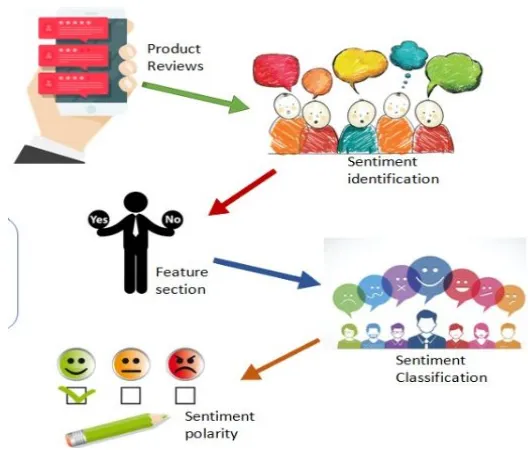
Fig 1 Sentiment Analysis of the text review
Data collection
Opinion text or the sentimental text in blog, reviews, and comments contains some basic subjective information about topic. Reviews are classified as positive or negative review. Opinion summary is usually generated based on the features of opinion sentences by considering frequent features or phrases about a topic. It is also considered as the process of collecting reviews or the text from review websites. The datasets consisting of the opinions are stored and all these are compared with the reviews given by the user and also involve retrieval of reviews, and comments given by the user.
Preprocessing
Preprocessing Algorithm will receive the user opinions or the comments in raw form. Preprocessing technique is implemented just to filter out the noise. Sentence splitting is one of the critical step in opinion delimitation because the double propagation considers the neighborhood sentences by means to propagate the sentiment. With the view of increasing the efficiency of the extraction process on-line stemmer engine is adopted.
Feature Classification
or a person dislikes everything. It is also considered as the fine-grained classification in which polarity of the sentence or the text can be given by possibly three categories such as positive, negative and neutral. It is also defined as attributes or the components. In this technique the positive or negative opinion obtained is identified from the previously extracted features. It is one of the fine grained analysis models while comparing with the other models. Its main drawback is that it will not be effective if there is any grammatically incorrect text
Sentence Level Opinion Mining
In the sentence level Opinion Mining, the actual polarity of each sentence is calculated. The previous document level classification techniques can also be applied to the sentence level classification problems but Objective and subjective sentences in the reviews must be found out. The subjective sentences mostly contain the opinion words which help to determine the sentiment about the entity or the elements. After then the polarity classification is done into positive and negative classes.
Feature opinion
The knowledge resource is useful for improving the performance of the opinion mining. Opinion words lexicon is adopted in the stage of identifying opinions regarding the features. A domain independent Lexicon and manually constructed Emoticon dictionary is used to assign polarity score (positive, negative or neutral) to opinionated words and sentences. For deciding correct polarity class of such words, revised mutual information concepts are used. These words could strengthen, weaken the surrounding opinion words’ extent or even transit its sentiment orientation.
SYSTEM DESIGN
The first module consists of the registration after the registration the user is asked to type the necessary details and through the login validation process happens and the user is taken to the home page.
The available options are:-
The user is asked to post the general comments about any food item.
In the next module user can search for the related terms associated with the food. User can search for the food items presenting the name of the items.
The system returns the details and the user can post the feedback.
IV. RESULTS
Fig 2 User enters the food name and fetch the food details
Now the reviews or feedback collected from the user are analyzed with the datasets which contains all the frequently used positive and negative words with their weight scores.
The fetched reviews are broken and it will be matched with the existing words which are stored. The total weight will be calculated for the entire comments.
The output will display the overall rate for the particular food.
Hence the user will get the popular recipes from the website based on the user’s feedback.
V.CONCLUSIONS
Sentiment analysis addresses the problems with CART techniques. CART analysis is a “machine learning”. method. .
When compared to the complexity of the analysis, only a little input is required from the person doing the analysis. CART is one of the multivariate modeling methods, in which input from the analyst, result of the analysis, and little modification of the methods are required. CART trees are relatively simple for non statistician’s people to interpret.
Foodish application displays the overall rating for the comments posted by the user. This can work offline there is no need of the internet connection
REFERENCES
[1] A. D. Dave and N. P. Desai, "A comprehensive study of classification techniques for sarcasm detection on textual data," 2016International Conference on Electrical Electronics, and Optimization Techniques (ICEEOT), Chennai, 2016, pp. 1985-1991.
[2] Wang, H., Lu, Y. and Zhai, C., Latent aspect rating analysis on review text data: a rating regression approach, In Proceedings of the 16th ACM SIGKDD, 2010, pp. 783-792.
[3]Predicting the sentiments of the user reviews,,Ashish A.Bhalerao,Sachin Deshmkh,Sandhip D.Mali
[4] Sindhu C, G.Vadivelu, Mandala VishalRao,A comprehensive study on sarcasm detection techniques in sentiment analysis. [5] K.Venkata Raju, Dr.M.Sridhar, Rating based sentiment prediction: A six gram statistical min-max approach.
[6] Mining and Summarizing Customer Reviews Mining Hu and Bing Liu Department of Computer Science University of Illinois at Chicago 851 South Morgan Street Chicago, IL 60607-7053 {mhu1, liub}@cs.uic.edu