YOSHIMURA, KARI EMI. Developing Technical Leaders in a Global Organization: Examining the Influence of Culture on Multi-Source Feedback and Performance. (Under the direction of Frank Smith).
This study examined performance change following multi-source feedback, a concept that has been addressed in a number of studies (e.g. Kluger & DeNisi, 1996) in a leadership development program. Archival data, from participants who received feedback as part of a leadership development program for technical employees, was used to re-examine the relationship between feedback and performance change and the impact of self and other (manager, colleagues, and subordinates) agreement on performance change. Self-other agreement was examined using polynomial regression and response surface methodology. The number of participants with pre- and post-program data differed across rating sources (ranging from N=166 to N=215).
This study also examined culture as a predictor of performance change. Culture was examined using dimensions proposed by Hofstede (1980) and as seven profiles which were identified using cluster analysis. Three hundred and thirty-four program participants completed a survey of culture values. The number of participants with both archival and culture data varied across rating sources (ranging from N=83 to N=133). Culture was also examined as a moderator of the relationship between self-other rating agreement and performance change.
by Kari Yoshimura
A dissertation submitted to the Graduate Faculty of North Carolina State University
in partial fulfillment of the requirements for the Degree of
Doctor of Philosophy
Psychology
Raleigh, North Carolina
2010
APPROVED BY:
________________________________ ________________________________ Frank J. Smith, Ph.D. S. Bartholomew Craig, Ph.D. Chair of Advisory Committee
DEDICATION
BIOGRAPHY
Kari Yoshimura was born in Hilo, Hawaii to parents Arleen and Glenn Yoshimura. After graduating from Waiakea High School, she enrolled in the University of Washington where she intended to major in biology. After two years of chemistry, physics, and biology courses, she realized that she preferred the social sciences. She graduated with a Bachelors of Science in Psychology and a minor in Speech Communication.
ACKNOWLEDGMENTS
There are many people who have helped to make this project possible. I would first like to express my gratitude to my parents, Glenn and Arleen Yoshimura. I am forever grateful for everything they have done and still do, and must give them a big thank you for their love, support, and care packages. They have been amazingly patient and reassuring throughout my many years in graduate school.
Thank you also to my brother Kelsy for his wise words of encouragement and to my in-laws (Ronn, Terri, Michelle, Jessica, G-ma Jean, and the rest) for welcoming me into the family.
I would like to thank my advisor Frank Smith for his support throughout my graduate education. He provided me with guidance and advice while allowing me the freedom to pursue real world experiences and develop as an individual.
Additionally, I would like to thank my committee members Bart Craig, John Fleenor, and Mark Wilson, for their advice, suggestions, and patience throughout this process. Extra thanks also go to Bart for graciously responding to my many, many questions and requests.
Thank you to Gloria Hong, Jason Su, Mari Markham, Terry Yuen, and Brian Shin for their friendship, support, and generosity. While I wish they all lived closer to me, I feel fortunate to have them as a part of my life.
support as I juggled work, school, and life. A special thank you goes to Ronald Shapiro for his guidance, friendship, and for providing me with the opportunity to learn new things, meet new people, and travel around the world.
I was fortunate to have supportive peers who helped to make graduate school less overwhelming and a lot more memorable, especially Penny Koommoo-Welch, Christina Mendat, and Becca Baker. Thank you, ladies.
TABLE OF CONTENTS
LIST OF TABLES ... viii
LIST OF FIGURES... x
Introduction ... 1
Literature review ... 3
Leaders and leadership... 3
Leader roles... 5
Leadership theories ... 6
Trait theories ... 6
Behavioral theories. ... 7
Contingency theories. ... 8
Transformational theories. ... 9
Impact of leadership ... 10
Leader development... 10
Performance change... 13
Conceptualization of change... 13
Measuring change ... 13
Approaches to leader development... 15
Competencies... 15
Developmental activities... 16
Multi-source feedback ... 17
Self-other agreement, disagreement, congruence, discrepancy... 18
Conceptualization of agreement... 18
Impact of feedback on performance... 20
Additional variables impacting the relationship between feedback and performance ... 22
Culture... 25
Types of cultural studies ... 25
Culture frameworks and research ... 26
Hofstede’s culture dimensions ... 29
Individualism/collectivism... 29
Power distance ... 31
Uncertainty avoidance. ... 33
Masculinity/femininity... 35
Culture and leadership ... 36
Culture and leader development... 37
Hypotheses and Research Questions ... 41
Examination of previously identified relationships ... 41
Examination of culture values as a predictor or moderator of performance change ... 43
Method ... 46
Participants ... 46
Program... 46
Data collection ... 47
Measures... 47
Leader performance. ... 47
Culture values. ... 49
Level of analysis issue ... 49
Analyses and Results... 50
Performance change... 54
Self-other rating agreement and performance change ... 55
Shape A... 65
Shape B... 67
Shape C... 68
Shape D... 69
Shape E. ... 70
Culture profiles... 79
Culture profile and performance change... 87
Culture dimensions and performance change ... 89
Culture as a moderator between self-other rating agreement and performance change ... 95
Culture dimensions ... 95
Culture profiles ... 99
Discussion ... 105
Limitations... 110
Future Research ... 111
References ... 113
APPENDICIES ... 138
Appendix A ...1388
LIST OF TABLES
Table 1. Multi-group analysis model statistics ... 52 Table 2. Intercorrelations Between Competency Dimensions and Observed Subscale
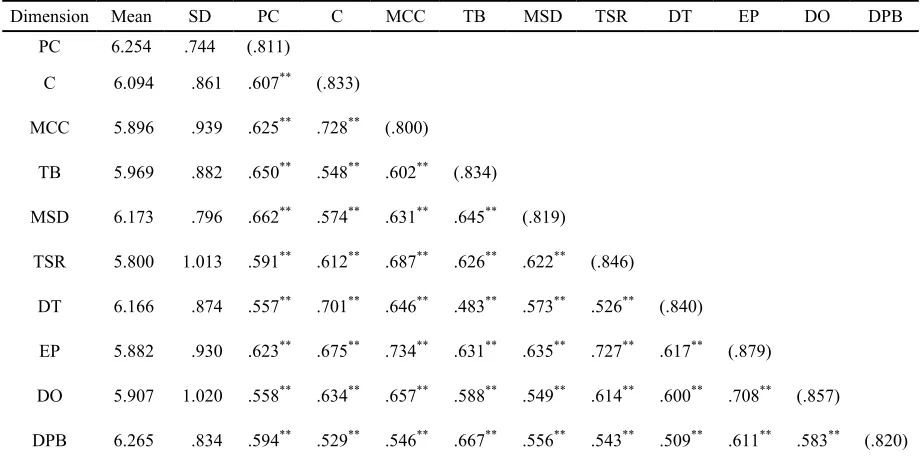
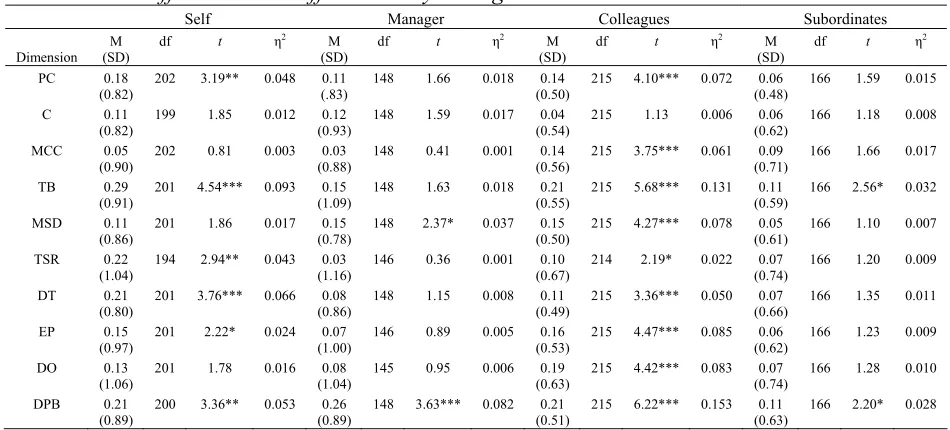
Reliabilities for All Raters (N = 4960) ... 53 Table 3. Mean Score Differences and Effect Sizes by Rating Source... 55 Table 4. Polynomial Regression Tests for the Relationship Between Self-Other Agreement
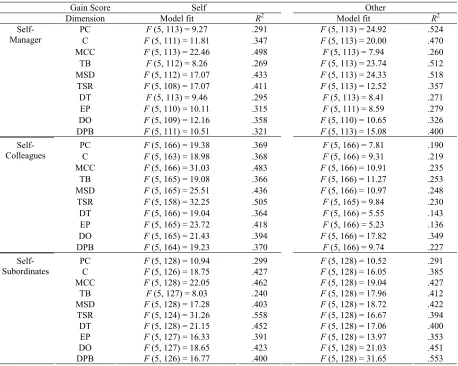
and Gain Score... 57 Table 5.1 Regression Tests for the Relationship between Self-Manager Agreement and Self
Gain Scores... 58 Table 5.2 Regression Tests for the Relationship between Self-Colleague Agreement and Self
Gain Scores... 589 Table 5.3 Regression Tests for the Relationship between Self-Subordinate Agreement and Self Gain Scores... 60 Table 5.4 Regression Tests for the Relationship between Self-Manager Agreement and
Manager Gain Scores... 61 Table 5.5 Regression Tests for the Relationship between Self-Colleague Agreement and
Colleague Gain Scores... 62 Table 5.6 Regression Tests for the Relationship between Self-Subordinate Agreement and Subordinate Gain Scores... 63 Table 6. Summary of Relationships Reflected in the Response Surfaces of Self-Other
Agreement and Gain Score... 72 Table 7. Intercorrelations Between Competency Subscales and Observed Subscale
Reliabilities (N=332) ... 80 Table 8. Descriptive Statistics for Culture Profiles ... 81 Table 9. Summary of Significant Relationships between Culture Profile and Gain Score.88 Table 10 Regression Tests of the Relationship between Subordinate Gain Score and
Uncertainty Avoidance ... 91 Table 11. Regression Tests of the Relationship between Manager Gain Score and Uncertainty
Avoidance ... 92 Table 12. Regression Tests of the Relationship between Manager Gain Score and
Masculinity/femininity... 94 Table 13. R2 Change from Hierarchical Regression Test of the Relationship between
Table 14. R2 Change from Regression Test of the Relationship Between Self-Other
Agreement and Gain Score Moderated by Culture Profile... 98 Table 15. R2 Change from Regression Test of the Relationship between Self-Other
Agreement and Gain Scores Moderated by Culture Profile (Profile 1)... 101 Table 16. R2 Change from Regression Test of the Relationship between Self-Other
Agreement and Gain Scores Moderated by Culture Profile (Profile 2)... 102 Table 17. R2 Change from Regression Test of the Relationship between Self-Other
Agreement and Gain Scores Moderated by Culture Profile (Profile 3)... 102 Table 18. R2 Change from Regression Test of the Relationship between Self-Other
Agreement and Gain Scores Moderated by Culture Profile (Profile 4)... 103 Table 19. R2 Change from Regression Test of the Relationship between Self-Other
Agreement and Gain Scores Moderated by Culture Profile (Profile 5)... 103 Table 20. R2 Change from Regression Test of the Relationship between Self-Other
Agreement and Gain Scores Moderated by Culture Profile (Profile 6)... 104 Table 21. R2 Change from Regression Test of the Relationship between Self-Other
LIST OF FIGURES
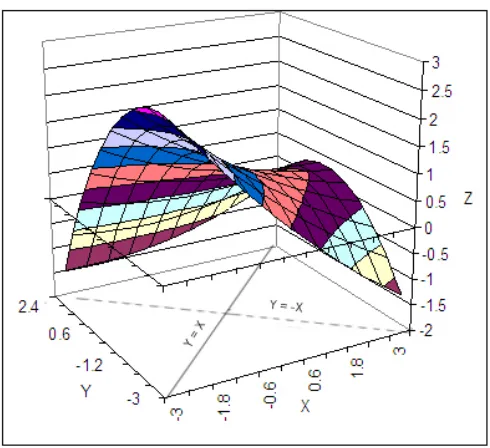
Figure 1. Expected response surface shape ... 64
Figure 2. Shape A response surface. ... 66
Figure 3. Shape B response surface... 67
Figure 4. Shape C response surface... 68
Figure 5. Shape D response surface ... 69
Figure 6. Shape E response surface... 71
Figure 7. Relationship of self (X) and manager (Y) agreement with manager gain score (Z). ... 73
Figure 8. Relationship of self (X) and manager (Y) agreement with self gain score (Z).74 Figure 9. Relationship of self (X) and colleague (Y) agreement with colleague gain score (Z). ... 75
Figure 10. Relationship of self (X) and colleague (Y) agreement with self gain score (Z).76 Figure 11. Relationship of self (X) and subordinate (Y) agreement with subordinate gain score (Z)... 77
Figure 12. Relationship of self (X) and subordinate (Y) agreement with self gain score (Z). ... 78
Figure 13. Error Sum of Squares increase as clusters are joined (from right to left)... 80
Figure 14. Standardized scores for culture dimensions by cluster. ... 81
Figure 15. Standardized scores for culture dimensions for Profile 1. ... 82
Figure 16. Standardized scores for culture dimensions for Profile 2. ... 83
Figure 17. Standardized scores for culture dimensions for Profile 3. ... 83
Figure 18. Standardized scores for culture dimensions for Profile 4. ... 84
Figure 19. Standardized scores for culture dimensions for Profile 5. ... 85
Figure 20. Standardized scores for culture dimensions for Profile 6. ... 85
Introduction
Leadership is a popular area in both the research and application of
Industrial/Organizational psychology. From the idea that leaders are born to the idea that leaders are made, I/O psychologists have sought to better understand leaders and leadership. Theories that strive to explain effective leaders and leadership abound. Leader effectiveness has been systematically studied using variables ranging from individual to situational. More recently, leadership development has also emerged as a field of interest (Lowe & Gardner, 2001).
For years, the topic of globalization has been described and discussed in the popular press. In 1996, Rhinesmith observed that “[g]lobalization has arrived in the world, but not in most of the world’s organizations” (p. 3). More recently, Friedman (2005) declared that the “world is flat” in the title and pages of his best-selling book, one of many business and strategy books focusing on “going global” and the “borderless business.”
It seems only natural that as businesses begin to operate in a global environment, the field of leadership goes global as well. This area of study may be of practical benefit to organizations because beyond economic and logistic challenges, globalization also poses a challenge to leader development. In order to compete globally, organizations need effective leaders and developing leaders globally has become both an emerging area in psychology (Avolio, Sosik, Jung, & Berson, 2003) and a business imperative (e.g. Weiss & Molinaro, 2005; Fulmer & Bleak, 2008).
As workers from emerging markets join the global pool of potential employees and as a company’s workforce becomes more diverse, cultural differences may become an
increasingly relevant issue. Increased interaction and communication across cultures represent an increase in cross-cultural interactions; however, Hofstede (2001) predicts that “electronic communication will not eliminate cultural differences, just as faster and easier travel has not reduced cultural rifts” (p. 453). With the shift from multi-national
organizations to global organizations, cultural differences are becoming more important factors in understanding leadership and designing and delivering leadership development programs.
Another trend in recent years has been the changing nature of work. In this era of information technology or the “Infotech Age” (Colvin, 2000), organizations are moving away from manufacturing goods and towards providing services. In these organizations, intellectual property becomes more important than the actual products, and intellectual capital or knowledge held by the workers becomes more valuable than physical assets (Casio, 2003). Technology innovation and change are sources of competitive advantage and both are driven by a knowledge workforce.
Inspired by this changing environment, the general purpose of this study was to increase our understanding of the impact of multi-source feedback on performance in a culturally diverse sample of developing technical leaders. This study focused specifically on the relationship between multi-source feedback and performance. First, this study examined the change in leader performance after receiving multi-source feedback. Second, the
relationship between self-other rating agreement and performance change was studied. Finally, this study examined the impact of culture on performance change. This study was not intended to evaluate the impact of a specific leadership development program or instructional design elements of a program.
Literature review
Leaders and leadership
influences a group of individuals to achieve a common goal” (p. 3) and leaders as “people who engage in leadership” (p. 3). Hollander (1978) defined leadership as “a process of influence which involves an ongoing transaction between leaders and followers” (p. 12). Bass (1990) presented a more detailed explanation of leadership as a concept:
Leadership has been conceived as the focus of group processes, as a matter of personality, as a matter of inducing compliance, as the exercise of influence, as particular behaviors, as a form of persuasion, as a power relation, as an instrument to achieve goals, as an effect of interaction, as a differentiated role, as initiation of structure, and as many combinations of these definitions. (p. 11)
In this study, leadership was defined as “the process of influencing others to understand and agree about what needs to be done and how it can be done effectively, and the process of facilitating individual and collective efforts to accomplish the shared objectives” (Yukl, 2002, p. 7).
and leaders were not treated as separate roles and anyone who demonstrated leadership was considered to be a leader.
Leader roles
Past leadership studies have examined leaders in a number of positions. Business leaders with executive titles such as President or Vice President as well as Chief Executives or “CXO” titles such as Chief Executive Officer and Chief Financial Officer have been studied extensively. In the past, leadership may have focused on the executives of the company; however, for companies to remain competitive in today’s environment, they must look to develop leaders at all levels of the organization (White, Hodgson, & Crainer, 1996).
Elkins and Keller (2003) suggested that leadership in research and development (R&D) organizations is different from leadership in more traditional operational
organizations because of the rate of technological change the organization must manage and also because of the membership of the leader as part of the project group and not a separate management team. These differences were reflected in a study of R&D team leadership by Kim, Min, and Cha (1999). They identified and examined five different roles played within the R&D team leader job (strategic planner, team builder, gatekeeper, technical expert, and champion) and found that all roles but champion were related to team performance.
executive level positions, allow technical employees to focus on leading in areas of research, development, engineering or other technological aspects of the organization rather than on managing employees or on managing the business. The formal titles for these technical leaders differ across companies, for example at Boeing they are called Senior Technical Fellows, Microsoft has Technical Fellows and Distinguished Engineers, IBM has Fellows and Distinguished Engineers, and Google has Google Fellows. Despite the different titles, technical leaders are often promoted through the technical ranks based on their technical expertise, without formal management training (Vieth & Smith, 2008).
Leadership theories
Trait theories.The trait approach is the most simplistic approach because it focuses solely on the leader and on identifying individual differences related to leadership. It does not consider the subordinates or the context in which the leader leads.
Early research by Mann (1959) and Stogdill (1948) identified intelligence and
dominance as traits related to leadership. More recently, Atwater, Dione, Avolio, Camobreco, and Lau (1999) found early measures of individual differences, specifically cognitive ability, physical fitness, prior influence experience, and self-esteem, predicted leader emergence and effectiveness in male cadets.
The main criticism of this approach is that it is not conducive to training and
Behavioral theories. The behavioral or style approach expands the scope of
leadership theories beyond leader traits to include the behaviors the leader demonstrated and the impact those behaviors had on groups of followers. It focuses on what leaders do and how they behave when leading groups.
In the 1940s, researchers at Ohio State University and the University of Michigan conducted independent studies of leader behavior. Ohio State researchers created a 150 item survey called the Leader Behavior Description Questionnaire to assess behaviors exhibited by leaders (Hemphill & Coons, 1957). University of Michigan researchers focused their investigation on the relationship between leader behavior and group performance (Katz & Kahn, 1951). Both studies identified two groups of leadership behaviors. The first group of behaviors represented task behaviors, called initiating structure and production orientation by the Ohio State and Michigan studies accordingly. The second group of behaviors represented relationship behaviors, labeled consideration by Ohio State researchers and employee
orientation by the Michigan researchers.
This approach is conducive to leader development because behaviors can be learned or modified through training and practice. Once effective leader behaviors are identified, a behavioral framework can be created to provide guidance for leader development.
Contingency theories.These theories consider both leader behavior and followers and further expand the scope of leadership theories by considering the situation as well. One common characteristic across contingency theories is that leader effectiveness is contingent on matching the situation, follower characteristics, and leader behavior.
Contingency theory: Fiedler (1967) proposed that leaders are consistent and that effective leadership was a result of selecting the right leader for a given situation.
Path-goal theory: Initially proposed by Evans (1970), the most well-known version of this theory was developed by House and Dessler (1974). They identified four leader
behaviors, two follower variables, and three situational characteristics that could be studied to explain leader effectiveness. Research on this theory has resulted in mixed empirical support.
Situational leadership theory: Hersey and Blanchard (1969) proposed a theory to explain the inconsistent relationship between behavior categories and leadership success. According to this theory, leader effectiveness will vary across situations. While this model may make intuitive sense, it has received little empirical support.
environments and determine which behaviors are appropriate and effective given their followers and the situation.
Transformational theories. This approach has been called “neocharismatic” (Lowe & Gardner, 2001), the “new leadership school” (Antonakis, Cianciolo, & Sternberg, 2004), and “new paradigm” (Bryman, 1992). It includes theories that build on previous approaches by adding a “transformational” aspect to leadership. This approach studies the shared vision, mission, or sense of purpose the leader creates for the group and the inspiration the leader provides for the group.
The term “transformational” was first used in 1973 by Downton; however, the
emergence of this approach is a result of the work of House (1976) on charismatic leadership and the work of Burns (1978) to differentiate transactional from transformational leadership (Northouse, 2004). Burns (1978) made a compelling argument that all previous approaches to leadership were transactional in nature; that is, they focused solely on the exchanges between leader and follower. Transformational and charismatic leadership are often used
synonymously; however, Northouse (2004) suggested that they are not interchangeable and transformational leadership often involves charismatic leadership.
Building on this concept, Bass (1985, 1997) developed a theory of transformational and transactional leadership. This theory incorporated previous, more traditional approaches with the newer transformational approaches.
Transformational approaches have been criticized for being ambiguous, being mostly based on qualitative data, and for positioning leadership as a personality trait (Northouse, 2004). Despite these criticisms, empirical research has found support for transformational leadership (e.g. Church & Waclawski, 1999; Judge & Piccolo, 2004).
Impact of leadership
The continued focus on leadership in both research and practice indicates that leaders are an important component of organizational success. While intuitively this assumption may seem valid, several researchers have examined the relationship more systematically. Hogan, Curphy, and Hogan (1994) examined leader characteristics associated with team performance, negative consequences of leadership, and the perceptions of followers to determine whether or not leadership mattered. They concluded that indeed it did. More recently, Kaiser, Hogan, and Craig (2008) reviewed the leadership literature and came to the conclusion that leaders strongly influenced organizational outcomes.
Leader development
roles and processes” (Van Velsor & McCauley, 2004, p. 2) while leadership development is “the expansion of the organization’s capacity to enact the basic leadership tasks needed for collective work: setting direction, creating alignment, and maintaining commitment” (Van Velsor & McCauley, 2004, p. 18). Given these definitions, leader development focuses on individual capability, while leadership development focuses on the organizational capability.
Leader development differs from manager development based on the intended
outcomes of each. While managers are prepared for positions of formal authority, leaders are prepared for positions where they must influence with or without formal authority. Day (2001) proposed that manager development focuses on helping managers acquire the specific knowledge, skills, and abilities need to enhance their performance on known tasks and roles while leader development focuses on developing capabilities to help leaders address
problems that cannot be predicted.
Kaiser and Craig (2004) found that leader effectiveness was associated with different behavior patterns at the bottom, middle, and top leadership levels. This suggests that leaders must learn new behaviors in order to be successful at the different levels of leadership. Development programs can play a key role in helping employees make the transition into leadership and help leaders prepare for the transition to higher levels in the organization.
that engineers must realize that they “must know more than engineering in order to be good engineers” (p. 30) and Florman (1996) states that “the vital first step is to convince
engineering students that technical brilliance is not enough” (p. 67).
The role of training in leader development has been the focus of several studies. For example, Hirst, Mann, Bain, Pirola-Merlo, and Richver (2004) examined the impact of leader learning on facilitative leadership. Their study found a positive relationship between leader learning and the demonstration of facilitative leadership behaviors. Conger (1992)
participated in and evaluated leader development programs and concluded that training which include skill building, conceptual development, personal growth, and formal feedback “can play a vital role in leadership development” (p. 34).
In a review of leadership literature, Avolio et al. (2003) found collective support that leaders and leadership can be developed over time, either on the job or through training. Collins and Holton (2004) conducted a meta-analysis of studies of leader and manager development programs and concluded that leader knowledge and skills could be improved through training if the leader is matched with the appropriate development program.
Performance change
Organizations invest in the training and development of their leaders with the
expectation that these leaders will improve their performance or increase their effectiveness. This is based on the assumption that training or development will result in performance change.
Conceptualization of change. In leader development, the impact of development interventions can be seen in two types of change (Van Velsor & McCauley, 2004). The first type is a change in self-other rating congruence, that is, a change in the agreement between self and other from Time 1 to Time 2. Church (1997) defined managerial self-awareness as the congruence between self and subordinate behavioral ratings and suggested that agreement is a proxy for self-awareness (Church, 2000). The second type of change reflects a change in an individual’s behaviors or performance. Positive change represents an improvement in performance while a negative change indicates a decrease in performance.
Measuring change. There are several challenges to measuring change. Smither and Walker (2001) identify three primary issues: regression to the mean, ceiling effect, and response shift bias. Regression to the mean indicates that extreme scores (those that are extremely high or low) at time 1 will regress to be closer to the mean at time 2. As such, scores at time 1 and time 2 will be different, but these differences are due to statistical regression and not actual differences in behaviors.
so high, ratings at time 2 may not accurately reflect this improvement. The ceiling effect is an issue because it may conceal true changes in behavior.
Response shift bias refers to rating changes that are due to factors other than actual behavior change. When comparing time 1 and time 2 ratings, any differences between the ratings may be due to actual behavior change (alpha change), changes in rating scale calibration (beta change) or changes in the conceptualization of the construct (gamma change) (Golembiewski, Billingsley, & Yeager, 1976). Differences due to beta change represent differences in ratings due to differences in the scales at time 1 and time 2 being. Differences due to gamma change can be attributed to different constructs being measured at time 1 and time 2. With both beta and gamma change, differences in ratings are not due to actual changes in behaviors.
Retrospective methods have been proposed as a solution to these problems. Rather than using repeated measures, raters are asked to rate past performance and current
Approaches to leader development
Competencies.In recent years, competency-based approaches have received increased attention in human resource practices, including leader development (e.g. Bellingham & O’Brien, 2005; Berke, Kossler, & Wakefield, 2008; Bryne & Rees, 2006). Parry (1996) presents a definition of competency based on the suggestions made by participants at a 1995 conference focused on competencies:
A cluster of related knowledge, skills and attitudes (K, S, A) that affects a major part of one’s job (a role or responsibility), that correlates with performance on the job, that can be measured against well-accepted standards, and that can be improved via training and development (p. 50).
Lucia and Lepsinger (1999) suggest that training and development may benefit from competency models in several ways. First, competency models focus on the skills,
knowledge, and characteristics that have the most impact on effectiveness. Second, the model can be used to ensure training and development aligns with the strategy and values of the organization. Finally, a competency model provides a framework that may be used for coaching and feedback.
Many companies use corporate competency models as part of their leader
appraisal system (Abraham, Karns, Shaw, & Mena, 2001), suggesting that companies may use competency models primarily for development.
Despite the popularity of competency models, their use is still a much debated topic (e.g. Hollenbeck et al., 2006). The main criticism of competency models is the fact that these models are not based on theory. McCall and Hollenbeck (2007) also criticize competencies for being ambiguous and disconnected from tangible results. The Society for Industrial and Organizational Psychology commissioned a study to compare competencies with job analysis and the committee concluded that job analysis was a more rigorous procedure on all criteria except one, linking to business goals and strategies (Shippman et al. 2000).
Developmental activities. Organizations use a number of methods to develop their leaders. These methods can be deployed as part of intervention programs or as individual activities. Leaders may take responsibility for portions of their personal development through self-study activities such as reading a book or participating in self-paced learning through a number of delivery methods (e.g. on-line, podcasts). Executive coaching may also help leaders develop by providing one-on-one goal-specific learning. Leaders also develop through formal and informal mentoring relationships. In these developmental relationships, mentors may provide advice and share their perspectives and experiences. Developmental experiences such as job activities, stretch assignments, and job rotations provide leaders with opportunities to actively learn.
development as leaders (Bass, 1990). In organizations, multi-source feedback is used for both administrative and developmental purposes. Administrative uses include decisions such as promotion and compensation, while developmental uses include activities such as training and coaching. Research has shown more positive performance gains when feedback is used for developmental purposes only (Smither, London, & Reilly, 2005). Additionally, feedback should focus on observable behaviors and not on an individual’s personality, motivation, or intention (Bass, 1990).
Multi-source feedback
The terms 360 degree feedback and multi-source feedback may seem
Previous studies have examined the relationship of ratings from different sources. In a meta-analysis of ratings, Harris and Schaubroeck (1988) found modest correlations between rating sources. In a more recent study, Facteau and Craig (2001) used confirmatory factor analysis and item response theory to show measurement invariance across rating groups. Their findings suggest that ratings from the different sources in their study (self, peer, supervisor, subordinate) are comparable.
Self-other agreement, disagreement, congruence, discrepancy
In the past, a number of researchers have studied the relationship between self and other ratings. These relationships have been termed agreement (e.g. Atwater & Yammarino, 1992), congruence (e.g. Church, 1997), disagreement (e.g. Cheung, 1999), and discrepancy (e.g. Kulas & Finkelstein, 2007; Sala, 2003). These terms offer different perspectives on the same concept, that is, how an individual’s self ratings compare with ratings provided by other sources.
In addition to studying the relationship between self ratings and ratings by others, research has also been conducted to better understand the factors that may impact that relationship. For example, Furnham and Stringfield (1998) found higher congruence on observable behaviors than on cognitive variables. Gender (Patiar & Mia, 2008) and
personality (Goffin & Anderson, 2007) were also found to influence self-other congruence.
Conceptualization of agreement
difference between the self and other ratings or as thesquare root of the sum of squares (absolute) difference between self and other for each item divided by the number of items (Edwards, 1994).
Researchers then studied the direction of the difference score. Atwater and Yammarino (1992) classified subjects into three categories: over-estimation (self ratings were higher than other ratings), under-estimation (self ratings were lower than other ratings), and agreement. They found that magnitudes of correlations varied as a function of agreement category and correlation between behavior and performance was highest for those in the “agreement” category. Looking at the patterns of the different categories, they found that over-estimation was not solely due to high self-ratings, as others rated those participants lower than those in other categories.
Expanding on these categories, Yammarino and Atwater (1997) proposed a typology of four types of self-other agreement. In addition to over-estimators and under-estimators, they separated agreement into two categories: in agreement/good (self and other ratings are equal and indicate good performance) and in agreement/bad (self and other ratings are equal and indicate poor performance).
was controlled. The research by Brutus et al. (1996) and Fleenor et al. (1996) suggests that self-other agreement taken as a category is not helpful in explaining individual performance.
Later research by Atwater, Ostroff, Yammarino, and Fleenor (1998) suggests that the relationship between self ratings and other ratings is more complex than previously
conceptualized. Using an approach recommended by Edwards and Parry (1993), they used polynomial regression to study the relationship between both the direction and magnitude of self and other ratings simultaneously. This conceptualization resulted in their conclusion that self and other ratings were helpful in understanding individual performance.
Ostroff, Atwater, and Feinberg (2004) also used polynomial regression to study self-other agreement and found biographic differences in agreement. Their results show gender, age, and race differences in agreement and overrating. Specifically, managers who were white, younger, or who had higher education, were more likely to show self-other agreement. Conversely, managers who were male, non-white, older, or who had lower education levels tended to be over-raters. These findings suggest that individual variables may impact self-other agreement.
Impact of feedback on performance
that participants will be motivated to change their self-perceptions and improve their performances when confronted with self-other rating discrepancies (Tornow 1993).
Research on the actual impact of feedback on performance has found mixed results. Smither et al. (1995) examined the effects of an upward feedback program over time and found that changes in performance varied as a function of managers’ initial ratings. They found that managers with initial low or moderate ratings improved by the follow-up survey beyond what would be expected from regression to the mean. On the contrary, performance ratings declined for managers with high initial ratings.
Research by Atwater, Roush, and Fischthal (1995) studied the influence of upward feedback on self and follower ratings. They found that leaders receiving negative feedback had lower self-evaluations following feedback while follower ratings went up following feedback. They also found leaders with positive feedback had higher self-evaluations following feedback, while there was no change in follower ratings.
More recently, Craig and Hannum (2006) reviewed the 360-degree performance assessment literature and found support for the idea that performance improvement is dependent on complex relationships among factors. In addition to self-other agreement or discrepancy, these factors may include individual differences, reactions to the feedback, and follow-up activities.
Additional variables impacting the relationship between feedback and performance
Previous research suggests that additional factors may influence the relationship between feedback and performance improvement. For example, Brutus, London, and Martineau (1999) found that while multi-source feedback contributed to the selection of developmental goals, the source of the feedback was also important. They found that
contrary to their hypothesis, subordinate feedback, not supervisor feedback, had the greatest influence on goal selection.
Brett and Atwater (2001) studied the relationship between self-other discrepancy and participants’ reactions to feedback and found that less favorable feedback was associated with negative reactions toward the feedback, and perceptions that the feedback was less accurate. They also found that negative reactions and perceptions of decreased accuracy were associated with beliefs that the feedback was less useful. Those believing the feedback to be less useful were also judged less developmentally-focused by facilitators.
influenced reactions to feedback. More recently, Sargeant, Mann, Sinclair, Van Der Vleuten, and Metsemakers (2008) studied the relationship between emotion, reflection, and
performance. They found a link between emotional response to the feedback and internal comparison of feedback by participants with self-perceptions of performance. Specifically, they found that participants who agreed with the feedback responded positively, those who disagreed with the feedback responded with distress. The researchers suggested that negative feedback may evoke negative emotions which may interfere with acceptance.
Researchers have also examined the role participant intentions have on performance change.Maurer, Mitchell, and Godsey (1996) found that behavioral intentions to improve and develop following 360 feedback were directly related to attitudes toward development, perceived emphasis and support for development, and self confidence for development (as cited in Maurer & Palmer, 1999). Boswell and Baudreau (2002) found that the use of feedback, either for evaluation or for evaluation and development, impacted intent to use development in the future.Research also suggests that perceived accuracy of ratings are not related to intentions to change (Maurer & Palmer, 1999).
Past research has also examined the relationship between individual differences and performance improvement. Fedor, Davis, Maslyn, and Mathieson (2001) studied the impact of self-esteem and source power on the relationship between negative feedback and
performance improvements. They found that referent power moderated the relationship between self-esteem and both recalled and intended performance improvement.
Smither, London, and Richmond (2005) studied the relationship between participant personality and reactions to and use of multi-source feedback. These researchers found that participants generally thought the feedback they received was valuable. Participants also felt accountable to use the feedback they received. Researchers found that personality was related to being open and motivated to use feedback. More specifically, they found support that emotional stability predicted openness to feedback and that agreeableness and responsibility (a component of the conscientiousness personality factor) were positively related to how accountable a leader felt to use the feedback. Finally, they found that responsibility was positively related to participating in developmental behaviors.
Bailey and Austin (2006) studied self-efficacy as a moderator of feedback and changes in self-assessment. They found that the relationships between peer and manager ratings and changes in self-assessment were stronger for those with high self-efficacy.
current study investigated the relationship between cultural values and performance improvement.
Culture
Many definitions of culture have been published. The most quoted definition, by Hofstede (2001), defined culture as “the collective programming of the mind that
distinguishes the members of one group or category of people from another” (p. 9). Culture has also been described as “shared motives, values, beliefs, identities, and interpretations or meanings of significant events that result from common experiences of members of
collectives and are transmitted across age generations.” (House et al., 2004, p. 15). In general, culture refers to the learned values and behaviors that characterize the way of life for
members within a given society (Hughes, Ginnet, & Curphy, 1999). Consequently, this study adopted a values view of culture to avoid issues associated with traditional
operationalizations of culture as country-level or society-level scores that ignored the variance within each culture.
Types of cultural studies
concepts that are relevant to a specific society while etic studies investigate concepts that may not be relevant to any specific society (Hunt & Peterson, 1997).
Some studies have taken a single culture/single country approach, others a multi-culture/multi-country, while still others studied cultural diversity within a single group. These studies have sought to better understand the dimensions of culture, the impact of culture or the differences and similarities between cultures.
This study deviated from traditional approaches in that it sought neither to better understand a specific group, country, or culture, nor to compare groups from different countries or cultures. Instead, this study explored the impact of individually held cultural values in a global workforce. This approach was supported by the observation made by Hermans and Kempen (2000) that “[i]n an increasingly interconnected world society, the conception of independent, coherent, and stable cultures becomes increasingly irrelevant” (p. 1111).
Culture frameworks and research
Cultural frameworks have been proposed by Hofstede (1980), Schwartz (1999) and Bond et al. (2004) among others. These frameworks consist of as few as two (e.g. Inglehart, 1997; Bond et al., 2004) to as many as nine dimensions (House et al., 2004). Of these, Hofstede’s cultural model is one of the most widely used in psychology. Based on a global database of IBM attitude surveys from 116,000 employees in 72 countries, he identified four dimensions on which cultures differed (Hofstede, 2001). These dimensions were
masculinity/femininity. Each dimension will be reviewed further in the next section. Hofstede (2001) later added long and short-term orientation as a fifth dimension.
In 1988, Bond presented culture dimensions which he identified through studies conducted on the Chinese Value Survey (CVS) and the Rokeach Value Survey (RVS). These surveys were administered in 21 and 9 cultures respectively. Analyses of survey responses suggested that the CVS measured two culture dimensions (Social Integration vs. Cultural Inwardness and Reputation versus Social Morality) and the RVS measured four dimensions (Social Reliability versus Beauty, Competence versus Security, Personal Morality versus Success, Political Harmony versus Personal Sociability). Only one factor from the CVS (Reputation versus Social Morality) was found to highly correlate with a factor identified from the RVS (Social Reliability versus Beauty).
Schwartz (1999) studied culture by examining individual value priorities which he described as “a product both of shared culture and of unique personal experience” (p.25). He theorized that cultures could be compared using seven value types. He further proposed that these seven value types were organized on three dimensions. The first dimension contained three value types: Conservatism versus Intellectual Autonomy and Affective Autonomy. The second dimension consisted of Hierarchy versus Egalitarianism. Mastery versus Harmony made up the third dimension. Using the Schwartz Value Survey, he collected data from 49 countries to validate his proposed framework.
environment, or the spiritual world, and are in the form of an assertion about the relationship between two entities of concepts” (p. 289). Social axioms are generally held beliefs that can compliment value-based cultural dimension (Bond et al., 2004). Using the Social Axiom Survey (SAS), Leung et al. (2002) found support for five social axioms. These social axioms are Cynicism, Social Complexity, Reward for Application, Spirituality, and Fate Control. Building on this work, Bond et al. (2004) analyzed the SAS data and identified two cultural dimensions: Dynamic Externality and Societal Cynicism.
The GLOBE study focused on furthering the understanding of leadership in the context of culture and the “identification of leadership styles associated with different cultural patterns” (p. xvii, Triandis, 2004). As part of the GLOBE study, House et al. (2004) developed a culture framework of leadership values. This study examined leadership and culture from a multi-culture perspective rather than the single-culture, single-country perspective often used in the past. This framework consisted of nine cultural dimensions which were explored at the societal and the organizational levels. These dimensions were Institutional Collectivism, Uncertainty Avoidance, Power Distance, Gender Egalitarianism, In-Group Collectivism, Performance Orientation, Humane Orientation, Future Orientation, and Assertiveness. Comprehensive literature reviews on these dimensions were conducted as part of that study (see House et al., 2004).
placed on group loyalty and the commitment individuals’ have to achieving group goals, “guanxi” refers to a relationship between two people that is based on favor exchanges, and “inhwa” refers to the value of harmony among people, regardless of their status (Alston, 1989). These terms have no direct English translation and are not universally endorsed. They describe particular aspects or norms of a specific culture.
The current study expanded research on the impact of culture on leadership by
exploring it in the context of leadership development. Based on the prominence of Hofstede’s framework in the existing research on culture, this study utilized Hofstede’s dimensions. This framework was also selected because it was developed from a global sample and was not intended to be country- or culture-specific.
Hofstede’s culture dimensions
Individualism/collectivism. The individualism/collectivism dimension is the most frequently studied cultural dimension in organizational research (Tsui, Nifadkar, & Ou, 2007). It refers to the strength of the ties between individuals in a group. People in
Past research on individualism and collectivism found cross-cultural differences in communication methods and styles. Holtgraves (1997) found differences in communication methods used in individualist and collectivist cultures. Participants from collectivist cultures use face-saving and indirect communication while individualist cultures use more direct, straight-forward communication. These differences may suggest that cultural values impact the way individuals respond to feedback and the feedback method.
Individualism and collectivism were also found to impact performance appraisal. Ramamoorthy and Carrol (1998) studied the relationship between individualism and
collectivism orientations and reactions toward Human Resource management systems. They found that higher collectivism negatively related with attitudes toward a formal individual performance appraisal system.
Individualist cultures and collectivist cultures may also differ in rating patterns. In their study of participants from Japan and the United States, Kitayama, Markus, Matsumoto, and Norasakkunkit (1997) found that Americans were more likely to self-enhance while Japanese were more likely to self-criticize. Research by Kosgaard, Meglino, and Lester (2004) found that participants who were high in other-orientation (high in collectivism) exhibited less self-enhancement in their self-ratings, higher agreement with supervisors and were less lenient than supervisors as compared to participants low in other-orientation (high in individualism).
individualistic cultures expressed a stronger desire for feedback on success while those from collectivist cultures wanted more information on failures.
In addition to conducting research studies, authors have also proposed theories about the relationship between individualism and collectivism with the emphasis placed on
individual or group performance and rewards (Davis, 1998; Milliman et al., 1998). Milliman et al. (1998) hypothesize that individualistic cultures deal more directly with conflicts in performance appraisal and supervisors in those cultures provide more constructive and specific feedback on work-related performance using an impersonal approach. They suggest collectivist cultures deal indirectly with performance appraisal conflicts and supervisors in these cultures provide more relationship-oriented feedback using a more personal approach. While these hypotheses are insightful, they have yet to be tested.
Power distance. Power distance is the second most studied Hofstede dimension (Tsui et al., 2007). It refers to the extent to which individuals accept that power is unequally distributed. For example, in a high power distance culture, there is a clear hierarchy and supervisors and subordinates do not see themselves as equals. In a low power distance
culture, there is a greater sense of equality regardless of organization position. Countries such as Malaysia, Guatemala, and Panama were found to be high in power distance while Austria, Israel, and Denmark were low (Hofstede, 2001).
important in low power distance cultures while controlling skills such as keeping to a schedule, ensuring goals are met and managing details are more important in high power distance cultures.
Research also found differences in leader behavior in high versus low power distance cultures. Offermann and Hellmann (1997) found power distance to be significantly
associated with communication, delegation, approach, and team building behaviors across 39 cultures. In a study of 10 cultures, managers high in power distance were found to be less likely to provide employees with job enrichment and empowerment (Aycan et al., 2000). Smith, Dugan, Peterson, and Leung (1998) looked at participants from 23 countries and found that power distance predicted both the frequency of disagreements and how those disagreements were handled. They found that disagreements with other groups or
departments was more often handled with the help of peers and disagreements within a group or department was more often handled through subordinates as opposed to superiors in low power distance culture more so than in high power distance cultures.
Several scholars have hypothesized that power distance influences performance appraisal. Milliman et al. (1998) proposed that subordinates in low power distance cultures would be more likely to openly express their views in an appraisal review. They also
Power distance values may also influence leader reactions to feedback. Individuals from high power distance cultures may accept feedback from superiors, but may be less receptive to feedback from subordinates. Ryan, Brutus, Greguras, and Hakel (2000) found that items related to feedback from supervisors were viewed as negative rather than positive behaviors in high power distance cultures.
Finally, Davis (1998) proposed that power distance may constrain the choices of appropriate rater. For example, selecting a subordinate as a rater may not be appropriate in high power distance cultures. No studies have been conducted to test this hypothesis.
In addition to studying single culture dimensions, cross-cultural research has also simultaneously considered both the power distance and individualism/collectivism dimensions of cultures. Research suggests that these dimensions may impact recipient reactions to feedback. Bond, Wan, Leung, and Giacolone (1985) found differences in the way participants from a collectivist and high power distance culture (Hong Kong) and those from an individualist and low power distance culture (United States) responded to insults. Findings suggest that insulter status was more important to Hong Kong participants. These participants were less likely to evaluate the insulter negatively if the insulter was of a higher status. Extending these findings to performance feedback, it would be expected that
participants in collectivist and high power distance cultures would respond less negatively to negative feedback.
in uncertainty avoidance include Greece, Portugal, and Guatemala, while Singapore, Jamaica, and Denmark are low in uncertainty avoidance (Hofstede, 2001).
Previous research found differences in leader behavior in cultures with high as compared to low levels of uncertainty avoidance. For example, Offermann and Hellmann (1997) found uncertainty avoidance to be associated with more leader control and less delegation and approachability. Ergeneli, Gohar, and Temirbekova (2007) found a negative relationship between uncertainty avoidance and transformational leadership.
Research by Bjerke (1999) found a relationship between uncertainty avoidance and attitude to change (stability versus change). He found that cultures varied on the two dimensions and each quadrant differed in terms of how change was perceived. In cultures that were high in uncertainty avoidance with a preference for stability, change was controlled and structured. In low uncertainty avoidance cultures where change was preferred, change was more organic and unstructured. Cultures which were low in uncertainty avoidance and which preferred stability had change occur as part of a network. In cultures which were high in uncertainty avoidance and where change was preferred, change occurred in carefully planned and controlled steps. Taken together, this suggests that uncertainty avoidance values and an individual’s attitude toward change may influence how an individual approaches changes to his or her behavior following a feedback intervention.
Scholars have hypothesized about the impact uncertainty avoidance has on the desire for feedback. Ashford, Blatt, and VandeWalle (2003) proposed that people with low
contexts than those with a high tolerance for ambiguity. Anseel and Lievens (2007) presented a more specific hypothesis that certainty orientation moderates the relationship between environment uncertainty and desire for feedback. They proposed that people with a high certainty orientation (high uncertainty avoidance) would seek or desire more feedback in situations where certainty is low and less desire when it is high than people with a low certainty orientation (low uncertainty avoidance).
Uncertainty avoidance may also impact the type of feedback provided. Davis (1998) has suggested that the directness or bluntness of feedback may vary in relation to the level of uncertainty avoidance in a given culture. No studies have been conducted to test these hypotheses.
Masculinity/femininity. This dimension refers to the distribution of roles between the sexes, ranging from masculine cultures which are competitive and aggressive to feminine cultures which are modest and nurturing. For example, Japan, Austria, and Venezuela are all cultures with a high masculinity index while Sweden, Norway, and the Netherlands are all cultures with a low masculinity index (Hofstede, 2001).
achievement behaviors may be emphasized or valued more in masculine cultures and leadership relationship behaviors may be emphasized or valued more in feminine cultures; however, no studies have been conducted to test this hypothesis.
Culture and leadership
Although the United States’ culture has been the foundation of most of management research (Boyacigiller & Alder, 1991) and a majority of leadership research has been conducted in the North America and Europe (Tsui et al., 2007), studying leadership in a global context is not a new concept. Cross-cultural studies have examined the application of leadership theories in different cultures, often comparing one culture to another. The GLOBE study by House et al. (2004) offered a comprehensive examination of leadership in different countries around the world, which contributed to the cross-cultural leadership literature.
Based on past research, the impact of culture on leadership is unclear. Research of European countries found that conceptualizations of leadership differed as a function of culture, where similar cultures shared similar conceptualizations (Brodbeck et al., 2000). This would suggest that culture has an impact on how leadership is conceptualized and that concepts of leadership differ across cultures; however, previous studies have presented contrary results. For example, Helgstrand and Stulmacher (1999) found that although Denmark and the United States differ on individualism/collectivism and
Slovenia, and the United States and concluded that culture does matter, but not as much as they initially thought.
Cross-cultural leadership research has found support for both universal and culturally specific leader attributes and behaviors. Research suggests charismatic behaviors (Dorfman et al., 1997) and attributes (Den Hartog et al., 1999) are universally endorsed; however, Yeung and Ready (1995)found the importance of vision was only endorsed by seven out of eight countries in their study of globally valued leader capabilities. Dorfman et al. (1997) also found supportive and contingent reward behaviors to be universal endorsed and directive and participative behaviors to be culturally specific.
Studies by Kowske and Anthony (2007) and Robie, Johnson, Nilsen, and Hazucha (2001) both found universal endorsement for leader behaviors related to analyzing issues. Behaviors that fostered team work (Kowske & Anthony, 2007) and those related to driving for results (Robie et al., 2001) were also universally endorsed as important to effective leadership. In addition to findings of similarities across cultures, Kowske and Anthony (2007) found countries conceptualized leader competence differently. Robie et al. (2001) also identified differences, for example the importance placed on acting with integrity, but
concluded that their results suggest more similarities than differences among cultures.
Culture and leader development
Global leader development has been approached from two perspectives. The first seeks to develop leaders to effectively lead in a global environment (e.g. Black, 1999;
(e.g. Derr, Roussillon, & Bournois, 2002). This study sought to contribute to the latter by examining the relationship between multi-source feedback and performance improvement in a global sample. This study did not focus on developing characteristics that specifically differentiate leaders who effectively lead across cultures.
Despite the need for leader development in global companies, little research has been conducted in this area. Most of the literature focuses on either leader development within specific cultures or suggestions on how to conduct leader development in different cultures. For example, Yeung and Ready (1995) examined global leader development activities across cultures and recommended different learning delivery methods for countries based on the power distance and uncertainty avoidance of each culture. In cultures high in power distance and uncertainty avoidance such as Guatemala, they recommended developing leaders
through assigned readings. In cultures with mid-levels of power distance and uncertainty avoidance like Thailand, they recommended brainstorming techniques. Finally, in low power distance and uncertainty avoidance cultures, such as Denmark, they suggested that
experiential group learning would be the most effective approach.
Culture and multi-source feedback
Cultural differences may exist in the use, acceptance, and impact of multi-source feedback. Seddon (1987) suggested that performance appraisal may result in
misunderstandings due to cultural differences in the way interpersonal feedback is managed. He suggested that providing direct feedback may be more appropriate in low power distance cultures rather than in those which are high in power distance. Leslie, Gryskiewicz, and Dalton (1998) also suggested that proper use of multi-source feedback instruments cross-culturally depends first on how acceptable and valuable it is to ask the various rater groups to provide feedback and second, on whether or not the feedback will be accepted as accurate by recipients. While this guidance is helpful, these proposals have yet to be studied empirically.
Organizations use multi-source feedback globally; however, the study of multi-source feedback outside of North America has been limited (Brutus et al., 2006). How participants view multi-source feedback and whether or not the process and resulting feedback are accepted may be impacted by culture (Kowske & Anthony, 2007).
Previous studies have also found different feedback patterns across cultures. This may suggest that culture moderates the evaluations or ratings provided as part of multi-source feedback. In a study of managers from collectivist and high power distance cultures, Varela and Premeaux (2007) found self-peer agreement was the highest and emphasis was placed on people-oriented behaviors. Adsit, London, Crom, and Jones (1997) found country differences in the favorability of upward ratings and different sets of items distinguished the countries.
Studies of self-other agreement have also found differences across cultures. Gentry, Hannum, Ekelund, and de Jong (2007) examined derailment ratings in Europe and the US and found higher congruence in the European sample. In a study of the US and five European countries (United Kingdom, Germany, France, Denmark, and Italy), Atwater, Waldman, Ostroff, Robie, and Johnson (2005) found that self-other agreement varied among the countries. Further, they found self-other agreement was related to performance in the US sample only, while ratings by others were more important in the European sample.
Hypotheses and Research Questions
This study consisted of two parts. The first portion of this study used a global sample to examine relationships between self-other agreement and performance change previously identified in the literature. With few exceptions (e.g. Atwater et al., 2005), research on this topic has largely been conducted using US subjects. In this portion of the study, relationships were hypothesized based on previous related research.
The second portion of the study examined culture values as a predictor of
performance change and also as a moderator of the relationship between self-other agreement and performance change. Since this portion of the study was exploratory in nature,
hypotheses or research questions were based on research conducted on related topics.
Examination of previously identified relationships
First, this study examined the change in leader performance following multi-source feedback provided as part of a leader development program. Kluger and DeNisi (1996) conducted a meta-analysis of the numerous studies which investigated the relationship between feedback and performance. Although they found mixed results, performance
increased in a majority of the studies. Congruent with the overall positive relationships found in past studies, the current study tested the hypothesis that performance improved after receiving feedback:
Next, this study examined the relationship between self-other rating agreement and performance. Several studies have previously investigated this relationship. Johnson and Ferstl (1999) looked at the effects of inter-rater and self-other agreement on performance improvement following upward feedback and found that over-raters were more likely to improve their performance while under-raters tended to decline. Additionally, they found that agreement within subordinate raters was negatively related to performance improvement, although that relationship was attributed to regression to the mean.
Later research also supported the relationship between self-other agreement and performance. For example, Shipper et al. (2003) found support for a positive relationship between self-awareness and leader effectiveness. Research also found that managers who initially either received the most negative feedback or who overrated themselves had the greatest improvement (e.g. Smither et al., 1995; Walker & Smither, 1999).
In a rare study using a cross-cultural sample, Atwater et al. (2005) proposed that self-other agreement was related to performance because self-awareness and high ratings should both contribute to better performance regardless of culture or context. Across six countries, they found support that self-other agreement was related to performance. Similar to the study by Atwater et al. (2005), the current study sought to extend previous research by examining the relationship between self-other agreement and performance in a global sample:
Examination of culture values as a predictor or moderator of performance change
Previous research suggests that there are cultural differences in the relationship between feedback and leader development. Shipper, Hoffman, and Rotondo (2007) examined the cultural relevance of the 360 degree feedback process and found that it was most
effective in cultures with low power distance and individualistic values.
Comparing samples from the US and England, Earley and Stubblebine (1989) found different relationships between feedback and performance. They found a stronger
relationship between feedback and performance for the US sample. They also found indirect support that uncertainty avoidance and power distance moderated the feedback-performance relationship.
These findings suggest that culture impacts the relationship between feedback and performance improvement. In the current study, culture was first examined as a profile or categorical variable. This was explored in the form of a research question:
Research Question 1: Is culture profile related to performance change after receiving multi-source feedback?
Culture was also examined as separate dimensions or continuous variables. Based on the existing literature, specific directional relationships were hypothesized for several of the culture dimensions; however, where no previous research existed, direction was not
specified:
That is, as scores on the individualism/collectivism scale increase (reflecting more collectivist values), gain scores will decrease.
Hypothesis 3b. Scores on the power distance scale are negatively related to performance change after receiving multi-source feedback.
Accordingly, as scores on the power distance scale increase (reflecting higher power distance values), gain scores will decrease.
Hypothesis 3c. Scores on the uncertainty avoidance scale are positively related to performance change after receiving multi-source feedback.
As such, gain scores are expected to increase as scores on the uncertainty avoidance scale increase (reflecting higher uncertainty avoidance values).
Hypothesis 3d. Scores on the masculinity/femininity scale are related to performance change after receiving multi-source feedback.
That is, gains scores are expected to differ for participants based on the extent to which their values reflect masculinity or femininity. Previous research on this dimension is limited, so although a relationship was hypothesized, the directionality of the relationship was not.
differences in other ratings and performance based on the masculinity/femininity and individualism levels of a country.
More recently, Atwater, Wang, Smither, and Fleenor (2009) studied cultural characteristics and the relationship between self and others’ leadership ratings and found cultural differences. Specifically, they found stronger relationships between self and peer ratings and self and subordinate ratings in cultures with high power distance and in those with high assertiveness. Individualism/collectivism was not found to be related to self-other ratings.
In a related but distinct area of research, Schwartz and Bilsky (1987) proposed a theory of values which hypothesized that individuals have structured and prioritized value systems. In the context of this theory, values refer to “desirable goals, varying in importance, that serve as guiding principles in people’s lives” (Schwartz & Sagiv, 1995, p. 93). Based on this theory, Oishi, Diener, Suh, and Lucus (1999) proposed a “value-as-a-moderator” model to explain cross-cultural differences in subjective well-being. According to this model, cultural values influence an individual’s perceptions of goal attainment as satisfying or not and important or not.