ISSN: 2319-8753
I
nternational
J
ournal of
I
nnovative
R
esearch in
S
cience,
E
ngineering and
T
echnology
(An ISO 3297: 2007 Certified Organization)
Vol. 3, Issue 1, January 2014
Copyright to IJIRSET
www.ijirset.com
8607
Fly Ash Supported Perchloric Acid (PAFA): A
Green, Highly Efficient and Recyclable
Heterogeneous Catalyst for Series of
Esterification
Anita Sharma
1, Vijay Devra
2and Ashu Rani
3*
Research Scholar, Department of Pure and Applied Chemistry, University of Kota, Kota, Rajasthan, India1
Lecturer, Department of Chemistry, Govt. J.D.B. Girls P.G. College, Kota, Rajasthan, India2
Head, Department of Pure and Applied Chemistry, University of Kota, Kota, Rajasthan, India3*
Abstract:This study investigated the chemical modifications of coal fly ash treated with concentrated HClO4. A solid acid catalyst PAFA was synthesized by the chemical treatment which was prepared from Perchloric acid activation. The physico-chemical modifications of PAFA catalyst was investigated by employing various analytical techniques such as XRF, XRD, FT-IR, SEM and BET surface area. The Brønsted and Lewis acidity of the catalysts were measured by pyridine adsorbed FT-IR. The catalytic performance of PAFA catalyst was evaluated for the series of esterificationt reaction viz. esterification of acetic acid and various alcohols (such as ethanol, propanol, n-butanol, isoamyl alcohol, octanol and benzyl alcohol) to give ester, which are an important fine chemical intermediate, widely used in pharmaceutical and as flavoring agent in confectionary. The catalyst was completely recyclable without significant loss in activity up to 4 reaction cycles, which confers its stability during reaction. The work reports an innovative use of solid waste fly ash as an effective solid acid catalyst.
Keywords: Fly ash; mechanical activation; chemical activation; acid treatment and ball milling.
I. INTRODUCTION
ISSN: 2319-8753
I
nternational
J
ournal of
I
nnovative
R
esearch in
S
cience,
E
ngineering and
T
echnology
(An ISO 3297: 2007 Certified Organization)
Vol. 3, Issue 1, January 2014
Copyright to IJIRSET
www.ijirset.com
8608 water in the process of dealing with product ester and so on. Consequently, methods that successfully minimize their use are the focus of much attention. In recent years, the use of catalysts immobilized on solid supports has received considerable attention. Such catalysts not only simplify the purification process but also help in preventing the release of reaction residues into the environment. Thus, the solvent-free conditions along with the supported catalyst provide a protocol for achieving environmentally friendly economical organic synthesis. For these reasons, efforts to replace the homogeneous catalysts by the heterogeneous ones are being made. Due to their potential benefits, numerous attempts have been made to develop solid acid catalysts to replace liquid acids in chemical industry. Recently, it was continually reported that various kinds of novel solid acid catalysts were used to catalyze esterifications of carboxylic acids and alcohols, such as ion exchange resins [7, 8], solid super acids [9] and heteropoly acids (salts), lipase, sulfonic acids supported on molecular sieves, active carbon or polymers and so on [10-14]. Although these solid catalysts possess high activity and can be easily separated from reaction system, they have also a row of shortcomings: ion exchange resins easily deactivate at high temperature for a long time and show poor reusability. For solid supported catalysts, their application is limited on a large scale because of troubled preparation and high cost. Although Hf (IV) and Zr (IV) salts are highly effective for esterifications of carboxylic acids and alcohols, they are enough expensive compounds. A number of solid acids such as Zeolites [15], resins [16], heteropoly acids [17], and mesoporous silica functionalized with organic acid groups [18-21] and modified zirconia catalyst have also been found to be acidic in nature and catalyze esterification, alkylation and condensation reactions [22, 23]. In our previous work, fly ash has been used for developing several solid acid catalysts by loading cerium triflate, sulphated zirconia and used for the synthesis of aspirin, oil of wintergreen, 3, 4-dimethoxyacetophenone (anti neoplastic) and diphenylmethane [24-27].
Today, there is a significant demand of new and efficient catalyst particularly to design Lewis and Brønsted solid acid together with good catalytic activity, low cost and environmental friendliness. As the thesis is focused on catalytic application of activated fly ash, in the present chapter an innovative catalyst (PAFA) is reported synthesized by chemical activation of mechanically and thermally activated fly ash by concentrated HClO4. PAFA is effectively used for series of organic esterification of different alcohols (ethanol, propanol, n-butanol, octanol, isoamyl alcohol, benzyl alcohol and isobutyl alcohol) with various acids under solvent-free conditions at different temperature.
II. EXPERIMENTAL METHODS
A. Materials and Reagents
Class F-type fly ash having (SiO2+Al2O3>80%) produced from combustion of bituminous coal, was collected from Tata Thermal Power Plant (TTPP), Jamshedpur. All chemicals HClO4 (98%), Acetic acid (98%), Ethanol (98%), Propanol (97%), Butanol (99%), Octanol (97%), Benzyl alcohol (98% ), Isoamyl alcohol (98%) and Isobutyl alcohol (99%) were purchased from S. D. fine Chem. Ltd., India andPropanoic acid (99%) from Merck AG.
B. Catalyst Synthesis
Fly ash (FA) was washed with distilled water followed by drying at 100°C for 24h. Dried fly ash was mechanically activated using high energy planetary ball mill (Retsch PM-100, Germany) in an agate grinding jar using agate balls of 5 mm Φ ball sizes for 15 hours with 250 rpm rotation speed. The ball mill was loaded with ball to powder weight ratio (BPR) of 10:1. MFA was thermally activated at 900°C for 3h to remove C, S and other impurities. The chemical treatment of fly ash was performed in a stirred reactor taking fly ash and 5Maqueous solution of mineral acid (HClO4) in the ratio of 1:2 (FA: Mineral acid) for 5 days at 110°C temperature followed by washing till pH 7.0 with complete removal of soluble ionic species (Cl-, NO3-, SO42-, ClO4- etc.) and drying at 110°C for 24h. The obtained solid products were calcined at 500°C for 4h similar to our previous work (Scheme 1) [28].
ISSN: 2319-8753
I
nternational
J
ournal of
I
nnovative
R
esearch in
S
cience,
E
ngineering and
T
echnology
(An ISO 3297: 2007 Certified Organization)
Vol. 3, Issue 1, January 2014
Copyright to IJIRSET
www.ijirset.com
8609
Scheme 1: Synthesis of acid activated fly ash catalyst (PAFA).
C. Catalyst Characterization
The silica content of the fly ash samples after mechano-chemical activations were analyzed by X-ray fluorescence spectrometer (Philips PW1606). The BET surface area was measured by N2 adsorption-desorption isotherm study at liquid nitrogen temperature (77 K) using Quantachrome NOVA s1000e surface area analyzer [29]. Powder X-ray diffraction studies were carried out by using (Philips X’pert) analytical diffractometer with monochromatic CuKα radiation (k = 1.54056 A) in a 2θ range of 0-80o. Crystallite size of the crystalline phase was determined from the peak of maximum intensity (2θ = 26.57) by using Scherrer formula [30] as Eq. (1) with a shape factor (K) of 0.9.
Crystallite size = K.λ / W.cosθ…… (1)
Where, W=Wb-Ws; Wb is the broadened profile width of experimental sample and Ws is the standard profile width of reference silicon sample. The FT-IR study of the samples was done using FT-IR spectrophotometer (Tensor-27, Bruker, Germany) in DRS (Diffuse Reflectance Spectroscopy) system by mixing the sample with KBr in 1:20 weight ratio [31]. The Bronsted and Lewis acidity of the catalysts were measured by pyridine adsorbed FT-IR (Tensor-27, Bruker, Germany, with DRS. The detailed imaging information about the morphology and surface texture of the sample was provided by SEM-EDAX (Philips XL30 ESEM TMP) [32].
D. Catalytic activity of PAFA
The catalytic performance of the nano-crystalline PAFA was evaluated by esterification of acid with various alcohols (ethanol, propanol, butanol, octanol, isoamyl alcohol and benzyl alcohol) to give different esters respectively, as test reactions in a liquid phase batch reactor (Scheme 2).
Mechanical activation of FA (15h at r.t)
Thermal activation of MFA (900˚C, 4h)
Acid activation Conc.HClO4+ Fly ash weight
ratio 1:2
Heating at 110˚C under stirring Aging for 5 days
Filtration and washing with distill water
Drying at 110˚C for 24h
Calcinations at 200˚C for 4h
ISSN: 2319-8753
I
nternational
J
ournal of
I
nnovative
R
esearch in
S
cience,
E
ngineering and
T
echnology
(An ISO 3297: 2007 Certified Organization)
Vol. 3, Issue 1, January 2014
Copyright to IJIRSET
www.ijirset.com
8610
R' C O
OH
+ HO-R'' R' C
R''
O
O
+ H2O
PAFA
Acid Alcohol Ester
Scheme 2: Esterification of acid with alcohol over PAFA catalyst.
Where
S.No. R’ R’’ Product (P)
1. CH3 C2H5 CH3COOCH2CH3
(Ethyl acetate)
2. CH3 C3H7 CH3COOC3H7
(Propyl Acetate)
3. CH3 C4H9 CH3COOC4H9
(Butyl acetate)
4. CH3 CH3(CH2)7 CH3COO(CH2)7CH3
(Octyl acetate)
5. CH3 (CH3)2CHCH2CH2 CH3COOCH2CH2CH(CH3)2
(Isoamyl acetate)
6. CH3 C6H5CH2 CH3COOCH2C6H5
(Benzyl acetate)
7. CH3 CH2 CH3)2CHCH2 CH3CH2COOCH2CH(CH3)2
(Isobutyl propionate)
E. Reaction procedure
In a typical reaction procedure 3 ml acetic acid and 2 ml alcohol (molar ratio of acid / alcohol = 1.5:1) were taken in a 100 ml round bottom flask, equipped with magnetic stirrer and condenser, immersed in a constant temperature oil bath. The solid acid catalyst (alcohol to catalyst wt. ratio 5), activated at 200oC for 2h prior to the reaction, was added in the reaction mixture. The reaction mixture was refluxed for 1h to 3h at a temperature presented in Table 1. After the completion of reaction, the reaction mixture was cooled and filtered to separate the catalyst. The product obtained was confirmed by melting point measurement, FT-IR Spectroscopy and Gas Chromatography (Dani Master GC) having a flame ionization detector and HP-5 capillary column of 30 m length and 0.25 mm diameter, programmed oven temperature of 50-280°C and N2 (1.5 ml/min) as a carrier gas. The conversion of alcohol was calculated by using weight percent method, the initial theoretical weight percent of alcohol was divided by initial GC peak area percent to get the response factor. Final unreacted weight percent of alcohol remaining in the reaction mixture was calculated by multiplying response factor with the area percentage of the GC peak for alcohol obtained after the reaction. The conversion [33] and yield were calculated as follows:
ISSN: 2319-8753
I
nternational
J
ournal of
I
nnovative
R
esearch in
S
cience,
E
ngineering and
T
echnology
(An ISO 3297: 2007 Certified Organization)
Vol. 3, Issue 1, January 2014
Copyright to IJIRSET
www.ijirset.com
8611
100 X [Initial wt% - Final wt%] Conversion (wt %) =
Initial Wt%
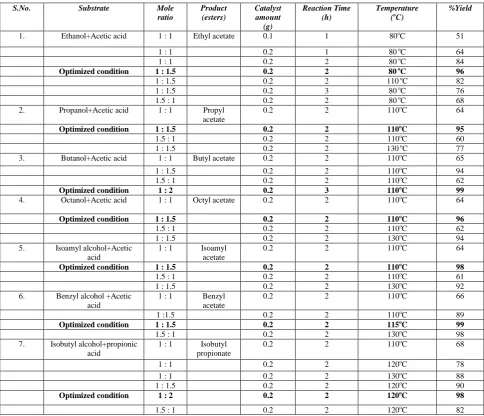
Table 1: Optimization of reaction condition for different ester using PAFA catalyst.
S.No. Substrate Mole
ratio
Product (esters)
Catalyst amount
(g)
Reaction Time (h)
Temperature (oC)
%Yield
1. Ethanol+Acetic acid 1 : 1 Ethyl acetate 0.1 1 80oC 51
1 : 1 0.2 1 80 oC 64
1 : 1 0.2 2 80 oC 84
Optimized condition 1 : 1.5 0.2 2 80 oC 96
1 : 1.5 0.2 2 110 oC 82
1 : 1.5 0.2 3 80 oC 76
1.5 : 1 0.2 2 80 oC 68
2. Propanol+Acetic acid 1 : 1 Propyl
acetate
0.2 2 110oC 64
Optimized condition 1 : 1.5 0.2 2 110oC 95
1.5 : 1 0.2 2 110oC 60
1 : 1.5 0.2 2 130 oC 77
3. Butanol+Acetic acid 1 : 1 Butyl acetate 0.2 2 110oC 65
1 : 1.5 0.2 2 110oC 94
1.5 : 1 0.2 2 110oC 62
Optimized condition 1 : 2 0.2 3 110oC 99
4. Octanol+Acetic acid 1 : 1 Octyl acetate 0.2 2 110oC 64
Optimized condition 1 : 1.5 0.2 2 110oC 96
1.5 : 1 0.2 2 110oC 62
1 : 1.5 0.2 2 130oC 94
5. Isoamyl alcohol+Acetic
acid
1 : 1 Isoamyl
acetate
0.2 2 110oC 64
Optimized condition 1 : 1.5 0.2 2 110oC 98
1.5 : 1 0.2 2 110oC 61
1 : 1.5 0.2 2 130oC 92
6. Benzyl alcohol +Acetic
acid
1 : 1 Benzyl
acetate
0.2 2 110oC 66
1 :1.5 0.2 2 110oC 89
Optimized condition 1 : 1.5 0.2 2 115oC 99
1.5 : 1 0.2 2 130oC 98
7. Isobutyl alcohol+propionic
acid
1 : 1 Isobutyl
propionate
0.2 2 110oC 68
1 : 1 0.2 2 120oC 78
1 : 1 0.2 2 130oC 88
1 : 1.5 0.2 2 120oC 90
Optimized condition 1 : 2 0.2 2 120oC 98
ISSN: 2319-8753
I
nternational
J
ournal of
I
nnovative
R
esearch in
S
cience,
E
ngineering and
T
echnology
(An ISO 3297: 2007 Certified Organization)
Vol. 3, Issue 1, January 2014
Copyright to IJIRSET
www.ijirset.com
8612
F. Catalyst Regeneration
After completion of the reaction, catalyst was filtered and washed thoroughly with acetone and dried in an oven at 110°C for 12h followed by activation at 450oCfor 2h in static condition prior to the use in next reaction cycle under the similar reaction conditions.
III. RESULTS AND DISCUSSION
A. Physico-chemical characterization of PAFA catalysts
The physico-chemical properties of the fly ash samples before and after chemical activation are given in Table 2as determined from flame photometry, which shows that silica content in PAFA catalyst is greatly increased from 61.9% to 88%. The increase in silica content after activation shows the loss of significant amount of other components during the chemical activation. The BET surface area of the chemically treated fly ash was greater (26 m2/g) than that of the untreated FA (9 m2/g). The greater BET surface area of PAFA catalyst may be attributed to surface modification of the FA particles by acid solution [34].
Table 2: Physico-chemical properties of fly ash samples before and after chemical activation.
FA (Fly ash) and PAFA (chemically activated fly ash).
B. Structural properties
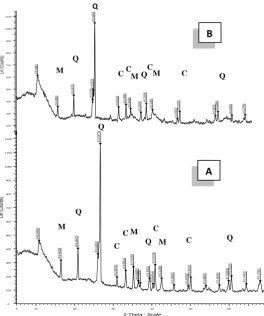
X-ray diffraction pattern of pure FA and PAFA catalyst in Fig. 1A and B shows the presence of crystalline and amorphous phase. Figure also indicates that hexagonal quartz (SiO2) and orthorhombic mullite (3Al2O3•2SiO2) are the main crystallite phases both in FA as well as in the PAFA catalysts. The amorphous phase of FA is increased by chemical activation which results in decreased crystallite size up to 11 nm. Fly ash after chemical treatment with HClO4 is observed to be less crystalline due to formation of silanated silica which is evident from the decrease in relative peak intensities after surface modification (Fig. 1B). The amorphous phase of fly ash is increased more by HClO4 treatment as compared with rest of other three mineral acid (HCl, H2SO4 and HNO3 discussed in earlier chapters ) which results in decreased crystallite size [29].
C. FT-IR studies
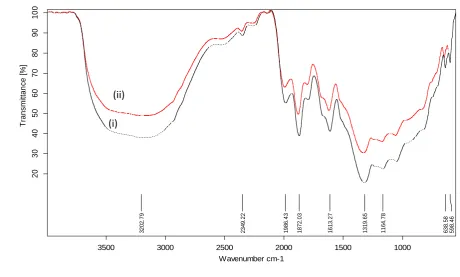
The FT-IR spectra of FA in Fig. 2 (i) show broad band between 3500-3000 cm-1, which is attributed to surface -OH groups of Si-OH and adsorbed water molecules on the surface. The broadness of the band is due to the strong hydrogen bonding. The hydroxyl groups do not exists in isolation and a high degree of association is experienced as a result of extensive hydrogen bonding with other hydroxyl groups. A peak at 1650 cm-1 in the spectra of both the samples is attributed to bending mode (δO-H) of water molecule.
During chemical treatment, the FT-IR spectra of PAFA shows the tremendous increment in broadness at 3500-3000 cm-1 region as compared with FA which reflects strong hydrogen bonding between the hydroxyl groups due to increase
Catalyst Silica
(Wt %)
Crystallite size (nm)
BET surface area (m2/g)
Particle diameter (µm)
FA 61.9 33 9 37.7
ISSN: 2319-8753
I
nternational
J
ournal of
I
nnovative
R
esearch in
S
cience,
E
ngineering and
T
echnology
(An ISO 3297: 2007 Certified Organization)
Vol. 3, Issue 1, January 2014
Copyright to IJIRSET
www.ijirset.com
8613 in silica content and loss of significant amount of other components (Fig. 2 (ii). The increased amorphous silica in the activated fly ash can be characterized by an intense band in the range 1000-1300 cm-1, corresponding to the valence vibrations of the silicate oxygen skeleton. The main absorption band of the valence oscillations of the groups Si-O-Si in quartz appears with a main absorption maximum at 1164 cm-1[26].
Fig. 1: X-ray diffraction pattern of A) FA and B) PAFA catalyst.
30-12-10-renu-B
Operations: Smooth 0.150 | Import
30-12-10-renu-B - File: 30-12-10-renu-B.raw - Type: 2Th/Th locked - Start: 5.000 ° - End: 70.000 ° - Step: 0.020 ° - Step time: 1. s - Temp.: 27 °C - Time Started: 7
Lin (C ou nts) 0 100 200 300 400 500 600 700 800 900 1000 1100 1200 1300 1400
2-Theta - Scale
5 10 20 30 40 50 60 70
d=8. 19943 d=5. 40850 d=4. 26725 d=3. 42761 d=3. 39378 d=3. 34950 d=2. 69616 d=2. 54597 d=2. 45904 d=2. 28734 d=2. 20858 d=2. 12303 d=1. 84278 d=1. 81970 d=1. 54238 d=1. 52544 d=1. 44370 d=1. 37456 30-12-10-renu-A
Operations: Smooth 0.150 | Import
30-12-10-renu-A - File: 30-12-10-renu-A.raw - Type: 2Th/Th locked - Start: 5.000 ° - End: 70.000 ° - Step: 0.020 ° - Step time: 1. s - Temp.: 27 °C - Time Started: 8
Lin (C ou nts) 0 100 200 300 400 500 600 700 800 900 1000 1100 1200 1300 1400
2-Theta - Scale
5 10 20 30 40 50 60 70
d=8. 26050 d=5. 40338 d=4. 26473 d=3. 42672 d=3. 34776 d=2. 88741 d=2. 69514 d=2. 54593 d=2. 46074 d=2. 42962 d=2. 28532 d=2. 23712 d=2. 20766 d=2. 12398 d=1. 98225 d=1. 84205 d=1. 81917 d=1. 69557 d=1. 60064 d=1. 54206 d=1. 52529 d=1.
44303 d=1.37521
B
A
QM Q
C C M Q C Q
C M M Q Q C M C
Q M Q
ISSN: 2319-8753
I
nternational
J
ournal of
I
nnovative
R
esearch in
S
cience,
E
ngineering and
T
echnology
(An ISO 3297: 2007 Certified Organization)
Vol. 3, Issue 1, January 2014
Copyright to IJIRSET
www.ijirset.com
8614
Fig. 2: FT-IR spectra of (i) FA (ii) PAFA catalyst
.
D. SEM studies
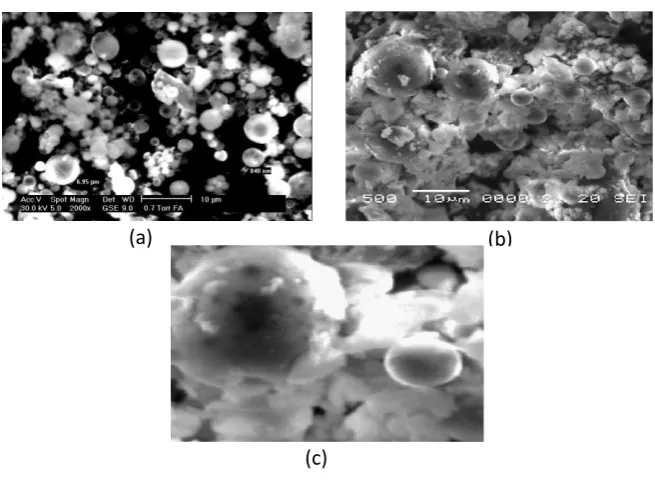
SEM micrograph of FA indicates that the most of the particles present in the fly ash are spherical in shape with a relatively smooth surface grain consisting of quartz (Fig. 3 a), while after chemical activation with HClO4, silica cenospheres are transformed into agglomerations of large gelatinous mass formed due to the breaking and dissolution of alumino-silicate phases modifying the surface morphology greatly [28](Fig. 3 b and c).
A typical EDX spectrum of the PAFA catalyst is given in Fig. 4, which indicates that the silica content of FA (61.9%) is greatly increased after chemical activation (88%) and content of other metal oxides are found in small proportion.
D:\ANITA 1\RFA.1 RFA DRS
D:\ANITA 1\H2SO4-FA.0 H2SO4-FA DRS
ISSN: 2319-8753
I
nternational
J
ournal of
I
nnovative
R
esearch in
S
cience,
E
ngineering and
T
echnology
(An ISO 3297: 2007 Certified Organization)
Vol. 3, Issue 1, January 2014
Copyright to IJIRSET
www.ijirset.com
8615
Fig. 3: SEM micrographs of a) FA b) PAFA catalyst and c) magnified imageof PAFA catalyst.
Fig. 4: SEM-EDX of PAFA catalyst
E. Catalytic performance of PAFA catalyst
In order to understand the effect of activation of fly ash on surface acidity and therefore, the catalytic activity, the catalytic performance of PAFA was evaluated for series of esterification reactions in single step, solvent free condition.
(a)
(b)
ISSN: 2319-8753
I
nternational
J
ournal of
I
nnovative
R
esearch in
S
cience,
E
ngineering and
T
echnology
(An ISO 3297: 2007 Certified Organization)
Vol. 3, Issue 1, January 2014
Copyright to IJIRSET
www.ijirset.com
8616
The esterification of acetic acid with various alcohols was also carried out at different temperature ranging from 80°C to 130°C for 1h to 3h to optimize the reaction temperature, time, and molar ratio gaining maximum conversion of alcohol to esters. Esterification reactions were carried out over pure fly ash (FA) and PAFA by taking varying amount of catalyst, molar ratio of alcohol to acid, reaction time and temperature. The parameters have been optimized and the results of optimization experiments are given in Table 1. It is interesting to note the optimized conditions for maximum conversion are different for different esterifications. However the amount of catalyst remained same. This shows the efficiency of the catalyst for series of esterification reactions.
The spent catalyst from the reaction mixture was filtered, washed with acetone and regenerated at 450°C to use for the next reaction cycles. The catalyst was equally efficient up to 4 reaction cycles.It shows that the catalyst is easily regenerated by thermal treatment without loss of catalytic activity (Fig. 5). The conversion was decreased after the 4th cycle, which may due to the deposition of significant amount of carbonaceous material on the external surface of the used catalyst that may block the active sites present on the catalyst.
Fig. 5: FT-IR spectra of (i) fresh PAFA catalyst and (ii) regenerated PAFA catalyst for esterification of acetic acid with n-butanol.
F. Proposed Mechanism
Esterification take place between acetic acid and absorbed on the acid site of catalyst forming on electrophile and alcohol in the vapor phase, forming ester with subsequent removal of a molecule of H2O. The mechanistic pathways for the esterification of acid are given in Scheme 3, which shows that the catalyst helps in the formation of tetrahedral intermediates providing Brønsted acid sites.
D:\ANITA 1\AD\H2SO4-FA.0 H2SO4-FA DRS 19/10/2011
32 02 .7 9 23 49 .2 2 19 86 .4 3 18 72 .0 3 16 13 .2 7 13 19 .6 5 11 64 .7 8 63 8. 58 59 8. 46 1000 1500 2000 2500 3000 3500 Wavenumber cm-1 20 30 40 50 60 70 80 90 10 0 T ra ns m itta nc e [% ] Page 1/1
D:\ANITA 1\AD\H2SO4-FA.0 H2SO4-FA DRS 19/10/2011
ISSN: 2319-8753
I
nternational
J
ournal of
I
nnovative
R
esearch in
S
cience,
E
ngineering and
T
echnology
(An ISO 3297: 2007 Certified Organization)
Vol. 3, Issue 1, January 2014
Copyright to IJIRSET
www.ijirset.com
8617
-H2O
R C
OH
Protonated acid
Ester
Carboxylic acid
Protonation
Nucleophilic
Attack
Tetrahedral intermediate (II)
(I)
Proton Transfer
(III)
Dehydration
Dehydrogenation
O
R C
OR'
+R'-OH
C O-H R
O
R' H
OH
C O-H R
R'
OH H
O -H
O-H R
C OR' O
+
+
PAFA Catalyst
PAFA Catalyst
Protonated ester
R C
OH OH
Alcohol
Si Si Si Si OH OH OH OH
PAFA Catalyst
Si Si Si Si OH OH OH O
Si Si Si Si OH OH OH OH
PAFA Catalyst
Si Si Si Si OH OH OH O
R=CH3, CH3CH2
R’=C2H5, C3H7, C4H9, CH3-(CH2)7, (CH3)2-CH-CH2-CH2, C6H5-CH and (CH3)2-CH-CH2.
Scheme 3: Proposed mechanism of esterification of carboxylic acid with alcohol over PAFA catalyst.
IV. CONCLUSION
ISSN: 2319-8753
I
nternational
J
ournal of
I
nnovative
R
esearch in
S
cience,
E
ngineering and
T
echnology
(An ISO 3297: 2007 Certified Organization)
Vol. 3, Issue 1, January 2014
Copyright to IJIRSET
www.ijirset.com
8618 catalyst prepared by acid activation with respect to Brønsted acidity. Inexpensive and ready availability of the catalyst makes the procedure an attractive alternative to the existing methods for the synthesis of esters. The catalyst can be called environmentally benign because of its ease of preparation, mildness, and easy work up procedure (filtration).
This catalyst can be used and marketed for industrial scale synthesis of esterification organic products for making the process cost effective utilizing the solid waste fly ash in bulk. Many industries have captive power generation with production of fly ash as by product, they can use their own fly ash for synthesizing cost effective catalysts for organic synthesis.
ACKNOWLEDGEMENT
The authors are thankful to Dr. Mukul Gupta, Dr. D.M. Phase, Er. V.K. Ahiray from UGC-DAE CSR Lab, Indore,India for XRD and SEM, SEM-EDX respectively. XRF analysis was conducted at Punjab University, Chandigarh. The financial support was provided by Fly Ash Mission, DST, New Delhi, India.
REFERENCES
[1] Joseph, T., Sahoo, S., Halligudi, S. B., “Bronsted acidic ionic liquids: A green, efficient and reusable catalyst system and reaction medium for
Fischer esterification”, J. Mol. Catal. A: Chem., Vol. 234, pp.107-110, 2005.
[2] Martínez, M., Oliveros, R., Aracil, J., Ind. & Eng. Chem. Res., Vol. 50, pp. 6609-6661, 2011.
[3] Liu,Y., Lotero, E., Goodwin, J. G., “Effect of water on sulfuric acid catalyzed esterification” J. Mol. Catal. A. Chem., Vol. 245, pp.132-140,
2006.
[4] Gang, L.,Wenhui, P.,”Esterifications of carboxylic acids and alcohols catalyzed by al 2 (so 4) 3 · 18h 2 o under solvent-free condition”,
КИНЕТИКА И КАТАЛИЗ. Vol. s51 (4), pp. 583-589, 2010.
[5] Jermy, B. R., Pandurangan, A.,”Catalytic application of Al-mcm-41 in the esterification of acetic acid with various alcohols”, Appl. Catal. A:
Gen., Vol. 288, pp.25-33, 2005.
[6] Wilson, K., Clark, J. H., “Solid acids and their use as environmentally friendly catalyst in organic synthesis”, Pure Appl. Chem., Vol. 72, pp.
1313-1319, 2000.
[7] Blagova, S., Paradaa, S., Bailerb,O., Moritzb, P., Lamc, D., Weinandd, R., Hassea,H., Chem. Eng. Sci., Vol. 61, pp.753, 2006.
[8] Zhang, Y., Ma, L.,Yang, J.,”Kinetics of esterification of lactic acid with ethanol catalyzed by cation-exchange resins”, React. Funct. Polym.,
Vol. 61, pp.101-114, 2004.
[9] Jiang, Y. X., Chen, X. M., Mo, Y.F., Tong, Z.F., J. Mol. Catal. A. Chem., Vol. 213, pp. 231-234, 2004.
[10] Abd, E., Wahab, M.M., Said,A.A., J. Mol. Catal. A. Chem., Vol. 240, pp 109, 2005.
[11] Sepulveda, J. H.,Yori, J. C.,Vera, C. R., “Repeated Use of Supported H3PW12O40 Catalysts in the Liquid Phase Esterification of Acetic Acid
with Butanol,” Appl. Catal. A. Vol. 288(1), pp. 18-24, 2005.
[12] Peres, C., Harper, N., Marco,D.R., Enz. Micro. Tech.,Vol. 37(1), pp.145-149, 2005.
[13] Novak, Z., Habulin, M., Krmelj, V., Knez, Z., “Silica aerogels as support for lipase catalyzed esterifications at sub- and
supercriticalconditions”, J. Supercrit. Fluids.,Vol. 27 (2), pp.169-178, 2003.
[14] Manabe, K., Kobayashi, S., “Dehydrative Esterification of Carboxylic Acids with Alcohols Catalyzed by Polymer-Supported Sulfonic Acids in
Water”, Adv. Synth. Catal., Vol. 344 (3-4), pp.270-273, 2002.
[15] Kirumakki, S. R., Nagaraju,N., Chary, K.V.R., .”Esterification of alcohols with acetic acid over Zeolites H?, HY and HZSM-5”,Appl. Catal.
A: Gen., Vol. 299, pp.185-192, 2006.
[16] Liu,Y., Lotero, E., James, G., Goodwin Jr, “A comparison of the esterification of acetic acid with methanol using heterogeneous versus
homogeneous acid catalysis”, Journal of Catalysis,Vol. 242 ,pp.278–286, 2006.
[17] Das, J., Parida, K.M., “Heteropoly acid intercalated Zn/Al HTlc as efficient catalyst for
esterification of acetic acid with n-butanol”, J. Mol. Catal. A: Chem.,Vol. 264, pp.248-254, 2007.
[18] Rat, M., Zahedi-Niaki, M.H., Kaliaguine, S., Do,T., Micropor. Mesopor. Mater., Vol. 112 , pp. 26-32, 2008.
[19] Wang, X., Cheng, S., Chan, J.J.C., Chao, J.C.H., Micropor. Mesopor. Mater., Vol. 96 ,pp. 321-334, 2006.
[20] Melero, J. A., Grieken, R.V., Morales,G., Chem. Rev., Vol. 106, pp. 3790-3801, 2006.
[21] Yang, Q., Kapoor, M. P., Inagaki, S., Shirokura, N., Kondo, J.N., Dome. K., J. Mol. Catal. A: Chem., Vol. 230, pp. 85-97, 2005.
[22] Joshi, R., Patel, H., Chudasama,U., Indian J. Chem. Technol., Vol.15, pp. 38-243, 2008.
[23] Dora, E., James, G., David, A., Appl. Catal. A: Gen., Vol. 339, pp. 76-83, 2008.
[24] Khatri, C., Jain, D., Rani,A., “Fly ash-supported cerium triflate as an active recyclable solid acid catalyst for Friedel–Crafts acylation reaction”,
Fuel ,Vol. 89, pp. 3853-3859,2010.
[25] Khatri, C., Mishra, M., Rani, A., “Synthesis and characterization of fly ash supported sulfated zirconia catalyst for benzylation reactions”, Fuel
Process. Technol. 91(10) (2010) 1288-1295.
ISSN: 2319-8753
I
nternational
J
ournal of
I
nnovative
R
esearch in
S
cience,
E
ngineering and
T
echnology
(An ISO 3297: 2007 Certified Organization)
Vol. 3, Issue 1, January 2014
Copyright to IJIRSET
www.ijirset.com
8619
and its catalytic performance “,Fuel , Vol. 87, pp. 2886-2892, 2008.
[27] Khatri, C., Rani, A., Indian Patent No. 1980/DEL/2007.
[28] Sharma, A., Srivastava, K., Devra,V., Rani,A.,”Modification in Properties of Fly Ash through Mechanical and Chemical Activation”, Am.
Chem. Sci. J. 2 (4) (2012) 177-187.
[29] Gregg, S. J., Sing, K.S.W. (1982). Adsorption, Surface Area and Porosity. Second edition Academic Press, New York
[30] Cullity, B. D., Stock, S.R. (2001). Elements of X-ray diffraction. Third ed., 388.
[31] Kabra, S., Katara.S., Rani, A., “Characterization and study of turkish perlite”,int. J.of innovative res. in sci.,engineering and tech., Vol.
2(9),pp. 4319-4326, 2013.
[32] Jain, D.,Rani,A.,”Mgo enriched coal fly ash as highly active heterogeneous base catalyst for claisen-schmidt condensation reaction”,American
Chemical Science Journal ,Vol.1(2), pp. 37-49, 2011.
[33] Jain, D., Khatri, C., Rani, A.,“Synthesis and characterization of novel solid base catalyst from fly ash”,Fuel ,Vol.90, pp. 2083-2088, 2011.
[34] Blanco, F., Garcia, M. P., Ayala, J.,”The effect of mechanically and chemically activated fly ashes on mortar properties” Fuel, Vol. 85, pp.
2018-2026, 2006.
BIOGRAPHY
Mrs. Anita Sharma is pursuing Ph.D. from Department of Pure and Applied Chemistry, University of Kota, Kota (Rajasthan). She got 1st rank in M.Phil (Organic Chemistry) at M.D.S.University, University Ajmer. Her research interests mainly include synthesis of heterogeneous acid catalysts and their various applications, solid waste management, material synthesis etc.
Dr. Vijay Devra is a Lecturer in Department of Chemistry at Govt. J.D.B. Girls P.G. College,
Kota, and Rajasthan, India. She is working in the field of Homogeneous Catalysis. Several research scholars are doing Ph. D. under the supervision of her.
Prof. Ashu Rani is currently working as Head, Department of Pure and Applied Chemistry and Dean of post graduate departments at University of Kota, Kota [Rajasthan]. Several research scholars are doing M. Phil and Ph. D. under the supervision of her. Her research interests are Heterogeneous Catalysis, Waste management, Climate change and Nanotechnology. She is associated with several National and International Collaborations from the Industries and Universities.