VOT 74232
NON-TECHNICAL SKILLS FOR ENGINEERS IN THE
21
STCENTURY: A BASIS FOR DEVELOPING A GUIDELINE
ZUBAIDAH AWANG
HAFILAH ZAINAL ABIDIN
MD. RAZIB ARSHAD
HADINA HABIL
AHMAD SYUKRI YAHYA
FACULTY OF MANAGEMENT AND HUMAN
RESOURCE DEVELOPMENT
UNIVERSITI TEKNOLOGI MALAYSIA
21
STCENTURY: A BASIS FOR DEVELOPING A GUIDELINE
ZUBAIDAH AWANG
HAFILAH ZAINAL ABIDIN
MD. RAZIB ARSHAD
HADINA HABIL
AHMAD SYUKRI YAHYA
RESEARCH VOTE NO: 74232
FACULTY OF MANAGEMENT AND HUMAN
RESOURCE DEVELOPMENT
UNIVERSITI TEKNOLOGI MALAYSIA
iv
TABLE OF CONTENTS
ITEM PAGE
ACKNOWLEDGEMENT i
ABSTRACT ii
ABSTRAK iii
TABLE OF CONTENTS iv
LIST OF TABLES x
LIST OF FIGURES xii
LIST OF ABBREVIATIONS xiii
CHAPTER 1 INTRODUCTION
1.0Introduction 1
1.1Background of the study 1
1.1.1 Human Capital: the role of institutions
of higher learning preparing engineering graduates
with employable skills 3
1.2Statement of the problem 6
1.3Objectives of the study 11
1.4Research questions 12
1.5Scope of study 12
1.7Significance of the study 14
1.8Definition of terms 15
CHAPTER 2 LITERATURE REVIEW
2.0 Introduction 16
2.1 Changing needs of the employers 16 2.2 Definitions of non-technical skills 19 2.3 The need for non-technical skills in engineering career 21 2.4 Institutions of higher learning: challenges in
providing highly skilled graduates 22 2.5 Importance of specific non-technical skills 24 2.5.1 The importance of communication skills 24
2.5.2 The importance of creative thinking and
problem solving skills 26 2.5.3 The importance of information management
and computer application skills 27 2.5.4 The importance of leadership and
organizational skills 28
2.5.5 The importance of group effectiveness and
teamwork skills 30
2.5.6 The importance of work related dispositions
vi
2.5.7 The importance of personal traits and
self-management skills 34
2.6Conclusion 35
CHAPTER 3 METHODOLOGY
3.0 Introduction 36
3.1 Research design 36
3.2 Sample of the study 36
3.3 Research instrument 37
3.3.1 Questionnaire 38
3.3.2 Interview 39
3.4 Pilot study 40
3.5 Data collection procedure 40
3.5.1 Questionnaire 40
3.5.2 Interviews 41
3.6 Data analysis 42
3.6.1 Questionnaire 42
3.6.2 Interviews 42
CHAPTER 4 FINDINGS AND DISCUSSIONS
4.0 Introduction 43
4.1.2 Five items with the highest mean score 47 4.1.3 Five items with the lowest mean scores 48 4.1.4 Importance of functional skills by category 49
4.1.4.1 Communication skills category 49
4.1.4.1.1 Communication skills
category by items 51 4.1.4.1.2 Communication skills items:
comparison between HR
executives and engineers 54
4.1.4.1.3 Languages in the
manufacturing industry 55
4.1.4.1.4 Language items: comparison
between HR executives and
engineers 57
4.1.4.2Creative thinking and problem
solving skills 58
4.1.4.2.1 Creative thinking and problem solving skills items: comparison between HR executives and
engineers 61
4.1.4.3Information management skills 62 4.1.4.3.1 Information management
viii
between HR executives and
engineers 63
4.1.4.3.2 Computer application 64 4.1.4.3.3 Computer application skills
items: comparison between
HR executives and engineers 66
4.1.4.4Leadership and organizational skills 67 4.1.4.4.1 Leadership and organizational
skills items: comparison between HR executives and
engineers 70
4.2 Non-technical skills: the adaptive skills 71
4.2.1 Most adaptive skills 71
4.2.2 Group effectiveness and teamwork skills 73 4.2.2.1 Group effectiveness and teamwork
skills items: comparison between HR
executives and engineers 77 4.2.3 Work-related dispositions and attitudes 77
4.2.3.1 Work-related dispositions and attitudes items: comparison between HR
skills items: comparison between HR
executives and engineers 85
CHAPTER 5 CONCLUSIONS AND RECOMMENDATIONS
5.0 Introduction 87
5.1 Summary of the findings 87
5.2 Conclusions 89
5.3 Limitations of the study 90
5.4 Recommendations 90
5.5 Suggestion for future research 92
REFERENCES 94
xii
LIST OF FIGURES
FIGURE TITLE PAGE
1.1 Types of skills lacking (executive) 10
1.2 Classification framework of non-technical skills 12
LIST OF ABBREVIATIONS
ABBREVIATIONS TERMS
9MP Ninth Malaysia Plan
AMCHAM The American Malaysian Chambers of Commerce ICAO International Civil Aviation Organization ICT Information and communication technology
FDI Foreign direct investment
FMM Federation of Malaysian Manufacturers
GDP Gross domestic product
IMP1 The First Industrial Master Plan IMP2 The Second Industrial Master Plan IMP3 The Third Industrial Master Plan
MEF Malaysian Employers Federation
MTEN National Economic Action Council
NCEQW National Center on the Educational Quality of the Workforce
NST New Straits Times
PIC Pilot in Command
PICS Productivity and Investment Climate Survey SCANS Secretary's Commission on Achieving
Necessary Skills
ii
ABSTRACT
This study aims to determine the non-technical skills: functional and adaptive skills required by entry-level engineers in the manufacturing industry. These skills are divided into seven categories i.e. four functional skills categories
(communication, creative thinking and problem solving, information management, leadership and organizational skills) and three adaptive skills categories (group
Matlamat kajian ini adalah untuk mengenal pasti kemahiran bukan teknikal: kemahiran fungsian dan kemahiran penyesuaian yang diperlukan oleh jurutera baru dalam industri pembuatan. Kemahiran tersebut dibahagikan kepada tujuh kategori i.e. empat kategori mewakili kemahiran fungsian (kemahiran komunikasi, pemikiran kreatif dan penyelesaian masalah, pengurusan maklumat, kepimpinan dan pengorganisasian) dan tiga kategori mewakili kemahiran penyesuaian (keberkesanan kumpulan dan kerja
berkumpulan, disposisi berkaitan pekerjaan dan sikap serta ciri peribadi dan pengurusan diri). Sejumlah 162 firma pembuatan telah mengambil bahagian dalam kajian ini. Soal selidik merupakan instrumen utama yang digunakan sementara temubual digunakan untuk memberikan kefahaman tentang kemahiran bukan teknikal di kalangan jurutera baru. Kajian ini mendapati bahawa kemahiran bukan teknikal adalah penting bagi jurutera baru di dalam industri pembuatan. Analisis terhadap kemahiran fungsian mendapati bahawa keupayaan mematuhi prosedur adalah paling penting diikuti oleh keupayaan mendengar, menepati ketetapan tarikh, mengurus masa (pengurusan masa), dan bekerja mengikut jadual. Bagi kemahiran penyesuaian pula, majoriti responden memillih indikator berikut: bertanggungjawab, komitmen, keyakinan diri, disiplin, komited terhadap tugas dan kesanggupan untuk belajar sebagai ciri-ciri yang paling dihargai. Dapatan kajian ini boleh dijadikan sebagai asas bagi membangunkan satu garis panduan bagi kemahiran bukan teknikal untuk dimasukkan ke dalam kurikulum
i
ACKNOWLEDGEMENT
Praise be to Allah the Almighty.
This study “Non-technical Skills for Engineers in the 21st Century: A Basis for Developing a Guideline” has been successfully completed. This study involved a lot of time and effort to complete. We have been very fortunate to have a strong and committed research team who were relentless in their effort to come out with commendable findings.
First, we wish to thank all executives of participating companies for their valuable input. We wish to thank Tn. Hj. Shamsuddin Bardan, the Executive Director of the Malaysian Employers Federation for his invaluable insight. Special thanks go to the Ministry of Science, Technology and Innovation (MOSTI) for funding this study and the Research Management Centre of Universiti Teknologi Malaysia (RMC) for providing administrative advice and assistance throughout the study.
In addition, we would like to thank all the people involved during the initial stages of the study: En. Lokman Ali, En. Mohamed Fuad Ahmad and Dr. Wan Khairuzzaman Wan Ismail. Finally, we wish to express our utmost gratitude to En. Ahmad Syukri Yahya, our research officer for his commitment and hard work in helping us complete this study.
Zubaidah Awang (Project Leader) Hafilah Zainal Abidin
LIST OF TABLES
TABLE TITLE PAGE
3.1 Firm ownership and size 37
3.2 Details of the questionnaire 39
3.3 Designation of respondents 41
4.1 Level of importance based on mean value 44 4.2 Distribution of functional skills items 45
4.3 Average mean score by category 46
4.4 Five items with the highest mean scores 47
4.5 Five items with lowest mean scores 48
4.6 Communication skills - average mean score by item 52 4.7 Comparison of top five communication skills items
perceived by HR executives and engineers 55
4.8 Language - importance and usage 56
4.9 Comparison of language items perceived by HR executives
and engineers 58
4.10 Creative thinking and problem solving skills 59 4.11 Comparison of top five creative thinking and problem solving
skills items perceived by HR executives and engineers 61
xi
4.13 Comparison of top five information management skills
items perceived by HR executives and engineers 64
4.14 Computer application 65
4.15 Comparison of five computer application skills items
perceived by HR executives and engineers 66 4.16 Leadership and organizational skills 67 4.17 Comparison of top five leadership and organizational skills
items perceived by HR executives and engineers 70 4.18 Overall frequency for adaptive skills indicators 72 4.19 Group effectiveness and teamwork skills 74 4.20 Comparison of top five group effectiveness and teamwork
skills items perceived by HR executives and engineers 77 4.21 Work-related dispositions and attitudes 78 4.22 Comparison of top five work-related dispositions and
attitudes items perceived by HR executives and engineers 82 4.23 Personal traits and self-management skills 83 4.24 Comparison of top five Personal traits and self-management
INTRODUCTION
1.0 Introduction
Engineers play an important role in a nation’s development. In the new millennium, engineers have to face new challenges, which require more than just technical skills. They are expected to be more versatile and possess essential
non-technical skills as their work scope will require them to deal with professionals in various disciplines (Inman, 2006).
The National Economic Action Council (MTEN) predicts that Malaysia needs 210,000 engineers by the year 2010 (Abang Abdullah Abang Ali, 2004a). In the year 2005, it was reported that engineering graduates (Electric/Electronic and
Telecommunication; Mechanical/Mechatronic and Civil) made up approximately 15% of the total unemployed graduates in Malaysia (The Sun, July 4, 2006). The high
unemployment rate among engineering graduates reflects a skills mismatch between the graduates produced by institutions of higher learning and the requirements of industry.
In addressing this issue of skills mismatch, the Malaysian government is
2
country’s economy. The problem of skills mismatch is due to the lack of coordination between industry projections of their human resource requirements and planning on the part of education and training providers (Fong Chan Onn, 2004).
1.1 Background of the Study
Malaysia’s industrialization is guided by the Industrial Master Plans (IMP). On 18 August 2006, the Malaysian government launched the third Industrial Master Plan (IMP3), a 15-year plan, towards realizing the vision of becoming a fully developed nation by the year 2020. Prior to this, there were the IMP1 and IMP2 each covering a
10-year period.
The manufacturing industry in Malaysia is experiencing a changing trend from an industry relying on cheap and relatively less-skilled labour towards knowledge-based activities. Due to the shifting of investment and operation particularly foreign direct investment (FDI) to more cost-effective economies (such as Vietnam, China and Cambodia), Malaysia can no longer rely on labour intensive industries to remain
competitive. The new requirement creates a gap in the quality of graduates produced by institutions of higher learning and those required by industries. Thus, institutions of higher learning must address this issue to produce knowledgeable human capital needed by the manufacturing sector as Malaysia moves towards a more knowledge-based economy.
1.1.1 Human Capital: The role of Institutions of Higher Learning in preparing engineering graduates with employable skills.
Institutions of higher learning play an important role in developing and enhancing human capital for the manufacturing industry. One of the ways to achieve this is for institutions of higher learning to reach out to industries to better understand their workforce requirements. This will enable institutions of higher learning to design new curriculum and redesign existing ones to be market-driven, for example, placing
4
As Malaysia moves towards a more knowledge-based economy, the
manufacturing sector seeks engineering graduates who are multi-skilled in engineering and other fields such as management, communication and business. According to Abd. Saman (2004), an engineer is “… a consultant in their respective area of expertise and a skilful manager who managesthe implementation of the engineering related decision making process.” As such, institutions of higher learning need to produce engineering graduates who are employable. These graduates should possess the “X-factor” i.e. the skills and competenciesrequired by employers, which include both technical and non-technical skills.
For example, the advancement in information and communication technology (ICT), influences the speed of information exchanges and the way business transacts, which requires an engineer to master some basic computer skills to keep abreast with current trends. Hence prospective engineers should be geared towards a knowledge-based environment with emphasis on putting engineering principles into practice as wellas emphasis on research and development in new technologies to adapt to new challenges ahead(Mah Soo, 2003).
workers with a broad set of skills which include problem solving, listening, negotiation, communication, teamwork and positive work attitudes.
The human resource requirement outlined in the 9MP, asserts the need for Malaysia to develop human capital who are knowledgeable and highly skilled, flexible and creative as well as imbued with positive work ethics and spiritual values. Thus, there is an urgent need to examine the non-technical skills required by entry-level engineers in the manufacturing industry to ensure that engineering graduates are competitive to serve the industry.
1.1 Statement of the problem
The problem of skills mismatch requires Malaysia to have pragmatic engineering education and training programmes. According to Megat Johari et al. (2001),
comprehensive training of engineers is necessary in preparing engineers who are capable of performing useful functions in the industry, and these include emphasis on
communication, management and innovative thinking skills.
Arguably, engineering education and training is crucial in ensuring the
6
an industrialized nation. According to Abang Abdullah Abang Ali (2004b), countries aspiring to be competitive in the global market are revisiting their technical education and training policies and programmes to ensure that their technical workforce is able to keep up with new advances in knowledge and technology and able to compete in the global market. He further asserts that in order to secure Malaysia’s future competitiveness, there must be continuous and concerted effort by the industry, government and academia to enhance Malaysia’s skills base.
As the world moves towards a more globalised economy, the importance of innovation in addition to economic and infrastructural development as a driver of sustainable economic growth cannot be understated. Innovation which requires the involvement of engineers at various stages, increases competitiveness, which in turn leads to employment generation and wealth creation (Abang Abdullah Abang Ali, 2004a).
Federation (MEF), is mainly because many arrive in the job market poorly equipped with the skills required by a changing economy (The NST, March 20, 2005).
A 1999 survey of 115 public and private employers’ perception on economic graduates showed that employers viewed personality as the most important criteria when hiring workers. This is followed by communication skills, being presentable, general knowledge and intelligence. Academic performance on the other hand, was ranked eighth out of the twelve criteria surveyed (Rahmah Ismail et al., 2001). In addition, a brief survey on employers by the MEF in 2002 supported this finding and discovered that the employability of graduates was not based merely on academic performance but also based on soft skills.
Another survey by the Productivity and Investment Climate Survey
(http://bond.npc.org.my) found that most skilled workers lacked the following skills (listed in the order of importance): English language proficiency, Information and Technology skills, Communication Skills, Technical and Professional Skills. Employers surveyed were extremely concerned with the quality of the Malaysian educated
8
A Bank Negara survey in 2002 (http://bond.npc.org.my) also indicated a wide disparity in the command of basic skills between local graduates and foreign graduates such as in communication skills, spoken and written English skills, action initiating skills, technical knowledge and problem solving skills. The most widely reported skills gap pertained to both communication skills and English language oral skills, where 90.4% of the respondents indicated that local graduates lacked these skills while only 25.7 % of the respondents indicated that foreign graduates lacked these skills. 75.4 % of the
respondents indicated that local graduates displayed poor English language and writing skills, whereas only 18.7 % of the respondents indicated that foreign graduates were lacking in these skills.
Looking at the trend around the world, global competition has increased demands for technical, scientific, research, problem solving and thinking skills. The SCANS Report on America in 2000 entitled “What work requires of schools”, defines that knowledge and skills are judged to be the most useful for the workplace. The report identified five competencies and a three-part foundation of skills and personal qualities that are essential to the preparation of all fresh graduates. The five competencies are resources (identifies, organises, plans, and allocates resources); interpersonal (works with others); information (acquires and uses information); systems (understands complex interrelationships) and technology (works with a variety of technologies). These
operations, listens and speaks); thinking skills (thinks creatively, makes decisions, solves problems, visualizes, knows how to learn, and reasons) and personal qualities (displays responsibility, self-esteem, sociability, self-management, and integrity) Without this foundation, the five competencies are less likely to be achieved.
A 2003 MEF survey (http://bond.npc.org.my) on the skills lacking among
10 54.5% 54% 47.5% 41.5% 39.5% 15% 17% 32% 39.5% 0 20 40 60 80 100 120 Anal ytical Langua ge Writin g Oral Tec hnic al Crea tive th
inki ng
Fina nce
/ Bus ines
s
Com
puter Othe r
Type of skills lacking in labor market
No . o f r es po nde nt c o m p a n ie s Source: MEF
Figure 1.1: Types of Skills Lacking (Executive)
In the case of higher skilled jobs such as managers, engineers and professionals, the skills most frequently cited by respondent companies were lack of planning and organisation skills; problem solving and decision making skills; strategic thinking, innovation and leadership skills.
1.3 Objectives of the study
The specific objectives of the study were to:
1. identify the non-technical skills required by entry-level engineers in performing their tasks or responsibilities
2. determine the importance of non-technical skills for entry-level engineers working in the manufacturing industry
3. provide a basis to develop guideline of non-technical skills required by entry-level engineers in the manufacturing industry
1.4 Research questions
This study attempted to seek answers to the following questions:
1. What are the non-technical skills required by entry-level engineers in the manufacturing industry?
12
1.5 Scope of study
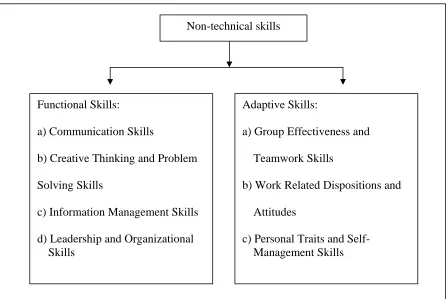
This study was confined to an investigation of non-technical skills required by entry-level engineers in the manufacturing industry in performing their tasks. The non-technical skills were divided into functional skills and adaptive skills (Lange, 2000). Figure 1.2 illustrates the classification framework of non-technical skills used in this study.
Figure 1.2: Classification framework of non-technical skills
Non-technical skills
Adaptive Skills:
a) Group Effectiveness and Teamwork Skills
b) Work Related Dispositions and Attitudes
c) Personal Traits and Self-Management Skills Functional Skills:
a) Communication Skills
b) Creative Thinking and Problem Solving Skills
c) Information Management Skills d) Leadership and Organizational
Based on this classification framework, functional skills are basic skills applied to tasks and are used to solve new problems. These skills go beyond one’s training and past experience. Some examples of functional skills are questioning, analyzing,
communicating and organizing. Adaptive skills, on the other hand, are skills that describe the manner in which employees conduct themselves and interact with the working environment, which include relations with people, organizations, and physical conditions (Murphy and Jenks, 1982).
The study was also limited to an investigation of the non-technical skills for engineers in the manufacturing firms listed in the Federation of Malaysian Manufacturers (FMM) Directory (2004), Small and Medium Industry (SMI) Business Directory (2004) and Bursa Malaysia (2004).
1.6 Framework of study
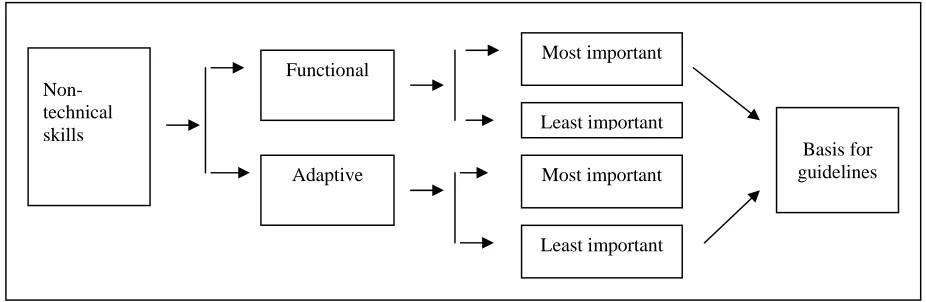
The framework used in this study is shown in Figure 1.3.
Figure 1.3: Framework of study
Non-technical skills
Functional
Adaptive
Most important
Least important
Most important
Least important
14
The framework depicts the types of information gathered and the flow of analysis of the study. The study identified the most and the least important items in the adaptive and functional skills. This information formed the basis for formulating a guideline on non-technical skills required by entry-level engineers in the manufacturing industry.
1.7 Significance of the study
The findings of this study would benefit the following stakeholders: 1. Ministry of Higher Education and institutions of higher learning
• Will provide better understanding of the current skills needed by
employers
• Will provide a basis for designing new engineering curriculum and
reviewing existing engineering programmes relevant to the needs of industry
2. Engineering graduates
• Will provide an insight of the needs and expectations of the manufacturing
industry.
3. Accreditation bodies such as Board of Engineers
• Will provide ideas to review the criteria used by the Board in the
4. Employers
• Will have an increased awareness of the need for them to play a more
active role in providing input to institutions of higher learning towards producing human capital to the industry and to address the mismatched between their needs and what the education system produces.
5. Ministry of Education
• Will provide a basis for a review of the school curriculum towards
producing prospective students for institutions of higher learning who have the ability to think and express themselves.
1.8 Definition of terms
The following definitions are used in this study:
• Non-technical skills refer to general skills such as communication,
negotiation, teamwork, problem solving, positive work attitudes and cooperation, which are notspecific to any particular job position or workplace environment.
• Entry-level engineers refer to fresh engineering graduates who have been
CHAPTER 2
LITERATURE REVIEW
2.0 Introduction
This chapter presents related research on the changing needs of the employers, the definition of non-technical skills, the need for non-technical skills in engineering career, the challenges for higher learning institutions in providing skilled graduates and the importance of specific non-technical skills.
2.1 Changing needs of the employers
increasingly important across disciplines (Inman, 2006; Evers, Rush and Berdow, 1998; Alpern, 1999; Clagett, 1997; Stasz, Ramsey and Eden, 1995). These are some of the essential non-technical skills that create employees who have the ability to look at things from a broader perspective.
The need for non-technical skills is an important element in the era of globalization, liberation and technological change. These skills are required to help employees perform their tasks more effectively as globalization will result in an increase in demand for workers who possess these skills as well as additional skills such as public relations, negotiation and cognitive skills.
The increasing need for a skilled and knowledgeable work force is shown in the job classification in the United States. In 1959, jobs were classified as 20 percent
professional, 20 percent skilled and 60 percent unskilled. However, in 1997, the scenario changed where 60 percent of jobs were classified as skilled jobs and only 20 percent unskilled (21st Century Skills for 21st Century Jobs, 1999).
18
complement job specific skills, such as engineering or accounting skills (Busse, 1992; Wiggill, 1991; Lankard, 1990; and Young, 1986).
This changing needs of the industry poses a new challenge for employers to select the right candidate for a job. According to Alpern (1999) and Murnae and Levy (1999), a majority of employers faced difficulty in selecting candidates during the recruitment process since not many candidates met the criteria. This deficiency is not due to technical skills but in the complementary non-technical skills. Employers will usually select a candidate who exhibits both work knowledge and other more general knowledge and skills (Inman, 2006).
Stasz et al. (1996) believe that the skills gap identified by employers is more about work dispositions and attitudes rather than academic or technical skills. Changes in the workplace and the perceived skills gap have direct implications for the training of
2.2 Definitions of non-technical skills
Non-technical skills according to Straub (1990) represent aspects common to all jobs, such as following instructions, communicating effectively, and cooperating with others in teamwork. Neal (1981) states that there are two broad categories of non-technical employment qualities or skills. The first category consists of behaviors such as arriving for work on time, following instructions, displaying social skills and conduct acceptable to others, and effective communication. The second category consists of attitude-related characteristics such as adaptability, self-confidence, persistence, ambition and helpfulness. Bryce (1993) writes that non-technical skills include communication, interpersonal and problem solving skills.
Non-technical skills, also known as generic skills or life skills can be divided into two categories: functional and adaptive (Munce, 1981). According to Lange (2000), functional skills are basic skills used to apply to tasks and to solve new problems and these can go beyond one’s training and past experience. Some examples of the skills are communicating, questioning, analyzing and decision-making. On the other hand, adaptive skills are skills that describe the manner in which employees conduct themselves and interact with the working environment. Some examples of these skills include group effectiveness and teamwork skills and leadership and organizational skills.
20
abilities, computerization, problem solving, personal attitudes, ethical and professional skills, communication skills, accounting and financial skills, leadership, decision-making skill, general knowledge to execute tasks, analytical, mathematical, statistical,
interpretation, project management, knowledge from other relevant disciplines, self-projection, and awareness on global issues.
Other researchers like Clagett (1997), Oliver, (1997) Murnae and Levy, (1996) and Mc Nabb, (1977) claim that some non-technical skills needed by employees in carrying out their tasks are learning preparation, writing ability, reading and counting, listening effectively, oral communication, creative thinking, problem-solving, good self-management, initiative, interpersonal skills, ability to work in group, effective leadership and technological skills.
2.3 The need for non-technical skills in engineering career
The changing requirement of employers and the nature of work has made non-technical skills important for engineering graduates. According to Cheung and Lewis (1998), employers expect technical workers to have the work knowledge and positive attitudes during their tenure. Although some employers put more emphasis on technical qualification, they also look for other qualities such as attitude and perseverance. This view can be extended to include technical, organizational, supervision, and other general requirements needed in industry. Most organizational programs would be positively evaluated if there is an improvement in fields related to knowledge, skills and attitude (Torrington and Tan, 1994).
22
Natriello (1989) found that employers placed emphasis on correct work attitudes and non-technical skills. American, Australian and British studies also reveal that employers believe that entry-level employees are deficient in the broader non-technical skills and that educational institutions need to begin placing more emphasis on providing teaching and training in non-technical skills (Cotton. 1995). Bradshaw (1989) writes that there is a mismatch between employer needs and educational response. He adds that in the changing workplace, employers require workers with positive personal qualities and work attitudes in addition to academic qualifications.
2.4 Institutions of higher learning: challenges in providing highly skilled graduates.
Institutions of higher learning, as centers for equipping graduates with the required knowledge and skills, should continuously upgrade and update their curriculum to respond to the changing requirements of employers.
think to what to think. Universities and colleges should include systematic and logical analysis skills based on real life situations. If not, graduates at the entry-level have different expectations on the level and achievement of skills needed by the industries. Specifically, many industries feel that graduates place individual career above the organization’s goal (Hotch, 1992).
Hotch (1992) suggests that institutions of higher learning elicit feedback from industries and revise their academic programs if necessary, to meet the requirement of the market and job demands. They should put a benchmark at either regional or national level as a parameter in evaluating the effectiveness of their current academic programs.
Feedback from industries is not only beneficial for students in their learning process but also for institutions of higher learning as the data can be analyzed to identify the strengths and weaknesses of certain academic programs.
The importance of non-technical skills is also apparent in a study by Willis and Taylor (1999). In the study, they assert that although employers were satisfied with graduates’ technical skills, they also felt that graduates still needed and lacked in general and current knowledge such as international issues, oral and written communication skills.
24
institutions of higher learning fail to produce students with holistic skills for the job market.
2.5 Importance of specific non-technical skills
There are two categories of non-technical skills: functional and adaptive, as pointed out in chapter 1. The following sections details the importance of each category.
2.5.1 The importance of communication skills
Communication, being the lifeblood of an organization, is one of the substantial elements in an organization. Communication involves verbal and nonverbal elements as well as the ability to use language either written or oral to get a message across.
Organizational processes such as employee relations, customer relations, public relations, negotiation, strategic planning, etc. all need communication in order to function
From another point of view, Lowry and Yap (1997) claim that oral and written communication skills are very important at the work place. These skills can be acquired through humanistic subjects offered in institutions of higher learning.
A study by Welfle (2000) indicates that communication skills are very important in an organization’s economic development especially those that focus on customer service. In this context employees have to communicate and relate to external customers. Welfle also states that only few works do not require employee to write and read; most works require a good level of communication competency.
Despite general communication skills, English language proficiency is another important non-technical skill that must be acquired by employees. English is not only a popular language, but also widely used and recognized as the language of trade and international relations (Atkinson, 2001).
Due to globalization, the role of other languages has become important to enable us to become a global player. According to Esa Samad (2000) todays job market requires employees who are not only proficient in Malay and English, but also in other languages such as Chinese, Arabic, Japanese, French, etc. Being skillful and fluent in a third language is an added advantage for graduates to secure a job.
26
communication skills. In his report on engineering education in Australia he states that most employers feel that education institutions offering engineering courses emphasize only basic science knowledge, technical skills, knowledge and practice in engineering study, lab works, and computer design. These employers rate the institutions as unsatisfactory in non-technical skills such as industrial relations, management, cost management and communication skills. They claim that institutions fail to adapt engineering aspects to a broader context. Hellinghausen further strengthens the
importance of language and communication and Myers (1998) study that 71 percent of employers place ability to follow instructions, speak fluently and clearly as well as attentiveness (listening skills) during discussions and presentations as very important in the workplace. Ability to speak in other languages is rated as important in where 41 percent of the employers evaluate the ability to speak and write in the second language as important.
2.5.2 The importance of creative thinking and problem solving skills
understanding and awareness of the present situation. Good decision making enables the management process of an organization to function effieciently.
Carnavale (1991) further states that all employees need to be equipped with the skills of identifying problems and making decision in order to meet the vision and
objectives of the organization. This could be achieved through problem solving skills and creative thinking. Problem solving skill is important if one wants to avoid conflict and to ensure a smooth operation of the company.
2.5.3 The importance of information management and computer application skills
Technological competence has become important in line with the development of various equipment that could assist employers in carrying out their jobs more effectively. Siegel (2000) states that technology is the catalyst to changes. This could be seen in the increasing usage of computer to surf the Internet. Gathering and assessing information could be done through database and this provides a fast, efficient way of assessing information.
28
lot of product designs could be completed fast and accurately according to the required specifications.
According to Davis (1997), employers have a high expectation towards graduates’ computer literacy level where 83.3% said that computer literacy is important or very important in deciding whether the graduates are offered the job. This decision is in line with the improvement in the development of technological advances, which require the employers and employee to act in line with the advancement.
2.5.4 The Importance of leadership and organizational skills
Flin R. et al. (1998) defined effective leadership as managerial skills used as a means to achieve joint task completion within a motivated, fully functioning team through coordination and persuasion. The core of effective leadership is to set the highest priority on the joint completion of a given task. Leadership responsibilities include the active and goal-directed coordination of work activities within the crew. This is always a reciprocal process. Without complementary behavior of the crew, leadership behavior is less effective. All crewmembers are expected to dedicate their efforts and initiatives to the safe and efficient achievement of the organization’s goals.
However, the final and legal responsibility for the operation on the whole is undivided, with the Pilot in Command (PIC). Crew responsibilities include monitoring and
Within the scope of delegated tasks crewmembers have the same responsibilities as the PIC.
The International Civil Aviation Organization (ICAO) defines a leader as a person who is able to influence the thought and whose ideas and actions influence the behavior of others using his/her ideas and actions. Through the use of example and persuasion, and an understanding of the goals and desires of the group, the leader becomes a means of change and influence (ICAO, 1989). It is important to distinguish between leadership, which is acquired, and authority, which is assigned. Leadership is one aspect of teamwork, and the success of a leader depends on the quality of his/her relationship in the team. The crewmembers should feel that they are an integral part of a well-run, well-organized operation in which their inputs are essential to reach
commonly valued goals and overall success of the operation.
In distinction to the category cooperation, leadership and managerial skills focuses more on the goal-directed initiative the crewmember under consideration is investing into management and coordination functions. This includes also positive influences on the motivation and morale of the crew. Cooperation, on the other hand covers more the interactive processes without explicit appointed roles and is independent of authority differences of the individuals.
30
to defined roles, specific experience, as well as to the present level of workload of the crewmembers. This concept for the operation is interactively briefed and always open for the contributions from other crewmembers. In order to ensure proper support and the participation from all members of the crew, active care is taken to establish and maintain closed loop communication. A leader motivates, activates, and monitors others and encourages the crew to monitor and challenge her/himself and each other in a non-degrading way.
2.5.5 The importance of group effectiveness and teamwork skills
According to Fullan (1990), if any changes are to be made, group cooperation then is not an important element if it is not accompanied by suitable management
practices that are proper for the specific time, place and situation. Group cooperation can be formed/solicited if all the resistance could be avoided. Katzenbach (1993) states that group work can be formed and behavior of group members could be observed through group work.
As Darrah (1992) points out, teamwork is not a "skill" but a description of how work is organized. What constitutes a team is subject to local definition and thus must be defined in relation to the working context. Thus, the "skill" or "interpersonal competency" needed to participate in a team will depend on the work organization.
Oganizational behavior literature provides some relevant definitions. Hackman and Oldham's (1980) classical work, for example, distinguishes between self-managing and co-acting work groups. A self-managing work group is an intact and definable social system, with a defined piece of work and authority to manage the task on its own. Self-managing work teams are also called autonomous work groups, semi-autonomous work groups, self-regulating work teams, or simply work teams (Levine and Moreland, 1991). In co-acting groups, individuals may report to the same supervisor and work close to one another, but they have individually defined tasks (Hackman and Oldham, 1980).
Sociocultural literature has looked at the culture of work groups and the reasons why work is often socially distributed, rather than individual. An important research question concerns the optimal distribution of knowledge in work groups and how the conditions in which the group works and the nature of the actions it must take shape knowledge distribution (e.g., Levine and Moreland, 1991; Hutchins, 1991). Other studies examine the processes by which newcomers become members of work groups or
32
2.5.6 The importance of work related dispositions and attitudes
In the skills debate, much attention has been paid to the dispositions and attitudes needed to succeed on the job. Some studies suggest that the skills gap identified by employers may be more about attitudes than academic or technical skills (Cappelli, 1992; Cappelli and Ianozzi, 1995). While survey data indicate that employers value "attitudes" (Natriello, 1989; NCEQW, 1995), it is not clear what they mean by this. Some employers may seek workers who have initiative, whereas others might want workers who follow orders.
Other studies of employers' perceptions of noncognitive skills attempt to distinguish different characteristics, such as "personal traits" and "social skills" (Bikson and Law, 1994) or "motivation" and "prosocial behavior" (Cappelli, 1992). Similarly, surveys of workers indicate that workers perceive noncognitive factors (e.g., dedication, resourcefulness) as essential for skilled work (Billett, 1993). Although surveys asking about skills--cognitive or noncognitive--provide evidence of general trends, the answers do not reveal what characteristics workers really have or how they play out in actual work situations (Darrah, 1992).
context plays a role and traits are not static, then understanding noncognitive factors is important for public policy. Actions to develop positive dispositions toward work through education and training make sense only if they can be shaped (Cappelli, 1992).
Volition--paying attention to and working toward appropriate goals--is described by adjectives such as conscientiousness, disciplined, self-directed, resourceful, and striving. Volition directs intellectual and emotional energy to achieving goals, especially when the situation calls for it (e.g., if the task is difficult and there are distractions) (Corno, 1993).
Motivation accounts for the discrepancy between what individuals can do and what they actually do. Research distinguishes between "mastery" or "performance" orientations toward learning (Dweck and Leggett, 1988; Dweck and Elliott, 1983). A mastery approach seeks challenging tasks and persists under failure; it correlates with constructive views of ability, feelings of efficacy and confidence, and efficiency in complex learning situations. Individuals with a performance orientation are more concerned with how they might look to others than with what they might learn; this can influence how they value a task and the effort they put into it.
34
performance because "unless one has the inclination to use it, ability will lay fallow" (Perkins, Jay, and Tishman, 1993a).
2.5.7 The importance of personal traits and self-management skills
Welfle (2000) found that personal skills is an individual trait which is part of the communication skills, decision making and problem solving. A good personal skill is difficult to reveal because the ability to communicate carries a different meaning at different places.
A study by Centko (1995) revealed that positive interpersonal interaction is the key to success while working or otherwise. He further stated that a lack in the
interpersonal skills would affect work. It is very critical where staff increase awareness on how the interpersonal relationship affects work productivity. Interpersonal skills could be developed through group formation. Every member in the group is encouraged to understand the dynamics of the work environment because formal education does not focus on that aspect. To succeed, employees must learn the skills related to oral
communication, idea development, consultation, and objective setting.
management, consultation, presentation, understanding business situations and
networking should be combined with the technical skills/ ability. Those employees who show a good combination of both the technical and non-technical skills are prime candidates for promotions.
Spoon and Schell (1998) identified the needs for the combined development of cognitive ability and academic ability that are required to increase maturity in career. Recognition will be given to employees who are able to solve problems and make complex decision in a difficult situation.
2.6 Conclusion
CHAPTER 3
METHODOLOGY
3.0 Introduction
This chapter discusses the research methodology used in this study.
3.1 Research Design
This study combined quantitative and qualitative research methodologies to investigate the importance of non-technical skills for entry-level engineers employed in manufacturing firms. Mail survey and interviews were used to gather feedback for the study.
3.2 Sample of the study
randomly selected. The type of ownership and size of the 162 firms which participated in the study are shown in Table 3.1.
Table 3.1: Firm ownership and size
Items Frequency N= 162
Percentage %
1. Type of ownership Malaysian Japanese American Singaporean French
Malaysian & Singaporean Malaysian & Taiwanese Taiwanese Anglo Dutch Australian British Indian Italian Korean
Malaysian & German Malaysian & Italian Malaysian & Japanese Malaysian & Turkish No information provided
81 19 11 4 2 2 2 2 1 1 1 1 1 1 1 1 1 1 29 50.00 11.73 6.79 2.47 1.23 1.23 1.23 1.23 0.62 0.62 0.62 0.62 0.62 0.62 0.62 0.62 0.62 0.62 17.90
TOTAL 162 100
2. Size of firms according to number of full-time employees in company
<50 (small) 50 - 149 (medium) >150 (large) No information provided
5 52 71 34 3.09 32.10 43.83 20.99
TOTAL 162 100
3.3 Research instrument
38
3.3.1 Questionnaire
The questionnaire used in this study was adapted from a study by De Lange (2000). The questionnaire retained the functional skills and adaptive skills used in De Lange’s study. Based on his definition of functional skills as “basic skills used to apply to tasks and to solve new problems”, this study regarded leadership and organizational skills as afunctional skill.
The questionnaire consisted of three parts:
• Part I: Demographic profile.
• Part 2: Functional skills and adaptive skills categories.
A. Functional skills category: A Likert-scale ranging from 1 to 6 (1 – Not important at all to 6 – Extremely important) was used to measure respondents’ perception on the importance of items in this category. Respondents were also asked to rate the usage of each item based on the following scale: always, seldom, rarely and never.
B. Adaptive skills category: Respondents were asked to tick five most important items that entry-level engineers should possess.
• Part 3: Overall comments on the importance of non-technical skills
requirement for entry-level engineers.
Table 3.2 provides a description, objectives and number of items for each part of the questionnaire.
Table 3.2: Details of the questionnaire
Part Description Number of items Objective
I
Demographic Profile
Section A: Respondent Background
Section B: Company Profile
11
8
To identify background of the respondent and the company.
Functional Skills
1. Communication Skills 19
II
The Importance of Non-Technical Skills
2. Creative Thinking and Problem Solving Skills
16
3. Information Management and Computer Application Skills
15
4. Leadership and Organizational Skills 24
Adaptive Skills
5. Group Effectiveness and Teamwork Skills 22 6. Work-Related Dispositions and Attitudes 27 7. Personal Traits and Self-Management
Skills
22
To identify the importance of non-technical skills for entry-level engineers (fresh graduates) in
manufacturing firms.
III Overall Comments
Additional Comments 8
To obtain respondent’s comments on the importance of non-technical skills for entry-level engineers (fresh graduates) in manufacturing firms.
Total: 172
3.3.2 Interview
The purpose of the interviews was to get an insight on the importance of
40
3.4 Pilot Study
Apilot study was conducted between October 2004 and November 2004 to gauge the clarity of the questionnaire for the actual study. This involved a mail survey of 157 questionnaires and also interviews. Eight questionnaires were returned and eight interviews were conducted with personnel from the Human Resource and Engineering/Technical Departments.
Based on feedback from the pilot study, an example column was added to illustrate what was expected of respondents in the adaptive skills category.
Due to the poor response rate of the mail survey, the study also employed enumerators to distribute the questionnaires. Thus, the method used in the actual study was mail survey and enumerators.
3.5 Data collection procedure
3.5.1 Questionnaire
distribution were used: mail and enumerators. Respondents were asked to return the completed questionnaire in the self-addressed envelopes provided.
The return rate was 15.14% (243 questionnaires). Table 3.3 shows the return rate in terms of the respondents’ designation. This is consistent with the return rate of other studies involving the manufacturing industry in Malaysia such as Mohd. Khairuddin Hashim et al. (2003), Lee (2003), Mohd. Hanizam Zalazilah et al. (1999), Siti Maimun et al. (1986) (Refer Appendix).
Table 3.3: Designation of respondents
Designation N Percentage
Human Resource Manager/Executive 139 57.2
Engineer 104 42.8
243 100
3.5.2 Interviews
Unstructured interviews were conducted after data from the questionnaires was analyzed. Respondents were contacted by telephone and interviews were conducted with those who were willing to be interviewed.
42
between February and April 2006. In addition, the Executive Director of the Malaysian Employers Federation was interviewed to get an overall perspective of non-technical skills required.
3.6 Data analysis
3.6.1 Questionnaire
Descriptive statistical measurement i.e. mean and frequency were used to analyze data in Parts I and 2 of the questionnaire. Open-ended questions in Part 3 were analyzed qualitatively.
3.6.2 Interviews
FINDINGS AND DISCUSSIONS
4.0 Introduction
This chapter presents the findings of the study. Findings are presented based on the
research questions of the study:
RQ 1: What are the non-technical skills required by entry-level engineers
in manufacturing industry?
RQ 2: What are the non-technical skills regarded as important for
entry-level engineers in manufacturing industry?
Non-technical skills in this study are divided into functional and adaptive skills.
The first part of this chapter presents the findings on functional skills while the second
44
4.1 Non-technical skills: the functional skills
This section discusses the functional skills of communication, creative thinking
and problem solving, information management and leadership and organizational skills.
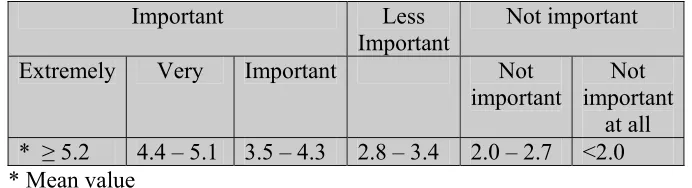
The functional skills are discussed according to the level of importance based on the
descriptors in Table 4.1
Table 4.1: Level of importance based on mean value
Important Less
Important
Not important
Extremely Very Important Not
important
Not important
at all * ≥ 5.2 4.4 – 5.1 3.5 – 4.3 2.8 – 3.4 2.0 – 2.7 <2.0 * Mean value
4.1.1 The importance of functional skills
The findings of the functional skills confirm the importance of
non-technical skills for entry-level engineers in the manufacturing industry. Our data
indicates that none of the categories was considered as not important and this is
confirmed by the high overall mean scores of items within each category as shown in
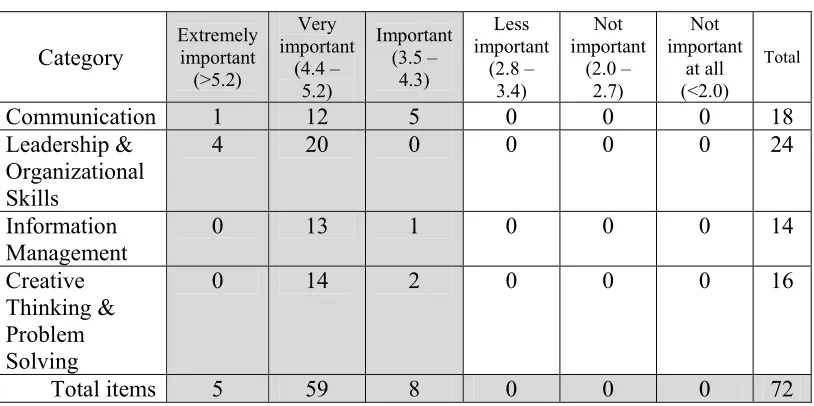
Table 4.2: Distribution of functional skills items
Category Extremely important (>5.2) Very important (4.4 – 5.2) Important (3.5 – 4.3) Less important (2.8 – 3.4) Not important (2.0 – 2.7) Not important at all (<2.0) Total
Communication 1 12 5 0 0 0 18
Leadership & Organizational Skills
4 20 0 0 0 0 24
Information Management
0 13 1 0 0 0 14
Creative Thinking & Problem Solving
0 14 2 0 0 0 16
Total items 5 59 8 0 0 0 72
Table 4.2 shows the mean score distribution of functional skills ranging from
extremely important (mean score >5.20) to not important at all (mean score <2.0). All 72
items had a mean score above 3.5 and are considered important by the respondents.
Although all the items are considered important, the level of importance differs. A
majority of the items (59) are regarded as very important while eight items are considered
as important only. A total of five items were found to be extremely important where one
item is from the communication category, four from leadership and organizational skills
category and none from the information management and creative thinking and problem
46
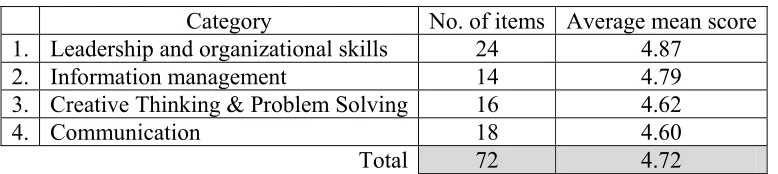
Table 4.3: Average mean score by category
Category No. of items Average mean score
1. Leadership and organizational skills 24 4.87
2. Information management 14 4.79
3. Creative Thinking & Problem Solving 16 4.62
4. Communication 18 4.60
Total 72 4.72
Table 4.3 shows the average mean score of functional skills based on category.
Leadership and organizational skills has the highest mean score of 4.87. This is followed
by information management skills (4.79), creative thinking and problem solving skills
(4.62) and communication skills (4.60).
The average mean score of all categories is 4.72 (Table 4.3). This score is
consistent with the findings in Table 4.2 and confirms that non-technical skills are very
important as perceived by the respondents. Thus, it cannot be denied that non-technical
skills are important for entry-level engineers in the manufacturing industry. Our
interviews with personnel from manufacturing firms support these findings. One of the
respondents said “ non-technical skills support or enhance technical skills.” He further
explained that while technical skills play an important role in the workplace, it cannot
function on its own. Thus, non-technical skills are needed to enhance technical skills.
For example, when faced with a problem technical skills are needed to analyze the
problem data while non-technical skills are needed to present the information to
customers. These include skills such as data collection and observation.
Along the same line, another respondent said that entry-level engineers must have
common sense in order to manage their work. According to him:
(The) Engineering field is very technical, very black and white (and) there is no grey area. However, in life there are some grey areas (where) we need to apply non-technical skills.
4.1.2 Five items with the highest mean score
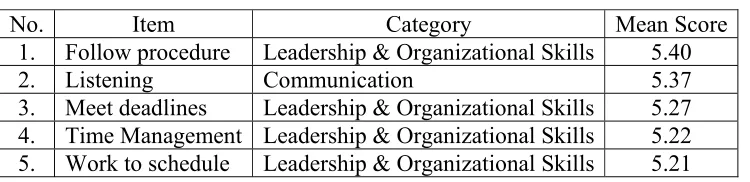
Table 4.4 shows the five items with the highest mean score as perceived by the
respondents.
Table 4.4: Five items with the highest mean scores
No. Item Category Mean Score
1. Follow procedure Leadership & Organizational Skills 5.40
2. Listening Communication 5.37
3. Meet deadlines Leadership & Organizational Skills 5.27 4. Time Management Leadership & Organizational Skills 5.22 5. Work to schedule Leadership & Organizational Skills 5.21
The ability to follow procedure has the highest mean score (5.40). This is
followed by listening (5.37), meeting deadlines (5.27), time management (5.22) and work
to schedule (5.21). As such, follow procedure can be regarded as the most important
48
4.1.3 Five items with the lowest mean scores
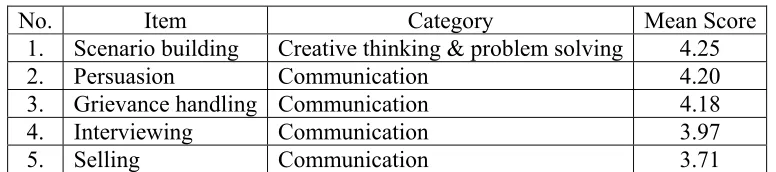
Table 4.5 shows the five items with the lowest mean scores as perceived by the
respondents.
Table 4.5: Five items with lowest mean scores
No. Item Category Mean Score
1. Scenario building Creative thinking & problem solving 4.25
2. Persuasion Communication 4.20
3. Grievance handling Communication 4.18
4. Interviewing Communication 3.97
5. Selling Communication 3.71
Selling has the lowest mean score (3.71). This is followed by interviewing (3.97),
grievance handling (4.18), persuasion (4.20) and scenario building (4.25). It is important
to note that even though all the items above have the lowest mean scores, they are still
important based on their mean scores (Refer Table 4.2).
Persuasion, grievance handling and selling are now becoming essential functional
skills because of Malaysia’s changing economy. According to the Executive Director of
Malaysian Employers Federation :
In addition, another respondent commented about the skill of selling:
(We deal) directly (with) customers… the engineers need to know, we (engineers) (come up with a) quotation… that means from (the) design, (prepare) the quotation, communicate with the customers and sell what end-customers require. Our capability is not limited in this organization only, we have to communicate (with) sales (department); we have to communicate... to the customers also, that’s why I find this job difficult”
4.1.4 Importance of functional skills by category
This section discusses the importance of functional skills by category. The data
indicates that all the categories - communication, creative thinking and problem solving,
information management and leadership and organizational skill are very important.
4.1.4.1Communication skills category
Communication skills are perceived as very important for entry-level engineers in
the manufacturing industry based on the overall mean score of 4.60 (refer Table 4.3)
average mean score by category). The Executive Director of the Malaysian Employers
Federation concurs with the findings of this study on the importance of communication
50
The importance of communication is further illustrated by most of the
respondents regardless of the departments they are attached to. For example, people who
are confined to a specific task such as Research and Development (R&D) are also
required to communicate effectively with others. According to one:
Because R&D (is) in our department, we need to communicate with all departments. That’s the problem!
This statement illustrates that although communication takes place, the
communication is not effective. In the current situation, most engineers have technical
competence, but lack non-technical competence. As stated by one of the respondents:
I wish (I could have) two types of person, for example, (one) who can communicate with others and one who back him up (a person with technical expertise) … so what he has to do is he has to talk with people (from) purchasing, planning (departments) or outside also, so the other guy… what I need is (to) just do the job.
While this would be an ideal situation, it is not feasible. This demonstrates that in
the workplace, an engineer must have both communication and technical skills. This
would enable him to function effectively when dealing with other departments and
customers. Therefore engineers need to understand that they must now have the package
of technical skills coupled with non-technical skills as this is what employers are looking
An engineer’s ability to communicate with customers from other countries may
also reflect the organization’s reputation internationally. According to one of the
respondents:
… especially my job requires communication with the customers and most of the customers … UK customers… also bring the standard of the company, what kind of company is , what kind of people is working with the company…, what kind of image…
Good communication skills enable collegiality among personnel from different
departments when dealing with work-related issues. In the case of entry-level engineers,
good communication skills would enhance their learning process especially when
interacting with more experienced technical personnel. One respondent said,
… young graduates, need to communicate between (with) much more experienced (personnel), so (they) need … apply everything that they know.
4.1.4.1.1 Communication skills category by items
Table 4.6 shows the mean scores of 18 items in the communication skills category.
The overall average mean of this category is 4.60 which is regarded as very important.
The top five items are listening, conversing, verbal communication, explaining and
technical report writing. On the other hand, visual and graphic presentation, persuasion,
52
Table 4.6: Communication skills - average mean score by item
No. Item Mean
1. Listening 5.37
2. Conversing 5.18
3. Verbal communication 5.10
4. Explaining 5.07
5. Technical report writing 4.89
6. Instruction 4.76
7. Presentation 4.68
8. Reading 4.67
9. Meeting procedure 4.61
10. Negotiating 4.59 11. Training 4.56 12. Demonstrating 4.56
13. Managing conflict 4.47
14. Visual & graphic presentation 4.27
15. Persuasion 4.20
16. Grievance handling 4.18
17. Interviewing 3.97
18. Selling 3.71
Av. Mean 4.60
The five most important skills in the communication category are listening,
conversing, verbal communication, explaining and technical report writing. It is the norm
that entry-level engineers are usually not expected to make major decisions but to carry
out instructions. In some organizations an entry-level engineer is attached to a senior
engineer where he is expected to apply good communication skills especially listening,
conversing, explaining and reporting. According to one respondent:
… Normally, we just follow ( listen and learn) … normally (we’ll be) given (instructions) …
Another respondent, a senior engineer, said:
… Most are blank (unable to explain)
… therefore, it is important to ask/seek clarification when in doubt …
… from the reports they write, (I am clueless) as to where they got the information from… (Translated)
An overview of the importance of the skills required by entry-level engineers was
provided by another respondent who feels that successful communication requires active
listening and the ability to compose an audience-centered message:
We have to study what the audience want(s), that’s the first thing of communication, like (when) we are talking to the boss, the boss always wants profit, so we go to that first, then we go for the second one, if we are talking to the human resource department they only need maybe the number of person to hire and all this, of course you are also talking about if he work in the… money, all the talking about is cost…. All this is related to profit money talking, so that is the keyword of how he wants your listener to listen to you. Interesting, you are the boss or you are the second boss you always want to hear this, so we go to this first, if they want to listen to you then….
Composing an audience-centered message is also important when writing a report
as mentioned by this particular respondent: