ABSTRACT
KORT-BUTLER, LISA ANN. Boys Act Bad and Girls Get Sad: How Gender Structures Sex Differences in Adolescent Well-Being. (Under the supervision of Ronald Czaja.)
This project takes as its starting point research that indicates girls are more likely to be
depressed, while boys are more likely to be delinquent. To explain these documented sex
differences in well-being, I bring theories of gender to bear on how the processes described
in general strain theory and the stress paradigm are modified by the processes and practices
of gender. Building on past research that examines gender differences in the experience of
stress, I consider how sex differences in general, agentic (intrapersonal) and communal
(interpersonal) stress contribute to differences in well-being. Additionally, I further specify
current approaches by examining how gender theoretically alters access to and employment
of social/personal resources – social support, self-esteem, mastery, and coping styles. I
hypothesize that these interact with the experience of stress in gendered ways to produce
variance in well-being by sex. Data are from the National Longitudinal Study of Adolescent
Health. Regression models are estimated separately for boys and girls, including interaction
terms between each type of stress and social/personal resource. Analyses show boys report
more delinquency, and girls report more depression. Boys report more exposure to agentic
stress, but this does not translate into vulnerability. Girls, in terms of depression, are more
vulnerable to general and communal stress. No social or personal resource completely
accounts for their greater vulnerability to these stresses. Boys report higher levels of
self-esteem, mastery, and risk-oriented coping; girls report higher levels of social support and
avoidant coping. In terms of delinquency, social support and self-esteem protect girls from
delinquent outcomes but are not significant for boys. Differences in coping styles provide
the damaging effects of stress on depression, while approach-oriented coping buffers the
effects of stress on delinquency. Risk-oriented coping puts boys and girls at risk for
delinquency and depression, but puts girls at greater risk for delinquency if they use a
BOYS ACT BAD AND GIRLS GET SAD:
HOW GENDER STRUCTURES SEX DIFFERENCES IN ADOLESCENT WELL-BEING
by
LISA A. KORT-BUTLER
A dissertation submitted to the Graduate Faculty of North Carolina State University
in partial fulfillment of the requirements for the Degree of
Doctor of Philosophy
SOCIOLOGY
Raleigh, North Carolina 2006
APPROVED BY:
______________________________ ______________________________ Ronald Czaja Stacy De Coster
Chair of Advisory Committee
DEDICATION
This work is dedicated to the young people (and their families) whose struggles with well-being inspired me to know and do more. To quote Lewis Carroll:
“If everybody minded their own business,” the Duchess said, in a hoarse growl, “the world would go round a deal faster than it does.”
BIOGRAPHY
Lisa A. Kort-Butler was born in Uniontown, Pennsylvania, adopted by a loving family, and spent her early years in the rural mountain region south of Pittsburgh. With her family, she
moved to Ohio in the third grade. She was a 1993 graduate of Jackson High School in Massillon, Ohio. She earned her bachelor’s degree in sociology and psychology from
Bowling Green State University, Bowling Green, Ohio, graduating in 1996 summa cum laude. While at BGSU she was name outstanding junior and later senior student in the Department of Sociology. Before entering graduate school, she was employed as a juvenile
diversion caseworker with the Jackson Township Police Department, Canton, Ohio. Her experiences working with juvenile offenders, their families, and the criminal justice system
nagged her sociological imagination and led her to enter graduate school. She was awarded her Master’s degree in sociology from the University of Akron in 1999, under the
supervision of Dr. Mark Tausig. There, she was named Graduate Student of the Year in
Sociology. Her thesis research investigated parents’ responses to their children’s diagnosis of attention deficit-hyperactivity disorder. In 1999, she entered the doctoral program in the Department of Sociology and Anthropology at North Carolina State University. Her areas of
concentration in sociology include medical sociology, the sociology of mental health, and the sociology of crime/deviance/social control. From 1999 to 2001 she was the recipient of the
Andrews’ Fellowship. While a graduate student at NCSU, she worked as a research assistant to Dr. Margaret Zahn, then Dean of the College of Humanities and Social Sciences, as well as teaching courses in sociology, social deviance, and criminology. In addition to her
ACKNOWLEDGEMENTS
I wish to acknowledge the chair of my committee, Ron Czaja, for his dedication, persistence, and patience with this project and with my pursuit of a doctoral degree. One
could not ask for a better chair. Other committee members played important roles as well. Stacy De Coster’s guidance, advice, and support have been invaluable, both for this project
and my graduate career. Maxine Thompson took interest in the early stages of this project, and it was she who reviewed my beginning attempts at analyzing and understanding the data. Charles Tittle was a source of valued feedback on this project and others, and deserves credit
for his efforts to make me a better sociologist. The faculty at University of Akron helped me to realize that I could not only be a student of sociology but actually be a sociologist. In
particular, I thank Mark Tausig, Nancy Miller, Frank Falk, and Virginia Smerglia for encouraging me to think harder, write better, expand my mind, and spread my wings.
I also wish to acknowledge the support of the friends I’ve made along the way,
particularly Amy McClure and Rachel and Kellie Hagewen. Friends make life better, and provide the humor, shoulders, and sounding boards that make graduate school tolerable. I must also thank my parents, first for having the courage to adopt and then for having the
impulse to name me after a character in John Wayne’s The Alamo. I have been blessed with a family from whom love and support is freely given. And in the darkest days of graduate
work, it helped to feel a connection to those who persevered and stood their ground to the bitter end in that legendary Texas battle. Last but hardly least, I wish to acknowledge the patience and support of my husband Mike and my son Jakob. When I decided to pursue
never lost hope, and never lost faith in me, even when I did all three. Jakob may be too young to understand, but he made the expanding time to degree worth every minute.
Sociology may be what I do, but a mother is what I am. Finally, I thank God for the strength
TABLE OF CONTENTS
Page
List of Figures... ix
List of Tables...x
Chapter 1: Introduction...1
Chapter 2: Literature Review...11
Understanding Sex Differences ...11
Theorizing Sex Differences: Why Gender Matters ...15
Gender and Adolescent Well-Being ...20
Gender and Well-Being Outcomes ...22
Gender and Stress ...28
Differential Exposure...28
Differential Vulnerability...32
Gender and Social and Personal Resources ...37
Social Support...38
Self-Esteem...45
Mastery ...51
Coping Styles...56
Domains of Stress, Psychosocial Variables, and Sex-Specific Processes ...61
Chapter 3: Methodology...63
Data ...63
Measures ...64
Outcomes ...64
Stressors ...66
Agentic Stressors ...67
Communal Stressors ...69
Ambient Stressors ...72
Social and Personal Resources...74
Demographic Characteristics and Controls ...76
Analytical Plan...78
Chapter 4: Results...80
Missing Data Analysis ...80
Outcome Variables...82
Control Variables ...82
Stress Exposure and Vulnerability...84
Social and Personal Resources...86
Social Support...86
Mastery ...93
Avoidant Coping...96
Approach-Oriented Coping...100
Risk-Oriented Coping ...104
Summary of Key Findings ...109
Chapter 5: Discussion...114
Chapter 6: Conclusion...136
Limitations of the Current Project ...139
Key Issues for Continuing Research...143
References...150
Figures...171
Tables...174
LIST OF FIGURES
Page
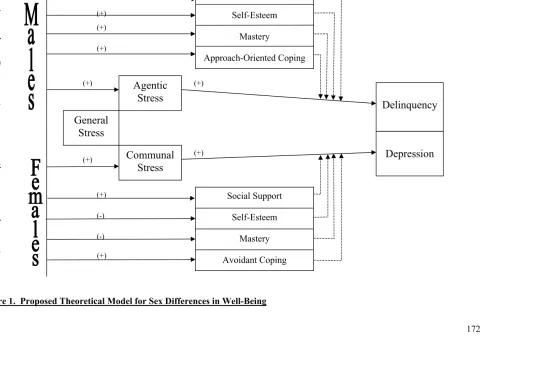
Figure 1. Proposed Theoretical Model for Sex Differences in Well-Being ...172
LIST OF TABLES
Page
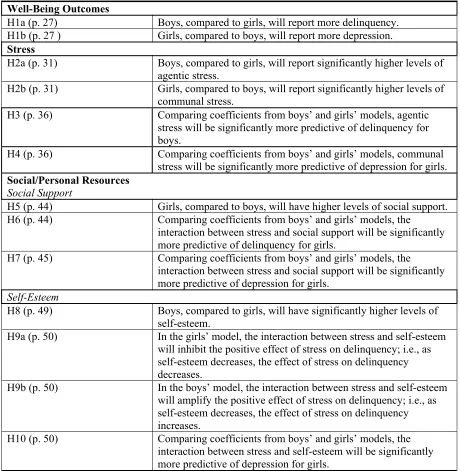
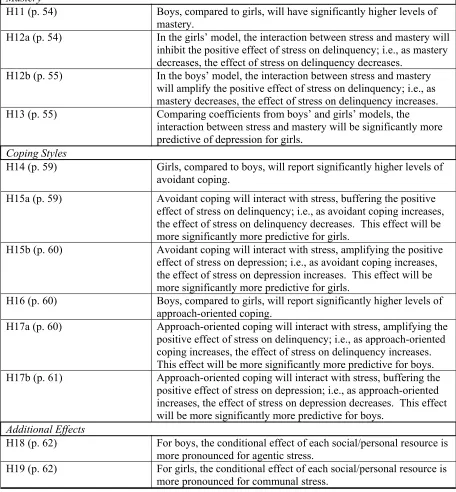
Table 1. Summary of Hypotheses...175
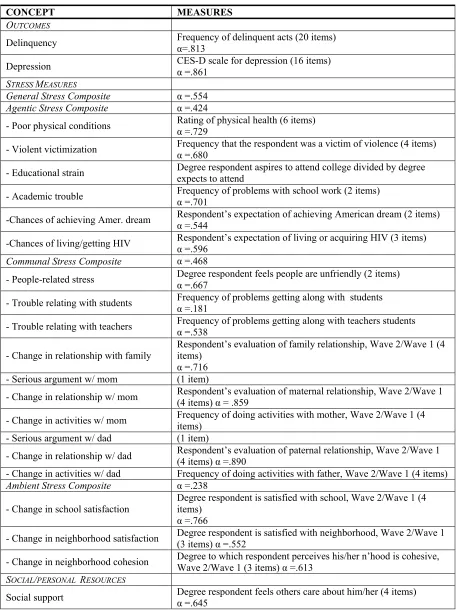
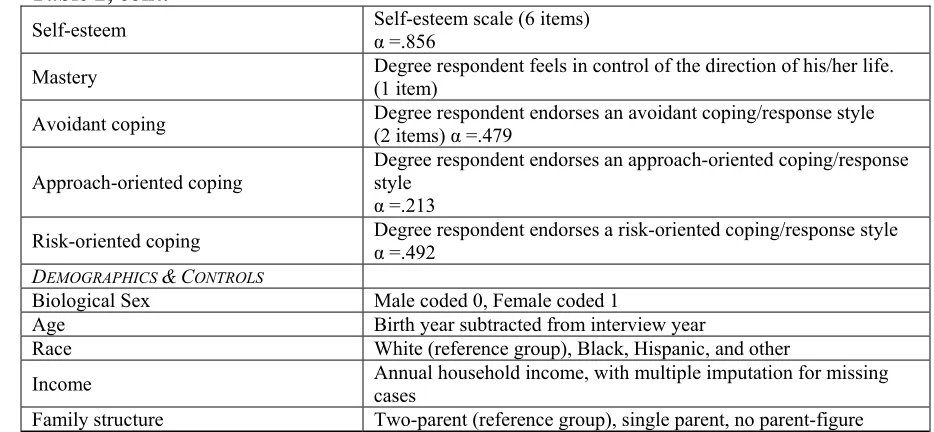
Table 2. Concepts and Variables ...177
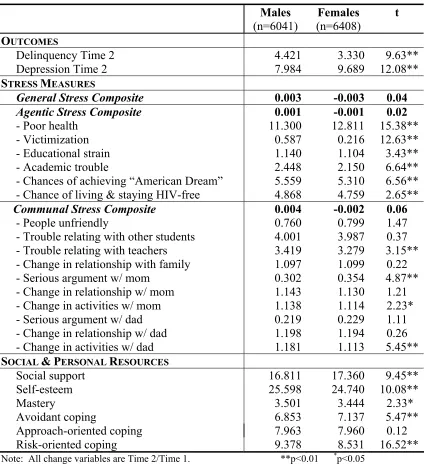
Table 3. Variables and T-Tests for Differences in Means ...179
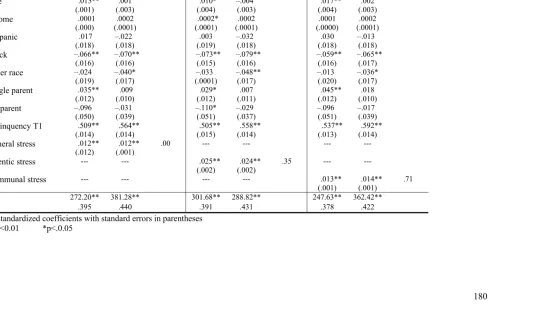
Table 4a. Regression of Stress Variables on Delinquency ...180
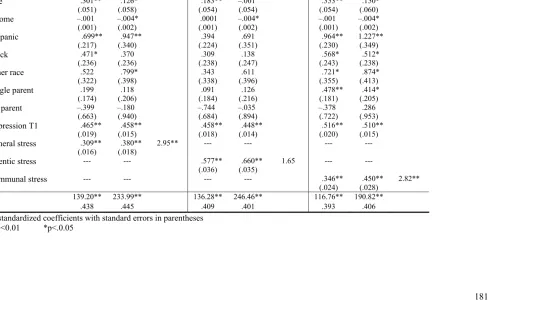
Table 4b. Regression of Stress Variables on Depression ...181
Table 5a. Regression Models: General Stress and Social Support ...182
Table 5b. Regression Models: Agentic Stress and Social Support...183
Table 5c. Regression Models: Communal Stress and Social Support ...184
Table 6a. Regression Models: General Stress and Self-Esteem ...185
Table 6b. Regression Models: Agentic Stress and Self-Esteem ...186
Table 6c. Regression Models: Communal Stress and Self-Esteem ...187
Table 7a. Regression Models: General Stress and Mastery...188
Table 7b. Regression Models: Agentic Stress and Mastery ...189
Table 7c. Regression Models: Communal Stress and Mastery...190
Table 8a. Regression Models: General Stress and Avoidant Coping ...191
Table 8b. Regression Models: Agentic Stress and Avoidant Coping...192
Table 8c. Regression Models: Communal Stress and Avoidant Coping...193
Table 9a. Regression Models: General Stress and Approach-Oriented Coping...194
Table 9b. Regression Models: Agentic Stress and Approach-Oriented Coping...195
Table 9c. Regression Models: Communal Stress and Approach-Oriented Coping...196
CHAPTERONE
INTRODUCTION1
Adolescence is an important developmental stage for processes of social stratification
and mental health (Eaton and Muntaner 1999). Adolescence is the period during which sex differences in well-being emerge. Girls begin to demonstrate higher levels of depression
than do boys, while boys begin to engage in more antisocial behavior than do girls (Kandel and Davis 1982; Kessler et al. 1994; Leadbeater, Blatt, and Quinlan 1995; Mirowsky 1996; Nolan-Hoeksema 1987; Petersen, Sarigiani, and Kennedy 1991; USDHHS 1999, 2000). This
is also the period in which young people begin to try out adult statuses, rehearse culturally-appropriate gender definitions, and solidify gender identities (Hagan and Foster 2001; Hill
and Lynch 1983; Huselid and Cooper 1994; Rosenfield 1999a). Considering this conjunction, adolescence is an ideal period to study the development of depression and delinquent behaviors, as well as sex differences in these problems (Allgood-Merten,
Lewinsohn, and Hops 1990; Barrett and White 2002; Horwitz and White 1987). In recent years, there has been growing interest in the possibility of a common etiology for adolescent misbehavior and emotional distress (De Coster and Heimer 2001;
Hagan, McCarthy, and Foster 2002; Huselid and Cooper 1994; Rosenfield, Lennon, and White 2005). One line of this research focuses on how processes of strain and stress result in
these outcomes (Broidy and Agnew 1997; Colten and Gore 1991; De Coster 2005; Kim et al. 2003). In the past, there was a tendency to compartmentalize adolescent problem behaviors,
with crime researchers focusing on delinquency and other externalizing behaviors like substance use and violence, and mental health researchers focusing on what they term “distress” and other internalizing behaviors like depression and anxiety (Colton, Gore, and
Aseltine 1991; Rosenfield, Phillips, and White 2006; Van Gundy 2002). Some researchers, however, have taken an integrative approach, studying the processes behind both types of
behaviors simultaneously (e.g., Aneshensel and Sucoff 1996; De Coster 2003; De Coster and Heimer 2001; Ge et al. 1996; Hagan and Foster 2003; Loeber et al. 1998; Rosenfield et al. 2006; Van Gundy 2002). Why examine both together? In the first place, it may be that both
delinquency and depression share antecedents and a common etiology (DeCoster and Heimer 2001; Hagan and Foster 2003; Hagan and Wheaton 1993). In the second place, there are sex
differences in well-being, with boys tending towards externalizing problems like delinquency and drinking problems, and girls tending towards internalizing problems like depression, which is suggestive of different outcomes from a common stress process (Aarons et al. 2001;
Garland et al. 2001; Huselid and Cooper 1994; Leadbeater et al. 1995; Rosenfield 1999a; Van Gundy 2002). Therefore, it may be preferable, when possible, to examine multiple well-being outcomes in the stress process to gain a fuller picture of adolescent problem behavior
(Aneshensel, Rutter, and Lachenbruch 1991; Horwitz, White, and Howell-White 1996; Van Gundy 2002).
Taking this into consideration, in this project, I examine two different deleterious outcomes of the stress process, depression and delinquency. Pearlin (1999a) gives two reasons why it is essential to investigate multiple outcomes. First, investigating multiple
problems in well-being. Second, it allows researchers to discover the range and specificity of the consequences that stress might generate. If problems in adolescence, including
delinquency and depression, share antecedents and an etiology, and are differentiated by sex,
then it becomes necessary to move beyond documenting statistically similar models to outlining comparable theoretical processes. However, theoretical development
encompassing these expressions of maladjustment has often followed only parallel paths. Medical sociologists, interested in depression, frequently invoke the stress paradigm or role theory. Criminologists studying delinquency appeal to any number of theories. Of theories
in criminology, one that closely parallels the stress paradigm is general strain theory (GST) developed by Robert Agnew (1992; 2000). Both of these approaches can be used to provide
insight into how the processes and practices associated with gender stratification may shape sex differences in well-being.
Following the sociological tradition, both the stress paradigm and general strain
theory provide avenues for understanding how the contexts of adolescents’ lives impinge on their well-being. This sociological tradition can be traced back to Margaret Mead’s (1928) study of youth in Samoa. According to Cote (1994), Mead undertook her study during a
period when it was widely thought that “adolescence” was associated with a period of turmoil caused by biological instabilities associated with puberty. Thus, adolescence was
viewed an “affliction” that is inevitable, regardless of cultural or social context. It was argued at the time that it does not matter what experiences or opportunities are available to the young – all young people pass through a period of “storm and stress,” an idea from
Mead described the intellectual climate that predominated in the 1920s (which incidentally does not sound much different from today):
A great mass of theorizing about adolescence is flooding the book shops; so the psychologist in America tried to account for the restlessness of youth. The result was works like that of Stanley Hall of “Adolescence,” which ascribed to the period through which the children were passing, the cause of their own conflict and distress. Adolescence was characterized as the period in which idealism flowered and rebellion against authority waxed strong, a period during which difficulties and conflicts were absolutely inevitable. (Mead 1928: 2)
Mead was skeptical of this argument because of empirical variations in adolescent “turmoil,” even in Western societies (Cote 1994). Moreover, there was no scientific evidence to support
the universal stress-and-storm position.
Mead herself set out to acquire scientific evidence by systematically comparing
cultures in terms of how adolescence was structured and experienced, asking the question, “Are the disturbances which vex adolescents due to the nature of adolescence itself or to the civilization?” (Mead 1928: 11). Her study indicated that few of her Samoan informants
showed signs of characterological differences or behavioral problems brought on by puberty.2 She concluded, “Adolescence is not necessarily a time of stress and strain, but…cultural conditions make it so” (Mead 1928: 234). With evidence of dramatic cultural
differences in the prevalence and nature of adolescent difficulties, Mead determined that storm-and-stress cannot be considered a biological inevitability, but that the storm-and-stress
that adolescents experience is a product of the cultural and social conditions in which they live. Discussing modern research, Arnett (1999) draws similar conclusions.
Mead’s thesis is one I consider in the current project. It is a sociologically-driven social psychological perspective, which does not assume that storm-and-stress is inevitable, but examines how adolescents interact with their daily environments (cf. Gibson-Cline
1996). Adolescents may be vulnerable to stress, but they also may be capable of
participating in their own development, coping productively, and working toward solutions.
The problems adolescents face may be largely determined by their social environment and their experiences in it, defined socially by their stage in the life-course. And because social and personal resources vary, strategies adolescents use to cope and their effectiveness may
also vary, with consequences for well-being.
Mead’s use of non-Western data underscores the power of social structural practices
and cultural processes across cultures to shape the nature of stress and coping. My research focuses on social structural practices and cultural processes within American society. One way in which our society organizes these practices and processes is by gender, the definitions
and expectations we attach to biological sex. Consequently, the patterns of storm-and-stress in our culture may differ by sex.3 Adolescent girls and boys, like the adult women and men they are socialized to be and rehearse to become, can experience the social world differently.
There may be structured variations in terms of their ideas about themselves, their exposure to stress-inducing conditions, their vulnerability to particular stressors, and the resources they
can access to cope with stress. Although my hypotheses do not abandon the storm-and-stress notion, I argue that difficulties arising in adolescence may not be a simple product of
disruption. Rather, mental health difficulties due to stress that arise in adolescence, and
observed differences by sex, may reflect the social structure and context in which adolescents participate.
The project described here contributes to the literature by building on three current
trends: First, I examine different outcomes of the stress process, depression and delinquency, to gain a fuller picture of adolescent well-being in general and sex differences in particular.
Second, this project moves beyond observing sex differences in adolescent well-being and seeks potential theoretical explanations, focusing on literatures from two fields, medical sociology and criminology, particularly focusing on the stress paradigm and general strain
theory. Third, this project brings theories of gender to bear on the processes described in these particular approaches, suggesting they may be modified by the processes and practices
of gender (cf. De Coster 2005).
Why draw on the stress paradigm and general strain theory? Both describe similar processes leading from the experience of stress to problems in well-being. Both these
approaches can be used to predict multiple outcomes, as opposed to just depression or just delinquency, although tests of both have tended to focus on these specific outcomes (for exceptions see Aneshensel and Sucoff 1996; Colten, Gore, and Aseltine 1991; Dornbusch et
al. 1991; Kee et al. 2003). Both approaches have “space” for theorizing about the effects of gender on their processes, although, again, tests of both have tended to focus on explaining
girls’ depression and boy’s delinquency (for exceptions see Cleary 2000; De Coster 2005; De Coster and Heimer 2001; Hoffman and Su 1997; Van Gundy 2002) . Therefore, joining these perspectives eliminates this tendency for dichotomy and creates a more unified
theoretical understanding of the relationship between gender and adolescent well-being. These perspectives share themes that are tied to broader areas of interest in both fields, opening the door to theoretically-based hypothesis testing of the relationship between sex and
adolescent well-being. In particular, I hypothesize and test how the experience of stress and coping resources vary in gendered ways to explain the documented variance by sex in
adolescent well-being.
Additionally, I take steps to further specify current approaches by hypothesizing and testing how concepts important across fields – social support, self-esteem, mastery, and
coping styles – are gendered in ways that help explain the documented variance by sex in adolescent well-being. I view these social and personal resources as a critical link between
stress and a particular outcome. Following Cullen’s (1983) structuring perspective, I argue gender shapes availability and deployment of social and personal resources in response to stress, linking stress to depression versus delinquency. Cullen makes the argument that many
theories of deviance emphasize factors that cause people to deviate, but give less attention to describing what factors account for the specific form that deviance takes. According to Cullen’s perspective, there exists an indeterminate relationship between stress and any given
outcome, so it is necessary to determine the conditions or circumstances by which the
response to stress culminates in depression versus delinquency. In this project, I propose that
the gendering of social and personal resources represent a structuring force between stress and a particular outcome.
Furthermore, using the stress paradigm and general strain theory as guides, this
differences in behavior. For example, I address Mirowsky and Ross’s (1995) rebuff of gendered “response styles” as explicative of sex differences in distress. Based on their research, they determined that emotional expressiveness does not explain why women are
more distressed than men, nor do differences in anger. They continued by arguing that other behavioral outcomes in which men predominate, like alcohol problems, are not alternative
symptoms of distress, since other empirical evidence indicates that substance abuse increases distress. They concluded that females are genuinely more depressed than males, and that this is due to differences in exposure to structural strains that disadvantage women, and by
implication, women’s vulnerability to these strains (see also Gove and Tudor 1973).
Certainly, it is true that gender stratification structures the experience of stress across
sex, with consequences for well-being, and that women are genuinely more distressed. However, Mirowsky and Ross (1995) overlook the processes by which stress leads to disorder; there is more to the stress story than exposure and vulnerability.4 Stress is a
relevant etiological factor in disorder, and it may be more important for females than males for some problems. However, this does not necessarily mean that women are more
vulnerable to stress than men (Aneshensel et al. 1991; Dohrenwend and Dohrenwend 1976).
Additionally, Mirowsky and Ross’s (1995) argument overlooks that the processes and practices of gender may be more than just socialization to emotion; the gender structure may
infiltrate at every stage of the process. If we rely only on exposure to structural strain, we are left to answer: Why are females apparently more vulnerable to stress when the outcome is
4 This is not to indict Mirowsky and Ross entirely. In fact, in an earlier publication (Mirowsky and Ross 1989) they go beyond the exposure issue and examine what it is about different social positions (e.g., personal control) that contribute to distress. I also do not intend to imply that exposure and vulnerability are the only
depression? Why are males apparently more vulnerable to stress when the outcome is behavioral in nature? (cf. Dohrenwend and Dohrenwend 1976).
To address these questions, I propose that depression and behavior problems are not
the same disorder, but different maladaptive responses to stressful circumstances (Nolan-Hoeksema 1987).5 Cultural demands and restrictions result in sex differences in
vulnerability to each disorder. As I argue below, the process and practices of gender, rooted in gender stratification, may influence not only socialization to masculinity and femininity, and not only exposure to structural strain, but also the entire process by which stress
culminates in a particular disorder. The main proposition is that while the nature of the stress process is similar across sex, the differences within the process, created by a gendered social
structure, result in different outcomes. As a particular contribution of this project, I hypothesize the gendering of social and personal resources represents a structuring force between stress and a particular outcome, thereby contributing to sex differences in
well-being. Figure 1 displays the theoretical model I draw on as an organizing principal for this dissertation; Figure 2 specifies the role of psychosocial resources within the larger model.
The purpose of the dissertation is to attempt to explain sex differences in adolescent
well-being, including depression and delinquency, and to provide empirical tests of these explanations. In the next chapter, I provide a review of key issues. First, I highlight how
medical sociology and criminology have endeavored to understand sex differences in well-being within the stress and strain perspectives. Second, I summarize why theories of gender are relevant and necessary for theorizing about sex differences in well-being. Third, drawing
on theories of gender, as well as the stress paradigm and general strain theory, I discuss how the processes and practices of gender may lead to sex differences in adolescent well-being. This leads to a series of hypotheses regarding the effects of differences in stress exposure and
vulnerability on outcomes, and the effects of differences in social and personal resources on outcomes for understanding differences in vulnerability. In Chapter 3, I describe the data set
I employ to test these hypotheses, the National Longitudinal Study of Adolescent Health. I describe the particular measures constructed for the analyses and outline the analysis plan. In Chapter 4, after summarizing the missing variable analyses, I present the results from a series
of ordinary least-squares regression models, in which I test my hypotheses. In particular, in separate models for boys and girls, I estimate the effects of stress, social and personal
resources, and the interaction of each resource with stress on delinquency and depression. In Chapter 5, I discuss the results of the analyses. In short, my analysis indicates the stress process is not unequivocally gendered, the patterns that emerged are not as expected, yet the
results provide interesting insight into the influence of stress on well-being and the role of social and personal resources in the lives of adolescents. In Chapter 6, I conclude the dissertation by discussing the implications of my analysis for the field, limitations of my
CHAPTER 2
LITERATURE REVIEW
UNDERSTANDING SEX DIFFERENCES
Research demonstrates that females and males experience different types of problems with well-being. Whereas females predominate in internalizing disorders like
depression and anxiety, males predominate in externalizing disorders like substance use/abuse and antisocial behavior, a pattern emerging in adolescence and continuing into adulthood (Leadbeater et al. 1995; Rosenfield 1999a; Rosenfield et al. 2005). Yet, there is
no decisive explanation of why this is the case.
The effort of researchers in medical sociology and criminology to understand sex
differences in well-being within the stress and strain paradigms have followed parallel paths. As Padgett (1997) outlines, explanations regarding sex differences in mental health
(especially depression and anxiety) hold that these differences are the product of expressive
differences in reporting about well-being that result from socialization (e.g., Kessler et al. 1993; Mirowsky and Ross 1995; Nolan-Hoeksema 1987), the product of differences in exposure and/or vulnerability to stress as a result of social position (e.g., Aneshensel et al.
1991; Mirowsky and Ross 1989; Turner and Avison 1989; Turner and Turner 1999), and/or the product of gender stratification (Rosenfield 1999b; Rosenfield et al. 2005; Rosenfield,
Vertefuille, and McAlpine 2000).
As Lanctot and LeBlanc (2002) show (see also Steffensmeier and Allan 1996), explanations regarding the gender gap in delinquent behavior draw from mainstream
Paternoster 1987), point to gender differences in socialization or acceptance of cultural gender definitions (e.g., Bottcher 2001; Heimer 1996; Heimer and De Coster 1999;
Messerschmidt 1993; Simpson and Elis 1995), and/or tie the deviant behavior of males and
females to their status in a gender stratified society (Lind 1989; Daly and Chesney-Lind 1988; Messerschmidt 1986).
Similarities between the mental health and criminological fields coalesce on how gender socialization and stratification are at the root of gender gaps in depression and delinquency. There is emphasis on the influence of gendered socialization processes on the
expression of problems. For instance, as an explanation for depressive differences in males and females, Nolan-Hoeksema (1987) points to parental reinforcement of gender stereotypes
that females are more emotional but that such behavior among males is “sissy,” with emotionality linking females to depression. Examining delinquency, Bottcher (2001) describes how both boys and girls feel social pressure to fulfill gender stereotypes, with
“macho” expectations for males linking them to delinquent activity.
Emphasis is also placed on the influence of social practices of gender stratification that organize males and females in differing positions of power and privilege. As an
explanation for differences in distress between males and females, Mirowsky and Ross (1989) point to how females’ position in subordinate work and family roles affords them less
personal power and control, producing alienation and stress, and therefore distress at higher levels than males (see also Gove and Tudor 1973). As an explanation for differences in delinquency between males and females, Jensen and Eve (1976) point to how males’ position
giving them more opportunity to engage in delinquency (see also Hagan, Gillis, and Simpson 1985).
Heimer and De Coster (1999) outline “how culture and structure combine to create
gendered experiences in adolescence” (p. 281). Structural positions shape the context in which cultural processes like social learning and gender socialization occur. The gender
definitions to which a young person is exposed are tied to his or her location in the social structure, so Heimer and De Coster (1999) theorize that gender definitions vary by
socioeconomic status, race, or residence in a female-headed household. For example, gender
definitions may be less traditional in female-headed households because women are less subject to patriarchal relations in these situations (Heimer and De Coster 1999; see also
McCarthy, Hagan, and Woodward 1999).
Following Heimer and De Coster (1999), as well as work by Sarah Rosenfield (1999a) and Hagan et al’s (1985) earlier power-control theory, Hagan and his colleagues
(2002) argue that parental socialization practices vary based on the patriarchal structure of the home. These child-rearing practices reflect gendered rules about how children should behave and the parents’ roles in enforcing these “rules.” When parents assert these gendered
schemas in socializing their children, they generate behavior differences between girls and boys, including, ultimately, differences in internalizing and externalizing behaviors (see also
Hagan and Foster 2003). This is reflected, for example, in the process of non-normative adolescent role exits (Hagan and Foster 2001; Hagan and Wheaton 1993). The pathways to exits like suicidality and early pregnancy, particularly in the context of depressive affect, are
dropping out of school are linked to externalized processes (Hagan and Foster 2001; Hagan and Wheaton 1993).
There are also similarities between two major theories in each perspective. The stress
paradigm is among the major explanations for sex differences offered by researchers in mental health (e.g., Davis, Matthews, and Twamley 1999; Turner and Lloyd 1999).
Although several major theories of crime have been used to take into account sex differences, one that shares many ideas with the stress paradigm is Agnew’s (1992) general strain theory (e.g., Broidy and Agnew 1997; Hoffman and Su 1997; Mazerolle 1998). Both of theoretical
lines argue that the experiencing stress creates pressures on individuals, challenging well-being, a relationship potentially conditioned by social and personal factors. Both theoretical
lines have been expanded to take into account how gendered stratification practices and socialization processes may bear on the nature of stress, vulnerability to stress, and the efficacy of social and personal factors.
Although it is beyond the scope of this project to address all possible connections among varying theoretical perspectives, I do address the potential connection between the stress paradigm and general strain theory. However, focusing explicitly on existing theories
without acknowledging and incorporating what those scholars interested in the processes and practices of gender socialization and stratification contribute to our understanding – what
Heimer, De Coster, and Unal (2006) call the “add gender and stir approach” – yields an incomplete picture (see also Chesney-Lind 1989; Daly 1997). What is necessary is to move beyond simply adding sex, as a variable, into the empirical mix, and consider how gender –
THEORIZING SEX DIFFERENCES: WHY GENDER MATTERS
As traced above, scholars in the sociology of mental health and in criminology have taken steps to address how gender stratification influences the distribution of well-being by
sex. Before discussing how specific theories regarding mental health and deviance assist our ability to explain sex differences, I briefly address why gender matters to theorizing
regarding empirical sex differences. Judith Loerber (1994) views “gender” as a social
institution and outlines how gender is a process, a system of stratification, and a structure, all of which have consequences for males’ and females’ personal and social experiences and
expressions (e.g., Bem 1993).
In the first place, gender is a process (Loerber 1994). Through social interaction, we
continually define what it means to be a “girl” or “boy” and “woman” or “man.” We behave and think in ways consistent with definitions we learn are appropriate for our gender, and we expect others to do likewise. In other words, we socially construct what it means to be
masculine and feminine and attach these meanings to biological sex. This everyday process is built into our family lives, as well as other organizations like peer groups and institutions like school (Loerber 1994). Gender, then, can be viewed as a social process that is revealed
in social action that conforms to (or deviates from) expectations about masculinity and femininity, what West and Zimmerman (1987) term “doing gender.” In this light, Daly
advises that we cannot think about gender as a personal attribute, but rather think about how “situations and social practices produce qualities and identities” associated with social categories that are based on biological sex (Daly 1997, p. 37; see Howard and Hollinger
the development of gendered identities, which has consequences for well-being by shaping how individuals respond to stressful situations.
In the second place, gender is a system of social stratification, ranking males above
females (Loerber 1994). This has at least two repercussions, one in terms of the distribution of resources and one in terms of ideological discourse (Risman 1998). For one, gender, as an
ascribed characteristic associated with biological sex, is the basis for the continuance of a sexual division of labor and sex-based inequalities (Acker 1973). In ranking people by gender, society creates statuses with differences in access to resources, power, and prestige
(Huber 1986; Loerber 1994). Walby (1990) describes how changes in patriarchal systems have shifted from private to public dimensions. While women are no longer confined in the
household and controlled sexually by their fathers and husbands, they are still tied to the home by social expectations for care, and they are subordinated in sexual relationships. While women are no longer excluded from work, from education, and from positions in the
state, they remain segregated and subordinated within the workplace, within education structures, and within the state. Although adolescent roles are not as clearly demarcated as adult roles, Walby’s work emphasizes how inequality across social spheres creates
differences in life experiences. One consequence of such divisions is sex differences in exposure to stressful events (e.g., Davis et al. 1999), which promote differences in
well-being.
Additionally, gender affects how people and positions are evaluated (Acker 1973). In ranking people by gender, society creates ideological boundaries, placing males, especially
“hegemonic ideal” and other categories of masculinity and femininity are essentially devalued (Connell 1987; Loerber 1994). In other words, in a patriarchal society, what powerful men do is considered more valuable because they do it. Although this hegemonic
masculinity does not necessarily correspond to the personalities of most men, it is what sustains men’s positions of power and their subordination of women, so many men are
motivated to support it (Connell 1987). Further, while many femininities are constructed in the patriarchal context, it is “emphasized femininity” that presently has cultural and
ideological support (Connell 1987). Again, although this does not necessarily correspond to
the personalities of most women, it represents a femininity in compliance with the hegemonic masculinity.
Connell (1987) argues that “femininity and masculinity are not essences: they are ways of living certain relationships” (p. 179). Accordingly, as Chow (1998) comments, the relationships created by the system of gender stratification are “structurally embedded and
ideologically enforced in all aspects of social life” (Chow 1998: 252). Not only are males and females more embedded in certain statuses, but they also are more attentive to domains of life associated with these statuses. Later, I argue that such ideological divisions produce
differences in males’ and females’ vulnerabilities to different stressful experiences, as well as differences in social psychological factors like social support, self-esteem, mastery, and
coping styles, ultimately promoting differences in well-being (Leadbetter et al. 1995; Rosenfield 1999a, 1999b; Rosenfield et al. 2000; Rosenfield et al. 2005).
Chow’s argument points to a third aspect of gender as a social institution: gender is a
means of the processes and practices of gender. The structuring of gender is a basis for stratification, translated into practices of advantage and disadvantage across social spheres (Loerber 1994; Howard and Hollinger 1997; Risman 1998). Women occupy roles and
positions that are accorded less power, prestige, and resources, whereas men occupy roles and positions afforded greater opportunities with fewer constraints. The structuring of
gender is a basis for dominant ideals about masculinity and femininity, translated into processes of socialization and interaction to fulfill cultural expectations (Loerber 1994; Howard and Hollinger 1997; Risman 1998). Moreover, our notions of what it means to be
male and female are wrapped into these ideals about masculinity and femininity in such a way that these divisions are seen as appropriate and natural (e.g., “women’s work” versus
“men’s work”). Consequently, the social structure of gender that organizes processes of socialization and interaction effectively disappears as an explanation for such divisions. Instead, in daily life, the structural explanation is replaced by popular explanations like “boys
will be boys,” and the forces of inequality never enter the discussion.
Yet it is the pervasiveness of differences and distinctions based on gender that demonstrate how it structures our lives. To quote Loerber, “Gender inequality…is produced
and maintained by identifiable social processes and built into the general social structure and individual identities deliberately and purposefully” (Loerber 1994, p. 35). As a social
structure, gender is realized in our personalities, in expectations for our behavior in social situations, in the organization of cultural ideologies and social institutions like work and family (Risman 1998). Thus, the social organization of gender shapes the possibilities of
of which constrain and enable the everyday behavior of individuals as they negotiate the social world (Howard and Hollinger 1997; Risman 1998).
The interactional processes and institutional practices of gender are tied in specific
and intimate ways to a social structure stratified by gender (Chow 1998). For the individual, gender attaches meaning to a person’s biological sex, and socialization, within a stratified
structure of gender, reinforces this meaning over a person’s life course. Moreover, gender inequality shapes a person’s social experiences and personal expressions. Gender is
everywhere present: In the salience individuals give their experiences, in the ways in which
individuals interpret then process experiences, in the cultural scripts that are available to make sense of their experiences and how to cope with them, and ultimately the route taken to
some course of action or emotional response (cf. Bem 1993). The message for examining differences in well-being between males and females is that gender may be a theoretical key. Accordingly, the processes and practices of gender create different experiences for males and
females, foster differences in attention and importance given those experiences, encourage differences in how those experiences are managed, and lead males and females down different paths of expressing problems of well-being. This suggests that theorizing about
gender can contribute to understanding of sex differences in well-being in at least three areas consistent with the stress paradigm and general strain theory: gender as it relates to
well-being outcome, gender as it relates to the experience of and vulnerability to stressful
GENDER AND ADOLESCENT WELL-BEING
Studies indicate female adolescents report more internalizing and fewer externalizing symptoms than do male adolescents, while males report more externalizing and fewer
internalizing symptoms (Aarons et al. 2001; Colten et al. 1991; Garland et al. 2001; Leadbeater et al. 1995; Rosenfield 1999a). For example, Aneshensel and Sucoff (1996)
found that being a female teen predicted depression and anxiety, while being a male teen predicted conduct disorder. However, it is important to keep in mind that purported sex “differences” in mental health outcomes may reflect the “influence of gender stereotyping on
the development and maintenance of psychopathology in adolescents” (Leadbeater et al. 1995, p. 19). Put differently, gender stratification and gendered socialization practices
structure the development and/or expression of female and male adolescents’ well-being outcomes (cf. Loerber 1997; Rieker and Bird 2003).
Moreover, although researchers often discuss “gender differences” in outcome,
statistically this generally means discussing sex differences (Rieker and Bird 2003). In other words, there is a relevant difference between including males and females in an analysis and projecting certain characteristics socially accorded to males and females into an
interpretation of that analysis (Howard and Hollinger 1997). This has led some researchers to investigate the influence of the acceptance of gender definitions on behavior, regardless of
the biological sex of the respondent (Heimer 1996; Heimer and De Coster 1999; Horwitz and White 1987; Huselid and Cooper 1992, 1994; Rosenfield et al. 2000; Schwartz 1991; Van Gundy 2002). Drawing from this point of view reminds us that males’ and females’
individuals, the social accomplishment of gender is done with reference to normative
conceptions of gender, as well as within a given social context (Messerschmidt 2002). Miller (2002) cautions that researchers should not over-rely on “doing gender” as a sole explanation
for behavior, as doing so could obscure within- gender differences and across-gender similarities. Rather, researchers should be cognizant of both social practices and actions
taken based on resources available in the social context (Miller 2002).
The major focus of the current project is how gender, as an aspect of social structure described by Loerber (1994) and others, organizes (i.e., structures) the experiences and
expressions of males and females, as well as the development of identities as masculine or feminine. Thus, if it is the case that sex categories can serve as approximations for gender
processes and practices, then in our research, these processes and practices of gender can inform our theorizing about empirically-demonstrated differences between females and males (cf. Jensen 2003).
In the following sections, I outline how gender, as an aspect of the social structure, may modify the processes described by stress paradigm and general strain theory to predict the etiology of problems in well-being. Lanctot and LeBlanc appropriately assert (2002) that
“mainstream” theories are relevant to understanding the behavior of females and males. Mainstream approaches describe the social processes involved in the etiology and persistence
of behavior, even as gender theories describe the forces behind gender differences and similarities in behavior (Giordano, Cernkovich, and Rudolph 2002; Miller 2001).
Mainstream theories provide a frame of reference into which theories more concerned with
2002; Miller 2001). But this is not an “add gender and stir approach” (Heimer et al. 2006). Rather, it is a theoretical approach that acknowledges and incorporates the presence of gender as social structure, which may have consequences for adolescents’ everyday lives,
interactions, and self-perceptions. In understanding the position of gender stratification and how it ultimately influences the individual, we can gain a fuller comprehension of sex
differences in well-being (Loerber 1997). In the following pages, I discuss the link between gender and well-being outcomes. Next, I discuss the link between gender and stress. Finally, I discuss the link between gender and several concepts believed to condition the
effect of stress and strain on well-being. Gender and Well-Being Outcomes
As stated, research demonstrates variation by sex in the distribution of problems with well-being, such that adolescent girls have higher rates of depression and anxiety and
adolescent boys have higher rates of conduct disorders (Aneshensel and Sucoff 1996; Colten
et al. 1991; Leadbeater et al. 1995). While this sex difference could be attributed to biology, be it genetics or hormones, the evidence is quite inconclusive, the mechanisms are poorly understood, and many studies have been methodologically flawed (Bebbington 1996, 1998;
Nolan-Hoeksema 1987; Padgett 1997). In short, biological approaches fail to account conclusively for sex differences in mental health (Bebbington 1996, 1998). Moreover,
biological approaches do not recognize how gender processes and practices potentially structure the expression of problems (Nolan-Hoeksema 1987; Padgett 1997). For instance, these different responses may in part be linked to socialization, in which females learn to be
Hoffman and Su 1997; Hoffman and Cerbone 1999). However, gender socialization as an explanation for differences must be understood as part of the broader gender structure.
One approach to sex differences in the expression of problems focuses on adherence
to gender definitions – traditional distinctions of masculinity and femininity – and identities associated with these definitions. These identities may be an important reference for
individuals, predisposing them to certain pathways, such that aspects of masculinity can be linked to externalizing behaviors and aspects of femininity can be linked to internalizing behaviors (Horwitz and White 1987). In a broader theoretical development of these issues,
Rosenfield (1999b; Rosenfield et al. 2005; Rosenfield et al. 2000) links social divisions created by gender stratification with dimensions of the self, and consequently with
internalizing and externalizing disorders (see also De Coster 2003; Hagan et al. 2002; Hagan and Foster 2003).
According to this theoretical argument (Rosenfield 1999b; Rosenfield et al. 2005;
Rosenfield et al. 2000), the social divisions into public versus private, reason versus emotion, and mind versus body are associated with gender and color the social experiences of females and males throughout the life course. These experiences, rooted in the division of labor
under patriarchal capitalism (Messerschmidt 1986), convey different messages that shape males’ and females’ basic assumptions about themselves and the world. Because our culture
imposes this gender polarization on social reality, children learn to evaluate their behavior and that of others in terms of cultural definitions of what is appropriate for their sex (Bem 1993), what Heimer (1996) terms gender definitions (see also Heimer and De Coster 1999;
and competitiveness (and thus paid labor), whereas femininity requires characteristics like dependence, sensitivity, passivity, and nurturance (and thus family work) (e.g. Burke and Tully 1977; Burke 1989; Jensen 2003). Internalizing these definitions about gender
predisposes children and adults to build identities consistent with them; that is, identities that are consistent with dominant notions of masculinity and femininity (Bem 1993; Jensen
2003). Gender identity encourages gendered behavior. For example, a feminine identity compels one to engage in behavior associated with femininity but avoid behavior associated with masculinity (Heimer 1996). In this way, as a person develops, she or he becomes
incorporated into the process of socially constructing gender and learns how to “do” gender, making cognitive and behavior decisions in everyday life that confirm her or his identity as a
“real” girl/woman or boy/man.
It is these processes that may contribute to gender polarization in the expression of personal problems. In this sense, individuals may “do gender” even in the expression of
problems: crime is something males do and mental illness is something females do (Dornfeld and Kruttschnitt 1992; Cloward and Piven 1979; Simpson and Elis 1995). Delinquency and crime are in line with traditional ideals of masculinity (Heimer 1996;
Heimer and De Coster 1999; Messerschmidt 1993, 2000; Simpson and Elis 1995).
Traditional ideals of femininity, however, are inconsistent with delinquency (Heimer 1996)
but are more consistent with internalizing behaviors (De Coster 2003, 2005).
Not only do social divisions associated with gender sustain internalized notions about the self in terms of masculinity/femininity, these social divisions also lead to assumptions
“no-contact” positions and places females in “contact” positions. Males are more typically in positions where they have power over others or at least control over their own work; females are more typically in positions where they have responsibilities to or for others but which are
associated with little power. Certainly, these divisions contribute to notions of masculinity and femininity as described above, but such practices also contain cultural messages about
the place of male and females in relation to others in the social world. Because of the social power and cultural value placed on males’ positions, the message is conveyed that men need others less than others need them; because of the low power (but high demands) and
devaluation associated with females’ positions, the message is conveyed that women are less important than others (Rosenfield 1999b). Thus, males’ positions encourage higher levels of
self-salience, based on assumptions that they should rank themselves above others and should maintain separateness or independence from others. Females’ positions encourage lower levels of self-salience, based on assumptions that they should emphasize the
collectivity and should maintain a greater sense of connectedness to or emotional reliance on others (Rosenfield 1999b; Rosenfield et al. 2005; Rosenfield et al. 2000).6
According to Rosenfield and colleagues (Rosenfield 1999a, 1999b; Rosenfield et al.
2005; Rosenfield et al. 2000), these distinctions in self-salience in and of themselves do not result in specific problems, but they may predispose individuals to a particular path (see also
Hagan and Foster 2001, 2003; Hagan et al. 2002; Horwitz and White 1987). For males, a strong sense of individuation and separateness from the feelings of others frees them to act out against others more easily. Conversely, for females, a sense of interconnectedness and
concern for the feelings of others and the low priority placed on the self leads them to turn against the self.7 These distinctions in self-salience that may predispose females and males to certain expressions may also block the development of the non-typical problem (Heimer
1996; Heimer and De Coster 1999; Horwitz and White 1987; Rosenfield 1999a, 1999b; Rosenfield et al. 2005; Rosenfield et al. 2000). For females, identifying with others’
interests, relying on others emotionally, or empathizing with what others might feel impedes antisocial behavior that might harm others. For males, a focus on personal interests and feelings to the exclusion of others’ feelings impedes turning emotionally against themselves
(in terms of depression).
Thus, the social structure impinges on the self, with different mental health
consequences for males and females in the types of problems they may experience. Gender inequality structures socialization experiences and the field of cultural messages adolescents receive about gender. By adolescence, boys and girls have learned both the attitudes
associated with dominant ideals of masculinity and femininity (i.e., gender definitions) and how to do gender in ways that are consistent with social expectations and personal identities. Gender inequality also structures the field of cultural messages adolescents receive about the
place of males and females in relation to others in the social world, in turn fostering personal characteristics consistent with gender definitions.
Although this process is not directly assessed in this project, it is one reason to expect sex differences in well-being. This argument, which De Coster (2005) terms the differential responses hypothesis, suggests that males and females may be disposed to respond
differently to stressful situations, resulting in different distributions in reported problems of well-being. Males’ positions in the social structure deemphasize their connection to others, foster individuation and independence, and support higher self-salience (Chodorow 1978;
Gilligan 1982; Hagan and Foster 2003; Hagan et al. 2002; Horwitz and White 1987;
Rosenfield 1999a, 1999b; Rosenfield et al. 2005; Rosenfield et al. 2000; Van Gundy 2002).
For males, a strong sense of independence from others and others’ feelings may free them to act out against others more easily. Further, a focus on personal interests and feelings to the exclusion of others’ feelings may make it difficult to turn negative emotions inward.
Consequently, I expect boys in this study will report higher rates of delinquency compared to girls, particularly in response to stress (H1a).
In contrast, females’ positions emphasize their connection to others, foster reliance and empathy, and lead to lower self-salience (Chodorow 1978; Gilligan 1982; Hagan and Foster 2003; Hagan et al. 2002; Horwitz and White 1987; Rosenfield 1999a, 1999b;
Rosenfield et al. 2005; Rosenfield et al. 2000; Van Gundy 2002). For females, a sense of interconnectedness and concern for others feelings and the low priority placed on the self may lead them to turn negative emotions inward. Further, empathizing with what others
might feel may impede behavior that might harm others (see also Heimer et al. 2006).
Therefore, I expect girls in this study will report higher rates of depression compared to boys,
particularly in response to stress (H1b). In sum, expectations for and socialization to gender, which I assume are related to biological sex, appear to be a route by which structural and cultural processes may translate into individual behavior. This, in turn, may predispose
Gender and Stress
Problems with well-being clearly have antecedent causes that may or may not be related to gender. One such antecedent is the experience of stresses or strains. Stress is a
consequence of social organization, as well as an individual’s location in it. Importantly, stressful experiences are one way social structure is linked to well-being, and may be
relevant for understanding sex differences in well-being (Aneshensel 1992; Mirowsky and Ross 1989; Pearlin 1989). For instance, Dornfeld and Kruttschnitt (1992) concluded from their research that some stresses, such as familial strains, appear to have effects that are
sex-specific. Similarly, De Coster and Heimer (2001) suggest that exposure to strain bridges the gap between structural and individual processes leading to delinquency. De Coster (2005)
extends this framework to illustrate how stresses may be sex-specific. Accordingly, both the stress paradigm and general strain theory predict that the occurrence of stress, itself rooted at least partly in social stratification, can activate sequences that result in problems like
depression and delinquency, and can help us understand sex differences in these problems. But the processes and practices of gender do not disappear once stress happens; they can play an intricate role in males’ and females’ exposure and vulnerability to stress.
Differential Exposure
One version of the differential exposure hypothesis posits that one sex experiences
greater levels of stress, accounting for differences in well-being (Colten and Gore 1991; Davis et al. 1999; Mirowsky and Ross 1995; Turner and Avison 1989; Van Gundy 2002). On the one hand, males may be exposed to more stress stemming from gender definitions
of the documented sex gap in depression, focus in mental health research has been on how females’ roles may create greater and more persistent stress (Davis et al. 1999; Gove and Tudor 1973; Mirowsky 1996; Mirowsky and Ross 1995). Simon (1995) discovered that
simultaneously occupying work and family roles was more stressful and demoralizing for women than men. She explained this finding by noting that these roles are incongruent with
traditional gender definitions for women but congruent with traditional gender definitions for men.
Interestingly, as De Coster (2005) and Van Gundy (2002) both point out, researchers
in mental health have used this version of the exposure argument to explain females’ higher rates of depression (Simon 1995: Turner, Wheaton, and Lloyd 1995), while researchers in
criminology have used this argument to explain males’ higher rates of delinquency (Broidy 2001; Broidy and Agnew 1997; Mazerolle 1998). However, research that relies on counts of stressful life events to assess exposure to stress has been able to explain a small portion of
the gender gap in either depression or delinquency (Dornbusch et al. 1991; Gore et al. 1992; Van Gundy 2002). In contrast, by specifying the nature of stressful life events, Turner and colleagues (1995) were able to demonstrate that observing life events happening to others, as
well as personally experiencing recent and chronic stressful events, explained females’ higher levels of depression. It is not simply a matter of who has more stress, but who
experiences what kind of stress (Broidy and Agnew 1997; Compas and Wagner 1991; De Coster 2005; Kessler and McLeod 1984).
This suggests a second version of the differential exposure hypothesis: each sex
Turner and Avison 1989; Van Gundy 2002). We may distinguish between those stressors oriented around relationships with others, and those oriented around the agency of the individual in term of competence, success and individuality (Compas and Wagner 1991; De
Coster 2005, Eagly, Wood, and Diekman 2000). The former, communal stressors, are interpersonal in nature, involving another person (e.g., arguments with family or peers) or
events that happen to another person in the individual’s social network (e.g., something bad happens to a family member or friend). The latter, agentic stressors, are intrapersonal in nature, having personal relevance regarding an individual’s goals or competence (e.g., poor
grades) or events that happen primarily to the individual (e.g., victimization, physical condition).
This version of the differential exposure argument suggests that males and females experience greater exposure to different kinds of stressors, because their perceptions of stress are keyed to their locations in the social structure and socialization experiences (Davis et al.
1999; De Coster 2005). As a result, males and females may be attuned to different kinds of stressors or appraise different kinds of circumstances as stressful. As noted, males and females receive different social messages about the salience of the self in relation to others
(Rosenfield et al. 2005; Rosenfield et al. 2000), so that dominance and independence become central for males, and concern for and connectedness to others become central for females
(Chodorow 1978; Gilligan 1982; Jensen 2003). Consequently, males may be more focused on (and therefore more likely to indicate exposure to) agentic stressors, and females may be more focused on communal stressors (Davis et al. 1999; De Coster 2005; Eagely et al. 2000).
well as physical victimization (Cleary 2000; Davis et al 1999; De Coster 2005; Moses 1999; Liu and Kaplan 1999a; Sweeting and West 1994). In contrast, adolescent girls report more exposure to communal stressors, like difficulties among those in their social networks and
relational problems with family and friends (Compas and Wagner 1991; Davis et al 1999; De Coster 2005; Gore et al. 1992; Sweeting and West 1994).
To review, according to the exposure argument, there are differences in the level and/or the nature of the stress experienced by adolescents, accounting for sex differences well-being (Avison and McAlpine 1992; Broidy and Agnew 1997; Gore et al. 1992;
Mazerolle 1998). Differences between males and females in exposure to stress are potentially linked to the processes and practices of gender. In a gender stratified society,
social divisions place males and females in different social positions, and these social positions are associated with variations in exposure and attention to different types of
stressors. Males may be more focused on stressors that are oriented around the individual in
terms of competence and success. Accordingly, I hypothesize that adolescent boys report higher levels of agentic stressors, such as physical condition, victimization by violence, academic troubles, a disjunction between aspirations and expectations for attending college,
and limitations on life chances (H2a). Females may be more focused on stressors that are oriented around relationships with others. Accordingly, I hypothesize that adolescent girls
report higher levels of communal stressors, such as difficulties with family relationships, peer relationships, and teacher relationships (H2b). Figure 1 depicts the exposure hypotheses, where being male is positively related to agentic stress and being female is positively related
theoretically rooted in the different positions of males and females in a gender stratified society.
Differential Vulnerability
The differential vulnerability hypothesis posits that males and females may differ in their reactivity to stress; that is, the experience of stress may impact one sex differently or
more severely than the other (Colten and Gore 1991; Kessler and McLeod 1984; Turner and Avison 1989). For example, some argue that even if males and females experience equal levels of stress, females are more likely to suffer negative consequences in the form of
depression (Kessler and McLeod 1984; Thoits 1995). However, Aneshensel and her colleagues (1991) strongly caution that identifying stress as an important factor for females
for some outcomes does not necessarily mean only females are more vulnerable to stress. Instead, they find that sex differences in stress-reactivity are disorder-specific and not indicative of general differences in vulnerability. Similarly, Thoits (1995) asserts that if
depression and conduct problems are alternate ways of reacting to stress, then we need to identify what kinds of stressors lead to one response versus another, and if different reactions to stressors can be attributed to differences in socialization by social status.
In this light, it is important to consider the extent to which males and females are more vulnerable to differences in stressful experiences, leading to differences in mental
health outcomes (Leadbeater et al. 1995; Thoits 1995). Given that males and females appear to be differentially exposed to certain types of stress, it may also be that they are
differentially vulnerable to the types of stress to which they are more exposed (De Coster
peer-group stressors, contributing to their greater levels of depression. Larson and Asmussen (1991) found similar vulnerabilities, noting that girls and boys reported negative emotions in response to different life domains.8 Girls experienced more negative emotions in response to
problems with family and friends in particular and in their social world more generally, but boys experienced more negative emotions in response to problems with activities like sports,
leisure outings, and tasks. De Coster (2005) found that girls were more vulnerable to family and peer stressors, leading to depression, whereas boys were more vulnerable to
victimization and achievement-related stressors, leading to delinquency.
The cost of caring hypothesis is one approach to understanding this difference in stress reactivity. According to the cost of caring hypothesis, females are more sensitive to
stresses that happen to others in their social network (Kessler and McLeod 1984; Thoits 1995; Turner and Avison 1989). Given their relative responsibility in the private sphere (Rosenfeld 1999b) and socialization experiences that encourage them to be more nurturing
and concerned for others (Gilligan 1982), females are more troubled by stressful events happening to others in their network (Kessler and McLeod 1984; Thoits 1995; Turner and Avison 1989). This partly explains females’ higher rates of distress and depression (Kessler
and McLeod 1984; Turner and Avison 1989).
The cost of caring hypothesis illustrates how gender definitions, which emphasize the
relevance of particular domains to the lives of males and females, make males and females differentially vulnerable to stressors occurring in those domains. As noted, in addition to research that demonstrates females are more vulnerable to network events and relational