(Under the direction of Mary E. Haskett, Ph.D.)
Past research indicates that mental health problems of university students are on the increase. The transition to college is easy for some students, but for many others the shift can be very stressful. The college years are also a time during which most students get their first opportunity to manage money. Financial stress has been defined as the unpleasant feeling that one is unable to meet financial demands, cannot afford the necessities of life, and has insufficient funds to make ends meet (Davis & Mantler, 2004). Given the potential stress one may experience while transitioning to college in addition to the high amount of life and financial stress experienced in college, university and college students may be at increased risk for psychological problems compared to same-aged peers (Bouteyre, Maurel, & Bernaud, 2007; Dwyer & Cummings, 2001; Smyth, Hockemeyer, Heron, Wonderlich, & Pennebaker, 2008).
by
Andrea Vise McPherson
A dissertation submitted to the Graduate Faculty of North Carolina State University
in partial fulfillment of the requirements for the degree of
Doctor of Philosophy
Psychology
Raleigh, North Carolina 2012
APPROVED BY:
_______________________________ ______________________________
Mary E. Haskett, Ph.D. William P. Erchul, Ph.D.
Committee Chair
________________________________ ________________________________
BIOGRAPHY
ACKNOWLEDGMENTS
Thank you does not seem adequate to really relay how appreciative I am to SO MANY people for their support, encouragement, and words of wisdom given to me throughout this project. The first person I would like to thank is my advisor and committee chair, Dr. Mary Haskett. From the beginning she has supported and encouraged my interest to go off on my own and research a topic with little relation to our lab’s focus. Mary has exhibited
considerable patience with me as I have asked countless questions (some of which were repeats), sent numerous emails, and submitted who knows how many drafts! I could not have done this without you, Mary. THANK YOU. Following these lines, I would like to thank my doctoral committee, Drs. William Erchul, James Kalat, and Shevaun Neupert for being available to me whenever I had a question or concern. THANK YOU all for supporting me throughout the development and execution of this project. Shevaun, I cannot promise you that I will not have yet another statistics question in the future!
THANK YOU to my fellow Family Studies lab colleagues, both past and present, who have shown me immeasurable support and unwavering spirit: Amy Hawkins, Kristin Lewis, Katie Proffit, Jessica Loehman, Sena Devaney, Christian Shelton, and Jennifer Newsome. I will sorely miss our many discussions in the “green room”. A special thanks to Amy, Kristen, and Katie for sharing in this adventure with me – we are supermoms!!
TABLE OF CONTENTS
LIST OF TABLES... x
LIST OF FIGURES... xi
CHAPTER ONE ... 1
Introduction... 1
Current study... 3
CHAPTER TWO ... 5
Literature Review... 5
The term “stress”... 5
Sources of stress... 6
Life stress among college students... 7
Academic stressors of college students... 8
Personal stressors of college students... 9
Financial stress among college students... 13
Common sources of financial stress among college students... 13
“Other debt” among college students... 13
Credit card debt in college students... 15
The stress of credit card debt... 16
Consequences of stress... 17
Outcomes of life stress for college students... 17
Outcomes of financial stress for college students... 19
A Review on Coping... 21
Individual differences in coping... 22
Theoretical approaches to studying coping... 23
Coping styles: problem- and emotion-focused... 24
Coping in college... 26
Coping in college with life stress... 26
Coping in college with financial stress... 29
An introduction to perception of control/goodness of fit... 30
Coping with financial stress according to the adolescent perspective... 32
CHAPTER THREE ... 37
Statement of the Problem... 37
Hypotheses... 38
Objective 1: To determine if life and financial stress predict mental health Functioning... 38
Objective 2: To determine if coping style moderates the relation between life and financial stress and mental health functioning... 39
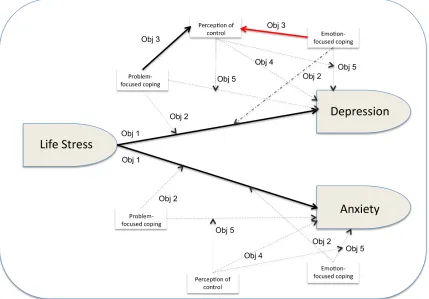
Objective 3: To investigate if coping strategies are related to perception of control... 41
outcomes ... 42
Objective 5: To determine if perception of control and coping strategies interact to predict mental health outcomes... 43
CHAPTER FOUR ... 45
Method... 45
Participants... 45
Procedures... 45
Instrumentation... 47
Measures of stress... 47
Life Stress... 47
Financial stress... 48
Perception of control... 50
Coping... 51
Mental health functioning... 59
CHAPTER FIVE ... 61
Results... 61
Overview of data analytic strategy... 61
Preliminary Analyses... 61
financial stress and mental health functioning... 63
Objective 3. To investigate if coping strategies are related to perception of Control ... 67
Objective 4. To determine if perception of control of life and financial stressors is related to mental health functioning... 68
Objective 5. To determine if perception of control and coping strategies interact to predict mental health outcomes... 68
CHAPTER SIX... 71
Discussion... 71
Objective 1: To determine if stress predicts mental health functioning... 73
Objective 2: To determine if coping style moderates the relation between life and financial stress and mental health functioning... 74
Objective 3. To investigate if coping strategies are related to perception of control... 77
Objective 4. To determine if perception of control of life and financial stressors is related to mental health functioning Objective 5. To determine if perception of control and coping strategies interact to predict mental health outcomes... 79
Objective 5. To determine if perception of control and coping strategies interact to predict mental health outcomes... 80
Summary... 82
Future Directions... 86
REFERENCES... 89
APPENDICES... 111
Appendix A Instructor script... 112
LIST OF TABLES
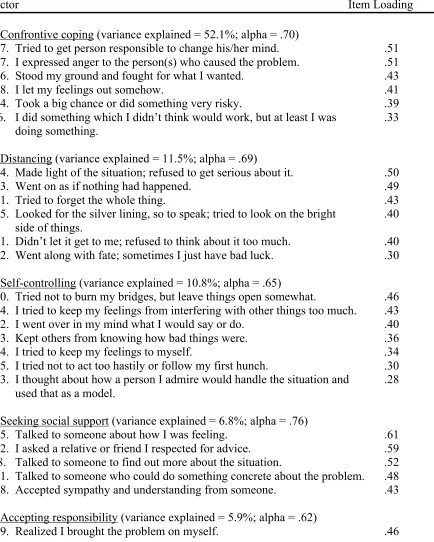
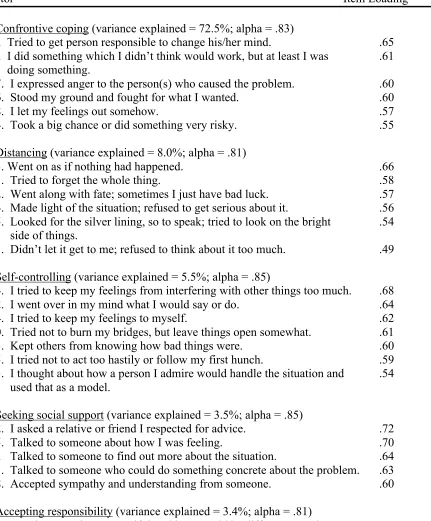
Table 1. Final Factor and Item Loadings for Ways of Coping Questionnaire;
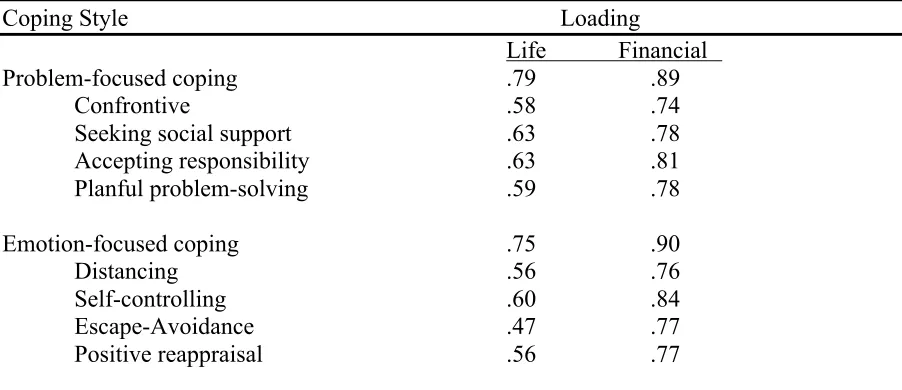
Life Stress ... 54 Table 2. Final Factor and Item Loadings for Ways of Coping Questionnaire; Financial Stress... 56 Table 3. Final Loadings for Problem- and Emotion-focused Coping Styles; Separate
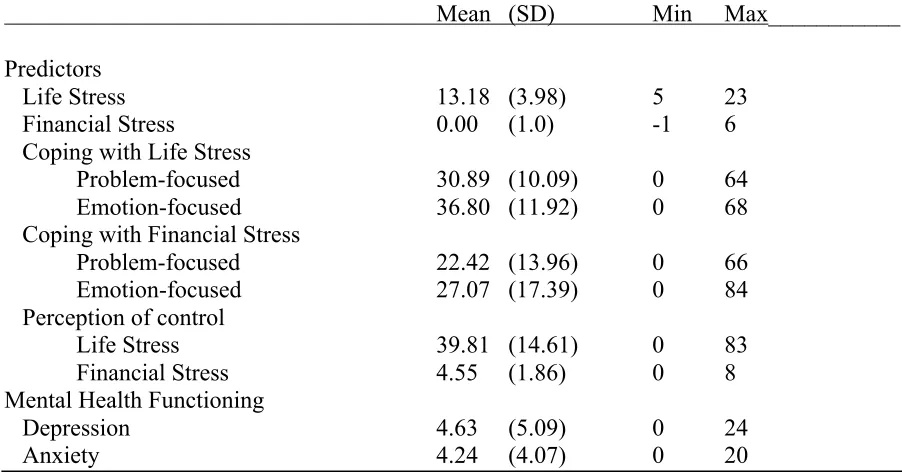
Analyses for Life Stress and Financial Stress... 59 Table 4. Descriptive Information of Measures ... 62 Table 5. Hierarchical Regression Analyses Testing the Association between Life Stress
and Mental Health Functioning and the Moderating Influence of Coping Style ... 65 Table 6. Hierarchical Regression Analyses Testing the Association between Financial
LIST OF FIGURES
Figure 1. Emotion-focused coping moderates the association between financial stress and depressive symptoms ... 67 Figure 2. Model of supported and unsupported relations between college students’ life
stress, perception of control, coping strategies, and mental health outcomes ... 72 Figure 3. Model of supported and unsupported relations between college students’
CHAPTER ONE Introduction
In the past 25 years, college counseling centers have been reporting that students are more distressed than in the years past (Benton, Robertson, Tseng, Newton, & Benton, 2003; Kadison, 2006; Pledge, Lapan, Heppner, Kivlighan, & Roehlke, 1998; Schwartz, 2006). Based on National College Health Assessment (NCHA) surveys, the American College Health Association (ACHA) reported stress was the number one impediment to academic performance, outranking other impediments to learning such as being sick and having sleep and relationship difficulties (ACHA, 2003).
The transition from high school to university is a major life change for many adolescents (Friedlander, Reid, Shupak, & Cribbie, 2007). First-year college students are challenged to transition into an environment with more personal freedom, a rigorous academic life, and perhaps a more independent lifestyle. Most college freshmen that have moved away from home will experience a separation (physically and emotionally) from their parents, likely reducing their contact and support from family and friends. Given these factors, college can be considered a time of considerable life stress (Dusselier, Dunn, Wang, Shelley, & Whalen, 2005; Jackson & Finney, 2002; Kadison & DiGeronimo, 2004).
even what they need. For some, this may be a feeling they have experienced in the past – for others, this may be the first time they have ever felt financial stress. Financial stress has been defined as the unpleasant feeling that one is unable to meet financial demands, can not afford the necessities of life, and has insufficient funds to make ends meet (Davis & Mantler, 2004). Stress from finances is a common complaint of college students (Kadison & DiGeronimo, 2004; Vye, Scholljegerdes, & Welch, 2007).
Given the high amount of stress experienced in college, university and college students may be at risk for psychological problems (Bouteyre, Maurel, & Bernaud, 2007; Dwyer & Cummings, 2001; Smyth, Hockemeyer, Heron, Wonderlich, & Pennebaker, 2008). Indeed, a growing body of evidence suggests that mental health problems are numerous and increasing among students in institutions of higher education (Eisenberg, Gollust,
Golberstein, & Hefner, 2007; Stone & Archer, 1990). According to the 2011 National College Health Assessment (ACHA, 2011), completed by 105,781 students at 129 colleges and universities, almost 30% of men and 36% of women reached a level of depression that made daily activities difficult at least once during the year. In addition, 43% of men and almost 60% of women reported experiencing “overwhelming” levels of anxiety within the last 12 months. Several studies of college students’ mental health needs have shown that depression and anxiety, in particular, are commonly reported concerns at student health centers (Bertocci, Hirsch, Sommer, & Williams, 1992; Yorgason, Linville, & Zitzman, 2008).
impact of each stressor. Studies have suggested that individuals use different coping styles depending on the stressor faced. More specifically, there is preliminary evidence to suggest that individuals use an active approach in dealing with general life stress and a less active approach to address financial stress. However, benefit gained from using a particular coping strategy will depend upon the individual and the demands of the situation. “Use of coping strategies is not considered to be mutually exclusive and, in fact, may be mutually
facilitating” (Snyder & Dinoff, 1999, p. 10). Nevertheless, researchers have concluded that specific coping strategies produce superior outcomes when used by the appropriate person undergoing a particular stressor in the right context (Snyder & Dinoff, 1999).
Current study
This study adds to the existing literature related to coping with life stress in college and expands on the relatively small research base pertaining to coping with financial stress in the college student population. In addition, this study investigated the differential effects of coping style on managing life stress and financial stress. Considering young adults are entering college at increasing rates, there are important practical implications for better understanding the role of stress in college students’ lives (Darling, McWey, Howard, & Olmstead, 2007). This study adds to the understanding of how various coping styles impact the psychological adjustment of college students and will provide insight for counselors and psychologists working with these students.
CHAPTER TWO Literature Review The term “stress”
The term “stress” has been in existence since the 14th century (Merriam Webster’s Dictionary) and some believe the word “stress” may have been derived from the Latin stringere (to draw tight). In most dictionaries, stress is both a verb and a noun. As a noun, “stress” can refer to external events or to an internal state. Similarly, the verb “stress” can be active, as in “to stress,” or passive, as in “to be stressed.” Furthermore, stress is sometimes used to refer to the physiological response brought on by an external event (a “stressor”), an internal stressful state (“strain”), or the stimulus that produces the response pattern (a source of stress).
The term “stress” has been used to describe a variety of negative feelings and reactions that accompany threatening or challenging situations. However, not all stress reactions are negative. Hans Selye suggested that stress had four basic variations: good stress (eustress), bad stress (distress), overstress (hyperstress), and understress (hypostress). In addition, Selye (1979) stated that the essential purpose of behavior was to arrive at a balance between the negative influences of stress while finding as much eustress as possible.
stress and the role that stress plays in the cause of disease and psychological discomfort (Monat, Lazarus, & Reevy, 2007).
Sources of stress
Incidents such as parental divorce, illness in the family, moving, and death of a family member can lead to stress and even precede severe consequences (e.g., depression). Incidences such as these are termed stressors. Stressors can take a variety of forms, including discrete life events, minor “hassles”, and chronic strain (Pearlin, 1989). A discrete life event is a stressor that is classified by a specific event such as the death of a family member or sexual assault. A stressor that is considered to be a minor hassle is one that is an irritating and frustrating demand that occurs during everyday transactions with the environment (Holm & Holroyd, 1992). For college students, an example of a minor hassle would be getting sick or writing a paper. Some researchers have examined the cumulative impact of daily hassles. Rowlinson and Felner (1988) assessed the ability of adolescents to adapt to daily hassles and major events and concluded that each source of stress acted independently. They also showed that daily hassles had a greater effect than life events on the way young people adapted to the expectations of family and school. In addition, Burks and colleagues (1985) reported that daily hassles of college students were a greater risk factor than life events for the
development of psychological symptoms including depression, anxiety, insomnia, and obsessive-compulsive disorders.
and Cohen (1996) believe there are two forms of a chronic stressor. The first form is similar to Pearlin’s idea of chronic experiences in which there is an ongoing difficulty that stems from a discrete event. The second type of a chronic stressor consists of an ongoing stressful process that has little or no grounding in a discrete event. The current study captures both forms of a chronic stressor in its measurement of financial stress because college students’ responses may reflect a current financial situation that is due to a sudden loss of income (discrete life event) as well as a general lack of responsible financial habits (no grounding in a discrete life event).
In the present study, life stress and financial stress of college students were examined separately because it is believed that they are different in nature and might require different coping styles for the resolution of stress (Kariv & Heiman, 2005). In this study, life stress was conceptualized as a product of several minor daily hassles whereas financial stress may be the result of more chronic experiences. The two types of stress - life and financial - are discussed in separate sections followed by a presentation of overall outcomes of stress for college students.
Life stress among college students
Although attending college is generally viewed as a positive experience, it
significant academic, interpersonal, and intrapersonal changes (Shaver, Furman, &
Buhrmester, 1985). Although several studies focus exclusively on first-year students as they transition into the university setting, it is expected that college students are involved in a continuing process of exploration and adjustment with respect to their college environment throughout the entire college experience (Falk, 1975).
Researchers have attempted to identify stressors on college campuses that could potentially cause or worsen student problems. Archer and Lamnin (1985) studied personal and academic stressors reported by students on a college campus. They derived 13 academic and 15 personal stressor categories from an open-ended questionnaire format. According to Archer and Lamnin, the major academic stressors as reported by college students were tests, grade competition, time demands, problematic professors and classroom environment, and concerns about career and future success. Among the major personal stressors identified were difficult intimate relationships, parental conflicts, and interpersonal conflicts with friends.
The following sections elaborate on the stressors currently experienced by college students and use similar categories of academic and personal stressors used by Archer and Lamnin (1985). The discussion of personal stressors is comprised of commonly reported stressors by college students, including both intra- (e.g., sleeping habits) and interpersonal stressors (e.g., roommate problems).
stress resulting from taking and studying for exams, competing with classmates for grades, and trying to master a large amount of content in a small amount of time (Archer & Lamnin, 1985; Kohn & Frazer, 1986). There are several reasons students feel stressed due to
academics, one being the important outcomes riding on a successful performance in school. Examples of such outcomes are staying in school, retaining financial aid, achieving
graduation, distinguishing oneself from peers, landing that first job, or continuing education in graduate school (Vye et al., 2007).
Murphy and Archer (1996) attempted to address the changes in stressors of
university students over time by replicating a 1985 study conducted by Archer and Lamnin. They believed that academic stressors for a college student could change over time
particularly when societal changes were occurring simultaneously. For example, a deteriorating job market could create even more stress for college students because they would worry about their future careers. Indeed, Murphy and Archer found that a decrease in funding for public higher education and the push for everyone to do “more with less” was likely to increase academic stress considerably. This is of particular relevance to the present study given the current state of economic crisis in America. Compared with previous years, the amount of stress being experienced by college students in today’s society may be greater than was experienced in the past because of the economic climate. Elevated stress levels may require counselors and student affairs professionals to provide even more comprehensive services to students dealing with academic stress.
variables than by those variables related to academics (Brooks & Dubois, 1995; Johnson, 1997; Rickinson & Rutherford, 1995). Research on student health indicates that many college students must overcome challenges not only in the classroom but also in dealing with issues pertaining to family, peers, autonomy, and sexuality (Damush, Hays, & DiMatteo, 1997). College students continue to face a variety of challenges related to both intrapersonal and interpersonal stressors throughout their college career and these challenges can become sources of stress (Disch, Harlow, Campbell, & Dougan, 2000). For example, during the transition to college, students commonly questioned their relationships, direction in life, and self-worth (Chickering, 1969); tremendous inner turmoil may result from these types of questions about identity and lead to personal crisis (Henton, Lamke, Murphy, & Haynes, 1980). An identification and further examination of these personal stressors could provide information to allow campus counselors and administrators to work toward a less stressful campus environment. The following paragraphs will provide a discussion of the common types of personal stressors reported on college campuses.
Ross and colleagues (1999) sought to determine the major sources of stress among college students. One hundred undergraduate students were administered a stress survey. Stressors were identified as either daily hassles or major life events. In this sample,
Given the nature of the college environment, with its limited access to adults, there is an almost natural generational distance built in, encouraging a stronger reliance of peers on each other. Tinto (1993) and others (Gerdes & Mallinckrodt, 1994) argue that a college student must find some compatible academic and/or social group with whom to establish membership in order to remain in school. Swenson and colleagues (2008) examined the link between the closeness of peer relationships and adjustment outcomes. First-year college students (n = 271) from two institutions were surveyed about friendship quality, peer attachment, quality of attachment with friends, and adjustment to the college setting. Based on findings, investigators concluded that although it was helpful to keep in touch with a high school friend, a close relationship with a new college friend was more important for
adjustment. It seems that it is not only beneficial for college students to have friends in general (Buote et al., 2007), but even better to have friends that are also experiencing the college environment.
Numerous studies document the benefits of positive peer relationships for college students (Buote et al., 2007; Friedlander et al., 2007; Mounts, Valentiner, Anderson, & Boswell, 2006); however college social life also carries the potential for negative
experiences. Edwards and colleagues (2001) examined the unique contribution of negative social exchange in the relation between stress and health symptoms. Negative social exchanges include events such as losing one’s temper with a friend. Participants were 206 undergraduate students enrolled in a psychology class. Participants completed questionnaires that measured stress, social support, negative social exchange, and physical health.
physical health symptoms than did stress or social support. Investigators concluded that negative social exchange was a significant predictor of physical symptoms and that it was not the presence of positive social interactions, but the absence of negative social interactions, that was associated with better physical health.
In addition to influencing physical health, characteristics of college social life, such as living with a roommate, also carries the potential for emotional distress (Vye et al., 2007). Among the various types of complaints heard by college counseling services, one of the most common is that of roommate problems (Kadison & DiGeronimo, 2004). For college students who live away from home, adjusting to living with roommates can be a challenge. Living in small spaces in crowded conditions can actually erode the positive buffer of social support, making social contact ineffective in protecting students from stress (Lepore, Evans, & Schneider, 1991). Living with a roommate who is noisy or is constantly having friends over can become an environmental stressor; environmental stressors such as high noise levels combined with social activity can sometimes increase anxiety of college students (Edsell, 1976).
Financial stress among college students
According to the U.S. Census Bureau, more than a third of Americans demonstrate little or no understanding of finances, and the average American has no savings and
overspends on a monthly basis (Jennings, 2007). The lack of money management skills (e.g., budgeting) among college students represents an even greater concern (Knight & Knight, 2000) and when asked when they would have liked to have received financial management information, 59% of graduate students said as early as high school and 40% said as a college freshman (Nellie Mae, 2007). Over half of the sample agreed that receiving information about budgeting, financial aid, using credit, and saving strategies should be done on an ongoing basis throughout the undergraduate years. Still, other studies have found that students do not respond to financial education until after they are suffering from significant debt (Hayhoe, Leach, & Turner, 1999).
Literature has documented that finances are one source of stress experienced by college students (Kadison & DiGeronimo, 2004; Tinto, 1993). Common sources of financial stress for college students were divided into two categories: “other debt” and credit card debt. “Other debt” can be thought of as non-credit/charge card debt such as student loans and automobile loans (Jones, 2005). Tuition is discussed as a source of stress and is subsumed under “other debt”.
Common sources of financial stress among college students.
from an average of $924 in 1976, to $4,755 in 1997, to $6,067 in 2002. This has put a
tremendous burden on undergraduates as well as their families. Williams (2006) stated that it is no longer possible for undergraduates to “work their way through college.” Bousquet (2008) noted that, during the 1960s, a student could have worked 15 hours a week at minimum wage during school and 40 hours a week during the summer to pay his or her public university education. Nowadays, one would have to work 55 hours a week all year long to pay costs of higher education. In the United States, only 20% of undergraduates do not work at all. About 50% of all undergraduates work an average of 25 hours per week. The remaining 30% work full-time or more than full-time. It seems that even if a student is working and parents have saved money for college, it is likely that the cost of attending school will still be too high and college students will have to search for additional support. One of the most common avenues of support for college students is the student loan, a second source of financial stress for some college students.
college students are likely to suffer even more than nonstudents because many college students will use their student loan payments to pay off or reduce their credit card debts (Manning, 1999).
Credit card debt in college students. Credit card debt among undergraduate college students is becoming a major problem on campuses nationwide (Adams & Moore, 2007). A study conducted by Nellie Mae in 2001 indicated that the average undergraduate student doubles credit card debt and triples the number of credit cards owned by the time of graduation (Nellie Mae, 2002). Younger cohorts are more susceptible to credit card debt because credit card companies have begun to concentrate much of their marketing to high school and college students (Ritzer, 1995). Students are routinely inundated with credit card marketing schemes that apparently have been highly effective (Adams & Moore, 2007). It is stated that credit card companies aggressively target college students because college
students are expected to have higher than average earning power and are therefore seen by the credit card companies as a desirable market (Warwick & Mansfield, 2000).
Credit is a part of most college students lives and having access to credit allows students to more conveniently make purchases, travel, and even attend college (Jones, 2005). Sallie Mae (2009) reported that students used credit cards to pay for direct education costs by the following percentages and expense types: general school supplies, (e.g., paper,
legitimate use for the cards, such practices may lead students to a position of “bad credit” that will follow them long after they have completed their degrees (Jennings, 2007).
According to Sallie Mae (2009), 84% of undergraduates in 2008 began the school year with credit cards. Undergraduates reported freshman year as the most prevalent time for obtaining credit cards, with 56% reporting having obtained their first card at the age of 18. As students progress through school, credit card use swells. Eighty-eight percent of final year students have a credit card compared to 67% of freshmen. Sixty-two percent of final year students carry four or more cards while only 23% of freshmen carry that number of cards. Final year students carry an average balance of $4,138 (up 41% from $2,900 in 2004) while freshmen carry an average balance of $2,038. When combined with student loan debt, the average debt level for freshmen was $3,150 and $20,402 for seniors (Baum & O’Malley, 2003).
Consequences of stress
Three ways stress can lead to illness. According to Holroyd and Lazarus (1982), there are three ways in which stress might lead to illness or dysfunction. First, the stress response itself can directly cause damage to the body. Consider for example, Selye’s three-stage model of stress, the General Adaptation Syndrome (GAS; Selye, 1936). Selye found that our bodies react to stress with a recognizable pattern of responses. During the alarm phase the body exhibits a “fight or flight” response, which prepares the body for physical activity. If the stressor persists, the second resistance phase begins, in which changes at many levels take place in order to reduce the effect of the stressor. For example, high levels of stress hormones, such as cortisol, will continue to help us cope with the stressor. The body can continue this stage until either the stressor is removed or the body is no longer able to sustain itself. It is in this third phase, termed exhaustion, that our health suffers and we could potentially damage our body. A second way in which stress might lead to illness or
dysfunction is by way of maladaptive coping. Some coping responses are directly damaging to health, especially if used excessively (e.g., substance use, overwork). Finally, a third way in which stress can be harmful is reliance on coping responses that are indirectly damaging to health by causing an individual to downplay symptoms or fail to adhere to health care
regimens (e.g., denial, “be tough” attitude). The following paragraphs discuss mental health outcomes of life and financial stress, highlighting the impact on the college student
population.
struggle with the mounting stress (Tinto, 1988). When students perceive stress negatively or when it becomes excessive, they can experience psychological impairment (Murphy & Archer, 1996). Adlaf and colleagues (2001) provided two reasons for the elevated distress seen in college students. One, college students are in the natural age range in which rates of psychological distress and disorder are elevated relative to the general population
(Schulenberg & Zarrett, 2006) and two, some studies have suggested that the transition following high school is especially problematic to adult development and trajectories.
Observations made by the staff of counseling centers and other student health care organizations indicate that mental health problems of university students are on the rise (Bishop, 2006; Eisenberg et al., 2007; Gallagher, 2005; Kadison & DiGeronimo, 2004). Over the past 20 years, the percentage of counseling center directors that report increases in mental health problems has risen from 53% in 1984 to 86% in 2004 (Gallagher, 2005). Based on findings that university students’ mental health scores were in excess of one standard deviation above the population mean for their respective age and gender groups (Roberts, Golding, Towell, & Weinreb, 1999), researchers have suggested that psychological distress among university students is significantly higher than among the general population because of the challenging transition from high school to college (Adlaf, Gliksman, Demers, & Newton-Taylor, 2001).
men and exactly half of women reached a level of depression during the year that made daily activities difficult. Based on a 2007 study by Bouteyre and colleagues, 41% of the 233 first-year psychology students surveyed suffered depressive symptoms. Finally, Dyson and Renk (2006) investigated adaptation to university life among 74 college students and found that levels of college stress significantly predicted their levels of depressive symptoms, with greater levels of college stress being associated with higher levels of depressive
symptomatology.
Outcomes of financial stress for college students. There is relatively little research conducted on the consequences of financial stress among college students. In general, studies tend to focus on the relation between a specific economic hardship and outcomes. The studies presented below focus on outcomes for individuals experiencing some sort of economic hardship, mainly credit card debt and unemployment. Because of the lack of studies available on consequences of financial stress specifically for college students, some of the following discussion contains findings from research based on the general adult population.
five separate indicators including (a) debt/income ratio, (b) carrying an unpaid balance on credit cards, (c) amount of credit line used, (d) charging on more than two credit cards, and (e) the number of months one missed paying the minimum required payment (known as default). Drentea concluded that being in default and experiencing rising ratio of credit card debt:income were associated with levels of anxiety, such that high levels of debt were associated with high levels of anxiety.
Roberts and colleagues (1999) surveyed 360 students from two universities in London. The students provided information on demographic characteristics, financial circumstances, lifestyle, and physical and psychological well-being. Researchers found that poorer mental health was related to longer working hours outside the university and difficulty paying bills. In addition, students who had considered dropping out of school for financial reasons had lower levels of social functioning and poorer physical health. Based on these results, investigators believed there to be a link between poor mental health functioning and financial difficulty.
More specific to the present study, Eisenberg and colleagues (2007) investigated the prevalence and correlates of depression and anxiety among a large group of university
students. Researchers conducted a Web-based survey of undergraduate and graduate students at a large Midwestern public university. Anxiety and depression were measured with the Patient Health Questionnaire, a nine-item instrument based on the diagnostic criteria for generalized anxiety disorder and a major depressive episode from the Diagnostic and
registrars’ databases pertaining to students’ past and current financial situations. Results revealed that students reporting current financial struggles were more likely to screen positive for diagnosis of depression and anxiety disorders. In addition, compared with
students who reported growing up in a comfortable financial situation, students who reported growing up in a poor family were more likely to screen positive for depression and anxiety disorders.
To conclude, college can be a stressful time for students; for those who experience an excess of stress or perceive stress negatively, psychological maladjustment is a potential outcome. In particular, anxiety and depression are found across college campuses worldwide and are documented outcomes of both life and financial stress for some college students. Potentially, one way to prevent poor psychological adjustment from life and financial stress would be to provide college students with the skills necessary to cope with each stressor. The present study adds to the existing literature related to coping with life stress in college and expands on the relatively small research base pertaining to coping with financial stress in the college student population. In addition, this study investigated the differential effects of coping style on managing life stress and financial stress. Past research on coping strategies is discussed next.
A Review on Coping
advice on how to resolve problems in a variety of areas, including disputes between family members and coworkers, problems with etiquette, finances, and so on. This interest is paralleled in the research literature. A PsycINFO search in January 2012 for research on coping produced 56, 073 hits, half of which were published in the last 10 years. The past 40 years have seen a rapid increase in research on coping in social and behavioral sciences, medicine, public health, and nursing (Folkman & Moskowitz, 2004). Many measures of coping have been developed and tens of thousands of studies (Somerfield & McCrae, 2000) and books on coping have been published (e.g., Aldwin, 1994).
A large proportion of contemporary research on coping can be traced back to the publication of Richard Lazarus’s 1966 book, Psychological Stress and the Coping Process. His book presented an approach to understanding stress and coping that went beyond the ideas of the earlier psychoanalytic perspective and an emphasis on pathology to focus on responses that ordinary people use to deal with problems of daily life. In 1980, Folkman and Lazarus defined coping as thoughts and behaviors that people use to manage the internal and external demands of situations that are appraised as stressful. This definition of coping has become widely accepted (Tennen, Affleck, Armeli, & Carney, 2000) and is used throughout research on coping.
Individual differences in coping. The study of coping began with the
that their assessment is misleading. Some people respond with threats and anger; others react with tears and apologies. Yet others accept the rebuke and are committed to remedy the situation by improving their job performance. One of the many purposes of studying coping styles is to understand why people differ in their response to stress and how these various coping styles relate to mental health functioning.
The study of coping styles is driven by the theoretical framework in which coping is conceptualized. The following section includes a brief overview of the available theoretical approaches used to conceptualize coping and a description of the framework chosen for the present study.
Theoretical approaches to studying coping. Aldwin (2007) presents the four approaches investigators have used to study coping. One, a person-based approach assumes that the person determines what type of coping is utilized (person ! coping). Two, a
situation-based approach assumes that the situation determines the coping style utilized by the person (situation ! coping). Three, the interactionist approach regards coping as a function of personal and situational characteristics, assuming that the person together with the situation determines the style of coping (person + situation ! coping). Thus, the person who responds with anxiety in a testing situation could be high in anxiety and reacting to an unusually difficult test. Finally, the fourth approach to investigating coping is the
For the purpose of the current research, an interactionist model was used to conceptualize the process one goes through when coping with a particular stressor. This model focuses on cognitive appraisals of the situation and the coping strategies that follow from this appraisal. Cognitive appraisal involves making initial attributions about why the event occurred; determining the extent to which the event is threatening, controllable, and predictable; and deciding what can be done (Park, 2005). These appraisals, in turn, begin the coping process when important goals of the individual have been harmed, lost, or threatened. Lazarus and Folkman (1984) initially proposed this model and believed that when individuals are faced with stressful situations they choose coping strategies that fit the degree of control they have over the specific stressor. A large body of research suggests that selecting a particular coping strategy in response to controllable and uncontrollable stressors occurs among all ages (Causey & Dubow, 1992; Compas, Macarne, & Fondacaro, 1988; Reid, Dubow, & Carey, 1995). Types of coping styles and how they are typically categorized in the literature are presented below, followed by a discussion of the relation between coping styles and mental health functioning.
One of the earlier nomenclatures, proposed by Folkman and Lazarus (1980), is used in the present study. Folkman and Lazarus used a rational approach to distinguish two major functions of coping styles: problem-focused coping, which involves directly addressing the problem causing distress, and emotion-focused coping, which involves attempts to regulate and improve the negative emotions associated with the problem. Examples of problem-focused coping strategies are making a plan of action and concentrating on the next step. Examples of emotion-focused coping are engaging in distracting activities, positive thinking, engaging in physical exercise or meditation, venting anger, and seeking support. In general, problem-focused coping strategies are used more often when conditions are appraised as amenable to change (Folkman & Lazarus, 1985). In contrast, emotion-focused coping strategies are more likely to be employed when there has been an appraisal that nothing can be done to modify the conditions (Folkman, 1984). The distinction between problem-focused and emotion-focused coping provides a broad framework for understanding the concept of coping.
effectiveness of these two coping styles when faced with life and financial stress as they relate to college students is presented next.
Coping in college. It is important to examine factors that influence successful adjustment to college (Brissette, Scheier, & Carver, 2002), and the ability to cope with this new experience may be an important variable. The ability to successfully cope in the college environment is a critical skill to acquire given the documented negative outcomes that stress may have on one’s mental health functioning (Hudd et al., 2000). More specifically, adaptive coping responses may reduce some stressful experiences to the level of momentary
disruptions while other patterns of coping may exacerbate stress and contribute to long-term, pervasive negative outcomes.
Coping in college with life stress. Everyday hassles such as conflicts in school or arguments with peers are not uncommon experiences for college students (Ross et al., 1999). Despite this, research on coping has tended to focus on major adverse circumstances (e.g., major illness, the death of a close friend) that a relatively small percentage of emerging adults confront. In addition, far less research on coping has been conducted on older
Higgins and Endler (1995) tested the efficacy of an interactional model of stress and coping for predicting psychological distress among college students. To examine the relation of life stress and coping styles to psychological distress, three styles of coping were assessed: emotion-oriented (emotion-focused), task-oriented (problem-focused), and
avoidance-oriented. Undergraduates (n = 205) completed questionnaires that measured students’ coping styles, recent life stressors, and psychological symptoms. Specifically, coping was measured by the Coping Inventory for Stressful Situations (Endler & Parker, 1990), a self-report measure that assesses the extent to which students engage in certain behaviors when reacting to difficult, stressful, or upsetting situations. Life stress was measured by the Life
Experiences Survey (Sarason, Johnson, & Siegel, 1978), a 57-item self-report scale on which respondents indicate events that have occurred during the past year. Subjects were also asked to rate the extent to which they perceived each event to be positive or negative. Finally, psychological distress was measured with the Basic Personality Inventory (Jackson, 1989), a measure of both personality and psychopathology.
Crockett and colleagues (2007) investigated relations between acculturative stress and psychological functioning and the buffering effect of social support and coping style in a sample of 148 Mexican American college students. Acculturative stress occurs when
individuals from a minority culture experience problems arising from integrating into a mainstream culture. Latino college students are reported to experience substantially higher levels of stress, including financial, academic, and personal stress during their undergraduate years than do Anglo students (Quintana, Vogel, & Ybarra, 1991). Investigators predicted that acculturative stress would be associated with high levels of depressive and anxiety symptoms and that use of active coping styles (problem-focused) would reduce the effects of stress on psychological functioning. Students completed a set of questionnaires pertaining to
acculturative stress, parent/peer support, coping style, and psychological functioning. More specifically, active (problem-focused) and avoidant (emotion-focused) coping styles were measured using a shortened version of the COPE inventory (Carver, Scheier, & Weintraub, 1989). Respondents were asked to indicate how frequently they used each strategy on a scale from 1 (never) to 5 (always). Hierarchical multiple regression analyses provided support for hypotheses and of particular relevance to the present study, a greater use of active coping strategies (problem-focused) in response to life stress was associated with fewer depressive symptoms, whereas a greater use of avoidant coping strategies (emotion-focused) was associated with more depressive and anxiety symptoms.
first-year undergraduates. Students attending a major university in the north of Israel
completed the COPE (Carver et al., 1989) as well as measures of test anxiety prior to taking final examinations. Test performance for students was reflected by the end-of-term
examination grade. As hypothesized, emotion-focused and avoidance coping were positively related to test anxiety. In addition, problem-focused coping contributed positively to
performance on the exams whereas avoidance coping adversely affected test grades. Findings are similar to those from other studies in which the use of problem-focused strategies was related to better performance on exams (Edwards & Trimble, 1992; Endler, Kantor, & Parker, 1994; Zeidner, 1995) and avoidance coping was negatively related to performance (Edwards & Trimble, 1992). Although test anxiety is different in nature from general anxiety investigated in the present study, these findings provide further support for the hypotheses posed in the current investigation. To summarize, based on these and other studies (Beasley, Thompson, & Davidson, 2003; Pizzolato, 2004), it is generally agreed that a problem-focused coping style is a more adaptive form of coping with various life stressors whereas using an emotion-focused coping style tends to be a less beneficial approach to life stressors experienced in the college setting.
the stressor may influence an individual’s selection of coping technique. One such characteristic is the perception of control one has in the face of life and financial stress.
An introduction to perception of control/goodness of fit. Not only will the properties of a particular stressor influence the selection of a coping technique, the
individual’s own appraisal of that situation in relation to their personal control will impact the decision. The fit between the appraisal of controllability and coping is sometimes referred to as the goodness of fit (Folkman, 1984; Zeidner & Endler, 1996). Theoretically, appraisals of control call for greater proportions of active, problem-focused forms of coping, and appraisals of lack of control call for emotion-focused forms of coping. Although both problem-focused and emotion-focused coping are used with controllable and uncontrollable events by almost all individuals, studies indicate that coping efforts intended to alter the source of stress by acting on it directly (problem-focused) tend to be used in response to events appraised as controllable (see Compas et al., 1988), while palliative coping strategies to modulate emotional reactions (emotion-focused) are used when faced with events
between emotion-focused coping and perception of control under conditions of life and financial stress.
Lachman and Weaver (1998) examined social class differences in the sense of control in three samples of men and women ages 25-74 years. Researchers operationalized two dimensions of control: personal mastery and perceived constraints. Personal mastery referred to one’s sense of efficacy in carrying out goals and perceived constraints indicated to what extent one believed there were obstacles beyond one’s control that interfered with reaching goals. Measures pertaining to both dimensions of control as well as income and
psychological and physical health were administered. Results of regression analyses showed that for all income groups, higher perceived mastery and lower perceived constraints were related to better health, greater life satisfaction, and lower depressive symptoms. Control played a moderating role; participants in the lowest income group with a high sense of control showed levels of health and well-being comparable to the higher income groups. The discussion of Lachman and Weaver’s (1998) investigation is important to the present study in regards to the generation of hypotheses. It was predicted that under conditions of life and financial stress, perception of control would be related to mental health functioning. Specifically, a significant negative correlation was expected between perception of control and depression and anxiety for both life and financial stress. These hypotheses are consistent with Lachman and Weaver’s (1998) work that suggested sense of control was beneficial for all three income groups despite social class.
to economic changes in the 1930s as involving a family’s experience of loss of control over finances and efforts to regain control. A few studies document the utility of problem-focused coping only under conditions of high controllability (see Thurber & Weisz, 1997) and suggest that secondary control strategies (or emotion-focused coping) may be especially important for coping with economic strain (see Wadsworth & Compas, 2002). This
discussion of the goodness of fit is relevant to the present study because it provides support for several of the generated hypotheses. Among these hypotheses is the final objective to determine if perception of control and coping strategies interact to predict mental health outcomes for college students. This interaction has been investigated in previous studies with a range of ages and stressors (Christensen, Benotsch, Wiebe, & Lawton, 1995; Clarke, 2006; Compas et al., 1988; Forsythe & Compas, 1987; Wadsworth & Compas, 2002); however, this author is not aware of any study conducted on college students’ coping with financial stress that has examined such an interaction.
Coping with financial stress according to the adolescent perspective.
Although there is ample evidence that family financial stress has an influence on child and adolescent functioning by way of its effects on parents (i.e., Conger & Conger, 2002), less research has been done to show the direct burden that financial stress places on adolescents (Wadsworth & Compas, 2002). In order to understand the efficacy of coping strategies in alleviating adolescents’ financial stress, more research has to be done.
investigated the relation between coping styles and financial stress among college students. Two of Wadsworth’s studies are summarized below; however, the nomenclature for coping style is different from the present study’s nomenclature. Specifically, Wadsworth identifies three dimensions of coping: primary control (similar to problem-focused), secondary control (similar to emotion-focused), and disengagement coping (some components are similar to emotion-focused). Primary control coping consists of strategies used to directly alter a stressful problem or one’s emotional reactions to it, such as problem solving. Secondary control coping includes strategies that reflect attempts to adapt oneself to the stressful circumstance (e.g., distraction, positive thinking). Finally, disengagement coping includes strategies that orient an individual away from a stressful circumstance and includes avoidance and denial.
primary (problem-focused), secondary (emotion-focused), and disengagement (some components are similar to emotion-focused). Finally, information regarding adolescents’ anxious/depressed and aggressive behavior was gathered using the Youth Self Report (Achenbach, 1991), a 112-item self-report measure of youth problem behaviors.
Two theoretical models were tested using structural equation modeling; one model tested coping as a mediator of the relation between stress and psychopathology and the second model tested coping as a moderator. Based on analyses, researchers identified primary (problem-focused) and secondary control (emotion-focused) coping as being associated with fewer anxiety/depression symptoms and aggression problems in the face of family and financial stressors. Although both primary and secondary control coping predicted fewer adjustment problems, secondary control (emotion-focused) coping was used more often and accounted for more variance in adjustment problems than did primary control (problem-focused) coping. Wadsworth and Compas suggested that secondary control (emotion-focused) strategies were the most efficacious type of coping for low-control stressors such as financial stressors. The authors encouraged future studies to focus on the use of coping strategies that mediate or moderate the relation between economic strain and adjustment problems for adolescents. The present study contributes to this small research base by examining the link between financial stress and mental health functioning as it is moderated by coping style in a sample of college students.
for this study was the inclusion of the parents of the adolescents. A total of 57 parent-adolescent dyads were recruited. Parents and parent-adolescents completed the 9-item Life Stress Questionnaire (LSQ), a compilation of items from the Life Events Questionnaire (Garmezy, Masten, & Tellegen, 1984) and the Adolescent Perceived Events Scale (Compas, Davis, Forsythe, & Wagner, 1987). The LSQ was used to assess the number of stressful life events experienced by parents and adolescents and their perceptions of the severity of these
stressors. To measure economic strain, parents were asked how often they experienced each of five financial stressors (e.g., difficulty paying bills) in the last six months. Adolescents’ economic strain and coping styles for parents and adolescents were measured by the RSQ as described above. Finally, parents completed the Brief Symptom Inventory (BSI; Derogatis & Spencer, 1982) and the Child Behavior Checklist (Achenbach, 1991) as measures of
psychological symptoms of parents and adolescents, respectively.
CHAPTER THREE Statement of the Problem
Past research indicates that mental health problems of university students are on the increase. Studies suggest that psychological distress among university students is
significantly higher than among the general population, and even among students’ working peers. The transition to college is easy for some students, but for many others the shift can be too sudden and drastic, leaving them with feelings of uncertainty. College can be a very stressful process for students and that stress can have negative academic as well as mental health consequences. Therefore, it is important to provide students with skills and strategies that may help them successfully manage stress.
coping strategies to modulate emotional reactions (emotion-focused coping) are used more with events perceived as beyond personal control.
The purpose of the present study was to examine the relation between life and financial stress of college students and mental health functioning. In addition, factors that potentially exacerbated or diminished the relation between stress and poor mental health functioning were investigated; those factors included perception of control and the degree to which individuals used emotion-focused and problem-focused coping strategies. This study was based on past research that suggested that individuals, in the face of life stress, likely employ a problem-focused coping style in order to ameliorate the effects of the stressor. In regards to financial stress, there have been very few investigations of coping effectiveness. Studies from Wadsworth and colleagues have provided evidence that emotion-focused strategies are optimal responses to uncontrollable stressors as illustrated by fewer
psychological symptoms in response to economic stress. Thus, the primary purpose of the present study was to add to the existing research on life stress in the college population as well as contribute to the growing literature related to coping with financial stress. Most importantly, to the author’s knowledge, this study was the first to investigate the
effectiveness of various coping styles for college students experiencing financial stress. Hypotheses
In the current study, the following objectives and accompanying hypotheses were tested:
a) Life stress will account for a significant amount of the variance in depressive symptoms such that higher scores on the College Life Stress Inventory will predict higher levels of depression.
b) Life stress will account for a significant amount of the variance in anxiety symptoms such that higher scores on the College Life Stress Inventory will predict higher levels of anxiety.
H2: Does financial stress predict mental health functioning?
a) Financial stress will account for a significant amount of the variance in depressive symptoms such that higher scores on the Financial Stress Questionnaire will predict higher levels of depression.
b) Financial stress will account for a significant amount of the variance in anxiety symptoms such that higher scores on the Financial Stress Questionnaire will predict higher levels of anxiety.
Objective 2: To determine if coping style moderates the relation between life and financial stress and mental health functioning.
H3: Does emotion-focused coping style moderate the relation between life stress and mental health functioning?
b) The interaction of emotion-focused coping and life stress will be a significant predictor of anxiety. Specifically, under conditions of high emotion-focused coping there will be a significant positive link between scores on the College Life Stress Inventory and anxiety.
H4: Does problem-focused coping style moderate the relation between life stress and mental health functioning?
a) The interaction of problem-focused coping and life stress will be a significant predictor of depression. Specifically, under conditions of low problem-focused coping there will be a significant positive link between scores on the College Life Stress Inventory and depression.
b) The interaction of problem-focused coping and life stress will be a significant predictor of anxiety. Specifically, under conditions of low problem-focused coping there will be a significant positive link between scores on the College Life Stress Inventory and anxiety.
H5: Does emotion-focused coping style moderate the relation between financial stress and mental health functioning?
a) The interaction of emotion-focused coping and financial stress will be a
significant predictor of depression. Specifically, under conditions of low emotion-focused coping there will be a significant positive link between scores on the Financial Stress Questionnaire and depression.
emotion-focused coping there will be a significant positive link between scores on the Financial Stress Questionnaire and anxiety.
H6: Does problem-focused coping style moderate the relation between financial stress and mental health functioning?
a) The interaction of problem-focused coping and financial stress will be a significant predictor of depression. Specifically, under conditions of high
problem-focused coping there will be a significant positive link between scores on the Financial Stress Questionnaire and depression.
b) The interaction of problem-focused coping and financial stress will be a
significant predictor of anxiety. Specifically, under conditions of high problem-focused coping there will be a significant positive link between scores on the Financial Stress Questionnaire and anxiety.
Objective 3: To investigate if coping strategies are related to perception of control. H7: Under conditions of life stress, is coping style related to perception of control?
a) There will be a significant positive correlation between problem-focused coping and perception of control such that higher scores on the problem-focused coping measure will be associated with higher scores on the measure of perception of control.
H8: Under conditions of financial stress, is coping style related to perception of control? a) There will be a significant positive correlation between problem-focused coping
and perception of control such that higher scores on the problem-focused coping measure will be associated with higher scores on the measure of perception of control.
b) There will be a significant negative correlation between emotion-focused coping and perception of control such that higher scores on the emotion-focused coping measure will be associated with lower scores on the measure of perception of control.
Objective 4: To determine if perception of control is related to mental health outcomes. H9: Under conditions of life stress, is perception of control related to mental health
functioning?
a) There will be a significant negative correlation between perception of control and depression such that higher scores on the measure of perception of control will be associated with lower levels of depression.
b) There will be a significant negative correlation between perception of control and anxiety such that higher scores on the measure of perception of control will be associated with lower levels of anxiety.
a) There will be a significant negative correlation between perception of control and depression such that higher scores on the measure of perception of control will be associated with lower levels of depression.
b) There will be a significant negative correlation between perception of control and anxiety such that higher scores on the measure of perception of control will be associated with lower levels of anxiety.
Objective 5: To determine if perception of control and coping strategies interact to predict mental health outcomes.
H11: Under conditions of life stress, does the interaction of coping strategies and perception of control predict mental health outcomes?
a) The interaction of emotion-focused coping and perception of control will be a significant predictor of depression such that high scores on emotion-focused coping measure will exacerbate the link between low levels of perceived control and depression.
b) The interaction of emotion-focused coping and perception of control will be a significant predictor of anxiety such that high scores on emotion-focused coping measure will exacerbate the link between low levels of perceived control and anxiety.
d) The interaction of problem-focused coping and perception of control will be a significant predictor of anxiety such that high scores on problem-focused coping measure will weaken the link between low levels of perceived control and anxiety.
H12: Under conditions of financial stress, does the interaction of coping strategies and perception of control affect mental health outcomes?
a) The interaction of emotion-focused coping and perception of control will be a significant predictor of depression such that high scores on emotion-focused coping measure will weaken the link between low levels of perceived control and depression.
b) The interaction of emotion-focused coping and perception of control will be a significant predictor of anxiety such that high scores on emotion-focused coping measure will weaken the link between low levels of perceived control and anxiety.
c) The interaction of problem-focused coping and perception of control will be a significant predictor of depression such that high scores on problem-focused coping measure will exacerbate the link between low levels of perceived control and depression.
CHAPTER FOUR Method Participants
Participants were 343 (157 male, 186 female) undergraduate volunteers enrolled in either an Introductory Psychology course or an upper level Psychology course (299 from Introductory Psychology and 70 from upper level course) at a large southeastern university during the Summer and Fall 2009 semesters. Twenty-six cases were deleted from the final sample because of missing data (they did not complete 50% of the study questions);
however, no significant differences were found in demographic characteristics between these 26 cases and the final cases.
The sample was 83% Caucasian, 8% African American, and 9% of another ethnicity. The current sample was representative of the university; approximately 80% of incoming freshmen have been classified as Caucasian since 2004. Participant ages ranged from 18 to 27 (mean = 19.17, SD = 1.52), with 51% classified as freshman, 24% as sophomores, 14% juniors, and 11% seniors and/or nontraditional. Of note, one participant for the present study was 46 years of age. It was decided to retain this participant for analyses because the
participant’s scores on study variables were not considered outliers. Fifty-five percent (55%) of the participants reported that they were unemployed, while 42% reported part-time
employment. The majority of the sample reported being single (97%) and living in a dormitory (59%).
Participants were recruited two ways. One, participants (n = 299) were recruited from
the Introduction to Psychology course via a web site established for the purpose of recruiting research participants. This web site lists many experiments available for participation for research credit. As part of requirements for the Introduction to Psychology course, participants must complete either six research credit hours or a three-page journal article review. Subjects who participated in the research through an Introduction to Psychology course earned two research credits. If Introduction to Psychology participants did not attend
their scheduled session or did not cancel with more than 24 hours notice they had one credit hour deducted from their total research credits, in accordance with course expectations.
The Introduction to Psychology course typically contains a large number of freshmen and sophomores; therefore, to recruit juniors and seniors, instructors of 15 upper level
undergraduate courses were asked to administer questionnaires to students. Those subjects (n = 70) participated on a voluntary basis and some were offered extra credit points for
participation; the course instructor made that decision. An email was sent to instructors at the beginning of the Summer and Fall 2009 semesters requesting help with participant
recruitment for the current study. Willing instructors were sent a script (see Appendix A) that served as an introduction to the study along with the website link to give interested
participants. In order to track participation and extra credit points, subjects were prompted at the end of the survey to print out a confirmation page validating their participation in this study.
data collection. Data collection took place via online questionnaires. Participants were able to complete all questionnaires in approximately 60 minutes.
Instrumentation
Instruments were administered in a fixed order due to logistical constraints of the Web survey. There were two versions of the online questionnaire to reduce potential effects of participant fatigue; that is, half the sample completed measures of life stress first and the other half completed measures of financial stress first. Both versions of the questionnaire began with the informed consent, followed by questions related to demographic information. Next, participants either completed the measure of life stress followed by the measure of coping with life stress or they completed the measure of financial stress followed by the measure of coping with financial stress. After the measures of stress and coping, participants completed the measure of mental health functioning. Copies of all non-copyrighted measures are available in Appendix B.
Measures of stress
Life stress. College life stress was measured using the 28-item College