Research Article
Efficient Human Action and Gait Analysis Using
Multiresolution Motion Energy Histogram
Chih-Chang Yu,
1Hsu-Yung Cheng,
2Chien-Hung Cheng,
2and Kuo-Chin Fan
2, 31Department of Computer Science and Information Engineering, Vanung University, Chung-Li 32061, Taiwan 2Department of Computer Science and Information Engineering, National Central University, Chung-Li 32001, Taiwan 3Department of Informatics, Fo-Guang University, I-Lan 26247, Taiwan
Correspondence should be addressed to Chih-Chang Yu,[email protected]
Received 29 November 2009; Accepted 10 February 2010
Academic Editor: Jenq-Neng Hwang
Copyright © 2010 Chih-Chang Yu et al. This is an open access article distributed under the Creative Commons Attribution License, which permits unrestricted use, distribution, and reproduction in any medium, provided the original work is properly cited.
Average Motion Energy (AME) image is a good way to describe human motions. However, it has to face the computation efficiency problem with the increasing number of database templates. In this paper, we propose a histogram-based approach to improve the computation efficiency. We convert the human action/gait recognition problem to a histogram matching problem. In order to speed up the recognition process, we adopt a multiresolution structure on the Motion Energy Histogram (MEH). To utilize the multiresolution structure more efficiently, we propose an automated uneven partitioning method which is achieved by utilizing the quadtree decomposition results of MEH. In that case, the computation time is only relevant to the number of partitioned histogram bins, which is much less than the AME method. Two applications, action recognition and gait classification, are conducted in the experiments to demonstrate the feasibility and validity of the proposed approach.
1. Introduction
Analyzing human’s behavior or identity is a very interesting research topic because human is usually the most concerned object in many applications such as surveillance system or video understanding. Recently, this problem is usually solved by two kinds of approaches: video-based approaches
or sensor-based approaches [1,2]. The advantage of
video-based approach is that the individuals do not have to put on additional devices and the hardware cost is also cheaper. For video-based approaches, there exists abundant considerable works made by previous researchers such as employing
tem-plate matching [3,4], Intensity-based features [5,6], shape
matching [7], and spatial-temporal features [8–13]. For
spatial-temporal features, motion energy images (MEIs) are a very useful feature which incorporates temporal information into spatial images. The idea of MEI was firstly introduced
by Bobick and Davis in [14]. The authors obtained the MEI
by collecting a group of frames and extract scale invariant features for recognition. This idea was extended to the so called average motion energy (AME) by aligning and
normalizing the foreground silhouettes [15]. By doing so,
the AME can depict human’s motion in a two-dimensional space (the spatial domain) while preserving the temporal
motion information. Unlike other approaches in [10], the
process of generating AME is computationally inexpensive and can be employed in real-time applications. Besides, it had been proven that AME can provide reliable accuracy
for action recognition by other researchers [16]. Recently,
some researchers focus on more challenging problems such
as gender classification [17,18] and gait classification [19–
24]. The AME idea was also employed in [22], in which they
named AME as gait energy images (GEIs).
In [15], the authors directly employed the sum of
the similarity among patterns. Firstly, the AME image is converted to the motion energy histogram (MEH). Then, we adopt a multiresolution structure to construct the multiresolution motion energy histogram (MRMEH). Last, we propose an uneven partitioning method to address the
important part of MEH automatically and apply an efficient
histogram matching algorithm by utilizing the characteristic of multiresolution histogram.
2. Histogram-Based Method
In this section, we will introduce the proposed
histogram-based method for human action recognition. Section 2.1
describes the overview of the proposed framework. How to generate the AME and MEH is addressed in Sections
2.2 and2.3, respectively. Then we will briefly describe the
characteristic of MEH inSection 2.4. The construction and
utilization of MRMEH are elaborated in Sections 2.5 and
2.6, followed by the time complexity analysis of the proposed
method inSection 2.7.
2.1. System Overview. Figure 1 shows the overview of the system. Firstly, we extract the motion period from the input video. We can obtain the Average Motion Energy image based on the extracted motion period and convert it to the Motion Energy Histogram (MEH). Then we perform quadtree decomposition on the MEH to construct the Multiresolution Motion Energy Histogram (MRMEH).
Finally we apply an efficient histogram matching algorithm
on MRMEH to obtain the recognition result.
2.2. Average Motion Energy (AME). Before elaborating on the proposed histogram-based method, the average motion
energy (AME) image proposed by Wang and Suter [15] is
first introduced. Given a set of aligned human silhouettes
S(x,y,t), the AME can be defined as follows:
AMEx,y= 1
T
T
t=1
Sx,y,t, (1)
where T is the number of frames. In their work, T is set
as the motion period of the input action. There have been plenty of studies for periodicity detection of motions. For
example, in [20], the authors adopted a simple strategy
to extract the motion cycle. They observed the number of foreground pixels in the silhouette in each frame over time,
Nf(t). Afterwards the motion period can be extracted by
seeking the local maximums of Nf(t). This strategy works
fair in the walking motion. However, for some other periodic motions such as waving hands or jumping, the size of the
foreground silhouette does not change much. Figure 2 is
an example which shows the variation of Nf(t) of two
motions, whereFigure 2(a) represents theNf(t) of motion
“walking” and Figure 2(b)represents the Nf(t) of motion
“waving one hand”, respectively. We can see that there are
obvious local maximums and local minimums inNf(t) in
the walking motion but not in the waving motion. Therefore, we adopt another robust method which measures object’s
self-similarity over time [25]. Obviously, if the periodic
motion exists in the video sequence, we can find similar poses in different frames. In other words, high correlation value can be obtained when comparing the foreground blobs in different frames within a period of time. Thus we can get the motion period by subtracting the indices of these frames.
2.3. Motion Energy Histogram (MEH). From (1) we can see
that the pixel value in AME(x,y) represents the intensity
at position (x,y). From a histogram point of view, we can
regard AME as a two-dimensional histogram whose bin
value represents the frequency on position (x,y) during time
interval t. Thus, we can reform the AME to the motion
energy histogram (MEH) by using the following equation:
MEH= AME
x,y
x,y∈AMEAME
x,y. (2)
After transforming AME to MEH, the process of recog-nizing two different MEHs becomes a histogram matching process. Hence, various properties of histogram can be employed to improve the recognition performance. Through the observation, we find that the corresponding MEHs of two entirely different actions can be distinguished at very
low-resolution. For example,Figure 3illustrates the MEHs
of two actions: walking and waving both hands. The left column is the original MEHs of these two actions and the right column is their corresponding MEH at low resolution. We can see that even under such a low resolution, these two actions can still be distinguished perceptually. In other words, if we can classify these actions at lower resolution level rather than directly compare them at the highest resolution level, the whole recognition process will become
more efficient because the procedure will compare less
histogram bins. However, the recognition rate may decrease under low resolution levels. In order to maintain the same
recognition rate as the method proposed in [15], we adopt
a multiresolution structure on the histogram to achieve this goal. Details will be introduced in the next subsection.
2.4. Characteristic of Mutliresolution Histogram. The basic
idea of multiresolution was firstly introduced in [26] and
was further extended to a general form by Yu et al. [27].
A specified partitioning method on histogram bins is used to downscale the resolution of a histogram. By performing this operation recursively we can obtain a pyramid structure
of multiresolution histogram. For a given histogram X
with b bins, the nonuniform partitioning process for the
multiresolution structure is stated as follows. We firstly
divide these b bins into m disjointed subsets, B, B =
{B1,B2,. . .,Bm}. A histogram X withmbins is defined as
the lower-resolution version ofXand the bin values ofXare
described as follows:
Xk=
∀i,i∈Bk
Xi, k=1,. . .,m. (3)
As Yu et al. show in [27],XandXsatisfy the inequality
Input video
Motion period extraction
Average motion energy
Motion energy histogram
Quadtree decomposition
Mutli-resolution histogram
Gait database
Efficient histogram
matching Normalisation
Figure1: System Overview.
Fo
re
gr
o
u
n
d
si
ze
2400 2500 2600 2700 2800 2900 3000 3100 3200 3300
Frame index
0 10 20 30 40 50 60 70 80 90
(a)
Fo
re
gr
o
u
n
d
si
ze
4450 4500 4550 4600 4650 4700 4750 4800 4850
Frame index
0 10 20 30 40 50 60 70 80 90 100
(b)
Figure2: The size of foreground silhouette for two motions over time: (a) walking, and (b) waving one hand.
(a) (b)
Figure4: Quadtree decomposition results of a walking motion.
wheredrepresents the similarity measurement functionL1
-norm andχ2-distance. By using the nonuniform partitioning
method iteratively, we can form several multiresolution
histograms and the inequality chain in (3) can be rewritten
as
d(X,Y)≡dL(X
bL,YbL)≥dL−1(XbL−1,YbL−1) ≥ · · · ≥d0(X
b0,Yb0), bL> bL−1>· · ·> b0, (5)
wherebidenotes the bin size of the current resolution level,
i=0,. . .,Land 1≤for allbi ≤ |B|, where|B|denotes the
element number of the universal bin setB. We will introduce
how to construct a multiresolution motion energy histogram in the next subsection.
2.5. Construct the Multiresolution Motion Energy Histogram (MRMEH). As we mentioned inSection 2.4, the multires-olution histogram can be constructed by summing certain bins at higher-resolution level. However, in order to make this multiresolution structure more effective, the selection
of the disjointed subsets B is a very important task. As
addressed in [26], the uniform partitioning method is a
simple and straightforward way. However, Yu et al. [27]
proved that the nonuniform partitioning method has better performance than the uniform one. Hence, we decide to
createBvia the nonuniform partitioning method. Here, we
adopt a straightforward strategy to generateBautomatically.
Since different actions have different characteristics, it is
reasonable that for different types of actions, the partitioning
method should also be different. In terms of image, the
result of a quadtree represents a partition of space in two dimensions by decomposing the image into four equal quad-rants, subquadquad-rants, recursively. Each node in the quadtree either has exactly four children or no children (a leaf node). Each leaf node contains the data corresponding to a specific subregion of the image. Because of the characteristic of quadtree, we can address the importance of a given image automatically with a proper setting of decomposition criterion. Thus, we can realize that quadtree is a very efficient structure which can represent the characteristic of two-dimensional data. In our work, we set the decomposition rule as “nonzero value”. That is, if the current quadrant contains non-zero pixel values, it will be decomposed into four subquadrants. Since the quadtree decomposition method will divide the image into four subregions each time, the width and height of the image must be the power of 2.
Therefore, we set the bins of MEH in each dimension as 256.
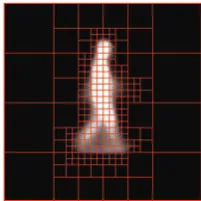
Figure 4is the decomposition result on an MEH of motion “walking” with minimum region size of 64.
In this paper, we propose a method to construct the multiresolution motion energy histogram (MRMEH) by using the results of quadtree decomposition on MEH. The construction of MRMEH can be easily understood through
Figure 5. The maximum resolution level is the depth of the
tree. Nodes in different colors represent the histogram bin
of certain resolution level(s) and the value of each node is the summation of all pixel values in the corresponding
subregion. It is reasonable that level i should have 4i bins
at most if every node at leveli−1 is decomposed into four
children. However, each resolution level will have less than 4i
bins in real world applications because not every node will be decomposed according to the decomposition criterion. More specifically, the bin set does not cover the universal bin set
Bat some resolution levels because not every node will be
decomposed to that level. To solve this problem, if we found
that a bin at leveliis indecomposable, we will copy it to the
higher resolution level to retain the information inside. By doing so, we can ensure that the histogram bin set at each
resolution level is always equal toB. As shown inFigure 5, the
number of histogram bins at level 2 and 3 will be 10 and 22,
respectively.Figure 6is the MRMEH of the action “running”.
Note that the two-dimensional histograms are reformed to
one-dimensional for better understanding.Figure 6(a)is the
MEH andFigure 6(b)is the quadtree decomposition result.
Figures 6(c) to 6(g) are the corresponding MRMEHs at
resolution levels 1 to 5, respectively. In the next subsection, we will introduce how to utilize the MRMEH to recognize human actions.
2.6. Efficient Action/Gait Recognition Using MRMEH. As we
mentioned in Section 2.4, for two histograms using the
same partitioning method, the similarity between these
two histograms at different resolution levels will obey the
inequality described in (4). From this equation we can realize
that further comparison is unnecessary at higher-resolution level if the similarity at lower-resolution level is above the threshold. Thus we can speed up the recognition process by comparing less histogram bins. It is noticeable that we must use same partition method for all compared histograms to let the similarity between different actions be comparable. Thus, we adopt a dynamic partition method. More specifically, we obtain the partition method from the query MEH and employ it to all MEHs in the database. Assume that there are
k-defined actions in the database. The matching algorithm is
described inAlgorithm 1.
2.7. Time Complexity Analysis. In this section, we will analyze the time complexity between the MRMEH method
and the AME-SAD method [15]. Here we evaluate the
number of operations among different methods. Assume
that the MEH is an n-by-n two-dimensional histogram.
According to the Algorithm 1, the proposed method has
Lv3 Lv2 Lv1
Figure5: The idea of constructing an MRMEH.
(a) (b)
0 0.05 0.1 0.15 0.2 0.25 0.3 0.35
1 2 3 4
(c)
0 0.05 0.1 0.15 0.2 0.25 0.3 0.35
0 2 4 6 8 10 12 14 16 18 (d)
0 0.02 0.04 0.06 0.08 0.1 0.12 0.14
0 10 20 30 40 50 60 70 (e)
0 0.01 0.02 0.03 0.04 0.05 0.06
0 50 100 150 200 250 300 (f)
0 0.005 0.01 0.015
0 200 400 600 800 1000 1200 (g)
Figure6: A five-level MRMEH for the motion “running”. (a) Original MEH. (b) Quadtree decomposition result. (c)–(g) Corresponding histogram from levels 1 to 5, respectively.
cost of quadtree decomposition. The number of operations
of quadtree decomposition is bounded between n2 and
n2log
2n. Since the number of bins at each resolution level
is dynamically determined, it is very difficult to estimate
how many bins in total will be compared for each query.
Here, we assume that this branch-and-bound algorithm has
to comparembins to decide whether eliminating a candidate
MEH or not. Then, for eachHq, the number of operations
will bekn2 tokn2log
2nfor constructing the corresponding
1
0.4 0.6
0.3 0.1
0.1 0.1
0.35 0.25
0.2 0.1 0.05 0.05 0.25 0.15
1
0.4 0.6
0.3 0.1
0.1 0.1
0.35 0.25
0.2 0.1 0.05 0.05 0.25 0.15
1
0.4 0.6
0.3 0.1
0.1 0.1
0.35 0.25
0.2 0.1 0.05 0.05 0.25 0.15
1
0.4 0.6
0.3 0.1
0.1 0.1
0.35 0.25
0.2 0.1 0.05 0.05 0.25 0.15
(a)
(b)
(c)
(d)
(e)
(f)
(g)
(h)
Figure7: An example of matching two histograms effectively. (a) Tree of the query histogram. (e) The preconstructed tree in the database. (b)–(d) Compared bins at different level. (f)–(h) Corresponding bin values in the database.
AME-SAD method, which takes kn2 operations. However,
this matching process can be reduced to km by storing
the decomposition information in advance. Hence, the total
number of operations will be bounded from n2 +km to
n2log
2n+km and the recognition time will be relevant to
m, notnwith the increasingk. In our experiments,mwill
be much smaller thann2and several quantitative results are
made to verify this approach.
First of all, we divide the recognition process into two parts: the offline and online procedures. In the offline processing, we will construct a complete quadtree for each
action. More specifically, all leaf nodes will be in the deepest level of the tree. The value in each nonleaf node is the summation of its four children’s value. In the online process,
after obtaining the quadtree decomposition result ofHq, we
can directly find out the value in the corresponding node from the preconstructed tree. By doing so the computation cost will only be related to the number of bins we compared
withHMR
q , which is msupposedly. For simplicity, here we
take a binary tree, for example, to illustrate this idea. As
shown in Figure 7, the right column is the preconstructed
Figure8: Subjects used in the action recognition experiment.
column ofFigure 7, the corresponding histogram at levels 1
to level 3 is shown from the second row to the fourth row in the right column, respectively. Thus it is very easy to find out the corresponding node to construct the histogram at a specific resolution level.
3. Experiments
In this section, some experiments were conducted to demon-strate the feasibility, robustness, compatibility, and validity of the proposed approach on two applications: human action recognition and gait classification. All statistics are evaluated
using Matlab 2007b and the Intel Core 2 quad CPU 2.4 G with 2.0 G RAM.
3.1. Action Recognition. To evaluate the performance of the proposed method, we adopt the Weizmann database used in
[10]. Because nonperiodic motions are hard to extract the
(a) (b) (c) (d)
(e) (f) (g)
Figure9: MEH of 7 actions. (a) Walking, (b) Running. (c) Jumping. (d) Jumping Jack. (e) Waving one hand. (f) Waving two hands. (g) galloping-sideways.
R
ec
o
gnition
rat
e
(%)
0.5 0.55 0.6 0.65 0.7 0.75 0.8 0.85 0.9 0.95 1
Resolution level
1 2 3 4 5 6 7
MRMEH-L1
AME-SAD
Figure10: Comparison between MRMEH-L1 and AMD-SAD in
terms of recognition rate.
two hands (A6), and galloping-sideways (A7). The resolution of the videos is 180-by-144 and 25 fps. Moreover, we add additional 10 subjects with our own videos in a different environment to enlarge the database. Hence the number of testing subjects is 19 in the whole experiments. The resolution of the additional videos is 360-by-240 and 30 fps.
Sample images of all subjects are shown inFigure 8.
For those videos taken by ourselves, we employ a
robust background subtraction approach [28] to extract the
silhouette. For the database used in [10], we directly use the
masks provided by the authors. All silhouettes were aligned by the center of the mass. Since the width and height of input image must be the power of 2 for quadtree decomposition, we adopted a 256-by-256 image in our experiments. Same
subject may have different heights due to different distances
to the camera in these videos; we normalize the silhouette according to the scale of height to provide fair comparisons. In our experiments, we normalize the silhouette to 150 pixels
high.Figure 9shows the generated MEH of all 7 actions from
all subjects.
3.2. Recognition Accuracy Analysis. In the recognition pro-cess, we adopt the leave-one-out cross-validation rule to obtain fair recognition rate. The histogram similarity
func-tion used in this paper isL1-norm. Although theχ2-distance
is also compatible of the multiresolution structure, we find
thatL1-norm similarity measurement already provides high
recognition rate in the experiments. Table 1 tabulates the
recognition rate at different levels. Numbers in bold
repre-sent the recognition rate for each action at each resolution
level. Figure 10 is the comparison between the AME-SAD
method employed in [15] and the proposed MRMEH-L1
method. The AME-SAD method always compares the whole images to the database images so that the recognition rate is fixed. We can find that the recognition rate is equal to the AME-SAD method at resolution level 5. Therefore, we only have to construct the quadtree to level 5 (whose minimum block size is 8-by-8) and save more computation time. Tables
2,3,4,5, and6show the confusion matrix at each resolution
level.
Input:Hq:MEH of the query action with sizen-by-n Output: The best matched MEHBest
(1) Initialize min lv=1; max lv=log2(n);th=Inf; (2) Construct the MRMEHHMR
q from min lv to max lv base on the quadtree decomposition result
ofHq. Memorize the partitioning methodMp. (3) for all MEH(j) in the database
(4)Hj←−MEH(j) (5)fori=min lv : max lv
(6) find histogramHMR,j iat resolution leveliaccording toMp
(7) Dist←−di(HMR,i q , HMR,j i);
(8) ifDist<thandi!=max lv (9) theni=i+ 1;
(10) elsediscardHj; (11) end
(12) ifDist<thandi== max lv (13) thenMEHBest←−Hj; th=Dist;
(14) end (15)end
Algorithm1: Algorithm for action recognition.
Table1: The recognition rate of 7 motions at 5 resolution levels.
Lv 5 4 3 2 1
A1 19/19 19/19 18/19 18/19 10/19
100.00% 100.00% 94.73% 94.73% 52.63%
A2 19/19 19/19 18/19 17/19 15/19
100.00% 100.00% 94.73% 89.47% 78.95%
A3 18/19 18/19 17/19 14/19 13/19
94.73% 94.73% 89.47% 73.68% 68.42%
A4 18/19 18/19 15/19 14/19 6/19
94.73% 94.73% 78.95% 73.68% 31.58%
A5 19/19 19/19 18/19 9/19 10/19
100.00% 100.00% 94.73% 60.00% 52.63%
A6 19/19 18/19 13/19 14/19 8/19
100.00% 94.73% 68.42% 73.68% 50.00%
A7 19/19 19/19 19/19 17/19 8/19
100.00% 100.00% 100.00% 89.47% 50.00%
Table2: Confusion matrix at resolution level 5.
A1 A2 A3 A4 A5 A6 A7
A1 1.00 0 0 0 0 0 0
A2 0 1.00 0 0 0 0 0
A3 0 0 0.95 0 0.05 0 0
A4 0 0 0 0.95 0 0.05 0
A5 0 0 0 0 1.00 0 0
A6 0 0 0 0 0 1.00 0
A7 0 0 0 0 0 0 1.00
the computational efficiency. Table 7 tabulates the average
number of bins for different actions at different resolution levels. We can find that at resolution level 5, the average number of bins falls from 168.2 to 268.4, which are much less
Table3: Confusion matrix at resolution level 4.
A1 A2 A3 A4 A5 A6 A7
A1 1.00 0 0 0 0 0 0
A2 0 1.00 0 0 0 0 0
A3 0 0 0.95 0 0.05 0 0
A4 0 0 0 0.95 0 0.05
A5 0 0 0 0 1.00 0 0
A6 0 0 0 0.05 0 0.95 0
A7 0 0 0 0 0 0 1.00
Table4: Confusion matrix at resolution level 3.
A1 A2 A3 A4 A5 A6 A7
A1 0.95 0 0 0 0 0 0.05
A2 0 0.95 0.05 0 0 0 0
A3 0 0 0.90 0 0.05 0 0.05
A4 0 0 0 0.73 0 0.27 0
A5 0 0 0 0 1.00 0 0
A6 0 0 0.11 0.16 0.05 0.68 0
A7 0 0 0 0 0 0 1.00
Table5: Confusion matrix at resolution level 2.
A1 A2 A3 A4 A5 A6 A7
A1 0.95 0.05 0 0 0 0 0
A2 0 0.89 0.11 0 0 0 0
A3 0 0.11 0.74 0.05 0.05 0 0.05
A4 0 0 0 0.73 0.05 0.11 0.11
A5 0 0 0 0.16 0.57 0.27 0
A6 0 0 0.11 0.16 0.05 0.68 0
Table6: Confusion matrix at resolution level 1.
A1 A2 A3 A4 A5 A6 A7
A1 0.53 0.05 0.05 0 0.05 0 0.32
A2 0 0.79 0.21 0 0 0 0
A3 0.11 0.11 0.68 0.05 0.05 0 0
A4 0.26 0 0 0.27 0.05 0.11 0.37
A5 0.05 0 0 0.11 0.52 0.16 0.16
A6 0.16 0 0 0 0.05 0.42 0.37
A7 0.16 0 0.05 0.05 0.11 0.21 0.42
Table7: Average number of bins at each resolution level.
Lv A1 A2 A3 A4 A5 A6 A7
1 4 4 4 4 4 4 4
2 16 16 16 16 16 16 16
3 40 40 39.8 40 40 39.9 39.9
4 84.7 86.5 76.8 97.9 81.6 87 88.6 5 204.4 219.5 168.2 268.3 184.7 207.1 213
Table 8: Comparisons between AME-SAD and two kinds of partitioning methods in action recognition application.
Number of operations AME-SAD Quadtree-L1 Uniform-L1
MRMEH construction
(no. of pixels retrieved) — 191451.43 327680 Action recognition (no.
of bins compared) 458752 1438.71 5114.69
than AME-SAD method which use the whole image (256-by-256) for comparison. Furthermore, if we can eliminate as many dissimilar MEH as possible at lower-resolution level, the computation efficiency can be further improved. In our experiments, the average processed resolution level
is 2.83 when the maximum resolution level is 5. Table 8
depicts the average number of pixels (bins) need to be processed during the recognition process for each query. In order to construct the MRMEH, we have to retrieve each pixel in the AME several times. The average number of pixels needed to be retrieved and compared for all
actions is shown in the second and third rows ofTable 8,
respectively. It is noticeable that the recognition rate of
the proposed MRMEH-L1(no matter using quadtree-based
or uniform partitioning method) and AME-SAD will be
the same (see Algorithm 1). Hence the only difference
among these methods is the computation time. Although the proposed algorithm has to spend additional time on organizing the MRMEH using quadtree decomposition or uniform partitioning method, the multiresolution structure
approach still has better efficiency than the AME-SAD
method. With the increasing of the database templates, the
proposed method will be much more effective than using the
AME-SAD approach.
3.4. Real-Time Action Recognition. Here we demonstrate a
system which is able to quickly classify different periodic
motions in a single video sequence. As described in [25], we
also adopt the self-similarity matrixSsin this application. If
the motion cycle is successfully extracted at frame t, then
we empty the matrix Ss, obtain the corresponding MEH,
and perform the action recognition. If we cannot extract
the motion period at framet, we keep computing the
self-similarity information at frametand added it into the matrix
S. Since it takes several frames to accomplish a motion cycle,
in our work the system tries to extract the motion period
inSsevery 15 frames. Because it is meaningless to compute
the periodicity between two dissimilar actions, we choose
to empty the matrixS when a motion cycle is detected in
order to avoid computing the self-similarity between two
dissimilar actions. Figure 11 shows the recognition results
on a subject who is performing several motions sequentially. These motions are waving one hand, side walking, waving two hands, and running. Since the recognition time of the proposed method is very short, our method can response human’s motions immediately and correctly.
3.5. Gait Classification. In this experiment, we will demon-strate the advantage of our method on another application: the human gait classification. Unlike the action recognition problem, the human gait classification problem involves many subjects (usually more than 100) with similar actions so that the classification task becomes more challenging. In order to quickly identify each individual in a large database, an efficient matching algorithm is required. We adopt the
CASIA Gait Database (Dataset B) [19] which consists of
124 subjects’ gaits from 11 view angles (seeFigure 12). Each
subject performs the walking motion 10 times which include six natural walks, two walking sequences with a bag, and two sequences with a coat. For simplicity, we only consider the side-view and natural walk sequences in our experiment. We select 120 subjects whose silhouette images are acceptable for
gait analysis. Figure 13shows some examples of the AME
images used in our experiments.
We adopt the leave-one-out cross-validation rule and the cumulative match score (CMS) to evaluate the performance of our method. The resolution level of MRMEH is from 1 to 7. In our experiment, the classification rate is 96.39%
using the AME-SAD and 1-NN rule. Figure 14 shows the
CMS among the top 10 matches at different resolution levels
where the y-axis is the recognition rate. In our work, the
recognition rate of MRMEH at resolution level 7 reaches the same accuracy as that of AME-SAD. Note that for the
action recognition problem described in Section 3.2, the
recognition rate of MRMEH at resolution level 5 already reaches the same accuracy as that of AME-SAD. Because the gait classification problem is more sophisticated than the action recognition problem, we have to use a finer resolution
level in order to identify different people. Table 9tabulates
Wave1 (a)
Side (b)
Wave2 (c)
Run (d)
Figure11: Action recognition in a single video sequence.
Figure12: Human gaits captured from 11 different view angles.
the better choice in order to obtain better computation
efficiency. Table 10 tabulates the average number of
com-parisons for each query between the AME-SAD and the MRMEH method. We can find that the MRMEH approach (either quadtree-based or uniform partitioning method) performs better than the AME-SAD method. Moreover, the quadtree-based partitioning method has the least number of operations (only 2% of the AME-SAD method) among the three methods.
4. Conclusion
In this paper, we propose a histogram-based approach on human action recognition. We transform the average motion energy (AME) image to the two-dimensional motion energy histogram (MEH). By doing so, various characteristics of histogram can be adopted to improve the performance on similarity measurement. We discover that the MEH generated within a motion period provides rich information
to distinguish different type of motions. To improve the
Table9: Number of bins at different resolution levels using the quadtree-based and uniform partitioning method.
Resolution level Quadtree-basedpartitioning Uniform partitioning
1 4 4
2 16 16
3 39.94 64
4 86.98 256
5 216.67 1024
6 581.73 4096
7 1578.30 16384
Table 10: Comparisons between AME-SAD and two kinds of partitioning methods in gait classification application.
Number of operations AME-SAD Quadtree-L1 Uniform-L1
MRMEH construction
(no. of pixels retrieved) — 205753.33 65536 Action recognition
(no. of bins compared) 7864320 142225.45 1693850.2
(a) (b) (c) (d) Figure13: The extracted AME images in our experiments.
C
u
m
ulati
ve
mat
ching
sc
or
e
10 20 30 40 50 60 70 80 90 100
Rank
0 1 2 3 4 5 6 7 8 9 10 11
Resolution level 1 Resolution level 2
Resolution level 3 Resolution level 4 (a)
C
u
m
ulati
ve
mat
ching
sc
or
e
95 95.5 96 96.5 97 97.5 98 98.5 99 99.5 100
Rank
0 1 2 3 4 5 6 7 8 9 10 11
Resolution level 5 Resolution level 6
Resolution level 7 (b)
Figure14: The CMS at different resolution levels.
number of operations is highly reduced using the proposed nonuniform partitioning method so that the computation efficiency is greatly improved. Moreover, the recognition accuracy remains the same as the AME-SAD method via the multiresolution histogram matching algorithm. Because of the computationally inexpensive approach, real-time system is practical by using the MRMEH with high recognition accuracy. Through bunch of quantitative experiments we verified our thoughts as well as demonstrated the powerful capabilities of MRMEH in action recognition and gait classification applications.
Acknowledgment
This work is supported by the National Science Council (no. 98-2218-E-238-002-).
References
[1] L. Middleton, A. A. Buss, A. Bazin, and M. S. Nixon, “A floor sensor system for gait recognition,” in Proceedings of the 4th IEEE Workshop on Automatic Identification Advanced Technologies (AUTO ID ’05), pp. 171–180, New York, NY, USA, October 2005.
[2] D. Gafurov and E. Snekkenes, “Gait recognition using wear-able motion recording sensors,”EURASIP Journal on Advances in Signal Processing, vol. 2009, Article ID 415817, 16 pages, 2009.
[3] A. F. Bobick and J. W. Davis, “The recognition of human movement using temporal templates,”IEEE Transactions on Pattern Analysis and Machine Intelligence, vol. 23, no. 3, pp. 257–267, 2001.
[4] T. H. W. Lam, R. S. T. Lee, and D. Zhang, “Human gait recognition by the fusion of motion and static spatio-temporal templates,”Pattern Recognition, vol. 40, no. 9, pp. 2563–2573, 2007.
[5] C. Sch¨uldt, I. Laptev, and B. Caputo, “Recognizing human actions: a local SVM approach,” inProceedings of the Inter-national Conference on Pattern Recognition, vol. 3, pp. 32–36, 2004.
[6] A. Fathi and G. Mori, “Action recognition by learning mid-level motion features,” inProceedings of the 26th IEEE Conference on Computer Vision and Pattern Recognition (CVPR ’08), pp. 1–8, 2008.
[7] S. Carlsson and J. Sullivan, “Action recognition by shape matching to key frames,” inProceedings of the Workshop on Models versus Exemplars in Computer Vision (CVPR ’01), Kauai, Hawaii, USA, December 2001.
[8] A. F. Bobick and J. W. Davis, “The recognition of human movement using temporal templates,”IEEE Transactions on Pattern Analysis and Machine Intelligence, vol. 23, no. 3, pp. 257–267, 2001.
[9] A. Veeraraghavan, A. R. Chowdhury, and R. Chellappa, “Role of shape and kinematics in human movement analysis,” in Proceedings of the IEEE Computer Society Conference on Computer Vision and Pattern Recognition, vol. 1, pp. 730–737, 2004.
International Conference on Computer Vision (ICCV ’05), pp. 1395–1402, Beijing, China, 2005.
[11] J. Han and B. Bhanu, “Human activity recognition in thermal infrared imagery,” inProceedings of the 6th IEEE Workshop on Object Tracking and Classification Beyond and in the Visible Spectrum (OTCBVS ’05), San Diego, Calif, USA, June 2005. [12] H. Lakany, “Extracting a diagnostic gait signature,” Pattern
Recognition, vol. 41, no. 5, pp. 1644–1654, 2008.
[13] J. Davis, “Hierarchical motion history images for recognizing human motion,” in Proceedings of the IEEE Workshop on Detection and Recognition of Events in Video (EVENT ’01), Vancouver, BC, Canada, July 2001.
[14] A. Bobick and J. Davis, “The representation and recognition of action using temporal templates,”IEEE Transactions on Pattern Analysis and Machine Intelligence, vol. 23, no. 3, pp. 257–267, 2001.
[15] L. Wang and D. Suter, “Informative shape representations for human action recognition,” inProceedings of the International Conference on Pattern Recognition, vol. 2, pp. 1266–1269, 2006. [16] X. Zou and B. Bhanu, “Human activity classification based on gait energy image and convolutionary genetic programming,” inProceedings of the 18th International Conference on Pattern Recognition, vol. 3, pp. 556–559, 2006.
[17] C. Shan, S. Gong, and P. W. McOwan, “Fusing gait and face cues for human gender recognition,”Neurocomputing, vol. 71, no. 10–12, pp. 1931–1938, 2008.
[18] X. Li, S. J. Maybank, S. Yan, D. Tao, and D. Xu, “Gait components and their application to gender recognition,” IEEE Transactions on Systems, Man and Cybernetics Part C, vol. 38, no. 2, pp. 145–155, 2008.
[19] S. Yu, D. Tan, and T. Tan, “A framework for evaluating the effect of view angle, clothing and carrying condition on gait recognition,” inProceedings of the International Conference on Pattern Recognition, vol. 4, pp. 441–444, 2006.
[20] S. Sarkar, P. J. Phillips, Z. Liu, I. R. Vega, P. Grother, and K. W. Bowyer, “The humanID gait challenge problem: data sets, performance, and analysis,”IEEE Transactions on Pattern Analysis and Machine Intelligence, vol. 27, no. 2, pp. 162–177, 2005.
[21] L. Lee and W. E. L. Grimson, “Gait analysis for recognition and classification,” inProceedings of the 5th IEEE International Conference on Automatic Face and Gesture Recognition (FGR ’02),pp. 155–162, Washington, DC, USA, May 2002. [22] J. Han and B. Bhanu, “Individual recognition using gait energy
image,”IEEE Transactions on Pattern Analysis and Machine Intelligence, vol. 28, no. 2, pp. 316–322, 2006.
[23] M.-H. Cheng, M.-F. Ho, and C.-L. Huang, “Gait analysis for human identification through manifold learning and HMM,” Pattern Recognition, vol. 41, no. 8, pp. 2541–2553, 2008. [24] X. Huang and N. V. Boulgouris, “Human gait recognition
based on multiview gait sequences,” EURASIP Journal on Advances in Signal Processing, vol. 2008, Article ID 629102, 8 pages, 2008.
[25] R. Cutler and L. S. Davis, “Robust real-time periodic motion detection, analysis, and applications,” IEEE Transactions on Pattern Analysis and Machine Intelligence, vol. 22, no. 8, pp. 781–796, 2000.
[26] B.-C. Song, M. J. Kim, and J. B. Ra, “A fast multiresolution feature matching algorithm for exhaustive search in large image databases,”IEEE Transactions on Circuits and Systems for Video Technology, vol. 11, no. 5, pp. 673–678, 2001.
[27] C.-C. Yu, F.-D. Jou, C.-C. Lee, K.-C. Fan, and T. C. Chuang, “Efficient multi-resolution histogram matching for fast image/video retrieval,”Pattern Recognition Letters, vol. 29, no. 13, pp. 1858–1867, 2008.