Scholarship@Western
Scholarship@Western
Electronic Thesis and Dissertation Repository
10-30-2017 10:00 AM
The Influence of Limb and Target Vision in Target-Directed and
The Influence of Limb and Target Vision in Target-Directed and
Allocentric Pointing Movements
Allocentric Pointing Movements
Joseph Manzone
The University of Western Ontario
Supervisor Heath, Matthew
The University of Western Ontario
Graduate Program in Kinesiology
A thesis submitted in partial fulfillment of the requirements for the degree in Master of Science © Joseph Manzone 2017
Follow this and additional works at: https://ir.lib.uwo.ca/etd Part of the Motor Control Commons
Recommended Citation Recommended Citation
Manzone, Joseph, "The Influence of Limb and Target Vision in Target-Directed and Allocentric Pointing Movements" (2017). Electronic Thesis and Dissertation Repository. 4981.
https://ir.lib.uwo.ca/etd/4981
This Dissertation/Thesis is brought to you for free and open access by Scholarship@Western. It has been accepted for inclusion in Electronic Thesis and Dissertation Repository by an authorized administrator of
i
The top-down nature of allocentric spatial representations (i.e., specifying target locations
relative to other objects) is thought to render motor output via an offline mode of control.
The present experiment tested this hypothesis by providing detailed trajectory analyses of
allocentric and target-directed reaching tasks performed with and without concomitant limb
vision. Allocentric tasks required reaches to a location defined by the relationship between a
target and reference stimulus, whereas target-directed tasks required reaches directly to a
target. Target-directed limb visible trials showed the most effective online trajectory
amendments compared to their limb occluded counterparts and allocentric limb visible and
occluded trials. Accordingly, I propose that target-directed reaches performed with limb
vision are supported via ‘fast’ online visuomotor networks. In contrast, I propose that
reaching in the absence of limb vision and/or to an allocentrically defined target is mediated
via ‘slow’ offline visuoperceptual networks.
Keywords
Perception action model
Cognitive control
Online control
Allocentric
Goal-directed
Reaching
Sensorimotor
ii
Acknowledgments
I would firstly like to acknowledge and thank my supervisor Dr. Matthew Heath for
welcoming me into the lab and providing me with countless opportunities to learn. Allowing
me to pursue multiple projects, mentor students, and come up with my own ideas provided an
invaluable training environment. I appreciate the time spent helping improve my
communication skills (i.e., scholarship and manuscript writing, presenting) and ability to
think deeply about literature and data. Last, thank you for being realistic with me regarding
the quality of work needed to succeed in this field.
I would like to thank my examination committee: Dr. Paul Gribble, Dr. Al Salmoni,
and Dr. Timothy Welsh. Thank you for critically evaluating my project, provide me with
challenging questions, and allowing me to reflect on the conclusions that can be made from
experimental data. A special thank you to Dr. Welsh for introducing me to research when I
was an undergraduate student and for willing to guide me through a PhD.
To my fellow lab members, it was a pleasure working alongside you over the two
years. I appreciate all the time spent trying to convince me that London is not that bad. A
special thank you to Shirin for being a mentor to me. To my friends outside the lab,
especially Joe Munn and Will Cockrell, thank you for the laughs and good conversation.
To my Nonno and Nonnas: thank you for the countless stories and homemade food. I
am happy to be home again because we can eat and laugh together more often.
To Mom and Dad: thank you for having espresso with me (almost) every night, it
made us feel not so far away. That my brothers and I are all pursuing what we love is an
indication of how supportive you have been over the years.
To my brothers Nick, Jeeb, and Damian: the relationship we have is magisterial.
Thanks for helping me move out. Showing you how a real man lives on his own brought
many laughs. To my best friend (Damian): indeed, it was tough to pursue this degree without
you. Though, seeing you grow as a researcher has been as fruitful as you helping me grow as
a researcher. Your creativity and idea generation are things I hope to learn from you as we
pursue our doctoral studies together. Happy happy, joy joy!
In addition to the financial support provided by Dr. Matthew Heath and UWO, I
would also like to acknowledge the financial support provided by NSERC.
iii Table of Contents
Abstract ... i
Acknowledgments... ii
List of Tables ... v
List of Figures ... vi
List of Appendices ... ix
1 Introduction ... 1
2 Methods ... 6
2.1 Participants ... 6
2.2 Apparatus ... 6
2.3 Stimuli and Procedure ... 6
2.4 Data Collection and Reduction ... 8
2.5 Dependent Variables and Statistical Analyses ... 8
3 Results ... 10
3.1 Performance Measures ... 10
3.2 Proportion of Endpoint Variance (R2) ... 11
4 Discussion ... 13
4.1 The effect of limb vision on target-directed and allocentric tasks ... 13
4.2 Target-directed and allocentric tasks show differences in endpoint variability and online control ... 15
4.3 The effect of target vision on target-directed and allocentric tasks ... 17
5 Conclusions ... 19
6 Endnotes ... 20
7 References ... 21
8 Tables and Figures ... 26
iv
9.1 Appendix A: Slope Analysis ... 36
9.2 Appendix B: Ethics Approval ... 38
v
List of Tables
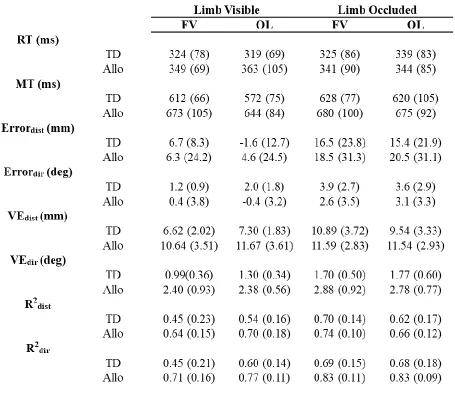
Table 1. Experiment means and between-participant standard deviations for target-directed
(TD) and allocentric (Allo) tasks as a function of limb vision (limb visible, limb occluded)
vi
List of Figures
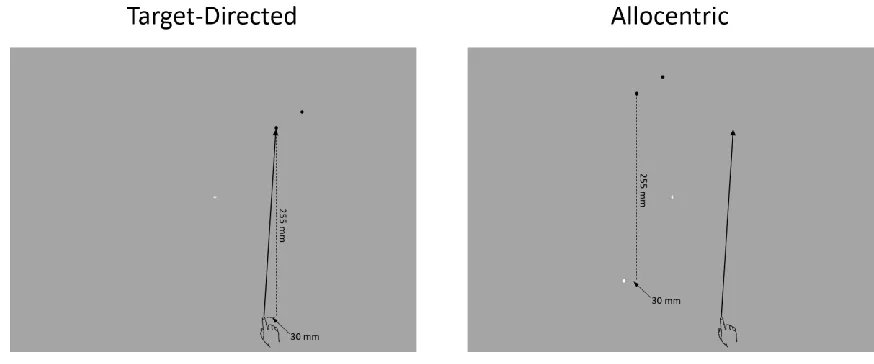
Figure 1. Stimuli used in target-directed and allocentric tasks. The black and white circles
represent target and reference circles, respectively. The arrow represents a hypothetical
movement vector to the near target and demonstrates that the movement endpoint, and hence
biomechanics, were equivalent across the two tasks. Note that although both near and far
target circles are shown, only one target circle was presented on each trial. Participants were
instructed to direct their gaze to the fixation cross throughout a trial. The hand presented in
this figure is for illustrative purposes only and was not visible during the experiment (see
Figure 2). See Stimuli and Procedures for details... 27
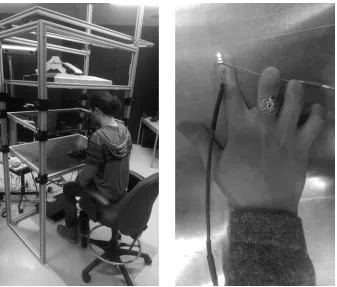
Figure 2. Aiming apparatus (left panel) and close-up view of LED and IRED placement on
the reaching limb. The LED was necessary because the combination of the one-way mirror
and extinction of the lights in the experimental suite prevented direct vision of the reaching
limb. ... 28
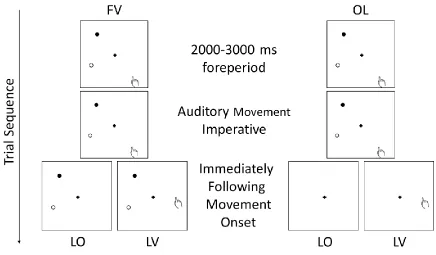
Figure 3. Schematic of limb and target vision conditions for the allocentric task (FV: target
full vision; OL: target open-loop; LO: limb occluded; LV: limb visible). Note: the
target-directed task included the same conditions with the exception that the target stimuli were
presented rightward of the fixation cross (see Figure 1) and the stimuli used are presented in
Figure 1. See Stimuli and Procedure for details. ... 29
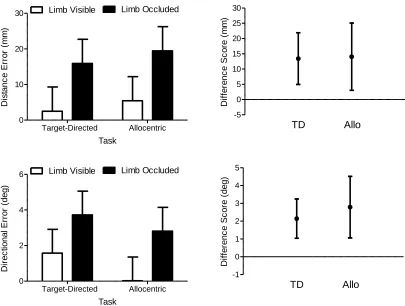
Figure 4. The left panels show systematic error in distance (top panels) and direction (bottom
panels) for target-directed (TD) and allocentric (Allo) limb visible and limb occluded trials.
Error bars represent 95% within-participant confidence intervals (Loftus & Masson, 1994).
The right panels present the mean difference between the limb visible and limb occluded
trials (i.e., limb visible minus limb occluded) in each task. Error bars represent 95%
between-participant confidence intervals and the absence of an overlap between an error bar and zero
represents a reliable effect that can be interpreted inclusive to a test of the null hypothesis
(Cumming, 2013) (see text for details). ... 30
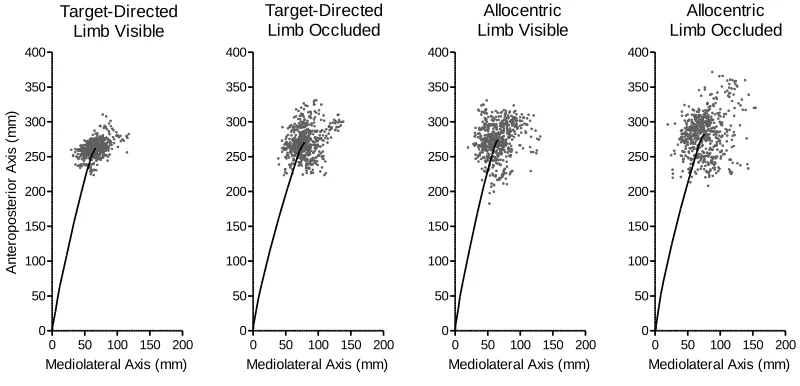
Figure 5. The solid line in each panel represents the average movement trajectory for limb
visible and limb occluded trials in target-directed and allocentric tasks across all target vision
vii
figure provides a graphic demonstration that endpoint variability in movement distance for
target-directed limb visible trials was less than the other experimental conditions. ... 31
Figure 6. The left panels show variable error in distance (top panels) and direction (bottom
panels) for target-directed (TD) and allocentric (Allo) limb visible and limb occluded trials.
Error bars represent 95% within-participant confidence intervals (Loftus & Masson, 1994).
The right panels present the mean difference between the limb visible and limb occluded
trials (i.e., limb occluded minus limb visible) in each task. Error bars represent 95%
between-participant confidence intervals and the absence of an overlap between an error bar and zero
represents a reliable effect that can be interpreted inclusive to a test of the null hypothesis
(Cumming, 2013) (see text for details). ... 32
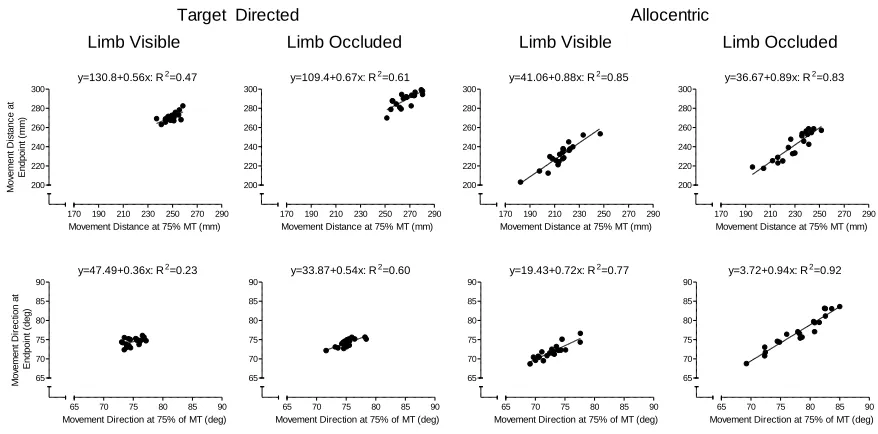
Figure 7. Exemplar participant’s trial-to-trial spatial positions of the limb in distance (top
panels) and direction (bottom panels) at 75% of movement time relative to each trial’s
ultimate movement endpoint for target-directed and allocentric tasks during full vision limb
visible and limb occluded trials. The proportion of explained variance (R2) and linear
regression equations for each condition are presented at the top of each panel. ... 33
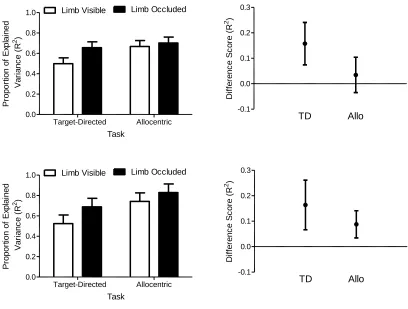
Figure 8. The left panels show proportion of endpoint variance in distance (top panels) and
direction (bottom panels) explained (R2) by the position of the limb at 75% of movement
time as a function of target-directed (TD) and allocentric (Allo) limb visible and limb
occluded trials. Error bars represent 95% within-participant confidence intervals (Loftus &
Masson, 1994). The right panels present the mean difference between the limb visible and
limb occluded trials (i.e., limb occluded minus limb visible) in each task (TD: target-directed;
Allo: allocentric). Error bars represent 95% between-participant confidence intervals and the
absence of an overlap with an error bar and zero represents a reliable effect that can be
interpreted inclusive to a test of the null hypothesis (Cumming, 2013) (see text for details). 34
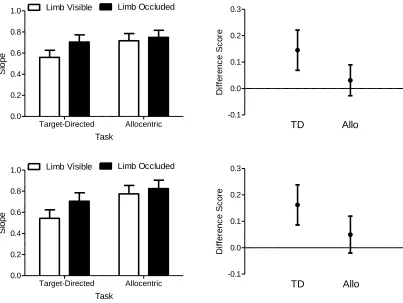
Figure 9. The left panels show the slope relating the spatial position of the limb at 75% of
MT to the response’s ultimate movement endpoint as a function of target-directed (TD) and
allocentric (Allo) limb visible and limb occluded trials. Error bars represent 95%
within-participant confidence intervals (Loftus & Masson, 1994). The right panels present the mean
difference between the limb visible and limb occluded trials (i.e., limb occluded minus limb
viii
the absence of an overlap with an error bar and zero represents a reliable effect that can be
ix
List of Appendices
Appendix A: Slope Analysis ... 36
1
Introduction
Convergent behavioural, neuropsychological, and neuroimaging evidence indicates that
separate visual processing streams mediate actions and perceptions (for review see
Goodale, 2014). The perception-action model (PAM) asserts that the dorsal visual
pathway processes absolute visual information in an egocentric frame of reference (i.e.,
with respect to one’s self) and supports goal-directed actions. In turn, the PAM contends
that the ventral visual pathway processes relative visual information in an allocentric
frame of reference (i.e., with respect to other objects) and supports top-down judgments.
Further, the PAM states that the dorsal and ventral streams operate along distinct
timelines. Indeed, because in a reaching/grasping task the egocentric relationship between
the ‘moving’ limb and a stationary (or moving) target changes from moment-to-moment,
the dorsal visual pathway is thought to continuously update absolute visual information in
real-time (Westwood & Goodale, 2003). In contrast, allocentric relationships provide a
percept that is generally invariant (i.e., temporally durable) to support recognition across
multiple viewpoints (James, Humphrey, Gati, Menon, & Goodale, 2002). In
demonstrating the real-time properties of movement control, neurologically intact
individuals exhibit automatic trajectory amendments in response to an unexpected target
‘jump’ (Bridgeman, Lewis, Heit, & Nagle, 1979; Goodale, Pelisson, & Prablanc, 1986),
whereas such corrections are not observed in individuals with lesions to the posterior
parietal cortex (i.e., an area of the dorsal stream) (Gréa et al., 2002; Pisella et al., 2000).
The absence of online corrections following a dorsal stream lesion has been interpreted as
evidence of a ‘slow’ and cognitive mode of movement control mediated via a stable
percept maintained by the ventral visual pathway (Rossetti et al., 2005).
It is important to recognize that a slow mode of cognitive control can also be observed in
neurologically healthy individuals. For example, the fast and automatic target jump
corrections exhibited by neurologically intact individuals (i.e., ~ 75 ms) (i.e.,
target-directed: see Bridgeman et al., 1979; Goodale et al., 1986) are delayed (i.e., > 160 ms)
when the task requires implementing a correction mirror-symmetrical to the target jump
increased latencies of anti-corrections are thought to represent the top-down (i.e.,
cognitive) nature of inhibiting a target-directed correction and inverting a response to a
mirror-symmetrical location in reaching space. Accordingly, it has been proposed that
movements requiring top-down intentional control are mediated via the slow
visuoperceptual networks of the ventral stream.
In addition to target perturbation paradigms, a slow mode of control can be observed via
examining the trajectories of pro- (i.e., reaching directly to a target) and antiponting (i.e.,
reaching mirror-symmetrical to a target) movements directed to stationary targets. For
example, Maraj and Heath (2010) employed a trajectory-based regression analysis (for
review see Heath, Neely, Krigolson, & Binsted, 2010b) to determine the extent to which
pro- and antipointing movements employed online trajectory modifications. The
regression analysis entailed computing the proportion of variance explained (i.e., R2
values) by the spatial position of the limb at distinct stages in a trajectory (e.g., at 50% of
movement time, or at the time of peak velocity/decleration) relative to a response’s
ultimate movement endpoint. The basis for this technique is that weak R2 values reflect a response that is implemented via online control mechanisms; that is, the spatial position
of the limb at any stage in the trajectory does not predict a response’s ultimate movement
endpoint due to feedback-based amendments. In contrast, robust R2 values indicate a
response controlled primarily offline via central planning mechanisms (see also Elliott,
Binsted, & Heath, 1999; Messier & Kalaska, 1999). Results showed that antipointing
exhibited larger R2 values, less accurate and more variable endpoints than their propointing counterparts and was a result the authors interpreted as evidence that the
cognitive (and hence perception-based) requirements of antipointing renders a slow mode
of cognitive control (Heath, Maraj, Gradkowski, & Binsted, 2009; Rossit et al., 2011; for
antisaccades see Heath, Dunhma, Binsted, & Godbolt, 2010a).
The frame of reference by which a target is specified may also influence whether a
reaching response is supported on- or offline. This contention is driven by work reporting
that ego- and allocentrically based movements are mediated by distinct neural
mechanisms. In particular, Schenk (2006) reported that patient DF – an individual with
Goodale, 2003) – performed reaching movements commensurate to age-matched controls
in an egocentrically defined task (i.e., specifying a target location relative to her hand);
however, her performance in an allocentrically defined task (i.e., specifying a target
location relative to a non-target stimulus) was on par to her well-documented
visuoperceptual deficit. Such results were interpreted to evince that ego- and
allocentrically defined tasks are mediated via dorsal and ventral visual pathways,
respectively. Moreover, Thaler and Goodale (2011a) sought to determine whether ego-
and allocentric representations of space influence reaching control in neurologically
healthy participants. To that end, the authors had participants reach from a home position
to a visual target (i.e., target-directed egocentric task), and reach to a location specified
by the distance and direction between a target and a reference stimulus (i.e., allocentric
task) (for schematic depiction of stimuli see Figure 1). In addition, target-directed and
allocentric tasks were performed in conditions wherein vision of the limb (specified by a
computer cursor) was available or unavailable. The limb vision manipulation provided a
framework to determine whether the presence of ego-motion cues influences the frame of
reference used to specify a response. The authors reported that endpoint variability was
reduced when limb vision was available, and that the magnitude of this advantage was
enhanced in the target-directed compared to the allocentric task. This result was
interpreted as evidence that the provision of limb vision in a target-directed task provides
the environment necessary to support the online control of reaches (i.e., a response
mediated via the visuomotor networks of the dorsal visual pathway). In contrast, results
for limb occluded trials in the target-directed task, and limb visible and limb occluded
trials in the allocentric task, suggest that the absence of ego-motion cues and/or the
allocentric representation of target location renders a slow mode of cognitive control.
The present investigation sought to build off Thaler and Goodale’s (2011a) work by
providing detailed trajectory analyses of target-directed and allocentric tasks, and to
examine whether Thaler and Goodale’s findings relate to between-task differences in
sensorimotor calibration. In the first case, Thaler and Goodale’s findings and conclusions
were based on the spatial distribution of movement endpoints. As a result, it is unclear
whether between-task differences relate to central planning or online control
limb vision was available from target preview to movement offset during the limb visible
condition, whereas in the limb occluded condition visual feedback about the position of
the effector was occluded coincident with an auditory movement imperative (Thaler &
Goodale 2011a, 2011c). Thus, for the limb visible condition vision was available during
movement planning and control, whereas for the limb occluded condition vision was
occluded prior to movement onset as was thus unavailable during movement planning
and control (i.e., see real time control hypothesis: Westwood & Goodale, 2003). This
represents an important consideration in light of Prablanc and colleagues’ (Prablanc,
Echallier, Jeannerod, & Komilis, 1979) seminal study showing that vision of the limb and
target during movement planning affords a sensorimotor calibration that optimizes the
effectiveness of a response (see also Desmurget, Rossetti, Prablanc, Jeannerod, &
Stelmach, 1995). As a result, it is unclear if the between-task visual condition differences
demonstrated by Thaler and Goodale relate to the planning and/or control portion of the
movement.
In the present investigation, participants performed target-directed and allocentric tasks
(Figure 1) with (i.e., limb visible) and without (i.e., limb occluded) online limb vision.
Importantly, for limb vision and limb occluded trials vision was available throughout
movement planning and was removed only after movement onset in the latter trial-type.
Further, trajectory-based regression analyses (R2) were performed to examine
between-condition differences in the extent to which responses were specified on- or offline. In
terms of research predictions, if target-directed limb visible trials are mediated via fast
visuomotor networks then responses should exhibit reduced endpoint variability and
weaker R2 values compared to their limb occluded counterparts; that is, such a condition should exhibit responses controlled primarily online via error-reducing trajectory
amendments. Further, if the absence of limb vision and/or the specification of a response
via an allocentric coordinate frame renders a slow mode of cognitive control then limb
occluded trials in the target-directed task as well as limb visible and occluded trials in the
allocentric task should display increased endpoint variability and larger R2 values compared to target-directed limb visible trials. Accordingly, the present investigation
provides a direct framework to determine whether the ego-motion cues and/or the frame
As a secondary research objective, the present work examined whether the presence or
absence of online target vision influences the manner in which target-directed and
allocentric tasks are controlled. It is well known that online limb and target vision serves
as the optimal environment to support online trajectory corrections (for review see Elliott
et al., 2010); however, it is important to recognize that some work has shown that limb
visible trials exhibit online trajectory amendments in the absence of target vision (Heath
& Westwood, 2003; Heath, Westwood, & Binsted, 2004; Westwood & Goodale, 2003).
Specifically, Heath (2005) had participants perform limb visible and occluded reaches in
conditions wherein the target was visible (i.e., full-vision), occluded at movement onset
(i.e., open-loop), or occluded at, or sometime before (e.g., 2,000 ms) response cuing (i.e.,
delay). The author found that limb visible trials exhibited evidence of online trajectory
amendments (i.e., weak R2 values), whereas limb occluded trials did not (i.e., robust R2
values), and this pattern of results was independent of whether or not the target was
visible during the response. It was proposed that limb vision in combination with a visual
or memory-based target representation provides the requisite environment to support an
online mode of control (see also Elliott & Madalena, 1987; Elliott, Jones, & Gray, 1990).
To further evaluate this claim, the aforementioned target-directed and allocentric limb
visible and occluded tasks were performed in full-vision and open-loop target vision
conditions. The inclusion of the target vision manipulation therefore provides a platform
for determining the sensorimotor conditions that influence putative control differences
2
Methods
2.1
Participants
Fifteen participants (8 female, age range: 19-34 years) from the University of Western
Ontario community volunteered for this study. All participants were right handed with
normal or corrected-to-normal vision (self-report). All participants read and signed
consent forms approved by the Office of Research Ethics, University of Western Ontario,
and this work was completed in accordance with the Declaration of Helsinki.
2.2
Apparatus
Participants sat at an aiming apparatus composed of three shelves (see Figure 2). The top
shelf consisted of a computer monitor (30-inch, 16 ms response time, 60 Hz, Dell
3007WFP, Round Rock, TX, USA) that projected images onto a one-way mirror (middle
shelf). The bottom shelf consisted of a solid reaching surface. The distance between each
shelf was 340 mm and the optical geometry of this setup created a situation in which
participants viewed stimuli displayed by the computer monitor as appearing on the
reaching surface. Participants’ head position was maintained via a head-cheek rest
(Applied Sciences Laboratory: Model 819-2155, Bedford, MA, USA) and the one-way
mirror in combination with extinguishing the lights in the experimental suite was used to
prevent participants from directly viewing their reaching limb. In the place of veridical
limb vision, a red light emitting diode (LED) was placed on the nail of participants’ right
index finger and was used to manipulate limb vision. A switch located 70 mm to the right
of midline and 200 mm from the front edge of the aiming apparatus served as the start
location for each trial. MATLAB (7.9.0: The MathWorks, Natick, MA, USA) and the
Psychophysics Toolbox extension (ver 3.0) (Brainard, 1997) were used to control all
experimental events.
2.3
Stimuli and Procedure
Visual stimuli were presented on a grey background (3 cd/m2) and included: (1) black
target circles (0 cd/m2, 5 mm diameter), (2) a white reference circle (136 cd/m2, 5 mm
mm) (see Figure 1). The central fixation was located at participants’ midline and 360
mm from the front edge of the aiming apparatus, whereas the reference circle was located
150 mm to the left and 50 mm in depth from the start location. Target circles were
located either 30 mm to the right and 255 mm in depth (i.e., near target) or 65 mm to the
right and 275 mm in depth (i.e., far target) from the home position (target-directed task)
or reference circle (allocentric task)1. The different target circles (and eccentricities) were
used to prevent participants from adopting stereotyped responses from trial-to-trial.
At the start of each trial participants were required to press the start location switch with
their right index finger (i.e., the reaching limb). Once pressed, a trial sequence was
initiated in which visual stimuli were presented for a randomized preview period
(2000-3000 ms). A tone (2900 Hz for 50 ms) followed the preview and served as the movement
imperative that instructed participants to complete reaches in each of two movement
tasks. Participants were instructed to direct their gaze to the central fixation throughout a
trial to equate extraretinal feedback across tasks (van Donkelaar, Lee, & Gellman, 1994).
In the target-directed task participants were instructed to reach to the target circle. In
contrast, in the allocentric task participants were instructed to reach a distance and
direction from the home position that matched the distance and direction of the target
circle relative to the reference circle (see Figure 1). Notably, the biomechanics of
target-directed and allocentric tasks were equivalent. Target-target-directed and allocentric tasks were
completed in two limb vision (limb visible, limb occluded) and two target vision (full
vision (FV), open-loop (OL)) conditions. For limb visible trials, the LED attached to the
index finger remained visible from movement planning through movement execution,
whereas for limb occluded trials the LED was extinguished coincident with release of
pressure from the home switch (i.e., movement onset). The purpose of the limb vision
manipulation was to determine the extent to which limb vision influences the manner in
which a reaching response is controlled. For the target vision manipulation, Figure 3
shows that: (1) the target circle was visible throughout a response (i.e., FV) or (2)
occluded coincident with release of pressure from the home switch (i.e., OL). Note that in
the allocentric condition, the reference object followed the same timing parameters as the
target object. The target vision manipulations permitted determination of the influence of
combination of task, limb vision, and target vision condition in separate blocks of trials
(i.e., 8 blocks of trials). Near and far target positions were presented pseudo-randomly
within each block 20 times and resulted in a total of 320 experimental trials.
2.4
Data Collection and Reduction
An infra-red emitting diode (IRED) was placed on the tip on participants’ right index
finger and IRED position data were tracked via an OPTOTRAK Certus (Northern Digital
Inc, Waterloo, ON, Canada) at 400 Hz for 1.5 seconds following the auditory imperative.
Position data were filtered offline using a second-order dual-pass Butterworth filter with
a low-pass cutoff frequency of 15 Hz. A five-point central finite difference algorithm was
used to calculate instantaneous velocities. Movement onset and offset were determined
when resultant limb velocity exceeded and fell below 50 mm/s for ten consecutive
frames, respectively.
2.5
Dependent Variables and Statistical Analyses
The magnitude of the movement vector connecting participants’ start and end position
(i.e., movement distance) and its angle relative to the mediolateral axis (i.e., movement
direction) were computed on a trial-by-trial basis. Dependent variables included reaction
time (RT: time from the imperative tone to movement onset), movement time (MT: time
from movement onset to movement offset), movement distance error (Errordist: the
difference between movement distance and target distance: in mm), movement
directional error (Errordir: angular difference between movement direction and target
direction: in degrees), and their corresponding variable errors (VEdist: standard deviation
of Errordist, VEdir: standard deviation of Errordir)2. Positive and negative Errordist values
represent an over- and undershooting bias, respectively. Positive and negative Errordir
values represent movement vectors that were clock- or counterclockwise to the target
vector, respectively. Further, for both movement distance and direction spatial
correlations (i.e., R2 values) characterizing the spatial position of the limb position at 75% of MT relative to ultimate movement endpoint were computed. These analyses were
predicated on previous work indicating that movements controlled primarily online elicit
(Binsted & Heath, 2004; Elliott et al., 1999; Heath, 2005; Messier & Kalaska, 1999; for
review see Heath et al., 2010b). Thus, the spatial correlation analyses provided a
framework to determine whether the task, limb vision and target vision conditions
differentially influenced the degree to which reaches were controlled online.
Dependent variables were submitted to 2 (task: target-directed, allocentric) by 2 (limb
vision: LV, LO) by 2 (target vision: FV, OL) repeated measures ANOVAs3. Main effects
and interactions were identified as reliable at an alpha level of 0.05 or less and were
decomposed via simple effects analyses. Prior to analysis, outliers were removed if RT,
MT, or movement distance and direction variables were 2.5 standard deviations above or
below a participant- and experimental manipulation-specific mean. This resulted in less
3
Results
3.1
Performance Measures
Table 1 presents means and between-participant standard deviations for all dependent
variables. RT revealed a main effect of task (F(1,14)=13.98, p<0.005, ηp2=0.50) and a
task by limb vision interaction (F(1,14)=5.84, p<0.05, ηp2=0.29). The task by limb vision
interaction indicated that target-directed limb visible trials (321 ms, SD=69) produced
shorter RTs than allocentric limb visible trials (356 ms, SD=72) (t(14)=-3.59, p<0.005), whereas target-directed limb occluded (332, SD=83) and allocentric limb occluded (342
ms, SD=85) trials did not reliably differ (t(14)=-1.93, p=0.07). The analysis of MT revealed main effects of task (F(1,14)=43.99, p<0.001, ηp2=0.76), limb vision
(F(1,14)=10.07, p<0.01, ηp2=0.42), and target vision (F(1,14)=6.63, p<0.05, ηp2=0.32).
MTs were shorter for the target-directed (608 ms, SD=71) than the allocentric task (668
ms, SD=86), were shorter for limb visible (625 ms, SD=74) than limb occluded trials
(650 ms, SD=83), and were shorter for OL (627 ms, SD=79) than FV (648 ms, SD=79)
trials.
Errordist revealed a main effect of limb vision (F(1,14)=11.82, p<0.005, ηp2=0.46) such
that limb visible trials (4.0 mm, SD=13.1) overshot less than limb occluded trials (17.7
mm, SD=22.0) (Figure 4). Similarly, Errordir revealed a main effect of limb vision
(F(1,14)=23.01, p<0.001, ηp2=0.62), such that limb visible trials (0.8°, SD=1.5) had less
directional error than limb occluded trials (3.3°, SD=2.0) (Figure 4).
Figure 5 displays the average movement trajectory and trial-to-trial endpoints for reaches
to the near target separately for each task and limb vision manipulation collapsed across
target vision. The figure provides a graphic representation that movement distance for
target-directed limb visible reaches was less variable than their limb occluded
counterparts, which in turn exhibited variability comparable to allocentric limb visible
and limb occluded reaches. In terms of quantitative analysis, VEdist revealed main effects
of task (F(1,14)=20.31, p<0.001, ηp2=0.59) and limb vision (F(1,14)=13.23, p<0.005,
ηp2=0.49), and interactions involving task by limb vision (F(1,14)=8.05, p<0.05,
limb vision interaction indicated that target-directed limb visible trials (7.0 mm, SD=1.6)
were less variable than their limb occluded counterparts (10.2 mm, SD=3.3) (t (1,14)=-3.98, p<0.005), whereas allocentric limb visible (11.2 mm, SD=3.3) and limb occluded
(11.6 mm, SD=2.7) trials did not reliably differ (t(1,14)=-0.71, p=0.491) (Figure 6). The limb vision by target vision interaction revealed that limb visible FV trials (8.6 mm,
SD=2.4) were less variable than limb visible OL trials (9.5 mm, SD=2.2) (t(14)=-2.18, p<0.05), whereas limb occluded FV (11.2 mm, SD=2.7) and OL trials (10.5 mm,
SD=2.7) did not reliably differ (t(14)=-1.73. p=0.11). The analysis of VEdir revealed main
effects of task (F(1,14)=60.91, p<0.001, ηp2=0.81) and limb vision (F(1,14)=18.10,
p<0.005, ηp2=0.56) such that the target-directed task (1.4°, SD=0.3) was less variable
than the allocentric task (2.6°, SD=0.5), and limb visible trials (1.8°, SD=0.3) were less
variable than limb occluded trials (2.3°, SD=0.4). Last, and given the nature of the
current hypothesis, VEdir did not elicit a reliable task by limb vision interaction
(F(1,14)=0.42, p=0.529, ηp2=0.03) (Figure 6).
3.2
Proportion of Endpoint Variance (
R
2)
Figure 7 provides a graphic demonstration of the computation of R2 values. For both distance and direction, the trial-to-trial spatial position of the limb at 75% of the MT was
computed and correlated to the response’s ultimate distance and direction endpoint. The
figure demonstrates that R2 values for the target-directed task were lower than the
allocentric task for both distance and direction. In other words, the position of the limb at
75% of MT for the target-directed task provided a weaker prediction of movement
endpoint than corresponding trials in the allocentric task – a result taken to evince
increased online control (Heath, 2005). Further, and for both distance and direction,
target-directed limb visible trials elicited lower R2 values than their limb occluded counterparts. In the allocentric task, limb visible trials produced lower R2 values than limb occluded trials in movement direction but not movement distance. Quantitative
analysis of movement distance revealed main effects of task (F(1,14)=12.41, p<0.005, ηp2=0.47), and limb vision (F(1,14)=10.11, p<0.01, ηp2=0.42), and interactions involving
task by limb vision (F(1,14)=10.26, p<0.01, ηp2=0.42) and limb vision by target vision
target-directed limb vision trials (0.50, SD=0.15) had lower R2 values than their limb
occluded counterparts (0.66, SD=0.14) (t(14)=-4.05, p<0.005), whereas allocentric limb visible (0.67, SD=0.14) and limb occluded (0.70, SD=0.08) trials did not differ (t (14)=-1.07, p=0.304) (Figure 8). In terms of the limb vision by target vision interaction, limb
visible FV (0.54, SD=0.17) and OL trials (0.62, SD=0.15) did not reliably differ (t (14)=-1.71, p=0.11), whereas limb occluded FV trials (0.72, SD=0.08) had larger values than
their OL (0.64, SD=0.11) counterparts (t(14)=-3.21, p<0.01).
Results for movement direction revealed main effects of task (F(1,14)=29.30, p<0.001, ηp2=0.68), and limb vision (F(1,14)=27.96, p<0.001, ηp2=0.67), and an interaction
involving limb vision by target vision (F(1,14)=6.36, p<0.05, ηp2=0.31). The
target-directed task (0.61, SD=0.11) had lower R2 values than the allocentric task (0.79, SD=0.08) (Figure 8). The limb vision by target vision interaction revealed that limb
visible FV trials (0.58, SD=0.14) had reduced R2 values compared to limb visible OL trials (0.69, SD=0.07) (t(14)=-2.92, p<0.05), whereas limb occluded full vision (0.76, SD=0.09) and limb occluded OL trials (0.76, SD=0.11) did not differ (t(14)=0.11, p=0.91). Last, and given the nature of the current hypothesis, we note that the regression
analysis of movement direction did not elicit a task by limb vision interaction
4
Discussion
The primary goal of the present investigation was to determine whether the frame of
reference a target is specified influences the manner a response is controlled (i.e., online
versus offline). To achieve that goal, participants performed target-directed and
allocentric tasks in conditions wherein the limb was visible or occluded during movement
execution, and detailed trajectory analyses were completed to examine the degree
responses were controlled on- versus offline.
4.1
The effect of limb vision on target-directed and
allocentric tasks
In accord with the extant literature (Carlton, 1981, 1992; Chua & Elliott, 1993; Heath,
2005; Heath & Westwood, 2003; Thaler & Goodale, 2011a; for review see Elliott,
Helsen, & Chua, 2001) limb visible reaches were generally more accurate, less variable
(i.e., more effective) and produced lower R2 values than their limb occluded counterparts in both the distance and direction components of the movement. One explanation for the
more effective endpoints and lower R2 values of limb visible reaches is a speed-accuracy trade-off (Fitts, 1954); however, that explanation is countered by the fact that MTs for
limb visible trials were shorter than limb occluded trials. A more parsimonious
explanation is that limb vision afforded the opportunity to employ response-produced
visual feedback to implement trajectory amendments (i.e., online control) and more
accurate endpoints. In turn, results for limb occluded trials indicate that the absence of
ego-motion cues rendered responses planned largely in advance of movement onset via
central planning mechanisms (i.e., offline control) (Heath, 2005; Schmidt, Zelaznik,
Hawkins, Frank, & Quinn, 1979).
For the target-directed task, the difference between limb visible and occluded trials
outlined above was consistent in distance and direction; however, for the allocentric task the difference was limited to the direction – but not distance – component of the
response. That limb vision permitted enhanced multi-dimensional feedback-based control
in the target-directed – but not allocentric – task provides a general replication of Thaler
corrections in an allocentric reaching task. Further, the differential effects of limb vision
on distance and direction is congruent with evidence suggesting that each dimension is
specified independently (Rosenbaum, 1980; for review see Georgeopolous, 1991).
It is, however, important to recognize that Thaler and Goodale (2011a) found that
allocentric trials performed with limb vision afforded decreased endpoint variability in
the distance – but not direction – component of reaches, whereas Thaler and Goodale
(2011b) found reduced variability for distance and direction. Thus, there are
discrepancies between the present results and that of Thaler and Goodale (2011a, 2011b)
and within the work reported by Thaler and Goodale’s group. One possible reason for the
between-experiment discrepancies is that limb vision in the current investigation was
provided during movement planning for limb visible and limb occluded trials. In contrast,
Thaler and Goodale (2011a, 2011b) provided vision during planning and control for limb
visible trials, whereas vision was occluded coincident with response cuing (2011a) or was
occluded prior to response cuing (2011b) during their limb occluded trials. Thus, the
advantages seen during the limb visible condition in Thaler and Goodale’s work may
have occurred due to an enhanced sensorimotor calibration during movement planning
(see Desmurget et al., 1995; Prablanc et al., 1979) and/or an increase in feedback-based
trajectory amendments during movement control; that is, the benefits of vision during
planning and control cannot be disentangled from their results. In the present experiment,
sensorimotor calibration was equated across limb visible and limb occluded trials and, as
a result, the advantages seen during limb visible trials can be attributed to the control
portion of the movement. Moreover, the conclusions made by Thaler and Goodale’s
group are based on endpoint variability, whereas the present experiment employed
additional trajectory analyses. That variability and R2 values follow the same pattern of results allows for a more confident statement regarding between-task differences in
online control than the analysis of endpoint variability can provide alone. A second
explanation for the between-experiment discrepancies is a difference in the spatial layout
of the stimuli used here and that employed by Thaler and Goodale1. Specifically, the ratio
of the distance travelled in depth to the distance travelled in the mediolateral direction
was greater in the present experiment (6.37 to 1mm) than Thaler and Goodale’s work
trial-by-trial basis. Thus, it may be the case that the movement components were given different
emphases which may have led to between-experiment differences. What is most notable
in the context of the current study is that although some differences exist between my
work and that of Thaler and Goodale, the convergent findings offer the same general
conclusion: target-directed reaches are controlled via online trajectory amendments to a
greater degree than their allocentric counterparts.
4.2
Target-directed and allocentric tasks show
differences in endpoint variability and online control
As noted above, target-directed and allocentric tasks used vision of the limb to evoke
online corrections, albeit to varying degrees. Although this provides evidence that online
trajectory amendments are possible in each task, it does not speak to the effectiveness of
such corrections. Thus, to quantify the relative effectiveness, the variability and R2 values of directed relative to allocentric tasks merits consideration. In general, the
target-directed task was associated with reduced endpoint variability and lower R2 values compared to their allocentric counterparts in both distance and direction components of
the movement. The increase in variability and R2 values in the allocentric task provides
evidence that, although supported via direction-based trajectory amendments (i.e., more
efficient and effective limb visible than occluded trials), such amendments were less
efficient and effective compared those found in the target-directed task. Further, it should
be noted that target-directed limb visible trials were associated with the smallest endpoint
variability and R2 values compared to their limb occluded counterpart and allocentric limb visible and occluded trials. Accordingly, I propose that the presence of limb vision
in the target-directed task provides the environment necessary to evoke efficient and
effective online corrections. In contrast, the lack of ego-motion cues and/or the
allocentric specification of a target’s location resulted in less efficient and effective
online trajectory amendments. Additionally, that target-directed limb occluded trials
produced comparable variability (see Figure 5 and 6) and R2 values (see Figure 8) to allocentric limb visible and occluded trials provides evidence that the absence of
ego-motion cues during a target-directed task renders a mode of control comparable to an
I propose that the extent to which the movement goal and target location overlap
mediates the manner target-directed and allocentric responses are controlled. Specifically,
I suggest that the dimensional overlap between target and goal location in the
target-directed task allowed for the egocentric comparisons between limb and target necessary
for fast and effective movement control mediated by the dorsal visual pathway. In turn,
dissociating the target and goal location in the allocentric task required the use of
top-down and perceptual based visual information and precluded the egocentric limb/target
comparisons necessary for effective online trajectory amendments. This explanation is
consistent with work reporting that responses directed mirror-symmetrical to a stimulus
(i.e., anticorrections: Day & Lyon, 2000; antipointing: Maraj & Heath, 2010) render a
slow mode of cognitive control mediated via the visuoperceptual networks of the ventral
stream (Rossetti et al., 2005). Further, the goal location in the allocentric task is
associated with spatial uncertainty (see Thaler & Goodale, 2011a; Thaler & Todd, 2009)
– a factor that may decrease the extent a response is controlled online (Heath, Neely, &
Krigolson, 2008; Izawa & Shadmehr, 2008; Loftus, Servos, Goodale, Mendarozqueta, &
Mon-Williams, 2004; Schlicht & Schrater, 2007). For example, Acerbi, Vijayakumar and
Wolpert (2017) had participants point to the perceived center of mass of a visual
dumbbell (i.e., a bar with disks on each end) wherein the disks were equal (i.e., low
uncertainty) or differently sized (i.e., high uncertainty). Specifically, in the low
uncertainty trials participants were able to readily determine the movement goal as the
midpoint between two disks; however, when the disks were unequally sized, the
perceived center of mass was not as easily discernable and therefore uncertainty was
introduced into the movement goal. The participant’s limb (represented via a cursor) was
occluded for most of the movement and on a portion of trials the experimenters perturbed
the cursor such that when it reappeared near the target, it was shifted and required online
corrections to achieve an accurate response. Results showed that participants corrected
for the visual perturbation when the goal location was certain, but only partially corrected
when the goal location was uncertain. The authors concluded that the cost associated with
correcting the trajectory (e.g., energy and computational load) may outweigh the potential
benefit of increased accuracy and efficiency when the goal location is uncertain (see also,
R2 values of the allocentric task provide evidence that specifying the goal location was
associated with high uncertainty and therefore may have rendered efficient and effective
online corrections in the allocentric task too costly.
4.3
The effect of target vision on target-directed and
allocentric tasks
The secondary goal of this investigation was to determine whether the presence or
absence of target vision influenced the manner target-directed and allocentric tasks were
controlled. This goal was based on literature suggesting that online trajectory
amendments can occur in the absence of target vision (Heath, 2005; Heath & Westwood,
2003; Heath, Westwood, & Binsted, 2004; Westwood & Goodale, 2003). To that end,
participants performed limb visible and occluded target-directed and allocentric tasks
when the target was visible throughout the trial (i.e., full vision) or when the target was
extinguished coincident with movement onset (i.e., open-loop). In terms of results, it is
important to note that the presence or absence of target vision did not differentially
influence endpoint variability or R2 values for target-directed or allocentric tasks. This result is important for two reasons. First, it provides evidence that online visual target
information and stored target representations are integrated and used similarly during
target-directed and allocentric reaching tasks. Second, it provides evidence that the
differential influence of limb vision on target-directed and allocentric tasks outlined
previously was not due to and/or determined by the presence or absence of online target
vision. This is particularly notable as it suggests that target-directed limb visible trials
showed enhanced online control regardless of whether the target was visible – a finding
indicating that the presence of ego-motion is the primary determinant of whether a
response unfolds via a primarily online mode of control (see Heath, 2005).
Limb visible trials performed with online target vision produced less variable endpoints
than their open-loop counterparts in the distance component of the movement; however,
this decrease in variability was not accompanied by a difference in R2 values. Such a pattern of results is in keeping with the suggestion that a stored target representation
provides a durable representation to support online control; albeit with a decrease in
supported by Westwood and Goodale’s (2003) hypothesis stating that the specification of
a target location occurs in real time; that is, dorsal visuomotor networks specify the
absolute properties of a target when a response is cued. However, in the direction
component, limb visible full vision trials displayed reduced R2 values compared to open-loop trials. Although this provides evidence that online vision of the target supports
enhanced online control, it should be noted that limb visible open-loop trials proceeded
with less robust R2 values than all limb occluded trials (all ts(14)=-3.53 and -2.45, all ps<0.05). Further, the increase in online trajectory amendments between full vision and
open-loop trials did not lead to a decrease in variability. Therefore, and in keeping with
the results of the distance component, the findings evince that ego-motion cues, as
opposed to target-vision, provide the environment necessary for efficient and effective
5
Conclusions
My results suggest that online vision in a target-directed task renders a reaching response
specified online via the absolute and metrically precise visuomotor networks of the dorsal
visual stream. Notably, this mode of control occurred regardless of whether the target
was visible during the response and therefore demonstrates the importance of ego-motion
cues in implementing an online mode of control. In contrast, target-directed limb
occluded and allocentric limb visible and occluded trials proceeded with less efficient and
effective online trajectory amendments. That target-directed limb occluded trials
proceeded with comparable variability and R2 values to allocentric trials provides
evidence that in the absence of ego-motion cues, target-directed tasks behave similarly to
allocentric tasks. Last, I propose that top-down control in the allocentric task resulted in
motor output specified, in part, via the visuoperceptual networks of the ventral visual
stream and rendered less efficient and effective online trajectory amendments. Put more
directly, the present investigation demonstrates that the availability of limb vision and the
reference frame in which a target is specified influences the manner a reaching response
6
Endnotes
1. The visual stimuli used here were designed to closely match that of Thaler and
Goodale (2011a) (see Figure 1 of that experiment); however, the target amplitudes
differed between experiments. Specifically, the resultant target amplitudes used in
Thaler and Goodale were 122 and 152 mm compared to the 257 and 283 mm
amplitudes used here. The longer amplitudes are based on work demonstrating
that increasing target amplitude in peripersonal space increases the reliance on
feedback-based trajectory amendments (Elliott et al., 1999; Heath 2005; Heath et
al., 2004; Lemay & Proteau, 2001).
2. Target vectors were computed on a trial-by-trial basis. For the target-directed
condition, the magnitude (i.e., distance) and orientation (i.e., direction) of a vector
connecting the participant’s start position and the target’s end position was
calculated. For the allocentric condition, the magnitude and orientation of the
vector connecting the reference circle to the target circle was calculated and
superimposed onto the participant’s start position.
3. Since the manipulation of target amplitude was not pertinent to the hypotheses,
the analysis was collapsed across this factor.
7
References
Acerbi, L., Vijayakumar, S., & Wolpert, D. M. (2017). Target Uncertainty Mediates
Sensorimotor Error Correction. PloS one, 12(1), e0170466.
Binsted, G., & Heath, M. (2004). Can the motor system utilize a stored representation to
control movement? Behavioral and Brain Sciences, 27(1), 25-27.
Brainard, D. H. (1997). The Psychophysics Toolbox. Spatial Vision, 10, 433–436.
Bridgeman, B., Lewis, S., Heit, G., & Nagle, M. (1979). Relation between cognitive and
motor-oriented systems of visual position perception. Journal of Experimental Psychology: Human Perception and Performance, 5(4), 692.
Carlton, L. G. (1981). Processing visual feedback information for movement
control. Journal of Experimental Psychology: Human Perception and Performance, 7(5), 1019.
Carlton, L. G. (1992). Visual processing time and the control of movement. Advances in psychology, 85, 3-31.
Chua, R., & Elliott, D. (1993). Visual regulation of manual aiming. Human Movement Science, 12(4), 365-401.
Cumming, G. (2013). Understanding the new statistics: Effect sizes, confidence intervals, and meta-analysis. Routledge, New York
Day, B. L., & Lyon, I. N. (2000). Voluntary modification of automatic arm movements
evoked by motion of a visual target. Experimental Brain Research, 130(2), 159-168.
Desmurget, M., Rossetti, Y., Prablanc, C., Jeannerod, M., & Stelmach, G. E. (1995).
Representation of hand position prior to movement and motor variability. Canadian
journal of physiology and pharmacology, 73(2), 262-272.
Elliott, D., Binsted, G., & Heath, M. (1999). The control of goal-directed limb
121-136.
Elliott, D., Helsen, W. F., & Chua, R. (2001). A century later: Woodworth's (1899)
two-component model of goal-directed aiming. Psychological bulletin, 127(3), 342.
Elliott, D., Hansen, S., Grierson, L. E., Lyons, J., Bennett, S. J., & Hayes, S. J. (2010).
Goal-directed aiming: two components but multiple processes. Psychological
bulletin, 136(6), 1023.
Elliott, D., Jones, R., & Gray, S. (1990). Short-term memory for spatial location in
goal-directed locomotion. Bulletin of the Psychonomic Society, 28(2), 158-160.
Elliott, D., Lyons, J., Hayes, S. J., Burkitt, J. J., Roberts, J. W., Grierson, L. E., ... &
Bennett, S. J. (2017). The multiple process model of goal-directed reaching
revisited. Neuroscience & Biobehavioral Reviews, 72, 95-110.
Elliott, D., & Madalena, J. (1987). The influence of premovement visual information on
manual aiming. The Quarterly Journal of Experimental Psychology, 39(3), 541-559.
Fitts, P. M. (1954). The information capacity of the human motor system in controlling
the amplitude of movement. Journal of experimental psychology, 47(6), 381.
Georgopoulos, A. P. (1991). Higher order motor control. Annual review of
neuroscience, 14(1), 361-377.
Goodale, M. A. (2014). How (and why) the visual control of action differs from visual
perception. Proceedings of the Royal Society B, 281(1785), 20140337.
Goodale, M. A., Pelisson, D., & Prablanc, C. (1986). Large adjustments in visually
guided reaching do not depend on vision of the hand or perception of target
displacement. Nature, 320(6064), 748-750.
Gréa, H., Pisella, L., Rossetti, Y., Desmurget, M., Tilikete, C., Grafton, S., ... & Vighetto,
A. (2002). A lesion of the posterior parietal cortex disrupts on-line adjustments
Heath, M. (2005). Role of limb and target vision in the online control of memory-guided
reaches. Motor control, 9(3), 281-309.
Heath, M., Dunham, K., Binsted, G., & Godbolt, B. (2010a). Antisaccades exhibit
diminished online control relative to prosaccades. Experimental brain
research, 203(4), 743-752.
Heath, M., Maraj, A., Gradkowski, A., & Binsted, G. (2009). Anti-pointing is mediated
by a perceptual bias of target location in left and right visual space. Experimental brain research, 192(2), 275-286.
Heath, M., Neely, K., & Krigolson, O. (2008). Response modes influence the accuracy of
monocular and binocular reaching movements. Motor Control, 12(3), 252-266.
Heath, M., Neely, K., Krigolson, O., & Binsted, G. (2010b). Memory-guided reaching:
what the visuomotor system knows and how long it knows it. Vision and
goal-directed reaching: Neurobehavioral perspectives, 79-96.
Heath, M., & Westwood, D. A. (2003). Can a visual representation support the online
control of memory-dependent reaching? Evidence from a variable spatial mapping
paradigm. Motor Control, 7(4), 349-365.
Heath, M., Westwood, D. A., & Binsted, G. (2004). The control of memory-guided
reaching movements in peripersonal space. Motor control, 8(1), 76-106.
Izawa, J., & Shadmehr, R. (2008). On-line processing of uncertain information in
visuomotor control. Journal of Neuroscience, 28(44), 11360-11368.
James, T. W., Humphrey, G. K., Gati, J. S., Menon, R. S., & Goodale, M. A. (2002).
Differential effects of viewpoint on object-driven activation in dorsal and ventral
streams. Neuron, 35(4), 793-801.
James, T. W., Culham, J., Humphrey, G. K., Milner, A. D., & Goodale, M. A. (2003).
Ventral occipital lesions impair object recognition but not object‐directed grasping:
Johnson, H., Van Beers, R. J., & Haggard, P. (2002). Action and awareness in pointing
tasks. Experimental Brain Research, 146(4), 451-459.
Knill, D. C. (2005). Reaching for visual cues to depth: The brain combines depth cues
differently for motor control and perception. Journal of Vision, 5(2), 130-115.
Lemay M, Proteau L (2001) A distance effect in a manual aiming task to remembered
targets: a test of three hypotheses. Experimental Brain Research, 140, 357–368
Loftus, G. R., & Masson, M. E. (1994). Using confidence intervals in within-subject
designs. Psychonomic bulletin & review, 1(4), 476-490.
Loftus, A., Servos, P., Goodale, M. A., Mendarozqueta, N., & Mon-Williams, M. (2004).
When two eyes are better than one in prehension: monocular viewing and end-point
variance. Experimental Brain Research, 158(3), 317-327.
Messier, J., & Kalaska, J. F. (1999). Comparison of variability of initial kinematics and
endpoints of reaching movements. Experimental Brain Research, 125(2), 139-152.
Pisella, L., Grea, H., Tilikete, C., Vighetto, A., Desmurget, M., Rode, G., ... & Rossetti,
Y. (2000). An ‘automatic pilot’for the hand in human posterior parietal cortex:
toward reinterpreting optic ataxia. Nature neuroscience, 3(7).
Prablanc, C., Echallier, J. E., Jeannerod, M., & Komilis, E. (1979). Optimal response of
eye and hand motor systems in pointing at a visual target. II. Static and dynamic
visual cues in the control of hand movement. Biological cybernetics, 35(3), 183-187.
Rossetti, Y., Revol, P., McIntosh, R., Pisella, L., Rode, G., Danckert, J., ... & Michel, F.
(2005). Visually guided reaching: bilateral posterior parietal lesions cause a switch
from fast visuomotor to slow cognitive control. Neuropsychologia, 43(2), 162-177.
Rossit, S., Malhotra, P., Muir, K., Reeves, I., Duncan, G., & Harvey, M. (2011). The role
of right temporal lobe structures in off-line action: evidence from lesion-behavior
Schenk, T. (2006). An allocentric rather than perceptual deficit in patient DF. Nature
neuroscience, 9(11), 1369.
Schlicht, E. J., & Schrater, P. R. (2007). Effects of visual uncertainty on grasping
movements. Experimental Brain Research, 182(1), 47-57.
Schmidt, R. A., Zelaznik, H., Hawkins, B., Frank, J. S., & Quinn Jr, J. T. (1979).
Motor-output variability: A theory for the accuracy of rapid motor acts. Psychological
review, 86(5), 415.
Thaler, L., & Goodale, M. A. (2011a). The role of online visual feedback for the control
of target-directed and allocentric hand movements. Journal of
neurophysiology, 105(2), 846-859.
Thaler, L., & Goodale, M. A. (2011b). Neural substrates of visual spatial coding and
visual feedback control for hand movements in allocentric and target-directed
tasks. Frontiers in human neuroscience, 5.
Thaler, L., & Goodale, M. A. (2011c). Reaction times for allocentric movements are 35
ms slower than reaction times for target-directed movements. Experimental brain
research, 211(2), 313-328.
Thaler, L., & Todd, J. T. (2009). The use of head/eye-centered, hand-centered and
allocentric representations for visually guided hand movements and perceptual
judgments. Neuropsychologia, 47(5), 1227-1244.
Westwood, D. A., & Goodale, M. A. (2003). Perceptual illusion and the real-time control
of action. Spatial vision, 16(3), 243-254.
Van Donkelaar, P., Lee, R. G., & Gellman, R. S. (1994). The contribution of retinal and
extraretinal signals to manual tracking movements. Experimental Brain
8
Tables and Figures
Table 1. Experiment means and between-participant standard deviations for
target-directed (TD) and allocentric (Allo) tasks as a function of limb vision (limb visible, limb
Figure 1. Stimuli used in target-directed and allocentric tasks. The black and white
circles represent target and reference circles, respectively. The arrow represents a
hypothetical movement vector to the near target and demonstrates that the movement
endpoint, and hence biomechanics, were equivalent across the two tasks. Note that
although both near and far target circles are shown, only one target circle was presented
on each trial. Participants were instructed to direct their gaze to the fixation cross
throughout a trial. The hand presented in this figure is for illustrative purposes only and
was not visible during the experiment (see Figure 2). See Stimuli and Procedures for
Figure 2. Aiming apparatus (left panel) and close-up view of LED and IRED placement
on the reaching limb. The LED was necessary because the combination of the one-way
mirror and extinction of the lights in the experimental suite prevented direct vision of the
Figure 3. Schematic of limb and target vision conditions for the allocentric task (FV:
target full vision; OL: target open-loop; LO: limb occluded; LV: limb visible). Note: the
target-directed task included the same conditions with the exception that the target stimuli
were presented rightward of the fixation cross (see Figure 1) and the stimuli used are
Figure 4. The left panels show systematic error in distance (top panels) and direction
(bottom panels) for target-directed (TD) and allocentric (Allo) limb visible and limb
occluded trials. Error bars represent 95% within-participant confidence intervals (Loftus
& Masson, 1994). The right panels present the mean difference between the limb visible
and limb occluded trials (i.e., limb visible minus limb occluded) in each task. Error bars
represent 95% between-participant confidence intervals and the absence of an overlap
between an error bar and zero represents a reliable effect that can be interpreted inclusive
to a test of the null hypothesis (Cumming, 2013) (see text for details).
Target-Directed Allocentric 0
10 20
30 Limb Visible Limb Occluded
Task D is ta n c e E rr o r (m m ) -5 0 5 10 15 20 25 30 TD Allo D if fe re n c e S c o re ( m m ) Target-Directed Allocentric 0 2 4
6 Limb Visible Limb Occluded
Figure 5. The solid line in each panel represents the average movement trajectory for
limb visible and limb occluded trials in target-directed and allocentric tasks across all
target vision conditions. In addition, each panel presents the trial-to-trial endpoints for
each condition. The figure provides a graphic demonstration that endpoint variability in
movement distance for target-directed limb visible trials was less than the other
experimental conditions.
0 50 100 150 200
0 50 100 150 200 250 300 350 400
Mediolateral Axis (mm)
A n te ro p o s te ri o r A xi s ( m m )
0 50 100 150 200
0 50 100 150 200 250 300 350 400
Mediolateral Axis (mm)
0 50 100 150 200
0 50 100 150 200 250 300 350 400
Mediolateral Axis (mm)
0 50 100 150 200
0 50 100 150 200 250 300 350 400
Mediolateral Axis (mm)
Figure 6. The left panels show variable error in distance (top panels) and direction
(bottom panels) for target-directed (TD) and allocentric (Allo) limb visible and limb
occluded trials. Error bars represent 95% within-participant confidence intervals (Loftus
& Masson, 1994). The right panels present the mean difference between the limb visible
and limb occluded trials (i.e., limb occluded minus limb visible) in each task. Error bars
represent 95% between-participant confidence intervals and the absence of an overlap
between an error bar and zero represents a reliable effect that can be interpreted inclusive
to a test of the null hypothesis (Cumming, 2013) (see text for details). Target-Directed Allocentric
0 4 8 12
16 Limb Visible Limb Occluded
Task V a ri a b le E rr o r in Di s ta n c e ( m m ) -2 0 2 4 6 TD Allo Di ff e re n c e S c o re ( m m ) Target-Directed Allocentric 0 1 2 3
4 Limb Visible Limb Occluded