Consequence Testing for Performance Issues and Its Solutions in a
Private Cloud
Shilpi Sehgal1, Er. Pooja Narula2
1
M.Tech(CSE), Haryana Engg. College, Jagadhri,Haryana ,India
2
M.Tech(CSE), Haryana Engg. College, Jagadhri,Haryana ,India
Abstract
Market adaption of cloud based testing services (Functional, performance, security) is still in very really adaption stage however it is observed that enterprises are increasingly viewing testing as a service (TaaS) as not only a compliment but a potetinal substitute for some traditional testing services.Cloud computing supports an everything as a service (XaaS) Delivery model. Testing-as-a-service (TaaS) is a new model to provide testing capabilities to end users. Testing cloud applications has its own inclination that demand for original testing methods and tools. Cloud computing leads an opportunity in tendering testing as a service (TaaS) for SaaS and clouds. Performance is an important factor in testing a web application. Performance testing in cloud computing is different from that of traditional applications. Our research methodology in this article includes Implementation & Evaluation of Load & Performance testing on cloud based web application in Cloud computing environment.
Keywords : Cloud Computing, Load & Performance testing,
TaaS, Cloud Platform, Cloud Application, Cloud Testing Techniques.
1.
INTRODUCTION
Modern computer system is becoming more complex and this depends on the network technologies on the internet. Performance testing intended to measure system throughput and latency with varying number of concurrent users, over extended periods of times, and with different load profiles. Performance testing in cloud computing is different from that of traditional applications. The traditional performance testing focused on the performance metrics for applications that are under a particular workload for a fixed configuration. Cloud test need to measure the performance metrics related to the workloads that run in a distributed fashion on multiple virtual and real machines. The growth of cloud computing created a demand for new strategy that can measure the performance characteristics of cloud applications.cloud testing is a form of testing in which web applications uses cloud computing environment and infrastructure to simulate real world user traffic by using cloud technologies and solutions.
In simple words, Testing a Cloud refers to the verification and validation of
applications, environments and infrastructure that are available on demand by conforming these to the expectations of the cloud computing business model . Cloud Testing is defined as testing as a Service (TaaS). TaaS is considered as a new business and service model, in which a provider undertakes software testing activities of a given application in a cloud infrastructure for customers. TaaS can be used to validation of various products owned by organizations that deal with testing products and services which are making use of a cloud based licensing model for their clouds.
2.
CLOUD
COMPUTING
Cloud computing is a model for assisting suitable, on-demand network access to a shared pool of configurable computing resources (e.g. Storage, Applications, Networks, Servers, and Services) that can be quickly provisioned and released with insignificant management effort or service provider interaction. This cloud model encourages availability and is consist of four deployment models and three service models. The “cloud” is defined as the Internet surrounding every part of our daily lives, similar to the clouds in the sky. While a common vision for cloud computing is storage space on the Internet, the cloud offers many services, infrastructure benefits and scalability which may not be possible within ordinary local-area enterprise networks. When cloud storage is used as the primary location of files and documents, a certain trust is left in the hands of the storage provider to ensure certain steps are taken to prevent data loss and maintain the reliability of the file system; aiding maximum uptime, reducing downtime and maintain the highest levels of physical protection and data security.
A SPI is an acronym for the most common cloud computing service models –
1)Software as a Service(SaaS)The ability provided to the consumer is to use the providers applications running on a cloud infrastructure. The applications are accessible from various client devices through a thin client interface such as a web browser (e.g., web-based email).
www.ijiset.com
2)Platform as a Service(Paas)The facility provided to the consumer is to deploy onto the cloud infrastructure consumer-created or acquired applications created using programming languages and tools supported by the provider.
3)Infrastructure as a Service.(IaaS)The facility provided to the consumer is to provide processing, storage, networks, and other fundamental computing resources where the consumer is able to deploy and run arbitrary software, which can include operating systems and applications. The consumer does not manage or control the underlying cloud infrastructure but has control over operating systems, storage,
deployed applications and networking components
.
B Deployment Models are as discussed below.
1)Community Cloud: The Cloud infrastructure is shared by various organizations and supports a specific community that has shared concerns (e.g., mission, security requirements, policy, and compliance considerations). It may be managed by the organizations or a third party and may exist on premise or off premise.
2)Public Cloud: The Cloud infrastructure is made available to the general public or a large industry group and is owned by an organization selling cloud services.
3)Private Cloud: The Cloud infrastructure is operated only for an organization. It may be managed by the organization or a third party and may exist on premise or off premise.
4)Hybrid Cloud: The Cloud infrastructure is a composition of two or more clouds (private, community, or public) that remain unique entities but are bound together by standardized or proprietary technology that enables data and application portability
3.
CLOUD
ANDTESTING
While many companies are approaching cloud computing with cautious optimism, testing appears to be one area where they are willing to be more adventurous. There are several factors that account for this openness toward testing in the cloud:
1) Testing is a periodic activity and requires new environments to be set up for each project.Test labs in companies typically sit idle for longer periods, consuming capital, power and space. Approximately 50% to 70% of the technology infrastructure earmarked for testing is underutilized, according to both anecdotal and published reports.
2) Applications are increasingly becoming dynamic, complex, distributed and component-based, creating a multiplicity of new challenges for testing teams.For instance, mobile and Web applications must be tested for multiple operating systemsand updates, multiple browser platforms and versions, different types of hardware and a large number of concurrent users to understand their performance in real-time. The conventional approach of manually creating in-house testing environments that fully mirror these complexities and multiplicities consumes
huge capital and resources.
“Testing in the cloud leverages the cloud computing infrastructure, reducing the unit cost of computing, while increasing testing effectiveness.”
FIG 1:CLOUD TESTING SERVICES
3.1.CLOUD
TESTING
TECHNIQUES
Various types of testing required for a cloud setup which mainly categorize into three techniques: Functional, Non-Functional and Ability testing Techniques.
Instant Test Labs
Web services for Automatio
AMIs for reuse and
repros
Client and Server Parallelizat ion On-demand
workforce for Testers
Testing
in The
Cloud
Testing as a Service
1) Functional Testing Techniques: System Testing, Integration Testing, User Acceptance Testing.
2) Non-Functional Testing Techniques:
Availability Testing, Security Testing, Scalability & Performance Testing, Load & Stress Testing, Latency Testing.
3) Ability Testing Techniques:Multi-tenancy Testing, Compatibility and Interoperability Testing, Disaster Recovery Testing.
4.CLOUD TESTING AS A SERVICE (TAAS)
Testing as a Service(TaaS) is a new cloud based global delivery model can help you address these issues more effectively. In the areas of performance testing, security testing, experience in virtualization technologies and investments in hardware infrastructure, the third party independent testing service providers are well suited to do this work. Cloud Testing operates a SaaS(Software as a Service) model, so there is no need to invest in any hardware, software or consultancy, our service provide all you need, leaving you to you concentrate on what you do best – developing, testing and running websites. Testing in the cloud or cloud testing can have three facets:
1. The system or application under is accessible online. This might be SaaS software or non- SaaS software. In addition, this includes testing at different test levels e.g. performance testing.
2. Testing infrastructure and platforms are hosted across different deployment models of the cloud i.e. public, community, private or hybrid clouds
3. Testing of the cloud itself. Cloud environments should be tested and measured for their performance, availability, security and scalability in order to support efficient delivery of services.
5. PERFORMANCE TESTING IN CLOUD
Performance is generally tied to an application’s capabilities within the cloud infrastructure itself. Web applications must be tested for multiple operating systems and updates, multiple browser platforms and versions, different types of hardware and a large number of concurrent users to understand their performance in real-time [5]. Cloud Computing is growing at a rapid pace. With the advent of this technology, there is bound to be an increase in demand for Cloud Testing. New cloud test should be based on an e-commerce scenario (i.e., a web-shop) and define web interactions as test drivers. Thus, the test should allow the evaluation of the complete application stack. A new cloud test should
analyze the ability of a dynamic system to adapt to a changing load in terms of scalability and costs. Moreover, another goal is to test to the assumption of infinite scalability of an application in the cloud. Cloud providers often replicate data over different data centers for availability but also performance reasons.
6. IMPLEMENTATION OF LOAD &
PERFORMANCE TESTING ON CLOUD
In our research work, We implemented a framework for Testing as a Service(TaaS).As we discussed Cloud Testing services TaaS is one of them. Researchers has been discussed services offered by cloud on testing.so we have implemented load & performance testing on cloud baaed web application to measure various matrices regarding testing through the testing tool WAPT Pro as a back-end and cloud as a front-end.By this tool,we have implemented our test scenario for performance evaluation of web application on cloud.In our scenario,we checks performance of web application on various load Specification for multiple user sessions.This tool firstly accept the url of web application and records that session for multiple virtual user.After recording,we run test on recorded session of cloud based web application and produce the result like performance data, response time,bandwidth and,errors in the form summary report tables and graphs.
1) In First scenario, web application tested under load of constant 20 no of virtual users shown in fig user load graph1 and corresponding results of performance testing as shown in fig performance graph 1.
Fig: User Load Graph1
www.ijiset.com
Fig: Performance Graph1
2) In second scenario, web application tested under Ramp-up load from 0 to 20 no of virtual users shown in fig user load graph 2and corresponding results of performance testing as shown in fig.performance graph 2.
Fig: User Load Graph 2
Fig: Performance Graph 2
3)In Third scenario, web application tested under Periodic Load phase 1-1 user and phase 2-15 user shown in fig user load graph 3and corresponding results of performance
testing as shown in fig: performance graph
3:
Fig: User Load Graph 3
Fig:Performance Graph 3
7.RESULTS
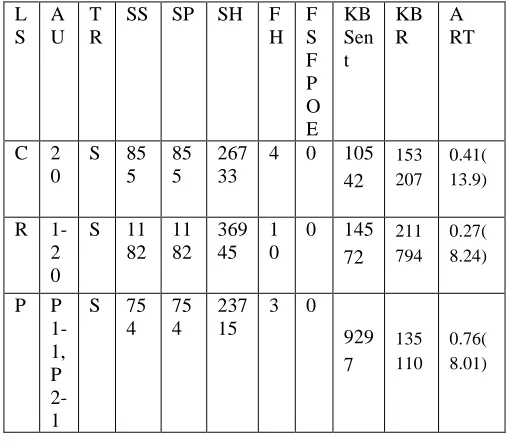
Table 1:Cloud based web application’s Load and Performance Test Result
L S
A U
T R
SS SP SH F
H F S F P O E
KB Sen t
KB R
A RT
C 2 0
S 85
5 85 5
267 33
4 0 105
42
153 207
0.41( 13.9)
R 1-2 0
S 11
82 11 82
369 45
1 0
0 145 72
211 794
0.27( 8.24)
P P 1-1, P 2-1
S 75
4 75 4
237 15
3 0
929 7
135 110
0.76( 8.01)
5
Note; LS: Load Specification,TR: Test Result, AU: Active Users,SS: Successful Sessions,SP: Successful Pages,SH: Successful Hits,FH: Failed Hits, ART: Average Response time, FS/FP/OE:Failed Sessions?Failed Pages/Other Errors, KB Sent: total Kbytes sent, KBR: Total Kbytes Received.C: Constant, R: Ramp-up, P: Periodic
8.CONCLUSION
Cloud performance as measured at the point of application use is the sum of network performance, application performance, and cloud infrastructure performance. Basically cloud provider concentrates on only cloud infrastructure performance .so in this paper, we have focused on web application performance and implemented load and performance testing on cloud based web application and measured different performance matrices under different load.So our test scenario has provided a software testing as a service on cloud which is a bit part of TAAS on cloud. Performance Testing is usually associated with capital expenditure: Due to investment on sophisticated tools ,State of the art performance test infrastructure ,Highly skilled resources By leveraging cloud based performance services, organizations can measure and monitor all non functional parameters until the last mile.Various issues and challenges has been occurred but the testing security is the main issue. In one word, not all the performance testing activities are suitable to be performed in the cloud. Before migration,the risks and benefits, what not to do and what not, should all be well analyzed.
9. FUTURE WORK
There are a number of risks and threats that are specific to cloud computing to include “accessibility, virtualization, data verification, data loss, and data security” in the cloud. The Future work would be security testing on cloud and development & analysis of new Service model of cloud i.e “Testing as a Service”.Another future aspect of research work is Cloud on testing which will provides the facility of on-demand testing services in a scalable cloud infrastructure and Migration of Testing services in Cloud.
REFERENCES
[1] LijunMei,W.K. Chan,T.H. Tse, “A Tale of Clouds: Paradigm Comparisons and Some Thoughts on Research Issues”, IEEE Asia-Pacific Services Computing Conference.,2000
[2] Eljona Proko & Ilia Ninka ,“Analysis and Strategy for performance testing in the cloud computing” , Global Journal of computer science
and technology cloud and distributed Vol-12, Issue-10,version-1.0 (July-2012).
[3] Dr. Devesh Kumar Srivastava ‘‘Testing as a Service (TaaS) on Cloud: Needs and Challenges” International Journal of Advanced Research in Computer Science & Technology (IJARCST 2014) Vol. 2, Issue 2, Ver. 2 (April - June2014)
[4] Dr. Rahul Malhotra& Prince Jain “Testing Techniques and its Challenges in a Cloud Computing Environment” The SIJ Transactions on Computer Science Engineering & its Applications (CSEA), Vol. 1, No. 3, July-August 2013
[5] K.V.ARUNKUMAR & E. SAMLINSON,” Testing as a service (Taas)- An Enhanced Security Framework For Taas In Cloud Environment” International Journal of Internet Computing, VOL- 1, ISSUE- 3 2012. ISSN No: 2231– 6965.
[6] K. Priyadarsini, V. Balasubramanian, S. Karthik, “Cloud‐ Tessting-as-aservice”IJAEST‐Vol‐No‐6‐Issue‐No‐2‐173‐177.pdf
[7]
Sanjay Ram M ,”Cloud Computing testing backgrounds and challenges based on its environment” Journal of Global Research in Computer Science, 4 (10), October 2013, 7-12.
[8] Graham Fleener, Dr. Cliff Zou, Jason Eddy “Cybersecurity Impacts of a Cloud Computing Architecture in Live Training” Interservice/Industry Training, Simulation, and Education Conference (I/ITSEC) 2014
[8] Shruti N. Pardeshi1, Vaishali Choure “Testing as a service on Cloud: A Review” International Journal on Recent and Innovation Trends in Computing and Communication,Vol-2,Issue-2
[9] Junzan Zhou, Shanping Li, Zhen Zhang, Zhen Ye “Migrating performance testing to cloud: Challenges and issues” Research Gate Conference April 2013
[10]Cognizant:http://www.cognizant.com/InsightsWhitepapers/Taking‐Te sting‐to‐the‐Cloud.pdf
[11] Er.Bhawna Sehgal, Er. Jasbeer narwal,” An Analysis of Performance for Multi Tenant Application through Cloud SIM”, International Journal of Emerging Research in Management &Technology,vol-4,issue-6,june-2015.
[12] Herminder singh,Babul Bansal,” Analysis of Security Issues and
Performance Enhancement in Cloud Computing”,International Journal of Information Technology and Knowledge Management,Volume 2, No. 2, July-December 2010