R E V I E W
Management of chronic hepatitis C treatment
failures: role of consensus interferon
Stevan A Gonzalez1 Emmet B Keeffe2 1Division of Hepatology, Baylor
Regional Transplant Institute, Baylor All Saints Medical Center, Fort Worth and Baylor University Medical Center, Dallas, TX, USA; 2Division of
Gastroenterology and Hepatology, Department of Medicine, Stanford University Medical Center, Stanford, CA, USA
Correspondence: Emmet B Keeffe Stanford University Medical Center, 750 Welch Road, Suite 210, Palo Alto, CA 94304-1509, USA
Tel +1 650 498 5691 Fax +1 650 498 5692 Email [email protected]
Abstract: A signifi cant proportion of patients with chronic hepatitis C virus (HCV) infection who undergo antiviral therapy have persistent or recurrent viremia and fail to achieve a sustained virologic response (SVR). Factors associated with treatment failure include HCV genotype 1 infection, high serum HCV RNA levels, and advanced fi brosis. Consensus interferon (CIFN) is a synthetic type I interferon derived from a consensus sequence of the most common amino acids found in naturally occurring alpha interferon subtypes. Several prospective clinical studies have demonstrated that CIFN may be a treatment option in patients who have failed prior interferon-based therapy, including those who have failed combination therapy with standard interferon or peginterferon plus ribavirin. Daily CIFN in combination with ribavirin may be an effective regimen in this setting; however, optimal dose and treatment duration of CIFN therapy have not been well established. Patients who achieve viral suppression during prior interferon-based therapy and those who do not have advanced fi brosis have a greater likelihood of achieving a SVR with CIFN retreatment. Individualized therapy targeting specifi c patient groups will be an important consideration in the successful management of prior treatment failures. Additional prospective studies are required in order to identify optimal treatment strategies for the use of CIFN in these patients.
Keywords: consensus interferon, hepatitis C, interferon, nonresponder, relapser
Introduction
Hepatitis C virus (HCV) infection is the most common cause of newly diagnosed
chronic liver disease in the United States, accounting for up to two-thirds of all cases.1
Approximately 20% of chronic HCV-infected individuals may subsequently develop
cirrhosis,2 resulting in an increased risk of progressive liver failure and hepatocellular
carcinoma (HCC). Antiviral therapy is an important consideration in the management of patients with chronic HCV infection, as a sustained virologic response (SVR) to therapy
may halt fi brosis progression, decrease the risk of HCC, and improve survival.3–5
Treatment regimens for chronic hepatitis C have evolved over the last 12 years, resulting in improved SVR rates. Despite these advances, the current gold standard therapy with peginterferon alfa-2a or alfa-2b (PEG IFN) and ribavirin (RBV) is
suc-cessful in only one-half of treated patients.6,7 Various clinical and virologic factors
are well established as predictors of a reduced response to interferon-based therapy, including genotype 1, high baseline serum HCV RNA level, obesity, African
Ameri-can ethnicity, older age, and presence of advanced fi brosis or cirrhosis.6–9 Therefore, a
signifi cant proportion of treated patients, particularly those infected with HCV geno-type 1, will have persistent or recurrent viremia in spite of therapy and are potential candidates for retreatment.
Consensus interferon (CIFN) is a synthetic recombinant type I interferon protein derived from a consensus sequence of the most common amino acids found in naturally occurring alpha interferon subtypes. Although CIFN is not considered a fi rst-line agent in the treatment of naïve patients with chronic hepatitis C, it may have a potential role
Biologics: Targets and Therapy downloaded from https://www.dovepress.com/ by 118.70.13.36 on 20-Aug-2020
Gonzalez and Keeffe
in the management of patients who previously failed prior interferon-based therapy.
Standard of care
with interferon-based therapy
Since the initial studies utilizing standard interferon alpha (IFN) monotherapy in the treatment of chronic HCV
infection,10 interferon-based therapy has proven to be
effective in suppressing HCV RNA to undetectable levels on treatment and achieving persistent undetectability 6 months after completion of therapy, ie, an SVR. The addition of ribavirin was subsequently demonstrated in prospective clinical trials to result in improved outcomes with higher SVR
rates compared to that achieved with IFN monotherapy.11,12
A further improvement was the replacement of standard IFN
with PEG IFN, which, in combination with RBV,6,7 is the
most effective antiviral regimen in naïve patients and the
current standard of care.13 PEG IFN plus RBV is associated
with an SVR of up to 52% in genotype 1 patients following a 48-week course of therapy and 81% in genotype 2 and
3 patients following a 24-week course of therapy.6–8 An SVR
is a durable response and indicates eradication of HCV, with documented long-term undetectable serum HCV RNA in up
to 18 years of follow-up.5
Although these results are gratifying, a significant proportion of patients, particularly those infected with HCV genotype 1, fail antiviral therapy. Treatment failure is defi ned as the presence of detectable serum HCV RNA 6 months following the completion of therapy, although failure may be recognized earlier in the course of therapy. Patients under-going antiviral therapy may develop breakthrough viremia following a period of undetectable HCV RNA during a course of therapy, relapse of viremia following completion of therapy, or may be considered “null” responders with persistent viremia throughout their course of treatment. Due to a negative predictive value approaching 100% in patients who fail to achieve an early virologic response
(EVR, defi ned by at least a 2-log10 decrease in HCV RNA by
week 12), these patients are considered nonresponders and
therapy is discontinued at this time point.7,14 Additionally,
any patients with detectable HCV RNA after 24 weeks of therapy will not achieve an SVR, and thus are also classifi ed as nonresponders.
Peginterferon in the retreatment
of chronic HCV
Peginterferon in combination with RBV may be considered as a treatment option in patients who failed prior IFN therapy.
Several prospective studies have found that nonresponders to prior courses of standard IFN monotherapy and relapsers to standard IFN with or without RBV may derive the most
benefi t from retreatment with PEG IFN and RBV.15–22 Prior
nonresponders to standard IFN monotherapy achieve SVR rates ranging from 21% to 28% with PEG IFN and RBV
treatment,15–19 while relapsers to combination standard IFN
and RBV have been reported to achieve SVR in 38% to 58%
of cases with PEG IFN and RBV.16–21 In contrast, combination
therapy null responders to IFN and RBV tend to demonstrate relatively poor responses to retreatment with PEG IFN and
RBV, with an SVR ranging from 8% to 15%,15–17,21 but up to
20% in patients with lower baseline HCV RNA levels.18,19,22
Based on these studies, patients with low baseline HCV RNA levels or mild to moderate fi brosis appear to have a greater
potential for a SVR.15,16,18,21,22 In patients who are PEG IFN
nonresponders, there is virtually no role for retreatment with repeated courses of PEG IFN, as these patients have demon-strated a resistance to this form of therapy and would likely have a negligible potential for achieving SVR. Altogether, given these relatively low retreatment response rates, there is a need for alternative therapies in previous nonresponders to IFN-based therapy. Thus, CIFN may be a treatment option in selected patients with chronic hepatitis C who have failed previous IFN-based therapy.
Consensus interferon
Type 1 interferons, notably IFN-α and IFN-β, play a critical
role in the host antiviral response to HCV through inhibitory effects on viral production and activation of cellular immunity
and clearance of infected cells.23 Activation of transcription
factors within infected cells leads to a transcriptional response promoting the secretion of type 1 IFNs and subsequent activation of the Janus kinase-signal transducer and activator of transcription (JAK-STAT) signal transduction pathway. This process results in transcriptional activity within infected cells that promotes inhibition of HCV replication through the disruption of viral RNA translation and RNA synthesis. These events induce an antiviral state which limits cell-to-cell virus spread and primes immune effector cells involved in
host adaptive immunity.23
In addition to having an important role in host endogenous
antiviral responses to HCV, IFNs, particularly IFN-α, have
demonstrated clinical effi cacy in the treatment of chronic
HCV infection. In contrast to IFN-β which is derived from a
single gene encoding for a specifi c protein, IFN-α is a family
of proteins with over a dozen subtypes differing in their
respective amino acid sequences.24 CIFN is a synthetic protein
Biologics: Targets and Therapy downloaded from https://www.dovepress.com/ by 118.70.13.36 on 20-Aug-2020
Retreatment of chronic hepatitis C with consensus interferon
engineered by the creation of a consensus sequence involving the most common amino acids found in naturally occurring
alpha interferon subtypes. In vitro studies have suggested
that CIFN may have more enhanced biologic activity and increased antiviral effi cacy compared with naturally occurring
IFN-α subtypes such as IFN alfa-2a and IFN alfa-2b.25
Various dosing regimens of CIFN have been studied, although the optimal dose in naïve patients or in the setting of retreatment has not been well established. The recommended
dosing based on initial phase III clinical trials is 9 μg 3 times
weekly in treatment-naïve patients and 15 μg 3 times weekly
in nonresponders.26 One prospective randomized trial found
no improvement in SVR with higher doses CIFN at 18 μg
versus 9 μg when given 3 times weekly in combination with
RBV.27 Additionally, high doses of CIFN may be
associ-ated with a greater need for dose reductions due to adverse
events.27 The rate of SVR associated with CIFN therapy
could potentially be further improved with daily dosing, as this may achieve optimal viral suppression and similar kinetics to long-acting PEG IFN, resulting in a greater
viro-logic response.28 As a result, recent studies have explored
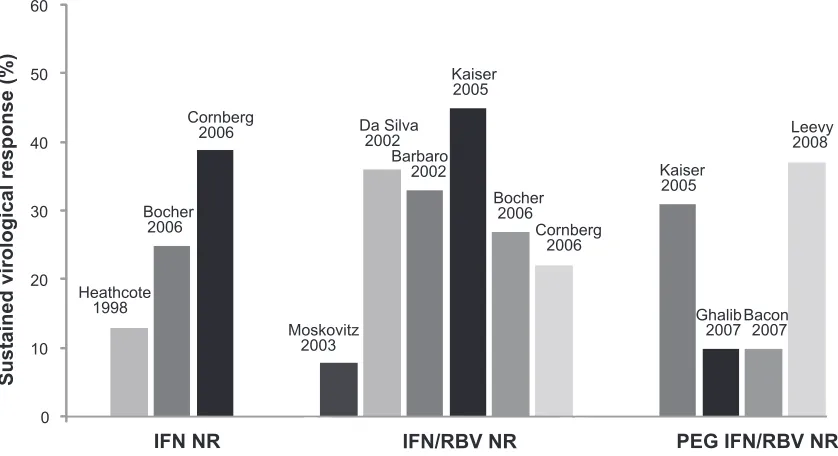
the role of daily CIFN therapy, which we will discuss in greater detail below. Table 1 summarizes the various clinical trials that have evaluated CIFN in the retreatment of prior therapy failures in patients with chronic HCV infection, while Figures 1 and 2 depict reported rates of SVR in prior treatment relapsers and nonresponders, respectively.
Consensus interferon in naïve patients
with chronic hepatitis C
Initial clinical trials of CIFN monotherapy as a treatment
for chronic hepatitis C in naïve patients at a dose of 9 μg
demonstrated greater reduction in serum HCV RNA and comparable long-term effi cacy compared with standard IFN
alfa-2b when given 3 times weekly.29 Subsequent prospective
studies suggested that CIFN may have a signifi cant advantage over standard IFN, particularly for diffi cult-to-treat patients with higher baseline serum HCV RNA levels and those
infected with HCV genotype 1.30,31 The development of PEG
IFN alfa-2a and alfa-2b has resulted in the ability to achieve
a substantially higher rate of SVR in naïve patients6,7 and at
this time, a pegylated formulation of CIFN is not available. Although one recent study revealed that CIFN 3 times weekly in combination with weight-based RBV may be as effective as combination PEG IFN alfa-2b and weight-based RBV in the treatment of HCV genotype 1 patients, comparative data
are limited.32 Therefore CIFN is not considered the standard
of care for naïve patients with chronic HCV infection.
Consensus interferon in the retreatment
of chronic hepatitis C
Consensus interferon monotherapy
As initial attempts at IFN-based therapy for the treatment of chronic hepatitis C were associated with high rates of nonresponse and relapse, CIFN was introduced as an alternative therapy for patients who failed prior courses of standard IFN alfa-2a or alfa-2b in the hopes of achieving an SVR with retreatment. An early study was notable for SVR rates of 13% and 58% for nonresponders and relaps-ers, respectively, following a course of 48 weeks of CIFN
monotherapy at 15 μg 3 times weekly in those who had
previously received only 24 weeks of either IFN alfa-2b or
lower-dose CIFN (3 μg 3 times weekly).33 Further analysis of
this study suggested that nonresponder patients who managed to achieve viral clearance during prior therapy followed by virologic breakthrough had a greater likelihood of SVR with
CIFN retreatment.34 Similar SVR rates have been reported in
IFN monotherapy relapsers with daily dosing of CIFN over a 24-week course, with a signifi cantly greater frequency of
SVR compared with combination IFN and RBV.35 CIFN
monotherapy has also been studied in genotype 1 patients who failed prior therapy with combination standard IFN and RBV. SVR rates of up to 33% and 42% have been reported for combination nonresponders and relapsers treated with CIFN monotherapy, respectively, with a greater likelihood of SVR seen in patients with low baseline HCV RNA levels and
minimal fi brosis.36 However, lower response rates have also
been reported in this population37 and CIFN monotherapy
may not be suffi cient to achieve SVR in patients who were null responders to combination therapy with RBV.
Consensus interferon in combination with ribavirin As in the case of IFN alfa-2a and alfa-2b therapy, many prospective studies have reported a greater likelihood of achieving SVR in the retreatment of prior therapy failures when combining CIFN with RBV as opposed to CIFN monotherapy. Consequently, in order to provide optimal viral suppression, more recent studies have evaluated the role of CIFN in combination with RBV as retreatment for chronic hepatitis C. Based on the results from trials involving CIFN as monotherapy, various dosing regimens have been used, initially with CIFN administered 3 times weekly or daily dosing. Several prospective randomized trials have also evaluated the use of high-dose induction therapy with CIFN
early during a course of retreatment;38–40 however, it appears
that this strategy might not have a signifi cant impact on SVR,
as noted in treatment-naïve patients who received CIFN.41
Biologics: Targets and Therapy downloaded from https://www.dovepress.com/ by 118.70.13.36 on 20-Aug-2020
Gonzalez and Keeffe
Ta
ble 1
Summar
y of clinical studies of consensus interf
er on-based thera py as r etr eatment f or chr
onic hepatitis C
Study Design P atients T reatment r egimens Sustained vir olo gic r esponse IFN NR IFN r ela pse IFN + RBV NR IFN + RBV rela pse PEG IFN + RBV NR PEG IFN + RBV r ela pse Consensus interf er on monothera py Heathcote 1998 33,a
Multicenter Prospectiv
e
Randomized
n
=
209
72% genotype 1
CIFN 15 μ g SC TIW × 24 wk CIFN 15 μ g SC TIW × 48 wk 5% 13% 28% 58% Barbar o 2002 36 Pr ospectiv e n = 24
100% genotype 1
CIFN 9
μ
g SC 5 times w
eekl y × 36 wk 33% 42% Mosk ovitz 2003 37 Pr ospectiv e n = 24 CIFN 15 μ
g SC QD
× 12 wk; 15 μ g SC TIW × 36 wk 8% Miglior esi 2003 35 Pr ospectiv e Randomized n = 74
89% genotype 1
CIFN 9
μ
g SC QD
×
24 wk IFN
alfa-2b 5–6 MU QD until HCV RNA negativ
e;
3 MU QOD
+ RBV × 24 wk 58% 29% Consensus interf er on and riba
virin combination thera
py
da Silva 2002
43 Pr ospectiv e n = 14
64% genotype 1
CIFN 15
μ
g SC QD
×
4 wk;
9–15
μ
g SC QOD
× 44 wk + RBV 36% Kaiser 2005 38,b Pr ospectiv e n = 182
92% genotype 1
CIFN 27 μ g QD × 4 wk; 18 μ g QD × 8 wk; 9 μ g QD × 36 wk +
RBV CIFN 18
μ g QD × 4 wk; 9 μ g QD × 44 wk +
RBV CIFN 9
μ g QD × 48 wk + RBV 38%–45% 27%–31% Alaimo 2006 42 Pr ospectiv e Randomized n = 45
100% genotype 1
CIFN 9 μ g SC TIW × 52 wk + RBV CIFN 18 μ g SC TIW × 52 wk + RBV 27% 26% Bocher 2006 39,b ,c Pr ospectiv e Randomized n = 103
86% genotype 1
CIFN 27 μ g QD × 2 wk; 18 μ g QD × 10 wk; 9 μ g QD × 12 wk; 9 μ g TIW × 24 wk + RBV CIFN 18 μ g TIW × 24 wk; 9 μ g TIW × 24 wk + RBV 25% 27% 47% Cornberg 2006 40,b
Multicenter Prospectiv
e
Randomized
n
=
77
90% genotype 1
CIFN 9 μ g QD × 48 wk + RBV CIFN 18 μ g QD × 8 wk; 9 μ g QD × 40 wk + RBV 39% 22% Kaiser 2007 45 Pr ospectiv e n = 120
100% genotype 1
CIFN 9 μ g QD × 72 wk + RBV
PEG IFN alfa-2a 180
μ g w eekl y × 72 wk + RBV 69% 42%
Biologics: Targets and Therapy downloaded from https://www.dovepress.com/ by 118.70.13.36 on 20-Aug-2020
Retreatment of chronic hepatitis C with consensus interferon
Interferon monotherapy failure
Patients who were null responders or relapsed following a course of standard IFN monotherapy might be ideal candidates for retreatment, as they might benefi t from the addition of RBV to IFN-based therapy. Two prospective European trials reported a signifi cant improvement in SVR rates in standard IFN monotherapy nonresponders when
retreated with CIFN and RBV combination therapy.39,40 Both
of these studies included at least 24 weeks of daily CIFN, and the SVR rate reached 39% with daily CIFN treatment
over a 48-week course.40 Another European study
evalu-ated CIFN 3 times weekly plus RBV in previous relapsers
to standard IFN monotherapy.42 Of note, this trial reported
discontinuation due to adverse events in over one quarter of patients enrolled, which may have resulted in a lower SVR than expected.
Combination interferon and ribavirin failure
CIFN and RBV therapy for prior nonresponders to combination standard IFN plus RBV appears to result in SVR rates that are comparable to, and in some cases exceed, those that have been
reported with PEG IFN plus RBV retreatment regimens.38–40,43
The most impressive response rates have emerged from two
studies that reported an SVR ranging from 36% to 45%.38,43
Although one study had a relatively small sample size, the study with the highest reported SVR by Kaiser and colleagues
enrolled 121 combination IFN/RBV nonresponders.37 These
prospective studies included a majority of patients with genotype 1 infection and up to approximately one-third with advanced fi brosis on liver biopsy. Combination IFN plus RBV relapsers may potentially have an even greater virologic response to CIFN-based therapy, although this population has not been studied as extensively. One randomized clinical trial by Bocher and colleagues, which combined one-third IFN relapsers and two-thirds IFN/RBV relapsers, reported a rate of SVR up to 70% in a treatment arm that received daily
CIFN at induction doses up to 27 μg subcutaneously per day
with ongoing daily therapy for 24 weeks followed by dosing
3 times weekly for the remainder of the 48-week course.39
However, due to a relatively low number of patients, the results were not statistically different from a noninduction arm with a SVR of 38%. Taken together, the overall SVR of relapsers in this trial was 47%.
Combination peginterferon and ribavirin failure
The most challenging population of patients who might benefi t from retreatment is patients who have failed prior combination therapy with the current gold standard of PEG
Ghalib 2007 44 Retr ospectiv e n = 49
82% genotype 1
CIFN 15 μ g QD × 48 wk + RBV 10% 47% Bacon 2007 46
Multicenter Prospectiv
e
Randomized
n
=
343
94% genotype 1
CIFN 9 μ g QD × 48 wk + RBV CIFN 15 μ g QD × 48 wk + RBV
5% 10%
Lee vy 2008 47,d Retr ospectiv e n = 137
92% genotype 1
CIFN 15
μ
g SC QD
× 12 wk, 15 μ g SC TIW × 36 wk + RBV 37%
aIn Heathcote et al,
patients had pr
ev
iousl
y r
eceiv
ed either 9
μ
g CIFN or 3 MU IFN alfa-2b 3 times w
eekl
y f
or 24 w
eeks.
33
bStudies b
y Kaiser et al (2005),
Bocher et al and Cornberg et al,
did not r
epor
t a signi
fi
cant diff
er
ence betw
een the CIFN induction v
ersus noninduction tr
eatment arms.
38–40
cIn Bocher et
al the rate of SVR sho
wn is combined f
or both arms of the study
, as it was not statisticall
y diff
er
ent betw
een ind
uction and noninduction arms.
The SVR in r
ela
psers as r
epor
ted b
y Bocher et
al includes 11/34 (32%) IFN
monothera
py
r
ela
psers and 23/34 (68%) combination IFN/RBV r
ela
psers.
39
dIn the study b
y Lee
vy
, CIFN thera
py
was initiated immediatel
y with no wash-out period after inability to achie
ve
EVR at 12 w
eek
s with con
ventional PEG IFN/RBV thera
py . 47 Ab br ev iations: CIFN, consensus interf er on; EVR, earl y vir ological r esponse; HCV
, hepatitis C virus;
IFN,
interf
er
on;
MU
, million units;
NR, n onr esponders; PEG IFN, peginterf er on; QD , dail y; QOD , e ver
y other da
y; RBV , riba virin; SC , subcutaneous; SVR, sustained vir ological r esponse; TIW
, 3 times w
eekl
y.
Biologics: Targets and Therapy downloaded from https://www.dovepress.com/ by 118.70.13.36 on 20-Aug-2020
Gonzalez and Keeffe
0 10 20 30 40 50 60 70 80 90 100
Sustained virological response (%)
IFN relapsers IFN/RBV relapsers PEG IFN/RBV relapsers
Heathcote 1998
Barbaro 2002 Miglioresi
2003
Alaimo 2006
Bocher 2006
Kaiser 2007
Ghalib 2007
Figure 1 Clinical studies of consensus interferon in the retreatment of prior relapsers to interferon-based therapy.a
aNotethestudies by Heathcote et al33 Miglioresi et al35 and Barbaro et al36 used consensus interferon as monotherapy. The remaining studies used combination consensus
interferon and ribavirin.
Abbreviations: IFN,interferon; PEG IFN, peginterferon; RBV, ribavirin.
IFN and RBV. In this population with limited options for retreatment, CIFN might have an important role in successful clearance of HCV infection. Particularly those who have relapsed to prior PEG IFN and RBV may derive the most benefi t from retreatment with CIFN. One retrospective study
by Ghalib et al44 and one prospective study with an extended
72-week course by Kaiser et al45 reported SVR rates of 47%
and 69%, respectively, with daily CIFN plus RBV. Kaiser and colleagues also noted that daily CIFN plus RBV was superior to retreatment with combination PEG IFN and RBV
0 10 20 30 40 50 60
Sustained virological response (%)
IFN NR IFN/RBV NR PEG IFN/RBV NR
Ghalib 2007Bacon2007 Heathcote
1998 Bocher
2006
Cornberg 2006
Barbaro 2002 Da Silva
2002
Moskovitz 2003
Kaiser 2005
Bocher 2006
Cornberg 2006
Kaiser 2005
Leevy 2008
Figure 2 Clinical studies of consensus interferon in the retreatment of prior nonresponders to interferon-based therapy.a
aNote the studies by Heathcote et al33 Moskovitz et al35 and Barbaro et al36 used consensus interferon as monotherapy. The remaining studies used combination consensus
interferon and ribavirin.
Abbreviations: IFN, interferon; NR, nonresponder; PEG IFN, peginterferon; RBV, ribavirin.
Biologics: Targets and Therapy downloaded from https://www.dovepress.com/ by 118.70.13.36 on 20-Aug-2020
Retreatment of chronic hepatitis C with consensus interferon
over a 72-week course in these patients. Prior nonresponders to PEG IFN and RBV are more challenging with retreatment and response rates may be signifi cantly infl uenced by liver histology. Although one prospective study reported SVR rates as high as 31% in nonresponders to PEG IFN and
RBV who are retreated with daily CIFN plus RBV,38 another
retrospective study revealed a much lower response rate
of 10%.44 This difference in SVR may be explained by the
number of patients with bridging fi brosis or cirrhosis on liver biopsy, which was reported to be 28% versus 63% for each of these studies, respectively. In addition, the largest prospec-tive trial to date evaluating the effi cacy of daily CIFN and RBV in this population, known as the Daily-Dose Consensus Interferon and Ribavirin: Effi cacy of Combined Therapy (DIRECT) Trial, appears to show no major improvement in SVR overall, although this trial involved a diffi cult-to-treat population characterized by a significant proportion of
patients with advanced fi brosis.46
A novel approach utilizing CIFN therapy in nonre-sponders to combination PEG IFN and RBV has been described by Leevy in which patients who fail to achieve an EVR at 12 weeks of therapy on PEG IFN/RBV are
con-verted to daily CIFN plus RBV with no wash-out period.47
Although a retrospective design was used in the selection of patients for this study, it provides an alternative strategy that may improve rates of SVR in an otherwise challenging group of patients with predominantly genotype 1 infection, high HCV RNA levels, and one-third African-American ethnicity. Patients who would otherwise discontinue therapy
at 12 weeks due to failure to achieve an EVR7,14 completed
an additional 48-week course of antiviral therapy consisting
of RBV plus CIFN 15 μg daily for 12 weeks followed by
15 μg 3 times weekly for 36 weeks. This 72-week regimen
was associated with an overall SVR of 37% in comparison with an SVR of approximately 11%, which has been reported in EVR-negative patients who complete 72 weeks of PEG
IFN and RBV.48
The DIRECT trial
The DIRECT trial is a multicenter, open-label, phase III study evaluating the effi cacy of daily CIFN plus RBV in previous nonresponders to PEG IFN and RBV combination
therapy.46 It is the largest prospective clinical trial
involv-ing the use of CIFN in this population to date. Although the DIRECT trial has yet to be published as a manuscript, the fi nal results have been presented in abstract form. All patients enrolled in the study were considered nonresponders
with less than a 2-log10 decline in HCV RNA at 12 weeks
during their previous course of PEG IFN plus RBV therapy or they had persistent viremia following at least 24 weeks of therapy. Patients were randomized to one of three treatment
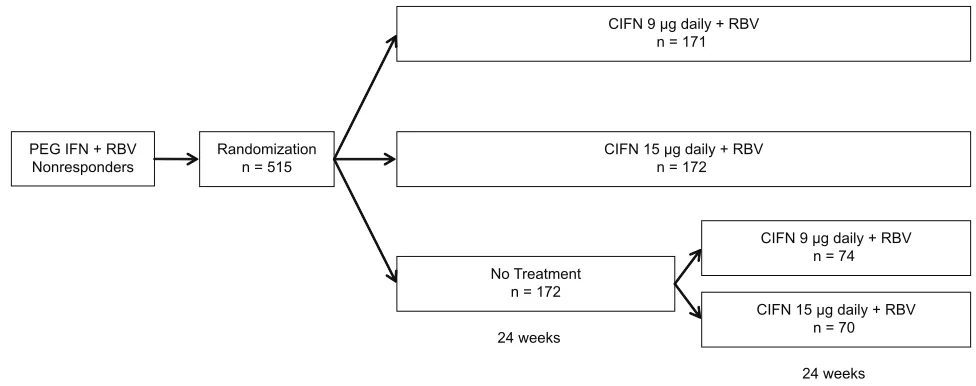
arms: CIFN 9 μg daily plus RBV for 48 weeks; CIFN 15 μg
daily plus RBV for 48 weeks; or no treatment (Figure 3). Patients randomized to not receive treatment were eligible for a roll-over study at 24 weeks in which they could be randomized a second time to receive therapy as detailed in the treatment arms. Final data from 343 patients enrolled in the two treatment arms revealed overall SVR rates of 10% and
5% in the 15 μg and 9 μg groups, respectively. Subanalyses
found that cirrhotics and prior null responders, defi ned by
PEG IFN + RBV
Nonresponders Randomizationn = 515 CIFN 15 n = 172 μg daily + RBV
No Treatment n = 172
CIFN 9 μg daily + RBV
n = 74
CIFN 15 μg daily + RBV
n = 70
CIFN 9 μg daily + RBV
n = 171
24 weeks
24 weeks 48 weeks
Figure 3 DIRECT trial protocol and randomization scheme.46
Abbreviations: CIFN, consensus interferon; DIRECT, Daily-Dose Consensus Interferon and Ribavirin: Effi cacy of Combined Therapy; PEG IFN, peginterferon; RBV, ribavirin.
Biologics: Targets and Therapy downloaded from https://www.dovepress.com/ by 118.70.13.36 on 20-Aug-2020
Gonzalez and Keeffe
inability to achieve a 2-log10 decline in HCV RNA, had a
signifi cantly lower SVR rate. Noncirrhotic patients in the
15 μg treatment arm who demonstrated at least a 2-log10
decline in HCV RNA during prior therapy had the highest subgroup SVR at 29%. The DIRECT trial was characterized by a predominantly diffi cult-to-treat population, which may in part explain the lower overall SVR compared with other stud-ies evaluating CIFN-based therapy in prior PEG IFN/RBV nonresponders. The majority of patients in the DIRECT trial were described as having high HCV RNA levels, 79% were considered null responders during previous treatment, 94% had genotype 1 infection, 59% had evidence of bridging fi bro-sis or cirrhobro-sis on liver biopsy, and approximately 20% were of African-American ethnicity. Despite these challenges, the DIRECT trial most importantly identifi ed potential subgroups of patients who have failed previous therapy and would benefi t most from retreatment.
Tolerability and adverse events
Interferon-based therapy is known to be associated with signifi cant side effects that may have an impact on tolerability, compliance, ability to maintain optimal dosing regimens, and ultimately response to therapy if dose reductions or discon-tinuations are required. As CIFN has been shown to have potent antiviral effects and has been studied with frequent dosing intervals up to once daily, the incidence of adverse events may be an important consideration in the retreatment of prior treatment failures. The side effect profi le associated with CIFN is essentially the same as with other forms of IFN-based
therapy.26 In addition, the incidence and frequency of adverse
events during a course of combination CIFN and RBV therapy is similar to what has been reported in clinical trials of PEG
IFN and RBV.6–8 The most common side effects that have been
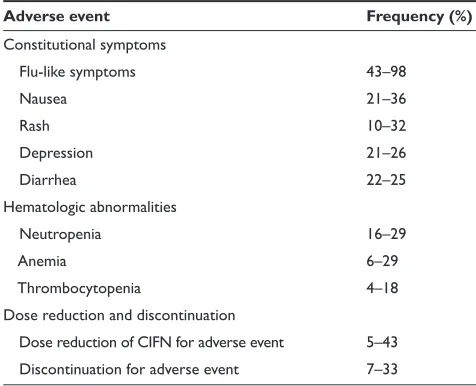
reported in clinical trials with CIFN include fl u-like symp-toms, gastrointestinal sympsymp-toms, rash, and depression. The frequency of these adverse events as noted in Table 2 include
trials that involve daily dosing of CIFN up to 15 μg per day
and, in some cases induction doses up to 27 μg per day. Based
on these reported adverse events, there is no clear evidence that daily dosing of CIFN might result in an increase in side effects or a signifi cant decline in tolerability as compared with weekly PEG IFN. The rates of discontinuation for adverse events and dose reductions in CIFN are also comparable to the rates reported with PEG IFN therapy.
Conclusion
Consensus interferon is a viable option in the retreatment of patients with chronic HCV who have failed prior IFN-based
therapy and may have an important role for individuals who would otherwise be considered poor candidates for therapy based on a lower likelihood of achieving an SVR. Studies
suggest that CIFN may have greater antiviral activity in vitro
when compared to IFN-α and may have greater effi cacy in
diffi cult-to-treat populations, such as patients with high viral load and genotype 1 infection, and not have an increased incidence of adverse events compared with PEG IFN. Alternatively, CIFN requires more frequent dosing and potentially closer patient follow-up to ensure compliance. Many recent studies have utilized a daily dosing regimen of CIFN in order to provide more favorable kinetics and achieve maximal viral suppression during a course of therapy. Although the preferred dose of CIFN, duration of therapy, and timing of therapy in the setting of retreatment have not been well-established, daily weight-based RBV should be used in combination with CIFN in order to achieve optimal rates of SVR.
Several prospective clinical trials have identifi ed patient populations who might benefi t most from retreatment and have a greater potential for a successful course of therapy with CIFN. In light of these fi ndings, clinicians should target these groups when considering potential candidates for retreatment. Patients who may particularly benefi t from CIFN retreatment include prior nonresponders to standard IFN plus RBV as well as nonresponders and relapsers to prior PEG IFN plus RBV. These individuals otherwise have limited options as retreatment with conventional PEG IFN and RBV may be associated with low response rates. Table 2 Most common adverse events associated with consensus
interferon reported in clinical trialsa
Adverse event Frequency (%)
Constitutional symptoms
Flu-like symptoms 43–98
Nausea 21–36
Rash 10–32
Depression 21–26
Diarrhea 22–25
Hematologic abnormalities
Neutropenia 16–29
Anemia 6–29
Thrombocytopenia 4–18
Dose reduction and discontinuation
Dose reduction of CIFN for adverse event 5–43 Discontinuation for adverse event 7–33
aIncludes studies with consensus interferon at subcutaneous doses up to 15 μg daily
for 48 weeks as well as induction doses up to 27 μg daily.26,33,35–40,42–47
Biologics: Targets and Therapy downloaded from https://www.dovepress.com/ by 118.70.13.36 on 20-Aug-2020
Retreatment of chronic hepatitis C with consensus interferon
In addition, patients who achieved a signifi cant degree of viral suppression during prior IFN-based therapy and patients with early stages of fi brosis have a greater likelihood of achieving a SVR with CIFN retreatment. The ability to achieve signifi cant viral suppression during a previous course of IFN-based therapy has been shown to be a predictor of
successful response in several studies involving CIFN,34,40,46,47
and has also been described in retreatment regimens that
include PEG IFN.15,16,18,21,22 Liver histology also appears to
have a signifi cant impact on virologic response associated with CIFN therapy, as patients who have not developed advanced fi brosis are more likely to achieve SVR with
retreatment.46
Interpretation of the various clinical studies involving use of CIFN for prior therapy failures in chronic HCV infection can be challenging due to wide variations in study design, dosing regimens, duration of therapy, and patient popula-tions. These studies are limited by differences in dosing and frequency of CIFN, inclusion of induction doses of CIFN at times without the use of RBV, and heterogeneous populations based on prior response to therapy. In addition, comparative data between CIFN and conventional IFN-based
regimens is limited.35,45 Overall, these factors challenge our
ability to determine whether CIFN-based regimens may indeed be superior to PEG IFN and RBV in the retreatment of HCV-infected individuals who failed prior IFN-based therapy. Despite these limitations, it is clear that some patients with chronic HCV may benefi t from retreatment with CIFN. Individualized therapy targeting specifi c patient groups will be an important consideration in successful management of these patients. Additional prospective studies of CIFN are needed to identify optimal treatment strategies as well as establish which populations will benefi t most from retreatment.
Abbreviations
CIFN, consensus interferon; DIRECT, Daily-Dose Consensus Interferon and Ribavirin: Effi cacy of Combined Therapy; EVR, early virologic response; HCC, hepatocel-lular carcinoma; HCV, hepatitis C virus; IFN, interferon; JAK-STAT, Janus kinase-signal transducer and activator of transcription; MU, million units; NR, nonresponders; PEG IFN, peginterferon; QD, daily; QOD, every other day; RBV, ribavirin; SC, subcutaneous; SVR, sustained virologic response; TIW, 3 times weekly.
Disclosures
The authors disclose no confl icts of interest.
References
1. Bell BP, Manos MM, Zaman A, et al. The epidemiology of newly diagnosed chronic liver disease in gastroenterology practices in the United States: results from population-based surveillance.
Am J Gastroenterol. 2008;103(11):2727–2736.
2. Seeff LB. Natural history of chronic hepatitis C. Hepatology.
2002;36(5 Suppl 1):S35–S46.
3. Poynard T, McHutchison J, Manns M, et al. Impact of pegylated interferon alfa-2b and ribavirin on liver fi brosis in patients with chronic
hepatitis C. Gastroenterology. 2002;122(5):1303–1313.
4. Craxi A, Camma C. Prevention of hepatocellular carcinoma. Clin Liver
Dis. 2005;9(2):329–346, viii.
5. Maylin S, Martinot-Peignoux M, Moucari R, et al. Eradication of hepatitis C virus in patients successfully treated for chronic hepatitis C.
Gastroenterology. 2008;135(3):821–829.
6. Manns MP, McHutchison JG, Gordon SC, et al. Peginterferon alfa-2b plus ribavirin compared with interferon alfa-2b plus ribavirin for
initial treatment of chronic hepatitis C: a randomised trial. Lancet.
2001;358(9286):958–965.
7. Fried MW, Shiffman ML, Reddy KR, et al. Peginterferon alfa-2a
plus ribavirin for chronic hepatitis C virus infection. N Engl J Med.
2002;347(13):975–982.
8. Hadziyannis SJ, Sette H Jr, Morgan TR, et al. Peginterferon-alpha2a and ribavirin combination therapy in chronic hepatitis C: a
random-ized study of treatment duration and ribavirin dose. Ann Intern Med.
2004;140(5):346–355.
9. Muir AJ, Bornstein JD, Killenberg PG. Peginterferon alfa-2b and riba-virin for the treatment of chronic hepatitis C in blacks and non-Hispanic
whites. N Engl J Med. 2004;350(22):2265–2271.
10. Hoofnagle JH, Mullen KD, Jones DB, et al. Treatment of chronic non-A,non-B hepatitis with recombinant human alpha interferon.
A preliminary report. N Engl J Med. 1986;315(25):1575–1578.
11. Poynard T, Marcellin P, Lee SS, et al. Randomised trial of interferon alpha2b plus ribavirin for 48 weeks or for 24 weeks versus interferon alpha2b plus placebo for 48 weeks for treatment of chronic infection with hepatitis C virus. International Hepatitis Interventional Therapy
Group (IHIT). Lancet. 1998;352(9138):1426–1432.
12. McHutchison JG, Gordon SC, Schiff ER, et al. Interferon alfa-2b alone or in combination with ribavirin as initial treatment for chronic
hepatitis C. Hepatitis Interventional Therapy Group. N Engl J Med.
1998;339(21):1485–1492.
13. Strader DB, Wright T, Thomas DL, Seeff LB: Diagnosis, management,
and treatment of hepatitis C. Hepatology. 2004;39(4):1147–1171.
14. Davis GL, Wong JB, McHutchison JG, Manns MP, Harvey J, Albrecht J. Early virologic response to treatment with peginterferon
alfa-2b plus ribavirin in patients with chronic hepatitis C. Hepatology.
2003;38(3):645–652.
15. Shiffman ML, Di Bisceglie AM, Lindsay KL, et al. Peginterferon alfa-2a and ribavirin in patients with chronic hepatitis C who have failed prior
treatment. Gastroenterology. 2004;126(4):1015–1023.
16. Jacobson IM, Gonzalez SA, Ahmed F, et al. A randomized trial of pegylated interferon alpha-2b plus ribavirin in the retreatment of chronic
hepatitis C. Am J Gastroenterol. 2005;100(11):2453–2462.
17. Mathew A, Peiffer LP, Rhoades K, McGarrity T. Sustained viral response to pegylated interferon alpha-2b and ribavirin in
chronic hepatitis C refractory to prior treatment. Dig Dis Sci.
2006;51(11):1956–1961.
18. Sherman M, Yoshida EM, Deschenes M, et al. Peginterferon alfa-2a (40 KD) plus ribavirin in chronic hepatitis C patients who failed
previ-ous interferon therapy. Gut. 2006;55(11):1631–1638.
19. Krawitt EL, Ashikaga T, Gordon SR, Ferrentino N, Ray MA, Lidofsky SD. Peginterferon alfa-2b and ribavirin for
treatment-refractory chronic hepatitis C. J Hepatol. 2005;43(2):243–249.
20. Basso M, Torre F, Grasso A, et al. Pegylated interferon and ribavirin
in re-treatment of responder-relapser HCV patients. Dig Liver Dis.
2007;39(1):47–51.
Biologics: Targets and Therapy downloaded from https://www.dovepress.com/ by 118.70.13.36 on 20-Aug-2020
Gonzalez and Keeffe
21. Moucari R, Ripault MP, Oules V, et al. High predictive value of early viral kinetics in retreatment with peginterferon and ribavirin of chronic hepatitis C patients non-responders to standard combination therapy.
J Hepatol. 2007;46(4):596–604.
22. Taliani G, Gemignani G, Ferrari C, et al. Pegylated interferon alfa-2b plus ribavirin in the retreatment of interferon-ribavirin nonresponder
patients. Gastroenterology. 2006;130(4):1098–1106.
23. Gale M Jr, Foy EM. Evasion of intracellular host defence by hepatitis
C virus. Nature. 2005;436(7053):939–945.
24. van Pesch V, Lanaya H, Renauld JC, Michiels T. Characterization
of the murine alpha interferon gene family. J Virol. 2004;78(15):
8219–8228.
25. Blatt LM, Davis JM, Klein SB,Taylor MW. The biologic activity and molecular characterization of a novel synthetic interferon-alpha
species, consensus interferon. J Interferon Cytokine Res. 1996;16(7):
489–499.
26. Infergen® (Interferon alfacon-1) [package insert]. Revised July 27,
2006. Valeant Pharmaceuticals. Costa Mesa, CA, USA.
27. Fattovich G, Zagni I, Minola E, et al. A randomized trial of consensus interferon in combination with ribavirin as initial treatment for chronic
hepatitis C. J Hepatol. 2003;39(5):843–849.
28. Rustgi VK, Bonkovsky HL, Arora S, Zeuzem SP, Manns M, Blatt LM: Daily versus three-times-weekly IFN Alfacon-1 in previously untreated HCV patients results in a signifi cantly greater rate of SVR: Final results
of an international, phase 4 study [abstract S1541]. Gastroenterology.
2005;128(4 Suppl 2):A-716.
29. Tong MJ, Reddy KR, Lee WM, et al. Treatment of chronic hepatitis C with consensus interferon: a multicenter, randomized, controlled trial.
Consensus Interferon Study Group. Hepatology. 1997;26(3):747–754.
30. Jensen DM, Krawitt EL, Keeffe EB, et al. Biochemical and viral response to consensus interferon (CIFN) therapy in chronic hepatitis C patients: effect of baseline viral concentration. Consensus Interferon
Study Group. Am J Gastroenterol. 1999;94(12):3583–3588.
31. Sjogren MH, Sjogren R, Holtzmuller K, et al. Interferon alfacon-1 and ribavirin versus interferon alpha-2b and ribavirin in the treatment of
chronic hepatitis C. Dig Dis Sci. 2005;50(4):727–732.
32. Sjogren MH, Sjogren R, Jr, Lyons MF, et al. Antiviral response of HCV genotype 1 to consensus interferon and ribavirin versus pegylated
interferon and ribavirin. Dig Dis Sci. 2007;52(6):1540–1547.
33. Heathcote EJ, Keeffe EB, Lee SS, et al. Re-treatment of chronic hepatitis C
with consensus interferon. Hepatology. 1998;27(4):1136–1143.
34. Heathcote EJ, James S, Mullen KD, Hauser SC, Rosenblate H, Albert DG Jr. Chronic hepatitis C virus patients with breakthroughs during interferon treatment can successfully be retreated with consensus
interferon. The Consensus Interferon Study Group. Hepatology.
1999;30(2):562–566.
35. Miglioresi L, Bacosi M, Russo F, et al. Consensus interferon versus interferon-alpha 2b plus ribavirin in patients with relapsing HCV
infection. Hepatol Res. 2003;27(4):253–259.
36. Barbaro G, Barbarini G: Consensus interferon for chronic hepatitis C patients with genotype 1 who failed to respond to, or relapsed after, interferon alpha-2b and ribavirin in combination: an Italian pilot study.
Eur J Gastroenterol Hepatol. 2002;14(5):477–483.
37. Moskovitz DN, Manoharan P, Heathcote EJ: High dose consensus interferon in nonresponders to interferon alpha-2b and ribavirin with
chronic hepatitis C. Can J Gastroenterol. 2003;17(8):479–482.
38. Kaiser S, Hass HG,Gregor M. Successful retreatment of interferon/ ribavirin nonresponders with daily dosing of consensus interferon
[abstract 570]. J Hepatol. 2005;42 Suppl 2:207–208.
39. Bocher WO, Schuchmann M, Link R, et al. Consensus interferon and ribavirin for patients with chronic hepatitis C and failure of previous
interferon-alpha therapy. Liver Int. 2006;26(3):319–325.
40. Cornberg M, Hadem J, Herrmann E, et al. Treatment with daily consensus interferon (CIFN) plus ribavirin in non-responder patients
with chronic hepatitis C: a randomized open-label pilot study. J Hepatol.
2006;44(2):291–301.
41. Layden TJ, Layden JE, Reddy KR, Levy-Drummer RS, Poulakos J, Neumann AU: Induction therapy with consensus interferon (CIFN) does not improve sustained virologic response in chronic hepatitis C.
J Viral Hepat. 2002;9(5):334–339.
42. Alaimo G, Di Marco V, Ferraro D, et al. Different doses of consensus interferon plus ribavirin in patients with hepatitis C virus genotype 1 relapsed after interferon monotherapy: a randomized controlled trial.
World J Gastroenterol. 2006;12(42):6861–6864.
43. da Silva LC, Bassit L, Ono-Nita SK, et al. High rate of sustained response to consensus interferon plus ribavirin in chronic hepatitis C patients resistant to alpha-interferon and ribavirin: a pilot study.
J Gastroenterol. 2002;37(9):732–736.
44. Ghalib RH, Levine CD, Friedman DA, Rashdan S, Schwartz AG, Weinstein J. Consensus interferon plus ribavirin therapy in patients who are nonresponders or relapsers to prior PEG IFN plus ribavirin
[abstract M1874]. Gastroenterology. 2007;132(4 Suppl 2):A-794.
45. Kaiser S, Lutze B, Sauter B, et al. Retreatment of HCV genotype 1 relapse patients to peginteferon/ribavirin therapy with an extended treatment regimen of 72 weeks with consensus interferon/ribavirin
versus peginterferon alpha/ribavirin [abstract 1310]. Hepatology.
2007;46(4 Suppl 1):819A.
46. Bacon B, Regev A, Ghalib RH, et al. The DIRECT trial (Daily-Dose Consensus Interferon and Ribavirin: Effi cacy of Combined Therapy): Treatment of non-responders to previous pegylated interferon plus
ribavirin: Sustained virologic response data [abstract 168]. Hepatology.
2007;46(4 Suppl 1):311A–312A.
47. Leevy CB. Consensus interferon and ribavirin in patients with chronic hepatitis C who were nonresponders to pegylated interferon alfa-2b
and ribavirin. Dig Dis Sci. 2008;53(7):1961–1966.
48. Berg T, von Wagner M, Nasser S, et al. Extended treatment duration for hepatitis C virus type 1: comparing 48 versus 72 weeks of
peginterferon-alfa-2a plus ribavirin. Gastroenterology. 2006;130(4):1086–1097.
Biologics: Targets and Therapy downloaded from https://www.dovepress.com/ by 118.70.13.36 on 20-Aug-2020