Senso Comune
A.Oltramari
1, G.Vetere
2, M.Lenzerini
3, A. Gangemi
4, N.Guarino
11Laboratory for Applied Ontology, ISTC-CNR (Trento),2IBM Center for Advanced Studies (Roma), 3Department of Computer and System Sciences, University “Sapienza”, (Roma),
4Semantic Technologies Laboratory, ISTC-CNR (Roma)
[email protected], [email protected], [email protected], [email protected], [email protected]
Abstract
This paper introduces the general features of Senso Comune, an open knowledge base for the Italian language, focusing on the interplay of lexical and ontological knowledge, and outlining our approach to conceptual knowledge elicitation. Senso Comune consists of a machine-readable lexicon constrained by an ontological infrastructure. The idea at the basis of Senso Comune is that natural languages exist in use, and they belong to their users. In the line of Saussure’s linguistics, natural languages are seen as a social product and their main strength relies on the users consensus. At the same time, language has specific goals: i.e. referring to entities that belong to the users world (be it physical or not) and that are made up in social environments where expressions are produced and understood. This usage leverages the creativity of those who produce words and try to understand them. This is the reason why ontology, i.e. a shared conceptualization of the world, can be regarded to as the soil on which the speakers’ consensus may be rooted. Some final remarks concerning future work and applications are also given.
1.
Introduction
In this work we aim to illustrateSenso Comune1, an open knowledge base for the Italian language. Senso Comune
consists of a machine-readable lexicon provided with an ontological framework. The knowledge base grounds on a core of basic words excerpted from De Mauro’s dictio-nary2(2,075 lemmas with about 16,000 senses) whose oc-currence covers more than the 90% of common Italian writ-ten sources (De Mauro, 1980). Then,Senso Comune has been made available for integration with other resources: a specific web based collaborative platform for linguistic resources has been developed for gathering users contribu-tions. The project, supported by Fondazione IBM Italia, is backed by a vast community of Italian scientists under the supervision of Prof. Tullio De Mauro.
The idea at the basis ofSenso Comuneis that natural lan-guages exist in use, and they belong to their users. In the line of Saussure’s linguistics, natural languages are seen as a social product and their main strength is the users con-sensus. At the same time, language has specific goals: i.e. referring to entities (be them physical or not) and situa-tions of the world that are made up in social environments, where expressions are produced and understood by human agents. This concrete usage leverages the cognitive capa-bilities of those who produce words and try to understand them. This is the reason why ontology, i.e. a shared theory of the physical and social world, can be regarded to as the framework in which the speakers’ consensus may be estab-lished. This paper introduces the general features ofSenso Comune with focus on the interplay of lexical and ontolog-ical knowledge, and outlines the approach to onto-linguistic knowledge elicitation we have chosen.
1Italian for “Common Sense”. For more details refer to:
http://www.sensocomune.it
2
See (De Mauro, 1980).
2.
The General Framework
Both Knowledge Representation and Human-Language Technologies aim at describing knowledge contents, al-though from different perspectives, namely the logical and the lexical one. In any case, these disciplines regard on-tologies as the formal way of specifying meanings, thus representing an important link between knowledge repre-sentation and computational lexical semantics3. Ontologies
and computational lexicons aim at digging out the basic ele-ments of a given semantic space (domain-dependent or gen-eral), characterizing the different relations holding among them. In the simplest case, both ontologies and computa-tional lexicons are hierarchical structures of elements (con-cepts or terms) concerning the entities of a given domain. Nevertheless, they substantially differ with respect to some general aspects:
1. lexical entries are not barely equivalent to ontological categories;
2. polysemy and synonymy bears upon the lexicon but should do not affect (good) ontologies;
3. the representational features of computational lexi-cons are not necessarily given a formal semantics;
Computational lexicons are often said to incorporate or even correspond to ontologies, whose purpose is to describe semantic constructs of language (they are bound to gram-matical units). However, it is questionable whether the cat-egorial and relational structures of computational lexicons may be acknowledged as bearing ontological commitments or not. For some extent, the problem can be seen as related to the classic “universals debate”, where realists (those who think that properties referred by linguistic structures ex-ist in some reality) confront with nominalex-ists (those who
3
Figure 1: A sketch ofSenso Comunemetamodel
deny it)4. In Senso Comune we keep language and
on-tology clearly separated, focusing on how to join the two layers. Linguistic senses (dictionary’s definitions) and re-lationships (e.g. synonymy, hyponymy, and antinomy, etc.) are therefore distinguished from their ontological counter-parts (e.g. concept, inclusion, and disjointness, etc.), which are defined with logic descriptive languages (description logics). On one hand, this separation prevents linguistic facts, which are vague by nature, to be directly connected to truth-valued logic constructs; on the other hand, it re-lieves their entailment towards cogent ontological commit-ments. Of course, to model the way lexical units refer to real things and situations as described in ontologies, we provide specific mapping constructions. Generally speak-ing, we think that mapping ontologies with computational lexicons, and developing specific reasoning strategies for each layer along with their mappings, is one of the key-goals of the next generation of knowledge systems. Basing on this assumption,Senso Comune adopts a model in which linguistic meanings (senses) and lexical relations aremapped to(rather than consisting in) logical concepts and roles. In particular, senses can be associated to either ontology concepts (unary predicates), roles (binary pred-icates), or individuals, while lexical relations can be as-sociated to either roles or axioms (logical constraints)5. Informally, for each sense in the lexicon, a correspond-ing concept (or role) is introduced in the ontology. This concept is subsumed to the concept to which the sense is mapped to. On the other hand, lexical relations are mapped to two different kinds of logical constructors: roles and axioms. Specifically, relations such as synonymy,
hy-4See (Lowe, 2002), (Burkhardt and Smith, 1991), etc. 5We adopt here the standard Description Logics terminology
-see (Baader, 2002)
ponymy, and antonymy that aim at capturing formal bind-ings among senses are mapped to axioms, while relations such as meronymy-holonymy, that express material rela-tionships among the referred entities, are mapped to roles. However, while “substantial” lexical relations can be trans-lated to ontology roles (object properties, to use the OWL jargon) quite smoothly, problems arise when mapping “for-mal” ones to logical axioms. Synonymy and hyponymy, for instance, cannot be directly translated into equivalence and inclusion dependencies, since they don’t always exhibit transitiveness, as these axioms require. Researches are un-derway for understanding how to model these aspects. At the present stage, “formal” lexical relations are registered only in the dictionary, without direct ontological counter-parts.
In a nutshell, Senso Comune is a lexical resource where each sense is weakly associated to an ontological category. Lexical knowledge and ontological theories can be there-fore developed with a certain degree of mutual indepen-dence. Still, the development of the whole knowledge base is influenced by how mappings are established. For in-stance, setting synonymy or hyponymy between two senses whose ontological categories are disjoint, causes a warning to be issued, which can lead a revision of either the lexical information or the ontology mapping. Furthermore, assign-ing a certain ontological category to a certain sense, may drive the acquisition of lexical knowledge. For instance, by assigning a sense to the category ofARTIFACT, the user can be driven to specify relatedness to senses that describe in-stances of the category FUNCTION. To make this kind of interplay possible, a complete mapping of linguistic senses to ontological categories is needed6. This mapping
dif-6The mapping process is supported by the TMEO
Figure 2: The taxonomy ofDOLCE-spray
• TMEO-Wizard: Can you say that ashoeis a product of human activity (no matter whether hand-made or with the help of suitable tools and machines)?
User: Yes
• TMEO-Wizard:shoein the sense of “footwear shaped to fit the foot (below the ankle) with a flexible upper of leather or plastic and a sole and heel of heavier ma-terial” has been classified as a kind ofARTIFACT.
• TMEO-Wizard: What areshoes commonly used for?
User: to walk
• TMEO-Wizard: Select the correct sense ofto walk: [s1- s2- s3- sn]10.
User: s1
• TMEO-Wizard:to walkin the sense s1has been
clas-sified as the typicalFUNCTIONofshoes.
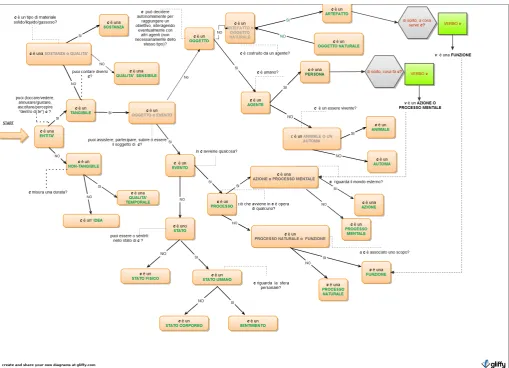
Here the algorithm drives the user through tracing the fol-lowing path of knowledge: shoes as ARTIFACThave the commonFUNCTIONof being used in walking events. As the above-mentioned scenario suggests, TMEO methodology may therefore be adopted not only in the unilateral classifi-cation of a given term (‘shoe’) but also in making related lexical items explicit. This kind of relatedness between terms actually unwraps the inter-categorial relation(s) hold-ing between the correspondhold-ing ontological categories. In-deed, from the ontological viewpoint we can say that there is a relation ofPartecipationholding between the category
ARTIFACT (which is a kind of PHYSICAL OBJECT) and
FUNCTION, which is conceptualized inDOLCE-sprayas
10
For the sake of readability, we don’t go through the basic senses of the verb ‘to walk’, also assuming that s1is adequately
selected by the user.
a kind ofPROCESS11.
One advantage of this approach consists in its relative flex-ibility: it is actually easy to apply and customize to specific domains, given some preliminary conceptual analysis of the entities and relations at play. Towards this direction, TMEO is being adopted, for example, in the TasLab Project12, con-cerning the implementation of a semantic portal for foster-ing territorial ICT innovation, includfoster-ing the use of domain ontologies and thesauri (e.g., Eurovoc13), indexing and
se-mantic search techniques14.
4.
Conclusion
Interfacing ontologies with advanced linguistic technolo-gies is theconditio sine qua nonto allow effective machine-understandability of “human meanings”, thus supporting non-trivial applications based on semantic technologies. By implementing a collaborative approach to linguistic knowledge acquisition, Senso Comune aims at providing open and high-quality resources to feed semantic tech-nologies applications. Moreover, collaborative construc-tion of hybrid semantic resources may strongly support au-tomatic ontology learning, where resulting ontologies are always incomplete, inconsistent, ambiguous, and machine-centered. Currently, Senso Comune provides a core of about 2,000 lemmas with about 16,000 acceptations, that are being classified and interlinked by voluntary contribu-tors. Also, the integration of a suitable partition of Mul-tiWordNet (Pianta et al., 2002) is underway. Future work will include the extension of the dictionary to encompass at least other 7,000 lemmas of common usage, including
mul-11
Note that we may wish to distinguish descriptions of func-tions from actual ones, namely those funcfunc-tions which are per-formed at a certain time by a given object. In the above example we simplify this distinction only focusing on the latter case.
12
http://www.taslab.eu/
13
http://europa.eu/eurovoc/
14
Figure 3: A representation diagram of the TMEO algorithm
tiwords. Then, we plan to proceed to the specification of lexical relationships, which will be possibly extracted from existing resources, consistentently with respect to Senso Comuneontological categories (DOLCE-spraywill be ex-tended too). Mereology and argumentative structure of verbs will also be part of our next releases. Future work will also be devoted to set up and realize an evaluation plan of the resource for different NLP tasks.
5.
References
F. Baader. 2002. The Description Logics Handbook: The-ory, Implementation and Applications. Cambridge Uni-versity Press.
Hans Burkhardt and Barry Smith, editors. 1991.Handbook of Metaphysics and Ontology. Philosophia Verlag, Mu-nich.
T. De Mauro. 1980. Guida all’uso delle parole. Editori Riuniti.
A. Lenci, N. Calzolari, and A. Zampolli. 2002. From text to content: Computational lexicons and the semantic web. InEighteenth National Conference on Artificial In-telligence; AAAI Workshop, ”Semantic Web Meets Lan-guage Resources”, Edmonton, Alberta, Canada.
E. J. Lowe. 2002. A Survey of Metaphysics. Oxford Uni-versity Press.
C. Masolo, A. Gangemi, N. Guarino, A. Oltramari, and L. Schneider. 2002. WonderWeb Deliverable D17: The WonderWeb Library of Foundational Ontologies. Tech-nical report.
E. Pianta, L. Bentivogli, and C. Girardi. 2002. Multi-wordnet: developing an alighend multilingual database. In First International Conference on Global WordNet, Mysore, India.