Available Online atwww.ijcsmc.com
International Journal of Computer Science and Mobile Computing
A Monthly Journal of Computer Science and Information Technology
ISSN 2320–088X
IMPACT FACTOR: 6.017
IJCSMC, Vol. 8, Issue. 2, February 2019, pg.44 – 48
STOCK MARKET PREDICTION USING
MACHINE LEARNING TECHNIQUE
1
C.CHANDANA; 2K.VIJITHA
1,2,SVIT Engg. ANANTAPUR, Andra Pradesh INDIA
Email: 1 [email protected], 2 [email protected]
Abstract: This paper presents a modified design of Area-Efficient Low power Carry Select Adder (CSLA) Circuit. In digital adders, the speed of addition is limited by the time required to propagate a carry through the adder. The sum for each bit position in an elementary adder is generated sequentially only after the previous bit position, the speed of addition is limited by the time required to transmit a carry through the adder. Carry select adder processors and systems. Has been summed and a carry propagated into the next position. The major speed limitation in any adder is in the production of carries.
Indexterms:Area-efficient, Low power, CSLA, Binary to excess one converter, Multiplexer.
I. INTRODUCTION
Financial markets are highly volatile and generate huge amounts of data daily. Investment is a commitment of money or other resources to obtain benefits in the future. Stock is one type of securities. It is the most popular financial marketinstrument and its value changes quickly. It can be defined as a sign of capital participation by a person or an enterprise in a company or a limited liability company. The stock market provides opportunities for brokers and companies to make investments on neutral ground [1].
Stock prices are predicted to determine the future value of companies’ stock or other financial instruments that are marketed on financial exchanges. However, the stock market is characterized by nonlinearities, discontinuities, and high-frequency multi-polynomial components because it interacts with many factors such as political events, general economic conditions, and traders’ expectations. Therefore, making precise predictions of stock values are challenging [2].
Investors can buy stocks that are related to the construction firms that design infrastructure projects, hire contractors and handle paperwork, and decision-makers of construction firms can buy stocks from other companies. When the direction of the market is successfully predicted, investors may be better guided and monetary rewards will be substantial. The challenge in today’s environment, where bad news can always be heard, is to forecast proactively, rather than reactively. Therefore, construction corporations are trying to predict stock prices which is important to be considered on a financial exchange, against sudden drops in the market.
Time series forecasting consists in a research area designed to solve various problems, mainly in the financial area. It is noteworthy that this area typically uses tools that assist in planning and making decisions to minimize investment risks. This objective is obvious when one wants to analyze financial markets and, for this reason, it is necessary to assure a good accuracy in forecasting tasks [3].
minimize investment risks. This objective is obvious when one wants to analyze financial markets and, for this reason, it is necessary to assure a good accuracy in forecasting tasks. [3]
Machine learning (ML) is coming into its own that can play a key in a wide range of critical applications. In machine learning, support vector machines (SVMs) have many advanced features that are reflected in their good generalization capacity and fast computation. They are also not very sensitive to assumptions about error terms and they can tolerate noise and chaotic components. Notably, SVMs are increasingly used in materials science, the design of engineering systems and financial risk prediction [1].
II. Related Works
Literature review is a text of a scholarly paper, which includes the current knowledge including substantive findings, as well as theoretical and methodological contributions to a particular topic. Literature reviews are secondary sources, and do not report new or original experimental work.
According to Saini (2016), forecasting based on a time series represents a means of providing information and knowledge to support a subsequent decision [6]. Thus, the analysis of time series focuses on achieving dependency relationships among historical data. The two broad categories of forecasting models are linear and nonlinear. For many decades, traditional statistical forecasting models in financial engineering were linear. Some well-known statistical models can be used in time series forecasting[6].
In machine learning, support vector regression (SVR) was developed by Vapniket al. (1995) [7] and is a variant of the SVM. It is typically used to solve nonlinear regression problems by constructing the input-output mapping function. The least squares support vector regression (LSSVR) algorithm is a further development of SVR by Suykens (2001) [8] and involves equality instead of inequality constraints and works with a least squares objective function. The LSSVR approach considerably reduces computational complexity and increases efficiency compared to standard SVR. Hao et al. (2006) examined the feasibility of methods in stock composite index forecasting and improved the accuracy of parameter selection by SVR. They concluded that SVR has high prediction performance [9].
Some studies have demonstrated the superiority of LSSVR over standard support vector regression (SVR) for estimating product cost and energy utilization. LSSVR solves linear equations instead of a quadratic programming problem. It is preferred for large-scale regression problems that demand fast computation [8].
Since time series data can be formulated by regression analysis, LSSVR is very efficient when applied to the issue at hand. However, the efficacy of LSSVR strongly depends on its tuning hyper parameters, which are the regularization parameter and the kernel function. Inappropriate settings of these parameters may lead to significantly poor performance of the model. Therefore, the evaluation of such hyper parameters is a real-world optimization problem [4].
Optimization is one of the cornerstones of science and engineering. Recently, the field of nature-inspired optimization algorithms has grown incredibly fast. The algorithms are usually general-purpose and population-based. They are normally referred to as evolutionary algorithms because many of them are motivated by biological evolution. In a broad sense, evolutionary algorithms cover those that iteratively vary a group of solutions based on some nature-inspired operations.
The firefly algorithm (FA) [10], which is a nature-inspired metaheuristic method, has recently performed extremely well in solving various optimization problems such as stock price forecasting and electricity price prediction. The standard FA was developed by modeling the behavior of tropical fireflies. Notably, the smart firefly algorithm-based LSSVR has been demonstrated to be very effective in solving complex problems in civil engineering[11,12].
Recent research suggests that hybrid forecasting models can be usefully applied to the stock market’s fluctuations, yielding satisfactory forecasting precision [2]. The authors used a hybrid model to capture the linear and non-linear characteristics of a stock price time series and confirmed that hybrid forecasting models are powerful tools for practitioners in management science. A review of the literature has indicated that enhancing the effectiveness capability of least squares support vector regression based on a nature-inspired metaheuristic optimization algorithm, such as the firefly algorithm is an unsolved problem in the field of stock price prediction.
suitable pairing of embedding dimension m (lag) and time delay τ is very important for phase space reconstruction.
Consider a time series ̅ .The time-delayvectors can be reconstructed as follows, where X is the input matrix and Y is the corresponding output matrix. The output of the analysis is fed back to the input and future values are predicted from previous values in the time series. [1]
As suggest in [1], the learning dataset used in this study was collected within a sliding-window. Fig. 1 depicts the sliding-window and phase space construction. Since the forecast is one step ahead (hence the term, “one-step a head forecasting”), the forecast horizon is 1. In the first validation, the working window includes p historical observations which are used to forecast the next value . In the second validation, the oldest value is removed fromthe window and the latest value is added, keeping thelength of the sliding window constant at p. The next forecast value will be . The window continues to slide until the endof the dataset is reached. If the number of observations is N, then the total number of validations is (N-p).The algorithm for the sliding window is given as follows:
Algorithm 5.1 Sliding window algorithm
The LSSVR approach proposed by Suykenset al. (2002) [8] is a well-developed ML technique with many advanced features that support a high generalization capacity and fast computation. The LSSVR training process entails the use of a least squares cost function to obtain a linear set of equations in a dual space to minimize the computational cost. Accordingly, iterative methods, such as the conjugate gradient method are typically used to derive a solution by efficiently solving a set of linear equations. To reduce the computational burden of the LSSVR for function estimation, the regression model in this study uses a quadratic loss function.
The least squares version of the SVM classifier is obtained by reformulating the minimization problem as:
(5.2)
Algorithm : slidingWindow
Input :
data
[stock data]
Output : A data frame of a lagged
stock data
1.
LAG
← 1
2.
y
← remove first LAG
rows from data
3.
reset row indices of
y
4.
x
← remove last LAG rows
from data
5.
train
← merge
(x,y)
into a
dataframe
6.
rename column name to
x
and
y
For the kernel function K( ) one typically has the Radial Basis Function:
(5.3)
The LSSVR involves equality instead of inequality constraints and works with a least squares objective function. The LSSVR approach considerably reduces computational complexity and increases efficiency compared to standard SVM. LSSVR solves linear equations instead of a quadratic programming problem.
IV. Experimental Results
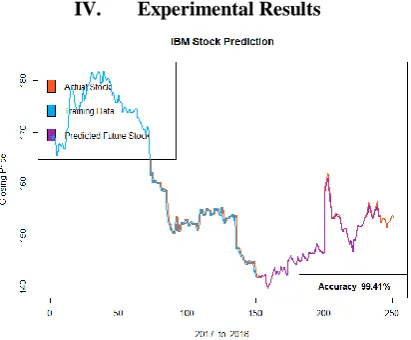
Figure 1 IBM Stock Prediction for 90 Days
As we can see from the above figure, we see the overall stock and also the predicted values. The system appears to perform extremely well with a 99.41% accuracy. The purple line almost perfectly follows the actual orange line.
V. Conclusion
Decision to buy or sell a stock is very complicated since many factors can affect stock price. This work presents a novel approach, based on LSSVR and Machine Learning to constructing a stock price forecasting expert system, with the aim of improving forecasting accuracy.
Thus, as we can see in our proposed method, we train the data using existing stock dataset that is available. We use this data to predict and forecast the stock price of n-days into the future. The average performance of the model decreases with increase in number of days, due to unpredictable changes in trend as noted in the literature’s limitations.
The current system can update its training set as each day passes so as to detect newer trends and behave like an online-learning system that predicts stock in real-time.The intelligent time series prediction system that uses sliding-window metaheuristic optimization is a graphical user interface that can be run as a stand-alone application. The system makes the prediction of stock market values simpler, involving fewer computations, than that using the other method that was mentioned above.
REFERENCES
[5] T. Xiong, Y. Bao, and Z. Hu, “Multiple-output support vector regression with a firefly algorithm for interval-valued stock price index
forecasting,” Knowledge-Based Systems, vol. 55, pp. 87-100, 2014.
[6] D. Saini, A. Saxena, and R. C. Bansal, "Electricity price forecasting by linear regression and SVM." pp. 1-7.
[7] V. N. Vapnik, The nature of statistical learning theory: Springer-Verlag New York, Inc., 1995
[8] J. A. K. Suykens, "Nonlinear modelling and support vector machines." pp. 287-294.
[9] W. Hao, and S. Yu, "Support Vector Regression for Financial Time Series Forecasting," Knowledge Enterprise: Intelligent Strategies in Product Design, Manufacturing, and Management, K. Wang, G. L. Kovacs, M. Wozny and M. Fang, eds., pp. 825 -830, Boston, MA: Springer US, 2006
[10] X.-S. Yang, Nature-Inspired Metaheuristic Algorithms: Luniver Press, 2008.
[11] J.-S. Chou, and A.-D. Pham, “Smart Artificial Firefly Colony Algorithm-Based Support Vector Regression for Enhanced Forecasting in Civil Engineering,” Computer-Aided Civil and Infrastructure Engineering, vol. 30, no. 9, pp. 715-732, 2015.
[12] J.-S. Chou, W. K. Chong, and D.-K. Bui, “Nature-Inspired Metaheuristic Regression System: Programming and Implementation for