Electronic Thesis and Dissertation Repository
8-15-2018 1:30 PM
Implementing a technology-based chronic care model: A case
Implementing a technology-based chronic care model: A case
study
study
Rachelle Maskell
The University of Western Ontario Supervisor
Shannon Sibbald
The University of Western Ontario
Graduate Program in Health and Rehabilitation Sciences
A thesis submitted in partial fulfillment of the requirements for the degree in Master of Science © Rachelle Maskell 2018
Follow this and additional works at: https://ir.lib.uwo.ca/etd
Recommended Citation Recommended Citation
Maskell, Rachelle, "Implementing a technology-based chronic care model: A case study" (2018). Electronic Thesis and Dissertation Repository. 5987.
https://ir.lib.uwo.ca/etd/5987
This Dissertation/Thesis is brought to you for free and open access by Scholarship@Western. It has been accepted for inclusion in Electronic Thesis and Dissertation Repository by an authorized administrator of
i
Abstract
It currently estimated that three in five Canadians suffer from some form of chronic
disease with recent trends showing rates of such conditions still rising. Moreover, in Canada, the
cost of treating chronic illness is increasing faster than national economic growth. In response to
this growing concern, various programs and initiatives have been implemented to mitigate the
personal, social and economic effects of chronic disease. The objective of this study is to identify
factors influencing the implementation of technology-based chronic care model within the
team-based, primary care setting. Data for this single-embedded case study was collected using a
variety of methods including; observation, semi-structured interviews, and document analysis.
Coding of data was conducted using a deductive code list based on the Consolidated Framework
for Implementation Research. Coder reliability was tested with the assistance of two additional
coders. The findings from this study provide a case-specific glance into various factors
contributing to the implementation of a chronic care model in the team-based, primary care
setting. While each healthcare team is unique in composition and is influenced by different
environmental and contextual factors, the aim of this study is to identify elements of program
implementation that could be improved in future efforts.
Keywords
mHealth, Implementation Science, Primary Care, Chronic Disease, Evidence-Based Medicine
ii
Acknowledgments
First, I would like to thank my supervisor, Shannon Sibbald, for providing me the
opportunity to move forward in my academic career. Because of your support I have completed a
task I never thought I would be capable of. You have been gracious and kind throughout this
process and it is greatly appreciated.
To my committee members, Carri Hand and Marita Kloseck, thank you for your patience
and expertise throughout this learning process. Your insightful questions and constructive
feedback allowed me to better understand my errors and move closer toward my end goal. Thank
you.
To my parents. There are no words for the love and admiration I have for you both.
Everything I have achieved and everything I will achieve is for you.
To my soon to be husband. I love you endlessly and cannot wait to move forward in our
iii
Table of Contents
Abstract ... i
Acknowledgments... ii
Table of Contents ... iii
List of Tables ... vi
List of Figures ... vii
List of Appendices ... viii
Chapter 1 ... 1
1 Introduction ... 1
1.1 Chronic Disease in Canada ... 1
1.2 mHealth ... 1
1.3 Research Purpose and Questions ... 2
1.4 Significance of Research... 2
1.5 Structure of Thesis ... 3
Chapter 2 ... 4
2 Literature Review ... 4
2.1 Chronic Obstructive Pulmonary Disease (COPD) ... 4
2.2 Congestive Heart Failure (CHF) ... 5
2.3 Primary Health Care Delivery in Ontario ... 5
2.4 Chronic Care Management ... 6
2.5 Evidence Based Medicine and Implementation Science ... 7
2.6 mHealth and mHealth Implementation ... 8
2.7 Purpose of Research ... 10
2.8 Research Objective ... 11
Chapter 3 ... 12
3 Methods ... 12
3.1 Introduction to Case Study... 12
3.2 Study Design ... 13
3.2.1 Case Selection ... 13
3.2.2 Define the Case ... 14
3.2.3 Case Study Design ... 16
iv
3.2.5 Incorporating Descriptive Theory in Case Study... 19
3.3 Ethics... 20
3.4 Data Collection ... 21
• Provider Participants (2 physicians, 2 nurses) ... 21
3.4.1 Semi-Structured Interviews ... 21
3.4.2 Procedural/Process Documents ... 21
3.4.3 Observation ... 22
3.5 Data Analysis ... 22
3.6 Validation of Findings: Triangulation and Member Checking ... 23
3.7 Rigour and Quality ... 25
Chapter 4 ... 26
4 Results ... 26
• Provider Participants (2 physicians, 2 nurses) ... 27
4.1 Innovation Characteristics ... 27
4.1.1 Innovation Source ... 27
4.1.2 Complexity ... 29
4.1.3 Design Quality and Packaging ... 30
4.2 Outer Setting ... 32
4.2.1 Patient Needs and Resources ... 33
4.3 Inner Setting ... 34
4.3.1 Tension for Change ... 34
4.3.2 Characteristics of individuals ... 35
4.3.3 Knowledge and Beliefs about the Intervention ... 36
4.4 Process ... 37
4.4.1 Planning ... 37
4.4.2 Executing ... 38
Chapter 5 ... 39
5 Discussion ... 39
5.1.1 Positive Aspects of PCCCM as they Relate to the Literature ... 39
5.2 Innovation Characteristics ... 40
5.2.1 Innovation Source ... 40
v
5.2.3 Design Quality and Packaging ... 42
5.3 Outer Setting ... 43
5.3.1 Patient Needs and Resources ... 43
5.3.2 Peer Pressure ... 43
5.4 Inner Setting ... 44
5.4.1 Tension for Change ... 44
5.5 Characteristics of Individuals ... 45
5.5.1 Knowledge and Beliefs about the Intervention ... 45
5.6 Process ... 45
5.6.1 Planning ... 46
5.6.2 Executing ... 46
5.7 Limitations ... 47
Chapter 6 ... 48
6 Conclusion ... 48
6.1 Further Research ... 48
References ... 50
Appendices ... 57
vi
List of Tables
Table 1: ICT Approaches ………17
Table 2: PCCCM Text Message Examples ... 15
Table 3: CFIR Constructs ... 19
vii
List of Figures
Figure 1: Yin Case Study Design... 16
viii
List of Appendices
Appendix 1: CFIR Codebook ... 72
Appendix 2: PCCCM Patient Interview Guide ... 74
Appendix 3: PCCCM Provider Interview Guide ... Error! Bookmark not defined.
Chapter 1
1
Introduction
1.1
Chronic Disease in Canada
It is well acknowledged in current literature that rates of chronic diseases are reaching
staggering levels (Barr et al., 2003; Kadu & Stolee, 2015). In fact, it is estimated that two in five
of all Canadians, and 88 percent of adults over the age of 65, have at least one chronic disease
(Bodenheimer, Wagner, & Grumbach, 2002; Kadu & Stolee, 2015). Additionally, as national life
expectancy increases, it is also more common for individuals to develop multiple chronic
diseases (Noël, Frueh, Larme, & Pugh, 2005). Currently in Canada the cost of treating chronic
disease is increasing faster than national economic growth (Benady, 2010). Thus, as rates of
chronic disease increase, provincial health systems struggle to keep up with the demand for
chronic care solutions (Hutchison, Levesque, Strumpf, & Coyle, 2011). In response, many
programs and initiatives have been implemented nationally and globally to mitigate the personal,
social and economic effects of chronic disease (Kruis et al., 2014; Martínez-González, Berchtold,
Ullman, Busato, & Egger, 2014).
1.2
mHealth
More recently, it has become common to integrate technology into chronic disease
management practices (Gammon, Berntsen, Koricho, Sygna, & Ruland, 2015). A common
approach to integrating technology into chronic disease management has been the use of
personal mobile devices or smart phones, also known as mobile-health or mHealth (Silva,
Rodrigues, de la Torre Díez, López-Coronado, & Saleem, 2015). While the growing body of
literature surrounding mHealth approaches and chronic disease management suggest that it is
possible to improve chronic care using mobile technologies, program outcomes are still
demonstrating mixed results (Gammon et al., 2015; Hall, Cole-Lewis, & Bernhardt, 2015;
Varshney, 2014). Although research surrounding mHealth approaches is expanding, more
1.3
Research Purpose and Questions
Recently, an mHealth based pilot study was implemented in the primary care setting in
Southwestern Ontario with the aim of improving chronic disease management for patients
diagnosed with COPD and CHF. Building off a preexisting mHealth platform, the program was
designed by a group of clinical and academic experts and was implemented in two family health
teams in the primary care setting. For the purpose of deidentification, this mHealth initiative will
be referred to as the Primary Care Chronic Care Model or (PCCCM).
The current study aims to answer the follow research question: How was the PCCCM
program implemented in these two primary health care settings? This question is answered by
meeting the following three research objectives:
1) Describe the implementation of the program,
2) Identify contextual factors affecting the implementation,
3) Highlight the facilitators and barriers that aided or impeded the success of the
program.
1.4
Significance of Research
As rates of chronic disease increase, so too does the burden on our health system (Rosella
et al., 2014). Literature surrounding mHealth approaches as a chronic care management tool
currently demonstrates mixed outcomes (Free, Phillips, Galli, et al., 2013; Hall et al., 2015;
Hamine, Gerth-Guyette, Faulx, Green, & Ginsburg, 2015). Despite these mixed outcomes, much
of the literature asserts that with further research on mHealth program development and
implementation, mHealth approaches have strong potential to improve care for individuals with
chronic diseases (Free, Phillips, Galli, et al., 2013; Hall et al., 2015; Horner, Agboola, Jethwani,
Tan-McGrory, & Lopez, 2017; Steven & Steinhubl, 2013). This study aims to contribute to this
growing body of literature by describing the implementation of an mHealth initiative for COPD
1.5
Structure of Thesis
Chapter 1, the current chapter, has provided a brief introduction to the study at hand.
Chapter 2 aims to set the context of the initiative and outline relevant topics such as the state of
Chronic Obstructive Pulmonary Disease and Congestive Heart Failure, describe chronic care in
the primary care setting, outline topics relevant to implementation research as well as describe
the current state of the mHealth movement. Chapter 3 provides an overview of the research
methodology and methods used to conduct this study. Chapter 4 provides an outline of the
research findings while chapter 5 provides a discussion of how these findings relate to current
Chapter 2
2
Literature Review
The purpose of this review is to provide an overview of key areas of interest and
literature relevant to the current study. This literature review explores the current state of
Chronic Obstructive Pulmonary Disease (COPD) and Congestive Heart Failure (CHF) in
Canada. After which, information is provided regarding chronic care management,
evidence-based medicine and mHealth programs. After which, implementation research and primary
health care delivery in Ontario is also be discussed. Lastly, this chapter briefly discuss
evidence-based medicine and implementation research. The content of this chapter is provided to assist
readers in understanding the impact of intervention characteristics and the implementation
processes on the success of a technology-based chronic care model for the management of
chronic disease (COPD and CHF) in a team-based, primary care setting.
2.1
Chronic Obstructive Pulmonary Disease (COPD)
COPD is the leading cause of morbidity and mortality nationwide and is the only chronic
disease in which mortality rates are still climbing (Canadian Thoracic Society, 2010). COPD is
defined by the American Thoracic Society as; “…a respiratory disorder, largely caused by
smoking, characterized by progressive, partially reversible airway obstruction and lung
hyperinflation, systemic manifestations, and increasing frequency and severity of exacerbations”
(Nici & ZuWallack, 2012, p. 1). COPD is a highly debilitating condition being faced by an
increasing number of Canadians. It is currently estimated that 2.4 million Ontarian’s suffer from
chronic respiratory illness and this is believed to be widely underestimated (The Lung
Association, 2016; Evans et al. 2014). According to the Canadian Thoracic Society, COPD
hospital admissions for lung exacerbations average a cost of ten thousand dollars per stay
amounting to an overall total of 1.5 billion dollars per year (Canadian Thoracic Society, 2010).
Coordinating care for patients with COPD is challenging as they require a wide variety of
“COPD is a chronic, complex illness with multiple systematic effects and co-morbidities and requires an integrated approach for its optimal management” (Nici & ZuWallack, 2012, p. 10).
2.2
Congestive Heart Failure (CHF)
In Canada, three out of five adults above age twenty suffer from chronic disease while
four of five remain at risk for developing chronic illness (Public Health Agency of Canada,
2013). One such chronic disease is Congestive Heart Failure (CHF). CHF is a common chronic,
cardiac disorder that results in reduced cardiac output and is said to affect between 200,000 and
300,000 Canadians (Figueroa & Faarc, 2006; Weil & Tu, 2001). CHF is linked to high rates of
morbidity and mortality and is one of the leading causes of hospital admissions among
individuals 65 years or over (Roy et al., 2009). Moreover, CHF is associated with a two year
mortality rate of 45-50 percent and a five year mortality rate of 62 percent (Weil & Tu, 2001).
Recurring hospital admissions due to CFH place substantial strain on health systems by
consuming financial and human resources (Andrews, Mutter, & Moy, 2012). As a response,
various evidence-based chronic care models have been developed to manage illnesses such as
COPD and CHF (Adams et al., 2007).
2.3
Primary Health Care Delivery in Ontario
As health systems become more complex and healthcare utilization increases, it is
difficult for health professionals to provide optimized patient care (Mitchell et al., 2012; Ouwens
& Wollersheim, 2005). Patient care has shifted from the traditional ‘siloed’ model to a
multi-professional teamwork or ‘integrated care’ model (Ouwens & Wollersheim, 2005). Integrated
care is defined by the World Health Organization as;
“…health services that are managed and delivered so that people receive a
continuum of health promotion, disease prevention, diagnosis, treatment,
disease-management, rehabilitation and palliative care services, coordinated across the different
levels and sites of care within and beyond the health sector, and according to their needs
Integrated care is now recognized as crucial in providing high-quality, patient centered
care, especially in the case of chronic disease (Chavannes et al., 2009; Martínez-González et al.,
2014). For example, literature on integrated care and COPD outcomes suggests that integrated
patient care improves quality of life, acute exacerbations and hospitalizations (Casas et al., 2006;
Chavannes et al., 2009; Roca, Alonso, & Hernandez, 2008). Additionally, without high-quality
coordination and integration between health team members, there is a potential for waste of
resources, increased cost as well as increased risk to patient safety (Mitchell et al., 2012). To
better integrate care though interprofessional collaboration, primary health care in Ontario has
shifted to the Family Health Team Model (Goldman, Meuser, Rogers, Lawrie, & Reeves, 2010).
The Family Health Team Model is founded on providing flexible, patient centered care via a
multidisciplinary care team (Rosser, Colwill, Kasperski, & Wilson, 2011).
2.4
Chronic Care Management
Managing chronic illness such as COPD and CHF is difficult as individuals with chronic
disease require care from a diverse range of providers across the care spectrum such as
pulmonary physicians, nurses, respiratory therapists and pharmacists (Gammon et al., 2015;
Rosella et al., 2014; Saunier, 2017; Wodchis, 2015). To mitigate issues of care delivery for this
complex patient population, the Chronic Care Model (CCM) was developed in 1996 by Wagner,
Austin and Von Korff (Wagner, Austin, Korff, Wagner, & Austin, 1996). This model of care
outlines several elements essential to improving outcomes for patients with chronic disease,
including:
1. Use of evidence to develop explicit plans and protocols for patient care,
2. Redesign of provider roles to meet patient needs,
3. Focused attention to patient education and behavioural change needs,
4. Provider education and decision support,
5. Supportive information systems (such as patient reminders, feedback and care planning)
(Wagner et al., 1996).
Since the original 1996 publication, the CCM has been expanded and incorporated into many
al., 2012). Systematic reviews and meta-analyses on the use of the CCM have demonstrated
positive patient outcomes including reduced emergency visits and hospitalizations, improved
clinical outcomes as well as improved processes of care (Adams et al., 2007; Stellefson,
Dipnarine, & Stopka, 2013; Tsai, Morton, Mangione, & Keeler, 2005).
In addition to positive outcomes, Kadu and Stolee outline several facilitators and barriers
identified throughout the implementation of the CCM (Kadu & Stolee, 2015). Some facilitators
of CCM implementation identified by these authors include enhanced communication facilitated
by regular team meetings, data sharing facilitated by computerized platforms as well as a
multidisciplinary organizational culture which aided the uptake of the CCM (Kadu & Stolee,
2015). Some barriers identified in the same study include added responsibility created by the
implementation of the CCM, staff turn-over, lack of a formal champion, and lack of provider
buy-in (Kadu & Stolee, 2015).
2.5
Evidence Based Medicine and Implementation Science
The term ‘evidence-based medicine’ refers to the notion that health interventions and
programs should be based, to the highest degree possible, on research findings and evidence
(Eddy, 2005; Naylor, 2002). Evidence-based medicine has quickly become the new standard of
practice across health sectors (Claridge & Fabian, 2005). Prior to the evidence-based movement,
health care relied on traditional education and physician competency to make decisions for their
respective patients (Eddy, 2005). This type of clinical decision making centered on the notion
that the solo practitioner would collect pertinent information about the patient, review relevant
research and with medical teachings and professional experience, the physician would determine
the best care path (Eddy, 2005). However, researchers began to realize that some common
assumptions in clinical practice did not correspond to the available research basis (Helfrich et al.,
2010; Kitson, Harvey, & McCormack, 1998). Moreover, a substantial gap between research
findings and what was occurring in clinical care began to emerge (Helfrich et al., 2010). To close
this research to practice gap, a noted shift toward evidence-based medicine began during the
1990’s (Claridge & Fabian, 2005; Naylor, 2002). Since, incorporating research findings into
Neumann, Pincus, Bauer, & Stall, 2007). However, the implementation of evidence-based
interventions into clinical practice does not always result in expected patient outcomes
(Kilbourne et al., 2007). This variance in patient outcomes can often be a result of the
implementation process itself.
Eccles and Mittman define implementation research as the study of methods to promote the
uptake of research findings and evidence-based practices, improving the quality and
effectiveness of health services and care” (Eccles & Mittman, 2006 p.1). Examining how the
uptake of evidence-based practice occurs in routine patient care, and documenting facilitators
and barriers to success, the implementation process can be tweaked and improved for future
efforts. Thus by conducting focused research to understand the implementation of
evidence-based interventions, we can improve implementation processes and the likelihood of positive
patient outcomes.
Implementing complex interventions such as the CCM to improve care for chroniclly ill
patients requires careful planning and can be impacted by a variety of factors including team
composition or environmental context (Davy et al., 2015b). The implementation process can be
further complicated as the CCM does not include a clear framework for implementation (Kadu &
Stolee, 2015). In fact, currently, relatively little is knowen about experiences in implementing
chronic care interventions in the primary care setting (Kadu & Stolee, 2015).
2.6
mHealth and mHealth Implementation
Due to a combination of increasing rates of chronic disease and an aging population,
healthcare delivery systems are facing rising levels of strain (Barrett, O’Connell, & Wyatt,
2012). In order to lessen this strain, the use of technology in healthcare delivery is becoming a
common approach to promote self-care as well as provide more efficient, patient-centered care
from a distance (Barrett et al., 2012). This type of technology, referred to as information
communication technology (ICT) has been increasingly used over the last twenty years as a
means of improving patient access to healthcare and healthcare providers without overdrawing
from an already resouce limited system (Fatehi, Menon, reports, & 2018, 2018). During this
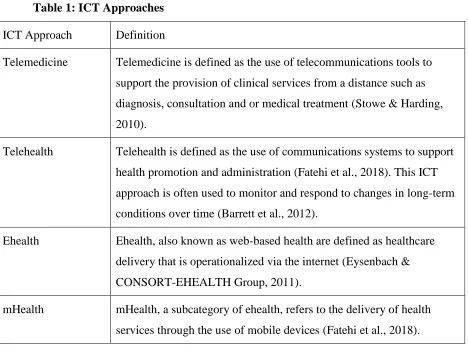
and mHealth (Fatehi et al., 2018). Definitions for these ICT approaches are listed below (Table
1).
Table 1: ICT Approaches
ICT Approach Definition
Telemedicine Telemedicine is defined as the use of telecommunications tools to
support the provision of clinical services from a distance such as
diagnosis, consultation and or medical treatment (Stowe & Harding,
2010).
Telehealth Telehealth is defined as the use of communications systems to support
health promotion and administration (Fatehi et al., 2018). This ICT
approach is often used to monitor and respond to changes in long-term
conditions over time (Barrett et al., 2012).
Ehealth Ehealth, also known as web-based health are defined as healthcare
delivery that is operationalized via the internet (Eysenbach &
CONSORT-EHEALTH Group, 2011).
mHealth mHealth, a subcategory of ehealth, refers to the delivery of health
services through the use of mobile devices (Fatehi et al., 2018).
As the current study examines the use of mobile devices to facilitate chronic care delivery
between patients and primary care providers, mHealth literature has been further reviewed.
mHealth approaches utilize mobile communication devices to improve health care delivery
and facilitate direct communication between patients and health care providers (Free, Phillips,
Watson, et al., 2013). This approach is currently recognized accorss the literature as having great
potential to improve patient-centered care (Ag Ahmed, Gagnon, Hamelin-Brabant, Mbemba, &
Alami, 2017); (Silva et al., 2015); (Steven & Steinhubl, 2013). For example, Hamine et al.
individuals with chonic disease through improvement of treatment adherance (Hamine et al.,
2015). Steinghubl, Muse and Topol (2013) outline thee primary reasons for the emeging
excitement surrounding mHealth approaches. They explain,
“This levelofexuberanceformHealthis driven by the convergence of 3 powerful forces.
First is the unsustainabilityof current health carespendingandthe recognition of the need for
disruptive solutions. Second is the rapid and ongoing growth in wireless connectivity— there
now are more than 3.2 billion unique mobile usersworldwide—andthe remarkable capability
this brings for the bidirectional instantaneous transfer of information. Third is the need for
more precise and individualized medicine; a refinement in phenotypes that mandates novel,
personal data streams well beyond the occasional vital sign or laboratory data available
through intermittent clinic visits (Steven & Steinhubl, 2013).
While current literature recognises the great potential mHealth initiatives have in reducing
healthcare costs and promoting improved patient outcomes, a variety of limitations and barriers
are also gaining attention (Free, Phillips, Watson, et al., 2013; Hamine et al., 2015). A 2015
systematic review explains that while popularity for mHealth programs has experienced a
substantial increase, the impact of such programs are not well understood (Hamine et al., 2015).
2.7
Purpose of Research
While the growing body of literature surrounding mHealth approaches and chronic disease
management suggest that it is possible to improve chronic care using mobile technologies,
program outcomes are still demonstrating mixed results (Gammon et al., 2015; Hall et al., 2015;
Varshney, 2014). Although research surrounding mHealth approaches is expanding, more
exploration is required to better understand the facilitators and barriers to program success.
Recently, an mHealth based pilot study for aimed to improve chronic disease management for
patients with COPD and CHF management was implemented in the primary care setting in
Southwestern Ontario region. This initiative targeted individuals diagnosed with Chronic
Obstructive Pulmonary Disease or Congestive Heart Failure and comorbid depression and/or
anxiety. By describing the implementation of this initiative, this study aims to contribute to the
success and areas in need of improvement, this research provides support for future
implementation efforts.
2.8
Research Objective
The current study aims to answer the follow research question: How was the PCCCM
program implemented in these two primary health care settings? This question is answered by
meeting the following three research objectives:
4) Describe the implementation of the program,
5) Identify contextual factors affecting the implementation,
6) Highlight the facilitators and barriers that aided or impeded the success of the
Chapter 3
3
Methods
The current study aims to describe how the PCCCM program was implemented in two
primary health care settings. This question is answered by meeting the following three research
objectives, 1) describe the implementation of the program, 2) identify contextual factors
affecting the implementation, and, 3) highlight the facilitators and barriers that aided or impeded
the success of the program. This chapter provides an overview of the methods used to conduct
this study.
3.1
Introduction to Case Study
The evolution of case study as a research methodology has been primarily guided by two
authors, Robert Yin and Robert E. Stake (Stake, 2006a; Yin, 2012). There are notable differences
in both authors’ approaches to case study design, and structure and research paradigms (Yin,
2018a). The guiding approach for this case study was selected based on overarching paradigm
and available data. While Stake’s interpretivist approach to case study is frequently used in
health research, Yin’s post-positivist approach best suits the structured, objective data collected
for the current study (Crowe et al., 2011; Hyett, Kenny, & Dickson-swift, 2014).
Case study as a research method is used to develop in-depth understandings of highly
complex phenomena within the real-world or natural setting (Crowe et al., 2011; Anderson,
Crabtree, Steele, & McDaniel, 2005). Yin defines case study as; “…an empirical inquiry that
investigates a contemporary phenomenon within its real-life context, especially when boundaries
between phenomenon and context are not clearly evident” (1994, p.13). Case study methodology
is beneficial in circumstances where the phenomenon of interest is particularly complex or when
the phenomenon cannot be removed from the context wherein it occurs (Dubé & Paré, 2003;
Anderson et al., 2005). Case study methodology is commonly described as a highly flexible and
versatile mode of qualitative study (Harrison, Birks, Franklin, & Mills, 2017; Luck, Jackson, &
of real-would interactions and behavior (Noor, 2008). Additionally, Yin offers a second, more
technical component to his definition. He explains;
“The case study inquiry; 1) copes with the technically distinctive situation in
which there will be many more variables of interest than data points, and as one result;
2) relies on multiple sources of evidence, with data needing to converge in a
triangulating fashion, and as another result; 3) benefits from prior development of
theoretical propositions to guide data collection and analysis” (Yin R. , 2009, p. 18).
As the aim of the current study is to gain an in-depth understanding of the site-specific
implementation of an mHealth initiative, the case study method lends the necessary narrow focus
and versatile process to properly answer the research question. Moreover, the various methods of
data collection common to case study research aligns well with the methods utilized in this study.
3.2
Study Design
Yin (2012) argues that when conducting a case study initial steps or components are
crucial in developing a well-designed study;
1. Outline case selection,
2. Define the case,
3. Describe the case study design,
4. Describe the case study strategy, and
5. Incorporate theory in design.
3.2.1
Case Selection
When employing case study as a research methodology, it is important to provide
explanation or justification for the case(s) selected for investigation (Seawright & Gerring,
2008). Yin asserts that the case selection process is dependent on circumstance. For example, he
explains, “Sometimes, case selection is straightforward because you have chosen to study a
unique case whose identity has been known from the outset of your inquiry. Or, you already may
(Yin, 2012 p. 91). He also asserts that researchers studying single cases should screen for the
case that will yield the most data (Yin, 2012).
Case selection for the current study adheres to the above criteria as this study focuses on
a unique case identified prior to the development of the research question. The PCCCM was
chosen for further investigation as it presented a unique opportunity to analyze an emerging
chronic care program based on trending topics and approaches to chronic disease management in
primary care. By Studying the implementation of the PCCCM program in two primary care
teams, this study aims to provide additional insights into the implementation of mHealth
initiatives for chronic care management.
3.2.2
Define the Case
The PCCCM model was developed by an interdisciplinary research team with the aim of
improving care for patients diagnosed with COPD or CHF and at least one of two commonly
occurring comorbidities, depression and/or anxiety.
The PCCCM is was developed with three primary objectives;
1. Develop a chronic care model for patients in the primary care setting in the
South-Western Ontario region,
2. Provide interdisciplinary management of chronic disease by using customized health
information and interactive tools, and,
3. Generate outcomes that suggest integrated or team-based care models improve patient
outcomes, increase quality of life and decrease readmission and emergency department
visits.
The PCCCM model was developed using the expanded Chronic Care Model developed by
Bodenheimer, Wagner and Grumbach which centered around six key elements; (Bodenheimer et
al., 2002; Bodenheimer, Wagner, & Grumbach, 2014) 1) linkage with community resources, 2)
buy-in by health care organizations, 3) self-management support, 4) structured practice teams for
chronic care management, 5) decision support and 6) clinical information systems that ensure
The PCCCM aims to improve interdisciplinary chronic care management by increasing
patient access to primary health care professionals using mobile devices and patient/provider
communication portals. With this model, patients are provided with mobile devices to facilitate
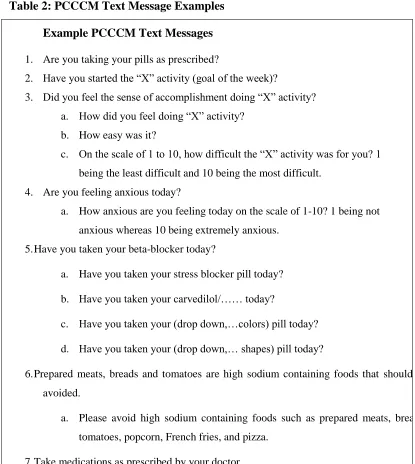
direct patient-provider communication via text messages and are reminded of key aspects of their
health care through reminder notifications (Table 1).
Table 2: PCCCM Text Message Examples
Example PCCCM Text Messages
1. Are you taking your pills as prescribed?
2. Have you started the “X” activity (goal of the week)?
3. Did you feel the sense of accomplishment doing “X” activity?
a. How did you feel doing “X” activity?
b. How easy was it?
c. On the scale of 1 to 10, how difficult the “X” activity was for you? 1
being the least difficult and 10 being the most difficult.
4. Are you feeling anxious today?
a. How anxious are you feeling today on the scale of 1-10? 1 being not
anxious whereas 10 being extremely anxious.
5.Have you taken your beta-blocker today?
a. Have you taken your stress blocker pill today?
b. Have you taken your carvedilol/…… today?
c. Have you taken your (drop down,…colors) pill today?
d. Have you taken your (drop down,… shapes) pill today?
6.Prepared meats, breads and tomatoes are high sodium containing foods that should be
avoided.
a. Please avoid high sodium containing foods such as prepared meats, breads,
tomatoes, popcorn, French fries, and pizza.
a. Take your medications as ordered by your doctor
b. Please do NOT skip doses or double up if you forget to take your pills.
3.2.3
Case Study Design
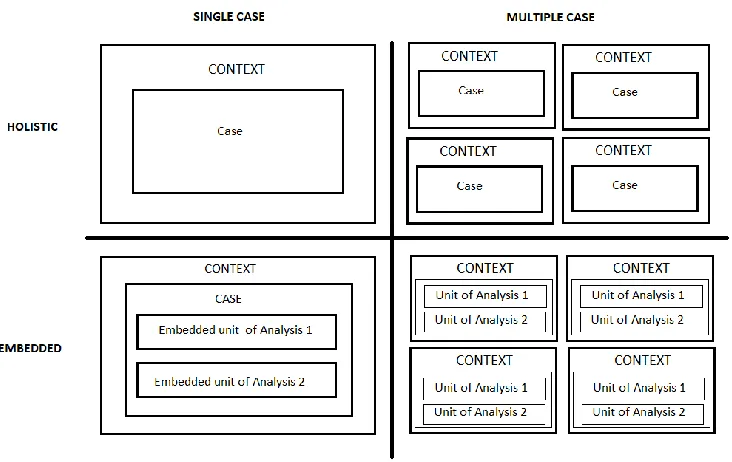
Yin identifies four types of case study designs; single, multiple, embedded and holistic
(Figure 1) (Yin, 2012), Choosing between a single or multiple case study depends on how many
units of analysis will be analyzed (Yin, 2012). Units of analysis generally refer to the number of
cases included in the study, however, a study can also contain nested units of analysis. This type
of nested study is referred to as an ‘embedded’ study. On the other hand, a holistic study is used
if the research is studying the global or whole nature of a case (Yin, 1994).
Figure 1: Yin Case Study Design
For this study, a single-embedded design is utilized as the case is the PCCCM
implementation, with the two participating sites functioning as the embedded sub-units of
3.2.4
Case Study Strategy
In addition to the four variations of study designs noted above, it is also important to
select the case study strategy best to answer the research question. Yin outlines three varieties of
case study strategies: descriptive case study, exploratory case study and explanatory case study
(Yin, 2012). While he identifies these three strategies as separate approaches to the methodology,
he also explains that boundaries between the strategies can often be vague or blurred (Yin,
1994). The following text boxes (Text Box 1, 2, and 3) outline the three varieties of case study
strategies as well as the scenarios in which they are most properly suited.
Text Box 1: Descriptive Case Study
Descriptive Case Study
Descriptive case studies are the most common form of case study. The focused
nature of descriptive studies allows researchers to develop rich and in-depth insights
into the workings of a particular scenario or unit of analysis. Yin explains that
descriptive case studies should be guided by descriptive theory (2012). Descriptive
theories should outline the scope and depth of the study at hand from the outset (Yin,
2012). Yin (2012) provides an example of such a theory, stating “An initial theoretical
perspective about school principals might claim that successful principals are those
who perform as ‘instructional leaders’ (p. 9). To validly use this as a guiding
descriptive theory, relevant literature would have to support this claim.
Text Box 2: Explanatory Case Study
Explanatory Case Study
Explanatory case studies have been identified as the most difficult form of case
study to execute as the explanatory approach aims to explain how and why situations
explanatory case studies do not provide proof relationships to the level of controlled
experiments, the explanatory approach is used to gain deeper, meaningful insights into
complex cause and effect relationships. This deep insight can often provide
information beyond what can be discovered by using experiments alone. Thus,
explanatory case studies are sometimes used in mixed methods studies to complement
experimental methods of data collection and analysis. The strength or quality of
explanatory studies can be improved by testing for opposing or rival explanations for
findings (Yin, 2012).
Text Box 3: Exploratory Case Study
Exploratory Case Study
In this case, data collection and field work are completed before the final
research question is developed. Exploratory case study research can be conducted
following the researcher’s intuitive assumptions with the aim of discovering through
focused study of a phenomenon (Yin, 2012). As a result of this intuitive process, the
final outcome of an exploratory case study may not result in a case study at all, rather it
may take the form of some other research structure. It is for this reason that exploratory
case studies have developed the reputation of being a prelude to further investigation
(Yin, 2012). An exploratory case study is best suited in instances where the researcher
is initially uncertain about some component of the study at hand. Taking an exploratory
approach to case study allows for further investigation and proper development of
research questions and study structure in situations where researchers do not have
enough information to build these items in the early phases of an investigation (Yin
3.2.5
Incorporating Descriptive Theory in Case Study
According to Yin’s approach to descriptive case studies, carefully considering theory
development is an important part of designing the structure of the study (Yin, 2012). ‘Theory’ in
this application refers to field-relevant propositions, commonly agreed upon assumptions, or
fully developed theories (Yin, 2012). The guiding framework and theoretical assumptions for the
current study are outlined in the following paragraphs.
The Consolidated Framework for Implementation Research (CFIR) is a meta-theoretical
framework developed by exploring and combining constructs from other frameworks and models
associated with effective implementation. The CFIR is used widely in implementation research
to identify factors affecting implementation and to organize results across studies (Damschroder
et al., 2013; Kirk et al., 2016; Lowery, 2015). The framework is also commonly used to identify
various facilitators and barriers to implementation success (Wood, Ohlsen, & Ricketts, 2017).
CFIR authors organized constructs in five sections, which, the authors argue, reflect a
professional consensus and encompass the values, beliefs and techniques shared within the
implementation science community (Damschroder et al., 2009). The five constructs included in
CFIR include: process of implementation, characteristics of individuals involved, inner setting,
outer setting and intervention characteristics (Table 4). These five constructs are thoroughly
defined in the CFIR and contain several sub-categories to further aid in the understanding and
evaluation of the implementation process. CFIR authors used these constructs and sub-categories
to develop a deductive codebook, often used in conjunction with an inductive approach to data
collection and analysis (Breland, Asch, Slightam, Wong, & Zulman, 2016; Damschroder et al.,
2013; Martinez et al., 2017). The CFIR framework also contains a wide variety of publicly
accessible tools and templates for data collection and data analysis; of these, the CFIR interview
guide was utilized to inform both patient and provider semi-structured interview guides while the
CFIR codebook was used to assist in the deductive coding of transcripts and field notes.
Table 3: CFIR Constructs
CFIR Constructs
Innovation
Characteristics
Characteristics of the intervention being implemented into a particular organization.
Outer Setting Outer setting includes the economic, political, and social context within which an organization resides. Changes in the outer setting can influence implementation, often mediated through changes in the inner setting.
Inner Setting Includes features of structural, political, and cultural contexts through which the implementation process will proceed.
Characteristics
of Individuals Individuals involved with the intervention and/or implementation process.
Process Activities aimed to achieve individual and
organizational level use of the intervention as designed. Process may be an interrelated series of sub-processes that do not necessarily occur sequentially. These sub-processes may be formally planned or spontaneous; conscious or subconscious; linear or nonlinear.
Based on CFIR, the guiding descriptive theory for this study is as follows: Adhering to
major principles outlined in the CFIR framework, implementation will succeed when the five
CFIR constructs are thoroughly considered and accounted for throughout program development
and implementation, 1) process of implementation, 2) characteristics of individuals involved, 3)
inner setting, 4) outer setting and 5) intervention characteristics. The CFIR codebook, which is
based on the five subconstructs and corresponding sub-constructs, were used to code the data
sets for this study. Coding data according to CFIR constructs allows for organization of key
themes, facilitators and barriers that contributed to the implementation outcome of the PCCCM
program.
3.3
Ethics
Approval for this research was granted by the Health Science Research and Ethics Board
Letter of Information which outlined details about the study and key items to be aware of such as
consenting to audio recordings.
3.4
Data Collection
In case study literature there is a consensus that multiple methods of data collection
should be employed to gain a well-rounded understanding of the case of interest (Harder, 2010;
Hyett et al., 2014; Yin, 2018a). Data was collected by employing a variety of methods including
observation, requesting procedural/process documents and semi-structured interviews informed
by the CFIR interview guide. This study collected data from a patient and provider group from
two separate primary care teams located in Southwestern Ontario (Text Box 4).
Text Box 4: PCCCM Participants
• 2 Patient Participants
• Provider Participants (2
physicians, 2 nurses)
• 1 PCCCM Staff Member
3.4.1
Semi-Structured Interviews
Two versions of semi-structured interview guides informed by CFIR were developed, one
for patients and one for providers (Appendix 2). These semi-structured interview guides explored
the providers experience implementing the PCCCM program as well as the patient experience in
participating in PCCCM. Additionally, an informal key informant interview was conducted with
the PCCCM staff member in attempt to better understand that implementation process.
Interviews were conducted only once with each participant.
3.4.2
Procedural/Process Documents
In addition to semi-structured interviews, procedural and process documents were
requested from the PCCCM team via the PCCCM staff member noted above. The purpose of
development and implementation by reviewing process flows, meeting agendas and minutes and
training materials. Collective this type of data allowed for an objective view of project structure,
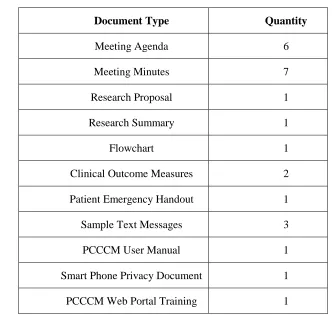
process and execution. A list of documents collected from the PCCCM staff member is listed
below (Table 5).
Table 4: Document List
Document Type Quantity
Meeting Agenda 6
Meeting Minutes 7
Research Proposal 1
Research Summary 1
Flowchart 1
Clinical Outcome Measures 2
Patient Emergency Handout 1
Sample Text Messages 3
PCCCM User Manual 1
Smart Phone Privacy Document 1
PCCCM Web Portal Training 1
3.4.3
Observation
While the initial intention was to utilize observation as a major method of data collection,
coordinating schedules limited the ability to do so. However, one PCCCM meeting was observed
after which a field note was written and included in the cumulative data.
3.5
Data Analysis
In keeping with a post-positivist approach within this study, analysis and interpretation of
McCulloch (2011), codes can be developed in three ways; 1) theory-driven code development,
when codes are developed a priori from existing theory or concepts, 2) data-driven code
development, when codes are developed inductively as they emerge from raw data, and 3)
structural code development, when codes are developed from specific research goals and
questions. Coding of data sets (interview transcripts, meeting minutes and agendas, and
observation notes) were conducted using a deductive or theory driven approach guided by the
CFIR codebook. Although a deductive approach was utilized, an additional ‘parking lot’ was
utilized to code items that did not align with the CFIR constructs (Breland et al., 2016; Garg et
al., 2015; Martinez et al., 2017). Additionally, a preliminary coding consensus meeting was held
between the primary researcher and adjunct research team to confirm that all were in agreeance
regarding the coding of PCCCM data.
The analysis of project and procedural documents occurred through a document analysis.
Document analysis is a growing systematic qualitative research method used to review and
assess various forms of electronic and print materials (Owen, 2014). Document analysis is used
to triangulate findings and is often used within the case study methodology (Bowen, 2009;
Goddard, 2012). This qualitative method requires the systematic examination and interpretation
of materials to elicit meaning and advance empirical knowledge (Bowen, 2009). Documents
types common to document analysis include (but are not limited to); meeting minutes, attendance
forms, memoranda, organizational charts, procedural documents, program proposals, public
records, and institutional reports (Bowen, 2009). This process has been applied using Excel
software. This software was selected based on the body of literature which supports the use of
excel in qualitative research as a way to simplify the organization and visualization of
data (Kang, 2015; Meyer & Avery, 2009; Ose, 2016).
3.6
Validation of Findings: Triangulation and Member Checking
In post-positive, qualitative research, it is highly recommended to use triangulation as an
approach to validating research findings. Another author in the field of case study explains that
triangulation aims to, “…systematically check the information collected from one source against
triangulation as an important process in the 6th edition of his Case Study Research and
Applications: Design and Methods. He explains;
Using multiple sources of evidence permits going beyond appreciating the
breadth of a case study’s scope. You also will have an opportunity to pursue a critical
methodological practice —to develop converging lines of inquiry. The desired
triangulation follows from the principle in navigation, whereby the intersection of lines
from different reference points is used to calculate the precise location of an object
(Yardley, 2009). Thus, any case study finding or conclusion is likely to be more
convincing and accurate if it is based on several different sources of information,
following a similar convergence (Yin, 2018 p. 130).
In keeping with Yin’s case study approach, multiple sources of data (noted above) were
collected and analyzed to sure triangulation of findings could occur. In addition to triangulation,
member-checking is also commonly used in qualitative research to ensure the accuracy or
validity of research findings. While not specifically discussed in Yin’s works, member checking
is often used in qualitative research to ensure that study participants agree that findings align
with their knowledge of the phenomenon (Baillie, 2015; Houghton, Casey, Shaw, & Murphy,
2013; Stake, 2006b). Baillie defines member checking as when, “The researcher returns to
research participants to check that the transcripts represent what the participants feel they said
and/or to check findings at different stages of analysis” (Baillie, 2015 p. 39). To add to the rigour and quality of this study’s findings, we conducted member checks on two different occasions to
ensure that study participants agreed with research findings. The first member check occurred at
the half-way point in the research process wherein a ‘preliminary results summary’ was
provided. We received feedback from some participants which indicated that were in agreeance
with the information stated on the document. At the end of this study, a second and more
complete member checking document was provided wherein little feedback was received.
Although little feedback was provided about the final research findings, disseminating the
3.7
Rigour and Quality
While the value of qualitative research is increasingly recognized, the issue of ensuring
rigour or quality is also increasingly discussed (Houghton et al., 2013). Baillie describes quality
or rigour in qualitative research in the following excerpt. “Use of the term ‘rigour’ infers that the
research was conducted systematically and to a high standard (2015 p. 36). However, this author
also explain that “…the preoccupation with rigour in qualitative research has been challenged on
the grounds that it may stifle creativity if applied rigidly (Baillie, 2015 p. 36). This approach to
flexible, rigorous qualitative research aligns with Yin’s approach as he explains that to ensure
case studies are conducted with rigour and quality, the research must effectively report the
methods used as well as minimize research biases as much as possible. He explains, “When
doing a research case study, you need to overcome this confusion by highlighting your methodic
procedures, especially the reporting of all evidence fairly. You also need to be transparent and
explicit about limiting or eliminating any biases” (Yin, 2018 p. 41). Thus, to ensure quality and
rigour in this qualitative case-study, an in-depth explanation of the methodology and methods
Chapter 4
4
Results
The current study aims to answer the follow research question: how was the PCCCM
program implemented in two primary health care settings? This question is answered by meeting
the following three research objectives:
1) Describe the implementation of the program,
2) Identify contextual factors affecting the implementation,
3) Highlight the facilitators and barriers that aided or impeded the success of the
program.
The following results were gleaned from the deductive analysis of interview transcripts,
observation notes and a document analysis of a variety of PCCCM meeting minutes, evaluation
tools as well as other supporting documents. These data sources were used to triangulate themes
and understandings. Data analysis provided key insights into the implementation process of the
PCCCM program. Data were collected from two participant populations (patients and providers)
from two separate interdisciplinary, primary care teams. As the PCCCM program had minimal
patient participation, data were collected from two patient participants, four health care providers
and one PCCCM staff member.
The deductive approach to data analysis was guided by the codebook for the CFIR which
is organized into five central constructs. Each construct contains a number of sub-codes which
were used as coding ‘nodes’ (Table 3). Using the CFIR codebook to code and analyse data
allowed for the identification of patterns and themes relevant to the implementation of the
PCCCM project. Although primarily a deductive approach was utilized, a ‘parking lot’ was used
Due to low recruitment rates, the PCCCM program enrolled two patients, one patient
from each health participating site (n=2). Both patients consented to participate in the current
study and partook in semi-structured interviews. One physician and one nurse or nurse
practitioner at each of the two sites assumed the responsibility of implementing the PCCCM
program, all four of which consented and participated in the current study (n=4). Additionally,
one staff member from the PCCCM research team participated (N=1). Thus, the total number of
participants for the current study is N=7 (Text Box 5).
Text Box 5: PCCCM Participants
• 2 Patient Participants
• Provider Participants (2
physicians, 2 nurses)
• 1 PCCCM Staff Member
4.1
Innovation Characteristics
The CFIR characterises the construct of innovation characteristics as, “characteristics of
the intervention being implemented into a particular organization” (Damschroder et al., 2009).
Sub-codes under the Innovation Characteristics construct include;
▪ Innovation source ▪ Evidence
strength and quality
▪ Relative advantage ▪ Adaptability ▪ Trialability ▪ Complexity
▪ Design quality and packaging ▪ Cost
Throughout the data analysis process, it became clear that data for this study most related to
the following sub-constructs, a) innovation source, b) complexity, and c) design quality and
packaging.
4.1.1
Innovation Source
“Perception of key stakeholders about whether the intervention is externally or internally
developed. An intervention may be internally developed as a good idea, solution to a problem, or
other grass-roots effort, or may be developed by an external entity (e.g., vendor or research
group). The legitimacy of the source may also influence implementation” (Damschroder et al.,
2009 p.6).
Regarding the source of the innovation, PCCCM program appears to have emerged as a
reaction or response to a funding opportunity. It appears that the development of the PCCCM
was sparked by this initial opportunity for funding.
“I’ve been working for the last eight years and in particular in Western since five
years, so we werealready part of team and then there was a call for, you know, the chair
person grant and then [PCCCM PI 1] thought to apply. So he collaborated with
Department of Medicine, Department of Family Medicine, Health Sciences and then they
all came together and discussed how the project should look like and how to do a
collaborative project. That is what was required at that time to get this grant…”
(PCCCM Staff Member1).
It also appears that some key aspects seen as favourable to obtaining funding were built
into PCCCM to help secure financing. For example, the PCCCM staff member indicated that
programs containing components of team integration and mobile technology are commonly
funded, building them into the PCCCM program would be beneficial and may help secure a
grant.
I don’t know how much experience you have but most of the project that is getting
approved those thing is very common. One is like a collaboration so one person, and
group of people coming together. And second if you have technology on top of that, that
is a plus. So people wanted to do something to make sure that they receive the grant and I
feel like the incorporating technology was a smart decision at that time and even now I
feel it is a good decision (PCCCM Staff Member).
After this funding opportunity was identified, the program was built in conjunction with
local experts by leveraging proximity of expert peers as well as a previously implemented
extracted from this pre-existing mHealth initiative, allowing PCCCM to build of previous tools
and experience.
While it appears that particular aspects of the PCCCM program were built into the project
to secure funding, the 11 local experts listed as co-investigators indicated that substantial
academic support was provided throughout the project development process. Moreover,
co-investigators were consulted during the development of pre-scripted patient text messages to
ensure a consensus was achieved regarding the quality of message content.
4.1.2
Complexity
The sub-construct complexity is defined by the CFIR as,
“Perceived intricacy or difficulty of the innovation, reflected by duration, scope,
radicalness, disruptiveness, centrality, and intricacy and number of steps required to
implement. Radical interventions require significant reorientation and non-routine
processes to produce fundamental changes in the organization's activities and reflects a
clear departure from existing practices. One way to determine complexity is by assessing
'length' (the number of sequential sub-processes or steps for using or implementing an
intervention) and 'breadth' (number of choices presented at decision points). Complexity
is also increased with higher numbers of potential target organizational units (teams,
clinics, departments) or types of people (providers, patients, managers) targeted by the
intervention, and the degree to which the intervention will alter central work processes”
(Damschroder et al., 2009 p.6).
Regarding the complexity of the intervention, providers reported that the PCCCM web
portal was straight forward and easy to use. They also reported that using the portal to manage
one patient participant was achievable, however, participants at both sites explained that
recruiting more than one patient would be tedious and would increase workload for providers.
… then I'm thinking okay, workload-wise, thanks [Facilitator] for starting it and
me trying to continue with it, but then having to do ... if we had to do it for a lot more I
think there'd be a lot of tedious work (Provider 1).
Additionally, provider participants articulated that with additional patients, the increased
Providers also expressed concern that patients may use the web portal rather than contacting
respective clinics or visiting emergency departments for acute exacerbations or other serious
health issues. One provider articulated concerns regarding the logistics of portal monitoring
during on-call shifts and whether legal liability could result from a lack of planning for such
inevitabilities.
Provider 2 Site A: …I mean on-call is an issue too so on-call this would go off and I’d be looking at it. I mean was there any medical-legal issues if I didn’t attend to these calls? So there was a lot of these questions that weren’t answered.
Of the two patient participants, one reported experiencing issues in operating the
technology while the other reported issues with the quality of the technology made available to
them through the PCCCM program.
Patient 1: …Well, it, it didn’t work and I found it, I found these things to be uh, a devilish thing. For example, I can’t get this thing to ring.
Patient 2: …You can’t get anything on it. When the battery runs out, you have to
physically take this off, switch the battery around before the phone will work. And it
might stop at any time, and it could take you a half an hour just to send one text.
4.1.3
Design Quality and Packaging
CFIR defines this sub-construct as, “The perceived excellence in how the intervention is
bundled, presented, and assembled” (Damschroder et al., 2009).
In terms of the design and quality of the intervention, providers reported that portal
questions were often not specific or relevant enough for the communications necessary. More
specifically, a common response among providers was that the portal questions were too
repetitive and did not allow for proper monitoring of commonly comorbid psychiatric concerns.
One provider indicated that to bypass this issue they often developed questions or phrases, which
they felt was an issue for additional workload.
Provider 1 site A: …And then on the other side, the implementation of it was me
going into the website, seeing if there was any communications, and then sending out
appointment with the doctor,” which is a silly question, so I would pick out things to do
and then most of the time I ended up just doing my own script on it.
In other cases, providers sent feedback to PCCCM staff wherein several issues were
corrected and adapted to allow for improved question selection. Despite the corrective
adaptations, one patient and one provider reported issues with the narrow selection or
repetitiveness of available questions or phrases.
Throughout the coding and analysis process, ‘role definition’ also emerged as a theme
impacting PCCCM implementation. The PCCCM program was built with the intention of
providing interdisciplinary, collaborative care for chronic disease patients diagnosed with COPD
or CHF and associated mental health comorbidities, depression and/or anxiety.
‘The overarching goal of this study is to create a model of care for patients with
chronic diseases targeting CHF, COPD, and depression/anxiety. The aim is to improve
the care of these patients and their quality of life by delivering an innovative,
interdisciplinary, efficacious and cost-effective model of care using smart technologies’
(PCCCM project description).
The document analysis process suggested that program development was highly
interdisciplinary and collaborative. Interview transcripts also supported this notion of highly
interdisciplinary and collaborative project development.
“We had a number of people representing different departments and it was
required to keep that way because the project involved participation from psychiatry,
medicine because the patients were coming from medical background and family
medicine. So we had to involve all those people as a lead and other than that we have at
least ten more research personnel listed in our LOI as co-investigators” (PCCCM Staff
Member).
The document analysis also revealed that while program development was collaborative
and interdisciplinary, the plan for implementation and continued execution was not. While
interview transcripts demonstrated that apart from the interdisciplinary co-investigators
contributing to project development, one PCCCM staff member acted as the sole facilitator for
is further evidenced by the lack of role definition present in PCCCM project proposals, protocols
and process documents. For example, only one role (the patient navigator) was defined within
PCCCM documents.
The patient-care navigator role will involve assessing and monitoring the
patient’s depression and anxiety and COPD and/or CHF symptoms; monitoring the patient’s adherence to medications and follow up appointments; teaching behavioral
activation to motivate patients, enhance activities and increase social contacts and
pleasurable activities; and teach motivation interviewing to monitor and activate the
patient’s progress with their personal goals (PCCCM project proposal).
As demonstrated by the excerpt above, the patient navigator role encompasses all patient
facing PCCCM activities. At each site location, the nurse filled the patient navigator role. There
is no indication that any other professional is required to monitor the patient portal and patient
messages. This notion of the patient navigator as the sole PCCCM site operator is also supported
by interview transcripts.
Provider 1 Site A: And then on the other side, the implementation of it was me
going into the website, seeing if there was any communications, and then sending out
these pre-scripted messages. “How are you feeling today? Have you made your
appointment with the doctor,” which is a silly question, so I would pick out things to do and then most of the time I ended up just doing my own script on it. “Hope you’re doing okay, let me know if there’s any issues. Call me because I want to make sure you got this message” or, “Text me because I want to make sure you got this message.” Which most of the time he didn’t do, and so I would often find that would be more useful.
With one health care provider communicating with and monitoring patients, the PCCCM
program was unable to provide the interdisciplinary chronic care that was intended.
4.2
Outer Setting
The construct of outer setting is composed of the four sub-constructs listed below.
▪ Needs and resources of patients ▪ Cosmopolitanism
▪ Peer pressure
Data for this study related to two of these four sub-constucts, 1) patient needs and resources,
and 2) peer pressure.
4.2.1
Patient Needs and Resources
Patient needs and resources is defined within CFIR as,
“The extent to which patient needs, as well as barriers and facilitators to meet those
needs are accurately known and prioritized by the organization” (Damschroder et al., 2009).
In terms of needs and resources of the patient, three providers and one patient noted that
PCCCM portal questions were not suitably geared toward the individual patient.
Patient 2 Site B: Well, they’ve been sending messages and I’ve replied to it. They
could get a little bit more creative ... than the same questions over and over again.
After some discussion with PCCM staff, changes were made to the communication portal
to allow providers to more specifically target patient needs. Additionally, both patients
complained that the technology used in the PCCCM project were unusable to them either due to
lack of computer literacy or poor quality of equipment.
Peer Pressure
In terms of incentive for participation in PCCCM, the co-investigators or local experts
involved in the development of the PCCCM program were very engaged and appeared to have
high-levels of buy-in. PCCCM participants did not demonstrate the same level program buy-in.
One provider explained that despite their concerns about the PCCCM project, they decided to
participate because of professional connections with investigators associated with the project.
So I did this mostly because I certainly know [PCCCM PI 1] and these other
individuals I think involved as well with this project with the department or their family
docs and so I thought we’d give it a try (Provider 4).
While it is possible that this professional connection caused a feeling of pressure to