Volume 3, No. 1, Jan-Feb 2012
International Journal of Advanced Research in Computer Science
RESEARCH PAPER
Available Online at www.ijarcs.info
Effective Multicategory Classification Using ELM-ANP Approach for Microarray Gene
Expression Cancer Diagnosis
Dr. S. Santhosh Baboo
Reader, PG and Research department of Computer Science, Dwaraka Doss Goverdhan Doss Vaishnav College
Chennai, Tamil Nadu, India [email protected]
Mrs. S. Sasikala
*
Research Scholar, Dravidian University, AndraPradesh Head, Department of Computer Science Sree Saraswathi Thyagaraja College, Pollachi,
Coimbatore, Tamil Nadu, India [email protected]
Abstract: Cancer is one of the fearful diseases found in majority of the living organism, which is one of the demanding focuses for scientist towards 20th century. There were bunch of proposal from a variety of establishers and detailed picture examination was still under proces sing.
The main aim of microarrays is hybridization between two DNA strands, the property of balancing nucleic acid series to particularly pair with each other by forming hydrogen bonds between complementary nucleotide base pairs. This paper presents a fast and efficient classification technique called the Fast ELM algorithm is used for a multicategory cancer diagnosis problem according to the microarray data is supplied. ELM provides significant classification results compared to other classifiers because of its unique features. Moreover, the drawbacks of ELM are effectively dealt by using ELM as classifier. When the dataset is large, the usage of ELM will take more time for execution. For this purpose, this approach uses Levenberg Marquadt algorithm for training which speeds up the training process. In this paper, ELM is integrated with the ANP approach for finding the weighted matrix. This would enhance the performance of the overall system.
Keywords: Cancer, DNA Microarray , ELM, Classifier, Levenberg Marquadt algorithm, ANP.
I. INTRODUCTION
Cancer [1] is a group of diseases distinguished by unregulated division and spread of cells. The cancerous cells may happen in liquids, as in leukemia. Most, on the other hand, happen in solid tumors that initially emerge in different tissues in different parts of the body. By their original places they are classified into different types of cancer like lung, colon, breast, or prostate cancer. Localized tumors can be detached by surgery or irradiation with high survival rates. As cancer progresses, conversely, it metastasizes invading the surrounding tissues, entering the blood stream, spreading and establishing colonies in isolated parts of the body. Only one-third of patients with metastasized cancer stay alive more than five years. Invasive expansions spreading crab-like from a tumor in the breast were illustrated by Hippocrates.
In cancer research [2], two scientific techniques function in two general types of circumstances. Epidemiology concentrates on causal aspects on the levels of people and population, with consequences that are highly functional for disease prevention. Molecular cell biology concentrates on causal mechanisms on the levels of genes and cells, with consequences that are highly helpful to treatment and cure. To biologists, issues recognized by epidemiology are indirect reasons in the method of cancer growth.
Only about one percent of cancers are obviously inherited. They happen in childhood. Strong genetic dispositions donate to a small segment of adult cancers. Hormone production at some stage in reproductive cycles and other internal factors can also donate. Alternatively, the huge number of cancers is caused mainly due to the eating habit, their working situations, viruses, bacteria, artificial radiation and chemicals. These are generally known as “environmental” risk factors for cancer.
Epidemiology determines risk factors and institutes causal relations but cannot pin down the devices by which risk factors persuade the form of tumors. Discovering
methods is the font of laboratory science, which investigates into more microscopic levels. However, epidemiological results do depict salient peculiarities that should be explained by various methods. Unlike poisons that act fast, carcinogens take effect very gradually. Lung cancer incidences arise more than twenty years after the prevalent of smoking.
II. EXTREME LEARNING MACHINE (ELM)
Extreme Learning Machine (ELM) is mainly for Single Hidden Layer Feed-Forward Neural Networks (SLFNs) will arbitrarily choose the input weights and analytically identifies the output weights of SLFNs [5]. This approach tends to provide the best generalization performance at extremely fast learning speed.
ELM consists of an input layer, hidden layer and an output layer. ELM has various interesting and significant characteristic features unlike traditional popular learning algorithms for feed forward neural networks. These include the following:
a. The learning speed of ELM is very rapid when compared to other classifiers. The learning procedure of ELM can be carried out in seconds or less than seconds for several applications. In all the earlier existing learning approaches, the learning executed by feed-forward network will take huge time even for simple applications.
b. ELM has improved generalization result when compared to the gradient-based learning. The existing gradient-based learning approaches and a few other learning approaches may encounter various issues like local minima, not proper learning rate and over fitting, etc. In order to overcome these issues, some techniques like weight decay and early stopping approaches must be utilized in these existing learning approaches.
than the other learning approaches for feed-forward neural networks. The existing learning approaches can be applied to only differentiable activation functions, whereas the ELM learning approach can also be used to train Single-hidden Layer Feed forward Neural network (SLFNs) with many non-differentiable activation functions [3].
A. Salient Features of ELM:
Compared to popular Back propagation (BP) Algorithm and Support Vector Machine (SVM), ELM has several salient features:
a. Ease of Use: Except predefined network architecture,
no other parameters need to be manually tuned. Thus very less time is required for tuning and training learning machines.
b. Faster learning speed: The time taken for most of the training will be in milliseconds, seconds, and minutes. Other conventional methods cannot provide such a fast learning speed.
c. Higher generalization performance: The
generalization performance of ELM is better than SVM and back propagation in most cases.
d. Applicable for all nonlinear activation functions: All piecewise continuous functions which includes discontinuous, differential, non-differential functions can be used as activation functions in ELM.
e. Applicable for fully complex activation functions: Complex functions can also be used as activation functions in ELM.
It is known that conventionally all the parameters of the feed forward networks require to be adjusted and thus there presents the dependency between various layers of parameters. Gradient descent-based techniques have been used in several learning techniques of feed forward neural networks. It is very clear that gradient descent based learning techniques are usually very slow due to improper learning steps or may easily converge to local minima. Various iterative learning steps are needed by such learning techniques in order to attain better learning performance.
III. PROPOSED EFFECTIVE
MULTICATEGORY CLASSIFICATION USING ELM-ANP APPROACH
Statistical ANOVA ranking technique is used in this approach for selecting the top ranked genes. This approach uses effective ELM for classification of genes. Moreover, Analytic Network Process (ANP) is also integrated with ELM for better overall performance of the classification approach.
The proposed system mainly deals with cancer prediction by using Fast ELM technique. ANOVA is used for ranking the gene. This approach consists of two steps. In Step 1, all genes in the training data set are ranked using ANOVA scoring scheme. Then, the genes with high scores are retained. In Step 2, the classification capability of all simple combinations is tested among the genes selected in Step 1 using ELM classifier. Then ELM classifier is used for classifying the gene. ANP approach is integrated with ELM for effective classification with lesser training time.
A. ANP Approach:
This approach integrates the ANP approach and ELM technique. The algorithm of the ANP approach is used for finding the weight factor. This section describes the
proposed ELM classifier which obtains the weight factor from the ANP approach.
A Fast ELM technique which uses ELM and Levenberg-Marquradt technique can be described as below:
B. Levenberg-Marquradt Method:
Levenberg-Marquardt (LM) algorithm ensued from development of Error Back Propagation (EBP) algorithm dependent techniques. It provides a significant exchange between the speed of the Newton algorithm and the strength of the steepest descent technique. These are the two fundamental theorems of LM algorithm [4]. In the back-propagation algorithm, the performance index F(w) to be reduced is defined as the sum of squared errors between the target outputs and the network's simulated outputs,
(1) Where w = [w1, w2, …., wN ] comprise of all weights
of the network, erepresents the error vector comprising the error for all the training samples.
The increment of weights Δw, when training with the LM methodis calculated as follows:
(2) Where J denotes the Jacobian matrix, μ represents the learning rate which is to be updated using the β depending on the resultant. Especially, μ is multiplied by decay rate β
(0<β<1) whenever F (w) diminishes, while μ is divided by β
whenever F(w) increases in a new step.
C. Levenberg-Marquardt (Lm) Algorithm:
Step 1: Initialize the weights and parameter μ (μ=.01 is appropriate).
Step 2: Calculate the Sum of the Squared Errors over all inputs F(w) .
Step 3: Solve step (2) to get the increment of weights Δw.
Step 4: Recompute the Sum of Squared Errors F (w). Using as the trial and judge
Levenberg-Marquardt algorithm is used to speed up the training process. In the proposed approach, the ELM is trained using LM algorithm. Moreover, AHP is also applied for better results.
D. ELM-ANP Classification Approach:
Initially, the input weights and hidden biases are created by with the help of ANP technique. Next, the equivalent output weights are analytically determined with the help of ELM algorithm only in first step and randomly produce the output hidden biases. Then, the parameters (all weights and biases) are restructured with the help of LM algorithm.
E. Proposed Elm-ANP Algorithm:
Step 2: Determine the hidden first layer output matrix . With the help of ELM algorithm, determine the output weight.
Step 3: Determine the hidden second layer output matrix , errors
and determine the sum of squared errors over all input. Step 4: Determine the Jacobian matrix. Calculate the sensitivities with the recurrence relations.
after initializing with the following equation
Augment the individual matrices into the Marquardt sensitivities using the following equation
Determine the elements of the Jacobian matrix with the equations
and
Step 5: Solve equation given below to determine and update weight vectors and bias vectors .
Step 6: Recalculate the sum of squared errors with the
The process for the Fast Extreme Learning Machine with ANP is described below:
Provided a training set
activation functions , and hidden nodes number of hidden first and second layer.
Step 1: Randomly choose the starting values of input and determine the sum of squared errors over all input.
Step 4: Determine the Jacobian matrix. Calculate the sensitivities with the recurrence relations.
(5) after initializing with the following equation
(6) Augment the individual matrices into the Marquardt sensitivities using the following equation
(7) Determine the elements of the Jacobian matrix with the equations Machine which has the advantage of training the classifier in very less time.
IV. EXPERIMENTAL RESULTS AND
DISCUSSION
The performance of the proposed approaches are evaluated using the following parameters like
a. Testing Accuracy b. Training Time
The performance of the proposed Fast ELM approach with ANP is compared with the standard ELM.
A. Experimental Observations:
Table 1 shows a sample 2-gene combination. The parameters used in table 1 for the validation of the accurate combinations are Correct Rate, Error Rate, Number of Matches and Mismatches. In the table below, (5, 10) gene combination provides highest correct rate, less error rate, less mismatches with significant number of matches.
Table 1: A sample 2-gene combination
Gene
Table 2: Maximum accuracy achieved by the following combinations
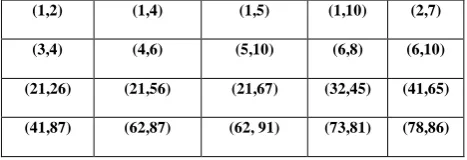
(1,2) (1,4) (1,5) (1,10) (2,7)
(3,4) (4,6) (5,10) (6,8) (6,10)
(21,26) (21,56) (21,67) (32,45) (41,65)
Table 2 shows maximum accuracy achieved by the genes in the lymphoma dataset. From the 100 genes, the gene combinations with very good accuracy are listed in the above table. From this gene combinations, the best gene which provides highest correct rate, less error rate, less number of mismatches and high number of matches is the (5,10) gene combination.
Table 3: A sample 3-gene combination
Gene 1 Gene 2 Gene 3 Correct parameters used in the above table for the validation of the accurate combinations are Correct Rate, Error Rate, Number of Matches and Mismatches. In the above table, (1, 7, 8) gene combination provides highest correct rate, less error rate, less mismatches with significant number of matches. Thus, it is the best 3-gene combination obtained from the experimental observation.
Table 4: Maximum accuracy achieved by the following 3-gene combinations gene combinations with very good accuracy are listed in the above table. From this gene combinations, the best gene which provides highest correct rate, less error rate, less number of mismatches and high number of matches is the (1,7, 8) gene combination
.
B. Results of Lymphoma Dataset:
In this paper, testing accuracy and training time parameters are taken up for the experimental process.
a. Testing Accuracy
Table 5: Accuracy comparison using anova with number of folds=5
S. No No. of Gene
Figure 1. Testing Accuracy Comparison for 5-fold CV
Table 5 and Figure 1 provide the result for both the 2-Gene and 3-2-Gene combinations. The testing accuracy of ELM cancer classification approach and ELM-ANP cancer classification technique is compared in Table 5. It is clearly observed from the table that the proposed cancer classification approach using ELM with ANP provides 92.34 % testing accuracy where as the standard ELM cancer classification provides 88.21% testing accuracy for 2-Gene combination.
Similarly, for the 3-Gene combination, the testing accuracy of the proposed cancer classification approach which uses ELM with ANP is 93.15% where as for the standard ELM, it is just 89.63%.
Thus ELM-ANP based cancer classification technique provides significant testing accuracy for both 2-Gene and 3-Gene combinations.
Table 6: Accuracy comparison using anova with number of folds=10
S. No No. of Gene
Figure 2 Testing Accuracy Comparison for 10-fold CV
cancer classification provides an accuracy of about 92.62% which is very high than the existing approach.
Thus, the proposed ELM with ANP cancer classification provides higher accuracy when compared with the standard ELM for both 5 fold and 10 fold CV test.
b. Training Time:
Table 7: Training time comparison for 2-gene and 3-gene combinations
S. No No. of Gene Combination
Training Time (SECONDS)
ELM ELM with ANP
1 100,2 10.145 4.444
2 100,3 12.124 5.015
Figure 3 Training Time Comparison
Table 7 and Figure 3 show the training time taken by the cancer classification approach which uses the classifiers such as ELM and ELM-ANP. It is clearly observed that the proposed ELM-ANP cancer classification approach takes very less training time when compared with the ELM classification approach.
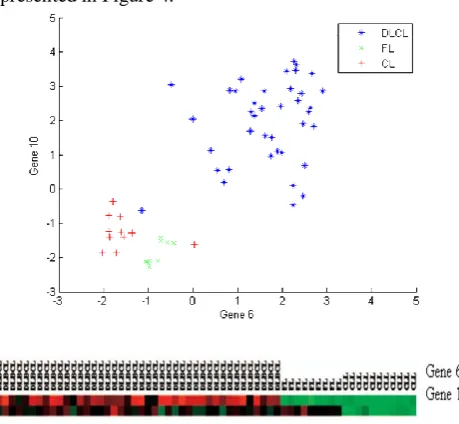
Figure 4: Gene Expression Levels 2-Gene Combination for (2, 5)
The expression profiles of the 2-gene combinations for DLBCL, FL, and CLL of the lymphoma data for (2, 5) gene is presented in Figure 4.
Figure 5 Gene Expression Levels 2-Gene Combination for (6, 10)
The expression profiles of the 2-gene combinations for DLBCL, FL, and CLL of the lymphoma data for (6, 10) gene is presented in Figure 5.
Figure 6 Gene Expression Levels 2-Gene Combination for (6, 11)
The expression profiles of the 2-gene combinations for DLBCL, FL, and CLL of the lymphoma data for (6, 11) gene is presented in Figure 6.
0 2 4 6 8 10 12 14
2-Gene Combination 3-Gene Combination
Tr
a
in
in
g
Ti
m
e
(s
e
c
o
n
d
)
Number of Gene Combination
Figure 7: Gene Expression Levels 2-Gene Combination for (5,10)
The expression profiles of the 2-gene combinations for DLBCL, FL, and CLL of the lymphoma data for (6, 11) gene is presented in Figure 7.
C. Results of Leukemia Dataset:
The proposed approach is compared with the standard ELM with the Leukemia data set. The experimental evaluation is carried out through tables and Figures.
a. Testing Accuracy
The testing accuracy comparison of the proposed ELM-ANP cancer classification approach and ELM cancer classification approach for 5-Fold CV is shown in Table 8 and Figure 5.9.
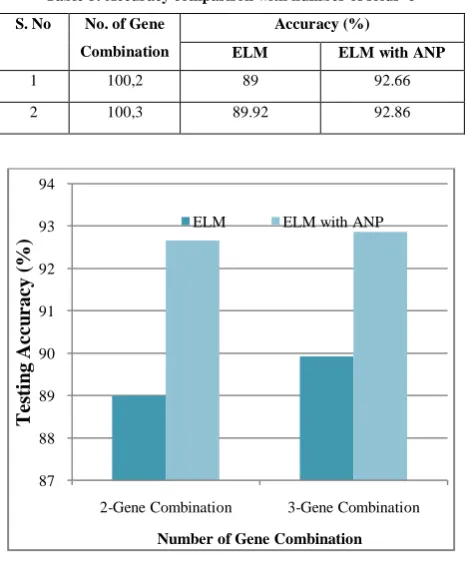
Table 8: Accuracy comparison with number of folds=5 S. No No. of Gene
Figure 8. Testing Accuracy for 5-fold CV
It is clearly observed from table 8 that the accuracy of the ELM-ANP cancer classification approach is 92.66% for the 2-Gene combination, where as it is 89% for the ELM cancer classification approach. Thus, the proposed cancer classification using ELM-ANP approach provides better gene classification result.
Similarly for the 3-Gene combination, the proposed ELM-ANP classification approach gives accuracy of 92.86% where as the standard ELM classification technique provides lesser accuracy of about 89.92%.
Table 9: Accuracy comparison using anova with number of folds=10
S. No No. of Gene
Figure 9. Testing Accuracy for 10-fold CV
The testing accuracy comparison of the proposed ELM-ANP cancer classification approach and the traditional ELM cancer classification approach for the 10 fold cross validation is given in Table 9 and Figure 9. For 2-Gene combination, the proposed classification approach using ELM-ANP has better accuracy of about 92.41% when compared with the accuracy of the ELM cancer classification approach which is just 87.92%. Similarly, for the 3-Gene combination, the proposed ELM-ANP obtains the accuracy of about 92.93% where as the standard ELM obtains 88.37% accuracy.
Thus, for both the 2-Gene and 3-Gene combinations, the proposed cancer classification approach using ELM-ANP results in better classification.
b. Training Time
Table 10: training time comparison for 2-gene and 3-gene combinations
S. No No. of Gene
Figure 10. Training Time Comparison
time of about 4.812 seconds where as the training time taken by standard ELM approach is 10.457 seconds.
For the 3-Gene combination, the average training time taken by the proposed ELM-ANP approach is 5.123 second where as the training time taken by ELM is 13.141 seconds.
It clearly shows that the proposed ELM-ANP cancer classification approaches train the system in very less time.
D. Results of SRBCT Dataset:
The testing accuracy and the training time of the proposed approach for the SRBCT data are evaluated in the following section.
Table 11: Testing accuracy (%) comparison with number of folds=5
S. No No. of Gene
Figure 11. Testing Accuracy for 5-fold CV
Table 11 and Figure 11 shows the testing accuracy comparison of the proposed ELM-ANP cancer classification approach and the ELM cancer classification approach for the 2-Gene and 3-Gene combinations for the 5-fold CV. From the table, it is clearly observed that the proposed ELM-ANP cancer classification approach provides better classification accuracy than the ELM approach.
For the 2-Gene combination, the testing accuracy obtained for the proposed ELM-ANP is 93.36%. But the testing accuracy obtained for the ELM cancer classification approach is 89.04%. Similarly, for the three gene combination, testing accuracy for the proposed ELM-ANP approach is 94.98% where as for the traditional ELM, it is 90.99%. Thus, the proposed ELM-ANP outperforms the traditional ELM approach in terms of accuracy for both 2-Gene and 3-2-Gene combinations.
Similarly, for the 3-Gene combination, the testing accuracy of the proposed ELM-ANP approach is very high when compared with the ELM cancer classification approach.
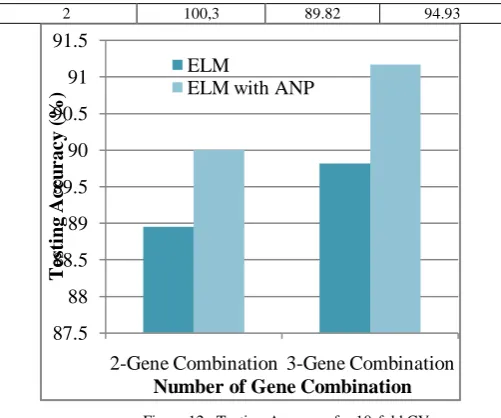
Table 12: Accuracy comparison with number of folds=10
S.NO NO.OF GENE
Figure 12. Testing Accuracy for 10-fold CV
Table 12 and Figure 12 shows the average testing accuracy comparison of the proposed ELM–ANP and ELM for the ten fold CV. The testing accuracy obtained for the 2-Gene combination for the ELM and ELM-ANP approach is 88.95% and 93.72% respectively. Similarly for the 3-Gene combination, the testing accuracy obtained for ELM cancer classification approach is 89.82% where as it is around 94.93% for the ELM-ANP cancer classification approach.
Table 13: training time comparison for 2-gene and 3-gene combinations
Figurre 13. Training Time Comparison
Thus, the proposed ELM-ANP approach trains the system in very less time when comparing with the ELM classification approach.
V. CONCLUSION
In this paper, a fast and efficient classification technique called the Fast ELM algorithm is used for a multicategory cancer diagnosis problem according to the microarray data is supplied. ELM provides significant classification results compared to other classifiers because of its unique features. Moreover, the drawbacks of ELM are effectively dealt in this paper by using ELM as classifier. When the dataset is large, the usage of ELM will take more time for execution. For this purpose, this approach uses Levenberg Marquadt algorithm for training which speeds up the training process. In this paper, ELM is integrated with the ANP approach for finding the weighted matrix. This would enhance the performance of the overall system.
VI. REFERENCES
[1]. Kinzler, Kenneth W. and Vogelstein Bert, “Introduction-The genetic basis of human cancer”, (2nd, illustrated, revised ed.). New York: McGraw- Hill,Medical Pub. Division, 2002.
[2]. Jemal A, Bray F, Center MM, Ferlay J, Ward E and Forman D, “Global cancer statistics”. CA: a cancer journal for clinicians, Vol. 61, No. 2, Pp. 69– 90,2011.
[3]. Jiuwen Cao, Zhiping Lin, Guang-Bin Huang, “Composite Function Wavelet Neural Networks with Differential Evolution and Extreme Learning Vol. 33, No. 3, Pp. 251-265, 2011.
[4]. Franchois and C. Pichot, “Microwave imaging- complex permittivity reconstruction with a Levenberg-Marquardt method”, IEEE Transactions on Antennas and Propagation – IEEE Trans Antennas Propagat, Vol. 45, No. 2, Pp. 203-215, 1997.