Volume 3, No. 1, Jan-Feb 2012
International Journal of Advanced Research in Computer Science
RESEARCH PAPER
Available Online at www.ijarcs.info
ISSN No. 0976-5697
Rule Base with Frequent Bit Pattern and Enhanced k-Medoid Algorithm for the
Evaluation of Lossless Data Compression.
Nishad P.M.*
Ph.D Scholar, Department Of Computer Science NGM College, Pollachi, India
Dr. N. Nalayini
Associate professor, Department of computer science NGM College Pollachi, Coimbatore, India
Abstract:This paper presents a study of various lossless compression algorithms; to test the performance and the ability of compression of each algorithm based on ten different parameters. For evaluation the compression ratios of each algorithm on different parameters are processed. To classify the algorithms based on the compression ratio, rule base is constructed to mine with frequent bit pattern to analyze the variations in various compression algorithms. Also, enhanced K- Medoid clustering is used to cluster the various data compression algorithms based on various parameters. The cluster falls dissentingly high to low after the enhancement. The framed rule base consists of 1,048,576 rules, which is used to evaluate the compression algorithm. Two hundred and eleven Compression algorithms are used for this study. The experi mental result shows only few algorithm satisfies the range “High” for more number of parameters.
Keywords: Lossless compression, parameters, compression ratio, rule mining, frequent bit pattern, K–Medoid, clustering.
I. INTRODUCTION
Data compression is a method of encoding rules that allows substantial reduction in the total number of bits to store or transmit a file. Two basic classes of data compression are applied in different areas currently that are lossy and lossless compression [l, 2]. This paper evaluates the performance of all possible lossless compression algorithms using popular data mining technique. Rule mining is used with four ranges for ten parameters and to evaluate the performance the frequent bit pattern and clustered using the modified Sorted K- Medoid [3, 4] algorithm is used. Meteorological data mining with finding the hidden pattern is proposed in this paper [5][6][7].
The main objective of this paper is to evaluate the performance of various lossless data compression algorithms based on various ten parameters. To test the compression ability and survey two hundred and eleven and eleven algorithms are used. The parameters considered are various types of files such as Executable files (Exe), English text files (ENG), Log files (LOG), alphabetically sorted list files (ALP), DLL files (DLL), BMP files (BMP), JPEG files (JPG), help files (HLP) Document Files(DOC) and PDF files (PDF) is used and find the average compression ratio for all parameters with every compression algorithm. Initially 1,048,576 are constructed for evaluating the compression ability and performance of algorithms based on the range values and with sorted K-Medoid algorithm the rules are constructed based on the individual parameters.
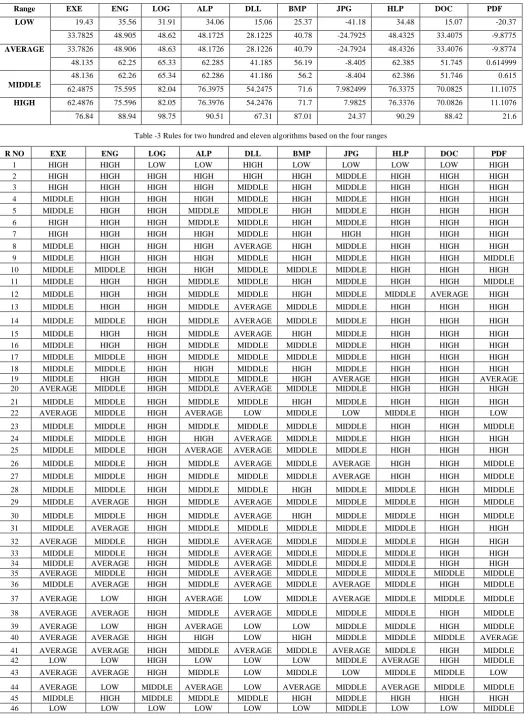
The entire algorithms average compression ratio is collected based-on all ten parameter and the minimum and maximum compression ratio is collected to construct the new range for the individual parameter. The minimum represent the lowest compression ratio for the parameter and
the maximum shows the peek compression ratio of algorithms on various parameters, for example 19.43 is the minimum compression ratio and the 76.84 is the maximum compression ratio for the parameter EXE shown in table-1
Table-1 Maximum and minimum compression ratio of parameters
Parameters Minimum Maximum
EXE 19.43 76.84
ENG 35.56 88.94
LOG 31.91 98.75
ALP 34.06 90.51
DLL 15.06 67.31
BMP 25.37 87.01
JPG -41.18 24.37
HLP 34.48 90.29
DOC 15.07 88.42
PDF -20.37 21.6
Table -2: Range values for the Parameters.
Table -3 Rules for two hundred and eleven algorithms based on the four ranges
R NO EXE ENG LOG ALP DLL BMP JPG HLP DOC PDF
1 HIGH HIGH LOW LOW HIGH LOW LOW LOW LOW HIGH
2 HIGH HIGH HIGH HIGH HIGH HIGH MIDDLE HIGH HIGH HIGH
3 HIGH HIGH HIGH HIGH MIDDLE HIGH MIDDLE HIGH HIGH HIGH
4 MIDDLE HIGH HIGH HIGH MIDDLE HIGH MIDDLE HIGH HIGH HIGH
5 MIDDLE HIGH HIGH MIDDLE MIDDLE HIGH MIDDLE HIGH HIGH HIGH
6 HIGH HIGH HIGH MIDDLE MIDDLE HIGH MIDDLE HIGH HIGH HIGH
7 HIGH HIGH HIGH HIGH MIDDLE HIGH HIGH HIGH HIGH HIGH
8 MIDDLE HIGH HIGH HIGH AVERAGE HIGH MIDDLE HIGH HIGH HIGH
9 MIDDLE HIGH HIGH HIGH MIDDLE HIGH MIDDLE HIGH HIGH MIDDLE
10 MIDDLE MIDDLE HIGH HIGH MIDDLE MIDDLE MIDDLE HIGH HIGH HIGH
11 MIDDLE HIGH HIGH MIDDLE MIDDLE HIGH MIDDLE HIGH HIGH MIDDLE
12 MIDDLE HIGH HIGH MIDDLE MIDDLE HIGH MIDDLE MIDDLE AVERAGE HIGH
13 MIDDLE HIGH HIGH MIDDLE AVERAGE MIDDLE MIDDLE HIGH HIGH HIGH
14 MIDDLE MIDDLE HIGH MIDDLE AVERAGE MIDDLE MIDDLE HIGH HIGH HIGH
15 MIDDLE HIGH HIGH MIDDLE AVERAGE HIGH MIDDLE HIGH HIGH HIGH
16 MIDDLE HIGH HIGH MIDDLE MIDDLE MIDDLE MIDDLE HIGH HIGH HIGH
17 MIDDLE MIDDLE HIGH MIDDLE MIDDLE MIDDLE MIDDLE HIGH HIGH HIGH
18 MIDDLE MIDDLE HIGH HIGH MIDDLE HIGH MIDDLE HIGH HIGH HIGH
19 MIDDLE HIGH HIGH MIDDLE MIDDLE HIGH AVERAGE HIGH HIGH AVERAGE
20 AVERAGE MIDDLE HIGH MIDDLE AVERAGE MIDDLE MIDDLE HIGH HIGH HIGH
21 MIDDLE MIDDLE HIGH MIDDLE MIDDLE HIGH MIDDLE HIGH HIGH HIGH
22 AVERAGE MIDDLE HIGH AVERAGE LOW MIDDLE LOW MIDDLE HIGH LOW
23 MIDDLE MIDDLE HIGH MIDDLE MIDDLE MIDDLE MIDDLE HIGH HIGH MIDDLE
24 MIDDLE MIDDLE HIGH HIGH AVERAGE MIDDLE MIDDLE HIGH HIGH HIGH
25 MIDDLE MIDDLE HIGH AVERAGE AVERAGE MIDDLE MIDDLE HIGH HIGH HIGH
26 MIDDLE MIDDLE HIGH MIDDLE AVERAGE MIDDLE AVERAGE HIGH HIGH MIDDLE
27 MIDDLE MIDDLE HIGH MIDDLE MIDDLE MIDDLE AVERAGE HIGH HIGH MIDDLE
28 MIDDLE MIDDLE HIGH MIDDLE MIDDLE HIGH MIDDLE MIDDLE HIGH MIDDLE
29 MIDDLE AVERAGE HIGH MIDDLE AVERAGE MIDDLE MIDDLE MIDDLE HIGH MIDDLE
30 MIDDLE MIDDLE HIGH MIDDLE AVERAGE HIGH MIDDLE MIDDLE HIGH MIDDLE
31 MIDDLE AVERAGE HIGH MIDDLE MIDDLE MIDDLE MIDDLE MIDDLE HIGH HIGH
32 AVERAGE MIDDLE HIGH MIDDLE AVERAGE MIDDLE MIDDLE MIDDLE HIGH HIGH
33 MIDDLE MIDDLE HIGH MIDDLE AVERAGE MIDDLE MIDDLE MIDDLE HIGH HIGH
34 MIDDLE AVERAGE HIGH MIDDLE AVERAGE MIDDLE MIDDLE MIDDLE HIGH HIGH
35 AVERAGE MIDDLE HIGH MIDDLE AVERAGE MIDDLE MIDDLE MIDDLE MIDDLE MIDDLE
36 MIDDLE AVERAGE HIGH MIDDLE AVERAGE MIDDLE AVERAGE MIDDLE HIGH MIDDLE
37 AVERAGE LOW HIGH AVERAGE LOW MIDDLE AVERAGE MIDDLE MIDDLE MIDDLE
38 AVERAGE AVERAGE HIGH MIDDLE AVERAGE MIDDLE MIDDLE MIDDLE HIGH MIDDLE
39 AVERAGE LOW HIGH AVERAGE LOW LOW MIDDLE MIDDLE HIGH MIDDLE
40 AVERAGE AVERAGE HIGH HIGH LOW HIGH MIDDLE MIDDLE MIDDLE AVERAGE
41 AVERAGE AVERAGE HIGH MIDDLE AVERAGE MIDDLE AVERAGE MIDDLE HIGH MIDDLE
42 LOW LOW HIGH LOW LOW LOW MIDDLE AVERAGE HIGH MIDDLE
43 AVERAGE AVERAGE HIGH MIDDLE LOW MIDDLE LOW MIDDLE MIDDLE LOW
44 AVERAGE LOW MIDDLE AVERAGE LOW AVERAGE MIDDLE AVERAGE MIDDLE MIDDLE
45 MIDDLE HIGH MIDDLE MIDDLE MIDDLE HIGH MIDDLE HIGH HIGH HIGH
46 LOW LOW LOW LOW LOW LOW MIDDLE LOW LOW MIDDLE
Range EXE ENG LOG ALP DLL BMP JPG HLP DOC PDF
LOW 19.43 35.56 31.91 34.06 15.06 25.37 -41.18 34.48 15.07 -20.37
33.7825 48.905 48.62 48.1725 28.1225 40.78 -24.7925 48.4325 33.4075 -9.8775
AVERAGE 33.7826 48.906 48.63 48.1726 28.1226 40.79 -24.7924 48.4326 33.4076 -9.8774
48.135 62.25 65.33 62.285 41.185 56.19 -8.405 62.385 51.745 0.614999
MIDDLE
48.136 62.26 65.34 62.286 41.186 56.2 -8.404 62.386 51.746 0.615
62.4875 75.595 82.04 76.3975 54.2475 71.6 7.982499 76.3375 70.0825 11.1075
HIGH 62.4876 75.596 82.05 76.3976 54.2476 71.7 7.9825 76.3376 70.0826 11.1076
Table: 4 Algorithms or Compressors for the Corresponding Rules
R NO Algorithms Or Compressors
1 PAQ8PX
2 7-Zip 9.22 + ASH 07 + BIT 0.7 + CCM 1.30c + CMM4 0.2b + COMPRESSIA 1.0b + CTXf 0.75 b1 + DURILCA 0.5 + ENC 0.15 + EPM r9 + FreeARC 0.666 + HIPP 0.5819 + LPAQ8 + NanoZip 0.08a + PAQAR 4.5 + PIMPLE2 + PPMonstr J rev.1 + RK 1.04.1 + RKC 1.02 + RZM 0.07h + SL
3 777 0.04b1 + BALZ 1.15 + BEE 0.7.9 + BIX 1.00b7 + BruteCM 0.1d + CABARC 1.00.0106 + FlashZIP 0.99b8 + GRZIP 0.7.3 + LZPM 0.16 + LZPX(J) 1.2h + LZTurbo 0.95 + Ocamyd 1.66test1 + PIM 2.90 + PPMN 1.00b1 km + Quark 0.95r + RKUC 1.04 + UFA 0.04b1 + WinRAR 4. 01 4 ARHANGEL 1.40 + BSC 2.7.0 + BSSC 0.95a + CTW 0.1 + GRZipII 0.2.4 + HOOK 1.4 + ICEOWS 4.20b + LZAP 0.20.0b + LZXQ 0.4 + M1
0.3b + PPMVC 1.2 + PPMX 0.07 + PPMY SSE (9A9) + PPMd rev J + QAZAR 0.0pre5 + QC 0.050 + QUANTUM 0.97 + Quad 1.12 + RINGS 1.6 + SZIP 1
5 12Ghosts 7.0 + ABC 2.4 + ACB 2.00c + AI 1.1 + ASD 0.2.0 + BA 1.01 + BBB ver1 + BCM 0.12 + BICOM 1.01 + BOA 0.58b + BWMonstr 0.02 + BWTZIP + BZIP 0.21 + BZIP2 1.0.5 + BioArc 1.9 + CHILE 0.5 + DACT 0.8.42 + DARK 0.51 + DC 0.99.307b + DCGA b8 + DGCA 1.10 + D
6 ACE 2.6 + BMA 1.35b + Blizzard 0.24b + CSC 3.2a6 + RKIVE 1.92 + SBC 0.970 rev3 + WINIMP 1.21 + WinACE 2.69
7 STUFFIT 14 + WINZIP 14
8 SR3a
9 NNTC
10 BZP 0.3
11 PSA 0.91a + ZAP32 0.15.0b
12 BAR 1.1.2
13 HuffComp 1.3
14 BJWFLATE 1.54 + Chaos Comp 3.0 + DeepFreezer 1.06 + Etincelle RC2 + LZOP 1.02rc1 + RAX 1.02
15 LZ2A
16 JAR 1.02
17 AIN 2.32 + ALZip 7.0 + AMG 2.2 + ARJ 2.85 + BCArchive 1.08.7 + DCA 1.0.1b + DZIP 2.90 + EAZEL 1.0 + ESP 1.92 + File2Pack 2.0 + GZIP 1.3.5 + HIT 2.10 + LHA 2.67 + LHA32 1.88.3.14 + LHARK 0.4d + LIMIT 1.2 + LZA 1.01 + PKZIP 2.50 + SEMONE 0.6 + SLUG X + THOR
18 CODEC 3.21 + HA 0.999b + KZIP 14-APR-2007 + LGHA 1.1g
19 BVI 1.70
20 Archiver 1.0 + ULZ 0.0.2
21 ARI 2.2 + RDMC 0.06c
22 LCW 0.2
23 JCALG1 5.32
24 SYMBRA 0.2
25 LCSSR 0.2
26 HiP beta 1
27 XPA 1.0.2 + aPLib 0.43
28 HAP 3.06
29 HYPER 2.5
30 LZC 0.08
31 SAR 1.0 + ZOO 2.1
32 QuickLZ 1.40b9
33 Zhuff 0.2
34 ARX 1.0 + Secura 1.7
35 CODER 1.1
36 CA-ZIP 3.4
37 LZ 1.0
38 QPress 0.38b
39 LZP2 0.7d
40 BigCrunch 0.4a1
41 BriefLZ 1.04
42 LZBW1 0.8
43 SRANK 1.0
44 LZRW1
45 ERI 5.1fre
46 SHcodec 1.0.1 + Shindlet
The HIGH range represents the good compression ratio and the LOW range represents the poor compression ratio so the algorithms compression ratio falls HIGH for any parameter then the performance of the algorithm is good for those parameters. For example PAQ8PX is quite good for the parameters EXE, ENG, DLL and PDF and it may not give the best result for the parameters LOG,ALP and BMP(table -3 S no -1)
To simplify the evaluation of algorithm another methodology is used in this paper called frequent bit pattern
in this stage the generated rule dataset is processed for finding the frequent bit paten. Initially set the desired values for each parameter. For example EXE is „HIGH‟ and ENG is „HIGH‟ and LOG is „HIGH‟ and ALP is „HIGH‟ and DLL is ‟HIGH‟ and BMP is „HIGH‟ and JPG is ‟HIGH‟ and HLP is „HIGH‟ and DOC is „HIGH‟ and PDF is „HIGH‟ in this „HIGH‟ is set to all the parameters.
only based on the first parameter EXE five rules are triggered that is.
a. If EXE is „HIGH‟ And ENG is „HIGH‟ And LOG is „LOW‟ And ALP is „LOW‟ And DLL is ‟HIGH‟ And BMP is „LOW‟ And JPG is ‟ LOW‟ And HLP is „LOW‟ And DOC is „LOW‟ And PDF is „HIGH‟ then PAQ8PX
b. If EXE is „HIGH‟ And ENG is „HIGH‟ And LOG is „HIGH‟ And ALP is „MIDDLE‟ And DLL is ‟ MIDDLE‟ And BMP is „HIGH‟ And JPG is ‟ MIDDLE‟ And HLP is „HIGH‟ And DOC is „HIGH‟ And PDF is „HIGH‟ then ACE 2.6 + BMA 1.35b + Blizzard 0.24b + CSC 3.2a6 + RKIVE 1.92 +SBC 0.970 rev3 + WINIMP 1.21 + WinACE 2.69
c. If EXE is „HIGH‟ And ENG is „HIGH‟ And LOG is „HIGH‟ And ALP is „HIGH‟ And DLL is ‟ MIDDLE‟ And BMP is „HIGH‟ And JPG is ‟ MIDDLE‟ And HLP is „HIGH‟ And DOC is „HIGH‟ And PDF is „HIGH‟ then .7.9 + BIX 1.00b7 + BruteCM 0.1d +CABARC 1.00.0106 + FlashZIP 0.99b8 + GRZIP 0.7.3 + LZPM 0.16 +LZPX(J) 1.2h + LZTurbo 0.95 + Ocamyd 1.66test1 + PIM 2.90 + PPMN1.00b1 km + Quark 0.95r + RKUC 1.04 + UFA 0.04b1 + WinRAR 4.01 +YZX 0.04
d. If EXE is „HIGH‟ And ENG is „HIGH‟ And LOG is „HIGH‟ And ALP is „HIGH‟ And DLL is ‟ MIDDLE‟ And BMP is „HIGH‟ And JPG is ‟HIGH‟ And HLP is „HIGH‟ And DOC is „HIGH‟ And PDF is „HIGH‟ then STUFFIT 14 + WINZIP 14
e. If EXE is „HIGH‟ And ENG is „HIGH‟ And LOG is „HIGH‟ And ALP is „HIGH‟ And DLL is ‟HIGH‟ And BMP is „HIGH‟ And JPG is ‟ MIDDLE‟ And HLP is „HIGH‟ And DOC is „HIGH‟ And PDF is „HIGH‟ then 7-Zip 9.22 + ASH 07 + BIT 0.7 + CCM 1.30c + CMM4 0.2b +COMPRESSIA 1.0b + CTXf 0.75 b1 + DURILCA 0.5 + ENC 0.15 + EPM r9+ FreeARC 0.666 + HIPP 0.5819 + LPAQ8 + NanoZip 0.08a + PAQAR4.5 + PIMPLE2 + PPMonstr J rev.1 + RK 1.04.1 + RKC 1.02 + RZM0.07h + SLIM 0.23d + SQUEEZ 5.63 + TC 5.2 dev2 + UHARC 0.6b + Ultra7z Opt 0.05 + WinRK 3.1.2 + ZPAQ 2.05
Frequent pattern based on group of parameters such as EXE, ENG, LOG, ALP, DLL, BMP, HLP, DOC,PDF for this only one rule is triggered
a. If EXEis „HIGH‟And ENGis „HIGH‟And LOGis „HIGH‟And ALPis „HIGH‟And DLL is‟HIGH‟And BMPis „HIGH‟And JPG is‟ MIDDLE‟And HLPis „HIGH‟And DOCis „HIGH‟And PDFis „HIGH‟ then 7-Zip 9.22 + ASH 07 + BIT 0.7 + CCM 1.30c + CMM4 0.2b +COMPRESSIA 1.0b + CTXf 0.75 b1 + DURILCA 0.5 + ENC 0.15 + EPM r9+ FreeARC 0.666 + HIPP 0.5819 + LPAQ8 + NanoZip 0.08a + PAQAR4.5 + PIMPLE2 + PPMonstr J rev.1 + RK 1.04.1 + RKC 1.02 +
Frequent pattern based on group of parameters such as EXE, ENG, LOG, ALP, DLL, BMP, JPG HLP, DOC, and PDF for this only one rule is triggered.
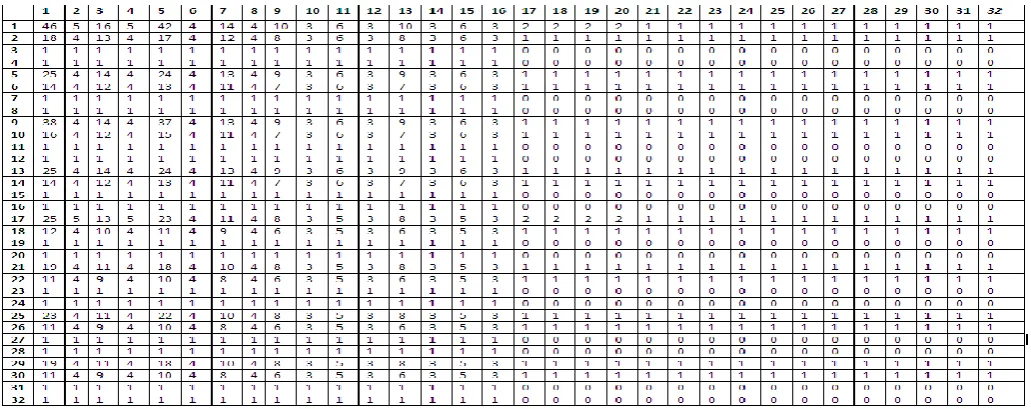
No algorithm satisfy High Compression ratio for all parameters so the rule triggered is zero. Here, using this evaluation methodology the effectiveness of various algorithms based on single or multiple parameters can be easily evaluated. For ten parameters 1024 combinations of frequent bit pattern can be evaluated. The table -5 shows the rulers trigged for 1024 combinations of frequent bit pattern. For example in the table 1 row 1 and column 1 gives 46 rules because the bit pattern is performed unconditionally in row 1 column 2 gives five that is based on the first parameter Exe= “HIGH”. And in the last row and last column gives Zero because that is evaluated using the all parameters, so easily clarify that no algorithm terns best compression ratio for all parameters.
[image:4.595.40.556.565.769.2]The modified K-Mediod Algorithm is used to evaluate and cluster the algorithms based on the parameters. After finding the mediod values that are sorted dissentingly. So this leads to the clarity that is the first cluster indicates that compression algorithm gives the best output. Generated rule is fetched and assigned value 1,2,3,4 to the ranges LOW, AVERAGE, MIDDLE, HIGH respectively so the numeric equivalent is passed to the range and the range data set is processed to the K-Medoid algorithm for each parameter three clusters are generated. That is shown in the table-6 the clusters generated in the ratio (Percentage) is shown in table -7.
Table -6 Clustered rules based on K-Medoid Algorithm based on Parameters.
S No Exe Eng LOG ALP DLL BMP JPG HLP DOC PDF
1 1 1 3 3 1 3 3 2 3 1
2 1 1 1 1 1 1 2 1 1 1
3 1 1 1 1 2 1 2 1 1 1
4 2 1 1 1 2 1 2 1 1 1
5 2 1 1 2 2 1 2 1 1 1
6 1 1 1 2 2 1 2 1 1 1
7 1 1 1 1 2 1 1 1 1 1
8 2 1 1 1 3 1 2 1 1 1
9 2 1 1 1 2 1 2 1 1 2
10 2 2 1 1 2 2 2 1 1 1
11 2 1 1 2 2 1 2 1 1 2
12 2 1 1 2 2 1 2 2 3 1
13 2 1 1 2 3 2 2 1 1 1
14 2 2 1 2 3 2 2 1 1 1
15 2 1 1 2 3 1 2 1 1 1
16 2 1 1 2 2 2 2 1 1 1
17 2 2 1 2 2 2 2 1 1 1
18 2 2 1 1 2 1 2 1 1 1
19 2 1 1 2 2 1 3 1 1 3
20 3 2 1 2 3 2 2 1 1 1
21 2 2 1 2 2 1 2 1 1 1
22 3 2 1 3 3 2 3 2 1 3
23 2 2 1 2 2 2 2 1 1 2
24 2 2 1 1 3 2 2 1 1 1
25 2 2 1 3 3 2 2 1 1 1
26 2 2 1 3 3 2 3 1 1 2
27 2 2 1 3 2 2 3 1 1 2
28 2 2 1 3 2 1 2 2 1 2
29 2 3 1 3 3 2 2 2 1 2
30 2 2 1 3 3 1 2 2 1 2
31 2 3 1 3 2 2 2 2 1 1
32 3 2 1 3 3 2 2 2 1 1
33 2 2 1 3 3 2 2 2 1 1
34 2 3 1 3 3 2 2 2 1 1
35 3 2 1 3 3 2 2 2 2 2
36 2 3 1 3 3 2 3 2 1 2
37 3 3 1 3 3 2 3 2 2 2
38 3 3 1 2 3 2 2 2 1 2
39 3 3 1 3 3 3 2 2 1 2
40 3 3 1 1 3 1 2 2 2 1
41 3 3 1 2 3 2 3 2 1 2
42 3 3 1 3 3 3 2 3 1 2
43 3 3 1 3 3 2 3 2 2 3
44 3 3 2 3 3 3 2 3 2 2
45 2 1 2 2 2 1 2 1 1 1
46 3 3 3 3 3 3 2 3 3 2
Table -7 cluster percentage
Clusters
Parameter High Average Low
ALP 21.73913 34.78261 43.47826
BMP 39.13043 50.0 10.86957
DLL 4.347826 41.30435 54.34783
DOC 82.6087 10.86957 6.521739
ENG 34.78261 36.95652 28.26087
EXE 10.86957 60.86957 28.26087
HLP 54.34783 39.13043 6.521739
JPG 2.173913 78.26087 19.56522
LOG 91.30435 4.347826 4.347826
PDF 56.52174 36.95652 6.521739
The clustered percentage ratio indicates that only the 21.73913 % algorithm gives best result for ALP, 39.13043% algorithm gives best result for BMP, 4.347826% algorithm gives best result for DLL, 82.6087% algorithm gives best result for DOC, 34.78261% algorithm gives best result for ENG, 10.86957% algorithm gives best result for EXE, 54.34783% algorithm gives best result for HLP, 2.173913% algorithm gives best result for JPG, 91.30435% algorithm gives best result for LOG and
56.52174% algorithm gives best result for PDF. Three clusters is created for each parameter so totally thirty cluster is created for ten parameters is shown in table -5
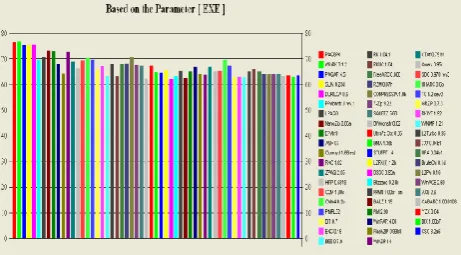
Graph -1 to graph -10 represents the compression ratio of the compression algorithms on various parameters which satisfies the Range „HIGH‟. Only few compression algorithms satisfy the „HIGH‟ for more number of parameters. No algorithm falls in HIGH range for all parameters shown in table-4.
[image:5.595.322.553.643.770.2]Graph 2 –Compression algorithms within the High Range for ENG
Graph 3 –Compression algorithms within the High Range for LOG
Graph 4 –Compression algorithms within the High Range for ALP
Graph 5 –Compression algorithms within the High Range for DLL
Graph 6 –Compression algorithms within the High Range for BMP
Graph 7 –Compression algorithms within the High Range for JPG
Graph 8 –Compression algorithms within the High Range for HLP
Graph 9 –Compression algorithms within the High Range for DOC
Graph 10 –Compression algorithms within the High Range for PDF
Graph -1 to graph -10 represents the compression ratio of the compression algorithms on various parameters which satisfies the Range „HIGH‟. Only few compression algorithms satisfy the „HIGH‟ for more number of parameters. No algorithm falls in HIGH range for all parameters shown in table-4.
II. CONCLUSION AND FUTURE ENHANCEMENT
compression algorithm on different types of files is shown. The major contribution of this work is 1,048,576 number of rules are framed and the implemented using VB script. The most important focus of this paper is how pattern bit can be applied in the rule mining. The primary aim of reducing time in searching of rules in a large rule-base with 1,048,576 rules is achieved hundred percentage. Also K-Medoid clustering algorithm is applied to group the rules based on the performance of lossless compression algorithms. This clustering helps to reduces the time ratio of rules triggering. This work can be further extended using any other algorithm.
III. REFERENCES
[1]. T. C. Bell, J. G. Cleary, and I. H. Witten, “Text Compression English word” C1iffs:N. J. Prentice-Hall, 1990.
[2]. Rafael C. Gonzalez and Richard E. Woods, “Digital Image Processing, Reading, Massachusetts”: Addison-Welsley Publishing Company, 1992.
[3]. Velmurugan and T. Santhanam "A commiserative analysis between K-medoid methods and Fuzzy C-means clustering algorithms for statistically distributed data points” JTAIT 2011
[4]. Park. Hae-sang; Lee. Jong-seok; Jun. Chi-hyuck. “A K-means-like Algorithm for K medoids Clustering and Its Performance “. Proceedings of the 36th CIE Conference on Computers & Industrial Engineering.. Taipei. Taiwan. p.1222-1231 Jun. 20-23 (2006).
[5]. Sarah N. Kohail and Alaa M. El-Halees "Implementation of Data Mining Techniques for Meteorological Data Analysis" International Journal of Information and Communication Technology Research. 2010\
[6]. Bartok J., Habala O., Bednar P., Gazak M., and Hluch L., "Data mining and integration for predicting significant
meteorological phenomena" Procedia Computer Science, p.37 – 46. 2010
[7]. Berkhin P., "Survey of clustering data mining techniques, Accrue Software, San Jose", CA, Tech. Rep., 2002
[8]. Artiles, J.; Gonzalo, J. and Sekine, S. WePS 2 Evaluation Campaign: “overview of the Web People Search Clustering Task”. 2nd Web People Search Evaluation Workshop (WePS 2009), 18th WWW Conference. 2009.
[9]. Park. Hae-sang; Lee. Jong-seok; Jun. Chi-hyuck. “A K-means-like Algorithm for Kmedoids Clustering and Its Performance”. Proceedings of the 36th CIE Conference on Computers & Industrial Engineering.. Taipei. Taiwan. p.1222-1231 Jun. 20-23 (2006)
Short Bio Data for the Author
*
Nishad PM M.Sc., M.Phil. Seven months Worked as a project trainee in Wipro in 2005, five years experience in teaching, one and half year in JNASC and Three and half year in MES Mampad College. He published one paper national level conference and three international conferences and also presented three national level seminars. Now pursuing Ph.D in Computer Science at NGM College Pollachi.
Dr.N.NALAYINI MCA., M.Phil., Ph.D is presently working
as associate professor, Department of computer science NGM College, Pollachi, Coimbatore, India (affiliated to Bharathiar university, Coimbatore) She has published many papers in international/national Journals: her area of interest include Fuzzy logic, data mining, Data compression, Network security, she has to credit 21 years of teaching and research experience.