Scholarship@Western
Scholarship@Western
Electronic Thesis and Dissertation Repository
8-14-2012 12:00 AM
Chiral Separation of Racemic Mandelic Acid by the Coupling
Chiral Separation of Racemic Mandelic Acid by the Coupling
Crystallization Process and Simulated Moving Bed Technology
Crystallization Process and Simulated Moving Bed Technology
Shimin Mao
The University of Western Ontario Supervisor
Dr. Ajay K. Ray
The University of Western Ontario Joint Supervisor Dr. Sohrab Rohani
The University of Western Ontario
Graduate Program in Chemical and Biochemical Engineering
A thesis submitted in partial fulfillment of the requirements for the degree in Doctor of Philosophy
© Shimin Mao 2012
Follow this and additional works at: https://ir.lib.uwo.ca/etd Part of the Process Control and Systems Commons
Recommended Citation Recommended Citation
Mao, Shimin, "Chiral Separation of Racemic Mandelic Acid by the Coupling Crystallization Process and Simulated Moving Bed Technology" (2012). Electronic Thesis and Dissertation Repository. 690. https://ir.lib.uwo.ca/etd/690
This Dissertation/Thesis is brought to you for free and open access by Scholarship@Western. It has been accepted for inclusion in Electronic Thesis and Dissertation Repository by an authorized administrator of
Coupling Crystallization Process and Simulated Moving
Bed Technology
(Spine title: Chiral Separation by the Coupling Crystallization and Simulated Moving
Bed process)
(Thesis format: Article Integrated)
By
Shimin Mao
Graduate Program in
Chemical and Biochemical Engineering
A thesis submitted in partial fulfillment of the requirements for the degree of
Doctor of Philosophy
The School of Graduate and Postdoctoral Studies The University of Western Ontario
London, Ontario, Canada
ii
THE UNIVERSITY OF WESTERN ONTARIO School of Graduate and Postdoctoral Studies
CERTIFICATE OF EXAMINATION
Joint Supervisor
Dr. Ajay K. Ray
Dr. Sohrab Rohani
Supervisory Committee
Dr. Jesse Zhu
Dr. Madhumita B. Ray
Examiners
Dr. Hector Budman
Dr. Mahi Singh
Dr. Jesse Zhu
Dr. Anand Prakash
The thesis by
Shimin Mao
entitled:
Chiral Separation of Racemic Mandelic Acid by the Coupling
Crystallization Process and Simulated Moving Bed Technology
is accepted in partial fulfillment of the requirements for the degree of
Doctor of Philosophy
iii
Abstract
Chirality is a major concern in the modern pharmaceutical, food and agricultural
industries. The importance of enantiopure drugs has risen dramatically in recent years
due to Food and Drug Administration regulations requiring that all chiral bioactive
molecules must be isolated and tested for the efficacy and safety, and have to be as pure
as possible containing a single pure enantiomer. There are essentially three strategies that
can be applied to obtain pure isomers: (a) extraction from plants and animal materials (b)
enantio-selective asymmetric synthesis so that only one isomer is formed in the first
place, or (c) making a racemate and finding a method for separating the enantiomers.
Only few enantiomers exist in nature and most of them are racemates. A highly efficient
chiral asymmetric synthesis route would be the ideal situation, but it usually takes about
10-15 years to develop a synthesis recipe. Hence, the best strategy would be to synthesize
the drug in racemate form and separate the isomers to produce single pure enantiomer.
Among the variety of enantioseparation methods, chromatography and crystallization
are the most dominant methods for the recovery of pure enantiomers. However, both
methods have limitations. Crystallization cannot obtain enantiopure enantiomers from the
racemic compound directly. In Simulated Moving Bed (SMB), solvent consumption
increases exponentially if desired purity requirement is close to 100%. In this work, the
coupling of SMB for enrichment followed by direct crystallization is applied for the
chiral resolution to circumvent limitations of each method. In order to take advantage of
both the processes, SMB chromatography is used for partial enrichment thereby reducing
iv
Here, the chiral resolution of mandelic acid (MA) as racemic compound was considered
to investigate the performance of the hybrid SMB-crystallization process theoretically as
well as experimentally. The solubility and metastable zone limit of (R,S)-MA and
(R)-MA in water and the crystallization kinetics parameters of (R,S)-(R)-MA and (R)-(R)-MA by
optimization of the crystallization model based on the necessary experimental data
collected in unseeded cooling batch crystallizers were determined. For the SMB part, the
choice of mobile phase and determination of binary competitive equilibrium isotherms
parameters of (R,S)-MA and the experimental and modeling studies of SMB process have
also been accomplished.
Keywords:
Mandelic acid, racemic compound solubility, metastable zone, cooling crystallization,
parameter estimate, nucleation and growth kinetics, FBRM, ATR-FTIR, mobile phase
composition, competitive adsorption isotherms, inverse method, frontal analysis,
v
Co-Authorship Statement
Chapter 3: A version of chapter 3 was accepted by Journal of Separation Science:
Mao, S.; Zhang, Y; Rohani, S.; Ray, A.K. Chromatographic Resolution and
Isotherm Determination of (R,S)-Mandelic Acid on Chiralcel OD Column,
Accepted for publication in the Journal of Separation Science.
The experiments were designed and conducted by the author. The manuscript was written
by the author and revised by Dr. Y. Zhang and Dr. A.K. Ray. And the experiment
materials were provided by Dr. A. K. Ray and Dr. S. Rohani.
Chapter 4: A version of chapter 4 was submitted to Separation and Purification Technology:
Mao, S.; Zhang, Y; Ray, A.K.; Rohani, S. Enantioseparation of Racemic
Mandelic Acid by Simulated Moving Bed Chromatography Using Chiralcel
OD Column, Submitted to Journal of Separation Science.
Writing the manuscript, collecting the data, designing and performing experiments are
completed by the author. Dr. Y. Zhang and Dr. A.K. Ray revised the manuscript. Dr. S.
Rohani also provided some suggestion on the manuscript.
Chapter 5: A version of chapter 5 was published as:
Mao, S.; Zhang, Y; Rohani, S.; Ray, A.K. Kinetics of (R,S)-Mandelic Acid
and (R)-Mandelic Acid in an unseeded cooling batch crystallizer, Journal of
vi
All data were collected by the author. The design of the experiments was performed by
Dr. Y. Zhang and author under the supervision of Dr. S. Rohani. The manuscript was
written by the author and revised by Dr. Y. Zhang and Dr. S. Rohani. Dr. A.K. Ray also
vii
To my parents, grandparents and aunt for endless
viii
Acknowledgments
Acknowledgement and many thanks are due to Dr. Ajay K. Ray and Dr. Sohrab Rohani,
my supervisors, for their enthusiasm, patience and advice, and for giving me the
continuous support and encouragement on the occasions that I felt frustrated.
I would also like to extend my gratitude to Dr. Yan Zhang who taught me how to do the
research from scratch. Many thanks to Dr. Quan He, Dr. Jie Lu and Dr. Milana Trifkovic
for their help during my Ph.D study. And I would like to thank Ghodsieh Malekshoar,
Housyn Mahmoud, Nillohit Mitra Ray, Noshin Hashim, Pankaj Chowdhury, Pegah
Saremirad, Fate Hashemi and Souheil Afara for providing me with a good research
environment.
I would like to extend special thanks to my parents, my grandparents and my aunt for
their endless love and extreme support and patience throughout this process. I couldn’t
ix
Table of Contents
CERTIFICATE OF EXAMINATION ... ii
Abstract ... iii
Co-Authorship Statement... v
Acknowledgments... viii
Table of Contents ... ix
List of Tables ... xiii
List of Figures ... xv
Nomenclature ... xix
Chapter 1 ... 1
Introduction ... 1
1.1 Background ... 2
1.2 Research objective and approaches ... 7
1.3 Thesis organization ... 10
1.4 Contribution ... 11
1.5 Reference ... 13
Chapter 2 ... 16
Literature Review... 16
2.1 Simulated moving bed (SMB) ... 17
2.1.1 Background of SMB ... 17
2.1.2 Chromatography ... 18
2.1.3 Continuous counter-current chromatography ... 19
2.1.4 Column model for SMB... 24
x
2.1.6 Node model ... 30
2.1.7 Design strategy for SMB ... 31
2.1.8 Performance parameters ... 36
2.2 Direct crystallization ... 38
2.2.1 Background of crystallization ... 38
2.2.2 The mathematical model of crystallization process ... 44
2.2.3 Direct crystallization for the pure enantiomers ... 48
2.3 Coupling of simulated moving bed chromatography and direct crystallization ... 54
2.4 Reference ... 55
Chapter 3 ... 66
Chromatographic Resolution and Isotherm Determination of (R,S)-Mandelic Acid on Chiralcel-OD Column ... 66
3.1 Introduction ... 67
3.2 Modeling ... 70
3.2.1 Competitive modified Langmuir adsorption isotherm model ... 70
3.2.2 Column model ... 71
3.2.3 Isotherm parameters estimation ... 73
3.3 Experimental ... 73
3.3.1 Equipment ... 73
3.3.2 Materials ... 74
3.3.3 Solubility measurement of (R,S)-MA ... 75
3.3.4 Resolution of (R,S)-MA and isotherm determination ... 75
3.4 Results and discussion ... 78
3.4.1 Choice of mobile phase ... 78
xi
3.5 Conclusions ... 91
3.6 References ... 93
Chapter 4 ... 97
Enantioseparation of Racemic Mandelic Acid by Simulated Moving Bed Chromatography Using Chiralcel OD Column ... 97
4.1 Introduction ... 98
4.2 Theoretical background ... 100
4.2.1 Isotherm model ... 100
4.3 SMB model ... 101
4.3.1 SMB modeling ... 101
4.3.2 Design of SMB ... 103
4.4 Experiment setting ... 107
4.4.1 Materials and equipments ... 107
4.4.2 SMB operation ... 108
4.5 Results and discussion ... 109
4.5.1 Isotherm parameters and rate coefficients ... 109
4.5.2 Complete separation region ... 110
4.5.3 The effects of operating conditions on SMB performance ... 110
4.5.4 Validation of the SMB model with the experimental data ... 121
4.6 Conclusion ... 125
4.7 Reference ... 126
Chapter 5 ... 128
Kinetics of (R,S)- and (R)-Mandelic Acid in an Unseeded Cooling Batch Crystallizer . 128 5.1 Introduction ... 129
5.2 Materials and methods ... 131
xii
5.2.2 Solubility determination... 134
5.2.3 Measurement of metastable zone limit ... 134
5.2.4 Unseeded cooling batch crystallization ... 134
5.3 Modeling ... 136
5.4 Optimization and crystallization kinetics parameter estimation ... 138
5.5 Results and discussion ... 139
5.5.1 Calibration model... 139
5.5.2 Solubility ... 144
5.5.3 Metastable zone width (MSZW) ... 145
5.5.4 Kinetics estimation, optimization and validation... 147
5.5.5 Supersaturation ... 150
5.6 Conclusion ... 156
5.7 Reference ... 157
Chapter 6 ... 160
Conclusions and Recommendations ... 160
6.1 Conclusions ... 161
6.1.1 Simulated moving bed ... 161
6.1.2 Crystallization ... 163
6.2 Recommendation for future work ... 165
Appendix A: Introduction to genetic algorithm ... 167
Appendix B: Column dimension ... 170
Appendix C: Copyrighted material and permissions ... 171
xiii
List of Tables
Chapter 2
Table 2- 1: Relationship between a TMB and SMB ... 24
Chapter 3
Table 3- 1: The operating conditions for the isotherm measurements ... 76
Table 3- 2: The selectivity (α) and resolution (Rs)of the band profiles ... 80
Table 3- 3: Axial dispersion coefficient values with different flow rates of mobile phase
... 83
Table 3- 4: Competitive modified Langmuir isotherm parameters ... 84
Table 3- 5: The experimental data for frontal analysis ... 90
Chapter 4
Table 4- 1: Transient model equations for SMB chromatography ... 102
Table 4- 2: The void fraction of each column in SMB unit ... 107
Table 4- 3: Isotherm parameters and rate coefficients of (R)- and (S)-MA in SMB column
... 109
Table 4- 4: Operation conditions and parameters for the SMB experiments ... 111
Table 4- 5: Separation performance of experiments on SMB ... 112
Chapter 5
Table 5- 1: Mandelic acid solutions used for calibration model ... 133
xiv
Table 5- 3: Estimated kinetics parameters ... 148
xv
List of Figures
Chapter 1
Figure 1- 1: Sketch of two enantiomers. ... 2
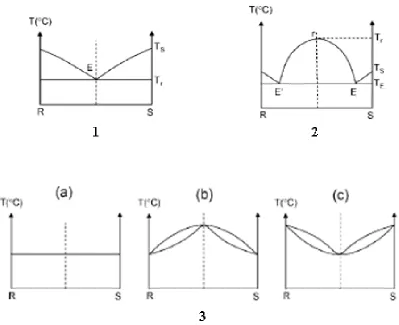
Figure 1- 2: Typical binary phase diagrams illustrating the three types of racemate (1. Conglomerate, 2. Racemic compound, 3. Pseudoracemate) [9]. ... 4
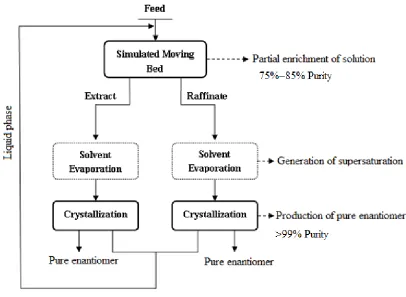
Figure 1- 3: The scheme of the coupling process of SMB and crystallization process for resolution of mandelic acid. ... 8
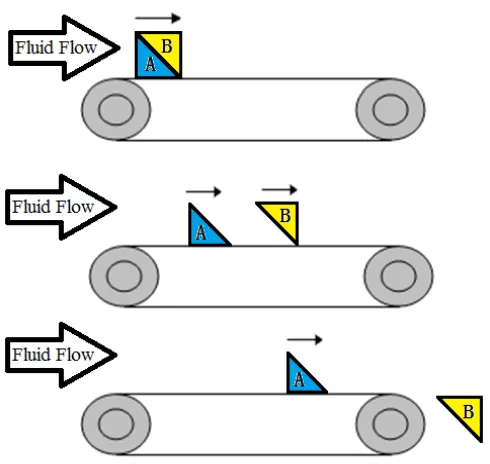
Chapter 2 Figure 2- 1: Analogy for elution chromatography. ... 19
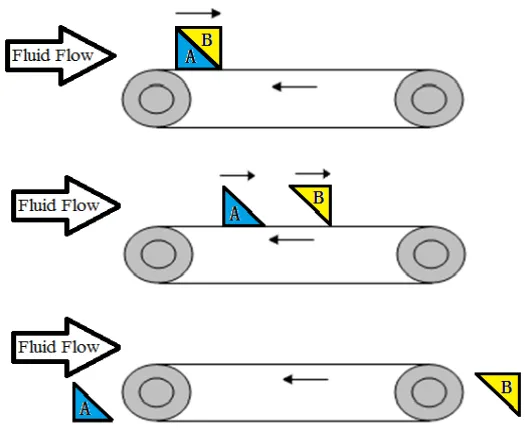
Figure 2- 2: Analogy for countercurrent elution chromatography. ... 20
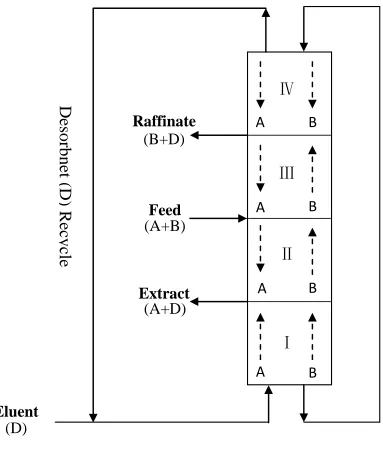
Figure 2- 3: Typical configuration of the true moving bed. ... 22
Figure 2- 4: Typical configuration of the simulated moving bed. ... 23
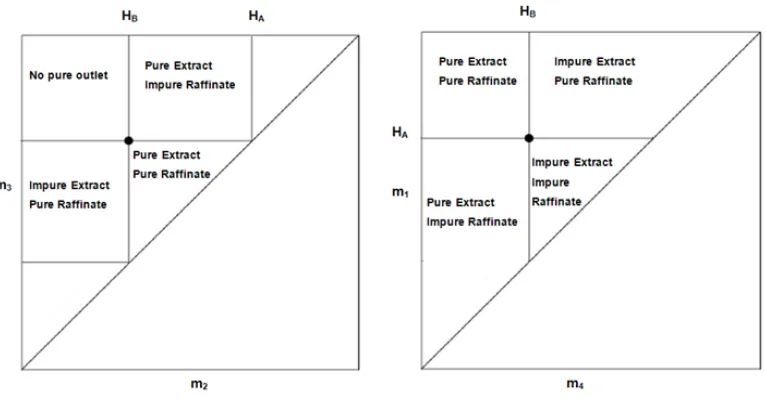
Figure 2- 5: Triangle theory: the different separation regimes on the (m2, m3) plane for the binary separation with linear adsorption isotherm. ... 34
Figure 2- 6: Triangle theory: the different separation regimes on the (m2, m3) plane for the binary separation with Langmuir adsorption isotherm. ... 36
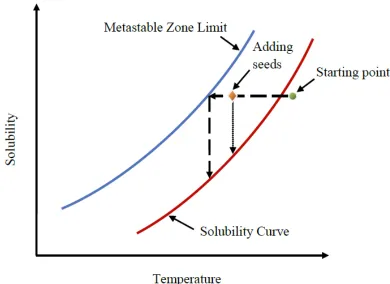
Figure 2- 7: Equilibrium phase diagram, unseeded crystallization (dash line) and seeded crystallization (dot line). ... 41
Figure 2- 8: The setup of the crystallization experiment: 1.ATR-FTIR, 2.FBRM, 3.ATR-FTIR monitor, 4.FBRM monitor, 5. Double jacketed 200 mL glass crystallizer, 6.Magnetic stirring bar, 7. Magnetic stirrer, 8.Bath circulator. .. 51
xvi
Chapter 3
Figure 3- 1: Molecular structure of mandelic acid. ... 68
Figure 3- 2: Binary phase diagram of the racemic mandelic acid [16]. ... 70
Figure 3- 3: Solubility of (R,S)-MA with different ethanol proportions in the mobile
phase... 79
Figure 3- 4: Influence of IPA proportion in the mobile phase on the elution profiles of
(R)-MA and (S)-MA... 80
Figure 3- 5: Influence of TFA proportion in the mobile phase on the retention and
enantioselectivity of (R,S)-MA. ... 81
Figure 3- 6: Best-fit of competitive modified Langmuir isotherm. ... 85
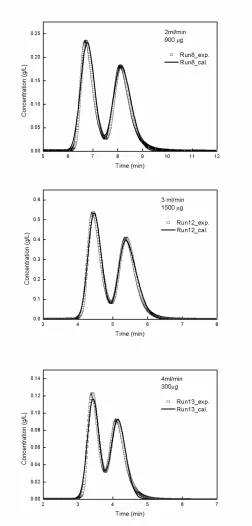
Figure 3- 7: Verification of the best-fit isotherm parameters with lower elution flow rate.
... 87
Figure 3- 8: Verification of the best-fit isotherm parameters with medium elution flow
rate. ... 88
Figure 3- 9: Verification of the best-fit isotherm parameters with higher elution flow rate.
... 89
Figure 3- 10: The competitive modifier Langmuir isotherm models for (R)- and (S)-MA
obtained by frontal analysis and inverse method, where q1=f(c1,c2=const)
and q2=f(c1=const, c2). ... 91
Chapter 4
Figure 4- 1: Schematic diagram of an open loop four section SMB unit. ... 99
Figure 4- 2: Separation of (R,S)-MA racemic compound using Chiralcel OD SMB
system. Regions of (m2, m3) plane based on the purity of both outlet stream
xvii
1/2/2/1. The numbers with the parenthesis in areas present the four different
separation regions: (1) pure raffinate and extract; (2) only pure extract; (3)
only pure raffinate; (4) no pure raffinate and extract. ... 105
Figure 4- 3: SMB performance as a function of switching time. ... 113
Figure 4- 4: SMB performance as a function of feed concentration. ... 115
Figure 4- 5: SMB performance as a function of feed flow rate. ... 116
Figure 4- 6: SMB performance as a function of extract flow rate. ... 118
Figure 4- 7: SMB performance as the column configuration. ... 120
Figure 4- 8: The experimental and simulated separation performance of Run 2. ... 122
Figure 4- 9: The experimental and simulated separation performance of Run 6. ... 123
Figure 4- 10: The experimental and simulated separation performance of Run 12. ... 124
Chapter 5 Figure 5- 1: IR spectra of mandelic acid water solutions with different concentrations. (a, raw data; b, intensity difference with respect to the intensity height at 1136 cm-1 ) ... 141
Figure 5- 2: IR spectra of mandelic acid water solution at various temperatures. (a, raw data; b, intensity difference with respect to the intensity height at 1136 cm-1 ) ... 142
Figure 5- 3:Concentration measurement from gravimetry method and from the ATR-FTIR calibration model at different temperatures. ... 143
Figure 5- 4: Solubility curves for (R)-MA and (R,S)-MA in water. ... 144
xviii
Figure 5- 6: (R)-MA and (R,S)-MA concentration profiles by experimental measurement
and model prediction. ... 149
Figure 5- 7: Model validation based on concentration profiles. ... 149
Figure 5- 8: Effect of initial concentration on the nucleation and growth rate of (R)-MA
and (R,S)-MA. ... 151
Figure 5- 9: Comparison of nucleation and growth rates of (R)-MA and (R,S)-MA with
the same initial saturated temperature. ... 153
xix
Nomenclature
Chapter 2
a Activity coefficient of a component
a* Activity coefficient of a saturation solution
a0 Particle size distribution of the seeds based on the uniform crystal shape
B Nucleation rate (no./(L∙min))
b Equilibrium constant (L/g)
c Solution concentration (g/L) Note: solute mass per solvent volume
c* Solubility (g/L)
c0 Initial concentration (g/L) ∆c Supersaturation (g/L)
Da Apparent dispersion coefficient (cm2/min)
DL Dispersion coefficients (cm2/min)
DR Desorbent requirement (g mobile phase /g feed)
Eb Activation energy of nucleation (kJ/mol)
Eg Activation energy of growth (kJ/mol)
f Function of the adsorption isotherm
G Growth rate (m/min)
H Coefficient for the non-specific adsorption sites
kb Nucleation rate coefficient (no./(m3∙min))
kb0 Nucleation frequency factor
kg Growth rate coefficient (m/min)
kg0 Growth frequency factor
km Lumped rate coefficient (s-1)
kv Volume shape factor
L Column length (cm) in SMB and Crystal size (m) in crystallization
Lmax Maximum size of the seeds (m)
Lmin Minimum size of the seeds (m)
xx
MT Magma or suspension density (g/g of solvent)
m Flow rate ratio
mi ith moment of the crystal size distribution (mi/L solvent)
n Population density (no/μm. L)
Pr Productivity (g feed/(g stationary phase∙min))
Pu Purity of the extract or raffinate stream (%)
Q Mobile phase flow rate (mL/min)
Qs Solid phase flow rate (mL/min)
q* Adsorbed amount in the stationary phase (g/L)
qs Saturation capacities (g/L)
R Universal gas constant (J/(mol∙K))
Rac Racemic compound
Re Recovery of the components (%)
SMB Simulated moving bed
Ss Fundamental supersaturation (g/L)
T absolute temperature (K or ºC)
Tend End temperature (ºC)
Tstart Start temperature (ºC)
T0 initial temperature (ºC)
TMB True moving bed
t Time (min)
t* Switching time (min)
tR Retention time (min)
t0 Holdup time of the column (min)
u Interstitial fluid velocity (cm/min)
V Geometric column volume (mL)
VD Dead volume (mL)
Greek symbols
ν Exponent constant
ε Void fraction of the column
xxi
ρs Solid phase density (g/cm3)
ρc Crystal density (g/m3) µ Chemical potential (J/mol)
µ0 Standard chemical potential (J/mol)
Subscripts and superscripts
1 Non-selective sites
2 Selective sites
A More retained component of racemic compound ((R)-Mandelic acid)
B Less retained component of racemic compound ((S)-Mandelic acid)
b Nucleation order
D Desorbent port
E Extract port
F Feed or feed port
g Growth order
i Component index (i=A or B)
k Section index
R Raffinate port
T Total
z Space coordinate
Chapter 3
b Equilibrium constants (L/g)
c Solution concentration (g/L) Note: solute mass per solvent volume
cm Concentration of component in the first plateau (g/L)
DL Dispersion coefficients (cm2/min)
Dm Molecular diffusion coefficient of the solute in the mobile phase
dp Diameter of the particle size (µm)
IPA Isopropyl alcohol
TFA Trifluoroacetic acid
k Total number of the experimental data
xxii
L Column length (cm)
m Coefficient for the non-specific adsorption sites
MA Mandelic acid
q* Adsorbed amount in the stationary phase (g/L)
qs Saturation capacities (g/L)
R R-Mandelic acid
Rs Resolution
S S- Mandelic acid
t Time (min)
tp Length of a rectangular injection (min)
t0 Holdup time of the column (min)
t1 Retention time of the first breakthrough fronts (min)
t2 Retention time of the second breakthrough fronts (min)
tp Length of a rectangular injection (min)
u Interstitial fluid velocity (cm/min)
Va Molar volume (cm3/mol)
w Molar fraction
z Space coordinate
Greek symbols
α Selectivity
ε Void fraction of the column µ Viscosity of solvent (kg/(s·m))
Subscripts and superscripts
cal Calculated results from the model
exp Experiment results
F Feed
i Component (i=1 or 2, 1 represent (S)-MA and 2 represent (R)-MA)
Chapter 4
b Equilibrium constants (L/g)
xxiii
cF Feed concentration of each components (g/ L)
DL Dispersion coefficients (cm2/min)
H Coefficient for the non-specific adsorption sites
kv Lumped rate coefficient (s-1)
L Column length (cm)
m Flow rate ratio
MA Mandelic acid
N Number of switches
NT Total number of the columns
Pu Purity of the extract or raffinate stream (%)
Q Mobile phase flow rate (mL/min)
q* Adsorbed amount in the stationary phase (g/ L)
qs Saturation capacities (g/ L)
t Time (min)
t* Switching time (min)
t0 Holdup time of the column (min)
u Interstitial fluid velocity (cm/min)
V eometric column volume (cm3)
VD Dead volume (cm3)
x Column number
z Space coordinate (cm)
Greek symbols
ε Void fraction of the column Subscripts and superscripts
A More retained component of racemic compound ((R)-Mandelic acid)
B Less retained component of racemic compound ((S)-Mandelic acid)
Ex Extract stream
F Feed
g Section index
i Component index (i=A or B)
xxiv
Ra Raffinate stream
Re Recovery of the components (%)
Chapter 5
ABS Absorbance
ATR-FTIR Attenuated total reflection Fourier transform infrared spectroscopy
B Nucleation rate (no/ L·s)
C Solute concentration (g/ L) Note: solute mass per solvent volume
C* Solubility of solution (g/L)
C*Tl Concentration of solution at the metastable zone limit(g/L) ∆C Supersaturation (g/L)
ΔCmax Maximal attainable supersaturation (g/L) Eb Nucleation activation energy (kJ/mol)
Eg Growth activation energy (kJ/mol)
FBRM Focused beam reflectance measurement
G Growth rate (μm/s)
kb Nucleation rate coefficient
kb0 Nucleation frequency factor
kg0 Growth frequency factor
kg Linear growth rate coefficient
kv Volume shape factor
L Crystal size (μm)
L[4,3] Volume weighted mean particle size (μm)
MA Mandelic acid
n Population density (no/μm. L)
N Number of experimental data
P Absorbance value of the peak
R Gas constant(8.314 J/(K·mol))
t Time (s)
T Temperature of solution (ºC)
xxv
Ts Temperature of the saturation concentration (ºC)
ΔTmax Maximal attainable supercooling of the metastable zone (ºC) Greek symbols
∆ Differential, difference
μ ith moment of the crystal size distribution (mi/L)
ρc Crystal density (g/μm3) Subscripts and superscripts
b Nucleation order
cal Results calculated by the crystallization model
exp Experiment results measured for ATR-FTIR
g Growth order
1
1.
Chapter 1
2
1.1
Background
Chirality is referred to the geometric property of an object that cannot be superposed onto
its’ mirror image. The original object and its mirror image are considered as the two
enantiomorphic forms of the chiral object which could be a hand or a snail shell. In
chemistry, that object is indicated as the molecules, and the two enantiomorphic forms are
named as enantiomers. A chiral center shown in Figure 1-1 is composed of a carbon atom
and four different atoms or groups. The chiral molecules are commonly found in nature,
such as amino acids, sugar and enzymes, even DNAs.
Figure 1- 1: Sketch of two enantiomers.
Chirality has attracted more and more attention in the modern pharmaceutical, food
and agricultural industries. The sale of chiral drugs is close to one-third of all drug sales
worldwide. Ordinary chemical production methods for chiral drugs produce a racemic
3 structural orientations in space. It is quite common to find that one isomeric form has a
therapeutic effect on the human body while its enantiomer is ineffective or even harmful.
The tragedy caused by thalidomide happened in 1960s’ is a frequently quoted example:
(R)-thalidomide was the beneficial agent for preventing morning sickness in pregnant
women while the other caused serious birth defects [1]. Hence, there is obvious benefit
from separating the two enantiomers to enhance drug’s safety and tolerability. The
importance of enantiopure drugs has risen dramatically in recent years due to new FDA
regulations requiring that all chiral bioactive molecules must be isolated and tested for the
efficacy and safety, and has to be as pure as possible containing a single pure enantiomer
[2]. More and more other countries have also established guidelines on development and
marketing of enantiopure drugs. Until 2007, FDA approved 70% of the new small
molecules which had one chiral center at least [3]. The percentage of single-enantiomeric
drugs in the market increased from 27% in 1996 to about 39% in 2002 [4]. A survey by
Frost & Sullivan estimated that the worldwide revenue of single-enantiomer compounds
was about $4.8 billion in 1999 and would reach about $15 billion by the end of 2009 [5].
Regulation and market sales stimulate the development of the techniques to get pure
enantiomers in industry and academic research.
Not all the chiral compounds can be found in pure enantiomer forms. Many chiral
compounds are racemates defined as the compounds composed of two enantiomers with
equimolar. Roozeboom [6] classified the racemates into three fundamental types by their
melting points: conglomerate, racemic compound and pseudoracemate (solid solution),
which are shown in Figure 1-2. Conglomerate is a mechanical mixture with
4 coexist in the same unit cell with an order 1:1 ratio, which causes the difficult chiral
separation. However, more than 90% of racemates belong to the racemic compound [7].
As homogenous racemic solid solution, pseudoracemate is racemic modification in the
solid state and composed of the equal amount of two enantiomers disarrayed in the crystal
lattice [8].
Figure 1- 2: Typical binary phase diagrams illustrating the three types of racemate (1. Conglomerate, 2. Racemic compound, 3. Pseudoracemate) [9].
There are essentially three methods that can be applied to obtain single pure
5 Some of chiral molecules are pure enantiomers in nature, such as carbohydrates,
terpense and alkaloids, which can be obtained by extraction method from the plant or
animal materials [7]. Pure enantiomers can also be synthesized from the chirality pool by
chemical manipulation or asymmetrically synthesized by prochiral substrates. For
example, enantiopure pyrroline N-oxides was used as the chiral pool molecules for α
-cyclopropyl-β-homoprolines [10] and Mitsunaga et al. applied the asymmetric synthesis
to produce the cyclic α-amino acid derivatives by the intramolecular reaction of
magnesium carbenoid with an N-magnesio arylamine [11]. The limitation of this method
is the availability of a molecule or an enantioselective catalyst suitable for the synthesis of
the target enantiomer and the long period for the development of a synthesis recipe.
Whereas, the chemistry involved in making a racemate form is much faster and less
expensive. Therefore, the best approach would be to synthesize the drug in racemate form
and separate the racemate to produce single pure enantiomer.
The process for the separation of the racemate, called enantiochiral resolution,
enantioseparation or chiral separation, includes the kinetic, membrane, capillary
electrophoresis, chromatography, and crystallization resolution. Kinetic resolution is
based on the different reaction rates of two enantiomers with a chiral entity, such as
catalysts [12]. The membrane resolution applies the chiral recognized sites on the
membrane to achieve the separation of the racemate [13]. The limitations of those two
methods are that the lifetime of catalysts and membranes is short and the recovery of
catalysts and membranes is energy and time consuming. Capillary electrophoresis can be
used to separate ionic species by their charge and frictional forces [14]. Although this
6 detection and the low productivity [15]. Crystallization is a very powerful technique but is
more system-specific. For a given racemate, finding a suitable crystallization process
usually involves elaborate experimental investigation. Crystallization resolution includes
the diastereomeric crystallization and direct crystallization. For diastereomeric
crystallization, diastereomeric salts, which are the products from the reaction of the
racemate with an optically active base, have different solubility and then they can be
separated by crystallization [16]. The direct crystallization can produce pure enantiomers
in the supersaturated partially enriched solution with the desired enantiomer seeds adding
[17, 18]. Crystallization resolution can produce the pure enantiomers in industrial scale.
However, it needs a large amount of the optically active base and the partially enriched
solution which cannot be obtained easily. Chromatography resolution is used to separate
the racemate by chiral stationary phase (CSP) with a single or a multi-column process,
such as high performance liquid chromatography (HPLC) [19] and simulated moving bed
(SMB) chromatography [20, 21]. This method can generate the pure enantiomers
efficiently in preparative scale, but a large amount of the chiral stationary phase and
mobile phase are required. A simulated moving bed unit is comprised of several fixed-bed
chromatographic columns in series and is divided into four sections by valves and
inlet/outlet ports, which can be switched periodically in the direction of the fluid flow
synchronously or non-synchronously to mimic the continuous countercurrent movement
of the solid phase. Compared with the conventional chromatographic techniques, SMB
has advantages with its continuous, stable, the less solvent consumption and the
7 To overcome the drawbacks of these single separation processes, a “Hybrid” process
has been proposed, combining two or more single separation processes to produce pure
enantiomers with the minimization of the costs and energy [23, 24].
1.2
Research objective and approaches
The major objective of this thesis is as follows:
Apply and evaluate the coupling process of SMB and direct crystallization to
separate racemic compound (i.e. mandelic acid).
In this coupling process, SMB chromatography is used to obtain a partially enriched
stream and followed by direct crystallization to achieve the complete chiral separation.
The lower purity requirement for SMB and solvent recycle can reduce the consumption of
the solvent and chiral stationary phase for SMB operation. The scheme of this coupling
8
Figure 1- 3: The scheme of the coupling process of SMB and crystallization process for resolution of mandelic acid.
It is noticed that only the enantioseparation of the racemic compound (R,S)-mandelic
acid by SMB and the crystallization process of the enantiomer and racemic compound
have been investigated in this thesis. I did some studies about the coupling process.
However, the results were not good. So, I didn’t include in this thesis. The simulation and
optimization for the coupling process will be studied in future.
Specifically, this study aims to achieve the following objectives:
• Chiral separation by SMB technology
9 Determination of the adsorption isotherm of the racemic compound on the
chiral stationary phase
Chiral separation of the racemic compound
• Direct crystallization
Development of metastable zone (MSZ) of the crystallization
Estimate the kinetics parameters for the crystallization process
Online-monitor the crystallization process
The following research activities have been carried out in this study to meet the major
objectives:
The mobile phase has been chosen based on the selectivity and resolution of the
racemic compound on the chiral stationary phase using HPLC.
The adsorption isotherm of the racemic mandelic acid has been determined by
inverse method and frontal analysis method.
Separation of the racemic mandelic acid was accomplished using a
semi-preparative SMB unit.
The metastable zone limit of mandelic acid in water was measured by ATR-FTIR
and FBRM.
The crystallization kinetic parameters of (R,S)-mandelic acid and (R)-mandelic
acid from aqueous solution have been determined by fitting the experimental data
with calculated crystallization process model.
Online monitoring of the crystallization process of mandelic acid has been carried
10
1.3
Thesis organization
This thesis is organized based on the article-integrated format and is composed of 6 main
chapters.
Chapter 1 gives a general overview of this thesis and followed by a comprehensive
review for the background of simulated moving bed technology and the crystallization
process in Chapter 2.
In Chapter 3, the resolution of racemic mandelic acid ((R,S)-MA) and numerical
determination of binary competitive isotherm of (R,S)-MA on the Chiralcel OD column
have been investigated in this study. The effects of the alcohol modifier and acidic
additive in the mobile phase on the retention and enantioseparation of (R,S)-MA were
studied at first. The inverse method was then used to determine the competitive isotherm
parameters of (R,S)-MA by minimizing the sum of square deviations between the model
predictions and the measured elution profiles. And the adsorption isotherm was verified
by frontal analysis method.
Chapter 4 depicts the chiral separation of the racemic mandelic acid ((R,S)-MA) by
simulated moving bed chromatography with Chiralcel OD columns experimentally and
numerically. The transport dispersion model combined with the modified Langmuir
isotherm was applied to predict the dynamic behaviour and separation performance of the
SMB process. The triangle theory was used to obtain the complete separation region of
the SMB operation. The influences of the switching time, loading, extract flow rate and
11 between the experimental data and model predictions proved the efficiency and reliability
of SMB modeling and triangle theory in the design as well as the operation of SMB
chromatography.
Chapter 5 presents the determination of the nucleation and growth kinetics of
(R,S)-mandelic acid ((R,S)-MA) and (R)-(R,S)-mandelic acid ((R)-MA) in aqueous solutions using an
unseeded cooling crystallization process. To obtain the nucleation and growth kinetics,
the solubility, metastable zone limits and supersaturation were measured by in-situ
attenuated total reflection Fourier transform infrared (ATR-FTIR) spectroscopy and
focused beam reflectance measurement (FBRM). The nucleation rate and growth rate
parameters were determined by a nonlinear optimization algorithm. The effects of initial
concentration and cooling rate on supersaturation and the nucleation rate were also
discussed.
In Chapter 6, the overall conclusion is made according to the results shown in the
previous chapters. It is also summarized that the limitations and recommendations of this
thesis. In addition, the future works are listed in final.
1.4
Contribution
The major contributions of this study are threefold. First of all, the adsorption isotherm of
the racemic mandelic acid on the preparative column by inverse method is studied at the
first time. The transport dispersive column model is combined with competitive modified
Langmuir isotherm model to simulate the chiral separation process on the HPLC. Those
12 also the first time to report the separation of the racemic mandelic acid on SMB unit in
preparative scale as well as the effects of operating conditions for mandelic acid systems
on SMB with Chiralcel OD columns. Those optimal operating conditions on the SMB are
significant to get the partially enriched solution for the crystallization. Moreover, the
solubility and metastable zone limit of mandelic acid in water as well as nucleation and
growth kinetics of mandelic acid have been studied systematically, which is essential to
13
1.5
Reference
1. Maier, N.M., P. Franco, and W. Lindner, Separation of enantiomers: needs,
challenges, perspectives. Journal Of Chromatography A, 2001. 906(1): p. 3-33. 2. Food and Drug Administration, FDA'S policy statement for the development of
new stereoisomeric drugs. Chirality, 1992. 4(5): p. 338-340.
3. Thayer, A.M., Chiral Chemistry. Chemical & Engineering News, 2008. 86(31): p. 12-20.
4. Caner, H., et al., Trends in the development of chiral drugs. Drug discovery today,
2004. 9(3): p. 105-110.
5. Rouhi, A.M., Chiral Chemistry: Traditional methods thrive despite numerous
hurdles, including tough luck, slow commercialization of catalytic processes.
Chemical & Engineering News, 2004. 82(24): p. 47-62.
6. Roozeboom, H.W.B., Löslichkeit und Schmelzpunkt als Kriterien für racemische
Verbindungen, pseudoracemische Mischkristalle und inaktive Konglomerate. Z.
Phys. Chem, 1899. 28: p. 494.
7. Sheldon, R.A., Chirotechnology :industrial synthesis of optically active
compounds. 1993, New York: Marcel Dekker. 423.
8. Jacques, J., A. Collet, and S.H. Wilen, Enantiomers, racemates, and resolutions.
1981, New York ;; Toronto: Wiley. 447.
9. Wang, Y. and A.M. Chen, Enantioenrichment by Crystallization. Organic Process
Research & Development, 2008. 12(2): p. 282-290.
10. Cordero, F.M., et al., Synthesis of α-Cyclopropyl-β-homoprolines. The Journal of
14 11. Mitsunaga, S., et al., Asymmetric synthesis of cyclic α-amino acid derivatives by
the intramolecular reaction of magnesium carbenoid with an N-magnesio
arylamine. Tetrahedron: Asymmetry, 2009. 20(14): p. 1697-1708.
12. Zhang, J.-Y., et al., Application of kinetic resolution using HCS as chiral auxiliary: Novel synthesis of β-blockers (S)-betaxolol and (S)-metoprolol. Chirality, 2009. 21(8): p. 745-750.
13. Xiong, W.-W., et al., Chiral separation of (R,S)-2-phenyl-1-propanol through
glutaraldehyde-crosslinked chitosan membranes. Journal of Membrane Science,
2009. 328(1-2): p. 268-272.
14. Kuhn, R. and S. Hoffstetter-Kuhn, Chiral separation by capillary electrophoresis.
Chromatographia, 1992. 34(9): p. 505-512.
15. Wang, X., et al., Chiral separation of propranolol hydrochloride through an SMB
process integrated with crystallization. Journal of Industrial and Engineering
Chemistry, 2006. 12(6): p. 868-876.
16. Kozma, D., CRC handbook of optical resolutions via diastereomeric salt
formation. 2002: CRC.
17. Lorenz, H., D. Polenske, and A. Seidel-Morgenstern, Application of preferential
crystallization to resolve racemic compounds in a hybrid process. Chirality, 2006.
18(10): p. 828-840.
18. Zhang, Y., et al., Nucleation and Growth Kinetics of (R)-Mandelic Acid from
Aqueous Solution in the Presence of the Opposite Enantiomer. Crystal Growth &
Design, 2010. 10(7): p. 2879-2887.
19. Yu, L., et al., Simultaneous determination of diastereoisomeric and enantiomeric
impurities in (1R,3R)-1-(1,3-benzodioxol-5-yl)-2-(chloroacetyl)-2,3,4,9-tetrahydro
-1h-pyrido [3,4-b] indole-3-carboxylic acid methyl ester a key intermediate of
tadalafil by chiral high‐performance liquid chromatography. Chirality, 2012.
15 20. Zhang, Y., K. Hidajat, and A.K. Ray, Enantio-separation of racemic pindolol on
Formula Not Shown -acid glycoprotein chiral stationary phase by SMB and
Varicol. Chemical Engineering Science, 2007. 62(5): p. 1364-1375.
21. Rajendran, A., G. Paredes, and M. Mazzotti, Simulated moving bed
chromatography for the separation of enantiomers. Journal of Chromatography A,
2009. 1216(4): p. 709-738.
22. Francotte, E.R. and P. Richert, Applications of simulated moving-bed
chromatography to the separation of the enantiomers of chiral drugs. Journal of
Chromatography A, 1997. 769(1): p. 101-107.
23. Lim, B.-G., et al., Recovery of (−)-praziquantel from racemic mixtures by
continuous chromatography and crystallisation. Chemical Engineering Science,
1995. 50(14): p. 2289-2298.
24. Svang-Ariyaskul, A., W.J. Koros, and R.W. Rousseau, Chiral separation using a
novel combination of cooling crystallization and a membrane barrier: Resolution
16
2.
Chapter 2
17
2.1
Simulated moving bed (SMB)
2.1.1
Background of SMB
The increasing awareness of the importance of chirality in terms of therapeutic effects has
stimulated a stricter regulation and a growing market demand for the pure enantiomers.
The ever-increasing demand for the pure enantiomers makes the development of the
efficient approaches for the separation of the racemic mixture. Chromatographic
separation has become one of the most efficient methods for the chiral separation.
Compared to the traditional batch chromatography, the continuous counter current
chromatography has its advantages with the maximization of the mass transfer driving
force, the reduction of the solvent consumption and the increase of the purity and
productivity[1]. However, the movement of the solid phase leads to the problems of
attrition and mixing. To overcome those drawbacks of the true moving bed (TMB), the
concept of the simulated moving bed (SMB), a continuous countercurrent multi-column
chromatographic separation technique as the practical implement of the true moving bed
(TMB) process, was invented by Broughton and Gerhold [2] in 1961.
SMB process was first applied in 1960s by the UOP Inc. to separate the p-xylene from
the mixture on zeolites. In the early stage of the development, commercial large-scale
SMB units were widely implemented not only in the petro-chemical industry but also in
the sugar industry, such as separation of glucose and fructose on ion exchange resins.
The development of the HPLC techniques and the stationary phases made the shorter
18 available for the chromatographic separation process in 1970s. In addition, SMB unit was
downscaled based on the HPLC separation technology in the earlier 1990s. Due to the
increasing demand for the pure enantiomers by the regulation of FDA, SMB has been
increasingly adopted in fine chemistry, biological technology and pharmaceutical science,
especially for chiral separation [3-6]. The first chiral resolution by SMB was performed
on phenyl-ethyl alcohol by Negawa and Shoji in 1992 [4]. Daicel chemicals and UCB
pharma have applied SMB unit to produce the pure enantiomers since 1998 with the
production of several tons per year [7]. With the pioneering works and the development
of the chiral stationary phase, SMB is more popular as the method of chiral resolution in
the pharmaceutical area [8-11].
2.1.2
Chromatography
Chromatography is a separation process based on the different partition between a
flowing fluid (mobile phase) and a solid adsorbent (stationary phase). This technology
was first applied by Mikhail Tswett (1872-1919) for the separation of the plant pigments
with the calcium carbonate in 1906.
The principle of the elution chromatography can be illustrated in Figure 2-1, where the
blue triangle with the letter ‘A’ and the yellow triangle with the letter ‘B’ are considered
as the more and less retained substances, respectively. Although starting together, the
triangle ‘B’ will be completely separated from the triangle ‘A’ and washes out with the
fluid flow first and then the triangle ‘A’ flows out later, since the triangle ‘B’ has less
19
Figure 2- 1: Analogy for elution chromatography.
2.1.3
Continuous counter-current chromatography
The counter-current chromatography is that the mobile phase and solid phase move in the
opposite direction, which can be illustrated in Figure 2-2. The triangle ‘A’ and ‘B’ are
pushed by the fluid flow on the convey belt moving in the opposite direction. The triangle
‘A’ is more affinity to the convey belt than triangle ‘B’ which is easier to leave the convey
belt with the flowing fluid. So the triangle ‘A’ moves slower than ‘B’. Then there are
three cases in terms of the velocity of the convey belt. If the velocity of the convey belt is
larger than that of ‘B’ or less than that of ‘A’, the net velocity with one direction will push
both of the triangles to the right end or to the left end of the belt. Another case is that the
velocity of the convey belt is intermediate to that of two triangles which leads to two
opposite directions of the net velocities, one for ‘A’ to the left and the other for ‘B’ to the
20 respectively. The key of the process design is to determine the intermediate velocity
which will be discussed in the following section. In the counter-current flow, the
maximization of the separation driving force between the solid and liquid phase makes
the separation more efficient.
Figure 2- 2: Analogy for countercurrent elution chromatography.
Here, ‘continuous’ means the continuous injection of the feed stream. The continuous
chromatography has its advantages with the minimum capital operating costs and
maximum throughput.
2.1.3.1True moving bed (TMB)
It is called true moving bed because the solid phase is moving naturally. A typical
configuration of the true moving bed is illustrated in Figure 2-3 for the binary separation
of species A and B. Here, A and B are assumed as the more and less retained component,
21 and outlet (raffinate and extract) ports. The solid phase is introduced at the top of the
column and moves downward with gravity. Meanwhile, the mobile phase comes from the
bottom and moves upward. The sample with species A and B is fed continuously in the
middle of the column between section II and III and diluted by the desorbent flow D. The
strongly adsorbed A is absorbed by the sinking solid phase in section II and III. And then
that solid phase with A is washed by the rising mobile phase in section I. So A can be
collected in the extract port. As a less adsorptive product, B is gradually desorbed by the
rising mobile phase from the solid phase in section II and III and can be collected in the
raffinate port. The solid phase can be regenerated in section I by desorbing A with the
rising mobile phase. And the desorbent (mobile phase) can also be cleaned by removing B
with the sinking solid phase in section IV.
The earliest large-scale moving bed process is known as the hypersorption process [12,
13]. Although the true moving bed system can be used to carry out a lot of work [14], the
practical problems in design and operation are insuperable. The physical movement of the
solid phase leads a number of problems such as the particle attrition, expansion of the bed
22
Ⅳ
Ⅰ
Ⅱ
Ⅲ
A
A
A
A
B
Raffinate
Feed
Extract
(B+D)
(A+B)
(A+D)
Eluent
(D)
D
es
or
bne
t (
D
) R
ecyc
le
A
ds
or
be
nt
(
S
) C
irc
ul
ati
on
B
B
B
Figure 2- 3: Typical configuration of the true moving bed. 2.1.3.2Simulated moving bed (SMB)
The simulated moving bed process overcomes the problems caused by the movement of
solid phase in true moving bed process. A simulated moving bed unit is comprised of
several fixed-bed chromatographic columns in series and is divided into four sections by
23 fluid flow synchronously or non-synchronously to mimic the continuous countercurrent
movement of the solid phase [15]. A typical configuration of the SMB is shown in Figure
2-4.
Figure 2- 4: Typical configuration of the simulated moving bed.
Compared with the TMB, SMB system uses the fixed solid phase in the series columns
instead of the moving solid phase to reduce the particle attrition and bed expansion
effectively and make the system cleaner and more environmentally attractive. Meanwhile,
the countercurrent movement of the solid phase is accomplished by shifting all the ports
over one column simultaneously in the same direct as fluid flow instead of moving by
gravity, which is much easier to control the movement of solid. When the length of SMB
columns becomes infinitesimal and the number of the columns becomes infinite, the SMB
can be assumed as TMB. The relationship between TMB and SMB is illustrated in Table
24
Table 2- 1: Relationship between a TMB and SMB
TMB SMB
Solid phase Fixed SMB columns
Steady state Periodic steady state
Solid flow rate
Qs
Shift all ports periodically
𝑡∗= 𝑉(1− 𝜀)/𝑄
𝑠 (2-1)
Internal flow rate
𝑄𝑘𝑇𝑀𝐵,𝑘= 𝐼,𝐼𝐼,𝐼𝐼𝐼,𝐼𝑉
Internal flow rate
𝑄𝑘𝑆𝑀𝐵 =𝑄𝑘𝑇𝑀𝐵+�1−𝜀𝜀 � 𝑄𝑠 (2-2)
Nowadays, the simulated moving bed process has replaced true moving bed as a
popular technique of the continuous counter-current chromatography in the industry.
2.1.4
Column model for SMB
In this section, the column model for the SMB process is presented. The assumptions of
the model are listed as follows [17].
1) The column is radial homogeneous for the column, i.e. homogeneity and stability
of column packing.
2) The axial dispersion coefficient is constant.
3) The fluid flow is constant and the void fraction is the same in the column.
25 5) Both of the phases have the same partial molar volumes of the sample components.
6) In the isotherm definition, the solvent or the weak solvent is not adsorbed by the
stationary phase.
7) There are no thermal effects and the heat effects on the adsorption. i.e. the
migration of a band is not effected by temperature.
8) Operating condition is constant, i.e. constant temperature, pressure, mobile phase,
flow rate.
2.1.4.1Ideal model
The assumption of the ideal model is that the equilibrium between solid and liquid phases
is instantaneous and the column efficiency is infinite. But the axial dispersion and the
mass transfer resistance are neglected. The column mass balance under the ideal model is
written as
𝜕𝑐𝑖𝑘
𝜕𝑡 +
1−𝜀 𝜀 ∙
𝜕𝑞𝑖𝑘
𝜕𝑡 +𝑢 ∙ 𝜕𝑐𝑖𝑘
𝜕𝑧 = 0, (𝑖 =𝐴, 𝐵) (2-3)
where cik and qik are the concentrations of the solute in the liquid and solid phases of the
enantiomer i in the section k, respectively. z is space coordinate and t is time. ε is the void
fraction of the column. u is interstitial fluid velocity. Several cases [18-20] with ideal
model showed an excellent agreement between the concentration profiles calculated from
26
2.1.4.2Equilibrium dispersive (ED) model
The equilibrium dispersive model assumes instantaneous and constant equilibrium
between the both phases, and takes account for the axial dispersion and the mass transfer
resistance. However, the mass transfers are fast. A lumped apparent dispersion coefficient,
Da, is used to generalize both effects. That dispersion coefficient is assumed as constant in
all the columns of the SMB process for the sake of the simplicity. The column mass
balance under the equilibrium dispersive is written as
𝜕𝑐𝑖𝑘 𝜕𝑡 + 1−𝜀 𝜀 ∙ 𝜕𝑞𝑖𝑘 𝜕𝑡 +𝑢 ∙ 𝜕𝑐𝑖𝑘 𝜕𝑧 =𝐷𝑎∙ 𝜕2𝑐𝑖𝑘
𝜕𝑧2 , (𝑖= 𝐴,𝐵) (2-4)
The apparent dispersion coefficient can be derived from the column efficiency which
is expressed by the number of theoretical plates, Np.
𝐷𝑎 = 2𝑁𝑢𝐿𝑝𝑐 (2-5)
where u is interstitial fluid velocity and Lc is column length. This numerical solution of
the model was successfully applied in many cases [11, 17, 21].
2.1.4.3Transport dispersive (TD) model
The transport dispersive (TD) model is frequently applied to describe the mass transfer in
the solid phase and the mass balance between solid phase and liquid phase along the
column in liquid chromatography. In this model, the kinetics of adsorption–desorption is
infinitely fast but not for the mass transfer kinetics [22-24]. The mass transfer kinetics of
27 the solid film linear driving force is used in the model. The differential mass balance and
the lumped kinetic models are shown in the following equations.
𝜕𝑐𝑖𝑘 𝜕𝑡 + 1−𝜀 𝜀 ∙ 𝜕𝑞𝑖𝑘 𝜕𝑡 +𝑢 ∙ 𝜕𝑐𝑖𝑘 𝜕𝑧 =𝐷𝐿∙ 𝜕2𝑐𝑖𝑘
𝜕𝑧2 , (𝑖= 𝐴,𝐵) (2-6)
𝜕𝑞𝑖𝑘
𝜕𝑡 =𝑘𝑚(𝑞𝑖𝑘∗ − 𝑞𝑖𝑘) (2-7)
where DL is the dispersion coefficient. km is the lumped rate coefficient. q*ik is the
adsorbed amount of each enantiomers in the stationary phase equilibrated with the mobile
phase at the concentration cik. That can be evaluated by the competitive adsorption
isotherm for the binary separation.
The initial and boundary conditions for this problem are
𝑐𝑖𝑘(𝑧,𝑡 = 0) = 0,𝑞𝑖𝑘(𝑧,𝑡= 0) = 0 (2-8)
𝑐𝑖𝑘(𝑧= 0,𝑡) =𝑐𝑖𝑘𝑖𝑛,𝑞𝑖𝑘(𝑧= 0,𝑡) =𝑓𝑖�𝑐𝐴,𝑘𝑖𝑛,𝑐𝐵,𝑘𝑖𝑛 � (2-9)
where f is the function of the adsorption isotherm.
2.1.5
Competitive adsorption isotherm models
The competitive adsorption isotherm is the equilibrium isotherm which describes the
distribution of dilute sample solutes with two components between the stationary and the
mobile phase. Those adsorption behaviours are described by several models [17] which
are used to determine the possible adsorption isotherm on the column. In this section,
28
2.1.5.1Competitive Langmuir isotherm
The competitive Langmuir isotherm model assumes that the monolayer of the adsorbate
molecules can be held by a homogeneous adsorbent surface [17]. At equilibrium, the rate
of adsorption and desorption is equal for each component. The model is given as
𝑞𝑖∗ = 1+𝑏𝐴𝑞𝑐𝑠𝑏𝐴𝑖+𝑏𝑐𝑖𝐵𝑐𝐵 (2-10)
where qs is the monolayer capacity for the stationary phase, bi is the ratio of the rate
constants of adsorption and desorption. This model is widely used to study the adsorption
behaviour on the chiral stationary phase. Enmark et al. [25] applied this model to
determine the adsorption behaviour of racemic methyl mandelate on a
tris-(3,5-dimethylphenyl) carbamoyl cellulose chiral stationary phase. Asnin et al. [26] used it to
study the adsorption of Naproxen enantiomers on the chiral stationary phase Whelk-O1.
That model can also be used in SMB. For example, Mihlbachler et al. [27, 28] studied the
effect of the homogeneity of the column set on the SMB performance based on the
competitive Langmuir isotherm model.
2.1.5.2Competitive biLangmuir isotherm
This model assumes two different types of binding sites with either one being
homogeneous on the surface of the stationary phase. Competitive bi-Langmuir isotherm
model is written as:
29 where q1s and q2s are the saturation capacities of the two sites; b1,i and b2,i are the
equilibrium constants of the two sites for two enantiomers i. The competitive biLangmuir
adsorption isotherm is widely applied to describe the competitive retention mechanism of
chiral molecules on various chiral stationary phases. This model was applied in the
numerical determination of the competitive isotherm of the racemic mixture of the
1-phenyl-1-propanol enantiomers [29] and in the development of a new approach about the
inverse method on plateaus for isotherm determination[30]. And it was also used to study
the isotherm behaviour of the mandelic acid enantiomers mixture on cellulose-based
chiral stationary phase [24].
2.1.5.3Competitive Tóth isotherm
The competitive Tóth model [31] can also be applied to describe adsorption isotherm.
This model assumes that the sites on the sorbent are heterogeneous and there exists the
maximum adsorption energy which is larger than the sorption energy generated by the
most sites.
𝑞𝑖∗ = 𝑞𝑠𝑏𝑖𝑐𝑖 [1+(𝑏𝐴𝑐𝐴+𝑏𝐵𝑐𝐵)𝜐]
1
𝜐 (0 <𝜐 < 1), (𝑖=𝐴,𝐵)
(2-12)
where qs is the monolayer capacity of the chiral stationary phase, bi is the equilibrium
constants of the adsorption and υ is an exponent constant. Felinger et al. [32] applied this
model to determine the adsorption isotherm of the 1-indanol enantiomers. This model was
also applied by Zhang et al. [24] to analyze the isotherm behaviour of the mandelic acid
30
2.1.6
Node model
For a classic SMB process, the node models describing the mass balances of flow rates at
each node are given as [16]
Desorbent inlet node (Eluent)
𝑄𝐷 =𝑄1− 𝑄4 (2-13)
𝑐𝑖,𝐷 = 𝑄1𝑐𝑖,1
𝑖𝑛−𝑄 4𝑐𝑖𝑜𝑢𝑡,4
𝑄𝐷 (2-14)
Extract withdrawal node
𝑄𝐸 =𝑄1− 𝑄2 (2-15)
𝑐𝑖,𝐸 =𝑐𝑖,1𝑜𝑢𝑡 =𝑐𝑖,2𝑖𝑛 (2-16)
Feed inlet node
𝑄𝐹 =𝑄3− 𝑄2 (2-17)
𝑐𝑖,𝐹 = 𝑄3𝑐𝑖,3
𝑖𝑛−𝑄 2𝑐𝑖𝑜𝑢𝑡,2
𝑄𝐹 (2-18)
Raffinate withdrawal node
𝑄𝑅 = 𝑄3− 𝑄4 (2-19)
31 where QD is the desorbent flow rate, QE is the extract flow rate, QF is the feed flow rate
and QR is the raffinate flow rate. The superscripts “in” and “out” refer to the inlet and
outlet streams, respectively.
2.1.7
Design strategy for SMB
The operation of a given SMB process to isolate the racemates is dictated by several
parameters, namely the flow rates in the four sections and the switch time, based on the
target performance [33]. Morbidelli groups [34, 35] exploited a triangle theory to
ascertain these parameters for the design of SMB process. They introduced the net flow
rate ratio, mk, based on the assumption that all kinetics is neglected and the SMB is
similar to TMB which means that the internal mobile phase velocity of SMB is the same
as that of TMB columns, and the solid phase velocity in the TMB units is equal to the
simulated solid velocity in the SMB. The TMB and SMB process have been proven to be
equivalent if the conversion rules in Table 2-1 are fulfilled.
Then, the net flow rate ratio can be written as
𝑚𝑘 =𝑄𝑘𝑡
∗−𝑉𝜀−𝑉 𝑘𝐷
𝑉(1−𝜀) (𝑘=𝐼, … ,𝐼𝑉) (2-21)
where QkSMB and QkTMB are the flow rates of the fluid phase in section k of a SMB unit
and in the equivalent TMB unit, respectively. Qs is the solid phase flow rate in TMB unit.
V is the column volume and t* is the switching time. A triangle shape region, formed in
the (m2, m3) plane for linear and nonlinear isotherms, with or without mass transfer
32
2.1.7.1Linear isotherm
Triangle theory with linear adsorption isotherm was applied to the SMB design firstly.
The linear isotherm is described as
𝑞𝑖 =𝐻𝑖𝑐𝑖 (2-22)
𝐻𝑖 =𝑡𝑖𝑅,𝑘−𝑡0,𝑘
𝑡0,𝑘
𝜀
(1−𝜀) (2-23)
𝑡0,𝑘 =𝑄𝑉𝜀𝑘 (2-24)
where Hi is the Henry constant of the component i. tikR and t0k are the retention time and
the dead time of component i in section k, respectively.
Considering the specific function of each section in SMB, the criteria of the complete
separation of the binary mixture in linear case can be determined. The complete
separation requires the switch time in the section II and III should be larger than the
retention time of component B and smaller than that of component A. It ensures the
component B goes out in the raffinate port without the pollution of component A. That
also assures the component B completely removes from the stationary phase and does not
contaminate the extract port after next switch whereas component A remains in the
stationary phase and is eluted by the desorbent flow to the extract port. Section I is used
for the solid phase regeneration which means component A should be completely wash
out stationary phase. So, the switch time should be larger than the retention time of