TOPO-SEQUENCE ANALYSIS OF CLIMATE VARIABILITY AND
LAND USE CHANGES AMONG SMALLHOLDER FARMERS IN
MERU COUNTY, KENYA
Gilbert Muthee Mwoga (BSc, MSc)
N85/13608/2009
A Thesis Submitted in Fulfilment of the Requirements for Award of the
Degree of Doctor of Philosophy in the School of Environment Studies of
Kenyatta University
DECLARATION
This thesis is my original work and has not been presented in any other university for any degree or any other award.
Signature ...Date:... Mwoga Gilbert Muthee
(N85/13608/2009)
Department of Environment and Community Development
SUPERVISORS
We confirm that the work reported in this thesis was carried out by the candidate under our supervision.
Signature:... Date:... Dr. Fuchaka Waswa
Department of Agricultural Resources Management
Signature:... Date:... Prof. Joy Obando
DEDICAT ION
ACKNOWLEDGEMENT
TABLE OF CONTENTS
DECLARATION ... I DEDICATION ... II ACKNOWLEDGEMENT ... III TABLEOFCONTENTS ... IV LISTOFFIGURES ... VI LISTOFTABLES... VII LISTOFPLATES ... VIII DEFINITIONSOFKEYTERMS ... IX ACRONYMSANDABBREVIATIONS ... X ABSTRACT... XIII
CHAPTER 1:INTRODUCTION ... 1
1.1 Background ... 1
1.2 Problem Statement and Justification ... 2
1. 3 Research Hypotheses ... 3
1.4 Objectives ... 3
1. 5 Research Questions ... 3
1.6 Conceptual Framework ... 4
CHAPTER2:LITERATUREREVIEW ... 7
2.1 Global Discourse on Climate Variability ... 7
2.2 International Responses to Climate Variability ... 12
2.3 Overview of National Responses to climate variability ... 16
2.4 Climatic Variability and Sustainable Land Management ... 19
2.5 Summary of Research Gaps ... 23
CHAPTER3:METHODOLOGY ... 25
3.1 Study Area Characteristic ... 25
3.3 Target Population ... 28
3.4. Sample Size and Sampling Procedure ... 28
3.5. Data Collection Methods ... 29
3.6 Data Analysis Methods ... 33
3.7 Ethical Dimension ... 39
CHAPTER 4: RESULTSANDDISCUSSIONS ... 40
4.1 Evidence and Perceptions on Climate Variability ... 40
4.2 Trends in Land Use Changes ... 63
4.3 Emerging Land Uses ... 85
4.4 Future projections on land use and cover types ... 106
CHAPTER5:SUMMARY,CONCLUSIONANDRECOMMENDATIONS ... 116
5.1 Summary ... 116
5.2 Conclusions ... 117
5.3 Recommendations... 118
6.REFERENCES ... 120
7.APPENDICES ... 133
7.1 The Government Departmental Head ... 133
7.2. Non-state service providers ... 138
7.3: Household Survey Questionnaire ... 141
7.4: Focus Group Discussion ... 154
7.5: In-Depth Interview Guide ... 160
LIST OF FIGURES
Figure 1: Sustainable Livelihood Framework ... 4
Figure 2: Location of the study area ... 25
Figure 3: Sequence and characterized Sub-Agro-ecological zones of this study ... 27
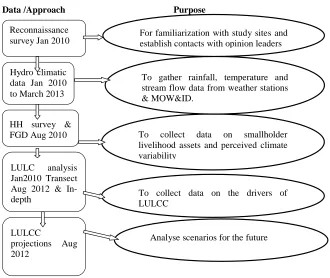
Figure 4: Summarized data collection phases ... 30
Figure 5: Trend of MAM cumulative departure for the 3 stations ... 42
Figure 6: Trend of ONDJ cumulative departure for the 3 stations ... 42
Figure 7: Trend of annual average minimum temperature departure ... 47
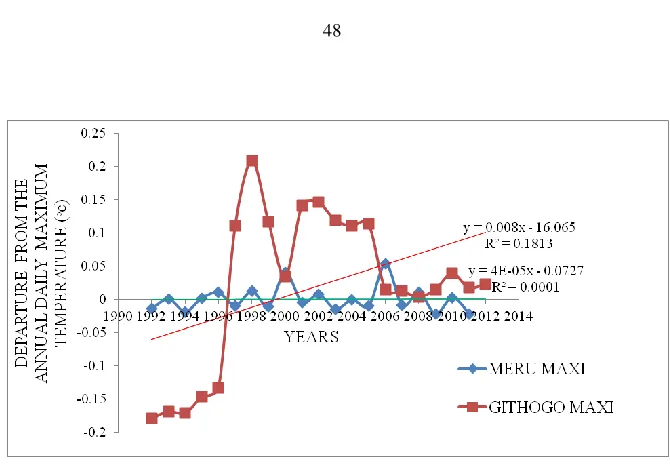
Figure 8: Trend of annual average maximum temperature departure ... 48
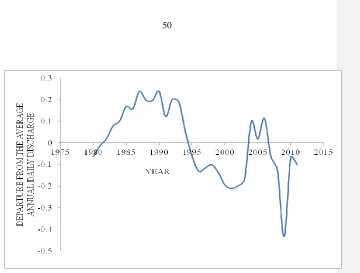
Figure 9: Trend of departure from long term average of Kithino River ... 50
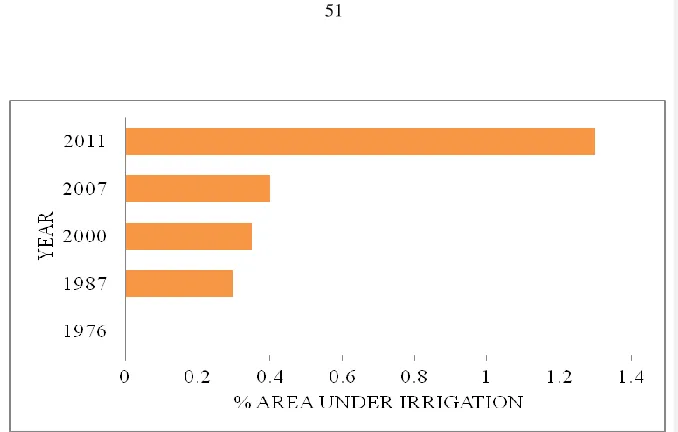
Figure 10: Trend of area under irrigated crop in Meru central region ... 51
Figure 11: Respondents perceived negative climate variability ... 56
Figure 12: Strategies to cope with prolonged intense rains ... 60
Figure 13: Area under major crops 1996 to 2011 in Meru central Region ... 66
Figure 14: Trend line between area under forest and agricultural ... 73
Figure 15: Trend lines between area under rainfed crops and other land use types . 83 Figure 16: Households major livelihood types ... 87
Figure 17: Distribution of major farm enterprises among respondents ... 88
Figure 18: Distribution in percentage of education level of household heads ... 90
Figure 19: proportion distribution of sources of the credit ... 93
Figure 20: Distribution of number of groups household heads are affiliated to. ... 94
Figure 21: Scree plot showing the Eigen value for all the components ... 97
Figure 22: Distribution in Percentage of household types within SAEZ ... 104
Figure 23: Quantitative projections of trends in land use... 106
Figure 24: Spatial outlook in 2000 and projected outlook in 2025 ... 107
Figure 25: Land use trends under “market forces” scenario ... 111
LIST OF TABLES
Table 1: Sample size ... 29
Table 2: The conversion elasticity parameters for the six classes ... 36
Table 3: The Buishand Range Test Results; ... 41
Table 4: Seasonal rainfall CV and P-value for the 3 weather stations ... 43
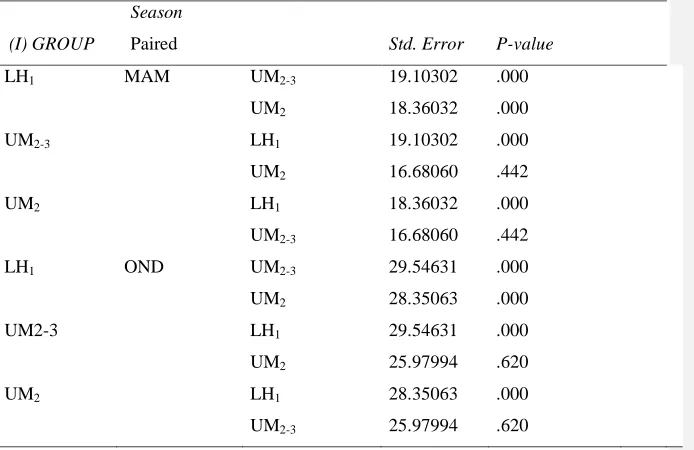
Table 5: Results of multiple comparison of seasonal mean ... 45
a le 6: i er ithino tream ischarge , SD and C.V ... 49
Table 7: Farmers perceptions on climate variability ... 53
Table 8: Farmers perceived impacts... 54
Table 9: Component Score matrix for climate variability related coping strategies 57 Table 10: Coping strategies for seasonal rainfall fluctuations ... 58
Table 11: Component score matrix for rainfall fluctuations coping strategies ... 59
Table 12: Component score matrix for drought coping strategies ... 60
Table 13: Ratio of Men to Women preferring use of the Strategy ... 62
Table 14: Percentage Area under Various land use classes 1976 to 2011 ... 65
Table 15: Results of decadal average rainfall trend against land use types ... 67
Table 16: Multiple Comparisons... 68
Table 17: Transect walk from 2213.4M forest line to 890M ASL ... 70
Table 18: Percentage Land use change in LH1 ... 72
Table 19: Percentage Land use change in UM1 ... 75
Table 20: Land use change in UM2 ... 76
Table 21: Land use change in UM3 ... 78
Table 22: Land use change in LM3 ... 79
Table 23: Land use change inLM4 ... 81
Table 24: Land use change in LM6 ... 82
Table 25: Summary of distribution of drivers of LULCC among Sub-AEZ... 84
Table 26: Result of the emerging land uses within sub-AEZ ... 85
Table 27: Distribution of Average land sizes in the seven Sub-AEZ ... 91
Table 28: Proportional of respondents accruing group benefits ... 95
Table 29: Livelihood assets as the factor and their corresponding variables ... 96
Table 30: Results of components score analysis ... 98
Table 32: Distances from one household type to another ... 101 Table 33: Characteristics of household types ... 102
LIST OF PLATES
DEFINITIONS OF KEY TERMS
Agro-ecological Zone: is a land resource mapping units in terms of climate, land form, soils and land cover and having a specific range of potentials and constraints for land use.
Assets: stocks of different types of capital that can be used directly or indirectly to generate livelihoods. They can give rise to a flow of output, possibly becoming depleted as a consequence, or may be accumulated as a surplus to be invested in future productive activities.
Climate variability: The way climate fluctuates yearly above or below a long-term average value or variations in the mean state of the climate and variations in other statistics (such as the occurrence of extremes) on all temporal and spatial scales beyond that of individual weather events.
Climate change: Is a long-term change in the state of the climate and which is identified by changes in the means and/or changes in the variability, or changes in the frequencies or intensities of extreme events.
Coping strategies: Often a short-termresponse to a specific shock, such as drought. Actions could include switching to cultivation of drought-resistant crops. Coping capacity:Degree to which a system can successfully grapple with a stimulus
(similar to adaptability, but includes more than adaptive means of “grappling”).
Land use: Human uses of the land, including actions that modify or convert land cover from one type to another.
Resilience: Degree to which a system rebounds, recoups, or recovers from an external perturbation
Response: Way in which a system reacts to stimuli (broader than cope and adapt because responses need not e “successful”)
Smallholder farm: the size of the farm within the study area that was less or equal to twelve hectares
ACRONYMS AND ABBREVIATIONS
AEZ Agro-Ecological Zones
AIACC Assessment of Impacts and Adaptations to Climate Change ANOVA Analysis of Variance
AP Adaptation programme
ASAL Arid and Semi Arid Lands
ASCII American Standard code for Information Interchange CAHOSCC Conference of African Heads of state on climate change CCAA Climate Change adaptation in Africa
CDM Clean Development Mechanism
CDI Cumulative Departure Index
CERs Certified Emission Reductions
CNRS Centre National de la Recherche Scientifique COMESA Common Market for East and Southern Africa DANIDA Danish International Development Agency DAO District Agriculture Officer
DFID Department for International Development DFS Department of Forest Services
DMCN Drought Monitoring Centre in Nairobi
DRSRS Department of Resource Surveys and Remote Sensing
EAC East Africa Community
EMCA Environmental Management and coordination Act ENSO El Niño Southern Oscillation
EU ETS European Union’s Emissions rading ystem FAO Food and Agriculture Organization
FGD Focused Group Discussion
GDP Gross Domestic Product
GEF Global Environmental Facility
GHGs Greenhouse Gases
GIS Geographic Information Systems
GOK Government of Kenya
ICRAF International Centre for Research in Agro-forestry
ICRISAT International Crops Research Institute for the Semi-Arid Tropics IFAD International Fund for Agriculture Development
IFPRI International food Policy Research Institute IIASA International Institute for Applied Systems Analysis IPCC Intergovernmental Panel on Climate Change
JI Joint Implementation
JICA Japan International Cooperation Agency
KACCA Kenya adaptation to climate change in Arid and Semi-arid lands KARI Kenya Agricultural Research Institute
KMD Kenya Meteorological Department KNBS Kenya National Bureau of Statistics KRDS Kenya Rural Development Strategy LDCF Least Developed Countries fund LDCs Least developed countries
LH Lower Highland
LM Lower Midland
LUCID Land use change impacts and dynamics
LULC Land Use Land Cover
LULCC Land Use Land Cover Change MDGs Millennium Development Goals MOA Ministry of Agriculture
MOW&I Ministry of Water and Irrigation
NAPAS National Adaptation Programmes of Action NEMA National Environmental Management Authority NGOs Non Governmental Organizations
NIB National Irrigation Board
NOAA National Oceanic and Atmospheric Administration PRA Participatory Rural Appraisal
PRSP Poverty Reduction Strategy Paper RCBK Regional Coffee Board of Kenya SCCF Special Climate Change Fund
SST Sea-surface temperature
TA Tropical Alpine
UH Upper Highland
UM Upper Midland
UNDP United Nations Development Programme UNEP United Nations Environment Programme
UNFCCC United Nations Framework Convention on Climate Change USAID United States Agency for International Development
WFP World Food Programme
ABSTRACT
CHAPTER 1: INTRODUCTION
1.1 Background
According to the intergovernmental panel on climate change (IPCC) climate variability
is occurring and manifested in the intra- and inter-seasonal events such as intense
rainfall and prolonged dry spells (IPCC, 2007a). Climate variability is known to cause
adverse effects such as droughts, floods and landslides. Agriculture remains one of the
most climate sensitive sectors. Considering a “ usiness as usual scenario”, agricultural
productivity could generally decline by between 10 to 25 percent by 2080, with some
countries experiencing a decrease estimated at 50 percent (IFAD, 2008). Further, the
IPCC has warned that a higher frequency of intense extreme events across the world is
possible as a result of the projected global warming. Although global warming through
the 20th century was at the rate of about 0.05°C per decade, Hulme et al (2001) predicts
that under intermediate warming scenarios, equatorial East Africa will likely experience
5-20% increased rainfall from December-February and 5-10% decreased rainfall from
June-August by 2050. Changes of this magnitude will have far-reaching, effects on
agriculture and overall economic development.
Variability of climatic factors influences agriculture by aggravating the frequency and
distribution of adverse weather conditions, reducing water supplies hence limiting
irrigation and exacerbating soil erosion (IPCC, 2001). In many areas of the world
smallholder farmers have often developed farming systems adapted to the local
conditions, enabling farmers to generate sustained farm production to meet their
subsistence needs despite marginal land endowments, climatic variability and low use
of external inputs (IFPRI, 2010).
Smallholder farmers in African countries are believed to be among those adversely
affected by climate variability (IPCC, 2007b) and are assumed to have inadequate
knowledge and resources regarding response mechanisms. Studies done on effects of
climate variability on agriculture have relatively focused on the wider global scale
ignoring both individual country and intra country levels (AIACC, 2007). Smallholder
subsistence farming households at international levels a cumbersome task (Morton,
2007). Little work has been done to explore what responses would be sustainable for
African farmers (Mendelsohn et al., 2000). Further, the global prescriptions may have
little or no relevance to the prevailing local and regional situation.
Smallholder farming is critical for enya’s economic de elopment and therefore key to
pursue (IFAD, 2008). Smallholder farming is concentrated in the Central and parts of
Eastern Kenya around the Mount Kenya region, and in central Rift valley. Most of the country’s natural and exotic forest vegetation and water catchments are found in these
areas. Most of the tea, coffee, dairy, vegetables and fruits are grown here. The area
constitutes approximately 9% of the country and ecologically the most important zone
(Odingo, 1986).
In the Meru region of Kenya, excessive rains have had negative impacts, lives have
been lost and a larger number of others rendered homeless due to landslides. In the
same region, the lowlands have had prolonged droughts (Khisa, 2001; Takaoka, 2005
and Mbagathi et al., 2009). According to government reports, high human population
growth has led to low per capita land sizes (Jaetzold et al., 2007) including the
agricultural land. The study sought to understand land use trends and management
implications in realization of smallholder farmers’ sustaina le li elihoods.
1.2 Problem Statement and Justification
The staple food production for instance maize in LM3 of Meru County declined from
3320 kg/ha in first season and 3,378kg/ha in second season in 1978 to 695 and 887
kg/ha for first and second season respectively in 2004 (Jaetzold et al.,2007). Further,
between 1995 and 2000, the indigenous forest in the lower Imenti forest reserve was
illegally converted into cropland (Vanleeuwe et al., 2003). Predictions indicates a loss
of approximately 240,000 hectares of gazetted forest land by 2030 in Kenya and may
aggravate soil erosion or loss of soil fertility, alteration of local hydro-climatic
conditions and changes in biodiversity (KEFRI, 2002). Kenya National Bureau of
Statistics (KNBS) reports indicate that the number of rural poor people in Meru County
increased by 16.5% from 1998 to 2008. Majority (88%) of the county residents are rural
will undermine both county and national development agenda land use changes in Meru
could be attributed to among other factors, climate variability. A vibrant agricultural sector is expected to contri ute to the attainment of enya’s Vision 2030, particularly in
terms of food security, agri-business development and environmental sustainability.
Being a high potential zone, the role of Meru County in this regard cannot be
overemphasized. Understanding how the quality of land and its uses is changing with
the threat from climatic variability remains vital for land use planning and management,
hence the focus of this study.
1. 3 Research Hypotheses
i. There is a relationship between climate variability and changes in land use in
Meru County
ii. There is a negative relationship between changing land uses and community
livelihood in Meru County.
1.4 Objectives
The overall objective of this study was to assess the relationship between land use
changes and climatic variability and their effects on smallholder livelihoods with the
ultimate aim of deriving lessons towards sustainable agricultural land management. The
specific objectives were:
i. To assess the perceived and observed evidence of climate variability.
ii. To determine the relationship between emerging land use changes and climate
variability.
iii. To assess the effects of emerging land use changes on community livelihoods
iv. To assess future scenarios in land use and livelihoods based on exploratory
scenarios analysis.
1. 5 Research Questions
This study was guided by the following key questions:
i. Which evidence exists to suggest that there is climate variability in Meru
ii. Are the observed trends in land use changes due to climate variability or other
factors?
iii. How have land use changes affected household livelihoods across
agro-ecological zones?
iv. Which lessons for the future can be derived from an exploratory scenarios
analysis on the trends of land use changes in Meru County
1.6 Conceptual Framework
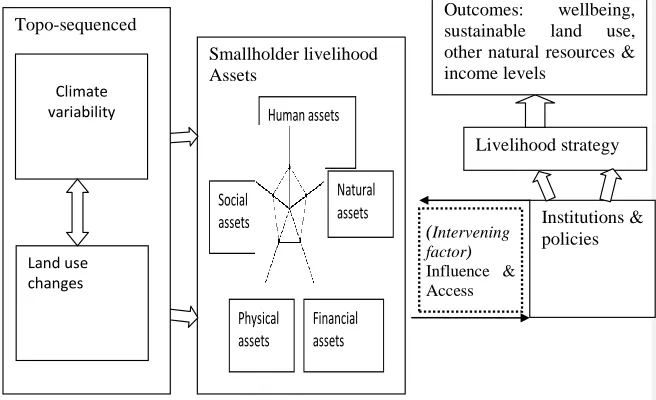
The sustainable livelihoods (SL) approach provides a basic framework for linking e ents like climate and land use change to specific effects on the household’s
livelihoods at the local level. Households and communities have differential assets
(Figure 1). The interaction between climate variability and land use changes influence
the resilience levels of smallholder farmers. In the context of this work, climate
variability variables would serve as independent variables, while land use change would
be the dependent variable.
Substantial literature on livelihood approaches has been developed (Ashley & Carney,
1999; De Haan and Zoomers, 2005). Current scholars make use of the general concepts
and frameworks in initial livelihood models a base in articulating arguments from
previous work done by (Scoones, 1998; Sen, 1985). Ellis (2000) has been instrumental
in deepening comprehension of relationship between assets, activities and outcomes
within a mediating environment.
The most widely cited definition of livelihood in the development literature is that of
Chambers and Conway (1992) ‘A livelihood comprises the capabilities, assets (stores,
resources, claims and access) and activities required for a means of living’. Some
modifications have been introduced by other scholars such as Scoones (1998) who
views a livelihood as sustainable if it can cope with and recover from stresses and
shocks, and maintain its abilities and assets both in present and in the future. Another
contribution was on the issue of claims and access and the impact of social relations and
institutions that mediate an individual or household ability to acquire a means of living
(Ellis, 2000).
Livelihood research has helped explain the differences in responses using understanding
of endowments, entitlements and capabilities within organizational hierarchy and power
principles or by individuals or households at local level (Scoones, 1998). Morris et al
(2000) indicated that livelihood models target the household as the most preferable
social unit for the investigation of livelihoods; however, social interventions may be
used as external measures to manage risks. Depending on the assets available to people,
they engage in livelihood activities and employ strategies that best generate the desired
livelihood outcomes.
he decision on what assets to utilize, when and how, constitutes a household’s
livelihood strategy. Different scholars identify and articulate various types of strategies.
Ellis (2000) classified them into natural resource-based strategies and non-natural
resource based strategies (including remittances and other transfers). Scoones (1998)
categorizes strategies into agricultural intensification and extensification; livelihood
for income generation and remittances. Various livelihood activities are carried out in
the different livelihood strategies.
Livelihood can therefore be defined as the assets (natural, physical, human, financial
and social capital), the activities, and the access to these (mediated by institutions and
social relations) that together determine the living gained by the individual or
household. This modified sustainable livelihood framework illustrates how an
individual, a household, or a community behaves under specific conditions.
This conceptual framework accentuates household as the basic unit of socio-economic
analysis whose livelihood assets are subjected to climate variability and land use
changes interactions. It focuses attention on asset for development of underlying
resources and capacities needed to cope with climate variability and land use changes to
escape poverty on a sustainable basis. It recognises the impact of changes on household
vary with elevation of the location (topo-sequence). It depicts the critical mass of
assets needed to cope with stresses and shocks, and to maintain and enhance capabilities
now and in the future. It recognizes that everyone has assets on which to build and
support individuals and families to acquire assets needed for long-term well-being.
These assets are shaped by the structures and processes i.e. social, institutional and
organisation settings as they create assets; determine access and influence rates of asset
accumulation. This approach emphasizes on identifying and building capabilities, rather
than just examining vulnerability. The focus on strengths, demonstrates clear synergies
with a focus on building resilience to climatic variations and land use changes. Analysis
CHAPTER 2: LITERATURE REVIEW
2.1 Global Discourse on Climate Variability
he state of knowledge a out the Earth’s climate is informed by several studies which
entail individuals, national, regional and global institutions including the
intergovernmental panel on climate change (IPCC). These entities have indicated that
the planet is warming; but have recommended continued research more so to quantify
the timing, location and extent of climate variations (IPCC, 2001). On the contrary other
organizations and individuals have disputed the conclusion that climate is changing
(Lockwood, 2010; Douglass et al., 2007). What seem debatable are adequate
explanations of climate change to warrant dead certainties. Projecting future conditions or quantifying cause and effect is difficult due to the earth’s complex climatic systems
where observations are impacted by multiplicity of factors. However, use of climate
observations and models arising from simulations affirms existence of natural and
human induced climate variability which happens over seasons or years (DB group
climate change advisors, 2010). The global circulation models provides a general trend
that indicates climate is becoming more variable in the Africa continent without
certainties in nature and extent of changes in precipitation, temperature and extreme
events (Elasha et al., 2006). Some studies have suggested there might be hidden
variations in the general modelled trends among African zones (Hulme et al., 2001).
This discourse happens in the midst of tremendous multifaceted interventions at global,
regional, national and local levels.
During the late nineteenth century anecdotal evidence of anthropogenic climate change
and variability started to emerge. In the late 1950s there was insinuation of human
influence on global climate when the Scripps institution of Oceanography began to
measure the concentration of carbon dioxide in ice-cores. The findings of these studies
revealed that global carbon dioxide concentrations were rising and linked the rise in
concentration to an increase in global temperatures. Carbon dioxide had been known
then to have a greenhouse or warming effect, which is the inherent ability to trap and
Increased global environmental concerns were experienced in 1960s and 70s that
culminated into the release of the Brundtland Report (also commonly known as Our
Common Future) in 1987. The report alluded to various global environmental concerns
and more so those associated with increasing atmospheric concentrations of greenhouse
gases (GHGs) climate change and variability was considered one of the undesirable consequences of man’s unsustaina le de elopment practices. Emanating from this, two
UN bodies- the United Nations Environment Programme (UNEP) and the World
Meteorological Organization (WMO) – jointly established the Intergovernmental Panel
on Climate Change (IPCC) in 1989 to provide broad and balanced information about
climate change and variability (UNEP, 2007). The IPCC does this by reviewing and
assessing the most recent scientific, technical and socioeconomic information produced
worldwide and translates this information into IPCC assessment reports. The UNFCCC
recognizes that consequences occur at all levels (local, regional and global) and have
the potential to disrupt the earth’s ecological systems with serious negati e impacts on
agricultural production, forests, water supply, health systems and overall human de elopment. In Article 2 UNFCCC has called on the world’s go ernments to take
action aimed at reducing and stabilizing concentrations of GHGs in the atmosphere at a
level that would avoid dangerous anthropogenic interference with the climate system
(UNEP, 2007).
Increased temperatures are projected to cause more frequent and more intense extreme
weather events, such as heavy rain, storms, flooding, fires, hurricanes, tropical storms
and El Niño events (IPCC, 2001). Extreme rainfall and subsequent heavy flooding
damage will also have serious effects on agriculture including the erosion of topsoil,
inundation of previously arid soils, and leaching nutrients from the soil. Warming of
land and sea surface temperatures are projected to cause more frequent and intense
hurricanes and tropical storms that inundate coastal areas (IPCC, 2001). These same
extreme weather events can lead to decreased precipitation in interior regions, causing
increased drought and desertification, subsequently threatening food security. Threats to
food security can then lead to widespread migration of human settlements in order to
seek better agricultural land, more available water resources, and escape increased
and potentially reverse progress made in improving the socio-economic well-being of
the people (IPCC, 2001).
Recent research also suggests that sea surface temperatures are warming, especially in
the southwest Indian Ocean. In addition to inter-annual climate variability (i.e., El
Niño/Southern Oscillation (ENSO)) may play a key role in Kenyan rainfall patterns and
may be linked to the change in rainfall across some parts of equatorial-subtropical.
Warm sea surface temperatures are thought to be responsible for the recent droughts in
equatorial Kenya during the 1980s to the 2000s (Funk et al., 2005). The number of food
crises per year has tripled from the 1980s to 2000s (FAO, 2004). Frequent droughts led
to diminished water supplies, reduced crop productivity resulting to widespread famine
in the region. In the tea-producing areas of enya, the world’s second largest exporter
of tea, a small temperature increase (1.2 °c from now) and changes in precipitation
would render large areas of land that are supporting tea cultivation to be unusable.
Economically, this would have far-reaching impacts because tea exports account for roughly 25% of enya’s export earnings and employs over three million Kenyans (10%
of the population) (Simms, 2005).
It is projected that there will be variations of frequency, intensity, and predictability of
precipitation (IPCC, 2007a). A change in precipitation ultimately affects soil moisture
and consequently vegetation. Projections suggest that East Africa region will experience
warmer temperatures and a 20% increased rainfall from December-February and
5-10% decreased rainfall from June-August by 2050 (Hulme et al., 2001; IPCC, 2001).
These changes are expected not to be uniform throughout the year but sporadic and
unpredictable. It may also, be likely that the increased precipitation will come in a few
very large rainstorms mostly during the already wet season thereby causing mud slides,
floods and soil erosion. It is also expected that there will be less precipitation during the
already dry season, which may cause more frequent and severe droughts and increased
desertification in the region (Hulme et al., 2001).
Smallholder farming depends heavily on rain-fed agriculture making rural livelihoods
and food security highly vulnerable to rainfall variability (IPCC, 2001). For example,
per season (March to May) and corresponding decline in long-cycle crops (e.g., slowly
maturing varieties of sorghum and maize) across most of eastern Africa (Funk et al.,
2005). Long-cycle crops depend upon rain during the typically wet season and
progressive moisture deficit would result in low crop yields, thereby affecting the
available food supply. Increased variability (i.e., deviation from the mean) is a major
concern of smallholder crop producers in the region. Inter-annual climate variability
(e.g. El Niño/Southern Oscillation (ENSO) has huge impacts on the region’s climate.
Warm El Niño/Southern Oscillation (ENSO) events also referred to as El Niño events
produce abnormally high amounts of precipitation resulting in flooding and decreased
agricultural yields. There has been a correlation between past El Niño events and warm
sea surface temperatures with more than 60% of the change between above and below
average agricultural production of maize (Case, 2006).
In sub-Saharan Africa, several ecosystems are shown to be highly sensitive to
short-term availability of water due to climate variability (Vanacker et al., 2005).This is
because water resources on the planet are an integral part of the global hydrologic cycle.
Precipitation originates from land and the oceans through evaporation. Soil moisture is
used by plants, which return more moisture to the atmosphere. Water that does not e aporate or transpire or seep into aquifers runs off to form the nation’s streams and
rivers. Snow stored on the mountains provides water for rivers. Storms bring extra
moisture; droughts arise from protracted periods of low rainfall, all as part of our
natural climate.
Dry tropical plants suffer severe water stress at the beginning of the growing season and
that a warmer climate may accelerate the depletion of deep-soil water that tree species
depend on for survival. Growth in these species also depends highly upon the timing,
intensity and duration of rainfall. Climate projections suggest that during already dry
months, less precipitation will occur likely reducing the resilience of these plants
(Vanacker et al., 2005). Cumulative effects of climate variability may also affect
species range, which could have profound impacts on species population size. Species
ranges will probably not shift in cohesive and intact units, but are likely to become more
2000). Species and agro ecosystems are likely to change under varying climate
scenarios (Erasmus et al., 2002). Change of biodiversity will influence both crops and
livestock production (mixed farming) which accounts for the bulk of smallholder
farming systems. Climatic conditions significantly influence changes in biodiversity and
agro diversity as species struggle to adapt to changing conditions (Lovett et al., 2005).
Species that have the capability to keep up with climate shifts may survive; others that
cannot respond will likely suffer (Hély et al., 2006).
The projected rapid rise in temperature combined with other stresses, such as the
destruction of habitats from land use change, could easily disrupt the connectedness
among species, transforming existing communities, and showing variable movements of
species through ecosystems, which could lead to numerous localized extinctions
(Malcolm et al., 2002). If some plant species are not able to respond to the changes, the
result could be increased vulnerability of ecosystems to natural and anthropogenic
disturbance, resulting in reduced species diversity (Malcolm et al., 2002). Seasonal
changes in vegetation have the potential to alter migratory routes of some species like
herbivores, which may also increase conflicts with humans impacting on livelihoods
(Thirgood et al., 2004). Large changes in ecosystem composition and function would
have cascading effects on species diversity (Sykes and Prentice, 1996). Vast forest
disappearance has substantially affected species composition and global geochemical
cycling; particularly the carbon cycle (Malcolm et al., 2002).
Researchers have in the past decades recognized linkages between LULC changes,
processes and broader changes in global environment. Human disturbance through land use and land co er change has su stantially altered the world’s natural ecosystems,
resulting in landscapes widely dominated by cultivation, grazing, pasture or urban
development (Lambin et al., 2003). The greatest interest in land use and land cover results from their direct relationship to many of the earth’s fundamental characteristics
and processes, such as land productivity and biodiversity among others. Systematic
analysis of local scale land use change over a range of time scales helps to uncover
general principles to provide an explanation and prediction of new land use changes
Environmental changes such as climate extremes cause natural disasters which
repeatedly wipe out the gains from development, destroying lives and livelihoods. The
most vulnerable households are those with assets and livelihoods exposed and sensitive
to climate (temperature and precipitation) and who have weak risk management
capacity. The adverse effects of climate variability and change are borne
disproportionately by the small farmers and this depends on how equipped they are to
withstand the climate shocks (Altieri & Koohafkan, 2008).
2.2 International Responses to Climate Variability
International efforts to combat climate variability and change in the recent past focused
more on mitigation aimed at reducing GHG emissions. The formation of UNFCCC and
IPCC in collaboration with other global, regional and national bodies have played a key
role in propelling international agenda associated with responses to climate variability
(UNEP, 2007). On mitigation UNFCCC did not set binding GHG emission reduction
targets, but instead ‘encouraged’ parties endea ours to take measures to reduce their
GHG emissions according to their capabilities. This was a major weakness of UNFCCC
which prompted the third Conference of the Parties (COP3) to the UNFCCC 184 parties
gathered in Kyoto, Japan to adopt the Kyoto Protocol, which would commit them to
reduce GHG emissions in 1997. The protocol commits 37 industrialized countries to
reduce their emissions by 5.2% below 1990 levels during the first commitment period,
which was 2008 to 2012 (GOK, 2010a).
The Kyoto protocol globally initiated a low-carbon growth path. The protocol has led to de elopment of car on market, an international market regime of three ‘strategies’
geared towards sustainable development through tackling of climate problems in cost
effective approach. Two of these strategies - the Clean Development Mechanism
(CDM) and the Joint Implementation (JI) – are project-based. The CDM and JI were
created under Articles 12 and 6 of the protocol, respectively. They are designed to help
reduce GHG emissions through project activities involving renewable energy, energy
efficiency, reforestation/afforestation, low-emission public transportation. The CDM is
not obliged to take on legally binding GHG emission reduction targets (UNEP, 2007).
Other key highlights since the adoption of the Kyoto Protocol is inclusion of the European Union’s Emissions rading ystem (EU E ) that commenced in January
2005 and is the world’s largest emissions trading scheme with 30 nations co ering nearly 400 million people in the world’s most industrialized region. Currently 27 EU
member States and three non- EU member states (Iceland, Norway and Liechtenstein)
engage in the trading-scheme (UNEP, 2007).The 32 states in the USA and eight
provinces in Canada begun developing ambitious climate change programmes primarily focusing on targets permitting “entities” (usually companies), since 2006 to trade
emission reductions with one another to achieve overall GHG emissions reductions
(UNEP, 2007).
Opportunities exist in global policies on finance and technology to transform the
challenges into development to leap- frog the carbon-intensive phase of development
and move directly to cleaner and more advanced land-use solutions(GOK, 2010a). The
developing countries are in the process of building its infrastructure and have therefore
the opportunity of inculcating a development paradigm on a low carbon pathway with a
view to investing in sustaina le infrastructure. his is the ‘de elopment first’ approach
that offers the organizing principle to pursue development strategies with ancillary
climate benefits and enhance capabilities of countries to implement climate resilient
strategies (ACPC, 2011). Green economy offers opportunities for mobilizing resources
towards a low emission, climate–resilient development pathway. As such, emphasizes
on Policies and investments aimed at sustaining and enhancing livelihood assets.
The subsequent stages of international efforts are targeting adaptation, that is, ways of coping with climate impacts that cannot e a oided. he term “adaptation” is used
broadly, but in some instances it requires refinement. Depending on the frequency,
duration, and suddenness in the onset of a stress, and on the resilience of a system,
either coping or adaptive responses or both are employed (IASC, 2010). In their
discussion on the term “adapti e” Berkes and Jolly (2001) apply terminology long used
in anthropology. McCay (1997) used the development literature to distinguish between
responses to potential impacts that can be successfully applied season-to-season or
year-to-year as needed to protect a resource or livelihood. Some forms of coping are
explicitly anticipatory and take the form of, for example, insurance schemes and
emergency preparedness. Deliberate adaptation responses refer to the ways individuals,
households, and communities change their productive activities and modify their rules
and institutions to minimize risk to their resources and livelihoods (IASC, 2010).
Adaptation depends greatly on the adaptive capacity or adaptability of an affected
system, region, or community to cope with the impacts and risks of climate change. The
adaptive capacity of communities is determined by their socioeconomic characteristics.
Enhancement of adaptive capacity represents a practical means of coping with changes
and uncertainties in climate, including variability and extremes. In this way,
enhancement of adaptive capacity reduces vulnerabilities and promotes sustainable
development (Smit and Pilifosova, 2001).
Four scales of responses to impacts of climate variability have been distinguished as
mega, macro, meso and micro with the mega and macro scale being formulated and
mainly facilitated at global and national level respectively (Ahmed et al., 1999). There
have been plans to support adaption in both developed and developing nations.
Currently, two funds have been created under the UNFCCC to enhance adaptation. The
least Developed Countries fund (LDCF) created under Article 4.9 of the UNFCCC
supports the preparation of National Adaptation Programmes of Action (NAPAS) in
countries classified as LDCs by the United Nations Development Programme (UNDP).
The NAPAS help LDCs identify priority activities that respond to their urgent and
immediate needs to adapt to climate change, where further delay would increase future
vulnerability and or costs (GOK, 2010a).
Implementation of priority actions identified in NAPAS begun in selected LDCs, with
about 26 projects having been approved for funding. The Special Climate Change Fund
(SCCF) is the other UNFCCC fund through which adaptation programmes and projects
are financed. This fund was established in 2001 under decision 7 of COP& (Decision
9/CP.7) to finance projects relating to adaptation, technology transfer and capacity
economic diversification. The fund is not dedicated to adaptation activities, although
adaptation remains the key priority (UNEP, 2007). The only fund strictly dedicated to
adaptation is the Adaptation Fund (AF). This fund was established under Article 12.8 of the yoto Protocol and ecision 10/CP.7) to ‘finance concentrate adaptation projects
and programmes in developing country parties that are parties to the Kyoto protocol, as well as acti ities identified in paragraph 8 of decision 5/CP.7. ‘ such acti ities include
water resources management, land management, agriculture, health, unflustered
development, fragile ecosystems including mountainous ecosystems and integrated
coastal zone management. The AF revenue is to be delivered from voluntary
contributions and an international levy of two percent of Certified Emission Reductions (CE s) from C M projects, which is known as the ‘share of proceeds’. In general, the
three funds (LCDF, SCCF and AF) are said to be inadequate to fund the massive
adaptation needs of developing countries, many of which are already being ravaged by
climate variability and change, at present; the funds mainly constitute pledges by donor
countries and agencies. As history shows pledges do not always lead to actual delivery
and implementation of the funds. Again, even with the pledges included, the funds still
fall short of the UD$ 100 billion per annum which developed countries have pledges to
mobilize under Copenhagen accord to help address climate needs of developing
countries by 2020 (GOK, 2010a). In any case, even this proposed figure is considered
by many as a gross underestimate because it is based on scenario where the global
temperature increase would be limited to 2ᵒC, whilst some climate models show that
current emissions pathway leads us to a much warmer world 30ᵒC and upward) and
consequently higher costs (Parry et al.,2009).
At the Meso scale, vulnerability vary from one community to another, depending on the
capacity and physiographic characteristics at this level, location specific adaptation and
coping options are employed depending on the community asset portfolio ( Ahmed et
al., 1999). At micro-scale, family units and individuals would experience
vulnerabilities irrespective of origin of the process and employ adaptations or coping
strategies within their particular economic and socio-cultural constraints (Smit and
Pilifosova, 2001; Ahmed et al., 1999). The smallholder strategies are shaped by control
Gilles, 2001). Strategies in adapting and coping to events can be classified into ex-ante
strategies like diversification of activities, products and resources to smooth income and
consumption through times of variability and ex-post strategies to cope with stress and
shock, which may include liquidating different types of assets, borrowing, migrating
temporarily or relying on remittances ( Murdoch, 1995).
Responses have been implicitly and explicitly linked with development-focused action,
particularly the IPCC have underscored that developing countries are disproportionately
vulnerable to climate change and lack adaptive capacity (IPCC, 2007a & b). Enhancing
the capacity to respond to effects of climate variability and change is fundamental to
equity and sustainable development (Smit and Pilifosova, 2001).
2.3 Overview of National Responses to climate variability
Since the ratification of the United Nations Framework Convention on Climate Change
(UNFCCC), various international research programs have been initiated to build the
capacity of developing countries to cope with the effects of climate variability. On the
climate science side IPCC reviews and coordinates research on a range of climate
change related issues and records climate data in its data distribution centres’ (UNEP,
2007). Lack of the necessary tools, both human and instruments makes Kenya to a
large extent depend on organizations based in Europe and North America for climate
forecasting capacity. Three organizations—the NOAA (National Oceanic and
Atmospheric Administration, USA), UK Met Office/Hadley Centre (UK) and the CNRS
(Centre National de la Recherche Scientifique, France) make seasonal climate forecasts
for African region based on their respective GCM models. Among these three
institutions, the most widely consulted is the Hadley Centre, and specifically their
dynamically downscaled PRECIS model. The ICPAC established as the Drought
Monitoring Centre in Nairobi (DMCN) in an effort to minimize the negative impacts of
extreme climate events like droughts and floods along the Greater Horn of Africa has
recently started to work on generating climate change projection data, mainly through
the use of the PRECIS dynamical downscaling model (GOK, 2010a). The major goal of
the ICPAC is to improve and enhance the production and provision of sector-relevant
seasonal forecasts. The ICRISAT (International Crops Research Institute for the
Semi-Arid Tropics), with regional hubs in Niger and Kenya, has used regional IPCC data to
explore the impact of a 3°C warming on a variety of crops. Some of these IPCC data are
obtained from the download options (Ziervogel and Zermoglio, 2009).
There are a number of on-going regional projects in Kenya including climate adaptation
in Africa (CCAA) that targets capacity building, research and empowerment of
vulnerable groups to adapt to climate variability and change. The Adaptation
programme (AP) which aims to strengthen Kenya overall adaptation capacity and
Kenya adaptation to climate change in Arid and Semi-arid lands (KACCAL) which
focuses to facilitation of main stakeholders for long term adaptation in ASALS (GOK,
2010a). It is estimated that the annual cost of addressing climate change and variability
could increase from estimated US$500 million to between US$ 1-2 billion by the year
2030 (SEI, 2009). This calls for immediate action at all levels to fast track all measures
geared towards combating effects of climate variability in Kenya. However, the nation
has not been vigilant in pursuant of the funding opportunities provided. For instant
articles 4-7 of the UNFCCC present opportunities for Kenya to access funding. For
research, mitigation, adaptation technology development, transfer and diffusion,
capacity building, maintaining GHG emission inventory, education and awareness
creation through the global environmental facility (GEF) while, article 12 of the Kyoto
Protocol provides an avenue for funding through Clean Development mechanism
(CDM) only three CDM project have been registered in Kenya namely lake Turkana
3310mw wind power project and Ol karia II Geothermal Expansion project and Ol karia
III phase II Geothermal Expansion project (GOK, 2010a).
Development plans are anchored on the Kenya nation vision 2030. The vision
recognizes that the main sectors of the economy are climate dependent but fails to
articulately incorporate aspects of climate variability in the set goals under the social,
economic and political pillar. Climate variability and change is missing in the national
environmental management and coordination act of 1999 (EMCA). Integrating climate
into national policy and governance is imperative for mainstreaming response
specific policy instruments dealing with climate variability and change. It was in 2010
the ministry of environment and mineral resources developed a National Climate
Change Strategy (NCCS). The strategy proposes activities needed to combat climate
variability and change as the country meets its development goals while fulfilling global
obligations. However, strategies require to be connected with policy and legal platform
for effective institutionalization of the envisaged activities. Kenya stands to gain from
such a policy because it would promote investment geared towards mitigation and
adaptation to the effects of climate variability and change. The national climate policy
would also provide a framework for stakeholders’ participation and a precursor for
integrated sustainable development concepts in all stages of projects cycle
managements that would perpetuate into improved wellbeing. A further interrogation of
interventions proposed in NCCS in view of sustainable development and livelihoods is
necessary (GOK, 2011).
There has been little or no coordination on climate variability and changes matters in
Kenya. However, there are numerous institutions addressing issues of climate
variability and change although usually depends on their interest and mandate. These
institutions range from community based organizations, local non-governmental
organizations and government agencies to international organization. The main
development partners have come together and formed a donor climate change
coordination group which includes DANIDA, USAID, WORLD BANK, JICA, SIDA,
GIZ and FANNIDA. They aim to support activities at various both national and
sub-national levels (GOK, 2010a).
There have been regional initiatives geared towards resource mobilization, capacity
building, technology transfer mitigation and adaptation. For instance the EAC has a
policy and a master plan providing partner states with guidelines for preparation and
implementation of collective responses. AU assembly of heads of state and government,
held in Libya in 2009, approved the conference of African Heads of state and
government on climate change (CAHOSCC) with an aim of taking a united position in
global climate change issues. COMESA also has a fund that supports low carbon
2.4 Climatic Variability and Sustainable Land Management
Land provides not only an environment for agriculture production but is also an
essential condition for improved environmental management including source/sink
functions for greenhouse gases, recycling of nutrients, amelioration and filtering of
pollutants and transmission and purification of water as part of the hydrologic cycle
(Terr Africa, 2009). Human activities are compromising natural processes and this
dynamic is being further amplified by increasing climate variability. Crop and livestock
yields in sub-Saharan Africa are already the lowest in the world, placing a 0.5 percent to
9 percent drag on agricultural gross domestic product, while deforestation proceeds at
the highest rate in the world. As pointed out by the IPCC, such conditions make Africa
one of the world most vulnerable areas to the adverse impacts of climate change (Terr
Africa, 2009). Land quality varies with the impacts of human interventions on the
landscape. It is acknowledged that interest in land quality is higher now than at any
time in the past, due to the need to increase food production and its importance to
ecosystem functions and global life support systems (Stott et al., 2001). Concurrently,
there are increasing opportunities to mobilize monitoring and evaluation activities under
international conventions particularly the convention to combat desertification,
convention on biodiversity and framework convention on climate change. Although
these conventions do not always provide extra funding, it provides a useful instrument
under which to better coordinate activities (Stott et al., 2001).
The objective of sustainable land management (SLM) is to harmonize the
complementary goals of providing environmental, economical and social opportunities
for the benefit of present and future generations, while maintaining and enhancing the
quality of the land (soil, water and air) resource. SLM is the use of land to meeting
changing human needs (agriculture, forestry, conservation) while ensuring the
long-term socioeconomic and ecological functions of the land. It is also a necessary building
block for sustainable agriculture development and it is a key element in Agenda 21’s
goal of sustainable development (Stott et al., 2001). It combines technologies, policies
and activities aimed at integrating socioeconomic principles with environmental
concerns so as to simultaneously; maintain and enhance soil capacity to buffer against
economically viable (viability), socially acceptable and assure access to the benefits
from improved land management (acceptability/equity) (World Bank, 2006).
Sustainable land management is an off-shoot of the broad discourse of sustainable
agriculture, a complex concept with different meaning from different people. However,
it comprises of integrating land, water, biodiversity and environmental management to
meet the rising food and fibre demands while sustaining ecosystem services and
livelihoods (Stott et al., 2001).
It combines technologies, policies and activities that are aimed at integrating
socioeconomic principles with some environmental concerns. Experiences gained from
developing and developed countries have identified principles for sustainable land
management. At global level the concerns entails a call for a collective effort for those
directly responsible for resource management. This requires a policy environment that
empowers farmers and other decision makers to reap benefits for good land-use
decisions and also to be held responsible for inappropriate land issues (Stott et al.,
2001).
The other global concerns is integration of economic and environmental interests in a
comprehensive manner and the need to resolve the global challenges to feed the rising
populations, while at the same time preserving the biological production potential
resilience and environmental maintenance systems of the land. Sustainable Agricultural
implies more ecologically balanced land management can achieve both economic and
environmental benefits and this must be the foundation, or linchpin, for faster rural
intervention (investment). Without good land management other investment in the rural
sector are likely to be disappointing (World Bank, 2006). At the same time asking for
the continued maintenance of agriculture without reference to environmental
sustainability is increasingly difficult. Agricultural intensification is often necessary to
achieve more sustainable systems. This requires shifts to higher value productivity or
higher yields with more inputs per unit of production and higher (more knowledge –
intensive) standards of management. However, sustainable agriculture has to work
achieved by optimizing efficiency of external inputs rather than trying to maximize
yields (World Bank, 2006).
It is widely recognized agriculture and environmental management are inseparably
linked and that tackling problems of natural resource degradation must be seen as part
of a wider set of actions to revitalize the rural sector as a whole. Promoting rural
development strategy that has “win-win” outcomes for agricultural and environmental
related livelihoods has been mainstreamed since it is a vital policy for provision of
future productivity growth and poverty alleviation (Terr Africa, 2009). Sustainable land
management has been established as the heart of such strategies. The concepts and
criteria of sustainable land management employs agro ecological principles of farming,
participating and decentralized approach that values natural and social capital
enhancements in addition to gains accrued from economic efficiency. It also
underscores the role of strong and self reliant rural institutions (Terr Africa, 2009).
he term ‘sustaina le adaptation’ has emerged with the realization that while adaptation
to climate variability and change will be increasingly required over the next decades, we
know little about the wider or longer term impacts and implications of adaptation itself.
This is because we are not certain whether responses to climate variability are
sustainable either socially or environmentally, nor how they are likely to contribute to
human well-being and poverty alleviation in future. Previous studies have highlighted
how climate change represents both a threat and an opportunity for sustainable
development (Yohe et al., 2007). There is emerging evidence that many of our
responses run counter to principles of sustainable development. This suggests that
adaptation policies and interventions that focus on reducing specific climate sensitivities
such as predicted changes in precipitation or hydrological regimes can, even if
benefiting some interests can create social inequity, as well as unintentionally
undermine environmental integrity. Eriksen and Brown (2011) highlighted the
importance of ensuring that adaptation is socially and environmentally sustainable,
contributing to poverty reduction as well as confronting the socio-environmental
The primary agents of change towards sustainable agricultural systems are the rural
communities who depend on the land for their livelihoods and the emphasis is on
community-based or farmer-centred interventions (Stott et al., 2001). Smallholder
subsistence farmers are important custodians of the environment, who require the tools
and knowledge to manage their natural resources and agro-ecosystems in the face of
climate variability. They need support to enable them cope or adapt management
practices and venture into new approaches to based resilience to increasing climate
variability and change, using sustainable land management practices which can protect
or restore ecosystem services, increase yields and reduce climate risks (Stott et al.,
2001).
Constraints exist on assessing impacts of SLM. For instance lack of comprehensive
quantitative data on the precise beneficial impacts of practices in the range of soils and
agro-ecological zones of the region (Terr Africa, 2009). Also it is not possible to state
quantitatively with reasonable certainty the impacts of applying a particular practice,
although these will, in almost all cases, be beneficial. There are also complexities
relating to the impacts of SLM practices for mitigation. Some can act on mainly one
GHG while others on more than one GHG. In the latter case, there may be positive
impacts on more than one GHG, or there may be trade-offs between gases (Terr Africa,
2009).
The absence of quantitative data should not be used as a reason to delay initiatives to
promote the scaling-up of implementation of the SLM practices. However, as
opportunities become available especially from those activities related to climate
variability or change responses, it will be vital to develop monitoring systems and have
scientifically robust quantitative data on the benefits of SLM in different
agro-ecological zones and soil types. Such information will also be useful to optimize
2.5 Summary of Research Gaps
Critical research areas on themes relating to impacts and responses of climate variability
and change and livelihoods have been identified in dryland ecosystems (Mwang’om e
et al., 2006). However, due to agro-ecological diversity some sections of the midlands
and highlands may be even more vulnerable to climate change and variability than the
dry lands impressing the need for intensifying climate variability research in all
agro-ecological zones.
Rainfall projections models and scenarios in Kenya are inconsistent (Herrero et al.,
2010; Funk et al., 2008). Knowledge of climatic impacts in different locations and the
potential responses to cope with them is still rudimentary (IFAD, 2008). Further,
responses, whether focused on policy or practice, rarely integrate climate science to the
necessary extent in a way that is clear and understandable for policymakers, hence, the
need for locally generated knowledge.
The National Research council in United States identified land-use dynamics as one of
the global challenges for environmental research (NRC, 2001). The international
research community has been charged to contribute towards reducing the novel
challenges as such undertaking scientific studies on land-use patterns and solutions that
would lead to realizing the envisioned transformation of increasing carbon sinks in good
time (Richardson et al., 2009). Further, the role of land-use and land-cover change was
suggested for further research by IPCC aimed at enhancing understanding of its
interaction with climate dynamics (Boko et al., 2007). Kenyans economy is anchored
on smallholder farming whose systems depend on land productivity. The declining
agricultural yields pose concerns that call for integrated approach in investigating land
use, climate and livelihood dynamics.
The rural community-based or farmer-centred interventions depend on the land for their
livelihoods. Studies conducted in 2004 revealed declining production per unit area of
land was linked to loss of soil nutrients Jaetzold et al (2007) resulting from land use
practices. Using up to date knowledge generated from data gathered from land use
practices one can protect or restore ecosystem services, increase yields and reduce
has been no analysis on emerging land use livelihood relationship in Meru County.
Therefore, the need for empirical data on the current land dependent livelihoods more
so smallholder farmers who constitute the bulk of the population is critical especially in
the current governance epoch for elaborate prescriptions of county development
interventions.
Land use and cover change as a key driver of climate change has too elicited interest
leading to several studies on predicting future land use and cover changes (Alcano et
al., 2003). The need to develop future scenarios is for the purpose instituting measures
to counter negative impacts (Waswa et al., 2007). Knowledge generated in this study
signifies negative or positive impacts of land use changes on the community
livelihoods. This forms the basis for predicting future land use scenarios. The need for
future imaging is in tandem with national vision 2030 in reference to devolved units
(Meru County). This information is vital in anticipation of unfolding crises, envisioned
CHAPTER 3: METHODOLOGY
3.1 Study Area Characteristic
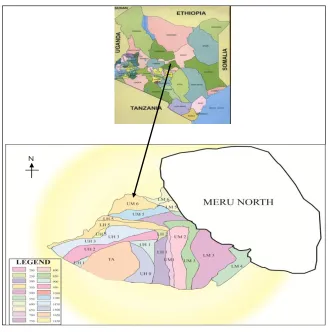
Meru County shares borders with Laikipia County to the west, Nyeri County to the
south west, Tharaka-Nithi County to the east and Isiolo County to the north. It lies
within latitudes 0o3’45” N and a out 00 2’30” , and longitude 370 and 380 E (Figure 2).
Figure 2: Location of the study area
Meru County lies in the eastern slopes of Mt Kenya. It has a wide range of altitude