P13
Primary Urethroplasty for Idiopathic and Post-traumatic Bulbar Stricture in Adolescent Boys
Jonathan V. B. Riddell, Dmitri Nikolavski.
SUNY Upstate, Syracuse, NY, USA.
Background: Bulbar urethral stricture in adolescents is most commonly
idiopathic, or traumatically acquired. The long term outcome of direct vision internal urethrotomy for treating these strictures is poor with suc-cess rates as low as 35%. Primary urethroplasty provides a more definitive solution, and can be performed on an out-patient basis. We report on a single institution series of primary urethroplasty performed predominately by excision and primary anastamosis for the treatment of bulbous and bulbo-membranous strictures in adolescent boys.
Methods: Retrospective chart review of all urethroplasty at a single center
to find boys 19 years of age and younger who had primary urethroplasty surgery for bulbar and bulbomembranous stricture. Surgery was done on an out-patient basis after careful evaluation with pre-op retrograde urethrog-raphy to characterize stricture length. Urinary catheters were left in 10-21 days according to surgeon preference. Baseline demographics, pre- and post-operative uroflow and post-void residuals were measured as well as supplemental procedures noted.
Results: Ten boys median age 16 years (range 9-19) underwent primary
urethroplasty for the bulbar stricture average length 1.6 (+/-0.5) cm. Eight of ten were idiopathic, and five of those presented with hematuria as an initial complaint. Two had prior DVIU at other institutions but the other eight were treatment naïve. Mean follow up is 15.5 months (range 3-34) and none have had recurrent stricture or repeat procedure. Uroflow peak flow values increased from 4(+/-3) mL/s (preop) to 25(+/-11) mL/s (postop), p<0.001. Similarly, there was an improvement in post-void residual from an average of 150(+/-170) mL (preop) to 20(+/35)mL (postop) p<0.05. Nine of ten urethroplasties were performed by excision with primary anastamosis (the other was a ventral buccal graft onlay).
Conclusions: With high success rates and durability, our study supports
the use of primary urethroplasty as a first-line treatment for adolescent idiopathic and traumatic bulbar stricture.
P14
Transcutaneous Electrical Nerve Stimulation: Preliminary Results of a Novel Treatment for Nocturnal Enuresis in Children
Matthew C. Ferroni, Bing Shen, Timothy D. Lyon, Christopher J.
Chermansky, Changfeng Tai, Heidi A. Stephany.
University of Pittsburgh Medical Center, Pittsburgh, PA, USA.
Background: Nocturnal enuresis is a common problem in children which
can have a dramatic psychological and social impact on quality of life. Neuromodulation by transcutaneous foot stimulation of peripheral tibial nerve branches has been shown to produce a prolonged inhibition of mic-turition reflex contractions and significantly increase bladder capacity. Our primary goal was to evaluate the effect of foot stimulation on the frequency of nocturnal enuresis episodes in children.
Methods: Children aged 5 to 18 having two or more bedwetting episodes
per week for at least three consecutive months were eligible. Patients with a known neurological diagnosis were excluded. The study was a total of six weeks. Participants completed a baseline nighttime voiding diary during the first two weeks. This was followed by two weeks of foot stimulation for 90
minutes each night prior to bed. Foot stimulation consisted of an electrode pad placed on the plantar surface of the foot connected to a transcutane-ous electrical nerve stimulator unit. During the stimulation period and the remaining two weeks post-stimulation, children completed the nighttime voiding diary. Statistical analysis using one way ANOVA tests were used and a p<0.05 was considered significant.
Results: Eight patients completed the study, 4 boys and 4 girls with a mean
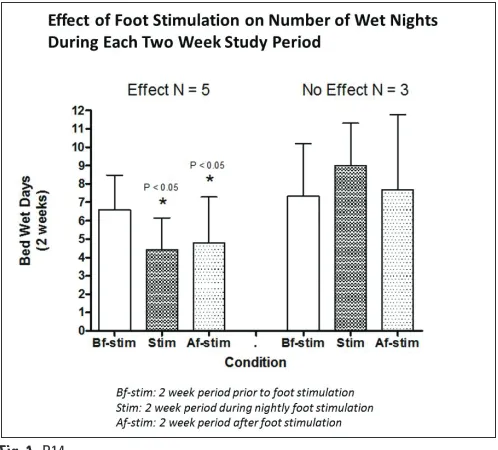
age of 11 (+/- 3.5 years). Five children (62.5%) had an improvement in the total number of wet nights with the mean two-week total decreasing significantly from 6.6 to 4.4 (p<0.05) during the stimulation period. This was a 33.3% improvement from baseline. In the two weeks post-stimulation, there was a 27.3% reduction from baseline with a mean total wet nights of 4.8 (p<0.05). The mean age of responders was significantly greater than non-responders (13.0 vs 8.3, p=0.03). There were no adverse events requir-ing early study termination for any participant (Fig. 1).
Conclusions: In our pilot study, transcutaneous foot stimulation of the tibial
nerve appears to be a safe and effective novel treatment to decrease the number of wet nights in patients, particularly older children. Further accrual is necessary and inclusion of quality of life measures to strengthen the evidence in support of transcutaneous foot stimulation in this population.
Moderated Poster Session II: Pediatrics/Trauma/Reconstruction/
Voiding
Thursday, October 29, 2015
10:30 a.m. - Noon
P15
Compliance To Antimuscarinics In Children With Overactive Bladder
Valérie Morin, Alexandra Fortin, Pascale Gervais, Stéphane Bolduc.
CHU de Québec, Québec, QC, Canada.
Background: Overactive bladder (OAB) is a common disorder
character-ized by urinary urgency symptoms ± urinary incontinence. Symptoms are treated with long-term antimuscarinic medication. Persistence and compliance rates in adults are low but too little data exists for the pedi-atric population. Non-compliance can lead to unnecessary escalation of therapy. The objective of this study was to report on the compliance in children treated for OAB with antimuscarinics
Methods: Patients presenting OAB (0-18 years old) were recruited at
their control visit with a pediatric urologist. After obtaining consent, we contacted their drugstore enquiring about prescription renewals since beginning of treatment. The medication possession rate (MPR), (No. days dispensed/No. days between two refills) was calculated and grouped by 1, 3, 6 and 12 month periods. A good compliance was established as a MPR ≥80% every 1, 3, 6 or 12 month period and compared to the compliance reported on a questionnaire.
Results: Seventy-two patients were recruited (mean age: 10. 1± 3.2 years).
They have used the antimuscarinic medication for a mean of 28 months (2722 prescription periods). If we group the periods by 1, 3, 6 or 12 months, a MPR ≥80% was found in 36.1%, 56.9%, 63.9% and 73.6% of patients respectively. After the questionnaire, the compliance rates were 52.8% (p=0.01), 65.3% (p=0.06) and 70.8% (p=0.12) for 1, 3 and 6 months respectively. No difference in compliance was found between different antimuscarinic medications. The mean compliance rate reported by the parents/patient in the questionnaire was 93% ± 10%.
Conclusions: Medication compliance is also an important problem in
the pediatric population suffering from overactive bladder but seemed significantly better in our cohort. It has to be addressed and considered in the follow-up of pediatric patients. The questionnaire seems to increase the compliance.
P16
Is The Use Of Small Stents Safe In Following Pyeloplasty? Our Experience With 3 French Stents
Audry Kang1, Andres F. Correa1, Pankaj Dangel2, Heidi Stephany2, Glenn M. Cannon2, Francis X. Schneck2, Michael C. Ost2.
1University of Pittsburgh, Pittsburgh, PA, USA, 2University of Pittsburgh Childrens Hospital, Pittsburgh, PA, USA.
Background: Urine leak following pyeloplasty is reported to occur in
5%-10% of cases. Anecdotally, we have noticed a higher rate of urine leak associated with the use of 3 French (3.0 and 3.7) double J stents. Little has been published on the effect of stent size on urine leak. The aim of this study was to assess the factors that lead to the use 3 French (3.0 & 3.7) stent and to evaluate the incidence of post-pyeloplasty urine leak associated with their use.
Methods: We performed a retrospective chart review of all patients who
underwent pyeloplasty with the use of a 3.7 F or 3.0 F stent over a 9-year period. Information regarding patient demographics, surgical technique, etiology of the obstruction, stent size, stent insertion technique (antegrade vs. retrograde), failed attempt at 3.7F stent placement, incidence of urine leak, and length of stay were collected. Patients with history of prior intervention were excluded from the study.
Results: A total of 61 children met criteria for the study. The median
age of the cohort was 7 months (2-108). 39 (63.9%) patients were male. An open technique was used in 47.5% of the patients, with 36.1% and 16.4% undergoing a laparoscopic and robotic repair respectively. The 3.0 F stent was used in 28(45.9%) patients. Factors that led to a 3.0 F stent placement were younger age (2 months vs. 10 months, p=0.025) and failed attempt to place a 3.7F stent (46.4% vs. 9.1%, p=0.001). The overall urine leak rate in the cohort was 19.7%, with 10 (35.7%) patients and 2 (6.1%) patients developing a urine leak in the 3.0 F and 3.7F groups, respectively. Stent size (3.0 F) and failure to place a larger stent were the only variables associated with urine leak (p≤0.01 and p≤0.01). On
Conclusions: 3.0 F stents were more likely used in younger patients and
following failed placement of 3.7 F stent. The use of the 3.0 F stent was found to be associated with an increased risk of developing a urine leak. Our practice now is to use a percutaneous nephro-ureteral stent when a 3.7 F or larger stent cannot be placed.
P17
Dual Therapy for Refractory Overactive Bladder in Children: a Prospective Open-label Study
Fannie Morin, Anne-Sophie Blais, Geneviève Nadeau, Katherine Moore,
Lucie Genois, Stéphane Bolduc.
CHU de Québec-Université Laval, Québec, QC, Canada.
Background: Symptoms of overactive bladder (OAB) are frequent
com-plaints in pediatric population. The current pharmacologic mainstay for OAB are antimuscarinic agents. Because of frequent side effects (S/E) with those agents, need exists to develop a better tolerated therapy. Mirabegron, a Beta3-adrenergic agonist, has shown few S/E and signifi-cant improvement of clinical symptoms of OAB in adult. A recent study in children with refractory OAB showed improvement of symptoms with good tolerance and safety. No pediatric literature exists on simultaneous use of anticholinergic and mirabegron. The objective was to optimize pharmacotherapy in children who failed anticholinergic monotherapy by simultaneous add-on administration of one mirabegron with an anti-cholinergic.
Methods: Patients without symptoms improvement under intensive
behav-ioural and medical therapies and/or significant on S/E antimuscarinic dose escalation were recruited. A prospective off-label study using add-on adjusted-dose regimens of Mirabegron (25 to 50mg) was conducted with paediatric patients presenting refractory OAB. Efficacy and tolerability were assessed by: voiding diaries, post-void residuals, urine cultures, EKG, vital signs and UDS if judged necessary. Families were also questioned for continence, S/E, compliance, and patient perception of bladder condition (PPBC) questionnaire.
Results: Twenty-six patients (5 girls, 21 boys) with OAB were recruited.
Mean age at initiation of the second medication was 10.6±3.3 years and patients were on the add-on Mirabegron for a mean of 7.6±4.3months (minimum 3 months). Mean bladder capacity improved from 170±77mL to 237±99mL. So far, continence improved in all patients but 3, with 6 being completely dry. Post-void residual was increased to 50ml for one patient and no UTI was reported. Mean PPBC improved from 4.4 to 2.2. Four patients reported new mild or moderate S/E: rhinitis, abdomi-nal cramps, constipation and nausea. Three patients withdrew from the protocol because of lack of efficacy and/or S/E. EKG and vitals signs remained normal.
Conclusions: Mirabegron, the first ßeta3-agonist used for the treatment
of OAB, can effectively improve symptoms in children with refractory overactive bladder. The dual therapy (antimuscarinic-Mirabegron) was well tolerated and adjusted-dose regimen appeared safe in this first pedi-atric study.
P18
Assessment Of Operative Strategies Using A Multidisciplinary Approach To Care For Pregnant Patients With Suspected Placental Anomalies - The Urologist’s Perspective
Valérie Hogues, Yann Chaussy, Anne-Marie Houle, Diego Barrieras, Julie
Franc-Guimond.
CHU Sainte-Justine, Universite de Montreal, Montreal, QC, Canada.
Background: Placental abnormalities (placenta previa, increta/ percreta)
Methods: Records of patients suspected of having a placental anomaly at
the time of the cesarean and cared for between January1997-August2014 were reviewed. A total of 109 charts were identified of which 83 were available for review. Our series include patients found to have an abnor-mal placenta diagnosed at the time of the c-section (Group 1) as well as cases suspected of having a significant placental anomaly (increta/ percreta) before (Group 2).
All patients in group 1 were treated with a c-section alone (30 patients). Almost all the other patients (Group 2) were treated using all the operative strategies mentioned above (50/53) while the others were managed by performing a caesarean without a hysterectomy (3 patients). Those three patients did however meet with all the specialists prior to the c-section and did undergo preemptive catheterisation of the internal iliac arteries.
Results: Significant placental anomalies were suspected prior to the
c-section in 53/83. All benefited from a multidisciplinary approach. C-section was performed without a hysterectomy in 33 women compared to 50/83 whom were treated using the stepwise approach mentioned above. Aside from 1 iatrogenic cystotomy, all patients in Group 1 faired well. Although there are clear selection biases with some degree of morbidity associated with the operative strategies employed, there were significant differences for the patients found in Group 2: larger blood loss, increased risk of tranfusions, increased intraoperative urological consultations/management/procedures, increased child and mother mor-bidities as well as increased lifethreatening events. In Group 2, urological implications/complications included preoperative consultations in all, peroperative consultations in 15/53 cases, various degrees of bladder involvement in 11/53 and/or raised suspicion of ureteral injuries in 2. One patient, found to have placenta percreta with significant bladder involvement, was managed with partial cystectomy, bladder repair as well as prolonged drainage with a suprapubic tube. She later had to be reoperated on for a persistent vesico-vaginal fistula.
Conclusions: Operative strategies using a multidisciplinary approach to
care for pregnant patients with suspected placental anomalies need to be discussed within the urological community in an attempt to raise awareness on how urologists can be involved.
P19
Same Day Anterior Urethroplasty is Feasible in Most Patients
Jeremy Reese, Katherine Theisen, Mang Chen.
University of Pittsburgh Medical Center, Pittsburgh, PA, USA.
Background: Anterior urethroplasty has historically been managed with a
1-3 day postoperative hospitalization. More recent literature has demon-strated the safety of same-day anastomotic and ventral onlay buccal ure-throplasties. Despite these publications, reports on national trends suggest a pattern of continued admissions with an average 2.5 day length of stay. At our tertiary care center, we routinely discharge patients on the same day. We evaluated our admission rates, length of stay and recurrence rates in all single stage anterior anastomotic and substitution urethroplasties.
Methods: We performed a retrospective chart review of 95 consecutive
anterior urethroplasty patients (11 anastomotic, 84 substitution) performed by a single surgeon from August, 2012 through May, 2015. Parameters evaluated include stricture length, admission rates, length of stay, and stricture recurrence rates.
Results: Seventy-eight of 95 (82%) patients were discharged home the
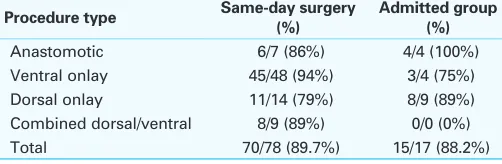
day of surgery. The average length of stay for admitted patients was 1.48 days (range 0.7-2.8 days). Eight of 17 admissions (47%) were planned for either patient preference or known medical comorbidities (ex: mental illness, COPD, CKD). Of the 9 unplanned admissions, 5 were for pain control and/or patient anxiety, 2 for difficulties with anesthesia, and 2 for extended operative times (pelvic trauma urethral injury patient requiring pubectomy, scar excision and primary anastomosis; obese patient with 18cm urethral stricture). There was no significant difference in recurrence rate between the admission group and same day group (11.8% vs 10.3%), respectively. Of note, the average stricture length trended towards longer in the admission group (6.8cm vs 4.9cm (p>0.05) (Table 1).
Conclusions: We describe the largest single surgeon series of outpatient
anterior urethroplasty to date including more complex single stage pan-urethral repairs than previously reported. Our series reinforces the feasibil-ity and safety of same day surgery for anterior urethroplasty.
P20
Patients Adherence to the Symptom-Based Follow-up Protocol after Urethral Reconstruction
Jeffrey Spencer, Dmitriy Nikolavsky.
SUNY Upstate Medical University, Syracuse, NY, USA.
Background: There is no standardized protocol for following patients
after urethral reconstruction. Non-instrumented urine flow measurements have been advocated as a sensitive indicator for stricture recurrence rather than use of cystoscopy and/or retrograde urethrogram, especially when used in combination with questionnaires assessing patient reported symptoms. Follow-up is crucial and depends on patient compliance. We examined our patients’ adherence to follow-up and clinical outcomes using a symptoms-based regimen that does not include routine use of cystoscopy or imaging.
Methods: Retrospective chart review of all post-urethroplasty patients
from August 2012 to May 2015 was carried. Patients with bulbomem-branous or pan-urethral strictures were included. Patients under 18 years, out-of-state, and prisoners were excluded. All patients in this group were treated with Kulkarni urethroplasty (one-sided urethral dissection, penile invagination and dorsal onlay buccal grafts. Patients were followed at 6 weeks, 4 months, 8 months, 1 year and then yearly intervals. Stricture recurrence was defined as the need for any instrumentation or reopera-tion. Urine-flow (Qmax) and post-void residuals (PVR) were obtained at each visit. Patient-reported voiding outcomes were monitored with the International Prostate Symptom Score questionnaire (IPSS). Triggers for cystoscopy and/or retrograde urethrography included Qmax below 13cc/sec, increase in IPSS scores by 5 points or failure to decrease IPSS to below 10.
Results: Thirty-three patients with bulbomembranous or pan-urethral
tures met the inclusion criteria. Mean age was 53 (21-75) and mean stric-ture length was 9.8cm (1.5-21cm). The mean follow-up was 13 months (2-31). At 6 weeks follow-up there was 100% compliance. Four month follow-up was 86%. Eight month follow-up was 81% and 1 year follow up was 78%. Three out of four patients presented for the 2-year follow up. Three of the 33 patients had suspicion for recurrence based on post-operative Qmax and IPSS scores and had undergone flexible cystoscopy. Only one patient had stricture recurrence which was treated with a visual urethrotomy. Mean Qmax of the cohort changed from 5ml/sec to 21 ml/ sec at last follow-up (p=0.00006). PVR also improved from 130ml to 54ml post-operatively (p=0.001). Statistically significant changes were seen in IPSS which improved from a mean of 20 to 6, and quality of life score from 5 (terrible) to 1 (delighted).
Conclusions: Patient compliance for follow-up after urethroplasty remains
stable and non-invasive symptom-based surveillance of stricture recur-rence may improve patient compliance. Clinical and patient reported outcomes can be used successfully to follow results of the reconstruction and monitor for recurrence.
Table 1. P19. Success rates of same-day vs admitted patients by procedure type
Procedure type Same-day surgery (%)
Admitted group (%)
Anastomotic 6/7 (86%) 4/4 (100%)
Ventral onlay 45/48 (94%) 3/4 (75%)
Dorsal onlay 11/14 (79%) 8/9 (89%)
Combined dorsal/ventral 8/9 (89%) 0/0 (0%)
P21
Salvage Reconstruction For Failed Neourethra In Female To Male Gender Reassignment
Mourad Abouelleil, Jared Manwaring, Stephen Blakely, Dmitriy
Nikolavsky.
Upstate, Syracuse, NY, USA.
Background: To report our experience in management of urethral
com-plications after female to male gender reassignment.
Methods: Consecutive patients presenting with urologic complications
of gender-reassignment surgery were reviewed. Six transgender male patients were identified. Clinical presentation, anatomic findings, surgi-cal techniques and clinisurgi-cal outcomes are presented.
Results: The most common clinical finding (5 out of 6 patients) is a triad
of neourethral stricture, urethral fistula at the site of native urethral meatus and communication to a perineal cavity. Despite a reported history of vaginectomy, vaginal epithelium was identified in the perineal cavity of 5 of the 6 patients indicating a vaginal remnant. Four of 6 patients achieved competent urethral patency by performing remnant vaginectomy, oblit-eration of vaginal cavity, formal fistula repair and appropriate buccal mucosal graft urethroplasty. One of 6 patients didn’t require vagnectomy but underwent fistula repair, and urethroplasty with buccal mucosal graft. One patient, with no identifiable neourethral lumen, declined a two-stage approach and was managed by vagnectomy and perineal urethrostomy.
Conclusions: While all patients present with similar anatomic
conse-quences, each patient presents a unique reconstructive challenge. Substitution urethroplasty techniques using buccal mucosal graft were successful in all patients desiring standing voiding.
P22
Dorsal Onlay Urethroplasty For Membranous Urethral Strictures:Urinary And Erectile Functional Outcomes
Stephen Blakely, Mourad Abouelleil, Jared Manwaring, Tiffany Caza, Dmitriy Nikolavsky, Steve Landas.
Upstate, Syracuse, NY, USA.
Background: To evaluate the urinary and erectile functional outcomes
after dorsal onlay urethroplasty for bulbomembranous urethral strictures. To understand the functional implications of dissection of the posterior urethra. Experts in the field have demonstrated near one hundred per-cent urinary incontinence after operating on these strictures. Patients have commonly consulted on life-long dilations. We introduce a new technique in hopes of avoiding detrimental effects on continence and erectile function.
Methods: We identified all men who underwent membranous urethral
stricture repair by a dorsal buccal mucosal graft onlay technique at a single institution between August 2012 and February 2015. Primary end-points of continence and erectile function were assessed pre- and post-operatively. Continence is defined as no leakage and erectile function is measured by the Sexual Health Inventory for Men (SHIM) questionnaire. Uroflowmetry parameters, post void residual values and International Prostate Symptom Score (IPSS) data are also presented. Tissue routinely excised from the intercrural space during dissection of the dorsal aspect of the membranous urethra was evaluated for presence of scar, striated muscle and nerves.
Results: Sixteen men, mean age 49.8 years (26-72), underwent
urethro-plasty for strictures with mean length 56.5 mm (15-170) involving the membranous urethra. Fifteen of 16 men were continent preoperatively. All 15 men remained continent after urethroplasty. Of 10 men with pre-operative SHIM score 17-25 (mild or no erectile dysfunction), only 3 men had a decline after urethroplasty. At mean follow-up of 7 months (range 4-26 months), 15 of 16 men had improvement in maximum urinary flow rate (Qmax) with a mean improvement of 22 mL/sec. IPSS improved from median of 23 preoperatively to 4 postoperatively with median bother score improvement from 5 to 0. One of the 16 patients had recurrence within the first 8 months requiring a single DVIU.
Conclusions: Using a dorsal onlay technique with buccal mucosal graft
for membranous urethral stricture repair does not compromise continence or erectile function in most patients with good preoperative function.
Intercrural dissection at the level of membranous urethra should be lim-ited, because striated muscle and cavernous nerves are present.
P23
Clinical and Patient Reported Outcomes of Urethroplasty for Long Segment or Panurethral Strictures
Jeffrey Spencer, Dmitriy Nikolavsky.
SUNY Upstate Medical University, Syracuse, NY, USA.
Background: Treatment of panurethral strictures with involvement of the
penile and bulbar urethra can be technically challenging. New, one-stage techniques have been developed with excellent reported long-term surgi-cal success rates and lower complication rates. There is limited data on the patient reported outcomes (PROMs) after repair. We present clinical outcomes of panurethral stricture repair as well as patient reported urinary and sexual outcomes.
Methods: Retrospective chart review of all post-urethroplasty patients
from August 2012 to April 2015 was carried. Patients with anterior ure-thral strictures >8 cm were included. All patients in this group were treated with Kulkarni type repair (one-sided urethral dissection, penile invagination and dorsal onlay buccal grafts). Patients were followed at 4-month intervals for the first year and yearly afterwards. Recurrence was defined as need for any intervention (open or transurethral). Clinical out-comes included maximum uroflow rates (Qmax) and post-void residuals (PVR). PROMs included voiding assessments with IPSS survey, erectile function with SHIM scores and ejaculation function with an eight-question ejaculatory domain of Male Sexual Health Questionnaire (MSHQ-EjS). Additionally, every patient was asked about having penile deviation, post-void dribble and urine spraying/stream splitting at every visit.
Results: We have identified 20 patients who had long-segment or
pan-urethral strictures. The mean age was 57.7 years (39-75). The mean stric-ture length was 14.3cm (8-21cm). At a mean follow up of 8.8 months (1-24.2), there were no stricture recurrences and no fistula formation. At the last follow up Qmax improved from mean of 4.6ml/sec to 19.3ml/sec (p=0.00003) and mean PVR changed from 98ml (9-227) to 49ml (0-178) (p=0.01). The mean baseline IPSS score was 20 (7-35) and decreased to 7 (1-21) on last follow-up (p=0.00009). The quality of life due to urinary symptoms score improved from mean of 5 to 1 (p=0.00001). There was no change in sexual function based on SHIM scores. Ejaculatory function on MSHQ-EjS was found to be significantly improved with urethroplasty from 23/40 before repair to 32/40 in follow-up (p=0.02). Post-void drib-bling was reported in 53% of patients. Four patients had penile deviation which resolved by 1 year follow-up.
Conclusions: The Kulkarni type urethroplasty for long segment or
pan-urethral strictures can successfully treat disease. Patency of the urethra persists throughout short to medium term follow-up. The quality of life of patients in regards to urinary symptoms is significantly improved while sexual and ejaculatory outcomes are either preserved or improved in majority of patients.
P24
Gluing of Urologic Fistulas: A Viable Option In High Risk Patients
Lorraine M. Liang, Hani H. Rashid, Erdal Erturk, Benjamin J. Nelson,
Matthew T. Truong, Ashwani K. Sharma, David Lee, David Waldman, Edward M. Messing.
University of Rochester, Rochester, NY, USA.
Background: Urinary fistulas are a rare complication after urological
sur-gery. Often they occur in patients with significant comorbidities and risk factors for fistulas including poor nutrition, residual or recurrent malig-nancy, ischemia and prior irradiation. N-butyl-cyanoacrylate (NBCA) is a medical grade resin that is FDA approved for embolization of cerebral AVMs. It has been used to close persistent pancreatic leaks, enteric fistulas and urine leaks. We present 5 cases of urologic leaks after 3 cystectomies with ileal conduits and 2 partial cystectomies at our institution.
Methods: 5 of our patients had persistent urinary fistulas despite
visualized on fluoroscopy or endoscopy. These fistulas were embolized using NBCA with the aid of our interventional radiology colleagues. Their other tubes and drains were then serially removed at a median interval of 3 weeks (mean of 32 days).
Results: In our 5 patients with localizable fistulae, embolization resulted
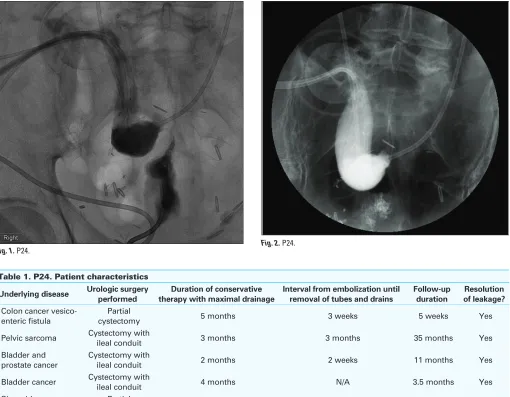
in resolution of urine leakage and allowed for removal of their various tubes, stents and drains. None of these patients have had recurrence of their urine leaks at a mean follow-up of 10 months (mean follow-up of 12 months) (Table 1, Fig. 1, Fig. 2).
Conclusions: Urinary fistulas after urologic surgery can be a bothersome,
frustrating or even life threatening occurence for the patient and his or her urologist. Often, these patients cannot undergo repeat surgery for various reasons. Embolization of fistulous tracts with NBCA is a viable alternative to invasive surgical interventions. Embolization can be repeated if neces-sary, and based on previously published case series, does not preclude surgical correction if gluing fails.
P25
The Treatment Of Recurrent Incontinence After A Failed Midurethral Sling: A Population-based Analysis
Blayne Welk1, Jennifer Winick-Ng2
1Western University, London, ON, Canada, 2ICES Western, London, ON, Canada.
Background: Midurethral slings are the operation of choice for the
treat-ment of female stress urinary incontinence. However, the optimal man-agement of recurrent stress incontinence after a midurethral sling is not well defined.
Methods: We used administrative data to identify all women who
under-went a synthetic midurethral sling in the province of Ontario, Canada between 2002-2013. The primary outcome was subsequent stress inconti-nence surgery (including retropubic suspensions, autologous fascial slings, bulking agents, and repeat synthetic midurethral slings). Our primary exposure was surgeon midurethral sling case volume (high volume was defined as >75th percentile of midurethral sling surgeons) and surgical specialty.
Results: We identified 59,556 women who had a midurethral sling,
with a total of 310,143 person-years of followup. The median age of the
Table 1. P24. Patient characteristics
Underlying disease Urologic surgery performed
Duration of conservative therapy with maximal drainage
Interval from embolization until removal of tubes and drains
Follow-up duration
Resolution of leakage?
Colon cancer vesico-enteric fistula
Partial
cystectomy 5 months 3 weeks 5 weeks Yes
Pelvic sarcoma Cystectomy with
ileal conduit 3 months 3 months 35 months Yes
Bladder and prostate cancer
Cystectomy with
ileal conduit 2 months 2 weeks 11 months Yes
Bladder cancer Cystectomy with
ileal conduit 4 months N/A 3.5 months Yes
Sigmoid adenocarcinoma
Partial
cystectomy 2 months 8 days 10 months Yes
women was 52 (IQR 45-63). 8.6% of women had a prior hysterectomy, and 5.7% had prior pelvic organ prolapse surgery. At the time of initial midurethral sling, 12.9% had a hysterectomy and 29.4% had pelvic organ prolapse surgery. Overall, 3.3% of the cohort underwent additional stress incontinence operations (for an event rate of 6.3 repeat operations per 1000 person-years). The most common secondary surgery was a repeat midurethral sling (81.5%), followed by a pubovaginal sling (6.2%). The cumulative incidence of a repeat stress incontinence surgery after 10 years of followup was 4.9% (95% CI 4.6-5.1%). Within this cohort, 1425 (2.4%) women required surgical revision or removal of the initial midure-thral sling. Of these women, 215 (15%) went on to have a subsequent incontinence procedure, of which the most common procedure was still a repeat midurethral sling (n=140, 65.1%), or a pubovaginal sling (n=42, 19.5%). In multivariable survival analysis accounting for patients clustered within surgeons, there was no significant effect of our primary exposures: high surgeon volume (HR 0.89, 95% CI 0.76-1.03) or specialty (HR 0.93 (gynecologist compared to urologist), 95% CI 0.75-1.16). Younger age, increased comorbidity, and simultaneous hysterectomy all increased the hazard of future stress incontinence surgery.
Conclusions: Secondary stress incontinence surgery after midurethral sling
was observed in 3.3% of women. The vast majority of women, even those who had undergone a secondary surgery for a mesh complication were managed with a repeat midurethral sling. Surgeon expertise and specialty do not appear to significantly impact the risk of future stress incontinence surgery.
P26
Positive Outcomes After First Treatment with OnabotulinumtoxinA Persist Long-term With Repeat Treatments in Patients with Neurogenic Detrusor Overactivity
Philip Aliotta1, Roger Dmochowski2, Pierre Denys3, David Castro-Diaz4, Bertil Blok5, Karen Ethans6, Manher Joshi7, Andrew Magyar8, Michael Kennelly9. 1Western New York Urology Associates, LLC, Cheektowaga, NY, USA, 2Vanderbilt University Medical Center, Nashville, TN, USA, 3Hôpital Raymond Poincaré, Garches, France, 4Hospital Universitario de Canarias, Santa Cruz de Tenerife, Spain, 5Erasmus Medical Center, Rotterdam, Netherlands, 6University of Manitoba, Winnipeg, MB, Canada, 7Allergan, Inc., Irvine, CA, USA, 8Allergan, Inc., Bridgewater, NJ, USA, 9Carolinas Rehabilitation, Charlotte, NC, USA.
Background: A post-hoc analysis examined whether response to
long-term onabotulinumtoxinA treatment is consistent with response to the first onabotulinumtoxinA treatment.
Methods: Patients in a 3-year extension study (following a 52-week phase
3 study) received onabotulinumtoxinA ‘as needed’ based on their request/ fulfillment of prespecified criteria. This analysis includes patients who received only the approved 200U dose during the 4-year study; patients were grouped by % UI reduction after first treatment: <25% (n=23), 25-49% (n=10), 50-74% (n=23), 75-99% (n=55), and 100% (n=84). Assessments included mean % UI reduction, change from baseline in Incontinence-Quality of life (I-QOL) total score, and AEs through 6 treat-ments.
Results: 43% of patients (84/195) experienced 100% UI reduction, and
83% of patients (162/195) experienced ≥50% UI reduction after ona-botulinumtoxinA treatment 1. Baseline characteristics were largely com-parable across subgroups. For subgroups with mean UI reduction ≥50% after treatment 1, all subsequent treatments resulted in similar mean % UI reductions (64-93%) and consistent I-QOL improvements that were 2-3X the minimally important difference (≥11 points). Interestingly, in the 33 patients with <50% UI reduction after treatment 1, ~1/3 of these patients experienced ≥50% UI reduction with all subsequent treatments. Overall AE rates were similar across all subgroups and consistent across repeat treatments; UTI was the most common AE.
Conclusions: NDO patients with ≥50% UI reduction after their first ona-botulinumtoxinA treatment experience consistent improvements in UI and QOL over 4 years of repeat treatments. A <50% UI reduction after first treatment does not necessarily predict low response with subsequent treatments.
P27
Durable Improvements in Urinary Incontinence and Positive Treatment Response in Patients with Overactive Bladder Syndrome Following Long-Term OnabotulinumtoxinA Treatment: Final Results of 3.5-Year Study
Sidney Radomski1, Dirk De Ridder2, Christopher Chapple3, David Sussman4, Peter Sand5, Karl-Dietrich Sievert6, Brenda Jenkins7, Andrew Magyar8, Andrew Magyar8, Victor Nitti9. 1University of Toronto, Toronto, ON, Canada, 2University Hospitals KU Leuven, Leuven, Belgium, 3Royal Hallamshire Hospital, Sheffield, United Kingdom, 4Rowan University School of Osteopathic Medicine, Stratford, NJ, USA, 5Evanston Continence Center, Evanston, IL, USA, 6Paracelsus Medical University, Salzburg, Austria, 7Allergan, Inc., Irvine, CA, USA, 8Allergan, Inc., Bridgewater, NJ, USA, 9New York University, New York, NY, USA.
Background: Here we present the final results from an extension study
assessing long-term onabotulinumtoxinA treatment (3.5 years) in patients with overactive bladder syndrome (OAB).
Methods: Patients who completed either of 2 Phase III trials were eligible
to enter a 3-year extension study in which they received multiple ona-botulinumtoxinA (100U) treatments. Data were analyzed for the overall population of patients who received 100U in any treatment cycle (N=829) and within discrete subgroups of patients who received exactly 1 (n=105), 2 (n=118), 3 (n=117), 4 (n=83), 5 (n=46), or 6 (n=33) treatments of the 100U dose throughout the study (n=502).
Results: Of the 829 patients enrolled, 51.7% completed the study.
Discontinuations due to AEs/lack of efficacy were low (5.1/5.7%); other reasons were not treatment-related. Mean reductions from baseline in uri-nary incontinence (UI) episodes/day (week 12; co-primary endpoint) were consistent among discrete subgroups who received 1 (-3.1), 2 (-2.9, -3.2), 3 (-4.1 to -4.5), 4 (-3.4 to -3.8), 5 (-3.0 to -3.6), or 6 (-3.1 to -4.1) treat-ments. A consistently high proportion of patients reported improvement/ great improvement on the Treatment Benefit Scale (week 12; co-primary endpoint) in the discrete subgroups across all treatments (70.0-93.5%). Median time to request retreatment was ≤6 months for 34.2%, >6-≤12 months for 37.2%, and >12 months for 28.5% of patients. Most common AE was UTI, with no changes in safety profile over time.
Conclusions: Long-term onabotulinumtoxinA treatment resulted in
consis-tent reductions in UI and high proportions of patients reporting improve-ment after each treatimprove-ment, with no new safety findings.
P28
Botulinum Toxin Injections for Neurogenic Bladder: 3 year Urodynamic Outcomes
Gabriel Z. Leinwand1, Ahmed Alkaram2, Paul J. Feustel1, Elise J. B. De2. 1Albany Medical College, Albany, NY, USA, 2Albany Medical Center, Albany, NY, USA.
Background: Botulinum toxin type A (BTxA) has been shown to be
effec-tive for neurogenic detrusor overactivity in the short term. Few studies report on longer term results. Our study reports on urodynamic study (UDS) outcomes at mean 27 months after serial BTxA injections. The study also assesses treatment response in patients with overactive bladder symptoms, incontinence, and /or urinary tract infections inadequately responsive to medical management.
Methods: Single center retrospective analysis of UDS prior to and
follow-ing injections of BTxA performed for management of neurogenic detru-sor overactivity, poor compliance or low capacity. Primary outcome was urodynamic maximum cystometric capacity. Secondary outcomes included urodynamic detrusor overactivity, maximum detrusor pressure, compliance, leak, and post void residual volume, as well as 48 hour voiding diary, presence of incontinence or urinary tract infections, and medication use.
Results: A total of 50 patients met criteria and were evaluated with UDS
The mean increase in maximum cystometric capacity was 53 mL +/-166 (p = 0.03). There were 33 patients with observable neurogenic detru-sor overactivity during pre-BTxA UDS. The mean increasein cystometric capacity for this subgroup of patients was 93 mL +/- 166.6 (p = 0.003), of whom 19 (58%) had no uninhbited contractions during UDS after BTxA treatment. For those without detrusor overactivity on pre-BTxA UDS, the maximum cystometric capacity decreased 22 mL after BTxA treatment. For the group of patients (n=14) who had uninhibited contractions both before and after treatment the volume at which contraction occurred improved from 209 to 270.4 mL (p=0.03).
Among the 20/50 patients with urodynamic incontinence prior to BTxA treatment 16 (80%) resolved the finding at a mean of 27 months after initial BTxA treatment. There were 7/50 patients who were dry on UDS pre-procedure but who documented incontinence on follow up UDS.
Conclusions: Maximum cystometric capacity remains increased at 27
months after Botulinum toxin. We found the individuals who benefited most from BTxA to the bladder were those with observable bladder con-tractions during pre-procedure UDS. Improved neurogenic detrusor over-activity and incontinence was still observed at 27 months post procedure.
P29
Electrical Stimulation of Afferent Nerves in the Foot with Transcutaneous Adhesive Pad Electrodes Improves Overactive Bladder Symptoms
Christopher Chermansky1, Mang Chen1, Jeremy Reese1, Shachi Tyagi2,
Bing Shen1, Janet Okonski1, William de Groat3, Changfeng Tai1. 1University of Pittsburgh School Of Medicine - Department of Urology,
Pittsburgh, PA, USA, 2University of Pittsburgh School Of Medicine -
Geriatrics Division in Department of Medicine, Pittsburgh, PA, USA,
3University of Pittsburgh School Of Medicine - Pharmacology and
Chemical biology, Pittsburgh, PA, USA.
Background: The ICS defines OAB as urgency, with or without urge
uri-nary incontinence (UUI), usually with frequency and nocturia. Treatments for refractory OAB include intradetrusor onabotulinumtoxinA, sacral neu-romodulation, or posterior tibial nerve stimulation. A non-invasive and convenient OAB treatment with no major adverse events is currently unavailable. We sought to determine if electrical stimulation of somatic afferent nerves in the foot with an adhesive footpad can improve OAB symptoms.
Methods: OAB subjects were recruited, excluding those with implanted
neurostimulators. Subjects on OAB drug therapy underwent a 2 week washout. Subjects completed a 3-week voiding diary, including the time and volume of all voids, number of daily UUI episodes, and number of daily urgency episodes. Foot stimulation was applied only during the 2nd week, and the 1st and 3rd weeks were used as baseline control and washout period to determine persistence of effect, respectively. The intervention included 3 hours of foot stimulation nightly during that 2nd week using adhesive skin surface electrodes connected to a transcutane-ous electrical nerve stimulator. Electrodes were attached to the bottom
of the foot to activate the lateral and median plantar nerves. Stimulation parameters included pulse frequency of 5 Hz, pulse width of 0.2 ms, and intensity of 2-4 times the minimal stimulation current necessary to induce a toe twitch. Stimulation intensity was maximally set by the subjects themselves to ensure comfort.
Results: We enrolled 13 subjects with OAB (10 with UUI, 3 with urgency/
frequency). Patient age ranged from 40-84, and 12 of 13 were female. There was a significant decrease with foot stimulation in daytime voids, UUI episodes/day, urgency episodes/day, overnight voids, and volume/ overnight void (Table 1). There was an increase in volume/daytime void. Effects persisted for 4 days after treatment was discontinued. There were no adverse events (skin irritation, redness, rash, or foot cramp) seen in any patients undergoing foot stimulation.
Conclusions: Foot Stimulation with a non-invasive adhesive skin surface
electrode significantly improved voiding parameters in OAB patients with-out adverse events. While our sample size was limited, results reached statistical significance, and we plan to pursue future randomized trials with a sham intervention to confirm this benefit.
P30
Safety Result of Photoselective Greenlight XPS Laser Vaporization of the Prostate in Comorbid High Risk Men with Benign Prostatic Enlargement: A Multicenter International Study
Emad Rajih,1,2 Come Tholomier,1 Pierre-Alain Hueber,1 Abdullah Alenizi,1
Roger Valdivieso,1 Mounsif Azizi,1 Ricardo Gonzalez,3 Gregg Eure,4 Lewis
Kriteman,5 Mahmood Hai,6 Kevin C. Zorn1..
1University of Montreal, Montreal, QC, Canada, 2Houston Metro Urology,
Houston, TX, USA, 3Urology of Virginia, virginia, OH, USA, 4Georgia
Urology, Atlanta, GA, USA, 5The Surgical Institute of Michigan, Ann
Arbor, MI, USA.
Background: As men age, there is an increase in comorbidities, the need
for anticoagulation, and BPH. However, the decision to surgically treat high risk men with symptomatic BPH can be challenging to make. The American Society of Anesthesia (ASA) classification system is a marker for perioperative risk based on degree of systemic disease. The purpose of this study is to evaluate the safety and efficacy of PVP with GreenLight XPS in treating high risk (HR) men defined by ASA Class 3 or higher compared to healthier men undergoing the same operation.
Methods: A multi−center retrospective analysis of 956 men who
under-went PVP with GreenLight XPS for symptomatic BPH from 2010 to 2013 was performed. Perioperative, operative, and postoperative parameters like complication rates were collected and compared between HR (i.e. ≥ASA 3) and healthy men (i.e. ASA <3).
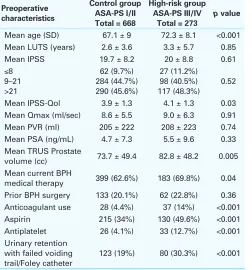
Results: HR men were older, had larger prostates, and more likely on
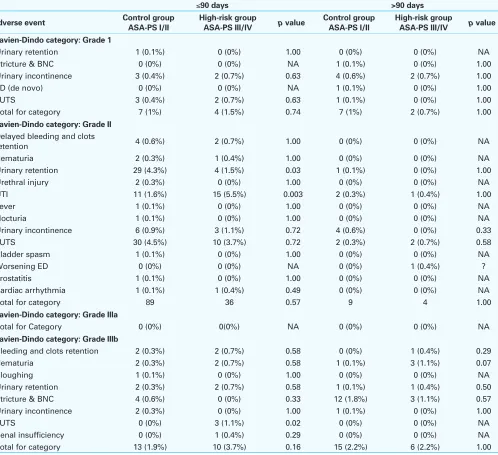
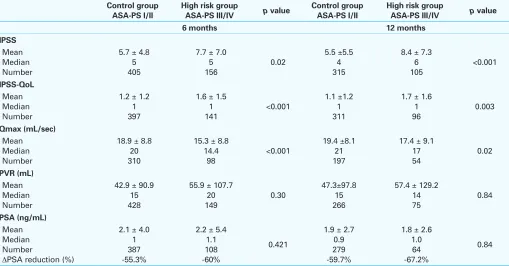
active anticoagulation (Table 1). HR men were as likely to be treated as outpatients as the healthier cohort (94.5% v 93.5%, p=0.58); however, more were treated in a hospital rather than surgery centers. There were no differences in intraoperative adverse events (Table 2). Postoperatively, men experienced an improvement in flow rate, international prostate symptom score (IPSS) and post void residual (PVR), independent of risk category (Table 3). HR men were not more likely to have an unplanned surgical intervention at any postoperative time point. However, in the first year postoperatively, HR men are more likely to develop a UTI (5.7% vs 2%) (Table 4). While hospital readmissions were similar the first postoperative month (1.9% vs 1.4%), they were more likely for HR men cumulatively in the first year postoperatively (4.8% vs 1.5%). Clot retention trended towards more often in the HR group (2.2% vs 0.7%), possibly due to more men on anticoagulants. Death was more likely in the HR men group for reasons not related to surgery (1.1% vs 0.4%), but this was not statistically significant (Table 5, Fig. 1).
Conclusions: Despite older age and higher use of anticoagulants, HR men
who undergo PVP benefit from symptom improvement similar to healthier men. Postoperative complications are low despite greater comorbidities. In high−volume GreenLight XPS centers, PVP is a safe and effective treat-ment for HR men with symptomatic BPH.
Table 1. P29. Results of foot stimulation on OAB parameters
Parameter Before foot stimulation
After foot
stimulation p value
No. daytime voids/day 9.05 ± 0.29 7.31 ± 0.31 0.03 No. UUI episodes/day 2.17 ± 0.27 1.37 ± 0.19 0.02 Volume/daytime void 161.2 ± 9.2 mL 193.8 ± 11.1 mL 0.02 No. urgency episodes/
day 7.09 ± 0.31 6.11 ± 0.03 0.03 No. nighttime voids 1.48 ± 0.13 1.09 ± 0.14 0.04 Volume/nighttime
void
206.8 ± 18.4
mL 151.8 ± 17.9 mL 0.03
Table 1. P30. Preoperative baseline characteristics
Preoperative characteristics
Control group ASA-PS I/II Total = 668
High-risk group ASA-PS III/IV
Total = 273
p value
Mean age (SD) 67.1 ± 9 72.3 ± 8.1 <0.001
Mean LUTS (years) 2.6 ± 3.6 3.3 ± 5.7 0.85
Mean IPSS 19.7 ± 8.2 20 ± 8.8 0.61
≤8 9–21 >21
62 (9.7%) 284 (44.7%) 290 (45.6%)
27 (11.2%) 98 (40.5%) 117 (48.3%)
0.52
Mean IPSS-Qol 3.9 ± 1.3 4.1 ± 1.3 0.03
Mean Qmax (ml/sec) 8.6 ± 5.5 9.0 ± 6.3 0.91
Mean PVR (ml) 205 ± 222 208 ± 223 0.74
Mean PSA (ng/mL) 4.7 ± 7.3 5.5 ± 9.6 0.33
Mean TRUS Prostate
volume (cc) 73.7 ± 49.4 82.8 ± 48.2 0.005
Mean current BPH
medical therapy 399 (62.6%) 183 (69.8%) 0.04
Prior BPH surgery 133 (20.1%) 62 (22.8%) 0.36
Anticoagulant use 28 (4.4%) 37 (14%) <0.001
Aspirin 215 (34%) 130 (49.6%) <0.001
Antiplatelet 26 (4.1%) 33 (12.7%) <0.001
Urinary retention with failed voiding trail/Foley catheter
123 (19%) 80 (30.3%) <0.001
ASA-PS: American Society of Anesthesiologists Performance Status; SD: standard deviation; LUTS: lower urinary tract symptoms; IPSS: International Prostate Symptom Score; QoL: quality of life; PVR: post-void residual; PSA: prostate-specific antigen; TRUS: transrectal ultrasound; BPH: benign prostatic hyperplasia.
Table 2. P30. Perioperative patient outcomes
Control group ASA-PSI/II Total = 668
High risk group ASA-PS III/IV
Total = 273 p value
Procedure location (n, %)
Physician office Hospital
Ambulatory surgery centre
37 (5.5%) 467 (69.9%) 164 (24.6%)
3 (1.1%) 243 (89%)
27 (9.9%)
<0.001
Intraoperative outcomes
Anesthesia type General Spinal Other
518 (77.5%) 129 (19.3%) 21 (3.2%)
246 (90.1%) 26 (9.5%)
1 (0.4%)
<0.001 <0.001
Mean procedure time (min) 53.9 ± 24.9 65 ± 35.1 <0.001
Mean laser time (min) 31.0 ± 17.1 38.3 ± 21.7 <0.001
Mean energy delivered (KJ) 258 ± 164 313.4 ± 207 <0.001
Mean energy density (KJ/
TRUS cc) 3.8 ± 3 4.2 ± 3.8 0.04
Mean length of stay (days) 0.5 ± 0.5 0.6 ± 0.4 <0.001
Length of catheterization
(days) 1.1 ± 1 1.3 ± 1.2 0.07
Number of fibres used 1
2
≥3
617 (92.8%) 46 (6.9%)
2 (0.3%)
243 (89%) 28 (10.3%)
2 (0.7%) 0.16
Intraoperative complications
Intraoperative bleeding 4 (0.6%) 1 (0.4%) 1.00
Bladder/ureteral injury 0 (0%) 1 (0.4%) 0.29
Urethral injury 0 (0%) 0 (0%) NA
Prostatic capsular
perforation 1 (0.1%) 0 (0%) 1.00
P31
Holmium:YAG Laser Ablation For Management Of Lower Urinary Tract Surgical Mesh Or Suture Erosion Following Continence Surgery
Adiel Mamut1, Paul Martin2, Blayne Welk1.
1Western University, London, ON, Canada, 2Bluewater Health, Sarnia, ON, Canada.
Background: Erosion of surgical mesh or suture material is a potential
complication of surgical intervention for stress incontinence. Traditionally this has been managed in symptomatic patients with either a transvaginal mesh excision for urethral erosions or an open cystotomy for bladder erosions. Endoscopic ablation of eroded mesh or suture material offers a
less invasive management option for these patients. We present a retro-spective review of our experience at a tertiary care center, and describe technical points to the procedure.
Methods: A retrospective chart review was carried out to identify all
female patients with a history of prior incontinence surgery who under-went transurethral laser ablation between November 2011 and December 2014. Clinical and surgical records were reviewed to extract procedural and outcomes data.
Results: Fifteen patients with a history of continence surgery who later
underwent transurethral laser ablation of eroded mesh or suture material were identified. Nine had a previous synthetic midurethral sling. Four patients had a history of retropubic suspensions. Two patients had a
com-Table 3. P30. Postoperative complications: Treatment-related adverse events by Uro-Clavien-Dindo classification and onset time
≤90 days >90 days
Adverse event Control group ASA-PS I/II High-risk group ASA-PS III/IV p value Control group ASA-PS I/II High-risk group ASA-PS III/IV p value
Clavien-Dindo category: Grade 1
Urinary retention 1 (0.1%) 0 (0%) 1.00 0 (0%) 0 (0%) NA
Stricture & BNC 0 (0%) 0 (0%) NA 1 (0.1%) 0 (0%) 1.00
Urinary incontinence 3 (0.4%) 2 (0.7%) 0.63 4 (0.6%) 2 (0.7%) 1.00
ED (de novo) 0 (0%) 0 (0%) NA 1 (0.1%) 0 (0%) 1.00
LUTS 3 (0.4%) 2 (0.7%) 0.63 1 (0.1%) 0 (0%) 1.00
Total for category 7 (1%) 4 (1.5%) 0.74 7 (1%) 2 (0.7%) 1.00
Clavien-Dindo category: Grade II
Delayed bleeding and clots
retention 4 (0.6%) 2 (0.7%) 1.00 0 (0%) 0 (0%) NA
Hematuria 2 (0.3%) 1 (0.4%) 1.00 0 (0%) 0 (0%) NA
Urinary retention 29 (4.3%) 4 (1.5%) 0.03 1 (0.1%) 0 (0%) 1.00
Urethral injury 2 (0.3%) 0 (0%) 1.00 0 (0%) 0 (0%) NA
UTI 11 (1.6%) 15 (5.5%) 0.003 2 (0.3%) 1 (0.4%) 1.00
Fever 1 (0.1%) 0 (0%) 1.00 0 (0%) 0 (0%) NA
Nocturia 1 (0.1%) 0 (0%) 1.00 0 (0%) 0 (0%) NA
Urinary incontinence 6 (0.9%) 3 (1.1%) 0.72 4 (0.6%) 0 (0%) 0.33
LUTS 30 (4.5%) 10 (3.7%) 0.72 2 (0.3%) 2 (0.7%) 0.58
Bladder spasm 1 (0.1%) 0 (0%) 1.00 0 (0%) 0 (0%) NA
Worsening ED 0 (0%) 0 (0%) NA 0 (0%) 1 (0.4%) ?
Prostatitis 1 (0.1%) 0 (0%) 1.00 0 (0%) 0 (0%) NA
Cardiac arrhythmia 1 (0.1%) 1 (0.4%) 0.49 0 (0%) 0 (0%) NA
Total for category 89 36 0.57 9 4 1.00
Clavien-Dindo category: Grade IIIa
Total for Category 0 (0%) 0(0%) NA 0 (0%) 0 (0%) NA
Clavien-Dindo category: Grade IIIb
Bleeding and clots retention 2 (0.3%) 2 (0.7%) 0.58 0 (0%) 1 (0.4%) 0.29
Hematuria 2 (0.3%) 2 (0.7%) 0.58 1 (0.1%) 3 (1.1%) 0.07
Sloughing 1 (0.1%) 0 (0%) 1.00 0 (0%) 0 (0%) NA
Urinary retention 2 (0.3%) 2 (0.7%) 0.58 1 (0.1%) 1 (0.4%) 0.50
Stricture & BNC 4 (0.6%) 0 (0%) 0.33 12 (1.8%) 3 (1.1%) 0.57
Urinary incontinence 2 (0.3%) 0 (0%) 1.00 1 (0.1%) 0 (0%) 1.00
LUTS 0 (0%) 3 (1.1%) 0.02 0 (0%) 0 (0%) NA
Renal insufficiency 0 (0%) 1 (0.4%) 0.29 0 (0%) 0 (0%) NA
Total for category 13 (1.9%) 10 (3.7%) 0.16 15 (2.2%) 6 (2.2%) 1.00
bination of procedures. Presenting symptoms were: storage symptoms (4), pelvic pain (5), incontinence (3) and recurrent bladder calculi or urinary tract infections (UTI) (3). All cases were done on an outpatient basis and the mean procedure time was 42.6 minutes. Nine patients had complete resolution or significant improvement of their presenting symptoms after a single laser ablation. Four patients required repeat laser ablation before complete resolution of their symptoms. One patient required trans vagi-nal mesh excision during the same anesthetic. Three patients required
further incontinence procedures. Two patients did not have resolution or improvement of their storage symptoms. Complications included post-operative UTI, and worsening of stress incontinence which each occurred in one patient.
Conclusions: Holmium:YAG laser ablation is an effective minimally
inva-sive option for management of surgical mesh or suture erosion in selected patients. There is little morbidity associated with this procedure, however repeat treatment may be necessary.
Table 4. P30. Unexpected postoperative medical provider visits post intervention
≤90 days >90 days
Type of visit Control group ASA-PS I/I
Hospitalization/admission 9 (1.3%) 10 (3.7%) 0.04 1 (0.1%) 4 (1.5%) 0.03
Outpatient visit 61 (9.1%) 23 (8.4%) 0.80 30 (4.5%) 9 (3.3%) 0.47
ASA-PS: American Society of Anesthesiologists Performance Status; ER: emergency room. N (%) represents the number and percent events; p value is from the Fishers Exact Test of differ-ence between groups.
Table 5. P30. Functional urinary outcomes at 6 and 12 months follow-up in control and high risk patients. IPSS, QoL, Qmax, PVR and PSA at 6 and 12 months in control group versus high-risk groups.
Control group