Surface Activation Studies to Increase
Curcumin Loading Capacity and Release in
Mesoporous Cr-SBA-15
Alime Çıtak 1,*, Tuğçe Güner2, Gizem Akbıyık3
Associate Professor, Department of Chemical Engineering, Eskişehir Osmangazi University, Eskişehir, Türkiye1 U.G. Student, Department of Chemical Engineering, Eskişehir Osmangazi University, Eskişehir, Türkiye2 , 3
ABSTRACT: Investigation on mesoporous silica materials has opened new opportunities in many areas of chemistry
and materials science. Especially recent developments in the field of catalysis show that the demand for mesoporous materials is increasing. SBA-15 and MCM-41 are the most widely known examples of such materials. SBA-15 is quite advantageous compared to MCM-41 because it has a large surface area and an adjustable pore diameter in the range of 5-30 nm. The SBA-15 has a much better thermal and hydrothermal balance than the MCM-41 thanks to its thick walls. Because of all these properties, SBA-15 is used more often in catalytic applications.
In this study, it was aimed to make soluble curcumin drugin the water, which the water-insoluble cancer drug with the aid of the mesoporous catalyst Cr-SBA-15, which was synthesized by the directhydrothermal method. In this way, it was aimed to make available the curcumin drug in the drug delivery systems, i.e., chemotherapy treatment. UV-VIS analysis was performed to determine the structural properties of drug loaded samples.
KEYWORDS: Mesoporous materials, Surface functionalization of SBA-15, Chromium metal, Drug release system.
I. INTRODUCTION
It is known that chemotherapy causes both physical and mental fatigue and it can be very difficult to use medicines regularly during treatment. Drug release plays an important role in regular drug use[1].
Mesoporous silica particles are used for controlled drug release, to increase the bioavailability of drugs and to increase their capacity to load silica particles. SBA-15 generally has a high surface area and an adjustable pore diameter. The SBA-15 has good thermal and hydrothermal stability due to its thick walls[2]. In short; SBA-15 is much more effective in catalytic applications than other support materials due to its smooth structure, high surface area and mesoporousnature[3, 4].The SBA-15 is very attractive with its low surface acidity allowing easy loading of the active metal with high surface area and high pore size allowing easy transport of large molecule organic materials and suitable transfer conditions [5-8].
At the same time, damage to the body (enzymatic depletion, hormone depletion, fat, protein depletion and muscle proliferation) during the treatment of cancer cells by loading chromium into SBA-15 will be minimized[9-11].The medicine used in this study is curcumin, which is popularly known as yellow turmeric. It is tocommonly in controlled drug delivery systems because of the biocompatibility, poorly soluble in water and non-toxic, in addition, curcumin is anticancer, antioxidant, anti-inflammatory, antiviral and antifungal [12,13].Both it can be used in the treatment of cancer and inflammation, anti-virus and vitamin support, so also show that the drug is versatile.
II. MATERIALS
Materials
Chromium loaded SBA-15 (Cr-SBA-15), methanol solution, phosphate buffered solution. Curcumin drug at a concentration of 10% was used. The chemical structure of the curcumin drug is shown in Fig.1.
Figure 1. Curcumin Chemical Structure [14].
III.METHODS
Drug Loading
During the curcumin loading process Cr-SBA-15 and Curcumin are taken at different concentrations and mixed in a 15 ml methanol solvent at room temperature for a certain period of time. Concentration changes are made by using different concentrations of curcumin titration to check drug efficacy. Table 1 shows quantities according to concentrations.
Table 1. Amounts of Curcumin and Cr-SBA-15 in Different Concentrations
133 ppm 100 ppm 83 ppm
Cr-SBA-15 + C (1:1) + 15 ml methanol
Cr-SBA-15 + C (2:1) + 15 ml methanol
Cr-SBA-15 + C (4:1) + 15 ml methanol 0.01 g Cr-SBA-15 + 0.01 g
Curcumin + 15 ml methanol 0.01 g Cr-SBA-15 + 0.005 g Curcumin + 15 ml methanol
0.01 g Cr-SBA-15 + 0.0025 g Curcumin + 15 ml methanol
Curcumin loading can be monitored using UV-VIS spectrophotometer. Loading Curcumin is performed at different time intervals: 2 hours, 4 hours, and 21 hours. Then 0.5 ml of sample from these solutions were taken into centrifuge tubes and methanol was added to complete 5 ml. The prepared solutions were centrifuged at 4000 rpm for 10 minutes. After the centrifugation 0.5 ml of the solution was taken and this solution was supplemented with 5 ml of methanol in the centrifuge tube. After that, it was put into 4 ml containers, then UV measurements were made
Using the standard calibration curve previously made, the absorption peak points are calculated by using wavelength of the measurements and then the amount of drug loaded is determined.
Preparation of Phosphate Buffer Solution
Two different phosphate salts were used (K2HPO4 and KH2PO4). 13.97 grams of K2HPO4 and 2.69 grams of
KH2PO4 were dissolved in 1 litter of distilled water.
Drug Release
Samples of Cr-SBA-15 loaded with different concentrations of Curcumin are loaded by stirring in a 15 ml phosphate buffer solution at a specified time interval: 30 minutes, 1 hour, 2 hours, 4 hours, and 6 hours. After that, these solutions are centrifuged and dissolved in the solvent. The curcumin oscillation capacity is achieved by concentration changes within a certain time interval and then the wavelength is obtained using the standard calibration curve previously made. With the help of the obtained wavelength, the amount of oscillation is reached and the effect of the concentration differences on the amount of oscillation is examined.
0.5 ml of sample was added to the centrifugation tube of Cr-SBA-15 loaded with different concentrations of Curcumin in phosphate buffer solution and methanol was added to be 5 ml. The prepared solutions were centrifuged at 4000 rpm for 10 minutes. After the centrifugation was completed, 0.5 ml of the solution was taken and the solution was supplemented with 5 ml of methanol in the centrifuge tube. UV measurements were then made in these 4 ml containers. Absorption peak points with the aid of wavelength of the measurements was determined and the amount of released drug was calculated.
IV.EXPERIMENTAL RESULTS
Characterization of Cr-SBA-15 Mesoporous Material
Figure 2. Narrow angle XRD pattern of Cr-SBA-15-30-2 catalysts
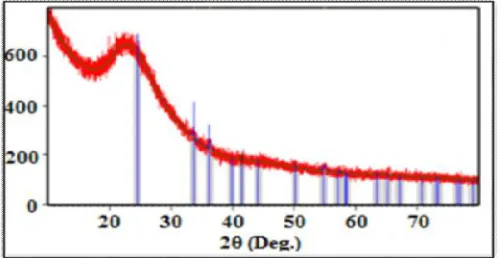
Figure 3. Wide angle XRD pattern of Cr-SBA-15-30-2 catalysts
Looking at the small angled XRD pattern in Fig. 2, it can be seen that the synthesis is successful.It was observed that the structure of the catalyst did not deteriorate and the loading of the chromium metal is successful with the wide angle XRD pattern in Fig. 3[3].
Figure 4. FT-IR vibrations of the Cr-SBA-15-30-2 catalyst
The Si-O-Si bands and the Cr-O bands obtained from the FT-IR analysis of the sample were found to be 3391.94 cm, 1633.45 cm, 1054.83 cm, 968.30 cm, 802.49 cm and It is 441.80 cm (Fig. 4). Compared with similar studies in the literature, the results obtained were very similar to the characteristic bands of Cr-SBA-15 [3].
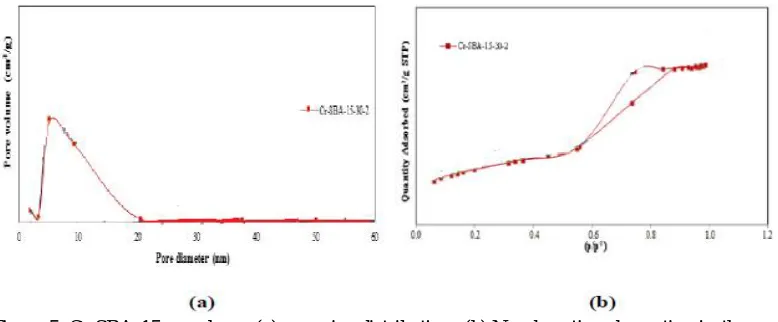
Figure 5. Cr-SBA-15 samples (a) pore size distributions (b) N2 adsorption-desorption isotherms
In Figure 5-b, it was observed that the isotherm is the linearity when the concentration of solute is too low and this assumed that the adsorbent forms more than one layer on the surface.
Table 2. BET and ICP-OES Analysis Results of Cr-SBA-15 Mesoporous Materials
Sample name Content (% by mass) BET surface area (m2/g)
Cr-SBA-15-30-2 1.132 587
the surface area of chromium was slightly decreased by chromium loading. This reduction was that the chrome placed in the structure is the result of clogging of pores.
Figure 6. SEM analysis result of Cr-SBA-15 mesoporous material (a) 2000 magnifications (b) 7500 magnifications
The surface area was scanned by SEM analysis and a homogeneous distribution was observed as seen in Fig.6
Drug loading
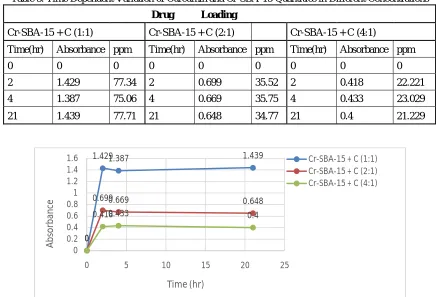
Table 3. Time Dependent Variation of Curcumin and Cr-SBA-15 Quantities in Different Concentrations
Drug Loading
Cr-SBA-15 + C (1:1) Cr-SBA-15 + C (2:1) Cr-SBA-15 + C (4:1) Time(hr) Absorbance ppm Time(hr) Absorbance ppm Time(hr) Absorbance ppm 0 0 0 0 0 0 0 0 0 2 1.429 77.34 2 0.699 35.52 2 0.418 22.221 4 1.387 75.06 4 0.669 35.75 4 0.433 23.029 21 1.439 77.71 21 0.648 34.77 21 0.4 21.229
Graph 1. Time-dependent Absorbance change during Drug Loading of samples at different concentrations
0
1.4291.387 1.439
0
0.6990.669 0.648
0
0.4180.433 0.4
0 0.2 0.4 0.6 0.8 1 1.2 1.4 1.6
0 5 10 15 20 25
A
b
so
rb
an
ce
Time (hr)
% The calculation of drug amount was made as shown below.
% Drug amount = amount of drug present in solution (ppm) / amount of starting drug (ppm) * 100 (1)
With the aid of Equation (1), the% amountof drug loaded were found with the starting ppm given in Table 1 and the varying ppm in terms of time given in Table 3.
Table 4. Time-Dependent Loaded Drug Quantities of Curcumin and Cr-SBA-15 Cr-SBA-15 + C (1:1) Cr-SBA-15 + C (2:1) Cr-SBA-15 + C (4:1)
Time(hr)
%
Amount of drug Time(hr)
%
Amount of drug Time(hr)
% Amount of drug
0 0 0 0 0 0
2 58.15 2 35.527 2 26.77 4 56.43 4 35.754 4 27.75 21 58.43 21 34.772 21 25.58
Graphic 2. Amount of Drug loaded in the Samples at Different Concentrations
Drug Release
Table 5. Time-Dependent Variation of Curcumin and Cr-SBA-15 Quantities in Different Concentrations
Drug Release
Cr-SBA-15 + C (1:1) Cr-SBA-15 + C (2:1) Cr-SBA-15 + C (4:1) Time(min) Absorbance ppm Time(min) Absorbance ppm Time(min) Absorbance ppm 0 0 0 0 0 0 0 0 0 30 0.573 30.69 30 0.199 10.26 30 0.074 3.46 60 0.566 30.27 60 0.254 13.27 60 0.217 11.28 120 0.474 25.26 120 0.160 8.13 120 0.101 4.93
0 23.08 22.76 19 0 10.27 13.27 8.13 0 4.17 13.59 5.94 0 5 10 15 20 25 30
0 20 40 60 80 100 120 140
% am o u n t o f d ru g lo ad ed Time (min)
Cr-SBA-15 + C (1:1)
Cr-SBA-15 + C (2:1)
240 0.575 30.77 240 0.223 11.58 240 0.160 8.12 480 0.496 26.50 480 0.143 7.21 480 0.114 5.65
Graph 3. Time-Dependent Absorbance During Drug Release of Samples at Different Concentrations
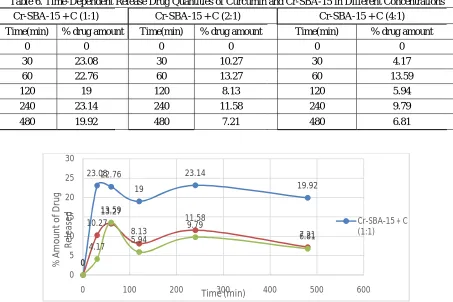
With the aid of Equation (1), it was found that the drug amounts released in various ppm according to the time given in Table 5with the initial ppm’s given in Table 1.
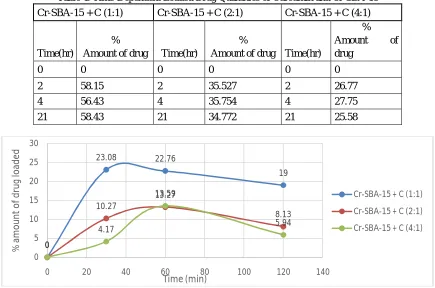
Table 6. Time-Dependent Release Drug Quantities of Curcumin and Cr-SBA-15 in Different Concentrations Cr-SBA-15 + C (1:1) Cr-SBA-15 + C (2:1) Cr-SBA-15 + C (4:1) Time(min) % drug amount Time(min) % drug amount Time(min) % drug amount
0 0 0 0 0 0
30 23.08 30 10.27 30 4.17 60 22.76 60 13.27 60 13.59 120 19 120 8.13 120 5.94 240 23.14 240 11.58 240 9.79 480 19.92 480 7.21 480 6.81
Graphic 4. % Amount of Drug Released from Different Concentrations of Samples
0 0.5730.566 0.474 0.575 0.496 0 0.1990.254 0.16 0.223 0.143 0 0.074 0.217
0.101 0.16 0.114
0 0.1 0.2 0.3 0.4 0.5 0.6 0.7
0 100 200 300 400 500 600
A b so rb an ce Time (min)
Cr-SBA-15 + C (1:1)
Cr-SBA-15 + C (2:1)
Cr-SBA-15 + C (4:1)
0 23.0822.76 19 23.14 19.92 0 10.27 13.27 8.13 11.58 7.21 0 4.17 13.59 5.94 9.79 6.81 0 5 10 15 20 25 30
0 100 200 300 400 500 600
% A m o u n t o f D ru g R e le as ed Time (min)
V. CONCLUSION
In this study, SBA-15 with mesoporous silica surface was functionalized with chromium to increase drug distribution. The Cr-SBA-15 samples were characterized.Loading capacity of the drugs was determined by UV spectrometry.
Using the powder X-ray diffraction method, it was found that the synthesis was successful by looking at the small angle XRD pattern of Cr-SBA-15, and the loading of chromium metal was successful by observing the wide angle XRD pattern and the structure of the catalyst was not deteriorated.
The Si-O-Si bands and the Cr-O bands obtained from the FT-IR analysis of the sample were found to be 3391.94 cm, 1633.45 cm, 1054.83 cm, 968.30 cm, 802.49 cm and 441.80 cm. Compared with similar studies in the literature, it is seen that the results obtained are very similar to the characteristic bands of Cr-SBA-15.
It was observed that the surface area of the Cr-SBA-15 catalyst synthesized by chromium loading according to the BET analysis was 586.91 m2/g. Based on literature research, it is seen that the surface area of pure SBA-15 is about 900 m2/g. When Cr-SBA-15 synthesized by chromium loading was compared with pure SBA-15, it was observed that the surface area of chromium was slightly decreased by chromium loading. This reduction was that the chrome placed in the structure is the result of clogging of pores.
The surface area of the Cr-SBA-15 mesoporous material was scanned by SEM analysis and a homogeneous distribution was observed.
Drug loading and drug release were investigated against time.As a result, it was observed that the loading capacity and release capacity can be changed according to curcumin concentration. But we can say that functionalization may be a good way to increase the drug loading capacity.
REFERENCES
[1] Horcajada, P., Rámila, A., Vallet-Regi, J. M., Microporous and Mesoporous Mater., 68, 105-109, 2004. [2]Chew, T.L., Ahmad, A. L., Bhatia, S., Advances in Colloid and Interface Science, 153, 43-57, 2010. [3] Zhao, D. Y.; Huo, Q. S.; Feng, J. L.; Chmelka, B. F.; Stucky, G. D.,J. Am. Chem. Soc., vol.120, p.6024,1998.
[4] Du, G., Lim, S., Pinault, M., Wang, C., Fang, F., SynthesisCharacterization and Catalytic Performance of Highly Dispersed Vanadium Grafted SBA-15 Catalyst, Journal of Catalysis, 253, 1, 74-90, 2011.
[5] Cassiers, K., Linssen, T., Mathieu, M., Benjelloun, M., Schrijnemakers, K., Van Der Voort, P., Cool, P., Vansant, E. F., Chem. Mater, 14, 2317-2324, 2002.
[6] Meynen, V., Cool, P., Vansant, E.F., Verified syntheses of mesoporous materials, Microporous and Mesoporous Materials, 125, 170–223, 2009. [7] Grieken, R., Escola, J.M., Moreno, J., Rodriguez, R., Direct Synthesis of Mesoporous M-SBA-15 (M= Al, Fe, B, Cr) and Application to
1-Hexene Oligomerization, Chemical Engineering Journal, 155, 442-450, 2009.
[8] Wang, X.; Jia, J.; Zhao, L.; Sun T.; Applied Surface Science, vol. 254, p. 5445–5451, 2008.
[9] Günaydın, Ş., Inclusıon of Celecoxıb In Mcm – 41 Mesoporous Sılıca: Drug Loadıng And Release Property, Master of Science in Chemistry
Department, Middle East Technical University, 2014.
[10] Rosenholm, J. M., Linden, M., Journal of Controlled Release, 128, 157-164, 2008.
[11] Gezer, G., Surface Functıonalızatıon Of Sba-15 Partıcles For Celecoxıb Delıvery, Masters Theses, Middle East Technical University, 2013. [12] Das, R.K., Kasoju, N., Bora, U., Nanomedicine, 6, 153–160, 2010.
![Figure 1. Curcumin Chemical Structure [14].](https://thumb-us.123doks.com/thumbv2/123dok_us/1507819.1184644/2.595.63.233.280.328/figure-curcumin-chemical-structure.webp)