ABSTRACT
LUPER, DENISE LEWIS. Leaders Implementation of the AVID program at the High School Level. (Under the direction of Dr. Lance Fusarelli).
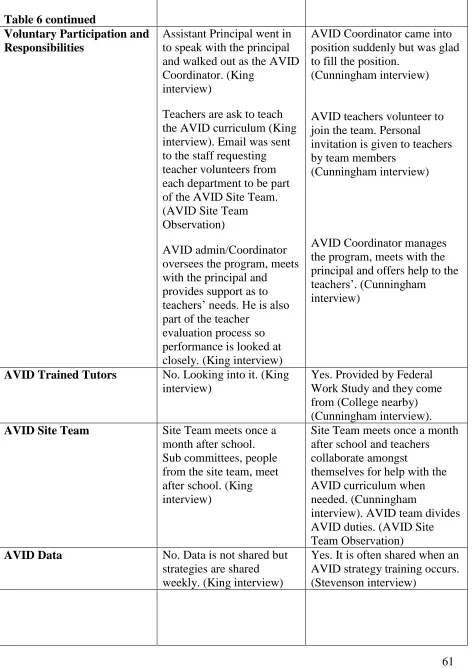
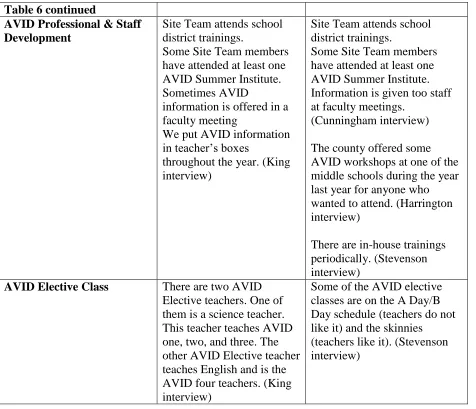
The Advancement via Individual Determination (AVID) program is intended to deliver approaches that empower minority students to attend two/four year colleges. Research specifies that the achievement of the students enrolled in AVID is contingent on meticulous adherence to the AVID components. Although AVID is an elementary, middle, and high school program, the program will be looked at only at the high school level. The purpose of this study is to examine the role of leaders when implementing the AVID program in two high schools within the same county.
AVID is a K-12 program with established outcomes; however, the program is quite expensive. Principals have to be prepared to use a teaching spot to staff an AVID position and school districts need to send teachers to be AVID trained. In these challenging economic times, districts are looking to make adjustments. AVID’s effectiveness for students in any particular school is the essential piece that will keep the AVID program as an important component of the budget.
There are eleven essentials found within the AVID program. Some of AVID’s eleven essentials are geared toward instruction. Other essentials are geared toward leadership, such as staffing and student selection and still other essential components that are less tangible. This study focused on the essentials that are leadership based and on other essential
teams, and semi-formal structured interview questions with AVID leaders and AVID coordinators.
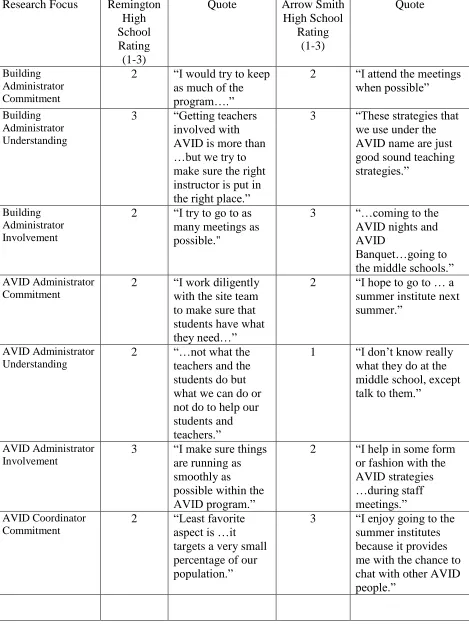
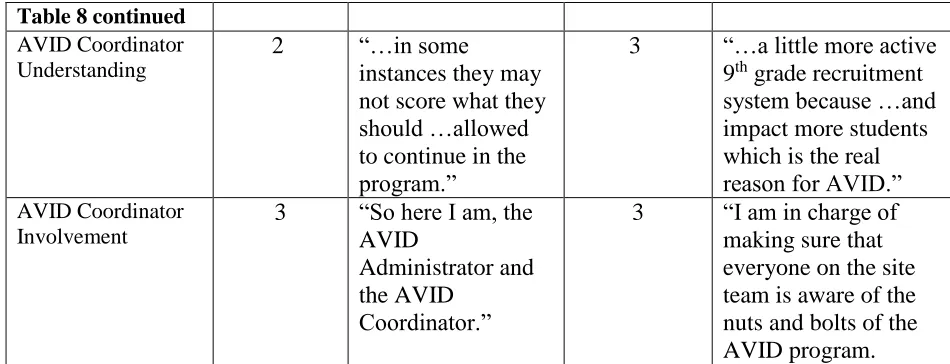
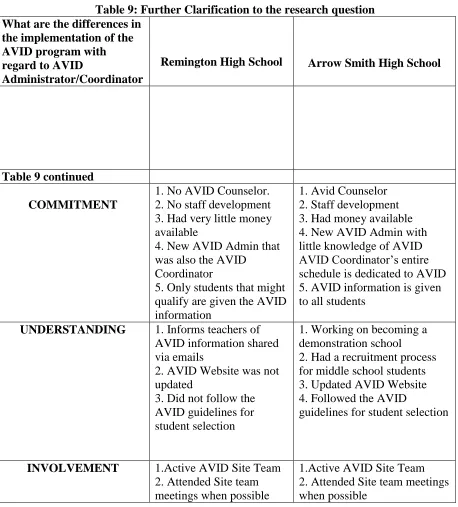
This research validated that there are two significant people at every school that are incredibly important to the implementation of the AVID program. The AVID administrator who manages the overall program and the AVID coordinator who directly oversees the program are invaluable personnel when it comes to the implementation of the AVID
program. The AVID administrator schedules AVID classes, advocates for AVID within the community, and is a liaison between the building administrator and the AVID coordinator. The AVID coordinator leads the site team, is a liaison between all the AVID teachers, provides staff development regarding AVID methods, and oversees the certification and data collection. During this research I found that the AVID administrators in both schools
recognized, and understood their obligations within the implementation process of the AVID program. In this research one of the AVID administrators was not AVID trained and these individuals should be trained in the eleven essentials of AVID so that the program
implementation is according to the AVID guidelines and decisions that deal with the program are based on valid information. The other AVID administrator was also the AVID
coordinator for the AVID program, making a job that is meant for two people and is already demanding rather difficult to be accomplished by one person.
Leaders Implementation of the AVID program at the High School Level
by
Denise Lewis Luper
A dissertation submitted to the Graduate Faculty of North Carolina State University
in partial fulfillment of the requirements for the degree of
Educational Leadership
Educational Leadership, Policy, and Human Development
Raleigh, North Carolina 2017
APPROVED BY:
_______________________________ ______________________________
Dr. Lance D. Fusarelli Dr. Carol Pope
Committee Chair
________________________________ ________________________________
ii DEDICATION
This dissertation is dedicated to several people whose love and support have helped me get through this incredible journey:
● Four grandmothers, Beulah, Gladice, Mildred, and Moye whose words and actions taught me to persevere no matter what challenges I might face; giving up was not an option.
● My loving parents, Dr. George and Betty, whose words of encouragement were always there when I needed them.
● My mother and father-law, Ed and Edna, also known as my second set of parents. Their unconditional support with my studies was outstanding. Thank you for believing in me.
● My wonderful and amazing children Kevin, Melissa, Paula, and Chris for your constant support and encouraging words.
iii BIOGRAPHY
iv ACKNOWLEDGMENTS
While my family has supported and sustained me throughout this journey with their encouragement, prayers, and comfort, I would first of all like to thank God for His guidance throughout this overwhelming process in my life. A huge thank you goes to Jesse, my loving husband, for his constant love and support. Thank you to Paula, Kevin, Chris, and Melissa. All of you were constantly there to reassure me that I could do it. I am so grateful that my grandchildren, Alexya and Toby were willing to entertain me from time to time.
Both sets of parents, George and Betty and Ed and Edna were instrumental in this phenomenal success. I am blessed to have two sets of parents that have always shown me love and encouragement. Their love and support were a constant presence throughout this journey.
v TABLE OF CONTENTS
LIST OF TABLES 1
CHAPTER I: INTRODUCTION 2
Statement of the Problem 4
Purpose of the Study 5
Research Questions 6
Significance of the Study 6
Definition of Terms 7
Limitations and Delimitations of the Study 8
Overview of the Dissertation 9
CHAPTER II: LITERATURE REVIEW 10
The History of AVID 10
The Launching of AVID 11
The AVID Components 12
The AVID Mission Statement 12
The AVID Student Profile 13
Academic Potential 13
Students Meeting One or More Criteria 13
AVID Program Essentials 14
The AVID Team 17
AVID Strategies 19
Gender Minorities and AVID 21
AVID’s Effect 23
Attendance 23
School Climate 25
Student and Teacher Expectations 26
Criticisms of AVID 27
Research on Program Implementation 29
Summary 33
CHAPTER III: METHODOLOGY 34
Specific Methodological Approach 34
Research Questions 36
Site Selection and Sample Criteria 37
Data Collection 38
Data Analysis 41
Research Validity and Reliability 42
Subjectivity Statement 43
Ethical Issues 44
Limitations of the Study 45
Summary 46
CHAPTER IV: STUDY FINDINGS 47
Lafayette County and its AVID program 48
School’s Setting & Student Demographics 49
Remington High School 49
vi
AVID Student Data 52
County Process to Become Invested in AVID 55
Essential AVID Components 58
Interview and Observation Data 59
Student Selection 62
Voluntary Participation and Responsibilities 63
AVID Trained Tutors 64
AVID Site Team 65
AVID Data 66
AVID Professional Development 68
AVID Elective Class 69
Communicating AVID’s Mission to Students and Staff 70 Administrations’ Understanding of the AVID Program 71
AVID Program 72
AVID Staff Recruitment 73
AVID’s Mission 75
Administration’s Commitment to the AVID Program 79
Administration’s Involvement in the AVID Program 81
Chapter Summary 83
CHAPTER V: SUMMARY, INTERPRETATIONS, AND CONCLUSIONS 85
The Purpose of this Study 85
Research Questions 85
Study Findings 86
AVID Program Implementation Essentials 86
Discussion of Study Findings 95
Administrator’s Commitment to AVID 97
Administrator’s Understanding of AVID 100
Administrator’s Involvement in AVID 101
Unexpected Findings 103
Suggestions for Further Research 105
Suggestions for School Districts Offering AVID 106
Conclusion 107
REFERENCES 110
APPENDICES
Appendix A. School Administrator Letter 116
Appendix B. AVID Administrator Interview Questions 117 Appendix C. AVID Coordinator/Teacher Interview Questions 119
1 LIST OF TABLES
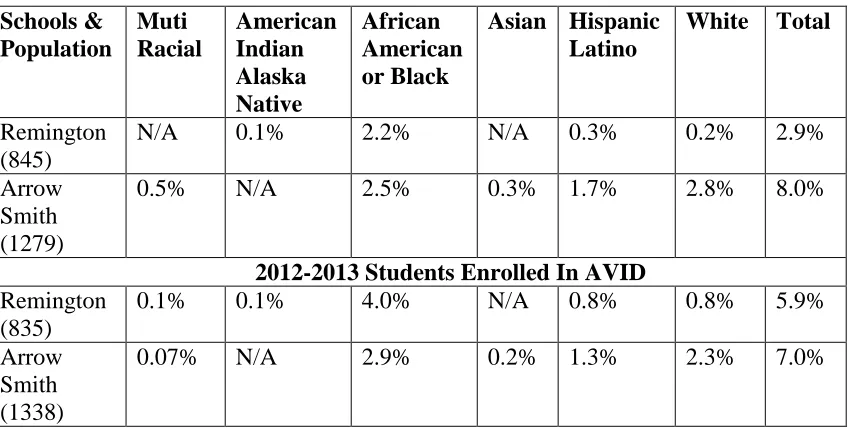
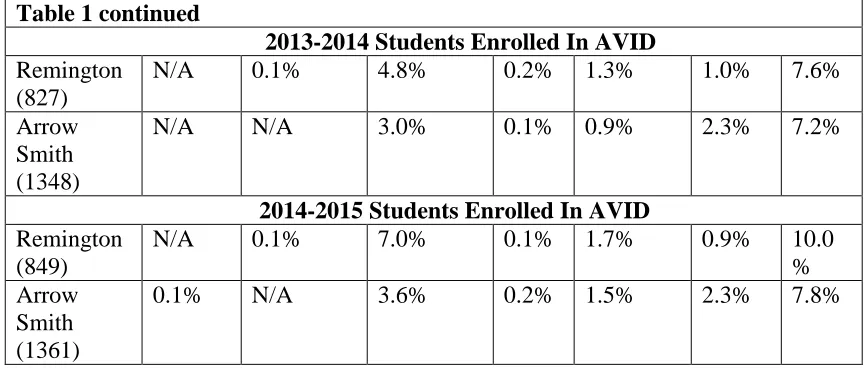
Table 1 Ethnicity Chart 53
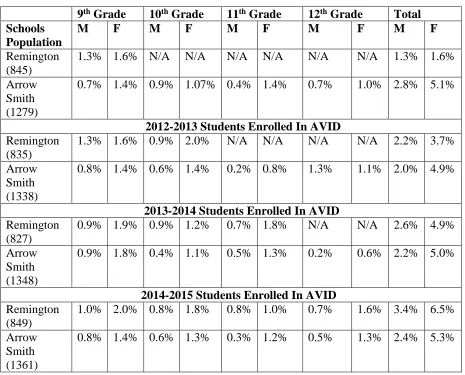
Table 2 Grade Level 54
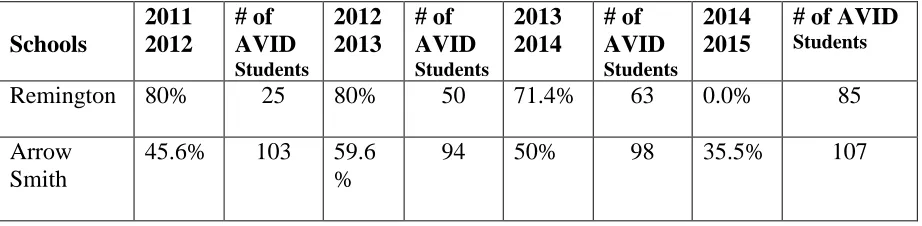
Table 3 Free/Reduced Lunch Chart-AVID Students Free/Reduced Lunch 55 Table 4 A Sample Week in the AVID Elective Classroom 56
Table 5 Essential Components 59
Table 6 Interview Response/Site Team Observation Comparisons 60
Table 7 Continuation of the Interview Response/ 62
Site Team Observation Comparisons
Table 8 Study Findings 105
2 CHAPTER 1
INTRODUCTION
Mary Catherine Swanson developed the Advancement via Individual Determination (AVID) program in 1980 to help low-income and low-achieving high school students do well academically and eventually attend four-year colleges. Swanson believed that students had the potential to succeed if they were offered a rigorous curriculum and the support to reach their potential. She also believed that positive relationships with these young adults, organizational frameworks, and high expectations for students were the keys to a college education for many students at the high school level, many of which would not have believed that higher education was a possibility. Swanson believed that hard work, stick-to-itiveness, and determination would empower such students to attain academic success.
In the early stages of the AVID program students were taken from general education classes into more rigorous classes and provided with techniques in order for them to be academically successful (AVID Center, 2013). Organizational skills and a note-taking system were taught to help students prepare for tests. Students were trained to ask questions that would help them understand material taught in all classrooms in order for them to be successful in all areas of schooling.
AVID started in a school where teachers did not have high ambitions for their
students and grew into a program implemented in 5700 schools in 46 states and 16 countries, impacting over 1.5 million students all over the world (AVID Center, 2017). Two qualitative studies that reveal the performance of the AVID students’ success compared to the
3 AVID’s Post-Secondary System to the Current Needs of American Higher Education by Joseph Cuseo (2012), and An Examination of AVID Graduates’ College Preparation and Postsecondary Progress: Community College Versus 4-Year University Students by Karen Watt, Patricia Reyes and Jeffery Huerta (2013). These studies found that AVID students were taught study skills and were offered the support that was needed in order to outperform the non-AVID students to a significant degree.
The following eleven AVID program essentials are regarded as imperative to high school students’ success.
● Student Selection ● Voluntary Participation ● Full Implementation ● University Curriculum
● Writing and Reading Curriculum ● Inquiry
● Collaboration ● Trained Tutors
● Data Collection and Analysis ● District and School Commitment ● Interdisciplinary Site Team
4 requires a strong commitment from each school district. AVID students are more likely to take rigorous courses found within the Advanced Placement and International Baccalaureate programs than students who are not in AVID and plan on going to college.
A majority of high school dropouts are members of disadvantaged minority groups (Swanson, 2009). Most AVID students are members of a minority group. About 50 percent are Hispanic, nearly 19 percent are African American, and 65.5 percent qualify for free or reduced lunch (AVID, 2014). Baum and Payea (2013) discovered that a four-year degree can result in a $20,000 higher salary than someone with only a high school diploma. Not only does a higher salary come with a college degree but also health care, stability, and other elements that allow for a comfortable lifestyle.
Because higher education has benefits, actions must be taken to improve the low graduation rates and assist students with their learning potential. To target these areas a program was developed by Mary Catherine Swanson in order to recognize and help students from the "forgotten majority" (Swanson, 2009). The AVID program was developed just for the kind of student that has the potential and the desire to be successful within the classroom but has no support.
Statement of the Problem
5 AVID is a program run by the AVID Center in San Diego with demonstrated results; however, it is costly. Principals have to be willing to use a teaching position to staff the AVID coordinator/teacher position, plus school districts have to employ tutors for the two times a week tutorial sessions.
Implementing AVID with the belief that AVID’s eleven program essentials is the foundation for student’s success is found in a study conducted by Black, Little, McCoach, Purcell, and Siegle (2008). This mixed methods evaluation of the AVID program’s
implementation found more success when teachers were consistent with the implementation of the AVID methodology (Black et al., 2008).
Some of AVID’s 11 essentials are instructionally based, such as Cornell Notes and WICOR, which are part of the writing and reading AVID curriculum, directly impacting what occurs within the walls of the classroom. Others are more leadership-based, such as staffing and policies for student selection. Yet a third set consists of things that are less tangible but still have a great impact on AVID, such as the perception of AVID students by peers, the perception of AVID students by the school community in general, and the
understanding and the oversight of the program within the school building.
This study intended to focus on the essentials which were leadership based as well as those which were less tangible such as the communication of the AVID’s mission to the staff and student, the staff development for AVID personnel, and the promotion of the AVID program to the community.
Purpose of the Study
6 played to the role of the school’s AVID administration in effective program implementation. When looking at the AVID program in two high schools within the same district, this study focused on what aspects regarding the program implementation explain some of the
differences within the two high schools. One of the high schools has used the AVID program for eleven years and the other high school is going on their fifth year of implementing the AVID program.
Because this study dealt with the implementation portion of the AVID program, the following areas were addressed in this study:
○ Administrative leadership and support ○ School Wide Implementation
Research Question
This study focused on the different aspects of the program implementation and explained the effectiveness of the AVID program found in two high schools within the same county. The following research question with two sub questions was examined in this study:
What are the differences in the implementation of the AVID program in the two chosen high schools with regard to
1. AVID administration’s level of commitment, understanding, and involvement
2. AVID teacher/coordinator’s level of commitment, understanding, and involvement
Significance of the Study
7 funding goes within their buildings. There is limited research regarding the AVID program on the implementation fidelity and on the role of leadership in program implementation. Understanding of the AVID program enables building administrators to supervise the implementation and clearly grasp the significance of the program.
This comparative case study methodology examined the relationship between the administrators’ understanding of the program, commitment to the program, and level of involvement in the program. This case study will not generate data that will be able to make definitive determinations, but the depth of information provided by this methodology will allow theories to be developed about the connection between the administrators’ knowledge of the AVID program and the technique in which the program is implemented.
Definition of Terms
AVID - Advancement via Individual Determination is a program which began in the San Diego City Schools in 1980 and is intended to provide academic strategies and
organizational skills to afford minority students the opportunity to go to college.
AVID Components - The elements of the AVID program are the mission statement, the student profile, the program essentials, the ten guiding principles, and the set of
instructional strategies.
AVID Program Essentials - Eleven elements that are crucial to the success of each student.
8 Core Classes – English, math, science, and history classes that are required for high school graduation.
Cornell Notes - Note taking method used to help students prepare for assessments. Interdisciplinary Site Team – The AVID team in a building comprised of members from multiple disciplines.
Socratic Seminar - Session where students bring a question to the class and a group of students discuss the question using critical thinking skills.
WICOR - A set of instructional strategies. W is for writing, I is for the inquiry, C is for collaborative, and R is for reading.
Limitations and Delimitations of the Study
According to Creswell (2007) for any given research there are underlying limitations and delimitations. Some limitations found within this study included the school district studied was a small district with restricted financial resources. Also, the student
demographics in this particular district did not always lend itself to the selection of the “perfect AVID student”. Many times, students may not qualify in all AVID areas.
9 small county with only three high schools and the researcher was interested in the AVID program within this particular county.
So, although the study provided a depth of information that a qualitative study offers, the sample was limited to two high schools. These results were not generalizable to other settings, although they may provide insight into other AVID programs at other schools.
Overview of the Dissertation
Chapter 1 provided an introduction to the study, statement of the problem and its significance, the research question, definition of terms, limitations and delimitations of the study, and an overview of the dissertation. Chapter 2 contains a review of literature relating to the AVID program, student selection, and elements that are essential to the program and student success. Chapter 3 describes the methodology for conducting the study and the steps that were taken to complete the study. Chapter 4 is a presentation of the findings of the study. Chapter 5 is a summary of the dissertation, an interpretation of the findings, and the
10 CHAPTER 2
LITERATURE REVIEW
The AVID program was selected for this study because of my knowledge and
experience with the program and my belief in the fundamental aspects of the AVID program. This chapter examines and describes the historical aspects of the AVID program, its
components, the essential pieces to the program, and the AVID curriculum, as well as the program’s implementation in California and Texas, how the AVID program relates to gender and minorities, and the effect AVID administrators have on AVID within the school
building. The literature review concludes with an analysis of research on program implementation.
The History of AVID
In 1954, the constitutional rights of many students were being violated. In that same year, the United States Supreme Court made a decision that no longer allowed students to be educated in segregated schools; it became well known as Brown vs. the Board of Education of Topeka. This verdict led to harsh, racial, cultural, and financial tensions (Freedman, 2000).
11 students was that this once lofty instructional goal would no longer be attainable, but two of Clairemont’s teachers, Mary Catherine Swanson and her mentor, Jim Grove, understood that educating all students was something needed in order for education to benefit all public school students (Freedman, 2000).
In order for the AVID Program to be successful it is necessary for it to be looked at as a policy implementation, which is many times incredibly challenging and expensive. AVID is one of many enhancement programs available to students in many public schools; however not all school districts are able to implement the AVID program.
The Launching of AVID
In 1980 Swanson created AVID as a reform providing support to low income and low achieving minority students, helping them to do well academically and eventually be
successful in a four or two-year college. This program placed students from general education classes into more rigorous classes and presented them with a system that would enable them to be academically successful (Watt, Yanez, & Cossio, 2003).
Catherine Swanson and Jim Grove understood that education is everyone’s
12 students agreed to take on the responsibilities of a schedule that would require more
academic time on their part (AVID Center, 2013). These students succeeded and caught the attention of the school, the district, and eventually, the state of California. Even though Clairemont was one of the smallest schools in the San Diego district it graduated the first group of AVID students in 1984 and it had become one of the top three feeder schools to the University of California. The school also was ranked the fourth high school out of 17 district high schools that enrolled graduates in schools for higher education (Cuseo, 2012). AVID is now being implemented in 4900 schools in 46 states and 16 countries, not to mention impacting over 700,000 students all over the world (AVID Center, 2013).
AVID Components
The 2013 AVID: In Pursuit of Success Participant Handbook states that AVID’s program has valuable components that are expected to be followed in order for the program to be successful. The components are an AVID mission statement, a list of the eleven AVID essentials, specific guidelines for team representation, and a detailed AVID curriculum. The proper implementation and the strict adherence to AVID’s components are found to be the key to a successful AVID program.
AVID Mission Statement
The AVID Center (2013) not only records the following as the AVID Mission statement but also details how the AVID program can be implemented. AVID’s mission is to close the achievement gap by preparing all students for college readiness and success in a global society by:
● Developing students as readers and writers
13 ● Providing support, so students can meet high expectations
● Influencing the belief system, culture and instructional strategies of a campus ● Providing meaningful and motivating professional development
AVID’s methodology is intended to support students and educators as learning and performance are increased for all students.
AVID Student Profile
In AVID awareness participant materials (2007) the Avid Dream Team consisting of Sally Arellanes, Cyndy Bishop, and Jean Castruita stated that certain changes that may be made to the AVID program model in order to adjust to each school’s situation, but there are aspects of the program that should not be changed in order for the program to be successful, which are the eleven program implementation essentials. The 2009 Implementing and Managing the AVID Program Materials publication listed these important and non-negotiable essentials for a successful program to emerge (Contreras, 2009).
Academic Criteria for selection:
● A GPA between 2.0 – 3.5 and tests scores that are average to high. ● Potential to improve in studies for college preparatory classes. ● Have desire and determination.
Students meeting one or more of the following criteria:
● First to attend college
● Historically underserved in four-year colleges ● Low income
14 The profile above is the structure for students who would be possible AVID student candidates; nevertheless, both student and family are expected to follow the guidelines and meet the academic expectations that are explained to them early on in the process. While parents must do their part by agreeing to support their children and having high expectations of their students by signing a contract, it is ultimately the student’s responsibility to show that the student wants to improve their academic success. Student names are considered for approval as possible AVID students and Coordinators of the AVID program advise the team to not let one requirement keep a student from being part of the program, but to look at all students holistically (AVID Center, 2013).
Avid Program Essentials
The 2009 AVID Program Materials publication records eleven essentials to the AVID program. As the implementation of the program begins, the commitment of the student and the adults becomes unmistakable. Essential elements of the AVID program are (Contreras, 2009):
● AVID student selection – The criteria listed in the previous section is the method as to how the students are chosen.
15 ● Full Implementation - The AVID elective class must be part of the student’s
academic day. If AVID is to be effective, it must not be viewed as a supplementary activity. Students need to meet regularly as a group. AVID is meant to become a community, and the stability of regular meetings inspires the development of a support group. It is significant that students have continuous, structured
communication with the teacher and the tutors so that problems can be recognized and guided as needed (p. 2).
● University Curriculum - It is the obligation of the AVID teacher to collaborate with the counselor and with the AVID student to arrange a long-term educational plan to meet the goal of college enrollment. While the AVID teacher not only provides tutorial support for the student’s subject area needs, the teacher also offers study methods and time management skills. The AVID teacher also checks assignments and records grades, ensures that tutorial logs are complete, binder organization is correct, college and career awareness is provided, and test taking skills are offered (p. 2). ● Writing and Reading Curriculum - AVID essentials include Cornell note taking,
learning logs, letter writing, and essays. Students also receive tutoring in strategies to access difficult curriculum. The three factors that are most helpful for insuring
successful comprehension for students include connecting to prior knowledge through the use of during and after reading strategies, and understanding text structure (p. 3). ● Inquiry - Students learn how to develop critical thinking skills for their Cornell Notes
16 ● Collaboration - Through teachers and/or tutors, students are taught to work in groups
and to take responsibility for their own learning. They are taught to use their notes to communicate what they have learned and what they hope to do next time they meet (p. 3).
● Tutors - Tutors use the AVID approaches to clarify students’ questions or concerns. Tutors need to be people that the students respect and can also relate to at all times. Many times, tutors are college students, retired teachers, or former AVID students. The effectiveness and significance of the exceptional connection among students and their tutors cannot be overrated. The tutor: student ratio that has shown to work is 1:7 (p. 4).
● Data Collection and Analysis - All student performance data should be collected and analyzed from the beginning until the end. It is important to communicate the success in AVID in order for the continued improvement and success of the program (p. 4). ● District and School Commitment - Program implementation is most effective when
the team, a counselor and a core subject area teacher, attends the Summer Institute and agrees to support the program. It is also necessary that resources be identified early on for financial reasons. Ongoing staff development and workshops,
methodology training, and conferences for AVID participants will help the adults with the challenges they may face (p. 5).
17 students’ needs and to plan for ways to address those needs. The team should also set goals to implement AVID strategies and to create a school culture which fosters and supports the AVID charge (Contreras, 2009).
Just as AVID may not be appropriate for every school; it is not meant for every student. Students and their families must commit to certain guidelines and criteria because the demands of the AVID program require that family, school, and student are in constant communication. One of the keys to a successful AVID program is selecting the right students to participate. These students must have the academic potential to succeed and must also be able to adhere to the demands of the program (Swanson, Contreras, Cota, Furgerson, & Gira, 2009).
The AVID Team
There are always different levels of accountability with the implementation of any program. The district director acts as a liaison between the district and the AVID Center for certification purposes. This person is responsible for setting up staff development
opportunities, for gathering data and research information, and for coordinating the outreach aspects of the program, while also acquiring tutors from colleges and businesses (AVID; In Pursuit of Success, Dream Big: AVID Awareness Participant Materials, 2013).
The other level is at the school site. Each site has a coordinator who also serves as a teacher. This person is in charge of putting together a site team comprised of teachers. This site team is a means of checking the effectiveness of the AVID program at that particular sight (AVID; In Pursuit of Success, Dream Big: AVID Awareness Participant Materials, 2013).
18 subject teachers, an AVID coordinator, counselors, and administrators (considered the site team) attending an AVID Summer Institute, usually lasting about one week. Within this team everyone has a specific role. During this week long institute each day there are different sessions that each group needs to attend, then they meet in the evening to share information. Once the team has successfully completed the week-long institute they get together each month to talk about AVID implementation within the school and techniques to use for the instructional strategies that are essential to the program and possibly plan field trips to colleges. This team implements the necessary strategies that are required for renewal of the school’s certification, accepts the responsibility to arrange and supervise AVID events and projects, and helps with the recruitment process (AVID; Decades of College Dreams, 2007, pp.19-21).
Through closer examination of the AVID program it becomes clear that the role of the teacher, school, district, and student become evident and powerful through the instructive methods used during the program. The implementation of AVID involves individuals with different levels of responsibility as explained below:
● The district director has the responsibility for organizing staff development, for affording technical support to AVID sites, for data collection, and for publicity. This person also arranges for partnerships with local agencies and post-secondary
institutions to provide tutors, and assists with student enrollment. Finally, this person is responsible for making sure that the certification for all students is up-to-date and any conferences that need to be attended are attended (AVID: Decades of College Dreams, 2007, p. 13).
19 implementation of the eleven AVID essentials. This person must make certain that AVID students are allowed to enroll in challenging courses (AVID; Decades of College Dreams, 2007, p. 20). The administrator must also make sure that financial support is available, while also providing emotional support for the parents,
community, and AVID teachers (AVID: In Pursuit of Success, 2013).
● The Counselor’s role is to help students with their course selection, to help students see the benefits of staying enrolled in the program by helping them find avenues to aid them with their challenges, and to keep parents involved with the progress of their child. A counselor is one who will give attention to the whole child’s dilemma; quick decisions must not be made when it comes to removing a student from a class. ● The AVID teacher/coordinator is expected to lead and coordinate monthly AVID
meetings. This person takes care of data collection, certificate information,
recruitment, and field trips for parents and students. This person tries to make sure a bond is forming among the AVID staff, for the successful implementation of the program and for the success of the students. The Avid classroom is a relaxed environment where students are encouraged to achieve their highest potential. The participant handbook mentioned a study where the nurturing of students and the personal bonds formed with students were key to continuing the program. The study found that a positive bond between teachers and students is important to the success of each individual student. The backbone of the AVID program is the lead
teacher/coordinator (AVID: In Pursuit of Success, 2013). AVID Strategies
20 curriculum. There are three elements involved with the classroom aspect that are pertinent to the success of every AVID student:
● The activities within the classroom are many and are focused on accomplishing the students’ academic goals. The AVID elective class is where students meet for one period daily. This class tackles key elements in college preparation, such as academic survival skills, college entry skills, tutorials, motivation activities, and career and college exploration. The AVID curriculum is founded on rigorous standards. It incorporates the WICOR method. The “W” stands for writing. The AVID note-taking system is an adaptation of the sophisticated Cornell system where students take detailed notes from class lectures and texts in a wide margin and develops clarifying ideas or questions regarding those notes in the left margin. The “I” stands for inquiry. This process teaches students to think for themselves, instead of chasing after the right answer. The “C” stands for the collaborative approach. At this step, students work together to achieve educational success through study groups, group projects, tutorials, and other assignments that require teamwork. The “O” stands for
organization. Students are required to use binders and other kinds of materials that will help them remain organized throughout their AVID experience. The “R” stands for reading. The reading component emphasizes critical reading in order to maximize reading comprehension skills for all students involved (AVID: In Pursuit of Success, 2013).
21 never taken such difficult courses and in order to be successful the AVID program provides them with academic instruction and support for eligibility to colleges and universities. It gives students college level entry skills, while also increasing their coping skills. The program also attempts to increase their level of college career awareness and motivates them to seek these specific levels of education (Contreras, 2009).
● The stipulation of a continuing educational and social support system - Teachers, tutors, coordinators, and counselors take their roles as nurturers and advocates for AVID students seriously. Beyond academic achievement for the AVID student, there must be a culture that supports high expectations and high levels of achievement for all students. Success for the AVID student requires strong commitment from
everyone (AVID Center, 2013).
Gender, Minorities, and AVID
AVID is a tool that can help narrow the gap between groups of students that have historically “chosen” not go to college or not finish college. The National Center for Educational Statistics (NCES) states that among white students in a four-year college, 60% graduate within 6 years, while only 49% of Hispanics, 40% of African Americans, and 38% of Native Americans graduate. Among America’s young adults almost 50% of white students have earned an associate degree or higher, while less than 30% of African Americans and less than 20% of Hispanics have earned an associate degree. AVID can supply the students who do not know the way to success with a plan, encouragement, ability, and support needed to succeed (Cuseo, 2012).
22 probability that an adolescent who comes from a low-income family will graduate from high school and go on to further his/her education. The AVID Center’s Executive Director, Jim Nelson, stated that "AVID pushes a student to higher levels, then provides them the support to succeed.” In 1989 at Ramana High School in Riverside California the AVID program began by offering one AVID class. In 2005, Ramana High School offered 17 AVID classes (542 students) and all of them were accepted into four year colleges. The student population had also changed from predominantly upper middle class to now consisting of 30 percent white, 60 percent Hispanic, 8 percent black, and 2 percent other races (Nelson, 2007).
Oswald and Austin Independent School District (2002) evaluated the program in the Austin Independent School District where data were collected from 1999-2002. The data results came from surveys where 67% of the students returned them and 34% of the parents returned their surveys. Oswald and the Austin Independent School District (2002)
documented that frequently more females than males registered in the AVID program. The likely explanation was that students make a decision independently to enroll, and that females were more apt to do it. Something else that was noticed was that good behavior and good attendance is a requirement of AVID and more girls seem to fit that mold than boys. Finally, girls at this age may be more receptive to the added workload necessary in order to be part of the AVID program (Oswald & Austin Independent School District, 2002).
Another study, a rather large study, tested the hypothesis that there is a connection between parental support and vocational choices. Diemer (2007) investigated what
influenced the career opportunities minority students and those students considered
23 African American students don’t always live with people who strongly encourage them to obtain a higher education. AVID is a unique program that can provide a chance to students who never dreamed that college was ever an option for them (Diemer, 2007).
AVID’s Effect
AVID is a widespread teacher and student support structure. Each year data is collected from participating AVID schools and used to comprehend the impact of the AVID program as well as challenges met as AVID becomes established at schools and colleges all over the country. AVID represents a chosen set of students whose high school experiences will help prepare them for post-secondary education and the world of work. The “AVID Effect” in this document will refer to a school-wide change as a result of the implementation of AVID. AVID directly impacts the AVID student but also has a positive outcome on the rest of the student population. During the 2005-06 school year, the AVID Center collected data from 96% of the schools across the country offering the AVID program. The ethnicity data of students that were involved in the program were 49.2% were Hispanic, 21.4% were Caucasian, 18.8% were African American and 7.5% were Asian (Johnston, 2006).
24 teaching and learning throughout the whole school and offered more students AVID support.
A principal, Ed West, from Free State High School in Lawrence, Kansa stated that AVID had exceeded his expectations. Watching the AVID students become more mature and focused on a brighter future was incredibly satisfying. He stated that the school had found the AVID approach so worthwhile that the implementation of the eleven essential elements were being used throughout the school (AVID Information Sheet, 2013).
Attendance
School attendance is a fundamental part of a student’s achievement in school. If students are not in school, they cannot learn. The three studies concerning AVID and school attendance involved implementing AVID and its positive impact on student attendance. A better attendance rate affects a school district’s funds because federal and state funding is frequently based on daily attendance.
In one of the studies (Watt et al 2004) ten high schools that were implementing AVID in Texas were scrutinized. Researchers discovered that in 1999-2000, the attendance rate for AVID students surpassed the attendance of all other students in Texas high schools. In 2000-2001 and 2000-2001-2002, the attendance of AVID students remained higher than the non-AVID population and it actually exhibited an increase after a year of having AVID within the school. This “effect” has been found in several recent studies (Watt, Powell, Mendiola, & Cossio, 2006).
25 about school attendance is that low socioeconomic status (SES) students are missing school more often than students with a higher SES, thus generating an even larger disadvantage (Ready, 2010). Therefore, AVID may be a mechanism through which schools leverage the attendance rates of low SES students.
AVID seems to have a positive influence on school attendance within the AVID group. The studies that examine the part AVID plays in attendance imply that the program can involve the attendance of the whole student body. The implications of this discovery suggest that AVID can be used as an intervention instrument in schools who ordinarily have lower attendance rates.
School Climate
It is important to consider how the climate can affect the school as a whole. Danielson (2007) stated that the roles of modern principals are so demanding that teacher leadership must be fostered and nourished for a school to be successful in improving student
achievement. By administrators supporting teacher leadership and helping teachers develop the skills required to act as leaders, improvement will be seen within the social and academic components of the school.
26 Student & Teacher Expectations
Victor Vroom’s expectancy theory was created to investigate motivation within the workplace, but is very applicable to the educational field. The basic premise behind Vroom’s expectancy theory is that individuals will be encouraged to learn because they trust that their choice will lead to their ideal result. Students’ motivation for learning has long been deemed an imperative aspect in the academic performance of each individual. According to Vroom’s expectancy theory, if students expect good things from themselves, they will more often than not work diligently to achieve those expectations (Vroom, 1964).
Teachers can increase a student’s expectancy by exposing the student to rigorous curriculum, providing the support needed, having high expectations and helping students believe in themselves, while also providing additional guided learning (Barnes-Robinson, Jeweler, Shevitz, & Weinfield, 2003). All of the above practices are encouraged within the AVID program causing the expectancy theory to become a vital part of the students’ success in the academic world.
It is important that teachers help their students to believe that they can succeed in the academic arena. Educators have the capability to influence students in more ways than one. Their influence will either hinder or encourage a student’s attitude toward education, depending on the manner that they choose to use when nurturing each individual. Consequently, motivating students to do their best academic work depends on educators helping students set high standards for themselves as well as helping students realize that with every choice comes a reward or a penalty.
27 Expectancy Theory corroborates that the individuals have to believe in themselves or think that the opportunity to achieve their goal is achievable (Fang, 2008). The reasoning is not for instructors to create students that can learn, but it is for the teachers to help the students to believe in themselves and make the most of each skill that has not been discovered. Teachers can assist them in believing that they can learn. Vroom’s 1964 Expectancy Theory declares that if a student is provided the opportunity to believe in themselves more than likely they will be successful. Wiseman and Hunt describe a successful teacher as one who is proficient at motivating “students or establish environments in which motivated students are the end result” (Wiseman & Hunt, 2001, p. 10). The teacher is a crucial feature; this individual needs to be someone who believes the students can make a difference. There are so many students that have the intellectual ability but not the support they desperately need. I anticipate that the AVID training/program will help diminish the achievement, expectation, and opportunity gaps that exist for many students.
Criticisms of AVID
As with any educational initiative, AVID has both supporters and critics. There is no doubt the AVID program requires a tremendous commitment from a school district. Many educators may feel the benefits of AVID do not outweigh the financial costs. It is up to the local district to determine whether the benefits of the program are worth the additional demands placed on the school system.
28 how to locate funding and support, a financial burden is still placed on each individual school to fund money for the two most expensive aspects of the AVID program (tutors and field trips) which are not optional.
Another problem with the implementation of AVID in the public schools is the issue of scheduling. The AVID Center states that a school must provide at least one section of AVID for students throughout the school year. AVID students are also required to take at least one higher level core curriculum course each year creating a problem for students who take more than one elective during a semester. Sometimes this creates a problem for the Arts and Vocational Classes, since these classes rely on numbers of students in order to remain in existence. This raises issues of micro politics within schools as stakeholders compete for resources and for students.
Another criticism about the program includes the difficulty many schools have in obtaining college tutors which is an essential part of AVID. In many school districts, it is not practical to ask college tutors to come to the school to tutor for an hour or so for volunteer hours or for minimal pay.
As with any program striving to get government funds or other resources, AVID must constantly demonstrate success. The AVID Center offers numerous examples of in-depth studies of the AVID program and the way it has been implemented, including its success in several educational environments.
29 Study-Final Report. It listed the best practices of eight educational organizations and the approaches they used to ease the implementation process of the program. The make-up of this study was to pinpoint eight high performing AVID schools and implement qualitative research on their best practices (Guthrie and Guthrie, 2002). This study used observations, interviews, and other qualitative techniques in order to see if the eleven essentials were implemented and how closely were they followed. Most of the studies report quantitative data because the funding sources rely heavily on numerical data in order to gain funding. Another critique that may be made concerning these studies is whether the positive results are due to the AVID program, or rather to the techniques, such as small class size and test taking strategies provided for AVID students. In addition to this study, other research articles have been published discussing the positive and negatives of the AVID program. Because of these difficulties, many school systems are not prepared to designate funds, time, and effort required to successfully implement the program. While the AVID program has been proven to be a successful program, it is not without its critics.
Research on Program Implementation
Creating a context that supports change may be the most critical strategy for
successful implementation of a program. It involves more than just deciding to implement a program or change the curriculum. Improving schools involves change and that is not an isolated process. Before putting a successful program implementation into practice, needs, commitment, and resources should be assessed.
30 when implementing a program successfully, administrative support and a shared vision are noteworthy elements.
Every successful program depends on strong administrative support. Administrative support is important because, decisions about implementing a program are normally made at the administrative level. Even after a program is implemented, administrators can make or break a program depending on their abilities to lead and influence other people and to express the vision of the program. The failure to generate excitement amid all of the key players involved in implementing a new program can weaken even the best plans.
Administrators also have the power to distribute resources and make structural changes that can facilitate the success of a program. Support, teamwork, encouragement, communication, and problem solving skills throughout the implementation of the program are all necessary in order for success to occur (Laureate Education, Inc., 2011).
Having strong leadership is vital in implementing AVID school wide, and it starts with the administration. Knowing whether a program was implemented appropriately permits researchers to better understand the relationship between the program and observed outcomes (Durlak, 1998).
Evaluations too often focus solely on program outcomes without considering how the program and its components actually produced the observed results. Assessing
31 Administrators know the importance and necessity of evaluating a program. A big challenge for administrators is to implement new programs when the real-world version is different than the paper based handbooks that are provided.
In order to make sure AVID is implemented with fidelity sites are required to complete the Certification Study (CSS) which is an extensive documentation process that focuses on the implementation of the eleven essentials. The fidelity check is concluded with a site visit by AVID program specialists (AVID Center, 2013). Program implementation fidelity has been described as
…programs that are packaged so as to simplify the task of implementation are more likely to be viewed as having a potential to be effective…Programs implemented as part of research or demonstration projects usually receive considerable support and direction to achieve fidelity of implementation. Outside of research, implementation usually takes place in less than ideal circumstances. Not only is fidelity expected to not be maintained, verifying the degree of fidelity becomes particularly challenging.” (Dusenbury, Brannigan, Falco & Hansen, 2003, p. 250-252).
Meaning that if AVID is implemented in the way that it is taught at the Summer Institute, student outcomes will be maximized.
The Houston Independent School District (HISD) provided the AVID program for 1056 students during the 2011-2012 school year. At every grade level, AVID students
32 other instructional areas and that AVID strategies may help students who are not enrolled in AVID on their tests performance (Houston Independent School District, 2014).
To help a program succeed, the administrative team must understand how
implementation works. This makes it easier for others to navigate the process so that in the end the program will impact student achievement. Research has shown that the components listed below are critical for the successful implementation of any program. (Metz, Blase, & Bowie, 2007).
Qualified personnel to embrace the new program. Training for all staff.
On the job coaching and mentoring for groups and/or individuals.
Internal management that establishes structures and processes within the program. Development of close community partnerships and the broader organizations. Staff and program evaluation.
Effective implementation is as important as components of the program itself. An effective program and an effective implementation will increase the likelihood of a positive outcome.
By design the AVID Program provides and encourages all of the above components through the roles and responsibilities of the AVID teachers, principals, counselor,
coordinators, and the site team. According to “AVID: In pursuit of success: Summer Institute Participant Handbook” The AVID Administrative Team is comprised but not limited to the following people and the expectations for each one of them is listed below. The following expectations will be carefully observed throughout this research.
33 o Sets high expectations for students and monitors their progress.
o Respected instructional leader and has at least 3-5 years of teaching experience.
o Active member of the Site Team and promotes the use of the WICOR strategies in all classes.
o Assist in the training of tutors with AVID training tutorial materials. o Advocates for AVID students.
o Assists the Site Team with Certification and Data Collection o Provides professional learning regarding AVID methodologies. o Provides leadership for the development and maintenance of an active
Site Team. o School Administration
o Provides encouragement, philosophical and financial support. o Acts as a liaison with the district administration.
o Active member of the Site Team and has attended a Summer Institute. o Supports equity and access of all students to rigorous courses.
o Promotes the use of AVID strategies school wide. Summary
34 program through the leader’s understanding of the program, their commitment to the
35 CHAPTER 3
METHODOLOGY
The purpose of this study was to examine the implementation of the AVID program in two high schools and to dive deeply into the implementation of the AVID program in both schools. The administration in this study is referring to the building administration, the AVID Administrator, and the AVID coordinator, which for this study were some of the members of the AVID team.
Specific Methodological Approach
This dissertation used a comparative case study to discover qualitative data that may be used to acquire an in-depth knowledge of the situation and meaning for those involved. Eight components of the methods were discussed: a) Research Questions, b) Site Selection and Sample Criteria, c) Data Collection, d) Data Analysis, e) Research Validity and
Reliability, f) Subjectivity Statement, g) Ethical Issues, and h) Limitations of the Study. This case study explored the similarities and differences within each school’s AVID
administration team when preparing students for success. Gall, Gall, and Borg (2007) defined sampling as a procedure employed by the researcher to select individuals from a specific population, with the assumption that it is typical of the population. This research was organized with that knowledge in order to understand how the leadership practices of each school influenced the implementation of the AVID process.
36 certification process for AVID, as well as supporting AVID’s mission statement which is to equip all students for college and success in a global society. Understanding the effectiveness of the administration’s team within AVID’s eleven program essentials was the objective for this study.
The research strategy of this study was to investigate the work of the AVID Site team as it operated in a real-life context at the school site. In addition, Stake (2000) noticed that a study must be clearly explained, so the researcher and readers have a complete understanding of the case. This research involved data collected by interviews from at least four
participants, two from each school; the AVID teacher/Coordinator and the principal. Also, an observation of no more than two AVID site team meetings from each school, and analysis of several documents obtained from the AVID Center were examined in order to understand the implementation process of each school’s AVID program. AVID teachers were
purposefully not selected because the researcher felt like it would have been a variety of perceptions instead of knowing the specifics about the implementation process. Teachers are often times quite knowledgeable about the classroom world, but not the larger world that has to be considered before the implementation process within a building can be tackled.
Research Questions
The study was driven by one research question with two sub questions:
What are the differences in the implementation of the AVID program in the two chosen high school’s with regard to:
37 2. AVID teacher/coordinator’s level of commitment, understanding, and
involvement
The comparison case study approach was suited to my research question as I attempted to understand how the building administrator, the AVID administrator, the AVID coordinator and how the AVID Site team members helped make each individual AVID program a valuable program within each school. Therefore, a comparative case study was an appropriate methodological design.
Site Selection and Sample Criteria
Sampling is an essential step in the qualitative research process. Higginbottom (2004) states that, “In selective sampling, researchers should seek to include people who represent the widest variety of perspectives possible within the range specified by their purpose” (p. 17). This study employed purposive, selective sampling in order to better understand program implementation in each of the two high schools.
In order to begin the study a “Request for Research Application” (Appendix A) was completed and as soon as the researcher received word that the study had been approved from the county and from North Carolina State’s IRB, the principals at both schools were contacted by letter (Appendix B). The form and these letters describe the study. The interviews were recorded and transcribed. Each principal received a letter via email
38 the consent form but the participant agreed for the researcher to fax it to the school and it would be signed and faxed back. Also, no more than two observations for each site team was conducted because there was a possibility that not all team members would be present at all site team meetings and actually only one site team meeting was attended by the researcher for each school because of time constraints. Nevertheless, the focus of the study was on the work of the team as a whole and not on any individual team member.
The interviews and observations were examined to study any similarities and differences that might have existed in the program implementation at each school.
Data Collection
To protect the identity of individuals and schools and to maintain anonymity, the schools were given the following pseudonyms:
1. Remington High School is in its 5th year of implementing the AVID program, allowing the school to become an AVID Certified School. The school has an average of eight hundred to eight hundred and fifty students in grades nine through twelve. The school’s demographic enrollment averages around fifty-seven percent black, twenty-seven percent white, fifteen percent Hispanics (High-Schools.com).
2. Arrow Smith High School has been implementing the AVID program for eight years. There is an average of one thousand three hundred to one thousand four hundred students in grades nine through twelve (High-Schools.com).
39 order of the questions based on what was appropriate at the time of the interview and also embrace the probing question technique which was used to encourage participants to clarify their answers. These questions were emailed to the participants ahead of time so that the interviewees would be more at ease at the time of the interview. Interviews were structured with some questions that are specific and some questions that were broad allowing
participants to feel comfortable with the research subject. The interviews occurred at each individual’s school wherever the interviewee felt most comfortable. The AVID coordinators interviews lasted from one hour to one hour and a half. The AVID administrator’s interview and the building administrator’s interview lasted from 45 minutes to one hour. The first interview was with Mr. Cunningham and he was a devoted AVID coordinator with immense AVID knowledge and passion for the AVID program who was more than willing to share it all with the researcher. Because he was the first one the researcher interviewed, the
researcher was better equipped with probing questions for the other interviewees if they did not provide the needed information. Throughout the study, the researcher found it necessary to email the AVID Coordinator at Remington High School three times to ask a different question each time in reference to their AVID program.
Yin (2009) stated that interviews should be “guided conversations rather than
40 The researcher also included observations into the study. During the Site team
observations the researcher assumed a secretarial role during the entire observation by writing comments, reactions, and decisions that were made by the team members. The researcher transferred the hand written notes to a typed bulleted layout version. The observation period lasted about 45 minutes to one hour for each site team.
Finally, a document review was incorporated into this study. The documents were obtained from AVID.org. It provided the researcher with statistics as to the type of students that attended each school. These documents provided the researcher with a picture of the types of students that were part of the AVID program in each school.
This study is set in a small school district on the East Coast of North Carolina. This district has three secondary high schools, but only two will be the focus of this study because I work in the other high school. Each of the school sites were assigned a pseudonym. The researcher is the only one who is aware of the coding system and the coding system key. All research data was kept in a locked cabinet, accessible only by the researcher.
41 Data Analysis
Data collection occurred using a variety of methods including interviews, site team meetings, and document analysis. For this study, two secondary schools’ AVID site teams were invited to participate. Yin (2003) described how multiple case studies can be used to either “(a) predict similar results or (b) predict contrasting results” (p. 47). Yin (2003) readily acknowledged that the result of case studies is not generalizable to the public and that their purpose is to “expand and generalize theories” (p. 10). He also made it clear that the case study is “an all-encompassing method” (p. 14) which may have included qualitative and quantitative research. The research does not have to have “direct detailed observations as a source of evidence” (p. 15).
Interviewing in qualitative investigations can be informal or formal (Creswell, 2007). There is no right or wrong answers to the questions. The interviews were used to analyze common themes/patterns that related to the implementation of the AVID program. For this study a semi-structured interview was chosen. The researcher used a set of similar questions for all interviewees, with most of the questions being open-ended. The interviews were conducted for this study and were reviewed. Notes were taken about any ideas that seemed to be reoccurring with participants. The researcher created an Excel spreadsheet to identify the emergent themes. This spreadsheet can only be accessed with a password. As the researcher categorized the themes, the researcher also labeled them. While creating the interview spreadsheet, the researcher decided to not organize the spreadsheet into themes, but into two broad sections dealing with the “AVID Leadership Based Essentials” and “Other
42 participants’ interview questions and from there the differences and similarities were
documented for each school. After careful consideration, the constant comparative method was selected because as Merriam states:
While case studies can be very quantitative and can test theory, in education they are more likely to be qualitative. A case study design is employed to gain an in-depth understanding of the situation and meaning for those involved. The interest is in the process rather than outcomes, in context rather than a specific variable, in discovery rather than confirmation. Insights gleaned from case studies can directly influence policy, practice, and future research (Merriam, 1998, pp.19).
As recommended by Yin (2009) to ensure high-quality, available data, I kept different notebooks for each school site in order to organize documents for data analysis. Instead of using notebooks the researcher found that using folders was easier and more convenient. The folders were used because of the loose papers that came with the transcribing of the
observations and interviews, the emailing, the faxing, and the data from AVID.org. Also, to ensure accuracy and secure confidentiality, all notes taken during any observation or
interview were recorded and transcribed within twenty-four hours and recognized only by a pseudonym and date.
Research Validity and Reliability
43 As stated by Yin (2009), “The analysis of case study research is one of the least developed and most difficult aspects of doing case studies” (p. 127). The researcher must inspect the answers to the interview questions for patterns, themes, and differences that surfaced when looking at the different implementation process of the AVID program in each of the schools. In other words, Yin (2009) stated that the analysis must pertain to all the data, all explanations must be reviewed, the analysis must deal only with the pertinent components of the research, and the researcher must employ his/her own understanding of the subject matter. Yin (2009) left no doubt that validity and reliability definitely add to the case study research method.
Subjectivity Statement
I have always felt that if my parents would have known how to guide me toward pursuing a college degree, I would have been a college graduate much earlier in my life. Getting a college degree was neither encouraged nor discouraged within my household. My dad had a degree in Theology from the Baptist Bible College from Springfield, Missouri. In his late 50’s he received his doctorate degree in theology. My mom, a stay-at-home mom, has always taken classes for one thing or another, but never attained a degree.
I married into a family of teachers. They gently nudged me into going to college and so I did. Later on in my teaching career, I heard about this program that helped students that were not expected to go to college but had the potential, AVID, and quickly became
44 the AVID curriculum as best I could and saw small strides with my students, so I spoke highly of the AVID program every chance I got and encouraged my students to use these strategies in other classes.
Throughout my pursuit of a Doctorate degree I deliberated on several different avenues of research in dealing with the AVID program, but never once veered from the main focus of my dissertation encompassing the AVID program in some shape, form or fashion. This program is the focus of my dissertation because I see the value that it has for other students that may find themselves in the same situation that I found myself in many years ago. I know that there are so many students that just need the encouragement and the direction in order to be successful.
Throughout this research, I have been a supporter of the procedures used by the AVID program. I am thankful that this program deals with students that before now had not been adequately served by the educational system. Hopefully this study will open doors for future investigations concerning a plethora of implementation methods for the AVID program.
Ethical Issues
45 date, as well as advantages and disadvantages to each individual for participating in the study. Participants were guaranteed confidentiality, but were also informed of the right to withdraw from the study at any time, without any penalties.
Limitations of the Study
As with any qualitative research, this study had limitations. This research was intended to provide a glimpse into the implementation of the AVID program from the leadership perspective. It involved data from two specific high schools and therefore the findings cannot be applied to other populations.
The primary limitation is that only two individual schools were studied in one district. Although the sample size is small, the purpose of this study was to document the impact of the AVID leadership on the implementation of the AVID program at each particular site; therefore, the sample was adequate for this purpose.
Another potential limitation for this study was that the interviews occurred toward the end of the semesters when administrators and teachers were preparing for exams and
planning for the next semester and the team observations occurred at the beginning of school when teachers were trying to get themselves ready for the new school year. AVID
administrators and teachers were interviewed during a time when they were under pressure. Time for interviewing was limited because time was a precious commodity.
46 “competition” with each other and there is a possibility that how the information for this study is solicited, recorded, and interpreted could be looked at as flawed.
A final limitation of this study comes from the inexperience of the qualitative researcher. As a graduate student and inexperienced researcher, I am developing
sophistication in the use of interviewing skills. The structured questionnaire may create an unnatural setting but because I am a novice at interviewing others, I need this structure and this could be considered a limitation of the study.
Summary