ABSTRACT
FROYUM ROISE, CARISSA MAY. Leaving the Street Alone: Cultural Training for Upward
Mobility at an After-School Program. (Under the direction of Barbara J. Risman.)
This ethnographic study examines the strategies that a nonprofit organization
(Kidworks) used to create opportunities for working-class black kids. The mission of Kidworks
was to help kids achieve their potential and become productive adults through youth
development. Staff at Kidworks viewed their black clientele as at risk for failing and getting into
trouble. They attributed the problem to street culture, and they prescribed middle-class culture
as the solution. I examine how Kidworks went about meeting its mission and the consequences,
using data from 21 months of participant observation, 40 interviews, and artifacts.
Kidworks’ programming was designed to transmit middle-class cultural
capital—middle-class presentations of self, self-determination, and rationality—to kids and to give them practice
using it. Kidworks’ attempts to transmit middle-class cultural capital were assimilationist and
existed alongside a marketing strategy designed to build Kidworks’ credibility among wealthy
white donors. Despite the ideological colorblindness that dominated the organization, Kidworks
itself was stratified along gender and race lines. The black direct-care staff, in response, defined
themselves and blackness around dedication to the kids rather than money and status. They
appropriated the superficially race-neutral mission as a way to mediate the effects of racism on
the kids and themselves. They themselves code switched rather than assimilated.
In practice, it was black direct-care workers who were charged with culturally developing
youth. How the staff established their own credibility, taught kids to interact with authority
figures, and disciplined them often undercut their attempts to transmit middle-class cultural
capital. I argue that gender also shaped how well they promoted middle-class cultural capital.
emotions, while they taught the boys to become real men through breadwinning. These lessons
reinforced both working-class and middle-class cultural capital among the girls but mostly
working-class cultural capital among the boys. I conclude that cultural training was necessary but
insufficient for individual kids to access opportunities at Kidworks. It also came at the cost of
LEAVING THE STREET ALONE:
CULTURAL TRAINING FOR UPWARD MOBILITY AT AN AFTER-SCHOOL PROGRAM
by
CARISSA M. FROYUM ROISE
A dissertation submitted to the Graduate Faculty of North Carolina State University
in partial fulfillment of the requirements for the Degree of
Doctor of Philosophy SOCIOLOGY Raleigh, North Carolina
2007
APPROVED BY:
__________________________________ _________________________________
L. Richard Della Fave Michael Schwalbe
Committee Member Committee Member
__________________________________ _________________________________
Barbara J. Risman Maxine Thompson
Dedication
In memory of my grandfather Stuart Berg
Biography
Acknowledgements
Growing up, I hardly knew to dream of a Ph.D. or to see that being “sensitive” and “like a sponge” were actually good qualities. Many people have been instrumental in encouraging me to
transform my desire to understand people into a career, and others have been instrumental in helping me to do so. Thank you to Barbara Risman, who has been my mentor and advocate. I came to NC State to work with her, and it was the right decision! Barbara has believed in me from the beginning, and she guided me through every step. She encouraged me to do qualitative research when I was scared, and she told me my work was worthwhile. Even when she left NC State—and no longer got paid to help me— Barbara turned around chapters in only a few days. She delivered criticism kindly but frankly, and she softened the blow of others’ criticism. She also has a knack for suggesting revisions in a way that I understand. I appreciated that Barbara cared about my life outside of sociology, and she incorporated me into hers.
Michael Schwalbe has played a special role, too. His ideas especially have shaped mine, and I gauged my intellectual progress, in part, through our conversations and my comprehension of them. After Barbara left, he also provided emotional support and let me view faculty life from his vantage point. I am thankful for his witty emails that—despite their obvious plays on my Scandinavian, small-town, Midwestern Lutheranism—brought me great joy. I was a sucker for them every time. He also has a mastery of language that is daunting but appreciated. Rick Della Fave challenged me to think about the larger theoretical implications of my research, and Maxine Thompson advocated for me as a co-chair. Jeff Leiter pushed me to think of Kidworks’ nonprofit status as important. Maxine Atkinson deserves special recognition for the friendship that she has shown me. Maxine invited me to sit in her office to talk, and she taught me to be a teacher-scholar. Michael Schulman also provided emotional support to me, particularly after Barbara went to UIC.
Thank you to Cara King and Dallas Bretzman for transcribing interviews for me, and I am grateful to the Institute for Nonprofits at NCSU that gave me a grant to help pay them.
The faculty at Concordia taught me to push analysis further and to deal with the emotional implications. Special thanks go to Polly Fassinger in the sociology department and Afhild Ingberg in English. They supervised my independent study research projects and encouraged me to share the results. When I doubted if I could work for social justice and be an academic at the same time, I turned to Polly for direction. Her relationship with students is what I emulate with my own.
Thank you to Patricia Warren, whose early words of encouragement made me feel like I
belonged at NCSU and could make it through graduate school. She gave me invaluable advice on how to navigate it—the exact words that I now tell other students. I learned to interact with faculty by Patricia’s example. I am grateful to Lorraine Latimore, who was my officemate when I collected data. She not only listened to my stories—patiently and with great humor—but also laughed with me through the sadness and absurdity that come with graduate school and studying inequality. She let me watch her navigate the job market, and I missed her dearly when she left. Rachel Head and Andrea Hunt, my new officemates, helped to fill the void. They provided emotional support and challenging conversation about sociology and life outside of it. They talked through ideas about gender with me. Special thanks go to Tiffany Taylor, Katrina Bloch, and Jay Wills who began this process with me and have been friends through it. I took classes, wrote a thesis, studied for prelims, and hunted for a job by their sides. My fellow qualitative researchers Tricia McTague, Amy McClure, and Raymond Garrett-Peters provided emotional support, as well as data collection advice and feedback on papers. Raymond offered words of encouragement when I really needed them. I also am grateful to Greg Fulkerson, Hope Homesley, Kim Kalmar, Kristine
Macomber, Christine Mallinson, Julianne Payne, Sarah Rusche, Gretchen Thompson, and Lisa Tichavsky. Thanks go to the three graduate assistants who provided support to me: Penny Lewter, Judy Cline, and Marcie Mock.
Trinity Lutheran Church in Raleigh, NC, also supported Adam and me. They understood the challenges of grad school like few others and encouraged and praised us when we did not feel praiseworthy.
My family provided unwavering support. My parents Lona and Dale treated me as if I were the smartest person at NC State. They made me value my heritage but gave me space to study away from home. They read my writing with pride—and genuine interest in the ideas. I owe my feistiness to my big brothers Kris and Dusty, who forced me to think on my own and defend myself. I have always wanted to be like them, and they’re a lot to live up to. Thank you to Natashya Laber who is more like a sister than a cousin. I also appreciate the support of Kristina Froyum, Kimberly Vappie, Grandma and Grandpa Berg, Grandma and Grandpa Froyum, Anita Vadis, Jim Vadis, LuAnn Roise, Gerald Roise, Dustin Roise, Barb Roise, and Jason Roise. Thank you to my extended families: the Bergs, Froyums, Ericksons, Joneses, Lagerquists, Roises, Spillums, and Vadises.
Contents
List of Tables x
List of Figures xi
chapter one Welcome to Kidworks 1
Kidworks National 4
The Relationship between Kidworks National & Local Affiliates 8
Kidworks in Sherburne 9
Administration
Direct-Care Staff
Volunteers
Entering Girlworks as a Field Site 17
Expanding to Boyworks 21
Method 23
Data Collection and Analysis 29
The Analysis Ahead 33
chapter two Culture and the Reproduction of Inequality 37
What is Cultural Capital? 41
Cultural Reproduction 41
Oppositional Culture 43
Cultural Resistance 49
Cultural Avenues for Social Change 52
Cultural Strategies at Kidworks 55
chapter three Kidworks Character Development 57
Youth Development 58
Kidworks Character as Opposed to Street Culture 61
Street Culture
Street Culture as Boy Culture Street Culture as Family Dysfunction
Conclusion: The Power of Character 74
chapter four How to Accumulate Cultural Capital 78
Middle-Class Cultural Capital 79
Presentations of Self
Self-Determination Rationality
Organizational Strategies Promoting Middle-Class Cultural Capital 87 Formal Rules
Public Events
Signifying Middle-Class Cultural Capital 101
No Street Styles or Language
Getting Good Grades
Sexual Abstinence
Rejecting Violence
Conclusion: Accumulating Cultural Capital 109
chapter five Kidworks’ Public Relations 111
Changing Nature of Nonprofits 112
Reorganizing Kidworks 114
Building Kidworks Reputation 115
Professionalizing Staff
Protecting the Organizational Image
Recognizing Donors and Volunteers
Stories of Success
Effects on Volunteers and Donors 129
Emotions Pocketbooks
Conclusion 134
chapter six Strategic Assimilation 137
Colorblindness 140
Race as Cultural Difference
Racism as Unimportant
Race-Drive Reality 148
Exclusion from Decision Making
Impersonal and Directive Management
Strategic Assimilation by the Black Staff 157
Deflecting Attention from Whites and Whiteness
Constructing a Worker Identity “For the Kids” and Not the Money Creating Family
Conclusion: Appropriating the Mission 173
chapter seven Negotiating Power 178
Establishing Staff Credibility 180
Girlworks Boyworks
Kids and Authority 193
Girlworks Boyworks
Disciplining the Kids 204
Conclusion: Class-Based Sources of Power 217
chapter eight Good Girls and Real Men 224
Teaching Girls to Be Good Girls 225
Sexual Restraint
A Matter of Self-Respect
Schooling
Teaching Boys to Become Real Men 238
Sexuality as Girls’ Burden
The Consequences of Violence, Gangs, and Drugs
Becoming Real Men
Leadership
Conclusion: Good Girls and Real Men 252
chapter nine The Promise of Code Switching 255
Meanings behind the Mission 258
Assimilation Code Switching
Meeting the Mission 268
The Reality of Public Events
Gendered Strategies
Accessing Opportunities at Kidworks 284
Facilitating Opportunities through Kidworks
List of Tables
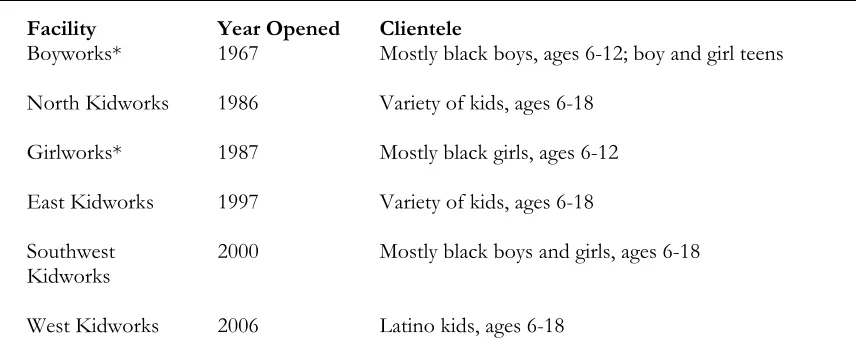
Table 1. Kidworks’ Facilities in Sherburne, Year Opened and Current Clientele 10
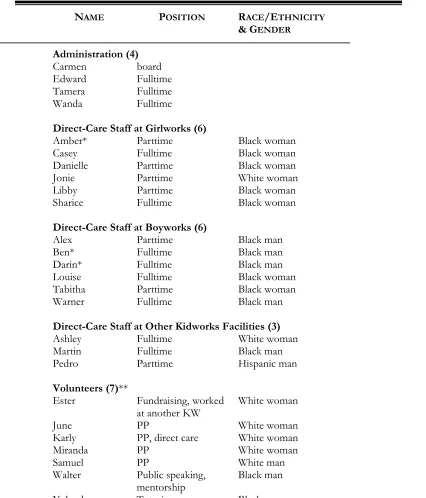
Table 2. Adults Interviewed by Organizational Position 32
List of Figures
Figure 1. Kidworks’ Revenue and Expenses between Fiscal Years 1989 and 2006 11 Figure 2. The Organizational Structure of Kidworks by Position, Gender, Race, and Pay 13
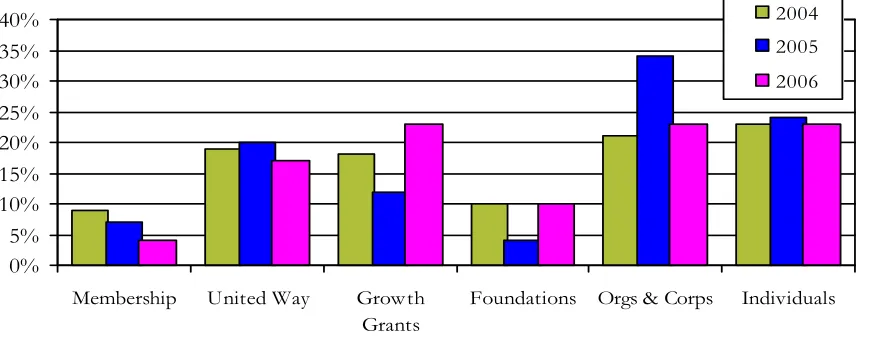
Figure 3. Funding Sources, 2004-2006 15
chapter one: Welcome to Kidworks
You used to talk a certain way on the corner and you got into the house and switched to English. Everybody knows it’s important to speak English except these knuckleheads. You can’t land a plane with “why you ain’t…” You can’t be a doctor with that kind of crap coming out of your mouth.
Five or six different children, same woman, eight, ten different husbands or whatever, pretty soon you’re going to have to have DNA cards so you can tell who you’re making love to.
Basketball players, multimillionaires can’t write a paragraph. Football players, multimillionaires, can’t read. Yes. Multimillionaires. Well, Brown v. Board of Education, where are we today? It’s there. They paved the way. What did we do with it. The white man, he’s laughing, got to be laughing. Fifty percent drop out, rest of them in prison (Bill Cosby).
On May 17, 2004, Bill Cosby delivered a controversial speech at the gala commemorating the fiftieth anniversary of Brown v. the Board of Education. It sparked a media firestorm. Cosby’s speech, excerpted above, pointed the finger at low-income black communities as the source of the problems facing black Americans—rather than discrimination or white racism. As he put it at another point, “The lower economic and lower middle economic people are [not] holding their end in this deal.” Over the course of the next two years, Cosby took his message across the country in a speaking tour. To much applause and criticism, he said that he was airing the “dirty laundry” of blacks: teenage pregnancy, poor parenting, unacceptable grammar, a lack of respect, hip-hop culture, and absent fathers were all symbolic of the cultural downfall of poor blacks. They were the reason for low literacy rates among African Americans and mass incarceration.
Cosby’s speech precipitated a public discussion over the state of black communities among Americans from all walks of life. Cosby himself made the talk show circuit, and TV programs and National Public Radio brought in experts to debate the validity of his position. In the national media, Juan Williams called on black Americans to “banish the bling” in order to purge the “culture of failure that taints black America” (Williams 2006). In “At the Corner of Progress and Peril,” Michael A. Fletcher (2006) framed the problem this way:
The debate centered on what causes some boys to speed toward success and others to head to prison. Both the Washington Post and The New York Times ran series (feature and editorial) that tried to address these issues by examining black culture, particularly the “crisis” among men (Patterson 2006; Ross 2006), economic changes, and poverty.
The racial disparities in economic, social, and health indicators are alarming. Fewer than half of black Americans own homes, and their median household net worth is only a tenth of that of white Americans (Lemonik Arthur 2005). Despite an overall drop in poverty over the past four decades, black Americans are still twice as likely as whites to live in poverty (Lemonik Arthur 2005). The development of the “prison complex” over the past two decades has hit black Americans especially hard: incarceration rates are about eight times higher for blacks than for whites. Men born in later cohorts and who drop out of school are particularly at risk: a black man dropout born between 1965 and 1969 had a sixty percent chance of being imprisoned by the end of the 1990s (Pettit and Western 2004). In 2003, black Americans were about nineteen times more likely than whites to be diagnosed with gonorrhea and about six times as likely, syphilis (CDC 2004). Black Americans also have alarmingly high HIV diagnoses rates. Although they make up less than 13 percent of the U.S. population, African Americans constitute over half of all new HIV diagnoses each year. In 2004, the rate was 8.4 times that for whites (CDC 2005).
I entered Kidworks, a large national nonprofit after-school program with local chapters in the southern city Sherburne, wanting to understand the reproduction of gender and race inequality across generations from the perspective of the kids. When my observations started, though, I found myself surprisingly drawn to the staff members. I saw that they occupied a strange and somewhat tenuous position within the organization: they were the direct-care workers serving mostly black kids, yet they worked for a white administration. White people made organizational decisions, and they resented it. What I found particularly interesting was what seemed like ideological symmetry between the black staff and the white administration. Both groups seemed to want some version of what Bill Cosby described: to train kids to behave differently—to give them middle-class cultural capital—in order to secure
opportunities for themselves. These observations raised a whole new set of questions for me: Where did the direct-care staff’s emotional investment in the kids come from? How did they make sense of their work? Was this organization really creating opportunities for black kids when it was stratified by race? I realized that in order to understand the young people at Kidworks, I had to understand the adults who were in their shoes not long ago: the black direct-care staff.
The following chapter details the history and organization of a nonprofit after-school program I call Kidworks. I begin by describing the historical context out of which Kidworks National, the national affiliation of the Sherburne’s Kidworks programs, evolved and the changes within the national
organization over the past century. I also describe the relationship between Kidworks National and local affiliates. Next, I illustrate the local chapter of Kidworks in Sherburne, including the historical
development of six different sites and the current vision for the organization. I outline the structure of Kidworks at the local level, particularly the hierarchy of staff. In the next section, I draw a picture of two specific Kidworks locations within Sherburne where I conducted participant observation and interview research over the course of nearly two years. One of these sites, Girlworks, served black girls aged six to twelve years. The other, Boyworks, served black boys of the same age group, as well as teens (boys and girls) in a teen center. I describe the programs at each site and provide background information on the kids themselves. I follow up these descriptions by laying out the data collection and analysis techniques I employed in this study. I end this chapter by foreshadowing the analysis in the following chapters on the role of cultural transformation in Kidworks’ attempts to create upward mobility for low-income black youth.
Kidworks National
Kidworks National is nonprofit youth agency that provides after-school, recreation, and camp programs to American kids. The kids range from ages six to eighteen, and the organization prides itself on serving a wide range of ethnic and race groups, including non-Hispanic whites (36 percent of total population served in 2005), non-Hispanic blacks (31 percent), Hispanics (21 percent), Asians (three percent), and American Indians (three percent).
migrated from rural areas to northern cities in search of factory employment (Illick 2002). Additionally, as Illick reports, six million immigrants from northern and western Europe arrived in the U.S. between 1877 and 1890, up from 5,000 annually at the beginning of the century. Working-class immigrants and
migrants, often living below the poverty level, struggled to survive, while middle-class families tried to create social stability despite the rapidly changing social conditions.
As home-based production decreased and the apprenticeship system fell, juvenile delinquency and infanticide grew increasingly problematic, particularly in urban communities (Mintz 2004). Rural and urban households could no longer support the high numbers of destitute children. Population and economic shifts, then, sparked concern by women’s groups and religious organizations over the treatment of the poor and young, as well as prisoners and the elderly. A movement of “child-savers” grew (Mintz 2004). These philanthropists affirmed childhood as a unique life stage. They viewed children as separate from adults, innocent, and in need of protection (Hays 1996; Kett 1977; Macleod 1998). At the same time, they considered undisciplined children to be dangerous to others (Mintz 2004). Children lacked order and discipline, child-savers thought, and they developed institutions such as orphan houses to create them. They concentrated their efforts on urban areas. Religious groups, who viewed
humanitarianism and religious conversion as Christian priorities, supported youth organizations in cities. These groups mixed their mission of saving children from abuse and neglect with one of saving children from sin and misbehavior.
Kidworks National (KN) was one of the organizations that developed out of these social conditions.1 In the second half of the 19th century, KN established recreational, community-based facilities in New England. KN leaders rejected religious pressures to proselytize through the welfare movement and, instead, emphasized the need for recreation and adult supervision. Official histories claim that KN facilities allowed groups of boys to learn from adults rather than from gangs on the street. The organization garnered some support from political and financial groups in its early years. As Kidworks
National grew at the end of the century, it began to spread across the country. Programs shifted to emphasize vocational skills on top of recreation.
Within the first 40 years of its existence, Kidworks National started 40 facilities for boys. The first all “colored” facility opened in 1903. Others cropped up in urban areas as African American workers fled the South into the North in search of industrial jobs. Despite these slow but modest changes, Kidworks National struggled during the early 1900s. National leadership turned over quickly, and there was little financial support for the organization. Adult men who worked with kids lacked formal training, and there was internal dissention over a merger with another youth organization. When WWI started, Kidworks National was beginning to reestablish itself. A new KN president took over, which began several decades of stable leadership. Boys participated in the war effort by tending war gardens and working on farms. KN grew solidly during the 1920s, expanding to serve more than 30,000 boys, and staff began to receive formal training. By 1926, the first black employee was hired at the national level.
The postwar era was one of prosperity for the middle-class Americans. Median family incomes increased by 70percent between 1949 and 1959 (U.S. Census Bureau 2006), and millions moved to the suburbs (Massey and Denton 1993). The baby boom peaked in 1957 with 4.3 million births, putting “more kids at risk than ever before,” as an official KN history put it. Kidworks National began to sell itself as building “juvenile decency” in addition to deterring delinquency. KN continued to grow and reshape itself through the 1960s and ‘70s as new national leadership took over. The focus shifted to better training of workers, better management, and more advocacy on behalf of kids. There was also a concerted effort to promote KN on a national scale.
By the early ‘80s, KN was marketing itself through new logos and symbols. The high rates of working women (U.S. Bureau of the Census 1998), divorce (Ruggles 1997), and unemployment (U.S. Bureau of Labor Statistics 2006) brought new needs for families. Kidworks National tried to match these needs with new education programs and delinquency prevention. Girls were coming to Kidworks National programs in record numbers, which increased pressure on the organization to design and expand programming for them, too. A national campaign to increase enrollment and quality was successful, and Kidworks National began partnering with government and community agencies. By the mid 1990s, prevention became the cornerstone of Kidworks National programming. National political leaders took up KN’s cause, and celebrities promoted the organization through television and ad campaigns.
The focus of Kidworks National when I was at Kidworks, in the mid 2000s, was providing youth services to as many kids as possible. They had initiatives that expanded services to housing projects, downtrodden neighborhoods, immigrants, and American Indian reservations. These new programs allowed KN to center attention on disadvantaged kids and those viewed as most at risk for juvenile delinquency. Programming focused more on prevention and personal development and less on recreation and fun than in years past. Another focus was creating value for the organization by successfully
dollars, and 33 million in technological equipment. The operating expenses were nearly 67 million dollars in 2005.
The Relationship between Kidworks National & Local Affiliates
Kidworks National had affiliated programs and facilities across the United States. Local Kidworks (KW) that had an enrollment of 100 young people or more were eligible to join KN for a membership fee. The national branch, in turn, provided resources, both monetary and programmatic, to local programs. KN commissioned a variety of life-skills, leadership, and prevention programs that local Kidworks used. Still, the affiliation between the national and local organizations remained loose. For example, resource developers for local affiliates were free to order fundraising materials produced by KN for a fee but had no obligation to. Although they shared the same mission, local KW directors were free to organize programs according to their local needs. Kidworks National offered grant moneys to local affiliates to institute its national initiatives. This granting system provided incentive to local programs to expand to new sites according to the national strategic plan and to institute KW life-skills and prevention programs. Local KWs gave data back to the national organization, including demographic information, grades, surveys of the youth for national reports, and pre- and post-test results from pregnancy-prevention and other programs. Thus, there was a reciprocal relationship of information sharing across the national and local levels that mutually served the needs of both. This relationship was increasingly tied to resource allocation from the national to the local level.
Kidworks National also provided conferences and training opportunities for KW staff. These trainings, which took place across the country, provided staff the chance to share information with other KW staff members about running programs and managing staff. Formal training ranged from
Finally, KN provided local youth opportunities via its scholarship programs. These programs, including the Best and Brightest Youth scholarship contest, offered young people a chance to compete against other Kidworks members. The local winner went on to compete at other KN scholarship contests.
Kidworks in Sherburne
I conducted research for this study at a Kidworks organization in the city of Sherburne between 2004 and 2006. Sherburne was a growing mid-sized southern city with moderate levels of racial residential segregation. The city became increasingly urban, rich, and densely populated over the last decade. There was also an influx of Latino immigrants from Mexico and Central America. Over the past twenty years, for example, the Latino K-12 student population grew from a half percent of the students to over eight percent. In 2005, seven percent of the citizens in Sherburne were Latino. Sixty-three percent were white and nearly 30 percent were black. There was also a small Asian population. Despite the high numbers of minorities within the city, there remained concentrated pockets of wealthy white neighborhoods and poor black neighborhoods, which residents recognized by name.
census tract were minority. The median family income was under $26,000 per year, and two and a half times more people rented than owned housing units.
Table 1. Kidworks’ Facilities in Sherburne, Year Opened and Current Clientele
* Location of participant observation for this study.
Kidworks opened North Kidworks, its second location in the northern part of the city, in 1986. The program was housed inside a gymnasium at an elementary school and served mostly working-class kids, both white and black. This program site functioned like a community center, drawing kids from an assortment of neighborhoods. The program director for North Kidworks was a white man, who was hired at this facility in the ‘80s as the primary employee. Kidworks National had already instituted a number of life-skills programs that North Kidworks incorporated at the local level, including a leadership program, homework help, pregnancy prevention, and tobacco-use prevention. There were 60 to 70 kids who attended, but within a year, 100 kids attended. This made North Kidworks eligible to join Kidworks National officially.
Kidworks opened an all-girls facility called Girlworks in an old store the following year. At that time, Kidworks’ expenses hovered just under one million dollars (in 2004 dollars; see Figure 1). Sisters of boys had already started to attend some programs, and in 1991, North Kidworks invited girls to
participate fully. Girls’ programs and staff were separate to begin with, including at North Kidworks.
Facility Year Opened Clientele
Boyworks* 1967 Mostly black boys, ages 6-12; boy and girl teens
North Kidworks 1986 Variety of kids, ages 6-18
Girlworks* 1987 Mostly black girls, ages 6-12
East Kidworks 1997 Variety of kids, ages 6-18
Southwest
Kidworks 2000 Mostly black boys and girls, ages 6-18
Kidworks still lacked programs designed specifically for girls, but there would soon be co-ed sports leagues. Girlworks moved out of the store and opened its own facility two blocks down the street from Boyworks in 1992. The administration offices moved from the Boyworks to the Girlworks building at that time.
0 0.5 1 1.5 2 2.5 3 3.5 4 4.5
1989 1991 1993 1995 1997 1999 2001 2003 2005
Year
2004 Dollars
in Millions Revenue
Expenses
Figure 1. Kidworks’ Revenue and Expenses between Fiscal Years 1989 and 2006.
The next decade was marked by rapid expansion and plans for future growth. A fourth location opened inside a school in eastern Sherburne in 1997. This location served kids from a variety of
Girlworks and Boyworks. These plans included a large swimming pool among other facilities. The goal was to make KW accessible to every kid within Sherburne and the surrounding communities.
Sherburne had an extensive school assignment program that attempted to diversify the populations within each school. The official standard for diversity was no more than 40 percent of the student population could receive free or reduced lunch. No more than a quarter of students could perform below grade level. Because more than half of the black students within the school district and two-thirds of the Latino students were eligible for free and reduced lunch prices in 2004-2005, this initiative created racial and ethnic diversity as well as economic. For this reason, nearly all of the kids at Kidworks attended race-, ethnic-, and class-integrated public schools. A few of the kids, however, attended a small, mostly black charter school by their families’ choice.
Administration
In 2003, Kidworks underwent an organizational restructuring in order to support expansion both monetarily and administratively. The administration, formerly consisting of the executive director, his assistant, and another office worker, grew by four positions. The executive director (ED) was an older white man who had been with the organization for decades (see Figure 2). Along with supervising full-time direct-care staff and the administration, the ED developed the vision for Kidworks and served as the liaison between KW and the donating public. He worked closely with the board of directors and spent time networking and raising money. The ED had a personal assistant, a white woman who had been with the organization for decades.
A full-time professional resource developer took over fundraising duties during the reorganization in the early 2000s. During the first part of my research, a white middle-aged woman occupied this position. She started Professionals for Progress, a group of young professionals in
real estate agents, and business owners. Their biggest event, the Kidworks Gala, was $50-a-ticket social and auction at a ritzy department store. The resource developer also hired a part-time volunteer coordinator. After the resource developer was promoted to a national position, another white woman took over. She was a petite woman whose blond hair, charming smile, and fashionable style drew attention and praise from donors.
Figure 2. The Organizational Structure of Kidworks by Position, Gender, Race, and Pay.
KIDWORKS
Associate Director White man, $75k Board
42 White, 1 Black
Professionals for Progress
Program Director Black man, $47k
Executive Director White man, $103k
Gov’t Relations White woman Resource Developer
White woman, $80k
Program Director Black woman, $43k
PE Director Black man
PE Director Black woman, $29k
Education Director Black woman
Part-Time Staff Black women, $6-9 Part-Time Staff
Mixture, $6-9
Volunteers Mixture Volunt. Coordinator
Black woman, $32k
The executive director and resource developer both worked closely with the board of directors. There were 43 members on the board in 2005, all of whom were white except for one black man. Eight were women. The board of directors had an exceptional reputation in Sherburne, which drew prestigious members and reaffirmed its status as elite. It consisted of well-established white businessmen and women philanthropists with elite social networks in the real estate, finance, and banking industries. Other
members included a jeweler, physicians, and corporation owners (roofing, landscaping). When they invited new members to join the board, it was people from inside these networks.
While the board did make policy for Kidworks, its primary function was to fundraise and promote a positive public image of the organization. They were successful at both aims during the mid 2000s. KW was enjoying a time of massive expansion (as already mentioned, they were opening new sites and had grand plans for others) and public admiration despite the difficulty in fundraising for other nonprofits (Froelich 1999). Membership on the board came with the expectation to raise a minimum of $5000 a year (individually or in a group). The top fundraiser on the board raised over $33,000 in 2006, and the top fundraising team elicited over $50,000 in pledges. In 2006, the campaign drive brought in over $1 million dollars in contributions for the first time, a $250,000 improvement over the previous year’s target. Board members also individually sponsored kids to attend camps, and one family agreed to pay college tuition for a handful of kids. They supported kids by using their personal networks to find them tutoring help or even people to job shadow.
part-time and made hourly wages without overtime. She became full-time in 2005 and quickly enjoyed a fifteen percent raise. She earned $32,000 a year.
These administration changes brought dramatic increases in Kidworks’ revenue and expenses (see Figure 1). The annual budget increased from $2 million in 2002 and 2003 to $4.4 million in 2006. KW received $1 million state dollars from Health and Human Services and another $400,000 in state funds to prevent juvenile delinquency, which it disseminated among Kidworks programs across the state. Sherburne’s KW also received grant money from Philip Morris USA (over $20,000 each in 2005 and 2006) to implement life-skills-based prevention programs which stipulated that a quarter of all youth participate (more on this in chapter five). Other funding sources, including a $100,000 per year grant to match new funds and growth grants, also brought in new money (see Figure 3).
Figure 3. Funding Sources, 2004-2006.
The funding raising success also brought along hefty salaries, particularly for the executive director, the associate director, and the resource developer. In 2004, the executive director enjoyed a salary of over $100,000 and another $5,000 in benefits. The associate director made $72,000 (an $18,000 raise over the previous year) and almost $4,000 in benefits. The white female resource developer had a salary of $80,000 and $4,000 in benefits. She was promoted into a national position because of her successful work in Sherburne. When the new resource developer started, with some experience but an unrelated master’s degree, she made over $50,000 a year, but she did not reveal the exact figure.
0% 5% 10% 15% 20% 25% 30% 35% 40%
Membership United Way Growth
Grants
Direct-Care Staff
The direct-care workers of Kidworks were primarily African American, except at North Kidworks, which had a large population of white youth and had an all-white full-time staff. While administrators wore suits and dresses, the direct-care staff were required to wear casual uniforms: a KW collared polo-style shirt tucked into khaki pants for “professional” employees and a plain KW T-shirt and jeans for part-time workers. “Professionals” were salaried full-time employees who had college degrees. Each program had a program director who managed the programming, budget, and staff. Across sites, program directors earned between $31,000 and $47,000 a year. That person was supported by one or two other full-time professionals: a physical education director and/or an education director. They ran Kidworks programs and supervised part-time staff, although I seldom saw PE or education directors directly supervising staff, instructing them, or reprimanding them. Their salaries started at $28,500 a year.
The professionals on the whole worked together closely, and they developed relationships with each other across the various program sites. They enjoyed relative autonomy in their work because they controlled their own budgets and programming. The associate director was their direct supervisor, and the staff generally liked working for him. They found him to be both helpful and more respectful of them than other administrators. Professional staff had regular contact with the associate director at staff meetings. They also sought out his advice when they fired people or ran into programmatic challenges.
Part-time time direct-care workers were usually college students with little or no experience working with kids. Some were teen employees who participated in the teen center. They ran activities and supervised kids. They earned between minimum wage ($5.15 an hour for teen employees) and $9 an hour with most earning around $7. The program directors at each site hired their own part-time staffers, and these workers reported directly to the full-time direct-care staff.
Volunteers
Some volunteered weekly at Kidworks programs by tutoring or coaching a sports team. Others worked the events that KW hosted like a Halloween festival, family celebration day, or spring fling. Others, such as the Professionals for Progress, focused on raising awareness or fundraising. There were approximately 200 volunteers at Kidworks, for whom the volunteer coordinator served as the liaison to the
organization.
Entering Girlworks as a Field Site
The focus of this study is on Boyworks and its partner facility Girlworks. Before this project, I had done research on an after-school program serving low-income black teens in Washington, D.C. After arriving at graduate school, I joined a Preparing Future Faculty research team headed up Barbara Risman. For this project, a group of graduate students and Barbara conducted interviews with young people aged twelve to fourteen years. In an effort to diversify our sample by race and class, the group interviewed four girls at Girlworks. Barbara had a professional connection to the volunteer coordinator, who happily accommodated our request to interview girls in the building.
Following these interviews, I consulted Barbara about potential dissertation projects, and we agreed that I should consider conducting fieldwork at Girlworks in order to extend my master’s thesis project on peer cultures to a younger population. I was taking a course on fieldwork at the time and was looking for a project that would also satisfy the requirements of the course. Theoretically, I wanted to understand the role of peer culture in the reproduction of gender and race inequality across generations.
I approached the volunteer coordinator, Barbara’s contact, with my request to volunteer and do participant observation at Girlworks. She was excited to have me participate in the organization. I discussed my plans with her and the resource developer more thoroughly during a volunteer orientation in October 2004, and the volunteer coordinator introduced me to the program director at Girlworks, a black woman in her late 20s who had been with the organization for a handful of years. I began
Girlworks provided recreational, life-skills, and technology programs to girls between ages six and twelve. Over 95 percent of the girls were African American. Despite the low cost of the programs— under $10 a year—GW attracted girls from a wide variety of class and family backgrounds. GW was well attended by girls, averaging around 150 to 200 a day.
The GW workers were all women and predominantly African American. When I first started fieldwork, there were two professional full-time staff members: the program director and a physical education director who was a white woman. The PE director left within a few months to move on to another job. She was replaced by a young black woman who was still in college but had run the summer program the previous summer. In the fall of 2006, she also left GW. GW’s program director was the only female in charge of a KW facility in Sherburne. She was responsible for a $100,000 a year budget, and she had five years of experience with KW. She earned around $43,000 a year. GW’s PE director made $28,500 a year.
In addition to the two full-time professional positions, GW had around ten part-time workers, most of whom were college students. Some part-time staff members had worked at GW for a few years, including two African American women in their early twenties and a white professional artist who taught art lessons. The artist made $9.25 an hour, but the other part-time workers generally made between $6 and $7 an hour. A few teenagers from the teen program at Boyworks also worked as summer or part-time staff. They made minimum wage if they were paid at all.
Girl baths
Gymnasium
The front games room was the main gathering place at Girlworks as it was at every KW Sherburne site (see Figure 4). The games room was almost always busy with girls checking in and out at the front desk, playing pool or board games, and running around. GW staff also held a daily
announcements meeting in the games room with the girls seated in a bunch on the floor.
o
Figure 4. Layout of Girlworks Building.
The GW building blended the sense of warmth and familiarity of an oversized elementary classroom with the rugged impersonal feel of a warehouse. The walls were painted a pleasant cream color with pastel bathroom doors. The art teacher prominently displayed art projects, which changed often: self-portraits, then Halloween greetings, then paintings of friends and neighborhoods. The decorations created a sense of childhood innocence to newcomers and visitors. At the same time, large air ducts lined the black ceiling, and large-brick walls gave an industrial feel.
Door Art room
Homework room/ Kitchen
Admin offices Library
Comp lab 12-yr-olds room
Office Desk
Play room PE
office
Snack area
Door Staff
The walls were covered with inspirational messages and posters designed to foster a sense of community and inclusiveness. Next to a trophy display at Girlworks, for example, sat a small poster that read “Catch a Dream and Run with It.” Above it hung pictures of kids from all walks of life: a black boy in business attire, a white girl holding a basketball, an American Indian in headdress. A nearby bulletin board reminded girls to keep the right sorts of attitudes. “Victory is sweetest when you’ve known defeat,” it said. “A person shows what he is by what he does with what he has.” “To be early is to be on time, to be on time is to be late, to be late is to be terminated.”
Off of the sides of the games room sat staff offices (one each for the program director and PE director), a well-stocked computer lab, an arts and crafts room, a library room, an education room, and a kitchen. A main attraction was the nearly full-sized gymnasium where soccer tournaments and basketball games were held. Staff stayed busy checking kids in, supervising the games room, tutoring kids,
organizing games and activities, teaching computer skills, disciplining kids, greeting parents, and answering the telephone, which was hardly audible over the roar of kids.
The girls were as varied as their artwork. Some were petite, young, and almost doll-like. Others were surprisingly tall for their age and tomboyish. They were often smiling, their hair disheveled from a hard day of playing. The younger girls (under ten) were especially friendly and affectionate; they greeted strangers, shared hugs with me, and tried to sit on my lap despite a rule against it. Many of the girls nearing puberty were more reclusive. They sat by themselves along the edges of the room or in a group, ranging from five to ten girls. On the whole, the girls typically were colorfully but plainly dressed in sweats, jeans, T-shirts. In general, the kids struck me as well-behaved. There were few fights or serious disagreements, and girls seemed to respect the staff. They were, in fact, much like me when I was their age.
rotated between art lessons, Girls Scouts, soccer, cheerleading, computing, leadership club, and quilting. Girls were also required to participate in a study program where they accumulated points for doing their homework and won prizes. These activities, along with mentorship by the staff and sponsorship by the board, were designed, in the words of one staff person, to “close the divide” between what advantaged and disadvantaged kids had access to.
Expanding to Boyworks
I expanded my volunteering and observations to Boyworks in July of 2005. The volunteer coordinator introduced me to the program director at a volunteer appreciation dinner, and he and I immediately hit it off. The long-term program director had just retired, and a new young and energetic 20-something program director started. Boyworks provided the same recreational, life-skills, and technology programs to boys as GW did for girls. Their clientele was also aged six to twelve years, even though the teen center served older kids. While BW drew boys from all parts of the city, most came from the surrounding neighborhoods. The boys were over 95 percent African American, but more than half of them came from poor families: 53 percent got free or reduced lunches at school. Although reporting by families was too incomplete to report an exact figure, a large portion of the boys came from single-parent households. The boys’ attendance fluctuated more than the girls and averaged just over 100 kids a day. The boys routinely intermingled with adolescents from the teen center.
BW had four full-time professional staff members, all of whom were black and one who was a woman: a program director (a twenty-something man who BW attended as a child), a PE director (a twenty-seven year old man who attended as a child), an education director (a middle-aged woman), and a director of teen programs (middle-aged man). Each of the full-time employees had a college degree. The program director had five years of experience with the organization and made $47,000 a year, but no one else reported their income. BW had a budget of $150,000.
Two part-time workers were black women, both of them in their twenties. The art instructor was a white woman. The rest were all men with one part-time white man. Most of them were college students, and they made wages similar to part-time staffers at GW ($6-9 an hour).
Despite the difference in professional staffing levels, GW and BW were comparable buildings and programs. BW had a similar layout with a central games room, staff offices to the side, a gymnasium, library, computer lab, art room, and education room. Yet until a dramatic paint job in the summer of 2006, Boyworks had a dreary institutional feel to it. The building had gray carpeting, visible rafters and brick walls. The walls were painted a stark white color that showed dirt and stains. Piles of dirt (sometimes swept and left there) laid on floors in the snack area and the gymnasium. The paint was peeling off the walls in the gym, and the entire building had a distinctively strong smell of body odor. It, too, was noisy and chaotic as the building’s construction amplified rather than deadened sound.
The boys were required to do their homework, although the staff did not take as much care at tracking them as they did at GW. They also participated in life-skills and prevention programs in
accordance with grant money. The staff held these programs in the gymnasium. During free time, which was most of the time, the boys occupied themselves by shooting around in the gym, playing pool and ping-pong in the games room, and challenging each other in games of Uno, I declare war, and spades. The staff enjoyed close relationships with the boys, and I routinely saw them play sports and cards with them.
I quickly came to enjoy my time at Boyworks. Just like the girls, the boys struck me as well-behaved. There were few fights and disagreements, except in the springtime. While boys did spend more time rough-housing than the girls, they were affectionate and welcoming.
Method
immersion in others’ worlds in order to grasp what they experience as meaningful and important.” It merges social participation with science so that the researcher is both member of a community—an insider—and student of the community—outsider (Hammersley and Atkinson 1995). This is the general approach I used in my data collection and analysis so that I could learn directly from the people at Kidworks, in their own contexts and environments.
I employed an inductive approach to data collection and analysis (Charmaz 2001; Glaser and Strauss 1967; Goodwin and Horowitz 2002; Lofland and Lofland 1995). This approach is designed to explicate and theorize social processes by generalizing across social situations or specifying the influence of context on particular processes. In general, I used a strategy similar to that described by Charmaz (2001) in which the researcher simultaneously collects and analyzes data. The research begins with general concepts and gets refined as the process goes along. My analysis focused on understanding the meanings and ideological frameworks through which staff and kids made sense of KW, as well as the social processes that took place there. I analyzed people’s explanations for their actions, their unstated assumptions, and the consequences of their actions.
kids, for example. It was not uncommon for men to come into Girlworks and Boyworks, often holding little kids. This, too, was rarer in D.C.
The staff and programs were different, too. The direct-care workers at KW were younger but had more education. They were paid better than I was expecting, and the administration lived much more comfortably than I anticipated for people who worked in a youth service nonprofit. Perhaps most surprising to me, though, was the absence of discussion or programs that dealt with race and racism openly. The program I worked with in D.C. was Afrocentric: counselors used hip-hop to illustrate points to the kids, murals of Africa and African leaders adorned the walls of the building, kids were well versed in black history, kids talked about racism openly, and programs incorporated African dress and cultural symbols. None of these things was emphasized at Kidworks. Instead, KW seemed to pride itself on a bland version of multiculturalism.
I entered the field wanting to understand the reproduction of inequalities across generations. Through my previous research, I became interested in peer cultures, particularly as a form of interpretive reproduction (Corsaro 1992; Corsaro 2005), that I also brought into the field with me. As time went along, though, I began to think that the staff occupied a much more interesting position within the organization than the kids did.
I also entered the field keenly aware of the sharp power imbalance between an adult researcher and child participants (Corsaro 2005; Ferguson 2000), and I wanted to equalize it as much as possible. Research shows that in interactions adults generally approach children in order to direct them or correct behavior. Children, thus, find themselves at the receiving end of adult control, while simultaneously developing cultures that are oppositional to adult formulations (Corsaro 2005). The adult-child power imbalance, of course, plays out in ethnographic research when kids view adults as authority figures. Thorne (1993), for instance, noted that kids turned to her to resolve conflicts during her fieldwork, especially at first, and even accused her of spying on them when she took notes.
Kidworks, despite my official volunteer status. I sat on the floor with the kids rather than standing with the adults, for example. I dressed in casual clothing, and I played with the kids when the staff did not. I interjected as an authority figure as little as possible, and I conscientiously deflected kids’ requests for my intervention to a staff person. I made a point of explaining that I was not a staff person. I tried not to enforce the rules, and I occasionally broke the rules when kids invited me to do so. I was at least minimally convincing because it was not uncommon for kids to ask me if I was a teenager or to rject my claims to be in my twenties or married.
This alignment with the children came neither naturally nor easily to me. When a girl stormed away crying from another girl, I had to remind myself not to run over to intervene. I often found myself making the kinds of small talk and gestures that only adults impose on kids: shaking hands or asking them what they did at school. At other times, the staff and even some kids seemed to become frustrated with me for not enforcing the rules. On other occasions, I did intervene in kids’ interactions when not intervening might have jeopardized my standing with the staff, or when it was an opportune time to gain another perspective. I broke up a fight my first day at Boyworks’ summer camp when two boys were pummeling each other and there were no staff in sight. Another time, I asked one girl to tell another that she had called me “cracker” just so that I could see her reaction. I wanted to know if they really knew what it meant.
monitoring me and might rebuke me for talking out of turn, particularly at Girlworks. I was self-conscious of our rule breaking and the potential consequences. Other times, I felt lost when I didn’t know who to play with or what to do, just as I imagined the outsider kids felt.
As I mentioned, I started attending Boyworks in July of 2005. I sat in on life-skills groups and played football with boys who insisted that it was weird that I threw a spiral. The boys were incredibly friendly and welcoming for the most part. Throughout my time there, a few boys, though, made sexual comments to me (asking about my sex life, claiming a male staffer was my boyfriend, telling me that certain boys had crushes on me). I tried to use these moments as a way to generate more data by asking them what the program director would say if he overheard them, but they frustrated me and I
occasionally told them to stop.
I was an outsider in the beginning for other reasons, as well. I am middle class and white with light blond hair and blue eyes, so I always stood out. Even though I was often not the only white person in the room, everyone seemed keenly aware, at the very least, that I was white. There were countless moments that someone called attention to my whiteness, especially when they were getting to know me. Some seemed benign, like the kids’ curiosity about the red shoe marks left on my leg after sitting for a while. Others—when a staff person asked me if I wanted to dance down the soul train line during a sleepover—left me feeling self-conscious. Several others, however, drew attention to racial inequality with sad poignancy. A teen, for example, sometimes asked me, “Are you racist?” While I was trying to be culturally competent, there was no hiding that I was different from most of the people there. All these interactions and my reflections upon them served as data.
Especially in the beginning, my interactions with the women staffers too left me feeling uncomfortable and out of place. The volunteer coordinator told me the story of a volunteer who
out like a sore thumb. This feeling was exacerbated by the lack of structure and instruction for volunteers at Kidworks.
I slowly began to see the importance of understanding the staff, and I changed my approach to them. Rather than aligning myself with the kids, I began to give the staff more of my attention. I instigated informal conversations with them about their work and their personal lives. I also spent more time at KW events, where the volunteer coordinator and I talked. She vouched for me to other staffers by telling them how much she admired me and wanted to be like me. (She was interested in pursuing graduate education.) As I began to feel more comfortable and the staff came to see me regularly, our relationship evolved and became more personal.
By the time I started conducting interviews with the staff in the late fall of 2005, we were friends. After each interview, staff members opened up more to me and approached me to initiate conversations. The GW staff and I developed a teasing relationship, where they laughed together at my Midwestern speech. A particularly meaningful interaction happened in December 2005, as my notes described:
When I finished the interview with Sharice, I stepped out into the games room. There were a few kids around, and Casey was sitting chatting with someone. I headed towards the library to make copies of the forms that Sharice had given me. I walked by Casey, who said to me, “Dang, you were in there talking to Sharice for two hours!”
Carissa: “I can’t help it.” She was playing around with a girl and teasing her. I joked to Casey, “Casey, you are so good with children.” And I laughed.
To this, Casey said, “Are you making fun of me?”
I laid it on more thickly, “You are the best, Casey,” and I gave her a hug. Casey: “Are you being serious?”
Carissa: “Yeah, I’m serious.”
Casey: “When are you going to interview me? When’s my interview?”
Carissa: “I can set up an interview with you anytime. When are you available?” We set up an interview.
I walked into the library. There was one girl sitting doing homework. I could hear Casey talking loudly in the other room, so I walked out of the room to rib her some more. “Casey,” I said in an exasperated voice. “Someone’s trying to do homework in here. I can hear you all the way in the other room.”
Casey gave me an exasperated look back. She got up to follow me. “Who’s doing homework in here?”
She came in and saw the girl. Casey turned her attention to me, “What are you doing?” Carissa: “I’m trying to figure out how to use the copy machine to make some copies.” I couldn’t figure out how to turn it on and how to feed the paper into it. “I see the copier’s fixed by now.” It had been broken.
Carissa: “What? She told you about that?” I was being really dramatic. I pretended to kick her. This made Casey laugh even more.
Casey: “Handy dandy!”
Carissa: “That’s the way I talk. Are you making fun of the way I talk?” I went over and fumbled with the copier some more.
Casey: “What are you doing? Here.” She grabbed the papers and started making some copies of it for me.
While she was doing this, Sharice came into the room and was looking around. She joked with us for a minute and then left. Casey and I (well, Casey) finished with the copies. Casey moved towards the doorway.
The volunteer coordinator (VC) came into the room and walked towards me. “How are you, Carissa?”
I was really silly by this point, and I told her. “Casey’s making fun of me. She’s trying to chase away your volunteers. She called me a stupid white girl!” At this, I broke out laughing hysterically because it was complete and utter bull. I thought it was really, really funny.
Casey’s jaw dropped open, and her eyes got really big with surprise. She was shocked by my comment and was at a loss for words. “What? I didn’t say that! I didn’t call her that!” She was pleading her case to the VC. I was bent over laughing because I caught Casey so off guard.
The VC was surprised, too, and laughing. I missed her reaction because I was laughing. Sharice came back into the room, which we had turned into a little party by then. “What are you all doing in here?”
Carissa: “Casey called me a stupid white girl!”
Casey reacted again, and she defended herself against my charge, “No, I didn’t! Don’t believe her! I didn’t say that.” She was laughing. We were all laughing.
From the point of this interaction—when we had a great laugh over my whiteness—onward, Casey trusted me. She opened up to me and talked to me about racial issues. She sought advice from me about how to handle workplace stress and not having any money. I also appreciated her more: her sense of humor, her religious convictions. When Casey and I reflected on the incident during an interview, she told me, “I never heard a white person say something like that.” We had become friends through laughter, it seemed.
I became closer to other staffers, as well, and spent more time talking with them. Tamera invited me to her birthday parties. When Louise’s mother died, Darin asked me to sign the staff’s sympathy card. I helped create Danielle’s wedding favors. I even made a fool of myself by going dancing with Danielle, Libby, and Terri, all of whom were black women in their early twenties and much more fashionable than I. The staff began to notice when I wasn’t at KW rather than when I was, and I missed them when I was gone. When I interviewed Tamera for the second time, I asked her to reflect on whether there were any white adults whom she viewed as truly fitting in at KW. This was her reply:
Carissa: Well I’m an outsider too.
Tamera: But you fit in now, you’ve become part of that Kidworks community. You’ve become part of that family. They accept you. If they didn’t accept you, nobody would deal with you.
I had become accustomed to spending time at GW and BW. When I went to South Africa for a conference, I bought several staff members souvenirs as tokens of my thanks and friendship. I returned from the trip to hugs from the kids and staff alike. One staff person told me, “You’ll always be welcome here.”
Data Collection and Analysis
My observational data collection took the form of in-the-field written jottings, extended field notes, analytic notes, self-reflection notes, and artifacts collected in the field (Burawoy 1991; Emerson, Fretz, and Shaw 1995). I generally carried a small notebook with me and during opportune times (when I would attract less attention), I took verbatim notes in it. My observations focused on descriptions of the field sites (sights, sounds, smells, feelings), the verbal and nonverbal communication of the staff with the kids and myself, the kids’ interactions and verbal exchanges with each other, and their styles and rules of play. Additionally, as several kids were curious about my notebook and had taken to drawing in it, I also collected art that they produced. Each day outside of the field, I wrote detailed extended fieldnotes. Full notes included sketches of the scenes, descriptions of episodes of action and dialogue, and fieldnote tales that connected series of episodes (Emerson, Fretz, and Shaw 1995). These descriptions were descriptive in form rather than narrative so that I imposed my interpretation on the data as little as possible. Finally, I wrote theoretical memos, self-reflection, and note-on-notes (Burawoy 1991; Emerson, Fretz, and Shaw 1995; Lofland and Lofland 1995) as early forms of analysis. I coded fieldnotes and analyzed data more thoroughly into extensive analytic memos, the pieces of which became the basis for the chapters that follow.
groups, sports, art, organized and unorganized play (especially cards and pool), volunteer orientations, volunteer appreciation events, the Kidworks Gala, the Halloween festival (twice), Celebrating Families, and the campaign finale celebration. I also served as a judge at the Best and Brightest Youth contest. I spent around 300 hours in the field and collected around 2,000 pages of fieldnotes and transcripts.
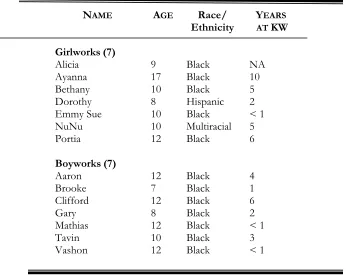
In addition to the fieldwork, I also conducted in-depth interviews with 40 adults and children associated with Kidworks (see Tables 2 and 3). As Seidman (1998) explains, qualitative interviews capture the experiences of people, as well as their interpretation of their experiences. These experiences center on events: happenings themselves, interpretations of them, the processes leading up to them, or the
consequences that follow them (Weiss 1994). Other times, they consist of the mundane structuring of life (Spradley 1979), such as everyday activities, decision making, or exchanges with other people. The best interviews produce concrete descriptions and reactions to one’s experiences. They are rich with details (Hermanowicz 2002; Seidman 1998; Weiss 1994). This approach to interviewing lays the foundation for understanding the subjectivity of KW staff and kids (Blumer 1969; Seidman 1998; Smith 2005), which was the starting point for my analysis.
I interviewed members of nearly every part of the organization, including direct-care staff, administrators, volunteers, fundraisers, a board member, and kids (See Table 2 and Table 3). I selected interview participants that represented the full range of experiences at Kidworks (Charmaz 2001; Hammersley and Atkinson 1995). I interviewed four administrators, six direct-care workers at GW (including both full-time employees), six direct-care workers at BW (including all four full-time
employees), three direct-care staff from other KW facilities in Sherburne, and seven volunteers who took on an assortment of roles for a total of twenty-six interviews with adults. While I had general topics that I wanted to cover in interviews, the staff’s responses to my questions and probing directed our
conversations. Interviews with adults covered their work (how they came there, their training, what they did and thought of their involvement), the nature and their interpretation of their relationships with kids and staff, their perspectives about which kids would likely be successful or not and why, their
They generally lasted between one and a half and two hours. Some stretched as long as three hours. Everyone I interviewed seemed to enjoy it, particularly the adults. The staff at Girlworks came to joke about how much I liked to ask questions and said that I was like their “counselor.” Casey told me that she talked with me about things that she hadn’t talked about with anyone else. I received no negative feedback from interviews with adults.
Table 2. Adults Interviewed by Organizational Position.
NAME POSITION RACE/ETHNICITY &GENDER
Administration (4)
Carmen board
Edward Fulltime Tamera Fulltime
Wanda Fulltime Direct-Care Staff at Girlworks (6)
Amber* Parttime Black woman
Casey Fulltime Black woman
Danielle Parttime Black woman
Jonie Parttime White woman
Libby Parttime Black woman
Sharice Fulltime Black woman
Direct-Care Staff at Boyworks (6)
Alex Parttime Black man
Ben* Fulltime Black man
Darin* Fulltime Black man
Louise Fulltime Black woman
Tabitha Parttime Black woman
Warner Fulltime Black man
Direct-Care Staff at Other Kidworks Facilities (3)
Ashley Fulltime White woman
Martin Fulltime Black man
Pedro Parttime Hispanic man
Volunteers (7)**
Ester Fundraising, worked
at another KW White woman
June PP White woman
Karly PP, direct care White woman
Miranda PP White woman
Samuel PP White man
Walter Public speaking,
mentorship Black man
Yolanda Tutoring Black woman
* Staff who attended Kidworks as children.
Table 3. Kids Interviewed.
NAME AGE Race/
Ethnicity Y EARS AT KW Girlworks(7)
Alicia 9 Black NA
Ayanna 17 Black 10
Bethany 10 Black 5
Dorothy 8 Hispanic 2
Emmy Sue 10 Black < 1
NuNu 10 Multiracial 5
Portia 12 Black 6
Boyworks(7)
Aaron 12 Black 4
Brooke 7 Black 1
Clifford 12 Black 6
Gary 8 Black 2
Mathias 12 Black < 1
Tavin 10 Black 3
Vashon 12 Black < 1
The final form of data I collected and analyzed were Kidworks documents. During my observations, I collected artifacts from all aspects of KW life, including promotional brochures and curriculum books for the life-skills and promotion programs. Posters, websites, fundraising materials, volunteer mailings, print ads, and newspaper articles on KW were also documents I collected. For both the interviews and artifact data, I used the same inductive data analysis strategies as I did with the fieldnotes.
The Analysis Ahead