THE EFFECT OF CYCLIC ADENOSINE MONOPHOSPHATE
(cAMP) MODULATORS
ON THE ACTIVITY OF SELECTED
ANTIMALARIAL DRUGS
1/By
JULIA WANGUI
[
MWANGI
156/6118/2003
A thesis submitted in partial fulfillment of the requirement for the award of degree of Master of Science (Infectious Disease Diagnosis) of Kenyatta University .
2006
Mwangi, Julia WanguiThe effect ofcyclic adenosine
1, Julia Wangui Mwangi, duly declare that this thesis is my original work and has not been presented for a degree in any other university or any other award.
Jclia Wangui Mwangi
Signature ..~.~~ ..' Date ..kq-~.c?~:.l~~~..
We confirm that the work reported here was carried out by the above named candidate and submitted with our approval as supervisors.
f:'~.Joseph J. N. Ngeranwa
Department of Biochemistry and Biotechnology, Kenyatta University,
P.O.Box 43844,
Nairobi.
Signatur~~ate}."?- ...
P.!.~J;rp
.
"
{1 Dr. Norman C. Waters
Division of Experimental Therapeutics, Walter Reed Army Institute of Research,
503 Robert Grant Avenue,
Silver Spring, Maryland 20910-7500. .
Signatur~~(.~.Date.c>.7./':1"~~6
l)rof. Eliud N. M. Njagi
Department of Biochemistry and Biotechnology,
Kenyatta University, P.O.Box 43844, Nairobi.
".
~
.
9.:LIQ(-'
Dedication
Acknowledgements
I sincerely acknowledgment all those who saw this work to a successful completion. My
supervisors: Dr. J. Ngeranwa, Dr. N. Waters and Prof. E. Njagi; I am very grateful for
your enduring support, guidance, advice and expertise. My colleagues in WRP Malaria
laboratory; Josephat Mwangi, Hosea Akala and Pamela Liyala; receive my sincere
gratitude for the support, assistance and most of all the understanding you showed me to
the end of my work. Special thanks go to Mr. Lawrence Muthami; for the enduring
patience, encouragement and guidance in data analysis.
Special thanks to USAMRU-K GElS coordinators; Dr. Rodney Coldren and Dr. Sheryl
Bedno; the Principal Investigator of Malaria Drug Discovery project, Dr. Norman
Waters; your financial assistance and expertise formed the backbone to this work.
To my family and friends; you inspired me, offered your moral support and encouragement through out my studies.
Abstract
Malaria is one of the major global health problems with high mortality rates especially in children below five-years of age. The interventions in place to control the disease worldwide include vector control and chemotherapy. Chemotherapy has developed crippling limitations due to malaria drug resistance to the effective, available and affordable anti-malarials. The emergence of parasite resistance has limited the armory of effective anti-malarials.Resistance is developing faster than the development of new and effective anti-malarials. This has raised a need of therapy optimization using the already existing anti-malarials. Combination therapy has been shown to effectively delay the onset of resistance and improve the efficacy of two or more anti-malarials when in combination. The objective of this study was to establish the activity of cAMP modulators on a few selected anti-malarials in vitro. The cAMP modulators were tested in combination with chloroquine, quinine, mefloquine, amodiaquine and doxycycline againstPlasmodium falciparum in vitro against chloroquine sensitive strain (D6) and the chloroquine resistant strain (W2). Parasite susceptibility testing was carried out using semi automated micro dilution technique. The Inhibitory Concentration at 50% (ICso) was calculated for each drug and for the drugs in fixed combination (1:1, 1:3,3:1, 1:4, 4:1, 1:5). These data were used to calculate the Fractional Inhibitory Concentration at
50% (FICso) and to plot isobolograms. Quinine-AC inhibitors combination assays showed synergistic interactions in all the levels of concentration ratios against both the D6 and W2.The other anti-malarials-AC inhibitor combination assays showed a range of response, additivity, synergism and antagonism at different levels of concentration ratios.
Table of contents
Declaration .i
Dedication .ii
Acknowledgement. .iii
Abstract .- .iv
Table of contents v
List of Figures .ix
List of Plates xi
List of abbreviations xii
CHAPTER ONE 1
1.1 INTRODUCTION AND LITERATURE REVIEW .1
1.2 Background l
1.2 LITERATURE REVIEW 2
1.2.1 Etiology of Malaria 2
1.2.2 Life Cycle 3
1.2.3 Occurrence, Epidemiology & Economic impact .4
1.2.4 Parasite - host cell interaction &invasion 6
1.2.5 Nutrition and Transport 8
1.2.6 Diagnosis 9
1.2.7 Chemotherapy 11
1.2.7.1 Chemotherapeutic agents '" 11
1.2.7.2 Potential targets for chemotherapy .14
1.2.8 Resistance 19
1.2.9 Control 22
1.2.10 Cell signals 23
1.2.10.1 G-Proteins 23
1.2.10.2 Adenylyl cyclase 23
1.2.10.3 Cyclic Adenosine Monophosphate .26
1.3 Statement of Problem 29
1.4 ResearchQuestions 29
1.5 Hypothesis 29
1.6 Objectives 29
1.6.1 Specific Objectives 29
CHAPTER TWO 31
2. MATERIALS AND METHODS 31
2.1 Parasite Clones 31
2.2 Anti-malarials and cAMP modulators .31
2.3 Experimentaldesign 32
2.3.1 Malaria Cultures 32
2.3.2 In VitroDrug Testing: Radioisotope Technique 33
2.3.3 Data Analysis 35
CHAPTERTHREE 37
3. RESULTS 37
3.1 The ICsofor the Anti-malarials and the cAMP modulators 37
3.3 Scatter plots representing a range of activity exhibited by the anti-malarial
-cAMP modulators combinations 50
3.4 Box plots representing the activity exhibited by the drug combinations across
the concentration ratios 68
3.5 The association in the cAMP modulators on anti-malarial activity 73
CHAPTER FOUR 77
4. Discussion, Conclusions and Recommendations 77
4.1 Discussion 77
4.2 Conclusions 84
4.3 Recommendations 85
REFERENCES 87
APPENDICES 97
APPENDIX 1: Protocol for culture media preparation ~ 97
Medium with 10%Serum 97
Preparation of 50%HCT red blood cells 98
List of Tables
Table 1: The ICso for anti-malarials and the cAMP modulators 38
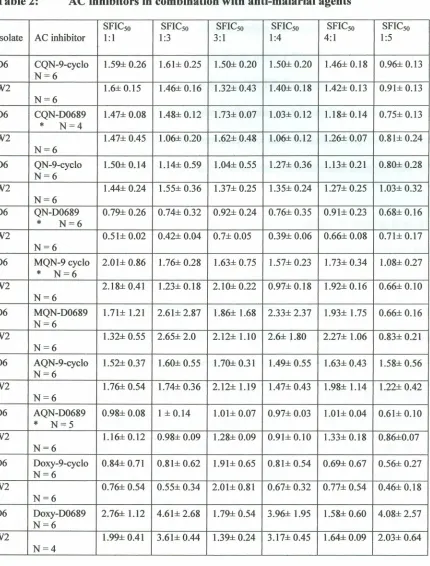
Table 2: AC inhibitors in combination with anti-malarial agents 42
Table 3: AC and PKA activators in combination with anti-malarials 46
Table 4: T-values obtained by AC inhibitors in combination with various
anti-malarials 48
Table 5: T-values obtained by various AC activator and PKA activator in combination
with various anti-malarials 50
Table 6: Correlation coefficient between isolates (D6 &W2) 75
Table 7: Correlation coefficient between AC activators and AC inhibitors 76
Table 9: FICso of chloroquine in combination with the AC & PKA activators 100
Table 10: FICso of quinine in combination with the AC & PKA activators 101
Table 11: FICso ofmefloquine in combination with the AC &PKA activators 102
Table 12: FICso of amodiaquine in combination with the AC & PKA activators 103
Table 13: FICso of chloroquine in combination with the AC inhibitors 104
Table 14: FICso of quinine in combination with the AC inhibitors 105
Table 15: FICso ofmefloquine in combination with the AC inhibitors 106
Table 16: FICso of amodiaquine in combination with the AC inhibitors 107
Table 17: FICso of doxycycline in combination with the AC inhibitors 108
List of Figures
Figure 1. The global distribution of malaria (WHO, 2003) 6
Figure 2: A parasitized red blood cell showing the organelles of the malaria parasites 7
Figure 3: The structure of cAMP 26
Figure 4: Forskolin and chloroquine FICso at various concentration ratios 52
Figure 5: A 166 and chloroquine FICso at various concentration ratios 53
Figure 6: Adenylyl inhibitors and chloroquine FICso at various concentration ratios 55
Figure 7: Forskolin and quinine FICso at various concentration ratios 56
Figure 8: A 166 and quinine FICsoat various concentration ratios 57
Figure 9: AC inhibitors and quinine FICso at various concentration ratios 58
Figure 10: Forskolin and mefloquine FICso at various concentration ratios 59
Figure 11: A 166 and mefloquine FICsoat various concentration ratios 60
Figure 12: Adenylyl inhibitors and mefloquine FICso at various concentration ratios 61
Figure 13: Forskolin and amodiaquine FICso at various concentration ratios 62
Figure 14: A 166 and amodiaquine FICsoat various concentration ratios 63
Figure 15: Adenylyl cyclase inhibitors and amodiaquine FICsoat various concentration
ratios 64
Figure 16: Forskolin and doxycycline FICso at various concentration ratios 65
Figure 17: A 166 and doxycycline FICso at various concentration ratios 66
Figure 18:Adenylyl cyclase inhibitors and doxycycline FICso at various concentration
ratios 67
Figure 19: Anti-malarial -AC inhibitor combination assays on W2 isolates 69
Figure 21: Anti-malarial-activators combination assays on W2 isolates 71
List of Plates
9cycloA 166
-AC ADP -ATP AQN cAMP -CDO cGMP -CMS -CRE -CSP CQN - DHFRDHPS D0689 - DMSO- DOXY-FAS FICso -GDP
-List of abbreviations
9 Cyclopentyladenine
Sp-adenosine 3'5' cyclic monophosphorothiate triethylammonium salt
Adenylyl cyclase
Adenosine diphosphate
Adenosine triphosphate
Amodiaquine
cyclic Adenosine 3'5'Monophosphate
cAMP response decoy oligonucleotide
Cyclic guanine monophosphate
Complete media with serum
cAMP response element
Circumsporozoite Protein
Chloroquine
Dihydrofolate Reductase
Dihydropteroate Sythetase
2' 5' Dideoxyadenosine 3' monophosphate
Dimethyl sulfoxide
Doxycycline
Fatty Acid Synthetase
Fractional inhibitory concentrations at fifty percent
Guanine Diphosphate
G- Protein-Gs GTP HCT -IC50 Kb KDa MQN -NPP PfAC PfCRT Pfrndr -PKA - PKACpLDH -PPM -PVM -QN SP TRAP -TVM -
WRAIR-Guanine nucleotide binding proteins
Guanine stimulatory
Guanine triphosphate
Hematocrit
Inhibitory Concentrations at 50 percent
Kilo base pair
Kilo dalton
Mefloquine
New permeation pathway
Plasmodium falciparum adenylyl cyclase
Plasmodiumfalciparum Chloroquine resistant trait
Plasmodiumfalciparum multi-drug resistance Protein Kinase A
cAMP dependent Protein Kinase A
Plasmodium lactate Dehydrogenase
Parasite plasma membrane
Parasitophorous vacuolar membrane
Quinine
Sulfadoxine- Pyrimethamine
Thrombospondin related adhesive protein
Tubovesicular membrane
CHAPTER ONE
1.1
INTRODUCTION AND LITERATURE REVIEW
1.2 Background
Malaria is one of the most ancient unresolved afflictions of human kind which
affects over half a billion people resulting in 1.5 million to 2.7 million deaths yearly
especially children below five years of age where the disease is hyper endemic (Suh et
al., 2004). Today malaria is considered as a disease of the poor and undeveloped
countries. The inability of many countries to fund expensive campaigns and anti-malarial
treatment raises the need of new tools that are highly effective and affordable to be put in
place (Weatherall et al., 2002). The annual economic growth in countries with high
transmission has been found to be lower than in those countries without malaria (WHO,
2001).
The emergence of resistance can be attributed to production of resistant mutants
and a subsequent selection process whereby the presence of anti-malarials in the human
host is an advantage for their survival.This leads to preferential transmission and spread
of resistance (White, 2004). This has resulted in development of resistance to the
commonly used anti-malarials. They have been rendered ineffective, hence the need to
develop affordable and effective alternatives.
Several approaches are being made towards drug discovery (Rosenthal, 2003).
Research studies to understand the mechanisms of cellular growth and differentiation in
has resulted in a better understanding of the molecular mechanisms controlling the
progression of the life cycle of malaria species especiallyPlasmodiumfalciparum.
Cyclic adenosine monophosphate (cAMP) is a second messenger involved in the
regulation of development of several microorganisms. It acts as a signal for the
aggregation and differentiation of cells in multi-cellular organisms (Syin et al., 2001).
Other than its key role as a second messenger, it modulates a myriad of physiological
processes in a cell (Francis and Corbin, 1999). The molecular machinery controlling
cAMP production, degradation and sensitivity of Plasmodia is the same as that of higher
eukaryotes (Beraldoet aI., 2005).
Intra-erythrocytic development of plasmodia parasites depend on a senes of
complex signaling pathways in which second messengers, for example, cAMP and
calcium playa key role (Elfordet al., 1997). cAMP has been implicated in the regulation
of sexual differentiation inP. falciparum and has been shown to have cytotoxic effects
under certain conditions.The fundamental regulatory role that the cyclic nucleotides play
in biological processes may be used in designing new anti-malarial strategies (Sheppard
et al., 1981).
The purpose of this work was to determine the activity of cAMP modulators on
selected anti-malarials inPlasmodium falciparum.
1.2 LITERATURE REVIEW
1.2.1 Etiology of Malaria
Human malaria is a disease caused by parasites belonging to the apicomplexans
family in the genus Plasmodium. It is transmitted by sixty of the two hundred species of
Mechanical transmission could also occur during blood transfusion but is rare. The
species responsible for human malaria are;Plasmodium vivax, Plasmodium falciparum,
Plasmodium ovale andPlasmodium malarie (Suh et al., 2004) Asexual multiplication of
the malaria parasite is the prerequisite for the development of the clinical symptoms and
disease in the human host (WoodrowetaI., 1999).
1.2.2 Life Cycle
The human malaria parasite requires both a human host and a vector (female
anopheline mosquito) for transmission. The mosquito infects humans when taking a
blood meal mainly by injecting the sporozoites into the subcutaneous tissue and less
frequently into the blood stream. They selectively invade the hepatocytes in the liver cells
before invading the red blood cells (Weatherallet al., 2002).
Once in the cells, the sporozoites develop into schizonts within two weeks. One
schizont contains hundreds of merozoites and once it matures,it ruptures and releases the
merozoites into the blood stream. The merozoites then invade the red blood cells and
under go distinct developmental asexual stages,from the ring passing through trophozoite
to schizont. These asexual stages feed on haem in the red blood cells and infect other
hepatocytes making the extra-erythrocytic cycle (Phillips, 2001; Gazarini and Garcia,
2003).
The majority of the merozoites go through another asexual cycle in the red blood
cells, to release merozoites that infect more new red blood cells. A small proportion of
merozoites switch to sexual development (gametocytes). In some species a few
merozoites switch into hyphozoites (dormant stage). Male and female gametocytes
circulation, they are taken up in a blood meal by a female anopheline mosquito (Phillips,
2001; Baker,2004).
Once in the mosquito's stomach the gametocytes develop to gametes and are
released from the red blood cells. Fertilization takes place forming an ookinete that
burrows through the mosquito gut and forms an oocyst. Once the oocyst matures, it
ruptures and releases the sporozoites that migrate to the salivary glands awaiting injection
into the next human host during a subsequent blood meal (Niaid et al., 2002; Hastings, 2003).
Plasmodium parasites are haploid during the asexual phase and are capable of
self-fertilization (a single infection can produce both male and female gametes). It is
because of this haploid nature that the sexual phase occurs between identical genotypes
and novel gene combinations are produced. Mating can occur between species in mixed
infection (Out crossing). This results in recombination of .genes both producing a new
gene combination and breaking down the existing combination. Mixed infection is
commonly found in areas of high transmission (Hastings, 2003).
1.2.3 Occurrence, Epidemiology&Economic impact
Malaria primarily occurs in the tropical and sub tropical areas, especially Asia,
Africa and Central South America as shown in figure 1. It is estimated that 40 % of the
world's population lives in malaria endemic area.It causes 300 million episodes of acute
illness every year (Breman, 2001). The mortality levels are greatest in the sub-Saharan
Africa where children below five years of age are most vulnerable resulting in 90%of the
The four species of human Plasmodia have different geographical distributions. P.
falciparum is predominant in Africa. P. vivax is found mostly in Asia, Latin America and
parts of Africa. P. ovale is found mostly in West Africa and the islands of the western
Pacific and P. malarie is found scattered worldwide (http://www CDC .gov/malaria).
The parasites cause diverse and sometimes fatal clinical conditions in human. In
small proportions of infections, untrammeled parasite multiplication may lead to high
parasite density resulting in dysfunction of vital organs. This may result in impaired
consciousness, acidosis, severe anemia and death. P.falciparum accounts for the majority
of instances of morbidity and mortality (White, 2004).
Malaria imposes substantial costs to both individuals and governments. This
includes; costs of anti-malarials, expenses for traveling to health centers, lost days of
work, absence from school, expenses for preventive measures and costs of public health
interventions. These costs have immense effects on the economic and social burden of
malaria in endemic countries and impede their economic growth (Suh etal., 2004; WHO,
2001). Statistics have shown that the annual economic growth rates over a period of 25
years in malaria endemic is 1.5% lower than in the other countries (Gallup and Sachs,
Malar'a, 2003
-. ,
»: /"> .-:'-"'-..~~~.~.-~.;-'
-....~-'"
•
.'
.t AIuA WI I'lilt! lI:.k
t .;,fJUI~n1
Figure l.The global distribution of malaria (http://www CDC. gov / malaria)
1.2.4 Parasite - host cell interaction & invasion
Merozoites specifically enter the red blood cells usmg receptor-ligand
interactions. This process is complicated and studies to understand it at molecular and
cellular levels are on going (Gratzer and Dluzewki, 1993). The receptors involved in
sporozoite invasion involve the thrombospondin domains on the circumsporozoite protein
(CSP) and on thrombospondin-related adhesive protein (TRAP). These domains bind
specifically to heparin sulfate proteoglycans on hepatocytes in the region in apposition to
end of a parasite are rhoptries, micronemes and dense granules (Van Doorenet al., 2000;
Weatherallet al., 2002) (Fig 2).
The initial interaction between the red blood cell and the merozoite involves a
reversible interaction (binding) between proteins on the merozoites surface and the red
blood cell (Holder et al., 1994). The parasite then reorients itself by an unknown
mechanism resulting in the apical end of the merozoite being juxtaposed to the red blood
cell membrane. Micronemes are then discharged concurrently with formation of a tight
junction. This is mediated by receptor-ligand interactions between the red blood cell
surface proteins and integral parasite membrane proteins (Van Dooren et al., 2000; Reed
et al., 2000).
Legend:
A - Apicoplast
EPM - Erythrocytic plasma
membrane
ER - Endoplasmic reticulum
FV - Food Vacuole
Me - Maurer's clefts
Mic - Micronemes
Fil.';)'51tOf:o,'(TllJ<.'i Mit - Mitochondrion
PPM - Parasite plasma membrane PV -Parasitophorous vacuole
PVM-Parasitophorous vacuolar membrane R - Rhoptries
TVN-Tubulovesicular network
Red blood cell's membrane proteins are redistributed at the time of this junction
formation to free the contact area from the proteins. An incipient parasitophorous
vacuolar membrane (PVM), which is derived from both the parasite contents and the red
blood cell membrane forms in the junction area. Rhoptries discharge their contents while
the PVM expands as the parasite enters the red blood cell. Once the invasion is complete,
the dense granules release their contents to PVM. The merozoites move through the ring
shaped tight junction formed by the receptor-ligand complex and there after the PVM
closes (Van Dooren et a/., 2000; Reed et a/., 2000).
Several cell mediated signals and responses are involved in the invasion and
developmental stages of the Plasmodium parasites. A study done by Harrison et a/.
(2003) demonstrated that signaling via the red blood cell P2- adrenergic receptor and
heterotrimeric guanine nucleotide - binding protein (Gsa) regulated the entry of P.
fa/ciparum. Cyclic adenosine monophosphate (cAMP) plays an important role in the
development of the parasites. The agonists that stimulate cAMP production led to an
increase in malaria infection that could be blocked by specific receptor antagonists. The
peptides designated to inhibit Gsa protein function reduced parasitemia in P.fa/ciparum
cultures in vitro (Harrison et a/., 2003).
1.2.5 Nutrition and Transport
The parasite imports host cell hemoglobin by invagination of the parasite
plasmalemma within the host cell cytoplasm at the micro-pore. Several other substrates
are imported from extra-cellular milieu. They include; glucose, dicarboxylic acids,
purines and specific amino acids. The potential mechanisms involved in the uptake are:
connection between parasitophorous duct and the external milieu and involvement of
tubovesicular membrane (TVM) network through directed transport across the red blood
cell cytoplasm (Elford et al., 1997).
The intra-erythrocytic development of the parasite imposes a major new demand
for the supply of nutrients and waste disposal in the host cell. The asexual parasites are
dependent on glucose from the host as a source of energy during multiplication. An
increase in metabolic activity is associated with the enlargement of the parasite within the
red blood cell. To satisfy the increased demands, the parasite causes profound alterations
in the permeability of the host red blood cell membrane, increased production and export
of lactic acid by the infected red blood cells (Woodrow et al., 1999; Gero et al., 2003).
The possible entry and exit routes of the solutes in the intra-cellular parasite are via a
metabolic window formed at a close apposition of the host red blood cell membrane, the
parasitophorous vacuole membrane (PVM) and the parasite plasma membrane (PPM) via
a membrane duct (Gero et al.,2003).
1.2.6 Diagnosis
High rates of misdiagnosis of malaria have been reported. In sub-Saharan Africa,
more than 80%of individuals take anti-malarials to treat fevers without proper diagnosis,
resulting in an increase in drug resistance (Barnish et al., 2004). Reliable diagnosis
cannot be made on the basis of signs and symptoms alone and hence presumptive
diagnosis is used in conjunction with the definitive diagnosis.
Occasionally, severe disease can be present without detectable parasites in the
peripheral circulation. If a patient is seriously ill and with clinical symptoms (suspicion)
parasites in the peripheral blood (Weatherallet al.,2002). Rapid and accurate diagnosis is
the key to effective disease management and one of the basic strategies for malarial
control (WHO,2000).
Direct microscopic examination of a stained blood film is the current standard
method for definitive malaria diagnosis (Proux et al.,2001; Barnishet al.,2004).A
well-prepared thick and thin blood films are stained by use of rowmanknowsky stains
preferably the giemsa stain. Advantages of this method include; differentiation between
species, quantification of the parasite density and ability to distinguish the clinically
important stages in the parasites. The proper diagnosis is critical for proper disease
management and treatment (Bloland,2001).
There is a modified method of light microscopy known as quantitative buffy coat
method (QBC TM, Becton-Dickinson). A fluorescent dye that has a high affinity to the
nucleus of the malaria parasites is coated at the end of a.special capillary tube. Upon
exposure to UV light of 390 nm wavelength, the fluorescent dye rises to a higher energy
level. The nucleus then takes up the dye and an electron is lost resulting in the
fluorescence of the nucleus. This method uses micro-hematocrit tubes pre-coated with
fluorescent acridine orange stain to highlight the malaria parasites. Upon centrifugation,
the parasites are concentrated at a predictable location. This method is quicker and has
been found to be more sensitive especially in cases of low parasitemia than conventional
microscopy. It has more than 95 % sensitivity and specificity (Bloland, 2001; Moody,
Antigen detection tests using rapid immuno-chromatographic techniques are used
as a diagnostic tool. These tests require no special equipment but are disadvantaged in
that, they can't quantify the parasite density (Bloland, 2001; Barnishet al.,2004).
Malaria antigens suitable for use as targets are Plasmodium Lactate Dehydrogenase
(PLDH) and Histidine Rich Protein -2 (HRP-2).
HRP-2 is a water-soluble protein and is only produced in abundance by asexual
stages and young gametocytes of P. falciparum. pLDH is an enzyme found in the glycolytic pathway of all Plasmodium species and is produced by sexual and asexual
stages. Aldolase enzyme can be used as an indicator of malaria infection (Moody, 2002).
Serology is used whereby the antibodies in serum are detected by use of specific serology
markers. This technique has no role in the diagnosis of acute malaria (Suhet al.,2004). Detection of specific nucleic acid sequences using Polymerase Chain Reaction
(PCR) technique has become a more frequent tool in diagnosis. It is able to differentiate
between species in a mixed infection and may be used where the light microscopy is
inconclusive. It may be used for diagnosis only where a large number of samples are
involved because of the high cost of the reagents involved (Bloland, 2001). It is
disadvantaged in that it tests positive 144 hours after a successful treatment (false
positive) (Moody, 2002).
1.2.7 Chemotherapy
1.2.7.1 Chemotherapeutic agents
4-aminoquinolines (chloroquine and amodiaquine) and quinolinemethanols
(quinine and mefloquine) have been the main strays of malaria chemotherapy for the past
host toxicity, ease of use and cost effective (low cost drugs). The efficacy has decreased
in the recent years due to development and spread of parasite resistance (Giancarloet al.,
2003).
4-aminoquinolines are active only against the parasites in the intra-erythrocytic
cycle during which the parasite is actively degrading hemoglobin (Foley and Leann,
1998). They inhibit the parasite-specific process of hemoglobin degradation. The activity
of chloroquine is dependent on the external pH and proton pump inhibitors. The proton
pump inhibitors antagonize its mechanism of action (Macreadieet al., 2000).
The primary mode of action of chloroquine utilizes heme as the target by
inhibiting its polymerization to hemozoin. Heme is toxic to the parasites hence the
inhibition of hemozoin formation leads to the poisoning of the parasite. Heme is also
toxic to the cells by a free radical dependent mechanism. When it is released from its
protein environment, oxidation of the iron from the Fe2+ to the Fe 3+ state occurs. This
results in the production of reactive oxygen species (super oxide anion, hydrogen
peroxide and hydroxyl radicals), which cause oxidative stress in the cell (Foley and
Leann, 1998; Giancarloet al., 2003).
The activity of chloroquine mainly depends on the drug accumulation in the
parasite. The major mechanisms postulated to account for chloroquine accumulation are;
trapping of charged molecules in the acidic (pH 5.3) food vacuole, active uptake of
chloroquine by a specific transporter (both are ATP dependent) and binding of
chloroquine to an intra-cellular receptor (ferriprotoporphyrin IX), which is
Quinolinemethanols target the food vacuole of the parasites. Mefloquine causes
morphological changes in the food vacuole of the parasite and appears to cause
degranulation of hemozoin. Quinine inhibits heme polymerization and its catalytic
activity. 8-aminoquinolones (primaquine) are active on gametocytes and hyphozoite
stages where they interfere with the activity of the mitochondrion. Atovaquone also
interferes with the activity in mitochondrion (Eganetal., 1994; Foley and Leann, 1998).
Doxycycline is a slow acting drug which is known to target plastid 16S rRNA
hence blocking the apicoplast translation system. It may also inhibit the mitochondrial
protein synthesis (Ralph et al., 2001). Artemisinin and its derivatives interact with intra
parasitic heme or iron. It then activates artemisinin in the parasite resulting in formation
of free radicals that damage the specific target organelles (membrane via lipid
peroxidation) (Meshnick, 2002).
The anti-malarials which were previously effective for chemotherapy have been
incapacitated due the development of resistant parasites. The major avenues to combat
the problem are through: determination of the genome sequence of P.falciparum that
offers a multitude of potential drug targets, anti-malarial drug discovery and development
(Fidock et al., 2004), identification of enzymes that may serve as potential targets for
destroying the parasites (Waters and Geyer, 2003), drug combinations and natural
products (Rosenthal, 2003).
Anti-malarial drug discovery has been made possible by in vitro techniques,
which evaluate the potential anti-malarial activities of new and potentially novel drugs
use of combination therapy, the development of analogs of existing agents, the discovery
of natural products, the use of compounds that were originally developed against other
diseases, the evaluation of drug resistance reversers and the evaluation of new
chemotherapeutic targets (Rosenthal, 2003).
1.2.7.2 Potential targets for chemotherapy
Invasion of the red blood cells by the parasites results in an increased demand of
nutrients in the host cell through various pathways. Regardless of the route of entry or
exit of the nutrients (solutes) to or from the host cell, there is induction of transport
pathways that are different from those in other mammalian cells (Geroet al., 2003).
There are two different changes in transport of solutes upon infection, increased
flux via transport pathways similar to the endogenous host cell transporters and new
induced permeation pathways with functional characteristics different from those in the
uninfected cell. It is indicated that the transporter in the latter pathway may be a pore and
not a conventional carrier (Geroet al., 2003).
Enzymes of the de novo pyrimidine biosynthetic pathway have been the major
focus for anti-metabolic therapy. Other pathways that are of interest include the fatty acid
biosynthetic pathway, calcium homeostasis mechanism and polyamine biosynthesis and
its regulation. Irrespective of the route, the induction of transport pathways in the infected
red blood cells offers potential opportunities for anti-malarial chemotherapy. The
potential anti-malarials could be toxic compounds that are selectively transported into the
parasite-infected host cell by the induced transport systems or the inhibitors of the
Magnesium is an essential cation for several major metabolic cellular processes.
Its high uptake rate in the infected cells with P. falciparum was mediated through
Furosemide - sensitive New Permeation Pathways (NPP) induced by the parasite or
through ATP depletion - induced calcium permeability pathway (Macreadieet al., 2000).
Several compounds have been shown to inhibit this pathway, for example, phlorizin,
sulfonylureas, chalcones and arlarninobenzoates (Ralph et al., 2001). Unfortunately the
activity of these compounds is too low to be pharmacologically relevant. L-adenine
analogs penetrate poorly into uninfected red blood cells but enter into an infected cell
through NPP and parasite plasma membrane (PPM). The parasite enzymes render these
analogs toxic to the parasites (Macreadieet al., 2000).
The isolation and characterization of a novel parasite-encoded hexose transporter
PfHT 1 that is associated with the PPM explains transport of glucose in different stages
of parasite during an infection. It is a potential drug target because the anti-malarial used
in the management of severe malaria infection take a long time to achieve maximum
inhibition of glucose utilization. PfHT 1 inhibitors may be rapidly parasitocidal
(Woodrow et al., 1999). Once the PPM transporters are blocked, there is reduction of
ATP levels and loss of pH homeostasis resulting to death.
The unique properties of NPP can be used to target the red blood cells by drugs /
compounds that otherwise cannot penetrate the host cells. Nucleoside analogs use NPP
and PPM transporter systems to penetrate the red blood cells (Biagini et al., 2005).
Phospholipid (PL) metabolism is absent in the mature red blood cells but is rampant in
phosphatidyl choline (PC). Choline transporter is essential in the lipid metabolism and
hence posses as a potential anti-malarial target (Biaginiet al., 2005).
The parasite's digestive food vacuole has two proton-pumping mechanisms: Bafilomycinsensitive V-type and Na F-sensitive
W
-
-
pyrophosphatase showing a partialdependence on Potassium ions (K+). There is evidence showing that calcium storage by
the food vacuole is linked directly to the parasite cell signaling and asexual development.
The requirement for tightly regulated calcium ions (Ca+2) movement and storage in this
organelle could be used as a target for the mode of action of a new chemotherapeutic
agent (Biaginiet al., 2003).
1.2.7.3 Drug combinations
This is a rational approach to combat drug resistance,which avoids the long wait of drug development. The use of single drugs that are easily prone to resistance limits therapeutic choice hence, the emergence of combination therapy. This is true in cancer,
HIV/AlDS, leprosy, tuberculosis and now in malaria therapy (Bloland, 2001). Combination therapy includes use of newer agents for example, arternisinin derivatives, atovaquone and older agents for example, amodiaquine, sulfadoxine, pyrimethamine,
chlorproguanil, and dapsone. Slow acting anti-malarials such as antibiotics may work well in combination regimens. A good combination should improve anti-malarial efficacy
and slow the progression of parasite resistance to new agents (Bloland, 2001; Rosenthal,
2003).
These combinations could result in pharmacological interaction between the
pharmacokinetics interaction -studies (White, 1999). The components used in a
combination should have independent modes of action and different biochemical targets
in the parasites (Bloland, 2001). This enhances their respective efficacies and therapeutic
half-life (Taylor et al., 2001). The basic tenet of combination therapy is that the
probability of resistance developing-simultaneously in two chemotherapeutic agents with
independent mechanisms of action is extremely low (lin 1012treatments). This frequency
is the product of the probabilities -of acquisition of a resistant mutation to each drug
multiplied by the number of parasites in a typical infection (White, 1998). The
anti-malarial activity of the combined drug may either be-synergistic,antagonistic or additive.
WHO has classified anti-malarial combination therapy into two, non-artemisinin
based and artemisinin based combinations. The advantages of the artemisinin-based
combinations are the unique properties and its mode of action. These include; limited
reported adverse clinical effects, lack of parasite resistance and its efficacy against multi
drug-resistant P.falciparum (Bloland, 2001).
Sulfadoxine-pyrimethamine (SP) had been a widely used combination that
replaced chloroquine as the first line treatment for uncomplicated P. falciparum malaria.
Its resistance has been reported in several countries and it is no longer used as a drug of
choice (Taylor et al., 2001). Studies on chloroquine-SP combinations in Gambia and
Papua New Guinea have shown a higher efficacy than that of SP alone. This combination
was used as a first line treatment in Peninsular Malaysia and Papua New Guinea in 1997
and 2002, respectively. It was shown to be non-effective on chloroquine resistant strains
demonstrated a 90%cure rates inP. falciparum infections. It had lower curative rates in
P. vivax infections and the resistant strains ofP. falciparum (Tayloretal.,2001).
Amodiaquine-Sf' combination was demonstrated to be of no significance. This is
because it had an efficacy of 95%, which was similar to that of amodiaquine as a
mono-therapy (WHO, 2001). Mefloquine-SP (MSP) had an additive activity and was shown to
have no pharmacokinetic interaction between the components. Its use as a first line
treatment in Thailand for uncomplicated malaria resulted in rapid development of
resistance (Bloland, 2001).
Atovaquone is believed to be a potent inhibitor of electron transport. When used
as a single agent,resistance developed rapidly, whereas in combination with doxycycline
or proguanil, it exhibited remarkable potentiation of the drug effects (Canfieldet al.,
1995; Hyde, 2005). Atovaquone-proguanil (malarone) was found to have a synergistic
effect and was highly efficacious against P. falciparum including the chloroquine
resistant strains (WHO,2001; Wichmanet al., 2004).
Azithromycin, a poor anti-malarial as a single agent, demonstrated synergistic
activity when used in combination with chloroquine on chloroquine resistant P.
falciparum strains and demonstrated additivity on chloroquine sensitive strains. It also
demonstrated additivity to synergistic activities when used in combination with quinine,
tafenoquine and primaquine (Ohrt eta/., 2002). -Clinical trials done in Kenya
demonstrated that a new analog of erythromycin, azithromycin waseffective against P.
falciparum in areas of intense malaria transmission (Andersenet al., 1998).
Artesunate in combination with mefloquine and quinine revealed synergistic
when used in combination with doxycycline and antagonism in combination with
chloroquine on both W2 and D6 (Fivelman et al., 1999). Artemether-lumefantrine
(Coartem) is the most viable artemisinin combination treatment available.It is safe, has
high efficacy and tolerance profile (WHO, 2001).
1.2.8 Resistance
The parasites develop resistance to anti-malarials when therequired concentration
of an anti-malarial spontaneously eliminates the more sensitive parasites with exception
of the mutant parasites. The selection of the mutants most likely occurs when; a large
number of parasites encounter sub-maximal concentration ofthe anti-malarial drug in the
blood, the primary treatment is inadequate or when a newly acquired infection encounters
residue concentration of the anti-malarial from treatment of a previous infection
(Simpsonet al.,2000).
In the later case the chance of resistance selection is higher for anti-malarial drugs
with long elimination half-lives. This is because the drugs remain in the blood at
sub-therapeutic concentration for a longer duration (Watkins and Mosobo, 1993). In drug
resistant infections, parasites could remain in peripheral blood at very low concentrations
that are undetectable by microscopy and recur at a later time or increase following the
administration of anti-malarials (White,2004).
The emergence of resistance especially inP.falciparum is the major contributor
to the global resurgence of malaria in the last three decades. It results from lack of
inhibition of parasite multiplication at any given level of anti-malarial plasma
anti-malarials have higher rates of transmission in the drug treated host (Hallet et al.,
2004).
The two basic mechanisms of resistance are; altered binding affinity and altered
drug transport. Chloroquine resistance results from a reduced drug accumulation in the
parasite's food vacuole (Su et al., 1997; White, 1999). Chloroquine resistant strains ofP.
falciparum are known to rid themselves of the drug forty to fifty times faster than the
chloroquine sensitive strains. Wellems and colleagues investigated the mechanism of this
efflux by determining the genetics of chloroquine resistance. This was made possible by
the fact that the efflux appears to be controlled by a single loci hence the use of
restriction fragment length polymorphism (RFLP) analysis to map this locus to a specific
chromosome region (Wellemset al., 1991).
The rapid efflux in the chloroquine resistant phenotype is governed by a single
genetic locus on chromosome 7 (Wellems et al., 1991).Chloroquine resistant trait inP.
falciparum has been mapped to a 36 kb segment of chromosome 7 which harbors cg2
gene with complex polymorphism (Suet al., 1997). Chloroquine transport takes place at
the parasite's periphery where the C02 protein is located and in association with
hemozoin in the food vacuole (Suet al., 1997).
The resistant type of P-glycoprotein has been linked to chloroquine resistance.
There is a genetic linkage between loci on chromosome 5, 7, and 13 and the chloroquine
resistant phenotype. The 2 genes identified to confer resistance are pfmdr 1 and pfCRT
on chromosome 5 and 7.PfCRT is the protein that functions as a transporter in parasite's
digestive vacuole membrane. The gene on chromosome 13 has not been identified
amplification are insufficient to cause chloroquine resistance independently because Pgh
- expressing cell, can effectively transport the drug into the cell (Wellems et al., 1990;
Van Eset al., 1994; Volkmanet al., 1995).
Increased gene copy number and expression of Pfmdr has been correlated with
resistance to mefloquine and halofantrine in P.falciparum isolates from Thailand. The
lower mefloquine dose provides a greater opportunity of de novo selection of genetic
mutants, especially in those that contain increased copies of Pfmdr 1 gene. Its low
elimination rate increases the chances of developing resistance than if a lower dose was
administered (Wilsonet al., 1993; Priceet al., 1999).
A complex series of polymorphism in cg2 gene correlate with chloroquine
resistance in P. falciparum parasites from South East Asia although there was no
correlation in the parasites from South America (Watkins and Mosobo, 1993).
Chloroquine resistance spread inexorably from South East Asia and South America to
almost all the malaria endemic regions. This resulted in the increase of
sulfadoxine-pyrimethamine (SP) use as a first line treatment for P. falciparum malaria. This
combination led to production of resistant populations of P. falciparum and could no
longer be used as the drug of choice.
The resistance of SP is associated with point or multiple mutations in DHFR for
pyrimethamine and DHPS for sulfadoxine (Macreadie et al., 2000). Mefloquine
resistance correlates well with resistance to halofantrine and quinine although it has
inverse relations to chloroquine (White, 1999).
Mutations in gene encoding cytochrome b were detected in isolates of
by 9354 fold and were located in a putative drug-binding site.The first cases of malarone
resistance have been reported and are associated with mutations at codon 268 of the
parasite's cychrome b gene in Central Africa (Wichman et al., 2004). There are other
reported cases of resistance to malarone not associated with codon 268 (Farnert et al.,
2003).
1.2.9 Control
The goal of malaria control in malaria endemic countries is to reduce as much as
possible the health impact of malaria on the human population.This is made possible by
use of the available resources and taking into account other health priorities. Eradication
is more desirable but is not a realistic goal at present. Efforts to eradicate malaria have
been unsuccessful in many regions of the world in the past. Currently, efforts to control
malaria focus on reducing morbidity and mortality attributed to the disease (Suh et al.,
2004).
Malaria control is carried out through several interventions that are often
combined, namely; chemotherapy and Vector control (Phillips, 2001; Shift, 2002).
Malaria vaccine trials are on going, however, they have up to date failed (White, 2004).
Shortcomings of malaria control include: resistance to anti-malarial drugs and
insecticides, the decay of public health infrastructure, population movements, political
unrest and environmental changes which contribute to the spread of the parasites
(Greenwood and Mutabingwa,2002). The insecticide resistance decreases the efficacy of
interventions that rely on vector control for example, treated bed nets and indoors
effectively. The poor countries are unable to conduct the recommended interventions due
to inadequate health infrastructures (Phillips, 2001).
1.2.10 Cell signals
1.2.10.1 G-Proteins
Heterotrimeric guanme nucleotide-binding regulatory proteins (G proteins)
constitute a well-characterized class of transduction proteins in mammalian cells.They
are found at the cytoplasmic face of the cellular membrane where they can couple with a
variety of trans-membrane proteins to transduce extra-cellular signals. This is initiated
by, hormones, neurotransmitters and autocrine and paracrine factors (Harrison et al.,
2003). The activation of G proteins involves guanine nucleotide exchange factors that
promote dissociation of guanine diphosphate (GDP) from the inactive G protein and
replacement with guanine triphosphate (GTP) (Harrison et aI., 2003). The effector
proteins of the G ~a complex include adenylyl cyclase,phospholipase and ion channels
(Ford et al., 1998). Although G proteins have been intensively studied, their function in
mature red blood cell is poorly understood (HarrisonetaI., 2003).
1.2.10.2 Adenylyl cyclase
This is a family of membrane bound enzymes that are involved in wide range of
cellular processes in the cell.These activities include regulation of ion channels in wide
range of cells and catalyze the formation of 3' 5' - cAMP from ATP (Desaubry et aI.,
1996; Hurley, 1999). The regulation of cAMP involves several signaling processes
evolving between the receptor (example, G-proteins) activation and communication to
and adenylyl cyclase (AC) of higher eukaryotes conform to the same basic structure
consisting of two catalytic domains C 1 and C2. The GTP - bound G protein u subunit
(G,«) potently and physiologically activates all the mammalian AC. This activation is
synergistic and not competitive (Baker and Kelly, 2004 b; Fordet al., 1998).
There are ten known isofonns in mammalian cells that are regulated by numerous
hormones and neurotransmitters via surface receptor linked by stimulatory G, and
inhibitory Gi.Activation occurs indirectly when a ligand binds to a G protein coupled
receptor, which in turn interacts with heterotrimeric G-proteins resulting in dissociation
of this complex heterotrimeric G-proteins into free Guand GjYysubunits (Baker and Kelly,
2004 a; Ford et aI., 1998). There is exchange of GDP -bound Gu for GTP on the Gu
subunit. The free heterotrimeric G-protein subunit (Gu) in turn binds to AC hence
stimulating the synthesis of cAMP (Baker and Kelly,2004 a; Fordet al., 1998).
Adenylyl cyclases are divided into six classes whereby class III cyclases (the
universal class) are found in both the Eukaryotes and prokaryotes (Baker and Kelly, 2004
b). Both G- proteins and plant diterpene (Forskolin) regulate mammalian trans-membrane
AC.Forskolin is a powerful activator and it activates AC directly (Hurley, 1999; Baker,
2004).
A mammalian bound AC contains two hydrophobic spans composed of six tr
ans-membrane helices and three large cytoplasmic domains. It is clearly demonstrated that
the two cytoplasmic domains (C1 and C2) form the catalytic core. It has conserved
residues that include; asparagine or arginine for stabilizing the transition state of the
These residues are however less conserved among lower eukaryotes and prokaryotes
(Baker and Kelly,2004 b).
Adenylyl cyclases are potently and directly inhibited by analogs of adenosine via
P- site domain. P-site inhibitors are a class of nucleosides inhibitors of AC that contains
purine ring. They bind to the active site of AC through conserved residues (Hurley,
1999). All mammalian AC tested have been shown to be susceptible to P-site mediated
inhibition except for those from the sperm cell. Although ligands (P-site) act directly on
the enzyme, hormone stimulation is more sensitive (Desaubryet al., 1996; Johnson etaI.,
1997). Type 1 AC is inhibited by P-site ligands and via cell surface receptors or
G-proteins. It was demonstrated that the inhibitory potencies were dependent on the
isozyme type (Johnson etal., 1997).
The most potent AC inhibitor isozyme lack a 2'- hydroxyl and are phosphorylated
at 3' position. The inhibitors bind to the active site primarily through conserved residues.
They are non competitive in the forward reaction but compete with cAMP in the reverse
reaction (Hurley, 1999). The inhibitory potency of some isozyme from the lowest is as
follows; 9-tetrahydrofuryl adenine, 9-cyclopentyladenine, p-adenosine and 2' 5'
dideoxyadenosine (Johnsonet al., 1997).
In Plasmodia,there are two ACs. One,PfACa, which has a membrane associated
N-terminal domain is detectable in gametocytes and its bi functional structure implies
that electrical fluctuations resulting from the environment ion concentrations could be
coupled to cAMP synthesis. Second one is PfACP, which is closely related to the soluble
The predicted structure of this enzyme is unique to the apicomplexans,
paramecium and tetrahymena. The C-terminal catalytic domain has all the amino acids
residues necessary for substrate and magnesium co-factor binding. The predicted purine
binding residues are consistent with those found in other AC. Baker demonstrated that
there were relatively low levels of PfACu mRNA expression in asexual blood stages,
gametocytes and sporozoites. This study revealed a higher level of PfAC~ mRNA
expression in the asexual blood stages reaching the peak at late schizonts (Baker,2004).
1.2.10.3 Cyclic Adenosine Monophosphate
NHz
N
<
N~ N
~)
N
cAMP Structure
Figure 3: The structure of cAMP
The discovery of cAMP and the molecular dissection of its role in hormone action
led the way for an era of biological research. cAMP is a heat stable factor that enables
mammalian cells to respond to hormones. Cyclic nucleotides, cAMP and cGMP are
messengers of intracellular events initiated by activation of many types of hormone and
neurotransmitter receptors (Francis and Corbin, 1999; Simonds, 1999; Cann, 2004).
The second messengers mediate a myriad of cellular functions in the entire animal
kingdom. This ranges from simple responses to environmental changes in lower animals
and nerve cell communications in mammals. The activation of the u-subunit of the G
protein stimulates the AC that catalyzes the conversion of cytoplasmic ATP to cAMP
(Francis and Corbin, 1999; Simonds, 1999; Cann, 2004).
Intraerythrocytic development of plasmodia parasites depends on a senes of
complex signaling pathways in which the second messengers; for example, cAMP and
calcium playa key role (Elford et aI., 1997). The molecular machinery controlling cAMP
synthesis, degradation and sensitivity of plasmodia has been described to be similar to
that of the higher eukaryotes (Beraldo et al., 2005).
An increase in both AC and cAMP-dependent Protein Kinase (PKA) activities
accompanies the differentiation of P.falciparum. The role of cAMP has mostly been
reported without directly implicating Protein Kinase A (PKA). In several instances it
exerts its action by binding to the regulatory subunit complexed to the catalytic subunit in
an inactive holoenzyme of PKA or cAMP-dependent Protein Kinase. This results in the
release of the active catalytic subunit (PKA-C). PKA activity can be regulated through
binding of its natural inhibitor (PKI). Structural considerations suggest that it might be
possible to inhibit the parasite PKA rather than the red blood cell enzyme (Endogenous
PKA). Such compounds would be potential anti-malarials (Syin et al., 2001).
cAMP has been implicated in regulation of sexual differentiation in P.
conditions. Inselburg demonstrated this and showed that cAMP exhibits a stage specific
inhibitory effect on asexual development and that it stimulates gametogenesis in some of
theP. falciparum cell lines (Inselburg, 1983).
The morphological changes found in an infected cell are abnormalities in
membrane proteins, degradation of certain proteins and appearance of other possibly new
polypeptides. Some of these changes reflect damage to membrane but some may be
metabolic windows to facilitate the provision of intra-cellular parasite with essential
nutrients (Hertelendyet al., 1979).
Cellular levels of cAMP in mature murine red blood cells are relatively low
compared to other cell types. However, there is a drastic rise of cAMP in the red cells
upon malaria infection. This change is confined in the red blood cell, as there is no
change in cAMP concentrations in the circulating plasma. The importance of cAMP
increase has been demonstrated in both the parasite and its host. It has been shown to
participate in the growth and development of cells. The fundamental regulatory processes
make it likely that the alteration in cAMP metabolism is of physiological importance and
may be useful in designing new anti-malarials (Sheppardet al., 1981).
The cAMP response element (CRE) consensus sequence is involved in the
transcription of a wide range of genes. A 24-mer single stranded cAMP response decoy
oligonucleotide (CDO) competes with these sequences for binding transcription factors
resulting in transcription inhibition. CDO as a single agent was demonstrated to have no
effect on the cell proliferation to the tumor cells used. When used in combination with
conventional chemotherapeutic drugs it showed synergistic anti-cancer effects in some of
1.3 Statement of Problem
The evolution of multi-drug resistance raises fear that emergence of resistance to
anti-malarials may proceed faster than the development of new and effective drugs,
therefore, the need to get ways of optimizing the efficacy of the available anti-malarials.
Malaria parasites have intracellular signaling pathways through phosphoinositide,
cAMP and calcium-dependent pathways (Weatherall et aI., 2002). Although the red
blood cells mechanisms involved in malarial infections are poorly understood, it was
demonstrated that signaling via red blood cell heterotrimeric guanine nucleotide
-binding protein regulated the entry of human malaria parasite (Harrisonet al.,2003). The
effect of cAMP on malaria chemotherapy however, has not been established yet.
1.4 Research Questions
i) Do adenylyl cyclase inhibitors have any effect on the efficacy of anti-malarials?
ii) Do adenylyl cyclase activators have any effect on the efficacy of anti-malarials?
1.5 Hypothesis
The modulators of cAMP have an effect on the efficacy of anti-malarials.
1.6 Objectives
The general objective of the study was to determine the effect of cAMP
modulators on the efficacy of various anti-malarials.
1.6.1 Specific Objectives
i) To determine the inhibitory concentration at 50% (IC50)of selected.cAMP
ii) To determine the effect of adenylyl cyclase inhibition on the efficacy of
chloroquine, mefloquine, quinine, doxycycline and amodiaquine on chloroquine resistant
(W2) and susceptible (D6) strains of P.falciparum.
ii) To determine the effect of adenylyl cyclase activation on the efficacy of chloroquine,
mefloquine, quinine, doxycycline and amodiaquine on chloroquine resistant (W2) and
CHAPTER TWO
2.
MATERIALS AND METHODS
2.1 Parasite Clones
Reliable methods of direct visualization and single cell micromanipulation have
enabled selection of twoPlasmodium fa/ciparum clones for screening candidate drugs by
Walter Reed Army Institute of Research (WRAIR) and World Health Organization
(WHO) (Milhouset al., 1989).
The two P. falciparum clones are W2 and D6. The W2, P. falciparum clone,
which was obtained from CDC Indochina, is resistant to chloroquine, pyrimethamine,
sulphadoxine and quinine but susceptible to mefloquine. The D6 clone, which was
obtained from CDC Sierra Leone,is resistant to mefloquine but susceptible to the other
anti-malarials. These isolates were preserved in aliquots of 0.5 mI to 1.0 mI of parasitized
cells in 6%dimethylsulfoxide (DMSO) and cryopreserved in liquid nitrogen (-196°C).
2.2 Anti-malarials and cAMP modulators
The anti-malarials used in this study were chloroquine, mefloquine, qunune,
doxycycline and amodiaquine. Five milligrams of each drug was weighed. Chloroquine
was dissolved in 1.5 ml distilled water then in 3.5 ml absolute ethanol. Mefloquine and
quinine were dissolved in 70 % ethanol while doxycycline and amodiaquine were
dissolved in 100 % dimethylsulfoxide (DMSO) to obtain the stock concentration of 1
mg/mI. The stock concentration were then diluted further using plain media (RPMI with
HEPES + NaHC03) to give a working concentration of 10,000 ng/ml for chloroquine,
doxycycline and 1,000ng/ml for amodiaquine. The working dilution contained less than
0.02 % DMSO or ethanol, which would not affect the parasites. These anti-malarials
were obtained from Walter Reed Army Institute of Research (WRAIR)- USA and stored
at room temperature in a desicator.
The cAMP modulators used were AC activator (forskolin), PKA activator
(Sp-adenosine 3' 5' cyclic monophosphorothiate triethylammonium salt (A 166) and AC
inhibitors; 9-cyclopentyladenine (9-cyclo) and 2' 5' dideoxyadenosine 3' monophosphate
(D0689). They were purchased from sigma-Aldrich Company and stored at -20° C. Five
milligrams of each compound was weighed. Forskolin and D0689 were dissolved in 5ml
of DMSO while A166 and 9- cyclo were dissolved in sterile double distilled water to
obtain a stock concentration of 1 mg/ml. The stock concentrations were further diluted in stock media to give a working concentration of 500,000 ng/ml.
The stock concentrations were stored at - 80°C for not more than three months
whereas the working concentrations were prepared prior use. The working concentrations
were divided by a factor 10 to obtain the final working concentration.
2.3 Experimental design
2.3.1 Malaria Cultures
The cultures were initiated by thawing the frozen samples (W2 and D6) at 37°C
for 10 minutes. They were transferred into 15 ml centrifuge tubes and washed twice
(centrifuged at 2500 rpm for 5 minutes in 3.5 % sodium chloride, then in 10 % Complete
Media with Serum). The cultures were maintained in 25 cnr' culture flasks using 10 %
inactivated Serum), Blood group 0positive cells at a hematocrit of 6 %, gassed using gas mixture (91 %N2, 6 % O2and 3 % CO2) and incubated at 37°C.
The media was changed every day by aspirating the old media and adding fresh media (Trager and Jensen, 1976). Thin blood films were prepared thrice a week to monitor the development of the parasites.
2.3.2 In VitroDrug Testing: Radioisotope Technique
A well-established technique for malaria drug sensitivity testing was used (Desjardins et a/., 1979). The drugs were tested on cultures upon attaining the parasitemia of 3 % to 5 % with at least 70 % of the parasites at ring stage. The anti-malarials and the cAMP modulators were first tested as single agents to determine the Inhibitory Concentrations that inhibited growth by 50 % (lC50). The anti-malarials were then
combined with the cAMP modulators in sterile tubes at the following dilutions, 1:1, 1:3,
3:1, 1:4,4:1, and 1:5. An automated diluter was programmed to perform a two fold serial dilution for a total of eleven concentrations in a ninety-six well flat bottom micro titer plate (the template plate). The first two rows contained each drug alone and the other 6 rows contained the drugs in combination at different ratios. The twelfth column of the micro titer plate was untreated hence had the diluent only (control wells).
Plate 1: A drug screening assay 96-well plate template
1- 2 3 4 5 6 7 8 9 10 11 12
--- - --- -- .- - '- - - ._- -- -- ---- ---- - -. - -- ---
-CDIMT CDIMT CDIM~ CDIMT : CDIMT CDIMT CDIMT I CDIMT I CDIMT : CDIMT J CDIMT I CIM
Al A2 I A3 A4 AS A6 A7 A8 A9 AIO All, Al2
________ J __ _ . _ __J_ _ _ _--' . --1
: CDIMT CDIMT CDIMTJ CDIMT
I
CDIMT! CDIMTI
CDIMT 1 CDIMT CDIMT i CDIMTI
CDIMT I CIM1 __ ll!; ~ B3_. _ B4_ _US_-.1 B6__ , __ l!7_' _l!8__ ~ _ -.-!!10..J _ Bll__ Bl2 _
1~~I'~~lrn~I~~lrn~'~~~~!~~lrn~I~~J~~~1
__ C~ C2
J
C3 ; _ C4 ~ CS C6 ' _ C7 _ _ ~8 ~9 ~ ~O __ Cll I ~l~CDIMT ~CDIMT CDIMTJ CDIMT 'I CDIMT , CDIMT I CDIMT CDIMT CDIMT CDIMTJ' CDIMT I' CIMT I
_ ~ 1!2_1 _ D3 D4 _ DS_ I ~I_ ~ D8_1 D9_i ~~_ ---.-!?ll _D12_
I~~~~I~~~~I~~,~~I~~~~~~~~J~~I~
E! __ ~~ _I ~-.J _E4 I_~ '_~6_J. __ ~ ~_ ~-'_ EIO ~~2_'
I CDIMT
I
CDIMT' CDIMTJ CDIMTI
CDIMT' CDIMT i CDIMT j' CDIMT' CDIMT' CDIMTI
CDIMT CIMT II FI _~~ __ F3_ ~..J_~I __ F~_ F7 _~ F9 ,_-..-!ICU_ ~ F12!
c~:rn~c~'c~IC~'C~,C~!C~IC~;C~JC~~i
_ __J
-.
J __
..J ._ _._. _ ~_----'CDIMT CDIMT CDIMT
I
CDIMT I CDIMT I CDIMTI
CDIMT CDIMTI
CDIMT ' CDIM~ CDIMT I CIMTHI I H2 I H3 H4 I HS 'H6 H7 H8 H9 i HIO Hll I H12
____ J -' --1 .. . . , --'____ _ __ _ __ -' _
Legend:
The initials in the wells represent the contents of the plate
C -Red Blood Cells
D - Drug that was serially diluted across the row. Row A &B have single drugs, row D to H combined drugs in
different ratios
I - Indicator - radio-labeled Hypoxanthine
M - Medium -RPMI 1640 with 10% serum
T - Target the parasite being tested
The seeded plates were exposed to the drugs at 37
°c
in 5 % CO2 for 24 hours.They were removed from the incubator and pulsed with 25 JlI (0.15 JlCi) of
eH)-hypoxanthine (specific gravity 1Ci/mMol) isotope solution and incubated again for 18
hours. They were then removed from the incubator and frozen at -20
°c
for at least 48hours. The plates were then thawed to lyse the red blood cells and then harvested on to
fibre filter mats. The plates were harvested using a filter mat harvester (Packard
Bioscience instruments). The filter mats were dried at 37
°c
overnight after whichscintillation fluid (Microscint" 0) was added and then counted using liquid scintillation
counter (Top Count, from Packard Bioscience instruments).
These assays were run in duplicates and repeated twice on different days for each
combination against both strains ofP.falciparum (W2 and D6).
2.3.3 Data Analysis
The scintillation counter (Top Count) gave the data on a spreadsheet as number of
radioactive emissions per minute. These raw data were analyzed using Oracle database
software (Data Aspects Corporation, California USA), to determine the Inhibitory
Concentration at fifty percent (the concentration of drug producing a fifty percent
inhibition of uptake of eH)-hypoxanthine by the intra-erythrocytic parasites). The ICsos
were determined for each drug alone and for drugs in fixed concentration and used to
calculate the fifty percent Fraction Inhibitory Concentration (ICso of drug A in
combination / ICso of drug A alone) of all the drugs and obtained the sums of FICsoof
each combination.
Assay exclusion criteria involved were; bacterial contamination, low counts in the
data (FICso of drug A and FICso of drug B) and presented the results as isobolograms, which represented a plane through the center of a three-dimensional dose-response surface (Berenbaum, 1978). Instead of representing individual representative isobolograms (isobolograms per assay), all data points were plotted to represent the complete range of interactions obtained at every fixed ratio of every set of drug combination evaluated.
The data was entered and processed using Microsoft Excel. Sigma plot (version 9.0) and SPSS (version 11.0) were used for statistical calculations and graphics. The means of sums of FICso of the drugs in combination were calculated and used to determine the level of significance using the unpaired t-distribution test at 5 %level of significance. The means of FICso of each duplicate assay run in a day were obtained and the data points of all successful sets plotted as a Scatter Plots (Figures 4 to 18). Sigma plot software was used to obtained these parameters and graphics.
CHAPTER THREE
3.
RESULTS
-3.1 The ICso for the Anti-malarials and the cAMP modulators
In this study chloroquine resistant strain (W2) and chloroquine sensitive strain
(D6) ofPlasmodiumfalciparum were exposed to cAMP modulators as single agents. The
modulators comprised of two AC inhibitors (9-cyclo and D0689), one AC activator
(forskolin) and one PKA activator (A 166). The cAMP modulators used were all
membrane permeable.
Table 1 illustrates the means of fifty percent Inhibitory Concentrations (IC50s)for
the anti-malarials and the cAMP modulators. The means of IC50of the AC inhibitors on
D6 were 17,965.37 ng/ml and 1,866.05 ng/ml while those of W2 were 18,130.32 ng/ml
and 2,548.13 ng/ml for 9-cyclo and D0689 respectively. The AC activator had a mean of
24,126.46 ng/ml on D6 and 17,104.51 ng/ml on W2. The PKA activator had a mean of
12,473 ng/ml on D6 and 9883.39 ng/ml on W2.
Unpaired t tests were performed to establish if there were any statistical
differences between the anti-malarial activities of the cAMP modulators in the two
isolates (D6 and W2). It showed that there was no statistical difference between the
anti-malarial activities of the cAMP modulators. The t values of 9-cyclo and D0689 were (t=
0.078, P=0.9; t= 1.25, P=0.2) and that of forskolin was (t=2.06, P=0.07).
Further t- tests were performed to establish if there were any statistical differences
between the anti-malarial activity of the two AC inhibitors and the activators (AC