저작자표시-비영리-동일조건변경허락 2.0 대한민국 이용자는 아래의 조건을 따르는 경우에 한하여 자유롭게 l 이 저작물을 복제, 배포, 전송, 전시, 공연 및 방송할 수 있습니다. l 이차적 저작물을 작성할 수 있습니다. 다음과 같은 조건을 따라야 합니다: l 귀하는, 이 저작물의 재이용이나 배포의 경우, 이 저작물에 적용된 이용허락조건 을 명확하게 나타내어야 합니다. l 저작권자로부터 별도의 허가를 받으면 이러한 조건들은 적용되지 않습니다. 저작권법에 따른 이용자의 권리는 위의 내용에 의하여 영향을 받지 않습니다. 이것은 이용허락규약(Legal Code)을 이해하기 쉽게 요약한 것입니다. Disclaimer 저작자표시. 귀하는 원저작자를 표시하여야 합니다. 비영리. 귀하는 이 저작물을 영리 목적으로 이용할 수 없습니다. 동일조건변경허락. 귀하가 이 저작물을 개작, 변형 또는 가공했을 경우 에는, 이 저작물과 동일한 이용허락조건하에서만 배포할 수 있습니다.
- 1 -
Locality-Aware Fair Scheduling in the
Distributed Query Processing Framework
Youngmoon Eom
Department of Computer Engineering
Graduate School of UNIST
- 2 -
Locality-Aware Fair Scheduling in the
Distributed Query Processing Framework
A thesis
submitted to the Graduate School of UNIST
in partial fulfillment of the
requirements for the degree of
Master of Science
Youngmoon Eom
12. 15. 2014
Approved by
_____________________
Advisor
Beomseok Nam
- 3 -
Locality-Aware Fair Scheduling in the
Distributed Query Processing Framework
Youngmoon Eom
This certifies that the thesis/dissertation of Youngmoon Eom is approved.
12. 15. 2014
____________________________
Advisor: Beomseok Nam
____________________________
Young-ri Choi: Thesis committee Member #1
____________________________
- 4 -
Abstract
Utilizing caching facilities in modern query processing systems is getting more important as the capacity of main memory is having been greatly increasing. Especially in the data intensive applications, caching effect gives significant performance gain avoiding disk I/O which is highly expensive than memory access. Therefore data must be carefully distributed across back-end application servers to get advantages from caching as much as possible.
On the other hand, load balance across back-end application servers is another concern the scheduler must consider. Serious load imbalance may result in poor performance even if the cache hit ratio is high. And the fact that scheduling decision which raises cache hit ratio sometimes results in load imbalance even makes it harder to make scheduling decision. Therefore we should find a scheduling algorithm which balances trade-off between load balance and cache hit ratio successfully.
To consider both cache hit and load balance, we propose two semantic caching mechanisms DEMB and EM-KDE which successfully balance the load while keeping high cache hit ratio by analyzing and predicting trend of query arrival patterns.
Another concern discussed in this paper is the environment with multiple front-end schedulers. Each scheduler can have different query arrival pattern from users. To reflect those differences of query arrival pattern from each front-end scheduler, we compare 3 algorithms which aggregate the query arrival pattern information from each front-end scheduler and evaluate them.
To increase cache hit ratio in semantic caching scheduling further, migrating contents of cache to nearby server is proposed. We can increase cache hit count if data can be dynamically migrated to the server where the subsequent data requests supposed to be forwarded. Several migrating policies and their pros and cons will be discussed later.
Finally, we introduce a MapReduce framework called Eclipse which takes full advantages from semantic caching scheduling algorithm mentioned above. We show that Eclipse outperforms other MapReduce frameworks in most evaluations.
- 6 -
Contents
I. Introduction ... 10
II. Background & Related Work ... 14
III. Distributed Exponential Moving Boundary ... 17
3.1. DEMA scheduling policy ... 17
3.2. DEMB: Distributed Exponential Moving Boundary ... 20
IV. Exponential Moving Kernel Density Estimation ... 25
4.1. BEMA scheduling policy ... 25
4.2. EM-KDE: Exponential Moving Kernel Density Estimation ... 27
V. Scheduling with Multiple Front-End ... 34
5.1. Distributed and Parallel Query Processing Framework ... 34
5.2. Synchronization of EMA points ... 35
VI. Data Migration of Cached Contents ... 37
6.1. Cached Data Migration ... 37
VII. Eclipse: The MapReduce implementation ... 40
7.1. Distributed File System ... 40
7.2. Distributed Semantic Cache ... 41
7.3. Job Scheduling Policy in Eclipse ... 45
7.4. Flare: Misaligned Hash Key Ranges ... 48
7.5. Reducer: Pro-active Shuffling ... 49
VIII. Evaluations ... 51
8.1. DEMB Scheduling Policy ... 51
8.2. EM-KDE Scheduling Policy ... 60
8.3. Multiple Front-end Schedulers Synchronization ... 73
8.4. Data Migration Policies ... 77
8.5. Eclipse ... 81
IX. Conclusion ... 90
- 7 -
List of Figures
Figure 1. Architecture of Distributed Query Processing Framework ... 10
Figure 2 ... 18
Figure 3. DEMA Load Imbalance Problem ... 19
Figure 4. Calculating DEMB boundaries on Hilbert curve ... 21
Figure 5 ... 25
Figure 6. Load Balancing by Convex Optimization ... 26
Figure 7 ... 29
Figure 8. Architecture of Distributed Query Processing Framework with Multiple Front-end Scheduler ... 34
Figure 9 ... 35
Figure 10 ... 37
Figure 11. Double-layered data management in Eclipse ... 40
Figure 12. Eclipse achieves load balancing while preserving data locality ... 43
Figure 13. Functional Components of Eclipse ... 44
Figure 14 ... 47
Figure 15. Sorting example in Eclipse ... 49
Figure 16. Cache Hit Rate and Load Balancing with Varying Weight Factor ... 52
Figure 17. Query Response Time with Varying Weight Factor ... 52
Figure 18. Cache Hit Rate and Load Balancing with Varying Update Interval ... 54
Figure 19. Query Response Time with Varying Update Interval ... 54
Figure 20. Cache Hit Rate and Load Balancing with Varying Window Size ... 55
Figure 21. Query Response Time with Varying Window Size ... 55
Figure 22. Cache Hit Rate ... 57
Figure 23. Load Balance ... 57
Figure 24. Query Response Time ... 57
Figure 25. Performance of EM-KDE with Varying Weight Factor (Realistic Workload) ... 61
Figure 26. Performance of EM-KDE with Varying Weight Factor (Dynamic Workload) ... 61
Figure 27. Weight factor automation (Realistic Workload) ... 63
Figure 28. Weight factor automation (Dynamic Workload) ... 63
Figure 29. Realistic Workload: Number of Bins ... 64
Figure 30. Dynamic Workload: Number of Bins ... 64
Figure 31. Scheduling Throughput of a Single Front-end Scheduler ... 65
Figure 32. Performance Comparison with Varying Inter-arrival Time (Realistic Workload) ... 67
Figure 33. Performance Comparison with Varying Inter-arrival time (Dynamic Workload) ... 67
- 8 -
Figure 35. Performance Comparison with Varying Number of Servers (Realistic Workload) ... 71
Figure 36. Performance Comparison with Varying Number of Servers (Dynamic Workload) ... 71
Figure 37. Performance Comparison with Varying Number of Dimensions (Uniform Workload) .... 72
Figure 38. Performance Comparison Varying Number of Schedulers ... 73
Figure 39. The Performance Comparison of Aggregation Policy(5 msec of inter-arrival time) ... 74
Figure 40. The Performance Comparison of Aggregation Policy(10 msec of inter-arrival time) ... 74
Figure 41. The Performance Effect of Synchronization Interval (5 msec of inter-arrival time) ... 75
Figure 42. The Performance Effect of Synchronization Interval (10 msec of inter-arrival time) ... 76
Figure 43. Performance Comparison Varying Number of Servers ... 77
Figure 44. The Effect of Cache Miss Overhead ... 78
Figure 45. Effect of Cache Size with Realistic CBMG Workload and Dynamic Workload ... 80
Figure 46. Normalized job execution time ... 82
Figure 47. Execution trace of map/shuffle/reduce tasks with Eclipse ... 83
Figure 48. Throughput ... 84
Figure 49. Execution trace with varying the number of iteration (1+8 nodes/Infiniband) ... 85
Figure 50. Job execution time with varying the input data size (1+8 nodes/Infiniband) ... 87
Figure 51. The effect of the job similarity on execution time (1+8 nodes/Infiniband) ... 88
- 9 -
I. Introduction
The data we are dealing with grows exponentially, leading to era of so-called Big Data. Since Big Data cannot be simply processed with traditional way of computing, a number of distributed query processing techniques have emerged. Cloud computing, cluster computing, grid computing, MapReduce are examples of them.
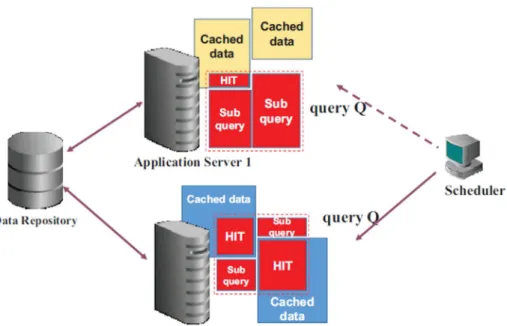
Figure 1. Architecture of Distributed Query Processing Framework
The architecture of distributed query processing framework is shown in Figure 1. The clients submit their queries to the front-end scheduler and queries are scheduled to dedicated back-end application servers. If the data requested by a query is not in the cache memory of back-end application server, the data should be read from data repository which takes relatively long time. If a subsequent query requests same data, the data can be accessed directly from the cache memory saving time to read remotely from data repository. Although the data described in the figure is represented as two-dimensional data, the data can be simply one-two-dimensional data or it can be easily extended to high dimensions.
There are many aspects to consider when we design distributed query processing system. One important factor among them is the utilization of cache. Since the caching facilities are distributed over multiple back-end application servers, we get different cache hit ratio from different data
- 10 -
placement policies. Therefore data must be carefully distributed as caching effect gives significant performance gain avoiding disk I/O which is highly expensive than memory access.
After a query is processed in a back-end application server, the data consumed by the query is stored in the cache memory of the server. If the same data is requested by subsequent queries, the data will be read from the cache memory unless it has been evicted out by data replacement policy of the cache memory. In this condition, similar queries in terms of data locality should be scheduled to the same server for higher probability of cache hit.
We can utilize cache memory of back-end application servers more efficiently with semantic caching. As shown in the Fig 1, data requested by a range query can be divided into smaller sub-queries. And each sub-query can be candidate of cache hit. In this way, we can expect partial cache hit even if entire data requested by the range query is not in the cache memory.
Another important factor for the performance of distributed query processing system is load balance of back-end application servers. Serious load imbalance may result in poor performance even if the cache hit ratio is high. For example, distributing thousands of same queries evenly will give better performance in terms of query wait execution time than scheduling every query to one back-end application server just to increase the cache hit count.
If we know which queries will be submitted in the future, we can find an optimal scheduling which gives the best load balance and the cache hit ratio leading the shortest query wait execution time. But there is no efficient algorithm to find such scheduling since it is known to be an NP-hard problem. Furthermore, it is meaningless to schedule after we get all query requests especially if the framework is an interactive system. Therefore we need a prediction mechanism for the future query arrival pattern. Without prediction, it is highly likely to get either bad load balance or low cache hit ratio as popular data might be cached in few back-end application servers so that we need to sacrifice either cache miss penalty for load balance, or load balance for cache hit.
There are many concerns for the prediction of future query arrival pattern to get better load balance and cache hit ratio. One difficult problem is that query arrival pattern highly depends on time. In other words, query arrival pattern shows different trends at each time period involving either gradual changes, rapid changes or both.
If we choose to adapt quickly to current query arrival pattern, we will get better load balance as scheduler actively balance the load according to the current pattern. However, since many of previously cached data are not matched to the current arriving queries, cache cannot be fully utilized.
- 11 -
On the other hand, we will get higher cache hit ratio if we gradually adapt to query arrival pattern trends. However, we might get bad load balance because the scheduling decision is little behind the current query arrival trend, failing to correctly estimate popular data and unpopular data.
Therefore, scheduling which raises cache hit ratio sometimes breaks the load balance, and scheduling which balance the load sometimes lower the cache hit ratio. As an extreme case, the cache hit ratio of Round Robin scheduling algorithm is generally very low although it shows a perfect load balance.
Considering aspects explained above, DEMB (Distributed Exponential Moving Boundaries) scheduling algorithm is proposed to get good load balance and high cache hit ratio which introduces the Hilbert space filling curve to represent multi-dimensional problem space into one-dimensional problem space. Using a simple doubly linked list, DEMB successfully manages query histogram in a well-partitioned way so that load is well-balanced while high cache hit ratio is achieved. DEMB is also good at adapting to a big change on a query arrival pattern. In case of previous scheduling policies like DEMA (Distributed Exponential Moving Averages), once trained with a specific query arrival pattern, it takes quite long time to adapt to new query arrival pattern if it shows completely different distribution. Contrary to case of DEMA, DEMB can adjust its scheduling according to the current query arrival pattern very rapidly using fixed set of most recent queries as its histogram.
Although DEMB scheduling policy shows good load balance and cache hit ratio, considerable scheduling overhead can be incurred if window size of the query histogram is set to too large value for some reason. For that problem, we propose EM-KDE (Exponential Moving-Kernel Density Estimation) scheduling algorithm as the improved version of DEMB scheduling algorithm. The EM-KDE scheduling uses an array with fixed size rather than a doubly linked list as in DEMB scheduling policy. Using fixed number of histogram bins, EM-KDE can avoid overhead from having large window size of query histogram and it successfully approximates kernel density estimation of the recent query arrival pattern. EM-KDE scheduling performs as well as DEMB without heavy overhead even with large window size of query histogram.
Another concern discussed in this paper is the environment with multiple front-end schedulers. If back-end servers are distributed to multiple sites and the sites are physically distant from each other, it is difficult to manage scheduling queries to all back-end servers at a single front-end scheduler due to the heavy network overhead. To solve the problem, multiple front-end schedulers can be used to get query requests from clients of each site in a distributed manner and schedule queries from them to back-end application servers independently from other remote site.
In this scenario, scheduling independently from other remote site will break the data locality if the query arrival pattern of each site is significantly different, resulting the decreased cache hit ratio. To
- 12 -
prevent this problem, we synchronize the scheduling information of each site periodically to maintain the data locality. Two synchronization methods (Averaging, Weighted Averaging) are introduced in this paper. And their performances are compared with a default scheduling in the later section.
Both DEMB and EM-KDE focus on scheduling queries to maintain high cache hit ratio while balancing the load. We can increase cache hit ratio further by migrating the data in a back-end application server to another server. During scheduling is being adjusted to the current query arrival pattern, scheduling of a query can be changed to different server. However, the cached data requested by the query remain in the previously scheduled server. Therefore we cannot utilize the cached data even if the data is in the cache memory of the cluster when the scheduling of a query is changed as a result of adaptation to current query arrival pattern.
To mitigate such a chance of cache miss, we propose two kinds of migration policy for higher cache hit ratio. One is the pull mode migration policy which enables a back-end server to search for the data requested by a query in its neighbor server. The other policy is the push mode migration policy in which a cached data can be migrated to a neighbor server during the look up operation. The evaluation of each migration mode policy will be shown in the later section.
As our last work in this paper, a MapReduce framework called Eclipse is designed and implemented to take full advantages from semantic caching scheduling algorithm explained above. Using the one-dimensional index for each input data, the map tasks are scheduled according to the EM-KDE scheduling policy and the data is cached into the main memory of the scheduled server. Since the intermediate data is also tagged with its key, intermediate data also can be represented in a one-dimensional index. This feature derives the proactive shuffling which eliminates the need for the sort during the shuffle phase. As shuffle phase is sometimes main bottleneck in existing MapReduce frameworks, proactive shuffling gives a large performance gain. Also the intermediate caching reduces the time to process map tasks significantly with some applications. We show that Eclipse outperforms other MapReduce frameworks in most evaluations.
- 13 -
II. Background & Related Work
Zhang et al. and Wolf et al. proposed scheduling policies that dynamically distribute incoming requests for clustered web servers. WRR(Weighted Round Robin) proposed by Katevenis et al. is a commonly used, simple but enhanced load balancing scheduling policy, which assigns a weight to each queue(server) according to the current load, and servers each queue in proportion to the weight. However, none of these scheduling policies were designed to take into account a distributed cache infrastructure, but only consider the heterogeneity of user requests and the dynamic system load.
LARD(Locality-Aware Request Distribution) is a locality-aware scheduling policy designed to serve web server clusters, and considers the cache contents of back-end servers. The LARD scheduling policy causes identical user requests to be handled by the same server unless that server is heavily loaded. If a server is heavily loaded, subsequent user requests will be serviced by another idle server in order to improve load balance. The underlying idea is to improve overall system throughput by processing queries directly rather than waiting in a busy server for long time even if that server has a cached response. LARD shares the goal of improving both load balance and cache hit ratio with our scheduling policies, but LARD transfers workload only when a specific server is heavily loaded while our scheduling policies actively predict future workload balance and take actions beforehand to achieve better load balancing.
DEMA(Distributed Exponential Moving Average) is a locality-aware scheduling policy for multi-dimensional scientific data analysis applications. DEMA scheduling policy partitions the problem space into as many Voronoi cells as the back-end servers, and all the queries that belong to the same cell are assigned to the associated back-end server. The DEMA scheduling policy adjusts the Voronoi cell boundaries so that the similar number of queries are likely to fall in each cell, and the queries that belong to a cell maintains locality to each other. Similar to our work, DEMA achieves load balancing as well as exploits cached results in a distributed caching infrastructure. BEMA(Balanced Exponential Moving Average) is an improved version of DEMA that is also a locality-aware scheduling policy.
In relational database systems and high performance scientific data processing middleware systems, exploiting similarity of concurrent queries has been studied extensively. Prior work has shown that heuristic approaches can help to reuse previously computed results from cache and generate good scheduling plans, resulting in improved system throughput and query response time. Zhang et al. evaluated the benefits of reusing cached results in a distributed cache framework, and they showed that high cache hit rates do not always yield high system throughput without load balancing. We aim to design scheduling policies that achieve both high cache hit ratio and load balancing at the same time.
- 14 -
In order to support data-intensive scientific applications, a large number of distributed query processing middleware systems have been developed including MOCHA, DataCutter, Polar, ADR and Active Proxy-G. Active Proxy-G is a component-based distributed query processing grid middleware that employs user-defined operators that application developers can implement. Active Proxy-G employs meta-data directory services that monitor performance of back-end application servers. Using the collected performance metrics, the front-end scheduler determines where to assign incoming queries considering load balancing. Our framework is different from Active Proxy-G in that we do not monitor the status of the back-end servers, but statistically estimate the best query assignment based on the observed query distribution to maximize the reuse of cached objects while balancing the load as well.
As the demand for large-scale data analysis frameworks grew in high performance computing community in the late '90s, several distributed and parallel data analysis frameworks such as Active Data Repository that supports map/reduce programming paradigm and DataCutter that supports generic DAG workflows, were developed for large scale scientific datasets. A few years later, the growing demand for large-scale data processing application from the industry made Google develop a similar MapReduce framework. Since then, there has been a great amount of efforts to extend and improve the MapReduce framework for various data-intensive applications.
Spark shares the same goal with our framework in that it reuses a working set of data across multiple parallel operations. Resilient Distributed Datasets (RDDs) in Spark are read-only in-memory data objects that can be reused for multiple MapReduce tasks. Spark addresses the conflict between job scheduling fairness with data locality by delaying a job for a small amount of time if the job cannot launch a local task. Our Eclipse job scheduling is different from Spark in the aspect of managing the cached data objects, i.e., Spark requires programmers to explicitly control the placement of RDDs while Eclipse autonomously places the cached data objects based on system load and job distribution. Dcache is another MapReduce framework where a central cache manager uses its best efforts to reuse the cached results of previous jobs. Compared to Dcache, Eclipse is more scalable as it does not have a central directory that keeps the list of cached data objects.
Main Memory MapReduce(M3R) proposed by Shinnar et al. is a MapReduce framework that performs in-memory shuffle by simply storing intermediate results of map tasks in main memory instead of the block device storage. They show in-memory shuffle significantly improves a certain type of applications. However, M3R cannot be used if workloads are large and do not fit in main memory and if applications require resilience since in-memory framework is not fault tolerant. Moreover, it is questionable if MapReduce is the right programming paradigm for their target application - sparse matrix vector multiplication.
- 15 -
DryadInc is an incremental computation framework that allows computations to reuse partial results of the computations from previous runs. The incremental computation and semantic caching approaches for data reuse have been extensively studied in computer systems, database systems, and programming languages community for the past decades. Tiwari et al. proposed MapReuse delta engine for in-memory MapReduce framework that detects input data similarity and reuses available cached intermediate results and computes only for a new portion of input data. They show the reuse of intermediate results significantly improves job execution time. ReStore is another framework that stores intermediate results generated by map tasks in HDFS so that they can be reused by future submitted jobs. Their works are similar to Eclipse but the conventional fair job scheduling policies they used do not guarantee balancing the workloads especially if requested intermediate results are available only in a small number of overloaded servers.
MRShare framework proposed by Nykiel et al. merges a batch of MapReduce queries into a single query so that it takes the benefits of sharing input and output data across multiple queries. The multiple queries optimization problem has been studied for the past decades, and it has been proved to be an NP problem. Nevertheless, extensive research has been conducted to minimize query processing time through data and computation reuse using heuristics or probabilistic efforts. These works that reorder the execution of submitted jobs are complementary to our design.
One of the well-known drawbacks of MapReduce frameworks is that it does not directly support iterative data analysis applications, and another drawback is that it does not support complicated data workflows. Dryad is more generic than MapReduce since it defines computations as directed acyclic graphs but it does not support iterative or recursive computation. In high performance computing community, distributed processing frameworks that support generic DAG workflow have been studied for large scale scientific datasets in the past years. Ajira is another distributed and parallel processing framework that implements MapReduce programming model and supports a generic workflow for streaming data processing. Eclipse efficiently supports iterative data analysis algorithm such as PageRank, but it currently does not support generic DAG workflow. We plan to extend Eclipse so that generic workflow computations can be deployed on top of our proposed seamless distributed semantic caching layer.
- 16 -
III. Distributed Exponential Moving Boundary
3.1. DEMA Scheduling PolicyExponential Moving Average (EMA) is a well-known statistical method to obtain long-term trends and smooth out short-term fluctuations, which is commonly used to predict stock prices and trading volumes. In general, EMA computes a weighted average of all observed data by assigning exponentially more weight to recent data. The formula that calculates the EMA at time t is given by
EMAt = alpha*datat + (1 - alpha)*EMAt-1
where alpha is the weight factor, which determines the degree of weight decrease over time.
The Distributed Exponential Moving Average (DEMA) scheduling policy estimates the cache contents of each back-end server using an exponential moving average (EMA) of past queries executed at that server. In the context of a multi-dimensional range query scheduling policy, we use the multi-dimensional center point of the query as datat in Equation 1.
Given that application servers replace old cache entries and the DEMA scheduling policy gives less weight to older query entries, the smoothing factor alpha ∈ (0,1) must be chosen so that it reflects the degree of staleness used to expunge old data. This implies that alpha should be adjusted based on the size of the cache space. For example, alpha should be 1 if a cache can contain only a single query result and alpha should be close to 0 if the size of the cache is large enough to store all the past query results. However, the number of cached objects in a server can be hard to predict when the sizes of cached objects can vary widely.
If we can keep track of both the number of current cache entries in each back-end server (k) and the last k*N query center points in the front-end scheduling server (where N is the number of back-end application servers), we can alternatively employ a simple moving average (SMA) instead of EMA, which takes the average of the past k query center points. SMA eliminates the weight-sum error and correctly represents the cache contents of remote back-end application servers. However, SMA does not quickly reflect the moving trend of arriving queries. Furthermore, it causes some overhead in the front-end server to keep track of the last k*N query center points.
- 17 -
Figure 2. The DEMA scheduler calculates the Euclidean distance between EMA points and an incoming query, and assigns the query to the server (0) whose EMA point is closest.
In the DEMA query scheduling policy the front-end query scheduler server has one multi-dimensional EMA point for each back-end application server. For the 2-multi-dimensional image, each query specifies ranges in the x and y dimensions, as shown in Figure 2. For an incoming query, the front-end server calculates the Euclidean distance between the center of the multi-dimensional range query and the EMA points of the N application servers, and chooses an application server whose current EMA point is the closest to that of the incoming query. Clustering similar range queries increases the probability of overlap between multi-dimensional range queries, and increases the cache hit rate at each back-end server. In Figure 2, the given two-dimensional range query will be forwarded to server 0 since the EMA point of server 0 is closer to the query than any other EMA point. This strategy is called the Voronoi assignment model, where every multi-dimensional point is assigned to the nearest cell point. The query assignment regions induced from the DEMA query assignment form a Voronoi diagram.
After the query Q is assigned to the selected application server, the EMA point for that application server is updated as EMAs* = alpha*Q + (1 - alpha)*EMAs* (EMAs represents the EMA point of the sth server). For every incoming query, one EMA point moves in the direction of that query, but we do not need to calculate the changing bisectors of the EMA points since DEMA scheduling algorithm compares the Euclidean distance between EMA points and a given query. The complexity of the DEMA scheduling algorithm is O(N) where N is the number of back-end application servers. So the DEMA scheduling policy is very light-weight.
- 18 -
Figure 3. DEMA Load Imbalance Problem
The DEMA scheduling algorithm clusters similar queries together so that it can take advantage of cache hits. In addition to a high cache hit rate, the DEMA scheduling algorithm balances query workload across multiple back-end application servers by moving EMA points to hot spots.
Ideally, we want to assign the same number of queries to back-end application servers with a uniform distribution. In DEMA, the probability of assigning a new query to a specific server depends on the query probability distribution and the size of the Voronoi hyper-rectangular cell (e.g., a range in a one-dimensional line or area for a 2D space).
DEMA balances the server loads by trying to keep the region size inversely proportional to the probability that queries fall inside their region. For the 2D uniform distribution case, as shown in Figure 2, queries that fall inside the Voronoi region of server B's EMA (Vor(B)) are assigned to server B. We denote the Voronoi cell of server A's EMA as Vor(A). The probability that a query arrives in a specific Voronoi cell Vor(A) is proportional to the size of the Vor(A). Thus, more queries are likely to land in larger cells than smaller cells for a uniform query distribution.
One important property of the DEMA scheduling policy is that an EMA point tends to move to the center of its Voronoi cell if queries arrive with a uniform distribution. In Figure 2, EMA point E0 is located in the lower right corner of Vor(A). Since more queries will arrive in the larger part of the cell(i.e. the upper left part of Vor(A)), Equation 1 is likely to move the EMA point E0 to the upper left part of Vor(A) with higher probability than to the lower right part, which will tend to move the E0 toward the center of the cell. That will result in moving the bisectors of E2 and E0 and the bisector of E0 and E5 to the left as well. Eventually, this property makes the size of Vor(E2) decrease and the size
- 19 -
of Vor(E5) increase. As the size of large Voronoi cells becomes smaller and the size of small Voronoi cells becomes larger, the sizes of the Voronoi cells are likely to converge and effectively the number of queries processed by each back-end application servers will be similar. A similar argument can be made for higher dimensional query spaces.
A normal distribution is another commonly occurring family of statistical probability distributions. It is known that the sum of normally distributed random variables is also normally distributed. If we assume that each historical query point datat is an individual random variable, the weighted sum EMAt also should have a normal distribution. Hence the DEMA scheduling policy approximately balances the number of processed queries across multiple back-end application servers even when the queries arrive with a normal distribution.
However The DEMA scheduling policy may suffer from temporary load imbalance if the query distribution changes quickly, with query hot spots moving through the query space randomly. Let us look at an extreme case. Suppose queries have arrived with a uniform distribution, and suddenly all the subsequent queries land in a very small region that is covered by a single Voronoi cell, as illustrated in Figure 3. In such an extreme case, only one corresponding EMA point will move around the new hot spot and the single server will have to process all the queries without any help from other servers. Although this may not commonly occur, we have observed that the DEMA scheduling policy suffers from failing to adjust its EMA points promptly. If a new query distribution spans multiple Voronoi cells, the EMA points slowly adjust their boundaries based on the new query distribution. However the time to adjust depends on the standard deviation of the query distribution. In the next section, we propose an alternative query scheduling policy that solves this load imbalance problem.
3.2. DEMB: Distributed Exponential Moving Boundary
To overcome the described weakness of the DEMA scheduling policy, we have devised a new scheduling policy called Distributed Exponential Moving Boundary(DEMB) that estimates the query probability density function using histograms from recent queries. Using the query probability density function, the DEMB scheduling policy chooses the boundaries for each server so that each has equal cumulative distribution value. The DEMB scheduling policy adjusts the boundaries of all the servers together, unlike DEMA, so that it can provide good load balancing even for dynamically changing and skewed query distributions.
- 20 -
Figure 4. Calculating DEMB boundaries on Hilbert curve
In the DEMB scheduling policy, the front-end scheduler manages a queue that stores a predefined number (window size, WS) of recent queries, periodically enumerates those queries, and finds the boundaries for each server by assigning and equal number of queries to each back-end application server.
One challenge in the DEMB scheduling policy is to enumerate the recent multi-dimensional queries and partition them into sub-spaces that have equal probability. In order to map the multi-dimensional problem space onto a one-dimensional line, we employ a Hilbert space filling curve. A Hilbert curve is a continuous fractal space filling curve, which is known to maintain good mapping locality (clustering), i.e. it converts nearby multi-dimensional points to close one-dimensional values.
Using the transformed one-dimensional queries, we estimate the cumulative probability density function in the one-dimensional space and partition the space into N sub-ranges so that each one has the same probability as other sub-ranges. The front-end scheduler uses the sub-ranges for scheduling subsequent queries. When a query is submitted, the front-end scheduler converts the center of the query to its corresponding one-dimensional point on the Hilbert curve, determines which sub-range includes the point, and assigns the query to the back-end server that owns the sub-range.
Assigning nearby queries in one-dimensional sub-ranges takes advantage of the Hilbert curve properties. As shown in Figure 4(a), the one-dimensional boundaries on the Hilbert curve cluster two-dimensional queries so that they have good spatial locality. The DEMB scheduling policy achieves
- 21 -
good load balance as well as a high cache hit rate since the scheduler assigns similar numbers of nearby queries on the Hilbert curve to each back-end server.
- 22 -
The DEMB scheduling policy is presented in Algorithm 1. When a new query is submitted to the scheduler, it is inserted into the queue and the oldest query in the queue is evicted, which can change the query probability density function. However if we update the boundaries of each server for every incoming query, that may cause too much overhead in the front-end scheduler. Instead, we employ a sliding window approach, where the scheduler waits for a predefined number of queries (update interval, UI) to arrive before updating the boundaries. Note that the update interval does not have to be equal to the window size. As the update interval is increased, the window size also has to be increased. Otherwise some queries may not be counted when calculating the query probability distribution.
In the DEMB scheduling policy, the window size WS is an important performance factor to estimate the current query probability density. As the window size becomes larger, the recent probability density function can be better estimated. However, if the query distribution changes dynamically, a large window size causes the scheduler to use a large number of old queries to estimate the query probability density function. As a result, the scheduler will not adapt to rapid changes in the query distribution in a timely manner. On the other hand, a small window size can cause a large error in the current query probability distribution estimate due to an insufficient number of sample queries. Moreover, if the window size is smaller than the size of the distributed caches, the query probability density estimation may not correctly reflect all the cached objects in the back-end servers, in addition to the moving trend of query distribution, Therefore choosing an optimal window size under various conditions is one of the most important factors when applying the DEMB scheduling policy to the distributed query processing framework.
In most systems the size of the distributed caches will be much larger than the front-end server's queue size WS. Instead of increasing the window size in order to reduce the error in the probability distribution estimate, we can calculate the moving average of the past query probability distributions, as for the DEMA scheduling policy.
After updating the query probability distribution, we choose the sub-range of each server so that each has equal probability. In Figure 4(b), the problem space is divided into 5 sub-ranges where 20 % of the queries are expected for each one. However it is not practical to estimate the real probability distribution function because that requires a large amount of memory to store the histograms, Instead, we assume the query probability density function is a continuous smooth curve. Then we can make the probability density estimation process simpler. The scheduler will determine the boundaries of each server using the WS most recent queries, and apply the following equation to calculate the moving average for each boundary.
- 23 -
BOUNDARY[i]t = alpha*CUR_BOUND[i]t + (1 - alpha)*BOUNDARY[i]t-1
The weight factor alpha is another important performance parameter in the DEMB scheduling policy, as for DEMA. Alpha determines how earlier boundaries for each server will be considered for the current query probability distribution. However unlike the DEMA scheduling policy, the DEMB scheduling policy has two parameters to control how fast the old queries decay. One is alpha, and the other is the window size (WS), A large window size (WS) can be used to give more weight to the old queries instead of a low alpha value.
Now we show an example to see how the DEMB scheduling policy works. Suppose there are 10 back-end servers (N = 10), the window size is 500 queries (WS = 500), and the boundary update interval is 100 queries (UI = 100). The front-end scheduler will replace the oldest query in the queue with the newest incoming query every time a new query arrives. The incoming queries will be forwarded to one of the back-end servers using the boundaries of each server (BOUNDARY[i]). When the 100th query arrives, the scheduler recalculates the boundary for each server using the past 500 queries. Since there are 10 back-end servers, each server should process 50 queries to achieve perfect load balance. Hence, the new boundary between the 1st server and the 2nd server should be the middle point of the 50th query and the 51st query in the Hilbert curve ordering. Likewise, the new boundary (CUR_BOUND[i]) between the ith server and the i + 1th server should be the middle point of the 50*ith query and the 50*i + 1th query. After calculating the new boundaries (CUR_BOUND[i]) for the back-end servers, we compute the moving average for each boundary. If the query distribution has changed, BOUNDARY[i] would move to CUR_BOUND[i]. In this way, the DEMB scheduling policy makes the boundaries move according to the new query distribution.
The cost of the DEMB scheduling policy is determined by the number of servers and the level of recursion for the Hilbert curve, i.e. O(N*HilbertLevel). The complexity of the Hilbert curve is determined by the level of recursion in the Hilbert curve, which is usually a very small number. With a higher level of recursion, a Hilbert space filling curve can map a larger number of points onto it. For example, for a level 15 Hilbert curve about 1 billion points can be mapped to distinct one-dimensional values. In our experiments, we set the level of the Hilbert curve to 15, and employed at most 50 servers. The cost of DEMB scheduling is very low, but is somewhat higher than that of DEMA, which is O(N).
- 24 -
IV. Exponential Moving Kernel Density Estimation
4.1. BEMA Scheduling PolicyAs an improvement of the DEMA scheduling policy, Balanced Exponential Moving Average (BEMA) scheduling policy is proposed to give weight to each EMA points. Similarly to DEMA, the BEMA scheduling policy employs the EMA method to approximate the trend of cached data in the back-end servers. Specifically, the front-end server maintains an exponential moving average (EMA) of query center points assigned to each back-end server. For example, in Figure 2, the front-end server stores two EMA points instead of five cached data objects in server 1 and 2.
Figure 5. BEMA scheduler calculates the weighted Euclidean distance between EMA points and an incoming query, and assigns the query to the server B whose EMA point is closest.
In BEMA scheduling policy, a query is assigned to the server whose EMA is the closest to the center of the query in terms of weighted normalized Euclidean distance. In the example shown in Figure 2, a query q is assigned to server 1 since the query's center point is closer to EMA of server 1 than EMA of server 2. In order to enforce each dimension has the same importance, we normalize the multi-dimensional problem space before we compute the Euclidean distance so that each normalized coordinate is within 0 and 1.
The weighted Euclidean distance from a server is the distance weighted proportional to the current load of the server. The rationale is that we want to assign less queries to the server with more current load. Figure 3 illustrates an example of a 2-dimensional query assignment when server k's load has three times the server (k + 1)'s. The Apollonius circle in the figure represents points that have equal
- 25 -
weighted-Euclidean-distances to both the servers. In this example, the query Q is assigned to server (k + 1) as it is closer to that server. With the Apollonius circle assignment model, BEMA scheduling policy makes scheduling decisions based on a weighted Voronoi diagram illustrated in Figure 5, which divides the plane into cells with respect to weighted Euclidean distance. Each cell is associated to a back-end server, i.e., all the queries falling in a cell are assigned to the corresponding server.
The front-end server can obtain the current load of the back-end server either by monitoring the number of recently assigned queries to the server, or by periodically collecting performance metrics from the back-end server.
Figure 6. Load Balancing by Convex Optimization
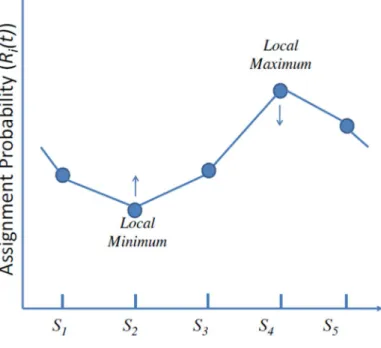
The BEMA scheduling policy assigns geometrically proximate queries to the same back-end server in order to increase the cache-hit ratio, and adjusts the geometric boundaries between servers so that server loads are balanced in the long run. Note that the BEMA scheduling policy does not need to compute the boundaries of each cell, but it simply calculates the weighted Euclidean distance from a query to the EMA points of the servers and picks the closest server. The boundary of a server changes when the EMA point of the server or a neighboring server changes, or the load of the server or a neighboring server changes. Therefore the complexity of the BEMA scheduling policy is just O(N) where N is the number of back-end servers. Figure 6 illustrates the balancing effect of the BEMA scheduling policy as a convex optimization. The figure shows the query assignment probabilities of server i's at time t(denoted by Ri(t), respectively). The BEMA levels the assignment probabilities by
- 26 -
decreasing the local maxima (S4 in the figure) and increasing the local minima (S2 in the figure). It does so by making the Voronoi cell of a local maximum more likely to shrink than to expand, and making the Voronoi cell of a local maximum more likely to shrink than to expand, and making the Voronoi cell of a local minimum more likely to expand than to shrink. Formally, BEMA maintains that
E[R2(t + 1)] > R2(t) (3) and
E[R4(t + 1)] < R4(t) (4)
where E[ ] is the expectation function. With this property, the system is moving toward a better balanced state.
Although the BEMA scheduling policy will balance the server loads in the long run, it fails to quickly adapt to sudden changes in the query distribution. This is mainly because a single query can change boundaries of at most a single server. For example, when a popular query region (called hot-spot) suddenly moves to a distant location that is currently covered by only a few servers, BEMA may need a substantial amount of time to move more EMA points toward the hot-spot, and this delay can cause heavy query-processing loads to the hot-spot servers until more servers gather to that area.
The BEMA scheduling policy is shown to outperform other traditional scheduling policies such as round-robin or load-based scheduling policies and DEMA - a locality aware scheduling policy even for rapidly changing query distribution. However, in this work, we present a scheduling policy that achieves even better load balancing while yielding comparable cache-hit ratio.
Although DEMB scheduling policy shows good load balance and cache hit ratio, A considerable scheduling overhead can be incurred if window size of the query histogram is set to too large value for some reason. Therefore we need an alternative approach which overcomes limitations of BEMA and DEMB scheduling algorithm.
- 27 -
In this section, we introduce EM-KDE (Exponential Moving with Kernel Density Estimation) scheduling policy. Unlike the BEMA, the EM-KDE quickly adapts to a sudden change of query distribution, while achieving both load balancing and high cache-hit ratio.
We first introduce our KDE-based scheduling method, than address the dimensionality of scientific data analysis queries. Next, we describe the exponential moving method that reflects the recent query trend, and then provide the EM-KDE scheduling algorithm in detail.
4.2.1. KDE-based scheduling
In brief, the KDE-based scheduling policy first estimates the probability density function (PDF) of incoming queries, then partitions the query space into equally probable sub-spaces and associates each sub-space to a back-end server. As a consequence, assigning all the queries falling in a sub-space to the associated back-end server can evenly distribute incoming queries among the servers while keeping the queries to the same server spatially clustered.
To achieve both load balancing and high cache-hit ratio, the front-end scheduler must estimate the current query distribution accurately. In statistics, Kernel Density Estimation (KDE) is commonly used to estimate the PDF of a random variable based on the finite set of samples. When a sample arrives, we accumulate some value on the sample's value and around it in a predefined pattern, called kernel function, expecting the final accumulated values at each point to estimate the PDF. Various kernel functions have been proposed: from uniform to Gaussian. Depending on the kernel function, the resulting PDF estimation can look uneven or smooth. For example, uniform kernel function can generate histogram-like PDF with lot of sudden changes. To smooth out the PDF, one can use a smoothing parameter called bandwidth, which stretches the kernel function centered at each sample to spread the effect of accumulation to neighboring values. Choosing the optimal bandwidth of the kernel has been studied in many literatures, and the most commonly used criterion is the mean integrated squared error.
To make the scheduling algorithm as light as possible, we use box kernel density estimator, which uses the uniform kernel function. We first partition the query space into a large number of fine-grained histogram bins. Then, for each query, we increase the counter of multiple adjacent k bins at the center of query range by 1/k for a single query, where k is a bandwidth parameter.
After constructing the smoothed probability density estimation, the EM-KDE scheduling policy chooses the boundaries of problem space for each back-end server so that each has equal cumulative distribution value. Unlike the BEMA scheduling policy, the EM-KDE scheduling policy adjusts the
- 28 -
boundaries of all the servers together based on the query distribution so that it can provide good load balancing even for dynamic and rapidly changing query distribution.
4.2.2. Addressing Dimensionality
Scientific data analysis queries typically specify multi-dimensional geometric or geographic range of coordinates: for example, latitude/longitude and time ranges, or 3D spatial minimum bounding rectangles, to schedule multi-dimensional queries, the EM-KDE scheduling policy enumerates the multi-dimensional queries on a Hilbert space filling curve. A Hilbert curve is a continuous fractal space filling curve, which is known to preserve good spatial locality, i.e., it converts nearby multi-dimensional points into close one-multi-dimensional values. Clustering nearby queries in one-multi-dimensional Hilbert curve takes advantage of the clustering property of the Hilbert curve, and improves the probability of data reuse by assigning nearby queries to the same back-end servers.
Figure 7. The one dimensional boundaries on the Hilbert curve are determined by the cumulative probability distribution so that equal number of queries are assigned to each back-end server. The Hilbert curve that preserves spatial locality clusters multi-dimensional queries and increases the probability of cache hit ratio.
Figure 7 illustrates how the EM-KDE scheduling policy partitions the Hilbert space filling curve based on the probability distribution function. The front-end scheduler converts multi-dimensional range queries into one-dimensional Hilbert value, and constructs box kernel density estimation. Using the box kernel density estimation, the scheduler partitions the Hilbert curve so that the cumulative probabilities of the partitioned intervals become equal. The partitioned one-dimensional Hilbert value intervals can be mapped back to the multi-dimensional space as shown in Figure 7(b).
- 29 -
4.2.3. Exponential Moving KDE
In order to reflect the recent trend in query distribution, we need a mechanism to gradually attenuate the effect of old queries on the PDF estimation. The BEMA scheduling policy employs the EMA to reflect the cache replacement effect in a single server. The EM-KDE scheduling policy, however, uses the EMA for adapting the box kernel density estimation to recent query distribution.
The attenuation parameter alpha affects the scheduling performance, and its proper value depends on the query dynamics. As alpha increases, the scheduler becomes more sensitive to the recent query distribution and adapts quickly to new query arrival patterns. On the other hand, as alpha decreases, the PDF estimation focuses on the long term trend, and becomes immune to temporary changes in query distribution. Generally, a smaller alpha is expected to have a higher cache-hit ratio since it works as if it does not consider load balancing but makes scheduling decisions with locality and data reuse. So smaller alpha value is considered to be good when the query arrival pattern is stable over time. But in practical applications the query arrival patterns change dynamically over time, and in such a case alpha value should be incremented in order to quickly adapt to the new query distribution.
4.2.4. EM-KDE algorithm
The detailed algorithm description of EM-KDE is shown in Algorithm 2. Initially, the frequencies of all Hilbert value intervals are set to the same value so that the values add to one. When a query arrives, the current density estimates are faded out by a factor of (1 - alpha) and the incoming query adds a weight alpha on a target interval. As a result, the total sum of the counts is always one and it can be considered as a probability density.
- 30 -
The procedure Schedule converts the center point of a multi-dimensional range query into one dimensional Hilbert value - hv, and chooses a back-end server whose Hilbert value sub-range includes the hv value. The scheduler forwards the client query to the back-end server, and calls BoundaryUpdate function to update the frequencies of histogram and recalculate the Hilbert value sub-ranges of back-end servers.
The BoundaryUpdate() function, described in Algorithm 2, interpolates the boundaries of histogram bins in order to further smooth out the blocky simple box kernel density estimation. When the problem space is large but the number of histogram bins is not large enough, the sub-range boundaries of back-end servers are likely to be in between of the histogram intervals. The while loop(line 16) of BoundaryUpdate() function iterates the histogram bins and adds the frequency of each bin to freqSum until it exceeds freqPerServer which is the amount of frequency to be assigned for one back-end sesrver. When the sum of current freqSum and the frequency of next bin (f) becomes greater than freqPerServer, we use linear interpolation to calculate the boundary.
- 31 -
The complexity of the EM-KDE scheduling algorithm is O(n) where the n is the number of histogram bins. As a new query arrives, the boundaries of sub-ranges need to be recalculated based on the updated histogram. Updating histogram can be done in constant time, but adjusting the boundaries need to rescan the histogram bins as shown in Algorithm 2. As we increase the number of histogram bins, the EM-KDE will determine the boundaries of each server in a more fine-grained way but it causes more overhead to the scheduler. But when the number of histogram bins is too small the scheduler can make decisions promptly but it may suffer from coarse-grained blocky probability density estimation. In our experimental study, we show that determining 312 boundaries (servers)
- 32 -
using 2000 histogram bins takes no more than 50 usec. Considering disk I/O latency to read just a single 4 Kbytes page takes often longer than 50 usec, EM-KDE scheduling algorithm is not likely to become a performance bottleneck for data intensive applications. We will discuss the scalability issue of EM-KDE scheduling algorithm in more details in Evaluation section. By any chance, if a scheduler is flooded with an unprecedentedly large number of queries, we can adjust the EM-KDE boundary update interval in order to reduce the scheduling overhead at the cost of sacrificing the probability of reusing cached data objects.
- 33 -
V. Scheduling with Multiple Front-End
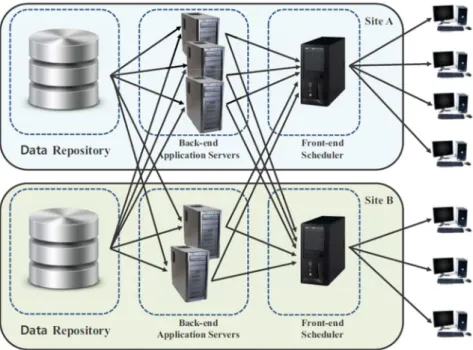
Figure 8. Architecture of Distributed Query Processing Framework with Multiple Front-end Scheduler
5.1. Distributed and parallel query processing framework
Figure 8 is a description of another consideration of our study. The Cloud environment facilitates collaborative work and allows many clients to execute jobs over geographically distributed computing resources. In such geographically distributed systems, job submission systems had better be near clients to hide network latency when they interact with the system. Thus our distributed query processing framework can be configured to work with multiple schedulers as shown in Figure 8.
With multiple schedulers, a client will submit a job to its closest scheduler, but the scheduler may forward the job to a back-end server which is geographically far remote from the scheduler. The scheduler needs to consider all available statistics about the system such as cached data objects, current system load, network latency between organizations, storage location, etc.
As described, DEMA scheduling policy makes scheduling decisions based on geometric features of past jobs. One assumption with DEMA scheduling policy is that one scheduler has seen all the jobs, and it predicts which back-end server has what cached data items and how many past jobs were forwarded to which back-end server. With multiple schedulers, this assumption is not true any more. One scheduler may receive very different types of jobs from another scheduler. In such cases, EMA
- 34 -
points in each scheduler can be very far from each other, and it hurts the spatio-temporal locality of the jobs running in each back-end server, and results in poor load balance with low cache hit ratio.
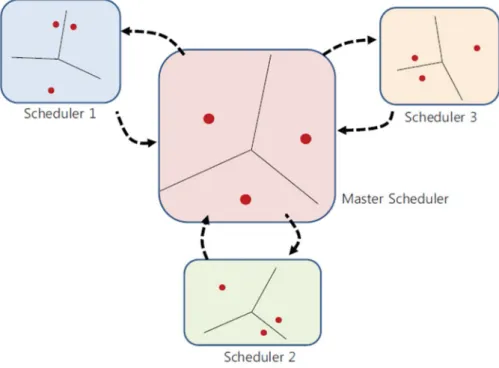
Figure 9. Multiple schedulers share EMA points by synchronizing their own EMA points periodically.
In order to solve the problem, this work compares simple solutions that periodically exchange the EMA points between schedulers, compute the weighted average EMA points of back-end servers, and share the updated EMA points for subsequent incoming jobs as shown in Figure 9. The synchronization process does not have to block processing incoming jobs since unsynchronized EMA points may slow down the job execution time slightly but it might be better to immediately schedule incoming jobs rather than waiting for the synchronization.
5.2. Synchronization of EMA points
One of the simple synchronization methods that we study is averaging method. In averaging method, each scheduler independently updates its own EMA points, and a master scheduler periodically collects EMA points of other schedulers, computes the average EMA points, and broadcasts the updated EMA points to all other schedulers. The frequency of computing average EMA points should be determined so that network overhead is minimal. But if the frequency is chosen to be too low, EMA points in each scheduler will diverge and the overall system throughput will hurt. A
- 35 -
problem of the averaging method is when the number of scheduled jobs in each scheduler varies. For example, if a scheduler S1 received very few number of jobs while another scheduler S2 scheduled a large number of recent jobs, the EMA points in S1 do not reflect the recent cached data objects in back-end servers. Therefore our improved synchronization method - weighted averaging method gives more weight to EMA points of a server which received more queries than other schedulers. The weight is determined by how many jobs were forwarded to each server, i.e., if a back-end server did not receive any job from a scheduler, the weight of EMA point of the back-end server is 0. The weighted average EMA point of each back-end server is calculated as the following equation:
where Ni[s] is the number of jobs assigned to server s by scheduler i.
In both synchronization methods, the frequency of synchronization is a critical performance factor that affects the overall system throughput. As we compute the average EMA points more frequently, each scheduler will have more accurate information about cached data objects in back-end servers. If the synchronization interval is very large, each back-end server's buffer cache will be filled with data objects that do not preserve spatio-temporal locality as in round-robin policy.
- 36 -
VI. Data Migration of Cached Contents
6.1. Cached data migrationIn DEMA scheduling policy, as various incoming queries access different parts of input datasets, EMA points dynamically move to new locations over time. As a result of the movement, some cached data objects may cross the boundaries of Voronoi regions. If the changed Voronoi region does not contain a cached data object any more, the cached data object is not likely to be used by subsequent queries because DEMA scheduler will not forward a query to the server.
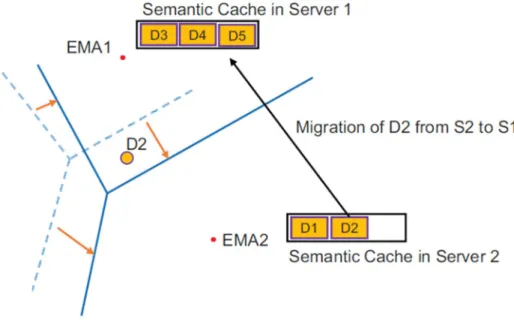
Figure 10. An Example of Data Migration: Location of a cached data object D2 is not covered by server S2's region since the boundaries change. If D2 is a frequently accessed data object, it better be moved to server S1.
Figure 10 shows an example of Voronoi region changes. If the boundary of Voronoi region moves to a lower right direction, some of the cached data objects in server S2 will not be covered by the updated S2's region. We will refer to the cached data objects out of current Voronoi region as "misplaced cached data". In the example, a data object D2 is a misplaced cached data. Based on the updated boundaries, the scheduler will not forward any incoming query that needs data D2 to server S2, but instead it will forward it to server S1. Although a previously computed query result D2 is in a neighbor server S2, server S1 will read raw datasets from storage systems and process the query from scratch. Since S2 is not likely to reuse data object D2, D2 will be eventually evicted from S2's cache.
In order to manage the distributed semantic buffer cache seamlessly, we propose data migration of cached data objects to improve overall cache hit ratio. With the data migration policy enabled, the
- 37 -
misplaced cached data objects are migrated to a remote server whose Voronoi region encloses the cached data objects.
When a front-end server receives a query, it searches for a back-end application server whose EMA point is the closest to the query point. Periodically or when EMA points have moved by a large margin, the front-end server constructs a piggyback message with the server's neighbor EMA points and forwards the query and the neighbor EMA points to the selected back-end application server. With the updated EMA points, back-end application servers can migrate misplaced cached data objects in either pull mode or push mode.
1) Pull Mode Migration: When a back-end application server searches for cached data objects in its own cache but does not find it, pull mode migration policy searches for the cached data objects in its neighbor servers' cache. Since it is very expensive operation to look up neighbor servers' cache for every cache miss, each back-end application server in our framework periodically collects EMA points of its neighbor servers. If a cache miss occurs in a server s, the server checks if the query's point is closer to a neighbor server's historical EMA point rather than its own previous EMA point. If another server n's previous EMA point is closer to the query than its previous EMA point, it means the query would have been assigned to the neighbor server n unless the EMA points moved, and it is highly likely that the neighbor server n has a misplaced cached object for the query. Thus the application server s should check the neighbor server n and pulls the cached data object from n.
The performance of pull mode migration depends on how accurately each application server identifies a neighbor server that has misplaced cached data objects. Searching all neighbor servers for every cache miss can increase cache hit ratio but it will place too much overhead on the cache look up operation, hence we implemented a push mode migration as described below.
2) Push Mode Migration: When a back-end server receives a query, first it searches for its own cached objects in its semantic cache that can be reused. During the look up operation, push mode migration policy investigates whether each cached data object is misplaced or not. If a cached data object is closer to a neighbor EMA point than its own EMA point, the cached data object is considered to be misplaced and we migrate it to a neighbor server. When the neighbor server receives a migrated data object, it determines if the migrated data object should be stored in its cache using its cache replacement policy. Note that our data migration policy does not examine the entire cached data objects since it will cause significant overhead. Instead, we detect misplaced data objects only during cached data look-up operation and transfer them to neighbor servers. I.e., if we use a hash table for cached data look-up, only the cached data objects in an accessed hash bucket will be considered for data migration candidates. This policy migrates some misplaced cached data objects to neighbor servers in a lazy manner, which helps reducing the overhead of cache look-up operation.
- 38 -
As we will show, our experimental study shows data migration does not always guarantee higher cache hit ratio if the distribution of arriving queries is rather static. With static query distribution, the boundaries of Voronoi regions may fluctuate but not by a large margin. In such cases, cached data objects near boundaries tend to be migrated between two servers repeatedly, and it is possible for them to evict some useful cached data objects continuously in neighbor servers. There can be various solutions to mitigate the negative effect of the continuous eviction problem. One is to keep cached data objects unless its center point is not significantly close to a neighbor EMA point. Another option is to replicate the cached data objects on the boundaries by not deleting migrated cached data objects and we mark recently migrated data objects so that the same data objects are not migrated again. In our implementation we chose the second option, which prevents unnecessary repeated LRU cache updates.