Dining Environments in Long Term Care:
Prevalence of Features and Construct
Validity of Two Measures
bySabrina Iuglio
A thesis
presented to the University of Waterloo in fulfillment of the
thesis requirement for the degree of Master of Science
in Kinesiology
Waterloo, Ontario, Canada, 2017
AUTHOR'S DECLARATION
I hereby declare that I am the sole author of this thesis. This is a true copy of the thesis, including any required final revisions, as accepted by my examiners.
Abstract
Background: Previous research suggests that the physical and psychosocial environments can improve outcomes for residents living in long term care (LTC). However, research has inconsistently implemented interventions that target these environments resulting in the inability to compare results across studies. These inconsistencies are due to a lack of standardized measures that quantify these environments reliably and validly. Thus,
instruments that address this gap would result in dependable claims of mealtime experience summarizations and consistent evaluations. Additionally, prior to this study, there has not been an examination of the differences in prevalence of physical and psychosocial dining environments across Canada. At this point it is unclear whether consistency exists nationally with regard to environmental characteristics and delivery of care and it is unknown what areas require further improvements to meet industry standards.
Purposes: 1) Assess the construct validity of the dining environment audit protocol (DEAP),
2) assess the construct validity of the Mealtime Scan (MTS), 3) examine the construct
validity of the mealtime relational care checklist (M-RCC) and 4) demonstrate the prevalence of key features of these instruments and differences where they exist, among provinces included in this data set.
Methods and Findings: This thesis is a secondary data analysis of the Making Most of Mealtimes (M3) study, which is a cross sectional Canadian study conducted in Alberta, Manitoba, New Brunswick and Ontario. This study collected data on the multilevel
determinants of food intake in 32 LTC homes, which included 639 residents and 82 dining rooms. Resident energy and protein intake estimated from three weighed and estimated food intake records were proxies for intake. Energy intake per kilogram body weight and protein intake per kilogram body weight variables were created as outcomes for these analyses, and gender, age and cognitive performance score (CPS) were used as covariates in cluster regression stratified by dementia care and general care units. Other constructs compared to measures included: nutritional status, CPS, and dining room level constructs and staff
perceptions of person centered care. Features and characteristics of instruments are described and analyzed to determine their association with key summary scales of instruments. Finally,
comparisons across provinces were made to determine differences in prevalence of instrument variables. The key methods and findings for analysis of each measure will be discussed.
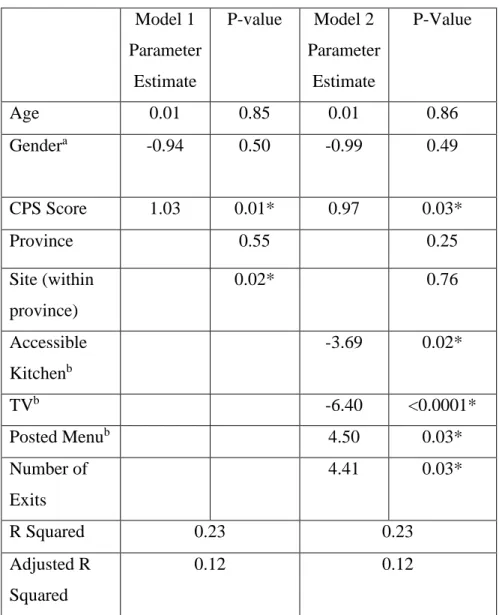
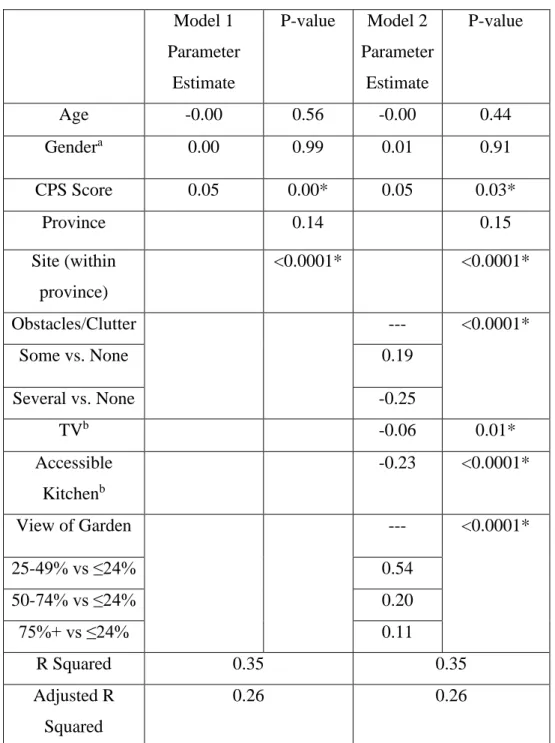
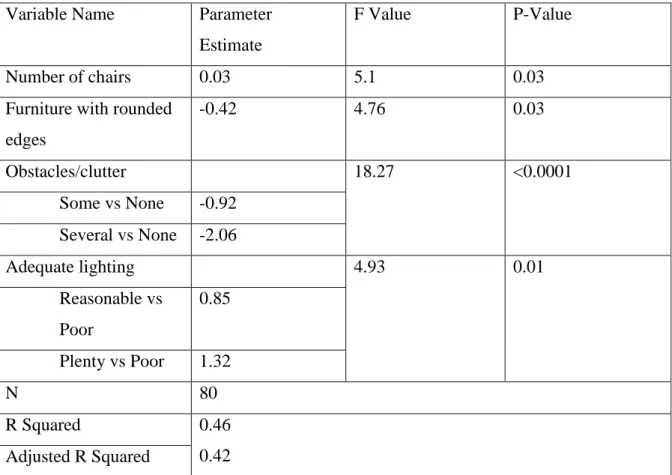
1) Cluster regression analysis determined that the needs of residents in dementia care and general care units differed. Further, energy and protein intake was minimally influenced by the physical characteristics of the dining room as assessed by the DEAP. Through regression analysis (p<0.05) it was found that the DEAP homelikeness summary scale was positively associated with a view of the garden, clock and posted menu. Functionality summary scale was positively associated with number of chairs and lighting, while negatively associated with furniture with rounded edges and clutter. The construct validity of the homelikeness and functionality scales of the DEAP was determined through correlations (p<0.05). The
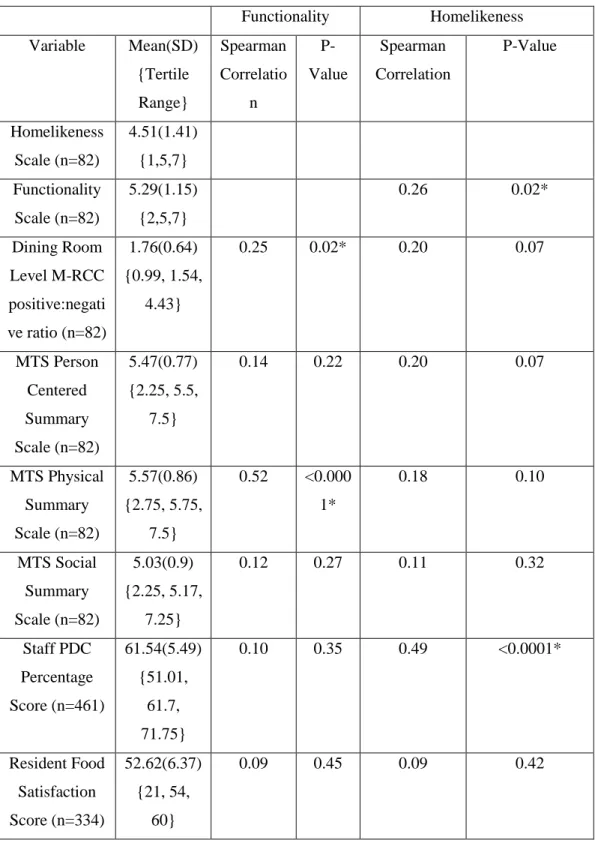
functionality scale was positively associated (p<0.05) with the MTS physical scale, the dining room M-RCC, the resident M-RCC and the Mini Nutritional Assessment- Short Form (MNA-SF). Homelikeness was positively associated (p<0.05) with the staff person directed care (PDC) score and the Cognitive Performance Scale (CPS), while negatively associated with energy and protein intake. Further, the homelikeness and functionality scales were associated with one another. These associations determined that the DEAP summary scales are construct valid. Few physical characteristics of the dining room as assessed by the DEAP differed (p<0.01) across Alberta, Manitoba. New Brunswick and Ontario.
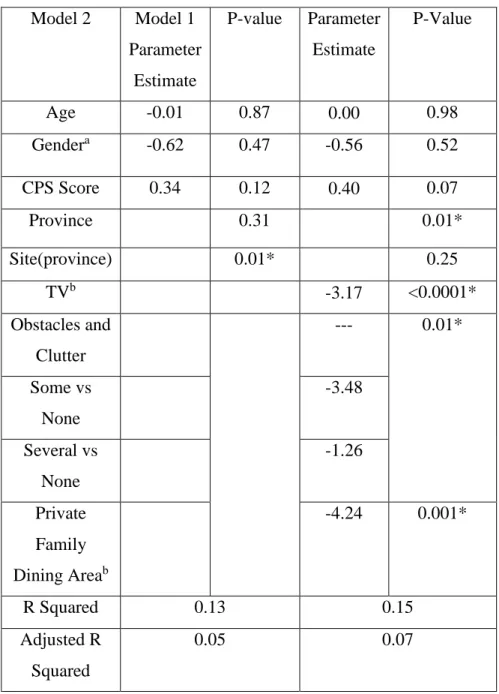
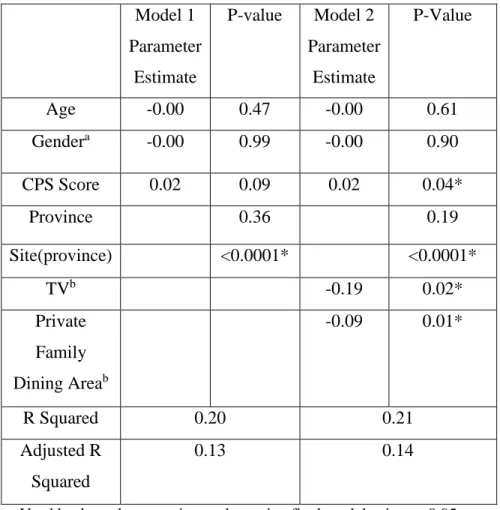
2) Energy and protein intake was minimally influenced by the physical and psychosocial characteristics of the dining room as assessed by the MTS. Regression analysis revealed that the MTS physical summary scale was positively associated with music availability and the dining room M-RCC ratio, while negatively associated with number of staff passing food and number of residents. The social environment scale was positively associated with social noise, number of residents requiring assistance and the M-RCC ratio. The person centered care (PCC) summary scale was positively associated with adequate lighting, excess noise and the dining room M-RCC ratio. Construct validity of the scales was examined using
correlations (p<0.05). The three MTS summary scales were positively associated. The physical scale was also positively associated (p<0.05) with the DEAP functionality scale, the
resident and dining room M-RCC and the MNA-SF. The social scale was positively associated (p<0.05) with the dining room M-RCC, the MNA-SF and CPS score. The PCC scale was positively associated (p<0.05) with the dining room and resident M-RCC, the MNA-SF and CPS score. These associations determined that the MTS summary scales are construct valid. Physical and psychosocial environments as assessed by the MTS minimally differed (p<0.01) across Alberta, Manitoba, New Brunswick and Ontario.
3) Correlations were computed to determine the construct validity of the resident level M-RCC ratio. The resident M-M-RCC was positively associated (p<0.05) with the DEAP functionality scale, the dining room M-RCC, the MTS PCC summary scale, and the MNA-SF score and negatively associated (p<0.05) with protein intake and CPS score. These associations determined that the resident M-RCC is construct valid. RCC and PCC practices as assessed by the resident M-RCC differed (p<0.01) across the provinces of Alberta, Manitoba, New Brunswick and Ontario.
Conclusion: In conclusion, the physical and psychosocial environments as assessed by the MTS and DEAP minimally explained the variance of energy and protein intake in both dementia care and general care units, but summary scales were associated with nutritional status. The DEAP, MTS and M-RCC exhibit validity through the significant associations between the summary scales and the individual variables of each instrument. Additionally, the construct validity of these instruments was supported through the significant correlations with other instruments collected in M3. The physical and psychosocial components of the dining environment can be improved in Alberta, Manitoba, New Brunswick and Ontario to promote consistency on a national level. This secondary analysis of the M3 dataset suggests that the DEAP, MTS and M-RCC are construct valid standardized instruments that may be used to quantify the physical and psychosocial environments. Prior to this study, construct valid instruments did not exist, thus this analysis offers a basis for future research. Prevalence estimates identify areas where practices can be improved further to promote the physical and psychosocial environments.
Acknowledgements
I have been so honoured to be working with an incredible set of people throughout my Master’s program. To my supervisor, Dr. Heather Keller, thank you so much for all that you have taught me, the continuous support and for inspiring me to continue on this path of bettering the lives of residents in long term care. I am immensely grateful to have had the opportunity to work with someone as dedicated to the long term care field as you are; the knowledge we have today would not be possible without all your hard work. Thank you to my committee, Dr. Habib Chaudhury and Dr. Laura Middleton for all you input and suggestions throughout this thesis process.
To my family, thank you for all the love and continuous support that has carried me throughout my graduate studies. Mom and dad, I would not be where I am today without you, thank you for all your encouragement and for always believing in me, words cannot express how much I love you both. To my brother Joey, thank you for always making me laugh and for always being there for me. You have always inspired me and I will forever cherish your unconditional support. Nonna Zina, Nonno Tommy, Nonna Tish and Nonno Nick thank you for showing me the power of hard work and endless love you have always given me. Justen, thank you for your patience and for all the words of encouragement throughout this chapter in my life. Zeus and Colt, I will always be thankful for your emotional support.
To my lab mates Vanessa, Sarah, Jill, Tara, Renata and Celia, thank you for all the academic support and friendship. You are all incredible people who will accomplish amazing things, I am so honoured to be a part of your journeys. Vanessa, Sarah and Jill, thank you for all the advice you have given me throughout this process, for the life chats, and the fun experiences we had along the way from data collection to Montreal. Jill, thank you for your patience and teachings throughout the data analysis process.
Table of Contents
AUTHOR'S DECLARATION ... ii
Abstract ... iii
Acknowledgements ... vi
Table of Contents ... vii
List of Tables ... x
List of Abbreviations ... xii
Chapter 1 Introduction ... 1
Chapter 2 Background ... 3
2.1 Overview: Older Adults and Malnutrition in Long Term Care ... 3
2.2 Theoretical Basis: What is the Mealtime Environment in LTC? ... 5
2.1.1 The Physical Mealtime Environment in LTC ... 7
2.1.2 Person Centered Care, Social Models of Care and the Psychosocial Mealtime Environment in LTC ... 8
2.1.3 Special Considerations in the Mealtime Environment for Persons with Dementia ... 11
2.3 What do we know about the mealtime environment and food intake in LTC? ... 14
2.1.4 Mealtime Environment Interventions ... 16
2.4 How do we measure the mealtime environment? ... 20
2.5 Making the Most of Mealtimes (M3) Study ... 21
2.6 Summary ... 23
Chapter 3 Research Questions ... 24
Chapter 4 Construct Validity and Prevalence of Features of the Dining Environment Audit Protocol27 4.1 Introduction ... 27
4.2 Methodology ... 30
4.2.1 Sample and Participants ... 30
4.2.2 Data Collection and Measures ... 31
4.2.3 Data Analysis... 35
4.3 Results ... 37
4.3.1 Determinants of Energy and Protein Intake in Dementia Care Units ... 37
4.3.2 Determinants of Energy and Protein Intake in General Care Units ... 39
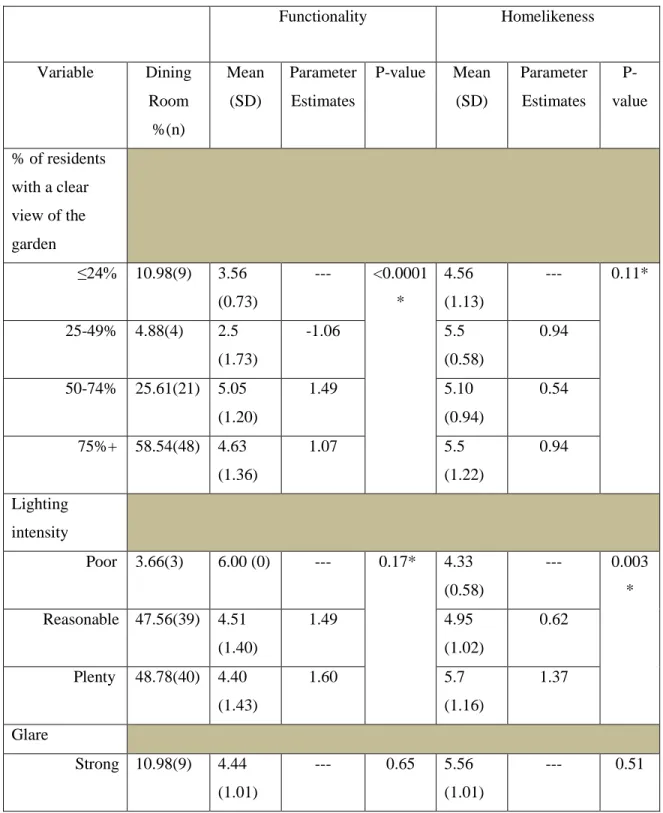
4.3.3 DEAP Variables Associated with Homelikeness and Functionality Ratings ... 40
4.3.5 Prevalence of DEAP Variables and Differences among Alberta, Manitoba, New Brunswick
and Ontario ... 41
4.4 Discussion ... 42
4.4.1 Strengths and Limitations ... 49
4.5 Conclusion ... 51
Chapter 5 Construct Validity and Prevalence Estimates of the Mealtime Scan ... 98
5.1 Introduction ... 98
5.2 Methodology ... 101
5.2.1 Sample and Participants ... 101
5.2.2 Data Collection and Measures ... 102
5.2.3 Data Analysis ... 105
5.3 Results ... 109
5.3.1 Determinants of Energy and Protein Intake in Dementia Care Units ... 109
5.3.2 Determinants of Energy and Protein Intake in General Care Units ... 110
5.3.3 MTS Variables Associated with the Physical, Social and Person Centered Summary Scales ... 111
5.3.4 Construct Validity of the MTS Physical, Social and Person Centered Summary Scales . 113 5.3.5 Prevalence of MTS Variables and Differences among Alberta, Manitoba, New Brunswick and Ontario ... 113
5.4 Discussion ... 114
5.4.1 Strengths and Limitations ... 121
5.5 Conclusion ... 124
Chapter 6 Construct Validity and Prevalence Estimates of the Mealtime Relational Care Checklist 151 6.1 Introduction ... 151
6.2 Methodology ... 153
6.2.1 Sample and Participants ... 153
6.2.2 Data Collection and Measures ... 154
6.2.3 Data Analysis ... 157
6.3 Results ... 157
6.3.1 Construct Validity of the M-RCC ... 158
6.3.2 M-RCC Differences across Provinces ... 158
6.4.1 Strengths and Limitations ... 163
6.5 Conclusion ... 165
Chapter 7 Discussion ... 181
7.1 The Physical Environment ... 181
7.2 The Psychosocial Environment ... 190
7.3 Comments on Measurement of the Physical and Psychosocial Dining Environments ... 196
7.4 Future Research and Implications for LTC ... 200
7.5 Conclusions ... 201
Bibliography ... 203
Appendix A Mealtime Relational Care Checklist ... 220
Appendix B Food and Food Service Satisfaction Survey ... 222
Appendix C Depression Rating Scale ... 224
Appendix D Mini Nutritional Assessment- Short Form ... 226
Appendix E Dining Environment Audit Protocol ... 227
Appendix F Mealtime Scan ... 233
List of Tables
Table 4.1. Characteristics of Residents and Unit in Dementia Care (n=180, n=24) and General Care Units (n=443, n=58)
Table 4.2. DEAP Variables Associated with Resident Energy and Protein Intake Who Live in Dementia Care Units (n=180 residents in 24 dining rooms)
Table 4.3. Multivariate Models for Energy Intake with DEAP Variables in Dementia Care Units (n=180 residents in 24 units)
Table 4.4. Multivariate Models for Protein Intake with DEAP Variables in Dementia Care Units (n=180 residents in 24 units)
Table 4.5. DEAP Variables Associated with Resident Energy and Protein Intake Who Live in General Care Units (n=443 residents in 58 dining rooms)
Table 4.6. Multivariate Models for Energy Intake with DEAP Variables in General Care Units (n=443 residents in 58 units)
Table 4.7. Multivariate Models for Protein Intake with DEAP Variables in General Care Units (n=443 residents in 58 units)
Table 4.8. Homelikeness and Functionality Associated with Each DEAP Variable (n=82 dining rooms)
Table 4.9. DEAP Items and Homelikeness Final Model (n=81 units) Table 4.10. Functionality Final Model (n=80 units)
Table 4.11. Descriptive Statistics and Associations between DEAP Functionality and Homelikeness Scales with other Measures
Table 4.12. Prevalence of DEAP Variables by Province
Table 4.13. Prevalence DEAP by Province- Supplemental Table
Table 5.1. Characteristics of Residents and Units in Dementia Care (n=180, n=24) and General Care Units (n=443, n=58)
Table 5.2. Averaged MTS Variables Associated with Resident Energy and Protein Intake Who Live in Dementia Care Units (n=180 in 24 dining rooms)
Table 5.3. Multivariate Models for Energy Intake with MTS Variables in Dementia Care Units (n=180 in 24 units)
Table 5.4. Multivariate Models for Protein Intake with MTS Variables in Dementia Care Units (n=180 in 24 units)
Table 5.5. MTS Variables Associated with Resident Energy and Protein Intake Who Live in General Care Units (n=443 in 58 dining rooms)
Table 5.6. Multivariate Models for Energy Intake with MTS Variables in General Care Units (n=443 in 58 units)
Table 5.7. Multivariate Models for Protein Intake with MTS Variables in General Care Units (n=360 in 58 units)
Table 5.8. Association between MTS Variables and Physical, Social and Person Centered Care Environment Scales (n=376 observations across 82 dining rooms)
Table 5.9. Physical Environment Final Model (n=376 observations) Table 5.10. Social Environment Final Model (n=376 observations)
Table 5.11. Person Centered Care Environment Final Model (n=376 observations)
Table 5.12. Descriptive Statistics and Correlations MTS Summary Scales and Other Measures (n= 82 dining rooms; 4-6 MTS observations)
Table 5.13. MTS Variables by Province (n= 82 dining rooms; 4-6 MTS observations)
Table 6.1: Resident and Home Level Characteristics
Table 6.2. Descriptive Statistics and Associations between the Resident M-RCC and Other Measures Table 6.3. Provincial Differences in Resident Level M-RCC items (n= 634 residents)
List of Abbreviations
AB: Alberta
CPS: Cognitive Performance Scale
DEAP: Dining Environment Audit Protocol DRS: Depression Rating Scale
ICC: Intraclass Correlation LTC: Long Term Care
M3: Making the Most of Mealtimes MB: Manitoba
MNA-SF: Mini Nutritional Assessment- Short Form MTS: Mealtime Scan
M-RCC: Mealtime-Relational Care Checklist NB: New Brunswick
ON: Ontario
PCC: Person Centered Care PDC: Person Directed Care RCC: Relational Centered Care
Chapter 1
Introduction
Poor food intake in long-term care (LTC) facilities is a well-known problem in Canada and elsewhere (1–5). Poor food, and energy and protein intake specifically, has multiple consequences, therefore this problem needs not only to be addressed, but also prevented to enhance the health and quality of life of Canadian LTC residents (2,6–17). It is hypothesized that the mealtime environment, both physical and psychosocial, can influence food intake, yet our understanding of this association is poor (15,18). In providing the opportunity to bring forth evidence that outlines components of the dining room that
influences energy and protein intake, policies can be implemented across LTC residences in Canada, allowing for current and future LTC residents to thrive in their environment. This thesis identified the specific dining room level physical and psychosocial characteristics that potentially have the capability to enhance or hinder energy and protein intake in LTC.
In addition, many components of the mealtime environment have been studied in the LTC setting; however, research has failed to observe and analyze multiple components simultaneously as they co-exist in the dining room. Our understanding of the prevalence of various components believed to be supportive or negative towards functionality and
homelikeness of dining spaces is unknown, or how this may vary by regions with different policies for design. A second purpose of this thesis was to characterize dining rooms across four different regions of Canada.
Numerous studies have been conducted assessing the physical environment of LTC dining (19–38); however, these studies utilize immensely different instruments or indicators to describe the mealtime environment. Standardized instruments to assess physical and psychosocial characteristics are needed so that there is consistency among research studies that evaluate the mealtime environments, allowing for efficient comparisons and evaluations. Using a standardized instrument will result in further growth in knowledge surrounding environmental determinants of food intake, malnutrition, and quality of life, allowing researchers and policy makers to promote the strongest influencers into dining rooms. To further work on standardized instruments, this analysis examined the construct validity of the
Mealtime Scan (MTS), the Dining Environment Audit Protocol (DEAP) and the Mealtime Relational Care Checklist (M-RCC). The DEAP and MTS have been deemed as reliable tools (39,40) and have been created to assess multiple components of the physical and
psychosocial mealtime environments. The ultimate goal of this thesis is to demonstrate the construct validity of these tools, thus filling this current knowledge gap.
All objectives were examined as a secondary data analysis of the Making Most of Mealtimes (M3) dataset. This dataset is the first study that attempts to measure multilevel determinants that influence resident food intake in LTC homes, including the physical and psychosocial environments. Due to the high quality of this dataset that resulted from assessing a vast amount of variables that exist at each of the government, home, staff and resident levels, this dataset allowed for these analyses to be performed in a rigorous manner.
Chapter 2
Background
2.1 Overview: Older Adults and Malnutrition in Long Term Care
In Canada, the proportion of older adults in the overall population has continued to expand dramatically (41) and the Canadian senior population will continue to expand until the year 2036, when all baby boomers (those born between the years of 1946 to 1965) reach the age of 65, making up approximately 25% of the total Canadian population (41–44). Currently there are 352,205 seniors over the age of 65 living in special care facilities, including nursing homes, chronic care hospitals and long term care (LTC) homes; this is 7.1% of the senior population (45). It has been estimated that by the year 2047, 637,721 beds will be needed in LTC facilities, with an estimated 10,535 bed increase per year (46). As the senior population grows resulting in an increasing demand on LTC facilities, this will result in economic burden which includes heightened health care costs due to aging, estimated to increase 20% between the years 2000 and 2030 (44,47). For example, in Canada, 24.5% of LTC residents are currently taken to an emergency department annually (48). As the baby boomers get older, LTC facilities will become residences for an increasing number of older adults requiring diverse care needs (49). Part of these health care needs and additional costs could be due to malnutrition. Although no estimates exist for Canada, the cost of malnutrition in the UK is estimated to be responsible for approximately eleven billion dollars (7 British pounds) due to medical complications (50), with half of this cost attributed to hospital care and half to community care, including LTC (51). Effective and efficient ways to treat and prevent malnutrition are necessary to enhance the quality of life of LTC residents as additional seniors join this segment of the population.
Malnutrition is defined as consuming inadequate energy and/or micro and/or
macronutrients in order to meet the body’s needs, with this eventually leading to a functional deficit such as impaired wound healing (52). In Canada and other developed countries, malnutrition is a condition that is common among the older adults residing in LTC facilities (11,53). Currently in Canada it is estimated that between 47-62% of LTC residents are at risk
for malnutrition, with more than half of all residents having experienced malnutrition while in LTC (9). Evidence has shown that malnutrition leads to an increased risk of falls, medical complications and death (54,55), however malnutrition is often not recognized by staff working in LTC facilities, and as a result is often left untreated (16,56–59). A lack of a reliable measures to evaluate nutritional status in older adults also impacts the ability to readily diagnosis malnutrition in LTC (7,13,56,59), resulting in an immense gap in knowledge.
As individuals age, body composition changes reducing total body protein and increasing risk of malnutrition (60,61). Seniors have a reduced energy requirement which makes it increasingly difficult to consume adequate macro/micronutrients while maintaining body weight; the current protein intake requirements is set at a low 0.8 grams/kilogram of body weight (60,62,63). Physiologic changes make it increasingly difficult for the body to efficiently absorb nutrients increasing malnutrition risk, for example protein turnover is reduced by 20% by age 70, and hormonal changes, such as a reduction in ghrelin secretion, create challenges to promote appetite stimulation (60,64). Declines in food intake are common and may result in inadequate energy and protein consumption creating a reduction of total body fat and muscle mass which results in malnutrition (62). Additionally, cognitive decline increases risk for malnutrition as individuals are more prone to have eating
challenges (62), reducing overall food intake. Age-related changes, such as a decline in senses such as taste and smell and reduced physical activity levels, further potentiate the problem (61,65). When elderly individuals lose weight it is difficult for them to re-gain weight (61), therefore it is important that seniors consume adequate energy and protein to reduce this risk of malnutrition.
Malnutrition, especially in LTC, is primarily a result of low food intake rather than excess metabolic need (10,12,66,67); thus, it is necessary to explore the factors that are associated with an increase in food consumption so that malnutrition can be prevented and treated (6). Keller demonstrated that behavioural, environmental and disease-related factors all influence undernutrition of older adults living in LTC (14). Furthermore, the Making Most of Mealtime (M3) conceptual model contends that three domains influence overall food
intake in LTC residents; meal quality, meal access and mealtime experience. Each of these domains is influenced by multilevel determinants including the resident, home, staff and system levels (15). It is therefore important that interventions with the goal of improving food intake in LTC facilities target more than one of these domains, and potentially at multiple levels.
2.2 Theoretical Basis: What is the Mealtime Environment in LTC?
Mealtimes are complex systems and there are multiple components that contribute to the overall mealtime environment (68). The Five Aspects of Meal model was created to allow for the categorization of the numerous factors that contribute to eating, including the room itself, social interactions, food products, management control system and overall dining atmosphere (made up by the first four aspects) (68). It is thereby possible that modifying the overall dining atmosphere can improve food intake, resulting in the prevention of
malnutrition. Gustafsson et al. (2006) adopted this model in the restaurant setting and concluded that a positive dining atmosphere is associated with the Five Aspects of Meal model components and is a valuable tool in aiding the creation of the overall dining experience (69).
To understand how these five aspects relate to the LTC mealtime environment, one study conducted interviews with residents to understand the main issues that were important to them (70). All of the aspects of the Five Aspects of Meal model were identified and outlined by the residents as core components of a quality mealtime experience, supporting the use of this model to understand the dining environment in the LTC setting (70). For example, the residents expressed that the meal itself was important to the mealtime
experience, identifying food presentation, portion size, food choice and décor as important factors. Further, the residents emphasized the necessity of being in an atmosphere that promotes social interactions and comfort, as the social aspect of the dining environment contributes to the residents’ overall well-being. While the senior population is diverse, there are common themes that residents identified as important factors that contribute to an overall positive dining environment (70). It is important to understand, and accommodate to, the
residents’ perceptions of the mealtime experience as it has the potential to promote energy intake in LTC and reduce the proportion of residents at risk, or suffering from, malnutrition.
The Mealtimes as Active Processes in LTC is a substantive theory that identifies mealtimes in this context as a process; the central component of mealtimes are the residents and the mealtime is made up of individual activities such as arriving, eating and waiting, which can contribute to resident outcomes such as food intake (71). This theory identified that there are many influences on the mealtime process, which interact at multiple levels and are impacted by both internal and external factors. The internal factors include resident attributes, while the external factors include multiple activities such as direct caregiving, administrative activities and government or policy driven activities. These internal and external factors affect the residents’ activities, which impact the mealtime process
influencing food intake. Food itself was explicitly excluded from this model to further delve into the process and influences on providing and eating food in LTC. As with the Five Aspects of the Meal, Mealtimes as Active Processes in LTC emphasizes that the overall mealtime experience is an important influencer of food intake; therefore, it is important to explore which specific factors of the mealtime experience, and more specifically the physical and psychosocial environment, directly and significantly influence food consumption so that both feasible and cost effective interventions can be implemented in LTC facilities.
Henkusens et al. conducted qualitative interviews and discovered that residents who recently transitioned into a LTC home found it difficult to become accustomed to mealtimes, as dining in LTC was much more structured than what was traditionally experienced at home (72). This resulted in feelings of discomfort and lack of belonging (72). The residents felt that staff members often interacted with residents impersonally, focusing only on the tasks that needed to be completed. Additionally, residents were placed at dining tables with other residents whom they had few commonalities with and those who may have had different cognitive abilities compared to themselves. Eating with strangers may result in forced and awkward conversation; however, it is important to provide residents with the chance to have meaningful interactions as resident-to-resident social interaction at mealtimes can create the opportunity for social relationships to develop, resulting in feelings of acceptance and
understanding (72). When residents interacted with one another, it was also found that they often spoke of home to help them feel connected to a place of familiarity while residing in a foreign environment. When thinking of home, residents may begin to miss the mealtime roles that they were once responsible for; allowing residents to rekindle that role in a redefined way may help with this transition. For example, having residents participate in cooking activities can allow them to maintain their past identity in a meaningful way. In fostering new relationships with staff, residents and the physical space, adjusting to the more structured mealtime routine and feeling a sense of belonging in the LTC home, residents can begin to feel that they are home and accept the LTC environment as their new home. This work further clarifies that an institutional physical environment negatively affects the mealtime experience of residents, while social and psychological connections are hoped for, but often lost opportunities with the ‘systemizing’ of the mealtime routine (72).
2.1.1The Physical Mealtime Environment in LTC
The care environment, as it exists in LTC, is made up of many components including the physical environment, the psychological environment and the social environment (73). With regard to the physical environment, it is common for Canadian LTC homes to consist of a rushed dining environment, resulting in a busy and noisy atmosphere (23,73) . However, relatively little research has been conducted on the physical environment in relation to food intake. One Canadian study demonstrated that rushed dining environments resulted in resident frustration and agitation, emphasizing a demand for flexible dining environments that accommodate residents’ needs. This study further suggested that flexible dining environments will promote a more positive dining experience for residents (73). Another consequence of inflexible dining areas is staff failing to provide residents with the assistance that they require during mealtimes. One study has shown that this results in a decrease in food intake as residents are not receiving adequate attention to their care needs (74). By providing residents with a flexible dining area that values and supports resident needs, dining environments can become more homelike resulting in a more enjoyable mealtime experience.
Some of the characteristics of a more homelike dining environments include: wall coverings, pictures, homelike décor, homelike furniture, open-dining (i.e., coming to the
meal on their own schedule rather than the home’s), small in size and access to natural light (75). Research has found that a more homelike environment is an important component to reducing behavioural disturbances and improving resident quality of life (76). Additionally, homelike environments have been associated with the social environment and person centered care (PCC) practices as enhanced physical environments support meaningful interactions (77), encourage resident directed conversation (78) and promote PCC (79,80). Furthermore, homelike dining environments have been found to encourage social
engagement through the promotion of developing relationships between staff and residents, which enhances familiarity (26). As well, accessible kitchens can assist in stimulating appetite through food aromas that are familiar and comforting (26,78). Supportive physical environments, including the promotion of homelikeness, enhance feelings of control and resident autonomy (26), while institutional environments promote environmental press, as they contain features that provide residents with negative stimulation (81). For example, inadequate lighting that produces glare in the dining room created spatial disorientation and reduced feelings of safety and security (78). While it is important to implement homelike environments in LTC dining rooms, it has also been noted that interventions that address culture change (e.g. person centered care philosophies) through staff training need to also be conducted to influence resident outcomes (26).
2.1.2Person Centered Care, Social Models of Care and the Psychosocial Mealtime Environment in LTC
PCC is an important component of the psychosocial environment and has been defined as “the individuals’ values and preferences are elicited and, once expressed, guide all aspects of their health care, supporting their realistic health and life goals (AGS Expert Panel on Person Centered Care, 2016, p. 16)” (82). PCC was developed by Kitwood to help care providers move away from the institutional and medical models of care and towards the concept of personhood (83) to support residents with dementia. PCC and the concept of personhood emphasizes the need for individuals to be cared for as a person, with individual preferences and perspectives, and provides a sense of place that values their social being (83). Brooker (2004) has furthered the work of Kitwood and has identified valuing the
person, individualizing treatment, empathizing and creating a positive social environment as the four elements that contribute to PCC in LTC (84). In Canadian LTC, residents are often not given the opportunity to express preferences and staff fail to empathize with resident’s feelings surrounding mealtimes (85). Staff are a critical component to the mealtime
experience, therefore training is needed to promote attitudes that are beneficial to LTC residents to promote PCC behaviours (85). PCC as it applies to mealtimes is made up of four components: providing choices and preferences, supporting independence, showing respect and promoting social interaction (85). Providing choices and preferences considers the individuality of residents with respect to when, where, what, and with whom one eats. Supporting independence considers the fact that most residents in LTC need some degree of assistance during mealtimes; however, assistance should be given while maintaining the resident’s feelings of independence, as this is essential for preserving resident dignity. Showing respect involves empathizing with residents and observing the mealtime experience from their perspective. The Five Aspects of Meal model supports the need for PCC in LTC as social interactions and the room itself contain components that support PCC, such as noise and interactions with staff (68,85). Further, PCC supports the social and psychological dining experience, providing residents with the opportunity to develop relationships and thrive in the LTC environment (72).
A social model of care uses a holistic approach, identifying that there are more components than just the physical and health focused aspects of care, providing residents with a level of care, stimulation and interaction that goes beyond PCC (86,87). Sweden, a leader in the social care model within LTC (86), has been found to also emphasize person focused care, where each staff member is responsible for the many aspects of care and living for fewer residents (86). In contrast, Canada tends to focus on task completion in institutional dining environments, where staff members are responsible for a few aspects of care for many residents (86,87). The social model of care is supported by assigning fewer residents per staff member, which has been shown to be tied to higher levels of respect and individualized care from staff members (86).
Adopting a social model of care includes relational dining, family style dining, and promoting the engagement of the residents at mealtimes by staff (87). Relational dining is a term which refers to a pleasurable and sociable dining that results from caring for residents, staff and informal care partners as ‘family’ (87). Relational dining is the ultimate goal of a proactive physical and psychosocial environment that promotes relationship building and builds on the foundation of PCC (87). The transformation towards relational dining consists of staff encouraging residents to eat through the initiation of friendly conversation, adopting an open-dining philosophy, creating a friendly atmosphere that is welcoming for family members and maintaining social connections between staff and residents (87). Ducak et al. identified key physical and organizational supports to relational dining: 1) physical
renovations to allow for sufficient space, but more intimate dining areas, 2) creating a flexible dining area with food available 24 hours, 3) implementing décor and homelike materials similar to those in household kitchens, and 4) providing a fully equipped kitchen (fridge, stove, dishwasher) for family members and residents to use anytime of the day. By increasing the flexibility of mealtimes, resident autonomy and the mealtime experience was enhanced (87). While LTC homes should strive to adopt PCC practices, these practices are not always enough for LTC residents, especially those experiencing dementia. Relational dining which is consistent with a social model of care suggests providing residents with the opportunity to engage psychologically and socially, which cannot be achieved using PCC practices alone.
Although PCC is an important component to integrate into mealtimes, it does not focus on the multidirectional relationships that can result into relational centered care (RCC) as promoted in relational dining (87,88). Implementing PCC is necessary as it provides LTC homes with the first step to move away from the traditional, medical model of care and allows stakeholders and staff to envision resident centered care; however, PCC must then evolve into RCC to provide residents with psychological and social engagement, specifically meaningful engagement that is possible (87,88). It is crucial that LTC homes implement the RCC practices as there are limitations to implementing PCC practices. For example,
collaborative efforts between all staff members, rather than the traditional hierarchy (88). Additionally, the current LTC system focuses on the completion of tasks and quantifiable outcomes rather than resident well-being that results, and the health care system places constraints on funding and regulations (88). RCC recognizes these limitations and places emphasis on the residents and utilizing their skills and abilities to mitigate the shift from PCC to RCC and observes LTC homes as a component of the wider community that has valuable resources, including family, that support residents and encourage meaningful relationships (88).
An example of relational dining would be considering tablemate placement.
Promoting social interactions in LTC means promoting tablemate selection as an opportunity to develop relationships (89). Resident seating arrangements should be thought through carefully to promote resident-to-resident interactions (85). Additionally, flexible dining rooms in LTC can create supportive environments for social interactions of residents thus providing an opportunity for the autonomy of the residents to be enhanced. Flexible spaces have been shown to improve the overall mealtime experience (26,87). The concepts of PCC, RCC and relational dining are consistent with the Five Aspects of the Meal and Mealtimes as Active Processes in LTC, as an improved overall mealtime experience has the potential to influence food intake through the physical and psychosocial environment (68,71). Relational dining identifies adjustments that need to be made regarding multiple aspects of the physical and psychosocial environments which exist at multiple levels to create supportive
environments for LTC residents. For example, relational dining identifies changes at the dining, staff, unit and home levels which is similar to those outlined by the Fives Aspects of Meal and Mealtimes as Active Processes in LTC models.
2.1.3Special Considerations in the Mealtime Environment for Persons with Dementia
Cognitively impaired residents have unique needs due to the distinct determinants of food intake that are apparent at the early, mid and late stages of dementia, putting these residents at a greater risk of poor food intake and malnutrition (90). For example, common deterrents to food intake at early stage dementia include picky eating, changes in taste and depression (90). These determinants extend into agitation, aggression and relocation trauma
when in mid stage dementia, and eventually into loss of communication, refusal to eat and lack of recognition of food which are common in late stage dementia (90). With 57% of seniors living in residential care facilities having some form of dementia (91), special attention is needed in the mealtime environment to minimize the ‘environmental press’ that commonly occurs in institutional settings (92) which can further impair food intake.
Environmental press is a term which refers to outside stimuli, such as staff attitudes, policy and procedures, and characteristics of the physical setting, which can overwhelm LTC residents; it is an unsupportive environment that fails to coincide with and does not support residents’ with diminished capabilities (93,94). Evans, Crogan and Shultz (2004) adopted the environmental press theory for dining, and described that as the abilities of residents
diminished, the mealtime environment must further support the residents (92). Strategies need to be developed and implemented in the mealtime setting to accommodate these influences on food intake for all dementia stages, emphasizing the importance of the psychosocial environment (90). For example, valuing resident individual preferences and facilitating resident relationships can provide persons living with dementia the resources that they need to adapt to the LTC environment (90,92). Decreasing environmental press can also be achieved through the implementation of PCC practices, resulting in an increase in support of residents living with dementia, potentially influencing malnutrition (85,90,92).
There are two additional models, specific to the physical environments that further explain the experiences of persons with dementia. The Model of Place identifies people with dementia, social context, organizational context and the physical setting as four subsystems that contribute to “therapeutic dimensions of environment as experience (Weisman, 1997, p. 326)” (95,96). These subsystems interact and the multiple factors within the social and organizational contexts influence experiences and quality of life of persons with dementia (81). The Progressively Lowered Stress Threshold model identifies the reduced stress threshold for persons with dementia, making it difficult for them to process the environment (97,98). To counteract the lowered stress threshold, negative environmental stimuli should be reduced, while positive stimulation is enhanced to provide supportive environments for persons living with dementia (81). For example, excess noise, a negative stimulus, when
minimized could increase social interactions while reducing agitation, disruptive behaviours and wandering (77,99–101). These models aid in explaining how persons with dementia interact with their physical environment and how these interactions mould their experiences during mealtimes.
The Life Nourishment Theory identifies being connected, honouring identity and adapting to an evolving life as important concepts and goals that make mealtimes meaningful for persons living with dementia (102). Being connected promotes the idea that family and residents can maintain levels of companionship and alleviate stress by eating together. It is hypothesized that this will preserve their dignity and potentially improve food intake. Specific strategies that can be adopted in the LTC setting to promote social connection include facilitating a calm environment, reducing group sizes to minimize stress levels and including the residents in mealtime tasks so that they can participate and feel connection beyond socializing (102). Including residents in mealtime tasks also allows them to feel a sense of accomplishment and maintain and develop connections with individuals whom they are performing these tasks with. Honouring identity in this theory also emphasizes the importance of choice as well as participating in mealtime roles. These physical and
psychosocial environment strategies, if adopted, could allow for persons living with dementia to better cope in the LTC environment and could promote higher quality mealtime
experiences.
An example of an intervention that adopted some of these physical and psychosocial strategies was the Eat Right study, which changed their menu to what the residents wanted and used select menus and buffet-style dining to ensure that residents’ preferences were honoured (78). This intervention resulted in an increase in body weight, not due to an increase in food intake, rather due to residents eating more food that had greater nutritional value. This intervention showed the importance of allowing for cognitively impaired
residents to participate in the decision making process to improve the quality of the mealtime experience (103). Thus, the physical and psychosocial components of the mealtime
environment appear to be important to consider when implementing interventions in LTC due to their potential direct influence on resident outcomes.
2.3 What do we know about the mealtime environment and food intake in LTC?
Institutional-style dining rooms, as seen in many LTC homes in Canada, have been found to lack responsive capabilities in regard to food intake (104,105). For example, these environments are unable to be flexible with seating and tablemate choice, have large dining rooms that can be overwhelming for residents, and lack homelike ambiance within dining spaces. It is therefore critical that steps be taken to make dining rooms more homelike to optimize the mealtime experience. However, this research is limited to a small sample of homes and inadequate description or comparison of the prevalence of physical and psychosocial characteristics across homes and unit types (105). Further work defining
features and those that are linked to patient outcomes, such as food intake are needed, as well as identifying the components of the dining environments that homes should improve upon.
Evidence has shown that the smaller the dining room and the fewer persons in the dining room, the less institutional the atmosphere (104). When the dining atmosphere is less institutional-like and more homelike, there are fewer incidents of expressive behaviours among residents with dementia and social interactions are more likely to occur (104). To make the dining room more homelike, one study implemented an intervention that included replacing the square dining tables with round tables, removing the television, playing relaxing music and removing medication administration during mealtime. This intervention resulted in higher calorie intake among the residents who were in the homelike versus the institutional-like dining room (27). Yet, while this study compared specific components of the physical environments between units, very few aspects were evaluated (noise and lighting) and only one home was used limiting the generalizability of these results (27). Furthermore, institutional-like dining environments are associated with a fast-paced
atmosphere resulting in expressive behaviours from the residents due to stimulation overload (106). All of these areas and more (such as lighting, glare, aroma etc.) have the potential to influence intake although relatively little research has been done to associate these factors with food consumption to determine those aspects that are relevant and worthy of
Reducing environmental press in LTC dining rooms and enhancing positive
stimulation may reduce expressions during mealtimes, especially for residents with dementia (81). Environmental press is often associated with negative behaviours such as pacing, anxiety and agitation which impedes optimal food intake (81). As discussed, characteristics of the dining room, such as homelikeness, that improve positive stimulation may enhance resident outcomes that promote food intake (27,104,107,108) as residents are better able to process their environment, especially for those with dementia (81). The dining environment is complex with multiple components interacting with one another, as an enhanced physical environment can provide opportunities for social engagement and allow staff to care for residents in a person centered manner (26,78). For example, RCC and the social environment are closely related as the implementation of RCC requires meaningful social interactions between staff and residents (87,88) which may be hindered by task focused care (77). Additionally, promoting resident centered culture change in LTC would result in the promotion of homelikeness as these concepts emphasize addressing the needs of residents (26,78,81,87). It is hypothesized that this should encourage resident food intake as resident care, food and environmental preferences are addressed providing a place of comfort and familiarity to enhance resident satisfaction and improve the mealtime experience (15). Yet, research is lacking in this area. Familiarity has been associated with improved resident enjoyment and subsequently resulted in weight gain (26); it can be hypothesized that familiarity decreases resident anxiety and encourages positive mealtime behaviours (78). Improving resident experiences surrounding mealtimes should be a priority in LTC as this may result in increasing resident intake; however, in order to do so physical characteristics, the social experience and care practices must be examined together, something not
considered in prior research. .
Studies have also examined psychosocial quality of the mealtime environment (92,103,109,110). Crogan (2009) and Evans (2003) have studied the resident experience in LTC, concluding that personal preference of the residents within the mealtime environment was not being honoured. Residents identified preference, along with courteous staff, good service, being able to choose their environment and getting enough food, as contributing to a
quality dining experience (109,110). A lack of autonomy, ensuing from ignoring resident food preferences was associated with lower prealbumin levels, a potential marker of
malnutrition (109). Generally, it was found that if the mealtime environment supported food intake, overall quality of life, as measured by the Quality of Life- Alzheimer’s Disease scale (111) was enhanced.
It is apparent from this limited review that many physical and psychosocial factors in the mealtime environment could influence food intake. Yet there is a lack of studies that examine characteristics of physical and psychosocial dining environments; thus we have only a limited understanding of which determinants have a strong potential for support and
improvement of food intake.
2.1.4Mealtime Environment Interventions
As seen in the scoping review conducted by Vucea et al. (2014), many interventions have altered various aspects of the mealtime environment (33). A variety of outcome variables were used when evaluating these interventions such as patient satisfaction, food intake, body weight and agitation (33). Unfortunately, many of the studies discussed in this paper failed to consider the multilevel determinants of food intake, thereby resulting in incomplete understandings of the complex mealtime experience. Complex interventions that examine multilevel determinants are valuable in LTC, resulting in strategies that can be implemented that are feasible and sustaining; an example of such an intervention is the Eden alternative. The Eden alternative is a household model that promotes homelikeness as well as a philosophy of PCC and RCC. However, such interventions with their multiple, inter-related components can be difficult to assess. Some of these interventions will be discussed in depth in this section to demonstrate the challenges in assessing the mealtime environment.
Physical features
Research suggests that allowing residents to have control over their environment benefits their overall well-being by maintaining their independence, preventing frailty and enhancing their overall quality of life (26). In conducting a critical literature review it was found that supporting functional abilities, maximizing orientation, providing a sense of safety and security, creating familiarity, providing optimal sensory stimulation and opportunities for
social interaction and supporting privacy and personal control are all important components of the physical dining environment (22). It is contended that by achieving these aspects of the physical dining environment, the mealtime experience of the residents will be improved, as a supportive and flexible dining environment helps to mediate cognitive impairments and functional disability (22). While it is important for these aspects of the physical dining environment to be present in LTC dining rooms, the intervention process in implementing a supportive dining environment is inconsistent due to a lack of high quality research that utilizes a standardized instrument to measure relevant physical features (112).
Many studies have been conducted which assess the LTC physical environment, utilizing different methods resulting in diverse outcome variables (33). This has resulted in studies that claim to have altered the physical environment, such as making it more homelike, however, the aspects of the environment that were altered are inconsistent across studies. For example, one study chose to alter the environment using the smell of baking bread (113), while others played music during mealtimes (24,25,28,29,31). Two studies changed many aspects of the physical environment by changing the tableware, implementing cloth napkins and expanding staff roles (20) and changing the décor (plants on tables, background music, tableware), adjusting meal service and between-meal periods, altering the organization of assistance and standardizing program monitoring (34). It is evident that there are divergent ways to alter the physical environment of LTC dining rooms but there currently is no reliable way to assess these features and their potential impacts on the mealtime experience.
As a result, diverse outcome variables are used to evaluate the effectiveness of these interventions and most do not consider the immediate outcome of how the features that have been changed result in a change in ambiance. For example, one study found that the physical environment is an important factor of the mealtime experience as it can increase patient satisfaction, however a standardized instrument was not used to measure the degree of homelikeness before or after the renovation (20). Similarly, creating a more homelike dining environment has been associated with improved social ambiance in the dining room, leading to an increase in the residents’ body weight as mean daily energy intake increased; however, homelikeness in this study was also not evaluated making it unclear if this was truly achieved
(34). Playing music in the dining room and removing excess noise was found to reduce agitation among dementia patients, increase calorie intake and increase the amount of time that residents stayed seated at their table (24,25,28,29,31). In these studies, the only
component of the dining room that was altered was music; however, the environment as a whole must be evaluated to identify potential confounders. A common method to measure noise is utilizing a decibel meter (25,27). While a decibel meter will give an accurate measurement of noise level, it fails to differentiate negative noises, such as the scraping of plates, from positive noises, such as residents interacting with one another.
Social environment
A few studies have focused on the social environment as a means of improving food intake. Specifically, the frequency of interactions between residents and care providers, altering the physical environment and atmosphere to promote social engagement (e.g. seating arrangements), and adjusting nursing staff activities (e.g. sitting with residents during the meals) are strategies that are commonly used (34–37). However, a lack of detail on the changes implemented makes it difficult to understand how these strategies improved the social environment. Perceived improvements in the social environment of the dining room was found to increase food intake (35), energy and protein intake (36,37) as well as increased body weight in the elderly population (34). Yet, two of these studies failed to evaluate the social environment itself, resulting in unclear conclusions as to why these ultimate outcomes were achieved (34,36). The other two studies used a coding system when observing resident interactions and counted the number of times that each type of interaction occurred (35,37). Unfortunately, the coding and counting failed to describe the social environment changes as a whole; a simple count on the number of interactions does not demonstrate the quality of the interaction. Furthermore, these studies were single group studies that lacked a control group, introducing bias through the act of being observed by the researchers. Thus, it is questionable as to what was actually changed in these social environments and if these changes resulted in the outcomes.
Homelike models of care
The Eden alternative has been espoused as a household model that reduces
environmental press by emphasizing PCC (112). By abandoning the institutional model, the Eden alternative provides LTC residents with a high quality physical and psychosocial
environment, promoting resident autonomy and well-being (112). Studies have found that the Eden alternative results in reduced infection rates (114), increased sociability (112), and reduced feelings of helplessness (115). The Eden Alternative appears to be consistent with Mealtimes as Active Processes in LTC which emphasizes residents as the central component of mealtimes; thus accommodating to their needs is paramount to improving food intake (71). Research has consistently demonstrated that a PCC approach has many beneficial outcomes for residents (28,72,85,116), thus tailoring the physical and psychosocial environments is worth striving for in Canadian LTC homes. One study implemented the Eden alternative into one household and one traditional unit, concluding that the Eden alternative is associated with the maintenance of body weight by improving and supporting energy consumption of residents in LTC (117). While this study supports the use of the Eden alternative in LTC, it did not have a control group, had a small sample size, and did not measure food intake. Further, the researchers claimed to have a household environment; however, without an assessment of the environmental characteristics, the influential aspects of that environment on food intake cannot be determined. It is important when evaluating the impact of the Eden alternative on food intake that researchers utilize a standardized instrument to fully assess the physical and psychosocial environment (112).
While each of the physical, psychosocial and person centered components of the mealtime environment are important, it is critical that all these components of the dining environment be addressed to improve outcomes (26). The physical and psychosocial components of the dining environment influence each other as alteration in one of these environments can aide in the improvement of another. For example, Campo and Chaudhury identify homelike environments and group congregations in the dining room as creating opportunities for social interactions (77). Physical characteristics of the dining room, such as the use of adjustable tables, may also improve the social environment as they permit
residents to move closer to the table allowing them to easier interact with tablemates (78). Additionally, PCC practices can be encouraged in enhanced dining environments as staff feel a greater ability to provide residents with personal preferences and encourage teamwork, thus reducing feelings of being rushed and stress (78). It is therefore critical that all of these environments be examined, emphasizing the need for instruments that allow researchers and stakeholders to evaluate these components of the dining environment to improve mealtimes for staff and residents.
2.4 How do we measure the mealtime environment?
Part of the reason for the poor understanding of the mealtime environment is the lack of instruments that accurately evaluate diverse dining features in the LTC setting. PCC, relational dining and the Eden alternative all have the potential to benefit residents in LTC; however, the lack of a standardized instrument to assess what physical and psychosocial aspects of these approaches influence resident outcomes has resulted in low quality research that fails to translate fully into practice. Further, studies that aim to evaluate specific aspects of the mealtime environment, such as implementing a homelike environment, are not able to accurately do so due to a lack of a scale that allows them to compare homelikeness levels across dining rooms. A standardized scale would allow for control and treatment groups to be reliably compared and would allow for valid comparisons across various LTC homes.
Without this standardized instrument, researchers cannot fully understand the complex mealtime environment.
The Mealtime Scan (MTS) is an instrument used to quantify the overall dining atmosphere by breaking down dining room observations into the physical environment, the social environment and relational/person directed care practices. Studies have shown that all three of these dimensions are associated with improved energy intake in the mealtime environment among older adults living in LTC (9,24,25,28,29,31,34,36–38,113,118–120). The specific aspects of the physical environment include: the number of individuals in the dining area, food aroma, décor, contrast, music and excess noise. The social environment includes: social sound, resident-to-resident interactions, resident-to-staff interactions and staff-to-staff interactions and those focused on PCC (inclusion in conversation, needs being
readily met, respectfully addressing the resident, meal preferences and eating assistance behaviours) are captured on an embedded Mealtime Relational Care Checklist (M-RCC). Other relational/person directed care aspects include: assigned seating, use of restraints, and medications being provided during meal times. In using this instrument, the mealtime
experience dimensions that can influence food intake can be measured in a way that makes it available for research. The inter-rater reliability of the MTS was determined revealing that the key summative scales and the M-RCC checklist had good to very good inter-rater reliability (ICC 0.65-0.85 p-value<0.001) (40).
The Dining Environment Assessment Protocol (DEAP) is used to systematically assess the physical features of the dining environment. The DEAP instrument was created on the basis that LTC residents require supportive and flexible dining environments as they allow residents to maintain levels of autonomy and functional ability. The main concepts of DEAP are: adequate space in the dining room with elderly friendly components that have been shown to support food intake, features of the dining room that support functional ability, safety and security and social interaction (e.g. table arrangement). Two summative scales on overall homelikeness and functionality are used to rate the physical space. The DEAP inter-rater reliability for these two summative scales was good (ICC 0.68- 0.7 p-value= 0.04-0.67)(39). It is anticipated that aspects of the DEAP should be correlated with MTS, thus demonstrating their construct validity. Although content validity and reliability of the MTS and DEAP have been shown, further work to determine construct validity is
required.
2.5 Making the Most of Mealtimes (M3) Study
The Making Most of Mealtimes (M3) framework was created to outline the
complexity of LTC mealtimes by identifying the three domains that influence food intake: meal quality, meal access and mealtime experience (15). Meal quality includes sensory appeal of the food itself, nutrient density, variety, food presentation and food safety. Meal access includes capacity to eat, chewing and swallowing capabilities, taste and smell of the food, food availability and food texture. Mealtime experience, which is the focus of this study, includes social interactions, ambiance, meal pace, appetite and desire to eat.
Additionally, these domains include factors at the levels of government (e.g. food budget allocations), home (e.g. physical dining environment) and resident (e.g. functional dependence) (15). It is important to consider these multilevel determinants when
implementing interventions that address these domains, to determine those that are mores influential for food intake.
The M3 study was conducted with the purpose of determining food intake,
malnutrition prevalence and to detect independent and inter-related multilevel determinants of food intake among LTC residents in Canada. This was a cross-sectional study, which began in October of 2014. It is a multi-site study as they collected data from eight homes in each of the provinces of New Brunswick, Ontario, Manitoba and Alberta. LTC homes were purposively sampled so that diversity within resident and home characteristics could be promoted (e.g. cultural emphasis); profit and non-profit homes were recruited. Within homes, eligible residents were randomly sampled. Eligible homes had to have been in operation for at least six months, had a minimum of fifty residents, and agreed to allow researchers to recruit residents and staff for data collection as well as have management complete a questionnaire on the home operations (17). Within each home up to four neighbourhoods were recruited, and if available a dementia care unit was included.
The eligibility criteria for the residents participating were that they must be at least 65 years of age, require at least 2 hours each day of nursing care, had resided in the home for at least one month at the time of recruitment, were not at the end of life or unstable (recent admission or transition from acute care), and they or a substitute decision maker, provided consent for their participation. Those who spoke English, French (for New Brunswick) and/or Cantonese (for Alberta and Ontario) were eligible. Cognitive ability was not part of the eligibility criteria, thereby individuals with dementia were also recruited. Each resident’s age, gender and cognition were noted for all potentially eligible residents, to determine if those who eventually participated were representative of other residents living in the home. Eligible staff were staff from nursing, recreation or dietary that were regular part-time or full-time employees.
Data collection was performed at the provincial, home, unit, staff and resident levels. This secondary data analysis used data from the following instruments: the Dining
Environment Assessment Protocol (26), the Meal Time Scan (17,40), the staff Person Directed Care questionnaire (121), the Mealtime Relational Care Checklist (M-RCC) (17), the Resident Food and Food Service Satisfaction scale (122), selected items from the
InterRAI LTC (123), individual energy and protein intake and nutritional status (using MNA-SF; 122) of residents. The M3 study expands understandings surrounding resident food intake.
2.6 Summary
Malnutrition, a preventable and treatable condition, is a prevalent problem in Canadian LTC facilities threatening the quality of life of residents and heightening health care costs. The mealtime environment needs to be examined to identify factors that promote food intake, thus reducing malnutrition rates. The Five Aspects of Meal model and
Mealtimes as Active Processes in LTC theory support this research by emphasizing that environmental factors do influence food intake. By creating an environment that supports the opportunity to implement a social model of care with PCC behaviours performed by staff, the overall well-being of residents can be enhanced; this is especially important for residents with dementia as they are at an increased risk of malnutrition revealing an imminent need for the development of effective strategies to prevent malnutrition in LTC. Improving food intake is an important issue in Canadian LTC homes; however to date, there have not been any studies that considered the multilevel determinants of food intake. The M3 data was explicitly collected to address these issues and was used for secondary analysis as it included instruments that empirically assess the mealtime environment by conceptualizing complex concepts such as homelikeness and PCC. These tools require further validation testing. In using the M3 dataset to examine the construct validity of these instruments, dining environments may be evaluated accurately to promote feasible interventions. In doing so, environments that support food intake in the Canadian LTC setting can be implemented, reducing malnutrition in LTC and optimizing the quality of life of our LTC residents.
Chapter 3
Research Questions
Thereis a mounting evidence-base that supports the view that the mealtime dining environment has an influence on food intake, nutritional health and well-being of older adults living in residences. Due to a lack of standardized instruments that assess the mealtime environment in LTC, it is increasingly difficult to consistently assess the physical and psychosocial environments. It is imperative that this thesis examine the construct validity of two recently developed measures that may fill this gap. This thesis will examine the relation of the components of these measures to food intake using energy intake as a proxy for amount of food consumed and protein as a proxy for diet quality. In identifying the features that have a significant association with resident’s energy intake, LTC homes and policy makers can utilize this research as evidence to implement strategies that may improve food intake. These results can be used to plan intervention studies, which experimentally change these factors, confirming their importance for predicting food intake. Additionally, this thesis will evaluate the prevalence of physical and psychosocial characteristics for homes used in the M3 study to identify areas in which LTC homes in Canada may need to improve.
Furthermore, this thesis will also determine the construct validity of the M-RCC component of the MTS, the MTS and the DEAP to give current and future researchers greater confidence in the utility of these instruments for measuring key physical and psychosocial features of the mealtime environment. In employing these tools for research purposes, it will create a
consistent measure of the mealtime physical and psychosocial environments, allowing for accurate comparisons across and within studies and expanding this area of research and intervention development.
To address these gaps in knowledge, the following research questions were answered in this thesis:
1 a) What are the individual features and scales of the physical environment in LTC, as assessed by DEAP, which predict resident energy and protein intake in adjusted models?