Dissertations - ALL SURFACE
December 2019
Multimedia Input Modes, the Modality Principle, and the
Multimedia Input Modes, the Modality Principle, and the
Redundancy Principle for University ESL Students’ Learning
Redundancy Principle for University ESL Students’ Learning
Yinan LiuSyracuse University
Follow this and additional works at: https://surface.syr.edu/etd Part of the Arts and Humanities Commons
Recommended Citation Recommended Citation
Liu, Yinan, "Multimedia Input Modes, the Modality Principle, and the Redundancy Principle for University ESL Students’ Learning" (2019). Dissertations - ALL. 1128.
https://surface.syr.edu/etd/1128
This Dissertation is brought to you for free and open access by the SURFACE at SURFACE. It has been accepted for inclusion in Dissertations - ALL by an authorized administrator of SURFACE. For more information, please contact [email protected].
This study compared three multimedia input modes in the modality and redundancy principles (Mayer, 2009) in terms of university ESL (English as a Second Language) students’ learning and examined the applicability of the modality and redundancy principles for ESL students. Mayer’s modality and redundancy principles (2009) inform the design of effective multimedia lessons. However, the two principles originally stemmed from experimental studies examining students’ learning in their native language and did not include ESL students in the discussion. Based on the modality and redundancy principles, added on-screen text and graphics lead to an overload in learner’s visual channel, which undermines learning (Clark & Mayer, 2011).
For ESL students’ multimedia learning, the cognitive theory of multimedia learning (Mayer, 2009) suggests that on-screen text in the input modes of graphics + text and graphics + audio + text might overload the visual channel to impede learning. However, according to the cognitive load theory (Sweller, 2014), text might also reduce the processing demands for identifying and decoding auditory input to facilitate learning. Due to the limited number of empirical studies, it was inconclusive if verbatim text aids or hinders ESL students’ learning, and it was unclear if the modality and redundancy principles apply for ESL students.
An initial Study addressed common validity issues, such as lack of control of instruments and materials, in related studies, and it quantitatively tested the applicability of the modality and redundancy principles for ESL students’ learning. Both knowledge retention and vocabulary test results indicated that input modes did not have an impact on ESL students’ learning, and
rigorous findings.
Based on the findings of both Study 1 and Study 2, the modality and redundancy principles did not apply for ESL students’ content knowledge and vocabulary learning when certain multimedia learning principles were followed. Both Study 1 and Study 2 extended Mayer’s modality and redundancy principles by examining their applications to ESL students, as well as provided empirical evidence for designing effective multimedia instruction for ESL students.
Multimedia Input Modes, the Modality Principle, and the Redundancy Principle for University ESL Students’ Learning
By Yinan Liu
B.A., Dalian University of Foreign Languages, 2003 M.A., Syracuse University, 2009
Dissertation
Submitted in partial fulfillment of the requirement for the degree of Doctor of Philosophy in Literacy Education
Syracuse University December 2019
Copyright © Yinan Liu 2019 All Rights Reserved
v Acknowledgements
I am grateful for the help and guidance I received from my committee members: Dr. Zaline Roy-Campbell, Dr. Rachel Brown, and Dr. James Bellini. This dissertation would not be possible without their help.
I am most grateful for the love and supports of my family: my wife, Xin, my three beautiful daughters, Changchang, Mimi, and Lily. You are all the beauties in the world.
vi Table of Contents Chapter 1: INTRODUCTION...1 Background ...1 Problem Statement...3 Research Questions...6 Definitions...7 Caption...7 ESL Students...8 Learning...8 Multimedia Lessons...8
Multimedia Input Modes...9
Chapter 2: LITERATURE REVIEW...10
Theoretical Framework ...10
The Cognitive Theory of Multimedia Learning...10
The Redundancy Principle and the Modality Principle...12
The Cognitive Load Theory...20
Text in the Redundancy and the Modality Principles for ESL Students...23
The Media Debate...23
Previous Studies...24
Graphics and ESL Students’ Language Learning...25
vii
Summary...38
The Theoretical Framework...38
The Literature Review...39
Chapter 3: METHODOLOGY...42 Study 1...42 Research Design...42 Participants...43 Instructional Material...44 Instruments...46 Procedure...47 Scoring...48 Data Analysis...49 Results...50 Study 2...51 Design...52 Participants...53 Instructional Material...55 Instruments...59 Procedure...66
Scoring and Data Analysis...68
Chapter 4: RESULTS OF STUDY 2...71
viii
Comparability of Non-Categorical Variables...72
Learning Results...74
Reliability of Test Measures...75
Comparisons of Learning Results...75
Summary...77
Chapter 5: DISCUSSION...79
Main Findings...79
Discussions of Findings...80
Vocabulary and Retention Tests...80
Explanations of Findings...81
Strengths and Limitations...85
Strengths of Study 1 and Study 2...85
Limitations of Study 2...87
Conclusions...89
Overview of the Study...89
Significance...90
Suggestions for Further Studies ...91
APPENDICES...94
Appendix A: Transcription of the Multimedia Lesson...94
Appendix B: Instruments with Chinese Translations...96
REFERENCES...101
ix
List of Illustrative Materials
TABLES
Table 1: Comparisons of Input Modes in the Modality and Redundancy Principles...14
Table 2: Roles of Text for the two Populations Based on the two Theories...23
Table 3:Three Types of Input Modes...43
Table 4: Multimedia Principles Observed in the Design of the Instructional Video in Study 1....45
Table 5:Descriptive Statistics in Study 1...50
Table 6: Comparisons of Input Modes to Answer the Research Questions...52
Table 7: Ten Multimedia Principles Observed in the Design of the Multimedia Lesson...59
Table 8: Descriptive Statistics of Non-Categorical Variables...72
Table 9: ANOVA Tests for TOEFL Reading and Listening Scores and Years of English Learning...74
Table 10: Descriptive Statistics of Outcomes Variables...75
x FIGURES
Figure 1: A Screenshot of the Clip about El Nino...2
Figure 2: The Cognitive Theory of Multimedia Learning...10
Figure 3: A Screenshot from the Multimedia Lesson in Graphics + Audio + Text...44
Figure 4: The Silent Screen on the Multimedia Lesson in Input Mode 2...57
Figure 5: The Illustration Portion of the Retention Test...62
Figure 6: A Screenshot from the Multimedia Lesson that Followed the Modified Redundancy Principle...83
Figure 7: A Screenshot from the Multimedia Lesson that Followed the Pre-Training Principle...83
CHAPTER 1 INTRODUCTION
The chapter begins with the background to the study and the problem statement. It then identifies the research questions, followed by definitions of key terms.
Background
For years, I, as an English learner, have been learning English knowledge, such as new vocabulary, from watching my favorite captioned movies and TV shows. I find that my interest in the movie encourages me to figure out the language that I do not know. Additionally, when encountering an unfamiliar word in the movie, I find that graphics provides the social and cultural contexts and teaches the meaning of the word, narration teaches the pronunciation of the word, and on-screen text or caption teaches the spelling of the word. For me, a captioned movie is a multimedia vocabulary lesson built on my interest, and it is able to address all four aspects of vocabulary learning, which are shape, meaning, sound, and use (Nation, 2011).
For years, I, as an English and Chinese language instructor, have integrated captioned movies or TV shows into my syllabi to teach language skills. On the end of year evaluation form, a great majority of my students reported that they preferred movies to textbooks to learn the language, because they were able to learn authentic language and culture in a relaxing and engaging learning environment. Additionally, most students commented that caption was very important in helping them understand the video.
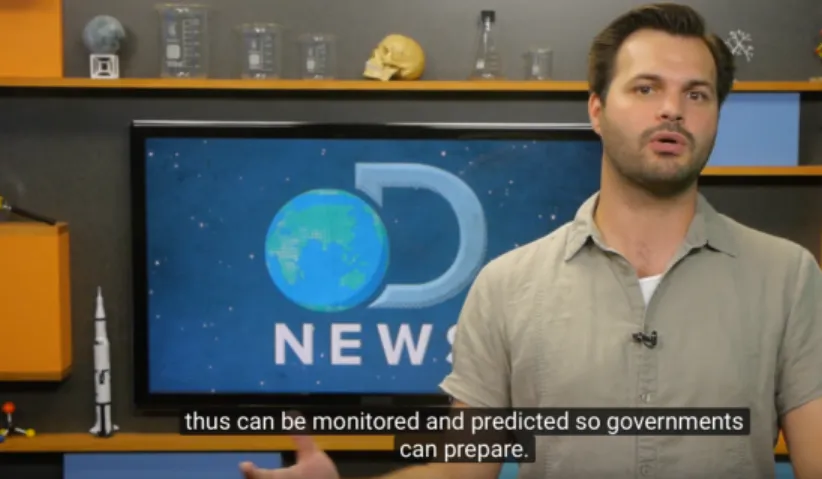
In an English Communications class, I showed a five-minute captioned video clip to the class. The clip was about the formation of El Nino, which was different from the usual movie clip I let the class watch. The clip was more educational. It consisted of graphics depicting how
El Nino influenced the environment and alternating graphics of a teacher explaining the
mechanism of El Nino (see Figure 1). After watching the clip, to my surprise, no one could recall what El Nino was. Several students were able to recognize a few terms and mostly from their prior knowledge. What was more intriguing and unexpected was that almost half of the class commented that the added caption was distracting because they did not know where to look, which contradicted their previous unanimous support for captioning. Some students also reported that the teacher in the video did not do a good job explaining the phenomenon, and they could have learned better if there had been an animation explaining El Nino.
Figure 1. A screenshot of the clip about El Nino.
Students’ responses to the clip led me to questions:
1. Why did captioning seem to be favored in some videos but not in others? 2. Did graphics of a teacher promote learning when he or she was teaching content
knowledge in a video?
3. What factors need to be taken into account when teachers choose or design instructionally appropriate videos for ESL students?
These questions sparked my interest in exploring captioning or on-screen text for ESL students’ learning, as well as other strategies to promote ESL students’ learning via multimedia.
After an initial review of the literature on this topic, I learned that:
1. Videos consisting of graphics and words can be seen as multimedia, because information in a video is conveyed via two or three media (Mayer, 2009). 2. Caption is the verbatim transcription of narration when narration is present.
Captioning was reported to be generally helpful as suggested by Montero Perez, Van Den Noortgate and Desmet (2013) in their meta-analysis study about captioning for ESL students, which could be translated that students preferred graphics + audio + text to graphics + audio.
Searching studies regarding multimedia and on-screen text, I found that Mayer’s modality and redundancy principles (2009) examined the role of on-screen text in multimedia learning and Mayer’s other research-based learning principles directed the design of effective multimedia lessons. Based on the redundancy principle (Mayer, 2009), students learn better from graphics + audio than from graphics + audio + text, which contradicts my students’ responses to on-screen text. I suspected that the redundancy principle might not apply for ESL students’ learning, which led to this study to identify empirical evidence to support my suspicion.
Problem Statement
Currently, multimedia technologies and tools, such as computer games and PowerPoint slides, are ubiquitously utilized in university classes to enhance content knowledge learning (Borgh & Dickson, 1992; Doty, Popplewell, & Byers, 2001; Goldenberg, Heinze, & Ba, 2004; Rose & Meyer, 2002). Studies reported that university students found multimedia lessons to be both interesting and effective (e.g. Shuell & Farber, 2001). Technological advances enable instruction featuring multimedia to be more accessible and popular in university classrooms (Goldenberg, Heinze, & Ba, 2004).
To explain and direct the design of effective multimedia lessons, Richard Mayer (2009) proposed the cognitive theory of multimedia learning and a set of multimedia learning principles. Multimedia lessons feature different combinations of words and graphics (Mayer, 2009, 2014). Such combinations are input modes through which new information is conveyed and taught. The modality principle and the redundancy principle (Mayer, 2009) are two fundamental principles that focus on input modes. According to the modality principle, the input mode of graphics + audio is more effective for learning than that of graphics + text. According to the redundancy principle, the input mode of graphics + audio is more effective for learning than that of graphics + audio + text. Text and narration that teach the content contain the same verbal information. Unlike on-screen keywords, text consists of complete sentences. Both principles suggest that text presented with graphics could lead to a visual channel overload, which hampers learning (Mayer, 2009).
Although a substantial body of studies are concerned with multimedia learning principles, most of these studies examined teaching new content when verbal information is in the learner's native language (Mayer, 2009, 2014a). Empirical studies on multimedia lessons in learner’s second language are scarce (Mayer, 2009, 2014a; Mayer, Lee, & Peebles, 2014; Sweller et al., 2011). The modality and redundancy principles discussed native English-speaking students’ learning but failed to address the increasing number of English-as-a-second-language (ESL) students in US university classrooms. For ESL students, on-screen text might promote learning by reducing the processing load from identifying and decoding unfamiliar English narration (Meskill, 1996; Winke, Gass & Sydorenko, 2010), which contradicts the detrimental role of text suggested in the modality and redundancy principles. Therefore, the modality and redundancy principles might not apply to ESL students’ learning.
What defines ESL students is their lack of English proficiencies, and most empirical studies on ESL students’ learning via multimedia investigate their development of language skills. For example, a plethora of studies (e.g. Aldera & Mohsen, 2013; Bird & Williams, 2002; Markham, 1999) addressed the influences of redundant verbatim on-screen text on ESL students' language development. However, ESL students come to US universities to learn more than language skills. More importantly, they learn content knowledge in specific disciplines with their native English-speaking peers in the same class. ESL students in US classrooms lack the
linguistic and cultural knowledge of native speakers (Shatz & Wilkinson, 2010). They are likely to be disadvantaged when presented with multimedia lessons designed for their native English-speaking classmates (Casado & Dereshiwsky, 2001; Huang, 2005, 2006). To ensure that a multimedia lesson is accessible for both native English-speaking and ESL students, multimedia learning principles (Mayer, 2009) that provide useful insights for the design of effective
multimedia lessons should also address ESL students’ learning.
For ESL students, verbatim on-screen text in a multimedia lesson could be helpful
because it reduces the cognitive processing needed for identifying and decoding fleeting auditory input (Clark & Mayer, 2011; Lee & Mayer, 2018; Meskill, 1996). Therefore, the modality and redundancy principles that suggest the detrimental role of verbatim text might not apply for ESL students’ learning. There was little empirical evidence to substantiate such an assumption.
Few studies addressed ESL students’ learning of content knowledge via multimedia. Even fewer studies focused on different multimedia input modes for ESL students’ learning of content knowledge (Mayer, 2009, 2014). The very few studies (Huang et al., 2016; Lin et al., 2016; Mayer, Lee, & Peebles, 2014; Shadiev et al., 2017) on ESL students’ content knowledge learning via input modes also suffered several common validity threats, such as lack of language control
of test instruments. Mayer et al. (2014) conducted a study and compared university-level ESL students’ content knowledge learning via the input mode of graphics + audio + text and that of graphics + audio. They found no statistical significance in the learning outcomes. However, Mayer et al. (2014) neither examined all three multimedia input modes in the modality and redundancy principles (i.e. graphics + text, graphics + audio, and graphics + audio + text), nor tested the applicability of the two principles for ESL students, which inspired this study.
Research Questions
This dissertation sought to extend the theoretical basis of Mayer's modality and redundancy principles by investigating all three input modes to include ESL students. More specifically, this study examined ESL students’ acquisition of new content knowledge in geography from a multimedia lesson about lightning in one of the three input modes. The three research questions are:
1. Which of the three input modes is the most facilitative for university-level ESL students’ learning?
(H0: ESL students learn the same from graphics + audio, as from graphics + text, and from graphics + audio + text.)
2. Does the modality principle apply to university-level ESL students’ multimedia learning? (H0: ESL students learn the same from graphics + audio as from graphics + text.)
3. Does the redundancy principle apply to university-level ESL students’ multimedia learning?
(H0: ESL students learn the same from graphics + audio as from graphics + audio, + text.) When I conducted Study 1 (Liu, Jang, & Roy-Campbell, 2018), the findings supported the ones of Mayer et al. (2014) that there was no statistically significant difference in ESL
students’ learning outcomes between the graphics + audio group and the graphics + audio + text group. However, I was unconfident of the results due to some implementational and
methodological issues that threatened the internal and external validity of the study. I therefore conducted a follow-up study (Study 2) to replicate Study 1 and extend it by addressing its limitations for more rigorous findings. This dissertation will elaborate on the procedure and findings of the two studies and compare their results to provide a deeper understanding of the applicability Mayer's modality and redundancy principles to ESL students.
Chapter 2 provides the theoretical framework and a review of the literature. Chapter 3 describes the methodology of the two studies, with an explanation of the how the second study addressed the limitations of Study 1. Chapter 4 provides the results of Study 2. Chapter 5 compares and discusses the findings of the two studies in relation to extending Mayer’s (2009) modality and redundancy principles.
Definitions Caption
In this study, caption is the synchronous verbatim on-screen text of auditory verbal input usually at the bottom of the screen. As a textual form of verbal input, caption traditionally supports the comprehension of the hearing impaired. Currently, caption is increasingly used for the learning and instruction of ESL students (Bowe & Kaufman, 2001; Evmenova, 2008; Linebarger, 2001).
Text and caption are interchangeable in this study. Text and narration convey the same instructional messages to teach content knowledge. Different from text that consists of complete sentences, on-screen keywords summarize text and are placed adjacent to their corresponding graphics.
ESL Students
In this study, ESL students refer to those who use English as a second language or a non-native language in non-native English-speaking higher educational institutions. These ESL students do not have comparable English proficiency as their native English-speaking counterparts, and often need support to meet the language demands for academic success (Cheng, Myles, & Curtis, 2004). ESL is sometimes interchangeable with a more accurate term of ESOL or English to Speakers of Other Languages.
Learning
In this study, learning is defined as “a change in the learner’s knowledge due to experience” (Clark & Mayer, 2011, p. 32). According to this definition, learning involves addition of new knowledge to learner’s knowledge base due to experience, such as a lesson or a treatment. Therefore, this study examines ESL students’ learning or acquisition of new content knowledge in geography from a multimedia lesson in one of three input modes.
Learning is different from comprehension in that comprehension does not entail acquisition of new knowledge.
Multimedia Lessons
A multimedia lesson is a lesson taught via multimedia. According to Mayer (2014a), “multimedia instruction consists of instructional messages that contain words (such as printed or spoken text) and pictures (such as illustrations, diagrams, photos, animation, or video)” (p. 385). As a defining characteristic of a multimedia lesson, graphics can be of any imagery forms such as pictures, animations, and illustrations etc.
A multimedia lesson is different from multimedia for other purposes that also combine graphics and words, such as movies and TV shows, in that it requires careful planning and
designing to achieve specific instructional goals. Multimedia Input Modes
Input modes of multimedia lessons consist of different combinations of graphics, text, and audio through which new messages are represented and shared. Since the presence of
graphics is a key characteristic of multimedia instruction (Mayer, 2009), multimedia input modes for instructional purposes in this study are comprised of graphics + audio, graphics + text, and graphics + audio + text.
CHAPTER 2
LITERATURE REVIEW
This chapter provides the theoretical framework, the relevant empirical studies, and addresses the gaps in the literature that led to the research questions.
Theoretical Framework
Since this study attempted to examine the applicability of Mayer’s (2009) modality and redundancy principles for ESL students, the theoretical framework that informs this study includes Mayer’s (2003) cognitive theory of multimedia learning on which the original modality and redundancy principles were based, the modality and redundancy principles (Mayer, 2009), and the cognitive load theory (Sweller, 2014) that explained ESL students’ multimedia learning. The Cognitive Theory of Multimedia Learning
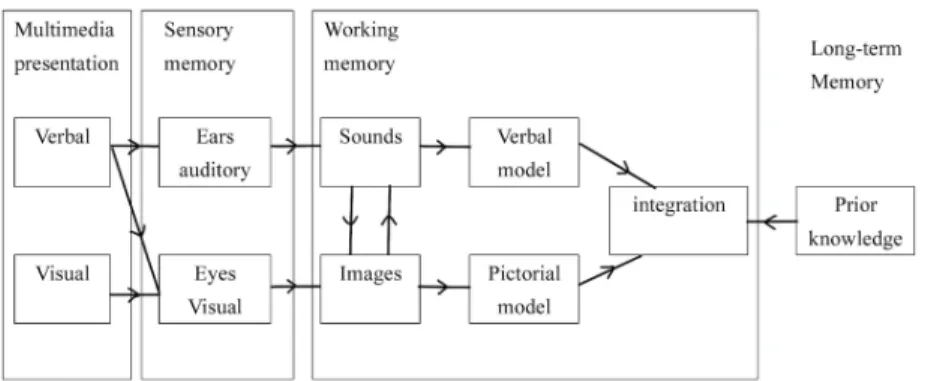
Figure 2. The cognitive theory of multimedia learning (adapted from Mayer, 1997, 2001, 2003, 2005a, 2009).
The cognitive theory of multimedia learning (illustrated in Figure 2) was proposed to explain multimedia learning and inform multimedia designs (Mayer, 1997, 2001, 2003, 2005a, 2009; Mayer & Moreno, 2003). The theory was based on three assumptions:
2. Each of the auditory and visual channels can only process a limited amount of information at any given moment;
3. Selection, organization, and integration of new information occur when multimedia messages are processed.
Multimedia learning is illustrated in Figure 2. Specifically, there are three memory stores: 1. Sensory memory briefly holds graphic, textual, and auditory inputs;
2. Working memory selects information from sensory memory for processing and integration;
3. Long-term memory stores knowledge base.
When new information is presented verbally and visually by multimedia, it is first received in learner’s sensory memory. In sensory memory, learner’s ears receive auditory input and eyes receive graphic and textual inputs. Then, the learner selects relevant sounds for processing in auditory working memory and relevant images for processing in visual working memory. Next, the learner organizes selected sounds into a verbal model and images into a pictorial model. Last, the learner integrates verbal and pictorial models with each other and with prior knowledge.
According to Mayer (2009), three demands are involved during multimedia learning: extraneous processing, essential processing, and generative processing.
1. Extraneous processing is the cognitive processing that is extraneous to the goal of the learning and should be minimized during the design of multimedia instruction. Mayer (2009) contends that the extra processing brought about by extraneous (but
sometimes interesting) graphics in multimedia instruction can overload students’ visual channel, and therefore should be removed.
2. Essential processing is the primary cognitive processing related to the goal of learning. It involves selecting and some organizing of information, which leads to rote learning or good retention of knowledge (Mayer & Moreno, 2003).
3. Generative processing is the deep cognitive processing related to the goal of the instruction. It involves both organizing and integrating the new information, which leads to meaningful learning. According to Mayer and Moreno (2003), meaningful learning involves both good knowledge retention and good knowledge transfer. Therefore, multimedia lessons should be manipulated to "reduce extraneous processing, manage essential processing, and foster generative processing" (Mayer 2009, p. 57) so that most cognitive resources can be reserved for effective learning.
The Redundancy Principle and the Modality Principle
Building on a number of empirical studies on university students’ learning via multimedia (Clark & Mayer, 2011), Mayer (2009) proposed 12 multimedia principles to direct the pedagogy of multimedia instruction. They are the multimedia principle, the coherence principle, the pre-training principle, the spatial contiguity principle, the temporal contiguity principle, the
segmenting principle, the modality principle, the redundancy principle, the signaling principle, the voice principle, the image principle, and the personalization principle. Of the principles, the modality and redundancy principles pertain to multimedia input modes.
The redundancy principle. According to the redundancy principle (Moreno & Mayer, 2002), in a multimedia lesson, people learn more effectively from graphics + audio than from graphics + audio + on-screen text. Because of the competition of cognitive resources in the visual channel (Moreno & Mayer, 1999; Tindall-Ford, Chandler, & Sweller, 1997), processing both graphics and text at the same time can lead to an overload of the visual channel, and
therefore impede learning. For example, in a geography classroom where students are watching a video clip to learn about El Niño, there is no need for the instructor to turn on the closed captions (i.e. verbatim on-screen text) while the clip is being played. Processing both graphics and text could overload students’ visual channel and distract them from effective learning.
Later, Mayer and Johnson (2008) went on to extend the redundancy principle by examining redundant keywords from the narration next to the corresponding portion of the diagram. They modified the original redundancy principle, because they found that redundant keywords led to superior performance in the subsequent knowledge retention test. Based on the cognitive theory of multimedia learning, keywords direct learners’ attention to target content knowledge, and placing keywords next to their corresponding graphics aids the organization and integration of the target content knowledge, and therefore facilitates generative processing and promotes learning. Mayer (2014c) also believed that “the modality principle and the redundancy principle can be modified by including a minimal number of words on the screen mainly, to help highlight the main points and to concretize technical or unfamiliar terms.” (p. 68). For example, in a video clip about bees, students can benefit if the text of “beehive” is placed adjacent to the graphics of a beehive on the clip. In this case, the added short text does not lead to a visual channel overload. Instead, it facilitates the integration and organization of new information for more effective generative processing, which promotes learning.
The modality principle. According to the modality principle (Moreno & Mayer, 1999), students learn more effectively from a multimedia message delivered in graphics + audio than in graphics + on-screen text. The principle also stems from the assumption that competition for cognitive resources in the visual channel from the simultaneous presentation of graphics and text can easily lead to a cognitive overload of the visual channel (Moreno & Mayer, 1999). Such an
overload is not conducive to the integration and organization of new information, and therefore, generative processing for effective learning is undermined. For example, an animation with auditory explanation can be more effective for learning the concept of photosynthesis than the same animation with explanatory text on the bottom of the screen.
Of the three input modes involved in the redundancy and modality principles as illustrated in Table 1 (i.e. graphics + text, graphics + audio, and graphics + audio + text), the input mode of graphics + audio should be the most conducive to learning. Since text in the other two modes of graphics + audio + text, and graphics + text could lead to a visual channel
overload, generative processing for effective learning is undermined. Table 1
Comparisons of Input Modes in the Modality and Redundancy Principles
Note:✔ indicates the input mode involved; ✔✔ indicates the more effective input mode. Conditions for the two principles. According to Mayer (2014b), there is a need to “delineate the boundary conditions under which the principles apply” (p.67). He argued that the modality principle might not apply “when the verbal material contains technical terms, is in the learner’s second language, or is presented in segments that are too large to be held in the learner’s working memory” (Mayer, 2014b, p. 65) and the redundancy principle could become invalid “when the learners are experienced, the on-screen text is short, or the material lacks graphics” (Mayer, 2014b, p. 63).
Input Modes The Modality Principle The Redundancy Principle
Graphics + Text ✔
Graphics + Audio ✔✔ ✔✔
Additionally, Clark and Mayer (2011) discussed the conditions for the redundancy and modality principles. First, the modality principle applies on the condition when graphics and their corresponding verbal commentaries match and are presented at the same time. Second, when the multimedia presentation is complex and is in a rapid continuous fashion, text will easily lead to visual channel overload. Third, the redundancy principle applies when verbal information and graphics are shown together at a fast-continuous pace. Fourth, when
terminology is present, written words should be provided, because they “aid cognitive processing by directing the learner’s attention” (Clark & Mayer, 2011, p. 144). Clark and Mayer (2011) also argue that when the instructional language is not learners' native language, they might have difficulty processing the spoken words of the instructional language, and therefore on-screen text could support understanding and should be available.
Although both Mayer (2014b) and Clark and Mayer (2011) believed that language learners might benefit from on-screen text, there is little empirical evidence to support such an assumption. This study filled this gap by comparing all the three input modes to examine if text indeed supports ESL students’ learning.
Verbal message and its graphics in the two principles. At the core of the redundancy and modality principles (Mayer, 2009) is the assumption that simultaneous presence of graphics and text can cause overload in a learner’s visual channel. In other words, the modality and
redundancy principles only are relevant when both verbal and non-verbal components appear in the multimedia presentation. This echoes the multimedia principle suggesting the need to add graphics to instruction for better learning outcomes (Mayer, 2009). When there are no graphics or when the multimedia principle is not followed, the modality and redundancy principles do not apply (Mayer, 2014b).
Additionally, for the modality and redundancy principles, Mayer (2009) failed to discuss a common condition that verbal messages (textual and auditory) and their corresponding
graphics need to closely match. When a verbal message (textual and auditory) and its
corresponding graphics do not completely match, there is a possibility that text does not cause visual channel overload. For example, when an instructional video is showing a biology
professor sitting in a chair talking about photosynthesis, the graphics (i.e. the talking professor) does not match the verbal message (i.e. the process of photosynthesis). In this case, students might give little attention to the graphics, because the graphics provide little support to the learning of the content knowledge. Graphics and text might not overload the visual channel. Therefore, only when graphics are closely related to audio or text, does the modality and redundancy principles apply. This condition also echoes the coherence principle (Mayer, 2009) that stresses the importance of eliminating extraneous information not conducive to learning. Therefore, in this study, to examine the applicability of the modality and redundancy principles to ESL students, graphics are controlled to match their verbal messages in the multimedia lesson, which is elaborated in Chapter 3.
Other multimedia learning principles and the two principles. To examine the
applicability of the modality and the redundancy principles for ESL students’ learning, variables that might influence the applicability of the two principles should be removed first. Among the variables are certain multimedia learning principles. During the design of an effective
multimedia lesson, multiple multimedia learning principles (Mayer, 2009) are usually taken into consideration. At the core of the modality and redundancy principles is the assumption that simultaneous presence of graphics and text overloads visual channel and thus undermines learning. Therefore, the multimedia principles that have an impact on the assumption might
become conditions of the modality and redundancy principles. In addition to the above-discussed multimedia and coherence principles, some other multimedia learning principles individually can impact the applicability of the modality principle, the redundancy principle, or both for native English-speaking students.
The segmenting principle and the two principles. The segmenting principle states that people learn better if a multimedia lesson is segmented based on his or her own pace(Mayer, 2009). When the learner controls the pace of a multimedia lesson, redundant text is unlikely to add to his or her processing demands to cause visual channel overload (Clark & Mayer, 2011) because learner-controlled pace provides the learner with ample time to fully process all
incoming inputs. In such a case, the redundancy principle stating that graphics + audio + text is less conducive to learning than graphics + audio might not apply. Similarly, if the learner can control the pacing of the multimedia lesson, then the modality principle can become less salient (Clark & Mayer, 2011, Moreno, 2006), which is supported by an empirical study of Cheon, Crooks and Chung (2014) who suggested that active pause controlled by the learner had
counteracted the modality principle. In this study, to investigate the applicability of the modality and redundancy principles for ESL students, the segmenting principle was not followed in the multimedia lesson to ensure that the modality and redundancy principles were not counteracted due to its presence.
The contiguity principles and the two principles. Audio and text in the modality and redundancy principles need to be simultaneously presented near their corresponding graphics to ensure effective learning (Clark & Mayer, 2011), which echoes the spatial contiguity principle (Mayer, 2009) suggesting text being placed next to its corresponding graphics, and the temporal contiguity principle (Mayer, 2009) suggesting audio being presented at the same time with its
corresponding graphics. For example, when audio is not in line with its corresponding graphics, learners need to utilize additional cognitive resources to make sense of the incoming auditory input. This is not conducive to learning and should be avoided. Therefore, both the spatial
contiguity principle and the temporal contiguity principle were followed in the multimedia lesson of this study.
The image principle and the two principles. According to the image principle (Mayer, 2009), a talking head in a multimedia lesson is of little help to learning and should be removed. For the modality and redundancy principles, graphics in a multimedia lesson need to visually demonstrate their corresponding verbal message. When graphics, such as a talking head, is unsupportive to the target verbal message and do not facilitate learning, learners might adjust their viewing and neglect the graphics. In such circumstances, graphics of a talking head and text do not overload the visual channel. Therefore, when the image principle is not followed, the modality and redundancy principles do not apply, which is supported by empirical evidence. Huang, Shadiev and Hwang (2016) and Shadiev, Huang and Hwang (2017) used the same talking head in their multimedia lesson about photography. They both observed that redundant text promoted learning and the redundancy principle did not apply. Therefore, to examine the applicability of the modality and redundancy principles to ESL students’ learning, the condition that the graphics visually demonstrated the verbal message was followed in the multimedia lesson of this study.
The combination of multimedia learning principles and the two principles. As discussed above, each of the multimedia principles— the coherence principle, the spatial contiguity principle, the temporal contiguity principle, segmenting principle, and the image principle—has an impact on whether text and graphics together would overload the visual channel, and hence
the applicability of the modality and redundancy principles. The discussion about the modality and redundancy principles is built on an effective multimedia lesson conducive to learning. Ineffective multimedia lessons, such as one with asynchronous words and graphics that
contradict the temporal contiguity principle (Mayer, 2009), would not be used for instruction in the first place, let alone for comparisons of different input modes for the modality and
redundancy principles. Therefore, certain multimedia learning principles simultaneously apply in an effective multimedia lesson to ensure its conduciveness to learning.
Unlike other studies on multimedia input modes for ESL students’ learning (e.g. Mayer et al., 2014), the initial Study 1 examined the modality and redundancy principles for ESL students when the multimedia lesson was controlled by following a combination of the multimedia
principle, the coherence principle, the spatial contiguity principle, the temporal contiguity principle, the pre-training principle, the signaling principle, the voice principle. The multimedia lesson in this study was controlled to also follow the personalization principle, the image principle, and the modified redundancy principle, none of which were explicitly explained in Study 1. The control of the multimedia lesson of this study is elaborated in Chapter 3.
Uncontrolled multimedia lessons, such as one that follows the segmenting principle (Mayer, 2009) or is learner-controlled, do not guarantee the conditions for the modality and redundancy principles, and the findings about the applicability of the modality and redundancy principles for ESL students could be due to the controlled multimedia lesson, which is a threat to internal validity. Therefore, to investigate the applicability of the modality and redundancy principles for ESL students, a combination of multimedia learning principles was followed to control the multimedia lesson in this study, which ensures that the multimedia lesson was conducive to learning, and the conditions for the modality and redundancy principles were met.
ESL students and the cognitive theory of multimedia learning. Based on empirical studies on native English-speaking students, the cognitive theory of multimedia learning and the modality and redundancy principles (Mayer, 2009) were proposed to direct designs of effective multimedia instruction for native English-speaking students. ESL students were excluded from the discussion. According to the cognitive theory of multimedia learning (Mayer & Moreno, 2003), text simultaneously presented with graphics leads to an overload in the visual channel and hinders learning, which is also the foundation for the modality and redundancy principles.
However, when a multimedia lesson is presented in English text and audio, ESL students’ less proficient English reading and listening skills (Nelson, Balass & Perfetti, 2005; Hirai, 1999; Wong, 2001) might compromise the modality principle and redundancy principles that include English text and audio. The applicability of the two principles for ESL students has not been directly examined until Study 1 (that will be elaborated later).
The Cognitive Load Theory
The cognitive load theory (Sweller, 2014) consists of a few assumptions: 1. There are two kinds of memory: working memory and long-term memory; 2. New information must be stored in working memory for some time before it is
processed and becomes integrated into permanent memory;
3. Working memory is short-term and limited in its cognitive capacity in holding the amount of information at once.
Therefore, when a learning task requires much working memory capacity or too much information is presented at the same time, working memory can become overloaded and much of the new information will be lost (Sweller, 2014).
Types of cognitive load. According to the cognitive load theory (Sweller, 2014), there are three kinds of cognitive load: intrinsic cognitive load, extraneous cognitive load, and germane cognitive load.
Intrinsic cognitive load is related to the inherent characteristics or difficulty of the target content knowledge (e.g. calculating 9+3) and it cannot be altered; extraneous cognitive load is irrelevant for learning and results from poor instructional designs (e.g. the redundant verbatim on-screen text in a PowerPoint presentation) that consume unnecessary cognitive resources; germane cognitive load is directly related to schema construction and contributes to learning (e.g. relating the new information to prior knowledge), and therefore, should be maximized with instructional intervention.
An effective instructional design needs to address the limitations of working memory by minimizing the extraneous cognitive processing that is not conducive to learning so that more cognitive resources in the working memory can be allocated to germane cognitive processing that leads to learning (Sweller, 2014).
ESL students and the cognitive load theory. The cognitive load theory also focuses on the content knowledge learning of native English-speaking students, while ESL students were not considered in the discussion. ESL students who are learning new knowledge via English have not mastered the automatic processing of English auditory input comparable to their native English-speaking counterparts. ESL students “may have difficulty in segmenting the incoming flow of sounds into discreet words and therefore must allocate their limited cognitive processing resources to consciously perceiving each word” (Mayer et al., 2014, p. 653) and they“ have to spend cognitive resources on decoding unfamiliar sounds that move by rapidly.” (Lee & Mayer, 2018, p. 650). At this time, a big portion of cognitive resources in the working memory is
allocated to identifying and decoding English auditory input, and limited resources are available for comprehension and other deeper processing tasks, which negatively impacts ESL students’ content knowledge learning.
Added verbatim text can reduce the intrinsic cognitive load resulting from decoding incoming English auditory input (Meskill, 1996), which allows more cognitive resources to become available for learning. According to Lee and Mayer (2018), for university students whose first language was not English, “presenting multimedia lessons as video and printed text is a way to reduce cognitive load and support deeper learning.” (p. 650). For ESL students’ content knowledge learning, to provide redundant verbatim on-screen text might “preserve word
availability (as spoken words are transitory), making it easier for students to encode the words” (Mayer et al., 2014, p. 653). Similarly, verbatim text “helps learners segment what might otherwise be an incomprehensible stream of speech” (Winke, Gass & Sydorenko, 2010, p. 65). Similarly, Jung (1990) suggested that redundant text could “diminish the decoding load placed upon the learner by the unrefined audio signal of authentic speech” (p. 208-209). Additionally, to discuss the amount of cognitive demands brought about by audio and its verbatim text, Meskill (1996) acknowledged that the cognitive demands for second language learners to decode the auditory input were strong, and argued that the availability of text in ESL students’ multimedia instruction could enable students to “attend to overall meaning derivable from multiple
representations of input”(p.185), and “support comprehension of the message as opposed to drawing attention to its constituent parts” (p.185). Lambert (1986) argued that on-screen text in multimedia instruction could serve as advance organizers that scaffold and support auditory input to reduce working memory load.
To summarize, based on the cognitive load theory, verbatim on-screen text of auditory input reduces ESL students’ identifying and decoding load, which promotes their learning. Text in the Modality and Redundancy Principles for ESL Students
As explained above, the modality and redundancy principles did not focus on ESL students. The roles of on-screen text in the two principles are different for native English-speaking students and ESL students as illustrated in Table 2. On the one hand, the modality and redundancy principles imply the detrimental role of added text for both native English speakers and ESL students, because it leads to a visual channel overload. On the other hand, added text can promote ESL students’ learning by reducing the identifying and decoding load of English audio (Mayer et al., 2014). Although Clark and Mayer (2011) also believed that language learners could benefit from added text, the facilitative role of text was not empirically verified, nor was the applicability of the modality and redundancy principles for ESL students.
Table 2
Roles of Text for the Two Populations Based on the Two Theories
Therefore, this study attempted to fill this gap by comparing ESL students’ learning from the three input modes (i.e. graphics + audio, graphics + text, graphics + audio + text) in the modality and redundancy principles in order to examine the applicability of the two principles for ESL students.
The Media Debate
Text The Cognitive Theory of Multimedia Learning
The Cognitive Load Theory Native English
Speakers
Text and graphics lead to a visual channel overload.
Added text leads to a working memory overload.
ESL Students Text and graphics lead to a visual channel overload.
Text reduces the identifying and decoding load of L2 auditory input.
The great "media debate" has centered around media’s influence on learning. Clark (1983,1994) and Kozma (1991,1994) are two contending parties in the debate.
Based on the results of a meta-analysis investigating the influence of media on learning, Clark (1983) claimed that media did not influence learning under any circumstances, and he argued that it was instructional methods rather than media that had the most influence on
learning. Clark (1999) utilized a metaphor that a truck that delivered food would never influence the nutrition of food in the truck to describe the relationship between media and learning.
Komza (1991) believed that media was more than a vehicle for delivery. Kozma (1991) attempted to negate Clark’s (1983) claim by proposing a new theory outlining the synergy of content, media, and interaction between learner and environment. He argued that media varied by technology, symbol systems, and processing capabilities, and certain medium attributes were more suitable than others for a given task (Kozma, 1991). However, Clark (1994) proposed the replaceability test implying that there were always a variety of attributes that could produce the same learning goal.
Kozma (1994) contended that “if we can find a relationship between media and learning then we will be able to see how technology influences learning”(p. 8). This study examined if the three multimedia input modes of graphics + audio, graphics + text, and graphics + audio + text would lead to different learning outcomes for ESL students, which was an opportunity to test if there was a relationship between media and learning. Findings of this study could provide new evidence to the debate.
Previous Studies
What defines ESL students is their insufficient English proficiencies. Therefore,
than content knowledge learning. In this section, empirical studies that examined input modes and their influences on adult ESL students’ comprehension and vocabulary acquisition were reviewed and discussed, so were several studies examining input modes and their efficacy for ESL students’ content knowledge learning. The input modes include any one featuring audio, graphics and text. Studies on language learning for ESL students mainly focus on vocabulary acquisition and comprehension.
Graphics and ESL Students’ Language Learning
According to Mayer (2009), presence of graphics is a defining characteristic of multimedia instruction. The multimedia principle (Mayer, 2009) states that people (i.e. native English speakers) learn better from graphics and texts than from texts alone, supporting adding graphics for better learning. Compared with native English speakers, ESL students have
incomparable L2 English listening and reading proficiencies to access verbal messages; however, they are equally able to access messages through graphics. Empirical evidence supports adding graphics for better language learning of adult ESL students (Akbulut, 2007; Granoff &Whiting, 2010; Rivas, 2011; Shin, 1998; Smidt & Hegelheimer, 2004; Tsou, Wang, & Li, 2002; Wagner, 2010).
Graphics and ESL students’ vocabulary acquisition. Non-verbal input of graphics including pictures, illustrations, and animations etc. was found to be able to complement verbal input for better learning of L2 target words (Akbulut, 2007; Rivas, 2011; Tsou, Wang, & Li, 2002). Only Akbulut (2007) targeted adult rather than young ESL students. He examined three types of interactive multimedia annotation and their efficacy to advance university-level ESL students’ vocabulary learning. The three types of multimedia annotations were: multimedia textual definitions (i.e. text), multimedia textual definitions with pictures (i.e. text + graphics),
and multimedia textual definitions with videos (i.e. text + graphics + audio). Graphics were found to have significantly improved ESL students’ performances in both immediate and delayed posttests (Akbulut, 2007).
Graphics and ESL students’ comprehension. Empirical studies (Granoff &Whiting, 2010; Guichon & McLornan, 2008; Shin, 1998; Smidt & Hegelheimer, 2004; Wagner, 2010) indicated that added graphics aided in ESL students’ comprehension.
Granoff and Whiting (2010), Shin (1998), and Wagner (2010) all examined the influences of added graphics on comprehension by comparing the input mode of graphics + audio with that of audio alone. In the early study of Shin (1998), 83 university ESL students were randomly assigned to either a video (i.e. graphics + audio) group or an audio only group. A pretest of multiple-choice questions assessed listening proficiency before the experiment. Posttest results showed that ESL students in the video group outscored those in the audio only group in listening comprehension. The author suggested that added graphics in the video led to superior listening comprehension. However, an issue with the design of this study was that the two versions of the post-test were not identical. The posttest for the audio-only group was modified to eliminate long silences and to correct grammatical errors, while the posttest for the video group was not. Even though the posttest for the video group was harder, adult ESL students in the video group still outperformed those in the audio-only group in comprehension.
Similarly, Wagner (2010) examined the effect of graphics on university-level ESL students’ listening test performance. Two hundred and two university ESL students from various ethnic backgrounds participated in the study. The randomly assigned experimental group was tested with a video (i.e. graphics + audio), while the control group was tested with an audio. The listening posttest scores across two genres of test materials indicated that ESL students in the
graphics-enriched group outscored those in the control group in overall scores and in scores of both genres, which suggested that the added graphics led to superior listening comprehension. Additionally, Granoff and Whiting (2010) investigated university-level ESL students’
comprehension of a story from a video (i.e. graphics + audio), and from auditory input alone. They found that added graphics did facilitate ESL students’ comprehension of the story.
Smidt and Hegelheimer (2004) incorporated three input modes in their discussion. The researchers compared university-level ESL students’ listening comprehension from three
conditions of a talking head, a talking head with keywords, and a talking head with an illustration slideshow (i.e. added graphics). Illustrations were found to have yielded statistically significant gains in enhancing listening comprehension. This finding supported a more complex study of Guichon and McLornan (2008) who compared native French-speaking university students’ comprehension of a BBC recording from four input modes of audio alone, audio + graphics, audio + graphics + L2 (i.e. second language) text, audio + graphics + L1 (i.e. first language) text. Results of a production test also indicated that added graphics significantly increased students’ comprehension.
In summary, added graphics seemed to have had a positive impact on ESL students’ language learning. In other words, the multimedia principle that added graphics facilitates learning (Mayer, 2009) seemed to also apply to ESL students’ language learning. However, there is little empirical evidence about the applicability of the multimedia principle for ESL students’ content knowledge learning.
Text and ESL Students’ Language Learning
The input mode of graphics + audio + text has been widely compared with the mode of graphics + audio to investigate the efficacy of added text or caption on the development of L2
English proficiency. As a textual form of verbal input, caption (i.e. verbatim on-screen text of auditory input) is traditionally used to support auditory input for the hearing impaired. Currently, caption is increasingly used for the learning and instruction of ESL students (Rodgers & Webb, 2016). However, the benefits of caption for ESL students’ language learning are less conclusive.
Caption and ESL students’ vocabulary acquisition. Empirical studies focused on examining ESL students’ incidental vocabulary learning from captioned (i.e. graphics + audio + text) and non-captioned (i.e. graphics + audio) video clips. Caption was found to have a
facilitative impact on ESL students’ vocabulary acquisition (Aldera & Mohsen, 2013; Bird & Williams, 2002; Markham, 1999). Markham (1999) explored the impact of captioned videotapes on advanced adult ESL students’ listening word recognition. One hundred and eighteen ESL students were randomly assigned to a caption group and a non-caption group. The instructional material consisted of episodes from two separate educational television programs. The results of listening tests revealed that caption greatly enhanced students’ performance in identifying the words both on the videotapes and on the tests. Additionally, Bird and Williams (2002) conducted one of the most robust and fundamental experiments along this line. They investigated if a bimodal presentation of L2 English novel words would affect the learning of the words. In their study, new vocabulary was presented to advanced ESL students under three conditions: (a) text + audio, (b) text alone, and (c) audio alone. Recognition of spoken words and memorization were assessed. Posttest results indicated that the mode of text + audio led to superior recognition memory of spoken words and non-words compared with the other two input modes. The
researchers argued that the bimodal input mode of text + audio promoted word learning, because the processing of auditory input was facilitated by text. In a recent study by Aldera and Mohsen (2013), native Arab-speaking ESL students watched an animation under one of three conditions:
(a) graphics + audio + text + keyword annotation, (b) graphics + audio + text, and (c) graphics + audio. After four weeks, the students completed vocabulary recognition and vocabulary
production tests. The ESL students in the two groups with added text were found to have significantly outperformed those in the graphics + audio group in both vocabulary tests.
Additionally, Koolstra and Beentjes (1999), and Neuman and Koskinen (1992) both focused on young ESL students and reported that captioned videos led to gains in L2 word recognition. Montero Perez, Van Den Noortgate and Desmet (2013) conducted a meta-analysis and found that there was a large effect of caption on L2 vocabulary learning.
Caption and ESL students’ comprehension. Different from the general consensus on the facilitative role of caption for ESL students’ vocabulary learning, mixed findings about the role of caption for ESL students’ comprehension were observed.
Caption promoted ESL students’ comprehension. Guichon and McLornan (2008), Hayati and Mohmedi (2011), Huang and Eskey (1999), and Toh, Munassar and Yahaya (2010) all examined ESL students’ comprehension of authentic English-speaking videos with and without caption. In all those studies, ESL students watching with caption on performed better in
subsequent comprehension tests. Additionally,Chung (1999) compared four types of viewing conditions in terms of their influences on comprehension. Adult Taiwanese students were
randomly assigned to four conditions: graphics + audio, graphics + audio + text, graphics + audio + advance organizers, and graphics + audio + text + advance organizers. The presence of both text and advance organizers was found to have led to the best comprehension, and caption was also found to have promoted comprehension.
The reverse redundancy principle that caption promoted rather than impeded
students’ comprehension, some researchers (e.g. Bird & Williams, 2002) suggested that caption was likely to promote greater depth of spoken-word processing. Some also argued that caption “helps learners segment what might otherwise be an incomprehensible stream of speech” (Winke et al., 2010, p. 65). Others (e.g. Jung, 1990) believed that caption was able to reduce the
cognitive resources used for decoding English auditory input for better comprehension.
Other findings about caption and ESL students’ comprehension. Due to different research questions, different methodologies, and mixed findings, it remains inconclusive if caption promotes ESL students’ comprehension.
Rodgers and Webb (2016) examined university-level Japanese ESL students’ comprehension of long and short episodes of an authentic TV program with or without the availability of caption. Comprehension tests indicated that captioning seemed to have only led to superior comprehension of difficult episodes, and comprehension of short episodes did not seem to have been affected by the presence of caption. Additionally, Livesidge (2000) also examined university-level Japanese ESL students’ comprehension of two different movie clips (i.e.
Graduate and Airplane). Caption seemed to be beneficial to understanding only in some comprehension tests but not others. According to these studies, multimedia materials can be a possible variable in investigating captioning for ESL students’ comprehension.
Aldera and Mohsen (2013), and İnceçay and Koçoğlu (2016) observed that the added caption impeded listening comprehension. Aldera and Mohsen (2013) found that caption facilitated vocabulary acquisition. However, comprehension test results indicated that the animation-alone (i.e. graphics + audio) group significantly outscored the caption (i.e. graphics + audio + text) group in listening comprehension. The researchers argued that caption might have created extra cognitive load and therefore hindered comprehension. Similarly, İnceçay and
Koçoğlu (2016) compared university-level Turkish ESL students’ listening comprehension scores from four input modes: audio, graphics + audio, graphics + audio + text, and audio + PowerPoint presentation. Listening comprehension test results revealed that the mode featuring text led to the lowest test scores, and the mode was also reported to have caused ESL students most confusion and anxiety in comprehension.
A majority of studies (Aldera & Mohsen, 2013; Bird & Williams, 2002; Chung, 1999; Huang & Eskey, 1999; Hwang & Huang, 2011; Liversidge, 2000; Neuman & Koskinen, 1992; Toh et al., 2010) assessed comprehension right after the treatment. Studies addressing long-term development of literacy skills are of greater empirical significance (Markham, 1999). Hwang and Huang (2011) examined development of long-term comprehension skills. Two groups (i.e. 40 for each group) of freshmen in a university in Taiwan watched two versions of instructional videos with and without caption one hour every two weeks. After ten weeks, reading comprehension test (as part of General English Proficiency Test developed in Taiwan) was administered in order to determine if captioning could promote learners' reading comprehension achievement. The results showed no significant gains in reading comprehension competence for the students who watched captioned videos. The researchers suggested that the treatment was only ten weeks long, and it might be too short for any statistically significant gains to manifest.
Limitations of studies addressing caption and ESL students’ language learning. Studies on caption and ESL students’ language learning suffered from the following common validity issues that informed this study.
First, as Liversidge (2000) suggested, “very few studies have provided a way by which material could be assessed for suitability for in-class or self-study activities” (p. 22-23). Although there is evidence suggesting that multimedia lessons could be a variable (Livesidge,
2000; Rodgers & Webb, 2016), none of the multimedia materials in the discussed studies were controlled. For a multimedia lesson, how text was used by ESL students could be related to how useful the graphics were: the more useful the graphics in facilitating learning, the less ESL students needed verbatim text to support their learning. For example, Toh et al. (2010) used an instructional animation to examine the impact of captioning for ESL students’ comprehension. In their animation, the graphics consisting of a few cartoon pictures conveyed little supportive information to comprehension. In this case, ESL students might need to adjust their viewing by neglecting the graphics and resorting more to caption to support comprehension, which could account for the finding that captioning facilitated comprehension. However, if graphics, such as the ones in the multimedia lesson of Mayer et al. (2014), were highly supportive to learning, ESL students might adjust their viewing by neglecting L2 English verbal input and focusing on
graphics to learn, which could account for the finding of Mayer et al. (2014) that captioning did not promote learning. Therefore, usefulness of graphics can have an impact on how text is used by ESL students, and then learning outcomes from the modes of graphics + audio and graphics + audio + text. If the multimedia material is not controlled, it is hard to come to any rigorous conclusion about the role of caption for ESL students.
Second, certain conditions for vocabulary learning were not addressed in the multimedia materials of the discussed studies. Conditions, such as motivation (Tseng & Schmitt, 2008), the number of exposures or repetitions of target words (Webb, 2007), noticing or conscious attention (Schmidt, 1990), engagement and attention (Butler et al., 2010), and contextualization (Brown, 1993), can have an impact on the outcomes of vocabulary learning. For example, students watching an uninteresting video clip without any learning goal in mind might pay very little attention to the information in the clip, which makes learning difficult to happen. Therefore,
when these conditions were not controlled, input modes alone could not account for the learning outcomes, which was a threat to internal validity.
Additionally, Montero Perez and Desmet (2012) questioned the construct validity of the vocabulary tests used in the studies and argued, "only a small part of vocabulary knowledge measured by the pre and posttests can be attributed to the treatment" (p.156). According to Nation (2001), knowing a word should involve knowing its form, meaning, and use. Different aspects of vocabulary knowledge are evaluated by vocabulary tests of different formats. It is important to determine which aspect of vocabulary knowledge (of meaning, form, or use) should be assessed (Nation, 2001) and what kind of vocabulary knowledge (e.g. receptive vs.
productive) is most suitable to measure in a vocabulary test (Joe, Nation, & Newton, 1996). Therefore, it is inaccurate to conclude that added text has a positive effect in learning vocabulary, since no relevant studies addressed all aspects of form, meaning, and use.
Last, among the studies addressing L2 vocabulary acquisition from multimedia, technical or content specific vocabulary (Diamond & Gutlohn, 2006) that is often an important part of content knowledge learning was barely examined. Since the related studies focused on ESL students’ language learning rather than content knowledge learning, the highly content-specific technical terms were hardly investigated. According to Hinkel (2005), 20% to 30% of the running vocabulary in content area text is comprised of technical vocabulary that is often formally defined. The meanings or definitions of technical terms are often the focus of vocabulary learning as well as content knowledge learning (Hinkel, 2005). Therefore, it is of empirical significance that ESL students’ learning of technical vocabulary from multimedia instruction is examined.
controlled in terms of the usefulness of graphics. Additionally, technical terms were explicitly taught in the multimedia lesson of this study, and the subsequent vocabulary test on terminology focused on assessing the retention of meaning.
Multimedia Input Modes and ESL Students’ Content Knowledge Learning
Since a vast majority of ESL students come to the US to learn content knowledge in specific disciplines rather than merely improve their English skills, it is essential that
instructional multimedia made for native English-speaking students also enhance the content knowledge learning of ESL students. Content knowledge learning refers to the learning of new information in a specific content area (e.g. a chemical reaction, and a meteorological
explanation). However, since the defining characteristic of ESL students is their lack of comparable English language skills, a great body of research on ESL students (e.g. Bird & Williams, 2002; Chung, 1999; Davey & Parkhill, 2012; Etemadi, 2012; Garza, 1991; Guichon & McLornan, 2008; Hayati & Mohmedi, 2011; Huang & Eskey, 1999; Liversidge, 2000; Markham, 1999; Markham & Peter, 2003; Rowland 2007; Toh, Munassar, & Yahaya, 2010) focuses on the development of their language skills. Empirical studies comparing different multimedia input modes and ESL students' learning of content knowledge are scarce until recently.
Audio and ESL students’ content knowledge learning. Kozan, Erçetin and Richardson (2015) examined native Turkish-speaking university students’ learning about tornado formation. There were two input modes: audiovisual (i.e. graphics + audio + text) and visual only (i.e. graphics + text). Learning was assessed by immediate retention and transfer tests, as well as delayed retention and transfer tests. Results revealed a significant combined effect of the input mode, time, and working memory capacity on knowledge retention. Specifically, the added audio