1
INTRODUCTION ... 8
1.1
Summarization ... 8
1.2
System Requirements ... 10
1.2.1 USB DVR3101
、
3104 USB cards system requirements ··· 10
1.3
System Specifications ... 11
2
HARDWARE INSTALLATION ... 12
2.1
Video Capture Card Hardware ...
Error!
Bookmark not defined.
USB DVR3101 USB Card Hardware ··· 12
USB DVR3104 USB Card Hardware ··· 13
Alarm Board Hardware ···
Error! Bookmark not defined.
Connect Audio Signal ···
Error! Bookmark not defined.
2.2
Install Video Capture Card Driver ... 13
3
MAIN DISPLAY INTERFACE ... 18
3.1
Display Control Panel ... 18
Display Control Panel ··· 18
Display Modes ··· 19
Flip Pages ··· 19
Auto Dwell display Mode ··· 20
Quick Switch ··· 20
3.2
Login ... 20
3.3
Record ... 21
Record Modes ··· 21
Record Setup ··· 22
Record Status Panel ··· 23
Manual Record Mode ··· 24
Sensor Alarm Record Mode··· 24
Motion Detection Record Mode ··· 24
Schedule Record ··· 25
Recycling Record ··· 25
4
SYSTEM SETUP ... 26
4.1
Basic Configuration ... 27
4.2
Video Configuration ... 30
Set Motion Detection Area ··· 33
Set Motion Detection Sensitivity ··· 33
4.4
Schedule configuration ... 33
4.5
Motion Detection Alarm Configuration ... 34
Alarm Triggering Conditions Configuration ··· 34
Alarm Record ··· 37
Alarm Output ··· 38
Auto Mail Function ··· 39
4.6
E-map Configuration ... 42
Edit a map ··· 42
View the map ··· 43
4.7
P.T.Z Control Configuration ... 44
Protocol Setup ··· 45
Serial ports setup ··· 46
4.8
Users Configuration ... 47
Change User rights ··· 47
Add User 48
Delete User ··· 49
5
P.T.Z CONTROL ... 49
6
RECORD SEARCH AND PLAYING
BACK ... 54
6.1
Record Search ... 55
6.2
Record Playing back and Control ... 56
6.3
Other Functions ... 60
Record File Backup ··· 60
Delete Record Files ··· 61
Capture Pictures ··· 62
Image Zoom In / Out ··· 65
7
REMOTE SURVEILLANCE AND
PLAYING BACK ... 68
7.1
Remote Live Surveillance... 68
Remote Surveillance Server Configuration ··· 68
Remote Surveillance Client-side Setup ··· 69
Remote Playing back server Configuration ··· 76
Remote Playing back Client-side Setup ··· 77
Remote Playing back Configuration and Control ··· 82
7.3
Mobile Surveillance ... 86
Introduction to Mobile Surveillance ··· 86
Client Configuration of Windows Mobile ··· 86
Client Configuration of Symbian 60 ··· 88
APPENDIX ... 93
APPENDIX 1: DIFFERENCES AMONG
USB DVR SERIES CARD ... 93
APPENDIX 2: FREQUENTLY ASKED
QUESTIONS ... 94
Appendix 2.1 About Installation ... 94
Appendix 2.1.1 Cannot Install the SuperDVR Driver ··· 94
Appendix 2.1.2 Why cannot run SuperDVR at the windows 2003
operate system? ··· 94
Appendix 2.1.4 Can’t find USB DVR series Devices in Device
Manager 95
Appendix 2.2 How to Use SuperDVR ... 95
Appendix 2.2.1 Meanings of the indicator lights ··· 95
Appendix 2.2.2 How does the different record mode work? ··· 96
Appendix 2.2.3 How to set recycling record mode on the system? ··· 96
Appendix 2.2.4 How to set auto reboot function? ··· 96
Appendix 2.2.5 How to quickly use the schedule record function? ··· 97
Appendix 2.2.6 What are the byte rates for different image qualities
from highest to normal? ··· 97
Appendix 2.2.7 The frame rate seems to be lower than what I set? ··· 97
Appendix 2.2.8 Why I can’t select more channels to backup? ··· 97
Appendix 2.2.9 When should I select manual Gain Control? ··· 97
Appendix 2.3 How to Use Network Function .. 98
Appendix 2.3.1 How to monitor on the client-side? ··· 98
Appendix 2.3.2 Why I can’t download the client-side software? ··· 98
Appendix 2.3.3 Why can’t the server be configured at the client-side?
98
Appendix 2.3.4 Why I can’t see the images? ··· 99
Appendix 2.3.5 What should I do if the Internet speed is quite slow? 99
Appendix 2.3.6 Why I can’t start WebCam server or RPB server? ··· 99
Appendix 2.4 Other questions ... 100
Appendix 2.4.1 Why computer display doesn’t work, and why I can’t
access window system? ··· 100
Appendix 2.4.3 Why the screens display is unstable with dithering and
water-wave images? ··· 100
Appendix 2.4.4 Why does it delay to play back, and it’s slow to close
and open the driver? ··· 100
Appendix 2.4.5 Why I can’t play back? ··· 101
Appendix 2.4.6 Why do I see some gray blocks on time progress bar
area when play back? ··· 101
Appendix 2.4.7 Why do I see some old record sections that can’t be
covered when play back? ··· 101
Appendix 2.4.8 Precautions on changing system time ··· 102
Appendix 2.4.9 If the system time must be changed, please do the
following preparations first: ··· 102
Appendix 2.5.0 How to use REPAIRDB to repair SuperDVR database?
102
APPENDIX 3 QUICK START FOR USING
103
APPENDIX 4 FUNCTION TREE ... 106
1 Introduction
1.1 Summarization
Thank you for choosing our digital video capture cards.
1Channel, 4 Channel, 8 Channel and 16 Channel cards adopt MPEG4 compression format, and enable maximum 16 channels real-time or none real-time surveillance. Our cards are mature and cost-effective products that should be your ideal choices. They enable synchronous audio and video compression and transmission, with their powerful compression rate and network transmission function. They are widely used in banks, intelligent communities, traffic management units, medical systems, educational systems, armed forces and so on.
This manual is suitable for SuperDVR 4.3, which supports , USB DVR3101, and USB DVR3104 cards.
In this manual, you will learn how to install the hardware and driver (software), and how to setup the systems of this range of products. Please make sure your operations with the products are strictly in accordance with the manual, so as to keep the stability of the digital surveillance systems.
The following are standard functions of the products: (1) Schedule record mode
Users can choose any term in a day to record and set up record modes, i.e. sensor alarm record, motion detection record, manual record, Schedule Record.
(2) Motion detection mode
Motion detection areas are adjustable and maximum 16 areas for each channel. Users can also set motion detection sensitivity for each channel. The
it will stop recording after a certain period, this function is adjustable by users. (3) Sensor alarm record mode
With extra alarm board, the system enables alarm input and output. (4) Recycling record mode
Users can set recording storage sequence for HDD partitions. The recording storage will automatically swap to the next partition when it is full. If all the partitions are full and recycling record mode is enabled, the former recorded data will be covered by new data. Users can also set HDD minimum storage alarm. Then once the present storage space is less then the minimum storage and recycling record mode is not enabled, the record will automatically stop.
(5) P.T.Z control function
Support a number of decoders. Users can control multiple speed domes and integrative cameras, including pan, tilt, zoom, focus and iris adjustment for P.T.Z devices. Support preset point and auto scout.
(6) Users management
Different users have different rights, user names and passwords, so as to ensure system security.
(7) Multi-channel display
Support different multi-channel display modes, full screen display and auto dwell display.
(8) Watch dog function
The 16 Channels card has watchdog function. In case SuperDVR driver or windows system is frozen, the watchdog will restart the computer and login SuperDVR system again automatically.
(9) One PC support 1 to 4 cards of the same model, the maximum frame rate can be 200 fps and 16 channels at most.
(10) Support 320x240 / 640x480 (NTSC), 352x288 / 704x576(PAL)
(11) Image color adjustable for each channel, including contrast, lightness, hue and saturation.
(12) MPEG4 compression format, greatly reduce HDD usage
(13) Powerful video playing back functions, including playing back, pause, stop, fast-forward, single-frame play and image capture.
(14) Support advanced search mode. Users can search by date/time, camera, record mode, and random combination of the three methods.
(15) Support recorded files backup, delete by date/time, camera. (16) Convenient to extend system functions by software upgrade. (17) Supply multiple languages, including Chinese (Traditional), English, German, Spanish, Portuguese and other customized languages.
(18) CPU and storage resources saving by advanced technology
(19) Remote Surveillance and P.T.Z control through LAN, Intranet, and Internet.
(20) Support alarm pre-record. (21) Support buzzer, email alarm out.
(22) Can greatly decrease fragmented files while using NTFS partition. (23) User-friendly graphical user interface.
1.2 System Requirements
1.2.1 USB DVR3101、3104 USB cards system requirements
Car d
PC Module
USB DVR3101, USB DVR3104
Motherboard Intel 845/865/915 series HDD 80G minimum RAM 256M minimum
VGA GeForce2,GeForce4,FX5200,ATI Rage128
OS Windows 2000(SP4 above)/2003(SP1 above)/XP(SP2 above) DirectX 9.0
USB 2.0
Table1.3 USB DVR3101、3104 system requirements
Special Notice:
If recorded disk partition’s format is FAT32 and the system has run for a long time, the system will create a lot of data fragments that may results in system runs slowly. It’s recommended to make disk defragmenter every 10 to 30 days. We strongly suggest that use NTFS format for record disk partition.
1.3 System Specifications
Format: PAL/NTSCResolution: USB DVR3101、3104 support 320x240 / 640x480
(NTSC), 352x288 / 704x576(PAL), Maximum Frame rate per channel: 25 fps (PAL), 30 ftp (NTSC)
Screen set: resolution 1024×768, color quality 16 bits or 32 bits Compression code rate: 50kbps – 1.2Mbps
Data format: MPEG4
2 Hardware installation
USB DVR3101 USB Card HardwareAudio input(white)
Video input (yellow)
USB Connection
Fig2.14 USB DVR3101 USB Video Capture Card
Video input (yellow) Audio input (white)
7
Fig2.15 USB DVR3104 USB Video Capture Card
Notice:
Make sure that your PC USB interface is 2.0; USB DVR3101/3104 card can only support USB 2.0.
Please according to the following steps to safely remove the USB card: Right clicks on the Taskbar Stop device pull out the USB card.
Using USB DVR3101/3104 card with other USB device simultaneously may cause PC cannot identify USB card.
Do not insert two or more USB video capture cards simultaneously. Do not use with the other PCI video capture card simultaneously.
2.1 Install Video Capture Card Driver
Run Setup.exe, and the installation interface appears as below:Fig2.30 USB DVR series video capture card installation interface
Fig2.31 Welcome page
Select ‘Next’,
Fig2.32 Select video format
Select ‘Next’,
Fig2.33 Rate of progress of driver installation
After this process it begins to install the application package
SuperDVR, as below:
Fig2.34 Select installation pass
Select the suitable option, and click ‘Next’.
Fig2.35 Register application
Click ‘Next’,
Fig2.36 Driver and application installation finished
Click ‘Finish’
Now, after all the processes are finished, restart the computer and launch the surveillance program. It will create a shortcut on the desktop.
Fig2.37 Shortcut of SuperDVR
Notice:
In case users cannot run the SuperDVR program, users restart the computer.
3 Main display Interface
Run SuperDVR program and the main display interface appear as below:
Fig3.1 SuperDVR Main Display Interface
3.1 Display Control Panel
Display Control Panel
Fig3.2 Display control panel
space indicator, ‘Auto Dwell’ button, 1, 4channels display buttons. Every button has its built-in indicator light. When switch on and off the buttons, the relative indicator lights turn on and off to indicate the working status.
Notice: Users can judge which buttons are working by the color of the buttons.
Free space
Display Modes
Fig3.3 Display Modes Panel
Notice:
In case the card installed is 4CH CARD, then only 1CH and 4CH buttons are valid.
In case the cards installed are 2 pieces of 4CH CARDS or a piece of 8CH card, then only 1CH, 4CH, 6CH, 8CH, 9CH buttons are valid.
In case the cards installed are 4 pieces of 4CH CARDS or 2 pieces of 8CH cards or a 16CH card, then 1CH, 4CH, 6CH, 8CH, 9CH, 13CH and 16CH buttons are all valid.
Flip Pages
When the display mode is 1CH, 4CH, 6CH, 8CH, 9CH or 13CH,
click , system will display the next page according to the display mode.
1CH 4CH 6CH 8CH 9CH 13CH 16CH
In case users want to see all the channels in sequence, then click and enter Auto Dwell display mode.
Quick Switch
In case the present display mode is 4CH, 9CH or 16CH, by clicking any image or the present display mode is 6CH, 8CH or 13CH, by clicking the bigger image, the display will quickly switch to corresponding single channel display mode. When the present display mode is 6CH, 8CH or 13CH, by clicking any image other than the bigger one, users can change the position of the image with the bigger one. By clicking the single image again, it will return to the former display mode.
3.2 Login
Click , and login window appears. Input the user name and
password, the default user name is ‘SYSTEM’ with no password, users can access to the main interface. Users can change password for SYSTEM and create new user names and passwords once has entered the system.
Time & Date
Display Mode Panel
Login
Search and Playback Configuration PTZ Control Exit
Alarm out status Camera status
Fig3.4 Main Interface
3.3 Record
Record ModesAccording to different record triggering methods, USB DVR series video capture cards offer users with 4 kinds of record modes:
(1) Schedule record mode (timer)
(2) Manual record mode
(3) Motion Detection record mode
(4) Sensor Alarm record mode
Motion Detection record mode and Sensor Alarm record mode are together called as Alarm Record.
Multiple cameras record
In case users use multiple cameras to record, every camera works
camera ID, record date/time and record mode are all saved together with the record file.
Record Setup
Fig3.5 Record Configuration Panel
In the ‘Record Panel’ of the Basic Configuration page, users can set all kinds of necessary parameters for recording.
[Time stamp]: By selecting the options, the record date / time message appears in the record file images.
[Switch]: By selecting the options, users can turn on corresponding cameras. In case there is no camera for some channel, don’t select the option so as to save system resource.
[Manual record]: By selecting the options, the relative camera images will be recorded and saved all the time.
[Manual recording frame rate]: Select the record frame rate for manual record mode
[Schedule Record]: Schedule record option.
[Schedule Record Frame Rate]: Select Schedule Record frame rate [Motion Detection]: By selecting the options, users can set relative channels’ record mode as motion detection
[Motion Record Frame Rate]: Select record frame rate for Motion Detection record mode
users can select record frame rate here.
[Camera Security]: The users are divided into three standards: Normal user, Power user and Administrator. By selecting the options, only administrators can see the corresponding channels.
[Record Quality]: Select record image quality here.
[Audio In]: SuperDVR4.3 system can support one channel of microphone audio input signal on the PC motherboard and audio inputs on the card if it
has.
. Users can choose one video channel associate these audio signals.Note:
Users can select more than one record mode.
Record Status Panel
Fig3.6 Record Status Panel and Alarm Output Status Panel
Meanings of indicator light colors in row one are as below:
(1) Normal State
(2) Manual Record State
(3) Schedule Record State
(4) Motion Detection Record State
(5) Sensor Alarm Record State
(6)
Video Loss State
When the indicator light color turns into in row two, it means there
is alarm output. Manual Record Mode
Manual Record mode is the most commonly used record mode. In case there is any special event happens, users can select this record mode and record timely.
Note: You can select high frame rate for short time manual record, while select low frame rate for long time Schedule Record.
Sensor Alarm Record Mode
Users can use sensors to trigger sensor alarm record for relative
channels. At that time, the record status indicator light will turn red . Motion Detection Record Mode
It will enable the system to detect image changes and begin to record by activating motion detection and motion alarm record. For instance, somebody opens the door, and the system detects image changes and begins to record, then users can play back the recorded file and find out who opened door. When there is no movement, the system won’t record and that’s helpful for saving system resource, and convenient for searching for event record file.
The indicator light color in the record status panel is yellow .
Note: Users may need to setup in three places so as to enable motion detection record.
(1) Select ‘Motion Detection’ for certain channels in ‘Basic Configuration’
Detection configuration’
(3) Configure working schedule for certain channels in ‘Schedule configuration’
Schedule Record
Users can set working schedule for all kinds of record modes in
‘Schedule configuration’. The green light in record status panel shows the
corresponding channel is in Schedule Record mode. Users can change record
mode to manual record at any time, and the green light will chan into
blue light
ge
.
Please refer to chapter 4.4 for details. Recycling Record
If users enable Recycling Record function and all the selected HDD partitions are full, the former record data will be covered by the latest record data.
Users can set recording storage sequence for HDD partitions. The recording storage will automatically jump to the next partition when it’s full. If all the partitions are full and recycling record mode has been enabled, the new data will overwrite the former recorded data automatically. Users can also set HDD minimum storage alarm. Then once the present storage space is less then the minimum storage and recycling record mode hasn’t been enabled, the record will automatically stop.
4 System Setup
Click and enter the main setup interface.
Fig4.1 Basic Configuration
The definitions of the buttons in Fig4.1 are as below:
Basic Configuration
Schedule configuration
Video configuration
Motion Detection Configuration
Alarm Configuration
P.T.Z Configuration
User Configuration
Return
4.1 Basic Configuration
Click
and enter the basic configuration page where users can
setup the system or just use the defaults.
Fig4.2 Caption and General Configuration
[Dwell Interval.]: If users enable Auto Dwell function in the main interface page, users can set the dwell time of a page here.
[Caption]: There are four options, None, ID, Name and ID/Name for users to select for all the channels.
‘None’ means no title;
‘ID’ means camera numbers, i.e. 1, 2, 3 and so on
‘Name’ means camera names, i.e. Cam1, Cam2 and so on
‘ID/Name’ means both camera number and camera name, i.e. 1/Cam1, 2/Cam2 and so on
[Resolution]: There are four options,320×240、352×288、352×240、640×
480 for users to select for all the channels. As the video may have interlace
lines if the users select 640x480, users may choose for
solve this problem, but it will occupy much more CPU loading.
[Call Monitor] Only USB DVR3101. 3104 have call monitor function at present. Users can connect another monitor to the card and select the display modes here.
The following is about record data storage. Please check Fig4.3
Fig4.3 Record data storage precept
Above, SuperDVR system shows all the available HDD partitions for users. Users can select one or more of the partitions that will be used in sequence from up to bottom. Please refer to chapter 3.3.8 to learn more about recycling record.
In the following area in the basic configuration page, users can input the computer user name and password in the relative boxes. Then when restarting the computer system, it will access to the system with the user name and password input in the boxes.
Fig4.4 Computer System Reboot setups
As the windows system may become unstable after a couple of days continue operating, which will cause SuperDVR system unstable? Then users
should reboot the computer. Select and set the interval by day, which will guide the system to reboot automatically according to the setups.
Click to return to the main display interface.
4.2 Video Configuration
Click and enter the video configuration page as below. Users
can change the values of corresponding items, i.e. contrast, brightness, hue, saturation, auto gain, by drawing the levers on the bars. Click ‘Default’, and all the values will return to the default value.
Fig4.5 Video Configuration
Definitions of the setup items:
[Brightness]: set image brightness [Hue]: set image hue
[Saturation]: set image Saturation
[Auto Gain]: users can set it as auto or manual. Only 4CH Card and 16CH card have this function (except USB DVR3316 because of only having manual gain function).
[Default]: load defaults, i.e. set the first four items value as 5000 and the last item value as 0.
4.3 Motion Detection configuration
Click and enter Motion Detection Configuration page, USB
DVR3101, USB DVR3104 as below:
Fig4.6 Motion Detection Configuration
[Sensitivity]: users can set motion detection sensitivity here. [Select all]: select all the areas of the channel as detection area [Clear]: clear all the detection areas and then users can select customized detection areas by cursor.
Fig4.7 USB DVR3316’s configuration page
[Speed]: motion detection sensitivity. [Block Number]: set grid’s number. [Defaults]: set as default.
In case users want to customize the detection areas for a certain channel, first select the camera, then select ‘Clear’ and drag the cursor in the box in the left side. Now, users can see a green box appears which shows the motion detection area. Users can select maximum 16 customized areas for each channel.
By click ‘Clear’, users can clear all the selected areas. Set Motion Detection Sensitivity
Draw the bar and select a certain value for motion detection sensitivity.
4.4 Schedule configuration
Click and enter Schedule Configuration page as below:
Fig4.8 Schedule Configuration
configuration options. Every channel has three kinds of record modes, i.e. schedule record, motion detection record and sensor alarm record. We provide users to set schedules from Sunday to Monday separately for all of the three record modes. Sensor alarm record mode has the highest priority among all record modes. Here users can set schedules for it.
When users need to edit schedule for a channel, first select the camera name in the three record modes group, and select the color bars on the right side, then select ‘Edit’ to edit schedules. Click ‘Add’ to add schedule for a certain channel.
Note: the added schedule should not be reduplicate to the former settings.
Click ‘Delete’ to delete schedule. Click ‘Clear All’ to delete all the schedules of a certain channel.
See the Fig4.8 and learn how to edit schedules for a channel:
Fig 4.9 Edit Schedule
4.5 Motion Detection Alarm Configuration
Alarm Triggering Conditions Configuration
The system can receive alarm both from local place and network
Fig 4.10 Local place alarm triggering conditions configuration
Relative Explanations:
[Buzzer]: Users can select whether to open the computer buzzer if the alarms have been triggered and also select how long the buzzer rings
[PreRecord]: Users can select whether to enable alarm pre-record and also pre-record time.
[Motion Holding Time]: Motion sensor may detect some movement, only if the movement lasts for a period exceeding the default time, then the alarm record will begin and buzzer beeps.
[Disk Shortage Alarm]: If the HDD available space is less then the set value, the buzzer will beep if ‘Buzzer’ has been selected.
(2) Alarm output terminal in LAN
Fig 4.11 Alarm output terminal in LAN
Click ‘Add’ to add alarm output terminals in LAN. Look the figure below:
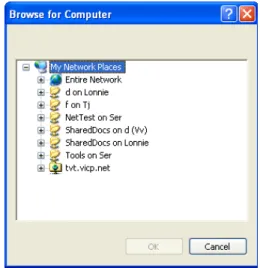
Fig 4.12 Add alarm output terminal in LAN
Find the terminal computer and click ‘OK’, and users can see the name of the selected terminal will appear in the box as below:
Fig4.13 List of alarm output LAN terminals
Note: this function is only valid in LAN, not in Internet.
Fig4.14 Alarm trigger method configuration
Every sensor can trigger multiple channels to record. For example, if users select CAM1, CAM4 and CAM5 for Sensor2, then once the sensor is activated, CAM1, CAM4 and CAM5 will begin to record. Users can also select the voltage, high and low, for alarm signals.
Fig4.15 Alarm output Configuration
[Video Loss]: Users can select alarm output for this option. For example, users select alarm_out1 and alarm_out3 and remote alarm for video loss. Then video loss of any channel will trigger alarm_out1, alarm_out3 to show red light in the Alarm output status panel (refer to Fig3.6 for reference), and the system will give out related warning message to the terminals in List of alarm output LAN terminals (refer to Fig 4.12)
[Disk Alarm]: when HDD available space is less than the set value (refer to Fig4.9), it will trigger selected alarms.
[Sensor 1]: If users have mounted sensors, when the sensors have been activated, then it will trigger the selected output alarms.
[Motion 2] - [Motion 16] 4CH card has maximum 4 motion alarms, 8CH card has maximum 8 motion alarms, and 16CH card has maximum 16 motion alarms.
Press
in the main interface and access to the following
Alarm Configuration area where users can make motion detection alarm
setup, sensor alarm setup and short of HDD space alarm setup. Now users
can select the above-mentioned alarms to be output by Auto Mail.
Fig 4.16 Alarm output configuration
Click ‘Auto mail’ icon on the top left side and enter the following
area to make Auto Mail setup:
Fig 4.17 AutoMail setup interface
In this area, users can set receiver and sender’s E-mail SMTP
server and address. Note: the address of receiver and sender can be the
same.
Sender’s SMTP Server Sender’s E-mail Address Receiver’s E-mail Address
Sender User Name Sender’s Password E-mail Subject
To test the settings, click ‘Send Mail Test’. If all settings are okay,
message ‘Message Sent Successfully’ will pop up. If some settings are
wrong, there will pop up corresponding warning message.
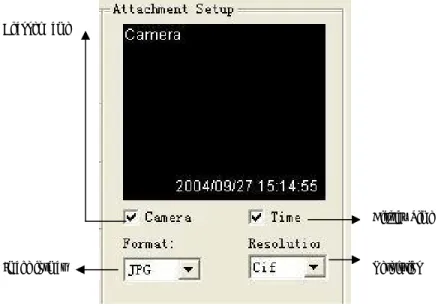
Enable ‘Attachment’, then the present image when an alarm
triggered will be sent to appointed mailbox.
Channel Name
Fig 4.19 Attachment Setup
Note: for every alarm event, only one picture will be sent.
Users can put into a short message to make introduction of the Auto
Mail, so the receiver will know what happened.
Image format
Display Time
Resolution
4.6 E-map Configuration
A E-map is used to show full geographic range covered by the
whole monitoring system in the form of map .An E-map has the feature
of simple operation and direct display of status and it is generally graded
or tiered in the form of a tree diagram.
Edit a map
In windows OS,Save related pictures in the folder of “My
computer”,As bmp or jpg.
Click
to enter “Emap”
→
“Emap Edit”,press right key
of“Load Picture”in the default interface of map and select the required
map file in the related folder,open the file and the map will be displayed
in this interface,as fig 4.20
Fig4.20
map,maximum 16 cameras can be set simultaneously,Click “change
icon”of camera by right key to change icon and click “delete”to cancel
camera.After editing,click right key in the map and select “save map”to
save the current map.
A gray map icon can be drawn to the corresponding position in the
map on the right and set it as a sub-map of the current map,or click the
gray map icon on the left by right key and select “open”to build a new
map.And you can also click the blue map icon on the left by right key,and
select “rename”to change name of the map or select “close” to cancel this
map.
View the map
Click
to enter Emap,where the user can view distribution of
all cameras in the map, as fig4.21
Fig4.21
signal.Select “Auto show”,in case of accident alarming,an alarming
screen will pop out automatically and you can know about the alarming
position rapidly. Click the camera head by right key to show the screen on
the spot.
Note:
1.
The map tree currently supports three levels and it is invalid for
addition exceeding three levels.
2.
For loading of a picture, when any side of length and width of the
picture exceeds size of picture frame,it will be enlarged and
shortened proportionally and standard size of picture frame is
833*678.
3.
On this interface,click camera by right key to display the spot and
the 3316 card does not support this function temporarily.
4.
If “Auto close”is set in case that E-map pops up by automatic
alarming, the E-map interface set with “Holding time”without any
operation and alarm will be close automatically. “Auto Close”is
invalid when the E-map is opened manually.
5.
The map in the E-map is the default demonstration map,and the user
can invite an engineering merchant to make the practical map or
draw a map by their own according to their actual needs, then scan
and save it in the computer to picture.
4.7 P.T.Z Control Configuration
Click
and enter the following area:
Fig4.20 PTZ configuration panel Protocol Setup
Users can select different protocols, serial port number for P.T.Z devices.
Fig4.21 P.T.Z protocol setup
Relative Definitions:
[Port]: users can set serial port number [Protocol]: P.T.Z device communication protocol
Select Camera
Select Protocol
Select PTZ Protocol
PTZ Address
Select COM
Serial ports setup
Users should firstly enable the P.T.Z control function of a certain camera and select a port number in P.T.Z Protocol Setup (refer to Fig4.22), and then set corresponding parameters in the area below:
Fig4.22 P.T.Z serial port setup
Relative explain:
[Port]: users can set port number
[Baud Rate]: set P.T.Z device Baud Rate, default value is 9600 [Data bits]: default value is 8
[Parity]: odd and even parity bit, default Null [Stop Bits]: default value is 1
Notice:
Users should look into the P.T.Z device and get the Baud Rate, Protocol, and Address first, then set their values accordingly.
Click and access the following area:
Fig4.23 User configuration
After installing the SuperDVR system, it will automatically create an administrator user of which user name is SYSTEM with no password. Users can use this user name to log in the system and ‘Add’, ‘Edit’ and/or ‘Delete’ users’ parameters.
Change User rights
Select a user in User Configuration area (refer to Fig4.23), and click ‘Edit’ and enter Edit User area, as below:
Fig4.24 User password and rights edit
Users can edit user’s password and rights here, but not the user name. Note: The system offers three kinds of rights:
Administrator: this kind of user of the highest rights to change all the settings and playing back.
Power user: this kind of user cannot access Basic Configuration and change settings, but has all the other rights of Administrator.
Normal: this kind of user can only access SuperDVR main display interface (refer to Fig3.1)
Notice:
Administrators can change Power users and Normal users’ rights, but can’t change other administrators’ rights.
Add User
Click ‘Add’ in User Configuration (refer to Fig4.25), and access the following area:
Fig4.25 Add user
Input user name, password, confirm password and select user rights, and then click ’OK’.
Delete User
Select the user name in User Configuration (refer to Fig4.26), and click ‘Delete’, and confirm delete. See below:
Fig4.26 Confirm delete user
5 P.T.Z control
Click in the SuperDVR main display interface (refer to Fig3.1)
and access to the following area:
Fig5.1 P.T.Z control interface
Users can control P.T.Z devices by the function buttons on the right side, see as below:
Goto Preset Point Preset and Group
PAN and Tilt
Focus Zoom In/Out
Iris
Fig5.2 P.T.Z Control function buttons panel
In the upper circle, there are five function buttons, i.e. upward button, downward button, leftward button, rightward button and stop button. The other buttons are Focus buttons (+ and -), Zoom buttons (+ and -), Iris buttons (+ and
-). Click and to increase and decrease the corresponding values.
When users need to utilize P.T.Z control, first enter P.T.Z Control Interface (refer to Fig5.1), and click the corresponding channel (users can see a red fringe around the channel), then users can begin to control the enabled P.T.Z control enabled camera.
Notice:
After pressing left mouse button on any function button in P.T.Z Control Function Buttons Panel (refer to Fig5.2), PTZ device starts moving, when user releases it, PTZ device stops moving.
Fig 5.3 Speed adjustment
Users can select dif ed, Focus speed and
Zoom
al rotating speed
ed ferent Pan speed, Tilt spe speed for P.T.Z devices.
[Pan Speed]: set horizont
[Tilt Speed]: set vertical rotating speed [Focus Speed]: set camera focus speed [Zoom Speed]: set zoom in/ zoom out spe
Click
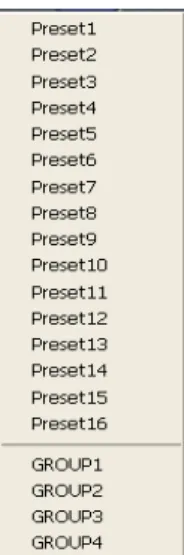
and a pop-up window will appear; users can choose
different preset or group set.
Fig 5.4 Preset and group select
Click to set Preset point and change Preset point name. Every
Group includes multiple Preset points. In case users select preset1, preset2 and preset3 for group1, preset1, preset2 and preset3 will be automatically accessed in sequence after users select group1 for auto scout.
Fig 5.5 Preset
Click
, a pop-pup window as following will
appear:
[Dwell]: users can set the dwell time of a page here.
6 Record Search and Playing back
Click in the SuperDVR Main Display Interface (refer to Fig3.1)
and access to the following areas:
Fig6.1 Search and playing back Interface
This interface is divided into 4 parts, i.e. record search area, record playing back area, record play area and other functions area.
Press and return to the live surveillance status.
Search By Date
Record Time Display
Search Original Files
Search Backup Files
Search Manual Record Events
Search Schedule Record Events
Search Motion Detection Events
Search Sensor Alarm Events
Fig6.2 Record search area
A, B and C marks the areas of three search methods. A: Search by date (range from Jan 1st, 1971 till now) B: Search in backup file and original file
C: Search by record mode. This is useful when user wants to look through
some important events.
Users can select one or above of the three searching methods to search for needed record file.
6.2 Record Playing back and Control
Fig6.3 Record playing back and control
Explain of the button function:
: Play / Pause
: Stop
: Play backwards. This button is valid when playing back by single channel
: Previous Section. This button is valid when playing back by single
: Next Section. This button is valid when playing back by single channel
: Previous Frame. This button is valid when playing back by single channel playing back pause mode
: Next Frame. This button is valid when playing back by single channel playing back pause mode
Users can select suitable play speed in the area as below:
Fig6.4 Play Speed Controller
The following area shows the record files of different channels:
Fig6.5 Record Files Browser
The upper bar shows the hours in a whole day. Click the bar, and it will be magnified 10 times, therefore users can see the detailed time marks. When searching for a certain section of the file, users can draw the scrolling-bar to the area that most likely contains the needed section. If necessary, click the bar once and see the magnified time marks for precise search.
The left side shows the available channels. When a certain channel has been selected for playing back, the background color will be highlighted, or it’s
The main area at the center gives details of the record files. Different colors of the bar show different kinds of record modes of the files. The following are the definitions of the color bars:
Manual Record Events Schedule Record Events
Motion Detection Record Events Sensor Alarm Record Events
Click to play selected record files. The system offers 1Ch, 4CH,
9CH and 16CH playing back modes. The following is multiple channels playing back control area:
Fig6.6 Multiple Channels Playing back Control
The system default playing back mode is one channel. That’s Camera1.
In case users need to change to other channels, then click and the
following channel configuration window will appear, as below:
Fig6.7 Channel Configuration Window for 1 Channel Playing back Mode
Note:
Take 16CH card for example. But in fact, 4 pieces of 4CH cards can make the same effect.
Users can select one channel from all the available channels for playing
In case user needs to play back 4 channels at the same time, then
click , and the following channel configuration window will appear, as
below:
Fig6.8 Channel configuration dialog for 4-channel playing back mode
Users can select any four channels from all the available channels for playing back.
The system offers quick select methods for users. For example: by selecting ‘Third 4 Channels’ Camera9, Camera10, Camera11, and Camera12 will be quickly selected simultaneously.
In case user need to play back 9 channels at the same time, then
click , and the following channel configuration window will appear, as
below:
Users can select any 9 channels from all the available channels for playing back. Users can also use the quick select methods by the system.
In case user needs to play back 16 channels at the same time, then
click , and the following channel configuration window will appear, as
below:
Fig6.10 channel configuration window for 16-channel playing back mode
Then click ‘OK’ to play back. Tips:
Click any channel and magnify it to see the single channel. Click again to return to the former playing back mode.
6.3 Other Functions
Record File Backup
Click and enter the following menu:
Fig6.11 Recorded files backup
Users can select corresponding cameras and copy the record files to another path in this area. This is the file backup function of the system.
The interface is divided into four areas:
A: Camera Selection Area
B: Time and Date Selection Area
C: Operation Area D: Information Area
In A area, users can select one or more cameras;
In B area, users can set start time/date and end time/date, and then backup the files recorded by channels selected in A area by the time interval;
In C area, users can set backup path Click ‘Start’ to backup files.
Delete Record Files
Click and the following window will appear:
Fig6.12 Delete recorded files
Users first select the channel on the left side, and then select start time/date and end time/date of the record files, click ‘Start’ to delete files. Capture Pictures
The definitions of the function buttons are as below:
: Capture picture
: Print setup
: Print captured picture
Notice:
Only in one channel playing back pause mode (refer to Fig6.1) this
function is valid.
When in single channel playing back pause mode, automatically the following color control panel (Fig6.12) will appear, by which user can make
saturation and hue, and press ‘Default’ to recover to the original settings.
Fig6.13 Color control panel
When in the single channel playing back pause mode, click and
the following window will appear as below:
Fig6.14 Capture multiple images in sequence
Select path and click ‘Save’ to save the picture. User can also print the images that have been captured.
Click and make corresponding print setup as below:
Fig6.15 Print setup
Click users can have print preview as below:
Fig6.16 Print preview
Select and then click or to move the
picture upward, downward, leftward and rightward. Select and then
click , to zoom in and out the image. Press
return to the original settings. Press ‘Print’ in the print preview window, users can print the image directly.
Image Zoom In / Out
When in single channel playing back state, the zoom control icons
will appear. Select and click on the channel will
zoom out the image. By clicking continuously, the image will be zoomed out
continuously. Select and do the some operations to get the opposite
effect. Click and recover the original size. Take the following three
Fig6.17 Example: original size
Fig6.18 Example: zoomed out
7 Remote Surveillance and Playing
back
7.1 Remote Live Surveillance
Our USB DVR series surveillance system supports Remote Surveillance through LAN, Internet and Intranet. Simply enable web cam function of the system on a computer which is connected to Internet, and the computer system will become an Internet web cam server. On any other computer that connects to Internet or the same LAN network, input the SuperDVR server address in IE browser, the end users can get high quality real time image from the server and also control the P.T.Z devices.
Remote Surveillance Server Configuration
Users should firstly enable the Web Camera Services in Basic Configuration (refer to Fig4.1) and set other settings as below:
Fig7.1 Web cam server configuration
[HTTP Port]: Web service & download service port, default value is 80 [Data Port]: data transmission port, default value is 1159
[Command Port]: control command port, default value is 1259 [Picture Quality]: default value is higher
Remote Surveillance Client-side Setup
On the client-side, users should firstly install the WebCam program. And the following is the detailed information.
Input the WebCam server IP address in Internet Explorer and the following page appears:
Fig7.2 Remote surveillance and playing back services selection
[Live Surveillance]: this option is for users to see remote live view. [Remote Playing back]: this option is for users to play back recorded files.
Notice:
In case the HTTP port setting is not 80 (80 is the default setting, commonly use), and when input the server IP address, users should add the port number after the IP address. For example, the server IP address is 211.148.96.234, and the port number is 81, then users should input http://211.148.96.234:81 .
Select Live Surveillance, and click ‘OK’ to install Remote Surveillance client-side program as below. In the next chapter, we will learn more about Remote Playing back.
When connecting to the server for the first time, then the following
Fig7.3 Inquiry for installing WebCam downloading component
Notice:
If users have already installed client-side program before and SuperDVR version has not been changed on the server, after inputting server address in IE browser, Fig7.9 will come out without downloading or installing WebCam.
Fig7.4 WebCam client-side driver initializing
After initialization has been completed, WebCam will be installed automatically.
Fig7.6 Default install path
Users can choose path by clicking ‘Browse’. Click ‘Next’ to continue:
Click ‘Next’ after input the folder name or select the default name, and then ‘Finish’ installation as below:
Fig7.8 Installation success
Then the WebCam main interface will appear as below:
Fig7.9 WebCam main interface
Click and input user name and password, as below:
Fig7.10 Login webcam
Click ‘Options’ and enter the advanced setting area. Users
can modify default Server IP
、
Data Port and Command Port .
Note:
The default User name is SYSTEM without password. Users can
After logging into server, you will get the first channel video from server, and you can adjust screen mode just like SuperDVR, the bellow is the WebCam surveillance mode interface.
Fig7.11 WebCam surveillance state
Alarm state monitor and PTZ control are all same as SuperDVR, we would not need to give detail explanation here.
7.2 Remote Playing back
Remote Playing back server ConfigurationFor using our powerful remote playing back function, users should first enable Web Cam service and Remote Playing back Service in Basic Configuration (refer to Fig4.1 and Fig7.12).
Fig7.12 Remote playing back service configuration
[RPB Port]: the default value is 13551 Note:
Uses can enable remote playing back service without running the SuperDVR. Just enter the installation folder of SuperDVR, and activate MediaServer, users can also enable the RPB service.
Once the remote playing back service has been enabled, there will be an icon on the taskbar to remind users the service has been activated.
Fig7.13 Remote playing back service activated
Remote Playing back Client-side Setup
Users should also first download and install playing back program. This chapter will guide users how to make it.
Input server address in IE browser, and the following interface appears:
Fig7.14 Remote surveillance and playing back services selection
Select ‘Remote playing back’ and click ‘OK’,
Notice:
In case users have already installed the remote playing back program before and SuperDVR version has not been changed, there is no need to download and install it again, it will go to Fig7.20 directly.
After initialization has been completed, users need to install the program. First select installation path as below:
Fig7.16 Default install path
Users can set another path by clicking ‘Browse’. Click ‘Next’ to continue:
Fig7.17 Register program folder name
Click ‘Next’ after inputting the folder name or selecting the default name, then the following figure appears:
Fig7.18 Playing back program installation process rate
Fig7.19 Installation success
Then the playing back client-side main interface will appear as below:
Fig7.20 Remote playing back client-side main interface
Corresponding Explanations:
: Log in : Minimum : Setup : Exit : Play : Pause
: Begin / Stop record
: Slow down playing speed
: Accelerate playing speed
: Play at the original speed
Remote Playing back Configuration and Control
7.2.1.1 Setup
Before logging in the server, first click
and make
corresponding settings,
Port No. IP address
Record file save path
Fig7.21 Client-side configuration
7.2.1.2 Log in Remote Playing back System
Click after making up certain configurations, and the following
window appears.
Fig7.22 Login remote playing back system
Input the right user name and password and enter the remote playing back main interface as below:
Note:
The default User name is SYSTEM with no password. Users can set user name and password at the server end (refer to Fig4.23).
Fig7.23 Remote playing back main interface
7.2.1.3 Control playing back
Select the time period for playing back
Once login the system, the setup button and login button are disabled.
Click and the following window appear.
Select the date / time, then click ‘OK’ to save the setting and return to the main interface. Click ‘Cancel’ to give up setting. The selected time / date will appear at the left bottom of the screen.
Play Control
Click and begin to play the recorded files. Press to
pause. Users can draw the lever as below to select time to play.
Fig7.25 Time control Lever
The following area is for users to control the play speed.
Fig7.26 Play speed control module
Remote Record
Click and begin to record remotely. And the icon changes
to . Click it again and stop recording. Users can select save path and
compression format before logging in the system.
7.3 Mobile Surveillance
Introduction to Mobile SurveillanceIn SuperDVR system, the mobile surveillance can be realized by connecting the mobile phone to the system. For time being, the function is supported by Windows Mobile system and Symbian Series 60 Developer Platform 2.0 intelligent mobile phone system. So far, the types of phones on which the function has been tested include mini 02, Xda II, Xda Atom, pocket PC phone edition, dopod 696, dopod 900, dopod 838, ASUS P525, which are based on Windows Mobile system, and Nokia 6260, Nokia N70, Nokia 3230, Nokia6680 based on Smybian Series 60 system.
Client Configuration of Windows Mobile
Server configuration on SuperDVR needs to be set before the function on phone is activated. Please refer to Section 7.1 “Remote Live Surveillance”.
Firstly activate the network access on mobile phone and then run “Internet Explorer” after the server configuration has been done. Input the server’s address and the connection is built up shown as below:
Figure7.27 connected to the server Click “PCam v1.0.6.5291”. A dialog box pops up:
Figure7.28 downloading dialog box Please click “Yea” to start installing:
Figure7.29 downloading status information PCam will be opened after the download is finished:
Figure7.30 Main layout of PCam
“Server”, “User” and “Password” and click “Go” to log on the server. Successful log on information appears if the server address, username and password are all correct.
Figure7.31 Log on system successfully
Channel one is the default displaying channel after log on successfully. Changing channel can be approached by selecting the channel in rolling-down menu of “Channel”:
Figure7.32 selecting channel Click “Stop” to disconnect the communication with the server. Client Configuration of Symbian 60
Server configuration on SuperDVR needs to be set before the function on phone
Firstly enable the network access on mobile phone and then run Web browser after the server configuration has been done. Input the server’s address and then the connection is built up shown as below:
Figure7.33 Open Web Browser
Input the server address in a new-built bookmark. Click this bookmark to connect to the server.
Figure7.34 Build a bookmark
Click “install package” to start downloading and a confirmation information window pops up after downloading is finished.
Figure7.36 Confirmation Information window System reminds of whether to install the “SCam” if clicking “Yes”:
Figure7.37 Installing information
Click “Yes” to start installing. A Scam shortcut icon appears on the desktop after the installation has been done.
Run “Scam” by clicking the icon:
Figure7.39 Main layout of Scam Enter the main menu by clicking “Options”,
Figure7.40 Main menu of Scam Click “Setting” to set the log-in information,
Figure7.41Configure log-in information Click “Login” to build up the communication with server,
Figure7.42 Connecting to the server
Figure7.43 Log on successfully
Appendix
Appendix 1:
Differences Among USB DVR Series
Card
Card Item USB DVR3101 USB DVR3104 Video Input 1 4 Audio In 1 2 Alarm Output 0 0 Alarm In 0 0 Relay Output N N Watch Dog N N Call Monitor N N Manual Gain N N\
Appendix 2:
Frequently Asked Questions
Appendix 2.1 About Installation
Appendix 2.1.1 Cannot Install the SuperDVR Driver
Possible causes:
(1) USB DVR series capture card hasn’t been installed. Before installing driver, users should install capture card hardware in the PCI slot in the computer case.
⑵USB DVR series capture card hasn’t been installed correctly. Please
unplug the card and install it again or change to another PCI slot.
⑶Not compatible with PC hardware.
Appendix 2.1.2 Why cannot run SuperDVR at the windows
2003 operate system?
Enabled Hardware Acceleration and DirectX Acceleration:
Hardware Acceleration: click properties of display's table setting advanced “Trouble shooting”, pull the hardware acceleration spooler of the page to full , click “ok” and Exit.
DirectX Acceleration: click “start” →“Run”, input “dxdiag” and click “enter”, Come into the “DirectX Tools”, select “Display”, click and enabled the
three buttons “DirecUSB DVRraw 、Direct3D and AGP Texture”.
Appendix 2.1.3 ‘Unspecified error’ in the End of Installation
Possible causes as below:
(1) On English version Window XP system, by using driver below SuperDVR3.0.2, the unspecified error will appear, as the databases
(2) Microsoft Windows system database has been destroyed. Reinstall windows system or try to install SuperDVR driver above SuperDVR3.1.1 to solve the problem.
(3) Relative Windows support files has been lost or been destroyed, need to reinstall window system, or try to install SuperDVR driver above SuperDVR3.1.1 to solve the problem.
Appendix 2.1.4 Can’t find USB DVR series Devices in Device
Manager
Enter the Device Manager and cannot find corresponding USB DVR series Devices, the possible cause may be as below:
(1) Windows system error. Restart computer.
(2) USB DVR series card error. Change for a valid one. (3) Install SuperDVR
Appendix 2.2 How to Use SuperDVR
Appendix 2.2.1 Meanings of the indicator lights
Grey- Normal state
Red—Sensor alarm
Yellow- Motion detection alarm Blue-Video loss
Bottle Green- Manual record state
Reseda- Schedule record state
Note:
Users can refer to Fig3.6 to learn more.
Users can set more than one record modes in Record setup (refer to Fig3.5), but actually, there is only one valid record mode for recording.
The priority order of the record modes is: Sensor Alarm Record > Motion Detection Record > Manual Record > Schedule Record
Appendix 2.2.3 How to set recycling record mode on the
system?
Select ‘Recycle’ in basic configuration, refer to Fig4.1.
Users can select multiple HDD partitions to save record files. It won’t cover former files until all the partitions’ available storage spaces are less than 100MB.
In case users haven’t enabled recycling record mode and the partitions’ storage spaces are less than 100MB, the alarm will ring and the HDD usage indicator will turn red.
Tips:
It is recommended that install SuperDVR into the partition installed with windows system (normally C:), and save record files in HDD partition D:
Appendix 2.2.4 How to set auto reboot function?
In case Microsoft Windows system continuously runs for a couple of days, the system may become unstable, therefore it’s suggested to restart the computer every few of days.
In the basic configuration (refer to Fig4.1), input Windows user name
and password (Note: not SuperDVR user name and password), and select
time interval, then the Windows system will automatically restart according to the set time.
In case the Windows system closed abnormally, i.e. power supply is cut
restart, and keep the settings as before. Tips:
Users do not need enable auto reboot function, but it’s suggested to input the Windows user name and password in the relative area, therefore when meeting abnormal system exit, users don’t need to be troubled to input Windows and SuperDVR user names and passwords.
Appendix 2.2.5 How to quickly use the schedule record
function?
Press ‘Shift’ or ‘Ctrl’ key, and draw the cursor in corresponding areas to make schedules for multiple channels.
Appendix 2.2.6 What are the byte rates for different image
qualities from highest to normal?
When on PAL system and the frame rate is 25 fps, bit rate for the highest image quality is about 120K Byte/s, and for the lowest image quality is about 30K Byte/s.
Appendix 2.2.7 The frame rate seems to be lower than what I
set?
There is frame loss in image switch therefore the real record frame rate is about relatively lower than the theoretic value.
Appendix 2.2.8 Why I can’t select more channels to backup?
Please draw the mouse in the channel selection area, or utilize Shift and Ctrl key for assistance.
Appendix 2.2.9 When should I select manual Gain Control?
turn to black and white, use manual gain control may of be helpful.
Appendix 2.3 How to Use Network Function
Appendix 2.3.1 How to monitor on the client-side?
First enable ‘Web cameras service’ in basic configuration (refer to Fig4.1).
Input the server Internet address in IE browser on the client-side, and the necessary web cam driver will be downloaded automatically, then users need to install the driver. After access the web cam main interface, click ‘login’ and input user name and password to log in the system. (Refer to Chapter 7 to learn more)
Appendix 2.3.2 Why I can’t download the client-side software?
The possible causes:
The client-side computer hasn’t properly connected to Internet or LAN. The server-end hasn’t enabled ‘web cameras service’
The default Http port is 80. It may be conflict with other Web servers, for example IIS. If true, please change another port.
Windows XP SP2 will block the OCX download. You should enable ‘Internet Option Æ Security Settings Æ Download unsigned ActiveX controls’.
Appendix 2.3.3 Why can’t the server be configured at the
client-side?
The possible causes:
It can not be configured at the client-side, when the server is being configured at the server-end.