SPECIEL ISSUE ON EDUCATIONAL EVALUATION & RESEARCH ISSN 2278-8808, SJIF 6.177
MAR-APRIL 2017, VOL- 4/31 www.srjis.com Page 24
SCENARIO BASED EVALUATION FOR ASSESSING EFFECTS OF MODELS OF
TEACHING
Dr. Mrs. Lalita Vartak1 & Mr. Prasad Joshi2 (Page 24-30) 1
Principal, A.C.C.E.R. Pune
2
Associate Professor, A.C.C.E.R.Pune
The present study focuses on use of Scenario Based Tests in analyzing the responses of the students indicating Instructional and Nurturant effects of J. I. M. of teaching. In the present study researcher identified content in Std IX Geography Text Book reflecting public policy issues and developed Scenario based on identified public policy issues. Findings of the study show that the students responses on Scenario Based Test indicate Instructionla and Nurturant effects of J. I. M. of Teaching.
Keywords: Scenario Based Test, Jurisprudential Inquiry Model of Teaching
Introduction:
Since 2010 the schools are following CCE model of evaluation for schools
studentsupto standard VIII. Standard IX is important stage / phase in school life where
student enters in the secondary stage. The chronological age of Standard IX students
represent Adolescence stage. This stage is known as period of storms and stresses. This stage
is characterised by significant physical, social, emotional changes in an individual. In this
stage logical thinking, expression power develops. The students start thinking about social
issues in this stage. So participatory teaching methods are quite useful in this stage.
School Classroom is supposed to be miniature model of the society. Most of the
subsections of the society has a representation in school classroom. India has adopted a
democratic form of government. In any democratic set up people differ in their opinions. In a
democracy any issue is expected to be resolved through ‘dialogue’.
Need and Importance of the study:
Models of teaching play important role in students learning. There are many models
categorized under different families viz Personal, Information Processing, Social and
Behavioural system family. Out of these families Social family is important one. The theory
Scholarly Research Journal's is licensed Based on a work at www.srjis.com ABSTRACT
SRJIS IMPACT FACTOR SJIF 2016: 6.177 Date of Issue Release: 04/05/2017,
SPECIEL ISSUE ON EDUCATIONAL EVALUATION & RESEARCH ISSN 2278-8808, SJIF 6.177
MAR-APRIL 2017, VOL- 4/31 www.srjis.com Page 25
behind social family informs that People are inherently co operative, they argue. (Joyce, Weil
1997).
The teachers in the secondary schools use participatory methods of teaching, but the
number of teachers using Models of teaching is quite low. The teachers are aware about
models in the social family, but teachers in secondary schools hardly use models in the social
family especially Jurisprudential Inquiry Model of Teaching. In order to inculcate democratic
values among students, necessary techniques must be used and J. I. M. of Teaching is a
effective technique to inculcate the same among students.
The scheme of evaluation of students in IX standard mostly relies on Achievement
tests, Oral and Practical tests according to nature of the subject. It is observed that rarely any
kind of alternative assessment tools / techniques are used in the school. Hence the researchers
decided to study whether Scenario Based Tests are useful.
Statement of the problem:
To develop and find out how Scenario Based Tests can be used to assess the effects of
Jurisprudential Inquiry Model of Teaching through responses of the StdIX students of
Marathi Medium Schools in Pune City.
Operational Definitions of the terms:
Scenario: A hypothetical situation given to the Standard IX studentsin order to get
responses for a public policy issue.
Jurisprudential Inquiry Model of Teaching:It is a model belonging to the social
family concerned with the attainment of social goals belonging in the affective
domain with a objective to resolve social issues.
Objectives of the study:
To develop Scenario Based Test to analyze the Instructional and Nurturant effects of
Jurisprudential Inquiry Model of Teaching.
Assumptions:
A teacher would also need to collect, analyse and interpret student performances on various measures of the assessment to come to an understanding of the extent and
nature of the students' learning in different domains. (NCF, 2005)
Scope, Limitations and Delimitations of the study:
Scope: The present study is related to the Secondary teachers teaching geography. It
is concerned with the teachers teaching other school subjects like Civics (Political
SPECIEL ISSUE ON EDUCATIONAL EVALUATION & RESEARCH ISSN 2278-8808, SJIF 6.177
MAR-APRIL 2017, VOL- 4/31 www.srjis.com Page 26
Limitations: The conclusion of the study were based on the responses given by the
respondents to the tool of data collection.
Delimitation:
The study has been delimitated to the following aspects-
The study is limited to the one Secondary school of Marathi Medium The study is limited to the students of Standard IX.
The study is limited to subject geography.
Research Methodology:
Research Method: In the present study ‘Product Development’ method of the
research was followed There are two products – Lesson plans and Scenario Based
Test
Population and Sample: The sample size was 50 IX standard students. Purposive
sampling technique used for the present study.
Tools for the Data Collection: For the present study researcher has used
Researcher made Scenario Based Test.
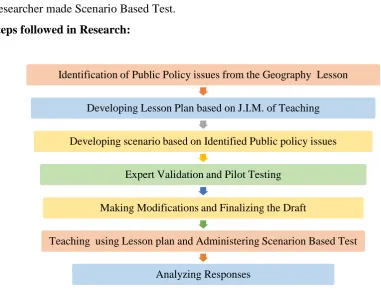
[image:3.595.118.500.362.668.2] Steps followed in Research:
Figure 1
Steps followed in Research
In the present study, researcher identified public policy issues reflecting from Std IX
Geography text book. The features of the public policy issues are as follows-
Policy evolves in response to some problem / issue.
Identification of Public Policy issues from the Geography Lesson
Developing Lesson Plan based on J.I.M. of Teaching
Developing scenario based on Identified Public policy issues
Expert Validation and Pilot Testing
Making Modifications and Finalizing the Draft
Teaching using Lesson plan and Administering Scenarion Based Test
SPECIEL ISSUE ON EDUCATIONAL EVALUATION & RESEARCH ISSN 2278-8808, SJIF 6.177
MAR-APRIL 2017, VOL- 4/31 www.srjis.com Page 27
It involves Government action
The basis of public policy is Law / Rule / Regulation / Act
The effect is on large population.
On the basis of features of public policy, researcher identified a content in
Chapter II of Std IX Geography text book.
After correlating Geography content with features of Public Policy, researchers
developed a lesson plan based on J.I.M. of Teaching. The first draft of the lesson plans was
shown to the experts. The experts made suggestions and necessary modification were done
and Lesson plans were finalized. After finalizing the lesson plans, the researcher developed
first draft of scenario. Researcher decided to draft a hypothetical situation of proposed large
project in the area of a village and the respondents were asked to write their opinion assuming
different roles viz. public representative, common man, activist in NGO. The draft of the
scenario given to experts for validation.After expert validation pilot testing done. On the
basis of feedback in pilot testing necessary modifications were done and scenario was
finalized. The correlation between Public policy issue, Scenario and Students responses are
SPECIEL ISSUE ON EDUCATIONAL EVALUATION & RESEARCH ISSN 2278-8808, SJIF 6.177
MAR-APRIL 2017, VOL- 4/31 www.srjis.com Page 28
Public Policy Issue Scenario Expected Responses of students
A change in landuse leads to a chain of
changes in socio
economic problems
Proposed Irrigation project
Student records their responses as a --
common citizen
public representative
activist in Non Governmental Organization
Support to project in urban area because of proposed availability of drinking water facility
Understand different opinions about a particular issue
Decision only after understanding different opinions of the people.
Suggestion about acquisition of fallow lands
Efforts for timely completion of project
Huge storage of water in large dams leads to some environmental as well as social problems
Proposed Irrigation project
After finalizing scenario, researcher taught to a Std IX class on the basis of J.I.M. of
teaching and after teaching Scenario Based Test was administered. The students were asked
to record their response to the test. The collected students responses were analyzed and it is
SPECIEL ISSUE ON EDUCATIONAL EVALUATION & RESEARCH ISSN 2278-8808, SJIF 6.177
MAR-APRIL 2017, VOL- 4/31 www.srjis.com Page 29
Discussion:
The responses of the students for the scenario indicates that students have ability to
assume role of the others, they have competence in social dialogue. The responses also
indicate Empathy/ pluralism, students understanding of facts about social problems, and their
capacity for social involvement and desire for social action.
Findings:
The instructional and Nurturant effects indicated from the student responses on
the Scenario Based Test.(Figure 1)
I 2
लोकाांची मते जाणून घ्यावीत व त्यानांतर ननणणय घ्यावा – I 3 N 1
प्रकल्पाला निरवा कांदील कारण पररसराचा नवकास – N 2
लोक प्रनतननधींनी ह्या प्रकल्पाच्या उभारणीसाठी ननधी द्यावा आनण त्याचे वाटप शेतकऱयाांमध्ये केले जावे
पररसराची भरभराट िोईल त्यामुळे प्रकल्पाला सांमती देईन – N 2
कमीत कमी वेळेत प्रकल्प पूणण व्िावा यासाठी प्रयत्न करेन – N3
राज्य सरकारने प्रकल्पाला मदत करावी यासाठी प्रयत्न करेन – N 3
शिरी भागात पाठींबा – N 3
ग्रामीण भागातील नागररक म्िणून नवरोध – N 3
प्रकल्पाचे फायदे तोटे तपासून ननणणय घेईन.- N 3
शेतकरी या नात्याने नवरोध करेन – N
3
शिरी भागाला नपण्याच्या पाण्याची सोय िोईल त्यामुळे प्रकल्पाला पाठींबा – N 2
नवद्यत ननर्ममती मुले – N 2
I 3
N 3
जनमनीचे सांपादन जबरदस्तीने करू नये असे मत माांडेन – I 3
नवरोध करेन कारण लोकाांच्या जनमनी जातील – N 2
प्रकल्पासाठी पडीक जनमनी घ्याव्यात असे सुचवीन – N 2
शेतीच्या नवकासासाठी जलससचन आवश्यक असल्याने प्रकल्पास पाठींबा देईन –
N 2 आांदोलन करेन – N 3 प्रकल्पाला सांमती देईन – N 3
प्रकल्प बानधताांच्या मागण्या पूणण न झाल्यास आांदोलन करेन
– N 3
प्रकल्पबानधताांनापयाणयीजमीनद्यावीयाकरताआांदोलन करेन– N 3
N 2
N 3
SPECIEL ISSUE ON EDUCATIONAL EVALUATION & RESEARCH ISSN 2278-8808, SJIF 6.177
MAR-APRIL 2017, VOL- 4/31 www.srjis.com Page 30
Conclusion:
The instructional and Nurturant effects of J. I. M. of Teaching are indicated from the
responses of the students to scenario based test.
References
Errington, Ed (2005). What is Scenario based learning? James Cooks University,
Australia. Retrieved March 24, 2016, from
https://www.jcu.edu.au/learning-and-teaching/university-wide-projects/past-projects-and-resources/scenario-based- learning-sbl-project/what-is-scenario-based-learning.
Joyce B., Weil M. (1997). . Models of Teaching. New Delhi: Prentice Hall India Pvt Ltd. Kindley, R. W. (2002). Scenario-based e-learning: a step beyond traditional e-learning.
ASTD Magazine.Retrieved from http://www.astd.org/. Retrieve https://www.massey.ac.nz/massey/fms/AVC%20Academic/Teaching%20and%20Lear ni
ng%20Cenrtres/Scenario-based- learning.pdf?ED80BF17A1416E89764E01BC4E869FE2