Report. UNSPECIFIED. (Unpublished) Link to Leeds Beckett Repository record: http://eprints.leedsbeckett.ac.uk/2303/
Document Version: Monograph
The aim of the Leeds Beckett Repository is to provide open access to our research, as required by funder policies and permitted by publishers and copyright law.
The Leeds Beckett repository holds a wide range of publications, each of which has been checked for copyright and the relevant embargo period has been applied by the Research Services team.
We operate on a standard take-down policy. If you are the author or publisher of an output and you would like it removed from the repository, please contact us and we will investigate on a case-by-case basis.
Bodyline Access Scheme:
Final Report: Draft
P
a
g
e
1
Reader Information
This report was prepared by Stephen Zwolinsky and Professor Jim McKenna.
Report Reference:
Zwolinsky, S. and McKenna, J. (2015). Bodyline Access Scheme: Final Report, August 2015: Draft.
Centre for Active Lifestyles, Leeds Beckett University.
Contact Details: Stephen Zwolinsky,
102 Fairfax Hall,
Leeds Beckett University,
Headingly Campus,
Leeds,
LS6 3QS
Phone: 0113 812 9107
P a g e
2
Contents
Reader Information ... 1
Contents ... 2
Executive Summary ... 3-7
1. Introduction ... 8
2. Methodology ... 9
3. Results ... 10-36
3.1 Theoretical Thematic Analysis ... 10-28 3.1.1 - DEMOGRAPHIC & BIOLOGICAL FACTORS ... 11-13 Gender ... 11 Age ... 11-12 Circumstantial prioritisation ... 12-13 Injury & chronic conditions ... 13 3.1.2 - PSYCHOLOGICAL FACTORS ... 14-16 Motivation ... 14 Locus of Control ... 14-15 Self-Efficacy ... 15 Goal Setting ... 15-16 Increase Health Awareness ... 16 3.1.3 - BEHAVIOURAL ATTRIBUTES & SKILL ... 17-19 Activity History ... 17 Processes of Change ... 18-19 Coping ... 19 3.1.4 - SOCIAL & CULTURAL FACTORS ... 20-22 Social Support... 20-21 Peer to Peer Support & Mentors ... 21-22 3.1.5 - PHYSICAL ENVIRONMENTAL FACTORS ... 23-26 Setting ... 23-24 Facilities ... 24-25 Cost to the participant ... 25-26 3.1.6 - PHYSICAL ACTIVTY CHARACTERISTICS ... 27-28 Frequency ... 27 Intensity ... 27-28 Time ... 28 Type or mode ... 28
3.2 Inductive Thematic Analysis ... 29-36 3.2.1 - ACTIVATION ... 30-31 3.2.2 - ACCOMPLISHMENT ... 32-33 3.2.3 - COMMUNICATION ... 34-36
P
a
g
e
3
Executive Summary
This document highlights the findings from semi structured interviews undertaken with
‘stakeholders’ involved in the ‘Bodyline Access Scheme’ (BAS). The ‘stakeholders’ are categorised in to one of three main groups; (i) the participants, (ii) referral agents – including GP’s and practice
nurses, and (iii) the providers - including delivery staff and project leaders. The interviews sought
to establish the proximal determinants of the BAS and its effectiveness.
To help establish the underlying features of success, the processes that drive these features and
the schemes effectiveness, data were mapped against key physical activity determinants. There
are six categories of determinants that influence physical activity participation; demographic and
biological, psychological, behavioural attributes and skill, social and cultural, the physical
environment and the physical activity characteristics (1). In addition, three main interacting
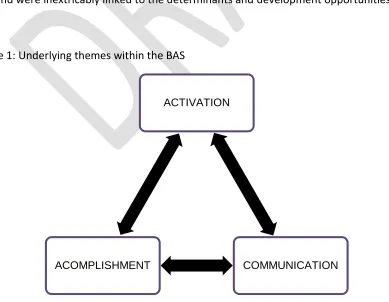
themes were identified underlying dialog about the BAS. These were (i) Activation, by initiating
action and doing activity (ii) Accomplishment, which was about achievement through effort, time
and commitment, and (iii) Communication, linked to relationships, intervention messages and how
stakeholders communicate with each other (see figure 1). These core themes underpinned the
[image:5.595.84.473.466.768.2]BAS and were inextricably linked to the determinants and development opportunities within it.
Figure 1: Underlying themes within the BAS
ACTIVATION
P
a
g
e
4
Barriers to participation:
BAS stakeholders presented a diverse range of barriers detailing why participants typically do not
engage with physical activity opportunities. Outlined below are the most salient barriers to
engagement reported by stakeholders and examples of how the BAS overcame them, facilitated
participation and recommendations for future practice.
INJURY or ILLNESS – Many participants who were chronically inactive prior to the BAS reported that injury/illness was one of the main barriers to physical activity participation.
Many participants felt unable to live an active lifestyle as a result of their condition.
However, this barrier became a motivational tool (i.e. participation may help alleviate
symptoms/manage condition) and an influential enabler for some participants beginning a
physical activity programme. Nevertheless, it is important to manage expectation and
promote activities minimising injury risk and attrition, especially among inactive individuals.
ACTIVITY HISTORY – Physical activity patterns in childhood are strongly linked to adult engagement, findings from this work reinforced the benefits of promoting physical activity
to younger individuals. However, the structured/supervised nature of the sessions
discouraged some individuals, especially those with a limited history of physical activity
and sports participation. For some individuals, previous negative experiences of
exercise/activity undermined interest in ever becoming active. For inactive individuals,
competition, high level exertion, social judgements of competence and social standing
were powerful reasons not to engage. Therefore, these features should be included with
caution. Moderate and lower intensity activities are likely to be better buys compared to
vigorous activity for long-term maintenance of activity behaviour. Optimal practice should
match the intensity and mode of activity to the individual.
SELF-EFFICACY – Many inactive participants reported low self-efficacy for physical activity, often as a result of injury, illness or a negative activity history. Personal experiences of
success and failure influenced participant’s expectations of future success. Fundamentally,
P
a
g
e
5
occurred early within a programme. Providing appropriate tailored activities related to an
individual’s skill and reviewing participant’s performance in those activities may help
enhance self-efficacy. Imitation and modelling were also important for future efficacy
beliefs, especially when a participant had empathy with the ‘model’. Observing others
succeed or fail - particularly when participants had little or no experience to draw on - was
central to the outcome. To optimise self-efficacy, ‘models’ should be similar to the
individual and competent in the activity.
MOTIVATION – A lack of motivation for physical activity and exercise was a common barrier to becoming physically active among BAS participants, motivations typically centred
on four main factors. Two of these related to performance; (i) achievement and (ii)
mastery/performance and the other two related to fitness and health; (iii) physical
wellbeing and (iv) socio psychological well-being. In general males are higher than females
on the two performance factors and younger participants are less interested than others in
socio-psychological well-being. Understanding that motivation to engage the BAS is not
uniform should underpin marketing aimed at encouraging engagement. Age and gender
related factors are likely to have an influence on motivation and should be taken into
consideration.
COMMUNICATION– Many referral agents encountered barriers when attempting to
signpost participants to the BAS due to complications determining what was available for
each participant. Given the range of exercise offers available simultaneously, it was
reported that there was a lack of clarity and delineation. Developing a paper based and
on-line LLGA/BAS flowchart may help alleviate this issue. It may also help referral agents to
develop an understanding of what criteria needs to be met for a referral to each element
of the programme, at each stage of the pathway. To improve self-efficacy, it has been
recommended that participants have their performance reviewed. However, at present,
this is not possible as the referral agents receive no communication from the providers
regarding a participant’s engagement. Relaying simple information including who signed up,
who attended and how often they attended would be undeniably useful for behaviour
P
a
g
e
6
How the BAS Enables Participation:
Despite the barriers that many participants faced when attempting to become more active, BAS
stakeholders reported numerous positive properties within the programme that enabled
engagement. Linked to the underlying themes within the BAS (see figure 1), this sections looks to
provide insight into the active design characteristics of the programme that enabled change.
COST – Cost is commonly professed to be a major determinant for initiating physical activity. Often seen as a common cause for attrition, it is also repeatedly coupled with
reduced participation. Stakeholders reported that cost and lack of money were principal
inhibitors to an active lifestyle. While cost presented an easily articulated determinant for
participants, it becomes more challenging to fully understand the extent to which it effects
recruitment. Perceived financial determinants may merely be proxies for poor individual
motivation. Nevertheless, the BAS illustrates how reduced price/free offers can activate
exercise ‘try-outs’ for inactive participants and lead to more active lifestyles. After 3
months, although many participants continued to be active, some reverted back to
previous sedentary habits citing cost as the principal cause. At present there is no facility to
extend the offer for participants, although, it may be beneficial to renew the scheme for
some inactive individuals, especially those with long term conditions.
SETTING – The ‘setting’ or location of the BAS was seen as a major component of successful uptake and increased activity. The ease of access, including location and
familiarity with the venue was important. Coupled with a safe and trusted environment,
participants reported that they felt relaxed and in control. This familiarity did not just mean
places that people had already visited per se, but could include settings that had appeal to
inactive individuals. Even if they did not identify as an active bodyline member, they may
still recognise the setting as ‘friendly’ and therefore comfortable and familiar.
P
a
g
e
7
are controlled by others or due to chance (external). In general, individuals with a higher
internal locus of control are more likely to adhere to programs compared to those with a
high external locus of control. Several participants reported that the BAS gave them
accountability regarding physical activity and opportunities to be active that they had not
experienced before. They felt able to cope and act decisively about physical activity. The
low cost implications and setting of the BAS were sighted as primary reasons for newly
developed internal locus of control. In the future, the BAS may benefit from nurturing
elements of the programme that give participants power to make decisions that affect
their activity habits. To achieve this, it is important that participants are rewarded for their
success (i.e. achieving weight loss targets). One possible pathway to manage this may be to
incorporate a performance review with a referral agent.
SOCIAL SUPPORT – Social influence in the form of social support typically has a strong positive association with physical activity. The presence and interest of other people
provides reinforcement and keeps the behaviour prominent. Changing a behaviour – i.e.
moving from inactive to active – can be stressful, therefore, maintaining social support is
essential for individuals and groups. Many participants reported that positive social
elements within the programme helped them to deal with adversity when starting to
become active. For some participants, the leisure centre setting facilitated an environment
for social interactions that may not have occurred in other everyday situations. This
enabled participants to interact socially and develop social support networks more readily.
A sense of belonging to a group was also important, participants who were or may have
felt socially excluded had the opportunity to mix with like-minded individuals and engage
in physical activity. Once engaged the social support and networks available were
amenable to maintenance of activity behaviour, however, gaining that initial engagement
was more problematic and there was not the same support available in many instances.
One method that may help improve the service might be to incorporate a buddying system
P
a
g
e
8
1: Introduction
Aim of this report
This report provides a rapid qualitative analysis of the ‘Bodyline Access Scheme’ (BAS) from interviews undertaken with BAS stakeholders from July 2014 – April 2015. The BAS enables
inactive individuals to sign-up for off-peak access to Leeds leisure centre facilities for a three
month period (12 weeks), for a fee of £5. This report aims to determine the characteristics that
underpin schemes success and areas for development.
What are the benefits of physical activity?
The benefits of physical activity have been clearly set out across the life course. Doing at least 30
minutes of moderate intensity physical activity on at least 5 days a week for adults can play an
important role in preventing and managing over 20 chronic health conditions, including type 2
diabetes, coronary heart disease, stroke, mental wellbeing, musculoskeletal health and some
cancers (2). There is a clear causal relationship between the amount of activity undertaken by
individuals and all-cause mortality. Although improving levels of activity in all adults is important,
the greatest benefits are often found for the habitually inactive – i.e. those doing less than 30
minutes each week – and intervention with this group is thought to be the best buy for public
health (3).
What is the current evidence on exercise referral schemes?
A recent summary of available evidence that looked at schemes involving sedentary or inactive
individuals, individuals with existing health conditions (i.e. CHD, diabetes or depression) and
people with other risk factors for disease (i.e. obese, raised blood pressure, stress etc.) found that
exercise referral schemes had only a marginal added effect relative to other ways of increasing
P
a
g
e
9
2: Methodology
To help understand the influential enablers and inhibitors underpinning the BAS, semi structured
interviews were undertaken (face-to-face and over the phone) with ‘stakeholders’ involved in the BAS. These core ‘stakeholders’ originate from three main groups; (i) the participants, (ii) referral agents – including GP’s and practice nurses, and (iii) the providers - including delivery staff and project leaders. The data set of interviews was subject to analysis by asking the following specific
research questions:
1. What are the underlying determinants, processes and features at work within the programme that lead to success?
2. How effective is a 12 week programme of exercise referral using Leeds leisure centres and encouraging inactive individuals to do at least 30 minutes of moderate intensity physical activity each week?
Data Analysis:
At the point of analysis N=33 (n=18 participants, n=11 referral agents and n=4 providers)
interviews had been completed. Interviews lasted between 25-60 minutes and were digitally
recorded. Data were summarised through a process of iterative listening with key passages
transcribed verbatim, and participants were given pseudonyms. To help address the research
questions, a theoretical thematic analysis was completed and framed around the determinants of
physical activity (1). Determinants are thought to influence participation and may have causal
effects influenced by interpersonal characteristics, physical characteristics and the social
environment (5). In addition to this and to provide a richer description of the data, an inductive
thematic analysis at a semantic level was undertaken to generate inductive themes linked to the
data (6). The themes generated are intended to capture something important about the data in
relation to the research questions and represent some level of patterned response or meaning
within the data set. The prominence of a theme is not synonymous with a calculable measure;
P
a
g
e
10
3: Results
3.1: Theoretical Thematic Analysis –
Whilst trying to establish the underlying features of success, the processes that drive these
features and the schemes effectiveness, data were mapped against categories of physical activity
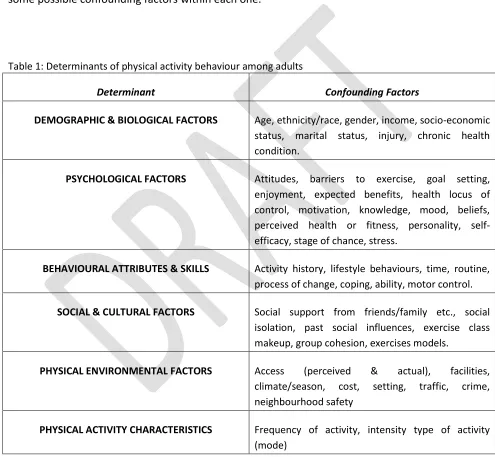
determinants (1). Table 1 shows the 6 categories/themes of determinants and an example of
[image:12.595.49.544.223.687.2]some possible confounding factors within each one.
Table 1: Determinants of physical activity behaviour among adults
Determinant Confounding Factors
DEMOGRAPHIC & BIOLOGICAL FACTORS Age, ethnicity/race, gender, income, socio-economic
status, marital status, injury, chronic health condition.
PSYCHOLOGICAL FACTORS Attitudes, barriers to exercise, goal setting,
enjoyment, expected benefits, health locus of control, motivation, knowledge, mood, beliefs, perceived health or fitness, personality, self-efficacy, stage of chance, stress.
BEHAVIOURAL ATTRIBUTES & SKILLS Activity history, lifestyle behaviours, time, routine,
process of change, coping, ability, motor control.
SOCIAL & CULTURAL FACTORS Social support from friends/family etc., social
isolation, past social influences, exercise class makeup, group cohesion, exercises models.
PHYSICAL ENVIRONMENTAL FACTORS Access (perceived & actual), facilities,
climate/season, cost, setting, traffic, crime, neighbourhood safety
PHYSICAL ACTIVITY CHARACTERISTICS Frequency of activity, intensity type of activity
(mode)
P
a
g
e
11
3.1.1: DEMOGRAPHIC & BIOLOGICAL FACTORS –
Demographic and biological factors are strong determinants of participation in exercise
programmes; moreover, they were prominent enablers and inhibitors for the BAS scheme. Often,
in such settings, individuals who might benefit most provide the greatest resistance to increased
activity.
Gender:
Associations between inactivity and demographic and biological factors are well documented.
Gender – along with age – is the most consistent correlate of physical activity behaviour among
adults.For instance, data from LLGA highlights that men tend to be more active than women, and
this picture is replicated nationally. Furthermore, these gender differences often affect the type of
activity undertaken, and ultimately this variance can determine activity status. One participant
reported…
My husband hates swimming and since the membership has stopped and classes are at
different times, he doesn’t go at all now. We used to go together, him at the gym and me in
the pool; it doesn’t work now with the new times.(Ellen, 63)
Age:
The likelihood of inactivity increases with age, however, this decline starts earlier for females,
especially with those activities deemed to be of a vigorous intensity requiring higher levels of
energy expenditure and exertion. For many individuals who are long-term inactive, experiences of
physical activity stemming from organised school sport and PE seems to switch them off from
exercising altogether.
I hated PE at school and then hated anything associated with that like gym stuff. (Angela,
41)
Further, sport and team activities are rarely undertaken in later life. Among older adults, walking,
gardening, swimming, dancing, social events, and golf tend to generate highest participation levels.
I prefer swimming; I find gym really hard work. Once I get in to it and I’m more fit I’m
alright with it, but when you first step on that cross trainer you think I’m gonna have to get
P
a
g
e
12
The stakeholders were also of the opinion that vigorous pursuits, requiring higher levels of
behavioural and exertional intensity, were not the most appealing, especially for the older
participants. One GP reported that…
The gym is easily available, but I don’t think it suits a lot of people, most people would
probably prefer something a bit easier, whether it’s outdoor activity classes or a drop in
exercise session.(Stakeholder)
Circumstantial prioritisation:
Evidence indicates that there is a steady decline in physical activity during young adulthood. This is
often justified by a change in priorities resulting in new time constraints and increased demands
on an individual’s time - often as a result of family and/or work. Many participants reported how
starting a family lead to the onset on habitual inactivity.
I used to be active at school but as the years went on and I had the children and the
children have got older I do less and less, I find myself at home most of the time.(Claire, 28)
Your priorities change, children come first, then working, exercise is something you don’t
really have time for exercise. (Lyn, 32)
When I was younger, from college to university, I was always a premier member of bodyline.
It was only when I started work and paying my student loans off that I thought, I can’t
afford this, I don’t have time to go, I’m too tired when I get home from work so I cancelled
it and haven’t done anything since. (Helen, 30)
With these thoughts in mind, the bodyline access scheme was seen as the ideal chance to ‘try out’
and get back in to activity. It was important at this stage for stakeholders involved in the pathway
to show some empathy towards the participant’s situation.
This was an opportunity to try it and see if it does work and I can fit it in to my busy lifestyle.
(Claire, 28)
When the patient comes in I always try to find some kind of common ground. Once you’re
on a level with them you can understand what it might be that’s of concern to them. Then
P
a
g
e
13
In addition, it was thought that employment status may actually disadvantage some participants
due to the off-peak membership. They would most likely be working during these periods and
unable to make full use of, or take advantage of the scheme. Therefore, slight amendments to the
timing of the offer may enable this underserved group to access the scheme more regularly.
The people that are really disadvantaged by this scheme are those that are working and
haven’t got quite enough income to pay for private gym membership, there pretty
underserved. If you could make it available for that group of people, it would undoubtedly
make a huge difference. (Stakeholder)
The only difficulty for me was the off-peak thing. I work three days a week and an evening
would have been the best time for me to go. I would have gone more if there were no like
time restrictions. (Helen, 30)
Injury and chronic conditions:
Having a long-term injury or chronic condition appeared to have a strong negative influence on
physical activity participation and increase the likelihood of inactivity.
I’ve never been over active and I’ve got arthritic hips now, I can’t walk good, I can’t go to
the gym because I can’t move my legs properly.(Ellen, 63)
Further, patients perceiving their health as poor were unlikely to start let alone regularly attend
the BAS. However, because mort participants signing up to the BAS share similar positive attitudes
and beliefs about exercise, perceptions of exercise ability, feelings of health responsibility and
attitude towards exercise are unlikely to predict who will adhere to the scheme. For some
individuals, having an injury or chronic health condition acted as a motivator or a driver to
facilitate change and move towards activity.
I had a gastric bypass in January 2013, so my dietician told me about the scheme and someone
from the weight management team signed me up. (Lyn 32)
I thought, god, I’m so unfit, so fat I need to get myself sorted and that’s where it came from really.
P
a
g
e
14
3.1.2: PSYCHOLOGICAL FACTORS –
The initiation, maintenance and resumption of physical activity is rarely easy and many
psychological factors are likely to influence an individual’s participation. A better understanding of
these determinants should enable practitioners designing interventions to optimise participation
rates, decrease sedentary behaviour and bring about significant Public Health benefit.
Motivation:
Understanding motivation is critical, individuals often face considerable difficulties when
attempting to engage physical activity interventions. Motivation to be physically active typically
centres on four main factors, two of these relate to performance; (i) Achievement and (ii)
Mastery/performance. The other two relate to fitness and health; (iii) Physical wellbeing and (iv)
Socio psychological well-being (8). In general males are higher than females on the two performance factors and younger participants are less interested than others in
socio-psychological well-being. Participants reported a ranged of different factors that motivated them
to engage.
You have to have the motivation don’t you; I mean it doesn’t matter if its 5 or 50 quid you have to
have the motivation to use it. I wanted to do something about it this time. (Helen, 30)
I should have been more motivated but I needed the classes to motivate me. It pushed me to go
that bit further, do that little bit more that if I was on my own I wouldn’t have done. (Emily, 42)
Locus of Control:
This concept stems from a social learning theory approach to personality where general beliefs are
thought to develop from expectations based on prior reinforcements and the value attached to
them. In this context, locus of control refers to the extent that people perceive that physical
activity/opportunities are within their control (internals), or are controlled by others/due to
chance (externals). In general, it is thought that those with higher internal locus of control are
more likely to adhere to programs. One participant who continued to be active after the BAS
scheme had finished reported:
It was a real good starting point, knowing I could come and go as I please. I’ve got a full
P
a
g
e
15
In contrast, a participant who stopped exercising and being physically active after the 12 week
programme finished said…
With me being on a pension I couldn’t commit to a contract in case gas prices went up or anything
like that. (Brian, 57)
These findings highlight the importance of developing interventions that promote internal locus of
control.
Self-Efficacy:
Self-efficacy is an important component of any behaviour and relates to an individual’s belief in
their ability to organise and execute a course of action required to achieve a goal (9). Performance
attainment is thought to be the most powerful efficacy source since it is based on personal
experience of success and failure, these experiences are likely to influence expectations of future
success. Fundamentally, success raises expectations and repeated failures lower them, especially if
the failure occurs early in the course of events. Also, if for example an individual believes that their
inability to exercise is due to their lack of co-ordination, this will probably generalise to other
similar sporting situations. Many participants reported that as their self-efficacy improved they
were willing to try new things.
After going swimming I felt a bit braver and went for a gym induction, I’ve never really used the
gym before but as you get more confident you try different things. (Victoria, 49)
Imitation and modelling (vicarious experience) can influence future efficacy beliefs, especially
when an individual has empathy with the model. Observing others succeed or fail - especially
when an individual has little or no experience to draw on - will impact the outcome.
I do chat to some of the ladies in my class and they tell me which classes they have tried. If they say
its alright then I feel like I can do it too. (Victoria, 49)
Goal Setting:
P
a
g
e
16
(10). Goal setting and self-monitoring have been shown to be effective methods to increase
physical activity and improve health behaviours (11). Some participants reported the beneficial
effects of goal setting in facilitating positive change.
I still have a long way to go in terms of my weight loss goals, but I’m on my way and I wouldn’t be
if I hadn’t set myself that target. (Helen, 30)
However, some participants reported that unrealistic goal setting leading to over exertion during
sessions could actually have a detrimental effect on their lifestyle, or at least impair mobility and
function.
I overdid it and got a bit carried away on my 3rd straight day, could hardly drive home and couldn’t
walk for a couple of days after. (Brian, 57)
Delivery agents reported that having time was important to build relationships with participants
and develop an understanding of what they wanted to get out of the BAS. This time was deemed
necessary to help formulate methods and mechanisms to assist in the setting, and ultimately
achievement of goals.
I get more time to spend with them than nurses and that’s why it’s a good idea. I can spend a bit
more time on those patients that think their wasting our time. If the come, aren’t rushed and can
talk about diet and exercise hopefully they can make that change. (Practice Nurse)
Increase Health Awareness:
A persons weighing of the possible gains versus the difficulties that will be experienced as a result
of behaviour change is often referred to as decision balance (12). This information is important in
the process of change (13). Doctors talking to their patients about the perceived benefits of
activity versus the anticipated barriers were beneficial for participants in earlier stages of change.
I went to the GP for a blood test and after being weighed she asked if I wanted to join.I thought I
may have been a little overweight and suffering from anxiety. They talked me through the benefits
P
a
g
e
17
3.1.3: BEHAVIOURAL ATTRIBUTES & SKILL –
An individual’s behavioural attributes and skill are a way of describing a range of individual
characteristics that can be measured and be shown to differentiate ineffective and effective
engagement/performance.
Activity History:
It is well established that physical activity improves health throughout the lifecourse, from
childhood through to older age (14). Of the many behaviours studied as possible determinants of
physical activity patterns in adulthood, some of the most interesting findings have involved a
person’s previous activity and sports participation. For example, when looking at participants
engaging supervised activity programmes, there is a positive association with a history of previous
participation (1). In essence, adults who participate in supervised fitness programmes are likely to
have had a history of doing so. The pattern is similar in relation to spontaneous physical activity,
about two thirds of adults with a history of participation in two or more sports in their youth are
physically active.
I hated PE at school and then hated anything associated with that like gym stuff. Then I found this
new found passion and really enjoyed it. (Angela, 41)
I used to go to a gym in Harehills but I got laid off from work and I couldn’t afford to go anymore. I
found out about this scheme and started straight away. (Paul, 29)
Many participants on the BAS reported being active at an earlier point in their life. However, the
structured/supervised nature of the majority of sessions may have discouraged individuals with no
history of activity or sports participation. These findings reinforce the need encourage physical
activity among younger individuals and to distinguish between sport, recreation and
fitness-related exercise when describing and marketing activity to patients.
Lots of my patients are chronically inactive, never done anything. Even though there are
P
a
g
e
18
Processes of Change:
People use a range of strategies and techniques to change behaviour, the processes of change
describe how people change. There are ten processes of change divided up in to two categories; (i)
cognitive processes – involving thinking, attitudes and awareness and (ii) behavioural processes –
involving actions. It is generally understood that individuals in the latter stages of change employ
more behavioural processes and those in the earlier stages of change use more cognitive
processes. For example, many inactive participants who had no real intention of exercising can be
seen using the consciousness raising cognitive process of change. Here participants gain
knowledge about physical activity in relation to their situation (often instigated by a GP) and
realise the potential benefits.
I’ve had health problems. I did join slimming world and then had some exploratory tests
done at the GP. I wanted to lose weight and it I thought, god, I’m so unfit, so fat I need to get
myself sorted and that information from the GP came in really handy. (Helen, 30)
Another of the key cognitive processes of change for participants in the early stages of change was
environmental re-evaluation. Here for example, participants are understanding the consequences
of their current inactivity behaviour on their family/health. This was seen as an important factor
for many participants looking to start being active.
My mum’s ben quite poorly for the last year, she doesn’t eat badly but hardly does any
exercise. It kind of struck me then and I though, shit, I do need to look after myself. (Angela, 41)
I wanted to lose weight, and I suffer from anxiety and panic attacks so I knew that this
would help and get some mental health benefits.(Brian, 57)
In some instances, by exercising regularly, some participants thought that it may enable them to
become a better role model for significant others.
My little girl is really little, and when she gets older I don’t want to think, oh I can’t be
bothered going to the park and stuff. I want to be motivated to go outside and do things and I
P
a
g
e
19
For those participants in the latter stages of change, the behavioural processes were more
prominent. The process of change most noticeable was helping relationships. Here participants
usually had someone they could depend on to help them exercise. Sometimes, this came in the
form of encouragement from a friend or instructor who provided support in being active. This
often helped participants to maintain an active lifestyle.
I should have been more motivated but I needed the group to motivate me. It pushed me to go that
bit further, do that little bit more that if I was on my own I wouldn’t have done. (Emily, 42)
Coping:
This concept refers to thoughts and actions that an individual uses to deal with threatening
situations – like attending the BAS. Individuals who ‘cope’ normally encompass high levels of
self-efficacy and the ability to generate coping responses for anticipated high risk scenarios. Two of the
most widely accepted coping strategies are problem-focussed coping and emotion focussed
coping. Problem-focused coping involves efforts to alter or manage a problem by gathering
information, goal setting, time management skills and problem solving. This method is more often
employed when situations are amenable to change. These skills were evident for many of the
participants interviewed who continued to be active.
I go out walking a lot now cos I can’t really afford the gym membership. I used to love walking
before I had kids; it’s something I’m able to do now because when I was so big it was difficult to do
anything. (Lyn, 32)
Emotion-focussed coping involves regulating the emotional responses that a problem brings. It
includes specific behaviours such as relaxation, meditation and cognitive efforts to change the
meaning of a situation. This strategy is used more often when a situation is not amenable to
change.
I was a bit apprehensive at first, I was walking down there and I thought, no no, not today, maybe
I’ll just wait for another day, and what if there are kids there, they can be nasty sometimes. I was a
P
a
g
e
20
3.1.4: SOCIAL & CULTURAL FACTORS –
Relationships and interactions with others can have a strong impact on behaviour. The social and
cultural determinants of physical activity are thought to be the strongest independent predictors
of being physically active (1).
Social Support:
Social influences in the form of social support and prompting typically have strong positive
associations with physical activity. The presence and interest of other people provides
reinforcement and keeps the behaviour prominent. Changing a behaviour – i.e. moving from
inactive to active – can be stressful, therefore, maintaining social support is essential for
individuals and groups (15). It is important to remember that behaviour is not independent of the
context in which it occurs, participants will be influenced by their social environments (10). Many
participants reported that positive social elements within the programme helped them to deal
with adversity when starting to become active. For some participants, the leisure centre setting
facilitated an environment for social interactions that may not have occurred in other everyday
situations. This enabled participants to interact socially and develop social support networks more
readily.
If you build a little social network you will do it, if you’re on your own it just won’t happen.
(Matthew, 67)
A lot of people just go for the social really, they don’t do much swimming it’s mainly about chatting.
(Irene, 52)
A sense of belonging to the group was also important. The degree to which an individual is
integrated into society and has social support networks have been shown to have a significant
impact on general health (15). Participants who may have previously felt socially excluded were
given the chance to mix with like-minded individuals and engage in physical activity.
The classes helped me come out of my shell a bit, to realise that you don’t just have to be at home
P
a
g
e
21
For those participants lacking social support networks to help them engage in activities requiring a
partner, or those preferred being physically active in a group setting, the BAS afforded
opportunities to alleviate this barrier.
The first time I went with another girl and her mum, after 2 weeks they couldn’t do the
same times as me so I ended up going on my own. For the first couple I’m really glad I went
with someone. I don’t think I would have done it on my own; it would have been quite
embarrassing. (Lyn, 32)
Peer to Peer Support and Mentors:
A considerable proportion of participants reported that utilising the skills and experience of
individuals within the BAS/community helped them to be more active. These peer mentors could
be friends, colleagues, family or BAS staff members. They helped to encourage and assist
participants develop their physical activity potential and was often achieved by listening or
inspiring participants. Peer mentors were seen as an integral to helping participants
cope/overcome social or emotional barriers while staying motivated to reach their goals.
She was really understanding, took you as a real person, you know, really spoke to you like a real
person and I liked that. It was the 1st time I had had that 121 touch and I really liked it.(Claire, 28)
For inactive participants who were struggling with social support, many of the people interviewed
reported that developing peer support/mentoring would be beneficial to generate initial
engagement. For example, phoning the participant to arrange a first visit or a first visit buddying
system may help overcome many of the barriers faced by participants when starting a physical
activity programme. Beyond that, text messaging and group meetings were suggested as potential
ways help to maintain behaviour.
I think a buddy system might work, if there was somebody in a similar situation. I was really shy
and pretty quiet and everything and it did feel daunting walking in for the first time. (Lyn, 32)
Me and my husband went together for our 1st visit, it really helped to have someone else there
P
a
g
e
22
People can be frightened of exercise, once they get home and dwell on a decision to participate it
can become too much. It’s a lack of confidence, people don’t want to go on their own and even if
it’s a group they often don’t know people. If you can get people to hold their hand through the
process, it’s bound to help. (Practice Nurse)
Equipping practitioners with the necessary competencies and skills to support an active lifestyle is
essential (16). By encouraging flexible participation - seen as a key facilitator for adoption, BAS
staff were able to get participants active gradually. The staff and their ability to interact with the
participants on a personal and social level were seen as key factors in facilitating adoption of the
BAS.
There is always an alternative to whatever exercise we are doing because you can never tell what
people can and can’t do before they start. We will find out and screen for those who haven’t done
exercise before and give them special attention if you like. (Gym Instructor)
The group dynamic within the sessions were also seen as important for adherence. Social
relationships and social norms have a substantial and persistent influence on how people behave
(10). Social learning theory explains how social norms and social influence affect individual
behaviour. The stronger ones affiliation to the group the more responsive an individual will be to
the normative expectations of that group. Many participants reported that once they felt
comfortable within the group, it enabled them to overcome barriers and maintain behaviours.
It’s not the best leisure centre but I keep going back because the group is sociable. It works for us
and it’s easy to get to know people.(Amy, 42)
There are a lot of ladies my age in the classes, I’m a bit quiet so the social element is important, but
P
a
g
e
23
3.1.5: PHYSICAL ENVIRONMENT –
In population terms, the visible fitness boom of the 21st century has failed to compensate for the
loss of more traditional forms of energy expenditure. Changing patterns of work, transport,
entertainment and communication mean that we have practically engineered physical activity out
of our daily lives, making it possible to be virtually inactive but occupied. Taking a broad ecological
perspective to understand physical activity behaviour, there is currently an increasing interest in
the role that the physical environment plays (7). The physical environment can offer prompts and
opportunities for physical activity including both natural and built environmental factors, at the
same time, it is also important to consider the individual and community level influences.
Setting:
Behaviour choices are not made in a vacuum and it is unreasonable to expect individuals to
become more active when inactivity is so strongly reinforced by their environment and prevailing
social norms. Consequently, the ‘setting’ or location was seen as a major component of successful
uptake and increased activity. Many participants reported that the setting had to be easily
accessible to help adopt and maintain activity behaviours.
We live very close to the centre, so location is very important to us. I can drive but I don’t
like driving so being able to walk there really keeps me going. (Ellen, 63)
It has to be local, our patients are generally there middle class working people, they don’t
want to travel to exercise. (Stakeholder)
This setting, whilst not always ideal, appeared to help some participants evaluate their physical
environment and find more suitable, alternative settings for activity after completing the BAS
scheme. In some instances, whilst the alternatives were not always part of the offer, previously
inactive participants appeared to have made a lifestyle choice to be active as a result.
The only reason I didn’t join bodyline after was due to the location, Total Fitness is in a
miles better location for me and really saves me loads of time. (Angela, 41)
Whatever the possible setting – typically leisure centres, it seemed that specific elements could
aid successful uptake and activity behaviour. This ease of access, including location and familiarity
P
a
g
e
24
participants could feel more relaxed and in control.
I was a bit concerned they were going to treat me special as I was on some kind of discount
scheme but no, I was given an induction and it was all good. (Lyn, 32)
This familiarity did not just mean places that people had already visited per se, but could include settings that had appeal to inactive individuals. Even if they did not identify as an active gym
member, they may still recognise the setting as ‘friendly’ and therefore comfortable and familiar. The first time I went I went with a friend so I didn’t feel awkward, once we got in there they
were lovely staff, talked you through it and just got stuck in. They were really welcoming.
(Claire, 28)
Facilities:
Linked to the notion of setting were facilities. Participants reported that this factor was also a key
factor in continuing to engage the program once they had started. Given the range of barriers
facing many inactive participants, being able to have your child looked after for example while
exercising was a concern for mothers. Whilst many centres offer this facility in some capacity, it
was not always seen as an enabler.
There is a crèche here, it’s only on a Thursday, you have to book it and it’s only for a certain
amount of time and it costs extra so I’ve never used it. It means I have to wait for my mum
or whatever so it does make it difficult being a mother. (Helen, 30)
Further, within each centre it was reported that the décor, equipment and amenities were subject
to variations in quality. It was perceived that some centres were in less than optimal condition,
and therefore not conducive to repeat visits. In some instances, this factor put an end to
engagement, but for those fortunate enough to drive and overcome this barrier, there was the
opportunity to broaden their horizons and explore the offer.
I’ve been to about 6 different centres; I drive so I would sooner go to a quitter nicer centre
than one that’s old and grubby, Pudsey is a bit grim. (Helen, 30)
In addition to this, some participants reported concerns about the facilities ability to cope with the
rising demand for some sessions, especially during busy periods such as school holidays. For
certain groups, this became problematic and suggested that it may be beneficial to separate
P
a
g
e
25
I enjoy it whilst I’m there; the only thing that puts me off is the school kids. It’s absolutely
packed at the time we can go; they don’t rope it off so it’s difficult at the minute. A
separate kids and adults scheme would be fabulous. (Ellen, 63)
Cost to the participant:
Cost is commonly professed to be a major determinant to initiating physical activity. It is seen as a
common cause for dropping out or not even starting a programme of exercise, and repeatedly
coupled with reduced participation. This factor is also generally accepted to have a greater effect
in low-income groups. Participants and stakeholders alike reported that the cost of exercising,
specifically joining a gym, as the main inhibitor to being active. Finding and redirecting limited
funds towards a gym membership was almost seen as frivolous in the context of other financial
commitments, especially if it transpired that the investment was not going to be utilised.
You’re talking about £60 a month for a gym membership. It’s ok signing up to it but if after
a week you think it’s not for me, you’re stuck. (Claire, 28)
You have to bear in mind that for a lot of people, income is a major factor. They don’t have
that money to spend to acquire a gym membership. (Stakeholder)
However, given the low cost implications of the BAS scheme, this was seen as a great opportunity
to test the water and get 3 months’ worth of gym membership for a nominal cost. Many inactive participants reported that the low cost was a primary enabler to activity.
The bodyline scheme has been great for us; it has a universally high uptake and the locality of
the gym with the financial incentive, it’s a no brainer.(Stakeholder)
I thought there was a big gap for people who don’t know where to start, this offer is great, if
you only go and do 5 minutes in one session for example, you don’t feel like you have wasted
your money. Those 5 minutes were exactly what I needed to start building myself back up again.
(Emily, 42)
Many of those participants recruited to the scheme completed the 3 month trial period,
nevertheless, once the BAS had ended; some had reverted back to previous sedentary behaviours
P
a
g
e
26
programmes with some citing that motivation had dwindled and they may struggle to re-engage.
Sadly it’s finished. I got a letter saying it was coming to an end and you get so much off the full
membership and everything, but I couldn’t afford it and now exercise has been put to one side
mostly due to the money side of things. I’ve lost a lot of motivation now and know how hard it
is to get back in to it.(Lyn, 32)
On the other hand, some participants completing the trial period reported that as a result of
engaging, they would go on to join ‘Bodyline’ as a full member. This suggests that the scheme has
worked for these individuals, that is has overcome determinants to activity and created a lifestyle
change.
I’ve finished the programme but I have got a proper membership now and I go at least
three times a week. (Helen, 30)
Some people are thinking about continuing once the membership ends even though they will
have to pay for it. (Stakeholder)
While cost presented an easily articulated obstacle, it is hard to fully understand to what extent it
effects recruitment. These perceived financial barriers may merely proxies for poor individual
motivation. Therefore it would be helpful to understand that if financial barriers do exist, will
removing them result in increased activity. Whilst eliminating or reducing the cost appeared to get
people to come in the first instance, it seems that once the cost reverts back, people that have
engaged are willing to pay for exercise indicating a shift in motivation or that they now see a value
in paying for exercise.
On top of this, some participants reported additional, hidden, costs associated with participation
that they would have liked to have been made aware of prior to engaging the BAS.
Having to go out and buy sportswear and things like that killed me. When you’re going to classes
and things like that, the first thing the teacher says to you is “you need appropriate footwear and
sportswear”. So more understanding about what you would need before you got in to it would be
P
a
g
e
27
3.1.6: PHYSICAL ACTIVITY CHARACTERISTICS –
Relating to the FITT principle (Frequency, Intensity, Time & Type or mode), the impact of the
physical activity characteristics are likely to vary depending on the individual and their personal
goals. Further, it is important to remember that different physical activities will require varying
skills for maintained participation.
Frequency:
This relates to how often an individual performs the activity. One of the main benefits of the BAS
scheme was the unlimited access at off-peak times which many participants who had signed up
were keen to take advantage of. The fact that they could go as often as they wanted was seen as a
key enabler towards an active lifestyle.
I was going 4 times a week, really cramming it in, classes like body combat, kettle bells and
things like that, on a Sunday I would swim with my daughter.(Claire, 28)
However, it is important that all participants - particularly those who are chronically inactive - not
to overdo it, especially at the initial stages of engagement. If the frequency is too great, it may
have adverse effects resulting in fatigue, injury and in due course probable relapse to previous
sedentary behaviours.
Intensity:
This can be measured in numerous ways, but activity intensity is usually split in to four distinct
categories (i) sedentary, (ii) light, (iii) moderate and (iv) vigorous intensity. This intensity relates to
how hard a person is exercising during an activity period. As with frequency, this specific physical
activity characteristic was integral to an individual’s adoption and maintenance of the BAS scheme.
For longer term maintenance of physical activity behaviour it is generally accepted that moderate
and lower intensity activities are better buys than vigorous intensity. Participants reported that
harder – vigorous intensity – sessions could be difficult and off-putting. As a result, best practice
dictates the necessity to match the intensity to the individual where possible.
When I first started going I did struggle, it’s an hour of intense work out.
You have to pick what’s right for you because if you show up she wants to push you; she
P
a
g
e
28
Lifestyle activity does not tent to differ by demographic factors, but men and younger adults are
more likely to engage in vigorous activities. High intensity programmes are likely to result in a
substantial number of dropouts due to stress-induced injury. Therefore, physical activity can
produce results that encourage or discourage subsequent participation. For example, perceived
discomfort during an exercise programme, regardless of exertion, is often reported by dropouts.
Time:
This relates to the length of time undertaking the activity – not the time that the activity takes
place - and will vary depending on the health, or fitness related component that has been targeted
(i.e. achieving a level of fitness or meeting the activity recommendations). Time spent in a given
activity needs to be tempered by the other physical activity characteristics and driven by the goals
of the individual. Spending too much time doing one activity may be counterproductive resulting
in injury or a lack of fun/enjoyment. Participants realised the importance of time for maintenance
of a newly acquired behaviour in that it had to be achievable and undertaken on a regular basis.
When I was a lot, lot younger or went on holiday I used to swim, but nothing like I do now.
I’m now going twice a week for an hour each time. (Ellen, 63)
Type or Mode:
Referring to the specific physical activity chosen, type or mode of activity is hugely important and
needs to be enjoyable and/or fun if it is to have any chance of encouraging inactive participants to
become active. The practice of designing activity plans exclusively on the basis of fitness and a
biological dose-response often disregards important perceptions of the enjoyment of the activity
itself. Participants, who were able to customise the type/mode - and the other physical activity
characteristics - to suit, reported the greatest enjoyment and presented the highest likelihood to
maintain the behaviour.
I told the guy who put my programme together exactly what I was looking for. The
programme lasted an hour using most of the equipment and then I went for a swim. It was
hard motivating yourself to get there, but once I was there I loved it.(Lyn, 32)
For these reasons, the ‘FITT’ principle is crucial in facilitating adoption and adherence to any
P
a
g
e
29
3.2: Inductive Thematic Analysis –
In this section, the inductive process allowed the data to be coded without fitting it into a
pre-existing coding frame as in the previous section. Adopting an essentialist/realist approach, due to
the simple, largely unidirectional relationship that is assumed between meaning, experience and
language we were able to theorise motivations, experience and meaning from the data.
With this in mind, once the interviews with the principle stakeholders were undertaken, we were
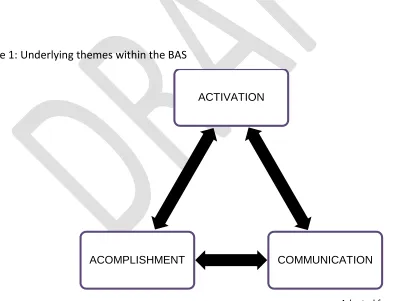
able to identify three main interacting themes underlying dialog about the BAS. These were (i)
Activation, by initiating action and doing activity (ii) Accomplishment, which was about
achievement through effort, time and commitment, and (iii) Communication, linked to
relationships, intervention messages and how stakeholders communicate with each other (see
figure 1). These three themes underpin the determinants and the development opportunities for
[image:31.595.82.478.376.677.2]the BAS and are inextricably linked. The following provides some context around these themes.
Figure 1: Underlying themes within the BAS
Adapted from Carless (2008) ACTIVATION
P
a
g
e
30
3.2.1 ACTIVATION
A reoccurring theme within the interviews was structured around the concept of ‘Activation’. However, the ‘Activation’ process is conceptualised in a different manner between, and within the different stakeholder groups (i.e. participants, referral agents and providers). Nevertheless, this
theme incorporated some form of physical process/bodily movement or cognitive development.
Prior to the BAS, many participants were not fully aware of the implications of their current
in/activity behaviour. In most cases referral agents instigated the ‘Activation’ process by offering a referral to the BAS and talking through the associated benefits of a physically active lifestyle. For
some participants this ‘Activation’ came through a friend of family member who had either been on the scheme previously, or heard about it elsewhere.
It’s generally not them asking about the service, we have to almost sell it. (Practice Nurse)
From a primary care service it is a fantastic service, somebody may come in and say ‘I want
to lose weight doctor’, it’s a great resource to point them towards. (GP)
I had been chatting with a friend who told me about the pass.(Victoria, 49)
This initial ‘Activation’ was central to the project success, and in many instances, when this procedure had occurred successfully participants were ready to begin the process of becoming
active. The referral agents effectively empowered the participants to take control of their own
physical activity behaviour and they began to attend sessions. Importantly, for those participants
that required more assistance in the ‘Activation’ of a physical activity/exercise programme, the BAS providers (gym instructors) were on-hand to help develop this or provide assistance.
Not many people turn up and can’t do anything, but ultimately it’s down to the instructor
to adapt the class to meet the needs. We talk to the customers a lot about what they want,
intensity etc.(Instructor)
Support appeared to be central to lowering attrition and increasing attendance in previously
inactive participants. Developing a tailored programme matched to an individual participant’s
P
a
g
e
31
lifestyle. A physical activity/exercise routine enhanced the ‘Activation’ process for participants as it became part of their daily/weekly lives. For some it was as simple as keeping busy and a reason to
get out of the house. For others it was about or having somewhere to go and something to do.
Either way, when coupled with advice from referral agents, routine became a powerful tool.
I’d got to the point where I weren’t doing anything, so that was the kick I needed to get
back in to some kind of exercise routine. (Angela, 41)
It’s a matter of getting into a routine, every day this week we have been out. (Matthew, 67)
Now I’ve got some kind of routine going it gives me that kind of good feeling and I don’t
want to lose it.(Helen, 30)
However, this routine was predicated on being able to attend the sessions available on the
off-peak membership. For some participants this restricted membership was problematic and
developing a routine became difficult, in some instances, it was counterproductive for ‘Activation’.
When you work it’s really difficult to fit it all in and use it. Off-peak was no good for me and
I lost motivation to do it, I felt I was missing out. (Victoria, 49)
For many BAS participants, the physical ‘Activation’ process starting by understanding their activity behaviour and beginning an activity programme. This often developed into a routine and
in turn activated some psychological changes. Many participants noted a significant improvement
in confidence and motivation to undertake exercise programmes, developed themselves or in
conjunction with a BAS provider. This confidence was critical for change among inactive BAS
individuals and was reinforced by some providers (instructors). Many participants reported that
this was a key factor in continuing to engage when circumstances became challenging.
It’s how you feel within yourself, you know, confidence. When you come out of the gym you
feel 100 times better than before you went in, whatever situation you are in. (Paul, 29)
I’d been given the chance and I wanted to use it to its full capacity! I wasn’t going to go like I don’t