© 2017, IRJET | Impact Factor value: 5.181 | ISO 9001:2008 Certified Journal | Page 784
Investigation of some process parameters on forming force in single
point incremental forming
Vishal Gulati, Ajay Kumar
Department of mechanical engineering, Guru Jambheshwar University of Science and Technology, Hisar, Haryana, India
---***---
Abstract : Incremental Sheet Forming has a great potential to form complex 3-D sheet metal parts without using a matching die. The die-less forming nature of this process provides a competitive alternative for economically and effectively fabricating low-volume functional sheet products. Thus, this process is viable in small scale production to deal with the various needs like customization, low tooling cost and low setup time. In this work, effects of some process parameters has been investigated on forming forces developed during single point incremental forming on Al 6063 aluminum sheets with the help of table type dynamometer.
Keywords: Single point incremental forming, process parameters, die-less forming, forming force.
Introduction
In the manufacturing world of today, new technologies are being promoted and among them the suited most is Incremental Sheet Forming (ISF). Interest in the ISF has increased over the past decade with the advent of a range of novel forming techniques that automate the deformation process, allowing shaped parts to be produced without the need of stamping. The trend in sheet metal forming industry is to produce more complex parts and a faster production rate of new and individual products in small lot series [1]. Therefore, ISF process is referred as highly attractive for low volume manufacturing and rapid prototyping as it requires no specialized tooling, making them economical process. It is also more feasible compared to the traditional sheet metal forming processes. In view of the total process time and costs due to the shorter lead time, it is faster and less expensive. It also provides an ability to form nonsymmetrical geometries with simple or no tooling and low costs.
© 2017, IRJET | Impact Factor value: 5.181 | ISO 9001:2008 Certified Journal | Page 785
create a small track. The tool then is indented further and tracked around to form the next contour of the part, and so on until the desired shape is built up [2].
The most common techniques of ISF are Single Point Incremental Forming (SPIF) and Two Point Incremental Forming (TPIF).
Single Point Incremental Forming
In this type of incremental forming, the sheet clamped along its edges and the tool (generally a spherical tool) moves along the sheet surface, as schematized in figure 1. Thus, no die is used and even asymmetrical parts can be easily produced. This method can be implemented using a conventional CNC milling machine, including a CAD/CAM system to plan the tool path. The plastic deformation is generated by the special tool by self rotation movement or forced rotation movement according to program given by the mechanical CNC controlled system. During the sheet deformation, the tool is in contact with the internal surface of the sheet. Gradually, the component is incrementally built through vertical step and relative motion of the tool [3]. In SPIF, no support is used in opposite direction of tool movement. Thus, this process is known as Die-less Sheet Forming or Support less Sheet Forming Process.
Two Points Incremental Forming
The TPIF process can be classified into two types: TPIF with a static support and TPIF with a kinematic support. For TPIF with a static support (see Fig. 2), the support is positioned firmly on the opposite face of the sheet metal (opposite with contacting surface between tool and sheet). The sheet metal is clamped firmly on a frame that can move up and down in the parallel direction to the tool. For TPIF with a kinematic support, the support moves simultaneously with the forming tool. In this configuration, the partial support is fixed on a rotating table which rotates simultaneously with forming tool. The rotating table holds a partial die that has a shape of final product. This system has the
disadvantage that it issuitable for rotational symmetric products only .Advantages of TPIF over SPIF is
© 2017, IRJET | Impact Factor value: 5.181 | ISO 9001:2008 Certified Journal | Page 786
Fig.1 Single Point Incremental Forming
Fig.2 Two Point Incremental Forming
Forming force is one of the main responses in ISF and it is required to optimize the forming process
parameters for avoiding the material fracture. Forming force measurement is necessary to analyze for prevention of sheet rupture during ISF process. Therefore, a failure criterion is to be investigated which make it able to identify the conditions at which the sheet fractures due to its excessive thinning and stresses. The accurate value of peak force can provide important information about material behavior and in particular, on the possibility of damage approaching.
© 2017, IRJET | Impact Factor value: 5.181 | ISO 9001:2008 Certified Journal | Page 787
Process parameters of ISF process
Different parameters are used by different researchers in ISF. A review of these parameters affecting particularly forming force is carried out. The possible range of these parameters and their effects on forming force are as follows.
1. Tool diameter- It can be taken in range 2-30 mm, but in most of papers it has been taken in range 10-20 mm. As the tool diameter increases, forming force increases.
2. Step size- It is taken by most of researchers in between 0.2 to 1mm. Forming Force marginally decrease with increase in step size and for further increase the step size forming force increases. Step size decrement results in increment in production time.
3. Feed rate- It can be used above 1000 mm/min and up to 6000 mm/min. Forming force increases with increase in feed rate.
4. Spindle Speed- It is used by most of researchers in range of 100-1000 rpm. With increase in spindle speed, forming force decreases.
5. Sheet Thickness- This parameter in ISF process can be ranges from 0.5 to 2mm. By increase in sheet thickness, forming force increases.
6. Lubrication- Most of researchers used grease as lubrication in ISF. Lubrication added the cost in manufacturing but it reduces force. The ball tool with lubrication left no scratches while hemispherical head tool without lubrication left most scratches [5-6]. Houghton TD-52 and Tellus oil 68 also have been used for lubrication in ISF [6-7].
Literature review
J. R. Duflou, A. Szekeres and P. Vanherck [10] measures forming force in SPIF and used table type force
dynamometer on which fixture is mounted. In experiment three component of force was measured and effect of process parameter on forming force was noticed. G. Ambrogio, L. Filice, F. Micari [9] showed that number of advantages over convention forming process and detected the approach of failure in
incremental forming. Another experiment was carried out by Duflou et al. [8] for forces measured for
identical parts in incremental forming, which can be expected to be similar and repeatable. Force was found to increase with increase in vertical step size, tool diameter, and wall angle and sheet thickness. An
anther experimental study was carried out by Fiorentino et al. [11] to focus the effects of the different tool
© 2017, IRJET | Impact Factor value: 5.181 | ISO 9001:2008 Certified Journal | Page 788
drawing depth during forming. The results were also compared with a previously performed experimental campaign where similar tests.
Bagudanch, G. Centeno and C. Vallellano [15] performed an experiment on forming force in Single Point Incremental Forming under different bending conditions and in their experiment they have taken three parameters- tool diameter, spindle speed and step down. In their experiment, they show with increase in tool diameter and step size forming force increase and when spindle speed increases there will be reduction in forming force. Further, they show by increasing tool diameter and step size cause reduction in process time without compromising with surface roughness. Similar results were shown by J. R. Duflou
[8] by taking wall angel as a 3rd parameter instead of spindle speed and showed that with increase in wall
angel forming force increases. Other experiments were performed on forming forces by R. Aerens [12] with four parameters- sheet thickness, wall angle, tool diameter, and step down and validate his experiment by experimental investigation and from FEM analysis and results obtained from these experiments are similar to the present work.
Z. Liu [14] also performed experiment on surface roughness by taking four parameters with material Al-7074-O and different parameters are Step Size, Feed Rate, Sheet Thickness and tool diameter and results obtained are similar to the present work i.e. with increase in feed rate surface roughness decreases. With increase in step size surface roughness first decreases then increases after a certain point. W.C. Emmens, A.H. van den Boogaard [13] also performed an experiment on formability and parameters used are tool diameter, step size, sheet thickness and show that with increase in tool radius and sheet thickness depth increases and with increase in step size depth first decreases then increases..
Hardware used in Experiments
© 2017, IRJET | Impact Factor value: 5.181 | ISO 9001:2008 Certified Journal | Page 789
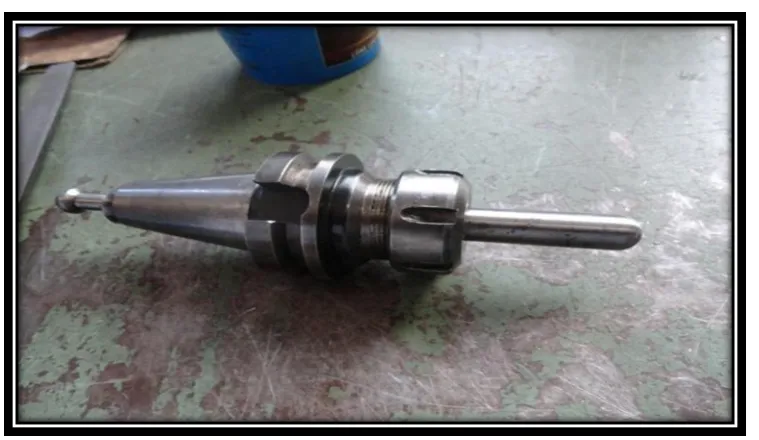
Fig 3 Stainless Steel Tool of Diameter 16 mm
A load cell of 1000 kg capacity was used for measuring the force applied by the tool on sheet during forming. The arrangement of load cell was made under the fixture between two plates placed on the machine. Water-miscible fluid including soluble oil and grease were used as lubricants. In this experimental investigation, process parameters are tool path, tool diameter, step size, feed rate, spindle speed, sheet thickness and lubrication.
Results and discussion
SPIF experiment was carried out to get output response of Force. In experimental result effect of all the process parameter on the output responses were noticed. Forming force increases with increase in tool diameter and the sheet thickness. For Forming Force marginally decrease with increase in step size and for further increase the step size forming force increase rapidly.
As the spindle speed was increased, forming force decreased but after a limit the decrement in forming force reduces with increase in spindle speed.
Forming force was found to increase with increase in feed rate but after a limit the increment decreases with increase with in feed rate.
In case of lubricant forming forces were lowest when no lubricant was used, but forming forces were less with oil as lubricant as compared to grease.
© 2017, IRJET | Impact Factor value: 5.181 | ISO 9001:2008 Certified Journal | Page 790
Conclusion
In the present work, the effect of process parameters on forming force was investigated on Al 6063 sheets using single point incremental forming. It has been revealed that increasing the tool diameter and the step size, the forming force increases because with increase in tool diameter contact area between tool and work piece increases which results in increasing forming force. As we increase in step size, strain locally imposed on sheet increases resulting increase in forming force. As spindle speed increases friction between the tool and the sheet increases which causes an increase of temperature resulting reduction in forming force. The advantages of controlling the spindle speed are mainly to ensure the safe utilization of the adapted machinery and the possibility of working with materials that are difficult to form at room temperature. With increase in thickness of sheet forming force increases and the sheet thickness is a dominant factor determining the force magnitude required for single point incremental forming. With increase in feed rate forming force increases till a certain maximum value and after that forming force starts decreasing. When grease is used as a lubricant as compared to oil and dry condition, forming force increases because friction is lowest in grease.
References
1. L. Vihtonen1, A. Puzik2, T. Katajarinne3, Comparing Two Robot Assisted Incremental Forming Methods: Incremental Forming by Pressing and Incremental Hammering
2. Ankor Raithatha and Stephen Duncan, An improved finite element model of incremental forming using conic programming, 2008American Control Conference Westin Seattle Hotel, Seattle, Washington, USA June 11-13, 2008.
3. J.I.V. Sena, R.A.F. Valente and J.J Gracio, Finite element analysis of incrementally formed parts, Int. J. Mechatronics and Manufacturing systems, Vol. 4, No. 5, 2011.
4. S. B. M. Echrif, and M. Hrairi, Research and progress in Incremental sheet forming process, (2010).
5. M. Pohlak, R. Küttner, R. Majak, K. Karjust & A. Sutt. “Simulation of incremental forming of sheet metal products.” 4th International DAAAM Conference, (April) (2004), 143–145.
6. Young and J. Jeswiet. “Wall thickness variations in single-point incremental forming. J. Eng.
Manufact.” Part B 218, 2004, 1453–1459
7. Philip Eyckens, Jihane Del-Lero Moreau, Joost R. Duflou, Albert Van Bael and Paul Van Houtee. “MK modeling of sheet formability in the incremental sheet forming process, taking in to account through-thickness shear.” 8. Joost Duflou, Yasemin Tunc¸kol, Alex Szekeres, Paul Vanherck, Experimental study on force measurements for
single point incremental forming, Journal of Materials Processing Technology (2007), 189, 65–72
© 2017, IRJET | Impact Factor value: 5.181 | ISO 9001:2008 Certified Journal | Page 791 10.J. R. Dufloua, A. Szekeresb and P. Vanherckc, Force Measurements for Single Point Incremental Forming, An
Experimental Study, Advanced Materials Research (2005), Vols. 6-8 441-448.
11.Fiorentino, E. Ceretti, A. Attanasio, L. Mazzoni, C. Giardini, Anallysis of Force, Accuracy and Formability in Positive Die Sheet Incremental Forming, Int J Mater Form, (2009), Vol. 2, 805–808.
12.R. Aerens, P.Eyckens, J.R. Duflou, P. Van Bael, force prediction for single point incremental forming deduced from experiment and FEM observation, Int. J. Adv. Manuf Technol (2010), Vol 46, 969-982.
13.W.C. Emmens, A.H. van den Boogaard, Formability in Incremental Sheet Forming and Cyclic Stretch-Bending, University of Twente, dept CTW Netherlands.
14.Zhaobing Liu, William J.T. Daniel, Yanle Li, Sheng Liu, Paul A Meehan, Multi-pass deformation design for incremental sheet forming: Analytical modeling, finite element analysis and experimental validation, Journal of Materials Processing Technology 214 (2014) 620– 634
15.Bagudanch, G. Centeno, C. Vallellano, M.L. Garcia-Romeu, Forming force in Single Point Incremental Forming under different bending conditions, Proceedings of the 5th Manufacturing Engineering Society International Conference – Zaragoza – June 2013 .