Robotic Process Automation (RPA) – An
Automation Tool Used In Software Industries for
Development of Finance Projects
Sanjay p1, Sreenivas TN2 1, 2
Dept. of Mechanical Engineering, AMC College of Engineering Bangalore- 560076
Abstract: Robotic Process Automation (RPA) is an emerging tool of automation technology based on notion of software robots or Artificial Intelligence (AI). RPA is the use of software with artificial intelligence (AI) and Machine Learning (ML)capabilities to handle high-volume, repeatable tasks that previously required a human to perform. RPA has the capability of software and services which allow to transact in any IT application, typically in the same way a human would, to automate complex, rule-based work. In other words, RPA software allows developers to develop complex automations to suit for company’s processes. When an RPA robot is at work, it performs tasks just like a human would: logging in, operating applications, entering data, performing complex calculations and logging out.
ML is an application of Artificial Intelligence (AI) that provides systems the ability to automatically learn and improve from experience without being explicitly programmed. ML focuses on the development of computer programs that can access data and use it learn for themselves.
In the present research work, an attempt was made to automate software development process used in software industries for implementation of finance projects. A finance application was developed using .Net technologies to read required information from the bank check using OCR (Optical Card Reader). Then check information was uploaded automatically on to the software application screen, and perform complex financial calculations using ML and AI techniques automatically without any manual intervention (in RPA way).
Key words: RPA, Artificial intelligence, Machine Learning, OCR
I. INTRODUCTION
A. Robotic Process Automation (RPA)
A software 'robot' is a software application that replicates the actions of a human being interacting with the user interface of a computer system. For example, execution of data entry into an ERP system - or indeed a full end-to-end business process - would be a typical activity for a software robot[1].
Software robots interpret the user interface of third party applications and are configured to execute steps identically to a human user. They are configured (or "trained") using demonstrative steps, rather than being programmed using code-based instructions[1]. RPA “robots” are revolutionizing the way we think about and administer business processes, IT support processes, workflow processes, remote infrastructure and back-office work. RPA provides dramatic improvements in accuracy and cycle time and increased productivity in transaction processing while it elevates the nature of work by removing people from the repetitive tasks [2].
1) Advantages of RPA: Because RPA is software-based, it can be used to perform various tasks. These include maintenance of records, queries, performing complex calculations, and transactions. Additionally, any application commonly used by a software company can be operated by RPA. For example, .NET, Citrix, .NET, HTML, and Java are all technologies commonly supported by RPA. Compatible systems include mainframe terminals, SAP, Oracle, Blackline, and many more. Programmable automation means that RPA can be configured to perform almost any rule-based task.
2) Benefits of RPA: RPA can help digitally transform the software business process and providedthe value by a) Providing higher quality services: better accuracy and better customer service.
b) Greater compliance: business processes can be set to operate in accordance with the necessary regulations and standards. c) Increased speed: processes can be completed at unprecedented speeds.
e) Increased agility: reduced overhead and more flexible business resources.
f) Comprehensive insights: improved efficiency by digitizing and auditing process data.
g) Reduced costs/save cost: manual or repetitive tasks are carried out by RPA software at a fraction of the cost
h) Improve accuracy and reduce rejection
These factors help in shaping company’s business digital operations strategy [3]
B. Artificial Intelligence
Artificial Intelligence (AI) is the theory and development of computer systems able to perform tasks normally requiring human
intelligence, such as visual perception, speech recognition, decision-making, and translation between languages.
Artificial intelligence (AI, also machine intelligence, MI) is intelligence exhibited by machines, rather than humans or other animals (natural intelligence, NI). In computer science, the field of AI research defines itself as the study of "intelligent agents": any device that perceives its environment and takes actions that maximize its chance of success at some goal. Colloquially, the term "artificial intelligence" is applied when a machine mimics "cognitive" functions that humans associate with other human minds, such as "learning" and "problem solving" [4].
C. Machine Learning (ML) Process
Machine learning is an application of artificial intelligence (AI) that provides systems the ability to automatically learn and improve from experience without being explicitly programmed. Machine learning focuses on the development of computer programs that can access data and use it learn for themselves.The process of learning begins with observations or data, such as examples, direct experience, or instruction, in order to look for patterns in data and make better decisions in the future based on the examples that we provide. The primary aim is to allow the computers learn automatically without human intervention or assistance and adjust actions accordingly[5].
D. OCR Technology
Optical Character Recognition (OCR), is a technology that enables to convert different types of documents, such as scanned paper documents, PDF files or images captured by a digital camera into editable and searchable data [6].
OCR is the recognition of printed or written textcharacters by a computer. This involves photoscanning of the text character-by-character, analysis of the scanned-in image, and then translation of the character image into character codes, such as ASCII, commonly used in data processing. [7]
II. OBJECTIVE AND THE APPROACH USED FOR PRESENT INVESTIGATION
A. Objectives
The main objectives of the present investigation is to achieve automation of software development process using RPA techniques
1) Read th check (in PDF format), convert it in to XLS format and upload the information on to application screen.
2) Perform complex financial calculations using ML process: like finance data reconciliation, perform yearend calculations for tax
computation, generating exception reports,interest paid calculations, determining Mortgage Insurance(MI) premium amount and escrow amount
3) Display performed calculations on the developed financial application screen.
B. Approach followed
1) Finance application project is developed using .NET technologies (C# as programming language and SQL server as DB)
2) OCR technology is used for reading information from printed checks(like account number, MICR number, amount) and upload
the information to perform financial calculations.
3) Perform complex calculations using ML/AI techniques.
4) Display calculated results on the developed application screen (“Year End Tax Screen”)
III. DATA MODEL USED
A. Data input for RPA process
Fig 1: A sample bank check
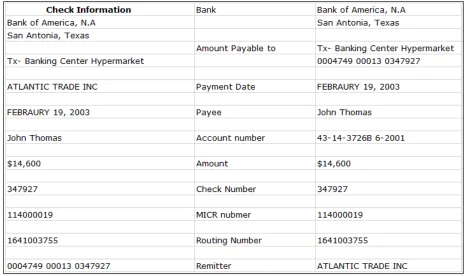
Read the information from a bank check, MICR number, Loan number, Account number, Check amount, Barrower address, Check date, Payee details, Co-borrower address if any an Tax payable year. The output of OCR is in excel format and shown in figure-2.
[image:4.612.75.542.447.723.2]IV. WORKFLOW, PROCESS AND METHODOLOGY FOLLOWED
A. RPA Workflow
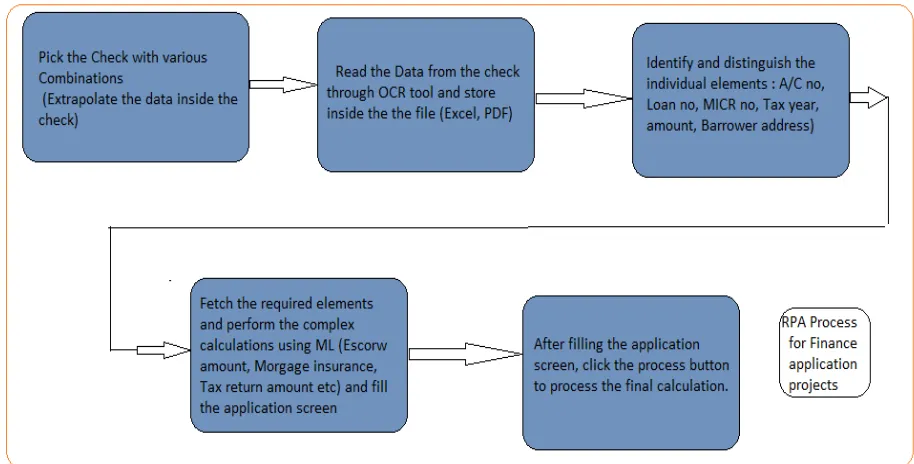
[image:5.612.76.550.117.340.2]The workflow for RPA isas shown in figure -3.
Fig -3: RPA work flow
1) Read given check using OCR and convert it in to excel file.
2) This excel input will be uploaded to the application, where financial calculations for Mortgage insurance, tax amount and escrow amount will be performed using ML technique
3) Create a new entry in application screen, for each of the scanned image
4) Later “Process” button is used to process year end calculation logic. This will calculate tax amount to be paid by borrower along with the escrow and other fees which the borrower has to pay.
B. Methodology& process followed
[image:5.612.79.536.478.710.2]1) Use RPA to correct the errors in the excel file based on business rule
a) MICR No can be corrected based on the input characters (All MICR to be made available in a readable file)
b) Loan number can be corrected based on the input characters (All loan number can be made available in a readable file)
c) Business logic can be fed into the RPA logic (if there is any)
2) New corrected file to be created after running RPA process
3) Also get input from check - Loan number, loan amount, tax year etc. Performcomplex calculations to find mortgage interest,
escrow amount paid, total tax amount for the particular barrower.
V. RESULTS
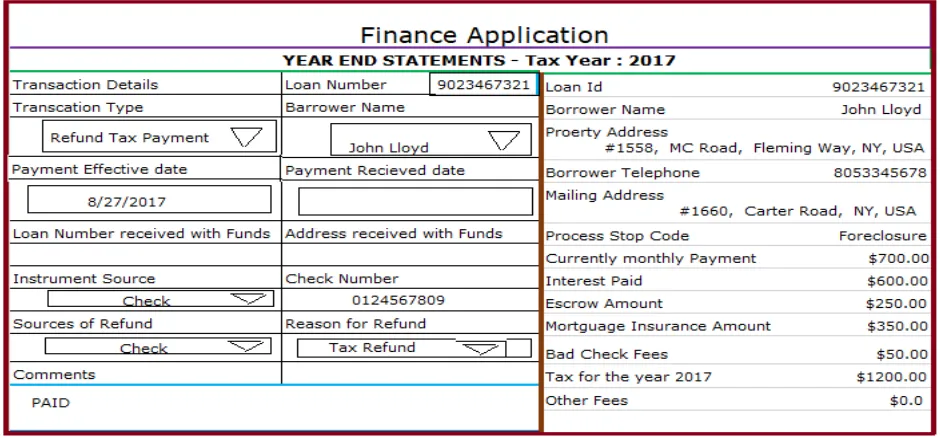
[image:6.612.73.543.253.472.2]Once the check is read using OCR technology and complex financial calculations are performed using ML/AI techniques, the information such as total interest amount, Escrow amount, and Mortgage interest amount, total fees to be paid and total tax to be paid for the financial year will be displayed on the application screen as shown in the fig-5.
Fig -5: Application screen with tax for the year 2017
VI. CONCLUSION
The performed financial calculations using RPA technologies are displayed on the application screen with the below mentioned details for the loan borrower.
A. Escrow amount: $250
B. Mortgage insurance amount: $350
C. Bad check fees: $50
D. Tax need to be paid for the year 2017: $1200
REFERENCES [1] https://en.wikipedia.org/wiki/Robotic-process-automation
[2] http://internetofthingsagenda.techtarget.com/definition/robotic-process-automation [3] http://blog.symphonyhq.com/what-is-rpa
[4] https://www.lexology.com/
[5] http://www.expertsystem.com/machine-learning-definition/ [6] https://www.abbyy.com/finereader/what-is-ocr/