University of Huddersfield Repository
Allan, R.J. et al.
The Science Case for 4GLS
Original Citation
Allan, R.J. et al. (2001) The Science Case for 4GLS. Research Report. Daresbury Laboratory.
This version is available at http://eprints.hud.ac.uk/id/eprint/20020/
The University Repository is a digital collection of the research output of the University, available on Open Access. Copyright and Moral Rights for the items on this site are retained by the individual author and/or other copyright owners. Users may access full items free of charge; copies of full text items generally can be reproduced, displayed or performed and given to third parties in any format or medium for personal research or study, educational or notforprofit purposes without prior permission or charge, provided:
• The authors, title and full bibliographic details is credited in any copy;
• A hyperlink and/or URL is included for the original metadata page; and
• The content is not changed in any way.
For more information, including our policy and submission procedure, please contact the Repository Team at: [email protected].
4GLS International Advisory Committee
Prof Dr Gerd Materlik CEO DIAMOND UK (formerly DESY, Germany)
Prof Gennady Kulipanov Deputy Director, Budker Institute of Nuclear Physics, Russia Prof Ilan Ben Zvi NSLS, Brookhaven National Laboratory
Dr Paul Dumas LURE, France
Dr George Neil Deputy FEL Manager, Jefferson Laboratory Prof Ingolf Lindau MAXLAB,University of Lund, Sweden Dr Richard Walker Sincrotrone Trieste, Italy
Prof Giorgio Margaritondo
Ecole Polytechnique Federale de Lausanne, Switzerland
Prof Peter Lindley Director of Research, ESRF Grenoble, France Prof Louise Johnson Oxford University, UK
Prof Dr Uwe Becker Fritz-Haber Institut der Max-Planck Gessellschaft, Germany Prof John Sutherland East Carolina University, USA
4GLS Steering Group
Prof Peter Weightman Director Surface Science Research Centre, The University of
Liverpool
Prof Wendy Flavell Department of Physics, UMIST
Dr Andrea Russell Department of Chemistry, The University of Southampton
Prof Elaine Seddon CLRC
Prof Robert Donovan Department of Chemistry, The University of Edinburgh
Prof Pankaj Vadgama Queen Mary and Westfield College, The University of London
Mr Mike Poole CLRC
Prof Keith Codling Department of Physics, The University of Reading
Prof John Wood Chief Executive, CLRC
Dr Hywel Price Director Daresbury Laboratory and Deputy Chief Executive
CLRC
Prof Jian Lu UMIST
Prof Henry Hutchinson Head Central Laser Facility, CLRC
Prof John West CLRC
Dr Martin McCoustra Department of Chemistry, The University of Nottingham Prof Bonnie Wallace Birkbeck College, University of London
Prof Hilary Evans Liverpool John Moores University
Dr Gareth Jones CLRC
Dr Ben Murdin Department of Physics, The University of Surrey
Prof Mike Chesters Department of Chemistry, The University of Nottingham
Prof Harvey Rutt Department of Electronics and Computer Science, The University
The Science Case for
4GLS
A World Leading Facility for UK Science
Presented by
The UK Scientific Community
Authors and Contributors
R J Allan3, M P Allen35, A S Alexandrov28, M N R Ashfold6, R Atkinson7, L Avaldi38, C D Bain9,
J Bancroft81, S D Barrett1, L D Barron32, S Bayliss25, U Becker39, L G Benning30, N Berrah40, C Binns24, R H Bisby34, J M Bizau22, R J Blake3, M A Bowler3, J Bowyer83, J Brettle75, D Briggs4,
L M Brown19, W A Brown14, P G Burke7, C Cacho3, R Carter41, R Catlow26, R J Cernik3, M
Chesters4, S A Clark27, D T Clarke3, J A Clarke3, K Codling11, R Cogdell32, D Connaughton69, J P Connerade13, J T Costello42, M D Crapper28, C Creaser5, F J Currell7, P B Davies19, M de
Jong70, C Dessent23, V R Dhanak1, C M Dobson19, P J Dobson9, A J Doig2, R J Donovan67, P Dumas22, K Dunn7, O Dutuit22, J M Dyke8, D A Eastham3, R G Egdell9, J H D Eland9, D R Emerson3, M Eriksson80, P Erman10, A Evans29, H Evans72, S Evans30 , T Field7, H Fielding36, A Fisher14, W R Flavell2, R Ford2, L J Frasinski11, N Freeman73, J N Galayda78, P Gardner2, J Garside2, N J Gay19, T J Gay85, T Gejo43, M George4, M D Gray2, T J Greenshaw1, D Greig30, M P Halsall2, B Hamilton2, N M Harrison13, S S Hasnain3, P A Hatherly11, P Heathcote63, J R
Helliwell18, C M B Henderson18, J Hepburn44, J Hill51, G Hirst77, J D Hirst4, D M P Holland3, A B Horn23, P Horton55, M R C Hunt4, H Hutchinson77, J E Inglesfield31, V K Ivanov45, C A F Johnson21, L N Johnson9, D Jones3, F H Jones14, G R Jones3, L Jones3, M Kadodwala32, L Karlsson12 , E T Kennedy42, G C King18, M R F King3, I W Kirkman3, K Kleese3, P L Knight13, N Kylstra46, F P Larkins66, C Latimer7, K P Lawley67, G J Leggett2, R A Lewis3, K Lindsey46, J R Lu2, F M Lyng47, M A Macdonald3, A Malins3, J P Marangos13, G Margaritondo48, M Marsi49, G Marston11, S R Martin52, M L Martin-Fernandez3, N J Mason14, J A D Matthew23, M R S McCoustra4, J McGilp33, I T McGovern33, R McGrath1, R A Meldrum62, M Meyer22, T J Millar2,
D Mitchell51, S P Møller53, F J Molster50, P Moriarty4, P Morin22, I H Munro2, B N Murdin20 , L Nahon22, W R Newell14, C J Noble3, E J Nordgren12, P R Norman76, P O’Brien18, P O’Neill59, P O’Shea4, H Owen3,R Pain16, M Papiz3, A Parker77, J Parker21, A Parr15, R Pattrick18, M E Pemble34, M Picardo71, C R Pidgeon21, T J T Pinheiro35, E D Poliakoff54, M W Poole3, A Potts36, R Potvliege46, I Powis4, S D Price14, F M Quinn3, S Radford30, E Rachlew-Källne10, R
1. University of Liverpool 2. UMIST
3. CLRC Daresbury Laboratory 4. University of Nottingham 5. Nottingham Trent University 6. University of Bristol
7. Queen’s University Belfast 8. University of Southampton 9. University of Oxford
10. Royal Institute of Technology, Stockholm, Sweden
11. University of Reading 12. Uppsala University Sweden 13. Imperial College, London 14. University College London 15. NIST, USA
16. University of Newcastle 17. Jagiellonian University, Poland 18. University of Manchester 19. University of Cambridge 20. University of Surrey 21. Heriot Watt University 22. LURE, France 23. University of York 24. University of Leicester 25. De Montfort University 26. Royal Institution
27. Sheffield Hallam University 28. University of Loughborough 29. University of Wales, Aberystwyth 30. University of Leeds
31. University of Cardiff 32. University of Glasgow 33. University of Dublin, Ireland 34. University of Salford 35. University of Warwick 36. King’s College London 37. FOM, The Netherlands 38. CNR, Rome, Italy
39. Fritz-Haber-Institut, Berlin, Germany 40. Western Michigan University, USA 41. University of Lancaster
42. Dublin City University, Ireland 43. UVSOR, Japan
44. University of British Columbia, Canada 45. St Petersburg State Technical University,
Russia
46. University of Durham
47. Dublin Institute of Technology, Ireland 48. Ecole Polytechnique Federale de
Lausanne, Switzerland 49. Sincrotrone Trieste, Italy 50. ESTEC/ESA, The Netherlands 51. Royal Preston Hospital, NHS 52. MRC, NIMR, Mill Hill
53. University of Aarhus, Denmark 54. Louisiana State University, USA 55. University of Sheffield
56. University College Dublin
57. Argonne National Laboratory, USA
58. University of Exeter
59. MRC, Radiation and Genome Stability Unit, Harwell
60. NSLS, USA
61. North Staffordshire Hospital, NHS 62. University of Birmingham
63. Queen Mary, University of London 64. Jefferson Lab, USA
65. University of Greenwich
66. University of Melbourne, Australia 67. University of Edinburgh
68. Medichem, USA
69. DDA, Nelson, Lancashire 70. Canadian Light Source Inc. 71. Manchester Innovation Ltd. 72. Liverpool John Moore’s University 73. Farfield Sensors Ltd., Salford 74. Johnson Matthey, Royston 75. Pilkington, Ormskirk 76. Dstl, Porton Down
77. CLRC Rutherford Appleton Laboratory 78. SSRL, Stanford, USA
79. Pharmhouse, Liverpool 80. MAX-lab, Lund, Sweden 81. QinetiQ, Malvern 82. University of Keele
83. Royal Holloway and New Bedford College, London
Executive Summary
This document is presented by over 200 members of the UK Scientific Community and contains the scientific case for the establishment of the 4th Generation Light Source (4GLS) at CLRC Daresbury Laboratory. It forms a part of the proposal to establish a National Centre for Accelerator Science Imaging and Medicine (CASIM) at the laboratory which was first submitted to the North West Science Review Committee in 2000.
The proposal for 4GLS will be assessed through the ‘Gateway Process’, with peer review organised by EPSRC on behalf of OST. The mechanism of this process is described in Appendix I. In line with the stages of this process, the purpose of this document is to present the outline science case only for peer review. The full business case with a complete analysis
of costs and risks will be presented at the appropriate stage of the process, following a design study.
The UK has had an established and documented need for a low energy SR source for at least 15 years and the initial drive to establish such a source was borne out of the need to provide scientists both in the UK and internationally1 with access to a world class source of high quality UV – XUV radiation. However, developments in accelerator technology during this period have now allowed us to propose a facility that will realise long-awaited scientific goals in the field of dynamics and nanoscience that far surpass our original expectations. This in turn brings together two previously rather independent communities, the ‘low energy SR’ community and the ‘laser’ community, and allows the synergies between SR and laser sources to be exploited to the full, for the first time, in cutting-edge experiments.
This document is a proposal to establish the world’s leading low energy source. 4GLS is a suite of accelerator-based light sources designed to complement the ESRF and diamond by
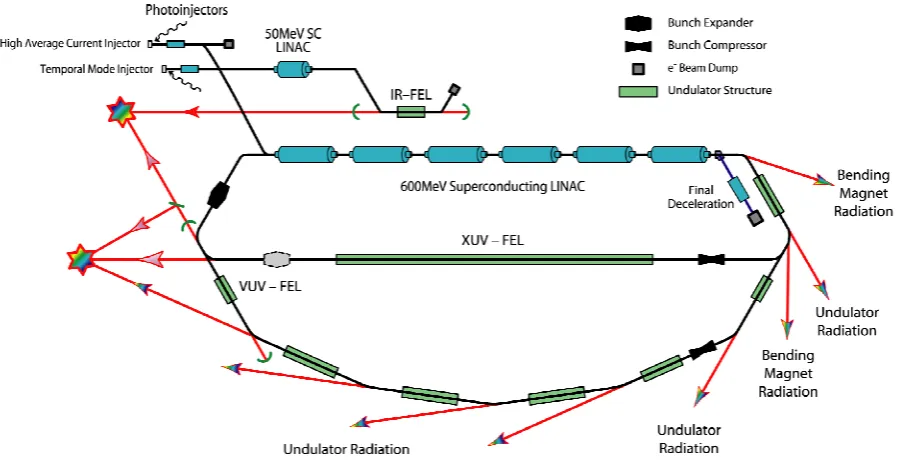
providing state-of-the-art radiation in the low energy photon regime – from the far-infrared (IR) to the extreme ultraviolet (XUV). At its heart is a low energy ring based on a superconducting energy recovery linac (ERL) which will provide optimised synchrotron radiation from a variety of free electron lasers (IR to XUV), undulators and bending magnets.
The 4GLS undulators will be optimised to generate spontaneous high flux, high brightness
radiation, of variable polarisation, over the photon energy range 3-100 eV. However, they will also generate usable radiation in the higher harmonics up to around 500 eV. The intensity and extremely broad tunability of this undulator radiation are two of its main attractions to synchrotron radiation users. The ERL technology of 4GLS will allow much shorter bunches and higher peak photon fluxes than is possible on conventional storage ring sources. It will also give users the added bonuses of pulse structure flexibility and an effectively infinite beam lifetime; benefits unavailable to storage ring users.
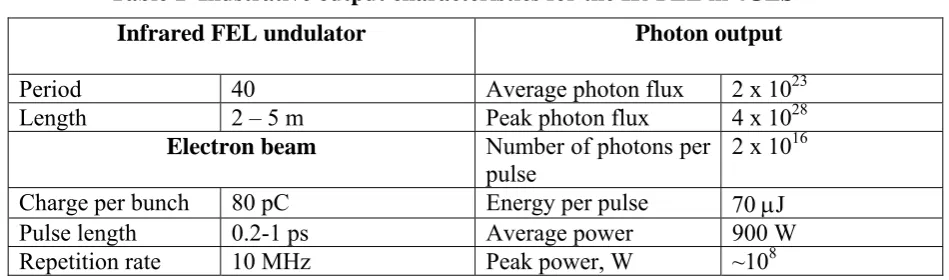
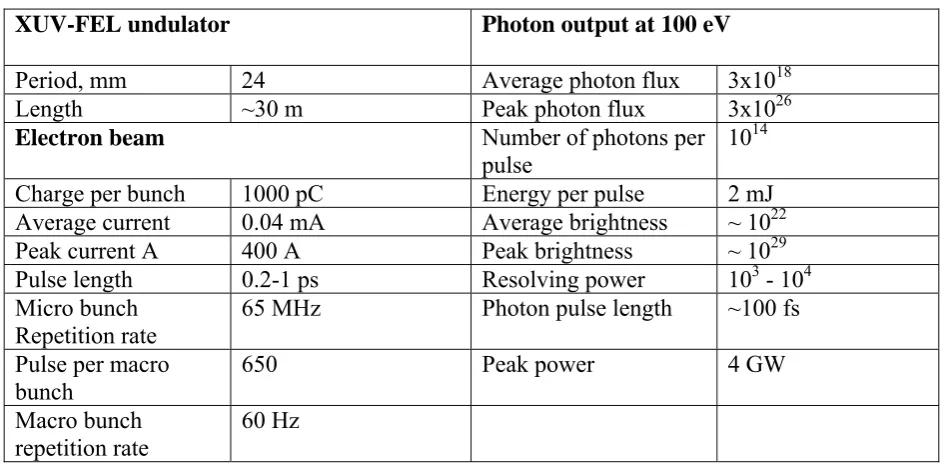
In addition, three free electron laser (FEL) sources will operate in the IR (3 – 75 μm, variable polarisation), VUV (visible – 10 eV, variable polarisation) and XUV (5 – 100 eV). The FELs will be used to generate short pulses of radiation that are broadly tunable and more than a million times more intense than the equivalent spontaneous undulator radiation. The FEL sources are designed to operate effectively in regimes where they offer considerable advantages over table top sources, i.e. in both the far IR (THz) regimes, and at all frequencies
higher than deep UV. The extraordinary flexibility of the ERL design of 4GLS means that
1 D P Woodruff and A M Bradshaw,
these outstanding sources may be used individually, in combination with undulator radiation or other FEL radiation or together with table-top IR or visible/UV laser sources. No other laboratory in the world has IR-, VUV- and XUV-free electron lasers in close proximity both to each other and to state-of-the-art low energy synchrotron radiation.
This makes possible an entirely new generation of experiments in the VUV based on ‘pump-probe’ techniques, where dynamic processes and transient species of all types may be probed on timescales into the fs regime. We will be able to study transient species that do not occur naturally on earth, such as those present in the interstellar medium, with profound implications for models of the origin of the universe and the homochirality of life. Studies of reaction intermediates will revolutionise our understanding of all types of catalysis, electrochemistry and photochemistry. Fast energy transfer processes may be studied in unprecedented detail, providing the foundation for improved models of processes such as DNA damage and repair. 4GLS will also allow truly real-time conformational dynamics measurements of biomolecules, even in dilute solutions, thus improving our understanding of the links between protein structure, dynamics and function.
The high brightness of the sources making up 4GLS will allow individual nanoclusters of material to be studied both on surfaces and in flight, allowing us to develop an understanding of the transition between molecular and condensed phases and to exploit it in the development of new materials. Key nanoimaging techniques will be developed. For example, the intensity available from the IR-FEL is essential for achieving resolutions substantially beyond the diffraction limit in near field imaging and the powers available from the VUV and XUV-FELs will allow non-linear sum-frequency and second harmonic imaging to be performed. The tunability of the sources allows these imaging tools to be targeted to specific dynamical processes, leading to step advances in functional imaging. The brightness of these sources, particularly the XUV-FEL, will lead us into a new regime of high field physics where non-linear processes may eventually be exploited, for example in the development of coherent control of reactions.
4GLS is entirely complementary in its provision to the planned diamond source, both in terms
of its photon energy coverage and its capacity for dynamic measurements. This issue is addressed explicitly in the report by Professor D P Woodruff recently commissioned by the UK SR Forum (Appendix VI). It is also complementary to planned European sources, such as the TESLA XFEL facility and will seed the symbiotic development of a new generation of world sources through European collaborations, for example with DESY Laboratory, and collaborations with other leading international laboratories, notably Jefferson Laboratory and SSRL. 4GLS will foster development of a crucial expertise base in technologies relevant for the UK’s involvement in other world projects. It will provide the impetus for the development of the UK’s accelerator science capability through the internationally renowned work of the accelerator physicists at Daresbury Laboratory and place the UK at the forefront of accelerator design and development.
Contents
1 THE 4GLS VISION ... 1
2 THE CASIM CONTEXT: THE FOURTH GENERATION LIGHT SOURCE COMPONENT OF THE CASIM PROJECT ... 4
3 4GLS SCIENCE CASE ... 5
3.1 INTRODUCTION...5
3.2 TIME-RESOLVED PUMP PROBE STUDIES...5
3.2.1 Molecular Dynamics... 7
3.2.2 Conformational Dynamics in Biomolecules ... 13
3.2.3 Electron Dynamics... 16
3.2.4 Transients, Short-lived Species and Excited States... 21
3.2.5 Reaction Dynamics at Surfaces and Interfaces... 29
3.3 NANOSCIENCE...39
3.3.1 The Nanotechnology Revolution ... 39
3.3.2 Free Radicals and Clusters... 39
3.3.3 Clusters as Probes of Liquid-Solid Transition Properties ... 40
3.3.4 Electronic Structure of Single Clusters... 40
3.3.5 Spin Physics of Clusters and Magnetic Materials ... 42
3.3.6 New Horizons for Ultra-High Resolution Photoemission from Correlated Materials, Surfaces and Clusters.. ... 43
3.3.7 Nanoimaging Capabilities of 4GLS ... 44
3.3.8 Magnetic Imaging Using Spectroscopic Second Harmonic Magneto-optics... 45
3.3.9 Functional Imaging ... 46
3.3.10 Opportunities for SFS Imaging... 49
3.3.11 Receptor-mediated Signalling Systems in Membrane Rafts: High Spatial Resolution Vibrational Spectroscopy ... 49
3.3.12 2-D Vibrational Imaging ... 50
3.3.13 Development of New Biomaterials: Nanoscale Surface – Environment Interactions... 50
3.4 NONLINEAR PROCESSES...52
3.4.1 High Field and Multiphoton Processes in Multielectron Atoms, Molecules, and Ions... 52
3.4.2 Molecular Dynamics in Intense XUV Fields : 'Photon Scissors' ... 53
4 WIDER EXPLOITATION... 54
4.1 MEDICAL EXPLOITATION OF 4GLS ...54
4.1.1 The Diseased State... 54
4.1.2 Novel Therapies ... 55
4.1.3 Drug Delivery Systems... 55
4.2 INDUSTRIAL EXPLOITATION OF 4GLS...57
4.2.1 Semiconductor Technology and Electronics... 57
4.2.2 Manufacturing Process Improvement... 57
4.2.3 Display Technology ... 59
4.2.4 Study of Growth Processes ... 59
4.2.5 Nanomaterials and engineering... 60
4.2.6 High Throughput Screening (HTS) of Bio-assays... 60
4.2.7 Instrumentation Development Outreach ... 61
4.2.8 Wider Exploitation Avenues and Networks... 61
5 FACILITY DESCRIPTION ... 62
5.1 CONCEPT...62
5.2 FACILITY OVERVIEW...63
5.2.1 Energy recovery linac concept... 63
5.2.2 Beam dynamics ... 65
5.2.3 Injectors ... 66
5.2.4 Linear accelerator ... 67
5.2.5 Undulators ... 68
6 THE PHOTON SOURCES ... 69
6.1 STIMULATED SR FROM FREE ELECTRON LASERS...69
6.1.1 The IR-FEL ... 69
6.1.2 The VUV-FEL ... 70
6.1.3 The XUV-FEL ... 71
6.1.4 Seeding... 72
6.2 SPONTANEOUS EMISSION...73
6.2.1 Pulse structure ... 73
6.2.2 Source matching ... 74
6.2.3 Lifetime ... 74
6.2.4 4GLS undulator spontaneous emission... 74
6.2.5 Illustrative Examples of Undulator Output... 74
6.2.6 4GLS bending magnet sources... 75
6.3 MODES OF USE OF 4GLS ...76
7 DETECTORS ... 78
8 COMPLEMENTARY FACILITIES... 80
8.1 THE ELECTRON BEAM ION TRAP (EBIT) ...80
8.2 FREE RADICAL RESEARCH...80
8.3 INVERSE COMPTON SCATTERING...80
9 ALTERNATIVE WAYS OF MEETING THE NEED ... 82
9.1 COMPARISONS WITH OTHER ADVANCED RADIATION SOURCES...82
9.2 4GLS/DIAMOND...84
9.3 4GLS AND LASER LIGHT SOURCES –ACOMPARISON...85
10 BENEFICIARIES ... 90
10.1 BIOSCIENCES...90
10.2 BIOMATERIALS...90
10.3 BIOMEDICAL AND PHARMACEUTICAL...91
10.4 SURFACE SCIENCE...92
10.5 CATALYSIS...92
10.6 PHOTOCHEMISTRY AND PHOTOPHYSICS...92
10.7 ELECTROCHEMISTRY...92
10.8 EARTH AND ENVIRONMENTAL SCIENCES...93
10.9 ATOMIC AND MOLECULAR SPECTROSCOPY...94
10.10 ASTROPHYSICS...94
10.11 NEW NANOMATERIALS AND POLYMERS...95
10.12 FUNCTIONAL MATERIALS...95
10.13 NEW MAGNETIC MATERIALS...96
10.14 SEMICONDUCTOR AND SEMICONDUCTOR THIN FILM TECHNOLOGY...96
10.15 THEORETICAL STUDIES...96
10.16 ACCELERATOR TECHNOLOGY...97
10.17 DETECTOR DEVELOPMENT...97
10.18 INDUSTRIAL...97
11 COMMUNITY ... 98
11.1 CONSULTATION...100
12 COLLABORATIONS ... 101
12.1 RESEARCH...101
12.2 TECHNOLOGY...101
13 COSTS ...ERROR! BOOKMARK NOT DEFINED.
13.1 CAPITAL...ERROR!BOOKMARK NOT DEFINED. 13.2 RUNNING COSTS...ERROR!BOOKMARK NOT DEFINED.
13.3.2 Cost savings from existing buildings and infrastructural facilities ... Error! Bookmark not defined.
13.4 SOURCES OF FUNDING...ERROR!BOOKMARK NOT DEFINED.
14 PROJECT TIMETABLE...ERROR! BOOKMARK NOT DEFINED.
15 RISK ASSESSMENT ...ERROR! BOOKMARK NOT DEFINED.
15.1 TECHNICAL...ERROR!BOOKMARK NOT DEFINED.
15.2 EXPLOITATION...ERROR!BOOKMARK NOT DEFINED.
15.3 RESOURCE...ERROR!BOOKMARK NOT DEFINED.
15.4 COST ESTIMATES...ERROR!BOOKMARK NOT DEFINED.
16 THE WAY FORWARD ...ERROR! BOOKMARK NOT DEFINED.
16.1 BUILDING THE USER COMMUNITY...ERROR!BOOKMARK NOT DEFINED.
16.2 OVERSEAS INVESTMENT...ERROR!BOOKMARK NOT DEFINED.
17 MANAGEMENT OF THE 4GLS FACILITY WITHIN CASIM ...ERROR! BOOKMARK NOT
DEFINED.
18 SYNERGISTIC ASPECTS OF THE 4GLS PROJECT ...ERROR! BOOKMARK NOT DEFINED.
18.1 SYNERGIES BETWEEN 4GLS, SUPERSTEM, IFMI AND PROTON CYCLOTRON FACILITIES...ERROR!
BOOKMARK NOT DEFINED.
18.2 SYNERGIES BETWEEN 4GLS AND PULSE RADIOLYSIS...ERROR!BOOKMARK NOT DEFINED. 18.3 SYNERGIES BETWEEN 4GLS AND THE COMPUTATIONAL SCIENCE AND ENGINEERING (CSE)
DEPARTMENT...ERROR!BOOKMARK NOT DEFINED.
18.4 SYNERGIES BETWEEN 4GLS AND E-SCIENCE...ERROR!BOOKMARK NOT DEFINED.
18.5 SYNERGIES BETWEEN 4GLS AND ACCELERATOR TECHNOLOGIES...ERROR!BOOKMARK NOT DEFINED.
19 DISSEMINATION...ERROR! BOOKMARK NOT DEFINED.
19.1 ACADEMIC COMMUNITY...ERROR!BOOKMARK NOT DEFINED.
19.2 COMMERCIAL SECTOR...ERROR!BOOKMARK NOT DEFINED.
19.3 GENERAL PUBLIC...ERROR!BOOKMARK NOT DEFINED.
19.4 TRAINING...ERROR!BOOKMARK NOT DEFINED.
APPENDIX I PROJECT EXECUTION: THE GATEWAY PROCESS...ERROR! BOOKMARK NOT
DEFINED.
APPENDIX II NANOIMAGING CAPABILITIES AND APPLICATIONS OF 4GLS ...ERROR!
BOOKMARK NOT DEFINED.
APPENDIX III 4GLS PRESENTATIONS AND MEETINGS...ERROR! BOOKMARK NOT DEFINED.
APPENDIX IV OUTLINE ILLUSTRATIONS OF POSSIBLE EXPERIMENTAL CONFIGURATIONS ...ERROR! BOOKMARK NOT DEFINED.
APPENDIX V PIRATE IR DETECTION SYSTEM ...ERROR! BOOKMARK NOT DEFINED.
APPENDIX VI REPORT OF 4GLS & DIAMOND WORKING PARTY ...ERROR! BOOKMARK NOT
DEFINED.
APPENDIX VII ‘TABLE-TOP’ LASER LIGHT SOURCES ...ERROR! BOOKMARK NOT DEFINED.
1 THE 4GLS VISION
Our vision for 4GLS is to create the world’s leading low energy light source in order to carry out internationally outstanding science that cannot be conducted elsewhere.
The fourth generation light source is a uniquely flexible source of ultra-high brightness continuous and pulsed radiation covering the IR to XUV parts of the spectrum. It is the first light source in the world that is planned from the outset to be a multi-user, multi-source facility combining ERL (energy recovery linac) and FEL (free electron laser) technology. As such, it will place UK accelerator science at the forefront of world developments. ERL technology provides high quality, very high brightness radiation, which vastly surpasses that provided by conventional storage ring technology. It also provides easily tailored pulse characteristics, leading to a high level of experimental flexibility. It is widely regarded by the international community as the technology on which future advances in synchrotron radiation science will be based. FEL technology provides the opportunity to complement this with pulses of very short duration and ultra-high brightness from IR-, VUV- and XUV-FELs which are themselves individually world class. The use of locked laser photoinjectors and superconducting technology throughout confers high stability and allows the different parts of the facility to be brought together in a unified whole, and in particular to be used in combination, with the pulses from one source matched and synchronised with those from another. The ERL technology lends itself to easy upgrade paths which are described later in this document. This is a source that will not become rapidly outdated but will provide the UK with a world leading facility for many years after its construction.
nanoscale objects can be studied, for example the distribution of electron spins in single nanoclusters of magnetic material may be determined for the first time. The high brightness also enables the development of a number of imaging techniques, for example the use of the huge brightness of the IR-FEL to develop near-field functional imaging on truly sub-cellular (30 nm) dimensions. The short pulse lengths provided by the source allow us to access the dynamics or kinetics of processes previously inaccessible, for example studies of real-time protein folding, molecular conformational changes and chemical reactions on timescales down to tens of fs. The flexibility and ease with which photon sources may be combined will allow unparalleled opportunities for the development of ‘pump-probe’ experiments. Of particular importance here are those using the VUV- and XUV-FEL sources, which allow, for example, the creation of transient, short-lived species (such as those created in the upper atmosphere or in interstellar dust clouds) and their subsequent study using continuous radiation. The brightness of these sources, particularly the XUV-FEL lead us into a new regime of high field physics where non-linear processes may be exploited, for example in the development of coherent photon scissors and related tools.
The potential for technological exploitation of the results of this research can scarcely be overestimated particularly when one realises that the small distances and fast timescales that will be probed are precisely those governing many 21st century technologies. For example, semiconductor device structures based on Si are set to become so small that they will operate normally in a non-equilibrium regime which makes dynamic carrier distribution measurements of the type described in this document essential for their further exploitation. The development of spintronic memories will require the nanoscale characterisation of electron spin distributions of magnetic clusters of the type 4GLS is ideally suited to provide. The capacity of 4GLS for dynamic measurements of protein folding in realistic solutions on fast timescales will provide complementary information to the ‘static’ structure information provided by protein crystallography to the post-genomics world. The ability to manipulate molecules in high fields will lead to opportunities for exploitation of the coherent control of reactions, while the ability to study reaction intermediates will lead to a fundamentally improved understanding of all types of catalysis.
The demand for this facility comes from the UK and the international research community, more than 200 of whom have contributed to this document. For over 15 years it has been recognised that UK researchers requiring low energy synchrotron radiation are being severely disadvantaged by the lack of access to high brightness VUV photons. Indeed, enhanced provision of VUV radiation was an explicit recommendation of both the Blundell and Woolfson reviews on synchrotron radiation science which were presented in 1986 and 1993 respectively2. None of the current European 3rd generation sources offers optimised radiation below 100 eV. The 4GLS ERL technology provides high brightness undulator radiation in a multi-user facility, giving this ‘low energy’ community a source quality surpassing any other world low energy source. In addition, 4GLS provides individual, internationally leading FEL sources meeting a number of the needs of the ‘laser’ community, in particular access to intense deep UV and XUV sources. The facility thus brings together two previously rather independent communities and allows the synergies between SR and laser sources to be exploited to the full for the first time in cutting-edge experiments.
2 Blundell report on Scientific Requirements for Synchrotron Radiation Research in the UK, 1986; Woolfson
2 THE CASIM CONTEXT: THE FOURTH GENERATION LIGHT SOURCE COMPONENT OF THE CASIM PROJECT
The proposal to establish a National Centre for Accelerator Science Imaging and Medicine (CASIM) at the Daresbury Laboratory was first submitted in the summer of 2000 to the North West Science Review (NWSR) established by Lord Sainsbury. The proposal received the enthusiastic support of the NWSR and of the North West and Daresbury Development Group established by the Secretary of State for Trade and Industry, Stephen Byers.
In order to facilitate an assessment of the CASIM proposal a more detailed case for the fourth generation light source (4GLS) and Radioactive Ion Beam facility (SIRIUS) components of CASIM was submitted to the UK Research Councils by the CLRC Daresbury Laboratory in February 2001. At a meeting at the Daresbury Laboratory in March 2001 the Secretary of State for Trade and Industry promised Government support for CASIM subject to a satisfactory response to issues raised in the report on the peer review process prepared by the Engineering and Physical Sciences Research Council (EPSRC).
This document is presented by more than 200 scientists, on behalf of the UK science community, and with the approval of the UK SR Forum. It provides the scientific justification for the 4GLS component of CASIM, together with a description of the main characteristics of the facility in comparison with other planned UK and world facilities. We present a full response to issues raised by the EPSRC report on the 4GLS component of the case submitted by CLRC in February 2001. In the case of the SIRIUS component the response to the review panel has gone forward as a separate document following acceptance of the basic science case. The current proposal for 4GLS will be assessed through the ‘Gateway Process’, with peer review organised by EPSRC on behalf of OST. The mechanism of this process is described in Appendix I. In line with the stages of this process, the purpose of this document is to present the outline science case only for peer review. The full business case with a complete analysis
of costs and risks will be presented at the appropriate stage of the process, following a design study.
The vision behind the CASIM proposal is based on a recognition that advances in science, engineering and medicine are becoming increasingly dependent on accelerators. CASIM at Daresbury will provide the UK with a focus to maintain and develop its world-leading expertise in accelerator science, to train accelerator scientists and to exploit the potential of accelerators in a wide range of fields.
In assessing the cost effectiveness of CASIM it is important to consider the overall synergies of the project. The synergies between 4GLS and SIRIUS are apparent, for example, in the fields of imaging, radiobiology, and in the spectroscopy of radioactive and neutron rich ions important to our understanding of stellar evolution. These and other synergies will be easily
3 4GLS SCIENCE CASE
3.1 Introduction
In world terms, 4GLS is a unique source that will enable completely new experiments. The extraordinary flexibility of the ERL design means that the FEL sources may be used individually, in combination with undulator radiation or other FEL radiation or together with table-top laser sources. This makes possible an entirely new generation of experiments in the VUV based on ‘pump-probe’ techniques, where dynamic processes and transient species of all types may be probed on timescales into the femtosecond (fs) regime. Thus 4GLS will be used to probe the relationship between structure and reactivity in all types of matter with unprecedented precision. The first parts of the science case describe the new science that will be carried out using the pump-probe approach, in areas as diverse as conformational dynamics of biomolecules, spin and electron dynamics, and the study of short-lived transients of importance in pollution control.
The brightness of the 4GLS sources make possible many new experiments on small clusters of material and indeed it will be possible to study individual nanoclusters. It will also be essential for flux hungry experiments where the material under study is present only in very small amounts or where the detection technique is intrinsically inefficient. Key nanoimaging techniques will be developed. For example, the intensity available from the IR-FEL is essential for achieving resolutions substantially beyond the diffraction limit in near field imaging, and the powers available from the VUV and XUV-FELs will allow nonlinear sum-frequency and second harmonic imaging to be performed. The tunability of the sources allows these imaging tools to be targeted to specific dynamical processes. The second main part of the science case describes the contribution of the source to nanoscience, ranging from measurements of the spin polarised electronic structure of individual magnetic clusters to the development of new biomaterials.
Finally, the brightness of these sources, particularly the XUV-FEL will lead us into a new regime of high field physics where short-wavelength non-linear processes will be accessible. 4GLS will have a ground-breaking role to play here in contributing to the interplay between theory and experiment and improving our understanding of the behaviour of molecules in intense XUV fields. This work is summarised in the final section of the science case.
3.2 Time-Resolved Pump Probe Studies
Understanding the relation between structure and reactivity is one of the most important challenges in chemical physics research. A key role in this research is played by time-resolved pump-probe experiments which provide a real-time observation of the nuclear motions of atoms and molecules in the process of undergoing chemical change. In 1999 Prof Ahmed Zewail was awarded the Nobel Prize in Chemistry for his pioneering work in this area3.
The radiation pulses used in pump-probe experiments need to satisfy a number of requirements. The pulse duration has to be short compared to the dynamics under investigation, which typically implies pulses in the picosecond or femtosecond domain. Indirect photoionisation, rotation and intramolecular vibrational relaxation can be studied on a
picosecond (ps) timescale whilst direct photoionisation, vibrational motion and chemical exchange can be probed in the femtosecond time domain. In addition, the intensity of the pulses must be sufficient to achieve finite excitation probabilities during the short interaction. 4GLS, with its combination of VUV- and XUV-FELs, together with its undulator radiation, offers unique opportunities for these and other types of studies. Furthermore, the high average power of the VUV-FEL and the possibility of synchronising the FEL radiation with conventional pulsed laser sources will enable sophisticated pump-probe experiments to be performed. Alternatively, non-perturbative experiments can be undertaken using only the high intensity VUV-FEL.
At present, pump-probe experiments are limited to specific targets that can be excited by one laser and probed by a second laser, both of which are limited in their photon range. Hence it is impossible to study photolysis products over a wide range of irradiation wavelengths. 4GLS will allow not only the photodissociative products to be probed (including for the first time those from super-excited states) but will also enable the subsequent chemical reactions of such fragments with neighbouring species (e.g. on surfaces) to be probed. Detailed studies of this
kind will allow the dynamics and mechanisms of heterogeneous chemistry to be studied directly and unprecedented information obtained.
To demonstrate the potential of 4GLS for pump-probe studies, consider the following example of picosecond dynamics using a conventional laser4. In this experiment, Xe atoms were photoionised in the presence of a DC electric field, and the resulting electrons detected using velocity map imaging techniques. The experiment revealed both direct and indirect contributions to the photoionisation process, depending on the ejection angle of the electron with respect to the electric field axis.
However, the time difference between the direct and indirect processes could not be resolved in this experiment. By using the VUV-FEL on 4GLS, in combination with a streak camera, the two processes could, for the first time, be separated. The implementation of streak camera techniques with the FEL will allow measurements of time-resolved photoionisation on picosecond timescales. This is currently a very active research area in both atoms and complex molecules/clusters that holds great future promise when 4GLS is operational.
Photoelectron images recorded for 2-photon excitation of Xe(6s[3/2]2) in a 170 V/cm DC field with the laser
polarisation parallel to the plane of the imaging detector, as a function of the wavelength of the excitation laser: a) 650.14 nm; b) 650.40 nm; c) 650.78 nm; d) 651.12 nm. The images show an inner and an outer contribution corresponding to indirect and direct photoionisation, respectively. With the VUV-FEL these two contributions could be studied in the time-domain.
The pump-probe technique can be extended to experiments on time-resolved molecular dynamics in which photodissociation can be induced by a photon obtained from the VUV-FEL and then probed by a conventional laser. Experiments can also be performed where the
4 C Nicole, I Sluimer, F Rosca, M Warntjes, F Texier, F Robicheaux, C Bordas and M J J Vrakking,
Phys Rev Let,
dissociation is induced by a conventional laser, and a photon from the VUV-FEL used to monitor the time evolution of the parent molecule (time-resolved photoelectron spectroscopy). The appearance of fragments in these experiments can be monitored using time-resolved photofragment imaging.
All these experiments will benefit greatly from recent developments in two-dimensional ion/electron imaging techniques, that make it possible to study the photodissociation simultaneously in both the time- and energy-domains.
3.2.1 Molecular Dynamics
3.2.1.1 Photodissociation of neutral molecules
If a molecule is excited at an energy above the threshold for breaking two (or more) bonds, then it is predicted that the dissociation will be dominated by many-body processes. Although such fragmentations appear rare so far, this is more a reflection of the shortage of sufficiently intense light sources in the appropriate VUV energy range. 4GLS will offer a huge step forward in this regard; its combination of spectral brightness, short pulse duration and high repetition rate will open the way to coincidence studies for determining the fragmentation pathways of neutral molecules.
The photodissociation dynamics of neutral hydrogen-containing molecules can be studied using H Rydberg atom time-of-flight spectroscopy5. In this technique, the first (photolysis) photon, from the VUV-FEL, will photodissociate the reactant molecule to form H (n=1) and a neutral fragment. A second photon from a table-top laser will then excite the H-atom from n=1 to n=2. Finally, the H-atom will be tagged through the absorption of a third photon from a second table-top laser that excites it into a high Rydberg state. The recoil velocities of the tagged atoms will be measured using a time-of-flight spectrometer and field ionisation. Such studies allow the dissociation product branching ratios, and the electronic, vibrational and rotational populations in the fragments to be determined. Information about the potential energy surfaces involved in the transitions is also obtained. Furthermore, the character and lifetime of the prepared excited state can be deduced by determining the H-atom angular intensity distribution with respect to the polarisation vector of the photolysis radiation. So far this technique has been limited to the low photon energies provided by conventional lasers. The higher energy radiation available from the VUV-FEL will enable the dissociation dynamics of higher-lying excited states to be studied. This experiment will take full advantage of the intensity, tunability and timing properties of the VUV-FEL.
3.2.1.2 Polarisation and symmetry studies
Electron-molecule (or electron-ion) interactions and the angular momentum transfer between the excited or ejected electron and the remaining molecular core can be probed via photoionisation. Such studies are of great value for understanding electronic structure in the asymptotic region and the coupling of electron-nuclear motions. A particularly powerful method for studying these phenomena is to use electron-ion recoil vector correlation techniques6. These permit fragment angular distributions (electrons and ions) to be recorded in
5 P A Cook, S R Langford, R N Dixon and M N R Ashfold
, J Chem Phys, 114 (2001) 1672
6 A Lafosse, M Lebech, J C Brenot, P M Guyon, O Jagutzki, L Spielberger, M Vervloet, J C Houver and D
the molecular coordinate frame7. In essence, measuring such photoelectron distributions establishes in great detail the scattering amplitudes and phases of electron angular momentum which are sensitive probes of the potential and dynamics of the photoexcited species. 4GLS will contribute to these experiments which address vibronic-coupling in ionised systems giving new insights into non-adiabatic reaction paths and such topics as symmetry breaking in symmetric molecules. Such photoionisation phenomena are also a model and stimulus for the wider consideration of electron-molecule scattering processes and have far-reaching ramifications.
4GLS will significantly advance photoelectron-photoion correlation studies by providing radiation with selectable polarisation and with a pulse-to-pulse time structure suited to time-of-flight detection techniques. The ability to control the polarisation is important because it has been shown that a symmetry selection of the normally degenerate ionisation continua can be made by combining linearly polarised radiation with oriented molecules8. Many of the innovative techniques developed at synchrotron radiation facilities use time-of-flight methods for the high transmission detection of electrons and ions. Coincidence measurements require a gap of up to 10 microseconds between light pulses. This is impossible on any 3rd generation source but is ideally matched to the flexible time structure offered by 4GLS.
3.2.1.3 Molecular chirality and the homochirality of life
4GLS will allow experiments aimed at the investigation of the origins of homochirality of natural biological molecules. It is well established that terrestrial life utilises almost exclusively L-amino acids and D-sugars. Indeed homochirality may be a prerequisite for the origin of life, but its own origin remains unsettled. Abiotic theories assume that the homochirality and stereospecific molecular interactions characteristic of the current biosphere could not have originated without some initial asymmetric bias.9 A persuasive postulate is that the initial asymmetry is found in the partial circular polarisation of incident radiation, perhaps atmospherically scattered sunlight, driving some form of selective photochemistry. In particular, the finding of an excess of L-amino acids in the Murchison meteorite10,11 has led to the suggestion of an extra-terrestrial asymmetric bias.12 There is thus strong speculation that the circularly polarised radiation found from neutron stars13 or reflection nebula14 may lead to enantiomeric excess in pre-biotic molecules in the interstellar medium, either in gas clouds or frozen on grain surfaces, which are subsequently transported to earth.
4GLS is ideal for studies simulating such environments, such as the protoplanetary disc which surrounded the forming Sun, because of the variable elliptical polarisation of its sources and their wide wavelength coverage, from the far IR to the XUV. These features allow investigation not just of enantiomer selection by photodissociation using UV radiation, but also the biasing of molecular energy level populations by lower energy photons, which may lead to enantiomer-selective chemistry.15 These exo-biology investigations target not just
7 J H D Eland, M Takahashi and Y Hikosaka
, J Chem Soc Faraday Trans, 115 (2000) 119 8 P Downie and I Powis,
J Chem Phys, 111 (1999) 4535 9 W A Bonner,
Top Stereochem., 18 (1988) 1 10 M.H. Engel,
Nature, 248 (1990) 47 11 J R Cronin,
Science, 275 (1997) 951 12 W A Bonner,
Orig Life, 21 (1991) 59 13 E Rubinstein,
Nature, 306 (1983) 118 14 J Bailey
et al., Science, 281 (1998) 672 15 J M Greenberg
understanding of the observed bias to the left-handed enantiomers of life on Earth and life’s origins but also the possibilities of life existing on other planets.
Novel forms of chiral discrimination are also emerging in studies of photoionization by circularly polarised light16,17 and in the (formally related) area of polarised electron scattering (which is also dependent on circularly polarised photoionization sources).18 A recent prediction, by workers at the University of Nottingham, of a pronounced (ca. 10%) circular
dichroism in the angular distributions of photoelectrons (CDAD) emitted from randomly oriented, gas phase enantiomers of pre-biotic molecules19 has been confirmed by preliminary results obtained for both valence9,20 and core level ionization.21 4GLS provides high intensity CP light for furthering and extending these studies. For example, the IR-FEL may be used to prepare specific molecular vibrational levels, allowing more precise probing of the predicted structural sensitivity and of putative vibronic effects of the CDAD phenomenon. These experiments have very exacting requirements in terms of purity of polarisation, photon flux and pulse structure; only 4GLS will be able to satisfy all these experimental requirements simultaneously.
The magnitude of chiral molecule CDAD will, in general, be even further enhanced by any prior alignment or orientation of the molecules. 4GLS provides unique opportunities for the development of two-colour pump-probe CDAD experiments to exploit optical alignment effects in the gas phase, but which may also provide the selectivity and sensitivity required for chirally selective detection and analysis, for example in breath testing applications of interest in clinical and food sciences.22 Orientation, and the consequent CDAD enhancement likely, may also result at interfaces, suggesting that chirally selective photoemission probes of both solid and liquid surfaces may be developed, the latter employing liquid microjet technology.23 A range of applications for such interface probes can be ultimately envisaged, ranging from the identification of surface structure in chiral catalysts to chirally selective HPLC detection techniques.
3.2.1.4 Ion-molecule reactions
Charge transfer processes represent an important class of reactions in ion chemistry and, when such processes are exothermic, they usually constitute the dominant product channel following an ion-molecule interaction. The goal is to perform state-to-state ion-molecule reaction studies, wherein the reactant and product ion states are fully defined and translational energies are specified. No experimental measurement has yet approached this ultimate aim. The primary difficulty concerns the production of an intense source of state selected reactant ions. This will be overcome, in one of two ways, using the intense and tunable radiation provided by 4GLS. The state selected reactant ions can be produced either by using monochromatic synchrotron radiation to photoionise a parent molecule followed by energy analysis of the photoelectron, or, alternatively, through a resonant two-photon ionisation process via a Rydberg state24. As
16 J Paul and K Siegmann,
Chem Phys Lett, 304 (1999) 23 17 N Bowering
et al., Phys Rev Lett, 86 (2001) 1187 18 M Musigmann
et al., J PhysB, 32 (1999) 4117 19 I Powis,
J Phys ChemA, 104 (2000) 878; I Powis, J Chem Phys, 112 (2000) 301 20 L Nahon, I Powis
et al., Paper presented at Soleil Workshop, LURE, Oct 2001 21 E Rennie, I Powis, U Hergenhahn
et al., Poster presented at BESSY User Meeting, Dec 2001 22 A J Taylor,
Crit Rev in Food Science and Nutrition, 36 (1996) 765; H S Winter, Paediatrics, 16 (1987) 259 23 M Faubel
et al., J Chem Phys, 106 (1997) 9013 24 S L Anderson,
the geometry of the Rydberg state is similar to that of the ion, the ions so produced have a very high degree of vibrational purity. Furthermore, the intense radiation available from the VUV-FEL will enable state selected ions to be produced from a precursor radical (e.g. CH+ from
CH). This will open up the possibility of studying reactions, such as CH+ + H2 Æ CH2+ + H, which are important in astrochemistry. The product ion state will be determined by probing the ion with radiation from a conventional laser and using either laser induced dissociation or laser induced fluorescence. These experiments will examine the roles played by the various forms of reactant ion energy (electronic, vibrational or translational) on the reaction cross sections.
The Aurora Borealis over Alaska, an example of complex interactions between photons, electrons, ions and molecules
Such ion-molecule reaction data are essential for a proper modelling of atmospheric phenomena, and in the understanding of processes occurring in plasma etching which is vital to the semiconductor industry. Therefore, reactions involving nitrogen, oxygen, silicon or halogen atoms, either as the ion or the neutral, will constitute an important part of the studies carried out on 4GLS. The UK already has an established community25 performing ion-molecule reaction experiments, and so is well placed to exploit the new opportunities offered in this area by 4GLS.
3.2.1.5 Multiply charged molecular ions
Molecular double and multiple ionisation is a largely unexplored field. Experiments carried out using either laboratory or synchrotron light sources have, hitherto, provided only a very limited view of highly ionised species26. This is because the loss of two or more electrons causes large changes in molecular structure, with the result that the most important stable molecular ion configurations lie far outside the accessible Franck-Condon zones.
It has been realised for some time that one viable route to the new species is a two-step process, where, for example, stable, state selected singly charged molecules are photoionised and the energy and angle of the ejected electron are analysed. In order to achieve this, however, the selected ions in a focussed beam must be photoionised using a light source many orders of magnitude brighter than those available at present. Furthermore, the most efficient use must be made of the available light and target density, and this is best done by electron
25 P Calandra, C S S O'Connor and S D Price,
J Chem Phys, 112 (2000) 10821;C Atterbury, R A Kennedy, C A
Mayhew and R P Tuckett, Phys Chem Chem Phys, 3 (2001) 1949; S R Mackenzie and T P Softley, J Chem Phys,
101 (1994) 10609
26 D B Thompson, G Dawber, N Gulley, M A MacDonald and G C King,
J Phys B, 30 (1997) L147; B O Fisher,
time-of-flight techniques, which can be fully multiplexed in energy and angle and can achieve near 100% collection efficiency. The effective use of time-of-flight analysis requires a light source with short pulse length and long interpulse period. These are exactly the characteristics that are offered by the 4GLS source.
An example of one such experiment would be to compare the molecular fragmentation pattern due to the absorption of a single, high energy, photon with that resulting from a two photon (two colour) process, where the sum of the photon energies in the latter process equals that of the single photon. In the two colour process, one of the photons would be obtained from the VUV- or the XUV-FEL, and the other from an undulator. Studies of this kind would provide information on double excitation/ionisation phenomena and on the dissociation mechanisms, thus complementing investigations involving one-photon direct double ionisation, core ionisation leading to double ionisation via the Auger effect, and multiphoton ionisation using
intense visible/IR lasers.
Chiral studies are also an important aspect of double ionisation; circular dichroism in double ionisation and molecular fragmentation is a sensitive probe of ionisation mechanisms27. In the case of simple targets, e.g. helium and molecular hydrogen, the chirality of the photon is
transferred to the escaping particles. Preliminary experiments on 3rd generation sources are just beginning to demonstrate this, though they are limited by the synchrotron light pulse width. The high intensity of 4GLS and its ability to operate in "temporal" mode, combined with new kinds of particle detection methods that can detect over 4π steradians28 (and can therefore be calibrated to give an absolute cross section) will provide a much more exacting test of developing theoretical methods. For more complex molecules, it will be essential also to vary the state of polarisation of the incident radiation, as will be possible on 4GLS. With the current state of fast timing electronics, with deadtimes of <50 ps,and further improvements expected, coincidence methods (which involve the detection of two correlated particles) will be ideally matched to the timing structure of 4GLS.
3.2.1.6 Detection of low molecular densities
Resonance-enhanced multiphoton ionisation (REMPI) techniques have proven to be highly sensitive for the detection of chemical reaction products in single collision experiments (106 molecules per quantum state per cm3 typically). Unfortunately these techniques are highly restricted to molecules with a convenient intermediate state for the resonant enhancement. In some cases (e.g. OH, CN, H2O, NH3) only a 2+1 or a higher-order process is possible, which results in a much lower sensitivity and the need to focus lasers to produce sufficient intensity. (In general the ionisation step is saturated and therefore the transition probability is proportional to IN for an N+1 photon process.) In cases where REMPI has proved to be particularly sensitive, e.g. NO, it is where there exists a convenient 1+1 process below 5 eV.
As virtually all neutral molecules have accessible Rydberg states in the 7-10 eV range and have ionisation energies below 20 eV, the VUV-FEL will allow highly sensitive, selective and universal detection of a very wide range of molecules without the complications (e.g.,
dissociative ionisation or Stark broadening) that arise through the need to focus the laser in
27 C Dawson, S Cvejanovic, D P Seccombe, T J Reddish, F Maulbetsch, A Huetz, J Mazeau and A S Kheifets , J Phys B, 34 (2001) L525
28 J Ullrich, R Moshammer, R Dorner, O Jagutzki, V Mergel, H Schmidt-Bocking and L Spielberger,
J Phys B, 30
higher-order processes. The very high sensitivity achieved (approximately 103 molecules per cm3 ) should be particularly valuable for product detection in reaction dynamics experiments, trace gas analysis or the detection of vibrationally excited molecules.
3.2.1.7 Inner-shell ionisation by multiphoton excitation
The ionisation of inner-shell electrons by multiphoton excitation is a novel possibility with an intense VUV source. In principle the excitation should be highly localised in large molecules and the subsequent fragmentation dynamics will be of considerable interest. An important physical question to explore will be how the localisation of the excitation is affected by intermediate resonance effects in the multiphoton process, compared to single photon excitation. In the sub-picosecond range the multiphoton ionisation of inner shell electrons should be ideally suited for studying the dynamical motion of individual atoms; there should be a "chemical shift" of the inner-shell electron ionisation potential that varies with nuclear geometry, and is directly measurable by multiphoton photoelectron spectroscopy.
3.2.1.8 Photon induced reactions in biomolecules
Photon induced reactions in biomolecules (e.g. DNA, proteins or carbohydrates) underpin all
radiation chemistry. However, there is currently almost no mechanistic information on these effects. Given the low density of these biomolecular samples in the gas phase, and the limited lifetime of the sample, a high intensity VUV source will be required to examine the break-up of biological molecules upon irradiation. Very high resolution time-of-flight mass spectrometry is one technique that is being applied successfully to the study of such large molecules within a matrix29. Furthermore, recent progress has lead to the discovery of an organic matrix, from which the sample biomolecule can be ionised efficiently without extensive fragmentation. Thus, biomolecules can be studied using these time-of-flight techniques with the intense radiation provided by the VUV-FEL. Biomolecular sequencing for input to databases for bioinformatics is just one example of the type of work which will be performed.
3.2.1.9 Radiation damage and repair
Damage to the DNA of organisms, including humans, is a frequent and important fact of life. Such damage occurs many thousands of times a day as a result of radiation, pollutants and the oxidative products of metabolism. However, cells have evolved a variety of mechanisms to counter the damage caused by these agents. The most common of the repair mechanisms is nucleotide excision repair in which damaged segments of DNA are ‘cut out’ and replaced by repair replication. The repair processes work extremely well but occasionally replication errors occur and these can lead to the formation of aberrant proteins that can disrupt normal cell function leading to a variety of diseases including cancer. Paradoxically, DNA damage is also at the heart of radiation- and chemo- therapeutic methods to counter cancer.
The molecular damage induced by high-energy ionising radiation, with energies typically of the order of millions of eV is actually a result of a multitude of low energy events, in the range provided by the tunable 4GLS. It has recently been reported that one mechanism of DNA damage results from a resonant electron attachment state centred at about 11 eV30. Careful
29 U Bahr, M Karas and F Hillenkamp,
J Anal Chem, 348 (1994) 783 30 Boudaffa
measurement of dose dependance confirms that double strand break generation occurs via a single absorbed photon event, and not by the proximity of two single strand breaks occurring on opposite strands. The tunability of the 4GLS in the UV range will allow action spectra of such damage to be measured, and kinetic experiments using short pulses will enable detection of intermediates, previously technically impossible. Such experiments will allow a more robust model of DNA damage to be proposed.
Exploitation of the VUV-FEL and XUV-FEL would enable micro volumes of radiation to be targetted on to individual living cells and cell nuclei across any required photon energy range with previously selected polarisation, combined with a time structure which should enable complete characterisation of the individual cells under study. These investigations will allow imaging techniques to be employed to follow biochemical processes within the cell. This approach will provide a better model to investigate in vivo radiation damage31.
It is now becoming feasible to follow the molecular dynamics of protein interactions with DNA damage, their localisation within cells and the consequences of radiation damage. Using micro-focussed beams, it is possible to explore the dependence on photon energy of the movement of proteins in response to the radiation in terms of foci formation at damaged sites or the recruitment of proteins to form protein complexes based on FRET detection32. This approach will allow exploration of the cell signalling processes governing cell damage and repair, and inter cell interactions.
3.2.2 Conformational Dynamics in Biomolecules
3.2.2.1
Structure and dynamics of proteins and biomacromolecules: fast processes of proteinfolding
The question of how proteins fold to their unique and highly organised functional three-dimensional structure is one of the most challenging topics currently investigated in biological research; it has become even more important in the post-genomic era as many of the several hundred thousand proteins to be characterized will not be suitable for the standard techniques of x-ray crystallography and multi-dimensional NMR.
The exceptional sources on 4GLS will not only allow study of the three-dimensional structure of the final protein, but - even more significantly - they are extremely well suited for studying in detail all of the dynamic processes that occur on the way from the random conformation of
the unfolded polypeptide to the final protein structure.
Generally, it is assumed that the initial rapid phase of protein folding, the collapse from the fully unfolded polypeptide to a more compact form, involves the formation of secondary structural elements like α-helices, β-sheets or β-turns, thus significantly narrowing the conformational space the protein has to explore in the search for the lowest free-energy state, the so-called “folding funnel” shown overleaf. Regions with secondary structure may even act as nucleation sites for further collapse to the final native state. Formation of secondary structural elements and other folding processes often occur within milliseconds, or faster, of the initiation of protein folding and though there are methods available to follow these fast
31
e.g. Nelms et al.Science, 280 (1998) 590 32 Llanos
processes33 the information content of the measurements diminishes rapidly with the reduction in time scale. Specialised techniques have been developed for initiating and observing these fast processes of protein folding and secondary structure formation, and some first observations have been made34. From these investigations it was concluded that secondary structural changes can occur on the nanosecond time scale, thus showing the need to investigate protein folding on such short time scales.
The greatest handicap for extending standard protein folding experiments to these time scales is the requirement of starting the folding reaction on the time scale of interest. Several experimental approaches have been developed for this purpose35. Some of these trigger protein folding with a short light pulse, that is designed either to interact directly with the protein or to modify abruptly solvent conditions such as temperature or pH36. The ensuing protein folding
process is then probed with optical techniques37. 4GLS with its capability of simultaneously providing well-synchronised powerful light pulses over a wide range of wavelengths will offer unique opportunities for performing such studies.
The UK currently enjoys a world-leading position in UV CD, through exploitation of the relatively high UV flux of the existing SRS. Although UV CD (220 nm) and resonance Raman (205 nm) measurements have been used for the determination of protein and peptide secondary structures and these have been extended to the sub-millisecond time-scale38, the restricted wavelengths accessible mean that the observed spectral changes can rarely be related to changes in specific secondary structural components. This is because intensities at different wavelengths are biased by the different percentages of secondary structures and the individual amide absorption bands vary in sensitivity to a particular structural element. The high
33 S E Radford,
TIBS 25 Dec., (2000) 611
34 W A Eaton, P A Thompson, C K Chan, S J Hagen, J Hofrichter,
Structure 4 (1996) 1133; R H Callender, R B
Dyer, R Gilmanshin, W H Woodruff, Annu Rev Phys Chem, 49 (1998) 173; M Gruebele, Ann Rev Phys Chem, 50
(1999) 485
35D J Brockwell, D A Smith and S E Radford,
Current Opinion in Structural Biology, 10 (2000) 16 36 M Volk,
Eur J Org Chem, (2001) 2605
37 N Ferguson, C M Johnson, M Macias, H Oschkinat and A Fersht,
PNAS, 98 (2001) 13002; T J T Pinheiro, H
Cheng, S H Seeholzer and H Roder, J Mol Biol, 303 (2000) 617 38 S Akiyama, S Takahashi, K. Ishimori and I Morishima,
Nature Struct Biol, 7 (2000) 514; I K Lednev, A S
brightness of the 4GLS UV sources will for the first time provide the opportunity to extend the accessible wavelength and time range of the standard UV CD technique to give full spectra at timescales pertinent to the dynamic process under investigation. Indeed, the flux from the 4GLS VUV-FEL is so high that in favourable cases ‘one shot’ CD experiments, where the experiment is accomplished using a single pulse (or a few pulses) of radiation may become possible.
4GLS will allow extension of the range of probing techniques available for the observation of fast processes of protein folding. The secondary structural content of a protein sample (and its variation with time) can be determined by a range of UV- or IR-spectroscopic techniques. IR spectroscopy is a particularly important technique for studying protein structure. The amide I band, in particular, is an established indicator of secondary structure because of its sensitivity to hydrogen bonding, dipole-dipole interactions, and the geometry of the peptide backbone. Seminal work on fast time-resolved infrared (TRIR) spectroscopic studies of protein folding from National Laboratories and elsewhere in the United States have demonstrated the enormous power of such experiments39. The application of TR3 (time resolved resonance Raman spectroscopy) has been much more limited. Resonance Raman is complementary to IR, and the main features in the Raman spectra of proteins are the amide II and III bands. Recent work by Asher and co-workers has shown the potential of using a combination of temperature jump and UV-TR3 to probe the kinetics of protein folding40. However, this work is hampered by factors such as the low beam intensity of benchtop UV lasers, and thus these experiments necessitate the use of high sample concentrations, which can be prohibitive for precious biological samples. The availability of tunable very high intensity ultraviolet laser beams with well-defined polarisation would alleviate this difficulty and facilitate many new Raman experiments, for example ultraviolet resonance versions of the chiral form of Raman spectroscopy (Raman optical activity, ROA)41 and ultraviolet resonance Raman experiments. Selective probing of the structure and dynamics of the protein and nucleic acid components of intact viruses could be especially important. 4GLS will thus provide the opportunity to perform in parallel complementary UV-CD and IR- and Raman measurements. In the case of IR measurements, the high photon flux in the near-IR could be used to effect an efficient T-jump, and ultra-sensitive detection, such as the PIRATE system (see Appendix V), could be used to elucidate the spectral changes produced. This is a unique combination as the PIRATE system can easily monitor spectral changes in the ps – ms regime, thus monitoring the complete protein folding reaction. The battery of techniques that would be enabled by 4GLS raises the promise of major advances on the protein folding problem.
The intensity profile of the new sources will not only improve resolution in the time domain, but also will allow measurements to be made well into the deep-UV. Theoretical work on the electronic structure of amides and proteins suggests that there is a wealth of information to be gleaned from this higher-energy region of the spectrum42. Work on aqueous samples is always difficult because of the absorption of water in the region of 160 nm, but the high brilliance of 4GLS presents the best opportunity to overcome pathlength problems.
39 R B Dyer, F Gai, W H Woodruff, R Gilmanshin and R H Callender,
Acc Chem Res, 31 (1998) 709; and other
articles in the same issue.
40 I K Lednev, A S Karnoup, M C Sparrow and A A Asher,
J Am Chem Soc, 121(1999)4076 41 L Barron, Glasgow University, personal communication.
42 N A Besley and J D Hirst,
J Phys Chem A, 102 (1998) 10791; N A Besley and J D Hirst, J Am Chem Soc, 121
Considerable effort43 has been focussed on developing the theoretical framework needed to interpret such experiments fully and on improving calculations of the circular dichroism and infrared spectra of proteins from first principles in order to understand the subtle relationship between conformation and spectra. In addition, work is underway to couple such calculations to all-atom simulations of protein dynamics and folding. Molecular dynamics simulations on proteins now routinely reach the multi-nanosecond to microsecond timescales44 - precisely the timescales that could be accessed by experiments utilising 4GLS technology.
There are a number of possibilities for extension of spectroscopic studies of proteins and other biomolecules into new regimes with 4GLS. One example is Fourier-Transform Sum-Frequency Generation (SFG), an objective of which would be the characterisation of membrane-bound proteins in supported lipid bilayers and more generally, the study of biomolecular behaviour at interfaces, as exemplified by the lysozyme/water system45 above. Different secondary structures will have characteristic vibrational signatures and the polarisation dependence of the spectra will contain information on the orientation of the vibrational chromophore. With 4GLS, it may even be possible to detect individual amino acids in small proteins and to determine their environment and orientation. This difficult objective would be assisted by doubly resonant SFG utilising the tunability of the UV-FEL.
3.2.3
Electron Dynamics3.2.3.1
Fast electron and energy transfer in biosystemsThe interaction of light with living organisms associated with biological energy conversion has been a rapidly moving field of research. The very high efficiency of these systems suggests that their study will provide a model for future commercial developments. During the last five years, the molecular stuctures of some of the most important photosynthetic pigment-protein
43 J D Hirst, Nottingham University, personal communication. 44 Y Duan and P A Kollman,
Science, 282 (1998) 740 45