University of Huddersfield Repository
Barlow, NicholaNurses contribution to the resolution of ethical dilemmas in context Original Citation
Barlow, Nichola (2014) Nurses contribution to the resolution of ethical dilemmas in context. Doctoral thesis, University of Huddersfield.
This version is available at http://eprints.hud.ac.uk/id/eprint/23633/
The University Repository is a digital collection of the research output of the University, available on Open Access. Copyright and Moral Rights for the items on this site are retained by the individual author and/or other copyright owners. Users may access full items free of charge; copies of full text items generally can be reproduced, displayed or performed and given to third parties in any format or medium for personal research or study, educational or notforprofit purposes without prior permission or charge, provided:
• The authors, title and full bibliographic details is credited in any copy; • A hyperlink and/or URL is included for the original metadata page; and • The content is not changed in any way.
For more information, including our policy and submission procedure, please contact the Repository Team at: [email protected].
1
NURSES CONTRIBUTION TO THE RESOLUTION OF
ETHICAL DILEMMAS IN CONTEXT
Nichola Ann Barlow
A thesis submitted to the University of Huddersfield
in partial fulfilment of the requirements for
the degree of Doctor of Philosophy
The University of Huddersfield
2
Abstract
Background: New nursing roles and advances in care and treatments have resulted in nurses facing increasingly complex ethical dilemmas in practice; nurses are therefore required to engage effectively in ethical decision-making.
Prior to commencing this empirical study a literature review was undertaken, the databases CINAHL, Science Direct, Medline, Web of Science and British Nursing Index were searched. Peer reviewed papers were systematically reviewed. Emerging themes were moral distress, codes of ethics, conflict within ethical decision-making and policy. The literature included international studies and indicated that ethical decision making is a concern amongst nurses globally.
Aim: To identify how nurses contribute to the resolution of ethical dilemmas in practice.
Method: An Interpretive Qualitative study was undertaken, between March and December 2012, using a flexible approach to analysis. The National Research Ethics Committee provided Ethical approval. Eleven registered nurses were interviewed using semi-structured interview, focusing on how participants addressed ethical dilemmas in practice. In-depth thematic and content analysis of the data was undertaken. The relatively small, single site sample may not account for the affects of organisational culture on the results.
Results: Four major themes emerged: ‘Best for the patient’, ‘Accountability’,
‘collaboration’ and ‘policy’. In addition professional relationships were identified as key to resolving ethical dilemmas. Moral distress was evident in the data as identified in the literature, and reflects the emotional labour nurses’ experience
.
Discussion: Support is required for nurses to acquire the skills to develop and maintain professional relationships for addressing ethical dilemmas in practice. Nurses require strategies to address the negative impact of moral distress.
Conclusion: Nurses’ professional relationships are central to nurses’ contributions
to the resolution of ethical dilemmas.
3
Acknowledgements
Thank you to my Director of Studies, Professor Janet Hargreaves, and
Academic Supervisor, Dr Warren Gillibrand, for their continued advice,
support and enthusiasm which sustained my motivation throughout the time
this has taken.
Thank to my friends and colleagues for their support without which I would not
have completed this thesis
4
Contents
Abstract page 2
Acknowledgements Page 3
Contents Page 4
Tables and figure Page 7
5
Section I
Chapter 1 - Background
1.0 Introduction Page 10
1.1 Context Page 13
1.2 Background page 15
1.3 Theoretical Framework page 20
1.4 Summary page 36
Chapter 2 –Literature review
2.0 Literature review Page 39
2.1 Search strategy Page 39
2.2 Critique Page 41
2.3 Results Page 42
2.4 Conclusion Page 61
2.5 The aim of the study Page 64
Chapter 3 – Study design
3.0 Study Design Page 66
3.1 Data collection Page 66
3.2 Pilot Study Page 67
6
Section II
Chapter 4 - Results
4.0 Results of the thematic analysis Page 87
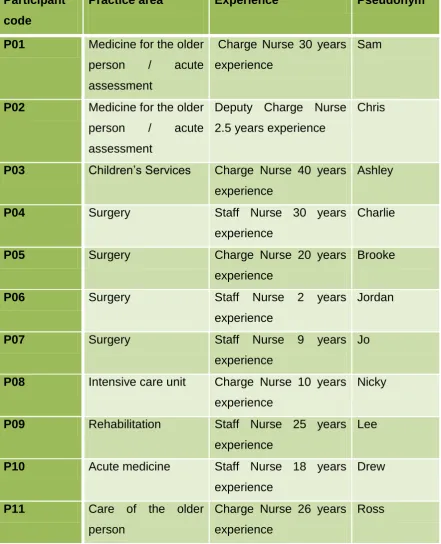
4.1 participant profile Page 87
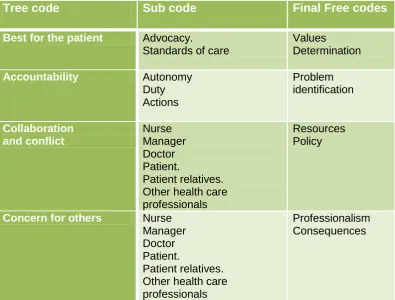
4.2 Results of the thematic analysis Page 87
Chapter 5 - Best for the patient
5.0 Best for the patient Page 92
5.1 Advocacy Page 93
5.2 Standard of care Page 100
5.3 Conclusion Page 108
Chapter 6 - Accountability
6.0 Accountability Page 109
6.1 Autonomy Page 113
6.2 Conclusion Page 122
Chapter 7 - Collaboration and conflict
7.0 Collaboration and conflict Page 124
7.1 Collaboration Page 124
7.2 Conflict Page 134
8.3 Conclusion Page 141
Chapter 8 - Concern for others
7
Section III
Chapter 9 - Case study
9.0 Case study Page 152
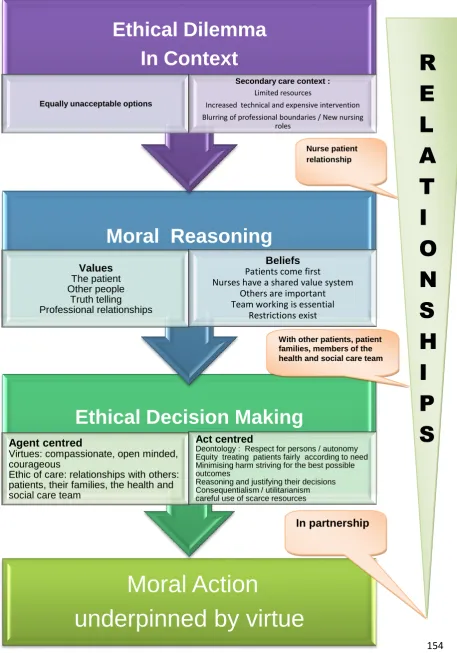
9.1 Reconceptualised theoretical framework Page 154
9.2Conclusion Page 167
Chapter 10 – Discussion
10 .0discussion Page 169
10.1 ethical dilemmas Page 169
10.2 The context Page 170
10.3 Moral Reasoning Page179
10.4 Ethical Decision-making Page 185
10.5 Moral Action Page 188
10.6 Moral Residue Page 196
10.7 Conclusion Page 201
Chapter 11 - Conclusion
11.0 Introduction Page 203
11.1 Contribution to nursing knowledge Page 205 11.2 Limitations of the study Page 207
11.3 Recommendations Page 208
11.4 Dissemination of the results Page 211
11.5 Reflection Page 212
11.6 Summary Page 225
8
Contents
Tables
Table 1 Participant profile Page 75
Table 2 Themes from the thematic analysis Page 89
Figures
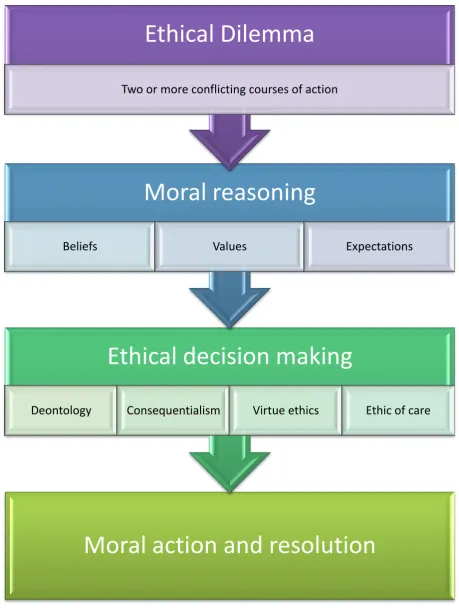
Figure 1 Theoretical framework Page 38
9
Appendix
Appendix 1: Table of selected literature (background) Page 243
Appendix 2 : Table of selected literature (Literature review) Page 247
Appendix 3: Review framework proforma Page 252
Appendix 4: Participant Information sheet (pilot study) Page 255
Appendix 5: Participant Consent form (pilot study) Page 257
Appendix 6: Participant Information sheet Page 261
Appendix 7: Participant Consent form Page 263
Appendix 8: European Doctorate Students Research Conference,
Abstract and PowerPoint presentation Page 264
Appendix 9: Undergraduate student research conference
10
Chapter 1: Introduction
1. Introduction
This exploratory study investigates the contribution British nurses make to the resolution of ethical dilemmas within the secondary care context. A registered nurse, referred to within this thesis as the nurse, from any field, is one who is currently registered with the Nursing and Midwifery Council (NMC), from any part of the register, and, for this study, employed within secondary care provision and working within the requirements of that registration. Throughout this paper the term nursing practice will be used to refer to this context.
Decision making is an essential part of the nurse’s role (NMC, 2008); because nurses are required to advocate for patients (NMC, 2008) this can lead to ethical dilemmas and conflict with others involved in their care (Oberle and Hughes, 2001). It is therefore important that nurses are able to justify their contribution to the decisions made. However, whilst the decisions nurses make may be reflected upon it is the values used to make these decisions which are often overlooked (Harris, 1985). The contributions that nurses make and the values on which such contributions are based are the focus of this exploratory investigation.
The overall aim of the research is thus to identify the values, beliefs and contextual influences that inform decision making and the contribution made by registered
11
Chapter 2 presents the results of the review of the literature, which identified four themes: the role of ethical codes; the importance of policy; ‘moral distress’; and conflict. In light of the study findings further literature has been reviewed to include collaborative working, professionalism, advocacy and accountability and the impact of both policy and organisational culture. This additional literature is included in the Findings and Discussion chapters.
In order to address the aim of the research a qualitative approach was selected, enabling the collection of rich, in depth data. Chapter 3 presents and justifies this approach. A pilot study was conducted to determine the most appropriate data collection method; because the select approach has proved to be an appropriate choice the pilot data have been included in the analysis.
The transcripts of all the participants’ interviews underwent a content and interactional analysis to identify contextual influences on the nurses’ contributions to the resolution of ethical dilemmas. Four key themes: Best for the Patient; Accountability; Collaboration and Conflict; and Concern for Others emerged and are explored in detail in Chapters 4 – 8.
12
Chapter 10 explores the elements of the relationships that the data have identified as central to the effective resolution of ethical dilemmas in nursing practice, in an attempt to define what effective resolution might be. These findings appear to endorse virtue ethics as central to understanding relationships and to add to our understanding of their application in practice. Furthermore, moral distress emerges as a consequence of ethical decision making and as an integral aspect of relationship building in nursing.
Finally, Chapter 11 reprises the thesis and offers recommendations for further research for nursing practice.
13 1.1 The context in which nurses contribute to the resolution of ethical
dilemmas
The secondary care setting was selected for investigation as the context of this setting, and the role nurses play within it, has changed significantly. Over the last two decades demand for treatment and the options available have increased (Storch et al., 2004). Policy directives, which include Our Health, Our Care, Our Say (DH, 2006) and the Expert Patient Programme (DH, 2001) have led to changing expectations from patients who now recognise the importance of negotiated care packages and of treatment options. The introduction of Foundation Trusts and private health care companies now eligible to provide National Health Service (NHS) funded care has influenced changes in care provision across this sector (DH, 2008). These changes have resulted in role development for nurses (DH, 2005; 2008) and new dilemmas to face (Storch et al., 2004).
14
provide for patients’ personal nutritional needs (Pugh, 1944). In contrast to this, nurses are now increasingly expected to be autonomous and to challenge doctors when appropriate (NMC, 2008).
In addition, because of the fundamental changes to the health care system, nurses’ roles have become increasingly diverse (Storch et al., 2004). Nurses are now required to manage complex nursing interventions, some of which had previously been undertaken by medical staff (Torjuul and Sørlie, 2006). Nurses are becoming autonomous, independent practitioners and, as a result, are faced with increasingly complex decisions which require sensitivity, moral reasoning and clear, justifiable, ethical decision-making (Storch et al., 2004). These changes in the nurse’s role coincided with the move of nurse education into Higher Education institutions, commencing with Project 2000 (Ramprogus, 1995) and, .more recently, the move to an all graduate profession (NMC, 2004; 2010a).
15
also by their professional body. Investigation into incidences where care has broken down and standards of care have fallen below the standards expected by patients and their relatives and those set for the NHS has resulted in nursing being scrutinised and the Chief Nursing Officer for England, Jane Cummings, calling for nurses to be caring, compassionate, competent, courageous, to communicate effectively and be committed to foster a service with compassion at the centre (Commissioning Board Chief Nursing Officer and DH Chief Nursing Adviser, 2012). The adoption of these ‘6 Cs’ indicates that personal characteristics are once again viewed by patients and policy makers as important when selecting individuals for nurse training and that their importance is equal to that of knowledge and clinical skills in the perception of a “good” nurse. The moral character of the nurse has never, in recent times, been more scrutinised.
1.2 Background: Ethical decision making in nursing
16
The terms “ethics” and “morals” are used interchangeably by some authors (Singer, 1993; Banks and Gallagher, 2009). Clear distinction between moral reasoning and ethical decision making is made by Seedhouse (1998) who refers to moral reasoning and ethical action. Hawley (2007) describes ethics as the study of moral behaviour and moral behaviour as that which is good or bad, right or wrong; almost the opposite to Seedhouse (1998). Others also make a distinction between morals and ethics, suggesting that ethical action is underpinned by moral values (Tong, 1997; Johnstone, 1999; Fry and Johnstone, 2002).
17
Harris (1985) has suggested that it is through concern and care for others, including efforts which people are willing to make in providing care, that the value placed upon their lives and the respect for them as individuals is demonstrated. Where differences occur in the ability or willingness to provide care, or the failure to meet the expectations of those involved occurs, a dilemma may arise (Seedhouse, 1998). Harris (1985) further states that nurses need to address these ethical dilemmas, claiming that judgments are based on beliefs and values and, whilst the decisions made to resolve ethical dilemmas are often examined, rarely are the beliefs and values underpinning the decision examined in the same way.
Within current health care practice ethical dilemmas [which are defined in Section 1.3a] not only occur when the nurse is faced with extraordinary situations but, more commonly, in day to day practice, which includes challenging decisions regarding new treatment options and the appropriateness of treatment (Storch et al., 2004). The increasing number of complex and expensive options at the disposal of health care professionals, resulting from technical developments, has increased the frequency and emphasis of these decisions (Bunch, 2002; Aroskar et al., 2004; Storch et al., 2004; Hugman, 2005).
18
The nurse-patient relationship, as defined in The Code: Standards of conduct, performance and ethics for nurses and midwives (NMC, 2008), places an obligation on the UK nurse to act as advocate and to do what is best for the patient. This obligation in itself may result in conflict, as what the patient believes is ’best’ and in line with his or her wishes may conflict with the opinions of others (Fry and Johnstone, 2002). Johnson (1997) identified how the imbalance of power between nurses and patients can result in patients having to conform to treatment regimens. In addition, in order for the nurse to undertake the role of patient advocate effectively, the relationships nurses have with other health care professionals and patients’ relatives are vitally important (Hawley, 2007).
19
Judgement and decision making are also important aspects of nursing practice, as is the resolution of ethical dilemmas which requires the ability to weigh the options in order to identify the appropriate course of action (Thompson and Downing, 2002).
Evidence based practice (EBP) has become an important part of clinical decision-making; however, it can be argued that EBP alone fails to recognise the values of the patients and their families in the decision making process. This is particularly important when promoting patient autonomy and in recognising the unique nature of each person, their diagnosis and the potential for intervention (Martin, 2004). It is important, therefore, when making clinical decisions, that moral reasoning and ethical decision making are included rather than relying entirely on science (Martin, 2004).
Ethical decision making in nursing practice has been informed and underpinned by medical and bio-ethical approaches (Chambliss, 1996; Storch et al., 2004). These are discussed in more detail below. They include deontological and consequential theories that may be characterised as rule-based or act-centred as well as virtue ethics and the ethic of care, which have been advocated within nursing practice and nurse education and may be considered to reflect a more person oriented, agent centred approach (Johnson, 1997; Gilligan 1982; Armstrong, 2007).
20
the accomplishment of competence through the various stages of their professional development are also recognised as important to this decision making process (Benner, 1984, Carter and Klugman, 2001). However, it is the relationships that nurses have, as students with their mentors and, later, with a preceptor, that can influence their development as competent nurses and maintain their ability to care (Smith, 2012).
1.3 Theoretical framework
Nurses who are required to maintain moral and ethical standards in practice find that they are increasingly restrained by the clinical and caring environments within which they work (Redman and Fry, 2000). To participate effectively in working for health as a moral venture, nurses require moral sensitivity, moral reasoning skills and the ability to recognise a moral issue in a given situation, which results in the need for ethical decision making to inform moral action (Harris, 1985; Seedhouse, 1998; Johnstone, 1999).
21
argue that moral sensitivity requires cognitive and imaginative skill in order to apply moral theories to a given situation.
Registered nurses are both accountable for their actions and have an obligation to advocate for those to whom they have a duty of care (NMC, 2008). In order to meet these requirements it is suggested, in this theoretical framework, that some or all of the ethical approaches to decision making, moral action and the resolution of dilemmas recognised throughout the health care literature may be used to explain how nurses respond and to justify their actions.
Through systematic searching of the current literature studies and debates were identified as pertinent to the background and development of the theoretical framework and are detailed in Appendix 1. Sections 1.3a–d below outline the stages of this framework.
1.3a Ethical dilemmas
22
appear to be equally undesirable and the correct course of action unclear (Noureddine, 2001).
In nursing practice ethical dilemmas occur in situations where the beliefs and values of the patient, their relatives and/or the nurses and the organisational objectives may conflict in some way (Kain, 2007). This may result in differing expectations which inform the action taken by the health care team. Storch et al. (2004) identified that the ethical dilemmas that nurses are required to address within their practice are becoming distinctly different to those traditionally addressed by physicians in relation to medical ethical dilemmas. As such, these dilemmas may not be adequately addressed through the bio-ethical approach traditionally used in medicine (Storch et al., 2004). This is because the nurse’s role extends beyond the medical perspective of treatment and cure; nurses are required to meet the full diversity of patient need. Through the development of holistic relationships (Tschudin, 1999) and providing person centred care for patients (Kitson, 2004), nurses strive to meet the diversity of patient needs (Storch et al., 2004). It may be argued that nursing ethics is now developing as a distinct approach, separate but influenced by medical ethics, to reflect the different mandates to care held by each profession (Chambliss, 1996; Storch et al., 2004).
23
as for other health care professionals, the context in which they work has changed. Because the role the nurse undertakes, in many cases, is a co-ordinating role for care provision and forms the link between the patient, the family and other health care professionals, the nurse often has a unique overview of the issues involved (Storch et al., 2004).
Ethical dilemmas in health care take many forms. These include the big questions, for example resuscitation orders (Herbert, 1997); issues around care of the dying, withdrawal of and/or withholding treatment (Elger and Harding, 2002); the provision of futile treatment (Hurst et al., 2005; Clará et al., 2006); and organ donation (Bunch, 2002). However, of equal importance are the smaller questions that impact on the daily work of nurses, such as provision of information, confidentiality and the disclosure of information to third parties (Jenkin and Millward, 2006). Whilst there is legislation to guide nursing practice decisions on how to act, this requires careful consideration in the application of the law; dilemmas in relation to this occur when the nurse has conflicting duties and responsibilities (Jenkin and Millward, 2006).
24
of the role of the Utilisation Nurse, whose job it is to make decisions about best value treatments in relation to patient outcomes (Bell, 2003).
Nurses engage with resource allocation on a daily basis. Nurses have only so many hours in which to manage, plan and deliver care; ward budgets and availability of other health care professionals are limited (Torjuul and Sørlie, 2006). The nurse - patient relationship and the closeness of nurses to the patient group result in a perceived increased accountability and the duty to meet patients’ needs appropriately (Torjuul and Sørlie, 2006). In order to achieve this nurse must be able to prioritise the needs of any patient group and to guide the doctors and other health and social care professionals as to whose needs should take priority (NMC, 2010a). All patients are important and the health care professionals providing care and treatment have to make some tough decisions; these are, for some nurses, everyday decisions (Storch et al., 2004).
25
on whom the outcome may impact, weighing the options available in partnership (Farsides, 2007).
1.3b Moral reasoning
26
What may also be of importance when researching ethical decision making in nursing is that it is a predominately female profession, with 89.29% of those currently registered on the Nursing and Midwifery Council’s register being women (NMC, 2010b). The percentage of male registrants has remained constant since 2004 (NMC, 2010b). It may be that gendered traits also dominate the nurses’ moral reasoning which is used to inform nursing practice.
Gilligan’s (1982) seminal work on the gendered nature of moral reasoning demonstrated that girls were inclined to articulate their reasoning in ways that were different from boys. Boys were more likely to display thinking that correlated with Kohlberg’s1 (2008) ‘classical’ stages of development, speaking in what Gilligan refers
to as ‘a different voice’. She argued that theorists such as Kohlberg developed their ideas through observations of men and their ways of reasoning, failing to take into account the gendered nature of such research. Male development has thus been taken to be ‘normal’ and generalisable, making the reasoning displayed by woman participants appear to be less well developed. Further, Noddings (2003) suggests that it is women’s moral development that informs an act-centred approach to ethics that may be seen in the ethics of care and in virtue ethics, which are discussed below.
The nature of nursing and the job itself may also impact on nurses’ attitudes and their moral views, perhaps influenced by the position of nurses within the health care team and the work they undertake; thus the gendered nature of nursing’s professional identity, rather than the actual gender of individual nurses.. The two
1 Kohlberg first developed this theory as his PhD dissertation in 1958 and continued to publish on it throughout
27
may be intractably entwined because of the constantly high proportion of nurses who are women; however this may be impossible to confirm (Chambliss, 1996).
Moral reasoning is also influenced by the values, beliefs and expectations of an individual’s parents, religion and peers as they grow up; these may change according to our life experiences (Cuthbert and Quallington, 2008). Values and beliefs inform moral conscience, which helps in the recognition of the moral quality of behaviour, thus informing actions. Amongst these influences are those of the profession into which nurses become socialised and the experiences encountered as part of nursing practice (Benner, 1984; Settelmair and Nigam, 2007). Taken together these values can be seen to inform the nursing code of professional conduct: The Code (NMC, 2008).
In summary, moral reasoning is influenced by personal beliefs and values, gender, socialisation and professionalisation. Values may become revised and refined over time and through experience (Carter and Klugman, 2001). Challenges to a nurse’s
moral reasoning may occur when there is a conflict between patients and their family or the health care team when addressing moral issues (Salloch and Breitsamater, 2010), leading to the need for ethical decision making.
1.3c Ethical decision making
28
The four approaches outlined are often characterised as either principle-based [non-feminist] or agent-centred [[non-feminist] in nature. Principle-based approaches have tended to dominate health care ethics, however agent-centred approaches, have enjoyed an increase in popularity amongst such authors as Tong (1998), Storch et al., (2004) and Armstrong (2007).
Whilst ethical approaches fall primarily into these two groups some authors recommend a pluralistic combination of approaches, thus bringing the best from each according to the situation (Botes, 2000a). In practice, as will be seen in the findings of this thesis, all four approaches, or elements of each, may be drawn upon. Hence they are represented, in Figure 1, as equally important.
Principle Ethics These approaches are predominately underpinned by the work of the classical philosophers Immanuel Kant (1724–1804) and William David Ross (1877–1971); these deontological approaches use the language of duty, of what a person ought or ought not to do. David Hume (1711-1776) , Jeremy Bentham (1748 –1832) and John Stuart Mill (1806–1873) developed consequentialist approaches which consider the consequences of the action to be central to decision making, balancing both the benefits and the burdens of that action to inform decision making (Cahn and Markie, 2006).
29
(Beauchamp and Childress, 2001). The principles approach is underpinned by western moral philosophy, which consists of the four principles above and ethical rules of confidentiality and veracity (Hawley, 2007). Philosophy provides both meta-ethics and normative meta-ethics. Meta meta-ethics consider the meaning of moral language; normative ethics are those which are here to provide ethical theory to guide decisions and behaviour (Beauchamp and Childress, 2001).
Deontology encompasses ethical approaches to examine what we ought to do in relation to a given situation. Within these approaches the aim is to consider decisions and actions as if they were universal laws which would apply in any given situation. Such ethics can be seen in religious doctrine, such as the Koran or the ten commandments of the Old Testament. They also underpin professional codes of practice. However, the most recognised theory is Kant’s (see Cahn and Markie, 2006, p. 270). Kant provides guidance on how we should act:
1. In a way that we would always act - resulting in ‘universal law’,
2. Treating each person as an end in themselves, not a means to an end, offering respect to all people with dignity.
He argues that these ‘laws’ inform us of what ought to happen and how to make ethically rational decisions.
30
and others. These duties are referred to as perfect duties and imperfect duties. Perfect duties are actions which must always be observed; there are no exceptions to these rules. These actions, also known as negative obligations, require the actor (in the case of nursing practice this is the nurse) to desist or refrain from an action. Imperfect duties are actions which are positive obligations and require that the actor (nurse) act or behave in a certain way. It is the intention with which actions are performed that is central to this approach, rather than the consequences (Beauchamp and Childress, 2001).
Whist deontological approaches have dominated medical and health care ethics for some years nursing ethicists argue that, due to their rigid nature, they to some extent fall short of meeting the dilemmas faced by nurses in the current context of nursing practice (Johnson, 1997; Armstrong, 2007). However, Dierckx de Casterle et al. (2004) may support the view that rule based ethical approaches still have a place in nursing decision making. Their empirical work revealed that nurses relied on the convention of practice: rules of the organisation, expectations of the patient’s family and colleagues and procedures learned during their education, rather than being reflective in nature. Their findings suggest that nurses struggle to engage effectively in ethical practice as they do not appropriately consider the patient’s personal needs.
31
David Hume, Jeremy Bentham and John Stuart Mill developed the idea of the two extremes, pain and pleasure, to demonstrate the principle of utility (Cahn and Markie, 2006). These theories determine the moral rightness of actions based on the balance of the good and bad consequences of those actions (Fry and Johnstone, 2002).
The main aim is to consider which action will result in the most happiness; the main criticism is that those in minority groups may be disadvantaged (Tong, 1997). In the provision of health care ‘cost benefit analysis’ is used to analyse expenditure (Hawley, 2007), encouraging health care professionals and organisations to maximise the use of resources available. However, this approach could lead to expensive treatments not being funded in favour of less expensive treatments, resulting in a greater number of people receiving care but perhaps limiting funding being allocated for research and treatment of rare conditions from which only a few will benefit (Beauchamp and Childress, 2001).
32
examines the potential outcome of a treatment (Allmark, 1998). Nurses may be involved in policy development; this is dependent on their role. Nurses working in secondary care are, however, in the position of making decisions associated with the distribution of resources on a daily basis as they work within the context of limited resources (Kalvemark et al., 2004). This approach also encourages health care professionals to consider the patient’s feelings of ‘pain and pleasure’ on an individual basis and, as such, may help in identifying the most appropriate course of treatment or care for individual patients.
Whilst deontology and consequentialism have clear differences, what they have in common, Singer (1993) suggests, is more important; when addressing ethical decisions or judgements ethics should support a universal viewpoint. Not simply that the principle should be applied universally but that the context or situation influences the application of that principle and should move beyond individual likes and dislikes to ensure an impartial standpoint.
Beauchamp and Childress (2001) argue that the principles of autonomy, justice, beneficence and non-maleficence can be justified from both approaches, giving a basis for decision making in health care ethics. In addition, Botes (2000b) views deontological and utilitarian approaches as opposite ends of the same spectrum and calls for compromise in order that a satisfactory resolution be found for complex ethical dilemmas, recommending a combined approach.
33
use an overarching term, ‘moral character’, to bring together theories related to moral virtue (see below) as associated with the work of Aristotle (384BC–322BC) and more recent work on the ethics of care (Gilligan, 1982). These approaches are located in practice and often seek to find middle ground or compromise between extremes. Thus the focus of agent approaches goes beyond the action, requiring the agent (in this case the nurse) to consider ‘how should I be’ rather than simply ‘what should I do’. The emphasis, therefore, is on the behaviour of the nurse in a given situation. This approach has the potential to facilitate moral learning and development such that, through a mix of emotion and reason, the nurse can develop competence in this aspect of professional practice (Hawley, 2007).
34
dilemmas are not always solvable. Banks and Gallagher (2009) develop Aristotle’s overarching ‘practical wisdom’ into ‘professional wisdom’ as the central virtue that guides professionals to good choices. However, Armstrong (2007) acknowledges that that virtue based ethics may fail to provide guidance for action and how to address conflicts between virtues.
It is in virtue ethics that the divide between the genders may become more apparent. Tong (1998) suggests that some philosophers argue that men and women possess the same moral virtue but that women are more emotionally focused and aware of their feelings than men and that men are more likely to engage in a reasoned approach, as proposed within act-centred approaches to ethical decision making. Others, however, argue that the differences are cultural and as society did not permit or encourage women to develop reasoning and express opinion, women therefore became governed by emotion (Tong, 1998).
Within virtue ethics the agent is required to have the cognitive skills to see what is good and right in order to act in the morally right way. The agent and the act are viewed as inseparable, a complete contrast to the consequentialist approach (Tong, 1998).
35 Ethic of care: Beauchamp and Childress (2013) suggest that, for some theorists, ‘care’ is a virtue; however, the term ‘ethics of care’ is usually attributed to the work of Gilligan (1982). In her attempt to define the gendered voice she heard in her research she used the phrase ‘ethics of care’ to define decision making that was different from justice, principles or rules. Thus it is strongly associated with agent- centred ethical theory. It may be viewed as a virtue ethic of a specific nature; the action and the actor being judged as one. Only a morally good character is capable of a morally good act (Hawley, 2007).
The Ethic of Care, also underpinned by the work of Noddings (2003), focuses on the attention and care given to others and the relationships nurses and health care professionals build with patients and their families. Allmark (1998) highlights the fact that everyone cares but the key is what people care about and how they care about it. This focus makes it a morally good act, challenging the idea that caring is a virtue in its own right and supporting the importance of the right actor and the right act.
36
professional caring relationship and ethical caring, and requires both effort and attention (Noddings, 2003; Hugman, 2005).
1.3d Moral action
Within this theoretical framework the final stage, moral action, is informed by a process of moral reasoning and ethical decision making. This action may be in partnership with others; patients, their families and other health and social care professionals, because nurses work within multidisciplinary or interprofessional teams (NMC, 2004; Torp and Thomas, 2007; NMC, 2008). It is important to remember the debate surrounding the exact nature of a truly moral act. The question is whether an act is truly morally correct if it is simply duty motivated by what ought to be done or undertaken for personal gain. Beauchamp and Childress (2001) argue that moral virtue is a disposition to act in accordance with moral principles, suggesting that if a person performs a morally right action but his motive is improper then a moral ingredient is missing. This would indicate that resulting ‘moral’ action taken by the nurse or health care team is truly moral only when the motive is proper. The right action may, however, be undertaken because it is what ought to be done rather than what the nurse wants to do. The act is undertaken because it is required by law or by a contract of employment.
1.4 Summary
37
38 Figure 1: Theoretical framework: Resolution of ethical dilemmas in nursing practice
Moral action and resolution
Ethical decision making
Deontology Consequentialism Virtue ethics Ethic of care
Moral reasoning
Beliefs Values Expectations
Ethical Dilemma
39
Chapter 2 - Literature review
2.0 Literature review
Having outlined the focus of the thesis and the theoretical framework in Chapter 1, this chapter presents an integrative review of related literature including philosophical discussion, literature reviews and empirical studies. The aim of the review is to better understand current thinking on nurses’ ethical decision making in order to clarify and refine the aim and objectives of this research.
Peer reviewed journal articles make up the main source of materials used in this literature review. These are considered to be a robust source of evidence, reviewed by two or more experts in the field with a lead time which is significantly shorter than that required when publishing books (MacNee and McCabe, 2008). Care has been taken to include recent material, published within the last ten years, to ensure that the evidence is relevant to the context within which nursing is currently practiced.
Grey literature was searched using the EThOs database which provided access to recent Doctoral theses through the British Library. Grey literature also includes unpublished work such as conference proceedings, which may provide a good source of materials when performing a literature review (Parahoo, 2006).
2.1 Search Strategy
40 2.1a Database selection
Electronic database searches were performed using the databases CINAHL (cumulative index nursing and other health related professions), ScienceDirect, Medline, Psychinfo, Web of Science and British Nursing Index, which provide access to peer reviewed, published material relevant to the subject (Fink, 2009). This combination of databases provides access to most English language nursing periodicals, standards of practice, government publications, research instruments and patient education material (Blackwell Synergy, 2011; CINAHL, 2011; Science Direct, 2011). During the final stages and writing up of the thesis previous searches were updated to capture any work published in the interim period.
Limits were set to ensure focused searches were undertaken to avoid unmanageable amounts of material being included in the search returns. Limits were also set to identify relevant literature for abstract review to facilitate selection for inclusion within the review process(Robson, 2002).
The limits set were:
Written in English
Peer reviewed
2000 – present
Original articles.
A range of key words and synonyms were used for each section of the search; these were Nursing and:
Moral reasoning / Moral issues/ Moral dilemmas
41
Moral / Ethical approaches
Moral / Ethical Action.
Moral / Ethical professional codes
Further journal searches were undertaken in the journals; Nursing Philosophy and Nursing Ethics.
Using a combination of abstract review and critical appraisal, articles were selected for use within this review (See Appendix 2).
2.1b Record keeping
Cataloguing and storage of data are essential to avoid error and duplication. All articles were carefully catalogued, entering full reference source and search strategy on to the cataloguing system. Both electronic and manual index card methods are available (Hart, 2005). A simple electronic system was mirrored by a paper file of reviewed articles, stored according to a search code. A total of 27 papers were retained for discussion within the literature review.
2.2 Critique
42
Systematic recording of specific areas for consideration within the review were identified and an evaluation pro-forma generated for recording the analysis (see Appendix 2). The pro-forma used to facilitate comparability was based on Burns and Grove’s (1987) model and Morrison’s (1991) model; adaptations have been developed to accommodate the different types of literature within this review (see Appendix 3). The critique has been approached with some level of flexibility in order to facilitate this.
As each article was reviewed, notes were made on the evaluation pro-forma, drawing together aspects of each piece of literature. This could then be referred to at any time whilst writing up the literature review.
2.3 Results
A number of themes emerged from the literature reviewed which helped to identify what is already known about the contribution made by nurses in addressing ethical dilemmas in practice and to expose gaps. These themes were:
a. Codes of ethics b. Policy
c. Moral distress
d. Conflict and collaboration within ethical decision making
2.3a Ethical codes
43
codes exist at international and national levels. They provide nurses with a code of conduct; codes inform nurses how they should act, safeguarding the profession’s reputation and, more importantly, protecting service users (Banks, 2003). Nurses in Britain have the Nursing and Midwifery Code of Conduct (The Code, NMC, 2008). Like other codes this comprises the rules of the profession, statements that reflect the character that nurses should possess, ethical principles and rules (Banks, 2003; NMC, 2008).
The Code (NMC 2008) is the primary source of guidance for nurses registered to practise within the UK and is intended to guide nurses’ decision making and behaviour. Key aspects include:
‘The people in your care must be able to trust you with their health and wellbeing’ (page 2).
‘Make the care of people your first concern, treating them as individuals and respecting their dignity’ (page 3).
‘Work with others to protect and promote the health and wellbeing of those in your care, their families and carers, and the wider community’ (page 5).
‘Provide a high standard of practice and care at all times’ (page 6).
‘Be open and honest, act with integrity and uphold the reputation of your profession’ (page 7).
44
Each country has its own code with an overarching code provided by the International Council of Nurses (ICN) which was first established in 1953 (ICN, 2012). The ICN Code guides nurses in a number of areas, including nurses and people, nurses and practice and nurses and co-workers (ICN, 2012). Like the NMC Code (NMC, 2008) guidance is provided on the implementation of the ICN Code and each of these main sections is broken down to provide further detailed guidance to nurses. The ICN clearly states that the code of ethics is based on social values and provided as a guide for nurses’ actions, thus suggesting shared values that nursing might have regardless of cultural, racial or national boundaries. The ICN code of ethics has influenced the nursing ethical codes of a number of countries in Europe, including Greece, Finland and Italy (Heikkinen et al., 2006).
Nurses’ codes of ethics are regularly updated to reflect social values and changes in the context of nursing practice and nurses’ roles (NMC, 2008; ICN, 2012). It is, however, very clear that a primary consideration, found at the core of all nursing codes, is the best interests of the individual. In the UK the NMC Code (NMC, 2008) is frequently reviewed and developed by the Nursing and Midwifery Council in which nurses are directly involved. There is also a period of consultation where all registered nurses are given the opportunity to comment and provide feedback on a draft version of The Code prior to a final version being adopted (NMC, 2010c).
45
impact on the decision making process and that the same decisions would have been made in the absence of a code. Reasons for this were discussed within Lere and Gaumnitz’s (2003) focus groups, included the feeling that codes of ethics were common sense and participants felt they knew the difference between a right and a wrong action. Thus, they argue that whilst a code should influence actions, it may not do so unless individuals’ beliefs can be changed or there are deterrents to acting outside of the code.
Whilst criticised by Lere and Gaumnitz (2003) for being too vague, oppositions to ethical codes highlighted by Banks (2003) state that using a detailed professional code may result in the practitioner becoming dependant on the code rather than making reasoned decisions and, consequently, may risk promoting moral insensitivity. Banks (2003) goes on to suggest that the general principles currently contained in these codes can only guide rather than direct and, therefore, the practitioner still needs to engage in thoughtful application of the principles it contains.
46
as useful in clarifying ethical aspects of nursing and prompting nurses to think carefully about their decisions and the moral weight of their actions. The nurses viewed ethical codes as a moral guide, being effective when reflecting on ethical decisions. Conversely, the research suggested that codes were not directly referred to in situations where nurses had internalised the values and so implemented them unconsciously in their work.
Obstacles to implementing professional codes of ethics included the codes themselves, as they were viewed as abstract and generally failing to provide clear guidance (Lere and Gaumnitz, 2003; Heikkinen et al., 2006). Collaborative working, where the views and values of others - the organisation, other health care professionals, the patients and their families and health care policy - differ from those reflected in the ethical code, also proved problematic (Heikkinen et al., 2006). Conversely, Verpeet et al. (2004) identified, through analysing data collected during a series of focus groups, how ethical codes provide guidance regarding nurses’ relationships with others, with patients, patients’ families, other health care professionals, society in general and with each other.
47
co- workers and truth telling. In all of these cases it was identified that some of the Ghanaian nurses felt that it was right that these cultural and social norms should override the ICN code of ethics (Donker and Andrew, 2011). In another study exploring ethical codes of practice the issue was less concerned with cultural ‘overides’, but with actual awareness and knowledge of the code itself. Verpeet et al. (2004) found that some nurses’ knowledge of professional codes was limited and not used appropriately to inform ethical decision making. Belgian nurses, in their research, felt it was essential for nurses to be involved in developing ethical codes and that these should contain guidance for nurses’ behaviour, moral practice, professional practice and function.
It has been established that nurses use codes of ethics and professional conduct to inform decision making and where there may be errors of judgment or poor standards of care, these codes may be used to judge nurses’ conduct (Verpeet et al., 2004; Heikkinen et al., 2006). The NMC views its primary role as safeguarding the public; the Code forms part of that mechanism (NMC, 2010c). On balance, it appears that codes of ethics have an important role to play, however their usefulness as a sole guide to ethical decision making and the resolution of ethical dilemmas may be limited. Further, they may not be the primary source of guidance to nurses in practice.
2.3b Policy
48
and guidance for health care providers, organisations and individual practitioners. Under this umbrella, local organisational policy, informed by Health Policy, provides structure at a local level, the aim of which is to ensure safe practice and direct the use of scarce resources to meet various government targets. Colebatch goes on to suggest that the development of health care policy can be difficult as it attempts to bring together the views of diverse groups of people to develop shared goals, for example, government, services users, organisational strategic objectives and health care practitioners, with all their various philosophies.
49
frustrated and guilty and, consequently, experiencing moral distress (Oberle and Hughes, 2001; Corley, 2002).
For some nurse participants in Aroskar et al.’s (2004) study, the increase in available treatments and the focus on technical intervention rather than that described by participants as the ‘ethic of care’, may potentially impact negatively on the patient’s experience. The nurse participants in this and other studies reviewed demonstrated the value they placed on comforting and supporting patients and families through the development of meaningful relationships built using effective communication, which requires nursing time and commitment (Oberle and Hughes, 2001; Aroskar, et al., 2004; Torjuul and Sørlie, 2006).
50
Limited resources and the allocation of those resources have been described as causing ethical dilemmas for nurses because this results in an inability to provide good quality patient care (Oberle and Hughes, 2001). Nurses in Torjuul and Sørlie’s (2006) study explained that they felt they should be everywhere at the same time and were often called away to attend to another task before completing the one that had already been undertaken. Time spent with patients who had minor problems detracted from care required by those who were seriously ill; the general feeling was that limited resources and increased demands on nurses’ time in the face of changing roles had impacted negatively on standards of care. Policy was a significant factor in determining how the nurses spent their time; the participants felt that it was important that when people are admitted to hospital, nurses should be there for them and their families. Therefore, prioritising who received resources in terms of nursing time and care routinely presented ethical dilemmas for nurses. Participants also experienced challenges in maintaining patient dignity and confidentiality when patients were nursed in shared rooms; during ward rounds, during handovers and discussing patients’ conditions and private lives. Finally, concern was expressed that patients might not discuss important confidential issues as patients in neighbouring beds might overhear.
51
nurses to have a negative impact on the quality of care and, in some cases, to have put the patient at risk.
Aroskar et al. (2004) also identified how nurses perceived that policy changes had resulted in there being insufficient nursing staff to implement primary or team nursing, leading to reduced job satisfaction and an increase in staff turnover. The consequences of this were that nurses faced dilemmas about equity in care provision and compromised standards, which caused them moral distress. Their participants indicated that there was a lack of input from nurses in the development of local policy but that it was often nurses who faced the impact of such policies on patients and their families. This lack of involvement in policy development resulted in nurses feeling that their contribution was not valued. Finally, they identified that ethical dilemmas also occurred when organisational policies conflicted with care policies within the same hospital.
2.3c Moral distress
52
a given situation (Hardingham, 2004). When moral distress occurs nurses may experience loneliness and a feeling of isolation due to a lack of mechanisms to facilitate dialogue (Sørlie et al., 2003).
Situations which cause moral distress amongst nurses, as identified by Kalvemark et al. (2004), include those where organisational constraints and, in some cases, legal issues, result in conflict or compromise standards of care, concluding that there is a need for structures, education and resources to help reduce moral distress amongst all heath care professionals. Corley’s (2002) review of the literature highlights a broader range of causes of moral distress amongst nurses. This review suggests that moral distress may occur when treatment is viewed as causing pain or harm; when suffering is prolonged; and when contextual problems associated with bureaucracy and inadequate management occur.
A number of issues that directly impact on nurses’ perceived stress levels were identified by Ulrich et al. (2010). Low staffing levels were found to cause the most stress amongst nurses. The dilemmas which occurred most frequently were protecting patients’ rights, autonomy, informed consent, advanced care planning, surrogate decision making, end of life decision making, breaches of confidentiality, and patients’ right to privacy, all of which resulted in moral distress when a satisfactory outcome could not be found. In addition, limited staff to implement care and facilitate decision making has the potential to impact on all aspects of care.
53
nurses working in critical care units in four different hospitals, which indicated that nurses have limited involvement in decisions associated with the withdrawal of treatment. However, nurses are expected to implement the plan of care and when this is contrary to what they believe is morally right, moral distress occurs. The researchers concluded that doctors, who make these treatment decisions, have a different underpinning professional philosophy which focuses on extending life, whereas it is likely that nurses may consider allowing life to end to be the appropriate course of action.
Explorations of nurses’ and doctors’ perceptions of ethical problems involved in end of life care indicated that nurses’ concerns resulted from their lack of involvement in decision making, even though it is the nurses who are required to execute the care plan (Oberle and Hughes, 2001; Long-Sutehall et al., 2011). The lack of involvement by nurses in this type of care is supported in an examination of the ethical issues and nurses’ moral distress associated with euthanasia (Dierckx de Casterle, et al., 2010).
54
Kain’s (2007) examination of the literature supports the idea that nurses experience moral distress when conflict occurs between what the nurse may perceive to be the best course of action and what is possible within organisational policies, resourcing issues and different opinions on prescribed care. Responses to this distress include sorrow, guilt, frustration and anger which, if left unaddressed, may threaten nurses’ self worth, the consequences of which may impact on both personal and professional relationships. Moral distress can also occur due to conflict with the health care team, particularly where there are clear differences between the priorities of nurses and doctors in relation to patient care and differences in each profession’s mandate to care (Oberle and Hughes, 2001). This is explored further below.
Wolf and Zuzelo’s (2007) analysis of nurses’ ‘never again stories’ echoes concerns regarding nurses’ lack of involvement in decision making and the distress they experience in association with this. This empirical research, using a qualitative approach, highlighted the participants’ understanding of how failing to contribute in addressing complex ethical dilemmas, even though the constraints placed upon them were as a result of organisation policy or the hierarchal nature of health care, resulted in their distress. Through critical reflection nurse participants were able to identify if they could have acted differently and what they would do if faced with a similar situation. However, the nurses still felt that they had failed in their obligations to those in their care.
55
experienced, it may also mean they may choose to leave the profession altogether (Coley, 2002; Hardingham, 2004; Ulrich et al., 2010: Palvish et al., 2011). In both cases burn out has the potential to impact negatively on patient experience.
Corley (2002) does, however, acknowledge some benefits of moral distress, suggesting that moral distress instigates a process of learning and reflection facilitating personal and professional growth through experience, resulting in the potential for future patients to receive more compassionate care. Moral distress occurs when a person’s integrity is challenged; moral integrity is the connection between a person’s beliefs, values and actions as a professional and as an individual (Corely, 2002). Hardingham (2004) suggests that critical reflection on values, beliefs and social influences in a given situation may help the achievement of a sound understanding of experiences in practice; through this process and socialisation into the profession the nurse may achieve moral integrity.
56
It would therefore appear that moral distress is a well-recognised but not fully explored phenomenon in health care which may be associated with organisational constraints as well as with dilemmas in decision making. There are clear links between the tensions leading to moral distress and the balance between moral reasoning, ethical decision-making and action outlined in the theoretical framework in Chapter 1. This will be explored further in the discussion in Chapter 10 of this thesis. A final area identified in the literature and related to moral distress is the tension between managing conflict and collaboration with ethical decision making.
2.3d Conflict and collaboration within ethical decision making
A frequent source of conflict evident within the literature is between the doctor and the nurse directly involved in patient care. This appears to occur in different aspects of ethical practice, for example within the process of decision making and in communicating with patients and their relatives. Organisational constraints and the hierarchical structures within hospitals may be contributory factors in such conflicts (Heikkinen et al., 2006; Ulrich et al., 2010).
57
organisation and its representatives (managers) and other health care professionals (Redman and Fry, 2000).
Conflict may also occur in nurses’ perceptions of what is expected from their role. Hyde et al. (2005), in an analysis of nursing documentation in a multisite study undertaken in Ireland over a 5 year period, found that whilst there has been an emphasis in nursing theory on the biography of the individual and the personal experience of illness, there was little evidence in the documentation that nurses practised this; physical aspects of care appeared to take precedence over patient autonomy. It therefore appeared from the nursing documentation that ‘biology’ took precedence over ‘biography’. This would be in line with biomedical approaches to patient care and values that have been informed by medicine and may be in conflict with perceived expectations of caring about, as well as for, the patient.
Peter et al. (2004), in a literature review of empirical studies undertaken between 1993 and 2003, concluded that much of the conflict identified resulted from nurses’ perceived moral duty to promote patients’ wellbeing. They and others (Storch et al., 2004) suggest that a unique relationship develops between the patient and the nurse but that this can lead to conflict with other health professionals as the nurse assumes the role of advocate, a role that is indicated within The Code (NMC, 2008).
58
to address and when not to challenge others; this may be viewed as failing to meet the potential the nurse has in promoting patient well-being.
Oberle and Hughes (2001) recognise that when conflict occurs, resulting from the nurse’s inability to influence ethical decision making by doctors, nurses experienced moral distress. They suggest that the differences in nursing and medical values and, consequently, priorities, can explain some of this conflict. Doctors have, in many cases, the responsibility of deciding on treatment regimes and the nurse’s responsibility is to deliver care which incorporates these regimens.
Nurses interviewed by Oberle and Hughes (2001) discussed competing values and how these were managed in situations where the patient was unable to speak for themselves. Discussions during the decision making process would include ‘what the patient would want’. Conflict between doctors and nurses was described in cases where the doctor or doctors involved thought it best not to fully involve the family who might know the patient’s view and values better than the team, with the doctors arguing that the family might not understand the full implications of their decision on the patient. Nurses opposed this paternalistic approach and felt that doctors often acted according to their own values and beliefs rather than respecting those of the patient.
59
different ethical problems in the same circumstances. They therefore ask different questions according to their role rather than there being direct conflict between their values. Thus, it may be that it is the organisational structure and the culture of doctors’ authority that place the nurse in a disempowered position when addressing morally challenging situations in practice, resulting in nurses’ lack of autonomy in such cases (Liaschenko and Peter, 2004).
Nurses have been found to ‘bend’ the rules in order to achieve a satisfactory outcome, especially in cases where the organisation is less responsive to the need for flexibility or where there is no clear guidance or policy in place to facilitate decision making in ethically challenging situations (Redman and Fry, 2000). Redman and Fry’s literature review highlighted how different types of conflicts are experienced by nurses according to their specific role. All nurses experienced some kind of conflict and 33% experienced moral distress, which they attributed to institutional constraints, making it extremely difficult, and in some cases impossible, to take the ‘right’ action. This is discussed further in Chapter 7.
60
Salloch and Breitsameter (2010) examined the moral conflicts in hospice care, by undertaking a qualitative study involving nurse participants in focus group discussions. They identified how nurses recognised external ethical standards and referred to the internal organisational philosophy that each patient should be valued and should not be judged by their decisions or social background. They concluded that this respect for patients’ dignity is paramount in ensuring that the ‘right’ action is taken.
The importance of involving others within decision making is also highlighted in Vandrevala et al’s (2006) study which indicates that involving others brings a range of perspectives, recognising that it is important to involve the doctor whose knowledge and understanding of the patient’s physical condition and prognosis are essential. The risks of leaving the decision to the doctor alone were associated with doctors’ professional commitment to maintaining life. Furthermore, the close relationship that family members have with each other and with the patient may put them in a good position as they may know the patient’s wishes (if the patient does not have capacity). However, this close relationship may also make decision making difficult for them.
61
develop an understanding of the patient’s views and expectations. Lamb and Savdalis (2011) recognise that collaborative decision making is highly valued in various aspects of patient care and decision making and that care provided for anyone with complex needs has become a multi-disciplinary activity in order to ensure the best available care for patients.
Shared decision making within the health care team, especially between the nurse and doctor, is a key contributor to patient care and is essential if good quality care is to be achieved with ethical decision making being undertaken and negotiated within the team (Botes 2000a; 2000b). Botes opposes a classical rational approach to ethical decision making, suggesting that the use of universal principles embedded in this approach is inadequate and calling for health professionals to interpret the appropriateness of the decisions taken in each individual situation. This interpretation requires moral agency to be undertaken by the health care professionals involved; recognising and respecting the views of all those involved in the negotiation and application of general principles and guidelines. Pa