S T U D Y P R O T O C O L
Open Access
Evaluation of multisystemic therapy pilot
services in Services for Teens Engaging in
Problem Sexual Behaviour (STEPS-B): study
protocol for a randomized controlled trial
Peter Fonagy
1*, Stephen Butler
1, Geoffrey Baruch
2, Sarah Byford
3, Michael C. Seto
4, James Wason
5, Charles Wells
2,
Jessie Greisbach
1, Rachel Ellison
1and Elizabeth Simes
1Abstract
Background:Clinically effective and cost-effective methods for managing problematic sexual behaviour in adolescents are urgently needed. Adolescents who show problematic sexual behaviour have a range of negative psychosocial outcomes, and they and their parents can experience stigma, hostility and rejection from their
community. Multisystemic therapy (MST) shows some evidence for helping to reduce adolescent sexual reoffending and is one of the few promising interventions available to young people who show problematic sexual behaviour. This paper describes the protocol for Services for Teens Engaging in Problem Sexual Behaviour (STEPS-B), a feasibility trial of MST for problem sexual behaviour (MST-PSB) in antisocial adolescents at high risk of out-of-home placement due to problematic sexual behaviour.
Methods/Design:Eighty participants and their families recruited from five London boroughs will be randomized to MST-PSB or management as usual with follow-up to 20 months post-randomization. The primary outcome is out-of-home placement at 20 months. Secondary outcomes include sexual and non-sexual offending rates and antisocial behaviours, participant well-being, educational outcomes and total service and criminal justice sector costs. Feasibility outcomes include mapping the clinical service pathways needed to recruit adolescents displaying problematic sexual behaviour, acceptability of a randomized controlled trial to the key systems involved in managing these adolescents, and acceptability of the research protocol to young people and their families. Data will be gathered from police computer records, the National Pupil Database and interviews and self-report measures administered to adolescents and parents and will be analysed on an intention-to-treat basis.
Discussion:The STEPS-B feasibility trial aims to inform policymakers, commissioners of services and professionals about the potential for implementing MST-PSB as an intervention for adolescents showing problem sexual behaviour. Should MST-PSB show potential, STEPS-B will determine what would be necessary to implement the programme more fully and at a scale that would warrant a full trial.
Trial registration:ISRCTN28441235 (registered 25 January 2012).
Keywords:Adolescent, Problematic sexual behaviour, Family, Multisystemic therapy, Randomized controlled trial, United Kingdom, Youth
* Correspondence:[email protected] 1
Research Department of Clinical, Educational and Health Psychology, University College London, London, UK
Full list of author information is available at the end of the article
Background
Systematic reviews of the prevalence of sexual abuse in young people indicate that 18 to 20 % of females and 6 to 8 % of males in the general population report having been abused before the age of 18 [1, 2]. Adolescents are the perpetrators of approximately 20 % of all sexual of-fences, and victim reports suggest that the proportion of juvenile offenders (versus adult offenders) increases as the age of the victim decreases [3]. Victims of sexual as-sault are at a high risk for negative sequelae [4, 5], and sexual offenders themselves engender significant social and fiscal costs, including removal from their family homes and impaired social, academic and vocational competencies as a result of their sexual offending.
Sexual offenders are heterogeneous [6, 7] and include a substantive subgroup who show many of the same risk factors as juveniles who engage in serious antisocial be-haviour that does not include sexual offending [8]. For example, several studies have shown that sexual of-fenders share many of the same family and peer risk factors seen in non-sexual offending youth such as poor parent supervision, lower parental involvement and poorer parent-adolescent relationships, lower bonding to family and school, and higher involvement with delin-quent peers [8, 9]. At the same time, a recent meta-analysis concluded that adolescent sexual offenders, when compared with adolescent non-sexual offenders, show greater atypical sexual interests (for example, sexual arousal to children or to coercive sex) and histor-ies of child sexual abuse, higher levels of anxiety and lower self-esteem, and greater social isolation [10]. Cor-respondingly, while the sexual reconviction rates for adolescent sex offenders range from 5 to 14 % and are substantially lower than their reconviction rates for non-sexual offences (16 to 54 %) [11–13], reoffending rates for sexual offending are often associated with sex-specific fac-tors [13–16], while non-sexual recidivism is related to fac-tors commonly predictive of general delinquency [13, 15].
Despite the evolving knowledge concerning juvenile sex offenders, much less progress has been made in de-veloping effective interventions. In a recent systematic review of interventions designed to prevent reoffending among known sex offenders and individuals at risk of sexually abusing children, Langstrom and colleagues [17] were able to identify only eight intervention studies that fulfilled their criteria, including five prospective observa-tional studies and three randomized controlled trials (RCTs); none of these studies had been conducted in the United Kingdom. The authors concluded that an imple-mentation of multisystemic therapy (MST) tailored towards problematic sexual behaviours (MST-PSB) [18] showed limited evidence for helping to reduce sexual reof-fending in adolescent sexual offenders. However, in a meta-analysis of adolescent and adult treatment
programmes of sexual offenders, Hanson and colleagues [19] pointed to the benefits of MST-PSB for reducing ado-lescent problem sexual behaviour and highlighted MST as a rare example of an intervention that is consistent with the risk, need and responsivity principles for effective offender rehabilitation [20]. Importantly, one of the les-sons learned from the adult treatment of sexual offenders is that adult sexual offenders who attend and cooperate with treatment programmes are less likely to reoffend than those who reject the interventions [21].
Multisystemic therapy as an intervention for problem sexual behaviours
MST is an intervention that has been developed in the United States. It has an established track record for successfully treating young people who show serious and persistent antisocial behaviour [22]. More recently, MST has been transported to other countries with some prom-ising (Norway [23–25]) and mixed (Sweden [26] and Canada [27]) results. In the United Kingdom, following an earlier single-site trial of MST [25], a large multi-site trial is now underway, which is comparing MST with the usual services delivered to this population of young people (the START trial) [28].
Multisystemic Therapy for Youth with Problem Sexual Behaviours (MST-PSB) is an adaptation of MST aimed at adolescents who have committed sexual offences and dem-onstrated other problem behaviours. It is an intensive fam-ily- and home-based intervention uniquely developed to address the multiple determinants of problematic sexual behaviour in adolescents. MST-PSB is designed to reduce problematic sexual behaviours, antisocial behaviours and out-of-home placements. Problematic sexual behaviour in adolescents is sexual behaviour that is developmentally in-appropriate or potentially harmful to the self or others and includes behaviour of a sexual nature that infringes on the rights of others (such as the use of coercion or force) [29].
MST-PSB is therefore the only evidence-based inter-vention currently available for adolescents showing problem sexual behaviour. However, despite some initial positive findings, there are several unresolved issues relating to transporting MST-PSB to other health and social care systems and jurisdictions outside the United States. First, the effectiveness of MST-PSB needs to be carefully assessed in the UK mental health, juvenile just-ice and social care systems. The pattern of results found in the transportability of RCT evaluations of standard MST in Canada and Europe suggest that the effective-ness of MST-PSB needs to be demonstrated by inde-pendent investigators and outside the United States. Specifically, the magnitude of the associations between standard MST and treatment outcomes are substantially higher in trials that involved the developers of the inter-vention (effect size = 0.81) than in studies conducted without their close involvement (effect size = 0.27) [33], suggesting a possible ‘developer effect’ (for example, therapists supervised by developers adhere more to the MST guidelines or are more motivated and engaged). Thus, an independent transportability trial is necessary to demonstrate that MST-PSB can be delivered with fidelity by UK-trained therapists. This is crucial, given that the MST-PSB adaptation requires additional skills and practices that are not part of standard MST, such as addressing parents’ and adolescents’ denial of problem-atic sexual behaviour. Furthermore, the intervention is being applied by MST therapists to a highly stigmatized population against which there are very strong cultural biases and prejudices. The clinical competency of UK psychologists and social workers to deliver MST-PSB with fidelity, relative to their counterparts in the United States, may also be influenced by curriculum and train-ing differences. In addition, the relative success of stand-ard MST may be due to the relative quality of the usual services for managing antisocial behaviour in the United States compared with usual services in other countries. MST may produce better outcomes only when usual services produce weak, null or even negative effects. Thus, the superiority and cost-effectiveness of MST-PSB needs to be demonstrated outside the United States, in studies where the therapists delivering MST are inde-pendent of the MST-PSB developers, where the com-parison services or ‘management as usual’ (MAU) is consistent with the options currently available for young people showing problem sexual behaviour in that region, and where the sentencing policy within the justice sys-tem does not result in comparison with alternatives such as custodial sentences. Moreover, as noted by Littell [34] following a detailed Cochrane review of the ef-fectiveness of MST [35], it is crucial that the research evaluation team and the developers who deliver the clinical service be completely independent.
Prior multisystemic therapy trials
The two promising MST-PSB trials [18, 32] were con-ducted in the United States by the developers of the intervention, and there are potential differences in re-cruitment, sample and the comparator condition when these trials are considered in relation to the UK context. The first efficacy trial [18] recruited participants exclu-sively from the juvenile justice system who had been adjudicated for a sexual offence, and the sample was also characterized by high rates of non-sexual offend-ing. All participants in the comparison condition re-ceived non-manual-driven group cognitive-behavioural therapy (CBT). Although CBT does not have a well-developed evidence base for juvenile sexual offenders, it has proved efficacious when applied to several child mental health conditions such as anxiety [36, 37] and posttraumatic stress disorder [38]. CBT is also the pre-ferred treatment approach for treating adult offenders (see [20]). By contrast, while the larger community-based MST-PSB effectiveness trial in the United States [32] also recruited participants solely from the juvenile courts system, the TAU was sex-offender-specific group treatment provided by probation, with a minority of participants accessing private mental health treatment.
The current trial
This paper describes the protocol for the Services for Teens Engaging in Problem Sexual Behaviour (STEPS-B) trial, a UK feasibility evaluation of PSB. The MST-PSB intervention uses the term‘problem sexual behaviour’ to describe young people who display serious non-normative sexual behaviours that victimize others, which can be aggressive or non-aggressive sexual acts [40]. Gerardin and Thibaut [41] defined this behaviour as com-mitting any sexual act with a person of any age against the victim’s will, or in an aggressive, exploitative or threaten-ing manner, includthreaten-ing non-contact sexual acts such as exposing one’s genitals or masturbating in public.
The STEPS-B trial aims to assess the feasibility of implementing MST-PSB and also the barriers to imple-menting it: young people who display problem sexual behaviour suffer intense stigma and blame [42]. There are also well-documented challenges to effectively iden-tifying, assessing and intervening with this clinical population in the United Kingdom [43]. As well as evaluating the effectiveness of MST-PSB in a UK con-text, the aim of the trial is to determine whether MST-PSB can be implemented fully and at a scale that would warrant a full trial. This feasibility trial will follow rigor-ous RCT guidelines, and therefore, part of the evalu-ation will be to determine whether a stringent RCT is realisable, as there have been no previous RCTs of interventions addressing adolescent problem sexual be-haviour in the United Kingdom.
The MST-PSB feasibility trial is being conducted at the Brandon Centre, London, a charitable organization serving the mental health needs of young people. The Brandon Centre is participating in the RCT as part of its funding agreement with the UK Department of Health for having a clinical team. In the run-up to the trial, cli-nicians at the Brandon Centre will have been working with MST-PSB families for at least 18 months. This rep-resents a bedding-in period to help raise awareness of the Centre’s specialized service among referrers (youth offending, social care and child and adolescent mental health services [CAMHS]), as well as ensuring that the therapists are applying the therapeutic model of MST-PSB (see below) in accordance with MST principles and guide-lines. The Brandon Centre developed expertise in deliver-ing MST for general antisocial behaviour (‘standard’MST) in the first RCT of MST in the United Kingdom [25] and has continued to provide standard MST in several local-ities in London since then. While the MST-PSB clinical service is provided solely by one team of trained therapists at the Brandon Centre, recruitment for the MST-PSB trial is occurring across five localities in London.
There are specific feasibility issues in implementing an RCT for problem sexual behaviour in the United Kingdom. These include the challenge of recruiting an adequate
sample of adolescents displaying sexually problematic be-haviour; the acceptability of an RCT to the key agencies and systems that are involved in managing these young people and in providing them with mental health services; the ability to identify comparable interventions specifically designed to target problem sexual behaviour (that is, MAU); and the acceptability of the research protocol to young people and their families, given the stigma as-sociated with individuals who display problem sexual behaviour and high levels of anxiety within families and professional systems regarding the management and treatment of this behaviour.
While the social and fiscal costs of adolescent sexual offending are substantive and warrant the development of effective and evidence-based services, European epi-demiological studies of adolescent sexual offending in Oxfordshire, UK [44] and Sweden [45] suggest that there are low base rates of sexual offending and referrals to so-cial services, respectively. The results of the Oxfordshire survey of sexual offending by males 12 to 17 years of age, using a postal questionnaire, revealed a 1-year inci-dence of 1.5 official juvenile sexual offenders per 1000 males (0.85 per 1000 12- to 17-year-olds of both sexes) [44], whereas the Swedish national survey of all adoles-cent sex offenders 12 to 17 years of age referred to social services in the year 2000 yielded a 1-year incidence of 0.060 % (95 % confidence interval = 0.052-0.068), or six referrals per 10,000 adolescents [45]. At the same time, sexual offending rates based on adolescent self-report are likely to underestimate the incidence of sexual offending in this population given that this behaviour is illegal and associated with shame and stigma. This asser-tion is supported by estimates of adolescent sexual offending based on reports of victims of sexual abuse. In addition, referrals to social services by professionals may be influenced by their perceptions of whether effective services will be available once a referral is processed.
responses to children and young people who sexually offend concluded that identification of young people’s problem sexual behaviour was often subject to disbelief, minimization and denial by professionals and by families; that much work was characterized by poor communica-tion between the relevant agencies, with inadequate as-sessment and joint planning; and that cases were slow to get to court, on average taking 8 months between disclos-ure and sentencing, resulting in lengthy periods when lit-tle or no work was done with the young person [43]. The findings from this joint government inspection suggest that implementation of the MST-PSB trial will require substantial liaison and problem-solving with all relevant stakeholders to help identify young people who are appro-priate for the trial and would benefit from the available interventions, as well as planning to accommodate judicial processes that will impact on the timely provision of both MST-PSB and MAU interventions.
Finally, the feasibility of the MST-PSB trial will un-doubtedly depend on the acceptability of the research protocol to young people and their families. The re-search protocol for the MST-PSB trial, including the ma-jority of the measures that will be administered to young people and their carers, has been successfully imple-mented with a diverse and large sample of young people showing antisocial behaviour and their carers in the START trial of standard MST [28]. However, the process of obtaining informed consent in the MST-PSB trial will depend on (1) a discussion between the young person and their carer(s) with an MST supervisor and a senior research assessor (RA), (2) details of the young person’s problem sexual behaviour, and (3) the completion of questionnaires by the young person and their carer(s) that involve details of their sexual development, includ-ing potential atypical sexual interests. It is possible that the young person and their carer(s) may be hesitant to participate in this process, given that the subject matter is highly sensitive, stigmatizing and often unknown to the wider community, and that adolescent problem sex-ual behaviour engenders high levels of anxiety in families and professional systems [39]. It is likely that effective relationships with the MST-PSB team, referral agencies, young people and their families will be paramount for the trial to be successful.
There are also several unresolved issues related to trans-porting MST-PSB to health and social care systems and ju-risdictions outside the United States. In relation to a UK feasibility trial, the following issues require systematic monitoring: the clinical competence of therapists to prac-tise MST-PSB in light of the curriculum differences for psychologists and social workers in the United Kingdom and the United States; the absence of data concerning the evidence base of usual services (that is, MAU) in the United Kingdom, given there are no prior RCTs of
interventions for problem sexual behaviour in this country; differences in the motivation of MST therapists and the research team who were not involved the development of MST-PSB; and contextual issues such as differences in national standards with regard to sentencing policy and practice. In addition, while the sample sizes of studies with sexual offenders in general, and RCTs in particular, are relatively small, the larger MST-PSB effectiveness trial [32] provided no information regarding sample heterogeneity on key variables such as the presence or absence of non-sexual conduct problems [6] or the age differential between perpetrator and victim at randomization [10], both of which may influence the response to treatment.
Aims
The aim of STEPS-B is to carry out a feasibility trial that will inform policymakers, commissioners of services and professionals about the potential for implementing MST-PSB as a programme for intervening with young people showing problem sexual behaviour. Should MST-PSB show potential in the United Kingdom context, the trial will determine what would be necessary to implement the programme more fully and at a scale that would warrant a full trial.
The trial will investigate whether MST is associated with the elimination or reduction of levels of sexual and nonsexual offending; reduction or elimination of prob-lem sexual behaviours; reduction in nonsexual antisocial behaviour; less time spent in custodial institutions; and improved educational outcomes. It will also aim to es-tablish the cost of MST-PSB relative to MAU, and the cost-effectiveness of providing this intensive form of intervention against the background of costs incurred in the 20-month period following randomization.
investigate the acceptability of the trial protocol to young people and their carers, and will gather infor-mation on their experience of MST-PSB and MAU in-terventions, through qualitative interviews following completion of treatment.
Methods/Design
Trial design
The STEPS-B trial is a single-site feasibility trial compar-ing MST-PSB with carefully documented MAU for ado-lescents who meet criteria for being at ‘high risk’ of requiring out-of-home placement, specifically when this risk is associated with problem sexual behaviour.
Ethics
The study protocol was approved by the London-South East Research Ethics Committee (reference number 11/LO/0772). Research and development ap-proval has also been sought and given for the Brandon Centre by Camden and Islington Research Ethics Committee (11/LO/1707).
Study setting
The study will be conducted by the research team based at University College London (UCL). The team will be responsible for collecting data from cases referred to the Brandon Centre, London. Eighty families will be recruited to the study through referrals made to the Brandon Centre from at least five London boroughs. Referrals are anticipated from social care, CAMHS and youth offending services.
Participants will be recruited over 3 years. Recruitment will commence about 18 months after the therapists at the Brandon Centre have started working on MST-PSB cases; this initial period will allow MST-PSB therapists sufficient time to reach fidelity to the MST-PSB model before randomization begins. The team of three MST-PSB therapists is guided by a supervisor - a doctoral-level (or master’s-level with significant clinical and supervisory experience) therapist with sound knowledge of the theories and therapeutic practices underpinning MST-PSB and experience in providing MST clinical supervision. The MST-PSB supervisor conducts weekly group supervision, and one-to-one supervision of the MST-PSB therapists as needed, to ensure therapists are adhering to MST-PSB principles in their delivery of the intervention.
Participants
Eighty participants will be recruited and randomly allo-cated, with half of the consecutive qualifying cases being assigned to MST-PSB and the other half to MAU.
Sample size and power calculation
It is estimated that the Brandon Centre will have ap-proximately two eligible cases per month, where refer-rals are obtained from a minimum of four boroughs, which would result in 72 cases randomized into the trial over the 3-year recruitment period. Five more boroughs are set to join the trial, resulting in nine boroughs in total; it is predicted that this will result in 34 eligible re-ferrals per year, to give a total of approximately 102 cases randomized over 3 years.
Effect size has been estimated on the basis of the avail-able data from a recent MST intervention study of sex-ual offenders in the United States [46]. As only summary statistics were available, 95 % confidence intervals for effect size were used and the lower limit chosen in a conservative approach. On the basis of the number of participants in the two groups who moved from offender to non-offender status during the follow-up period, the highly significant effect of treatment (P< 0.001, Fisher’s exact test) is 0.32 to 0.49 (Cramer, a medium to large ef-fect). In the current study, non-offender status is defined as no arrest leading to conviction over the follow-up period, based on police computer records. We expect to achieve the lower end of the effect size range, given that the trial is mounted independently (although under the supervision) of the development team and involves the transportation of the clinical methodology across na-tional boundaries, healthcare systems and cultures. A sample size estimate to give 80 % power based on the lower estimated effect size of 0.32 suggests 56 partici-pants in a two-group design. Figure 1 shows the ex-pected flow of participants from recruitment through to the end of the study.
Eligibility criteria
Participants will be adolescents who meet the criteria for ‘high risk’ of requiring out-of-home care, specific-ally when this risk is associated with problem sexual behaviour.
Inclusion criteria
Inclusion criteria are as described below:
Young people aged 10 to 17 years old
Sufficient family involvement for MST-PSB to be applied: either living in the parental home, in long-term foster care, or in short-long-term out-of-home placement but family reunification is imminent (within 30 to 60 days)
The young person and family are not already engaged in a problem sexual behaviour-specific treatment
Risk of reoffending
Displaying aggression at home, at school or in the community.
Exclusion criteria
Exclusion criteria are as follows:
Young person is living independently or a primary caregiver cannot be identified
The sexual offence is under police investigation at the time of referral
The primary reason for referral is related to suicidal, homicidal or psychotic behaviours
Caregiver persistently denies that the young person has engaged in problematic sexual behaviour Young person has pervasive developmental delays Young person has generalized learning problems
(clinical diagnosis) as indicated by IQ <65
[image:7.595.66.539.87.572.2]Young person has severe substance misuse as the primary presenting problem.
Recruitment and baseline procedures
The authors have developed a multiple gating procedure for recruitment, based partly on the experience of the largest adolescent mental health trial to date evaluating standard MST for youth displaying conduct problems [28], which, similarly, recruited complex families with multiple needs. Using this procedure, decisions about eligibility are made at three points: first, by a telephone discussion between the referrer and the MST-PSB super-visor; second, through discussions between the MST supervisor and the research team, based on information gathered from the referral form; and third, through dis-cussions between the MST supervisor and the research team after having received additional information from an introductory home visit attended by the MST-PSB supervisor and an RA, with the purpose of explaining the rationale for the research trial and answering any questions about the MST-PSB and MAU services poten-tially available to the family.
In order to maximize recruitment and to ensure that our planned sample size is achieved, research personnel are involved in several activities with different parts of the system that may influence recruitment. Specifically, a member of the research team attends service team meetings and multi-agency panels that review potential referrals in the different boroughs, and there is regular contact with service leads and managers, which will in-fluence the visibility and importance of the trial within services. Finally, ongoing service and agency awareness is complemented by ongoing presentations (for example, to youth offending evidence-based practice and judicial forums), a quarterly newsletter sent to all potential refer-rers, and an active website, which provides information for service teams about how to make a referral, a referral leaflet, a description of MST-PSB and the STEPS-B trial, and a ‘frequently asked questions’ section for young people, parents/carers and professionals.
Screen 1
Referrals are anticipated from youth offending services, CAMHS, social care and education services (see Fig. 1). Prior to the clinical trial, the MST-PSB team established close working relationships with the four referring bor-oughs through presentations, screening referrals, work-ing with families and developwork-ing relationships with other service providers for youth displaying problem sexual behaviour.
Before a referral form is submitted, the potential refer-rer will complete a telephone case consultation with the MST-PSB supervisor. As the cohort is not homoge-neous, individual cases will often require different levels
of support. During the telephone consultation, the MST-PSB supervisor will screen the case against the eligibility criteria and begin to plan in parallel with the referrer an-other potential sexually harmful behaviour intervention, if the case and family are not randomly allocated to MST-PSB.
Screen 2
Once a referral has been accepted, the clinical team sends a standard letter to the parents (and separately to the young person if aged 16 or 17), informing them of the trial. In addition, the MST-PSB supervisor contacts the family by telephone to discuss the trial and arrange an introductory meeting.
The introductory meeting takes place at the family home, with the MST-PSB supervisor, senior RA, young person and primary carer(s) present. At this meeting, the nature of and concerns related to the young person’s problem sexual behaviour are reviewed and a credible MAU path (the best alternative treatment at that local-ity; see below), should the young person not be random-ized to receive MST-PSB, is agreed upon by the young person, primary carer(s) and the trial team. Further in-formation is also gathered regarding eligibility, such as agency involvement incompatible with participation in the trial (for example, the family is already engaged in a treatment that would interfere with MST-PSB), potential risk of harm to workers, or whether the young person has generalized learning problems. In the event that the primary carer steadfastly denies that the young person has engaged in problem sexual behaviour, the MST-PSB supervisor will offer a maximum of three sessions to ex-plore the allegations with the primary carer(s), to see whether their position shifts. At the end of the introduc-tory visit, the young person and primary carer(s) are given specifically tailored information outlining the trial, in age-appropriate and culturally appropriate language. The family is given contact details for the RA so that they can contact the RA if they have any further questions.
Screen 3 and consent
Unless the family expresses a decision not to participate at the time of the introductory visit, they are given a mini-mum of 3 days to consider whether they would like to join the clinical trial. If the RA does not hear from the family within the agreed time period, the RA telephones the fam-ily, answers any additional questions they may have, and arranges an appointment for a research assessment.
questionnaires and measures are completed during this contact (that is, before group assignment).
Once the young person and family’s eligibility have been confirmed and the instruments completed, the RA con-tacts the trial centre and relays the family’s randomization details. The clinical team informs the family and referrer of the outcome of randomization within 48 hours of the consent and pre-randomization visit being completed.
Once the family has completed the compulsory in-struments to be able to join the trial, the young person is asked whether they would like to take part in the optional Child Attachment Interview (see Measures, below). If the young person and primary carer(s) agree, an additional meeting is arranged within 1 week of the date of randomization. At this additional visit, consent forms are signed by the primary carer(s) and young per-son and the Child Attachment Interview is conducted.
Randomization and procedures to minimize bias
Following consent and the baseline (pre-randomization) assessment, a trial identification number is assigned to the participant. Eligible consenting participants are ran-domized to MST-PSB or MAU on a 1:1 basis by the Trials Unit at UCL through the use of a secure randomization service that ensures allocation concement. A computer-generated adaptive minimization al-gorithm that incorporates a random element is used with the following stratification factors: gender, age (10–14, 15–17), conduct problems presenting with problem sexual behaviour (yes or no) and age differen-tial between the perpetrator and victim (<4 years or ≥4 years). These strata were selected because previous research has shown that a greater age differential be-tween perpetrator and victim, and whether the young person is also displaying antisocial behaviour, are asso-ciated with more severe maladjustment and poorer long-term outcomes [6, 47, 48].
To minimize the possibility that RAs will learn of the treatment allocation for any individual participant, the RAs are blind to treatment allocation at randomization, and there is no direct communication between RAs and therapists. This procedure has been used in the START trial of standard MST [28] and has proven to be effective.
Planned interventions
Multisystemic Therapy for Problem Sexual Behaviour
MST is based on the premise that behaviour is multi-causal; therefore, to change an individual’s behaviour successfully, multiple drivers need to be addressed. Con-sequently, the approach works with the young person’s ecology (namely, the young person’s primary relation-ships, behaviour and the developmental challenges at home, school and in the community), as well as the young person themself; places a high premium on approaching
each young person/family as unique; and has a specific focus on parental/carer involvement in treatment delivery, due to carer(s) being viewed as the key agents of change. MST has a track record of working with hard-to-reach, complex families with multiple needs. To increase engage-ment and formulation, a family is allocated one therapist who employs interventions that are strongly supported and informed by research. The sessions take place in the family home, and outreach work is undertaken when necessary. The family also has access to 24-hour/7 days a week tele-phone support with a therapist who is fully briefed on the family’s difficulties, safety plans and stage of therapy, so that support is readily available in times of crisis.
MST was originally developed to work with youth who engage in antisocial behaviour. In recent years, the re-search and implementation base of standard MST has been built upon to produce interventions to treat young people with a range of other difficulties, such as substance abuse, diabetes management, psychiatric care, child abuse and neglect, as well as problem sexual behaviour.
Problem sexual behaviour is an exclusion criterion for standard MST. MST-PSB, the adaptation of standard MST specifically for working with youths showing PSB, aims to reduce the level of both sexual and non-sexual offending in the target population. Supplementary to MST, MST-PSB has a greater focus on safety planning, individual factors (for example, impulsivity, social anx-iety), and interventions specific to problem sexual be-haviour, such as offence clarification sessions aimed at increasing accountability and safety and the promotion of normative sexual behaviour. Furthermore, family ther-apy techniques, such as structural and strategic family therapy interventions, are utilized to a greater extent than in standard MST, as well as peer interaction skills. In addition, where this is a factor, the impact of the young person’s own victimization and experience of abuse is assessed.
The intervention procedure consists of regular visits to the family home to meet with the young person and/ or parent(s) for approximately 1 hour. Visits take place approximately three times per week at the beginning of the intervention and the frequency is reduced as the intervention progresses. Overall, the intervention time is 5 to 7 months.
every 3 weeks to review the therapist’s adherence to the nine principles of the MST model [49]. In addition, thera-pists will complete a Supervisor Adherence Measure bi-monthly to rate the supervisor’s adherence to the nine principles.
The MST-PSB team at the Brandon Centre is centrally funded by the Department of Health and will have been operational for 18 months by the start of the clinical trial; during this period the intervention has been offered to referrers free of charge (otherwise, cost is approxi-mately £10,000 per case). This bedding-in period has established the team in the referring boroughs, which has led to relationships being built with referring agen-cies and other intervention services addressing harmful sexual behaviour and to referrers increasing their aware-ness and knowledge of the referral criteria and interven-tion. Furthermore, as the MST-PSB team has been funded on condition that it participates in the research trial, greater collaboration is achieved between the MST-PSB team and research team by working together to meet joint targets such as recruitment numbers. Finally, the initial 18-month period will have given the MST-PSB team experience of implementing and addressing challenges to delivering the intervention in a UK con-text, therefore increasing treatment fidelity prior to the start of the transportability evaluation. To further ensure treatment fidelity, the MST developers have developed an extensive quality assurance system [50] and, in com-mon with all MST sites, the Brandon Centre is licensed by MST Services (Charleston, SC, USA).
Management as usual
MAU constitutes the way in which a case would be man-aged if MST-PSB was not available. The authors aim to compare MST-PSB with specialist interventions for ado-lescents displaying problem sexual behaviour provided through social services, youth offending services and CAMHS. It is not assumed that MAU will be uniform across the referring boroughs. Instead, it is expected that the length, intensity and models of intervention will vary. Furthermore, it is envisaged that some young people assigned to MAU may not receive any interventions, owing to the limited service provision available where they live. The trial will map the specific profiles of services de-livered to youth randomized to the MAU arm of the trial, as well as the approaches used within MST-PSB.
The service to which a young person may be referred for MAU is likely to depend on the severity of the case, the interventions available in the borough’s directorate and the provision for the borough to spot purchase. Po-tential options for MAU may include: AIM (Assessment Intervention and Moving on), an assessment and inter-vention programme that can be delivered by CAMHS, youth offending teams and social care practitioners;
Youth In Need, a group CBT programme with an em-phasis on the developmental perspectives underpinning offence-related issues; The Portman Clinic, which pro-vides individual therapy using a psychoanalytical model; SWAAY Child and Adolescent Services Ltd or the Bracton Centre, both of which offer residential place-ments for young people where they can access a variety of individual and group programmes specifically target-ing problem sexual behaviour as well as attendtarget-ing to the young person’s educational needs; and practitioners in CAMHS, social care and youth offending services who have developed expertise in working with this client group. Depending on the seriousness of the problem sexual behaviour, the young person may attend the NSPCC’s National Clinical Assessment and Treatment Service (the NSPCC is a UK children’s charity with a major focus on abuse prevention and intervention), which offers assessment, a multidisciplinary risk assess-ment report and treatassess-ment. The project’s intervention models include CBT, psychotherapy, individual psycho-logical therapy and group therapy.
Assessments and outcome measures
To maximize the clinical validity of the outcome evalua-tions, assessments are being made using multiple methods (for example, objective offending indices, semi-structured interviews, standardized questionnaires) completed by dif-ferent informants (for example, the young person, carer(s) and teacher(s)) who are significant in the multiple do-mains that characterize young people’s functioning (home, school, community).
Feasibility outcomes
The feasibility outcomes measure chosen variables that the investigators hypothesize will be related to the effect-ive implementation of MST-PSB in the United Kingdom. First, it is predicted that specific characteristics of young people referred for displaying problematic sexual behav-iour will be more likely to result in these young people be-ing randomized into the trial. The specific characteristics that will be examined include the age of the young person, severity of the young person’s problematic sexual behav-iour, source of the referral, and whether or not the young person was involved in judicial proceedings at the time of randomization.
consequences; and the degree to which they view the in-stitutions and agencies that manage young people show-ing problematic sexual behaviour as able to support an RCT evaluation.
The trial team has developed a bespoke 15-item ques-tionnaire (the Feasibility Quesques-tionnaire) to assess beliefs and attitudes in the following areas: family treatment as an appropriate intervention for young people showing problematic sexual behaviour (for example,‘My prefer-ence would be for 1:1 work to take place with a young person who displayed problematic sexual behaviour over a family approach’); support for RCT evaluations of young people showing problematic sexual behaviour (for example,‘I have ethical concerns when referring a young person into a clinical trial where the young person is randomly assigned to an intensive treatment or a control group (which may involve a less intensive intervention)’); and perceptions of the systemic context (agencies and institutions) as facilitative of RCT evaluations (for ex-ample, ‘I am knowledgeable of different services that support young people who are perpetrators of problem-atic sexual behaviour (excluding MST-PSB)’). These three areas have been chosen on the basis of preliminary discussions with referrers and agencies that manage young people showing problematic sexual behaviour in the localities where recruitment will take place, as well as our previous experience liaising with referrers and the major agencies involved in providing CAMHS while conducting two earlier RCTs of standard MST, including a large multi-site trial [28]. The experience of implementing previous RCTs has been considered in light of the guide-lines for strategic arrangements, assessment and planning, and interventions set out by the joint inspection of the ef-fectiveness of multi-agency work with children and young people who have committed sexual offences in the United Kingdom [43]. The Feasibility Questionnaire will be com-pleted by approximately 100 practitioners who are in-volved in the management and treatment of young people who show problematic sexual behaviour and who will po-tentially refer participants to the trial.
Third, the acceptability of the trial protocol to young people and their carers will be investigated through qualitative interviews following the completion of treat-ment. The qualitative interviews concerning participants’ experience and views of the trial protocol will be part of a larger semi-structured interview, which will include discussion of their experiences of the MST-PSB and MAU interventions (see‘Interviews’ below). The part of the interview that elicits information regarding the trial protocol will focus on several domains: the process of identifying and discussing the young person’s problem-atic sexual behaviour as part of the family visit at which consent is obtained; the explanation of randomization and their understanding of the two treatment options
available to them; and their perceptions regarding the appropriateness and challenges of completing the study’s standardized measures.
Primary outcomes
The primary outcome is the proportion of documented cases of offending within 20 months of randomization, based on police records supplemented by information obtained from the young person, parents/caregivers and social care services. While this may be only a partial or even an inaccurate reflection of the psychological condi-tions and social behaviours of the participants, it is the indicator of primary concern for the funders of the programme as, in most cases, this record triggers costly juvenile justice and social interventions. A linked out-come, of similarly high concern to funders of services, is assignment to long-term (3 months or longer) out-of-home placements in specialist residential provision when social services consider that the safety of the partici-pant’s family or community is compromised by the indi-vidual, even in the absence of arrest and conviction. This means all participants who are placed into local author-ity care, are incarcerated, long-term hospitalized or of-fered residential schooling at any time in the 20 months following randomization will not be considered to have moved from the offending to the non-offending group. This information will be obtained from caregivers and cross-referenced with documented information from the national social care services database to maximize accuracy. The investigators expect this trial to give information on how many young people assigned to MAU and to MST-PSB require specialist residential provision either immedi-ately after intervention or during the follow-up period.
Secondary outcomes
in the literature on standard MST [49] and confirmed in trials of sexual offenders [46]: parent-adolescent relationships and young people’s associations with de-viant peers. Furthermore, the study will evaluate par-enting skills in detail, given that the MST model aims to improve outcomes for young people by targeting caregivers as being primarily responsible for facilitat-ing change. Adolescent symptoms have been shown to decrease with increased supportiveness and creased conflict between parents [51, 52], and de-creases in youth antisocial behaviour, deviant sexual interests and sexual risk behaviours have been associated with caregivers’ability to follow through with disciplinary practices and having decreased concern about their ado-lescents continuing to associate with antisocial peers [46]. Furthermore, adherence to the MST manual by therapists appears to improve treatment outcomes: treatment fidelity leads to better family functioning, which in turn decreases deviant peer affiliation, leading to decreased delinquent behaviour [49].
Objective measures
Objective outcomes will be collected from reports of sexual and non-sexual offending behaviour based on po-lice computer records, including details of custodial sen-tences. These measures will be taken at 6-month intervals, for the 6 months before randomization, the 8 months covering the intervention period (adjusted as MST-PSB lasts on average 5 to 7 months), and 6-monthly until the 20-month follow-up point. The num-ber of records of offending behaviour (count data) will be obtained and 6-month periods free of any offending behaviour will also be recorded (binary data). Records will be obtained from the Police National Computer as well as from the Young Offender Information System database; these records detail information on offences, court appearances, criminal orders, police custody re-cords and arrest rates. Rere-cords of school attendance and exclusions will be retrieved from both the schools them-selves and the National Pupil Database to assess educa-tional outcomes.
Self-report
The RA will administer pre-testing questionnaires dur-ing the initial contact with the young person and family after they have consented and before group assignment. Post-testing by the RA will take place 8 months after entry into the study; it is intended that this will be a minimum of 2 weeks after the family completes the intervention (MST-PSB or MAU). Follow-up assess-ments will be made at 14 and 20 months post-randomization. Self-report measures of well-being and adjustment, antisocial behaviour, inappropriate sexual interests and difficulties, parenting skills and family
functioning, as well as parental mental health and ad-justment, will be collected.
Well-being and adjustment
A general assessment of well-being will be obtained using the Strengths and Difficulties Questionnaire [53]. Depression will be monitored using the Short Mood and Feelings self-report questionnaire [54], completed by the adolescents. Educational outcomes will include evaluation of participants’emotional and behavioural functioning in the classroom using the Conners’Comprehensive Behav-iour Rating Scale [55].
Sexual adjustment and difficulties
The Multidimensional Inventory of Development, Sex, and Aggression (MIDSA) [56] and the Adolescent Sexual Behaviour Inventory (ASBI) (parent and youth forms) [57] will be used to assess the young person’s sexual adjust-ment, with a focus on inappropriate sexual interests and difficulties, as well as any prior history of maltreatment.
Antisocial behaviour
The prevalence and incidence of delinquent behaviour (for example, vandalism, theft, or burglary) and of peer delin-quency will be assessed using the Self-Report Delindelin-quency measure [58]. Non-compliance and increasingly serious forms of antisocial behaviour, as well as young people’s per-ceptions of law-abiding behaviour and institutions, will be assessed using the Antisocial Beliefs and Attitudes Scale [59]. Callous and unemotional traits will be assessed using the Inventory of Callous-Unemotional Traits, an updated version of the Antisocial Process Screening Device [60]. The investigators predict that MST-PSB will achieve de-creases in adolescents’associations with antisocial peers, in-creases in positive peer relations and greater commitment to prosocial activities. This prediction is consistent with the MST model and hypothesized mediating mechanisms [46] and is relevant to social policy initiatives and concerns.
Parenting skills and family functioning
The quality of the relationship between adolescent and carer(s), family functioning and parenting practices will be assessed using the Family Adaptability and Cohesion Scales [61], the Inventory of Parent and Peer Attachment-Revised [62] and Loeber et al.'s parent-completed measure of positive parenting and disciplinary practices, along with parental monitoring and supervision [63] . Parental dis-ruption and conflicts will be assessed using the short form of the Conflict Tactics Scale [64].
Parental mental health and adjustment
Interviews
Demographics interview
A bespoke interview (Demographic Interview for Par-ents) covering general family information, including parental forensic history, schooling and economic in-formation, constructed by the investigators, will be administered to all parents.
Interviews involving young people
Child psychometrics will be obtained by using the Wechsler Abbreviated Scale of Intelligence [66]. Psychiatric disorders will be identified and a psychosis screen provided by the Development and Well-Being Assessment [67], a comput-erized structured interview measure that will be adminis-tered to the carers and young people. The quality of the parent-adolescent attachment relationship will be assessed with the Child Attachment Interview [68].
Experience of MST
After the intervention, young people and their carer(s) will be interviewed to elicit their views regarding their experience of MST and factors that they perceive had fa-cilitated or inhibited therapeutic change, based on quali-tative research carried out during the Brandon Centre trial [69] and the more recent START trial [28].
Health economic evaluation
Health economic analysis will be conducted by the Centre for the Economics of Mental Health at the Insti-tute of Psychiatry, London. This analysis will explore the relative costs and cost-effectiveness of MST-PSB and MAU. The evaluation will take a broad perspective and will include all health, social services, education and vol-untary sector services, as well as costs to the criminal justice sector, costs resulting from crimes committed, and out-of-pocket expenses to the young people and their families.
Data on MST contacts will be collected directly from the Brandon Centre to avoid participants revealing their group allocation to the RAs. Data on the use of all other services will be collected in interviews using the Child and Adolescent Service Use Schedule (CA-SUS) and EQ-5D questionnaire, which have previously been used with young people with complex mental health and so-cial care needs [70–73]. The CA-SUS will be adapted to the current study population by review of the literature and pilot testing, to ensure comprehensive coverage and face validity. The cost of the MST-PSB and MAU inter-ventions will be calculated through a detailed micro-costing (or bottom-up) approach using standard micro-costing methodology [74, 75]. This will involve estimation of the indirect time spent on individual cases, including prepar-ation, meetings, telephone calls and supervision, as well as detailed recording of direct face-to-face contact.
Programme components of Multisystemic Therapy for Youth with Problem Sexual Behaviours and management as usual
A bespoke fidelity measure, the Children and Young People - Resources, Evaluation and Systems Schedule (CYPRESS) (S. Pilling, S. Butler, C. Gaffney, P. Fonagy, personal communication), will be used to enable accur-ate characterization of the programme components of MST-PSB and MAU interventions. This approach is based on the initiative of the MST developers [50], who undertook a large-scale transportability study of stand-ard MST involving families, therapists, supervisors and consultants. Organizational structure and climate as rated by the therapists, supervisors and consultants appeared to predict the outcome of MST [76]. CYPRESS has been designed to characterize care pathways for antisocial youths in the UK context. The measure will be administered in an interview format to service managers and therapists, to elicit care-pathway-relevant informa-tion in three main domains: ethos and service character-istics (for example, service has a comprehensive and shared view of the model of care provided; service has explicit criteria describing the population served); team operations (for example, service has a comprehensive model of supervision that provides for all team mem-bers); and range of interventions available to young people and their families (for example, a range of indi-vidual, group or family interventions are provided by the team, which are consistent with the model of care). The use of CYPRESS will allow key programme elements asso-ciated with outcome to be identified. The use of a com-mon measure will allow a comparison between MST-PSB and MAU in the three domains described above and potentially provide information on common aspects of service function associated with outcome. This type of ap-proach has been used to characterize other complex inter-ventions in mental health [77]. It will be of particular value in assessing the key beneficial organizational compo-nents of such a complex intervention as MST-PSB when it is deployed in a healthcare system radically different from that in which it was developed.
Qualitative interviews
having received MST-PSB or MAU services, and their views of the costs and the benefits. Semi-structured in-terviews will be conducted to explore how young people and their parents or carers experienced MST-PSB or MAU, whether they think that the young person’s func-tioning or carers’lives have changed following MST-PSB (in areas targeted by the intervention) or MAU, and whether family relationships have changed. If the young person or carer reports changes, the interview will also explore the timing of those changes and how MST-PSB or MAU affected the changes. Interviews will be audio recorded and transcribed verbatim. The interviews may broach sensitive and stigmatizing issues with young people and their carers pertaining to their having re-ceived treatment for sexually abusive behaviour. To the investigators’ knowledge, young sexual offenders are rarely provided with the opportunity to reflect on their difficulties, treatment and social attitudes toward their behaviour. Thus, the interviews may provide valuable in-sights that will inform treatment delivery.
Transcripts will be analysed thematically using Inter-pretative Phenomenological Analysis (IPA). The primary objective of IPA research is to understand how individ-uals make sense of their experiences [78]. The intention is for the interview to be administered to approximately 12 to 14 % of families per treatment condition by an interviewer who is independent of the intervention but not blind to treatment allocation. Specifically, doctoral students who are trained and supervised by experienced qualitative researchers will conduct the interviews. The qualitative interviewers are separate from the MST-PSB service providers and the RAs. A random sample of the audio-taped interviews will be re-rated by independent raters to examine the reliability of qualitative coding.
Follow-up assessment
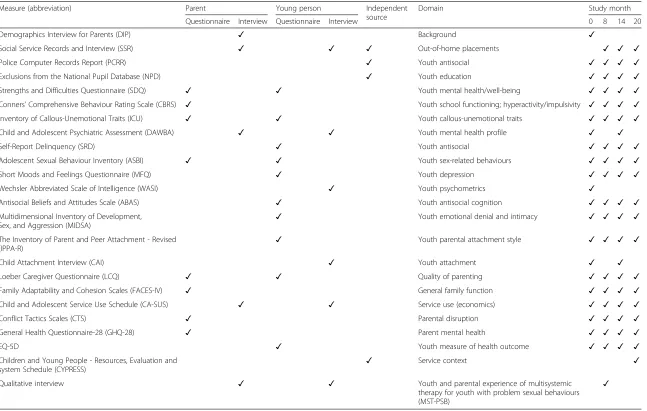
Follow-up assessments will be conducted at 8, 14 and 20 months post-randomization. Table 1 shows a detailed outline of the planned measures at each follow-up point throughout the trial.
Statistical analysis plan
All analysis will be according to the intention-to-treat principle. The characteristics of the treatment groups will be described at baseline. Preliminary analysis will in-vestigate the pattern of missing follow-up data.
Primary outcome
The primary outcome of the proportion of cases where a sexual offence has been incurred during the follow-up period will be described by a Kaplan-Meier graph and summarized by the proportions in each group with a new sexual offence by 20 months. The linked outcome of out-of-home placement will also be
described by a Kaplan-Meier graph and summarized by the proportions in each group with out-of-home placement by 20 months. The number of events will be estimated in order to inform power calculations for a fully powered efficacy trial.
For time-to-event offending outcomes, the event rate will be estimated. For continuous secondary outcomes, such as questionnaire data, linear mixed effects models will be fitted in order to estimate the individual-level residual variance.
Secondary outcomes
The feasibility outcome evaluating individual and sys-temic factors associated with recruitment into the trial will be analysed using logistic regression. The total score and subscale scores on the Feasibility Questionnaire will undergo descriptive analyses to characterize the direc-tion and range of attitudes by referrers involved in the MST-PSB trial. As noted above, qualitative interviews eliciting the views of young people and their carer(s) on the underlying principles and demands of participating in an RCT will be analysed using IPA.
Discussion
There is very little research that has evaluated thera-peutic interventions for young people displaying prob-lem sexual behaviour, and to date, no RCTs have been conducted in the United Kingdom. Although the results from two RCTs of MST-PSB [18, 32] have demonstrated the success of this intervention in reducing adolescent problem sexual behaviour in the United States, the evaluation of MST-PSB and adolescent problem sexual behaviour is still in its infancy. The STEPS-B trial aims to assess the feasibility of implementation of MST-PSB in the United Kingdom. The investigators hope that the feasibility trial will determine whether MST-PSB can be implemented fully and at a scale that would warrant a full trial. In addition, in following rigorous RCT guidelines, the trial will also assess whether the implementation of a stringent RCT evaluation of adolescent problem sexual behaviour is possible. Finally, this study will be the first RCT of MST-PSB that has not been con-ducted by the developers of the intervention. As such, it will provide a robust test of the effectiveness of this promising intervention as well as its transportability to outside the United States.
Measure (abbreviation) Parent Young person Independent source
Domain Study month
Questionnaire Interview Questionnaire Interview 0 8 14 20
Demographics Interview for Parents (DIP) ✓ Background ✓
Social Service Records and Interview (SSR) ✓ ✓ ✓ Out-of-home placements ✓ ✓ ✓
Police Computer Records Report (PCRR) ✓ Youth antisocial ✓ ✓ ✓ ✓
Exclusions from the National Pupil Database (NPD) ✓ Youth education ✓ ✓ ✓ ✓
Strengths and Difficulties Questionnaire (SDQ) ✓ ✓ Youth mental health/well-being ✓ ✓ ✓ ✓
Conners’Comprehensive Behaviour Rating Scale (CBRS) ✓ Youth school functioning; hyperactivity/impulsivity ✓ ✓ ✓ ✓
Inventory of Callous-Unemotional Traits (ICU) ✓ ✓ Youth callous-unemotional traits ✓ ✓ ✓ ✓
Child and Adolescent Psychiatric Assessment (DAWBA) ✓ ✓ Youth mental health profile ✓ ✓
Self-Report Delinquency (SRD) ✓ Youth antisocial ✓ ✓ ✓ ✓
Adolescent Sexual Behaviour Inventory (ASBI) ✓ ✓ Youth sex-related behaviours ✓ ✓ ✓ ✓
Short Moods and Feelings Questionnaire (MFQ) ✓ Youth depression ✓ ✓ ✓ ✓
Wechsler Abbreviated Scale of Intelligence (WASI) ✓ Youth psychometrics ✓
Antisocial Beliefs and Attitudes Scale (ABAS) ✓ Youth antisocial cognition ✓ ✓ ✓ ✓
Multidimensional Inventory of Development, Sex, and Aggression (MIDSA)
✓ Youth emotional denial and intimacy ✓ ✓ ✓ ✓
The Inventory of Parent and Peer Attachment - Revised
(IPPA-R) ✓
Youth parental attachment style ✓ ✓ ✓ ✓
Child Attachment Interview (CAI) ✓ Youth attachment ✓ ✓
Loeber Caregiver Questionnaire (LCQ) ✓ ✓ Quality of parenting ✓ ✓ ✓ ✓
Family Adaptability and Cohesion Scales (FACES-IV) ✓ General family function ✓ ✓ ✓ ✓
Child and Adolescent Service Use Schedule (CA-SUS) ✓ ✓ Service use (economics) ✓ ✓ ✓ ✓
Conflict Tactics Scales (CTS) ✓ Parental disruption ✓ ✓ ✓ ✓
General Health Questionnaire-28 (GHQ-28) ✓ Parent mental health ✓ ✓ ✓ ✓
EQ-5D ✓ Youth measure of health outcome ✓ ✓ ✓ ✓
Children and Young People - Resources, Evaluation and system Schedule (CYPRESS)
✓ Service context ✓
Qualitative interview ✓ ✓ Youth and parental experience of multisystemic
therapy for youth with problem sexual behaviours (MST-PSB)
✓
Trials
(2015) 16:492
Page
15
of
[image:15.794.63.710.98.509.2]of general psychopathology [32]. This finding appears to run contrary to knowledge that young people displaying problematic sexual behaviour have significant difficulties in other areas of their lives [8–10]. Consequently, while the evidence from the United States suggests that MST-PSB is a promising treatment when participants are recruited through the court system and when the inter-vention involves the developers of the programme, the question of whether MST-PSB is effective in reducing problem sexual behaviour in adolescents requires further research [17]. Furthermore, its potential applicability to the United Kingdom has yet to be tested. Moreover, the provision for adolescents who display problem sexual behaviour in the United Kingdom is difficult to com-pare with that in the previous evaluations, and the degree to which samples recruited into trials in the United Kingdom and the United States will be similar is unknown. It is clear that further high-quality RCTs with minimal involvement of the developers and long-term follow-up in the community are required to identify ef-fective interventions for adolescent problem sexual behav-iour and specifically to test the effectiveness of MST-PSB.
The primary aim of this study is therefore to conduct a rigorous, community-based trial in which MST-PSB is compared with the range of services that are typically provided to adolescent sexual offenders in the United Kingdom (that is, MAU). Whereas there is no good evi-dence that MAU for these young people and their fam-ilies works, there is some evidence available to suggest that MST-PSB is of benefit. Therefore, this evaluation of both treatment options will enable closer observations of MAU services to provide an evaluation of interventions currently available in the localities, as well as MST-PSB. This pragmatic trial will inform policymakers, commis-sioners of services and professionals about the potential of MST-PSB in the UK context. Specifically, it will provide evidence to determine whether the provision of MST-PSB could reduce the incidence of out-of-home placements for young people at risk of being removed from their homes primarily because of problem sexual behaviour.
To ensure that the study achieves the fairest and least biased assessment of the potential benefits of MST-PSB, the investigators have designed the study with the sup-port of MST Services but will carry out the RCT inde-pendently from the developers; however, the developers provide regular consultation to the clinical service at the Brandon Centre to ensure that MST-PSB is delivered to the highest levels of fidelity. As part of the feasibility evaluation, individual and systemic factors will be assessed that may be associated with young people being recruited into the trial, the beliefs and attitudes held by practitioners about the usefulness of empirically evaluating services for problematic sexual behaviour in the United Kingdom, and the perceptions of young people and their carers of having
participated in an RCT for problematic sexual behaviour and of the intervention that they received.
The research is being conducted by a team based at UCL, with data collection from cases referred to the Brandon Centre. MST-PSB aims to reduce levels of both sexual and non-sexual offending in the target popula-tion, and so offending will be used as a key measure to determine whether the intervention is effective. In addition, as out-of-home placement (whether this con-stitutes incarceration, hospitalization, residential school-ing or local authority care) represents an unhelpful outcome for antisocial adolescents in the majority of cases, the investigators have chosen to use preservation of the family (that is, the absenceof out-of-home place-ment) as the main measure of potential benefit. Other possible benefits of MST-PSB will also be examined, such as the impact on the young person’s mental health and well-being, and that of the carer(s).
To address factors associated with improvement, the investigators have taken considerable effort to monitor the effect of MST-PSB on parenting and family function-ing. It is anticipated that improvement observed in asso-ciation with MST-PSB will be commensurate with the impact that the intervention has on variables within the family, and for other clinically critical outcomes (for example, antisocial peer group affiliation), to be in line with changes in the purported mediating processes [46].
To assess what the benefits of MST-PSB and MAU might be, care will be taken to gather accurate descriptions of the interventions delivered to both groups in the study. In addition, the investigators will attempt to chart the sub-jective experience of all stakeholders in the project (that is, participants, their carers and providers and commissioners of services). The data from the trial will be analysed to de-termine whether the expected benefit of MST-PSB is achieved and will provide initial data on whether MST-PSB represents an economically viable option for intervening with young people displaying problem sexual behaviour.