2018 2nd International Conference on Modeling, Simulation and Optimization Technologies and Applications (MSOTA 2018) ISBN: 978-1-60595-594-0
Oilfield Equipment Control Distributed Automated System
S. O. KOSENKOV, V. Yu. TURCHANINOV,
I.S. KOROVIN
*and D. Ya. IVANOV
LLC "Association of Russian Oil and Gas Field Services Providers (Soyuzneftegazservice)", Moscow, Russian Federation
Southern Federal University, Rostov-on-Don, Russian Federation
*Corresponding author
Abstract. The article proposes a neural network technique for the operational selection of optimal industrial activities. This technique is a sequential process, most of which is a separate algorithm (training of a neural network) or several algorithms (preliminary data processing). The difference between the methods described in this article is that, firstly, the use of hybrid neural network analysis technology, which uses in the simultaneous application, firstly, a multitude of neural trained neural networks with a threshold activation function in order to simultaneously offer several options solutions (this situation is typical only for the oilfield, when several types of problems arise simultaneously at the facility or there are two or more options for recommended measures for clustering, secondly, in the application of an untrained neural network for better selection. The developed methods are focused on processing oilfield data rather than any other data and, in fact, their implementation is dictated by the specifics of the information being analyzed, as well as the need for its speed processing.
Introduction
As the world practice of operating oil fields at all stages of development, starting with the process of industrial drilling of wells, putting wells on operating parameters, according to the planned production of production, then - the process of mechanized extraction of hydrocarbons and the use of methods aimed at increasing oil recovery [1–5] the main production process requires making adequate management decisions in real time [6]. Otherwise, the situation in the oil industry can lead to economic losses, as well as environmental disasters [7–9]. In this regard, the entire "information shaft" data on the processes occurring in the oil field, it is necessary to process quickly, namely in a time adequate to the adoption of a decisive control action. In this connection, modern approaches and methods of organizing information management systems are widely used [10–15]. At the same time, the oil industry has a certain specificity [16], therefore it is necessary to ensure:
to process data arrays in real time due to the built-in parallelism of neural networks (one comparison operation occurs as opposed to production decision-making models, where there may be hundreds of similar operations (processing “if-then” type)) (method of simultaneous use of several neural networks);
process database arrays containing empty fields, as well as noisy data (the method of neuro projects);
pre-additionally cluster input data, as well as extract rules in the process of work (neural networks with a threshold activation function).
Scheme of the Functional Structure of the Neural Network
parameters characterizing the state of the object. Then it is transmitted to the input of the neural network classifier and the recognition process is launched. As a result, each neuroelement of the output layer forms the output signal of the corresponding level. The highest level of output signals indicates the class to which the recognized input vector belongs.
As elements of a neural network, a static model of neuron is used, which has the following form:
), ( * , , 1 , , 1 , , r m j r m j n i r m j i r m i r m j P X X P
(1)Where 1
,
r X
i m
are the input actions coming from the outputs i of the neurons of the previous r-1
layer to the i inputs of the j-th neuron of this r-th layer at the moment of time m;
, , r i j m
is the synaptic weight i of input j of neuron r layer at time m;
r m j
X , , m is the output j of the neuron r layer at time m.
Algorithm of Functioning of a Neural Network
In order for a neural network to correctly classify states, it must be trained. For this, it is presented with a certain set of input vectors and the associated set of output vectors. Under the conditions of our task, the input vector is a sequence of parameters characterizing the state of the well at a certain point in time with an indication of the type of event. The output vector is a list of neural network outputs and the desired values on them.
In the process of learning, the selection of such values of the synaptic weights of the neuron, which minimizes the error function, i.e. obtaining the desired vector of output signals for a given input vector. However, this does not guarantee a violation of the minimization function calculated for any previous vector. Therefore, it is necessary to use the total error function, which should be minimized over the entire packet of input vectors M.
The alternation of the procedures of direct and reverse propagation of signals upon presentation of each input vector Xm and the desired output vector
R m
d is the essence of the training of the neural network by the method of back propagation of error. The synaptic weights of the trained neurons of the output and hidden layers are modified after the presentation of each pair of vectorsXm,
R m
d , or in the batch learning mode, after the presentation of the entire package of vectors Xm,
R m
d , (m = 1, ...,
M), and up to this point, the resulting increments of synoptic weights accumulate each separately. To learn a particular packet of input vectors, a certain number of iterations are required, i.e. the series of presentation of this package, which allows you to achieve a global minimum of the total error and the neural network will be trained in the required function.
Disadvantages of classic neural network methods and approaches in the context of solving the problem of online diagnostics of oilfield facilities. However, the application of classical methods of neural network analysis of information for the selection of optimal measures raises a number of difficulties.
The main ones are:
the problem of high learning time of the neural network;
high noise of the retrospective data used for training the neural network, due to frequent telemetry failures, errors that occurred during data transmission via communication channels or during long-term storage in data warehouses (data aging with loss of relevance);
inconsistency of the input data (often slightly different or identical readings for the analyzed parameters correspond to different modes of operation of the wells).
of an object with fixed hardware-time constraints, as well as the formation of partitions of the set of object states X to ensure high-quality and timely methods of enhanced oil recovery.
The Method of Neural Network Interpretation of Rigid Rules
To overcome the problem of high noise and inconsistency of retrospective data and reduce the time spent on training the neural network, a method of neural network interpretation of rigid rules based on the use of the method of disjunctive normal forms (DNF) is proposed.
The problem of implementing the calculation of a logical expression is solved using a neural network generated in an automated mode that analyzes input parameters Ai0, i0=1...k0, where k0 is
the number of input parameters.
In Figure 1, various architectures of neural networks are presented, depending on the complexity of the tasks assigned to partition a given set into classes.
As an activation function, the bipolar threshold is selected, which allows to reduce the dimension of the network and precisely delimit the required areas. To divide data into classes, neurons of the first hidden layer Bi1 (delimiting planes) of the form Bi1=Ai0-Zi1, i1=1..k1 are used, where k1 is the
number of required delimiting planes. In order to use nonconvex regions, neurons of the second hidden layer
2
i
С are used, i2=1..k2, where k2 is the number of disjuncts required to implement the
rules. In the last layer of the neural network are neurons Di3, i3=1..k3, where k3 is the number of
outputs of the neural network. Denote:
Wk, ik, jk-1 is the weight of the neural network, meaning the weight from j of the neuron in the
k-1 layer to i of the neuron in the k layer;
Fa(x) is the threshold activation function, where Fa(x)= 1 for x>0, and Fa(x) = –1 for x≤0.
3
2 1
3, ,3 2 2,2 1,
1 1
2 1
0
1, ,1 0 3 3
1 0
0
( * ( *
* ( * ))), i 1..k .
a i i i i
i i
i i i
k k
D F W Fa W
i
k
Fa W A
i
[image:3.595.71.494.421.732.2](2)
Figure 1. Application of neural networks with different configurations.
3 3, ,
3 1 3 2 2
3
,
i i i i
i
k
D W C
(3)
Where
3 2
3, ,i i 0
W , if Ci2 does not affect the rule Di3, and otherwise.
2
1 2 1
2 2 2 , 1 , , 1 i k
C W i i Bi i
(4)
Where 0 2, 2, 1
W
i i , if Bi1 does not affect the disjunction of Ci2, but if Bi1 affects the disjunction of
Ci2, then W2, 2, 1i i 1 if Bi1>0 and W2, 2, 1i i 1 if Bi1≤0.
The value of Bi1 is represented as
0 1, , 1 1 0 1 0 1
0
* .
k
i i i i i
i
B A W Z
(5)
Sets the offset in all layers. The first layer:
1, ,i k1 0 1 1 2* Z /(max -min ),i1 i0 i0
W (6)
where 1 0 0 1 * , , 1 k
i j W
i j j
maxi0 is the maximum value of the parameter Ai0, mini0 is the minimum
value of the parameter Ai0.
Second layer:
1
2,2 1, 1 2,2, 2 2 1
0.5, i 1..k .
i k i j
j k
W W
(7)
Third layer:
2
3, ,3 2 1 3, ,3 3 3
1
0.5, i 1 k . k
i k i j
j
W W
(8)
The method of data processing in the neural network module using parallel neuroprojects. To reduce the learning time of the neural network and improve the quality of neural network classification, a method for processing data in a neural network module using parallel neuroprojects has been proposed. A neuroproject should be understood as a set of configuration data about a neural network trained to recognize any particular trait. It is shown that an effective and justifiable organization of the training procedure and information recognition by the neural network module, built in the form of a finite set of neuroprojects. Thus, in the operating mode, the neural network module, built using the proposed method, can determine several types of simultaneously recommended measures at once, which is real during the exploitation of fields.
The Method of Simultaneous Use of Trained and Untrained Neural Networks
To improve the quality of the recommended solution, a method for the simultaneous use of trained and non-learning neural networks has been proposed [20–23]. The basis of this method is the organization of a neural network module designed to analyze real-time data in real time using neural networks of the above types. Such an organization is an effective tool for processing data in a tight time frame:
untrained neural network with a threshold activation function is an effective classifier of states according to the existing rules, characterized by high speed due to the neural network parallel nature of data processing (determines the type of event with a high degree of probability);
Figure 2 displays the main idea of the proposed data processing method using parallel neuroprojects.
Figure 3 shows the main idea of the proposed data processing method using simultaneous use of trained and untrained neural networks.
The Method of Neural Network Interpretation of Rigid Rules
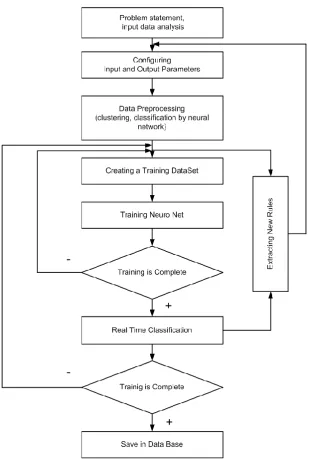
Figure 4 shows a generalized sequence of operations performed within the framework of the developed methodology according to the following algorithm.
1. Statement of the problem, analysis of input data. The analysis of the subject area, the specifics of the task of classifying the state of the object of analysis.
2. Extract new rules. The new rules are extracted using the method described earlier.
3. Configuring input and output parameters. The nomenclature of parameters for the analysis, the general list of measures is determined. The parameters are given, according to the testimony of which it is recommended to hold an event.
4. Preliminary data processing. The accumulated retrospective data on successfully conducted EORs is processed, namely, clustering using the method of neural network interpretation of a priori rules described earlier, also clustering by the classical methods k-means and forel.
5. Formation of samples of training examples. As a result of the procedures of clause 4, a priori data is broken down according to the required classification, thereby forming an array of samples of training examples. Half of the data that have passed the procedure of clause 4 are selected for the test sample.
6. Training of the neural network using the ORO method. The neural network is trained in each neural network project using the ODP method, as long as the total error exceeds 0.2.
7. Control the quality of education. If the required level of learning quality is not achieved (more than 98% of correctly recognized records in the test sample), go to step 5, otherwise go to step 8.
8. Classification in real time. Recognition of new data in real time using the method of simultaneous use of trained and untrained neural networks. At the same stage, the procedure for extracting the rules of paragraph 2
9. Recognition quality control. Adjustment of solutions offered to the user by the neural network. If the decision maker (expert) does not satisfy the quality of recognition, then go to step 5o, otherwise go to step 10.
[image:5.595.64.540.213.769.2]10.Record results in the database. The data is recorded in the database and further used to retrain neural network projects.
Figure 2. The main idea of the proposed method parallel neuroprojects.
Figure 4. Method of determining the optimal method of enhanced oil recovery.
Conclusions
The most effective approach to solving the problem of prompt selection of optimal EOR is the application of the ideology technology of an automated system with an intelligent "core" of information processing.
Based on the characteristics of the task set to provide the user with a quality solution in difficult to formalize the field operation conditions in real time with limited computing resources, the most preferable is the use of artificial neural network (NS) technology - one of the most powerful and dynamically developing Data Mining tools [24,25] as an information processing method.
Artificial neural networks that implement the basic principles of functioning of processes occurring in the human central nervous system are an effective tool for classifying states in difficult to formalize, fuzzy conditions, in general, and specifically in the conditions of the oil and gas industry, in particular.
However, the use of classical neural network methods and algorithms in pure form to solve the classification problem is complicated by a number of factors characterizing the functioning of oil wells, the main ones among which are the following: the problem of high neural network training time, high noise of historical data used for neural network training, inconsistency of input data. To solve these problems, new methods of neural network information processing have been proposed.
Acknowledgment
The paper is published due the financial support of the Ministry of Education and Science of Russian Federation via the project “SKIF-NEDRA”.
References
[1] D. O. Shah, “Improved oil recovery by surfactant and polymer flooding” (Elsevier), 2012.
[2] N. Morrow, J. Buckley and others, “Improved oil recovery by low-salinity waterflooding”, J. Pet. Technol. 63, 106–12, 2011.
[3] K. S. Sorbie, “Polymer-improved oil recovery” (Springer Science & Business Media), 2013.
[4] L. W. Lake, R. T. Johns, W. R. Rossen and G. A. Pope, “Fundamentals of enhanced oil recovery”, 2014.
[5] J. J. Sheng, “Enhanced oil recovery in shale reservoirs by gas injection”, J. Nat. Gas Sci. Eng. 22, 252–9, 2015.
[6] H. Devold, “Oil and gas production handbook: an introduction to oil and gas production” (Lulu. com), 2013.
[7] O. Bello, J. Holzmann, T. Yaqoob and C. Teodoriu, “Application of artificial intelligence methods in drilling system design and operations: a review of the state of the art J. Artif. Intell. Soft Comput. Res.”, 5, 121–39, 2015.
[8] N. Khakzad, S. Khakzad and F. Khan, “Probabilistic risk assessment of major accidents: application to offshore blowouts in the Gulf of Mexico Nat. Hazards”, 74, 1759–71, 2014.
[9] J. Bhandari, R. Abbassi, V. Garaniya and F. Khan, “Risk analysis of deepwater drilling operations using Bayesian network”, J. Loss Prev. Process Ind., 38, 11–23, 2015.
[10]E. V. Melnik, A. B. Klimenko and D. Y. Ivanov, “Distributed Information and Control system reliability enhancement by fog-computing concept application IOP Conference Series”, Materials Science and Engineering, vol 327, pp. 22070, 2018.
[11]E. V. Melnik, A. B. Klimenko and D. Y. Ivanov, “The Model of Device Community Forming Problem for the Geographically-Distributed Information and Control Systems Using Fog-computing”, Concept Proceedings of the IV International research conference "Information technologies in Science, Management, Social sphere and Medicine, pp. 132–6, 2017.
[12]E. V. Melnik, A. B. Klimenko and D. Y. Ivanov, “Fog-computing concept usage as means to enhance information and control system reliability”, Journal of Physics: Conference Series, vol 1015, p 32175, 2018.
[13]F. Tao, L. Zhang, V. C. Venkatesh, Y. Luo and Y. Cheng, “Cloud manufacturing: a computing and service-oriented manufacturing model”, Proc. Inst. Mech. Eng. Part B J. Eng. Manuf. 225, 1969–76, 2011.
[15]V. Korobkin, E. Melnik and A. Klimenko, “Fault-tolerant architecture for the hazardous object information control systems”, Application of Information and Communication Technologies (AICT), 2015 9th International Conference on (Rostov-on-Don: SFedU). pp. 274–6, 2015.
[16]I. S. Korovin and A. S. Boldyreff, “Embedded digital oilfield model”, High-Performance Computing in Geoscience and Remote Sensing VII, vol 10430, pp. 1043007, 2017.
[17]I. Korovin, M. Khisamutdinov, A. Kalyaev, D. Ivanov and G. Schaefer, “Neural network model of pumping units in oil preparation and pumping complex Informatics”, Electronics and Vision & 2017 7th International Symposium in Computational Medical and Health Technology (ICIEV-ISCMHT), 2017 6th International Conference on pp. 1–4, 2017.
[18]I. S. Korovin, A. Kalyaev, M. Khisamutdinov, D. Ivanov and G. Schaefer, “Application of neural networks for modelling centrifugal pumping units of booster pump stations for a two-phase gas-liquid mixture Informatics”, Electronics and Vision & 2017 7th International Symposium in Computational Medical and Health Technology (ICIEV-ISCMHT), 2017 6th International Conference on pp. 1–6, 2017.
[19]I. S. Korovin, M. V. Khisamutdinov and A. I. Kaliaev, “The application of evolutionary algorithms in the artificial neural network training process for the oilfield equipment malfunctions”, forecasting 2nd International Symposium on Computer, Communication, Control and Automation, 2013.
[20]I. S. Korovin and M. G. Tkachenko, “Intelligent Oilfield Model”, Procedia Comput. Sci. 101, 300–3, 2016.
[21]I. S. Korovin, M. G. Tkachenko, M. V. Khisamutdinov, A. I. Kalyaev and others, “Artificial intelligence hybrid methods application in the task of the heavy oilfields profitability increase”, (In Russian) Oil Ind. J., 106–9, 2016.
[22]I. S. Korovin and A. K. Igor, “Modern Decision Support Systems in Oil Industry”, Types, Approaches and Applications International Conference on Test, Measurement and Computational Methods (TMCM) pp. 141–4, 2015.
[23]I. S. Korovin and M. V. Khisamutdinov, “Neuronetwork decision support system for oilfield equipment condition online monitoring”, Adv. Mater. Res. 902, 409–15, 2014.
[24]R. J. Roiger, “Data mining: a tutorial-based primer”, (CRC Press), 2017.