Title: Evaluation of the implementation of a PhD capacity-building programme for nurses in South Africa.
Authors
1. Dr. Aisling Sheehan BA(Hons), PhD, Trinity College Dublin
2. Prof. Catherine Comiskey, BA(Mod), MSc, PhD, Trinity College Dublin
3. Dr. Charmaine Williamson, BA(Hons), MA, PhD Graduand, Santrust, South Africa.
4. Prof Tennyson Mgutshini BSc(Hons), MSc, MA Ed, Phd, University of South Africa.
Corresponding author and contact details: Name: Prof. Catherine Comiskey
Address: Centre for Practice and Healthcare Innovation, School of Nursing and Midwifery, 24 D’Olier St, Trinity College Dublin, Dublin 2, Ireland
Email: [email protected]
Tel: +353 1 8962776
Conflicts of Interest and Source of Funding: Sheehan has no conflict of interest.
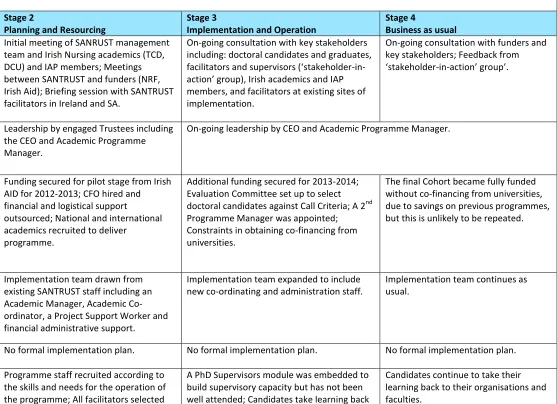
Table 1 Findings on theevidence of implementation enablers across the stages of implementation
Enablers/ Barriers
Stages of Implementation Enablers Stage 1
Exploring and Preparing
Stage 2
Planning and Resourcing
Stage 3
Implementation and Operation
Stage 4
Business as usual Stakeholder
consultation and buy in
Consultation with key stakeholders (NRF, DENOSA, FUNDISA,
DoH) and a purposive sample of Irish Nursing Sciences academics in Ireland (IAP members).
Initial meeting of SANRUST management team and Irish Nursing academics (TCD, DCU) and IAP members; Meetings between SANTRUST and funders (NRF, Irish Aid); Briefing session with SANTRUST facilitators in Ireland and SA.
On-going consultation with key stakeholders including: doctoral candidates and graduates, facilitators and supervisors (‘stakeholder-in-action’ group), Irish academics and IAP members, and facilitators at existing sites of implementation.
On-going consultation with funders and key stakeholders; Feedback from ‘stakeholder-in-action’ group’.
Leadership Experienced CEO and an Academic Programme Manager led
implementation.
Leadership by engaged Trustees including the CEO and Academic Programme Manager.
On-going leadership by CEO and Academic Programme Manager.
Resources Support by SANPAD and existing SANTRUST programme; Funding proposal developed for Irish Aid; Support from Irish Aid and NRF given in principle.
Funding secured for pilot stage from Irish AID for 2012-2013; CFO hired and financial and logistical support
outsourced; National and international academics recruited to deliver
programme.
Additional funding secured for 2013-2014; Evaluation Committee set up to select doctoral candidates against Call Criteria; A 2nd Programme Manager was appointed; Constraints in obtaining co-financing from universities.
The final Cohort became fully funded without co-financing from universities, due to savings on previous programmes, but this is unlikely to be repeated.
Implementation Teams
Implementation team drawn from existing SANTRUST staff including an Academic Manager, Academic Co-ordinator, a Project Support Worker and financial administrative support.
Implementation team expanded to include new co-ordinating and administration staff.
Implementation team continues as usual.
Implementation Plan
No formal implementation plan. No formal implementation plan. No formal implementation plan.
Staff capacity Programme staff recruited according to the skills and needs for the operation of the programme; All facilitators selected
A PhD Supervisors module was embedded to build supervisory capacity but has not been well attended; Candidates take learning back
Organisational support
Supportive systems, policies and
procedures put in place within SANTRUST, a lean organisation with a small Board of Governors.
The CEO, Academic Manager, and key administrator operate as a single team to facilitate regular two-way support.
Supportive organisational culture
No evidence available. No evidence available. No evidence available.
Communication Briefing sessions with IAP and
Deans/Directors of Research and Heads of Nursing Schools of all public Universities of SA.
Academic Programme Manager and key administrative staff attend international planning meetings with CEO; Academic Programme Manager ‘sits in’ on all academic modules to enable feedback loops.
Monitoring and evaluation
Written feedback obtained from candidates, facilitators, supervisors and reviewers after every module (reviewed by Evaluation Committee); Internal monitoring against strategy during staff meetings.
Standard practice of modular reporting continues.
Learning from experience
Attritions analysed and additional efforts made to support candidates to complete at a later date.
Set of recommendations developed for future implementation on basis of learning identified in 2012/13 progress report.
Barriers Stage 1
Exploring and Preparing
Stage 2
Planning and Resourcing
Stage 3
Implementation and Operation
Stage 4
Business as usual External
environment
Many Masters Candidates not adequately prepared for programme as most do not complete research Masters.
Difficulties in attracting applicants; Call for Applications need longer lead times and for each Call, the deadline is extended.
PhD Candidate attrition due to external family and work commitments – 7/41 PhD
candidates in 2012/13 did not defend the PhD proposal; Constraints in universities releasing the staff to attend as Candidates; Candidates are mostly part-time and manage multiple roles.
Pipe-line of Masters candidates is limited and there is a possibility of reaching saturation point in numbers who are ready for the programme.
Resistance to change and vested interests
Muted response from the DoH: engagements were at a superficial level.
Resistance from universities to send Candidates as some universities reflected that they can prepare Candidates without external support.
Supervisors have low attendance rate at supervisors’ module and often express resistance to the Candidates’ diversified learning; Candidates resist changing their research ideas to address theoretical and knowledge gaps rather than choosing topics on the basis of interest or daily work.
Candidates and Supervisors often take new ideas and skills into organisations and Faculties that can be challenging; No expression of interest from DoH to upscale SANTRUST to a nationally-owned programme driven by the DoH.
1.
Exploring &
Preparing
3.
Implementing & Operationalising4.
Business as
Usual
2.
Planning &
Resourcing
Implementation champions
Resources
Leadership
Stakeholder consultation and buy-in
Implementation teams
Implementation plan
Staff capacity
Organisational support
Supportive organisational culture
Communication
Monitoring and evaluation
Learning from experience
[image:6.720.31.694.59.520.2]1
Abstract
Background: There is a significant deficit in the research capacity of nurses and
internationally, in order to meet future healthcare demands, there is a call to double the
number of nurses and healthcare professionals with a PhD.
Aim: The aim of this research was to evaluate the implementation of a national PhD
capacity-building programme for academic and practice-based nurses and other healthcare
professionals.
Method: An implementation science framework was used to evaluate the process of
implementing a national PhD capacity-building programme across South Africa.
Implementation of the programme across two national, longitudinal cohorts of participants
was studied. Evidence of enablers and barriers to implementation was obtained from a
range of data sources. These sources included the curriculum for the programme, regular
evaluation reports from programme participants and programme facilitators after each
stage of the PhD curriculum delivery, and meeting notes. Supplementary sources included
measureable and quantifiable impact metric rates on PhD candidate recruitment, retention
and successful completion.
Results: Evidence of the presence of most enablers for successful implementation was
found, including stakeholder consultation and buy-in, leadership, resources, staff capacity
and implementation teams. There was, however, no evidence of an implementation plan, a
supportive organisational culture or of effective ongoing communication at stage four of the
implementation process. Evidence was found for the presence of the barriers of external
environmental factors, resistance to change, and vested interests.
Discussion: Within the context of a recognised worldwide shortage of nursing scientists, the
national PhD development programme roll-out provided evidence on how the effective
implementation of the programme can be strengthened and how barriers to success can be
Introduction 1
Worldwide, there is a deficit in research capacity in Nursing Sciences, particularly in lower-
2
and middle-income countries (Edwards, Webber, Mill, Kahwa, & Roelofs, 2009; Sitthi-amorn
3
& Somrongthong, 2000). Strategies and initiatives to build research capacity are therefore
4
being developed with the aims of enhancing nurses’ engagement with research activities,
5
increasing the implementation of evidence-based practice leading to better quality of care,
6
and enhancing nurses’ participation in decision-making on health systems and policy
7
(Segrott, McIvor, & Green, 2006; Sitthi-amorn & Somrongthong, 2000). One such initiative is
8
the SANTRUST doctoral education programme in South Africa, a national capacity-building
9
education programme for academic and practice-based nurses and other healthcare
10
professionals. The purpose of this study was to evaluate the implementation of the
11
SANTRUST doctoral programme to identify enablers and barriers to its implementation.
12 13
Situational Analysis 14
In 1994, South Africa underwent a fundamental change in its nationhood in terms of
15
ideology, ethos, government, economy, and citizenship. The contours of the country
16
reflected huge unevenness and racial inequalities that had been constructed and
17
perpetuated by the apartheid state. Sophisticated sites of urbanisation and privatised public
18
services were juxtaposed with massively under-resourced and ill-conceived service delivery
19
points, and attendant systemic structural poverty (Hendricks, 2003). South Africa has since
20
undergone a rapid and complex health transition. The inter-generational conditions
21
inherited by the transforming nation have resulted in varied experiences, which in turn
22
represent differing points along a continuum of success to failure.
While there have been huge strides towards delivering equitable health services and scaling
1
up health service delivery (Schneider, Barron, & Fonn, 2007), the period has also seen
2
epidemic levels of infectious diseases, a growing prevalence of non-communicable diseases,
3
and unprecedented violence and injury (Coovadia, Jewkes, Barron, Sanders, & McIntyre,
4
2009; Kahn, 2011; Mayosi et al., 2012; Seedat, Van Niekerk, Jewkes, Suffla, & Ratele, 2009).
5
Worsening rates of access to health care and the year on year increase in those affected by
6
HIV and AIDS point to a progressively more challenging health care context. Between 1990
7
and 2005, mortality worsened across all age groups, primarily due to HIV and AIDS (Tollman
8
et al., 2008) and there is now approximately 3.5 million people living with HIV and AIDS
9
(Global Health Observatory, 2012). This is in spite of it having one of the highest gross
10
domestic product (GDPs) in the southern hemisphere (International Monetary Fund, 2013).
11 12
While noting the plethora of progressive policy and legislation in the democratic South
13
Africa, there have also been policy trade-off decisions, with a serious decline in investment
14
in clinical research activity and capacity since the 1990s (Gevers, 2009). This choice has been
15
made against a broader scoped statistic of South Africa graduating only 23 PhD graduates
16
per year per million of the population. This rate of graduation falls far short of the number
17
of doctoral graduates required to support a competitive knowledge-based economy (Smit,
18
Williamson, & Padayachee, 2013). The 2009 Lancet Health in South Africa Series emphasised
19
the importance of “widespread scale up of successful innovations and relevant and rigorous
20
clinical research” (Kleinert & Horton, 2009). There is a disparity between the increasing
21
disease and health burden and the research capacity required for evidence-based
decision-22
making, strategy, and policy (Nchinda, 2002).
Research capacity in Nursing Sciences is particularly poor. In 2010, out of the 971 Masters
1
students registered for nursing research programmes across South Africa, only 121 had
2
graduated as of 2011 (SANTRUST, 2013). This represents an unacceptably low 12.4%
3
completion rate. There is acknowledgement that nurses are generally underprepared to
4
take on higher-level education and it is here where learner support interventions are
5
needed. In addition, there has been a staffing crisis due to a number of factors including the
6
migration of nurses to jobs abroad, attrition due to retirement and HIV and AIDS, and the
7
closing of nursing colleges in the 1990s, which is threatening the quality and standards of
8
healthcare (Coovadia, et al., 2009). Shortages in nursing personnel have been specifically
9
identified within leadership roles and it is here where academic capacity-building is most
10
indicated.
11 12
The future of health care provision is explicitly dependent on the existence of expert nurses
13
who will oversee the curative, preventative and health promotion priorities that are
14
centrally critical to recent health policy (SA Department of Health, 2013). Their engagement
15
in research also plays an important role in the strengthening of evidence-based healthcare
16
practice and policy. Investment in health research and development has a high payoff in
17
health status and economic productivity (Nchinda, 2002). Cognisant of these issues, the
18
Department of Health has prioritised the strengthening of research and development in its
19
ten-point plan for 2009-2014 (Mayosi, et al., 2012). The South African government has also
20
specifically identified a need for an unparalleled support of the promotion and maintenance
21
of high quality and nursing education and training. In 2011, the SA Nursing Compact and
22
Roadmap was devised and launched (National Nursing Summit, 2011). This Compact and
23
Roadmap evolved into the National Strategic Plan for Nursing Education, Training and
Practice (Department of Health, 2013), aimed at reconstructing and revitalising the nursing
1
profession as part of the department’s efforts to improve health outcomes.
2 3
Collaborative Role-Players 4
Within this broader-based context of the challenges and opportunities presented by the
5
doctoral and health demographics in South Africa, role-players in Higher Education have
6
generated responses so as to address this vulnerability. One such response, the PhD
7
Proposal Development Programme for Nursing Sciences, has emerged from a collaborative
8
international knowledge network that includes Doctoral Candidates of Nursing Sciences,
9
Supervisors/Promoters, Universities, Development Partners and an implementing
10
organisation, SANTRUST, which is an educational trust that has been active in doctoral
11
education and capacity development since 1997 (Smit, et al., 2013). The Programme’s
12
primary focus is on the research proposal phase during the first year of doctoral education
13
as this has been shown by many, including Pryjmachuk et al. (2009), as the time of greatest
14
risk of attrition in the doctoral journey.
15 16
Building from a history of harnessing international knowledge networks towards achieving
17
alternatives for development (Hoebink, Vvan der Lans, & Padayachee, 20013), SANTRUST
18
set out to bring together role-players in order to explore a niche programme for Nursing
19
Sciences. Combining its model of PhD Proposal Development, which exists as a
multi-20
disciplinary programme that deepens the rigour of proposal development for doctoral
21
studies (http://santrust.org.za), SANTRUST re-crafted the curriculum to address Nursing
22
Science scholarship. Parallel to this burgeoning curriculum and after a visit to the various
23
Nursing Faculties in the Republic of Ireland, SANTRUST found receptive partners who had
gone through their own trajectory of growing Nursing Sciences. The Irish-Africa Partnership
1
that was also already working with SANTRUST on other development projects was keen to
2
support this Irish-Africa initiative. SANTRUST then proposed to Irish Aid to fund the first ever
3
PhD Proposal Development Programme for Nursing Science and secured funding for the first
4
pilot, which has since continued for a further two deliveries (Comiskey, Matthews, Bruce,
5
Klopper, & Mulaudzi, 2013).
6 7
Through consultation with the National Research Foundation of South Africa, SANTRUST
8
was able to secure funds matching those contributed by Irish Aid so that the programme
9
would have co-financing from its own government funds. These extra funds allowed for
10
more candidates to benefit from the programme, as well as strategically positioning the
11
programme with a significant research partner whose mandate is to build knowledge capital
12
in response to national priorities. The twenty-three Universities of South Africa subscribed
13
to the programme and supported candidates to attend the Programme, together with their
14
supervisors. Additionally, the Department of Health, Forum of University Nursing Deans of
15
South Africa (FUNDISA) and Democratic Nurses Association of SA (DENOSA) expressed
16
support and gave inputs for the programme (Comiskey, et al., 2013). As such, SANTRUST,
17
was again able to use its existing experience around “what works in a transforming
18
education context” in order to “offer… incremental models of excellence [that] need to be
19
built through combining international knowledge with local knowledge in
contextually-20
appropriate ways.” (Smit, et al., 2013).
21 22
SANTRUST aimed to produce and retain a new generation of researchers, facilitate high
1
level human capacity development, and reposition African universities as contributors to the
2
global knowledge economy (Smit, et al., 2013). The SANTRUST model consisted of a
six-3
module research methodology and PhD Proposal Development Programme, delivered in
4
weekly blocks over an academic year. This programme for Nursing Sciences was facilitated
5
by internationally recognised academics from Irish and South African universities and
6
operated a triangular model in which the candidate, supervisor and facilitator work
7
together, on the research process, towards completion of the PhD proposal. Following
8
proposal completion, supervisors and candidates work towards thesis development and
9
graduation, with SANTRUST tracking progression toward completion for all members of the
10
cohorts. Figure 1 depicts the modular flow and the proposal development process.
11 12
Figure 1 About here
13 14
The expected outcomes of the SANTRUST programme were: increased high level (PhD)
15
human capacity in the critical research field of nursing; enhanced capacity of universities to
16
supervise post-graduate students in Nursing; increased research and innovation output
17
within the Nursing Sciences; increased number of trained supervisors at doctoral level;
18
substantial subsidy income to the graduating University with implications for academic and
19
financial sustainability; and enhanced capacity for global competitiveness and innovation
20
with Nursing Schools (Comiskey, et al., 2013). Smit et al (2013), in a case study of the
21
SANTRUST PhD programme, and how it evolved from an international aid programme to a
22
model of educational innovation, highlighted that the programme was under-theorised and
23
in need of further study.
Research Capacity-Building in Nursing Sciences 1
The need to develop research capacity in Nursing Sciences is not unique to South Africa,
2
rather is a global challenge. Various initiatives have been developed and implemented
3
across the globe to address this including graduate and post-graduate training, mentoring
4
strategies, building research infrastructure, creating a supportive research culture and
5
environment, and building collaborative links between academic institutions (Edwards, et
6
al., 2009; Segrott, et al., 2006). For example, the Council for the Advancement of Nursing
7
Science has developed an Idea Festival for Nursing Science Education in the US (The Council
8
for the Advancement of Nursing Science, n.d.), through which nurse scientists and PhD
9
students can discuss the future of Nursing Sciences.
10 11
In the international capacity-building literature, graduate and post-graduate training is a key
12
way in which research capacity is built and through which nurses can develop the
13
knowledge and skills to engage in research, compete for funding, and implement
evidence-14
informed practice.However, the need to evaluate educational interventions within the
15
nursing profession has long been recognised (Ellenbecker, 2010). In their editorial on the
16
urgency of the goal to double the number of graduate nurses with doctorates by the year
17
2020, Nickitas and Feeg (2011) stress the importance of the need to gather more data on
18
doctoral graduates and the outputs after graduation. However, relatively little attention has
19
been paid to the effective implementation of capacity-building initiatives.
20 21
Implementation can be defined as “coordinated change at system, organisation,
22
programme, and practice levels … [and] efforts to improve the science and practice of
23
implementation have the potential for positive broad scale impacts on human services,
across service systems” (Fixsen, Naoom, Blase, Friedman, & Wallace, 2005, p. vi). Mounting
1
evidence demonstrates how implementation influences the outcomes achieved by
2
programmes, and assessing the implementation of programmes and initiatives enables the
3
examination of what worked well, what was challenging, and where improvements are
4
needed. While the importance of the application of theory and evidence from
5
implementation science to evidence-based nursing practice has been emphasised (Van
6
Achterberg, Schoonhoven, & Grol, 2008), the application of implementation science
7
frameworks to the evaluation of capacity-building initiatives in Nursing Sciences has not
8
been previously considered.
9 10
A body of research on factors, which facilitate and hinder successful implementation of
11
programmes, has emerged in recent years. However, there is currently nodefinitive theory
12
of implementation or single implementation framework commonly accepted in the field.
13
Burke, Morris and McGarrigle (2012) developed an implementation framework based on a
14
review of key historical developments in implementation science, from Presman and
15
Wildasky (1973) to Meyers, Durlak and Wandersman (2012), and identified common key
16
components across these models, in particular, the models of Fixen et al. (2005) and
17
Wandersman et al. (2008). These include leadership, resources, supportive organisational
18
culture, and staff capacity.
19 20
There are evidently gaps in the literature on research capacity-building in Nursing Sciences
21
and this study sought to evaluate the implementation of one such initiative in South Africa,
22
the SANTRUST programme, in order to identify strengths and challenges to the
23
implementation process, and inform the development of such capacity-building
programmes. The aims were (a) to determine the activities that occurred at each stage of
1
the implementation process; (b) to identify enablers of the implementation process across
2
these stages; and (c) to identity barriers of the implementation process at each stage.
3 4
Methodology 5
Implementation Framework 6
To evaluate the implementation of the SANTRUST programme, the implementation
7
framework of Burke et al. (2012) was utilised. This model was chosen as it provides a
8
framework for evaluating the implementation of a programme or service across time and
9
stage of the process. The framework is based on a set of eleven enablers and three barriers
10
across four stages of implementation, these being: 1) exploring and preparing; 2) planning
11
and resourcing; 3) implementation and operational; and 4) business as usual. It is important
12
to note that these stages are not necessarily sequential and linear; rather the process of
13
implementation is iterative and stages of implementation intersect over time.
14 15
The first stage of exploring and preparing involves the development of the programme to be
16
implemented, which typically involves establishing the needs of those affected by the
17
programme and scoping the practicalities and feasibility of implementing it. Consultation
18
with key stakeholders and the identification of champions to support and drive the
19
programme are critical steps during this phase to foster a supportive climate for
20
implementation. Once a plan for implementing the programme has been developed, the
21
second stage of planning and resources is the development of a comprehensive
22
implementation plan including a clear delivery model and assigned responsibilities. The
23
stage entails ensuring the necessary capacity and resources are available for
implementation, which may involve securing funding and the hiring and training of staff. The
1
third stage of implementation and operationalisation commences once the programme has
2
begun. It encompasses continuous monitoring, communication and creating feedback
3
mechanisms to inform the development of the programme. On-going communication and
4
monitoring provide opportunities to inform future organisational and policy decisions.
5
Throughout these stages, various factors can contribute to the success of implementation,
6
the importance of which depends on the specific application and context. Figure 2 presents
7
the enablers operating at each stage of implementation.
8
9
Figure 2 Implementation stages and enablers (Burke, et al., 2012) about here 10
11
The first three enablers of stakeholder consultation and buy-in, leadership, and resources
12
operate across all four stages of implementation. The existence of implementation teams,
13
an implementation plan, adequate staff capacity, organisational support, a supportive
14
organisational culture, and communication are enablers which operate across the second,
15
third and fourth stages of implementation. The final two enablers relevant to phases three
16
and four of implementation, are monitoring and evaluation, and learning from experience.
17
According to Burke et al. (2012), barriers to implementation are grouped under three
18
classes: the external environment, resistance to change, and vested interests.
19 20
Participants 21
Participants included 55 students who participated in the programme over two cohorts
22
from admission to completion of the programme (commencing in 2011 and 2012),
23
programme facilitators, and programme staff.
1
Data Sources 2
A range of data sources were accessed including the funding proposal, the Curriculum for
3
the programme used extensively by the facilitators, regular evaluation reports from
4
programme participants and programme facilitators after each stage of the curriculum
5
delivery, meeting notes, and finally, measureable and quantifiable impact metrics on PhD
6
candidate retention rates and successful completion rates.
7 8
Ethical approval 9
Ethical approval was not sought as the data sources were all widely available and the
10
summaries of the evaluation reports from candidates and facilitators were distributed to all
11
the relevant stakeholders. Notwithstanding the fact that ethical approval was not required
12
as an explicit stage of this research, all ethical standards for protecting human subjects have
13
been followed in accordance with standards of the institution's committee for the
14
protection of human subjects where the study was conducted and the Helsinki Declaration
15
of 1975. In addition, the methodological norm for ethical research was followed (Tracy,
16
2010). This included respectful and responsible treatment of data, mutual and self-
17
reflection during the research process, which continued into the reporting on findings in a
18
transparent, honest manner, which is open to peer-review and public scrutiny. Described by
19
Tracy (2010) as “situational” and “relational” ethics, the researchers considered the specific
20
contexts of this research setting, interacted with participants (who knew and understood
21
that the programmes were evaluated for both programme and research purposes) in a
22
sensitive and connected manner, and carefully weighed up the potential and actual
23
responses to the research through in person and on-line discussions.
1
Data Analysis 2
A deductive approach to the data analysis was adopted to map the content of the data
3
sources onto the implementation framework. A retrospective mapping of the process of
4
implementation of the SANTRUST PhD proposal development programme against each
5
enabler and barrier within the implementation framework was conducted. Data
6
triangulation, the continual process of collecting, consolidation and cross-checking of
7
information from a range of sources, was used to synthesise all the data accessed in order
8
to identify activities under each stage of implementation, enablers of implementation across
9
the stages, and barriers to the implementation process.
10 11
Rigor within the data analysis was ensured in several ways. Firstly the analysis of the data
12
was undertaken as an iterative, collaborative process by the two international members of
13
the research team, a senior and a non-senior researcher, both of whom had undertaken
14
training in implementation science, and one of whom had over 25 years’ experience of
15
delivering PhD research education in national and international settings. Once the initial
16
analysis was completed, it was reviewed by the national South African members of the
17
team, also consisting of a more senior and less senior team member. Any gaps or
18
inconsistencies in the mapping of the data to the framework were clarified with the national
19
members who were more familiar with the data and when gaps were identified, additional
20
data was sought and mapped to the framework as appropriate. Any additional findings were
21
then sent to the national team for review and feedback. The research process therefore
22
involved on-going discussions and assessments by the respective national and international
23
teams. Approximately five work sessions were necessary to complete and reach consensus
on the data mapping by the international team and both members were present for each
1
session and worked collaboratively.
2 3
Tracy (2010) highlights criteria beyond ‘rigor’ for excellent (qualitative) research. She
4
indicates that there should be sincerity and credibility within the research itself and the
5
research process. Credibility is provided in terms of “member reflection” and “triangulation
6
or crystallization”. Sincerity is achieved through self -reflection, and surfacing biases and
7
implicit value systems. During both the data gathering and data analysis stage, the national
8
and international teams spoke worriedly, happily, explicitly and reflexively about the
9
emerging findings and used the theoretical framework as the scaffold against which findings
10
could be explored and examined. Where the national members recorded feeling too close
11
to the data and influenced by insider bias, the international members were able to create
12
spaces for distance and perspectives by providing a more global view of the findings and to
13
bring it back to the central theoretical constructs of the framework. It is also important to
14
note that the international team led the data analysis and were responsible for the
15
generation of the final results in the interest of rigor, sincerity and credibility as noted
16
above.
17 18
Results 19
Enablers to the Implementation Process 20
Table 1 provides the results of the retrospective mapping process and illustrates the
21
activities associated with each implementation enabler at the four stages of
22
implementation. Evidence on the presence of many implementation enablers at relevant
23
stages of implementation was found, including regular consultation with stakeholders, the
attainment of significant funding to enable implementation, and a close-knit
1
implementation team with strong leadership and good communication. The existence of
2
connected, strong leadership was likely to have been a key driver of buy-in and funding. This
3
leadership provided direction and vision for all stages of the implementation of the
4
programme, in conjunction with an experienced Academic Programme Manager. Buy-in was
5
maintained through regular briefing sessions and the dissemination of quarterly or biannual
6
reports to funders. Supportive organisational structures and an implementation team with
7
good communication mechanisms with staff and stakeholders also drove implementation.
8 9
SANTRUST was able to replicate a pilot for two further iterations of the programme, based
10
on the organisation’s and funding partners’ continued belief that the programme was
11
delivering value to a particular niche of the doctoral landscape in response to current and
12
future policy requirements. This achievement may be due to the leadership and
13
management being able to leverage existing networks in order to achieve the multiplier
14
effects that are sought in developmental projects. The existence of an earlier fifteen-year
15
programme, delivered through SANPAD, and funded by the Netherlands Foreign Affairs and
16
then the Royal Netherlands Embassy to South Africa, enabled a strong established baseline
17
programme, from which the Nursing Sciences programme could draw. Further, SANTRUST
18
was also responsive to the policy impetus, the funding environment and organically was
19
able to harness enablers and build on an existing model.
20 21
There was, however, no evidence of an implementation plan, a supportive organisational
22
culture or of effective ongoing communication at stage four of the implementation process.
23
Although a formal implementation plan was lacking, staff were recruited according to the
skills and needs for the operation of the programme and timelines were set and revised as
1
necessary. For example, timelines for the delivery of the programme took account of the
2
academic schedules of the universities from which the PhD candidates were recruited and
3
the schedules of the module facilitators. Evidence to support the existence of a supportive
4
organisational culture as a programme enabler was not found, but further observational
5
research would be needed to assess this enabler more fully.
6 7
Barriers to the Implementation Process 8
Identified barriers to the implementation of the programme are illuminated in Table 2,
9
according to the stages of implementation. Evidence was found for the presence of all of the
10
barriers of external environmental factors, resistance to change, and vested interests. The
11
most challenging barrier in the external environment was the difficulty in attracting
12
prospective applicants, who were predominantly aged >40 years and questioned their
13
suitability to the programme. Although the rate of candidate attrition was low, family and
14
work commitments nevertheless impeded some candidates’ ability to maintain engagement
15
with the programme. There was also evidence of resistance to the programme; in particular,
16
there was a low attendance rate by supervisors at the supervisors’ module.
17 18
Discussion
19
The application of an implementation framework to evaluate a PhD capacity-building
20
programme is, to the best of our knowledge, unique. The findings demonstrated the
21
practices that enabled successful implementation of the programme, and highlighted
22
barriers that need to be addressed. However, results obtained need to be interpreted in
23
light of the limitations of the study. Firstly, a retrospective as opposed to a prospective
design was employed, which led to the use of existing data sources rather than the
1
generation of purposeful data to measure the implementation of the educational
capacity-2
building programme. A further limitation of the study is that longitudinal tracking data of
3
the two cohorts, post the programme, has not yet been systematically gathered or
4
synthesised as we highlight further below. This has particular relevance in terms of
down-5
stream impact: namely how many of these Candidates have actually obtained their
6
doctorates. While year-on-year, the Candidates report progress in terms of their proposal
7
and evolving chapters, there has not been sufficient time lapse to determine how many of
8
them have graduated with a PhD and what impact that has had on Nursing Science
9
scholarship in South Africa.
10 11
Additional to this, there is also the limitation of this study not mapping and considering
12
other university-specific programmes that are run in-house on research methodology.
13
These in-house programmes might complement the success of the cohorts in that the
14
Candidates achieve both external and embedded assistance towards their expertise in
15
research methodology. As stand-alone, in house support, these same programmes might
16
achieve similar or equivalent results as SANTRUST, but are just not recorded in a centralised
17
knowledge hub, such as provided by SANTRUST, given its position as an external and
meta-18
based organisation in doctoral capacity-building. As such, an experimental design with
19
different control groups (SANTRUST; In-house; Mixed and No Support) might well serve
20
future research directions.
21 22
However, in spite of these limitations, the evaluation of the implementation of the
23
SANTRUST Pre-Doctoral Proposal Development Programme through the mapping of
evidence onto an implementation framework (Burke, et al., 2012) enabled the examination
1
of the strengths and weaknesses of the implementation infrastructure to support the
2
delivery of the programme. Enablers that appear to require strengthening include the
3
securing of resources, the development of an implementation plan, the fostering of a
4
supportive organisational culture, and greater monitoring and evaluation. The lack of
5
interest by the Department of Health to fund and upscale SANTRUST to a nationally-owned
6
programme is problematic for the future sustainability of the programme. The over-reliance
7
of lower income countries on international funds to build health research capacity, and the
8
need to develop better links with national policymakers, non-governmental organisations,
9
and the public, has been highlighted in the literature (Sitthi-amorn & Somrongthong, 2000).
10
Further stakeholder engagement and advocacy work appears to be required. Smit et al
11
(2013) highlighted the need for further research into the sustainability of the SANTRUST
12
programme and how knowledge networks built through programmes can translate into
13
enduring and practical trans-institutional and transnational ongoing research. The authors
14
also highlighted the need for further study on how the programme may develop with both
15
the use of technology and the existing traditional face to face model of interacting emerging
16
PhD scholars and national and international facilitators.
17 18
Monitoring and evaluation, in addition to learning from experience, was evident across the
19
implementation stages, but further monitoring and evaluation would be beneficial to ensure
20
desired indicators were being met and outcomes were being achieved. Within the current
21
evaluation, the benefits and outputs of the PhD Proposal Development Programme were
22
too disperse for invested role players to make the connection and “join the dots”, as
23
benefits were spread over twenty-three universities and their faculties. As noted above,
further longitudinal tracking of the achievements and research metrics of doctoral
1
candidates’ throughput is required. It would also be beneficial to develop an
2
implementation plan detailing specific tasks under each stage of implementation and
3
corresponding responsibilities and timelines, which would help to support systematic and
4
structured implementation planning and ongoing monitoring. While anecdotal monitoring
5
evidence for its positive impact exists, with additional research providing confirmatory
6
evidence that the SANTRUST programme had a tracked relationship with the increase in
7
doctoral qualifications, a stronger case for the success of the programme in improving the
8
Doctoral pipe-line and impact could be made (ASSAf, 2010). However, examining the impact
9
on individual researchers is insufficient, and examining the impact of capacity-building
10
initiatives on improvements to practice, policy, and health equity, while challenging, is also
11
required (Simon, 2000).
12 13
While no evidence of a supportive organisational culture was found, further qualitative
14
research is required to assess this implementation enabler so that potential weaknesses can
15
be addressed. The international literature points to a number of challenges related to a
16
supportive organisational culture, such as the location of academic departments within
17
wider institutional, professional, and political networks, whose competing agendas need to
18
be negotiated (Segrott, et al., 2006). The organisational culture of research custodians at
19
Executive Management level in the universities needs to be carefully considered to ensure it
20
is not at odds with the initiative. While there have been briefing sessions with
21
Deans/Directors of Research and Heads of Nursing Schools of all public Universities in South
22
Africa, a supportive organisational culture needs to be embedded within universities, which
23
requires seeking behavioural and attitudinal change. This could be achieved through a
number of methods such as communicating a compelling vision for change and identifying
1
‘champions’ within universities to drive the programme.
2 3
In addition to the evidence for implementation enablers, barriers have also been identified,
4
some of which are outside the locus-of-control of SANTRUST such as the slow and
5
numerically-small Masters pipe-line, and others which can be addressed through extensive
6
and well-resourced stakeholder engagement. Barriers identified in the external environment
7
are well-documented in the literature. Internationally, there is a shortage in
graduate-8
prepared nurses in the workforce (Edwards, et al., 2009), and individual and collective
9
attitudes and values about research within the profession can impede engagement in
10
doctoral education (Segrott, et al., 2006). The competing work demands on nurses, coupled
11
with limited administrative support and difficulty in accessing basic research infrastructure
12
also hinder engagement (Edwards, et al., 2009; Segrott, et al., 2006). The programme can
13
exert greater influence over the barriers of resistance to change and vested interests, such
14
as the resistance from Universities to engage in the programme and/or release staff to
15
attend as candidates due to faculties being overstretched.
16 17
Another barrier requiring extensive advocacy for the programme is the resistance from
18
Universities to engage in the programme and/or release staff to attend as candidates due to
19
faculties being overstretched. This resistance was also evidenced by the low attendance rate
20
of supervisors attending the supervisors’ module and their resistance to their students’
21
diversified learning and the new kinds of knowledge that they bring into a dyadic
22
relationship. It emerged from the data that SANTRUST has been cognizant of the muted
23
responses of the Supervisors, not only within the Nursing Science PhD programme, but also
on other generic programmes where supervisors’ attendance was first not part of the model
1
and/or has also been low and infused with tensions (Smit, et al., 2013). Two books on
2
Supervision published by SANPAD, (the fore-runner of SANTRUST), in relation to Doctoral
3
Candidate-Supervisory relationships both reflect on the complexity of South African
4
supervision in terms of supervisors’ heavy work-loads, supervisors’ lack of skills and
5
resources, intrinsic power relationships and demoralised supervisors. These
empirically-6
driven workbooks therefore confirm the findings of low and resistant attendance of
7
supervisors as a barrier towards implementation of the SANTRUST model (Dietz, Jansen, &
8
Wadee, 2006; Wadee, Keane, Dietz, & Hay, 2010). Moving forward, effective, on-going
9
communication is critical for motivating staff, giving and receiving feedback, and
10
overcoming resistance to change.
11 12
Within the context of a recognised worldwide shortage of nursing scientists, the
13
implementation science framework enabled the evaluation of the initial stages of a national
14
PhD development programme roll-out and provided evidence on where further work was
15
needed in order to ensure effective implementation and overcome potential barriers. The
16
framework is useful to focus attention on those internal and systemic issues that, with
17
greater attention, might be addressed and create optimum conditions for implementation.
18
The more substantive areas, often located outside of the locus of control of the
19
implementing body, would benefit from being explored more broadly so as to determine
20
which could be incrementally, or even on an evolutionary level, attended to. It is even useful
21
to consider, that should concentrated, intelligible efforts be applied to the more substantive
22
levels, then the programme might well move beyond implementation in the niche area and
23
possibly even achieve innovation in the niche area. The development of a strong national
health research system can ultimately lead to a better health system and better health for
1
all (Lansang & Dennis, 2004).
References
ASSAf. (2010). The PhD Study: An Evidence-Based Study on How to Meet the Demands for High-Level Skills in an Emerging Economy: Consensus Report. Pretoria: Academy of Science of South (ASSAf).
Burke, K., Morris, K., & McGarrigle, L. (2012). An Introductory Guide to Implementation: Terms, Concepts and Frameworks. Dublin: Centre for Effective Services.
Comiskey, C., Matthews, A., Bruce, J., Klopper, H., & Mulaudzi, M. (2013). A Report on the Study of the SANTRUST PhD Proposal Development Programme for Nursing Sciences Given the Strategic Plan for Nursing Education, Training and Practice: 2012-2017 and the National Health Insurance Plan of South Africa. Durban: SANTRUST.
Coovadia, H., Jewkes, R., Barron, P., Sanders, D., & McIntyre, D. (2009). The health and health system of South Africa: historical roots of current public health challenges. The Lancet, 374(9692), 817-834. doi:
http://dx.doi.org/10.1016/S0140-6736(09)60951-X
Department of Health. (2013). The National Strategic Plan for Nurse Education, Training and Practice 2012/13-2016/17. Pretoria: Department of Health.
Dietz, A., Jansen, J., & Wadee, A. (2006). Effective PhD Supervision and Mentorship. A workbook based on experiences from South Africa and the Netherlands: SANPAD project. Amsterdam: Rozenberg Publishers and UNISA Press.
Edwards, N., Webber, J., Mill, J., Kahwa, E., & Roelofs, S. (2009). Building capacity for nurse-led research. International Nursing Review, 56(1), 88-94.
Ellenbecker, C. H. (2010). Preparing the nursing workforce of the future. Policy, Politics, & Nursing Practice, 11(2), 115-125. doi: 10.1177/1527154410380142
Fixsen, D. L., Naoom, S. F., Blase, K. A., Friedman, R. M., & Wallace, F. (2005).
Implementation Research: A Synthesis of the Literature. Tampa, FL: University of South Florida, Louis de la Parte Florida Mental Health Institute, The National Implementation Research Network.
Gevers, W. (2009). Clinical research in South Africa: a core asset under pressure. The Lancet, 374(9692), 760-762.
Global Health Observatory. (2012). World Health Statistics 2012. Geneva: WHO. Hendricks, F. (2003). Class and citizenship in contemporary South Africa. Society in
Transition, 34(1), 1-12. doi: 10.1080/21528586.2003.10419081
Hoebink, P., Vvan der Lans, N., & Padayachee, A. (20013). South Africa-Netherlands Research Programme on Alternatives in Development (SANPAD): A response to the internationalisation of higher education and human resource development in South Africa. Paper presented at the International Education Association of South Africa (IEASA) 7th International Conference, Potchefstroom University of Christian Higher Education, South Africa.
International Monetary Fund. (2013). World Economic Outlook April 2013: Hopes, Realities, Risks. Washington, DC: International Monetary Fund.
Kahn, K. (2011). Population health in South Africa: Dynamics over the past two decades. Journal of Public Health Policy, 32(S1), S30-S36. doi: 10.1057/jphp.2011.27 Kleinert, S., & Horton, R. (2009). South Africa's health: departing for a better future? The
Lansang, M. A., & Dennis, R. (2004). Building capacity in health research in the developing world. Bulletin of the World Health Organization, 82(10), 764-770. doi: citeulike-article-id:6754113
Mayosi, B. M., Lawn, J. E., van Niekerk, A., Bradshaw, D., Abdool Karim, S. S., & Coovadia, H. M. (2012). Health in South Africa: changes and challenges since 2009. The Lancet, 380(9858), 2029-2043. doi: http://dx.doi.org/10.1016/S0140-6736(12)61814-5
Meyers, D. C., Durlak, J. A., & Wandersman, A. (2012). The Quality Implementation Framework: A Synthesis of Critical Steps in the Implementation Process. American Journal of Community Psychology, 50(3-4), 462-480. doi: 10.1007/s10464-012-9522-x National Nursing Summit. (2011). Reconstructing and Revitalising the Nursing Profession for
a Long and Health Life for All South Africans: Report of the National Nursing Summit. Pretoria: Department of Health.
Nchinda, T. C. (2002). Research capacity strengthening in the South. Social Science & Medicine, 54(11), 1699-1711. doi: http://dx.doi.org/10.1016/S0277-9536(01)00338-0
Nickitas, D. M., & Feeg, V. (2011). Doubling the number of nurses with a doctorate by 2020: Predicting the right number or getting it right? Nursing Economics, 29(3), 109-125. Pressman, J. L., & Wildavsky, A. B. (1973). Implementation. How Great Expectations in
Washington are Dashed in Oakland. Berkeley, CA and London: University of California Press.
Pryjmachuk, S., Easton, K., & Littlewood, A. (2009). Nurse education: factors associated with attrition. Journal of Advanced Nursing, 65(1), 149-160. doi:
10.1111/j.1365-2648.2008.04852.x
SANTRUST. (2013). SANTRUST Proposal to Irish Aid, Embassy of Ireland to South Africa, for the Strengthening of Nursing Sciences in South Africa 2013-2014. Durban:
SANTRUST.
Schneider, H., Barron, P., & Fonn, S. (2007). The promise and the practice of transformation in South Africa's health system. In S. Buhlungu, J. Daniel, R. Southall & J. Lutchman (Eds.), State of the Nation: South Africa 2007. Cape Town: HSRC Press.
Seedat, M., Van Niekerk, A., Jewkes, R., Suffla, S., & Ratele, K. (2009). Violence and injuries in South Africa: prioritising an agenda for prevention. The Lancet, 374(9694), 1011-1022. doi: http://dx.doi.org/10.1016/S0140-6736(09)60948-X
Segrott, J., McIvor, M., & Green, B. (2006). Challenges and strategies in developing nursing research capacity: A review of the literature. International Journal of Nursing Studies, 43(5), 637-651.
Simon, J. (2000). Commentary: Does strengthening research capacity improve health equity? BMJ. British Medical Journal, 321(7264), 816-817.
Sitthi-amorn, C., & Somrongthong, R. (2000). Strengthening health research capacity in developing countries: A critical element for achieving health equity. BMJ: British Medical Journal, 321(7264), 813. doi: http://dx.doi.org/10.1136/bmj.321.7264.813
Smit, B., Williamson, C., & Padayachee, A. (2013). PhD capacity-building, from aid to innovation: the SANPAD-SANTRUST experience. Studies in Higher Education, 38(3), 441-455. doi: 10.1080/03075079.2013.773218
The Council for the Advancement of Nursing Science. (n.d.). Idea Festival Advisory Committee for Nursing Science Education (2012 - 2014), from
Tollman, S. M., Kahn, K., Sartorius, B., Collinson, M. A., Clark, S. J., & Garenne, M. L. (2008). Implications of mortality transition for primary health care in rural South Africa: a population-based surveillance study. The Lancet, 372(9642), 893-901. doi:
http://dx.doi.org/10.1016/S0140-6736(08)61399-9
Tracy, S. J. (2010). Qualitative Quality: Eight “Big-Tent” Criteria for Excellent Qualitative Research. Qualitative Inquiry, 16(10), 837-851. doi: 10.1177/1077800410383121 Van Achterberg, T., Schoonhoven, L., & Grol, R. (2008). Nursing implementation science: How evidence-based nursing requires evidence-based implementation. Journal of Nursing Scholarship, 40(4), 302-310.
Wadee, A., Keane, M., Dietz, T., & Hay, D. (2010). Effective PhD Supervision, Mentorship and Coaching. Amsterdam: Rosenberg Publishers.