Volume 2, No. 1
April 1997
Newsletter of the Climate Variability and Predictability Programme (CLIVAR)
Exchanges
Key Research Areas for CLIVAR Identified
Monsoons Tropical
Modes
Extra-Tropical Modes
Thermohaline Circulations
Anthropogenic Climate Change
GInterannual Variability of the
Asian-Australian
Monsoon
G ENSO: Expanding &
Improving Predictions
ACC
GOALS
DecCen
DTropical Atlantic Variability
DAtlantic Thermohaline
Circulation
DSouthern Ocean Thermohaline
Circulation
DNorth Atlantic Oscillation
DIndo-Pacific Decadal Variability
AClimate Change Detection &
Attribution
ARegional Effects of Climate
Change
SOME KEY CLIVAR RESEARCH AREAS
GInterannual Variability of the
American Monsoon
GInterannual Variability of the
African Climate System
A Climate Change Prediction
2
4
6
9
9
10
11
12
Contents
CLIVAR Meetings Identify Key Research Areas
New Approaches to the Salinity Problem
ARTS: Annual Records of Tropical Systems
International Workshop on Monsoon Studies
Conference on American Monsoons (CONAM)
Ocean Observations Panel Meets in Cape Town
CLIVAR Meetings Identify Key Research Areas
Dr. Michael Coughlan, Director ICPO
W
ork continues on the drafting of the Initial CLIVAR Implementation Plan, with an outline of the likely scope and structure tabled at the XVIII Session of the Joint Sci-entific Committee for the World Climate Research Pro-gramme in Toronto in March. Those with access to the World Wide Web will have had an opportunity to see the growth of the document from a simple Table of Contents to one containing draft texts of considerable substance with many proposals for potentially fruitful lines of re-search.The present drafts of the implementation document, which can be viewed at the “construction web-site” for the CLIVAR Implementation Plan, synthesize the deliber-ations at the many workshops, panel, and working group meetings held over the past one to two years and reported on in Exchanges. The aims of these meetings were to identify phenomena and general areas of uncertainty in the climate system that will be appropriate for investiga-tion under the CLIVAR Programme, and to suggest obser-vational, computational, and programmatic options for achieving its objectives. Using the CLIVAR Science Plan as guidance, the meetings were particularly successful in focusing the programme down to a manageable set of
phenomena for which the respective states of readiness, from both scientific and resource points of view, are suffi-cient for them to be the initial foci of the CLIVAR Pro-gramme. Preliminary approaches were devised at the meetings to increase the understanding of these phenome-na and their role in climate variability and change and, wherever possible, to make use of the insights to make ex-perimental predictions.
In particular, scientists with interests in the GOALS (Glo-bal Ocean Atmosphere Land System) component of CLI-VAR identified four important areas of concentration: • Improving and expanding the ENSO predictions by
building on the successes of TOGA, by refining and en-hancing the observing system, and by improving the models and data usage of the observing system in the tropical Pacific in a concerted programme of experi-mental prediction and applications.
• Broadening our knowledge of the interannual variations of the Asian-Australian monsoon, in both its summer and winter manifestations, with a view toward provid-ing predictions of onset, strength, variations, and dura-tion of monsoon rainfall and temperatures.
[image:2.595.47.538.426.763.2]• Increasing our understanding of the Pan-American mon-soon, its interannual variations, and its origin in the Eastern pacific and the connections to the Atlantic and teleconnections to the North and South American conti-nental land masses.
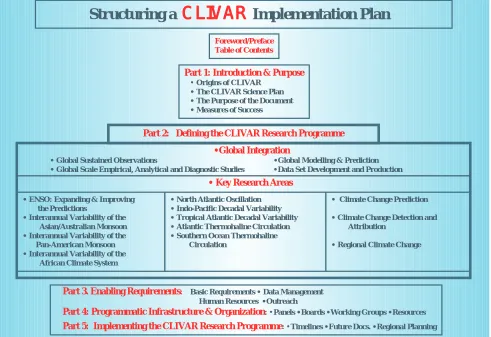
Figure 2: An example of how the CLIVAR Implementation Plan might be structured
Structuring a
C
C
C
C L
LI
L
L
IV
I
I
V A
V
V
A
A
A R
R
R
R
Implementation Plan
Part 1: Introduction & Purpose • Origins of CLIVAR
• The CLIVAR Science Plan • The Purpose of the Document • Measures of Success
Foreword/Preface Table of Contents
Part 3. Enabling Requirements: Basic Requirements • Data Management Human Resources • Outreach
Part 4: Programmatic Infrastructure & Organization: • Panels • Boards • Working Groups • Resources
Part 5: Implementing the CLIVAR Research Programme: • Timelines • Future Docs. • Regional Planning Part 2: Defining the CLIVAR Research Programme
• Key Research Areas
• ENSO: Expanding & Improving the Predictions
• Interannual Variability of the Asian/Australian Monsoon • Interannual Variability of the Pan-American Monsoon • Interannual Variability of the African Climate System
• North Atlantic Oscillation • Indo-Pacific Decadal Variability • Tropical Atlantic Decadal Variability • Atlantic Thermohaline Circulation • Southern Ocean Thermohaline Circulation
• Climate Change Prediction
• Climate Change Detection and Attribution
• Regional Climate Change • Global Integration
V
olume 2 No. 1 April 1997
CLIVAR
- Exchanges
• Initiating a study of the interannual variability of the cli-mate of the African continent, its dependence on sea surface temperature variability, and the prospects for improved prediction and effective application of climate knowledge.
Those meetings addressing the DecCen component of CLIVAR identified five areas of concentration:
• Improving the description and understanding of decadal climate variability in the North Atlantic basin involving the North Atlantic Oscillation, its possible forcing mechanisms and its interaction with the North Atlantic Gyre.
• Documenting and understanding better the decadal vari-ability in the Pacific-Indian Ocean basins: its manifesta-tion within the PNA pattern and ENSO, and the associations with decadal variability observed through-out the basins.
• Documenting and understanding better the patterns of decadal variability that have their origin in the tropical Atlantic, and their effects on the climates of NE Brazil and Africa.
• Improving the understanding of interdecadal variability and the possibilities for sudden climate change associat-ed with the Atlantic thermohaline circulation; the inter-actions with the climates of the regions surrounding the North Atlantic Basin and the connections to the south-ern ocean and other oceans.
• Investigating the variability in the Southern Oceans con-nected to the Antarctic circumpolar current and water mass transformations originating in the high latitude southern ocean.
Three areas of concentration were identified for the ACC (Anthropogenic Climate Change) component of CLI-VAR:
• Predicting, with comprehensive coupled climate models, the likely climatic change in response to future scenari-os of the emissions of radiatively active gases and aero-sols.
• Detecting anthropogenic climate change over the natural or anthropogenically modified natural variability of the climate system on decadal time scales.
• Downscaling the predictions of long term climate change to a regional level so that these predictions can be better shaped for useful applications.
The diagram on the front cover shows schematically how these various areas lie programmatically within the three components of the CLIVAR programme and within a broader phenomenological context. It is clear that there are connections between areas within a component, e.g. ENSO and the Monsoons, and from one component to an-other, e.g. ENSO and decadal variability in the Indo-Pa-cific region. Understanding the scope of variability in all
three, in turn, is important for research on the detection of anthropogenic climate change. The latter is likely to man-ifest itself not only through direct effects, e.g. a global warming, but also through changes in the intensity, time-frequency and spatial characteristics of existing phenome-na. Some of these changes may be very subtle and hence difficult to distinguish in the short term from what lies within the scope of “natural” variability.
While topics, such as those outlined above will form the principal or focussed areas of research for CLIVAR, they represent a somewhat differential approach to research on the climate system. Hence it will be essential for CLIVAR to maintain also healthy integrating programmes of global modelling and global-scale empirical, analytical and diag-nostic studies. The development of data sets and the need to work the results of the focused areas into the larger framework will be critical to an effective implementation of the programme. Figure 2 shows how an initial CLIVAR Implementation Plan might be structured to cover this global integration, the principal research areas and the prerequisites that will enable the programme to proceed. Given the breadth and complexity of CLIVAR, it is clear-ly not possible to provide, with sufficient detail in a single document, all the information necessary for implementa-tion. It is anticipated that separate implementation plans will be produced for many of the focussed research areas. Where these will involve field studies, even higher levels of planning and documentation will be required. Such fol-low-on planning documents will be developed within the full international CLIVAR framework but will need to draw heavily on the plans of national and institutional re-search programmes for their specificity.
The actual implementation of CLIVAR therefore will de-pend on scientists and national funding agencies endors-ing research areas such as those listed above and approaching them with coherent intentions for instituting programmes of observing, modelling, and experimental prediction designed to resolve the scientific questions. The Initial CLIVAR Implementation Plan will describe a range of measures that will point the way forward: bring-ing the plans to fruition will depend on the will and re-sources brought to bear by the scientists and funding agencies of the world.
will enable a final document to be published towards the end of the first quarter of 1998. Approximately six months after that, an international meeting will be con-vened to allow nations and institutions to present their plans for contributing to the implementation of the CLI-VAR programme.
We encourage and welcome again all those interested in the development of the CLIVAR Initial Implementation Plan to visit either the following Web-sites and to provide comments and suggestions at the various “feedback” inks.
http://www.dkrz.de/clivar/climp.html or
http://www.clivar.ucar.edu/climp.html
M. Coughlan
New approaches to the salinity problem
Dr. R. W. Schmitt,
Woods Hole Oceanographic Institution and CLIVAR SSG
O
ne of the persistent themes in recent efforts to under-stand ocean-related climate variability is the acute need for expanded global salinity observations. The motivation for this comes from a variety of studies:1. Historical evidence that low salinity anomalies in the upper ocean at high latitudes have “capped-off” he thermocline, preventing deep convection and limiting heat loss from the ocean. Such anomalies (i.e., the Great Salinity Anomaly described by R. Dickson and colleagues) are advected around the subpolar gyre of the Atlantic and appear to be related to decadal climate anomalies.
2. Paleoclimatic data indicating that large freshwater
dis-charges from retreating glaciers led to major changes in the strength and sites of deep-water formation in the high latitude Atlantic, thus modulating the thermohali-ne circulation, which is the primary heat transport agent in the ocean.
3. Recent observations of fresh “barrier layers” in the tropical Pacific which originate in high rainfall events and strongly impact the evolution of upper ocean strat-ification. Air-sea exchange processes are thus modi-fied by the changed surface temperature structure. 4. Model results that show a predictive value on decadal
time-scales for knowledge of the salinity field (Griffies and Bryan, 1997, Science 275 (5297), 181).
5. The potential of upper ocean salinity measurements to quantify the hydrologic cycle over the oceans, since salinity patterns reflect the surface water exchanges with the atmosphere and land. The oceans hold nearly all the free water on the planet and experience most of the evaporation and precipitation; for example, only 1% of Atlantic Ocean rainfall would be required to double the discharge of the Mississippi River! Howev-er, our knowledge of this fundamental component of the climate system remains poor.
V
olume 2 No. 1 April 1997
CLIVAR
- Exchanges
hostile, yet climatically important regions.
Fortunately, it now appears that new technology will al-low significant progress on the salinity-monitoring prob-lem, at a surprisingly modest cost. The idea is to measure temperature and salinity profiles from autonomous diving floats. R. Davis of Scripps Institution of Oceanography has shown that large numbers of ALACE (Autonomous LAgrangian Circulation Explorer) floats can be success-fully and economically employed to study the mid-depth circulation in the WOCE programme. The ALACE is a freely drifting float that rides with the currents at a select-ed depth (typically 1 km), much as a weather balloon drifts with the winds. At preset time intervals (typically one to four weeks) it pumps up a small bladder with oil from an internal reservoir which causes it to rise to the surface. Once at the surface it transmits the data to the ARGOS satellite system, which also determines its geo-graphical position. The drift at depth between fixes pro-vides an estimate of the Lagrangian velocity. Fifty to one hundred profiles can be expected over a 1-3 year lifetime. A recent innovation of Davis's group is to measure both temperature and conductivity during the rising or sinking of the instrument, which thus provides a salinity profile. The basic technology of the float has been used for sever-al years in the non-profiling ALACE used for velocity es-timates. Hundreds of ALACES have been successfully deployed in the Pacific and Indian oceans. A WOCE pro-gramme to deploy a large number of the profiling ALAC-ES in the Atlantic is just getting underway.
The use of the ALACE as a platform for salinity measure-ments is not without problems. The slow rising motion and low power availability limits the type of sensor that can be deployed. The problem of sensor drift due to bio-logical fouling may be severe in some regions and meth-ods to inhibit fouling are just being developed. However, because the float spends most of its life in a deep and cli-matically stable water mass, not subject to the near-sur-face variations forced by the atmosphere, we can use the profiles to compensate for any drifts. This option is not available for salinity sensors on surface platforms.
At Woods Hole we have begun to use the salinity profiling ALACE in the Labrador Sea with support from NOAA. Figure 1 (page 4) shows temperature and salinity profiles as well as a temperature - salinity diagram from a recently deployed float. The float has displayed good sensor stabil-ity and reveals a strong freshwater cap in this region of the Labrador Sea. The progressive cooling of the surface wa-ters is readily seen, and it is not clear whether cooling will be sufficient to allow the mixed layer to penetrate the ha-locline in this instance. But it is just the sort of informa-tion we need in order to understand the operainforma-tion of the oceanic climate system in such remote and inhospitable areas.
Some additional developments promise to make the
ALACE - type instruments even more useful. Davis and B. Owens of Woods Hole are collaborating on a gliding float that will have the ability to make transects or main-tain an assigned station. New satellite systems will permit two-way communication and higher data transmission rates, allowing shorter surface drifts and the use of addi-tional or higher accuracy sensors if desired. Changes in design in order to lower costs will allow more floats to be deployed.
Because these expendable instruments have modest costs ($10,000-$15,000), it is feasible to consider deploying large numbers of them around the globe. An array of 1,000 instruments arranged with 500-km spacing would cover the global ocean. Yet the capitalization and mainte-nance costs would be less than those of a research vessel while providing considerably more data on upper ocean heat and freshwater content than any ship possibly could! In order to make progress toward such a global salinity measurement system, a number of technical issues need to be resolved. Methods of protection against sensor foul-ing need to be proven. Data quality control systems must be developed and implemented. Continuing improve-ments in float capabilities and longevity must be sought. At present, extensive field work in the Atlantic as part of the WOCE/ACCP Atlantic Climate and Circulation Ex-periment (ACCE) includes a large number of salinity pro-filing floats. Their performance will provide a basis for the design of a future salinity-monitoring programme for CLIVAR.
[image:5.595.314.566.463.670.2]interest is the hydrologic cycle over the ocean. Both are challenging research areas with direct bearing on the cli-mate system, as he explains in the following statement: It is not widely appreciated that the mixing in the ocean is absolutely fundamental to the thermohaline overturning circulation, which is responsible for much of the pole-ward transport of heat. That is, the dense water sinking at high latitude cooling sites must be warmed and upwelled by vertical mixing elsewhere in the ocean, and the strength of the „conveyor belt” s directly controlled by the magnitude of the mixing. Discovering where and how this mixing occurs has been a major puzzle over the last three decades, since most open ocean sites display only very weak turbulence. However, my colleagues and I have re-cently found that turbulence is strongly enhanced in the deep ocean where mean and tidal flows encounter rough topography (Polzin, Toole, Ledwell and Schmitt, 1997, Science, in press). Indeed, there may to enough tidally-in-duced mixing over the mid-ocean ridges to close the heat budget of the large-scale flow, which has been a long-standing problem in oceanography. However, such mid-basin mixing zones, and the bottom intensification of mixing, pose interesting dynamical challenges to our un-derstanding of the deep circulation.
The other mixing process of interest is double diffusion, which now looms larger in importance because of the finding of a general weakness of internal-wave induced turbulence in most places (Schmitt, 1994, Ann. Rev. of Fluid Mech., 26, 255). That is, boundary forcing is an in-efficient method for mixing the interior of a stratified flu-id, and double- diffusion, which is driven by heat and salt gradients, can thrive in the extensive low-turbulence areas and appears to be dominant in frontal regions and where anomalous water is introduced into the thermocline. Re-cent model studies indicate that even a small amount of double diffusion can have a strong stabilizing effect on centennial time-scale oscillations of the thermohaline cir-culation. The goal of these mixing studies is the develop-ment of accurate parameterizations of subgrid scale processes, which will not be resolvable by models for the foreseeable future.
At the other end of the size spectrum lies my interest in the global hydrologic cycle over the ocean. This field has been long neglected; there are few direct measurements of precipitation over the sea, and evaporation can only be es-timated from the sparse collection of weather reports from ships. Yet the water flux at the ocean surface has im-portant consequences for oceanic flows due to the mass conservation constraint and barotropic and baroclinic dy-namics (Schmitt, 1995, Rev. of Geophys. 33, 1395). Giv-en the importance of the hydrologic cycle to climate (see adjoining article) and its impact on salinity distributions, the expanding capabilities for monitoring salinity, in com-bination with improved global rainfall estimates from the GEWEX programme, make this a timely period to work
towards an increased understanding of the oceanic water cycle.
R. Schmitt
ARTS: Annual Records of Tropical Systems
A PAGES/CLIVAR Initiative
Dr. Julie Cole, INSTAAR, Boulder, CO, USA
I
ntroduction:The new PAGES-CLIVAR initiative on Annual Records of Tropical Systems (ARTS) promotes the synthesis of paleoclimatic with instrumental and modelling perspec-tives to address significant uncertainties in our under-standing of tropical climate variability. Tropical ocean-atmosphere interactions provide the dominant signal in interannual climate variability, while paleoclimatic and historical evidence indicates that tropical systems also vary over periods of decades to centuries. Tropical varia-bility propagates to higher latitudes via atmospheric and oceanic teleconnections that, while relatively consistent over the past few decades, appear to have changed sub-stantially over the past century and longer. Paleoclimatic reconstructions offer the only source of information on long-term changes in tropical variability and its telecon-nections, but they require the perspective of instrumental data for calibration and sample site selection, and they de-rive a broader context from inclusion in numerical simu-lations. Paleoclimatic reconstructions provide a testbed for numerical models of the ocean and atmosphere and suggest new conceptual models for tropical variations. We believe that the combination of instrumental, paleocli-matic, and modelling approaches can provide answers to questions that cannot be otherwise resolved on the varia-bility of the tropics and its global impact beyond the most recent century.
The broad goals of this initiative are:
• an improved understanding of tropical climate variabili-ty and its teleconnections over the past several centu-ries, and
• an assessment of tropical system and teleconnection sta-bility as background climate and forcings change over longer periods.
Science priorities:
varia-V
olume 2 No. 1 April 1997
CLIVAR
- Exchanges
bility emerged, specifically of:
• the dominant tropical modes (El Niño/Southern Oscilla-tion, Atlantic “dipole”, and Australasian monsoon) and their teleconnections;
• indices of these modes and teleconnections;
• primary ocean circulation features, including upwelling systems and major currents;
• variability before recent periods (during the past few thousand to few hundred thousand years), when back-ground climates were substantially different from mod-ern.
Participants also recognized the potential to integrate in-strumental, paleoclimatic, and numerical simulation ap-proaches by applying new spatial and temporal interpolation techniques. These offer the ability to expand point reconstructions into paleoclimate fields. Recon-structed fields of tropical SSTs can be used as model boundary conditions, and the midlatitude responses can be compared with model output both for model validation and for understanding the consistency of tropical-extrat-ropical connections.
ARTS has an additional science priority in the reconstruc-tion of tropical variability during ancient periods of dif-ferent background state. Understanding the response of variability to the background state is a critical issue in un-derstanding current variability and predicting future changes; the records available through various proxies for ancient periods can make a fundamental and unique con-tribution to our understanding of tropical climate dynam-ics.
Proxy data sources
[image:7.595.95.518.140.412.2]The most appropriate sources of paleoclimatic data to ad-dress ARTS objectives will have annually precise dating (or resolution, in the case of fossil archives), sensitivity to tropical systems or their teleconnections, and a quantifia-ble climatic interpretation. Corals, tree rings, and ice cores all have demonstrably valuable contributions to make to ARTS (Fig. 1): corals offer records of tropical sea surface conditions linked to significant large-scale variability, while tree-rings and ice cores preserve records
Figure 1:
Sites where paleoclimatic research on tropical climate systems and their teleconnections is underway, using ar-chives with proven or potential annual resolution. This map includes sites where long paleoclimate reconstruc-tions have been published as well as sites where work is just beginning. In certain regions, individual sites are too numerous to identify and symbols represent regional efforts (e.g. tree-rings in North America; corals on the Great Barrier Reef).
Corals Tree-rings Varved sediments Ice Cores
Sites of current paleoclimate research on
tropical systems and their teleconnections
with proven or potential annual resolution
of the three-dimensional atmospheric response world-wide to tropical ocean-atmosphere variations. The use of tree-rings in tropical regions has been limited by lack of knowledge on species-specific responses to climate, but the success of recent work in Africa, Indonesia, and South Asia highlights the benefits possible from intensified ef-forts to identify and calibrate climate-sensitive tropical tree species. Tropical ice archives appear to be melting back world-wide - a sign of recent warming as well as a warning to sample quickly. Records from other archives may also prove valuable to ARTS, such as varved or rap-idly accumulating sediments and deep-dwelling sclero-sponges, from which thermocline histories may be derived. An upcoming workshop will explore the poten-tial of sclerosponges as climate recorders.
Implementation:
The Kauai workshop produced specific recommendations for achieving the objectives set forth. An overarching project, tentatively titled “Climate of Recent Centuries” (CRC), will provide a framework for co-ordinating objec-tives that focus on the past several centuries. In particular, this project aims to reconstruct, with seasonal resolution, fields of tropical SSTs to drive global AGCMs to simulate the climate of the past 200-400 years; these simulations should include all known forcings. Additional
reconstruc-tions of other climate indicators, including indices of dominant modes (e.g. the SOI), precipitation, ocean salin-ity, air temperature, and ocean currents, will be used to determine which aspects of the climate are reproducible in models and to validate the simulations and paleodata through intercomparison. Model output also will help identify locations for further paleoclimate data collection activities. The outcome will allow us to describe and at-tribute climate variations over time scales important to so-ciety.
This project is interdisciplinary and includes several ma-jor components:
• New field programmes
• Sample analysis and tracer calibration/validation • Data sharing and intercomparison
• Statistical analysis
• Modelling and comparisons with model output
Within the framework established by CRC, ARTS investi-gators will generate the data necessary for reconstruction of variability in many aspects of tropical climate. Work-ing groups identified geographic strategies consistent with reconstructing the major modes of variability. In the Pacific, existing samples are insufficient to reconstruct multi-century records of the major SST and moisture-convergence features, particularly those related to ENSO,
120 140 160 180 160 140 120 100 80°
A
Cool Tongue Warm Pool
100°E 120 140 160 180 160 140 120 100 80° 0
10 20 30 40°N
10 20 30 40°S
5
4
3 2 1
0 100°E
0 10 20 30 40°N
10 20 30 40°S
30
25
20
15
A
VHRR SST
(
°
C)
Annual Precipitation B
= Sites with published century-scale records ITCZ
SPCZ
Precipitation (m/yr)
2
3 4
1
1 2
3 4
Annual SST
ARTS (Annual Records of Tropical Systems)
[image:8.595.52.366.460.786.2]Prioritized Pacific Ocean Objectives
Figure 2:
ARTS participants identified a series of transects through the tropical Pacific along which coral cores should be col-lected and analyzed. These transects span the major SST and moisture-con-vergence features, which vary in intensi-ty and position during ENSO extremes. These maps also indicate the few loca-tions where published century-scale cor-al records exist. The background of the upper panel is SST from AVHRR data; the lower panel background is global precipitation from the combined MSU (over ocean) and Legates-Wilmott sta-tion data (over land) available through the on-line climate data archive spon-sored by the University of Washingtonõs Joint Institute for the Study of the At-mosphere and Ocean
V
olume 2 No. 1 April 1997
CLIVAR
- Exchanges
and the islands where corals can be collected often lack the basic logistical infrastructure needed for this field-work (e.g. dive support, access). ARTS participants pro-posed a prioritized series of cruise transects designed to efficiently sample key features of the tropical/subtropical Pacific, to reconstruct past ENSO behaviour as a funda-mental contribution to CRC (Fig. 2). A multi-investigator proposal for a portion of the first-priority transect is pend-ing as of January 1997. Additional samplpend-ing for tree-rpend-ing reconstructions to evaluate the consistency of ENSO tele-connections is also sorely needed, particularly in the sub-tropics.
In the Atlantic and Indian Oceans, significant numbers of coral cores have been collected, and a focus on analysis of existing material by individual investigators will deter-mine the needs and priorities of future coral sampling. Substantial new efforts are underway on land-based records, particularly in the Asian monsoon region: new ice core and tree ring field programmes are focusing on monsoon-sensitive sites in the Himalayas and south Asia.
Summary:
Instrumental data alone cannot provide information on decadal-centennial climate variability except at a few sites, unless one is willing to wait decades to centuries; models can predict such variability, but require validation as the processes driving long-term changes may or may not be among the processes included in the model. Pa-leoclimate data offer views into the past unavailable from other sources and offer significant advances in under-standing recent climate variability. We expect that ARTS will continue to provide a forum whereby the integration of paleoclimatic data with numerical and instrumental perspectives will lead to substantial new insights into tropical climate variability, past and future.
J. Cole
International Workshop on Monsoon Studies
Denpasar, Bali Island, Indonesia, 24-28 February
T
he First WMO International Workshop on MonsoonStudies was held in Denpasar, Bali Island, Indonesia, 24-28 February 1997. It is the first in a series of workshops to be conducted jointly under the auspices of WMO/CAS Project M1 (Research Initiative on East-Asian Monsoon) and Project M2 (Long-term Asian/African Monsoon Studies). Both projects are part of the WMO Tropical Me-teorology Research Programme (TMRP).
More than thirty papers and several invited reviews were given during the week. The main objective being the re-view of recent advances in the research on characteristics of the monsoon and its predictability in the various re-gions that are affected by monsoon circulation changes.
Forecasters from the regional weather services as well as researchers were informed about the latest developments in this field. Several papers addressed the theoretical understanding of the monsoon, others reviewed the stateof -the-art of numerical modelling of the monsoon, in partic-ular with a view to the potential predictability of the mon-soon and the processes interacting in the land-ocean-atmosphere system on interannual time-scales. A panel discussion focused on the social and economic impacts of the monsoon and how forecasts of monsoon variability, such as onset, breaks and active periods might be im-proved. There are clear linkages here to CLIVAR’s Mon-soon programmes and the workshop provided an opportunity for several members of the CLIVAR Mon-soon Panel to meet with the WMO/CAS Working Group on Tropical Meteorology Research to discuss opportuni-ties for collaborative activiopportuni-ties. The workshop also laid the foundation for an interdisciplinary approach to the hu-man dimension issues of monsoon prediction, which will be required if the best possible use is to be made of the in-formation provided by weather and climate services in the future.
L. Dümenil
CONAM - Conference on American Monsoon
Mexico City, Mexico, March 17-20
C
LIVAR, in co-operation with the Inter American Insti-tute (IAI), the U.S. National Oceanic and Atmospheric Administration and the U.S. National Science Foundation (NSF), co-sponsored a recent workshop on seasonal to in-terannual variability and predictability of monsoons and heat sources over the Americas and adjacent oceans. This workshop, called CONAM (Conference on American Monsoons), was held in Mexico City in March 17-20. About 40 scientists from all over the Americas were wel-comed by the chair of the organizing committee Dr. Vic-tor Magaña and the representatives of the co-sponsoring organizations. Dr. Ed Sarachik, a member of the CLIVAR SSG, summarized the status of the CLIVAR programme and its interest in promoting an initiative on American Monsoons.The chair of the scientific committee, Dr. Roberto Mechoso laid down the following objectives for the con-ference:
1. to review the current knowledge about the American Monsoons and identify outstanding scientific ques-tions;
2. to review current and planned programmes relevant to the subject and to identify the needs for the realization of these programmes;
planned programmes; and
4. to assess how CLIVAR can best contribute to, encour-age and accelerate the implementation of such a sci-ence plan.
Other specific tasks before the conference were:
• to identify in a broader context outstanding problems re-lated to American Monsoons
• to assess the extent to which a better understanding of these problems will enhance our understanding of cli-mate variability and predictability and social impacts. • to determine the most appropriate organizational
struc-tures for developing an American Monsoons initiative within the existing programmes of the IAI, CLIVAR and likely supporting national institutions.
A “white paper”, distributed prior to the conference, will be revised on the basis of the conference discussions and will serve as a valuable contribution to the Draft Initial CLIVAR Implementation Plan. The revised document will also serve as a scientific prospectus for the prepara-tion of a more detailed implementaprepara-tion plan on research into American Monsoons.
The common and different phenomena of the North-, Central- and South American Monsoons systems were ad-dressed in terms of the large- and meso-scale phenomena associated with them. It was pointed out that the strength and the variability of the American Monsoons system and its predictability is determined and limited by a number of (meso-scale) aspects, which are partly only poorly known or not resolved at all in current models, such as:
• the semi-annual cycle of precipitation
• land-surface processes (soil moisture, topography) • low level jets
• the roles of the oceanic warm pools (Atlantic, East Pa-cific).
In addition, there are several teleconnections to phenome-na in the adjacent seas. These include:
• Interannual and decadal variability of equatorial SST in Atlantic (dipole ?) and Pacific (ENSO)
• (decadal) variability in the frequency of tropical storms • large-scale midlatitude circulation anomalies
To gain more insight into the specific problems of the American Monsoons Systems the participants proposed that an international research programme should be estab-lished under the name “Variability of the American Mon-soon System” (VAMOS) with the following goals: 1. To describe and understand the mean and variability of
the American Monsoon System;
2. To investigate its predictability and to make predic-tions to a feasible extent;
3. To prepare products for applications and social im-pacts / benefits.
As VAMOS was proposed for establishment under the auspices of both CLIVAR and the IAI it will have strong linkages to various existing programmes and will be able to build on their scientific expertise and results. PACS
(Pan-American Climate Study), a part of U.S.-GOALS (Global-Atmosphere-Land-System) will be a significant U.S. national contribution to VAMOS. Different compo-nents of GEWEX (Global Energy and Water Cycle Exper-iment), such as the Global Precipitation Climatology Project, the GEWEX Continental-Scale International Project, centred on the Mississippi River Basin and the Large-scale Biosphere - Atmosphere Experiment in Ama-zonia will all have important links to VAMOS. The re-cently initiated observational moored buoy programme in the tropical Atlantic, called PIRATA (PIlot Research Moored Array in the Tropical Atlantic), as well as ongo-ing activities in the Pacific (e.g. TAO-array) will provide valuable data to help ensure the overall success of VA-MOS.
The involvement of the IAI in VAMOS will enlarge the scope of the programme in areas of applications and so-cial impacts / benefits research. The recently founded In-stitute Research InIn-stitute for Seasonal to Interannual Climate Prediction (IRI) too will serve as an additional interface between physical science and applications. The CONAM participants recommended that the CLI-VAR SSG should consider the establishment of a Pan-American Monsoon Panel to complement the existing CLIVAR Monsoon Panel, which is focusing on the Asian-Australian Monsoons. Within CLIVAR the monsoon pan-els in addition to having strong linkages with each other, would also work closely with the CLIVAR Upper Ocean Panel (UOP) and the CLIVAR/GOALS Numerical Exper-imentation Group (NEG-1).
As a joint activity, VAMOS will benefit from extensive linkages provided by CLIVAR to the international climate research community and the effective conduit provided by the IAI to bring the results of the research more rapidly and effectively to the user communities throughout the Americas. In summary, the stimulating presentations and discussions on this workshop, augur well for the estab-lishment of a new research activity on the American Mon-soons System under the aegis of CLIVAR and the IAI.
A. Villwock
Ocean observations Panel Meets in Cape Town
February 11-13, Cape Town
V
olume 2 No. 1 April 1997
CLIVAR
- Exchanges
Opportunity Programme Implementation Panel (SOOP IP) and the Global Sea Level Programme (GLOSS) Panel. In all cases, however, continued effort is required. For ex-ample, more specific sampling advice is required for mak-ing SST measurements, and better organizational arrangements are needed with the SOOP. The GLOSS and NOAA efforts, with strong OOPC input, will have the im-plementation planning for an effective sea level pro-gramme for climate in good shape; a workshop to stimulate progress will be held in Hawaii in June, 1997. The Global Ocean Data Assimilation Experiment will be a major initiative of the OOPC over the next 5-10 years. For it to be fully implemented, it would require commit-ments on the scale of FGGE, and poses theoretical and lo-gistical problems that will require novel and innovative solutions. It will be important that productive partnerships are quickly established with CEOS and the research com-munity, particular CLIVAR and WOCE, since the success of the experiment is dependent on continuing improve-ments in knowledge, computing capabilities and satellite and direct observational coverage. The OOPC-sponsored Time Series Workshop on Ocean Measurements held from 18-20 March will also provide specific recommen-dations on the direction GCOS/GOOS and CLIVAR should take on future support of time series stations. The panel reviewed current observational work in the N. Atlantic and will seek to facilitate better co-ordination among different national and institutional programmes since, potentially, the various efforts provide a valuable “pilot experiment” for in situ sampling. The Panel also discussed observing systems for western and eastern ocean boundary regions and concluded that a Background Report would be the best way to provide detailed input on this topic. The OOPC strongly endorsed the concept of a joint WMO-IOC Technical Commission with ocean cli-mate observations as its primary mission. If accompanied by appropriate rationalization of other bodies (DBCP, GLOSS, IGOSS, etc.) the effectiveness of implementing the diverse range of observing systems would be greatly improved.
The OOPC asked the Director of GCOS JPO to convey to the upcoming CMM its strong endorsement of such an ap-proach. The OOPC agreed to work with GCOS JPO in de-signing end-to-end illustrations for some of the main OOPC themes (e.g., SST, upper ocean thermal data, sea level, etc.). This would form part of the OOPC contribu-tion to the GCOS Participants meeting. The OOPC also noted the work of the GCOS Space and Data and Infor-mation Management Panels and agreed to provide com-ment and feedback as appropriate. The Panel endorsed the idea of a joint project with DIMP (Data Information & Management Panel) examining the value-adding aspects of data processing and meta-data.
N. Smith
GCOS and GTOS Combine on Terrestrial
Obser-vations for Climate
O
ver the past several years, the planning for three global observing systems has been underway: the Global Cli-mate Observing System (GCOS), the Global Ocean Ob-serving System (GOOS) and the Global Terrestrial Observing (GTOS). These observing systems must ensure that systematic observations are made of critical variables using satellite and surface-based measurement tech-niques. The identification of key, essential variables for such observations is therefore an important initial task. Although the observing systems are being developed with three distinct foci the variables identified by each are of much broader relevance because of the interactions and feedbacks inherent in the total earth systems.To ensure close co-ordination of the planning activities for climate-related issues, GCOS and GTOS established the Terrestrial Observation Panel for Climate (TOPC). Over the last two years, the TOPC has prepared a compre-hensive list of variables that will be required to detect cli-mate change, to establish seasonal and interannual variability, to validate climate models, to use with various models of the biosphere-atmosphere system, and to assess the impact of climate change. For each variable, the meas-urement units, its importance and use, and the preferred method of its measurement in-situ and from satellites have been defined producing what may be called a “varia-ble sheet”. Varia“varia-bles have been identified spanning the range of atmospheric, soil, vegetation, biochemical, hy-drological, ecological and cryospheric processes. Com-ments are invited on any aspect of the variable list, which can be accessed on the world wide web through the GCOS home page URL
http://www.wmo.ch/web/gcos/pub/top_vr_1.html Please return your comments via the web to the GCOS Joint planning Office or send your comments to:
Josef Cihlar, Chairman
Terrestrial Observation Panel for Climate Canada Centre for Remote Sensing Ottawa, Canada K1A OY7
E-mail: [email protected]
or
Hal Kibby
GCOS Joint Planning Office World Meteorological Organization P. O. Box 2300
CH 1211 Geneva 2 Switzerland
CLIVAR- Exchanges
Newsletter of the Climate Variability and Predictability Programme (CLIVAR), published by the International CLIVAR Project Office, c/o Max-Planck-Institut für Meteorologie, Bundesstr. 55, D-20146 Hamburg, Germany, Tel.: +49-40-41173-412, Fax.: +49-40-41173-413, e-mail : [email protected]
ISSN No.: 1026 - 0471 Note on Copyright
Permission to use any scientific material (text as well as figures) published in CLIVAR-Exchanges should be obtained from the authors.
Please return to the International CLIVAR Project Office by mail or email ([email protected])
Special requests:
Change of address
Please send CLIVAR-Exchanges to the following address: Remove as recipient
Name:
(Title) (First) (M.I.) (Last)
Organization:
Mailing address:
City: State: Zip: Country:
Telephone: Fax:
E-mail address:
❑
❑
❑
✎
CLIVAR
Calendar
Date Meeting Location Attendance
Apr 28-May 2 CLIVAR SSG 6th session Washington DC, USA Invitation
May 12-15 CLIVAR NEG-1, Second Session Hamburg, Germany Invitation
May 12-14 Oceanology International 97: Pacific Rim Singapore Open
May 19-23 American Meteorological Society, Tropical
Meteor-ology Conference
Fort Collins, CO, USA Open
May 26-29 8th Global Warming - International Conference & Expo.
New York, USA Open
May 27-30 AGU Spring Meeting Baltimore, USA Open
June 3-6 Workshop on Indices and Indicators for Climatic
Extremes
Asheville, USA Limited
June 16-20 WOCE South Atlantic Workshop Brest, France Limited
Jul 1-9 IAMAS/IAPSO - Earth-Ocean-Atmosphere:
Forces for Change
Melbourne, Australia Open
Jul 7-11 Southern Ocean Workshop Hobart, Australia Limited
Jul 13-19 Seminar on Antarctica & Global Change Hobart, Australia Limited
Aug 26-28 International WCRP Conference Geneva, Switzerland Limited
Sept 1-3 Euroclivar workshop on Past Climate Data Abisko, Sweden Invitation
Sept 8-12 5th International Carbon Dioxide Conference Cairns, Australia Open
Sept 25-Oct 3 ICES Annual Conference Baltimore, MD, USA Open
Oct 6-10 22nd Annual Climate Diagnostics and Prediction
Workshop
Berkeley, CA, U.S.A. Limited
Oct 27-31 WCRP First International Conference on Reanalyses Silver Spring, MD,
USA