Abstract—This paper presents a new search algorithm for searching a list or array for two or more keys at the same time. The new algorithm is named Bond Sequential Search (BSS), and the objective in this algorithm is to search for two keys in one array using sequential search with some enhancements.
The classic sequential search is one of the easiest and cheapest search techniques, but it is very slow and requires comparing each element in the array until finding the desired element. This process is time consuming, and in the worst case when the element is at the end of the array or when it does not exist in the array, the number of comparisons required will be equal to the array size. Thus, the complexity of the sequential search will be equal to the length of the search array, and if two keys are searched this complexity will double.
There are other faster search methods used like the binary search and the parallel sequential search. However, each of the two methods has its own disadvantages; binary search requires sorting the data, and parallel search requires the use of multiple processors, and both methods will require additional cost compared to sequential search.
Bond Sequential search (BSS) introduced in this paper is based on sequential search. Simple logic gates were added to the classic sequential search in order to combine two or more searches on one cycle, which enhanced the performance of classic sequential search without any need for data sorting as in the binary search or using multiple processors as in the parallel search.
The BSS algorithm is discussed and explained in details in this paper. The BSS is also compared to the classic sequential search, and the results showed that our algorithm is two times faster than the classic sequential search.
Index Terms—Sequential search, Bond Sequential search,
Binary Search, Parallel Search.
Manuscript received July 27, 2012, revised August 16, 2012.
Omer H. Abu El Haija is with the Jordan University of Science and Technology, Irbid, Jordan (Tel:+(962)799145454
email:[email protected])
Azmi Alazzam is with the State University of New York at Binghamton, Binghamton, NY 13902, USA (Tel:(832) 206-351
email:[email protected])
I. INTRODUCTION
HE huge amount of modern era data require choosing fast searching mechanisms. Different search mechanisms have been proposed and used to facilitate the process of searching for small list items or in unsoted large databases. The best search algorithm that can be used in any search scenario is the one that save time and power without high cost calculations or hardware modifications. Determination of that best fit mechanism depends on many factors; those factors are related to list properties, searching environment and hardware specifications. The factors that are used to determine the best search algorithm are related to previse knowledge of: list order (order list vs. disorder list), searching paradigm (external vs. internal searching), size of data (small vs., large list size), and list updating (static vs. dynamic updating lists).
Sequential search is a good technique in both cases when the search list size is small and when the list is unsorted. However sequential search doesn’t have the ability to search for more than one key at the same time, unless costly parallel techniques are used, also binary search cannot be used unless costly sorting techniques were pre applied.
Many researchers have discussed the use of different searching algorithms, also discussed different techniques and modifications to enhance the searching process. Donald Knuth wrote “Searching is the most time –consuming part of many programs, and the substitution of a good search method for a bad one often leads to a substitution increase in speed” [1]. It is known that the best running time in non-parallel searching environment is when the list is in order because binary search has a complexity of Θ(log n) time which is better time than sequential that has a complexity of Θ(n) [2] .
It was also suggested that sorting process is not desirable especially when the list or array to be sorted is large in size, since sorting time will be long which will lead to slowing the searching time, increasing the search complexity and degrading the performance of the search mechanism [3] and [4]. A searching mechanism using floating point was also proposed [5]. The idea of this algorithm was based on mantissa separation inside bins, where logic instruction and masked formations can maintain significant bit. A random algorithm for multiselection was recently introduced; the searching is used to find the i-th position key, and also multi selection and quick selection were used for the same reason [6]. Although binary search is preferred than sequential search since it has less complexity but it also has its own drawbacks. It was found that Binary search is not suitable for searching in m dimension list where m >1 [7].
Multithreading could be used to enhance sequential search and can beat binary search because binary search doesn’t support frequent updates and requires time
Bond-Sequential Search (BSS)
Omer H. Abu El Haija, and Azmi Alazzam
was discussed and two scenarios were elaborated; whether in practice one can perform external selection faster than sorting, and if there is a deterministic algorithm that has the same performance of randomized algorithm.
In [10] a hint of using integers sign bit for the Boolean values was proposed. In [11] the authors suggested forming data structure to speed up the searching processes. In [5] a searching technique inside compressed data is proposed, the technique compressed the key the same way the file was compressed, then bit by bit is used to search without the need of decompression. It was also found using bit manipulation can reduce sequential search time significantly [12]. Basic and intermediate ways to use logic gates introduced [13]. A recursive sequential search was also used to improve the search speed of patterns [5].
While sequential search takes one key at once, our proposed sequential based algorithm facilitate logic gates and mask formation to combine two or more keys performing better searching, by eliminating the excluded list items and taking equality candidates. Finally the algorithm shift to normal equality comparison for candidates process, and knows if the candidate item matches one of the two keys.
Our algorithm has the ability to combine two or more key to one composite key. The composite key is used to look for two or more keys on the same time. BSS takes half cycles compared to sequential search and have better performance if two or more keys are used; making BSS superior over sequential search in most cases.
In section II BSS is discussed in more details. In section III the numerical results are shown and BSS simulation results are compared to sequential search. We find that BSS has better performance and is 100% faster than classic sequential search when we aim to search two or more keys. In section IV the conclusion is discussed, also a comparison of time complexity between sequential and the proposed BSS is shown.
II. MATERIALS AND METHODS
A. Logic formation and nondeterministic comparison for
one key
Comparison for identifiers equality has classic syntax: Left identifier == right identifier
For nondeterministic equality used by BSS both and gate, or gate, and classic equality are used.
The nondeterministic equality for single non composite key has two phases
Phase 1: The choice of candidate is done by applying and gate, between key and test item, let’s have key k and item b to compare, our comparison equation is:
K and b
Phase 2: next is testing equality between phase 1 result and candidate so when the comparison of (phase1 results == b) returns true then b are candidate and it has a solution where A = {b==k, b==0} and b ϵ A
b==k solution take place when the candidate is equal to the key
b==0 solution happen when the candidate fail, and this solution appears in rare cases .
B. Logic formation and nondeterministic comparison with
composite key
The steps for comparing more than one key on the same process are:
1. We use or gate to combine source keys ka, kb to one composite key kc, where kc = ka or kb 2. We test element b to find candidate q,
If b and kc = b, then we have candidate q, where q = kc and b with solution set
A={q==ka, q==ka, q==kb, q==0} and q ϵ A. 3. We test candidate q for classic equality within solution set {q=ka, q=kb}, if q matches one of the deserved keys, else if no one of the deserved keys are identical then we exclude this candidate.
C. BSS algorithm assumption
To understand the algorithm in details let us have some assumptions:
ka,kb two different keys that we want to look for D is a list of items that we want to look in n is the index of last item of D
i is the index of i th item
For classical sequential search ka must be compared with all D items figure 1, then the same procedure is done for the kb is done figure 2 consuming 2n cycles.
For BSS we combine both keys in a composite key kc = ka or kb
Then we test for candidate for all D items using If (kc and D[i]) ==D[i]
[image:2.595.304.510.493.602.2]For every candidate we find we try to test if it is identical with one of the compound keys, if it is identical then we reach our goal to find first item, else if it is not identical we exclude this candidate.
Fig. 1. Sequential search key ka comparison with all list items.
[image:2.595.304.512.642.747.2]D. BSS algorithm pseudo code seqsearch(D, first, last, key) while key=D[first] and first< last first <- first + 1
if key=D[first] return first
Bss(D, first, last, keya, keyb, keyapos, keybpos) Keyc <- keya or keyb
Done <- 1 i <- first
while done>0 and first < last if keyc and D[first] = D[first]
if keya = D[first] done <- done -1
keyapos <- first
keybpos <- seqsearch(D, first, last, keyb)
else
if keya = D[first] done <- done -1
keybpos <- first
keyapos <- seqsearch(D, first, last, keya)
first <- first +1
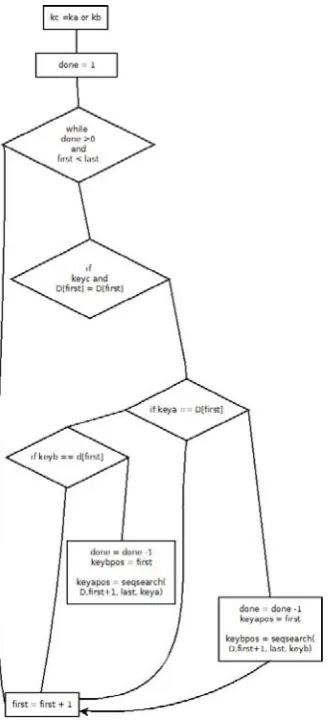
[image:3.595.49.214.402.763.2]The flow chart for the proposed BSS algorithm is shown in figure 3.
Fig. 3. BSS flow chart diagram.
E. Complexity analysis
Table 1 shows a comparison between three known searching algorithms: sequential search, BSS, and Binary search. For non sorted, dynamically changed arrays BSS beats binary search because binary search needs costly sorting, on the other hand BSS beats sequential search in most cases because it needs half of sequential search in most cases( see table 1.)
Table 1: running time comparison complexity for an array of size n with two keys searching
sequential BSS Binary search Comparison 2N N 2 log n
Sorting - - n log n .. n2
searching in the worst case 2n N 2 log n
total running time 2n N
2log n + n log n ..
2log n + n^2
Skipping non candidates and the ability to combine more than one key is what gives BSS the speed over classic sequential search.
III. RESULTS
To study the effectiveness of BSS with respect to sequential search algorithm, we chose to build a simulator using educational version of Microsoft C sharp, under Microsoft windows 7 multi-threading environment.
Many other authors tried to compare their results due to time, but it looks more applicable for multi core and multi-threading environment to compare due count of comparisons, so we counted comparisons for both BSS and sequential search, those comparisons are done to many different data sizes and for both cases; when key exist and when key does not exist.
Microsoft C sharp has integrated development environment under win32, it looks similar to C++ language. We ran our simulator on Intel T2300 running at 1.66 GHZ with 2GB RAM. Our simulation results showed that the performance of BSS is twice the performance of sequential search for the term of comparisons count as illustrated in table 2, table 3, table 4, table 5, figure 4, figure 5, and figure 6.
Bss is superior compared to sequential search, and it looks clear in figure 4, and figure 5.
Figure 4 is visual representation for comparison between sequential search and BSS on many data sizes and key sizes, when the key exists. The data that is shown here is same when key found on tables 2,3,4,5
Table 2: BSS and sequential search small data size results
2^ data size 4 5 6 7
data size 16 32 64 128
2^ keys 1 2 3 4
Keys 2 4 8 16
seq found/compares 6 33 196 1,119
bss found/compares 5 33 136 777
seq ! found/compares 30 124 504 2,032
bss ! found/compares 16 64 255 1,020
FOUND TIME 0.83 1.00 0.69 0.69
!FOUND TIME 0.53 0.52 0.51 0.50
found performance 1.2 1.0 1.4 1.4
!found performance 1.9 1.9 2.0 2.0
Table 3: BSS and sequential search medium data size results
2^ data size 8 9 10 11
data size 256 512 1024 2048
2^ keys 5 6 7 8
Keys 32 64 128 256
seq found/compares 4,358 18,157 66,735 267,166
bss found/compares 2,762 10,695 37,339 143,265
seq !
found/compares 8,160 32,704 130,944 524,032
bss !
found/compares 4,083 16,359 65,484 262,027
FOUND TIME 0.63 0.59 0.56 0.54
!FOUND TIME 0.50 0.50 0.50 0.50
found performance 1.6 1.7 1.8 1.9
[image:4.595.46.274.62.252.2]!found performance 2.0 2.0 2.0 2.0
Table 4: BSS and sequential search above medium data size results
2^ data size 12 13 14
data size 4096 8192 16384
2^ keys 9 10 11
keys 512 1024 2048
seq found/compares 1,032,530 4,261,386 17,252,084
bss found/compares 565,598 2,262,795 8,775,585
seq ! found/compares 2,096,640 8,387,584 33,552,384
bss ! found/compares 1,048,328 4,193,799 16,776,200
FOUND TIME 0.55 0.53 0.51
!FOUND TIME 0.50 0.50 0.50
found performance 1.8 1.9 2.0
[image:4.595.305.556.65.278.2]!found performance 2.0 2.0 2.0
Table 5: BSS and sequential search large data size results
2^ data size 15 16 17
data size 32768 65536 131072
2^ keys 12 13 14
Keys 4096 8192 16384
seq
found/compares
67,368,857 267,854,212
1,067,384,476
bss
found/compares
34,189,460 135,939,450
538,662,587
seq !
found/compares
134,213,632 536,862,720
2,147,467,264
bss !
found/compares
67,106,824 268,431,363
1,073,733,633
FOUND TIME 0.51 0.51 0.50
!FOUND TIME 0.50 0.50 0.50
found performance 2.0 2.0 2.0
!found performance 2.0 2.0 2.0
Fig. 4. Comparisons count for both BSS and sequential search when key exist.
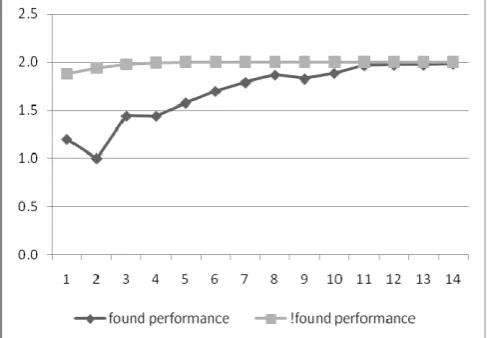
[image:4.595.40.546.502.688.2]The performance in both cases, when key exists and when it doesn’t exist is shown in figure 6.
[image:5.595.47.293.111.280.2]Also in figure 6 BSS shows that the proposed technique is twice the speed of sequential search in most cases.
Fig. 6. Speed performance of BSS over sequential search in both cases when key exist and when key doesn’t exist.
IV. CONCLUSION
In this study we proposed a novel searching algorithm that is based on logic instructions, masked formation, and sequential search. Comparison for equality of two identifiers has classic syntax:
Key Identifier1 == test identifier Key Identifier2 == test identifier
For mask formation and logic gates we combine two keys:
Combined identifier = identifier 1 or identifier 2
And then one comparison is done between combined identifier and searching identfier3.
Masked formation and logic gates comparison way is not used mostly, because of its nondeterministic equality, but it is a good way to skip the non-candidates which is the reason of using it in this research.
Although BSS does two comparisons after finding candidates in some cases while sequential search has no candidates comparisons and find equality directly with classic comparison, but BSS is faster, because it can ignore all cases that doesn’t belong to candidate set, by one comparison for finding candidate of two keys at the same time, while classic sequential search do two comparisons. BSS is more applicable than sequential search and if we only compare running time for two keys; BSS is ∑sipi where sequential search is 2∑sipi, where si is the size of data and pi is the size of keys we want to find. In the future work we will try to discuss multi-key version of BSS, also a paralleled version will be a good idea to see and compare the performance of BSS on parallel.
ACKNOWLEDGMENT
Thanks to my dad’s soul for the knowledge he gave to me, my mom for giving me much care, my family for love, and all references for their valuable works that helped me to do this paper.
REFERENCES
[1] D. E. Knuth. The Art of Computer Programming: Sorting and Searching, volume 3. Addison-Wesley,Reading, Mass., 3rd edition, 1998.
[2] Thomas H. Cormen, Charles E. Leiserson, Ronald L. Rivest, and Clifford Stein. Introduction to Algorithms. McGraw-Hill, 2nd edition, 2001.
[3] Andrew C. Yao. Should tables be sorted? J. Assoc. Comput. Mach., 31:245–281, 1984.13
[4] Lila Kaghazian, Dennis McLeod, Reza Sadri, Scalable complex patern search in sequential data,Acm, 2008
[5] Edleno Silva de Moura , Gonzalo Navarro , Nivio Ziviani , Ricardo Baeza-Yates, Fast and flexible word searching on compressed text, ACM Transactions on Information Systems (TOIS), v.18 n.2, p.113-139, April 2000
[6] M. H. Alsuwaiyel. A random algorithm for multiselection. Discrete Mathematics and Applications,16(2):175–180, 2006.
[7] G. Franceschini and R. Grossi. No sorting? better searching! In Proceedings of the IEEE Symposium on Foundations of Computer Science, 2004.
[8] Haboush, A. and S. Qawasmeh, 2011. Parallel sequential searching algorithm for unsorted array. Res. J. Applied Sci., 6: 70-75. 2011 [9] J. F. Sibeyn. External selection. Journal of Algorithms, 58:104–117,
2006.
[10] Udi Manber and Gene Myers. Suffix arrays: A new method for on-line string searches. SIAM, Journal on Computing, 22(5):935–948, October 1993.
[11] J. Ian Munro and Hendra Suwanda. Implicit data structures for fast search and update. Journal of Computer and System Sciences, 21(2):236–250, 1980.
[12] John H. Reynolds, Using bit manipulation to reduce sequential search times, Journal of Computing Sciences in Colleges, v.17 n.2, p.263-270, December 2001