CPW Fed Double T-Shaped Array Antenna with
Suppressed Mutual Coupling
A. DANIDEH1, A. A. Lotfi NEYESTANAK2*
1Department of Electrical Engineering, Islamic Azad University (IAU),
Science and Research Branch, Tehran, Iran
2Department of Electrical Engineering, Islamic Azad University,
Shahr_e_Rey Branch, Tehran, Iran E-mail: [email protected], [email protected]
Received November 6, 2009; revised December 11, 2009; accepted January 16,2010
Abstract
A compact CPW-fed double T-Shaped antenna is proposed for dual-band wireless local area network (WLAN) operations. For the proposed antenna, the -10 dB return loss bandwidth could reach about 25.5% for the 2.4 GHz band and 5.7 % for the 5 GHz band, which meet the required bandwidth specification of WLAN standard. To reduce the mutual coupling and get high isolation between two dual-band antennas, we proposed the novel electromagnetic band gap (EBG) structures. When the EBG structure is employed, a -13dB and -30dB mutual coupling reduction is achieved at 2.4 and 5.2 GHz. It shows that the features of small size, uniplanar structure, good radiation characteristics and small mutual coupling are promising for multi-input multi-output (MIMO) applications.
Keywords:CPW, T-Shaped Antenna, WLAN, MIMO, Mutual Coupling
1. Introduction
Wireless communications, especially the wireless local area network (WLAN) communication, have evolved at astonishing rate during the last decade. Therefore, design of broad dual and multi-band antennas with low-profile, lightweight, flush mounted and single-feed to fit the lim-ited equipment space of the WLAN device has gained increasing demands. Coplanar waveguide (CPW) trans-mission lines have been widely used as feeding networks with slot antennas. CPW lines have many useful design characteristics such as low radiation leakage, less disper-sion, little dependence of the characteristic impedance on substrate height, and uniplanar configuration. They also allow easy mounting and integration with other micro-wave integrated circuits and RF frequency devices. Dual- band operations have become very important in wireless local area network (WLAN) applications. CPW-fed an-tennas for wireless communications have been discussed by many authors for dual-band operations.
The demand for high speed and high quality data trans-mission in communications has been rapidly increasing .This requires the effective utilization of the limited channel bandwidth. At the same time, multi-input multi-output
(MIMO) systems have also received significant attention for their ability to increase the channel capacity.
A novel and simple printed dual-band with two dif-ferent sizes T-shaped antenna which generates two sepa-rate resonant is proposed in [1].
Since WLAN antennas are usually required on broad bandwidth and small antenna size, researchers have stud-ied monopole structures with dual resonant modes [2–4]. A new CPW-fed T-shaped monopole antenna with a trapeze form ground plane and two parasitic elements for WLAN/WiMAX dual mode operation is investigated in [5].
The CPW-fed G-shaped planar monopole antenna with dual band operation is a good choice for WLAN application [6]. For WLAN operations we can use the dual-band slot antenna with compact size [7]; this an-tenna can be easily integrated with other RF front-end circuits.
[8] explains a novel dual-band patch antenna on mag-netic substrate for WLAN application. The dual-band operation is obtained by inserting a pair of L-shaped slots.
Using two-tapered patch with different slopes, a slot between them, modified feed and a slot in the ground plane, the impedance band width can be increased [9].
The mutual coupling or isolation between closely packed antenna elements is important in a number of applications. These include systems relying on array an-tennas and more recently multiple input multiple output (MIMO) wireless communication systems which rely on multiple antennas to offer increases in capacity without the need for additional power or spectrum, compared to conventional systems [10]. Achieving low mutual cou-pling between closely-packed antenna elements is diffi-cult to achieve and has been well studied.
Printed antenna arrays suffer from relatively high level of mutual coupling between individual elements due to surface waves [11]. This becomes progressively worse with increasing frequency, dielectric constant, and sub-strate thickness.
[image:2.595.84.258.344.647.2]While mutual coupling can be reduced by increasing the inter element spacing, this results in undesirable grating lobes. Mutual coupling can also be reduced by incorporating electromagnetic band gap (EBG) structures in between array elements. The electromagnetic-band gap (EBG) structures are periodical cells composed of metallic or dielectric elements. The major characteristic
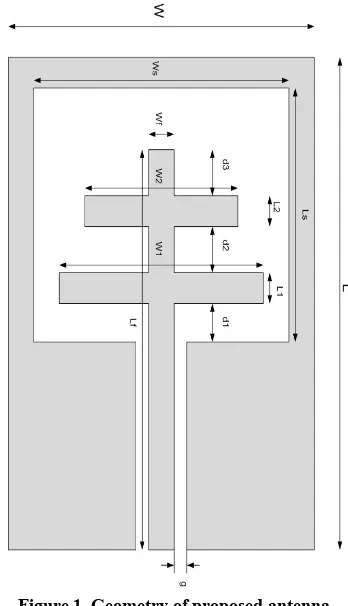
Figure 1. Geometry of proposed antenna.
Table 1. Double T-shaped antenna dimensions.
d3 d2 d 1 L 2 L 1 W 2 W 1 Ls W s Parame ters 1. 5 1. 9 5. 2 5 3 1 5 1 9 18 .5 23 Value (mm)
of EBG structures is to exhibit band gap feature in the suppression of surface-wave propagation. Electromag-netic band gap (EBG) structures show the characteristics of forbidding the propagation of electromagnetic waves in certain frequency range and this has been applied in antenna designs [11]. One of the applications is to reduce the mutual coupling between antennas [12], in which the EBG structure is put between two antenna elements and a much higher isolation is obtained.
In this paper, we propose a novel CPW-fed double T-Shaped antenna with simple structure and compact size. These antennas can be tuned to cover the 2.4/5.2 GHz WLAN bands. A multi feed 2-element planar an-tenna array with the same size is placed on a 78mm × 28.5mm substrate whose thickness is 0.5 mm and dielec-tric constant is 3.38.We also explore the effect of the proposed planar EBG structure in the mutual coupling reduction and suppression surface-wave between antenna arrays. The mutual coupling between adjacent elements with and without the EBG structure is simulated and compared.
2. Antenna Geometry
[image:2.595.313.535.451.701.2]
The geometry and parameters of the antenna with double T-shaped stub are shown in Figure 1. The antenna is etched on Rogers RO4003 substrate with a thickness of 20 mil (0.5 mm) and dielectric constant of 3.38. The size of the ground plane is W= 23.5mm × L=28.5 mm. The slot has a length Ls = 18.5 mm and width Ws = 23 mm.
(a)
[image:3.595.64.282.75.342.2](b)
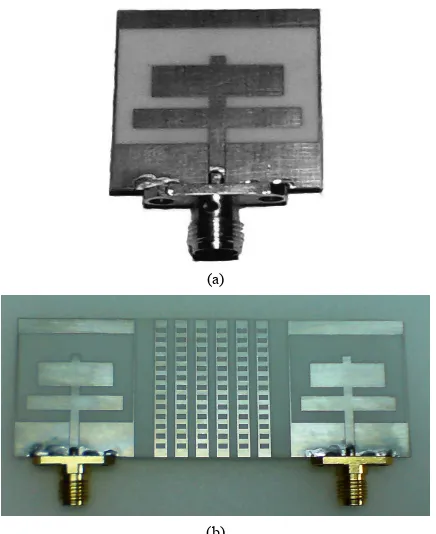
Figure 3. Photograph of the antennas a) Single antenna b) Array antenna using EBG.
Table 2. EBG structure dimensions for Double T-shaped antenna.
j2 j1 Wi Wb Xb Xa
Parameters
1.8 1 2.5 1.6 1 1.75
Value (mm)
Figure 4. Simulated and measured return loss of the pro-posed antenna.
The antenna is excited by a 50Ω microstrip line with double T-shaped tuning stub. The width of the 50 Ω mi-crostrip line is Wf =1.75 mm and the gap of the CPW line is g=0.1 mm. The double T-shaped tuning stub is located at the center of the slot, where the antenna is symmetrical along the center, x-axis. Detail dimensions and location of the T-shaped tuning stubs are d1= 2.5mm, d2=1.9mm, d3=1.5mm, L1=3mm, L2=5mm, W1=19mm and W2=15mm. A series of typical dimensions are pre-sented in Table 1.
The proposed planar EBG structure with its geometri-cal parameters and the geometry of multi-feed 2-element planar antenna array is shown in Figure 2, the size of array is 78mm × 28.5mm, is placed on a substrate whose thickness is 20 mil (0.5 mm) and dielectric constant is 3.38, the distances between the adjacent elements are 31mm, is smaller than quarter wavelength.
The dimension of the EBG structure was 23 mm × 28.5 mm. The EBG structure is fabricated on a 0.5mm thick substrate with relative permittivity 3.38. In this case, 6 columns of metal are used, with an equivalent space 1.6mm, and each element of this metal consists of 13 rectangular slots (slits) etched on it. This structure will be low profile, light weighted and cheaper. The pla-nar EBG structure was used in between a two-element planar antenna array to study its effect on antenna mutual coupling and surface wave. In fabrication, the distance between the antenna and the EBG surface is 4 mm. These dimensions are obtained after performing and op-timization. The dimensions of EBG structure are pre-sented in Table 2.
The photograph of the fabricated single and array an-tenna with EBG structure is shown in Figure 3.
3. Results
[image:3.595.56.288.407.573.2]The antenna performance was investigated by simulation via HFSS software. Figure 4 shows the measured and simulated return losses of the proposed antenna.
Figure 5. The effect on return loss due to the change of L2.
[image:3.595.309.537.428.612.2]Figure 7. The effect on return loss due to the change of W2.
(a)
[image:4.595.59.286.77.209.2](b)
[image:4.595.60.285.225.458.2]Figure 8. Electric current distribution over the substrate surface a) 2.45 GHz b) 5.2 GHz.
Figure 9. The effect on coupling due to the change of j2.
[image:4.595.320.530.239.604.2]The obtained -10 dB return loss are 600 MHz (2.05– 2.65GHz) and 500 MHz (5.1–5.4GHz), corresponding to an impedance bandwidth of 25.5% and 5.7 % with re-spect to the appropriate resonant frequencies. Obviously, the achieved bandwidths can cover the WLAN standards in the 2.4 GHz (2.4–2.484 GHz), 5.2 GHz (5.15–5.35 GHz)
[image:4.595.58.286.496.627.2]Figure 10. Mutual coupling with and without EBG structure.
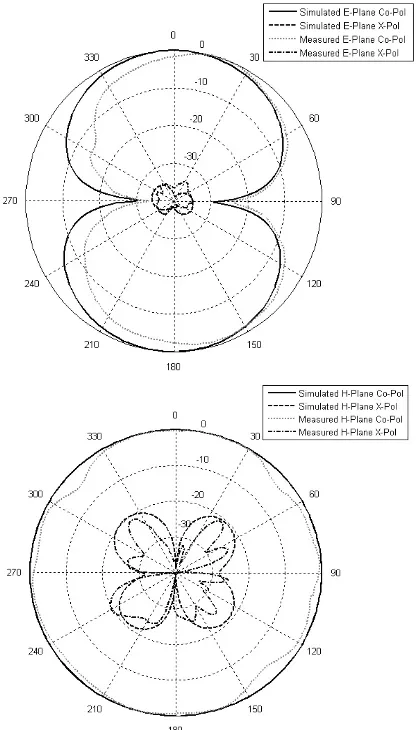
Figure 11. Radiation patterns of proposed antenna at 2.45 GHz.
and 5.8 (5.725–5.825) GHz bands.
In order to reduce coupling, an EBG structure is incor-porated between two antennas. It is observed that the EBG structure demonstrates a band stop characteristic, which is enough to thoroughly eliminate the high order mode. The EBG structure not only successfully sup-presses higher order modes, but also increases the im-pedance bandwidth. The planar EBG dimensions (j1 and j2) are chosen to be (1 and 1.5 mm), respectively, and one parameter is changed at a time while the others are kept constant.
[image:5.595.64.281.331.698.2]Figure 8 shows the HFSS simulated current distribu-tions of the 2*1 array antenna at 2.45, 5.2, GHz with EBG structures. EBG structures acts like a LC filter which re-jects any undesired frequency range. This behavior is more studied in Figure 8. The electric current distribution over the substrate is plotted in presence of the EBG structures. Perusing currents distribution, it can be under-stood that with EBG structure, we decrease current dis-tribution and reduce antenna’s coupling.
Figure 9 shows the effect of changing j2. The rectan-gular slits etched in the metal are basically used to
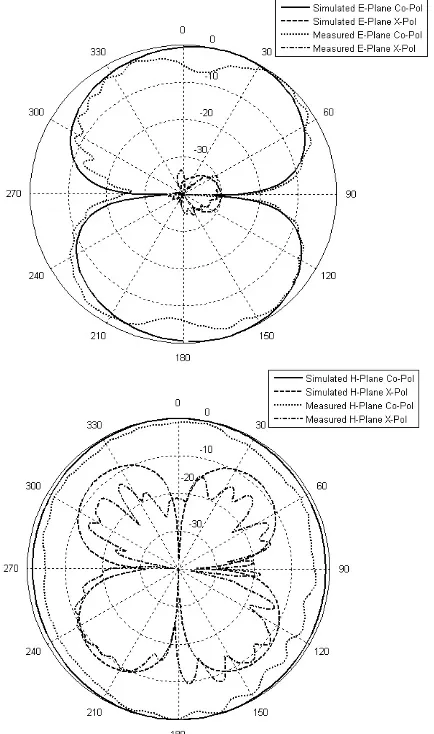
Figure 12: Radiation patterns of proposed antenna at 5.2 GHz.
reduce mutual coupling between radiating elements, therefore the length of 1mm and width of 1.8 mm for slits in the metal is given best result of S12 with -46 dB and -58dB at 2.4 and 5.2 GHz.
The mutual coupling for the antenna arrays with and without the EBG structure is shown in Figure 10. It is evident that the proposed EBG structure can help achieve a significantly low level of mutual coupling. Measured mutual coupling (S21) with EBG structure are -46 dB and -58dB at 2.4 and 5.2 GHz. In addition, measured mutual coupling (S21) without EBG structure are -34 dB and -27dB at 2.4 and 5.2 GHz, (respectively.) This proves that the surface wave is suppressed.
The generation of surface waves decreases the antenna efficiency and degrades the antenna pattern. Since the EBG structure has already demonstrated its ability to suppress surface waves, the planar EBG structures are inserted between antenna arrays to reduce the mutual coupling.
The radiation characteristics of the proposed antenna have also been studied. Figure 11 to Figure 12 show the measured radiation patterns for the E and H-plane pattern including both Co- and Cross-polarization at 2.45 and 5.2 GHz for the proposed antenna.
4. Conclusions
A CPW-fed antenna with double T-shaped stub has been proposed for the 2.4/5.2 GHz dual-band WLAN opera-tions. The antenna has characteristics of compact size, a simple structure, good omni directionality and the multi-feed 2-element planar antenna array formed with the compact CPW-fed antennas has satisfied input return loss bandwidth and good radiation patterns. In addition, a prototype of the EBG structure along with an array of two element antenna were fabricated and tested. The EBG structure is inserted between the antenna elements to reduce the mutual coupling and surface wave suppres-sion. Therefore, it is an ideal option for MIMO applica-tions in compact portable devices.
The measured impedance bandwidths are 25.5% at the lower frequency band of 2.4 GHz and 5.7% at the upper frequency band of 5 GHz for the desired bands.
5
. References
[1] Y. L. Kuo and K. L. Wong, “Printed double-T monopole antenna for 2.4/5.2 GHz dual-band WLAN operations,” IEEE Transactions on Antennas and Propagation, Vol. 51, No. 9, September 2003.
[2] L. Zhang, Y. C. Jiao, G. Zhao, Y. Song, and F. S. Zhang, “Broadband dual-band CPW-Fed closed rectangular ring monopole antenna with a vertical strip for WLAN operation,” Microwave and Optical Technology Letters, Vol. 50, No. 7, pp. 1929–1931, 2008.
[4] W. C. Liu, “Broadband dual-frequency CPW-fed antenna with a cross shaped feeding line for WLAN application,” Microwave and Optical Technology Letters, Vol. 49, No. 7, pp. 1739–1744, 2007.
[5] Y. Y. Cui, Y. Q. Sun, H. C. Yang, and C. L. Ruan, “A new triple-band CPW-fed monopole antenna for WLAN and WiMAX applications,” Progress in Electromagnetics Research M, Vol. 2, pp. 141–151, 2008.
[6] C. W. Liu, “Optimal design of dual band CPW-fed G-shaped monopole antenna for WLAN application,” Progress in Electromagnetics Research, PIER 74, pp. 21–38, 2007. [7] W. Ren, “Compact dual-band slot antenna for 2.4/5 GHz
WLAN applications,” Progress in Electromagnetics Research B, Vol. 8, pp. 319–327, 2008.
[8] E. Wang, J. Zheng, and Y. Liu, “A novel dual-band patch antenna for WLAN communication,”Progress in Electromagnetics Research C, Vol. 6, pp. 93–102, 2009.
[9] R. Zaker, C. Ghobadi, and J. Nourinia, “A modified microstrip-fed two-step tapered monopole antenna for UWB and WLAN applications,” Progress in Electro-magnetics Research, PIER 77, pp. 137–148, 2007. [10] R. D. Murch and K. B. Letaief, “Antenna systems for
broadband wireless access,” IEEE Communication Magzine, Vol. 40, No. 4, pp. 76–83, April, 2002.
[11] F. Yang and Y. Rahmat-Samii, “Microstrip antennas integrated with electromagnetic band-gap (EBG) struc-tures: A low mutual coupling design for array appli-cations,” IEEE Transactions Microwave Theory Tech-niques, Vol. 51, pp. 2936–2946, October, 2003.