Safety Management in Construction Sites – Fall from Height
1,2
Department of Civil Engineering, Thiagarajar College of Engineering
---***--- Abstract- Construction work is a hazardous land-based job.
In developing and undeveloped countries, Construction activities has been increasing over the past few years. With an increase in this type of work occupational fatalities have increased. The accidental statistics data provided by Occupation Safety and Health Administration (OSHA) for US. In India, there is no standard statistical accident data for construction Industry. In construction activities, the major hazards for workers are Falls from heights, Scaffold collapse, Electrocution, Trench collapse, Failure to use proper personal protective equipment and Repetitive motion injuries. From the preliminary study, identified the level of adaption safety measure in the local construction industry through questionnaire survey. Most of the construction sites are failed to adapt the safety measure. The most common fatalities are caused by the fatal four accidents. They are falls, being struck by an object, electrocutions, and being caught in between two objects. The focus of study is on the occupational safety management of workers in the construction site and to identify the top hazards in the construction site for the workers. One third of the construction accidental death caused by fall from height. Fall is the one of major hazards in the construction site. Fall accidents are majorly caused by unsafe act, unsafe working condition and communication barriers. To identify the types of fall hazard and the causes of fall hazards through questionnaire survey. Preparing the checklist, based on the types and causes of fall accidents. From the use of check list, monitoring the site safety through suitable automation technique.
Keywords - Safety Management in Construction, Fall from height in construction, construction safety, safety on site, Statistics data of construction accidents.
I.INTRODUCTION
The National Skill Development Corporation’s (NSDC) published a report in 2013-14, that shows the workforce should involve in the construction and real estate sector nearly 76 million by 2022. From these, 97 percent of workers are likely to have no training before they do the job, according to National Sample Survey Office’s findings.
Construction work is a hazardous land-based job. In India, 48,000 occupational fatal accidents occur. Especially, 38 fatal accidents take place every day in the construction sectors. Overall, workplace deaths are twenty times higher in
India than UK. So, we should manage the labours in construction site. That will reduce or eliminating the accident in the site.
An unsafe act is an act of doing something that has potential to cause injury, loss or a serious accident. An unsafe condition is one in which the physical layout of the work location and the status of the tools, equipment and/or materials are in violation of contemporary safety standards. However, nearly 60,000 fatal accidents happen at construction sites worldwide (International Labor Organization 2005). This equates to approximately one fatal construction accident every ten minutes. Accident don’t just happen, they are caused by unsafe acts, unsafe conditions or both.
II. LITERATURE REVIEW
and the lack of communication between workers and the site in-charge (Maznan, 2010). Thus, it is important to reduce occurring of fall hazards as the fall fatalities are higher in the construction sector. The typical measures such as training, fall protection systems, enforcement of Acts and regulations, safety awareness and fall prevention campaign, workplace inspection and effective safety management system can mitigate the fall hazards in a construction site (Occupational Safety and Health, 2014).
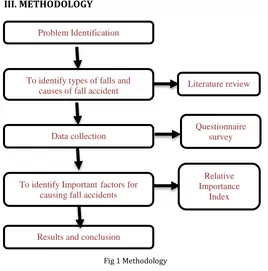
[image:2.612.32.300.207.478.2]III. METHODOLOGY
Fig 1 Methodology
PROBLEM IDENTIFICATION
In construction industry, the top accident was caused by fall from height. That was identified to study various sources like Occupational Safety and Health Administration, newspaper, government related statistics as well as getting experts feedback. From that, fall is the most dangerous hazard in the construction industry.
TYPES AND CAUSES OF FALL ACCIDENTS
From the literature and some safety standards and manual’s, identified the types of falls and causes of fall accident in the construction site (Chong Hui Liy,2016). The following are the types of fall occurred in the construction site during working. They are,
Fall from roof, Fall from scaffolding, Holes in flooring,
Fall from ladder,
Falling from aerial lift form,
Falls from building girders or other structures.
The causes of fall accident mainly classified by three main components shown in table. They are,
Unsafe act of the persons, Unsafe working conditions, Communication barriers.
DATA COLLECTION
From the above table, to identify the major type of fall accident occurs frequently in the construction site and to identify the importance factors that will causes the fall accident in the site through questionnaire survey. The
Causes of accidents
Unsafe act Failed to use / wear
PPE
Improper use of PPE Attitude of the
worker
Improper positioning and posture during working
Using defective PPE Used defective
construction machineries (Tower
cranes, etc)
Unsafe working
condition Poor house keeping Unprotected sides and edges
Working at crowded space
Working at high level
Bad weather
conditions
Communication barriers Unclear of
information
Poor line of
communication among safety officer and employees Language barriers Poor understanding
of signage
Problem Identification
To identify types of falls and causes of fall accident
Data collection
Relative Importance
Index Questionnaire
survey
Results and conclusion
Literature review
To identify Importantfactors for
questionnaire was using 5-point Likert scale. The objective of conducting a questionnaire survey in this study is to identify the importance factors to causes fall accident based on 1) Unsafe act, 2) Unsafe working condition and 3) Communication barriers.
The questionnaire survey was conducted through online sites and phone calls. Nearly, 20 respondents participated in the survey. Respondents are EHS exports having nearly 10+ years experiences, site engineers, safety managers, Deputy project managers.
DATA ANALYSIS
The data received from the questionnaire was analyzed by Relative Importance Index (RII) method by using MS excel, to determine the top fall types and relative importance of i) the factors causing the fall accident on the bases of Unsafe working conditions; and ii) important factors based on Unsafe act iii) important factors causing fall accident based on communication barrier.
RII = (5N
1+ 4N
2+ 3N
3+ 2N
4+1N
5) / (AN)
Where, W = weights given to each factor by the respondents and will ranges from 1 to 5 where ‘1’ is less significant and ‘5’ is extremely significant. A = highest weight (i.e. 5 in this case), N = total number of respondents, N1 = No of respondents for strongly agree, N5 = No of respondents for strongly disagree.
IV. RESULTS AND DISCUSSIONS
RANKING THE TYPES OF FALL
[image:3.612.313.576.68.356.2]The following the result obtained the top ranked types of fall and top ranked causes of fall accidents from the analysis.
Figure 2 RII for types of fall
RANKING THE CAUSES OF FALL ACCIDENT
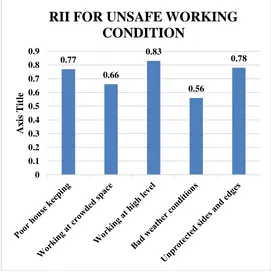
Figure 3 RII for Unsafe working condition 0.78 0.83
0.62
0.81
0.53
0.68
0 0.1 0.2 0.3 0.4 0.5 0.6 0.7 0.8 0.9
RII
TYPES OF FALL
RII FOR TYPES OF FALL
0.77
0.66
0.83
0.56
0.78
0 0.1 0.2 0.3 0.4 0.5 0.6 0.7 0.8 0.9
Ax
is
T
it
le
[image:3.612.312.583.413.686.2]0.71
0.62 0.71
0.635 0.644 0.622 0.56 0.58 0.6 0.62 0.64 0.66 0.68 0.7 0.72 RII UNSAFE ACT
[image:4.612.32.569.35.707.2]RII FOR UNSAFE ACT
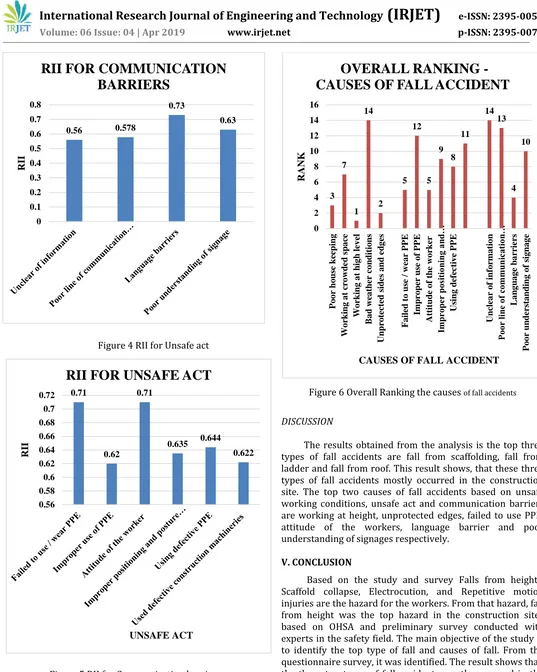
Figure 4 RII for Unsafe actFigure 5 RII for Communication barriers
Figure 6 Overall Ranking the causes of fall accidents
DISCUSSION
The results obtained from the analysis is the top three types of fall accidents are fall from scaffolding, fall from ladder and fall from roof. This result shows, that these three types of fall accidents mostly occurred in the construction site. The top two causes of fall accidents based on unsafe working conditions, unsafe act and communication barriers are working at height, unprotected edges, failed to use PPE, attitude of the workers, language barrier and poor understanding of signages respectively.
V. CONCLUSION
Based on the study and survey Falls from heights,
Scaffold collapse, Electrocution, and Repetitive motion injuries are the hazard for the workers. From that hazard, fall from height was the top hazard in the construction sites based on OHSA and preliminary survey conducted with experts in the safety field. The main objective of the study is to identify the top type of fall and causes of fall. From the questionnaire survey, it was identified. The result shows that, the three top types of fall accidents mostly occurred in the3 7 1 14 2 5 12 5 9 8 11 14 13 4 10 0 2 4 6 8 10 12 14 16 Po o r h o u se k ee p in g Wo rk in g a t cr o wd e d spa ce Wo rk in g a t h ig h lev el Ba d we a th er c o n d iti o n s Unp ro te cte d sid e s a n d e d g es Fa il ed to u se / w ea r PP E Im p r o p er u se o f PP E Attitu d e o f th e wo rk er Im pr op er p os itio nin g an d … Us in g d efe c ti v e PP E Uncle a r o f in fo rm a tio n Po or li ne o f co m m u n ic atio n… La n g u a g e b a rr ier s Po o r u n d er sta n d in g o f sig n a g e RANK
CAUSES OF FALL ACCIDENT
OVERALL RANKING -
CAUSES OF FALL ACCIDENT
0.56 0.578
0.73 0.63 0 0.1 0.2 0.3 0.4 0.5 0.6 0.7 0.8 RII
and fall from roof. As well, the results show top two causes of fall accidents based on unsafe working conditions, unsafe act and communication barriers are working at height, unprotected edges, failed to use PPE, attitude of the workers, language barrier and poor understanding of signages respectively. The overall top three ranked causes of fall accident in the construction are 1) working at height 2) Unprotected sides and edges and 3) Poor housekeeping.
Recommendation
From the identified top types of fall and causes of fall accident in construction site, creating a checklist. Preparing checklist based on the types of fall and causes of accident and the checklist will be more concrete on top type of fall and importance factors for causing a fall accident. The checklist will be focusing on the identification of the requirement that can be inspected in the site. Identifying the suitable automation technique like mobile application integrated with BIM, UAV, etc., in site safety monitoring and creating protocol for that technique.
REFERENCES
1.
ADSI (Accident Deaths and Suicides in India) – website and app.2.
Bureau of labour statistics.3.
CPWR – A center for Construction Research and Training.4.
David Daniel York et al, (2018), “Fatal injuries among Hispanic workers in the U.S. construction industry Findings from FACE investigation reports” Journal of Safety Research5.
Dilipkumar Arvindkumar Patel and Kumar Neeraj Jha (2017), “An estimate of fatal accidents in Indian construction”, Association of Researchers in Construction Management, Vol 1, 577-586.6.
Human Resource and Skill Requirement, published in 2013-14.7.
ILO (International Labour Organization) – Website8.
Improvement of national reporting, data collection andanalysis of occupational accidents and diseases – ILO
9.
Maznah, M. (2010), Speech During Opening Ceremony ofMBAM Annual Safety Conference. Subang, Petaling Jaya.
10.
NCRB -http://ncrb.gov.in/StatPublications/ADSI/adsimainpage. htm
11.
NPTEL–IIT,KANPURhttps://nptel.ac.in/courses/105104161/21.
12.
Occupational Safety & Health Challenges in Construction Sector – RPG group of company Report.13.
Roseneia Rodrigues Santos de Melo et al, (2017) “Applicability of unmanned aerial system (UAS) for safety inspection on construction sites”, safety science.14.
Siti Halipah Ibrahim et al, (2016) “Causes of FallHazards in Construction Site Management”, International Review of Management and Marketing Vol 6 Special Issue (S8) ,2016.