Bachelor Thesis
The Influence of Decentralization and Power Sharing on
Service Delivery in Fragile States: A Case Study of Iraq
Silvan Nesat Lange (s1853082)
4th July 2018
Joint Degree Public Governance across Borders (BSc)
University of Twente and Universität Münster
Abstract
Table of Contents
1 Background ... 1
1.1 Case Selection and Relevance ... 2
1.2 Research Questions ... 3
2 Theory ... 4
2.1 Fragmentation and Diffuseness of Public Institutions ... 4
2.2 Service Delivery in Fragile States ... 5
2.3 Decentralization and Service Delivery ... 7
2.3.1 Effects of Decentralization on Service Delivery ... 8
2.3.1.1 Allocative Efficiency ... 8
2.3.1.2 Electoral Incentives ... 8
2.3.1.3 Corruption ... 9
2.3.1.4 Government Inefficiency ... 10
2.4 Power Sharing and Service Delivery ... 10
3 Conceptual framework ... 12
3.1 Fiscal decentralization ... 13
3.2 Administrative Decentralization ... 13
3.3 Political Decentralization ... 14
3.4 Power Sharing ... 14
3.5 Public Service Delivery ... 15
Answer to the First Sub Research Question ... 15
4 Data & Documents ... 16
4.1 Methodology ... 17
5 Analysis ... 18
5.1 The Iraqi Context since 2003 ... 18
5.2 From an Authoritarian to a Fragile State ... 19
5.3 Decentralization in Iraq ... 21
5.4 Power Sharing in Iraq ... 23
Answer to the Second Sub Research Question ... 25
5.5 Service Delivery in Iraq ... 27
5.5.1 Case Study of the Water sector ... 30
5.5.1.1 Governance Structure ... 31
Answer to the Third Sub Research Question ... 33
6 Conclusion ... 34
6.1 Summary of the Empirical Findings ... 34
6.2 Answer to the Main Research Question ... 35
6.3 Strengths, Weaknesses and Recommendations for Further Research ... 40
8 References ... 41
1 Background
Within the broader topic of service delivery in fragile contexts, this research focuses on Iraq, a country marked by sectarian violence, terrorism and general insecurity, which lead to an exceedingly fragile situation for the state and its inhabitants.A defining feature of fragile states is the restricted access to public services (Baird, 2010) as a result of violent conflicts, the breakdown of social order, flawed political institutions, and corruption. Those factors contribute to an unstable environment and accordingly create a shaky foundation for effectively delivering public services (OECD, 2008).
Especially people struck by economic deprivation and violence suffer from the absence of public services. A lack of basic security, health services, water services, and education means a lower quality of life and potentially creates grievances among the affected population, which contributes to a lack of state legitimacy. Effective service delivery in turn cannot only bring advantages to people in unstable situations but also improve their perception of the state. Once the public sector becomes more efficient in delivering basic services, citizens who benefit from the improvements start attributing legitimacy to the state (Brinkerhoff et al., 2012). For this reason, a growing number of non-governmental, non-governmental, and international organisations works to improve service delivery in fragile states.
A large amount of publications identified excessive centralization of political institutions as a cause of inefficient service delivery, and thus proposes decentralization as a suitable measure to bring considerable advantages for the effectiveness of a country’s public sector (Azfar et al., 1999). The World Bank (2016) supports this point by asserting that decentralization has downright positive effects on service delivery in general. Although the Iraqi political system is characterized by on-going decentralization efforts, the public authorities in charge of providing services are experiencing a general decline (World Bank, 2017a). Violent conflicts lead to the destruction of basic infrastructure as well as a shortage of trained personnel and supplies for delivering services (Baird, 2010). Yet, there are more subtle processes that have an impact on the public authorities’ capacity to effectively deliver services. Corruption, inefficient allocation of resources and a lack of accountability in the national and subnational provision of services are issues that can emerge in such situations (OECD, 2008). In spite of the studies referred to above, there are still some puzzles to be solved regarding decentralization and service delivery in fragile environments. This thesis addresses the issue of the provision of services in institutional context characterized by on-going decentralization efforts and different types of power sharing mechanisms.
Therefore it is of interest to investigate the status of decentralization and the functioning of the Iraqi political institutions, including power-sharing mechanisms, in order to assess the implications for the state’s service delivery. While in stable environments the interaction between the political and administrative systems is mostly well ordered and relies on clear rules and regulations, this might not be the case in fragile states. Uncertainty about procedures, lack of information and corruption are only few of the issues with negative consequences for the link between the political and the administrative domain. Thus, the aim of this research is to develop an explanation of how decentralization and power-sharing mechanisms in the Iraqi political system are designed and how they shape the public authorities’ capacity and effectiveness in delivering services in a fragile environment.
1.1 Case Selection and Relevance
The choice to examine Iraq as a case within the broader context of service delivery in fragile environments was informed on the basis of two criteria according to Blatter and Haverland (2012):
accessibility and the theoretical and practicalrelevance of the results.
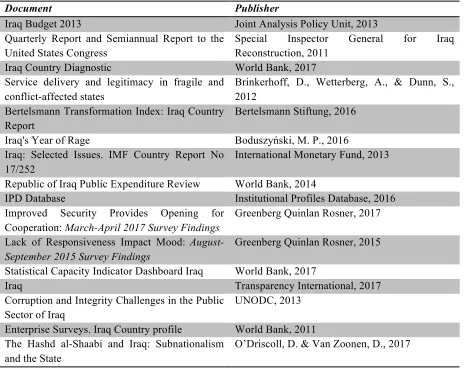
Accessibility is given due to the presence of a large number of NGOs as well as UN agencies and organisations cooperating with the US military since 2003. Hence, documents in English about the status of reconstruction efforts, project execution and other current issues are regularly published by many different organisations. Access to these sources of information is an important aspect for meaningfully answering the research questions. Despite the possibility that some documents are inaccessible because they were published in Arabic or Kurdish, the large amount of public opinion surveys and policy documents published in English by think tanks, NGOs, the World Bank, the UN, and the IMF will be sufficient for analysing the Iraqi public sector. This research also makes extensive use of works by Iraqi experts published in English.
The other aspect, namely the relevance of the results, arises from the current status of state-building efforts in Iraq, which was under authoritarian rule for decades and only in 2003 formally became a democracy in the aftermath of a US military intervention. The Iraqi political system is still in the transition process to converting into a functional democracy and its society is divided among many fault lines. Since the Iraqi political institutions are suffering from numerous issues typical for fragile states there are on-going efforts to stabilize them. Applying theories of power sharing, decentralization and service delivery in fragile contexts to the Iraqi case thus might be helpful for understanding the complex environment in which the state institutions act.
power sharing mechanisms shape the delivery of services by public agencies in fragile environments is of great importance for creating an effective public sector capable of properly providing basic services.
The study’s results are also of direct practical relevance for Iraqi policy making for two reasons. First, the state institutions had to retreat from parts of the country due to the presence of the so-called Islamic State (IS). This makes it necessary to completely reestablish a functioning public service delivery in the provinces where control was regained. Second, large parts of the Iraqi population are suffering from poverty, war, and displacement. Thus, in order to alleviate the effects the conflict has on those people and at the same time gain legitimacy, the Iraqi state institutions have to address their needs appropriately.
1.2 Research Questions
Decentralization and power sharing can have diverse effects on outcomes in service delivery and on general governance performance indicators (Azfar, 1999; Kahkonen 2001; Cammett & Malesky, 2012; Ahmad et al., 2005). However, the concrete form decentralization and power sharing mechanisms take is always country and context dependent. Thus, the following research question will be a guideline for developing an explanation of how service delivery functions in the context of the Iraqi political institutions:
What is the function of decentralization efforts and power sharing mechanisms within the Iraqi political institutions in shaping the delivery of basic public services since 2003?
The answer to this descriptive research question will provide an analysis of the functioning of Iraqi public authorities’ service delivery within a political system marked by on-going decentralization efforts and different kinds of power sharing arrangements. In order to answer this research question, three theoretical and empirical sub research questions will be posed. For a better understanding of how the governance of the public service delivery functions this study contains an in-depth analysis of the Iraqi water sector:
1. What are the known forms in the academic literature in which decentralization and power sharing affect service delivery in fragile environments?
2. What is the status of decentralization and of power sharing in the Iraqi political system since 2003?
In order to answer the main research question a longitudinal study will be conducted by analysing policy and legal documents as well as statistics by international organisations, think tanks, NGOs and the Iraqi government.
In order to establish the general framework of analysis for the research, this thesis will start with exploring theories of service delivery with specific attention to characteristics of fragile environments. Subsequently, theories of decentralization and power sharing and their impact on service delivery will be presented. It follows a conceptualization of the most important terms of this research. This section will provide the answer to the first sub research question by describing the positive as well as negative effects decentralized approaches to institutional design, and power sharing mechanisms within the institutions, can have on a country’s governance performance in general and service delivery in particular.
The analysis chapter starts with a description of the Iraqi political context since 2003 and continues by analysing the country’s state of fragility. The section on the general Iraqi context will be followed by an assessment of the current status of decentralization efforts, i.e. to what extent powers and responsibilities have been devolved from the central government to subnational levels. Also the formal and informal power sharing arrangements within the political and administrative institutions will be explained. The answer to the second sub research question will close this section. After having assessed the status of decentralization and power sharing mechanisms, an analysis of the country’s service delivery with a particular focus on the water sector will be conducted. This analysis provides the answer for the third sub research question.
Finally, the main research question will be answered in the concluding section of this thesis. The empirical findings provided by the answers to the three sub research questions will be used for this purpose. The conclusion presents reflections for further research as well as recommendations for practice.
2 Theory
The theoretical section of this thesis starts with defining state fragility, thereby highlighting its most important aspects. After having assessed the theoretical dimension of service delivery in fragile contexts, the possible positive and negative impacts of decentralization and power sharing on service delivery are examined. This section closes with answering the first sub research question.
2.1 Fragmentation and Diffuseness of Public Institutions
they serve [,] can invoke the authority of the state and can, thereby, enforce their decisions” (Frederickson et al., 2016: 73). However, the institutions’ decisions, aims and preferences are not clearly ordered, but diffuse and fragmented. Especially in the context of post-conflict societies with unstable institutional settings, on-going decentralization efforts, and power sharing mechanisms the consequence can be unclear responsibilities and a lack of capacity, which in turn leads to an increased fragmentation of the institutional landscape. According to the Garbage Can Model, problems are steadily “flowing” into public institutions, where decision makers have to find solutions. Yet, this is not an ordered process but one of chaos in which currently available solutions are simply matched to the appearing problems. “In the absence of structural constraints, simultaneity, not means-ends sequences, determines the linkages between problems and solutions and between institutional answers and questions” (Frederickson et al., 2016: 85). Institutional answers to problems are always on an ad hoc basis, depending on the currently available solutions. Institutions that are marked by informal power sharing mechanisms such as quotas can be even more fragmented because members of different social groups have aims and preferences that are opposed to each other.
The political and administrative spheres of a country’s institutional arrangements are marked by a principal-agent relationship between elected politicians and non-elected bureaucrats. This relationship is hierarchical with the elected politicians trying to shape the context of the bureaucrats’ work in their favour by passing laws and regulations (Frederickson et al., 2016). The two premises of this theory are that there is a goal conflict between principals and agents, and that the latter have an informational advantage over their principles (Waterman & Meier, 1999). The relationship between the political principals and the administrative agents can be more complicated in contexts where decentralization is still in progress. The hierarchy between federal politicians as well as subnational politicians on the one hand and bureaucrats working in the subnational and federal ministries on the other hand might be more diffuse in a changing environment for decision making authority.
Hence, the contexts in which politicians and bureaucrats operate are not clearly ordered and the institutional preferences, aims, decisions, and relationships are characterised by diffuseness and fragmentation. In contexts of power sharing arrangements and on-going decentralization efforts the institutional setting might be even less ordered.
2.2 Service Delivery in Fragile States
state structures lack political will and/or capacity to provide the basic functions needed for poverty reduction, development and to safeguard the security and human rights of their populations”. This definition focuses on the lack of capacity or political will by states to implement policies that benefit their citizens. Although it is relatively established and accepted by most development agencies and organisations (McLoughlin, 2009) a more comprehensive definition, which also incorporates other aspects of fragility, is necessary. The Centre for Research on Inequality, Human Security and Ethnicity (2010: 1) defines fragile states as “states that are failing, or in danger of failing, with respect to authority, comprehensive socioeconomic entitlements or governance legitimacy”. This definition again stresses the state’s failure to provide economic benefits to its citizens but at the same time adds the dimension of state legitimacy. Putzel (2010: 2) found a more concise definition declaring the key characteristic of a fragile state as its “failure […] to exercise a monopoly over the legitimate use of force”. As will be seen later, this aspect of state fragility is particularly applicable to Iraq where a number of irregular armed groups exercise considerable influence in parts of the country.
A number of constituting elements of state fragility crystallize from the above-presented definitions. First, a lack of legitimacy in the eyes of its citizens challenges the very foundation of the state. Second, the absence of the state’s monopoly over the legitimate use of force may nurture violent conflicts, as non-state armed groups are less restricted to extend and retain their influence. Finally, the lack of capacity and political will of the state prevents an improvement of its citizens’ living conditions in general and economic standing in particular. The latter factor is especially important when analysing the political-administrative link of a country. A lack of capacity or political will by a state leads to either a flawed implementation of policies or even their complete absence. This situation has serious repercussions for the state’s service delivery, which becomes ineffective or is simply not present.
behaviour by employees of the public sector or service providers is less likely to be detected.
Two further factors that limit the effectiveness of service delivery are longer periods of violence that lead to the destruction of equipment as well as the inaccessibility of the affected areas by the state. Vaux and Visman (2005: 10) highlighted that “service delivery is closely associated with conflict and may be one of the main causative factors in the minds of certain combatants“. Thus, conflicts in fragile environments are often about access to public services by the state. When those conflicts emerge in multi-ethnic countries it is possible that they acquire an ethnic dimension. The result can be the exclusion of parts of the population on the basis of ethnicity, sect or political affiliations (Parvanello & Darcy, 2008). Vaux and Visman gave the example of the distribution of water wells by the government in northern Nigeria and how this can lead to social tensions between different groups. The state is able to “use service delivery as a way of winning hearts and minds, or it may seek to deny such services to sections of the population that it considers troublesome“ (Vaux and Visman, 2005: 10).
To conclude, service delivery can be ineffective or absent because of economic constraints and a lack of administrative capacity as a result of state fragility. Especially the poor who are either simply disregarded or cannot afford to bribe officials in charge of service delivery suffer most from this situation. If an ethnic or religious component adds to this, large parts of the population of fragile states can be excluded from the services. Thus the universal and equitable delivery of services is often impeded. This happensbecause the state is unable to exercise a sufficient degree of supervision over service providers, parts of the national territory are inaccessible due to armed conflicts, or as part of a targeted policy of exclusion of social groups.
Decentralization might be an appropriate measure for mitigating the adverse effects of state fragility on service delivery. In the following section, the theoretically known advantages and disadvantages of decentralized service delivery will be described.
2.3 Decentralization and Service Delivery
Decentralization can have a wide range of effects on a country’s governance performance, thereby affecting the service delivery by public authorities directly or indirectly. There is a rich body of theoretical and empirical literature about whether the consequences of decentralization are rather positive or negative, and an assessment must be made in each individual case. However, as Bardhan (2002) has noted, a large part of the literature on decentralization focuses on the US, and thus on a country with a different institutional setting than most developing or transitioning countries. This is probably even more the case in countries that find themselves in fragile circumstances because of violence, extreme poverty and flawed state institutions. Therefore, while applying the theoretical framework to the case, one has to keep aspects of fragility in mind in order to make a meaningful analysis.
2.3.1 Effects of Decentralization on Service Delivery
In the following section the theoretically possible effects of the decentralization of political institutions on a country’s service delivery will be described. Those are allocative efficiency of subnational governments, electoral incentives for politicians striving to be re-elected, possibly more or less
corruption within the institutions and government inefficiency.
2.3.1.1 Allocative Efficiency
To begin with, the decentralization of a political system, and particularly of fiscal matters and service delivery, can lead to a more efficient allocation of resources. Since local governments are closer to the inhabitants of the different jurisdictions, they have more complete information than a distant central government could have. Therefore, the expectation is that they are better able to adjust the delivery of public services to the demands in their locality (Goel, 2017). Another factor that increases the allocative efficiency of public services is the so-called yardstick competition between local governments and bureaucracies. This effect occurs when citizens are able to compare the performance of their local government with governments in neighbouring jurisdictions. After having evaluated their performances citizens can decide to either stay in their current jurisdiction or move in order to use the services of another, more effective local government (Tiebout, 1956; Salmon, 1987). As local governments are aware of the possibility that inhabitants, and thus taxpayers, could move to other jurisdictions, they have to provide services that match the wishes and needs of the residents, thereby increasing the overall efficiency of the national public service provision. However, the inhabitants of countries in fragile situations might face the issue of restricted mobility. In this situation, “alternative service providers such as private firms and NGOs are potentially important in providing exit options” (Azfar et al., 1999: 3).
2.3.1.2 Electoral Incentives
accountability of local politicians as opposed to politicians of the central government.
“According to the electoral control mechanism, decentralization reduces the incentives for officials to divert rents and increases the probability of “bad” incumbents to be voted out of office, therefore affecting the overall efficiency of the government positively” (Adam et al., 2008: 4)
According to Seabright (1995), in centralized systems the electorate is not able to fully monitor government actions, resulting in a relatively low electoral accountability in comparison with a decentralized system. Even if the inhabitants of a province or locality perceive a government’s performance as disadvantageous for the own benefit they cannot directly hold it accountable. This is because the inhabitants of one jurisdiction are only part of a broader electorate composed of the inhabitants of all the other provinces and localities of a country. The politicians in the central government only need the votes of a majority of the overall constituency to be reelected (Hindrick & Lockwood, 2005). Thus, those politicians might not be tempted to act in the interest of any specific province or locality, or can even deliberately neglect a province in which the population is considered to be troublesome or just not part of the “right” ethnic or sectarian group. In a decentralized system, however, the inhabitants of a locality or province can directly decide if they reelect their government or not and have considerable influence on the outcome of elections. Subnational governments are ideally more oriented towards the interests of the subnational unit’s inhabitants because of the increased danger of being voted out of office as a consequence of a bad performance.
2.3.1.3 Corruption
increased, thereby improving the politicians’ performance and decreasing corruption (Fisman and Gatti, 2002; Azfar et al., 2001).
Two further potential issues of decentralizing political institutions are the danger of
overgrazing and elite capture. The former means that different levels of government have the authority to regulate the same companies, which then have to pay more bribes in return for facilitated regulation processes (Treisman, 2000). This can be especially problematic for private firms that want to invest in the affected country, and can potentially decrease the inflow of foreign direct investments. The second potential issue is the capture of subnational institutions by local elites, leading to the diversion of resources towards their benefit at the expense of the non-elite inhabitants of a jurisdiction (Shah & Thompson, 2004). According to Bardhan and Mokherjee (2000), the lower the level of government, the more prone are the institutions to capture by local elites. Also a high level of ethnic, sectarian or any other form of heterogeneity increases the possibility of such a situation to occur (Bardhan 2000).
2.3.1.4 Government Inefficiency
Stein (1998) conducted a study of decentralization efforts in Latin America. He found that although decentralization brings the government closer to the people and thus improves public service delivery according to the citizens’ demands, the state tends to be inflated in such systems. The more decentralized a country, the bigger the government, since positive effects from economies of scale in centralized systems disappear. Thus, one could conclude that more decentralization leads to less government efficiency. However, Stein (1998: 20) highlighted the possibility that “because local governments can be trusted to deliver public goods that are more in line with voter preferences, they are given more resources to manage. Hence, this result per se is no indication of inefficiency”.
Not only a bigger government, and thus higher costs for running it, but also the inability to coordinate services on the different governance levels can have a negative effect on a country’s service delivery performance (Treisman, 2000). This applies particularly to policy areas in which local and central governments have shared competences, such as education services (Shah & Thompson, 2004). Especially in developing or fragile states confusion about the responsibilities of each level can occur, which can then lead to an inefficient allocation of resources in the policy areas in question. Adding up to this issue comes that central governments usually have the advantage of attracting more qualified personnel than subnational governments, since they offer better career opportunities and tasks with less political intervention. Not only do they have better trained personnel, but also because of their size, central governments are often better able to improve their capacities through investments in technological innovations and research than smaller subnational governments (Prud’homme, 1995).
2.4 Power Sharing and Service Delivery
sectarian, tribal or ethnic lines are common practice in post-conflict societies in order to prevent a new outbreak of violence (Cammett & Malesky, 2012). Lijphardt (2012) described the “consensus” model of democracy, in which large majorities that include a wide range of groups are necessary for forming governments. Although the impact of diverse forms of power sharing mechanisms and agreements on service delivery has not been studied much some authors have published empirical and theoretical works on this topic (Cammett & Malesky, 2012; LeVan, 2011; Horowitz, 2014). According to those works power sharing influences service delivery rather indirectly by affecting the overall governance performance.
There is some reason to believe that governments of national unity, i.e. governments that comprise parties of all important societal groups, significantly slow down the legislative process and can even lead to policy stalemates and gridlocks as a wide range of, often conflicting, interests has to be accommodated (LeVan, 2011; Horowitz, 2014). This can potentially have indirect repercussions for the effectiveness of the service delivery since necessary public sector reforms and other legislative projects for improving the service delivery get stuck in the legislative process. Especially in fragile countries that have urgent needs for infrastructural improvements and the enhancement of public sector efficiency, this can be an obstacle to the economic development.
Another aspect of power sharing mechanisms, though often rather informal, can be quotas for public offices on the basis of sectarian or ethnic affiliations (Lijphardt, 1996). To our knowledge there are no works on the impact of political quotas on service delivery in Iraq. However, there is some literature on the effects of ethnic quotas on political mobilization and resource distribution by the state in other contexts. Two examples from research conducted in India shall serve here to highlight the mixed results. According to Duflo (2005) ethnic quotas can lead to the allocation of goods in favour of the ethnic kin of public officials who came into office thanks to those quotas. Yet, Dunning and Nilekani (2013) state exactly the opposite, as they did not find any evidence for preferential treatment of kin groups by officials. Thus, results regarding the preferential treatment of social groups by politicians and bureaucrats who came into office thanks to quotas are not clear.
One can expect that employment on the basis of sectarian affiliation or patronage networks instead of merit can lead to a lower quality of personnel on all levels, and thus to a lower governance performance. Planning and executing projects can become more inefficient since parts of the ministry staffs are only to a limited extent capable of adequately fulfilling their tasks due to a lack of formal education or management skills. Cammett and Malesky (2012) pointed out that such quotas can lead to administrative inefficiency as different social groups can use ministries controlled by them to block policies they perceive as disadvantageous.
certain policies to politicians or parties in a grand coalition. Second, in order to sustain power sharing agreements and thus social peace, elites divert resources through patronage networks, which significantly increases the government’s budgetary spending. LeVan (2011: 41) connects to this point by stating that power sharing is “[…] resource distribution rather than an aggregating device for formulating a shared policy agenda”.
In an empirical study Cammett and Malesky (2012) found that the aspect of power sharing mechanisms that influences the governance performance most is the electoral system. Closed-list proportional representation systems, in which citizens vote for parties as a whole instead of for individual politicians, have a positive influence on a number of governance indicators. This is because lower incentives to rely on personalistic campaigns make parties and coalitions stronger. One can “[…] expect more programmatic party politics and consequently a higher likelihood of public goods expenditures over particularistic benefits” (Cammett and Malesky, 2012: 988).
There is not much literature on the impact of formal and informal power sharing mechanisms on a country’s service delivery. However, the few works that have been published (LeVan, 2011; Horowitz, 2014; Cammett & Malesky, 2012) imply a rather negative effect due to the necessity to accommodate a wide range of interests in the political process. The potential consequences of this can range from slowed down legislative processes to undermined relationships of accountability between citizens and politicians, and to a decreased overall administrative efficiency.
3
Conceptual framework
The main concepts of this research are fiscal decentralization, administrative decentralization, political decentralization, power sharing and service delivery. The design of a country’s institutional arrangements is usually determined by law, particularly the constitution. In ethnically heterogeneous societies the bodies in charge of drafting the constitution often choose power sharing approaches so that one social group is not able to dominate the others. This is reflected in political institutions that are not characterized by simple majoritarian approaches but by the constant need to create coalitions across political parties in order to achieve policy goals. Another important choice to be taken for the design of political institutions is whether they should be centralized, and thus located at one specific locality, or decentralized, which implies the existence of a number of power centers across a country. The impact of decentralization on service delivery is a widely studied field, while the implications of power sharing have been studied with a focus on the overall governance performance.
administrative sphere are not clearly separated, potentially enable parties to take control of state institutions on all governance levels. This in turn allows party elites to distribute state resources for their individualistic purposes, and even slow down the process of decentralization itself so as to retain their powers. Thus, the service delivery performance by public institutions would suffer from such a situation.
3.1 Fiscal decentralization
An important aspect of the decentralization of government functions is the transfer of fiscal responsibilities to lower governance levels. Subnational governments and also private organisations are able to fulfil their obligations adequately when they have a certain degree of fiscal autonomy (World Bank, 2001). Sufficient revenues allow for taking decisions on expenditures for programmes and projects necessary for local or regional development. Fiscal decentralization can take several forms, in which local governments either raise taxes by themselves or receive shares of the central government’s revenues.
Fiscal decentralization rests on four main pillars (Feruglio, 2007; Martinez-Vazquez, 1999; McLure & Martinez-Vazquez, 2000). First, the assignment of expenditure responsibilities, meaning the allocation of expenditure responsibilities and obligations to sub-national governments according to the functional competences of each governance level. Second, the allocation of revenue sources, i.e. the decision from which sources the national and subnational governments receive their revenues. Third, the design of intergovernmental transfers, which is necessary since often the available revenues of local and regional governments do not match the expenditure pressures. Finally, the structuring of subnational borrowing and debt, which is necessary for determining a subnational government’s capacity to borrow either directly from capital markets or through the central government as an intermediary.
3.2 Administrative Decentralization
Administrative decentralization means the devolution of government responsibilities regarding the authority to plan and implement policies, and manage the own staffing resources (Schneider, 2003). Rondinelli (1981) categorized administrative decentralization into three forms, which can be seen as “points along a continuum of administrative autonomy” (Schneider, 2003: 38):
deconcentration, delegation and devolution.
decentralization. Delegation comes closer to real decentralization, as responsibilities and competences for planning and implementing specific policies are devolved to subnational authorities and organisations, which are not directly controlled by the central government but stand in a contractual accountability relationship to the latter. The agencies that receive authority have the technical capacity to plan and implement specific projects and programmes. Finally, devolution means the transfer of government functions to public agencies, which are part of the governmental structures but enjoy considerable degrees of autonomy. Their legal status explicitly grants them governance functions within clearly delineated geographical areas. The relationship between those jurisdictional units and the central government is neither hierarchical nor contractual but a reciprocal one, as both are part of a country’s political system (Rondinelli et al., 1983).
3.3 Political Decentralization
Schneider (2003) describes political decentralization in the terms of representation of interests vis-à-vis the state institutions. The different “systems of representation [e.g. through political parties] are bound by the institutions of the state itself, which sets the rules for representation and thus shapes what issues get politicized and how” (Schneider, 2003: 39). Local elections are the means through which citizens can articulate their locally defined interests and demands, and thus constitute the key factor of politically decentralized systems. Rodden (2004) supports this point by highlighting regional and local elections as the defining factor of political decentralization. Additionally, “popular elected officials have higher levels of policy autonomy than appointed officials and preside over larger shares of the public expenditure” (Rodden, 2004: 488). This point again reveals the interrelationship between the three different forms of decentralization.
Treisman (2007) published a more detailed classification of political decentralization separating it into three different forms. First, decisionmaking decentralization, which is present when subnational governments have the competence to make decisions in certain policy areas. Second,
appointment decentralization, meaning a decentralized system in which subnational officials are elected through popular vote by the inhabitants of a jurisdiction. Third, constitutionaldecentralization, i.e. decentralized political systems in which lower tier institutions can influence decisions of the central government through veto-powers and other means. Thus, although not its only characteristic, subnational elections are an important indicator of political decentralization.
3.4 Power Sharing
degree of group autonomy for minorities (Lijphardt, 2012; Cammet and Malesky, 2012). Ethnically heterogeneous countries find themselves in different contexts with different institutional backgrounds. Different aspects according to the individual situation can be picked out of the broad menu of possible power sharing approaches. Thus, each country has a mix of arrangements in order to share power. Depending on the situation in a country it might be better to have informal power sharing agreements between elites, such as reservations for political posts or quotas in order to preserve peace, or rather rely on formal power sharing mechanisms, such as federalism or veto rights in the political system.
3.5 Public Service Delivery
Public service delivery is one of the most important functions of the modern state. It is the provision of basic services by state institutions. This can include health services, education, water and sanitation services, garbage collection and electricity. As explained in the theory section, the delivery of those services is much more complicated in fragile environments, which are marked by violence, uncertainty and the public institutions’ lack of capacity (OECD, 2008). Those institutions have changing and inconsistent preferences for action (Frederickson et al., 2016), which, in the Iraqi context, can potentially be shaped by tribal, ethnic or sectarian elites.
Answer to the First Sub Research Question
What are the known forms in the academic literature in which decentralization and power sharing affect service delivery in fragile environments?
A country’s institutional design consists of various components that constitute the framework for national political, administrative and economic processes. Two of those components are the degree of decentralization of the institutions and the power sharing mechanisms within those institutions. Both can affect a country’s service delivery in different ways.
elites keen to safeguard their position. Yet, whether decentralized service delivery brings more advantages or disadvantages, and thus is successful or not, always depends on the social and political context of a country.
Although a rather understudied field, power-sharing mechanisms also potentially have a number of effects on service delivery, though often rather indirectly. First, the presence of grand coalitions with parties representing all major social groups can lead to policy gridlock. Second, quotas for public offices based on ethnic or sectarian affiliation can lead to a decreased administrative efficiency as ministries controlled by different social groups can block each other. Collaboration or alliances across ethnic and sectarian lines are possible in countries depending on the size and political and economic significance of the groups vis-à-vis the rest of the population (Posner, 2004). However, the implications of such alliances for a countries service delivery have, to our knowledge, not been studied. Another possible effect of public sector quotas for social groups is that bureaucrats who were employed on the basis of social belonging instead of professional qualification or merit are less efficient. Results are mixed regarding preferential treatment of ethnic kin by public officials employed on the basis of quotas. Fourth, closed-list proportional representation electoral systems lead to a better governance performance than open-list proportional representation systems as the focus shifts to parties and their programmes instead of individual politicians’ achievements, which in turn increases the universal spending on public goods.
4
Data & Documents
4.1 Methodology
This longitudinal study examines service delivery in Iraq from 2003 to 2018 by applying a process tracing approach, which means “the systematic examination of diagnostic evidence selected and analyzed in light of research questions and hypotheses posed by the investigator” (Collier, 2011: 823). The relationship between the main concepts decentralization and power sharing as well as
service delivery will be gradually assessed by answering the empirical sub research questions and finally the main research question. To do so, this study makes use of the analytic induction method according to Patton (2002). It will assess to what extent predictions materialize in practice that have been derived from the theory on decentralization and power sharing as well as their influence on service delivery.
In addition to Blatter and Haverland’s criteria (2002), the choice to conduct an in-depth analysis of the Iraqi case was motivated by the country’s difficult environment for service delivery as a consequence of state fragility, which makes it an extreme case in reference to Seawright and Gerring’s case study typology (2008). Large parts of the theoretical and empirical literature on the effects of the institutional design on service delivery published so far focus on functional institutional environments, while the Iraqi context is unstable.
As a starting point, the analysis section begins with a short introduction into the political and societal background of Iraq since the US invasion in 2003, followed by a description of the causes and consequences of state fragility in Iraq. This part serves as the background for better understanding the context in which power sharing and decentralization in Iraq takes place. It follows an analysis of the extent to which the political system has been decentralized so far as well as of formal and informal power sharing agreements. After having assessed the state of fragility, decentralization efforts and power sharing mechanisms in Iraq, the answer to the second sub-research question will follow: What is the status of decentralization and of power sharing in the Iraqi political system since 2003?
The next section will be devoted to service delivery in Iraq. By making use of a range of in-depth analyses of the Iraqi public sector, it is possible to assess the current state of service delivery as well as the challenges and issues the public sector in general is facing. This section closes by answering the third sub-research question: What is the status of public service delivery in Iraq since 2003, particularly in the water sector?
Finally, the results of the former chapters will be jointly assessed in the concluding part of the analysis so as to answer the main research question of this thesis: What is the function of decentralization efforts and power sharing mechanisms within the Iraqi political institutions in shaping the delivery of basic public services since 2003?
research influence the way in which documents are analysed. During the process of data collection two strategies for countering this validity threat will be applied as proposed by Maxwell (2009). First, searching for discrepant data so as to find evidence that does not support expectations about the topic. By thoroughly analysing both supporting and divergent data it will be less likely that results going against certain preconceptions are ignored. Second, applying the triangulation strategy, meaning the collection of data and information from a great variety of sources. This includes the use of qualitative and quantitative data on service delivery and governance performance indicators of Iraqi public institutions.
5
Analysis
The following section will analyse the Iraqi context based on the theoretical framework as developed before. It starts with a brief description of political developments in Iraq since the US invasion in 2003, followed by an assessment of the country’s fragile context. Subsequently, an analysis of decentralization efforts, power sharing mechanisms, and the country’s service delivery follows, concluding with the answer to the second sub research question.
5.1 The Iraqi Context since 2003
Iraq stretches from the desert of the Arabian Peninsula and the Persian Gulf in the south to the mountains of Kurdistan in the north, and from the edges of the Iranian plateau in the east to the Syrian and Jordanian deserts in the west. It is a country that borders three regional powers, namely Turkey and the two theocracies Shiite Iran and Sunni Saudi Arabia, which are bitter rivals. With a population of about 39 million, and approximately 29-34 per cent Sunnis and 64-69 per cent Shiites (CIA Factbook, 2017), Iraq is central to their struggle for regional hegemony. However, Iraq is not only divided along sectarian, but also along ethnic lines. The Kurds, who make up 15-20 per cent of the Iraqi population, live in the country’s north in a polity with extensive autonomy. Ethnic Arabs constitute 75-80 per cent of the population and the remaining 5 per cent are composed of Turkmen, Yazidis and other smaller ethnic groups (CIA Factbook, 2017).
violence (just two examples are the Anfal campaign against the Kurds from 1986-89 and the draining of the marshes of southern Iraq that were inhabited by Shiite Arab tribes).
The Coalition Provisional Authority (CPA), installed by the US and its allies, was quick in completely dismantling the authoritarian structures, including the security sector. This process was termed De-Ba’athification, as it mainly aimed at high-ranking public officials and military figures affiliated to the Ba’ath party. Yet, by doing so, the complete state structures were removed and in addition to polarizing the Sunni-Shia divide it also led to the subsequent instability of the government and security forces (Sissons & Al-Saiedi, 2013). Following the unravelling of existing structures, the CPA adopted the “Transitional Law” in the beginning of 2004 in order to allow for a transition to a free-market democracy. In December 2005 a committee of the National Assembly, which had been elected shortly before and served as an interim parliament, drafted the new Iraqi constitution. Its aim was to accommodate the country’s communities and allow for participation in the political process by all ethnic and sectarian groups (McGarry & O’Leary, 2007). However, as a consequence of the US administration’s sectarian paradigm of Iraq, and the resulting policies in the time between the invasion and the election of the National Assembly (which was largely boycotted by Sunnis), sectarian identities gained importance and thus sectarian parties won most of the votes (Al-Tikriti, 2008). This situation laid the foundations for a politicization of sectarian identities in the very beginning of the existence of the new, democratic Iraqi state (Cammett, 2013), which culminated in a civil war between Shiites and Sunnis from 2006 to 2008. Also the surge of the IS in 2014 and the ease with which it occupied large swaths of mainly Sunni-inhabited Iraqi territory, including its third largest city Mosul, can be explained by discrimination and neglect at the hands of the Shiite-dominated central government (Bahney & Johnston, 2017).
5.2 From an Authoritarian to a Fragile State
Although Iraq is a formally democratic country since the Baath regime was overthrown in 2003, it is still characterized as a hybrid regime without fully developed democratic institutions (Economist Intelligence Unit, 2017). Contributing to this assessment is that Iraq finds itself in a fragile situation (Marshal & Elzinga-Marshall, 2016). One can derive three theoretical dimensions from the definitions of state fragility presented in the theoretical section. Those are a low overall state legitimacy, a lack over the legitimate use of force in parts of the country as well as a lack of political will or state capacity to improve the citizens’ economic conditions.
(Greenberg Quinlan Rosner, 2017). Also under the Shiite Prime Minister from 2014 Haider al-Abadi, whose rule was not characterized by such an extent of sectarianism as al-Maliki’s, Kurds and Sunnis did not feel fairly represented by the central government, whereas Shiites did (GQR, 2015). Moreover, Sunnis and Kurds question the army as a symbol of national unity, since 58 per cent and 60 per cent respectively see it as solely representing the Shia majority (GQR, 2017). Finally, the voter turnout in the most recent 2018 national elections was at only 44,5 per cent, which is the lowest value since Iraq became a democracy in 2003 (Alaaldin, 2018). This last point shows that although growing disillusionment with the political system and the resulting lack of state legitimacy is more widespread among Kurds and Sunnis, it seems to be a phenomenon present among the whole of the Iraqi population, including the Shiites.
In addition to a lack of legitimacy, the Iraqi state is partly not capable of effectively enforcing its monopoly over the legitimate use of force in its entire territory. After the security services had been dismantled by the CPA in 2003, sectarian militias filled the vacuum and thus became the de facto security sector in many cities and villages (Boduszyński, 2016). Especially since the fight against IS began, those militias (which are mainly Shiite) gained power as a result of being put under the umbrella of the so-called Popular Mobilization Forces (PMU), from them on receiving official support by the state. However, since the militias are now regulated by law a complete disarmament and reintegration into society as well as a moderation of their particular subnationalisms is more difficult (O’Driscoll & Van Zoonen, 2017). Thus, although IS is almost defeated the reestablishment of the state’s monopoly over the legitimate use of force in parts of the country will be a difficult and prolonged process.
disproportionately favouring the own sectarian or ethnic kin at the expense of other groups becomes the norm. Politicians are able to dominate the institutions by solely garnering support among their kin groups through the use of state resources, and do not have to pay attention to other social groups for being re-elected.
5.3 Decentralization in Iraq
Before the overthrow of the Baath regime in 2003, the Iraqi state was highly centralized. Governors of the provinces were appointed by the central government and their main task was to exercise control over the population and sporadically put down revolts (Baram, 2003). Thus, one of the first tasks of the CPA was to lay the foundation of a subsequent dispersion of authority and power. Article 4 of the Transitional Administrative Law (TAL) stated that the powers should be divided between the federal government and subnational entities (Coalition Provisional Authority, 2004). In addition to that, the CPA issued Order 71, which filled the vague provisions of Article 4 of the TAL with more concrete specifications of how the decentralization of political powers should take place.
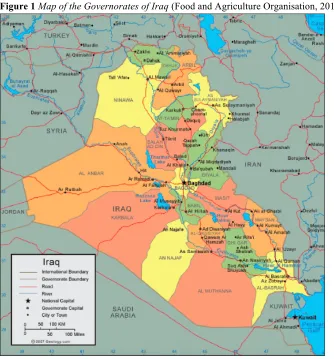
In 2005 the new Iraqi constitution came into effect by referendum and thereby replaced the CPA legal acts. Ten articles of the constitution (Article 116-125) regulate the subnational structure of the political system. The two main entities below the central government are regions and governorates not incorporated in a region (or provinces). Of the former, until now only the Kurdistan Regional Government (KRG) came into existence, which is composed of the governorates Dohuk, Sulaymaniyah, Erbil and Halabja. Although the KRG does not have responsibilities in the fields of foreign policy and national security, it enjoys extensive competences regarding public service delivery, except for water, education and health, where competences are shared with the Iraqi central government (Cravens, 2011). The federal nature of Iraq, as stated in Article 1 of the constitution, counts only towards regions,and thus, until now only towards the KRG. Regardingthegovernorates, Iraq is still a unitary state (Cravens, 2011). However, according to Article 119, two or more governorates can merge in order to form a region after having a popular vote through referendum. The layer below the regions and governorates are the districts, which represent the municipal or local level, but are only a deconcentrated branch of the central Ministry of Municipalities and Public Works (MoMPW) (World Bank, 2016). Finally, according to Article 124, the mayoralty of Baghdad (officially Amanat) has a special status, representing a governorate on its own without the possibility to merge with other governorates. Hence, the Iraqi political system is composed of four governance systems, which are the central government and regional governments, governorates, districts and the
Amanat of Baghdad (Cravens & Brinkerhoff, 2013). Figure 1 in the appendix shows a map of the Iraqi governorates including the KRG.
sixteenth governorate Kirkuk is still disputed). Within those governorates, the provincial councils are the highest legislative entities. Yet, in accordance with the subordination principle, legislative acts issued by the councils cannot contradict federal law in an exclusive area of competence of the federal government or the constitution, which have a higher position in the hierarchy of norms (Constitution of Iraq, 2005; Law 21, 2008). Apart from legislative acts, the provincial councils have to elect the governors, and jointly work on provincial budgets, which have to be coordinated with the Ministry of Finance (MoF) (Law 21, 2008). At the next lower level, the district councils have the competence to make budget plans and organize some local services (Law 21, 2008). Nevertheless, unlike provincial councils, district councils are not elected by citizens (World Bank, 2016). After years without progress, the COR passed a major amendment of Law 21 in 2013. The changes included a further formalization of the budget allocation mechanism by the central government according to the governorates’ needs. Furthermore, governorate incomes stemming from investment projects, taxes and fines as well as sales of state property were more clearly defined, and a mechanism, which provides an allocation of 5$ of the revenue of each barrel of crude oil produced within the jurisdiction of a governorate, was established (World Bank 2016).
In spite of the formal legislative acts governing the affairs of the subnational entities there are still some issues for decentralizing the political processes and institutions. As a consequence of differing interpretations of provisions from Law 21, confusions over the distribution of competences between provincial council members and staff from the regional departments of central ministries emerged (Cravens & Brinkerhoff, 2013). While the central government highlighted the term “administrative decentralization”, which would effectively mean the simple deconcentration of the federal ministries’ staffs and tasks, provincial councils stressed that they were the “highest legislative authority” in the provinces (Ottaway & Kaysi, 2012). In this sense, the central government retains the upper hand and provincial councils as well as the elected governors do not have much power. The departments at the provincial and local levels are staffed and controlled by their central ministry equivalents, hence curbing the governorates’ authority. It remains to be seen whether this situation changes in the future since the 2013 amendment of Law 21 foresees the devolution of tasks and competences of eight federal ministries, a process which is still under way (World Bank, 2016).
had only relatively small gains, while sectarian and (Kurdish) ethnic parties gained the majority of seats (Ali, 2013).
Although the governorates are dependent on the MoF for receiving their budgets, they are a step closer to fiscal independence after the amendment of Law 21. Still, the governorates’ spending constituted only 5.3 per cent of the overall recurrent government spending in Iraq in 2015 (World Bank, 2016). Even with this small amount of spending the provincial councils and governors have very little discretion due to the requirement to coordinate their budgets with the MoF. While the deconcentrated departments have to submit requests to their parent ministries, which subsequently accumulate and forward them to the MoF, provincial councils and governors have to send requests directly. This process leads to a disadvantageous position for governorate governments vis-à-vis the deconcentrated ministry departments (Cravens & Brinkerhoff, 2013). Further exacerbating the dependence of the governorates on the MoF is that the allocation of funds for the governorate investment budgets is on an ad hoc basis and does not function with a fixed mechanism. Once governorates raise taxes, fees or other sources of local funding, in accordance with the 2013 amendment of Law 21, they suffer budget allocation reductions from the central government. Yet, while income from oil makes up 70 per cent of the overall budget of the Iraqi government, revenues from other sources constitute only 30 per cent, of which taxes contribute approximately half (World Bank, 2016). Hence, although the fiscal decentralization is in progress, governorates are still restricted in their budgetary choices.
5.4 Power Sharing in Iraq
governorates to decide how they are governed, it does only allow for interference in regional affairs by the central government after explicit consent through provincial council vote and referendum.
Another important determining factor of power sharing in Iraq is the proportional representation electoral system. The direct transfer of votes into parliamentary seats leads to a fragmented party constellation and thus induces cooperation across party – and often sectarian – boundaries. This system has a high chance of leading to coalition governments composed of parties with diverging interests. Those interests have to be accommodated and parties need to share powers in the government, e.g. through the distribution of certain ministries. The direct representation of citizens’ votes is also in conformity with the constitutional requirement that all social groups are represented in the legislative branch of the political system (Constitution of Iraq, 2005). Hence, the representation of the interests of smaller ethnic groups in parliament is facilitated. In addition to being based on proportional representation, the Iraqi electoral system is characterized by semi-open lists in which citizens have to vote for parties and individual candidates on the party lists since the parliamentary elections in 2010 in order to make politicians more loyal to their voters than to the party (Al-Rikabi, 2017).
Answer to the Second Sub Research Question
What is the status of decentralization and power sharing in the Iraqi political system since 2003?
The Iraqi political-institutional arrangement consists of four governance systems: the central government and regional governments, governorates, municipalities and the Amanat of Baghdad. Regions are the only subnational units in a federal relationship with the Iraqi central state. Although two or more governorates can form a region after a popular referendum, until now only the KRG region came into existence. The 15 governorates that are not integrated into a region still do not have enough authority so as to speak of an advanced decentralization of the political system. Thus, although the legal framework provides for formal decentralization, in reality the Iraqi political institutions are still highly centralized and the decentralization of political institutions and processes evolves slowly (World Bank, 2016). This becomes especially clear when looking at the local level, where the municipalities do not have any autonomy at all and are merely deconcentrated branches of the MoMPW.
Of the three forms of decentralization, administrative decentralization has mainly taken place in the form of deconcentration. Every ministry has branches in the governorates, which exercise control over their respective areas of competence on the provincial level. Those regional offices are in a hierarchical relationship vis-à-vis the ministries, and due to unclear provisions in the relevant laws they engage in continuous turf wars with the local and provincial councils and governors, which in turn restricts the latter in exercising more authority over issues regarding their jurisdiction (Cravens & Brinkerhoff, 2013).
Also in the fiscal dimension, the Iraqi political system is still highly centralized. Investment budgets are almost exclusively allocated by the MoF and also the governorates’ budgets have to be coordinated with the ministry. An example for the broad powers of the central government is the budget cut for the KRG. Revenues transferred were traditionally at 17 per cent (El Meehy, 2017) but in the most recent budget (after the unconstitutional referendum for independence within the KRG) the budget was cut to an unspecified percentage proportional to the KRG’s population (Aboulenein & Rasheed, 2018). Considering that governorates are much less autonomous than regions, it is likely that the federal government in general and the MoF in particular have more authority and can easier control the provincial budgets.
In spite of the fiscal centralization three of the four aspects of fiscal decentralization have been partly fulfilled. First, as described above, currently eight ministries are in the process of being devolved to the provincial level, thus bringing more expenditure responsibilities to the provincial level. Until now governorates are responsible for planning and executing projects and have their own separate budget stream apart from the central ministries (Dunia Frontier Consultants, 2013). Since the spending of governorates makes up approximately 5 per cent of the overall recurrent spending of the Iraqi state, the extent of the governorate’s expenditure responsibilities is rather low. Second, the
Because of low tax revenues, the most important source of income for the governorates are profits from oil, with 5$ for each drilled or processed barrel being transferred to the governorates. Third,
intergovernmental transfers have been more formalized since the amendment of Law 21. Nevertheless they are still negotiated and on an ad hoc basis. Fourth, a structuring of sub-national borrowing and debt has not been established until now and governorates are not able to take on debt.
Regarding political decentralization only the appointment decentralization aspect has been fulfilled. The inhabitants of the jurisdiction elect provincial council members, which in turn elect the governor. Still, on the local level there are no elections and the district managements are just branches of the Ministry of Municipalities and Public Works (MoMPW). Moreover, although the elected provincial politicians formally have authority in a range of policy areas, this is not the case in reality. The interpretation of “administrative decentralization” by the central government basically allows for the control of provincial departments by central ministries. Hence, provincial councils and governors do not have much decisionmaking authority and are rather in charge of implementing decisions and projects of central authorities. Furthermore, although Article 65 of the Iraqi constitution foresees
constitutional decentralization with the establishment of a second parliamentary chamber called
Federation Council, which is composed of representatives of the governorates, this institution has not been established by law.
The second important aspect of the Iraqi institutional design are formal and informal power sharing. The formal mechanisms are regulated by the constitution, which provides for a liberal form of consociationalism with a flexible federalism in which the governorates’ populations can decide about their status. Also the electoral system serves as a basis for power sharing in the federal institutions. As a consequence of the proportional representation system citizens’ votes are directly transferred into the parliament, which leads to a large number of political parties and thus the need to build alliances and coalitions in order to form majorities. Given the wide range of, mostly sectarian, parties the electoral system induces cooperation across sectarian or ethnic lines. Moreover, the party lists are semi-open, meaning that voters can choose a party as well as individual politicians within the party list.
5.5 Service Delivery in Iraq
The following chapter provides an overview over service delivery in Iraq since 2003. It highlights the specific challenges and obstacles faced by the service-providing institutions operating in the fragile environment of Iraq. After a general outline of the provision of services, the focus will shift to the water sector. This case study will start with an introduction into challenges for the water sector since 2003 and continue by analysing its governance, including the administrative structure as well as the state of decentralization. Because of the distinct character of the KRG with its own constitution and governance system, the focus of this analysis rests on service delivery in the governorates not integrated into a region.
The Iraqi public sector is inefficient and its service delivery flawed. After years of sanctions before 2003 and continuous armed conflicts after the toppling of the Baath regime, service delivery has been negatively affected as a consequence of a generally low public sector capacity, damaged and insufficient infrastructures, inefficient institutions and correspondingly high levels of corruption. The worrisome state of public service delivery is most clearly seen when considering that 60 per cent of Iraqi households do not have access to either improved water and sanitation services, health services, at least 12 hour electricity a day or general food security (Joint Analysis Policy Unit, 2013).