ANALYSIS OF ERGONOMICS AS AN INTEGRAL ELEMENT OF ACTIVE AGING
The Catholic University Saint Vicente Martir of Valencia
ARTICLE INFO ABSTRACT
Lifestyle conditions
the aging process has led us to promote healthy and healthy life skills that encourage people over 50 years of age (P +50) to have an open and positive mentality fa
autonomy; to promote good posture habits acquired from ergonomics for optimal use of resources from one's own body.
Copyright © 2017, Silvia López Alonso. This is an open use, distribution, and reproduction in any medium, provided
INTRODUCTION
Concept of Ergonomics
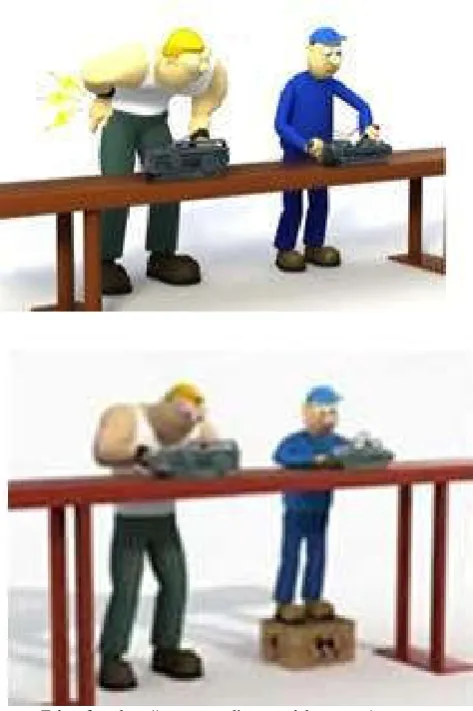
It could be acclaimed that Ergonomics came to light in the wake of the Industrial Revolution, when it became necessary for the new machines and their operators to work in harmony during the working day; thus the performance of both became the best and most effective for the company. Indeed, when work is industrialised, this harmony is not only necessary for the performance of machines and operators, but also the job security and the quality of life of the latter during each working day (Fig. 1). In this respect, Leirós states: “Ergonomics is a multidisciplinary science that studies the abilities and limitations of human beings, relevant to the design of tools, machines, systems and environments. Its aim is to make the development of human activity more secur effective, in its broadest sense. The term Ergonomics comes from the Greek words ergon, which means "work", and nomos, which means “science or study of”. We can transcribe it, then, as the "science of work" (Leirós, 2009, 35).Leirós explains that this science tackles three specialised fields: physical ergonomics, cognitive and organisational ergonomics. The physical ergonomics refers to the anatomical, physiological and biomechanical characteristics related to physical activity at work.
*Corresponding author: Silvia López Alonso,
The Catholic University Saint Vicente Martir of Valencia.
ISSN: 0975-833X
Vol.
Article History:
Received 12th September, 2017
Received in revised form 20th October, 2017
Accepted 17th November, 2017
Published online 31st December, 2017
Citation: Silvia López Alonso, 2017. “Analysis of ergonomics as an integral element of active aging 63082-63086.
Key words:
Ergonomics,
Quality of life, Active aging, Body balance, Wellbeing.
RESEARCH ARTICLE
ANALYSIS OF ERGONOMICS AS AN INTEGRAL ELEMENT OF ACTIVE AGING
*Silvia López Alonso
The Catholic University Saint Vicente Martir of Valencia
ABSTRACT
Lifestyle accelerates or slows down the involution of physical, physiological and psychological conditions that lead people to old age. In this respect, the search for actions promoting wellbeing in the aging process has led us to promote healthy and healthy life skills that encourage people over 50 years of age (P +50) to have an open and positive mentality favouring self
autonomy; to promote good posture habits acquired from ergonomics for optimal use of resources from one's own body.
open access article distributed under the Creative Commons Attribution provided the original work is properly cited.
It could be acclaimed that Ergonomics came to light in the wake of the Industrial Revolution, when it became necessary for the new machines and their operators to work in harmony during the working day; thus the performance of both became effective for the company. Indeed, when work is industrialised, this harmony is not only necessary for the performance of machines and operators, but also the job security and the quality of life of the latter during each pect, Leirós states: “Ergonomics is a multidisciplinary science that studies the abilities and limitations of human beings, relevant to the design of tools, machines, systems and environments. Its aim is to make the development of human activity more secure and effective, in its broadest sense. The term Ergonomics comes from the Greek words ergon, which means "work", and nomos, which means “science or study of”. We can transcribe it, then, as the "science of work" (Leirós, 2009, 35).Leirós explains that s science tackles three specialised fields: physical ergonomics, cognitive and organisational ergonomics. The physical ergonomics refers to the anatomical, physiological and biomechanical characteristics related to physical activity at
The Catholic University Saint Vicente Martir of Valencia.
And the cognitive and organisational ergonomics allude to the mental processes and social interaction fully studied by Psychology. And he claims: “When speaking of human performance, at least, since the middle of the 20th century, it does not usually refer to physical strength, but rather to perceptive and cognitive abilities; the study and measurement of this, as is well known, relates to the field of Psychology” (Leirós, 2009, 34).Conversely, Boatcaa and Cirjaliu suggest: “Ergonomics (also known as Human
science that focuses on guaranteeing the adaptation of the work environment to talents, human abilities and limits” (Boatca and Cirjaliu, 2014, 54) . In the Czech Republic, Ergonomics is one of the most developed scientific disciplines
Marek Bures views it as “the understanding of the interactions between human beings and other elements of a system, and the profession that applies the theory. The principles, data and methods to design with the aim of optimising human welfare and the overall performance of the system” (Bures, 2014, 3204). In the year 1949, the Society of Investigation in Ergonomics of England gave the following definition “the study of the relation between the man and his work, the equipment and the environment, and particularly an application of the knowledge of anatomy, physiology and psychology in solving problems arising from relations with the work environment” (Amaral, p.1).It is also interesting to understand the point of view of Basic Biomechanics appli
activity and sport that makes two distinctions with respect to Ergonomics: firstly, Ergonomics as a European concept and secondly, Human factors as a concept coming from the USA. Subsequently, "there is some discrepancy in defining the
International Journal of Current Research Vol. 9, Issue, 12, pp.63082-63086, December, 2017
Analysis of ergonomics as an integral element of active aging”, International Journal of Current Research
ANALYSIS OF ERGONOMICS AS AN INTEGRAL ELEMENT OF ACTIVE AGING
accelerates or slows down the involution of physical, physiological and psychological that lead people to old age. In this respect, the search for actions promoting wellbeing in the aging process has led us to promote healthy and healthy life skills that encourage people over 50 vouring self-concept, self-esteem and autonomy; to promote good posture habits acquired from ergonomics for optimal use of resources
ribution License, which permits unrestricted
And the cognitive and organisational ergonomics allude to the mental processes and social interaction fully studied by Psychology. And he claims: “When speaking of human performance, at least, since the middle of the 20th century, it to physical strength, but rather to perceptive and cognitive abilities; the study and measurement of this, as is well known, relates to the field of Psychology” (Leirós, 2009, 34).Conversely, Boatcaa and Cirjaliu suggest: “Ergonomics (also known as Human Factors) is the key science that focuses on guaranteeing the adaptation of the work environment to talents, human abilities and limits” (Boatca and Cirjaliu, 2014, 54) . In the Czech Republic, Ergonomics is one of the most developed scientific disciplines today. While Marek Bures views it as “the understanding of the interactions between human beings and other elements of a system, and the profession that applies the theory. The principles, data and methods to design with the aim of optimising human welfare and the overall performance of the system” (Bures, 2014, 3204). In the year 1949, the Society of Investigation in Ergonomics of England gave the following definition “the study of the relation between the man and his work, the t, and particularly an application of the knowledge of anatomy, physiology and psychology in solving problems arising from relations with the work environment” (Amaral, p.1).It is also interesting to understand the point of view of Basic Biomechanics applied to physical activity and sport that makes two distinctions with respect to Ergonomics: firstly, Ergonomics as a European concept and secondly, Human factors as a concept coming from the USA. Subsequently, "there is some discrepancy in defining the
INTERNATIONAL JOURNAL OF CURRENT RESEARCH
concept Ergonomics. Mainly due to its multidisciplinary nature and its multidisciplinary application. That is why, in a generic way, ergonomics could be considered as a scientific discipline, with a multidisciplinary field of activity, whose purpose is to promote and / or maintain the level of physical, psychological and social wellbeing of the subjects relating to the activity they perform and the context” (Pérez and Llana, 2015, 596).
[image:2.595.331.533.67.160.2]Taken from http://www.remediosparaadelgazar.net/
Fig. 1. Ergonomic in the workplace
The Spanish Association of Ergonomics (ESA) currently defines ergonomics as “the set of multidisciplinary knowledge applied to the adaptation of products, systems and artificial environments to the needs, limitations and characteristics of its users, optimising efficiency, safety and wellbeing” (AEE, 2016). And, according to the International Ergonomics Association: “Ergonomics (or human factors) is the scientific discipline related to the understanding of the interactions between human beings and other elements of a system and the profession that applies theory, principles, data and methods to design in order to optimise human welfare and the general system of action” (IEA, 2017) (Fig 2).In spite of the large number of studies on Ergonomics, there are three useful factors as common denominators: firstly, the search for functionality and health of people, not only in working life, but also in everyday life . Secondly, how we approach the comfort, efficiency and safety of people through interaction in their daily lives and work. And, finally, how we provide people with tools that optimise their actions in order to recover their human dimension.
[image:2.595.43.280.165.521.2]Taken from https://mejorconsalud.com/consejos-para-sentarse-bien-y-evitar-el-dolor/
Fig.2. Ergonomics in everyday life
Biomechanics of the human body and body balance
The human body has to be seen as a perfect machine in which each of its movements operate by the laws of mechanics. Respecting the order of importance, the head should be described as its centre of operations supported by a spine, positioned on the pelvis and coccyx. These joints make up the pieces that comprise the locomotor system (upper and lower extremities). Thus, “the bones can be considered as levers, the joints as their gears and the ligaments as their reinforcements. The muscles are the engine of this machine” (Guillem del Castillo and Linares, 2002, page 67). All this pieces of the body physically and materially configure the human being as an extraordinarily perfect machine. In other words, “the anatomical components of the locomotor apparatus are mechanical elements of a machine adapted to the movement. In this way we can equate each anatomical movement with a mechanical component responsible for a precise role in the development of the movement. From the function you can deduce the mechanical equivalent. It is useful to observe how the shape and the function are closely related” (Guillém del Castillo and Linares, 2002, 47).Indeed, the locomotor system is a system of levers made up of bones, muscles and joints that work in unison in a magnificent functional unit (Fig. 3). The contraction of the musclesallows the bones to move over their joints in a movement similar to that of levers. “The radiated (penniform) arrangement of the muscles allows a relatively large increase in force, while that of the bony levers offers distance of movement and speed” (Guillem del Castillo and Linares, 2002, p.51). The priority for the human being must be the body and we should be concerned, beyond the aesthetics too, with knowing how it works and that body and mind are projected in tandem respecting the times and shapes of one another.
Taken from http://www.monografias.com/trabajos34/sistema-biomecanico
Fig. 3. The human body is a system of levers
[image:2.595.311.556.621.737.2]the rest of his or her body, to know and take care of postural hygiene. Whether the body is at rest or active. There are different factors that intervene in the body posture: “total equilibrium or partial equilibria; the force of gravity; psychosomatic interaction and habits and the expression of attitudes and movements” (Guillem del Castillo and Linares, 2002, p.334). The coordination of all of them in a postural harmony; a healthy lifestyle and a positive attitude to life will be indicators of health that will favour body balance. “Physical fitness is necessary for all activities of daily life and is a positive indicator of health status” (Guillem del Castillo and Linares, 2002, p.403).
The Alexander technique and body balance
The Alexander technique (AT) is not like yoga, massage or any other type of relaxation techniques. Instead, the AT refers to a very specific way of thinking: “Freeing oneself from the established habits” of the tension that daily life provides or the bad physical habits of inappropriate postures of the individual. Back pain, neck stiffness, migraines, hypersensitivity, anguish, anxiety, stress, etc., are some of the consequences that can be magnified greatly when a delicate or difficult activity is developed. And that, thanks to the AT, they can be helped out by reeducation of the body. In this respect, the best definition of the AT is provided by Frank Jones: “the AT is a way to change stereotyped reaction patterns by inhibiting certain postural tendencies” (Gelb, 1987, p.2). Frederick Matthias Alexander, born in 1869 in Wynyard (Australia), when he was around twenty years, decided to devote himself to a career in acting and reciting. He quickly gained an excellent reputation by giving recitals, concerts and private sessions, and by producing plays. But he was prone to constant husky and hoarse voice and respiratory problems, eventually affecting the quality of his voice. Alexander was convinced that the source of his medical issues was in the way he used his voice, since he had no difficulties in everyday speech. He would stand in front of a mirror and observe the way he had to recite and how his whole body got involved. His neck became rigid because he threw his head back and, consequently, put pressure on the pharynx. He thought that was a bad habit that he had to rectify. He discovered that the voice came out better and cleaner “when he lengthened his height and placed his head in a position that he described as forward and up in relation to the neck and torso· (Gelb, 1987). Consequently, Alexander decided that his way of doing directly influenced the outcome. “This is how he began to understand that our choices regarding what we do with ourselves determine to a large extent the quality of our life" (Gelb, 1987).
Have we ever noticed how the muscles of our body are activated when we carry water in a bucket, or pour it from a 3 to 5L jug into a container with fewer litres? It would be interesting to stop, observe and analyse the movements of the muscles that intervene in these actions as well as the parts of our body that accompany them. People will be surprised that the arms are the ones that carry out the tasks, the neck muscles, the shoulders and even the legs! They are in tension. When we put our shoes on, how do we do it? Have we ever watched each other? Or do we always do it in such a hurry that we do not stop to observe the body posture we adopt when we put on our shoes? Let's do it out of curiosity, we will be surprised to witness the arms and fingers, the neck, shoulders, back, dorsal muscles, abdomen and legs are in tension. Unnecessary tension because the arms and fingers are enough to put on shoes.When
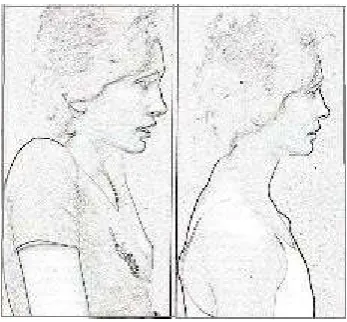
[image:3.595.346.520.243.404.2]speaking, many people do so with their head forward and upwards and / or their shoulders hunched forward by pressing on the thorax. Doing this over time you can expect to suffer from back pain, neck tension or pharynx irritation. Those annoying nodules that disfigure the voice so much, some are a consequence of talking with the neck forward. If we suggest observing it when speaking, we will discover that there is an innate synchronisation between the patterns of tension and bad coordination of our whole body with the imbalance of the head on the neck. The result is a very unnatural posture that does not manifest serenity and that Alexander defined it as a startle pattern (Fig. 4). This is precisely one of the first discoveries of Alexander: “the dynamic relationship between head, neck and torso is the primary factor in the organisation of human movement, a special relationship that he called Primary Control” (Gelb, 1987).
Fig. 4. Startle pattern (Gelb, 1987)
That is, “attention is paid to the quality of action rather than to the specific objective” (Gelb, 1987). So that in that respect, it is the individual who leads their own actions and reaches the
state of psychophysical unity.With these patterns of
internalisation of the actions of the individual him/herself, one discovers where one’s joints, bones and muscles are. And one accepts that the body is a perfect machine. At this point, the individual begins to “make use of the physical organism as, by its design, it must be used, it is often possible to change the whole attitude towards life” (Gelb, 1987). It is about creating the necessary conditions for the natural functioning of the organism, the harmony with the self (Gelb, 1987).
Active aging
When talking about old age it is necessary to distinguish between the moment in the life cycle of the individual in which their physiological, psychological and social capacities begin to deteriorate and the chronological age as a reference to point out a point in time where the individual ages. In this sense, in the research work, what is the age of onset of human aging and old age? It is affirmed that aging begins around 45 years of age, because it is when biological, physical, psychological and social changes are evident in the majority of the population at this stage of life. It also shares with other research that old age begins at 60 years of age in developing countries and 65 years in developed countries (Mendoza-Núñez, Martínez-Maldonado and Vivaldo-Martínez, 2016).According to the WHO, “after the age of 60, disability and death occur largely due to hearing, vision and mobility losses related to age and non-communicable diseases, which include heart disease, stroke, disease chronic respiratory diseases, cancer and dementia” (WHO, 2015). Due to this, the senses and reflexes of the elderly deteriorate, the character and personality change and, in many cases, the most loved relatives such as the husband or wife die and loneliness and sadness become inseparable from the elderly.
The article Happily (n) ever after: Aging in the context of
oxidative stress, proteostasis lossand cellular senescence states that aging is a complex phenomenon and its impact isincreasingly relevant due to the increase in life expectancy because aging in itself is the basis for the development of age-related diseases such as cancer, neurodegenerative diseases and type 2 diabetes. It confirms that up to now there is not a single theory that fully explains all the facets of aging. However, one of the most accepted theories is the accumulation of damages that is due, among other things, to oxidative stress. Condition that gives rise to an excessive attack of oxidants on biomolecules, which lead to the accumulation of damage over time and contribute to the functional involution of cells, tissues and organisms. In such a way that if oxidative stress persists, cellular senescence is a probable result and an important characteristic of aging (Höhn, Weber, Jung, Ott, Hugo, Kochlik, Kehm, König, Grune, and Castro, 2017).
In this sense of things, the article Redox control of senescence and age-related disease also states that the loss of oxygen (oxidative stress) in cells accelerates aging: “the production of reactive oxygen species (ROS) provides a binding signaling between the commitment of cellular senescence and several pathologies associated with age” (Chandrasekaran, Sosa, and Melendez, 2017).But we can not lose sight of the idea that each adult has of their own decline at the physiological, psychological, and social relations level.
Because of the positive or negative attitude with which one's own aging is addressed - so unavoidable - the welfare of the futurelife of each older person will depend. Recent research
published in Personality andIndividual Differences suggests
that the self-perception of aging can influence the social andcognitive commitment of adulthood. “Participants with negative perceptions at the beginning of the study were more likely to decline in social leisure activities, while participants with positive perceptions at the beginning of the study were less likely to have disengaged from cognitively stimulating activities two years later” ( Robertson and Kenny RA, 2016). For the World Health Organization (WHO), active aging is “the process of making the most of opportunities to have a physical, psychic, social well-being throughout life. The goal is to extend quality and life expectancy at advanced ages.” WHO advocates the integration of older people within the family and the community respecting their independence and facilitating all means to participate in it.
They are beneficial for health and help to strengthen the dignity of people of all ages. In this sense, he adds that “age is not an obstacle to physical activity, that its regular practice significantly improves the health and wellbeing of people because its benefits are multiple and immediate for health, including: better balance, coordination, strength muscular, flexibility, aerobic / cardiovascular resistance and a better metabolism”. (WHO, 2001).The IMSERSO declares one of the fundamental principles of active aging: "To consider as an activity all that contributes to the wellbeing of people, active aging has a preventive character” (IMSERSO, 2010). Therefore, he insists, “it must be introduced throughout life and promote participation and well-being in all stages of the life course. Aging well is everyone's concern, at all ages. It supposes quality of life, participation and increase of citizenship. And physical activity in particular plays an important role in the prevention of diseases, including cardiovascular diseases, osteoporosis, type 2 diabetes and some types of cancer” (IMSERSO, 2010).
AIMS
Identify the concept of ergonomics.
Corroborate that ergonomics allows to reach the
corporal balance.
Identify the concept of active aging.
Determine the need to cope with active aging after 50
years.
Corroborate that ergonomics is an integral element of
active aging.
METHODS
The following databases have been used for the bibliographic search: ScienceDirect, PubMed, Scielo, Ergonomos, Google academic and repository of the UCV.
Outcomes
DISCUSSION AND CONCLUSION
Considering all the studies we have on Ergonomics in the first section, we could define it as a work of science based on truths taken from Psychology that provides man with the tools and postural habits that allow him to coordinate comfort, efficiency and safety through interaction in their daily lives and work without losing their human dimension.On the other hand, if Biomechanics affirm that the factors that intervene in the corporal posture are as varied as: the total balance or the partial equilibria; the force of gravity; the psychosomatic interaction and the habits and the expression of attitudes and movements, and the AT creates the right conditions for the natural functioning of the organism. This is the harmony with the self, through the dynamic relationship between head, neck and torso. We can conclude that, Ergonomics has the purpose of which to provide people with the tools and postural habits that allow them to coordinate comfort, efficiency and safety through interaction in their daily lives and work without losing their human dimension. It is a means to achieve body balance.
For the three factors that Ergonomics has as common denominators: the search for functionality and health of people, the approach to comfort, efficiency and safety of man through interaction in their daily lives and work, and provide man with tools that optimise their actions in order to restore their human dimension. And because of the preventive nature of active aging, considering as an activity everything that contributes to the wellbeing of the elderly. We can corroborate that ergonomics is an integral element of active aging.Because of the preventive nature of active aging, it is advisable to
introduce ergonomics throughout life and promote
participation and wellbeing in all stages of the life course. And in the P +50 mainly because it is from this age when timidly and generally begin to manifest some of the signs of involution.
REFERENCES
Amaral, F. A. O que é Ergonomia? Curso de Arquitectura e
Urbanismo. Notas de aula de Ergonomia. Universidade estadual do Maranghao, 1-36.
AEA. Asociación Española de Ergonomía, 2016. www. ergonomos.es
Boatca, M. E. and Cirjaliu, B. 2014. A Proposed Aproach for an Efficient Ergonomics Intervention in Organizations.
2ndGlobal Conference on Business, Economics,
Managementand Tourism. Procedia Economics and Finance, 23, 54-62.
Bures, M. 2015. Efficient education of ergonomics in
industrial engineering study program.Social and
Behavioral Sciences, 174, 3204-3209.
Chandrasekara, A., Sosa, M. P. and Melendez, J. A. 2017. Redox control of senescence and age-related disease. Redox Biology, 11, 91-102.
Gelb, M. 1987. El cuerpo recobrado. Barcelona: Urano.
Guillén del Castillo, M. and Linares, D. 2002. Bases
biológicas y fisiológicas del movimientohumano. Madrid: Panamericana.
Höhn, A., Weber, D., Jung, T., Ott, C.., Hugo, M., Kochlik, B., Kehn, R., König, J., Grune, T., Catro, J. P. 2017. Happily (n)ever after: Aging in the context of oxidative stress,
proteostasis loss and cellular senescence. Redox Biology,
11, 482-501.
IMSERSO. 2010. Envejecimiento activo. Libro blanco del
envejecimiento.
Leirós, L. 2009. Historia de la Ergonomía, o de cómo la Ciencia del Trabajo se basa en verdades tomadas de la
Psicología. Revista de la Historia de la Psicología, 30(4),
33-53. ISSN: 0211-0040.
Mendoza-Núñez, V. M., Martínez-Maldonado, M. d. l. L. and y Vivaldo-Martínez, M. 2016. What is the onset age of
human aging and old age? International Journal of
Gerontology, 10(1), 56.
OMS. 2001. El Abrazo Mundial.OMS. (2015). Informe
mundial sobre el envejecimiento y la salud.
Pérez, P. and Llana, S. 2015. Biomecánica básica aplicada a
la actividad física y el deporte.Barcelona: Paidotribo. Robertson, D. A. and y Kenny, R. A. 2016. I'm too old for that
— the association between negative perceptions of aging
and disengagement in later life. Personality and
IndividualDifferences.http://dx.doi.org/10.1016/j.paid.2016 .03.096