USING SPRING TYPE OF WHEAT
WINTER
1,*
Nikolay Tsenov and
1
Agronom I Holding, BG 9300,
2
Dobrudzha Agricultural Institute, BG 9300, General Toshevo, Bulgaria
ARTICLE INFO ABSTRACT
The study was conducted to examine whether there are real opportunities for the creation of ultra early-winter wheat, using wheat with spring type of development. To achieve the target 24 hybrid combinations between 6 and 8 early spring winter wheat variet
With different vernalization requirement of plant populations in an artificial climate in the greenhouse winter and spring type plants habit are separate through consistent double selections. Subsequently all the deve
Combination of spring and winter wheat provides a real opportunity to obtain ultra early forms with winter wheat type of development. About 16% of the plants from cro
similar time to ear emergence (TEE) as the respective spring parent. Time to ear emergence of the spring form does not directly affect the probability of obtaining the desired early plants. The later time to ear emergence of the
hybrid combinations. The selection of a very early date of time to ear emergence using spring wheat is completely possible and unexpectedly easy to implement. However, preparation of
lines is not sufficient, because they have different grain yield. To have a high productivity must for native climate is to have a high cold resistance. It achieves much more difficult against the earlier date of ear heading date. The resul
tolerance of winter parents in every cross combination.
Copyright © 2016 Nikolay Tsenov et al. This is an open access article distributed under the Creative Commons Att use, distribution, and reproduction in any medium, provided the original work is properly cited.
INTRODUCTION
In the practical wheat breeding in Bulgaria the using of spring wheat has been very limited, in terms of published studies (Popov et al., 1985; Panayotov et al.,
important reason for this is the drastic reduction of drought and winter resistance of hybrid materials that it causes
1997; Braun et al., 2001). Back in the 80s som
various hybrid combinations of winter cross spring wheat
(Boydjieva, 1995; Morgunov et al., 1998) were published. terms of Dobrudzha region (North East Bulgaria) every winter "spring" type of plants or frost or so adversely affected by cold, even in "soft" winter that the selection did not reach them,
or if they do it is more the exception (Tsenov
Selected plants in these combinations hardly have the desired transfer properties or traits of "spring" type. This is larg renders the breeding work in this direction.
*Corresponding author: Nikolay Tsenov ,
Agronom I Holding, BG 9300, Добрич, Bulgaria.
ISSN: 0975-833X
Article History:
Received 02nd October, 2015
Received in revised form 04th November, 2015
Accepted 26th December, 2015
Published online 31st January,2016
Citation: Nikolay Tsenov and Georgi Raykov, Todor Gubatov
wheat by breeding”, International Journal of Current Research,
Key words:
Wheat Vernalization, Date of Ear Emergence, Cold Tolerance.
RESEARCH ARTICLE
OF WHEAT FOR SHORTENING TIME TO EAR
WINTER WHEAT BY BREEDING
Nikolay Tsenov and
2Georgi Raykov,
1Todor Gubatov
Agronom I Holding, BG 9300, Dobrich, Bulgaria
Dobrudzha Agricultural Institute, BG 9300, General Toshevo, Bulgaria
ABSTRACT
The study was conducted to examine whether there are real opportunities for the creation of ultra winter wheat, using wheat with spring type of development. To achieve the target 24 hybrid combinations between 6 and 8 early spring winter wheat varieties in two consecutive years are made. With different vernalization requirement of plant populations in an artificial climate in the greenhouse winter and spring type plants habit are separate through consistent double selections. Subsequently all the developed lines are checked in respect of field winter cold tolerance for two winter seasons. Combination of spring and winter wheat provides a real opportunity to obtain ultra early forms with winter wheat type of development. About 16% of the plants from cro
similar time to ear emergence (TEE) as the respective spring parent. Time to ear emergence of the spring form does not directly affect the probability of obtaining the desired early plants. The later time to ear emergence of the winter parent, the smaller is the share of the earliest genotypes in the hybrid combinations. The selection of a very early date of time to ear emergence using spring wheat is completely possible and unexpectedly easy to implement. However, preparation of
lines is not sufficient, because they have different grain yield. To have a high productivity must for native climate is to have a high cold resistance. It achieves much more difficult against the earlier date of ear heading date. The results show that it is implicitly associated with the winter cold tolerance of winter parents in every cross combination.
is an open access article distributed under the Creative Commons Attribution License, which use, distribution, and reproduction in any medium, provided the original work is properly cited.
In the practical wheat breeding in Bulgaria the using of spring terms of published studies
2005). Basic and important reason for this is the drastic reduction of drought and
winter resistance of hybrid materials that it causes (Braun,
Back in the 80s some attempts to use various hybrid combinations of winter cross spring wheat
were published. In
terms of Dobrudzha region (North East Bulgaria) every winter "spring" type of plants or frost or so adversely affected by the cold, even in "soft" winter that the selection did not reach them,
(Tsenov et al., 2011).
Selected plants in these combinations hardly have the desired transfer properties or traits of "spring" type. This is largely
Compromise behavior by the selection in connection with the lowering of cold tolerance is generally negative for
lines. Even if are highly productive, they have quite low cold for tolerance our conditions, reaching the proper level of № 301 (check for suitable cold tolerance) is extremely rare the past few winters since 2003, season conditions have show us that cold tolerance close to that № 301 is completely insufficient for successful survival of plants in the harsh winter environments in northern Bulgaria especially
2012). Hundreds of varieties and spring wheat samples that have been tested by the 80s of last century in Bulgaria possess many valuable to native breeding traits
Boydjieva, 1995; Panayotov et al
2008). Moreover, they have the earlier date of heading they have a low and stable to lodging stem, which is formed by the presence of (Rht-B1b, Rht-D1b or both genes together),
(Mathews et al., 2006; Rebetzke
spikes, which formed over 5-7 grains in short spikelet
and Shorter, 2010), very high harvest (Fletcher and Jamieson, 2009),
Available online at http://www.journalcra.com
International Journal of Current Research
Vol. 8, Issue, 01, pp.24983-24989, January, 2016
INTERNATIONAL
Nikolay Tsenov and Georgi Raykov, Todor Gubatov, 2016. “Using spring type of wheat for shortening time to
International Journal of Current Research, 8, (01), 24983-24989.
EMERGENCE OF
Todor Gubatov
Dobrudzha Agricultural Institute, BG 9300, General Toshevo, Bulgaria
The study was conducted to examine whether there are real opportunities for the creation of ultra winter wheat, using wheat with spring type of development. To achieve the target 24 hybrid ies in two consecutive years are made. With different vernalization requirement of plant populations in an artificial climate in the greenhouse winter and spring type plants habit are separate through consistent double selections. Subsequently all loped lines are checked in respect of field winter cold tolerance for two winter seasons. Combination of spring and winter wheat provides a real opportunity to obtain ultra early forms with winter wheat type of development. About 16% of the plants from crosses of spring parents have similar time to ear emergence (TEE) as the respective spring parent. Time to ear emergence of the spring form does not directly affect the probability of obtaining the desired early plants. The later parent, the smaller is the share of the earliest genotypes in the hybrid combinations. The selection of a very early date of time to ear emergence using spring wheat is completely possible and unexpectedly easy to implement. However, preparation of early breeding lines is not sufficient, because they have different grain yield. To have a high productivity must for native climate is to have a high cold resistance. It achieves much more difficult against the earlier ts show that it is implicitly associated with the winter cold
ribution License, which permits unrestricted
Compromise behavior by the selection in connection with the lowering of cold tolerance is generally negative for the new lines. Even if are highly productive, they have quite low cold our conditions, reaching the proper level of №
301 (check for suitable cold tolerance) is extremely rare. Over
the past few winters since 2003, season conditions have shown us that cold tolerance close to that № 301 is completely insufficient for successful survival of plants in the harsh winter
environments in northern Bulgaria especially (Tsenov et al.,
Hundreds of varieties and spring wheat samples that tested by the 80s of last century in Bulgaria possess
many valuable to native breeding traits (Gotsov, 1984;
et al., 2005, Rajaram and Braun,
Moreover, they have the earlier date of heading they lodging stem, which is formed by the D1b or both genes together),
2006; Rebetzke et al., 2012) strongly fertile
7 grains in short spikelet (Rattey
very high harvest index (0.40 ÷ 0.45)
Fletcher and Jamieson, 2009), high tolerance to brown black
INTERNATIONAL JOURNAL OF CURRENT RESEARCH
and yellow rusts (Huerta-Espino et al., 2011). High and complex disease resistance is due, unless a specific genetics (Lr, Sr, Yr-genes) and presence of wheat-rye translocation 1B/1R, transferred to a large number of varieties (Table 2)
(Lagudah et al., 2009). Much spring wheat cultivars has serious
genetic resistance to Fusarium(Del Ponte et al. 2012), Septoria
(Ali et al. 2008) and other diseases. In recent years the efficiency of utilization and use of nitrogen and phosphorus has
increased (Sandras and Lawson, 2013). Tolerance to high
temperatures and drought in spring wheat was significantly
improved (Ortiz et al., 2008; McIntyre et al., 2010; Hall and
Richards, 2013) because it is grown in countries (North Africa, Australia, Argentina, Middle East), where this is an annual
problem. Without shine with high quality grain from many
samples are rare in our breeding of high bands (Glu B1: 13 + 16 and 17 + 18) and low molecular glutenins (Glu -A3: f and d; Glu-B3: h), which are associated with high grain quality in our
environments (Todorov, 2006, Tsenov et al., 2010). Spring
kind of wheat except the lack of cold tolerance, however, has other negative effects for us: more of the lines have a white grain and vitreous is extremely low. The majority of samples
are selected for irrigation (Sharma et al., 2010) and for
intensive growing technology, which involves genetically low
productive tillering in the absence of irrigation. The aim of the
study was to explore the possibility of establishing an early-winter wheat, using a spring type of wheat and to establish interconnections with other traits associated with the productivity of wheat.
MATERIALS AND METHODS
Initial plant material
Spring varieties are selected on the basis of pre-test conditions of DAI in 2004. Seeds have received for experience named 4 IAT (International Adaptation Trail) from CIMMYT, Mexico is grown according to pre-specified methodology for this. A total of 80 varieties were evaluated which the implementation
of the idea six of them are selected, only. These are varieties:
Super Seri # 1, Westonia, Attila, Galvez Dwarf, Babax and Tui, which when growing as wintering, have shown the highest possible productivity and stability compared to the other in terms of northeastern Bulgaria, and high potential grain quality (Table 3). The high grain yield is obtained thanks to their high resistance to diseases, low and resistant to lodging stem,
availability of rye translocation resistance to rusts and Septoria,
etc. (Pinto et al. 2010; Lopes et al., 2013). Selected for mating
winter wheat varieties Milena, Pobeda, Laska, Slaveya, Sadovo 1 Kristal, Enola and Galateya, which differ significantly by date of ear heading and for which sufficient information on their biological and economic characteristics has been
published (Popov et al., 1975, Mangova and Stankov, 1987;
Tsenov et al. 1999). They differ genetically in level of cold
tolerance (Tsenov et al., 2012) and the height of the stem
(Zheleva et al., 2006), which is also registered in their choice for parents. In both cycles spring wheat variety was used as female component in the crossing. Hybrid combinations are made in field conditions in two consecutive cycles: 1) 2005: The late in DH, high in stem and very cold tolerant varieties of winter wheat Milena, Pobeda, Laska and Slaveya were combined with earlier in DH and "low stem" varieties of
spring wheat Super Seri # 1, Westonia, Attila; 2) 2006: selected varieties are: Sadovo 1 Enola, Kristal and Galateya (early with different cold tolerance typical winter wheat) are crossed with an average early and lower stem varieties typical spring wheat varieties (Tui, Babax, Galvez Dwarf). In 2005, they made two "control" crosses between winter wheat and early Enola and Kristal (such as female parent) and late variety Milena, as male component. The reason for this is to correlate the dates of ear heading of the earliest lines derived from three groups of crosses. Plants from crosses between winter wheat are grown only in the greenhouse and field conditions depending on their specific habits and subject to the same scheme of cultivation of F2 to F5.
First hybrid generation (plants) is grown in field conditions, as part (30%) of the resulting F1-seeds are left in reserve for possible frost in winter. The reason is that all the plants in this
generation are fully spring type. In both years (2006 and 2007)
in winter conditions were relatively soft with snow cover, which allow normal wintering of all hybrid F1-plants.The main problem that exists when using such a design is to find an effective way of select of winter type plants, without relying on random and variable impact of conditions in the winter for this. In our case, except that we need winter plants, they must be at least as early as its spring parents, which is our ultimate purpose.When the study was in progress there is still lacked information on the specific genetic control of vernalization, both spring and winter wheat varieties. Based on theory and
distribution of genes in regions (Flood and Halloran, 1986;
Stelmakh, 1998; Allard et al. 2012), we have assumed that the maximum possible number of vernalization genes in both groups of wheat parents has to be three. According to Mendel's laws at three gene-control and the classic segregation of the recessive allele and the dominant share of the plants of the "winter", but recessive alleles is approximately 1/5 of all hybrid
plants (Ayala and Kiger, 1984).
Figure1. Schematic visual difference in plants from different phases of development without vernalization, according to scale of
Zadoks et al. (1974)
This theoretical assumption was the reason to be pledged for greenhouse test not less than 250 plants. From the resulting F2 seed 240-260 single plants of each combination are sown in the
greenhouse in the laboratory complex, (DAI) without prior vernalization, they are grown at the optimal temperature
0
C + / 180C day/night). Hybrid plants are grown in pots until
the time the first stem node (the beginning of spindling) at some of the plants. This procedure in is going on both years by
mid of February. Because the length of the natural day of the
season, in the conditions in which they grow is between 9 hours, the fastest and steadily grow and developing plants possessing dominant vernalization genes that are fully spring
(VRN) (Figure 1). These plants, which are in phase stem
[image:3.595.42.284.250.396.2]elongation reached 37 Zadoks stage - first-second stem node is
Figure 2. Percentage of plants with different ear emergence time according to any one of the early spring female parents
Figure 3. Percentage of plants with different of ear emergence time according to any one of the late male winter parent
Figure4. Correlation between cold tolerance and productivity in groups of crosses according to winter component in them
greenhouse in the laboratory complex, (DAI) without prior , they are grown at the optimal temperature (25 C day/night). Hybrid plants are grown in pots until the time the first stem node (the beginning of spindling) at some of the plants. This procedure in is going on both years by Because the length of the natural day of the season, in the conditions in which they grow is between 9-10 hours, the fastest and steadily grow and developing plants possessing dominant vernalization genes that are fully spring s, which are in phase stem second stem node is
discarded immediately as completely "spring."
plants, visibly divided into two groups: "fast" growing and "slow" growing. Heterozygous (winter
that they have a faster growth rate and fewer tillers. The second group, which is the smallest fully "winter" plants in which the alleles are recessive and they are in stage of tillering (25 Zadoks). In some of such crosses visual sep
impossible. Therefore all left plants subjected to vernalization for about 40 days, more than enough to allow the plants to reach the ear heading and maturation. After this period, the plants were moved to field conditions (about 18 to 25
and grown to full maturity in real field conditions. The same approach applies to the next F3
seeds from the relatively small number of "winter" plants after the double selection cycle in the early hybrid generations a prerequisite to be used bulk method in F4. In this generation in field conditions about 4500
have been grown.There are marked and subsequently selected
plants across the available range of the date of ear emergence time. Thus keep the whole range of differences in the occurrence of this moment; it is paying particular attention to early plants, the objective of the study
selected 80-120 F4-plants were grown as F5 offspring in single rows of the breeding nursery. In this generation the individual descendants are estimated for date of ear emergence, up to physiological maturity, according to the methods of (Tsenov, 2009) and all these traits. The resulting breeding lines presented in the tables of results ar
date of ear heading of the corresponding spring or winter parent.
Studied traits
Selected F5 advanced lines are cultivated in a separate unit of the nursery yield trail, in three replications each, with
experimental plot size of 6 m2. On each replication all possible
traits related to productivity: date of ear formation (Z number of days from January 1 to the date of ear formation and grain yield were tested. The differences in the date of ear emergence between parents and c
analyzed. Particular attention is paid to the earlier than mean for a cross date of ear heading. By criterion x
theoretically expected share of "winter" plants of any combination, depending on its specific set of genes
difference between the genetic controls of vernalization practically is determined by the results and was discussed according to the information about the parental varieties, collected during the study. Correlations between grain yield, the date of the ear emergence and field cold tolerance on the basis of group of advance lines are calculated.
RESULTS
When combining spring with winter wheat segregation of various seasonal types according to theoretical expectations in our case should be 63 spring: 1 winter. This results from the three genes for vernalization (2) and photoperiod (1) that are used by each spring varieties. In this three
expected segregation ratio is: 27: 9: 9: 9: 3: 3: 3: 1. According to Mendel's laws on every 64,
type and should be eliminated completely. 36 of rest are
Percentage of plants with different ear emergence time according to any one of the early spring female parents
3. Percentage of plants with different of ear emergence time according to any one of the late male winter parent
Correlation between cold tolerance and productivity in groups of crosses according to winter component in them
discarded immediately as completely "spring." The remaining plants, visibly divided into two groups: "fast" growing and "slow" growing. Heterozygous (winter-spring) plants differ in that they have a faster growth rate and fewer tillers. The second group, which is the smallest fully "winter" plants in which the alleles are recessive and they are in stage of tillering (25-27 by Zadoks). In some of such crosses visual separation plant was impossible. Therefore all left plants subjected to vernalization for about 40 days, more than enough to allow the plants to reach the ear heading and maturation. After this period, the plants were moved to field conditions (about 18 to 25 March) and grown to full maturity in real field conditions. The same approach applies to the next F3-generation hybrids. Received seeds from the relatively small number of "winter" plants after the double selection cycle in the early hybrid generations were a prerequisite to be used bulk method in F4. In this generation in field conditions about 4500-5000 plants from each cross There are marked and subsequently selected plants across the available range of the date of ear emergence Thus keep the whole range of differences in the occurrence of this moment; it is paying particular attention to
early plants, the objective of the study. Thus marked and
plants were grown as F5 offspring in single ursery. In this generation the individual descendants are estimated for date of ear emergence, up to physiological maturity, according to the methods of (Tsenov, 2009) and all these traits. The resulting breeding lines presented in the tables of results are determined based on the date of ear heading of the corresponding spring or winter
Selected F5 advanced lines are cultivated in a separate unit of the nursery yield trail, in three replications each, with . On each replication all possible traits related to productivity: date of ear formation (Z-59), number of days from January 1 to the date of ear formation and The differences in the date of ear emergence between parents and created advanced lines are analyzed. Particular attention is paid to the earlier than mean
for a cross date of ear heading. By criterion x2 is checked
theoretically expected share of "winter" plants of any combination, depending on its specific set of genes. Thus, the difference between the genetic controls of vernalization practically is determined by the results and was discussed according to the information about the parental varieties, collected during the study. Correlations between grain yield, e of the ear emergence and field cold tolerance on the basis of group of advance lines are calculated.
[image:3.595.42.284.433.582.2]24986 Nikolay Tsenov et al. Using spring type of wheat for shortening time to ear emergence of winter wheat by breeding
Table 1. Summary of participating in cross-breeding spring and winter wheat varieties ( * number of days from January 1, ** see the abbreviations)
Variety Origin, Year of realize Date of heading * Genes for vernalization Genes for photoperiod Seasonal type 1,2,3
Super Seri #1 Mexico, 1982 117 VRN-B1, VRN-D1 PPD-B1 Spring 1,2
Westonia Mexico, 1985 116 VRN-A1, VRN-B1 PPD-B1 Spring
Attila Mexico, 1987 119 VRN-D1 PPD-B1 Spring
Galvez Dwarf Mexico, 1990 120 VRN-D1 PPD-B1 Spring
Babax Mexico, 1992 121 VRN-B1, VRN-D1 PPD-B1 Spring
Tui Australia, 1997 122 VRN-D1 PPD-B1 Spring
Sadovo 1 IPGR**, 1973 137 vrn-A1, vrn-D1 Ppd_D1a Winter 3
Pobeda IPGR, 1982 136 vrn-A1, vrn-D1 Ppd_D1a Winter
Milena DAI**, 1996 138 vrn-A1, vrn-D1 Ppd_D1a Winter
Laska DAI, 1996 135 vrn-A1, vrn-D1 Ppd_D1a Winter
Kristal DAI, 1996 130 vrn-A1, vrn-D1 Ppd_D1a Winter
Enola DAI, 1997 129 vrn-A1, vrn-D1 Ppd_D1a Winter
Galateya DAI, 1999 128 vrn-A1, vrn-D1 Ppd_D1a Winter
Slaveya DAI, 2000 127 vrn-A1, vrn-D1 Ppd_D1a Winter
SE 1,23
[image:4.595.177.426.273.409.2]1 - Lukman (2003); 2- van Beem et al., 2005;; 3- Kolev et al. (2010)
Table 2. List of the studied hybrid combinations between spring and winter varieties
№ ♂ component ♀ component № ♂ component ♀ component
in 2005 in 2006
1 S. Seri #1, Sadovo 1 13 Galvez Dwarf Kristal 2 S. Seri #1, Pobeda 14 Galvez Dwarf Enola 3 S. Seri #1, Milena 15 Galvez Dwarf Galateya 4 S. Seri #1, Laska 16 Galvez Dwarf Slaveya
5 Westonia Sadovo 1 17 Babax Kristal
6 Westonia Pobeda 18 Babax Enola
7 Westonia Milena 19 Babax Galateya
8 Westonia Laska 20 Babax Slaveya
9 Attila Sadovo 1 21 Tui Kristal
10 Attila Pobeda 22 Tui Enola
11 Attila Milena 23 Tui Galateya
12 Attila Laska 24 Tui Slaveya
Table 3. Summary information on the tested varieties of international experience of CIMMYT Mexico by specialized program for varieties GRIS (Genetic Resources Information System for Wheat and Triticale), (http://wheatpedigree.net/)
Name Pedigree: Valuable major genes of resistance High-molecular gluten genes Low-molecular gluten genes Glu A1 Glu Glu D1 Glu A3 Glu Glu D3
B1 B3
Super Seri #1 Cid139513/Seri M 82 Lr19, Lr23, Lr26; Sr31; Yr2, Yr7 1 17+18 5+10 c h c
Tui Hermosillo-77/
Sapsucker//Veery
Lr13, Lr26, Sr31,Yr9 1 7+8 5+10 b h c
Galvez Dwarf Bluebird/Gallo// Carpintero/3/Pavon-76
Lr3a, Lr10, Lr13 Rht 1+2 1 17+18 5+10 c h c
Attila Nord-Desprez /
Vg-9144//Kalyansona/Bluebird/3/Y aco/4/Veery
Lr26, Lr46, Sr31, Yr9, Yr27, Yr27, Yr29
2* 7 5+10 c h c
Babax
Bobwhite/Nacozari-76//Veery/3/Bluejay/Cocoraque -75
Yr31 Pm4b, Tolerant to Septoria sp. 2* 7+9 5+10 c h c
Westonia CO-1190-203/84-W-127-501 Lr1, Lr3a, Sr6, Sr9g,Yr6, Yr7 2* 17+18 2+12 c h c
Method of cultivation and selection
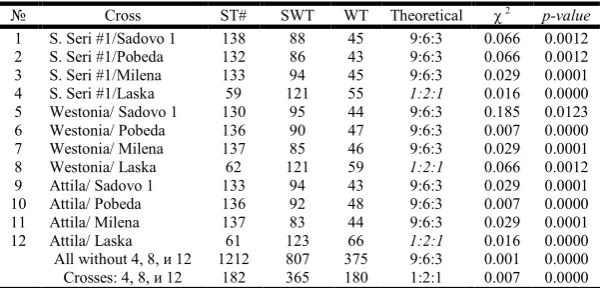
Table 4. Number of plants of different combinations and ratios between winter and spring type in the first group of F2-cross populations
№ Cross ST# SWT WT Theoretical χ 2 p-value
1 S. Seri #1/Sadovo 1 138 88 45 9:6:3 0.066 0.0012
2 S. Seri #1/Pobeda 132 86 43 9:6:3 0.066 0.0012
3 S. Seri #1/Milena 133 94 45 9:6:3 0.029 0.0001
4 S. Seri #1/Laska 59 121 55 1:2:1 0.016 0.0000
5 Westonia/ Sadovo 1 130 95 44 9:6:3 0.185 0.0123
6 Westonia/ Pobeda 136 90 47 9:6:3 0.007 0.0000
7 Westonia/ Milena 137 85 46 9:6:3 0.029 0.0001
8 Westonia/ Laska 62 121 59 1:2:1 0.066 0.0012
9 Attila/ Sadovo 1 133 94 43 9:6:3 0.029 0.0001
10 Attila/ Pobeda 136 92 48 9:6:3 0.007 0.0000
11 Attila/ Milena 137 83 44 9:6:3 0.029 0.0001
12 Attila/ Laska 61 123 66 1:2:1 0.016 0.0000
[image:4.595.39.564.449.593.2] [image:4.595.151.454.641.785.2]heterozygous, having recessive genes for winter type of habit. These plants should be selected, because in the next generation they produce winter type, again. In crosses in which there are two genes, a phenotypic segregation is 15: 1 and 9: 3: 3: 1 by genotype.
DISCUSSION
Purpose of the study is to analyze the possibility of obtaining early winter with the type of development, the cultivation of which do not pose a risk in the harsh winters of the Balkan
Peninsula.About 15% of the plants in hybrid populations have
an earlier date of ear emergence of the corresponding spring
parent (Figure 2). The highest share of the early plants in
combination with the participation of a variety Super Seri # 1 (20%), followed by those of the variety Babax (18%) and the lowest share of early in crosses where varieties Westonia and Attila, were used (only 10%). Other crosses occupy an intermediate position between already said. It is interesting to be noted the low proportion of plants with early heading of early varieties Westonia (EED=116) and their high share in combinations involving much later the group of spring wheat - Babax (EED=121). The largest is proportion of early plants with the participation of most late spring variety Tui (EED = 122). These data show no link between the likelihood of obtaining early-stage and early date of ear emergence. Rather it is directly connected only with the specific genetic nature of participating in a particular cross-type spring and winter varieties
In the case considerably more important is the fact that each of the seven plants of selected "winter" type one is at least as early spring as its parent, which is a breeder achievement. Similar outcomes were also reported in the studies of
Morgunov et al. 1998 and Braun, 1997. The group cross of Westonia is significantly higher proportion of late plants, with about 1.8 times the average for all combinations, although it is among the earliest spring varieties, as already noted. Receiving of early plants is possible, regardless of date of ear emergence of the spring parent. Then, is it necessary to analyze whether
the date of ear heading of the winter parent matter?The data in
Figure 3 provide the answer to this question. If we compare the earliest lines presented against the background of a winter variety used, the picture changes dramatically. An average of only 3.8% of all the "winter" plants are obtained earlier
offspring at a level close to that of spring type of wheat. Differences between crosses are immaterial with the exception of those involving varieties Milena and Laska, who are later in the whole experiment. Early plants with their participation are
only about 2%.For comparison of a cross between early winter
wheat 7% offspring for combinations of Enola and about 9.5%
for those with Galatea are early ones. Therefore, the early
winter is a component of the crosses, the greater the proportion of plants in early winter habit in them. On the other hand, the share of the later heading forms is smaller again at the earlier parents: 9-11% (at Galateya and Enola) against 14.5-16% for later Milena and Laska. Large differences in the cold tolerance of winter wheat used are prerequisites to assume that much of the choicest early lines, though winter type will have low genetic tolerance to cold. The largest share of the early heading plants with participation of low cold tolerant varieties Enola and Galatea and vice versa, but the lowest in combination with the cold-tolerant varieties, Laska and Milena. The production of plants with the earliest time of ear heading is not sufficient in terms of winter tolerance. They must have the genetics for
cold tolerance at least the level of Enola or Galatea (Tsenov et
al. 2012). Exactly this combination is the most difficult to achieve, especially if we turn our selection to ultra early in heading plants. Answer to this essential question for our climate survey gives the additional study of 30 F5-breeding lines from each group crosses in respect to winter parent. Figure 4 shows the correlation between assessment scores for wintering in real field conditions and the resulting grain yield. This is a sufficient guarantee for the level of cold tolerance during two consecutive winter period (2012-2013). Data show definite difference between the crosses of winter wheat varieties. The more high level of cold tolerance of the variety (Milena), the higher the grain yield of early lines with his participation (r=0.666**). Conversely, featuring varieties like Enola and Kristal and reduces considerably the level of cold tolerance of super early lines, which have a negative impact on their grain yield (r = 0.118 ns). The correlation value copies the genetic level entirely from the cold of winter parent, without exception. This finding is very important in getting early-winter wheat. They must be not only in winter habit, but also in cold tolerance. In conclusion we can say that the selection of lines with a very early date of ear heading using spring wheat is completely possible and unexpectedly easy to
realize. The development of early breeding lines is not
[image:5.595.140.458.81.217.2]sufficient, because they have a relatively low yield of grain. To
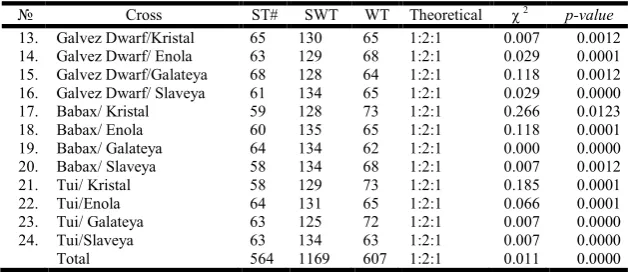
Table 5. Number of plants of different combinations and ratios between winter and spring type in the second group F2-cross populations
№ Cross ST# SWT WT Theoretical χ 2 p-value
13. Galvez Dwarf/Kristal 65 130 65 1:2:1 0.007 0.0012
14. Galvez Dwarf/ Enola 63 129 68 1:2:1 0.029 0.0001
15. Galvez Dwarf/Galateya 68 128 64 1:2:1 0.118 0.0012
16. Galvez Dwarf/ Slaveya 61 134 65 1:2:1 0.029 0.0000
17. Babax/ Kristal 59 128 73 1:2:1 0.266 0.0123
18. Babax/ Enola 60 135 65 1:2:1 0.118 0.0001
19. Babax/ Galateya 64 134 62 1:2:1 0.000 0.0000
20. Babax/ Slaveya 58 134 68 1:2:1 0.007 0.0012
21. Tui/ Kristal 58 129 73 1:2:1 0.185 0.0001
22. Tui/Enola 64 131 65 1:2:1 0.066 0.0001
23. Tui/ Galateya 63 125 72 1:2:1 0.007 0.0000
24. Tui/Slaveya 63 134 63 1:2:1 0.007 0.0000
Total 564 1169 607 1:2:1 0.011 0.0000
have higher productivity prerequisite is to have a high cold tolerance. It achieves much more difficult against the earlier date of ear emergence. It is also implicitly associated with the winter cold tolerance of the winter type component when
crossing.This, in turn, significantly reduces the likelihood of
obtaining early plants with sufficiently high productive potential. At the end of 24 combinations only 15 lines that have a sufficiently high level of tolerance to cold and date of ear heading, similar to spring component, were obtained. This is a negligible part of the total volume of the created material by selection and constitutes only 0.05% of it. Such low efficiency is the main reason to avoid using spring wheat
varieties, as a general rule. According to Allard et al. (2012),
the requirements for the duration of vernalization is not a measure of cold tolerance and is probably the reason for relatively easily obtain early lines. In our case the presence of vernalization requirement was used as an instrument for separate type of seasonal development and it proved quite
effective.Similar to our approach, using winter x spring lines,
reports Larsen (2012) and Sharma et al. (2012). In the latest study, however, winter forms are used for the improvement of
spring wheat, which is radically different from our goals.
Continental climate of the country known threshold winter- and cold tolerance of the breeding material is mandatory
(Tsenov et al. 2012). Similar is the opinion of the review
published by Gusta and Wisnewski, (2013), in which cold
tolerance in winter wheat is required to achieve high grain productivity.
REFERENCES
Ali, S. P. Singh, M. NcMullen, M. Morgoum, T. Adhikari, 2008. Resistance to multiple leaf spot diseases in wheat,
Euphytica, 159: 167-179.
Allard, V., O. Veisz, B. Koszegi, M. Rousset, J. Le Gois and P. Martre, 2012. The quantitative response of wheat vernalization to environment variables indicates that
vernalization is not a response to cold temperature, J. Exp.
Bot., 63: 847-857.
Ayala, F.J. and Kiger, J. 1984. Modern Genetics, Second Edition, Benjamin Cummings Publishing Co, Menlo Park, California, pp. 1031.
Boyadjieva, D. 1995. Wheat breeding in CIMMYT,
Agricultural Science, 33: 1-10 (in Bulg).
Braun H.J., M. Mergoum, A. Bagci, H. Ekiz, M. Keser, K. Yalvac, and H. Ketata, 2001. Germplasm Derived from spring x Winter Crosses: Adaptation and Performance in Central/West Asia and North Africa In: Reeves, J. A.
McNab, and S. Rajaram, (Eds.). Proc. Of the Warren
Kronstad Symposium, Mexico, D.F., CIMMYT, PP. 35-41. Braun, H.J. 1997 Winter hardiness of bread wheats derived
from spring x winter crosses, Acta Agronomica Hungary,
45:317-328.
Del Ponte, E. J. Garda-Buffon, E. Badiale-Furlong, 2012. Deoxynivalenol and nivalenol in commercial wheat grain
related to Fusarium head blight epidemics in southern
Brasil, Food Chemistry, 132: 1087-1091
Fletcher, A. P. Jamieson, 2009. Causes of variation in the rate
of increase of wheat harvest index, Field Crop Research,
113: 268-273
Flood R.G. and Halloran, G.M. 1986. Genetics and physiology
of vernalization response in wheat, Advances in Agronomy,
39: 87-124
Gotsov, K. 1984. The Mexican experience in wheat breeding
Agricultural Science, 22: 1-10 (in Bulg),
Gusta, L and Wisnewski, M. 2013. Understanding plant cold
hardiness: an opinion, Physiologia Plantarum, 147: 4-14
Hall A.J. and Richards, R.A. 2013. Prognosis for genetic improvement of yield potential and water-limited yield of
major grain crop, Field Crop Research, 143: 18-33
Huerta-Espino, J. R. Singh, S. German, B. McCallum, R. Park, W. Chen, S. Bharwaj, H. Goyean, 2011. Global status of
wheat leaf rust caused by Puccinia triticina, Euphytica,
179: 143-160
Kolev, S. G., Ganeva, N., Christov, I., Belchev, K., Kostov, N., Tsenov, G., Rachovska, S., Landgeva, M., Ivanov, N. and Abu-Mhadi, E. Todorovska, 2010. Allele variation in loci for adaptive response and plant height and its effect on
grain yield in wheat, Biotechnology and Biotechnological
Equipment, 24: 1807-1813
Lagudah, E. S. Krattinger, S. Herrera-Foessel, R. Singh, J. Huerta-Espino, W. Spielmeyer, G. Broun-Guedira, L. Selter, B. Keller, 2009. Gene-specific, markers for the wheat gene Lr34/Yr18/Pm38 which confers resistance to
multiple fungal pathogens, Theor, Appl. Genet., 119:
889-898
Larsen, R. J. 2012. Winter-Hardy Spring Wheat Breeding: Analysis of Winter x Spring Wheat Germplasm and the
Development of Selection Tools, PhD Thesis, The
University of Guelph, Ontario, Canada, pp. 343.
Lopes, M.S., Reynolds, M.P., McIntyre, C.L., Mathews, K.L., Jalal Kamali, M.R., Mossad, M., Feltaous, Y., Tahir, I.S., Chatrath, R., Ogbonnaya, F. and Baum, M. 2013. QTL for yield and associated traits in the Seri/Babax population grown across several environments in Mexico, in the West
Asia, North Africa, and South Asia regions, Theor Appl
Genet., 126: 971-84.
Lukman, R. 2003. Molecular mapping of major genes
influencing flowering time in wheat (Triticum aestivum L.
em. Thell), PhD Thesis, University of Munich, pp. 91 Mangova, M. and Stankov, I. 1987. Economic and
technological properties of the new winter wheat variety
Pobeda, Plant Science, 24: 3-7.
Mathews, K L., Chapman, S. C., Trethowan, R., Singh, R. P., Crossa, J., Pfeiffer, W., van Ginkel, M. and DeLacy, I. 2006. Global Adaptation of Spring Bread and Durum Wheat Lines Near Isogenic for Major Reduced Height
Genes, Crop Sci., 46: 603–613.
McIntyre, C., Mathews, K., Rattey, A., Chapman, S., Drenth, J., Reynolds, M. and Shorter, R. 2010. Molecular detection of genomic regions associated with grain yield and yield-related components in an elite bread wheat cross evaluated
under irrigated and rainfed conditions, Theor. Appl. Genet.,
120: 527-541.
Morgunov, A., Alborran, M. and Rajaram, S. 1998. Selecting winter/facultative wheat genotypes from spring x spring
crosses, Euphytica, 100: 395-400
Ortiz, R., Sayre, K., Govaets, B., Gupta, R., Subbarao, G., Ban, T., Hodson, D., Dixon, J., Ortiz-Monasterio, J.I. and Reynolds, M. 2008. Climate change: Can wheat beat the
heat? Agriculture, Ecosystems and Environments, 126: 46-58.
Panayotov I., Todorov, I., Stoeva, I., Ivanova, I., Braun, H., Hede, A. and Metia, O. 2005. Agronomic and quality characteristics of wheat lines and cultivars from 6th WWEERYT, 2003-2004 In: Balkan Scientific Conference “Breeding and Cultural Practices of the Crops, Karnobat, pp. 223-234.
Pinto, R. S., M. Reynolds, K. L. Mathews, C. L. McIntyre, Olivares-Villegas, J. and Chapman, S. 2010. Heat and drought adaptive QTL in a wheat population designed to
minimize confounding agronomic effects, Theor. Appl.
Genet., 121: 1001–1021.
Popov, P, D. Boyadjieva As. Dimov, D. Dobrev, 1985. Possibilities of using Mexican varieties in the development of highly resistant to brown, black rust and powdery mildew varieties wheat In: Problems of contemporary Bulgarian agriculture "Jubilee scientific session devoted to
the 80th anniversary of Acad. P. Popov, pp. 49-57.
Popov, P., Boyadjieva, D., Tsonev, T., Vasiliev, I. and Stefanov, P. 1975. Sadovo 1 - a new variety of common
wheat, Plant Science, 12: 45-55 (in Bulg)
Rajaram S. and Braun, H.J. 2008. Wheat yield potential, In: Reynolds M. J. Pietragalla, and H.-J. Braun (Eds.), International Symposium on wheat Yield Potential: Challenges to international wheat breeding, Mexico, D.F. CIMMYT, pp. 103-107.
Rattey, A. Shorter, R. 2010. Evaluation of CIMMYT conventional and synthetic spring wheat germplasm in rainfed sub-tropical environments, I. Grain yield, Field
Crop Research, 118: 273-281
Rebetzke, G.J. and Bonnett D.G. and Ellis, M.H. 2012.
Combining giberelic acid-sensitive and insensitive
dwarfing genes in breeding of high-yielding, semi-dwarf
wheats, Field Crop Res., 127: 17-25.
Sandras V. C. Lawson, 2013. Nitrogen and water use efficiency of Australian wheat varieties released between
1958 and 2007, European J. Agronomy, 46: 34-41.
Sharma, R., Morgunov, A. Braun, H., Akin, B., Keser, M., Bedoshvili, D., Bagei, A., Martius, C. and van Ginkel, M. 2010. Identifying high yielding stable winter wheat genotypes for irrigated environments in Central and West
Asia, Euphytica, 171: 53-64.
Sharma, S., Sharma, R. and Chaudhary, H.K. 2012. Vernalization response of winter x spring wheat derived
doubled-haploids, African Journal of Agricultural
Research, 7: 6465-6473.
Stelmakh, A. 1998. Genetic system regulating flowering
response in wheat, Euphytica, 100: 359-369
Todorov, I. 2006. Investigation of grain storage proteins and their use as markers in wheat breeding, Thesis for Dr. of
Science, DAI, General Toshevo, pp. 398 (In Bul).
Tsenov, N. 2009. Relation between time to heading and date of
maturity of winter common wheat varieties (Triticum
aestivum L.) Agricultural Science and Technology 1(4):
126-132.
Tsenov, N., Atanasova, D., Todorov, I., Ivanova, I. and Stoeva, I. 2010. Association between Allelic Variation at the Locus Glu-A3 and Some Quality Traits in Winter Bread Wheat
Advanced Lines, Genetics and Breeding, 38: 25-32
Tsenov, N., Chamurliyski P., Petrova, T. and Penchev, E. 2012. Breeding of cold tolerance the common winter wheat
(Triticum aestivum L.) at Dobrudzha Agricultural Institute
Field Crop Studies 8:53-64 (in Bulg).
Tsenov, N., Kostov, K., Stoeva, I., Petrova, T., Iliev, I. Raev, M. 1999. Galateya - a new variety of winter bread wheat
Plant Science, 36: 251-257 (In Bul).
Tsenov, N., Petrova, T., Stoeva, I. Iliev, V. and Ivanova, 2011. Registration of common wheat variety “Bojana” Field Crop
Studies 7: 29-40 (in Bul).
Van Beem, J. V. Mhler, R. Lucman, M. van Ginkel, M. William, J. Crosa, A. Worland, 2005. Analysis of genetics factors influencing the development rate of globally
important CIMMYT wheat cultivates, Crop Science 45:
2113-2119.
Zadoks, J.C. Chang, T.T. and Konzak, C.F.1974. A decimal code for the growth stage of cereals Weed researches, 14: 415-421.
Zheleva D., E. Todorovska, J.M. Jacquemin, A. Atanassov N. Christov, I. Panayotov and N. Tsenov, 2006. Allele
distribution at microsatellite locus Xgwm261 marking the
dwarfing gene Rht 8 in hexaploid wheat from Bulgarian
and Belgian gene bank collections and its application in
breeding programs, Biotechnology and Biotechnological
Equipment, 20: 45-56.