Fermented foods are food substrates that are invaded or overgrown by edible microorganisms whose en-zymes, particularly amylases, proteases and lipases, hy-drolyse polysaccharides, proteins and lipids to non-toxic products with flavours, aromas and textures pleasant and attractive to the human consumer (STEINKRAUS 1997).
The lactic acid fermentation of vegetable products, applied as a preservation method for the production of finished and half-finished products, is considered as an important technology and it is further investigated be-cause of the growing amount of raw materials processed in this way in the food industry. The main reasons for this interest are the nutritional, physiological and hy-gienic aspects of the process and their corresponding implementation and production costs (KAROVIČOVÁ et al. 1999).
While there are 21 different commercial vegetable fermentations in Europe along with a large number of fermented vegetable juices and blends, the most eco-nomically relevant of them are the fermentations of olives, cucumbers (pickles) and cabbage (sauerkraut, Korean kimchi) (CAPLICE, FITZERALD 1999).
Typical lactic acid fermented vegetables
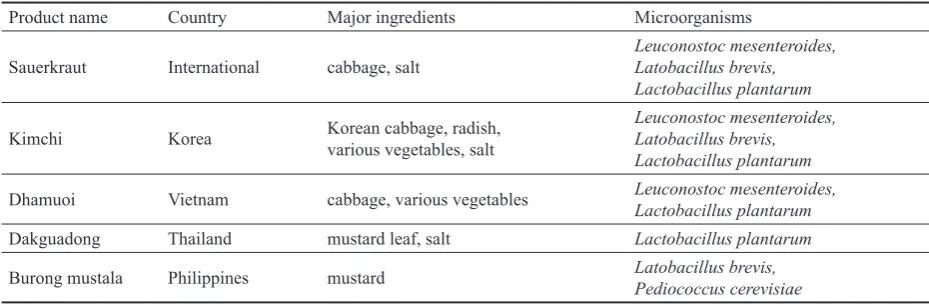
Examples of lactic acid fermented vegetables pro-duced in different regions of the word are shown in Table 1 (LEE 1997). According to KIMet al. (2000) the Chinese cabbage, cabbage, pH adjusted tomato (to pH 7.2), carrot and spinach media gave relatively higher fermentability that other vegetables because they have more fermentable saccharides than other vegetables.
The classic lactic acid vegetable fermentation is sauerkraut. Fresh cabbage is shredded and 2.25% salt is added (STEINKRAUS 1997). Sauerkraut production typically relies on a sequential microbial process that in-volves heterofermentative and homofermentative lactic
acid bacteria, generally involving Leuconostoc species for the first group and Lactobacillus and Pediococcus
for the second. The pH of final product is from 3.5 to 3.8 (GARDNERet al. 2001). At this pH the cabbage or other vegetables will be preserved for a long period of time (STEINKRAUS 1997). Sauerkraut brine is an important by-product of the cabbage fermentation industry and can be used as a substance for the production of carote-noids by Rhodotorula rubra (SHIH, HANG 1996) or for ß-glucosidase production by Candida wickerhamii for commercial applications (SIM, HANG 1996).
As a group of traditional vegetable foods in Korea, kimchi is known to be the product of natural mixed fermentation carried out principally by lactic acid bac-teria. Kimchi is characterised particularly by its sour, sweet and carbonated taste and differs in flavour from sauerkraut and pickles that are popular fermented ve-getables in the West (HONG et al. 1999). Raw materials for kimchi are divided into three main groups. Korean cabbage and radish are the major materials, and minor ingredients include garlic, red pepper, green onion, ginger and salt (LEE 1997). Optimum taste of kimchi is attained when the pH and acidity reach approximately 4.0–4.5 and 0.5–0.6, respectively. Vitamin C content is maximal at this point. As the fermentation temperature increases, the ripening time decreases: kimchi ripens in 1 week at 15°C and 3 days at 25°C. Low temperature is preferred in kimchi fermentation to prevent the produc-tion of strong acid and over-ripening and to extend the period of optimum taste (LEE 1997).
Manufacture of lactic acid fermented vegetable juices
In many countries the consumption of lactic acid fermented vegetable juices increases (KOPEC 2000). Lactic acid fermented vegetable juices are produced
This study was supported by the Slovak Grant Agency for Science VEGA (Grant No. 1/0102/03).
Lactic acid fermented vegetable juices
J. K
AROVIČOVÁ, Z. K
OHAJDOVÁSlovak Technical University, Faculty of Chemical and Food Technology, Bratislava,
Slovak Republic
ABSTRACT: Vegetable juices processed by lactic acid fermentation bring about a change in the beverage assortment for their high nutritive value, high content of vitamins and minerals. Starter cultures of the genus Lactobacillus are added into juices to achieve their desirable properties. This review describes the manufacture of lactic acid fermented vegetable juices and beneficial effects of the lactic acid bacteria (mainly antimicrobial and anticancer effects). A separate part of research is devoted to nutrition aspects of lactic acid fermentation and to the occurrence of biogenic amines in lactic acid fermented vegetables and vegetable juices.
mainly from cabbage, red beet, carrot, celery and tomato (KAROVIČOVÁ et al. 2002).
Lactic acid fermented vegetable juices can be produced by two procedures: the vegetable is fermented in a usual way and then it is processed by pressing the juice (manu-facture from sauerkraut) or the vegetable is processed to mash or raw juice at first and it is consecutively fer-mented. There are 3 types of fermentation of vegetable juices: spontaneous fermentation by natural microflora, fermentation by starter cultures that are added into raw materials and fermentation of heat-treated materials by starter cultures (HAMMES 1990).
At the manufacture of lactic acid fermented vegetable juices, the pressed juice can be pasteurised at first and consecutively it is inoculated by a culture of selected lactic acid bacteria (KOPEC 2000) at a concentration from 5 × 10⁶ to 1 × 10⁷ cfu/ml (ŠULC 1984).
For fermentation of juices, of the highest importance are commercially supplied strains such as Lactobacil-lus plantarum, Lb. bavaricus, Lb. xylosus, Lb. bifidus, Lb. brevis (ŠULC 1984). The desirable properties of fermented vegetable juices can be achieved by choos-ing Lactobacillus strains suitable for the lactic acid fermentation of individual raw materials. The criteria used for finding out suitability of a strain are as follows: the rate and total production of acids, change in pH, loss of nutritionally important substances, decrease in nitrate concentration and production of biogenic amines (KAROVIČOVÁ et al. 1994, 1999), ability of substrate to accept a starter culture, type of metabolism and abil-ity of culture to create desirable sensory properties of fermented products (HOLZAPFEL 2002). Bacteriocin-producing starter cultures were suggested as a mean to obtain more controlled and reproducible vegetable fer-mentations (AUKRUST et al. 1994; AUSCO et al. 1998).
Enzyme mash treatment is a well-known modern process to gain more juice from vegetable (DEMIR et al. 2001). The enzyme decomposition is applied be-fore the lactic acid fermentation of products to achieve a concentration of compounds that commonly remain in the pomace. It refers especially to some mineral com-pounds, including calcium, phosphorus and magnesium (KOPEC 2000).
Fermentation takes place at the temperature of about 20–30°C (ADAMS, NICOLAIDES 1997). For an optimal course of lactic acid fermentation, the content of sugars in raw materials must be sufficiently high (at least 40 g/kg) and the content of proteins that neutralise emergent acids must be minimal (KOPEC 2000). During fermenta-tion, the pH of juices decreases from 6–6.5 to 3.8–4.5 (ADAMS, NICOLAIDES 1997). A rapid decrease in pH at the beginning of fermentation is of great importance for the quality of the end product (VIANDER et al. 2003). A rapid increase in acidity minimises the influence of spoilage bacteria. In the slowly acidified environments the lactic acid fermentation can be suppressed by butyr-ic bacteria (KYZLINK 1980). The acidity below pH 3.6 is undesirable from the sensory aspect (LOPATNÍKOVÁ
1992). By fermentation, the juices obtain pleasant acid taste and characteristic aroma (BIACS 1986). After fer-mentation, the juices can be filled into bottles and pas-teurised or aseptically filled into bottles after previous filtration (BIACS 1986).
Beneficial effects of lactic acid bacteria
By definition, lactic acid bacteria are bacteria that fer-ment a sugar (e.g. glucose) predominantly to lactic acid (LIU 2003).
Lactic acid bacteria have strong inhibitory effects on the growth and toxin production of other bacteria. This antagonistic activity can be the result of:
– competition for available nutrients, – decrease in redox potential,
– production of lactic acid and acetic acid and the re-sulting decrease in pH,
– production of other inhibitory primary metabo-lites, such as hydrogen peroxide, carbon dioxide or diacetyl,
– production of special antimicrobial compounds such as bacteriocins and antibiotics.
Each of these properties and especially the combina-tion of some of them can be used to extend the shelf life and safety of food products (KALANTZOPOULOS 1997).
[image:2.595.63.528.69.221.2]The characteristic products of lactic acid fermentation are lactic and acetic acid (ADAMS, NICOLAIDES 1997). Table 1. Examples of lactic acid fermented vegetables produced in different regions of the world
Product name Country Major ingredients Microorganisms
Sauerkraut International cabbage, salt Leuconostoc mesenteroides, Latobacillus brevis, Lactobacillus plantarum
Kimchi Korea Korean cabbage, radish, various vegetables, salt Leuconostoc mesenteroides, Latobacillus brevis, Lactobacillus plantarum
Dhamuoi Vietnam cabbage, various vegetables Leuconostoc mesenteroides, Lactobacillus plantarum
Dakguadong Thailand mustard leaf, salt Lactobacillus plantarum
The antimicrobial action of these acids is related to the ability of the undissociated acid molecules to penetrate through the bacterial plasma membrane as a function of their diffusion constant. In the cytoplasm, the acid dissociates to release protons and conjugate bases with higher pH, this disrupts the membrane proton-motive force, thus disabling the energy-yielding and transport process dependent upon it (SAVARD et al. 2002). Lac-tic acid also forms the natural protection of the body against various infections, increases immunity and acts as a physiological disinfection agent, improves digestion and acts at liver diseases (ŠULC 1984).
Acetic acid is more inhibitory than lactic acid and can inhibit yeasts, moulds and bacteria (CAPLICE, FITZERALD 1999). Although lactic and acetic acid in fermented products have antimicrobial effects, high ace-tic acid concentrations are not typically desirable from sensory and quality aspects (LEE et al. 1999).
The combination of acids and alcohol is conductive to the formation of esters that impart desirable flavours (LEE 1997).
Carbon dioxide can directly be produced an anaerobic environment and is toxic to some aerobic food micro-organisms through its action on cell membranes and its ability to reduce internal and external pH (CAPLICE, FITZERALD 1999). Produced carbon dioxide replaces the air and provides anaerobic conditions favourable for the stability of ascorbic acid and the natural colour of vegetables (LEE 1997).
Lactic acid bacteria lack true catalase to break down hydrogen peroxide generated in the presence of oxygen. It is argued that hydrogen peroxide can accumulate and be inhibitory to some microorganisms. Inhibition is me-diated through the strong oxidising effect on membrane lipids and cell proteins (CAPLICE, FITZERALD1999).
Bacteriocins produced by lactic acid bacteria are pep-tides or small proteins that are frequently inhibitory to-wards many undesirable bacteria, including food-borne pathogens (e.g. Listeria monocytogenes) (LEROY et al. 2002). Bacteriocins from lactic acid bacteria can be subdivided into fourth classes. Class I of bacteriocins consists of lanthibiotics. These are small and heat-sta-ble peptides that contain thioether amino acids such as lanthionine (MESSENS, DE VUYST 2002). Class II is divided into three sub-groups of which Class IIa is the most common. This group is composed of pediocin-like bacteriocins with anti-listerial activity. Pediocins are produced by Pediococcus spp. and while they are not very effective against spores, they are more effective
than nisin in some food systems. Class III comprises large heat-labile proteins and class IV a complex of bac-teriocins with glyco- and/or lipid moieties.
An advantage of bacteriocins over classical antibiotics is that digestive enzymes destroy them. Bacteriocin-producing strains can be used as part of or adjuncts to starter cultures for fermented foods in order to improve safety and quality (CAPLICE, FITZERALD 1999).
Lactic acid bacteria are considered to have several ben-eficial physiological effects such as antimicrobial activity enhancing the immune potency (KULLISAAR et al. 2002) and to prevent cancer and lower serum cholesterol lev-els (KAUR et al. 2002). Proposed health and nutritional benefits of Lactobacillus species are presented in Table 3 (KLAENHAMMER 1995). Because lactic acid bacteria prohibit colonisation by the invader and control the in-testinal pH through the release of acetic and lactic acids, these bacteria could effectively prevent constipation and diarrhoea caused by lactose intolerance or pathogenic bacteria. A synergistic effect of dietary fibre and lactic acid bacteria for the improvement of the large intestinal health of the host may be achieved by providing ferment-ed fibre-rich natural plants to the host (KIM et al. 2000).
Exopolysaccharides produced by lactic acid bacteria are sugar polymers that improve the rheological and tex-tural properties of food products (LEROY et al. 2002).
Anti-cancer effects of lactic acid bacteria: Several research studies confirm the ability of lactic acid bacte-ria to reduce the mutagenicity of intestinal contents by suppressing the levels of specific bacterial enzymes that promote the activation of procarcinogenic compounds (DALY et al. 1998). Lactobacilli have been periodically associated with anti-carcinogenic, anti-mutagenic and anti-tumorigenic activities. These activities may occur via the following:
– binding, inhibition or inactivation of mutagens in vitro,
– reductions in carcinogen-generating faecal enzymes
in vivo,
– stimulation of the immune system,
– suppression of tumour formation (KLAENHAMMER
[image:3.595.64.291.80.166.2]1995). Table 2. Content of biogenic amines in sauerkraut and
sauer-kraut brine
Amine Sauerkraut (mg/kg) Brine (mg/dm3)
Putrescine 100–200 442–678
Histamine 42–52 143–174
Cadaverine 53–71 178–237
Spermidine 3–8 10–76
[image:3.595.305.532.81.245.2]Spermine 1–2 3–5
Table 3. Proposed health and nutritional benefits of Lactobacillus species
Proposed health and nutritional benefits of Lactobacillus species
Enzyme (lactase) presentation
Colonisation and maintenance of normal microflora Competitive exclusion of undesirable microorganisms Microbial interference and anti-microbial activities Pathogen clearance
Immuno-stimulation and modulation Cholesterol reduction/removal Deconjugation of bile acids
Anticarcinogenic and antimutagenic activities
Nutritional aspects of lactic acid fermentation
The nutritional value of a particular food depends on its digestibility and its content of essential nutri-ents. Both digestibility and its nutrient content may be improved by fermentation. During fermentation the enzymatic activity of microbial culture may predigest the macronutrients (KALANTZOPOULOS 1997). The different ways by which the fermentation process can affect the nutritional quality of foods include improving the nutrient density and increasing the amount of and bioavailability of nutrients. The latter may be achieved by degradation of anti-nutritional factors, pre-digestion of certain food components, synthesis of promoters for absorption and by influencing the uptake of nutrient by the mucosa (SVANBERG, LORRI 1997).
The lactic acid fermentation enhances protein solubil-ity and the availabilsolubil-ity of limiting amino acids in some cases by as much as 50%. The micronutrient availabil-ity is also enhanced because of significant reductions in phytates. Tannins are reduced by as much as 50% and oligosaccharides by as much as 90% (NOUT, NGODDY
1997).
The nutritional impact of fermented foods on nutri-tional diseases can be direct or indirect. Food fermen-tations that increase the protein content or improve the balance of essential amino acids or their availability will have a direct curative effect. Similarly fermentations that increase the content or availability of vitamins such as thiamine, riboflavin, niacin or folic acid can have profound direct effects on the health of the consumers of such foods (STEINKRAUS 1997).
It was shown that lactic acid fermentation increased the utilisation of iron from food by breakaway of inor-ganic iron from complex substances under the influence of vitamin C (SIEGENBERG1991; VENKATESH 1998).
Fermentation may reduce the content of non-digestible material in plant foods such as cellulose, hemicellulose and polygalacturonic and glucuronic acids. Breakdown of these compounds may lead to the improved bioavailability of mineral and trace elements (KALANTZOPOULOS 1997).
Fermented foods may reduce the serum cholesterol concentration by reducing the intestinal absorption of dietary and endogenous cholesterol or inhibiting choles-terol synthesis in liver (KALANTZOPOULOS 1997).
Lactic acid fermentation imparts attributes of robust stability and safety to the product, and thereby pre-empts disease infections such as diarrhoea and salmo-nellosis (NOUT, NGODDY1997).
Occurrence of biogenic amines in lactic acid fermented vegetables and juices
Biogenic amines (BA) are low-molecular-mass amines having a recognised biological activity and which may occur naturally in food and beverages (KIRSCHBAUM et al. 2000). A scale of symptoms is produced following an excessive oral intake of BA. They cause mainly psycho-active and/or vasopsycho-active effects (KALAČ et al. 1999).
The amount of BA usually increases during control-led or spontaneous microbial fermentation of food or in the course of food spoilage (KIRSCHBAUMet al. 2000).
There are many factors that affect biogenic amine for-mation such as temperature, pH value changes, oxygen access or sodium chloride content (SILLA-SANTOS
1996).
Sauerkraut, shredded white cabbage preserved by lactic acid fermentation, has been popular in many European countries due to its sensorial properties and favourable nutritional value (KALAČ et al. 1999). The
manufacturing of sauerkraut takes place in three steps characterised by active microorganisms that produce BA (KOLESÁROVÁ 1995):
– Leuconostoc mesenteroides, producing putrescine in a concentration of about 250 mg/kg,
– Lactobacillus sp., producing putrescine and tyramine,
– Pediococcus cerevisiae, producing histamine in a con-centration of about200 mg/kg.
The data in Table 2 show that BA, especially pu-trescine, accumulated in sauerkraut brine (HALÁSZ et
al. 1994). KALAČ et al. (1999) examined the content
of biogenic amines in 121 sauerkraut samples. The mean concentrations were 174, 146 and 50 mg/kg for tyramine, putrescine and cadaverine, respectively. Hista-mine levels were below 2 mg/kg in 44% of samples and above 10 mg/kg in only 19% of samples. KIRSCHBAUM
et al. (1997, 1999) found extremely high amounts of putrescine in bottled and pasteurised sauerkraut juices from Germany (up to 229 or 694 mg/dm3). KALAČ et al.
(2000a) determined 44.1–387 mg/kg of tyramine, 21.9 to 260 mg/kg of putrescine, 12.4–59.6 mg/kg of cadaverine and 2.4–22.2 mg/kg of spermidine in different laborato-ry prepared sauerkrauts after 6 months storage. In lactic acid fermented cabbage juices from Germany KIRSCH -BAUM et al. (2000) found 38.3–62.9 mg/dm3 of
hista-mine, 37.1–73 mg/dm3 of tyramine, 83.5–366 mg/kg3
of putrescine and 18.9–59.4 of cadaverine. Cadaverine, histamine, putrescine, spermidine and tyramine were found in lactic acid fermented vegetables (such as car-rot and red beet) in concentrations ranging from 1 to 15 mg/kg (HORNERO-MÉNDEZ, GARRIDO FERNÁNDEZ
1997).
For the preparation of sauerkraut with lowered bio-genic amines content the initial fermentation should run at a temperature of 15–20°C and bacterial activity can be suppressed by pasteurisation as soon as total acidity reaches the value 9–10 g (as lactic acid) per kg or at the pH value 4.0–3.8 (KALAČ et al. 1999). Some
research-ers found out that an increase in histamine concentra-tion went parallelly with pH values below 3.8–3.6 and therefore suggested to stop the fermentation process by pasteurisation when pH decreased below 4 (HALÁSZ
et al. 1999) because in this stage the activity of the yeasts Pediococcus cerevisiae started that can pro-duce histamine at a concentration of about 200 mg/kg (KOLESÁROVÁ 1995). KALAČ et al. (2000b) reported
that sauerkrauts inoculated by Lactobacillus plantarum
Lacto-bacillus casei, Enterococcus faecium and Pediococcus
spp. had significantly lower concentrations of tyramine, putrescine and cadaverine.
An important factor for a decrease in BA levels dur-ing sauerkraut production seems to be the prevention of initial contamination by amine-producing bacteria from cabbage, shredding machines, transporters and silos. The amine-negative inoculants should also be resistant to contamination (KALAČ et al. 2000b).
Current situation in lactic acid fermented vegetables or vegetable juices
In recent years, several authors dealt with the lactic acid fermentation of vegetables or vegetable juices:
DE CASTRO et al. (1998) performed the controlled fermentation of peeled, blanched garlic, using a starter culture of Lactobacillus plantarum and compared it with that of unblanched garlic. Blanching was carried out in hot water (90°C) for 15 min. The starter grew abundantly in the case of blanched garlic, producing mainly lactic acid and reaching pH 3.8 after 7 days. The fermented blanched garlic was microbiologically stable during storage at 30°C in an acidified brine.
AUKRUST et al. (1994) used Lactobacillus sakei for fermentation of carrot slices that produces the bacteriocin sakacin A. Carrot contained proteinase which was eluted into the brine during fermentation. The results indicated that sakacin A was inactivated by the carrot proteinase.
MONTAŇO et al. (1997) used a mixed culture of Lacto-bacillus plantarum and Saccharomyces cerevisiae and a single culture of Lactobacillus plantarum for fermen-tation of lye-treated carrots. After fermenfermen-tation, the sam-ples were preserved by addition of sorbic acid, benzoic acid or pasteurised at 80°C for 10 min. The controlled fermentation with the mixed culture resulted in higher utilisation of fermentable material than with the single culture. The flavour of carrots fermented by the mixed culture was significantly preferred to that of carrots fermented with the single culture (probably due to the formation of more flavour compounds). The pasteurised samples were microbiologically stable during the stor-age period (9 months and storstor-age at 30°C) while lactic acid bacteria grew in the samples with preservatives.
KUCHTA et al. (1994) fermented vegetables (gourd, cabbage, celery) by Lactobacillus plantarum, Lb. brevis
and Lb. pentosus. The gourds were fermented for 4 days, cabbage for 7 days and celery for 9 days.
SANCHEZ et al. (2000) performed fermentation of green olives. It was found that in olives fermented by Lactoba-cillus pentosus the highest amount of lactic acid was pro-duced in comparison with spontaneously fermented olives.
KAROVIČOVÁet al. (1994) fermented carrot and cap-sicum by different lactic acid bacteria. It was shown that the best producers of lactic acid were Lactobacillus sp. and Lactobacillus fermentum.
LU et al. (2001) carried out fermentation of cucumber juices inoculated by Lactobacillusplantarum. The juices were fortified with glucose, fructose or a mixture of
glu-cose and fructose. When cucumber juice was supple-mented with fructose and/or glucose, the starter culture continued to ferment fructose, but not glucose, resulting in an increase in lactic acid production and decrease in terminal pH.
GARDNER et al. (2001) studied various lactic acid
bacteria for the fermentation of cabbage, carrot and beet-based vegetable products. It was found that a starter culture consisting of Lactobacillus plantarum NK312,
Pediococcus acidilactici AFERM772 and Leuconostoc mesenteroides BLAC accelerated the fermentation proc-ess and prevented deterioration of fermented products for up to 90 days.
For the preparation of lactic acid fermented vegetable salads KAROVIČOVÁ et al. (1993) used green pea,
car-rot, celery and onion. The salads were inoculated by various Lactobacillus strains. The highest production of lactic acid was observed in the salad inoculated by
Lactobacillus sp. S.
VIANDER et al. (2003) examined the impact of low
NaCl and mineral salt concentrations on the spontane-ous fermentation process of white cabbage into sauer-kraut and sauersauer-kraut juice. It was shown that sauersauer-kraut and sauerkraut juice could be produced with a very low NaCl concentration as well as with a low mineral salt percentage. The sauerkraut juice fermented with 0.5% mineral salt was considered to have the best taste.
KAROVIČOVÁ et al. (2002a) performed spontaneous
fermentation of cabbage juices, fermentation by Lacto-bacillus plantarum 92H and fermentation by a mixed culture of Lactobacillus plantarum and Saccharomyces cerevisiae C11-3. It was found that the highest amount of lactic acid was produced in juice inoculated by Lacto-bacillusplantarum 92H and the highest decrease in pH was observed in juice inoculated by the mixed culture. The spontaneously fermented juice had the highest intensity of harmonic taste, acceptance of taste, accept-ance of odour and flavour.
DRDÁK et al. (1994) tested 16 strains of the genus
Lactobacillus on samples of white fresh cabbage and of a mixture of sterilised cabbage and carrot juice. Fermenta-tion lasted for 7 days at 27°C or 30°C. Three strains were acceptable on the basis of analytical criteria. These strains reduced the content of nitrates in the original samples.
KAROVIČOVÁet al. (2001, 2002b) prepared
cabbage-carrot juices fermented by Lactobacillus plantarum
92H during 150 hours at 24°C and cabbage juices with various concentrations of Lactobacillus plantarum 92H during 120 h at 28°C. The juices had the most harmonic taste and flavour in 72–96 h of fermentation.
CONCLUSION
Publicity is a prerequisite of the higher consumption of lactic acid fermented food. An important factor is also the supply of lactic acid fermented vegetable juices with new quality characteristics, without application of preserving agents (KOPEC 2000).
References
ADAMS M.R., NICOLAIDES L., 1997. Review of the sensiti-vity of different foodborne pathogens to fermentation. Food Control., 8: 227–239.
AUKRUST T.W., BLOM H., SANDTORV F., SLINDE E., 1994. Interaction between starter culture and raw material in lactic acid fermentation of sliced carrot. Lebensm. Wiss. Technol., 27: 337–341.
AUSCO M., LEAL V., BARAS M., RUIZ-BARBA J.L., FLO-RIANO B., JIMENEZ R., 1998. Bacteriocin production and competitiveness of Lactobacillus plantarum LPC010 in olive juice broth a culture medium obtained from olives. Int. J. Food Microbiol., 43: 129–134.
BIACS P., 1986. Fermentované potraviny. Bull. PV, 25: 1–13. CAPLICE E., FITZERALD G.F., 1999. Food fermentations: role
of microorganisms in food production and preservation. Int. J. Food Microbiol., 50: 131–149.
DE CASTRO A., MONTAŇO A., SANCHEZ A.H., REJANO, L., 1998. Lactic acid fermentation and storage of blanched garlic. Int. J. Food Microbiol., 39: 205–211.
DEMIR N., ACAR J., SAR K., MUTLU M., 2001. The use of commercial pectinase in fruit juice industry. Part 3: Im-mobilized pectinase for mash treatment. J. Food Engng, 47: 275–280.
DRDÁK M., KAROVIČOVÁ J., GREIF G., RAJNIAKOVÁ A., 1994. Výber kmeňov Lactobacillus species na mliečnu fermentáciu zeleniny. Bull. PV, 13: 195–203.
GARDNER N.J., SAVARD T., OBERMEIER P., CALDWELL G., CHAMPAGNE C.P., 2001. Selection and characterization of mixed starter cultures for lactic acid fermentation of car-rot, cabbage, beet and onion vegetable mixtures. Int. J. Food Microbiol., 64: 261–275.
HALÁSZ A., BARÁTH A., SIMON-SARKADI L., HOLZAPFEL W., 1994. Biogenic amines and their production by microorga-nisms in food. Trends Food Sci. Technol., 51: 42–49. HALÁSZ A., BARÁTH A., HOLZAPFEL H., 1999. The
influ-ence of starter culture selection on sauerkraut fermentation. Z. Lebensm. Unters. Forsch., 208: 434–438.
HAMMES W.P., 1990. Bacterial starter cultures in food produ-ction. Food Biotech., 4: 383–397.
HOLZAPFEL W.H., 2002. Appropriate starter culture technolo-gies for small-scale fermentation in developing countries. Int. J. Food Microbiol., 75: 197–212.
HONG S., KIM Y.I., PYUN Y.J., 1999. Acid Tolerance of Lac-tobacillus plantarum fromKimchi. Lebensm. Wiss. Technol., 32:142–148.
HORNERO-MÉNDEZ D., GARRIDO-FERNÁNDEZ A., 1997. Rapid HPLC analysis of biogenic amines in fermented vege-table brines. J. Food Prot., 60: 414–419.
KALAČ P., ŠPIČKA J., KŘÍŽEK M., STEIDLOVÁ Š., PELI-KÁNOVÁ T., 1999. Concentrations of seven biogenic amines in sauerkraut. Food Chem., 67: 275–280.
KALAČ P., ŠPIČKA J., KŘÍŽEK M., PELIKÁNOVÁ T., 2000a. Changes in biogenic amines concentration during sauerkraut storage. Food Chem., 69: 309–314.
KALAČ P., ŠPIČKA J., KŘÍŽEK M., PELIKÁNOVÁ T., 2000b. The effects of lactic acid bacteria inoculants on biogenic ami-nes formation in sauerkraut. Food Chem., 70: 355–359. KALANTZOPOULOS G., 1997. Fermented products with
probiotic qualities. Anaerobe, 3: 185–190.
KAROVIČOVÁ J., POLONSKÝ J., DRDÁK M., ŠIMKO P., VOLLEK V., 1993. Capillary isotachophoresis of organic acids produced by selected microorganisms during lactic acid fer-mentation. J. Chromatogr., 638: 241–246.
KAROVIČOVÁ J., DRDÁK M., POLONSKÝ J., 1994. Vý-ber vhodných kmeňov mikroorganizmov pre konzerváciu karotky a papriky mliečnou fermentáciou. Potrav. Vědy, 12: 105–113.
KAROVIČOVÁ J., DRDÁK M., GREIF G., HYBENOVÁ E., 1999. The choice of strains of Lactobacillus species for the lactic acid fermentation of vegetable juices. Eur. Food Res. Technol., 210: 53–56.
KAROVIČOVÁ J., GREIF G., KOHAJDOVÁ Z., HYBENO-VÁ E., 2001. Využitie multivariačnej analýzy pri hodnotení mliečne fermentovaných zeleninových štiav. Bull. PV, 40: 119–131.
KAROVIČOVÁ J., KOHAJDOVÁ Z., GREIFOVÁ M., LUKÁČOVÁ D., GREIF G., 2002a. Porovnanie fermentácií zeleninových štiav. Bull. PV, 41: 197–213.
KAROVIČOVÁ J., KOHAJDOVÁ Z., HYBENOVÁ E., 2002b. Using of multivariate analysis for evaluation of lactic acid fermented cabbage juices. Chem. Pap., 56: 267–274. KAUR I.P., CHOPRA K., SAINI A., 2002. Probiotics: potential
pharmaceutical applications. Europ. J. Pharmac. Sci., 15: 1–9. KIM H.Y., MIN J.H., LEE J.H., JI G.E., 2000. Growth of lactic
acid bacteria and Bifidobacteria in natural media using vege-tables, seaweeds, grains and potatoes. Food Sci. Biotechnol., 9: 322–324.
KIRSCHBAUM J., BUSCH I., BRÜCKNER H., 1997. Deter-mination of biogenic amines in food by automated pre-column derivatization with 2-naphthyloxycarbonyl chloride (NOC-Cl). Chromatographia, 45: 263–268.
KIRSCHBAUM J., MEIER A., BRÜCKNER H., 1999. De-termination of biogenic amines in fermented beverages and vinegars by pre-column derivatization with para-nitroben-zyloxycarbonyl chloride (PNZ-Cl) and reversed-phase LC. Chromatographia, 49: 117–124.
KIRSCHBAUM J., REBSCHEN K., BRÜCKER H., 2000. Liquid chromatographic determination of biogenic amines in fermented foods after derivatization wiht 3,5-dinitrobenzoyl chloride. J. Chromatogr., 881: 517–530.
KLAENHAMMER T.R., 1995. Genetics of Intestinal Lactoba-cilli. Int. Dairy J., 5: 1019–1058.
KOLESÁROVÁ E., 1995. Výskyt a vznik biogénnych amínov v potravinách. Bull. PV., 34: 109–122.
KOPEC K., 2000. Jakost mléčné kvašené zeleniny. Výživa a potraviny, 3: 93–94.
KULLISAAR T., YILMER M., MIKELSAAR M., VIHALEMM T., ANNUK H., KAIRANE C., KILK A., 2002. Two antioxi-dative lactobacilli strains as promising probiotics. Int. J. Food Microbiol., 72: 215–224.
KYZLINK V., 1980. Základy konzervace potravin. Praha, SNTL: 516.
LEE CH.H., 1997. Lactic acid fermented foods and their benefits in Asia. Food Control, 8: 259–269.
LEE CH.H. et al., 1999. Fermentation of rice using amylolytic Bifidobacterium. Int. J. Food Microbiol., 50: 155–161. LEROY F., DEGEEST B., DE VUYST L., 2002. A novel area
of predictive modelling: describing the functionality of bene-ficial microorganisms in foods. Int. J. Food Microbiol., 73: 251–259.
LIU S.Q., 2003. Practical implications of lactate and pyruvate metabolism by lactic acid bacteria in food and beverage fer-mentations. Int. J. Food Microbiol., 83: 115–131.
LOPATNÍKOVÁ J., 1992. Mliečne kvasenie ako perspektívny druh konzervovania. In: Nové postupy v konzervovaní rastlinnej pro-dukcie. Bratislava, Dom techniky ZSVTS Bratislava: 68–81. LU Z., FLEMING H.P., MC FEETERS R.F., 2001. Differential
glucose and fructose utilization during cucumber juice fer-mentation. J. Food Sci., 66: 162–166.
LU Z., BREIDT F., FLEMING H.P., ALTERMANN E., KLAENHAMMER T.R., 2003. Isolation and characterization of a Lactobacillus plantarum bacteriophage, JL-1, from a cu-cumber fermentation. Int. J. Food Microbiol., 84: 225–235. MESSENS W., DE VUYST L., 2002. Inhibitory substances
pro-duced by Lactobacilli isolated from sourdoughs – a review. Int. J. Food Microbiol., 72: 31–43.
MONTAŇO A., SÁNCHEZ A.H., REJANO L., DE CASTRO A., 1997. Processing and storage of lye – treated carrots fer-mented by a mixed starter culture. Int. J. Food Microbiol., 35: 83–90.
NOUT M.J.R., NGODDY P.O., 1997. Technological aspects of preparing affordable fermented complementary foods. Food Control., 8: 279–287.
SÁNCHEZ A.H., DE CASTRO A., REJANO L., MONTAŇO A., 2000. Comparative study on chemical changes in olive juice and brine during green olive fermentation. J. Agric. Food Chem., 48: 5975–5980.
SAVARD T., BEAULIEU C., GADREN N.J., CHAMPAGNE C.P., 2002. Characterization of spoilage yeasts isolated from fermented vegetables and inhibition by lactic, acetic and pro-pionic acids. Food Microbiol., 19: 363–373.
SHIH C.T., HANG Y.D., 1996. Production of carotenoids by Rhodotorula rubra from sauerkraut brine. Lebensm. Wiss. Technol., 29: 570–572.
SIEGENBERG D., 1991. Ascorbic acid prevents the dose – de-pendent inhibitory effects of polyphenols and phytates on nonheme-iron absorption. Am. J. Clin. Nutr., 53: 537–541. SILLA-SANTOS M.H., 1996. Biogenic amines: their importance
in food. Int. J. Food Microbiol., 29: 213–231.
SIM S.L., HANG Y.D., 1996. Sauerkraut brine: a potential sub-strate for production of yeast ß-glucosidase. Lebensm. Wiss. Technol., 29: 365–367.
STEINKRAUS K.H., 1997. Classification of fermented foods: worldwide review of household fermentation techniques. Food Control., 8: 311–317.
SVANBERG U., LORRI W., 1997. Fermentation and nutrient availability. Food Control, 8: 319–327.
ŠULC D., 1984. Gemusesäfte. Flussiges Obst., 1: 17–24. VENKATESH M.G., 1998. Designing effective programmes
to prevent and control iron deficiency anaemia. Am. J. Clin. Nutr., 89: 23–26.
VIANDER B., MAKI M., PALVA A., 2003. Impact of low salt concentration, salt quality on natural large-scale sauerkraut fermentation. Food Microbiol., 20: 391–395.
Received for publication June 23, 2003 Accepted after corrections September 8, 2003
Mliečne fermentované zeleninové šťavy
ABSTRAKT: Mliečne fermentované zeleninové šťavy predstavujú zmenu v sortimente nápojov pre svoju vysokú nutritívnu hodnotu a vysoký obsah vitamínov a minerálnych látok. Pre dokonalé prekvasenie substrátu sa do štiav pridávajú štartovacie kultúry hlavne rodu Lactobacillus. V článku je opísaná výroba mliečne fermentovaných štiav a prospešné účinky baktérií mliečneho kvasenia (najmä antimikrobiálny, antirakovinový účinok). Samostatná časť je venovaná nutritívnym aspektom mliečnej fermentácie a výskytu biogénnych amínov v mliečne fermentovanej zelenine a zeleninových šťavách.
Kľúčové slová: fermentácia; zeleninové šťavy; mliečne baktérie; výroba; výživa
Corresponding author:
Doc. Ing. JOLANA KAROVIČOVÁ, Slovenská technická univerzita, Fakulta chemickej a potravinárskej technológie, Radlinského 9, 812 37 Bratislava, Slovenská republika