Using the right CSR
communication strategy:
The impact on consumer
attitude and behavior.
Master Thesis in Communication Studies Korinna Schiefelbein (s1058592)
MANAGEMENT SUMMARY
Corporate social responsibility (CSR) is an useful tool for companies to engage in environmental and social projects and is, moreover, an effective marketing tool which gains more and more popularity within companies. However, CSR communication is a difficult undertaking because it bears a variety of threats and opportunities. For this reason the right CSR communication strategy is essential to effectively influence consumer attitude and behavior. In this thesis two studies were conducted to, firstly, gain an insight into the actual status of CSR in the Netherlands and, secondly, to analyze how the degree of proactivity in a company’s CSR communication strategy influences consumer attitude and, finally, consumer behavior.
In the study about the general insight about CSR in the Netherlands it was found that Dutch consumers have a positive attitude regarding CSR and are interested in this topic. They see companies, the government but also themselves in obligation to contribute in environmental and social causes. Dutch consumers state that they already have some knowledge about environmental and social topics but are also interested to get more information about these topics.
The second study showed that a more reactive communication strategy compared to a more proactive communication strategy has got a more positive impact on consumer attitude and behavior because it reduces consumer skepticism and it increases the company’s image and the perceived intrinsic motives. Moreover, it partly reduces the consumers’ perceived extrinsic motives for the company’s engagement. This positive attitude showed to go along with positive consumer behavior like increase Word-of-Mouth (WoM) about the company in general as well as over its CSR engagements and the consumers’ purchase behavior. It was also found that consumer attitude towards the companies CSR communication was more positive when the project the company engages in fits with the company’s image.
1.
Introduction
CSR is a broad concept which has no consentaneous definition. Whereas some authors describe CSR more as a voluntary engagement (e.g. Castaldo et al., 2009; Commission of the European Communities, 2001; Perrini, 2005) others describe this term as a company’s obligation (e.g. Borin & Metcalf, 2011; Lacey & Kennett-Hensel, 2010; Wagner, Lutz, & Weitz, 2009). Broadly defined, CSR attempts to achieve commercial success in ways that honor ethical values and respect people, communities, and the natural environment (Bhattacharya & Sen, 2004). During the last years consumers increasingly expect companies to make a broader contribution to society (Dolnicar & Pomering, 2007). Thus, pro-social marketing initiatives such as corporate social responsibility (CSR) activities can be a market differentiating strategy (McWilliams & Siegel, 2001) which may evoke a variety of competitive advantages (Lichtenstein, Drumwright, & Braig, 2004; Maignon & Ferrell, 2001). In this context Smith (2003) stated that the question is no longer whether or not to integrate CSR into the corporate agenda but how to do so because not engaging in CSR hurts a company more than engaging in it (Bhattacharya & Sen, 2004). Van Marrewijk (2003) concludes that organizations, which are improving their quality, ultimately have to move toward or to increase their engagement in corporate sustainability. Already in the past companies more and more had to generate new strategies supporting their functioning in social and environmental areas to create their position in society.
Consumer expectations related to CSR have increased over the past five to ten years as the number of companies with social responsibility programs has grown (Becker-Olsen & Hill, 2006). Additionally, the number of companies communicating about their CSR activities has grown as well. Expenses for CSR have become the third largest budget item for corporate communication departments in larger companies (Hutton et al., 2001). According to Dumwright (1997) the company advertisements with a social dimension, like it is when a company is communicating its CSR effort, are the most controversial of marketing approaches because on the one hand, it can be seen as marketing’s greatest contribution to society, but on the other hand, it can also be seen as marketing’s most impatient exhaustion. For that reason, the right communication strategy about CSR activities has become a key factor for CSR as an effective marketing tool to generate positive outcomes out of a company’s CSR engagement and to avoid negative attitudes and behavior regarding the company.
2.
Theoretical framework
2.1.
General overview about CSR
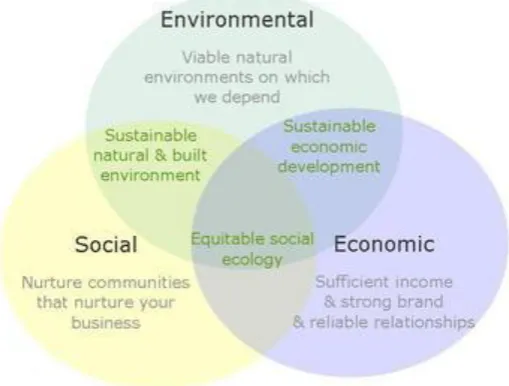
[image:5.595.92.347.321.514.2]Many CSR definitions include economic, environmental, and social concerns (e.g. Fricker, 1998; Goldsmith & Goldsmith, 2011; Parguel, Benoît-Moreau, & Larceneux, 2011) which is also known as the triple-bottom-line approach (Figure 1). This approach summarizes an environmental, a social, and an economic part which all have got interfaces which each other. Van Marrewijk (2003) adopted this approach and integrated it in his Sustainable Development Model which summarizes the environmental, social, and economic considerations. This model can be shortened on the environmental and social dimension (Pérez, Alcañiz, & Herrera, 2009) which excludes the monetary part to set a more specific focus on the other parts.
Figure 1: Triple-bottom-line approach.
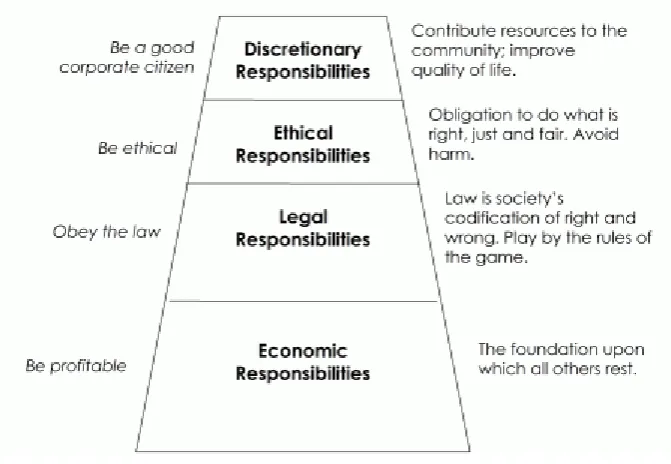
Figure 2: Carroll’s Pyramid Model.
CSR has got a strong relation to sponsorship. According to Madill and O’Reilly (2010) there are two constant components in sponsorship definitions: mutually beneficial exchange of sponsor resources in return for promotional value and, the sponsor’s association with the sponsee. When a company engages in CSR it donates in a good cause and communicates about it at least in its annual reports which gives the promotional value. Moreover, the relationship of the company and its CSR activity is created. According to Menon and Kahn (2003), sponsorship activities have two main goals. First, they are supposed to raise awareness and/or funds for the social cause and, second, they heighten consumer perceptions of the sponsor’s engagement. With the help of CSR activities companies can generate favorable stakeholder attitudes, better support behaviors like for instance purchase behavior and, as a long-term effect, build corporate image, strengthen stakeholder-company relationships, and enhance stakeholders’ advocacy behaviors. However, many stakeholders have a low level of awareness (Alsop, 2005) or sometimes even negative attributions toward companies’ CSR activities, which leads to critical impediments in companies’ attempt to maximize business benefits from their CSR activities, highlighting a necessity for companies to communicate CSR more effectively to stakeholders (Du, Bhattacharya, & Sen, 2010).
2.2.
The CSR landscape
In a variety of countries researches of the CSR landscape have already been conducted. However, a study about the perception of CSR in the Netherlands is still missing. CSR can take a different position in different countries, depending on factors like culture, society, politics, and economy (Robertson, 2009). Thus, it can be assumed that the closer these factors in another country are with the ones of the Netherlands, the more comparable are their CSR landscapes. Dawkins (2004), for instance, researched about CSR in Great Britain. She stated that 70 percent of the British public think that companies do not pay enough attention to their social responsibilities whereas only 8 percent disagreed with this statement. Moreover, her research made clear that more than two third of the British public consider it as important that the companies tell them about their CSR engagement but do not use a significant amount of money, whereas 17 percent have the opinion that companies should spend a significant amount, and 8 percent that the companies should not spend money for CSR communication at all.
the Swedish people, and 31 percent of the Norwegian people think that companies should also have a broad social responsibility, beside their shareholders, employees and customers. Moreover, 59 percent of the Danish, 46 percent of the Swedish, and 49 percent of the Norwegian people agree with the statement that companies shall communicate about their CSR engagement but with minimal amount whereas 30 percent of the Danish, 47 percent of the Swedish, and 42 percent of the Norwegian people prefer a greater amount of CSR communication like advertising. Thus, in Sweden and Norway there is no big difference between the populations’ preferences of the amount of communication whereas in Denmark there is. Based on this, it can be seen that also in countries, which are close to each other, different perspectives regarding the preferred CSR communication strategy exist.
In his research Perrini (2005) analyzed CSR reporting of Europe at which he set the company perspective as a focus. He found out that 80.7 percent of the analyzed European companies claim environmentally sustainable behavior as important 48.4 percent the social topic regarding sustainable behavior in the community and 53.3 percent hold the workers right for an important CSR topic. This agrees with Furrer et al. (2010) who found that managers and business students from Western Europe attributed higher importance to environmental corporate responsibility than to social corporate responsibility followed by economic corporate responsibility.
Ligeti and Oravecz (2009) researched CSR in Hungary. They found that two third of the analyzed companies perceive CSR as compliance regulation, almost the half as addressing stakeholder concerns and ethical conduct whereas only 38 percent perceive it as environmental protection and only 5 percent as social inequalities correction. When asking people with different education levels on average 27.9 percent of the respondents totally agreed with the statement that companies engage in donation activities because it is good advertising whereas on average only 9.7 percent totally disagreed. For the statement “A company is part of society, too, therefore it has a duty to support its environment” 69.0 percent of the respondents totally agreed with it whereas only 9.7 percent totally disagreed. Both statements could be answered on a five-point Likert scale.
managers have significant different perspective regarding CSR than managers of Central and East European countries have. One reason for this are the formal and informal constraints every country has which must be taken into account. Formal constraints include economical and political laws. Informal constraints norms and conventions embedded in a country’s culture. Economic wealth is another factor impacting CSR engagement of the companies in different countries. A higher level of wealth leads to a better change of addressing social and environmental concerns. Thus, it can be stated that Western countries have a leadership role in the formulation and adoption of CSR practices (Furrer et al., 2010).
Thus, there are mixed perspectives of CSR engagement and the most effective communication strategy about it varying from different countries. Interestingly, also in countries lying close to each other consumers have got different perspectives of CSR and the communication about it. To get an impression how the perspective of CSR is in the Netherlands and to compare the aforementioned results with CSR in the Netherlands, the first study aims at giving the general status of CSR in the Netherlands. More specifically a general overview about the consumer attitude and interests regarding CSR of Dutch consumers, their knowledge about environmental or social topics, their environmentally or socially friendly behavior as well as the wish to gain more information about environmental or social topics will be given. The consumer perspective is very important because it is one of the main stakeholder groups of a company. Their attitude toward CSR, their knowledge, behavior and wish to get more information about environmental and social topics gives a good impression which CSR activities might be more effective to engage in and gives, moreover, a good basis how a company shall communicate about its activities.
2.3.
Communication strategy
1996, p. 3). The communication strategy can be divided into proactive versus reactive, abstract versus concrete as well as the use of inoculation strategy (Wagner, Lutz, & Weitz, 2009). Proactive communication is a more aggressive form of CSR communication where a company invests heavily in the communication of their CSR engagement and communicates much and in a high frequency about it via for instance advertisements. In contrast to this when using reactive communication a company invests only a little amount in the communication of their CSR engagement and does not communicate much about their engagement and this mostly only in a low frequency. In this thesis the proactivity of CSR communication is operationalized as a high amount and frequency of the company’s CSR communication the consumer perceives. Reactive communication is defined as a low amount and frequency of the company’s CSR communication consumer perceives.
Ligeti and Oravecz (2009, p. 138) state that “corporate social responsibility and the related communication are inseparable.” Dawkins (2004) suggests that an effective communication of corporate responsibility depends on a clear strategy which has to evaluate opportunities as well as the risks to the brand, and which delivers messages to different stakeholder groups. Bhattacharya and Sen (2004) warn that CSR communication is a challenging undertaking because there is always the risk that the consumer perceives that the company just wants to “sell” its CSR information.
Thus, some companies indicate that CSR engagement should only be communicated reactively. One argument is that consumers perceive it as more ethical to spend more money for the good cause itself rather than for the communication about it. Morsing and Schultz (2006) indicate that companies should concentrate on developing efficient one-way communication to give sense to their stakeholders about their CSR efforts. However, they should not communicate in a too high frequency about it because they figured out that minimal releases were the more appropriate way of communicating CSR efforts rather than corporate advertising. A more reactive way of communicating CSR engagement is the publication of an annual report. Among companies this is a very popular method (Ligeti & Oravecz, 2009).
want to be informed about the company’s environmental and social engagement. A new approach is the “involve me” strategy where companies ask their stakeholders to help them in understanding the right way to be effectively responsible. Additionally, Dawkins (2004) states that eight in ten people of the British public consider it to be important that companies spend money to communicate their CSR activities to the public, even if that means they have less to invest into the programs itself. Regarding CSR communication a significant resistance of the consumers has been found focusing the communication via media because CSR is often thought as implicit advertising.
However, followers of a reactive CSR communication risk that their engagement is unknown by most of the consumers, whereas due to a more proactive communication strategy, awareness about the company’s CSR engagement increases (Bhattacharya & Sen, 2004). According to Bhattacharya and Sen (2004) consumers’ lack of awareness of CSR initiatives is a major limiting factor in their ability to respond to these engagements. In other words, to guarantee that the positive outcomes based on the company’s CSR engagement will occur, it is essential that the consumer is aware of the company’s engagement. However, a more proactive CSR communication strategy bears the risk of a backfire effect because the consumer might perceive the communication as “selling” the company’s CSR engagement, which might lead into a negative attitude. Beside these factors the communication source as well as the communication message also have to be taken into account carefully (Bhattacharya & Sen, 2004).
2.4.
Perceived motives of the company
Van Marrewijk (2003) states that there are basically three main reasons why a company engages in social or environmental causes: 1) They feel obligated to do it, 2) they are made to do it, or 3) they want to do it. Similarly, Aguilera et al. (2007) differentiate between self-interested motives, relational motives, and moral motives. Additionally to this, Groza, Pronschinskee, and Walter (2011) split up the motives into three parts. They state that the intrinsic motives are value-driven motives, which a company has because they just want to contribute to the good cause, whereas the extrinsic motives can be divided into stakeholder-driven attributions, which arise because the company feels obliged to do something good due to its stakeholders, and strategic-driven attributions, where the company focuses on its competitive advantages and economic rewards when contributing in a social cause. According to Forehand and Grier (2002) consumers are likely to perceive intrinsic motives if no benefits for the company are salient and extrinsic motives when benefits are salient.
2.4.1.
The impact of communication strategy on the perceived motives of the
company
It is assumed that there is a reason to expect an increasing congruence between communication and certain action (Chaudhri & Wang, 2007). However, consumers can become quickly leery of the CSR motives when companies proactively promote their CSR efforts (Du, Bhattacharya, & Sen, 2010). According to Sen, Du, and Bhattacharya (2009) CSR communication should be factual and avoid the impression of boasting with it. According to Chaudhri and Wang (2007) CSR communication is not mandatory. For that reason it is likely to be faced with credibility challenges.
Yoon, Gürhan-Canli, and Schwarz (2006) conclude that consumers attribute more intrinsic motives to the company when the money a company spends for a good cause exceeds the money they spend for advertising about it or, in other words, when they the company uses a more reactive communication strategy. Based on this the next to hypotheses are stated as follows:
H1a: The more proactively a company communicates its CSR activities, the more
likely it is that extrinsic motives behind this engagement will be perceived.
H1b: The more reactively a company communicates its CSR activities, the more likely
2.5.
Consumer skepticism
According to Kanter and Mirvis (1989) skepticism is the tendency to question. A highly skeptical person will perceive the accuracy of a claim to be low whereas a person with a low level of skepticism is likely to perceive the accuracy of the claim as high (Bronn & Vrioni, 2001). Shaub (1996) as well as Forehand and Grier (2002) characterize skepticism as the opposite of trust. Trust is the customer’s belief that the firm is reliable, stands by its word, fulfills its promises, and is sincere (Anderson & Narus, 1990). Vlachos et al. (2009) showed trust to be central to CSR effectiveness. For consumers it is important that they consider the company and its CSR engagement to be trustworthy (Bronn & Vrioni, 2001). When focusing on the consumer skepticism it is important to differentiate this construct from the construct cynicism. Cynicism is characterized by the negative attitude toward others. Cynics tend to see the dark side of human nature where selfishness is the reason for an action. Moreover, Mohr, Eroglu, and Ellen (1998) stated that cynicism is an enduring, deep belief whereas skepticism is more situational and not long lasting.
2.5.1.
The impact of communication strategy on the consumer skepticism
toward the companies’ CSR communication
There is the problem that, if a company does not communicate sufficiently over their CSR engagement, consumers might believe that it is hiding something. On the other hand, if it communicates too much about it, it is likely that consumers think that the company is exploiting the social cause. This makes the communication of CSR engagement very challenging (O’Sullivan, 1997). Bronn and Vrioni (2000) state that consumers look closely at companies that make claims regarding their involvement on social issues. In case of CSR activities it is likely that skepticism occurs when the company publicizes their CSR efforts intensively (Pirsch, Gupta, & Grau, 2007). For that reason the hypothesis is stated as follows:
H2: The more proactively a company communicates its CSR activities, the higher the
consumers’ skepticism toward the company’s CSR communication will be.
2.6.
Company image
Social responsibility is a type of institutional signal used by publics to construct the company’s image (Fombrun & Shanley, 1990). Research suggests that consumer attitudes toward a company’s sponsoring CSR are largely positive (Lichtenstein, Drumwright, & Braig, 2004; Mohr, Webb, & Harris, 2001; Nan & Heo, 2007; Webb & Mohr, 1998). Consumers positively value a brand which engages in social commitment thereby influencing brand prestige and reputation (Pérez, Alcañiz, & Herrera, 2009). The enhanced image may moreover become a competitive advantage (Menon & Kahn, 2003) through its effects on consumer behavior. According to Walker and Kent (2009) image can be an important lens through which the company’s management can assess the efficacy of the company’s CSR engagement.
2.6.1.
The impact of communication strategy on the company’s image
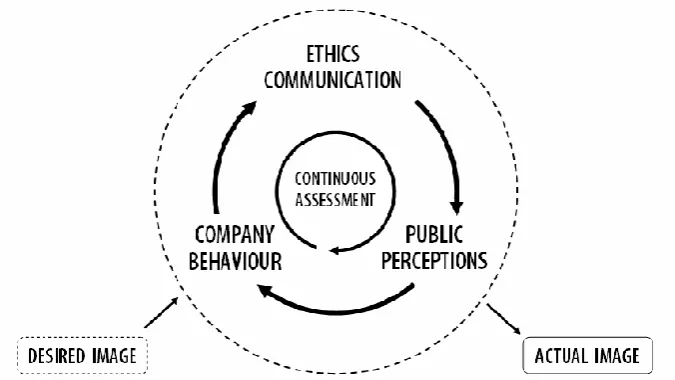
Figure 3: A framework for communicating corporate ethics by Schlegelmilch and Pollach
(2005)
The company has its desired image which it can support to become the actual image via their company behavior which the company has to communicate to the public and which the public finally perceives. The new actual image results out of this. The circle has to be repeated by the company as often as necessary until the desired image equals the actual image. Afterwards, however, some motivation is still needed to keep this equality up.
Lee at al. (2009) also state that information about CSR helps consumers to learn about the company’s value system (Sen & Bhattacharya, 2001) and to acquire consumers’ positive perception about a particular company (Menon & Kahn, 2003; Yoon, Gürhan-Canli, & Schwarz, 2006). Nevertheless, information can also be spread reactively via, for instance, annual reports. Moreover, Yoon, Gürhan-Canli, and Schwarz (2006) come to the point that companies are evaluated better when they invest more in their CSR activities than in their advertisement to communicate about it. Otherwise a backfire effect may occur. Thus, to arrange that consumers perceive the company image as positive a more reactive communication strategy should be preferred. Based on the aforementioned section the hypothesis is stated as follows:
H3: The more proactively a company communicates its CSR activities, the worse is the
[image:15.595.74.412.74.264.2]2.7.
Perceived fit
Fit describes the link between sponsoring, like a company’s CSR engagement, and sponsored entities, like an environmental or social project or organization (Zdravkovic, Magnusson, & Stanley, 2010). Fit “embodies the idea of transferability of expertise or synergies in activities, such as when there is similarity in products, technologies, or markets or complementarity of skills and activities” (Simmons & Becker-Olsen, 2006, pp. 155). In academic research synonyms for fit are “congruence” (Speed & Thompson, 2000), “similarity” (Gwinner & Eaton, 1999), “typicality” (Ladwein, 1994), and “relevancy” (Rodgers, 2003). Fit between the sponsoring company and the sponsored CSR activity improves memory for the sponsor-activity relationship and supports other aspects of communication like WoM (Cornwell et al., 2006; Johar & Pham, 1999; Rifon et al, 2004). In selecting a CSR activity with a high sponsor-activity relationship a sponsored company gains associations and preexisting links in memory (Cornwell et al, 2006) which helps remembering the relationship partner when a cue for the one part is given.
According to Becker-Olsen and Hill (2006) fit is an important factor for companies because it influences the amount of thought people give to a relationship (Forehand & Grier, 2003). Moreover, more favorable types of thoughts generated (Forehand & Grier, 2003) when there is high fit and, based on this, generate also better the evaluations of the company and its CSR engagement (Sen & Bhattacharya, 2001). Level of fit between the nonprofit and for-profit brand may also result in increased perception of endorsement (Bower & Grau, 2009).
2.7.1.
The impact of perceived fit on the perceived motives of the company
sponsor brand whereas worse fit enhances CSR ratings if consumers focus their attention on the social cause. Thus, the following hypotheses are stated:
H4a: The lower the perceived fit between the company’s CSR activity and the
company’s business is, the more likely it is that extrinsic motives behind this
engagement will be perceived.
H4b: The higher the perceived fit between the company’s CSR activity and the
company’s business is, the more likely is it that intrinsic motives behind this
engagement will be perceived.
2.7.2.
The impact of fit on the skepticism toward the company’s CSR
communication
According to the Schema Theory by Rumelhart (1980) a lack of fit can stimulate the individual’s cognitive evaluation assimilate the new information to a pre-existing schema. This greater elaboration means that the intentions of the company will be examined with greater depth. Thus, when there is high brand-cause fit, the consumer has less need for evaluation which lessens the probability of skepticism and vice versa (Alcañiz, Cáceres, & Pérez, 2010). Also Rifon et al. (2004) support the positive relationship of fit and trust. Thus, source credibility plays an important role regarding the skepticism (Rifon et al., 2004). According to this, the hypothesis is stated as followed:
H5: The higher the perceived fit between the company’s CSR activity and the
company’s business is, the lower is the consumer skepticism toward the company’s
CSR communication.
2.7.3.
The impact of the perceived fit on the company’s image
brand is compatible with the celebrity or sponsored activity. When there is fit between sponsor’s image and the sponsored activity, consumers are more likely to respond favorably (Nan and Heo, 2007; Zdravkovic, Magnusson, & Stanley, 2010). High-fit CSR engagements strengthen brand identity, intensify brand meaning, heighten brand response, and enforce brand relationships whereas low-fit sponsorships act in a contrary way (Becker-Olsen & Hill, 2006). Becker-Olsen and Simmons (2002) argue that a lack of fit reduces the favorability of attitudes toward the sponsorship and decreases the value of the brand as a signal because people become less sure of what the brand represents. Moreover, a lack of compatibility can lead to a negation of any potential for an improved corporate image (Trimble & Rifon, 2006).
Brand fit is also a powerful antecedent of brand attractiveness in the context of CSR communication (Pérez, Alcañiz, & Herrera, 2009). High fit is likely to increase the customers’ attitude toward the company. Thus, when customers perceive the supported cause as not fitting to the company’s image, CSR activities might be even harmful (Speed & Thompson, 2000). Low fit increases cognitive elaboration and makes countering (negative) inputs accessible (Simmons & Becker-Olsen, 2006). If customers think that a company is supporting a cause that is inconsistent with their values, the CSR initiative is unlikely to increase brand equity and may, thus, even harm it (Lichtenstein, Drumwright, & Braig, 2004). Moreover, when a product is associated with a positively evaluated object, affect transfer will occur. In a companies’ engagement in CSR a similar effect might occur: the positive engagement in the social cause might be transferred to the company (Nan & Heo, 2007). The study of Nan and Heo (2007) showed that a positive impact of CSR occurs primarily on consumers’ attitudes toward the company, rather than their attitudes toward the advert or the brand. Based on the aforementioned part the next hypothesis is stated as follows:
H6: The higher the perceived fit between the company’s CSR activity and the
company’s business is, the better consumers evaluate the image of the company.
2.7.4.
The impact of the perceived motives of the company on skepticism
toward the company’s CSR communication
trigger stakeholders’ skepticism and feelings of being deceived which leads to negative reactions to its CSR activities (Forehand & Grier, 2002).
Skepticism occurs because consumers hold intuitive beliefs that social initiatives are primarily motivated by corporate self-interest (Webb & Mohr, 1998). Parguel, Benoît-Moreau, and Larceneux (2011) state that if there is a poor sustainability rating of a companies’ CSR message, skepticism towards the CSR message will raise. Du, Bhattacharya, & Sen (2010) state when a company acknowledges intrinsic as well as extrinsic motives in its CSR communication, it can inhibit stakeholder skepticism, enhance the credibility of its CSR message, and generate goodwill. In other words, companies who acknowledge extrinsic motives in their CSR communication have a higher credibility of their communication and reduce consumers’ skepticism. Thus, to avoid the boomerang effect of CSR communication, companies should emphasize the convergence of social and business interests (Du, Bhattacharya, & Sen, 2010).
However, extrinsic motives only negatively influence trust (Vlachos, Theotokis, & Panagopoulos, 2010) and, resulting of this, increase consumer skepticism (Forehand & Grier, 2002). In contrast to this, intrinsic motives increase the perceived trustworthiness of a company (Alcañiz, Cáceres, & Pérez, 2010) and, thus, reduce skepticism. If consumers question a company’s motivation, they may elicit persuasion knowledge (Friestad & Wright, 1994; Friestad & Wright, 1995), which results in greater cognitive elaboration in the evaluation of these motivations (Becker-Olsen & Hill, 2006). Consumers, who are naturally more skeptical about CSR initiatives of companies, believe them to be more profit motivated (Alcañiz, Cáceres, & Pérez, 2010). Based on the aforementioned section the following hypotheses are stated:
H7a: The more extrinsic motives are perceived, the higher is the perceived consumer
skepticism toward the company’s CSR communication.
H7b: The more intrinsic motives are perceived, the lower is the perceived consumer
2.7.5.
The impact of the perceived motives of the company on the company’s
image
Several studies indicate that consumers believe that it is it important for companies to seek out ways to become a good corporate citizen, that CSR is a good way to solve social problems and the consumers have a more positive image if a certain company contributes to good causes (Bronn & Vrioni, 2001). CSR activities are consistent with the naïve business theory that assumes that consumers will take the activities at face value and attribute positive characteristics to the company, which leads in a more favorable evaluation, in other words: Those who do good (bad) do so because they are good (bad). However, consumers do not make these conjunctions when they become suspicious about the motives underlying the certain behavior (Yoon, Gürhan-Canli, & Schwarz, 2006). Only a consistent and believable contribution to a cause can build brand image and brand equity (Bronn & Vrioni, 2001).
Consumer perceptions of motives for CSR engagement positively influence their subsequent attitudes toward the company (Brown & Dacin, 1997). CSR engagement improves a company’s image when consumers attribute intrinsic motives (Yoon, Gürhan-Canli, & Schwarz, 2006). Stronger attributions of intrinsic motives lead stakeholders to make positive inferences about the company’s underlying character, increase perceived sincerity (Parguel, Benoît-Moreau, & Larceneux, 2011), and thus react more positively towards the company. Conversely, perceptions of predominantly extrinsic motives lead to less favorable stakeholder attitudes toward the company (Becker-Olsen & Hill, 2006; Forehand & Grier, 2003; Yoon, Gürhan-Canli, & Schwarz, 2006). A behavior attributed to extrinsic motives is perceived as dishonest and misleading for the consumer (Parguel, Benoît-Moreau, & Larceneux, 2011). Ross, Patterson, and Stutts (1992) suggest that consumers tend to believe that companies engaging in CSR are more socially responsible. However, consumers prefer brands that show an altruistic motivation to support a social cause to a comparable brand that forms alliance with a social cause for the purpose of generating sales (Barone, Miyazaky, & Taylor, 2000). CSR activities are ineffective when the motives are ambitious and can even hurt when the motives are perceived as insincere (Parguel, Benoît-Moreau, & Larceneux, 2011; Yoon, Gürhan-Canli, & Schwarz, 2006). However, the company‘s motives to engage in CSR always include image promotion. Yoon, Gürhan-Canli, and Schwarz (2006) assume that the consumers are aware of this. According to this, the hypotheses are stated as followed:
H8a: The more extrinsic motives are perceived, the worse is the consumers’
H8b: The more intrinsic motives are perceived, the better is the consumers’perception
of the company’s image.
2.7.6.
The impact of the company’s image on skepticism toward the
company’s CSR communication
Based on Castaldo et al. (2009), who hypothesize that retailers with a good CSR reputation are able to elicit trust from consumer interested in their kind of products while retailers with a weaker CSR reputation will be disadvantaged, it can be assumed that a better image enhances trust and in a parallel manner reduces skepticism. Furthermore, it can be assumed that consumers are more likely to trust a company with a good image and to be skeptical towards a company with a bad image. Based on this the hypothesis is stated as follows:
H9: The better the consumers’perceptionof the company’s image is, the lower is the
perceived consumer skepticism toward the company’s CSR communication.
2.8.
WoM
WoM is the “informal communications between private parties concerning evaluations of goods and services” (Anderson, 1998, p. 6). It is one of the most influential channels of communication in marketplace (Allsop, Bassett, & Hoskins, 2007). WoM communication plays an important role in shaping consumers’ attitudes and traits of behaviors (Harrison-Walker, 2001). For that reason it is important for a company to create an environment where positive WoM raises (Sundaram, Mitra, & Webster, 1998).
2.8.1.
WoM about the company in general
regarded as more trustworthy (Murray, 1991). Consumers WoM is indeed an informal yet highly credible and thus also from company’s point of view an important CSR communication channel. However, it was also found that dissatisfied customers communicate greater WoM than highly satisfied customers (Anderson, 1998). For that reason it is important that companies try to increase positive WoM and to decrease negative WoM. The power of consumers’ WoM got even strengthened through reaching the internet, also called electronic WoM (eWoM) (Du, Bhattacharya, & Sen, 2010).
2.8.2.
WoM about the company’s CSR activities
From consumer perspective there are two different types of CSR information sources which are company-controlled information and uncontrolled information like WoM. Such uncontrolled information gains more importance because they have increased in response to consumers’ demand for more credible information about environmental concerns (Parguel, Benoît-Moreau, & Larceneux, 2011). According to Sundaram, Mitra, and Webster (1998) there are four types of motivations why a consumer engages in WoM communication: 1) product involvement, 2) self-enhancement, 3) other involvement, and 4) message involvement. The last category is mostly used for WoM communication about CSR activities because the consumer gives an account of the company’s CSR message.
2.8.3.
The impact of the company’s image on the consumer’s Word-of-mouth
(WoM) communication
H10: The better the consumers’ perception of the company’s image is,, the more
willing they are to talk positively about a) the company and b) its CSR activities.
2.8.4.
The impact of skepticism toward the company’s CSR communication
on the consumer’s WoM communication
CSR-oriented companies can benefit with outcomes like WoM (Becker-Olsen & Hill, 2006; Curtis, 2006). Consumer trust turned out to have a positive effect on consumer WoM (Stanaland, Lwin, & Murphy, 2011; Vlachos, Theotokis, & Panagopoulos, 2010). Thus, consumers who are skeptical toward the company’s CSR claims tend to respond more negatively than consumers with a lower level of skepticism (Bronn & Vrioni, 2001). This is also transferrable to the consumers WoM communication behavior. Moreover, one reason for engaging in positive word-of-mouth is to help the company (Sundaram, Mitra, & Webster, 1998). It is more likely that consumers are willing to help a company they trust. Based on this the following hypothesis is stated:
H12: The higher the consumer skepticism toward the company’s CSR communication
is, the less willing they are to talk positively about a) the company and b) its CSR
activities.
2.9.
Purchase behavior
consumers’ purchase behavior itself. Mohr, Webb, & Harris (2001) state that consumers first need to become aware of a firm’s level of social responsibility before this factor can impact their purchasing. Moreover, Ross, Stutts, and Patterson (1990) found that 53 percent of a sample could recall a cause-related advertisement for a product.
2.9.1.
The impact of the company’s image on the consumer’s purchase
behavior
Consumers are interested in the companies’ CSR efforts, and this behavior has got an impact on the purchase behavior. It can be assumed that companies, which have a reputation for being socially responsible, will attract consumers to their products while companies with a bad reputation regarding CSR efforts will be punished by the consumers through, for instance, boycotts (Castaldo et al., 2009). According to ‘reasoned action’ consumers attitude leads to purchase intention which predicts purchase behavior (Morrell & Jayawardhena, 2010). It is unlikely that CSR image will be taken into account automatically by consumers when making consumption decisions, or deciding which company to strengthen relations with (Bhattacharya & Sen, 2004). However, CSR-based consumer-company identification is able to directly generate better attitude towards the brand and, additionally, broader purchase intention (Pérez, Alcañiz, & Herrera, 2009).
H11: The better the consumers’ perception of the company’s image is, the more
willing they are to purchase the company’s products.
2.9.2.
The impact of skepticism toward the company’s CSR communication
on the consumer’s purchase behavior
There are many positive outcomes of CSR which are an enhanced national visibility for the brand, countering negative publicity, greater brand awareness and brand image reinforcement, incremental gains in new sales, and customer advocacy, which are predicted to lead to increased purchasing behavior (Becker-Olsen & Hill, 2006; Curtis, 2006; Lacey & Kennett-Hensel, 2010; Varadarjan & Menon, 1988). However, it was found that consumers punish firms that are perceived as insincere in their social involvement (Becker-Olsen & Hill, 2006; Sen & Bhattacharya, 2001). Webb and Mohr (1998) suggest that consumers, who have a higher level of skepticism, will be less likely to respond positively the campaigns regarding a company’s CSR engagement and vice versa. Consumer trust was found to reduce the perceived risk which consumers experience in buying and using products (Stanaland, Lwin, & Murphy, 2011). There is a level of consumer skepticism that often makes consumers doubt what a company is saying. This skepticism can lead consumers to reject statements made in CSR campaigns, it can affect their purchasing behavior and can lead to stronger action (Bronn & Vrioni, 2001; Rogers, 1998). Based on this, the next hypothesis is stated:
H13: The higher the consumer skepticism toward the company’s CSR communication
is, the less willing they are to purchase the company’s products.
2.10.
The hypothesized impact of CSR communication strategy on
consumer attitude and behavior
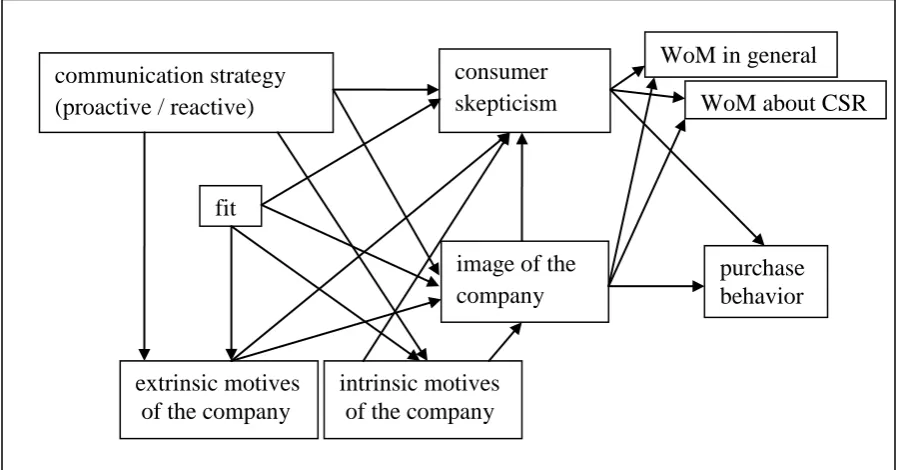
company’s image, consumers’ WoM communication as well as consumer’s purchase behavior. The focused model is presented in figure 4.
The impact of the degree how proactive a company communicates about its CSR activities on the company’s motives behind the CSR engagement, the consumer skepticism toward the company’s CSR engagement as well as the company’s image were analyzed. Moreover, it can be assumed that also fit plays an important role regarding the factors motives of the company, consumer skepticism, and company image. Finally, also the impact of the consumer attitude (consumer skepticism and company image) on consumer behavior (WoM about the company as well as the company’s CSR activities, and the purchase behavior) was dealt with.
[image:26.595.71.523.307.542.2]
Figure 4: Model of the study 2.
purchase behavior communication strategy
(proactive / reactive)
image of the company
extrinsic motives of the company
consumer skepticism
fit
WoM in general
intrinsic motives of the company
3.
Method
To give a general overview about CSR in the Netherlands and to test the impact of the company’s CSR communication strategy on consumer attitude and behavior two quantitative researches were conducted. In this chapter the design of the two studies will be introduced. Moreover, an overview about the sample group will be given and the research instruments will be introduced. Finally, an overview about the measures of the all constructs of study one and two will be given.
3.1.
Design
In order to perform these two researches one online-survey were conducted. The first main research question was analyzed in the first online-survey (Appendix A). This research was created as a descriptive study. The other two main research questions were analyzed in the second study (Appendix B) which focused on the correlations of the constructs. Both studies were performed via a one sample group.
3.2.
Sample
[image:27.595.67.526.613.684.2]The participants were people living in the Netherlands. In total n=913 participants (43.8% men, 56.2% women, median age 40-50 years) filled in the first survey completely. Almost 70 percent of the participants of the first study also took part in the second one. In total n=627 participants (44.4% men, 55.6% women; median age 40-50 years) filled in the second survey. A summarization is given in table 1.
Table 1: Overview about the sample.
Study Number of participants
percent of male participants
percent of female participants
median age in years
1 913 43.8% 56.2% 40-50
3.3.
Instruments
The constructs of the first study were created based on the triple-bottom-line approach which was discussed in section 2.3.. This approach can be shortened to social and environmental dimension (Pérez, Alcañiz, & Herrera, 2009). The economical part was excluded due to two reasons: 1) Because it was preferred to keep the questionnaire short and 2) because it was preferred to focus on environmental and social sustainability. Focusing on other studies, which have made the same measurements, the constructs of the second study were created. In order to make the rating of the agreement or disagreement about the statements easier 25 companies engaging in CSR in the Netherlands were listed up. The participants were supposed to choose one of the companies or could also select another one which was on their mind regarding a specific CSR activity. The participants were told to think about the chosen company the whole time filling out the second questionnaire. All constructs were measured on a five-point Likert scale from 1 = totally disagree to 4 = totally agree and another option if the participant had no opinion. Both surveys were provided in Dutch.
3.3.1.
Measures of study 1
3.3.1.1.
General attitude towards CSR
As a first construct, the general attitude toward CSR was measured. This construct was split up into environmental and social attitude. Both were, moreover, split up into the role of the company, the role of the consumer and the role of the government. The construct general CSR attitude with its separate items is based on different environmental and social attitude scales which have a focus on the role of the company, the role of the consumers, and the role of the government. More concretely, the items of the environmental part of the general CSR attitude is based on the personal environmental norm measure as well as the environmental concern measure of the environmental attitude scale of Minton and Rose (1997). The items of the personal environmental norm measure were partly adopted to measure the role of the consumer whereas the items of the environmental concern measure were partly used to measure all three roles depending on the focus in each question. Due to the fact that both measures include 24 items the scale is, however, too complex and includes very specific questions like “Non-recyclable containers should be taxed to reduce waste”. Thus, the questions were only used partly and needed to be adopted be more general.
Schwepker and Cornwell (2011) was partly used for the environmental attitude focusing on the role of the consumer. The scale of Gill, Crosby, and Taylor (1986) was additionally consulted for the environmental attitude and gave another basis for the items for the role of the consumer and the role of the government. The scales of Steptoe et al. (1995) and Dawkins (2004) were conducted to create items regarding the social attitude. Out of these scales in total 19 items were created to measure general CSR attitude. Ten items measured the environmental part and nine items the social part. The role of the company was evaluated with four items in the environmental part such as "Companies have an obligation to contribute to better environment”, and with three items for the social part for example “Companies have an obligation to contribute to better society”. The role of the consumers was both times measured with four items whereas the role of the government was each time measured with two items. To check the reliability of the measures the reliability test Cronbach’s Alpha was accomplished. It showed α was always higher than 0.7 for the general CSR attitude (environmental attitude: role of the companies: α = 0.909; role of the consumers: α = 0.808; social attitude: role of the consumers: α = 0.808; role of the government: α = 0.686) beside the factor environmental attitude by the role of the government which was α = 0.095 and the social attitude by the role of the companies was firstly α = 0.252. However, by the social attitude role of the companies through deleting the second item α increase to 0.627, which is a bit too low to proof reliability for this construct. Due to the fact that environmental attitude by the role of the government only consists of two items α could not be increased. Thus, the reliability of this construct has to be questioned.
3.3.1.2.
Consumer knowledge
3.3.1.3.
Consumer behavior
The consumer behavior about environmental and social topics was created in the same manner as the construct consumer knowledge. It was also separated in the six aforementioned categories. This time the participants were asked about their behavior in each category (e.g. “I do actively save energy”). Hence, this construct was also measured with six items. For the environmental topics α = 0.683 was measured. Like the α for consumer knowledge also the α for social topics regarding consumer behavior was quite low with α = 0.361.
3.3.1.4.
Consumer wish to get more information
The consumer wish to get more information about environmental and social topics was created in the same way as consumer knowledge and consumer behavior. This time the participants were asked about their wish to get more information about each of the six aforementioned categories (e.g. “I would like to get more information about methods how to save energy”). The construct was also measured with six items. In the reliability test showed for environmental topics α = 0.875 and for social topics α = 0.681.
3.3.1.5.
Demographic variables
Certain demographic variables were collected which are sex, age, level of education and family status. Participants were able to quote their age in an ordinal scale level. Degree of education was also constructed on an ordinal scale, sex and family status were collected nominally. For education and family status the option was given in order to make clear that the participant does not want to answer this question. Besides this, family status was separated into “living alone without children”, “living alone with children”, “living in a relationship without children”, and “living in a relationship with children”.
3.3.2.
Measures of study 2
3.3.2.1.
Communication strategy
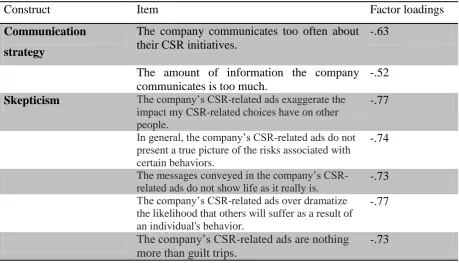
However, the reliability check Cronbach’s Alpha was conducted which found α = 0.523 which is too low. For that reason and to avoid measuring mixed communication factors in one construct, it was decided to only concentrate on the communication quantity to analyze the impact of the degree of proactivity in a company’s communication strategy. Thus, the first, second, and fifth item were deleted so that this constructs was measured with two items (e.g. “The company communicates too often about their CSR initiatives”). Afterwards alpha increased to 0.790.
3.3.2.2.
Perceived fit
The construct fit was measured leaned on the scales of Menon and Kahn (2003) and Alcaniz, Cáceres, and Pérez (2010) which include general questions about the degree of fit between a sponsored activity and the company. Both scales were adapted to the CSR focus and shortened again so that it was measured with four items (e.g. “The company’s brand is logically related to its CSR-related messages”). Fit showed a good reliability with α = 0.858.
3.3.2.3.
Perceived motives
The scale to measure the motives is based on the one of Lee et al. (2008). While measuring motives it was distinguished between intrinsic and extrinsic motives. Moreover, the extrinsic motives were separated into stakeholder-driven motives and strategic-driven motives. The intrinsic motives were evaluated with four items (e.g. “I think the company has a long-term interest in society”), and the extrinsic ones with ten items of which the stakeholder-driven motives were measured with five items (e.g. “I think the company feels their customers expect them to be socially responsible”), and the strategic-driven motives with six items (e.g. “I think the company will get more customers by supporting this initiative”). For the intrinsic motives an α = 0.881 was set up. Focusing on the extrinsic motives, for the stakeholder-driven motives a reliability of α = 0.869 and for strategic-driven motives a reliability of α = 0.886 could be determined.
3.3.2.4.
Consumer skepticism
Obermiller and Spangenberg (1998) and Thakor and Goneau-Lessard (2009) focus mainly on skepticism toward advertisement and are thus only useable by adapting them. In this survey five items were used to measure skepticism (e.g. “The company’s CSR-related ads exaggerate
the impact my CSR-related choices have on other people”). The skepticism scale reached an α
of 0.830.
3.3.2.5.
Company image
The company image will be measured by using a combination of different scales of Wagner, Lutz and Weitz (2009), Stanaland, Lwin, and Murphy (2011), Lichtenstein et al. (2004), Fombrun, Gardberg, and Sever (1999), Menon and Kahn (2003) as well as Lee et al. (2008). The items of these questionnaires are partly very similar so that the combination of these scales can be treated without getting too many items. Finally, seven items have been used (e.g. “In my opinion the company is a socially responsible company”). Image showed, moreover, a reliability of α = 0.909.
3.3.2.6.
WoM
The scale to measure the general WoM communication is based on the scale of Harrison-Walker (2001). The one to measure WoM communication about the company’s CSR activities was created without leaning on another scale. The scale to measure general WoM has six items (e.g. “I intend to mention this company to others quite frequently”) and the scale to evaluate WoM communication about the company’s CSR engagement was measured with four items (e.g. “I intend talk often to other people about the CSR initiatives of the company”). When focusing on the general WoM communication a reliability of α = 0.819 and for WoM communication about the company’s CSR activities α = 0.914 was found.
3.3.2.7.
Purchase behavior
however, when deleting the last item of the scale (“I would like to get more information about the company’s products or services.”) α increased to 0.885.
3.4.
Procedure
The participants were recruited via a variety of channels. The survey was distributed via the Dutch company Asito which engages in the sustainability project “1.000.000 druppels” and coopertes with other Dutch organizations. These companies distributed it to their employees, for instance, in their company newsletter. In total the company sent the newsletter to 3.567 people. However, it was found that only 1.227 opened the email. Moreover, the surveys were published in the internet and communicated via social media as well as in different newspapers and magazines. The participants were asked to fill in the online-survey. As an extra motivation to take part the chance to win an iPad2 was provided. After the participants had completely filled in the first survey, they were asked to fill in the second survey as well. If they did so, they had a double chance to win the iPad2.
3.5.
Factor analysis
Table 2: Summary of the exploratory factor analysis results of communication strategy and
skepticism factors loading in the same component.
Construct Item Factor loadings
Communication
strategy
The company communicates too often about their CSR initiatives.
-.63
The amount of information the company communicates is too much.
-.52
Skepticism The company’s CSR-related ads exaggerate the
impact my CSR-related choices have on other people.
-.77
In general, the company’s CSR-related ads do not present a true picture of the risks associated with certain behaviors.
-.74
The messages conveyed in the company’s CSR-related ads do not show life as it really is.
-.73 The company’s CSR-related ads over dramatize
the likelihood that others will suffer as a result of an individual's behavior.
-.77
The company’s CSR-related ads are nothing more than guilt trips.
-.73
[image:34.595.67.527.111.374.2]4.
Results
4.1.
Study 1
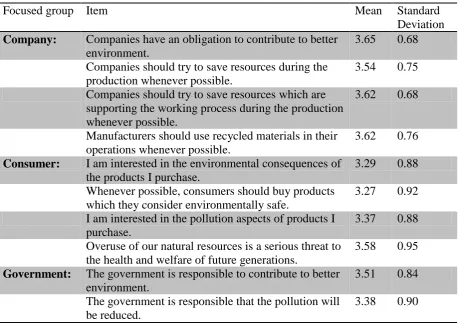
[image:35.595.68.528.334.658.2]The analysis of study 1 showed that the environmental part of the consumers’ CSR attitude and their interest in this topic showed no broad differences between the role of the companies, the role of the consumers, and the role of the government. The company had an average mean of 3.61, consumers of 3.38, and the government of 3.45 which show all very positive attitudes and consumer interests. However, it this shows that consumers see themselves least in responsibility and companies most obligated. An overview about all the items is presented in table 3.
Table 3: Overview about the results of the environmental attitude and consumer interests.
Focused group Item Mean Standard
Deviation
Company: Companies have an obligation to contribute to better environment.
3.65 0.68
Companies should try to save resources during the production whenever possible.
3.54 0.75 Companies should try to save resources which are
supporting the working process during the production whenever possible.
3.62 0.68
Manufacturers should use recycled materials in their operations whenever possible.
3.62 0.76
Consumer: I am interested in the environmental consequences of the products I purchase.
3.29 0.88
Whenever possible, consumers should buy products which they consider environmentally safe.
3.27 0.92 I am interested in the pollution aspects of products I
purchase.
3.37 0.88
Overuse of our natural resources is a serious threat to the health and welfare of future generations.
3.58 0.95
Government: The government is responsible to contribute to better environment.
3.51 0.84 The government is responsible that the pollution will
be reduced.
3.38 0.90
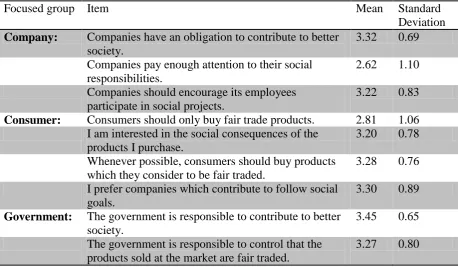
government of 3.36 which is also quite high. As well as for the environmental attitude also in the social attitude consumers see themselves least in responsibility (see table 4).
Table 4: Overview about the results of the social attitude. and consumer interests.
Focused group Item Mean Standard
Deviation
Company: Companies have an obligation to contribute to better society.
3.32 0.69 Companies pay enough attention to their social
responsibilities.
2.62 1.10
Companies should encourage its employees participate in social projects.
3.22 0.83
Consumer: Consumers should only buy fair trade products. 2.81 1.06 I am interested in the social consequences of the
products I purchase.
3.20 0.78 Whenever possible, consumers should buy products
which they consider to be fair traded.
3.28 0.76
I prefer companies which contribute to follow social goals.
3.30 0.89
Government: The government is responsible to contribute to better society.
3.45 0.65 The government is responsible to control that the
products sold at the market are fair traded.
3.27 0.80
Table 5: Overview about the consumer knowledge about environmental topics.
Focused topic Item Mean Standard
Deviation
Energy I do exactly know how I can save energy. 3.31 0.58
Water I do exactly know how I can save water. 3.25 0.56
Transportation I know which sort of transportation is environmentally friendly.
3.20 0.70
Biologic products
[image:37.595.67.534.266.383.2]I know much about biologic products. 2.79 0.93
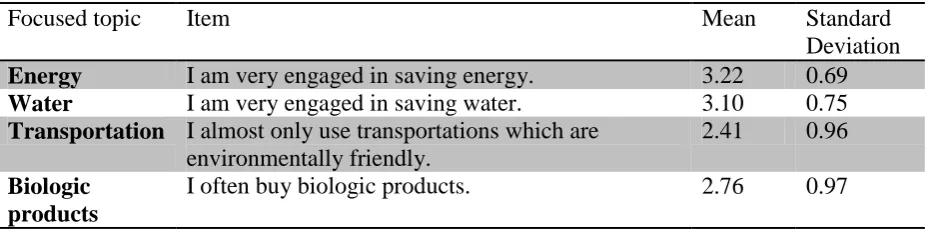
Table 6: Overview about the consumer behavior about environmental topics.
Focused topic Item Mean Standard
Deviation
Energy I am very engaged in saving energy. 3.22 0.69
Water I am very engaged in saving water. 3.10 0.75
Transportation I almost only use transportations which are environmentally friendly.
2.41 0.96
Biologic products
I often buy biologic products. 2.76 0.97
Table 7: Overview about the consumer wish to get more information about environmental
topics.
Focused topic Item Mean Standard
Deviation
Energy I would like to know more methods how I can save energy.
3.24 0.85
Water I would like to know more methods how I can save water.
3.22 0.88
Transportation I would like to get more information which sorts of transportation are environmentally friendly.
3.05 1.00
Biologic products
I would like to get more information about biologic products.
3.03 1.00
Table 8: Overview about the consumer knowledge about social topics.
Focused topic Item Mean Standard
Deviation
Fair trade The consequences are hard if I do not buy fair trade products.
2.80 0.92
Honorary post
I know the possibilities to engage myself in an honorary post.
[image:37.595.66.536.462.605.2] [image:37.595.66.528.664.754.2]Table 9: Overview about the consumer behavior about social topics.
Focused topic Item Mean Standard
Deviation
Fair trade When purchasing products I firstly check if they are fair traded.
2.60 0.964
Honorary post
[image:38.595.63.528.238.327.2]I am engaged myself very much in honorary posts. 2.77 1.13
Table 10: Overview about the consumer wish to get more information about social topics.
Focused topic Item Mean Standard
Deviation
Fair trade I would like to get more information about fair trade products.
3.06 0.96
Honorary post
I would like to know more about how I can engage myself in an honorary post.
2.75 1.16
4.2.
Study 2
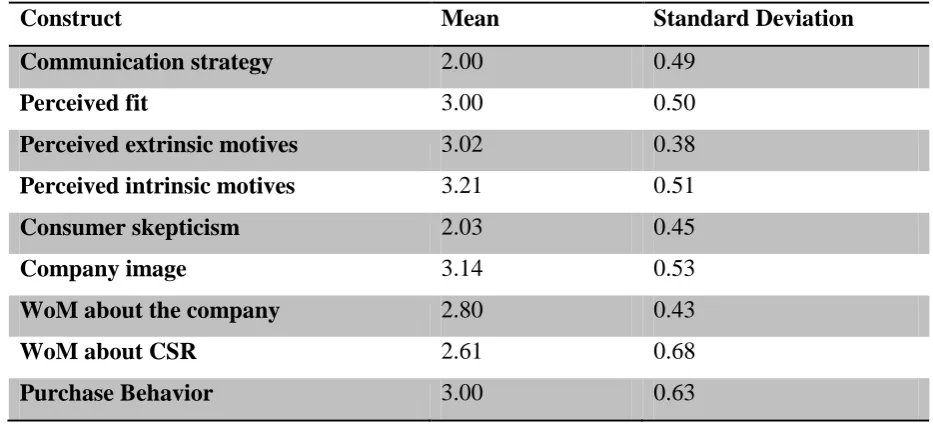
When looking at the means and standard deviations of the constructs of study 2 it was found that the proactivity of the communication strategy has to the lowest mean which shows that the focused companies use in total a mixture of a proactive and reactive communication strategies. Perceived fit, the perceived motives, the company image and purchase behavior showed a higher mean which is higher or equal 3.00. An overview about all means and standard deviations of the constructs is given in table 11.
Table 11: Overview about the mean and standard deviation of the constructs.
Construct Mean Standard Deviation
Communication strategy 2.00 0.49
Perceived fit 3.00 0.50
Perceived extrinsic motives 3.02 0.38
Perceived intrinsic motives 3.21 0.51
Consumer skepticism 2.03 0.45
Company image 3.14 0.53
WoM about the company 2.80 0.43
WoM about CSR 2.61 0.68
[image:38.595.61.528.566.778.2]In order to analyze the aforementioned model multiple regression analyses were treated. In each analysis one factor was set as the dependent variable and all factors which were assumed to influence this variable were set as independent variable. If in this analysis a significant correlation could not be proven or only a small relationship was found a simple linear regression analysis was additionally performed to see whether this time a significant impact occurs.
4.2.1.
The influences of the communication strategy and the perceived fit on
the perceived motives
In the first multiple regression analysis the impact of communication strategy and fit on extrinsic motives as well as on intrinsic motives was conducted. The relationship of the degree of proactivity of the communication strategy on the extrinsic motives could not totally be proven (β = .017). However, when analyzing the stakeholder-driven motives and strategic-driven motives, which are the two sub-constructs of the extrinsic motives, separately, a significant positive impact of a proactive communication strategy and stakeholder-driven motives was found (β = .145, p < .01). For strategic-driven motives no relationship could be proven. For that reason H1a is only partly supported because the stakeholder-driven part of the extrinsic motives supports the hypothesis whereas the strategic-driven part does not.
[image:39.595.68.529.664.726.2]When focusing on the relationship of the perceived fit between the company’s CSR activity and its business and the extrinsic motives of the company, a positive significant relationship was found (β = .486, p < .01). When splitting extrinsic motives up again for stakeholder-driven motives (β = .531, p < .01). β was much higher than for strategic-driven motives (β = .163, p < .01). According to this H4a can be supported. An overview about the impacts on the extrinsic motives is given in table 12.
Table 12: The impact of communication strategy and perceived fit on extrinsic motives.
Construct B SE B β
Communication Strategy .013 .039 .017
Perceived Fit .345 .037 .486**
Another multiple linear regression analysis was performed with communication strategy and fit as independent variables and intrinsic motives as dependent variable. Hereby a significant negative relationship between a proactive communication strategy and the intrinsic motives was proven (β = -.090, p < .05) which supports H1b. When focusing on the relationship of the perceived fit between the company’s CSR activity and its business and the motives of the company, a positive significant relationship for intrinsic motives (β = .557, p < .01) was found. Thus, H4a is supported. An overview about the impacts on the intrinsic motives is given in table 13.
Table 13: The impact of communication strategy and fit on intrinsic motives.
Construct B SE B β
Communication strategy -.092 .044 -.090*
Perceived fit .555 .042 .557**
Dependent Variable: Perceived intrinsic motives; ** = p < .01; * = p < .05; ² = p <.10