Learning Knowledge Base Inference with Neural Theorem Provers
Tim Rockt¨aschel and Sebastian Riedel
University College London London, UK
{t.rocktaschel,s.riedel}@cs.ucl.ac.uk
Abstract
In this paper we present a proof-of-concept implementation of Neural Theorem Provers (NTPs), end-to-end differentiable counter-parts of discrete theorem provers that per-form first-order inference on vector represen-tations of symbols using function-free, possi-bly parameterized, rules. As such, NTPs fol-low a long tradition of neural-symbolic ap-proaches to automated knowledge base infer-ence, but differ in that they are differentiable with respect to representations of symbols in a knowledge base and can thus learn repre-sentations of predicates, constants, as well as rules of predefined structure. Furthermore, they still allow us to incorporate domain-knowledge provided as rules. The NTP pre-sented here is realized via a differentiable ver-sion of the backward chaining algorithm. It operates on substitution representations and is able to learn complex logical dependencies from training facts of small knowledge bases.
1 Introduction
Current state-of-the-art methods for automated knowledge base (KB) construction learn distributed representations of fact triples (Nickel et al., 2012;
Riedel et al., 2013; Socher et al., 2013; Chang et
al., 2014;Neelakantan et al., 2015;Toutanova et al.,
2015). An open question is how to enable first-order reasoning with commonsense knowledge (Nickel et
al., 2015). We believe a promising direction
to-wards this goal is the integration of deep neural net-works with the capabilities of theorem provers. Neu-ral networks can learn to geneNeu-ralize well when
ob-serving many input-output examples, but lack inter-pretability and straightforward ways of incorporat-ing domain-specific knowledge. Theorem provers on the other hand provide effective ways to reason with logical knowledge. However, by operating on discrete symbols they do not make use of similari-ties between predicates or constants in training data (e.g.,LECTURERAT∼PROFESSORAT, ORANGE∼
LEMON, etc).
Recent neural network architectures such as Neu-ral Turing Machines (Graves et al., 2014, NTMs), Memory Networks (Weston et al., 2015b), Neural Stacks/Queues (Grefenstette et al., 2015;Joulin and
Mikolov, 2015), Neural Programmer (Neelakantan
et al., 2016), Neural Programmer-Interpreters (Reed
and de Freitas, 2016) and Hierarchical Attentive
Memory (Andrychowicz and Kurach, 2016) replace discrete functions and data structures by end-to-end differentiable counterparts. As such, they can learn complex behaviour from raw input-output examples via gradient-based optimization.
NTMs and their relatives are capable of learning programs and could in principle learn to emulate a theorem prover. However, they might not be the most efficient neural architecture for learning first-order reasoning from input-output examples. Akin to NTMs, which are end-to-end differentiable coun-terparts of Turing machines, we investigate Neural Theorem Provers(NTPs): end-to-end differentiable versions of automated theorem provers. A distin-guishing property of NTPs is that they are differ-entiable with respect to symbol representations in a knowledge base. This enables us to learn represen-tations of symbols in ground atoms (predicates and
constants) and parameters of first-order rules of pre-defined structure using backpropagation. Further-more, NTPs can seamlessly reason with provided domain-specific rules. As NTPs operate on dis-tributed representations of symbols, a single hand-crafted rule can be leveraged for many proofs of queries with similar symbol representations. Finally, NTPs allow for a high degree of interpretability by providing such proofs.
Our contributions are threefold: (i) we present the construction of an NTP based on differentiable backward chaining and unification, (ii) we show that when provided with rules this NTP can perform first-order inference in vector space like a discrete theo-rem prover would do on symbolic representations, and (iii) we demonstrate that NTPs can learn repre-sentations of symbols and first-order rules of prede-fined structure.
2 Related Work
Combining neural and symbolic approaches for re-lational learning and reasoning has let to many promising neural network architectures over the past decades (Garcez et al., 2012). Early proposals for neural-symbolic networks are limited to proposi-tional formulae(e.g., EBL-ANN (Shavlik and
Tow-ell, 1989), KBANN (Towell and Shavlik, 1994)
and C-ILP (Garcez and Zaverucha, 1999)). Other neural-symbolic approaches focus on first-order in-ference, but do not allow one to learn vector rep-resentations of symbols from training facts of a KB (e.g., SHRUTI (Shastri, 1992), Neural Prolog (Ding, 1995), CLIP++ (Franc¸a et al., 2014) and Lifted Relational Neural Networks (Sourek et al., 2015)). Neural Reasoner (Peng et al., 2015) translates query representations in vector space without rule rep-resentations and can thus not incorporate domain-specific knowledge. Rockt¨aschel et al. (2014),
Rockt¨aschel et al. (2015),Vendrov et al. (2016) and
Hu et al. (2016) regularize distributed
representa-tions via domain-specific rules, but do not learn such rules from data and only support a restricted subset of first-order rules. The NTP proposed here builds upon differentiable backward chaining and is thus related to Unification Neural Networks (
Komen-dantskaya, 2011;H¨olldobler, 1990), but operates on
vector representations of symbols instead of scalar
values. Yin et al. (2015) andAndreas et al. (2016) map queries to multiple differentiable modules that can be used to retrieve answers from a KB. Clark
et al. (2014) extract common-sense knowledge from
textbooks in form of rules to improve KB inference by soft-matching and non-recursive forward infer-ence. Lee et al. (2016) propose a Tensor Product Representation to answer Facebook bAbI (Weston
et al., 2015a) questions. Gu et al. (2015) traverse
KBs in vector space to answer queries. Socher et
al. (2012) and Bowman et al. (2015) demonstrate
that recursive neural networks can learn to evaluate propositional logic expressions.
3 Differentiable Backward Chaining
Backward chaining is a common method for au-tomated theorem proving, and we refer the reader
to Russell and Norvig (1995) for details. Given a
goal/query (e.g. GRANDPARENTOF(X, Y)),
back-ward chaining finds substitutions of free vari-ables with constants of facts in a KB (e.g.
{X/ABE,Y/BART}). This is achieved by
re-cursively iterating through rules that translate a goal into sub-goals which it attempts to prove, thereby exploring possible proofs. For example, the KB could contain the following rule that can be applied to find answers for the above goal:
∀X,Y,Z:PARENTOF(X,Y)∧PARENTOF(Y,Z) ⇒ GRANPARENTOF(X,Z). For the rest of the paper
we assume all free variables are universally quanti-fied. Furthermore, we call the conjunction of atoms before the implication symbol the left-hand side (or body) of the rule and the atom after the implication the right-hand side (or head) of the rule.
The proof exploration in backward-chaining is di-vided into two functions called OR and AND. The
former attempts to prove a goal by unifying it with every rule’s right-hand side in a KB, yielding inter-mediate substitutions. For rules where this succeeds, the left-hand side and substitution is passed to the AND function. AND then attempts to prove every
atom in the body sequentially by first applying sub-stitutions and subsequently calling OR. This is
OrD
T G S
rhs unify
AndD
TG1S1
∅
rhs unify lhs
AndD
TGNSN
· · ·
· · ·
· · ·
merge...
(a)
...
G=#1(#2, Q)
g= [vgrandfatherOf,vAbraham]
S={ } s|τ= 1.0
S={Q/#1}
s|τ=
vLisavBart 00..79 vHomer 0.1
vgrandpaOf(vAbe,vLisa)
s|τ=vLisa 0.7
s|τ=vLisa 0.7
vgrandfatherOf(X, Z)
s|τ=
vvLisaBart 00..29
vHomer 0.1
s|τ=vAbraham 1.0
vfatherOf(X, Y) vparentOf(Y, Z)
AndD
T G S
subst. head(subgoals)
tail(subgoals)
OrD−1
T G0S
· · ·
AndD
T G0S0
AndD
T G0S0
AndD
TG0S0
AndD
T G0S0
· · ·
merge...
(c)
vfatherOf(X, Y) [vparentOf(Y, Z)]
S={Q/Z, X/#1}
s|τ=vAbraham 1.0 G0=#
1(#2, Y)
g= [vfatherOf,vAbraham] S={Q/#1}
s|τ=
vLisa 0.2 vBart 0.9 vHomer 0.1
S0={Q/Z, Y/#
1} AndD
∅
T G S
[image:3.612.75.300.54.495.2](b)
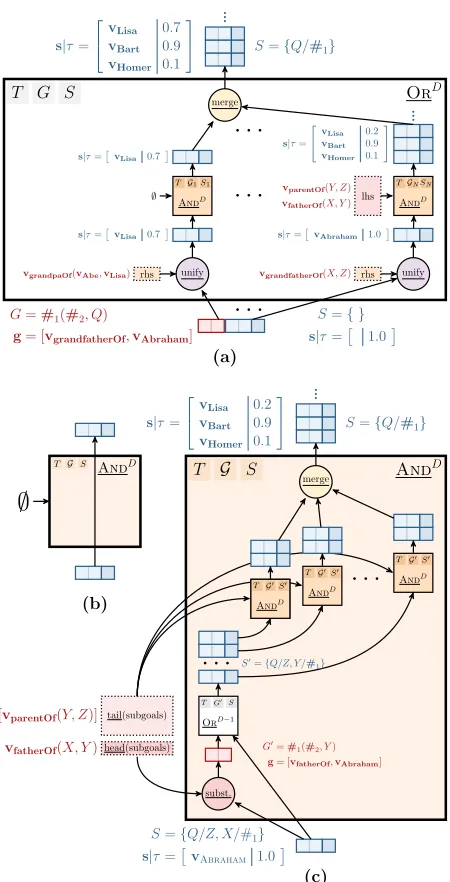
Figure 1:Overview of differentiable backward chaining.
Goal and Substitution Structures The key idea
behind the proof-of-concept NTP presented here is to recursively construct a neural network by replac-ing operations on symbols in backward chainreplac-ing with differentiable operations on distributed repre-sentations. To build such a network we separate goals and substitutions into vector representations
of involved predicates and constants, andstructures
that define the connections of a neural network. For instance, G = #1(#2,X) is an example of a
structure of an entire classof goals. This structure encodes that such goals encompass a vector
repre-sentation of a predicate symbol #1 and the first
ar-gument of the predicate #2. For example, the goal
GRANDPAOF(ABE,X) can be specified by G and
vector representationsg= [vGRANDPAOF,vABE]. Fur-thermore, based on the structure G it is clear that proofs of that goal will be substitutions forX (e.g.
vBART). Akin to goals, we divide substitutions into structures and representations, as well as a scalar score τ ∈ (0,1)that measures the success of the substitution. For example, proofs of goals of the structure G as defined above will be substitutions with the structureS={X/#1}accompanied by
sub-stitution representations (e.g.s= [vBART]).
With this divide we can now redefine operations in backward chaining as follows. Operations that concern variables and rules are mapping goal and substitution structures (G andS) to new structures that instantiate sub-networks. In contrast, operations on symbols of predicates and constants can be com-puted in vector space in a differentiable manner. The resulting recursively constructed NTP is end-to-end differentiable. An overview of the model architec-ture with an example is given in Figure 1 and dis-cussed in detail below.
OR The entry point to the NTP is an OR
net-work (Figure 1a) that for a given goal and substitu-tion structure (G andS) instantiates a sub-network for each one of the N rules in a knowledge base
T. The unification of the ith rule’s right-hand side with a goal structure results in a new substi-tution structure Si. When provided with a goal representation, a unification network is computing the unification success in vector space. For ex-ample, assume at some proof-depth D in the NTP we unify GRANDFATHEROF(ABRAHAM, Q) with GRANDPAOF(ABE,LISA). This will result in a new
substitution structureS0
i = {Q/#1}, representation s= [vLISA]and successτD that is passed further in the network. In contrast to discrete unification that checks for symbol equality, we calculate a soft uni-fication from the previous uniuni-fication success of the outer networkτD+1 and the similarity of predicate
and constant representations as follows:
AND The new substitution structure calculated by
unification instantiates an ANDnetwork (Figure 1c)
at depth D that attempts to sequentially prove the left-hand side atoms of the rule given the current substitutions. If the rule’s left-hand side structure is empty (e.g. when the right-hand side represents a fact in the KB) the AND network simply passes
the substitutions and their success through (Figure 1b). Otherwise, it applies the substitution on the first atom of the left-hand side, resulting in a new goal structure and representation, and instantiates an OR
network with that structure and the previous substi-tution.
For example, assume we have unified the right-hand side of FATHEROF(X, Y) ∧ PARENTOF(Y, Z) ⇒ GRANDFATHEROF(X, Z)
with the goal GRANDFATHEROF(ABRAHAM, Q).
The result is a unification success τD as calculated in Eq. 3, as well as a new substitution structure
S ={Q/Z, X/#1}wheres = [vABRAHAM]becomes
the input to the AND network. This network will
first apply the substitution to FATHEROF(X, Y),
resulting in a new goal structure G0 = #
1(#2, Y).
This structure now instantiates another NTP (i.e. an OR module) of depth D − 1, which
attempts to prove the input goal representation
g= [vFATHEROF,vABRAHAM].
For every proof, i.e., every possible substitu-tion of the structure S0 = {Q/Z, Y/#1}, a new
AND module is instantiated that attempts to
recur-sively prove the remainder of the left-hand side (PARENTOF(Y, Z) in the example above). Finally,
the successes of all identical substitutions (i.e. sub-stitutions to the same variables or representations of constants) are merged by taking their max.
Note that given a KB, goal structure and depth, the network structure of the NTP is fully specified and many goals of the same structure can be used to perform training and inference with the NTP.
Trainable Rules NTPs are not only differentiable
with respect to symbol representations in the KB, but also latent symbol representations in first-order rules of predefined structure. For instance, we could assume that for some predicates in a KB a transi-tive relationship holds. We can define a rule tem-plate #1(X, Y)∧#1(Y, Z)⇒#2(X, Z)whose latent
predicatesv#1,v#2 are trainable parameters and
op-r1 r2 r5 r6 r7
, , , , , z, v, y u, w v, w u, v s, t p, r q, r p, q n, o k, m l, m k, l i, j f, h g, h f, g d, e a, c b, c a, b
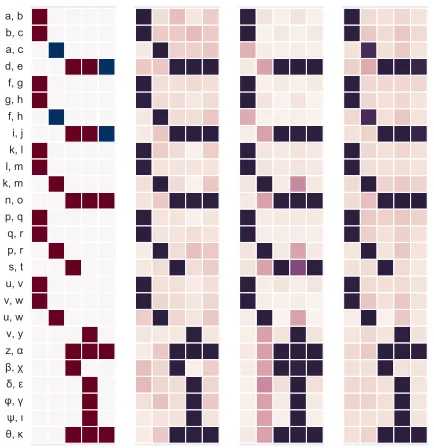
[image:4.612.319.536.52.276.2]NTP = Gold r1 r2 r5 r6 r7NTP = Infer NTP = Factorizer1 r2 r5 r6 r7 r1 r2 r5 r6 r7NTP = Induce
Figure 2: Predictions of different NTP modes on a toy KB where every column (within a subplot) represents a predicate and every row an entity-pair. Training facts (red) and test facts (blue) in the first subplot are consistent with two rules:
r1(X, Y)∧r1(Y, Z)⇒r2(X, Z)andr3(X, Y)∧r4(X, Y)⇒
r5(X, Y). The other three subplots show predictions between 0 (white) and 1 (black) of the different modes discussed in text.
timized in the same way as symbol representations.
4 Experiments and Results
We implemented an NTP with differentiable back-ward chaining in TensorFlow (Abadi et al., 2015). Symbol representations are initialized randomly and constrained to unit-length. During training we iter-ate over the set of known facts, and optimize neg-ative log-likelihood of the proof success of every fact based on all other facts (and rules) using Adam
(Kingma and Ba, 2015). Furthermore, for every
training fact we sample an unobserved fact for the same predicate (but different entity-pair) and opti-mize its proof with a target success of zero.
facts (2nd subplot in Figure 2). The third subplot shows predictions when we let the NTP try to re-construct training facts only with the help of other facts by learning symbol representations (similar to other representation learning approaches for KB in-ference). Finally, a core benefit of the NTP is visi-ble once we provide few reasonavisi-ble rule templates1
and optimize for rule representations that best ex-plain observed facts (4th subplot). We found that this can work remarkably well, but also noticed that the quality of trained rules is varying with different random initialization of the rule’s parameters. We need to investigate in future work how the robust-ness of rule learning in NTPs can be improved.
5 Conclusion and Future Work
We proposed neural theorem provers for knowledge base inference via differentiable backward chaining, which enables learning of symbol representations and parameters of rules of predefined structure.
Our current implementation has severe computa-tional limitations and does not scale to larger KBs as it investigates all possible proof paths. However, there are many possibilities to improve upon the pre-sented architecture. For instance, one can batch-unify all rules whose right-hand side have the same structure and employ existing architectures such as Memory Networks or hierarchical attention for this task. Furthermore, it is possible to partition and batch rules not only by their right-hand side but also left-hand side structure to instantiate a single AND
module for every partition. To further speed-up the prover, we want to investigate processing batches of queries, as well as differentiable ways of maintain-ing only theN best instead of all possible substitu-tion representasubstitu-tions at every depth of the prover. In addition, we will work on more flexible versions of neural theorem provers, for instance, where unifica-tion, rule selection and application itself are train-able functions, or where facts in a KB and goals can be natural language sentences.
Acknowledgments
We thank Isabelle Augenstein, Dirk Weissenborn, Johannes Welbl and the reviewers for comments
1We use #
1(X, Y)⇒#2(X, Y), #1(X, Y)∧#2(X, Y)⇒
#3(X, Y)and #1(X, Y)∧#1(Y, Z)⇒#2(X, Z).
on drafts of this paper. This work was supported by Microsoft Research through its PhD Scholarship Programme and an Allen Distinguished Investigator Award.
References
[Abadi et al.2015] Martın Abadi, Ashish Agarwal, Paul Barham, Eugene Brevdo, Zhifeng Chen, Craig Citro, Greg S Corrado, Andy Davis, Jeffrey Dean, Matthieu Devin, et al. 2015. Tensorflow: Large-scale machine learning on heterogeneous systems.
[Andreas et al.2016] Jacob Andreas, Marcus Rohrbach, Trevor Darrell, and Dan Klein. 2016. Learning to compose neural networks for question answering. In NAACL.
[Andrychowicz and Kurach2016] Marcin Andrychowicz and Karol Kurach. 2016. Learning efficient al-gorithms with hierarchical attentive memory. arXiv preprint arXiv:1602.03218.
[Bowman et al.2015] Samuel R Bowman, Christopher Potts, and Christopher D Manning. 2015. Recursive neural networks can learn logical semantics. InCVSC. [Chang et al.2014] Kai-Wei Chang, Wen-tau Yih, Bishan Yang, and Christopher Meek. 2014. Typed tensor de-composition of knowledge bases for relation extrac-tion. InEMNLP.
[Clark et al.2014] Peter Clark, Niranjan Balasubrama-nian, Sumithra Bhakthavatsalam, Kevin Humphreys, Jesse Kinkead, Ashish Sabharwal, and Oyvind Tafjord. 2014. Automatic construction of inference-supporting knowledge bases. InAKBC.
[Ding1995] Liya Ding. 1995. Neural prolog-the con-cepts, construction and mechanism. In3rd Int. Con-ference Fuzzy Logic, Neural Nets, and Soft Comput-ing.
[Franc¸a et al.2014] Manoel VM Franc¸a, Gerson Za-verucha, and Artur S dAvila Garcez. 2014. Fast re-lational learning using bottom clause propositionaliza-tion with artificial neural networks.Machine learning, 94(1):81–104.
[Garcez and Zaverucha1999] Artur S d’Avila Garcez and Gerson Zaverucha. 1999. The connectionist induc-tive learning and logic programming system. Applied Intelligence, 11(1):59–77.
[Garcez et al.2012] Artur S d’Avila Garcez, Krysia Broda, and Dov M Gabbay. 2012. Neural-symbolic learning systems: foundations and applica-tions. Springer.
[Grefenstette et al.2015] Edward Grefenstette, Karl Moritz Hermann, Mustafa Suleyman, and Phil Blunsom. 2015. Learning to transduce with unbounded memory. InNIPS.
[Gu et al.2015] Kelvin Gu, John Miller, and Percy Liang. 2015. Traversing knowledge graphs in vector space. InEMNLP.
[H¨olldobler1990] S H¨olldobler. 1990. A structured con-nectionist unification algorithm. InAAAI.
[Hu et al.2016] Zhiting Hu, Xuezhe Ma, Zhengzhong Liu, Eduard Hovy, and Eric Xing. 2016. Harnessing deep neural networks with logic rules. arXiv preprint arXiv:1603.06318.
[Joulin and Mikolov2015] Armand Joulin and Tomas Mikolov. 2015. Inferring algorithmic patterns with stack-augmented recurrent nets. InNIPS.
[Kingma and Ba2015] Diederik Kingma and Jimmy Ba. 2015. Adam: A method for stochastic optimization. ICLR.
[Komendantskaya2011] Ekaterina Komendantskaya. 2011. Unification neural networks: unification by error-correction learning. Logic Journal of IGPL, 19(6):821–847.
[Lee et al.2016] Moontae Lee, Xiaodong He, Wen-tau Yih, Jianfeng Gao, Li Deng, and Paul Smolensky. 2016. Reasoning in vector space: An exploratory study of question answering. InICLR.
[Neelakantan et al.2015] Arvind Neelakantan, Benjamin Roth, and Andrew McCallum. 2015. Compositional vector space models for knowledge base completion. InACL.
[Neelakantan et al.2016] Arvind Neelakantan, Quoc V Le, and Ilya Sutskever. 2016. Neural programmer: Inducing latent programs with gradient descent. In ICLR.
[Nickel et al.2012] Maximilian Nickel, Volker Tresp, and Hans-Peter Kriegel. 2012. Factorizing yago: scalable machine learning for linked data. InWWW.
[Nickel et al.2015] Maximilian Nickel, Kevin Murphy, Volker Tresp, and Evgeniy Gabrilovich. 2015. A review of relational machine learning for knowledge graphs: From multi-relational link prediction to auto-mated knowledge graph construction.IEEE.
[Peng et al.2015] Baolin Peng, Zhengdong Lu, Hang Li, and Kam-Fai Wong. 2015. Towards neural network-based reasoning. InRAM.
[Reed and de Freitas2016] Scott Reed and Nando de Fre-itas. 2016. Neural programmer-interpreters. InICLR. [Riedel et al.2013] Sebastian Riedel, Limin Yao, Andrew
McCallum, and Benjamin M Marlin. 2013. Rela-tion extracRela-tion with matrix factorizaRela-tion and universal schemas. InNAACL.
[Rockt¨aschel et al.2014] Tim Rockt¨aschel, Matko Bosn-jak, Sameer Singh, and Sebastian Riedel. 2014. Low-dimensional embeddings of logic. InSP14.
[Rockt¨aschel et al.2015] Tim Rockt¨aschel, Sameer Singh, and Sebastian Riedel. 2015. Injecting Logical Back-ground Knowledge into Embeddings for Relation Ex-traction. InNAACL.
[Russell and Norvig1995] Stuart J Russell and Peter Norvig. 1995. Artificial Intelligence: Modern Ap-proach. Prentice Hall, 3rd edition.
[Shastri1992] Lokendra Shastri. 1992. Neurally moti-vated constraints on the working memory capacity of a production system for parallel processing: Implica-tions of a connectionist model based on temporal syn-chrony. InConference of the Cognitive Science Soci-ety. Psychology Press.
[Shavlik and Towell1989] Jude W Shavlik and Geof-frey G Towell. 1989. An approach to combin-ing explanation-based and neural learncombin-ing algorithms. Connection Science, 1(3):231–253.
[Socher et al.2012] Richard Socher, Brody Huval, Christopher D Manning, and Andrew Y Ng. 2012. Semantic compositionality through recursive matrix-vector spaces. InEMNLP.
[Socher et al.2013] Richard Socher, Danqi Chen, Christo-pher D Manning, and Andrew Ng. 2013. Reasoning with neural tensor networks for knowledge base com-pletion. InNIPS.
[Sourek et al.2015] Gustav Sourek, Vojtech Aschenbren-ner, Filip Zelezny, and Ondrej Kuzelka. 2015. Lifted relational neural networks. arXiv preprint arXiv:1508.05128.
[Toutanova et al.2015] Kristina Toutanova, Danqi Chen, Patrick Pantel, Pallavi Choudhury, and Michael Ga-mon. 2015. Representing text for joint embedding of text and knowledge bases. InEMNLP.
[Towell and Shavlik1994] Geoffrey G Towell and Jude W Shavlik. 1994. Knowledge-based artificial neural net-works. Artificial intelligence, 70(1):119–165.
[Vendrov et al.2016] Ivan Vendrov, Ryan Kiros, Sanja Fi-dler, and Raquel Urtasun. 2016. Order-embeddings of images and language. InICLR.
[Weston et al.2015a] Jason Weston, Antoine Bordes, Sumit Chopra, and Tomas Mikolov. 2015a. Towards ai-complete question answering: A set of prerequisite toy tasks. arXiv preprint arXiv:1502.05698.
[Weston et al.2015b] Jason Weston, Sumit Chopra, and Antoine Bordes. 2015b. Memory networks. InICLR. [Yin et al.2015] Pengcheng Yin, Zhengdong Lu, Hang Li,