Original Article
Association between MTHFR A1298C polymorphism
and digestive system cancer susceptibility: a
meta-analysis based on sixty-five case-control studies
Xiaofan Deng
1*, Lingli Li
2*, Lingjun Xie
2, Shan Wu
2, Ning Ning
2, Xiaoling Hou
21Center of Organ Transplantation, Sichuan Academy of Medical Science & Sichuan Provincial People’s Hospital,
Chengdu, China; 2West China Hospital, Sichuan University, No. 37, Guoxuexiang, Chengdu 610041, China. *Equal
contributors.
Received January 25, 2016; Accepted April 29, 2016; Epub June 15, 2016; Published June 30, 2016
Abstract: Previous studies have explored the association between MTHFR A1298C polymorphism and digestive system cancers susceptibility but result still remains controversial. A meta-analysis was performed to clarify the ef-fect of MTHFR A1298C polymorphism on the risk of digestive system cancers. PubMed, EMBASE, Cochrane library, Web of science and China Knowledge Resource Integrated Databases (until December 1, 2015) were searched. The
overall odds ratio (OR) with the corresponding 95% confidence interval (95% CI) was used to assess the strength of
the association between the MTHFR A1298C polymorphism and digestive system cancers susceptibility. Statistical heterogeneity, tests of publication bias and sensitivity analysis was performed. The software STATA (Version 13.0)
was used for statistical analysis. Finally, sixty-five studies from sixty-one papers included a total of 18, 259 cases
and 31, 161 controls were selected in this meta-analysis. The ORs for the homozygote comparison was 0.946, 95% CI [0.837, 1.069], for heterozygote comparison was 1.039, 95% CI [0.998, 1.082], for dominant model was 1.029, 95% CI [0.990, 1.069], for recessive model was 0.960, 95% CI [0.896, 1.029]. In conclusion, the overall results
of this meta-analysis don’t support a significant association of the MTHFR A1298C polymorphism with the risk of digestive system cancers. However, when a subgroup analysis stratified by subtypes of digestive system cancers was performed, a significant correlation between MTHFR A1298C polymorphism and esophagus cancer risk was
observed.
Keywords: MTHFR, A1298C, polymorphism, digestive system cancer, meta-analysis
Introduction
Digestive system cancers, mainly including
esophagus cancer, colorectal cancer, gastric
cancer, hepatocellular carcinoma, pancreatic
cancer, et al., are the most common malignant
tumors worldwide, with three million new cases
each year (nearly 30% of all cancers) [1]. It was
reported that there were about 0.91 million
new cases of digestive system cancers and
0.59 million deaths from these health care
problems in 2008 in European countries [2].
Even the prevalence of digestive system
can-cers in developed countries was shown to be
higher compared to that in devel oping
coun-tries, the upward trends have been observed in
the majority of developing countries [3].
Although the exact mechanism of
carcinogene-from previous studies has indicated that
cer-tain risk factors (such as dietary, ethnic and
socioeconomic factors) and interactions
between genetic and environmental factors
may play important roles in the pathogenesis of
digestive system cancers [4]. 5,
10-methylene-tetrahydrofolate reductase (MTHFR), a critical
role in the folate metabolism pathway,
irrevers-ibly catalyzes the conversion of 5, 10-methyl-
enetetrahydrofolate to
5-methyltetrahydrofo-late, the predominant.
chromo-and is 2.2 kb in length with a total of 11 exons.
MTHFR gene A1298C (rs1801131) in exon 7, a
glutamate to alanine substitution at codon 429
(E429A), could increase the serum folate
lev-els, possibly influencing cancer risk.
The MTHFR A1298C polymorphism has been
reported to be associated with several types of
digestive system cancers, including esophagus
cancer, colorectal cancer, gastric cancer,
hepa-tocellular carcinoma, pancreatic cancer. How-
ever, the result remains controversial and the
previous studies have generally been
small-sized. Meta-analysis, a good statistical method
to combine the results from multiple studies, is
often used in recent years to increase
statisti-cal power, improve estimates of the magnitude
of an effect and to resolve uncertainty across
conflicting reports.
Based on the most up-to-date information and
the current available evidences, a
meta-analy-sis with subgroup analymeta-analy-sis from all eligible
case-control studies was performed in this
study to clarify the effect of MTHFR A1298C
polymorphism on the risk of digestive system
cancers. To the best of our knowledge, this is
the first meta-analysis concerning MTHFR
A1298C polymorphism and digestive system
cancers susceptibility.
ing available genotype frequencies of A1298C
were chosen. The reference lists of reviews
andrelated reference articles were also sear-
ched to identify other relevant publications.
Studies published in English or in Chinese
lan-guage were selected. Unpublished data were
not included.
Inclusion and exclusion criteria
Included studies had to satisfy the following
cri-teria: 1) human case-control design; 2) MTHFR
A1298C polymorphism and digestive system
cancers susceptibility; 3) studies that reported
the frequency of the MTHFR A1298C
polymor-phism as number of digestive system cancers
and controls according to the three variant
gen-otypes of either polymorphisms; 4) studies
pub-lished in English or in Chinese; 5) studies
con-tained at least one of the five main subtypes of
digestive system cancers: esophagus cancer,
colorectal cancer, gastric cancer,
hepatocellu-lar carcinoma, pancreatic cancer.
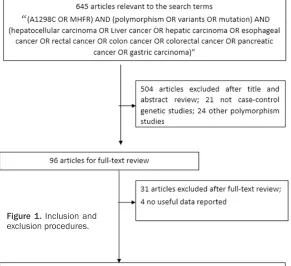
[image:2.612.92.383.76.342.2]The major exclusion criterion are as follows: 1)
not a primary case-control study; 2) using the
MTHFR A1298C polymorphism to predict
sur-vival in cancers or considering it an indicator for
the response to therapy; 3) not related to the
Figure 1. Inclusion andexclusion procedures.
Materials and methods
Search strategy
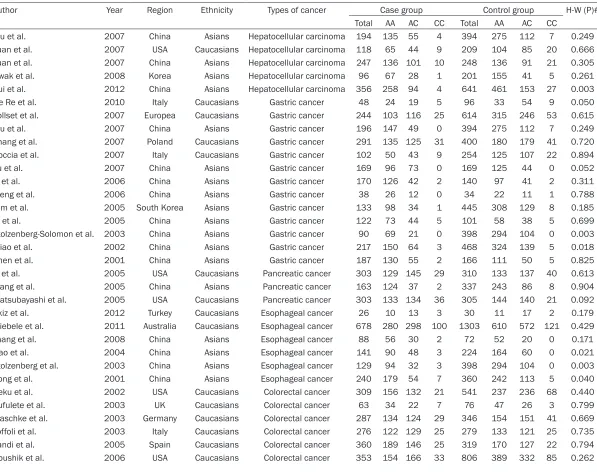
contain-Table 1. Characteristics of studies included in this meta-analysis
Author Year Region Ethnicity Types of cancer Case group Control group H-W (P)#
Total AA AC CC Total AA AC CC
Mu et al. 2007 China Asians Hepatocellular carcinoma 194 135 55 4 394 275 112 7 0.249
Yuan et al. 2007 USA Caucasians Hepatocellular carcinoma 118 65 44 9 209 104 85 20 0.666
Yuan et al. 2007 China Asians Hepatocellular carcinoma 247 136 101 10 248 136 91 21 0.305
Kwak et al. 2008 Korea Asians Hepatocellular carcinoma 96 67 28 1 201 155 41 5 0.261
Cui et al. 2012 China Asians Hepatocellular carcinoma 356 258 94 4 641 461 153 27 0.003
De Re et al. 2010 Italy Caucasians Gastric cancer 48 24 19 5 96 33 54 9 0.050
Vollset et al. 2007 Europea Caucasians Gastric cancer 244 103 116 25 614 315 246 53 0.615
Mu et al. 2007 China Asians Gastric cancer 196 147 49 0 394 275 112 7 0.249
Zhang et al. 2007 Poland Caucasians Gastric cancer 291 135 125 31 400 180 179 41 0.720
Boccia et al. 2007 Italy Caucasians Gastric cancer 102 50 43 9 254 125 107 22 0.894
Fu et al. 2007 China Asians Gastric cancer 169 96 73 0 169 125 44 0 0.052
Li et al. 2006 China Asians Gastric cancer 170 126 42 2 140 97 41 2 0.311
Weng et al. 2006 China Asians Gastric cancer 38 26 12 0 34 22 11 1 0.788
Kim et al. 2005 South Korea Asians Gastric cancer 133 98 34 1 445 308 129 8 0.185
Si et al. 2005 China Asians Gastric cancer 122 73 44 5 101 58 38 5 0.699
Stolzenberg-Solomon et al. 2003 China Asians Gastric cancer 90 69 21 0 398 294 104 0 0.003
Miao et al. 2002 China Asians Gastric cancer 217 150 64 3 468 324 139 5 0.018
Shen et al. 2001 China Asians Gastric cancer 187 130 55 2 166 111 50 5 0.825
Li et al. 2005 USA Caucasians Pancreatic cancer 303 129 145 29 310 133 137 40 0.613
Wang et al. 2005 China Asians Pancreatic cancer 163 124 37 2 337 243 86 8 0.904
Matsubayashi et al. 2005 USA Caucasians Pancreatic cancer 303 133 134 36 305 144 140 21 0.092
Ekiz et al. 2012 Turkey Caucasians Esophageal cancer 26 10 13 3 30 11 17 2 0.179
Ibiebele et al. 2011 Australia Caucasians Esophageal cancer 678 280 298 100 1303 610 572 121 0.429
zhang et al. 2008 China Asians Esophageal cancer 88 56 30 2 72 52 20 0 0.171
Gao et al. 2004 China Asians Esophageal cancer 141 90 48 3 224 164 60 0 0.021
Stolzenberg et al. 2003 China Asians Esophageal cancer 129 94 32 3 398 294 104 0 0.003
Song et al. 2001 China Asians Esophageal cancer 240 179 54 7 360 242 113 5 0.040
Keku et al. 2002 USA Caucasians Colorectal cancer 309 156 132 21 541 237 236 68 0.440
Pufulete et al. 2003 UK Caucasians Colorectal cancer 63 34 22 7 76 47 26 3 0.799
Plaschke et al. 2003 Germany Caucasians Colorectal cancer 287 134 124 29 346 154 151 41 0.669
Toffoli et al. 2003 Italy Caucasians Colorectal cancer 276 122 129 25 279 133 121 25 0.735
Landi et al. 2005 Spain Caucasians Colorectal cancer 360 189 146 25 319 170 127 22 0.794
[image:3.792.100.697.82.555.2]Van Guelpen et al. 2006 Sweden Caucasians Colorectal cancer 220 85 103 32 412 189 173 50 0.288
Osian et al. 2007 Romania Caucasians Colorectal cancer 69 33 32 4 67 41 25 1 0.192
Lima et al. 2007 Brazil Caucasians Colorectal cancer 102 68 28 6 300 191 93 16 0.297
Theodoratou et al. 2008 Scotland Caucasians Colorectal cancer 996 465 425 106 1009 462 445 102 0.733
Sharp et al. 2008 Scotland Caucasians Colorectal cancer 245 105 111 29 394 177 157 60 0.012
Küry et al. 2008 France Caucasians Colorectal cancer 1023 484 432 107 1121 577 443 101 0.231
De Vogel et al. 2009 Netherlands Caucasians Colorectal cancer 684 299 275 110 1767 735 774 258 0.021
Fernández-Peralta et al. 2010 Spain Caucasians Colorectal cancer 143 84 53 6 103 57 44 2 0.048
Eussen et al. 2010 Europe Caucasians Colorectal cancer 1330 605 574 151 2365 1099 1007 259 0.215
Pardini et al. 2011 Czech Caucasians Colorectal cancer 666 281 309 76 1377 583 638 156 0.349
Lee et al. 2012 USA Caucasians Colorectal cancer 175 72 82 21 355 181 136 38 0.108
Lee et al. 2012 USA Caucasians Colorectal cancer 153 73 73 7 312 147 133 32 0.812
Lee et al. 2012 USA Caucasians Colorectal cancer 213 101 100 12 365 167 154 44 0.358
Matsuo et al. 2002 Japan Asians Colorectal cancer 141 94 44 3 482 314 150 18 0.987
Yin et al. 2004 Japan Asians Colorectal cancer 672 428 218 26 1826 1300 488 38 0.320
Matsuo et al. 2005 Japan Asians Colorectal cancer 257 163 85 9 767 479 257 31 0.635
Jiang et al. 2005 China Asians Colorectal cancer 124 93 30 1 670 452 206 12 0.035
Otani et al. 2005 Japan Asians Colorectal cancer 106 73 32 1 224 156 63 5 0.643
Wang et al. 2006 India Caucasians Colorectal cancer 302 141 130 31 582 210 270 102 0.346
Chang et al. 2007 China Asians Colorectal cancer 195 120 65 10 195 127 55 13 0.046
Cao et al. 2008 China Asians Colorectal cancer 315 204 105 6 742 478 238 26 0.586
Promthet et al. 2010 Thailand Asians Colorectal cancer 130 43 84 3 130 54 71 5 0.002
Chandy et al. 2010 India Caucasians Colorectal cancer 100 22 70 8 86 22 50 14 0.109
Kim et al. 2011 Korea Asians Colorectal cancer 67 44 22 1 53 36 16 1 0.607
Li et al. 2011 China Asians Colorectal cancer 137 88 47 2 145 76 60 9 0.529
Keku et al. 2002 USA Africans Colorectal cancer 243 157 78 8 329 217 99 13 0.686
Lima et al. 2007 Brazil Africans Colorectal cancer 10 5 4 1 300 191 93 16 0.297
El Awady et al. 2009 Egypt Africans Colorectal cancer 35 5 21 9 78 26 37 15 0.777
Miranda Guimarães et al. 2011 Brazil Africans Colorectal cancer 113 67 38 8 374 252 98 24 0.001
Curtin et al. 2004 USA Mixed Colorectal cancer 1608 757 698 153 1972 929 827 216 0.119
Murtaugh et al. 2007 USA Mixed Colorectal cancer 742 360 317 65 970 436 424 110 0.653
MTHFR A1298C polymorphism and digestive
system cancers susceptibility; 4) no usable or
sufficient genotype data reported; 5) case
reports, letter to Editor, book chapters or
reviews; 6) duplicate of previous publication.
The study inclusion and exclusion procedures
are summarized in Figure 1.
Data extraction
Two investigators independently extracted the
data from all qualified studies according to the
inclusion and exclusion criteria listed above.
Discrepancies were solved through discussion
with another investigator until agreement was
reached.
The following data was extracted: the first
author’s name, year of publication, the region
in which the study was conducted, the source
of control group evidence of Hardy-Weinberg
equilibrium (HWE) in controls, the sample size,
number of cases and controls with the AA/AC/
CC genotypes. Different ethnic descentswere
categorized as Caucasians, Africans, Asians
and Mixed, which included more than one
eth-nic descent.
Statistical analysis
The overall odds ratio (OR) with
thecorrespond-ing 95% confidence interval (95% CI) was used
to assess the strength of the association
between the MTHFR A1298C polymorphism
and digestive system cancers susceptibility [6].
For the control groups for each study, the
observed genotype frequencies of the MTHFR
A1298C polymorphism were evaluated for
Hardy-Weinberg equilibrium using the χ
2test
(significant at the 0.05 level). The pooled ORs
were calculated for the homozygous model (CC
vs. AA), heterozygous model (AC vs. AA),
domi-nant model (AC + CC vs. AA), recessive model
(CC vs. AC + AA) and an additive model (C vs. A)
[7, 8]. Heterogeneity assumption was checked
by a chi square-based Q-test, P < 0.10 and I
2>
50% were considered to indicate the existence
of significant heterogeneity [9]. A
P
value of <
0.05 for the Q-test indicated a lack of
heteroge-neity among studies, so that the pooled OR
estimate of each study was calculated by
the fixed-effects model (the Mantel-Haenszel
method). If the heterogeneity test result re-
turned P > 0.05, the pooled ORs were using the
random-effects model(the DerSimonian and
Laird method) [9, 10]. Sensitivity analyses were
also performed after sequential removal of
each study [11]. Lastly, Begg’s funnel plot and
Egger’s test were used to examine statistically
any publication bias [12, 13]. All statistical
analyses were performed using the STATA
soft-ware 13.0 (StataCrop, College Station, TX).
Two-sided
P
values less than 0.05 were
consid-ered statistically significant.
Result
Characteristics of the included studies
Finally, sixty-five studies from sixty-one papers
included a total of 18, 259 cases and 31, 161
controls were selected in this meta-analysis
[14-74]. Some articles may include two or three
studies at the same time. Of these, all studies
were case-control studies, including 6
esopha-gus cancer studies, 38 colorectal cancer
stud-ies, 13 gastric cancer studstud-ies, 5 hepatocellular
carcinoma studies and 3 pancreatic cancer
studies. Among these studies, 30 studies were
conducted in Caucasian populations, 4 studies
were conducted in Africans, 3 studies were
conducted in Mixed populations and 28
involved Asian populations. The characteristics
of all included studies were summarized in
Table 1.
Results of the overall meta-analysis
[image:5.612.89.522.85.161.2]The main results on the association between
the MTHFR A1298C polymorphism and
diges-tive system cancers risk were listed in Table 2.
Table 2. Results of the overall meta-analysis
Contrast OR, 95% CI Heterogeneity Z and P
The MTHFR A1298C polymorphism showed
pooled odds ratios for the homozygote
compar-ison (CC versus AA: OR = 0.946, 95% CI [0.837,
1.069], chi-squared = 116.07, I-squared =
46.6%), heterozygote comparison (AC versus
[image:6.612.90.525.72.613.2]OR = 0.960, 95% CI [0.896, 1.029], chi-squared
[image:7.612.88.521.75.650.2]= 105.59, I-squared = 41.3%), and an additive
model (C versus A: OR = 1.010, 95% CI [0.980,
1.040], chi-squared = 124.99, I-squared =
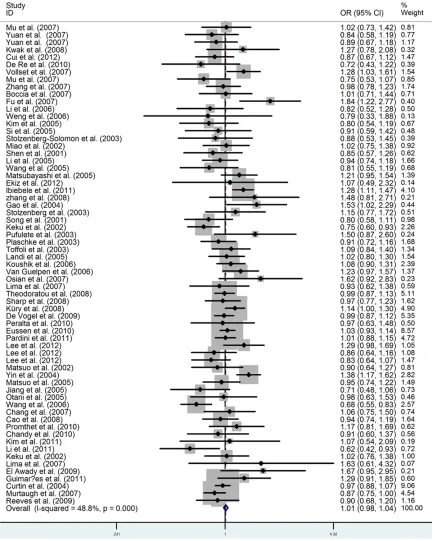
Figure 3. Fixed effect forest plot of homozygote comparison (CC versus AA) of MTHFR A1298C Polymorphism and48.8%). We found no association between
[image:8.612.92.517.72.665.2]MTHFR A1298C polymorphism anddigestive
system cancers risk in the overall analysis
(Figure 2).
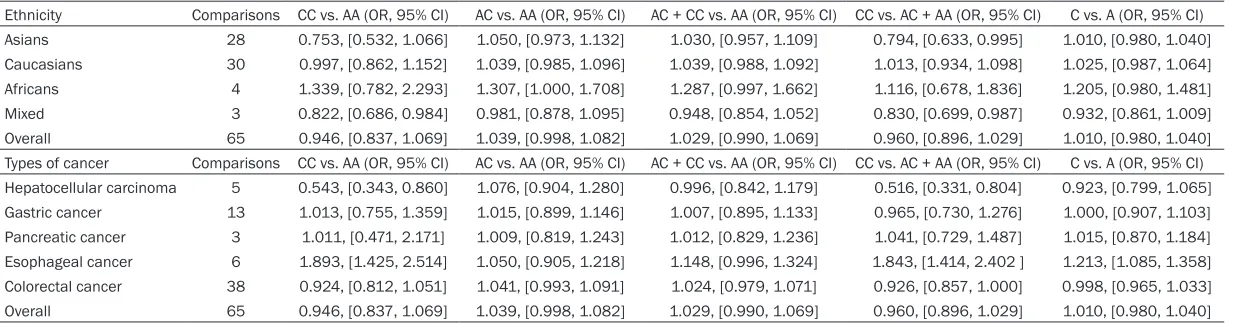
Figure 4. Fixed effect forest plot of homozygote comparison (CC versus AA) of MTHFR A1298C Polymorphism andTable 3.
Sub-group analysis stratified by ethnicity and types of digestive system cancers
Sub-group analysis
We performed a sub-group analysis stratified
by ethnicity. However, we did not find an asso
-ciation between the A1298C polymorphism
and digestive system cancers risk in
Caucasians, Africans, Asians and Mixed groups
in any genetic models (Figure 3). A sub-group
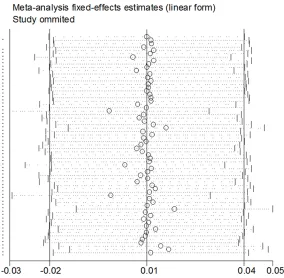
result showed that no individual study had
marked effect on the pooled ORs (Figure 5).
Publication bias
[image:10.612.91.375.71.349.2]Begg’s funnel plot and the Egger’s test were
conducted to estimate the publication bias of
articles. Both the results of Begg’s and Egger’s
Figure 5. Sensitivity analysis forMTHFR A1298C Polymorphism and digestivesystem cancers (C versus A).
Figure 6. Tests of publication bias for MTHFR A1298C Polymorphism and digestive system cancers (C versus A).
analysis stratified by sub
-types of digestive system can-
cers was also conducted. No
association between MTHFR
A1298C polymorphism and
digestive system cancers risk
was observed in colorectal
cancer, gastric cancer,
hepa-tocellular carcinoma and
pan-creatic cancer, whereas a
sig-nificant correlation between
MTHFR A1298C polymorphi-
sm and esophagus cancer
risk was found (Figure 4). The
meta-analysis results for the
all genetic models are listed
in detail in Table 3.
Test for heterogeneity
There was nosignificant het
-erogeneity: for the
homozy-gote comparison (CC versus
AA), chi-squared = 116.07,
I-squared = 46.6%;
heterozy-gote comparison (AC versus
AA) chi-squared = 88.19, I-
squared = 27.4%; dominant
model (AC + CC versus AA),
chi-squared = 106.77, I-squa-
red = 40.1%; recessive model
(CC versus AC + AA),
chi-squared = 105.59, I-squa-
red = 41.3% and an additive
model (C versus A),
chi-squared = 124.99, I-chi-squared
= 48.8%.
Sensitivity analysis
[image:10.612.92.377.400.594.2]test did not show any evidence of publication
bias: Begg’s test: Pr > |z| = 0.647 and Egger’s
test: P > |t| =0.721 (Figure 6).
Discussion
MTHFR, coded by the MTHFR gene, is an
impor-tant enzyme in folate metabolism [75-78].
Previous studies have explored the association
between MTHFR A1298C polymorphism and
digestive system cancers susceptibility but
result still remains controversial. Considering
the limitations of individual studies, a
meta-analysis with subgroup meta-analysis based on 65
case-control studies was performed in this
study to clarify the effect of MTHFR A1298C
polymorphism on the risk of digestive system
cancers. To the best of our knowledge, this is
the first meta-analysis concerning MTHFR
A1298C polymorphism and digestive system
cancers susceptibility.
The overall results of this meta-analysis did not
support a significant association between
MTHFR A1298C polymorphism and digestive
system cancers susceptibility in all genetic
models. Results from sub-group analysis
strati-fied by ethnicity showed no significant associa
-tion between the A1298C polymorphism and
digestive system cancers risk in Caucasians,
Africans, Asians and Mixed groups. However,
when a subgroup analysis stratified by sub
-types of digestive system cancers was
per-formed, a significant correlation between
MTHFR A1298C polymorphism and esophagus
cancer risk was observed. Significant associa
-tion between MTHFR A1298C polymorphism
and digestive system cancers risk was
not-found in colorectal cancer, gastric cancer,
hepatocellular carcinoma and pancreatic
can-cer when stratified by subtypes of digestive sys
-tem cancers. By means of meta-analysis, we
drew a more reliable conclusion on the influ
-ence of MTHFR A1298C polymorphism
ondi-gestive system cancers risk. However, cancer is
a “multi-factorial” result, with many factors,
genetic and/or environmental. Future research
should investigate not only individual genes,
but also gene-gene interactions,
genetic-nutri-tional interactions, and other SNPs [79-83].
Although the funnel plot and Begg’s test
showed no publication bias in this study,
selec-tion bias may have occurred since only studies
in English or Chinese were included. The
sec-ond limitation of this study is that we just
included five main subtypes of digestive sys
-tem cancers (esophagus cancer, colorectal
cancer, gastric cancer, hepatocellular
carcino-ma and pancreatic cancer). Failing to include all
types of digestive system cancers may
poten-tially have an impact on the overall results of
this meta-analysis. The third limitation of this
meta-analysis is that colon cancer and rectum
cancer were not analyzed separately as most of
the original studies included in this
meta-analy-sisregarded colon cancer and rectum cancer
as colorectal cancer.
Our meta-analysis also has some clear
advan-tages: 1) this is the first meta-analysis concern
-ing the association between the MTHFR
A1298C polymorphism and digestive system
cancersrisk and five studies from
sixty-one papers included a total of 18, 259 cases
and 31, 161 controls were selected; 2) we
per-formed sub-group analysis stratified by ethnici
-ty and by -types of digestive system cancers; 3)
the well-designed search and selection method
significantly increased the statistical power of
this meta-analysis; 4) sensitivity analysis did
not show any single study strongly affecting the
combined results and no publication bias was
detected, indicating that our pooled results are
likely to be reliable.
Conclusion
In conclusion, the overall results of this
meta-analysis don’t support a significant asso
-ciation of the MTHFR A1298C polymorphism
with the risk of digestive system cancers.
However, when a subgroup analysis stratified
by subtypes of digestive system cancers was
performed, a significant correlation between
MTHFR A1298C polymorphism and esophagus
cancer risk was observed.
Disclosure of conflict of interest
None.
Address correspondence to: Lingli Li, West China Hospital, Sichuan University, No. 37, Guoxuexiang, Chengdu 610041, Sichuan Province, China. Tel: +8618980602161; E-mail: [email protected]; [email protected]
References
worldwide: sources, methods and major pat-terns in GLOBOCAN 2012. Int J Cancer 2015; 136: E359-386.
[2] Ferlay J, Parkin DM and Steliarova-Foucher E. Estimates of cancer incidence and mortality in Europe in 2008. Eur J Cancer 2010; 46: 765-781.
[3] Hitt NP and Hendryx M. Ecological integrity of streams related to human cancer mortality rates. Ecohealth 2010; 7: 91-104.
[4] Pharoah PD, Dunning AM, Ponder BA and
Easton DF. Association studies for finding can -cer-susceptibility genetic variants. Nat Rev Cancer 2004; 4: 850-860.
[5] Choi SW and Mason JB. Folate and carcinogen-esis: an integrated scheme. J Nutr 2000; 130: 129-132.
[6] Yang Y, Chen J, Wang B, Ding C and Liu H. Association between MTHFR C677T polymor-phism and neural tube defect risks: A compre-hensive evaluation in three groups of NTD pa-tients, mothers, and fathers. Birth Defects Res A Clin Mol Teratol 2015; 103: 488-500. [7] Yang Y, Luo Y, Yuan J, Tang Y, Xiong L, Xu M,
Rao X and Liu H. Association between mater-nal, fetal and paternal MTHFR gene C677T and A1298C polymorphisms and risk of recur-rent pregnancy loss: a comprehensive evalua-tion. Arch Gynecol Obstet 2016; 293: 1197-211.
[8] Yang Y and Liu H. Association between inter-leukin-18 gene promoter (- 607C/A and - 137G/C) polymorphisms and chronic hepatitis C virus infections: A meta-analysis. Meta Gene 2015; 5: 21-31.
[9] Jackson D, White IR and Riley RD. Quantifying the impact of between-study heterogeneity in multivariate meta-analyses. Stat Med 2012; 31: 3805-3820.
[10] Higgins JP and Thompson SG. Quantifying het-erogeneity in a meta-analysis. Stat Med 2002; 21: 1539-1558.
[11] Yang Y, Ma L, Liu H and Xu M. A Meta-Analysis of the Incidence of Patient-Reported Dysphagia After Anterior Cervical Decompression and
Fusion with the Zero-Profile Implant System.
Dysphagia 2016; 31:134-45.
[12] DerSimonian R and Laird N. Meta-analysis in clinical trials. Control Clin Trials 1986; 7: 177-188.
[13] Mantel N and Haenszel W. Statistical aspects of the analysis of data from retrospective stud-ies of disease. J Natl Cancer Inst 1959; 22: 719-748.
[14] Mu LN, Cao W, Zhang ZF, Cai L, Jiang QW, You NC, Goldstein BY, Wei GR, Chen CW, Lu QY, Zhou XF, Ding BG, Chang J and Yu SZ. Methylenetetrahydrofolate reductase (MTHFR) C677T and A1298C polymorphisms and the
risk of primary Hepatocellular Carcinoma (HCC) in a Chinese population. Cancer Causes Control 2007; 18: 665-675.
[15] Yuan JM, Lu SC, Van Den Berg D, Govindarajan S, Zhang ZQ, Mato JM and Yu MC. Genetic poly-morphisms in the methylenetetrahydrofolate reductase and thymidylate synthase genes and risk of hepatocellular carcinoma. Hepatology 2007; 46: 749-758.
[16] Kwak SY, Kim UK, Cho HJ, Lee HK, Kim HJ, Kim NK and Hwang SG. Methylenetetrahydrofolate Reductase (MTHFR) and Methionine Synthase Reductase (MTRR) Gene Polymorphisms as Risk Factors for Hepatocellular Carcinoma in a Korean Population. Anticancer Res 2008; 28: 2807-2811.
[17] Cui LH, Song Y, Si H, Shen F, Shin MH, Kim HN and Choi JS. Folate metabolism-related gene polymorphisms and susceptibility to primary liver cancer in North China. Medical Oncol 2012; 29: 1837-1842.
[18] Yang H. Genetic association between candi-date genes polymorphisms andsusceptibility to chronic hepatitis B, hepatocellular carcino-ma and nasopharyngealcarcinocarcino-ma in Chinese population (Master Thesis; in chinese). Availa- ble at http://d.g.wanfangdata.com.cn/Thesis_ Y1201379.aspx.
[19] Song CY, Xing DY, Tan W, Wei QY and Lin DX. Methylenetetrahydrofolate reductase polymor-phisms increase risk of esophageal squamous cell carcinoma in a Chinese population. Cancer Res 2001; 61: 3272-3275.
[20] Ibiebele TI, Hughes MC, Pandeya N, Zhao Z, Montgomery G, Hayward N, Green AC, Whiteman DC, Webb PM; Study of Digestive Health; Australian Cancer Study. High Intake of Folate from Food Sources Is Associated with Reduced Risk of Esophageal Cancer in an Australian Population. J Nutr 2011; 141: 274-283.
[21] Qin JM, Wang XM, Chen B, Yang L, Li F, He L and Liao PH. Study on the ingestion of folate and polymorphism of MTHFR C677T with esophageal cancer in Xinjiang Kazakh. Zhonghua Liu Xing Bing Xue Za Zhi 2008; 29: 30-33.
[22] Gao CM, Toshiro T, Wu JZ, Cao HX, Liu YT, Ding JH, Li SP, Su P, Hu X, Kai HT and Kazuo T. [A case-control study on the polymorphisms of methylenetetrahydrofolate reductase 1298A-->C and susceptibility of esophageal cancer]. Zhonghua Liu Xing Bing Xue Za Zhi 2004; 25: 341-345.
Cancer Epidemiol Biomarkers Prev 2003; 12: 1222-1226.
[24] Ekiz F, Ormeci N, Coban S, Karabulut HG, Aktas B, Tukun A, Tuncali T, Yuksel O and Alkis N. Association of methylenetetrahydrofolate re-ductase C677T-A1298C polymorphisms with risk for esophageal adenocarcinoma, Barrett’s
esophagus, and reflux esophagitis. Dis
Esopha-gus 2012; 25: 437-441.
[25] Li DH, Ahmed M, Li YN, Jiao L, Chou TH, Wolff RA, Lenzi R, Evans DB, Bondy ML, Pisters PW, Abbruzzese JL and Hassan MM. 5,10-Methyle- netetrahydrofolate reductase polymorphisms and the risk of pancreatic cancer. Cancer Epidemiol Biomarkers Prev 2005; 14: 1470-1476.
[26] Matsubayashi H, Skinner HG, Iacobuzio-Donahue C, Abe T, Sato N, Riall TS, Yeo CJ, Kern SE and Goggins M. Pancreaticobiliary
cancers with deficient methylenetetrahydrofo -late reductase genotypes. Clin Gastroenterol Hepatol 2005; 3: 752-760.
[27] Wang L, Miao XP, Tan W, Lu XH, Zhao P, Zhao XH, Shan Y, Li H and Lin DX. Genetic polymor-phisms in methylenetetrahydrofolate reduc-tase and thymidylate synthase and risk of pan-creatic cancer. Clin Gastroenterol Hepatol 2005; 3: 743-751.
[28] De Re V, Cannizzaro R, Canzonieri V, Cecchin E, Caggiari L, De Mattia E, Pratesi C, De Paoli P and Toffoli G. MTHFR polymorphisms in gastric
cancer and in first-degree relatives of patients
with gastric cancer. Tumor Biol 2010; 31: 23-32.
[29] Vollset SE, Igland J, Jenab M, Fredriksen A, Meyer K, Eussen S, Gjessing HK, Ueland PM, Pera G, Sala N, Agudo A, Capella G, Del Giudice G, Palli D, Boeing H, Weikert C, Bueno-de-Mesquita HB, Carneiro F, Pala V, Vineis P, Tumino R, Panico S, Berglund G, Manjer J, Stenling R, Hallmans G, Martinez C, Dorronsoro M, Barricarte A, Navarro C, Quiros JR, Allen N, Key TJ, Bingham S, Linseisen J, Kaaks R, Overvad K, Tjonneland A, Buchner FL, Peeters PHM, Numans ME, Clavel-Chapelon F, Boutron-Ruault MC, Trichopoulou A, Lund E, Slimani N, Ferrari P, Riboli E and Gonzalez CA. The asso-ciation of gastric cancer risk with plasma fo-late, cobalamin, and Methylenetetrahydrofolate reductase polymorphisms in the European pro-spective investigation into cancer and nutri-tion. Cancer Epidemiol Biomarkers Prev 2007; 16: 2416-2424.
[30] Mu LN, Cao W, Zhang ZF, Yu SZ, Jiang QW, You NC, Lu QY, Zhou XF, Ding BG, Chang J, Chen CW, Wei GR and Cai L. Polymorphisms of 5,10-methylenetetralydrofolate reductase (MT- HFR), fruit and vegetable intake, and the risk of stomach cancer. Biomarkers 2007; 12: 61-75.
[31] Zhang FF, Terry MB, Hou L, Chen J, Lissowska J, Yeager M, Zatonski W, Chanock S, Morabia A and Chow WH. Genetic polymorphisms in fo-late metabolism and the risk of stomach can-cer. Cancer Epidemiol Biomarkers Prev 2007; 16: 115-121.
[32] Boccia S, Gianfagna F, Persiani R, La Greca A, Arzani D, Rausei S, D’Ugo D, Magistrelli P, Villari P, Van Duijn CM and Ricciardi G. Methylenetetrahydrofolate reductase C677T and A1298C polymorphisms and susceptibility to gastric adenocarcinoma in an Italian popu-lation. Biomarkers 2007; 12: 635-644. [33] Fu G, Yang FY, Shen XB, PU YP, Zhang J.
Relationship between the Methylenetetrahy- drofolate Reductase A1298C Genetic Polymor- phisms and Susceptibility to Gastric Cancer. J Environ Occup Med 2007; 24: 32-35.
[34] Li S, Cai MJ, Hou P, He NY. Single nucleotide polymorphisms (C677T and A1298C) in meth-ylenetetrahy 2 drofolate reductase gene and suscepcipility to gastric carcinoma. Dongnan Daxue Xuebao 2006; 25: 321-324.
[35] Weng YR, Sun DF, Fang JY, Gu WQ and Zhu HY. Folate levels in mucosal tissue but not methy-lenetetrahydrofolate reductase polymorphisms are associated with gastric carcinogenesis. World J Gastroenterol 2006; 12: 7591-7597. [36] Kim JK, Kim S, Han JH, Kim HJ, Chong SY, Hong
SP, Hwang SG, Ahn JY, Cha KY, Oh D and Kim NK. Polymorphisms of 5,10-methylenetetrahy-drofolate reductase and risk of stomach can-cer in a Korean population. Anticancan-cer Res 2005; 25: 2249-2252.
[37] Si PR, Fang DC, Zhang H, Yang LQ, Luo YH and Liao HY. The relationship between methylene-tetrahydrofolate reductase gene polymorphism and microsatellite instability in gastric cancer. Zhonghua Liu Xing Bing Xue Za Zhi 2005; 26: 794-799.
[38] Miao XP, Xing DY, Tan W, Qi J, Lu WF and Lin DX. Susceptibility to gastric cardia adenocarcino-ma and genetic polymorphisms in methylene-tetrahydrofolate reductase in an at-risk chi-nese population. Cancer Epidemiol Biomarkers Prev 2002; 11: 1454-1458.
[39] Shen HB, Xu YC, Zheng YX, Qian Y, Yu RB, Qin Y, Wang XR, Spitz MR and Wei QY. Polymorphisms of 5,10-methylenetetrahydrofolate reductase and risk of gastric cancer in a Chinese popula-tion: A case-control study. Int J Cancer 2001; 95: 332-336.
[41] Pufulete M, Al-Ghnaniem R, Leather AJ, Appleby P, Gout S, Terry C, Emery PW and Sanders TA. Folate status, genomic DNA hypo-methylation, and risk of colorectal adenoma and cancer: A case control study. Gastroen- terology 2003; 124: 1240-1248.
[42] Plaschke J, Schwanebeck U, Pistorius S, Sae- ger HD and Schackert HK. Methylenete- trahydrofolate reductase polymorphisms and risk of sporadic and hereditary colorectal can-cer with or without microsatellite instability. Cancer Lett 2003; 191: 179-185.
[43] Toffoli G, Gafa R, Russo A, Lanza G, Dolcetti R, Sartor F, Libra M, Viel A and Boiocchi M. Methylenetetrahydrofolate reductase 677 C -> T polymorphism and risk of proximal colon can-cer in North Italy. Clin Cancan-cer Res 2003; 9: 743-748.
[44] Landi S, Gemignani F, Moreno V, Gioia-Patricola L, Chabrier A, Guino E, Navarro M, de Oca J, Capella G, Canzian F; Bellvitge Colorectal Cancer Study Group. A comprehensive analy-sis of phase I and phase II metabolism gene polymorphisms and risk of colorectal cancer. Pharmacogenet Genomics 2005; 15: 535-546.
[45] Koushik A, Kraft P, Fuchs CS, Hankinson SE, Willett WC, Giovannucci EL and Hunter DJ. Nonsynonymous polymorphisms in genes in the one-carbon metabolism pathway and as-sociations with colorectal cancer. Cancer Epidemiol Biomarkers Prev 2006; 15: 2408-2417.
[46] Van Guelpen B, Hultdin J, Johansson I, Hallmans G, Stenling R, Riboli E, Winkvist A and Palmqvist R. Low folate levels may protect against colorectal cancer. Gut 2006; 55: 1461-6.
[47] Osian G, Procopciuc L and Vlad L. MTHFR poly-morphisms as prognostic factors in sporadic colorectal cancer. J Gastrointestin Liver Dis 2007; 16: 251-256.
[48] Lima CS, Nascimento H, Bonadia LC, Teori MT, Coy CS, Goes JR, Costa FF and Bertuzzo CS. Polymorphisms in methylenetetrahydrofolate reductase gene (MTHFR) and the age of onset of sporadic colorectal adenocarcinoma. Int J Colorectal Dis 2007; 22: 757-763.
[49] Theodoratou E, Farrington SM, Tenesa A, McNeill G, Cetnarskyj R, Barnetson RA, Porteous ME, Dunlop MG and Campbelll H. Dietary vitamin B6 intake and the risk of colorectal cancer. Cancer Epidemiol Biomar- kers Prev 2008; 17: 171-182.
[50] Sharp L, Little J, Brockton NT, Cotton SC, Masson LF, Haites NE and Cassidy J. Polymorphisms in the methylenetetrahydrofo-late reductase (MTHFR) gene, intakes of fomethylenetetrahydrofo-late and related B vitamins and colorectal cancer:
a case-control study in a population with rela-tively low folate intake. Br J Nutr 2008; 99: 379-389.
[51] Kuery S, Buecher B, Robiou-du-Pont S, Scoul C, Colman H, Le Neel T, Le Houerou C, Faroux R, Ollivry J, Lafraise B, Chupin LD, Sebille V and Bezieau S. Low-penetrance alleles predispos-ing to sporadic colorectal cancers: a French case-controlled genetic association study. BMC Cancer 2008; 8: 326.
[52] de Vogel S, Wouters KA, Gottschalk RW, van Schooten FJ, de Goeij AF, de Bruïne AP, Goldbohm RA, van den Brandt PA, Weijenberg MP, van Engeland M. Genetic Variants of Methyl Metabolizing Enzymes and Epigenetic Regulators: Associations with Promoter CpG Island Hypermethylation in Colorectal Cancer. Cancer Epidemiol Biomarkers Prev 2009; 18: 3086-3096.
[53] Fernandez-Peralta AM, Daimiel L, Nejda N, Iglesias D, Medina Arana V and Gonzalez-Aguilera JJ. Association of polymorphisms MTHFR C677T and A1298C with risk of colorectal cancer, genetic and epigenetic char-acteristic of tumors, and response to chemo-therapy. Int J Colorectal Dis 2010; 25: 141-151.
[54] Eussen SJ, Vollset SE, Igland J, Meyer K, Fredriksen A, Ueland PM, Jenab M, Slimani N, Boffetta P, Overvad K, Tjønneland A, Olsen A, Clavel-Chapelon F, Boutron-Ruault MC, Morois S, Weikert C, Pischon T, Linseisen J, Kaaks R, Trichopoulou A, Zilis D, Katsoulis M, Palli D, Berrino F, Vineis P, Tumino R, Panico S, Peeters PH, Bueno-de-Mesquita HB, van Duijnhoven FJ, Gram IT, Skeie G, Lund E, González CA, Martínez C, Dorronsoro M, Ardanaz E, Navarro C, Rodríguez L, Van Guelpen B, Palmqvist R, Manjer J, Ericson U, Bingham S, Khaw KT, Norat T, Riboli E. Plasma Folate, Related Genetic Variants, and Colorectal Cancer Risk in EPIC. Cancer Epidemiol Biomarkers Prev 2010; 19: 1328-1340.
[55] Pardini B, Kumar R, Naccarati A, Prasad RB, Forsti A, Polakova V, Vodickova L, Novotny J, Hemminki K and Vodicka P. MTHFR and MTRR genotype and haplotype analysis and colorec-tal cancer susceptibility in a case-control study from the Czech Republic. Mutat Res 2011; 721: 74-80.
[56] Lee JE, Wei EK, Fuchs CS, Hunter DJ, Lee IM, Selhub J, Stampfer MJ, Willett WC, Ma J and Giovannucci E. Plasma folate, methylenetetra-hydrofolate reductase (MTHFR), and colorectal cancer risk in three large nested case-control studies. Cancer Causes Control 2012; 23: 537-545.
Hamajima H and Tajima K. One-carbon metab-olism related gene polymorphisms interact
with alcohol drinking to influence the risk of
colorectal cancer in Japan. Carcinogenesis 2005; 26: 2164-2171.
[58] Huang P, Zhou ZY, Ma HT, Liu JY, Zhou YH, Cao J, Ge HY, Yu PW and Takezaki T. MTHFR poly-morphisms and colorectal cancer susceptibili-ty in Chongqing people. Acta Academiae Me- dicinae Militaris Tertiae 2003; 25: 1710-1713. [59] Yin G, Kono S, Toyomura K, Hagiwara T, Nagano
J, Mizoue T, Mibu R, Tanaka M, Kakeji Y, Maehara Y, Okamura T, Ikejiri K, Futami K, Yasunami Y, Maekawa T, Takenaka K, Ichimiya H and Imaizumi N. Methylenetetrahydrofolate reductase C677T and A1298C polymorphisms and colorectal cancer: The Fukuoka Colorectal Cancer Study. Cancer Sci 2004; 95: 908-913. [60] Jiang QT, Chen K, Ma XY, Li QL, Yu WP, Shu GT
and Yao KY. Diets, polymorphisms of methy-lenetetrahydrofolate reductase, and the sus-ceptibility of colon cancer and rectal cancer. Cancer Detect Prev 2005; 29: 146-154. [61] Otani T, Iwasaki M, Hanaoka T, Kobayashi M,
Ishibara J, Natsukawa S, Shaura K, Koizumi Y, Kasuga Y, Yoshimura K, Yoshida T and Tsugane S. Folate, vitamin B-6, vitamin B-12, and vita-min B-2 intake, genetic polymorphisms of re-lated enzymes, and risk of colorectal cancer in a hospital-based case-control study in Japan. Nutr Cancer 2005; 53: 42-50.
[62] Wang JW, Gajalakshmi V, Jiang J, Kuriki K, Suzuki S, Nagaya T, Nakamura S, Akasaka S, Ishikawa H and Tokudome S. Associations be-tween 5,10-methylenetetrahydrofolate reduc-tase codon 677 and 1298 genetic polymor-phisms and environmental factors with refer-ence to susceptibility to colorectal cancer: A case-control study in an Indian population. Int J Cancer 2006; 118: 991-997.
[63] Chang SC, Lin PC, Lin JK, Yang SH, Wang HS and Li AF. Role of MTHFR polymorphisms and folate levels in different phenotypes of sporad-ic colorectal cancers. Int J Colorectal Dis 2007; 22: 483-489.
[64] Cao HX, Gao CM, Takezaki T, Wu JZ, Ding JH, Liu YT, Li SP, Su P, Cao J, Hamajima N and Tajima K. Genetic Polymorphisms of Methyle- netetrahydrofolate Reductase and Susceptibi- lity to Colorectal Cancer. Asian Pac J Cancer Prev 2008; 9: 203-208.
[65] Promthet SS, Pientong C, Ekalaksananan T, Wiangnon S, Poomphakwaen K, Songserm N, Chopjitt P, Moore MA and Tokudome S. Risk Factors for Colon Cancer in Northeastern Thailand: Interaction of MTHFR Codon 677 and 1298 Genotypes with Environmental Factors. J Epidemiol 2010; 20: 329-338. [66] Chandy S, Sadananda Adiga MN, Ramachan-
dra N, Krishnamoorthy S, Ramaswamy G,
Savithri HS, Krishnamoorthy L. Association of methylenetetrahydrofolate reductase gene polymorphisms & colorectal cancer in India. Indian J Med Res 2010; 131: 659-664. [67] Kim JW, Park HM, Choi YK, Chong SY, Oh D and
Kim NK. Polymorphisms in genes involved in folate metabolism and plasma DNA methyla-tion in colorectal cancer patients. Oncol Rep 2011; 25: 167-172.
[68] Li H, Xu WL, Shen HL, Chen QY, Hui LL, Long LL and Zhu XL. Methylenetetrahydrofolate reduc-tase genotypes and haplotypes associated with susceptibility to colorectal cancer in an eastern Chinese Han population. Genet Mol Res 2011; 10: 3738-3746.
[69] El Awady MK, Karim AM, Hanna LS, El Husseiny LA, El Sahar M, Menem HA, Meguid NA. Methylenetetrahydrofolate reductase gene polymorphisms and the risk of colorectal carci-noma in a sample of Egyptian individuals. Cancer Biomark 2009; 5: 233-240.
[70] Guimarães JL, Ayrizono Mde L, Coy CS, Lima CS. Gene polymorphisms involved in folate and methionine metabolism and increased risk of sporadic colorectal adenocarcinoma. Tumor Biol 2011; 32: 853-861.
[71] Curtin K, Bigler J, Slattery ML, Caan B, Potter JD and Ulrich CM. MTHFR C677T and A1298C polymorphisms: Diet, estrogen, and risk of co-lon cancer. Cancer Epidemiol Biomarkers Prev 2004; 13: 285-292.
[72] Murtaugh MA, Curtin K, Sweeney C, Wolff RK, Holubkov R, Caan BJ and Slattery ML. Dietary intake of folate and co-factors in folate metab-olism, MTHFR polymorphisms, and reduced rectal cancer. Cancer Causes Control 2007; 18: 153-163.
[73] Reeves SG, Meldrum C, Groombridge C, Spigelman AD, Suchy J, Kurzawski G, Lubinski J, McElduff P and Scott RJ. MTHFR 677 C > T and 1298 A > C polymorphisms and the age of onset of colorectal cancer in hereditary non-polyposis colorectal cancer. Eur J Hum Genet 2009; 17: 629-635.
[74] Matsuo K, Hamajima N, Hirai T, Kato T, Inoue M, Takezaki T and Tajima K. Methionine Synthase Reductase Gene A66G Polymorphism is Associated with Risk of Colorectal Cancer. Asian Pac J Cancer Prev 2002; 3: 353-359. [75] Hu X, Tao C, Xie Z, Li Y, Zheng J, Fang Y, Lin S,
Li H and You C. The MTHFR C677T Poly- morphism and Risk of Intracerebral Hemorr- hage in a Chinese Han Population. Med Sci Monit 2016; 22: 127-133.
[77] Liu NB, Li J, Qi JF, Zhang ZZ, Wu X and Zhang JH. Methylenetetrahydrofolate reductase 677- TT genotype may be associated with an in-creased lung cancer risk in North China: an updated meta-analysis. Med Sci Monit 2014; 20: 2817-2823.
[78] Zhao Y, Li X and Kong X. MTHFR C677T Polymorphism is Associated with Tumor Response to Preoperative Chemoradiotherapy: A Result Based on Previous Reports. Med Sci Monit 2015; 21: 3068-3076.
[79] Peng L, Liu X, Lu Q, Tang T and Yang Z. Vitamin E intake and pancreatic cancer risk: a meta-analysis of observational studies. Med Sci Monit 2015; 21: 1249-1255.
[80] Wang C, Teng Z, Zhu Y, Zhao AZ and Sun C. Associations between pre-S deletion mutation of hepatitis B virus and risk of hepatocellular carcinoma in the Asian population: a meta-analysis. Med Sci Monit 2015; 21: 1072-1077.
[81] Ben-Zur H, Cohen M and Gouzman J. Posttraumatic growth moderates the effects of posttraumatic stress symptoms on adjustment and positive affective reactions in digestive system cancer patients. Psychol Health Med 2015; 20: 685-96.
[82] Li MX, Bi XY, Huang Z, Zhao JJ, Han Y, Li ZY, Zhang YF, Li Y, Chen X, Hu XH, Zhao H and Cai JQ. Prognostic Role of Phospho-STAT3 in Patients with Cancers of the Digestive System: A Systematic Review and Meta-Analysis. PLoS One 2015; 10: e0127356.