Social work students' perceptions of readiness to practice:
a mixed methods approach
JOUBERT, Marelize
Available from Sheffield Hallam University Research Archive (SHURA) at: http://shura.shu.ac.uk/18146/
This document is the author deposited version. You are advised to consult the publisher's version if you wish to cite from it.
Published version
JOUBERT, Marelize (2017). Social work students' perceptions of readiness to practice: a mixed methods approach. Doctoral, Sheffield Hallam University.
Copyright and re-use policy
See http://shura.shu.ac.uk/information.html
Sheffield Hallam University Research Archive
1
Social work students’ perceptions of readiness to
practise: a mixed methods approach
Marelize Joubert
A Doctoral Project Report submitted in partial fulfilment of the
requirements of Sheffield Hallam University for the degree of
Doctorate of Professional Studies.
2
Abstract
The purpose of this study was to explore how social work students perceive they become ready for the workplace during their three year undergraduate course. The study involved two Higher Education Institutions sites in England and was conducted from September 2013 until June 2016. The work provides a unique contribution in that to date little is known from the perspective of students themselves, about how they perceive they become ready for the workplace
This work used an integrated mixed methods methodology that included a mixed methods research synthesis of literature and data that was gathered from a combination of pre- and post- test questionnaires (N=74 participants) and eight semi-structured interviews including the use of pictorial images and drawings.
Four meta themes were generated from the integrated data: (i) social worker attributes; (ii) social work development; (iii) critical reflection for theory to practice and finally; (iv) placement learning. The participants described their becoming ready for practice as a developmental journey in which they become more resilient, confident and reflective. The findings reveal the impact of placement settings and key social work practice skills on becoming ready for the workplace. The findings illuminate the perspective of students and reveal they consider becoming resilient an important factor in being able to ‘do’ social work and ‘being’ a social worker depended on having or developing certain attributes. They described resilience as being supported by these attributes and its development challenged and shaped by placement culture. Being supported to become critically reflective was seen as important in being able to ‘fit together’ theory and practice. The students' responses reveal the importance of the role of emotion management and development of self as they engage with their development as a social worker in the changing and complex social work environment.
Overall, the findings suggest satisfaction with the social work course although for some they perceived themselves less prepared for most statutory social work positions. A strong wish for tailored support for advice and support during placement was identified and students found peer support useful.
3
Acknowledgements and Thanks
To my husband Francois, thank you for your endless emotional and practical support, patience and guidance throughout this long venture. For listening to my lengthy and muddled up conversations, for spending so many evenings and weekends on your own and for all the help with child care duties. Without your support this project would not have been possible. Thank you.
For Gustave who was only two when this journey began, sorry for being such a grumpy ‘Mamma’ at times and for patiently waiting for me to finish my ‘Big Book'. You have kept me grounded in reality of the excitement and joy of starting school.
“Aan my familie in Suid-Afrika vir julle ondersteuning en motiverende boodskappe wat
my opkoers gehou het. Vir Ma en Pa, julle staan my altyd by en glo en ondersteun my
in alles wat ek aanpak. Dankie.”
My gratitude goes out to my family in South Africa for their endless support and encouraging messages in getting me past the last stretch of the programme. To my Mum and Dad, you have always supported me and believed in me, whatever I have tried to do. Thank you.
To the participants of this study, I feel privileged to have gained a glimpse of insight into their lives. Without this the research question would not have been answered. I would like to thank my employer for support with fees. The thesis would not be complete without colleagues’ encouragement, support and continues interest in the research.
I am enormously grateful to my supervisory team, Professor Frances Gordon and Dr Karen Kilner, for their academic and pastoral support. You have been a constant source of guidance, advice and your gentle feedback never failed to be there when I needed them. In addition, Dr Lee Pollard and Dr David Johnson who have been
4
Contents
Page
Abstract 2
Acknowledgements and thanks 3
Content 4
Chapter 1 Introduction and background to the study
1.1 Introduction 11
1.2 My research journey 11
1.3 Perceived problems and rationale for the study 17
1.4 Research question, aims and objectives of the study 21
1.4.1 Research question 21
1.4.2 Main aim of the study 21
1.4.3 Main objectives of the study 21
1.5 Current contextual issues 22
1.5.1 Social work education under the spotlight 22
1.5.2 The role of placement experience in the social work curriculum 25
1.5.3 The problem of standards in social work education 28
1.5.4 Problems with entry requirements 30
1.6 Conclusion 31
1.7 Study structure 32
Chapter 2 Literature review
2.1 Introduction 34
2.2 Using mixed methods research synthesis for this literature review 35
2.2.1 A framework for conducting MMRS 36
2.2.2 Strengths and challenges of using MMRS 37
2.3 Inclusion and exclusion criteria 38
2.3.1 Inclusion criteria 39
2.3.2 Exclusion criteria 39
5
2.5 Method of critical appraisal 43
2.6 Analysis of the literature – a narrative summary approach 44
2.7 Findings of the review 45
2.7.1 Readiness for practice and to practise 46
2.7.2 Competence / capabilities/ skills and knowledge 53
2.7.2.1 Theoretical knowledge and practice knowledge 53
2.7.2.2 Experience 54
2.7.2.3 Competence and skills development 54
2.7.3 Preparedness for practice learning 56
2.7.4 Social work curriculum 58
2.7.4.1 Entry requirements and admission procedures 59
2.7.5 Student perceptions and experiences of preparedness for practice 61
2.8 Literature review summary of the findings 63
2.9 Conclusion 65
Chapter 3 Methodology
3.1 Introduction 66
3.2 Mixed methods research 66
3.3 The philosophical assumptions underpinning the study 68
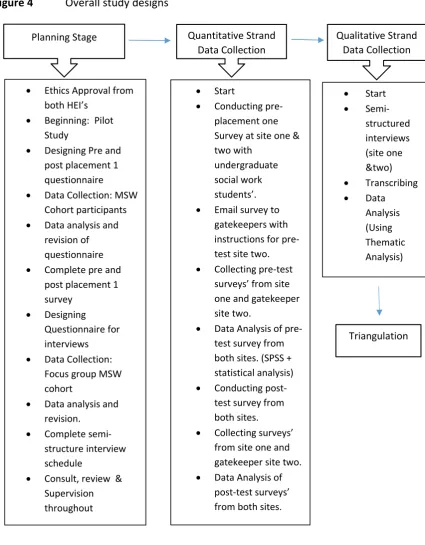
3.4 Overall study design 69
3.5 The integration of quantitative and qualitative data 72
3.5.1 Integrating data at the point of theoretical interpretation 72
3.6 Mixed methods in the context of this research study 73
3.7 Quantitative aspects of study design – survey 74
3.7.1 Questionnaire development 74
3.7.2 Process of piloting the questionnaire 76
3.7.3 Survey sample size 76
3.7.4 Validity and reliability 77
3.7.5 Quantitative data analysis framework 78
3.8 Qualitative aspects of the study design – semi-structured interviews 78
3.8.1 Using creative methods in the qualitative strand of this study 78
6
3.8.3 Process of the pilot study focus group 80
3.8.4 Semi-structured interview participants 81
3.8.5 Semi-structured interviews 82
3.8.6 Interview guide 84
3.8.7 Qualitative data analysis framework 85
3.9 Trustworthiness, credibility and authenticity of qualitative data 86
3.9.1 Audit trails 87
3.9.2 Thick and rich descriptions 87
3.9.3 Peer debriefing 88
3.9.4 Member checking 89
3.10 Practitioner – research paradigm and reflexivity 89
3.11 Ethical consideration 90
3.12 Conclusion 92
Chapter 4 Quantitative research findings
4.1 Introduction 93
4.2 Sample, procedure and research instrument 93
4.2.1 Procedure and research instrument 93
4.2.2 Sample size 94
4.3 Results from the quantitative survey 96
4.3.1 Demographic characteristics 96
4.3.1.1 Age 97
4.3.1.2 Gender 97
4.3.1.3 Ethnicity 97
4.3.1.4 Disability 98
4.3.2 Satisfaction with preparatory teaching 99
4.3.2.1 Social work curriculum 99
4.3.2.2 Social work skills days 100
4.3.3 Preparedness for practice settings 102
4.3.4 Informal and formal learning 105
4.3.5 Students confidence and competence 107
7
Chapter 5 Qualitative research findings
5.1 Introduction 112
5.2 Student profiles 113
5.2.1 Helen’s profile 113
5.2.2 Michael’s profile 115
5.2.3 Sarah’s profile 116
5.2.4 Kate’s profile 117
5.2.5 Hayley’s profile 118
5.2.6 Salma’s profile 119
5.2.7 Rosie’s profile 120
5.2.8 Lucy’s profile 121
5.3 Themes from the interview 122
5.3.1 Becoming ready and resilient 123
5.3.2 Feeling shut out 127
5.3.3 Navigating my placement 129
5.3.4 Trying to fit things together 134
5.3.5 Having what it takes 137
5.4 Summary of qualitative findings 141
Chapter 6 Explanatory framework
6.1 Introduction 143
6.2 Integrating the quantitative and qualitative findings 143
6.3 Summary of the integrated findings 155
6.3.1 Instances of agreement and partial agreement 155
6.3.2 Instances of dissonance 158
6.3.3 Instances of silence 159
6.3.4 Skills days 160
8
Chapter 7 Concluding discussion
7.1 Introduction 162
7.2 Research aims and objectives 162
7.3 Summary of the mixed methods 163
7.4 Limitations of the mixed methods study design 164
7.5 Concluding discussion of the findings 167
7.5.1 Social worker attributes 167
7.5.2 Social worker development 170
7.5.3 Critical reflection 173
7.5.4 Placement learning 177
7.6 Summary 180
7.7 Recommendations 182
Chapter 8 Final reflexive and reflective account
8.1 Introduction 185
8.2 Reflexivity 185
8.3 Reflections on the research process 187
8.3.1 Why I selected the study 187
8.3.2 Reflecting on using mixed methods research synthesis for the literature
review 189
8.3.3 Reflecting on using mixed methods methodology 190
8.3.4 Reflecting on using surveys 191
8.3.5 Reflecting on using SPSS for analysing the quantitative data 192
8.3.6 Reflecting on the interviews 193
8.3.7 Using creative approaches during interviews 194
8.3.8 Reflecting on thematic analysis 195
8.3.9 Reflecting on the triangulation process 196
8.3.4 My overall impressions 198
9
Tables
Table 1: Search strategy 40
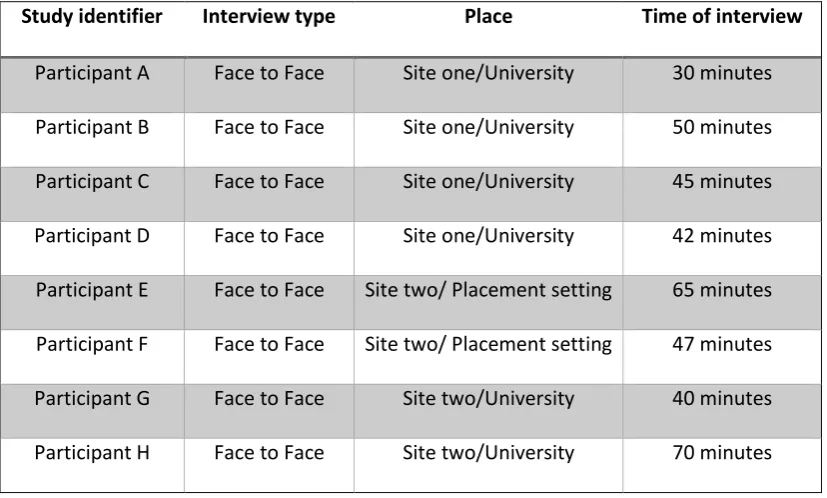
Table 2: Duration and location of the interviews 82
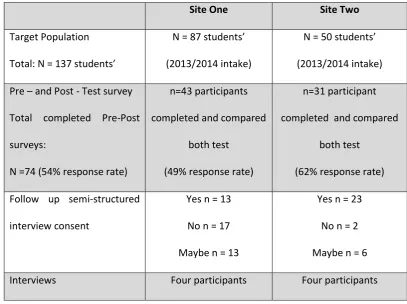
Table 3: Sampling size for pre-test and post-test questionnaires 95
Table 4: Comparison of demographics 96
Table 5: Comparison of both sites responses in first year students’ pre- test
and post-test satisfaction and confidence with preparatory teaching 100
Table 6: Comparison of answers and differences between pre-test and post-test
satisfaction with preparatory teaching regarding readiness for practice
from both sites 101
Table 7: Factors that undermine readiness for practice during placement 105
Table 8: Pre- and post- test comparison 108
Table 9: Skills and knowledge unprepared for from both data sets at post-test 110
Table 10: Participant pseudonym, study site and placement setting 113
Table 11: Personal qualities identified by participants about becoming ready and
resilient 124
Table 12: Convergence coding matrix 146
Figures
Figure 1: Stages for conducting MMRS literature reviews 37
Figure 2: The PRISMA statement 42
Figure 3: Overview of the convergent parallel mixed methods design 70
Figure 4: Overall study design 71
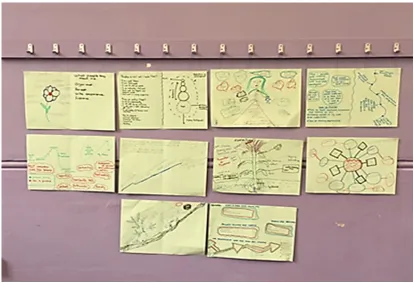
Figure 5: Screenshots of focus group drawings 81
Figure 6: Picture cards 83
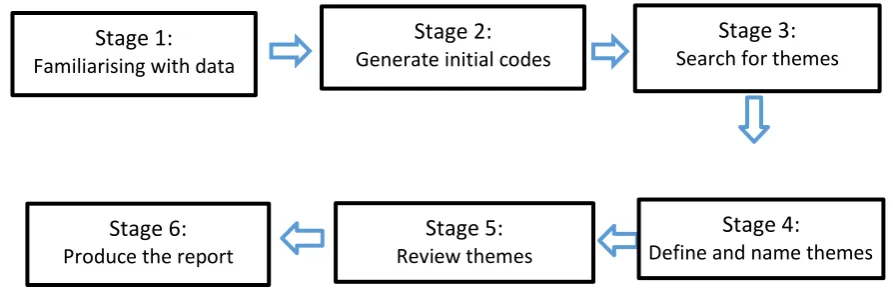
Figure 7: Phases of thematic analysis 85
10
Figure 9: Barriers to readiness for practice learning 104
Figure 10: Elements of how students’ learn 106
Figure 11: Five themes from the eight interviews 122
Appendices
Appendix 1: CASP assessment tool and literature review record (example) 229
Appendix 2: Pre-test and post-test questionnaire 248
Appendix 3: Interview schedule 252
Appendix 4: Project approval ethics form (both sites) 253
Appendix 5: Participant information sheet 255
11
Chapter 1
Introduction and background
1.1 Introduction
This chapter sets a context for this research and contributes to the rationale for the
study. It exposes the problem and challenges social work education faces in
addressing a crisis in confidence in social work practice and how the preparation of
social workers is caught within an environment that is turbulent, and is required to
respond to complex, and at times, conflicting policy and professional directives.
1.2 My research journey
Reflexivity in research is about constantly acknowledging the role and positioning of
the researcher within the overall project, rather than trying to exclude it, adjust for it,
or subtract it from his/her interpretations (Rheinharz, 1992). In my study there were
major institutionalised power differentials between me and the student participants I
worked with, which no amount of reflection or reflexivity could dissolve. I
acknowledge this and consider it as a central part of the practices under exploration.
I was aware of my multiple roles and subjectivities within my study. I am not just the
researcher. I am employed as senior lecturer on the social work, social care and
community development team at a Northern university where my role is course leader
for a social work programme. Situating myself and demonstrating the multiple 'selves'
I perform daily, I reveal to my reader that I am a white, heterosexual, able bodied
woman, a wife and mother, a lifelong feminist, once Marxist woman from a working
12
as my second language. The topic of this research is close to my own professional
practice. This meant that embarking on this mixed methods study, which includes
elements of qualitative research, required a reflexive approach. A discussion on
reflexivity and the research-practitioner is established in chapters 3 and 8. Chapter 3
identifies that the qualitative strand of the study is based within a relativist
constructivist epistemological perspective. Creswell (2009, p8) suggests that
"constructivists seek understanding of the world in which they work.” It was therefore
considered important to the congruency and the context of this project that some time
was given to describing the researcher’s world and my experience leading up to the
beginning of this particular research journey. The following section seeks to provide
this context.
Before embarking on this study, I wrote the following in my notes (Research journal
24/11/2014):
“I want to use creative mixed methodology to explore how our students manage the
mosaic of their learning in being ready for practice and to practise social work in the
changing landscape. “Are we ready yet?” as my possible research question. I want to
understand the challenges and factors that influence their readiness for practice –
what makes the fabric of being a social work student ready for practise?; What are
their feelings of being ready?, and I want to look at the implications for their
professional identity and how they manage their transition.”
Upon qualifying in 1997 in South Africa, I worked in a variety of Health and Social Care
settings, in both statutory and voluntary contexts across adult substance misuse and
13
social work journey in the UK from September 2000. As a registered social worker, I
have worked across various Social Care Departments and Trusts within the National
Health Service for 10 years, mainly in clinical roles, as senior practitioner, team leader
and service manager. I entered the social work profession with blinkers on, naïve and
under-confident working within challenging child protection teams, busy and over-
stretched adult services and complex multi-disciplinary teams. During this time I was
confronting cultural changes and challenges facing those working across Health and
Social Care as emphasised by Hafford-Letchfield (2008) and Baxter (2001) in managing
diversity. My initial reflections led me to question my own efficacy and resilience:
‘Was I mentally and physically strong enough to cope? And, was I competent enough
to offer a quality placement to students’.
As a social work practitioner, I attempt to apply a local narrative as a basis for truly
emancipatory practice, but not losing sight of the wider origins of oppression (Banks
2012). Banks (2012) highlighted the fact that, every day, social workers in practice face
conflicts of personal and professional values, which should be explored and
challenged. The conflict between my personal and professional values was challenging
at times and I used supervision to reflect upon those clashes and frustrations. The use
of supervision within Health and Social Care presented me with a ‘pick and mix’ of
experiences.
In 2004, I had the opportunity to undertake the Practice Teaching Award, which
introduced me to adult learning theories, issues around assessment of professional
practice and the dynamics that are created between a learner and a practice
educator/teacher. It is important when working within such a field to be aware of
14
impact on practice. A further discussion of these takes place within chapters 3 and 7.
To these ends Jan Fook (2007, p522) advocated a process of “critical reflection that
must incorporate an understanding of personal experiences within social, cultural and
structural contexts.” By striving to follow this advice, I have recognised the importance
of more critical forms of reflection and encouraged a move from reflection to
reflexivity.
Following two years of being an associate lecturer within the Social Work Department
at an HEI, I was appointed to the post as Senior Lecturer in August 2007. Soon, I was
allocated to be the year one tutor for the BA in Social Work commencing in the
September. This was a ‘baptism of fire’. In 2007, I completed the Post Graduate
Certificate in Education (PGCE). Later that same year I was appointed course leader for
the Masters in Social Work programme, whilst still adapting to the life of ‘being an
academic’ and subsequently completing a Masters Degree in Management Studies in
2010. Again, I have found myself catapulted in the world of concepts such as
managing change, transition and multi-disciplinary working, power and professional
identity. An opportunity arose when I became involved with a research study by a
fellow doctoral student within the University during 2009 where the focus was on
transition from being a practitioner to academia. When listening to the voice notes
and transcripts, it became apparent that I had undergone a shift in the way I worked,
planned and communicated with others. I have valued this experience. It was
cathartic in its nature as it helped me to move with greater ease into the life of
academia.
As a social work academic, I attended a practice educator's conference in 2013. During
15
gave detailed insights into their roles, responsibilities, skills and knowledge in relation
to ‘are we ready – are they ready for practice?’, and the relevance to applying the
learning to the nine domains of the Professional Capabilities Framework (PCF) (TCSW,
2012). Whilst listening to their accounts, I was astounded at how ‘clinical’ and
detached the social work practitioners appeared and their analysis of events
contrasted sharply with the often emotive and deeply moving insights given by the
students when things go wrong during placement. They expressed doubt in their
abilities and they questioned if they were ready enough for practice.
Relating these accounts to my own profession, I began to reflect on how first year
social work students’ perceive their readiness for practice and how this may impact
upon placement and the workplace. Following the evaluation of the readiness for
practice module and the mandatory 30 social work skills days curriculum on the social
work programme in my own institution, I developed the view that capturing these
accounts could potentially provide valuable insight into the experiences of the social
work students involved. This reflection offered a sound personal rationale that the
exploration of such a phenomenon is complex and challenging, but interesting and
necessary. The research interest grew out of these incidents, reflections, concerns and
professional experiences.
Although my research journey did not start by looking at students’ readiness for
practice and to practise, I was interested in the experiences of the team around the
students when things go wrong during placement or even breaks down. Following
discussions with my Director of Studies, I became more interested in why some
practice educators and employers comment on our students’ not being ‘fit for
16
In some ways this research offered me an opportunity to find an academic explanation
or articulation for how I have intuitively ‘felt’ about the world. My research journey
has allowed me to consider how to represent my research findings on feelings
academically, and in a way that is accessible to a wider view. The pictorial work
participants produced in this research should resonate with readers also on a level that
is not simply academic, but perhaps may evoke recognition and empathy in those
entering into social work. I have tried to provide some bridges between the
academic/creative/researcher write-up of the data by including the participants’
drawings and image cards within the study, as seen in chapter 5.
As a practitioner/researcher my interest in emotions and self-efficacy stems from a
background of therapeutic counselling and social work and more recently in reflexive
writing in education. For some time, much of the theoretical background to my
counselling and therapeutic work assumed a role for emotions that I seldom
challenged. Practising psychodynamically within a substance misuse setting, I
assumed, for example, that emotions were inner feelings, particular to the individual
and their experiences.
As a social worker working within a politicised awareness, recognising the influences of
race, poverty, sexuality, age and disability on people I worked with, I still
unintentionally had an ‘ideal ‘emotional state I would work with them towards. This
proved relevant for this study as it was also informed by literature on the emotional
work performed by social work professionals in considering students’ readiness for
practice during their course and on their placement learning settings upon entering
17
I also questioned whether I was too familiar with the field and so could not make it
strange or different enough. I considered that practitioner research may, but does not
necessarily imply an Interpretive Phenomenological Analysis approach, and questioned
whether an Ethnographic stance be the best fit or even Discourse Analysis? This led
me to question the most appropriate approach and rejected these methodologies. For
me, Mixed Methods Methodology provides a more holistic account of the perceptions
held by social work students towards their experience of their readiness for practice,
and to practise on graduation, and ‘what works’ well for them within social work
programmes.
For the purpose of this study, the focus is on having competence for practice at the
forefront but recognising the blurred lines between the two when studying social work
as a profession with engaging in practice (practicing) being part of the preparation for
qualification. A note about the terminology used within this study is necessary.
Various terms are used to describe the readiness for practice element of social work
education. For clarification, as will have been noted in the following chapter, this
study concerns itself with the concept of ‘readiness for practice’ but other authors also
use the term ‘readiness to practise’ and preparedness for practice interchangeably.
1.3 Perceived problems and rationale for the study
The rationale for this study rests on an assumption that there is a perceived ‘problem’
with social work practice, and therefore a natural extension of that ‘problem’ to the
way in which social workers are trained and educated, thus raising questions regarding
18
perspective of how students consider they become ready for practice and to practise.
It can be argued that these problems emerge through a social work environment that
is constantly changing, turbulent and subject to at times competing policy drivers.
Reish and Jani (2012, p1138) point to how, over a number of decades, the social work
context in the developed world has become increasingly politicised and this radically
influences the spectrum of the profession: "its underlying assumptions, theoretical
bases, research methods and educational foundation”. Welbourne (2011), discussing
social work in the UK, considers this politicisation makes social work a product of what
she terms its unstable institutional context, this instability giving rise to a continuous
re-adjustment in practice and renegotiation of its position.
The literature review conducted by Moriarty et al. (2015) into the roles and issues
within the social work profession in England also emphasises how roles and
responsibilities are greatly influenced by the regimes in which they are located and
identify how the views of politicians, the media, service users and carers, practitioners,
employers, and educators about what is meant by social work may differ. This review
also points to how social work qualifying education is, as a corollary, a conflicted policy
area, identifying the two separate reviews being completed in 2014 for the
Department for Education and Department of Health.
This complex and turbulent political landscape forms a backdrop against which social
work students strive to become ready for practice and to practise, and it can be
argued, gives rise to perceptions of a ‘problem'.
“Not all newly-qualified social workers are emerging from degree courses with the
19
AND
“Making the transition from student to practitioner and having to make complex and
challenging decisions on your own, is never easy. Employers have a vital role in helping
people to make that transition.” (‘Changing Lives’, 2006 Part 10: para.8)
The concern of preparing students to be ready for practice and eventually to practise is
important not only in social work, but in any professional occupation (Girot, 2000;
Long, 2000; Rodolfa et al. 2004). The transition from student to practitioner can be a
difficult, stressful, but exciting period. As Changing Lives suggests, transitioning to
qualified practice can be challenging. Many authors report the seminal work by
Kramer (1974) as first highlighting the concept of reality shock experienced by newly
qualified nurses in the United States of America.
It is important to acknowledge the expectations of employers and service users
towards ensuring students are ‘properly prepared’ by social work educators – usually
in a university - to claim the professionalisation of the profession (Frost et al. 2013).
Horwarth and Morrison (1999), however, indicate that it is important to acknowledge
that training is not a total panacea and it cannot be expected to compensate where
external drivers or circumstances such as staffing, retention, recruitment, resources,
environment and support are inadequate.
A growing body of research argues for the need to develop a new social work
pedagogy that is more firmly grounded on empirical evidence of ‘what works’ ( Wilson
et al. 2010; Fook et al. 2000, Trevithick et al. 2004, Richards et al. 2005 and Orme et al.
20
how social work students perceive their readiness for practice and to practise, or how
they acquire, develop and apply professional social work knowledge and expertise.
The Laming report (2009) emphasised the need for highly skilled practitioners, able to
understand, analyse and reflect upon the relationships between parent and child,
record and present information clearly; practise from a robust evidence-base;
recognise non-compliance; communicate effectively with others, and, operate within
the key legal frameworks surrounding safeguarding and child protection. Munro
(2011) identified a number of concerns in this area with respect to education. Firstly,
is the academic content relevant, and, secondly, are the students prepared enough in
specific and general skills and knowledge for the role?
One of the main criticisms concerning education is whether social workers acquire
relevant knowledge to be able to sustain their practice as social workers over time, to
fulfill the duties required by the State (Frost et al. 2013). There appears to also be
within social work education an argument that the development of a separate
statement for knowledge and skills for Children and Families social work and Adults
social work is undesirable in the absence of a clear articulation about why the generic
nature of social work education is being abandoned.
There is also an absence of sound evidence explaining why the Professional
Capabilities Framework (PCF) is seen by employers as redundant. Furthermore, there
is little evidence to date that the partial solution of the 30 mandatory social work skills
days in the social work degree actually assist with ‘readiness to practise’. These factors
led me to the following research question and aims that guided this study and are
21
1.4 Research question, aims and objectives of the study
The research question and the objectives of the study are as follows.
1.4.1 Research question
How do social work students’ perceive they become ready for practice and to practise?
1.4.2 Main aim of the study
To offer an understanding of the perceptions and experiences of social work students
in order to provide research findings relating to social work education and practice
learning to inform a readiness for the workplace.
1.4.3 Main objectives of the study
To generate an understanding of the perceptions of undergraduate social work
students regarding their readiness for practice and to practise within the
changing landscape in Social Work Education.
To identify the factors that hinder and support social work students in learning
and preparing for practice and to practise.
To elicit the descriptions of students of when and how they learn to be ready
for practice.
In order to understand the perceptions and experiences of social work students, it is
important to understand who and what social work students are within the changing
22 1.5 Current contextual issues
The section below considers the national picture in which social work students are
currently ‘fitted to practise’ in England as a response to the previous stated problem of
perceived difficulties of students being prepared for the workplace.
1.5.1 Social work education response: under the spotlight
Social work requires professionals with a particular mix of skills and abilities (Social
Work Reform Board 2010) and the process by which social work education produces
such professionals begins with the education of social work students. The
effectiveness of social work education in preparing social work students for practice
has been the subject of political attention in recent years (Lishman, 2011; Halton and
Powell, 2013 and Maxwell et al. 2014) and it can be argued that the directions
emerging from this attention have lacked congruence and coherence. At the time of
writing the proposal for the current study in 2014, The Joint University Council Social
Work Education Committee (JUCSWEC, 2014) and the Association of Professors of
Social Work (APSW) responded to the Government’s consultation exercise on the
knowledge and skills required for child and family social work within England and
Wales. Their joint response to this consultation identified that the knowledge and
skills statement reflected what was already core teaching on social work and post
qualifying programmes and as such provided a helpful summary. The consultation
document contained a mix of broad statements alongside some very detailed and
prescriptive recommendations, which seemed to focus narrowly on the referral and
23
two reviews of social work education led by Sir Martin Narey and Professor David
Croisdale-Appleby during 2014.
This unprecedented attention highlights the risks of policy incoherence in previous
statements, and the on-going lack of resolution of their differing recommendations
continued to cause concern about the feasibility of effective planning for all engaged in
the delivery of social work education. Parker (2010) noted that the way in which social
work students are prepared for placement, within a rapidly changing and demanding
work environment are uppermost in the minds of politicians and also policy makers,
social work managers and educators. The Rotherham Inquiry led by Professor Jay (Jay,
2014) highlights the risks of social work being reduced to functions that focus on the
individual child within their individual family and community. In particular, skills in
community assessment seem core to an effective response to organised child abuse of
various kinds, deal with disclosure to offer family support and maintenance and
underpin an ecological approach in which social work students require to feel
confident for practice.
Social Work programmes are necessarily demanding and challenging because it is
important that vulnerable service users and their carers are protected from poor
practice. These issues were increasingly highlighted following a succession of
child-care tragedies leading to criticism of social work and calls for improvements to
professional standards (Wilson and Campbell, 2013). The nature of social work
education is seen as both part of, and a solution, to the problem. The mandatory
introduction of the 30 days of skills training across all social work programmes from
24
discuss readiness for practice and eventually to practise and to work closely with
others to improve services.
The social work qualification remains a generic award. As noted earlier, HEIs are faced
with a plethora of documents from different organisations ranging from the Health
Care Professional Councils Standards of Proficiency (SOPs) - with 76 standards;
Standards of Conduct, Performance and Ethics - 14 standards and Standards of
Education and Training (SETs) with 59 standards. Additionally there is also in the
College of Social Work’s curriculum guides covering 12 subject areas; the Professional
Capabilities Framework (PCF with nine domains, currently minded by BASW 2015); as
well as the Quality Assurance Agency for Higher Education (QAA) Benchmark
statements for social work, and, finally the Department of Education's two Knowledge
and Skills Statements for social work (Children and Families/Adult). Furthermore, each
university manages the curriculum content and delivery through its course approval
and annual monitoring process. The Quality Assurance Agency for Higher Education
sets and monitors its own standards for the course. Burgess and Irving (2005, p.13)
noted that the “achievement of a comprehensive and relevant, robust and balanced
social work education curriculum in the face of many and various influencing issues and
‘forces’ – Frontline, Step-up programmes, Teaching Partnerships - is not an easy task.”
Social work educators have had to respond to all these challenges and prepare
programmes that are innovative, creative and appropriate in meeting the needs of the
profession in demanding times. They must assist employers in assessing whether
social workers have achieved the requisite knowledge and skills after their first year in
practice and serve as the basis for the proposed Approved Child and Family
25
with countries such as Italy, where the completion of the social work degree itself is
not a license to practise. In Italy competence is examined via an additional
professional state exam, which serves as a regulatory and standardising tool (Frost et
al. 2013).
1.5.2. The role of placement experience in the social work curriculum
Teaching on the BA Social Work degree (BASW) remains generic and, in addition to
academic input, the BASW includes 30 skills days and two assessed practice learning
opportunities (PLOs) since 2013. The first PLO of 70 days duration is undertaken
during the first semester of the second year, and in the second PLO of 100 days in
either semester one or two of the third year for the majority of HEIs in England. The
content of the different curricula/benchmarks/professional exams/mandatory 30 skills
days provides some indication of what a trained social worker is expected to know and
be able to do.
The importance of practice learning should not be underestimated by all concerned
including the students, their practice teachers/assessors, the different organisations or
agencies involved as well as the academic staff supporting students during placement
disruption and breakdown (Parker and Bradley, 2010). Drawing on incidents that
students had reported back after placement to placement tutors upon returning to
university, Usher (2009) suggested, that experiential learning on vocational courses
can sometimes be used as a 'domestication' exercise. This underlines that there are
cultural differences between education and practice settings (Becker and Geer, 1958;
Eraut, 2000, 2007; Sim, Zadnik and Radloff, 2003). Cultural knowledge, that is,
26
and has been investigated in medical and nursing education (Cope, 2000; Swanick,
2005; Lindberg, 2009; Ousey, 2009).
Much of this knowledge is acquired informally and is taken for granted as people are
unaware of its influence on their behaviour (Eraut, 2007). An understanding of
organisational culture helps to explain experiences in social and organisational life and
enables a better understanding of oneself (Schein, 2010). The common understanding
is that placement learning also involves acceptance into the profession's culture, and
by the professional community. This may include having to internalise accepted values
and norms of that culture. Clouder (2006), studying student learning on health care
placements, recognised that current discourses of care were about professional
detachment and altruism. She discussed how these accepted discourses could be
challenged by personal experience and how in working through these 'threshold'
experiences, students could learn about themselves and others and see the issues in a
different, re-conceptualised way.
As outlined by Frost et al. (2004) the practice of social work requires the development
of critical, analytical and reasoning skills within degree level education. Subjects
taught routinely on degree courses for social work include sociology, psychology, law
and social policy. However, teaching on the generic and specific skills required in day
to day practice, work with service user groups, personal and professional
development, as well as philosophical and ethical stances and the amount of time
spent engaging in the field of practice vary greatly across countries. For example in
Italy and Sweden nearly half of the modules on the courses each year are devoted to
27
The introduction of an undergraduate degree qualification as the standard entrance
level requirement to the social work profession in 2003/2004 across all four countries
of the UK was aimed at addressing concerns about the quality of the previous
sub-degree qualification, the Diploma in Social work (DipsSW) and enhancing the overall
quality of educational provision (Orme et al. 2009 ). However, major concerns about
competence in undertaking the social work role continues in the UK in the wake of a
succession of subsequent child care tragedies that have tarnished the professional
image among government and the general public (Munro, 2011; Laming, 2009 and
DCSF, 2009).
Eraut (2000) usefully for this professional doctorate report, described a concept of
learning based on knowledge as a social construct and as a social attribute. For Eraut,
learning is more than a cognitive exercise of acquiring knowledge that is already out
there. He described learning as embodied, involving the whole person and about
movement within a situated context. Kolb and Kolb's (2005) work on experiential
learning, acknowledged the holistic nature of learning, the emotional dimensions to it
and the social construction of knowledge. Kolb and Kolb's work referred back to other
social constructivist learning theorists such as Vygotstky (1978) and Lave and Wenger
(1991), highlighting the role of the social in learning. However, although there is an
acknowledgement of the social and holistic aspects of learning, there is still an
assumption of a student being viewed as an agentic individual who can change and
28 1.5.3 The problem of standards in social work
What was the National Occupational Standards for social work is now being
superseded with the introduction of the Professional Capabilities Framework or PCF
(TCSW, 2012), providing a structural progression route for all social work students’ and
post qualifying social workers. At the time of writing up my research, it should be
noted that the British Association of Social Workers (BASW) is now the custodian of
the PCF and has commissioned Research in Practice (RIP) and Research in Practice for
Adults (RiPFA) to work in partnership on an update and refresh of the framework. It is
envisaged that the consultation may allow for the strengthening of the PCF and its
significance to the profession but also the relevance and strengths.
By the end of the first placement students should demonstrate effective use of
knowledge, skills and commitment to core values in social work in a given setting
working, with supervision and support meeting an holistic assessment by the practice
educator, and meeting the nine domains of the capabilities framework. But what is
meant by being capable or competent to practise? As Frost and colleagues (2013)
found in their study it has proven hard to standardise and define competence for social
work. Whilst the “Bologna competence” framework exists, England focuses on the PCF
and previously the National Occupational Standards (NOS), to fulfill the defined
competences as set out by various governing bodies and not the European standards
29
Until 2013, the supremacy of technical-rationalist competency models has been seen
in the development of National Occupational Standards (NOS) for a range of
professions as well as competency requirements to be met when training. The
argument against competency models is that they reduce complex professional skills,
knowledge, decision-making, tasks and processes into simplistic units of distinct
activity and encourage a tick-box approach to the task of assessment (Eraut, 1994;
Owens, 1995; O’Hagan, 1996; Parrott, 1999 and Finch, 2010). For some authors this
raises a concern that such models are also far removed from concepts such as
anti-discriminatory and anti-oppressive practice (Jayaratne et al. 1992; Kemshall, 1993;
Conn, 1993; Brummer, 1998; Phillips, 1998; Burgess et al. 1998b).
The previous NOS competencies are observed and assessed over time in practice by a
Practice Educator who delivers a final assessment to affirm that the student is
competent at a specific level. The competencies were operationalised from the HCPC
standards for entry into the profession. The behavioral and skills-based approach
behind competency-based models and the feasibility of measuring competencies at all,
are the subject of debate within health and social work education. Talbot (2004)
questioned where understanding comes within this model, describing competence as a
mono-layer and understanding as existing on many layers. The advantage of
competency based placement learning is that it may simplify what is assessed and
make it more uniform. However, the disadvantage is that it cannot address the
30 1.5.4 Problems with entry requirements
Despite the Social Work Reform Board’s (2010) attempt to implement the Social Work
Taskforce recommendations (SWTF 2009) of raising the minimum UCAS point
threshold for access to social work education, Narey’s (2014) review suggested that
there is concern amongst social work employers about social work students’ lack of
confidence and the level of problem solving skills they present at the interview stage
and beyond. Narey (2014) suggested further, that some employers have an informal
list of the HEI’s known to set lower entry requirements, which may suggest a link
between higher entry requirements and higher confidence levels, resulting in how new
graduates are being seen as fit for the workplace. The Taskforce highlighted concern
surrounding the interpretation and implementation of minimum entry requirements to
social work education, inconsistency across courses and the extent to which the social
work courses provide students’ with sufficient experience of child protection work.
Thus resulting in the two knowledge and skills statements for social work - as identified
by the Chief Social Workers for Children and Families, and separately for Adults,
appears to be used during social work employment interviews rather than the
Professional Capabilities Framework, by which the students are currently being
assessed. It could be argued that this is creating a dilemma and confusion for students
as to the perception regarding their readiness for practice.
In England, less than 10% of social workers are educated via ‘employer based routes’
involving, some continued employment in an agency with part time university
attendance (DfES, 2015). Based on some American and Canadian research, Vleich et al.
(2015) suggest that more consideration should be given to previous academic success,
31
However, HEIs have been faced with the dilemma of whether to set entry standards
high so as to attract the ‘best’ applicants or whether to widen access by setting lower
standards to attract those who may be suitable, but lack the traditional academic
pre-requisites for entry. Furthermore, determining applicant suitability for social work has
been problematic with some HEIs struggling to determine valid and reliable admissions
criteria (Dillon 2007). There seems to be tension between academic achievement and
personal skills and attributes congruent to future practice.
1.6 Conclusion
This chapter has introduced an argument that there is, and has been over years, a
perceived multifaceted problem with social work education in its role of preparing
practitioners for the workplace. This study concerns the thoughts and views of
undergraduate social work students in two sites in England in relation to their
readiness for the workplace upon graduation. It explores students’ general overview of
whether they feel “fit for purpose” in terms of capability or competence, and then
specifically at how useful to this process they perceive their theoretical and practical
sources of knowledge and their “personal growth” to be. Specifically, it considers their
stance on the different sources (e.g. role of the 30 social work skills days) of knowledge
and development made available whilst training.
Learning and development begins during undergraduate education, thus experience as
a student impacts on the transition into professional practice. It has been recognised
that the transition into practice can be a difficult period that may influence the journey
32
both academic preparation and practice learning, explores the inter-relationship of
these and evaluates the effectiveness of different components of social work
education in preparing students’ for professional practice.
In this introduction I have opened out the context of the readiness for practice and to
practise learning journey for social work students’ to expose some of the competing
discourses that circulate through their placement experience and curriculum delivery.
How the students manage their emotional responses to their work is part of several of
these competing and sometimes conflicting discourses.
This mixed methods study is therefore both timely and significant in terms of its
relevance for the changing climate of social work policy and practice within England.
In order to understand more about the nature of this experience, the second chapter
presents an overview and critique of some of the themes in the literature around
readiness for practice and to practise within health and social care research.
1.7 Study structure
Chapter 2 introduces a literature review approach called Mixed Methods Research
Synthesis (MMRS). In this review, two main issues are being considered: the general
perceptions of students regarding their feelings of being ready for the workplace and
secondly, how well they consider different sources of knowledge and competences in
33
Chapter 3 provides details and justification for the design of the study. The theoretical
paradigms that influenced the study are also explored, as is the methodology, research
design and the methods for data collection and analysis.
Chapter 4 includes the introduction to the findings of the quantitative strand of the
study. The findings of the qualitative and quantitative strands of the work are
separately presented with statistical analysis employed for pre and post-test surveys
located in chapter 4.
Chapter 5 provides a detailed analysed narrative for the themes and supporting
sub-themes that emerged as a consequence of a thematic analysis of qualitative interview
data presented. Within this chapter the researcher considers issues of rigour for this
study. Issues of ethics and reflexivity are also explored.
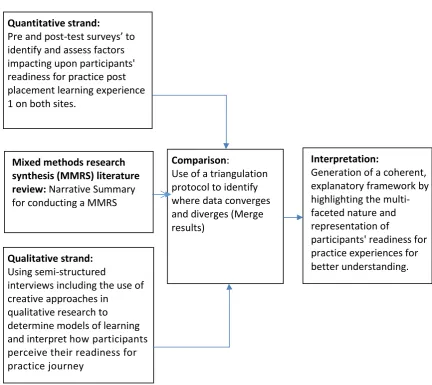
Chapter 6 presents the application of a triangulation protocol, as outlined by
O’Cathain, Murphy and Nicholl (2010), to generate a coherent, explanatory framework
for mixing the findings from the three data sets.
Chapter 7 presents a concluding discussion and returns to the research question and
aims of the study to offer some final comments on the issues raised throughout the
thesis on the readiness of social work students for the workplace. It also considers
how the study might have implications for future practice and includes a series of
recommendations for research in the field of readiness for practice and to practise,
and possible dissemination strategies. It also includes an exploration of what might be
considered the limitations of the study.
Finally, Chapter 8 provides a reflective account of what I have learnt from the research
34
Chapter 2
Literature review
2.1 Introduction
This chapter presents a mixed methods research synthesis (MMRS) review of literature
concerning social work students’ readiness for the workplace in terms of readiness for
practice and to practise. MMRS reviews are used widely, including in doctoral theses
such as this, to both establish what is currently known about the phenomenon of
interest and its methodological use as a primary level study (Heyvaert et al. 2017). The
MMRS review provided here serves these purposes in that it elicits what is already
known about the substantive topic of the study, providing a rationale for its conduct,
and identifies evidence to be integrated into the overall findings of the work. Evidence
comes in many forms and is derived from both quantitative and qualitative
perspectives. The adoption of an MMRS perspective for conducting this literature
review assists in addressing the complexity of available evidence (Heyvaert et al. 2017)
and is congruent with the overall mixed method approach employed in this study.
The main interest in this literature review is the learning journey of social work
students’ 'readiness for the workplace' from their viewpoint. Preston-Shoot (2004)
argued for a separation between competence for practice (prior to qualified practice)
and competence to practise (post-qualification). It is considered in this review that the
integration of qualitative, quantitative and mixed methods primary level studies may
both reveal the existing knowledge base and enhance the breadth and depth of
understanding social work students’ perceptions of their readiness for the workplace
35
2.2 Using mixed methods research synthesis (mmrs) for this literature review – a
brief overview
There is increasing recognition of the importance of combining quantitative and
qualitative research methods when conducting social work research and evaluation
(Cowger & Menon 2001; Grinnell & Unrau 2008; Padgett 1998, 2008, Yegidis &
Weinbach 2009). There are many ways of describing the process of reviewing
literature which may leave researchers uncertain about the type of review to carry out
(Greenhalgh et al. 2005).
Grant and Booth (2009) indicated that no internationally accepted definition of review
has been developed and believed that there has been an increase in unacknowledged
variations to both the approach and rigour of review. In an effort to provide some
clarity to what they describe as a "diversity of terminology", they identify and describe
fourteen of the most commonly used review typologies. They concluded that all of
these review typologies have their usefulness, but acknowledge a degree of overlap
between their typologies.
It is clear that there is a need to be able to identify the process of review so that
readers can be assured of how the picture painted has been arrived at. A mixed
methods research synthesis is a systematic review applying the principles of mixed
methods research which will be discussed later in chapter 3. For Creswell and
Tashakkori (2007a) a mixed methods study must also integrate, link or connect the
data strands in some way (Bryman 2007). This is reflected in the MMRS review in that
the data in the form of results and findings extracted from reports of primary level
qualitative and quantitative studies are integrated to add depth of understanding and
36
There is varied use of terminology of this form of synthesising quantitative and
qualitative primary level studies, terminology including ‘mixed research synthesis’
(Sandelowski et al. 2006); ‘mixed studies review’ (Pluye et al. 2009), and ‘mixed
methods synthesis’ (Harden and Thomas 2005). The term mixed methods research
synthesis (MMRS) is adopted for this study, proposing the view that integration of
qualitative and quantitative studies at a synthesis level has promising utility for
research and practice (Heyvaert et al. 2011). In general, a MMRS approach for Pluye et
al. (2009) and Sandelowski et al. (2006) combines the strengths of quantitative and
qualitative techniques and studies.
2.2.1 A framework for conducting mixed methods research synthesis
Heyvaert et al. (2011) state that the MMRS process generally includes eight stages or
steps. This stepwise framework is not intended to be viewed as rigid or fixed. Figure
1. is adapted from Heyvaert et al. (2017 p8) to provide an overview of the eight stages
37
Figure 1 Stages for Conducting MMRS Literature Review as adapted by Heyvaert
et al. (2017, p8)
Review protocol Including Review objectives Review questions And MMRS design
Sampling
Systematic search
Inclusion and exclusion criteria
Critical appraisal
Descriptive data extraction
Data synthesis
Writing and editing the report
2.2.2 Strengths and challenges of using MMRS
The first advantage of conducting a MMRS literature review is that it can answer
multiple aspects of the research question concerning ‘what works ‘for this kind of
study or evaluation, for whom, in what circumstances, in what respects, and why?’ as
mentioned by Pawson et al (2005) and Harden and Thomas (2005) in comparison with
a mono-methods qualitative or quantitative literature review (Heyvaert, 2017).
Secondly, the combination of qualitative and quantitative findings in a MMRS helps
38
explain discrepancies between findings of the included studies and (iii) reveal, develop
or refute theories through comparing and combining the inferences from the studies
(Risjord et al. 2002; Heyvaert et al. 2011 & 2017).
However, there remain several challenges concerning implementing MMRS. I had to
deal with a large and divergent amount of data when conducting a MMRS literature
review. A second challenge is that without a meaningful integration or “method mix”
of the quantitative and qualitative strands, it cannot be called a MMRS (Bryman, 2007).
Greene (2006) and Creswell and Tashakkori (2007a) acknowledged that there exists
several methodological pitfalls generated by the diversity between and within mixed
qualitative and quantitative methods, but that ultimately the research question and
the purpose of the review are the key drivers for conducting a MMRS literature review.
2.3 Inclusion and exclusion criteria
This review was conducted in order to establish what is currently known in the
literature about social work students’ readiness for the workplace on graduation.
Within this study the researcher also needed to be mindful to flag that discreet
differences between respective systems are present and to be cautious about making
any claims to representativeness or generalisability from the studies included within
39 2.3.1 Inclusion criteria
Studies that explore the views and perceived impact of social work students’
readiness/preparedness to practise and for practice, including views from
newly qualified social workers and managers in the transition
Research between 1996 to 2016 – the former date being the date of the first
major study of NQSW ‘preparedness’ in the UK (Marsh and Triseliotis, 1996)
Studies conducted in the Western world in the field of health and social care
where the education and working conditions bear some resemblance to each
other
Studies published in the English language
Peer reviewed articles
2.3.2 Exclusion criteria
Non-English language literature
Literature from before 1996
Grey literature
2.4 Literature search strategy
The following electronic databases were used to search for relevant literature: Social
Care Online, Social Work Abstracts, PsychINFO, Scopus, CINAHL, Web of Science using
the EBSCohost advance search option. The Boolean/phrase and truncation symbols for
search terms included: ‘social work student*’ AND ‘readiness’ OR ‘preparedness’ AND
‘ready to practise’ OR ‘ready for practice’ AND ‘social work’. Secondary search terms
40
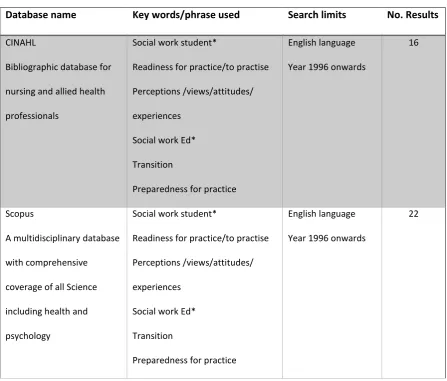
Using citation tracking, I conducted manual searches of the most relevant and
frequently cited journals: Social Work Education, Journal of Social Work Education,
British Journal of Social Work, Research on Social Work Practice and The European
Journal of Social Work. A further two papers were recommended by professionals with
[image:41.595.108.556.259.640.2]an interest in the field. The database search strategy can be seen in Table 1 below.
Table 1 Search strategy
Database name Key words/phrase used Search limits No. Results
CINAHL
Bibliographic database for
nursing and allied health
professionals
Social work student*
Readiness for practice/to practise
Perceptions /views/attitudes/
experiences Social work Ed*
Transition
Preparedness for practice
English language Year 1996 onwards
16
Scopus
A multidisciplinary database
with comprehensive coverage of all Science
including health and
psychology
Social work student*
Readiness for practice/to practise
Perceptions /views/attitudes/ experiences
Social work Ed*
Transition
Preparedness for practice
English language
Year 1996 onwards
41
Social Care Online Database of information
and research on all aspects of social care and social
work
Social work student*
Readiness for practice/to practise
Perceptions /views/attitudes/ experiences
Social work Ed*
Transition
Preparedness for practice
English language Year 1996 onwards
28
Social Work Abstracts
The database provides
citations and information on the fields of social work and
human services and problems.
Social work student*
Readiness for practice/to practise
Perceptions /views/attitudes/ experiences
Social work Ed* Transition
Preparedness for practice
English language
Year 1996 onwards
31
Web of Science
This platform provides access to Thomson Reuters
multidisciplinary databases for information in the
sciences, social sciences,
arts, and humanities
Social work student*
Readiness for practice/to practise Perceptions /views/attitudes/
experiences Social work Ed*
Transition
Preparedness for practice
English language
Year 1996 onwards
22
PsychINFO
Database of abstracts of
literature in the field of
psychology
Social work student*
Readiness for practice/to practise
Perceptions /views/attitudes/
experiences Social work Ed*
Transition
Preparedness for practice
English language Year 1996 onwards
42
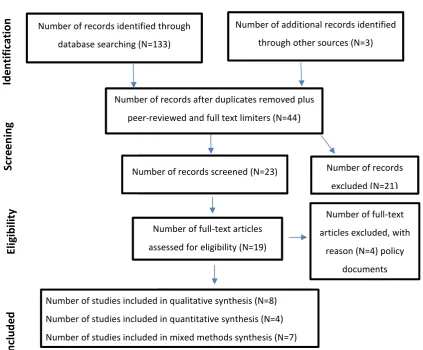
This purposeful sampling strategy (Patton, 1990; Booth, 2006) search yielded 133
items published between 1996 and 2016. After the removal of duplicates and limiting
the search to peer reviewed and full text articles within health and social care, the
sample was reduced to 44 and then 23 articles with a relevance to Social Work. All
abstracts were screened against the inclusion criteria and full texts were obtained if
eligibility was met. A further four articles were excluded which then produced a total
of 19 papers to review (see Fig 2). Figure 2 below shows a Preferred Reporting Items
for Systematic Reviews and Meta-Analyses (PRISMA) (www.prisma-statement.org)
Statement flow diagram of the article selection process according to the guidelines by
[image:43.595.117.541.414.764.2]Moher et al. (2009) for conducting a systematic review.
Figure 2. The PRISMA statement flow diagram of the systematic review
Number of additional records identified through other sources (N=3) Number of records identified through
database searching (N=133)
Number of records after duplicates removed plus peer-reviewed and full text limiters (N=44)
Number of records screened (N=23)
Number of full-text articles assessed for eligibility (N=19)
Number of studies included in qualitative synthesis (N=8) Number of studies included in quantitative synthesis (N=4) Number of studies included in mixed methods synthesis (N=7)
Number of records excluded (N=21)
Number of full-text articles excluded, with