Financial reporting by charities: a matched case study
analysis from four countries
MACK, J, MORGAN, GG <http://orcid.org/0000-0002-4429-4835>, BREEN,
OB and CORDERY, CJ
Available from Sheffield Hallam University Research Archive (SHURA) at:
http://shura.shu.ac.uk/23144/
This document is the author deposited version. You are advised to consult the
publisher's version if you wish to cite from it.
Published version
MACK, J, MORGAN, GG, BREEN, OB and CORDERY, CJ (2017). Financial
reporting by charities: a matched case study analysis from four countries. Public
Money and Management, 37 (3), 165-172.
Copyright and re-use policy
See
http://shura.shu.ac.uk/information.html
Financial Reporting by Charities:
A Matched Case Study Analysis from Four
Countries
Janet Mack
Queensland University of Technology, Brisbane, Australia
Gareth G Morgan
Sheffield Hallam University, UK
Oonagh B Breen
University College Dublin, Ireland
Carolyn J Cordery
Victoria University of Wellington, New Zealand
Corresponding author:
Janet Mack
Queensland University of Technology GPO Box 2434
Brisbane Queensland 4001 Australia
Tel: +61 7 31388046 Email: [email protected]
Acknowledgements
2
Financial Reporting by Charities:
A Matched Case Study Analysis from Four Countries
ABSTRACT
This paper analyses financial reporting requirements applicable to charities in four jurisdictions: Australia; England; Ireland; New Zealand, using case study analysis which compares the actual financial statements of four carefully matched charities operating in the same field and with similar levels of total income. We highlight common issues and
implications in terms of the concepts underpinning not-for-profit (NPO) financial reporting and the case for harmonized international NPO accounting standards.
KEYWORDS
3
1. Introduction
The financial reports of charities and other not-for-profit organizations (NPOs) comprise primary accountability mechanisms (Irvine and Ryan, 2013; Connolly et al., 2013; Connolly and Hyndman, 2000) consequently they receive considerable research attention. One research stream focuses on exploring broader conceptual issues: for example, NPO accountability requirements which differ from other entities (Ryan et al., 2014). Another stream identifies the inability of current frameworks to effectively report on NPO sector-specific issues: volunteers and non-reciprocal transfers, for example (Ryan et al., 2014, Hyndman and McMahon, 2010; Cordery and Narraway, 2008). A further stream focusses on specific reporting frameworks and requirements in particular countries, or from a cross-jurisdictional perspective (Crawford et al., 2014; Torres and Pina, 2003). Other research addresses NPO users’ information needs (Hyndman, 1990; Kilcullen et al., 2007). Crawford
et al. (2014) compare the accounting standards and legal frameworks for NPO reporting in different jurisdictions, exploring the case for NPO international standards. Further, the International Integrated Reporting Committee (IIRC) (2011) suggests the for-profit
framework it is developing is also applicable to NPOs. These represent sector and regulator interest in establishing a NPO international accounting and reporting framework
(‘international Framework’) such as exists for the private sector (International Accounting Standards Board (IASB)) and the public sector (International Public Sector Accounting Standards Board (IPSASB)).
Two implicit assumptions imbue the promotion of a NPO international Framework. The first is that substantial inter-jurisdictional differences currently exist between NPOs’ financial statements. The second is that a common Framework could meet users’ accountability needs across jurisdictions. While previous studies have investigated inter-jurisdictional differences in regulation requiring NPO financial reporting, and the treatment of specific transactions or accounting issues (Breen, 2013, Cordery and Baskerville, 2007; Kilcullen et al., 2007; Torres and Pina, 2003), empirical research examining the financial statement reporting practices of individual NPOs across jurisdictions is scarce. Neither has empirical work attempted to determine the accountability needs of users of those financial statements. The objective of this research is to address the first issue by analysing recent actual
instances from distinct jurisdictions of financial statements produced by four charitable organisations working in a similar field, to determine the degree of congruence. We examine the financial statements, highlight common themes, report idiosyncrasies and draw
comparisons.
This research contributes to the charitable and NPO financial reporting literature, in particular to the debate examined by Crawford et al. (2014) as to whether a set of
international NPO accounting standards is necessary. Because our case study analysis is based solely on one charity in each country, we make no claim our findings are
4
Section 2 examines the extant literature. Section 3 elaborates our selection criteria and methodology with an overview of the case study charities, and a review of their reports (Section 4). A comparative analysis in Section 5 precedes the conclusions offered in Section 6.
2. Prior Literature
As noted, research empirically examining financial statements of NPOs across jurisdictions is scarce. Yet, it is essential to understand current jurisdictional reporting practices and users’ needs for a mature debate about the potential utility of a NPO international
framework. Limited research has attempted this. Hyndman (1990) importantly highlighted that understanding users’ information needs was paramount in determining required
accounting information. His study of users of UK charity annual reports revealed a mismatch between the information they received (largely audited financial statements) and their preferred information (e.g. performance information). More recently Connolly et al. (2009) sought to identify the information needs of UK NPO funders, preparers of financial
statements, auditors and academics, finding each group held different priorities.
Nevertheless, the information content of NPO annual reports and financial statements is largely determined by regulators’ perceptions of users’ needs. However, Hyndman and McMahon (2010) identified that other voices are being heard in the UK, despite government being the dominant stakeholder influencing the development of the charity Statement of Recommended Practice (SORP).
With respect to NPO users’ needs, many (for example: Simpkins 2006; Ryan et al., 2014) note that ideal NPO reporting differs from the frameworks designed for the for-profit and public sectors, particularly with respect to discharging accountability. Simpkins (2006), in a report prepared for various national accounting standard-setters (the Accounting Standards Boards of Australia, Canada, New Zealand and the United Kingdom, as well as the
Canadian Public Sector Accounting Standards Board), identifies that the IASB’s Conceptual
Framework places insufficient emphasis on accountability and cash flows – both important foci for NPO reporting. A conceptual framework primarily concerned with reporting
performance in terms of profit and loss cannot adequately or fairly reflect NPOs’
performance, where mission, rather than profit generation, is the operating motive (Ellwood and Newberry 2006; Kilcullen et al., 2007; Cordery and Narraway 2008). Further, NPOs have a broader cohort of stakeholders (funders, members, service beneficiaries, volunteers and advocates) with unique information needs (Crawford et al., 2014).
At a practical level, several researchers identify specific NPO accounting issues which are currently either not addressed or are poorly addressed. Ryan et al. (2014) note the divergent treatment of non-reciprocal, restricted fund and volunteer contributions amongst international jurisdictions. They argue that divergence is in part a function of the
5
Most recently, a study conducted for the Consultative Committee of Accountancy Bodies assessed the need and demand for NPO international financial standards (Crawford et al.,
2014). Unlike previous research, it elicited NPO stakeholders’ views as to the need for NPO international reporting standards, gathering more than 600 responses from 179 countries. Crawford et al. (2014) found 72% of respondents agreed NPO international financial
reporting standards would be useful to provide a common language and meet users’ diverse needs.
In determining the appropriateness of a NPO international Framework, a first step is to examine current cross-jurisdictional financial reporting practice and regulation. This paper takes this first step by comparing and analysing actual instances of financial statements produced by relatively similar charitable organisations from four different jurisdictions. Charitable organisations were chosen from the suite of NPO types since they are the most regulated NPOs and consequently are more comparable.
3. Selection criteria and methodology and charity overview
The case-selection approach was based on the "most-similar method" (Seawright and Gerring, 2008). It was utilised to ensure the four examples were not only relatively similar in size and field of activity, but also were located in jurisdictions where a shared societal view of the activity could be reasonably expected. Thus, as far as possible, we compared like with like, particularly with respect to the presentation and content of the organisations’ financial reports. This resulted in the identification of Australia, England, Ireland and New Zealand as appropriate jurisdictions. In each case we focused on organisations which met the definition of a “charity” or “tax-exempt organisation” (where tax relief applied to private donations) in the jurisdictions. We describe all four organisations as “charities”, although the legal definition of this term differs slightly between each jurisdiction.
The following criteria were used:
(a) A charity was selected in each jurisdiction which published annual financial
statements (accounts) that were not more than 12 months old at 1 November 2014 when this study began.
(b) Only publicly available accounts were considered.
(c) The reporting entity was essentially self-governing, and not a branch of a larger charity (while two charities include 'branch' in their names, they are entities in their own right).
(d) The charities provided services (not grants) and operated primarily in the animal welfare field. Such organisations can gain charitable recognition in all four countries. Further, animal welfare charities are unlikely to receive income primarily from the state, making them dependent on donations or fees from private sources.
cash-6
based accounts), but, as they were not large, were more likely to be typical of the sector.
Table 1: Summary of the four organisations selected
Jurisdiction Name of
organisation
Legal form Charitable
status or equivalent Financial year end Total income (Local currency) Total income (Euro equivalent) Financial reporting framework Audit Required?
Australia Tasmanian Canine
Defence League Inc. Incorporated Association (Tasmania) Donations are tax deductible 30 June 2014
A$1,447,985 €935,688 Sector neutral
standards
Accountant sign off permitted as not a company
England Royal Society for
the Prevention of Cruelty to Animals Sheffield Branch Charitable association (unincorp-orated) Registered charity in England & Wales 31 Dec 2013
£742,670 €945,820 Sector-specific
Charities SORP but aligned to
UK GAAP1.
Audit mandatory for 2013 as income > £500,000 income2
Ireland Dublin Society for
the Prevention of Cruelty to Animals (Inc.) Company limited by guarantee Irish Registered charity 31 Dec 2013
€1,372,813 €1,372,813 Company law
standards only3
All companies limited by guarantee file audited accounts with Companies Registration Office.4
New Zealand Waikato Branch of the Royal New Zealand Society for the Prevention of Cruelty to Animals Inc. Incorporated Society NZ Registered charity 31 Dec 2013
NZ$874,838 €543,378 Sector-neutral
(based on IFRS)5
Only if in constitution.6
1 A new Charities SORP aligned to IFRS concepts was issued for use in the UK for financial years commencing 2015 onwards - see Charity Commission (2005) or
www.charitysorp.org
2 Below this level an independent examiner's report is allowed - the limit for this was increased to £1M (€1.28M) from 2015.
3 Use of the Charities SORP is expected to become mandatory in Ireland by virtue of new regulations under the Charities Act 2009, but previously only approximately 3% of
Irish charities elected to follow the SORP (INKEx 2012).
4 At time of case-study, prior to changes introduced by the Companies Act 2014.
5 New reporting requirements apply for periods ending on or after 1 April 2015 based on IPSASB standards.
4. Financial Reporting by the case study charities
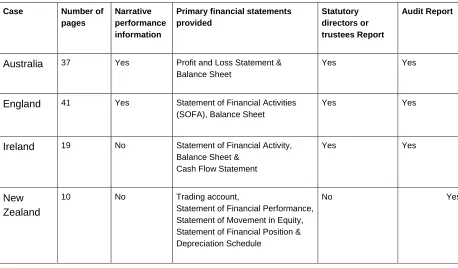
[image:9.612.100.558.180.448.2]The charities chosen for analysis all operate in the broad area of animal welfare through animal shelters, animal rehousing schemes and some sort of retail operation. Further, they have all operated for many years.
Table 2: Overview of the financial reporting by the four charities
Case Number of pages
Narrative performance information
Primary financial statements provided
Statutory directors or trustees Report
Audit Report
Australia 37 Yes Profit and Loss Statement & Balance Sheet
Yes Yes
England 41 Yes Statement of Financial Activities (SOFA), Balance Sheet
Yes Yes
Ireland 19 No Statement of Financial Activity, Balance Sheet &
Cash Flow Statement
Yes Yes
New Zealand
10 No Trading account,
Statement of Financial Performance, Statement of Movement in Equity, Statement of Financial Position & Depreciation Schedule
No Yes
Australia:
The Tasmanian Canine Defence League was established as an incorporated association in 1950. It operates in four locations, caring for stray, lost and abandoned dogs. Its financial statements for the year ended 30th June 2014 are prepared on an accrual basis based on
historical cost. They are audited by a registered company auditor. As is common in organisations of this type, the audit is qualified to reflect the impracticability of the League being able to maintain effective internal ‘control over cash donations, fundraising and other income until their initial entry into the accounting records’. The accounts comprise a Board statement (stating the financial statements show a true and fair view), the audit report, consolidated income statement and balance sheet (as well as individual income statements and balance sheets for each of the dogs’ homes operated by the league and the head office) and the accompanying notes. Such presentation of the individual accounts is additional to requirements for a set of general purpose financial reports. The auditor’s report notes the statements have been prepared for the needs of the members and to satisfy the
9
The League’s income is derived from bequests and donations, the sale of dogs and local authorities’ payments for the provision of animal shelter services. The major expenditures are for labour, veterinary expenses, general expenses and running costs. The income statements sum the operating surplus/(deficit) ((A$466,780)) and total surplus/(deficit) ((A$128,784)). Items appearing below the operating surplus/deficit include depreciation, bequests, extraordinary expenditure and capital expenditure. The balance sheet contains detail that normally would be included in notes to the accounts. Of interest is, while leasehold assets are recorded on the balance sheet, no leasehold liability is presented. There is also no explanation of the increase in the value of investments reported in accumulated funds.
England:
The Royal Society for the Prevention of Cruelty to Animals is one of the most well-known charities in England, established by Act of Parliament, with income exceeding £121M. However there are also 200 local charities allowed to use "RSPCA" in their names - they are known as 'branches' but they are self-governing registered charities in their own right: their accounts are not consolidated into the national body. The RSPCA Sheffield branch is one of the largest of these: it is an unincorporated association and its main activities are providing an animal shelter and clinic. The RSPCA Sheffield states their accounts for the year ending 31 December 2013 are prepared on an accrual basis in accordance with the Charities SORP 2005 and the Financial Reporting Standard for Smaller Entities 2008, as required by their size. The audit report, by a local firm of Chartered Certified Accountants, is unqualified and correctly worded under the requirements of the Charities Act 2011.
The charity’s income is derived from three roughly equal sources: voluntary income (donations and legacies), trading activities to raise funds (a charity shop plus other fundraising activities), and charges for services provided (including fees received from the national RSPCA for housing dogs which are the subject of animal cruelty court cases, and animal adoption fees).
Restricted and unrestricted income is distinguished on the SOFA (as required by the SORP regime) though only £7,266 (less than 1%) of the charity’s 2013 income was restricted. However, the expenditure includes £79,002 of restricted expenditure (charged to restricted funds brought forward from the previous year) - which shows how fund accounting can highlight substantial year to year differences. A detailed note (as required by the SORP) shows movements on each fund individually: there were two separate restricted funds, and there is also a designated fund (towards a new animal shelter) within the unrestricted funds heading.
Although the charity’s income is £774,670, its total assets are over £5.5M, comprising primarily land and buildings belonging to restricted funds and investments valued at
£123,728 at the balance sheet date (the SORP requires investments to be shown at market value). The total expenditure was £867,290, thus the charity recorded a deficit of (£124,620) after more than £111,000 of depreciation.
10
In most respects the accounts show a high level of compliance with the SORP regime, although there are some curious features in the classification of resources expended. The SORP requires expenditure to be split between costs of fundraising, costs of charitable activities and governance costs which the charity does, but the note analysing the full breakdown of expenditure does not offer any straightforward reconciliation with the functional breakdown shown on the SOFA. The costs of fundraising of £179,443 on the SOFA are substantial (21% of total expenditure), but this clearly includes the costs of running charity shops. The note states that support costs are apportioned 10% to fundraising and 90% to charitable activities, but no reason is given for this basis of apportionment.
Ireland:
Founded in 1840, the Dublin Society for the Prevention of Cruelty to Animals (DSPCA) is Ireland’s oldest animal charity and is a company limited by guarantee. The DSPCA investigates allegations of cruelty to animals, runs an animal ambulance service, and operates an animal shelter for rescued animals, with a related re-homing service for cats and dogs and a wildlife care and release programme. The DSPCA prepared its accrual accounts for the year ended 31 December 2013 under the historical cost convention in accordance with Irish General and Accounting Practice (GAAP). They are audited by a statutory auditor from a local firm of chartered accountants and registered auditors. The accounts reveal fundraising comprised the charity’s principal source of income but reveal an operational deficit ((€455,010)) although overall the DSPCA made a gain (€412,300) due to bequests (in excess of €800,000) and other recognised gains on the re-evaluation of investments. The Balance Sheet reveals a net accumulated surplus on unrestricted fund income of €4,678,152. These are invested in land, buildings and investments, all of which are described as ‘unrestricted funds’.
The DSPCA has a wholly owned trading subsidiary, DSPCA Animal Shelter, the assets of which comprise newly constructed kennels, catteries and a veterinary clinic, built on the charity’s land. Founded in 2010, the subsidiary is supported by the parent charity by way of a €2.6m loan agreement which appears in the notes to the DSPCA’s Financial Statement as an investment. This investment of charitable funds in the trading company has yet to result in a return to the parent charity. The separate accounts of the subsidiary reveal a more perilous financial position with the auditors noting in the subsidiary’s 2013 accounts the legal requirement to hold an EGM to discuss what measures should be taken to deal with the serious loss of capital revealed in the accounts (Companies Act 1983, s.40(1)). This raises concerns about the value of the parent charity's 'investment'.
The accounts represent all funds as being unrestricted; yet, note 1.3 suggests certain grants were received for specific purposes without further details of these restricted funds being given. Thus, the accounts are not SORP compliant. Further, it is a condition of state funding that grant recipients make certain specified disclosures in their financial statements.7 Yet,
11
DSPCA lists grant income as a total figure, with no indication as to the specific government grant-making agency/(ies), the duration and purpose of the grants, or whether the amount is restricted funding or not, in breach of Department of Finance Circular 17/10.
New Zealand:
The Waikato SPCA is an incorporated society that exists to improve the lives of animals through investigating allegations of cruelty, running an animal centre, re-homing animals and educating the public to reduce the incidence of animal cruelty, abuse and neglect. The SPCA Waikato accounts for the year ended 31 December 2013 are single entity general purpose financial reports prepared on an accrual basis based on historical cost. The accounts follow “typical accrual accounting principles”. They are audited by a chartered accountant who runs an eponymous public practice, due to a requirement in their constitution, (although from 2016 they will be required to have an audit under the new Financial Reporting Act 2013).
As is common with entities in New Zealand, the trading accounts are shown separately from the main statement of financial performance. While these show income of NZ$236,668, direct expenditure of NZ$111,550 means NZ$125,118 is brought forward as net income in the Statement of Financial Performance.
The statements further comprise consolidated income statement, balance sheet and
statement of movements in equity, as well as the accompanying notes. The auditor’s report is addressed to members and has a qualification that states “in common with organisations of similar nature, control over income prior to being recorded is limited and there are no practical audit procedures to determine the effect of this limited control” (this is common to other NPOs).
The majority of the Waikato SPCA's income (NZ$874,838) is derived from donations and bequests as well as sales (adoption of animals). Grant income comprised approximately NZ$60,000. While philanthropic trusts are not strong in New Zealand, there are many gaming machine societies and local businesses that support this organisation. The major expenditures (NZ$905,145) are for labour, veterinary expenses, general expenses and running costs. The income statements provided distinguish between an operating deficit ((NZ$30,308)) and a total deficit ((NZ$34,903)). The only item appearing below the
operating surplus/deficit is depreciation (and some depreciation recovered from asset sales), although capital items would often be included here. As is also common in these
12
5. Comparative Analysis
These cases are compared on: (i) organisational type, (ii) the type of account preparation and assurance, and (iii) the specific format and content of the financial statements.
(i) Organisational type
As can be seen from Table 1, In Australia, Ireland and New Zealand, each of the charities is incorporated as either an association/society or a company. In England, the RSPCA Sheffield is unincorporated. This is likely to reflect the English prioritisation of regulation over legal form (Cordery et al., 2016). Nevertheless, Cordery et al. (2016) argue that NPOs should incorporate for effective operation, to clarify the reporting entity and who bears liabilities.
(ii) Type of account preparation and assurance
In all four cases, the charities prepared accrual accounts. Torres and Pina (2003) argue this is necessary and this reflects the high levels of accrual accounting in NPOs in Europe and Oceania evidenced in Crawford et al. (2014) and the size of the NPOs selected. It further reflects the strong influence of international standard-setters (IASB and IPSASB) in the four jurisdictions. While England has a long history of sector-specific charity reporting
requirements (the SORP), the other three cases reflect their jurisdiction’s relatively sector-neutral stance and follow for-profit standards, with reduced requirements in disclosure or recognition and measurement as relevant to their situation. Australia’s new regulator (the ACNC) has not prescribed new standards so NPOs follow IFRS-based standards, Ireland will require the English SORP from 2017 and New Zealand IPSASB-based standards from 2015 (2016 year-ends). Each of the cases were audited by local firms.
(iii) Financial accounting issues
Despite the basic accrual accounting used by these charity cases, there are many differences of note. The first and most obvious is the format of the accounts. All of the charity accounts include an income statement and a balance sheet (variously titled), but these are the only primary statements presented in the English NPOs (although further detail is given in notes). The Australian charity also provide the accounts for each individual dog home and then combines these for the primary statements, providing a type of segment reporting. Similarly, the New Zealand charity also provides a trading account, but in addition it also publishes a statement of movements in equity and a schedule of fixed assets and depreciation, while the Irish charity provides equity statements and a cash flow statement. The second difference of note is that the RSPCA (Sheffield Branch) financial statements distinguish between restricted and unrestricted funds in both the statement of financial activities and balance sheet. Such fund accounting is an important indicator of the purpose for which funds can be used. The charity reports from the other three jurisdictions which are based on private sector GAAP frameworks do distinguish between restricted and
13
considered to be restricted. For donors of funds for specific purposes, this is likely to be unsatisfactory, as they cannot be assured their funds will be used for the purpose intended and 43% of Crawford et al.’s (2014) respondents confirmed this was not adequately covered in national frameworks.
The issue of reporting entity is also of interest, ranking at the top of Kilcullen et al.’s (2007) list of NPO reporting issues and felt not to be adequately covered by national reporting frameworks by 43% of Crawford et al.’s (2014) respondents. First, Australia allows entities to exercise the option of producing special purpose financial reports if they judge that they do not qualify as a reporting entity (this includes for-profit sector organisations as well). Thus, the Tasmanian Canine Defence League similar to many of its Australian counterparts, did not produce general purpose reports as it could ‘pick and choose’ the standards it wished to apply, including non-GAAP lease accounting and valuation of investments. Also , the Irish and New Zealand charities have been sparse with their reporting entity approach. They both have subsidiaries that appear to need to be consolidated, but neither has supplied a set of consolidated statements, nor the accounts for the 100% owned subsidiary. Yet, since the finances of both cases are in a precarious state, not reporting the subsidiaries’ wealth able to be drawn on would seem to be a considerable omission. Further, the issue of reporting related parties is also considered a prime user need by Hyndman (1990) and Kilcullen et al. (2007).
Narrative or non-financial reporting as to the benefits provided by the charity is an issue raised as a prime user need by many NPO researchers (e.g. Kilcullen et al., 2007;
Hyndman, 1990) and 53% of Crawford et al.’s (2014) respondents felt it was inadequately covered by national frameworks. England is the only jurisdiction ameliorating this at the time of this study, with the Charities Act 2011 requiring a narrative trustees' report and the SORP including a strong emphasis on linking the narrative and financial reporting. In Australia, the new regulator (the ACNC) is still developing its reporting framework and the New Zealand and Irish regulators also require pro-forma detail about mission and activities. In New Zealand, charities will be required to provide a full Statement of Service Performance for periods beginning on or after 1 April 2015. Practice shows the continued mismatch
identified by Hyndman (1990) between what users seek (performance information) and what they receive (financial statements).
While some issues are evidently present in one jurisdiction but not others, the case studies also show the need for a more in-depth analysis of the financial reporting policies underlying the statements provided. It appears the assets are largely valued using historical cost, further 60% of Crawford et al.’s (2014) respondents noted asset valuation is inadequately covered in national frameworks. We also found no evidence of accounting for donations of assets or time, a matter considered very relevant by Cordery and Narraway (2008) and Ryan et al. (2014), and felt to be inadequately covered in national frameworks by 38% of Crawford et al.’s (2014) respondents.
14
sector specific approach. In contrast, the regulation of the provision of financial information for charities in Ireland, New Zealand and Australia can best be described as evolving, and characterised by a reliance on private sector accounting and reporting frameworks. These results are consistent with those of Crawford et al., (2014).
Despite the charities’ similar work, organisational size, funding sources, and presumably similar stakeholders and users of financial information, it is notable that the charities report in quite different ways both in terms of the reports produced and the disclosures made within those reports. This has clear implications for the comparability of the financial statements across the jurisdictions echoing the findings of Crawford et al. (2014).
6. Conclusions
This research, motivated by the recent advocacy for an international NPO accounting and reporting framework, sought to determine the degree of congruence of both the regulatory frameworks and financial statements produced by charitable organisations working in a similar field from four jurisdictions.
The research findings indicate that, despite the four charities undertaking similar work with potentially similar users, their financial reports differed markedly. This raises two potential questions. First, do the users in each jurisdiction have different information requirements; and second, do the reports reflect users’ needs? For an international Framework to be useful as an accountability mechanism it is important it be predicated on user needs. Assuming the long-standing charities selected for this research are currently meeting user needs, this research has identified users’ needs in different jurisdictions are not necessarily aligned. Determining these cross-jurisdictional needs is important future research.
This study also provides a practical insight into the theoretical work which advocates for a separate conceptual framework for NPOs to enable them to adequately discharge their accountability, and argues that the IASB and IPSASB frameworks are inadequate for NPOs (eg Ryan et al., 2014). In respect of specific issues raised by Crawford et al. (2014) (drawn from the literature), we found similarly that, of the jurisdictions studied, fund accounting is undertaken only in England, that the issue of reporting entity and related parties is poorly described (especially in Australia and New Zealand) and narrative reporting is again only evident in the English case which has a standard specific to the charity sector.
While our research has been conducted by analysing the reporting of the charities in the current regulatory environment, as noted, three of the jurisdictions are currently undergoing substantial changes in their regulatory environments. Most recently in Ireland the Charities Act 2009 and the Companies Act 2014 have been commenced, changing the financial reporting regulations for charities. New Zealand has also moved to sector-specific financial reporting requirements as a consequence of the Financial Reporting Act 2013. In England and Wales, a new SORP based on IFRS principles has been issued from 2015, and the charity audit threshold has been increased to £1M income.
15
standards for financial reporting by charities. The prime area is to discern
cross-jurisdictional NPO users’ needs. With national boundaries becoming increasingly blurred as people live and work across boundaries, and where there is a raised awareness of
16
References
Breen, O.B. (2013). The Disclosure Panacea: A Comparative Perspective on Charity Financial Reporting. Voluntas: International Journal of Voluntary and Nonprofit Organizations, 24, 3, pp.852–880
Charity Commission (2005). Accounting and Reporting by Charities: Statement of Recommended Practice (CCH Publications).
Connolly, C. and Hyndman, N. (2000). Charity Accounting: An Analysis of the Impact of Recent Changes. British Accounting Review, 32, 1, pp.77-100.
Connolly, C, Hyndman, N. and McConville, D. (2013), UK Charity Accounting: An Exercise in Widening Stakeholder Engagement, British Accounting Review, 45, 1, pp.58-69.
Connolly, C., Hyndman, N. and McMahon, D. (2009), Charity Reporting and Accounting: Taking Stock and Future Reform, pp. 1-45, Charity Commission/Office of the Scottish Charity Regulator, London.
Controller and Auditor-General [of New Zealand]. (2009). The Auditor-General’s views on setting financial reporting standards for the public sector. http://www.oag.govt.nz Accessed 15.01.15.
Cordery, C.J. and Baskerville, R.F. (2007). Charity financial reporting regulation: a comparative study of the UK and New Zealand. Accounting History, 12, 1, pp.7–27
Cordery, C.J. and Simpkins K. (2016). Financial reporting standards for the public sector: New Zealand’s 21st-century experience. Public Money & Management,36, 3, pp. 209-218.
Cordery, C. and Narraway, G. (2008). Conceptual challenges displayed through the financial reporting of early childhood education centres. Accounting and the Public Interest, 8, pp.66 -76.
Crawford, L., Morgan, G. G., Cordery, C. J. and Breen, O. B. (2014). International financial reporting for the not-for-profit sector. CCAB.
Department of Finance Circular (2010). Requirements for Grants and Grants-in-Aid. http://circulars.gov.ie/pdf/circular/finance/2010/17.pdf Accessed 5.08.16
Ellwood, S. and Newberry, S. (2006). A bridge too far: A common conceptual framework for commercial and public benefit entities. Accounting and Business Research, 36, 1, pp.19-32. Hyndman, N. (1990). Charity Accounting – An Empirical Study of the Information Needs of Contributors to UK Fund Raising Charities, Financial Accountability & Management, 6, 4, pp.295-307.
Hyndman, N. and McMahon, D. (2010). The Evolution of the UK Charity Statement of Recommended Practice: The Influence of Key Stakeholders, European Management Journal, 28, 6, pp. 455-466.
INKEx (2012). Irish Nonprofits: What do we know? A Report by the Irish Nonprofits Knowledge Exchange
17
International Integrated Reporting Committee (IIRC) (2011). Towards Integrated Reporting Communicating Value in the 21st Century, http://www.theiirc.org Accessed 21 October 2015.
Irvine, H. & Ryan, C. (2013). Accounting regulation for charities: international responses to IFRS adoption. Pacific Accounting Review, 25, 2, pp.124–144.
Kilcullen, L. Hancock, P. and Izan H. Y. (2007). User requirements for not-for-profit entity financial reporting: An international comparison. Australian Accounting Review, 17, 1, pp.26-37.
Ryan, C; Mack, J; Tooley, S. and Irvine, H. (2014). Do Not-For-Profits Need Their Own Conceptual Framework?. Financial Accountability & Management, 30,4, pp.383–402. Seawright, G. & Gerring, J. (2008). Case Selection Techniques in Case Study Research
Political Research Quarterly 61, 2 pp294-308
Simpkins, K. (2006). Application to not-for-profit entities in the private and public sector. Working paper to Australian, Canadian, New Zealand and UK Accounting Standards Boards, Accessed 5/09/2015.
Torres, L. & Pina, V. (2003). Accounting for accountability and management in NPOs. A comparative study of four countries: Canada, the United Kingdom, the USA and Spain.